If you could time-travel and dive into the oceans of the age of dinosaurs, you’d barely recognize the world beneath the waves. Instead of sharks ruling every corner, you’d find sleek ichthyosaurs shaped like torpedoes, long‑necked plesiosaurs gliding like ghostly swans, and colossal mosasaurs prowling like oversized, bad‑tempered sea komodos. These were not just reptiles that happened to live in the water; they were radical experiments in evolution, each packed with strange features that seem almost too wild to be real.
What fascinates me most is how many different ways reptiles figured out how to conquer the same hostile environment. Some turned their limbs into wings for flying underwater, some evolved eyeballs the size of dinner plates, and some re-engineered their entire breathing, birthing, and bone systems to live permanently at sea. Let’s dive into ten of the most bizarre traits that turned these marine reptiles into true masters of ancient oceans – and see how alien Earth’s past can really feel.
1. Torpedo Bodies and Tail Fins: Ichthyosaurs That Imitated Fish and Dolphins
![1. Torpedo Bodies and Tail Fins: Ichthyosaurs That Imitated Fish and Dolphins (By Printed under a CC BY license, with permission from Nadine Bösch and Beat Scheffold, original copyright [2013]., CC BY 2.5)](https://nvmwebsites-budwg5g9avh3epea.z03.azurefd.net/dinoworld/f47e5f9baa26288fc47cbffd80e7597f.webp)
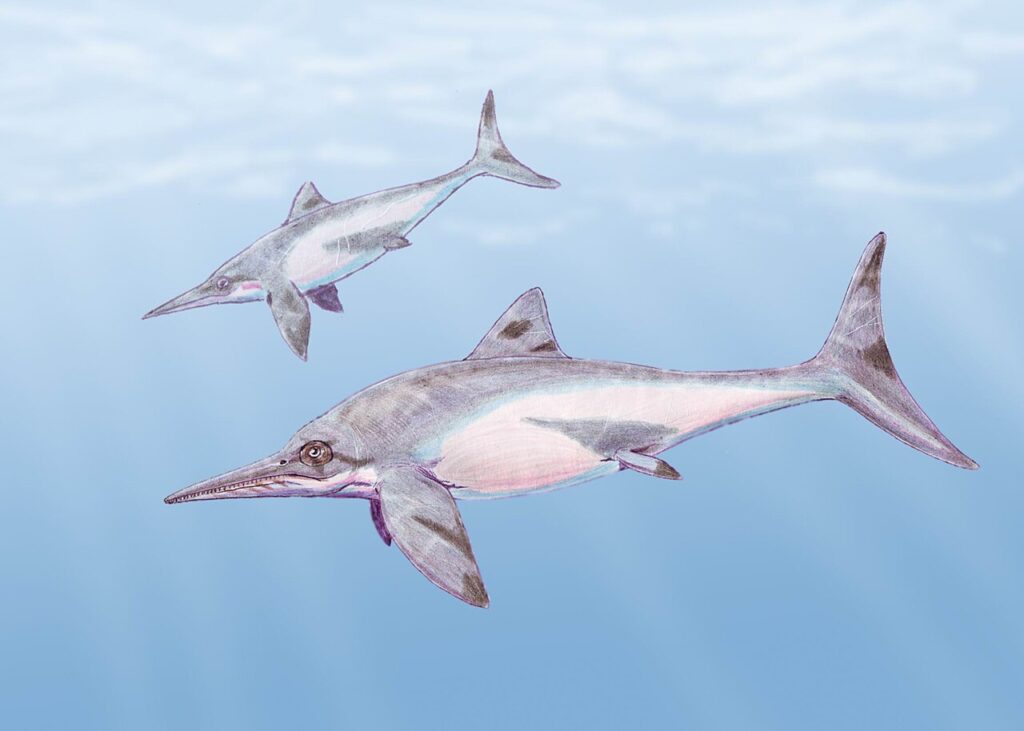
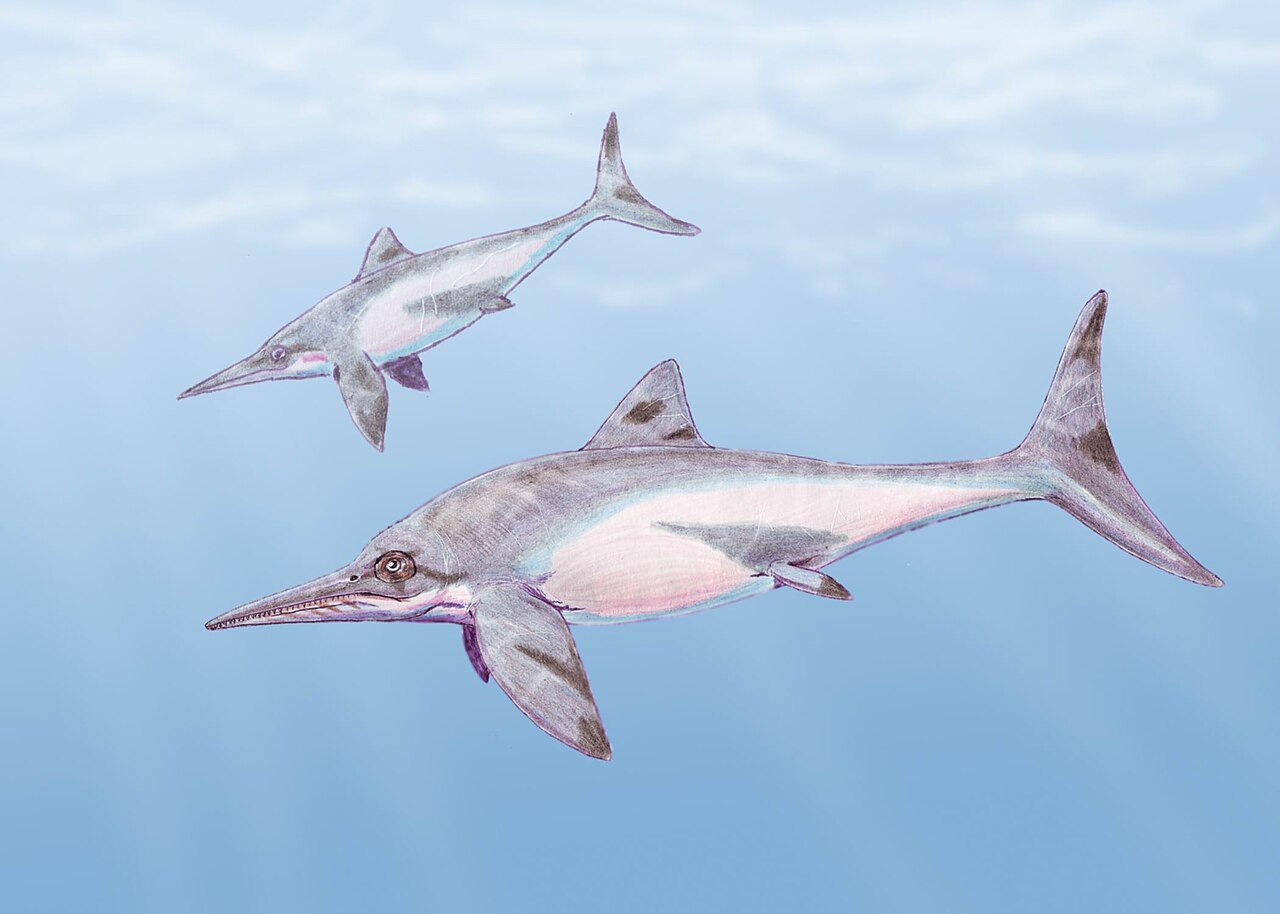
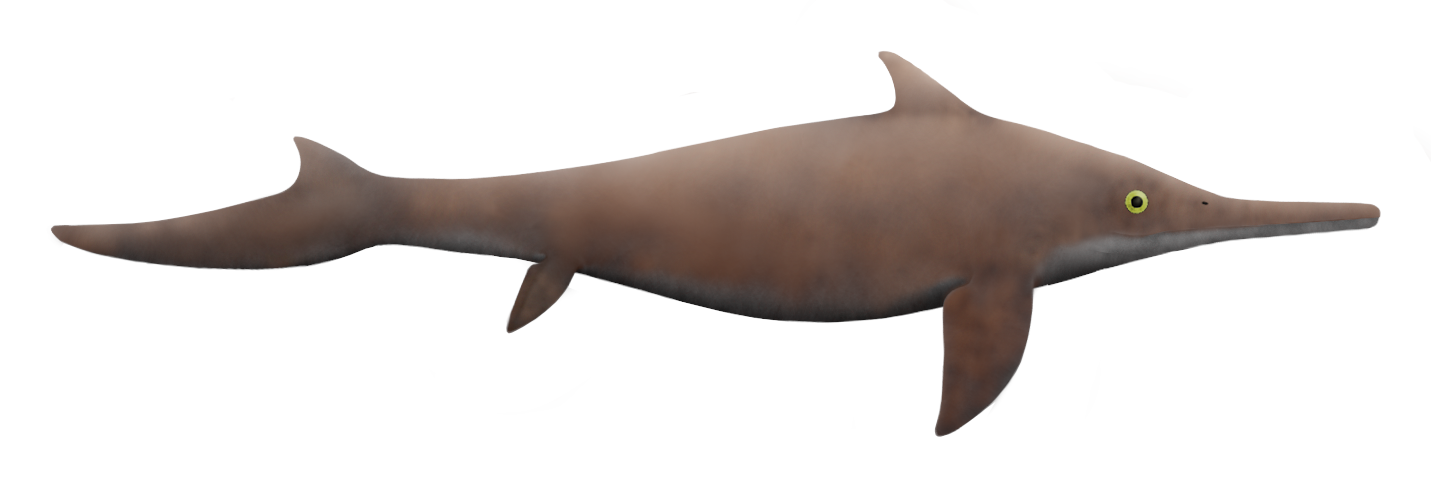
One of the strangest twists in evolution is that ichthyosaurs started out as land reptiles with legs, yet ended up looking uncannily like modern tuna and dolphins. Their bodies became streamlined torpedoes, with a stiff, crescent-shaped tail fin that did most of the propulsion, just like in today’s fast‑swimming fish. Instead of wiggling side to side like a lizard on land, their bodies turned into efficient underwater missiles designed to minimize drag and maximize speed.
What’s wild is that this torpedo‑plus‑tail design evolved completely independently from fish and marine mammals, a powerful example of evolution hitting on the same engineering solution more than once. I like to think of ichthyosaurs as nature’s second attempt at the “high‑speed marine predator” blueprint, arriving millions of years before dolphins copied the same look. When you see a reconstruction of a big ichthyosaur, it honestly feels like a sci‑fi mash‑up: the skeleton of a reptile wrapped in the hydrodynamic body plan of a modern open‑ocean racer.
2. Dinner‑Plate Eyes: Super‑Sized Vision in the Deep
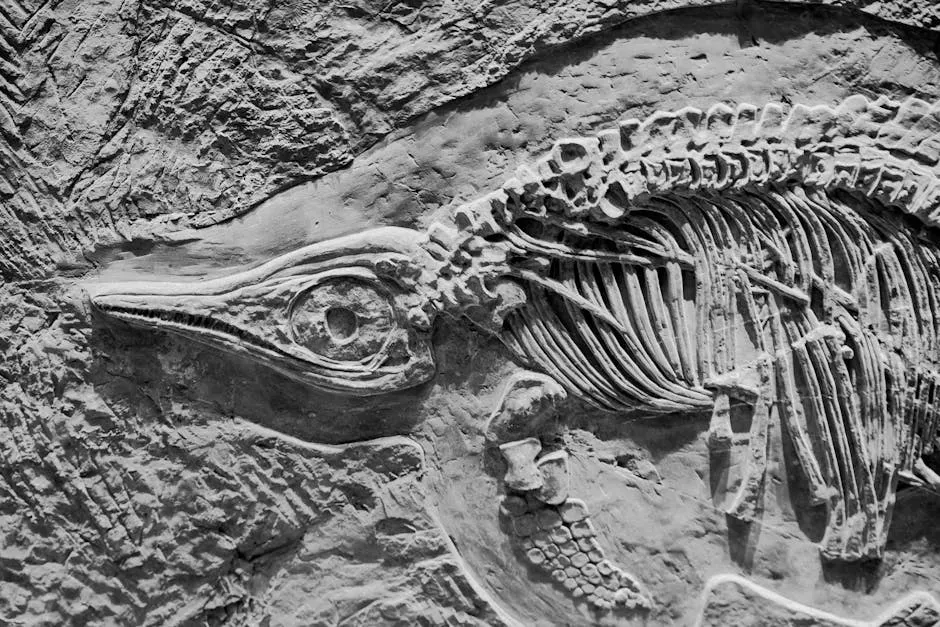
Some ichthyosaurs took eye evolution to ridiculous extremes, with eye sockets bigger than a human head. These enormous eyes were reinforced by a bony ring inside the eyeball, helping the eye keep its shape under pressure at depth. Bigger eyes can gather more light, which is a huge advantage in the dim twilight zone of the ocean, where most predators would be partially blind. It suggests that at least some of these reptiles were diving deep or hunting in low‑light conditions like dusk, dawn, or murky waters.
I find this eerie: imagine an animal several meters long, with a dolphin‑like body, racing through dark water guided by massive eyes, picking up the faintest shimmer of prey. It turns the prehistoric ocean into something closer to a horror movie set, full of ghostly shapes sensing each other long before they are seen by us in our imagination. Compared with their oversized eyes, modern predators like sharks suddenly look almost modest, as if ancient reptiles cranked visual evolution up to the maximum setting just to see what would happen.
3. Hyper‑Modified Flippers: Limbs Turned into Underwater Wings
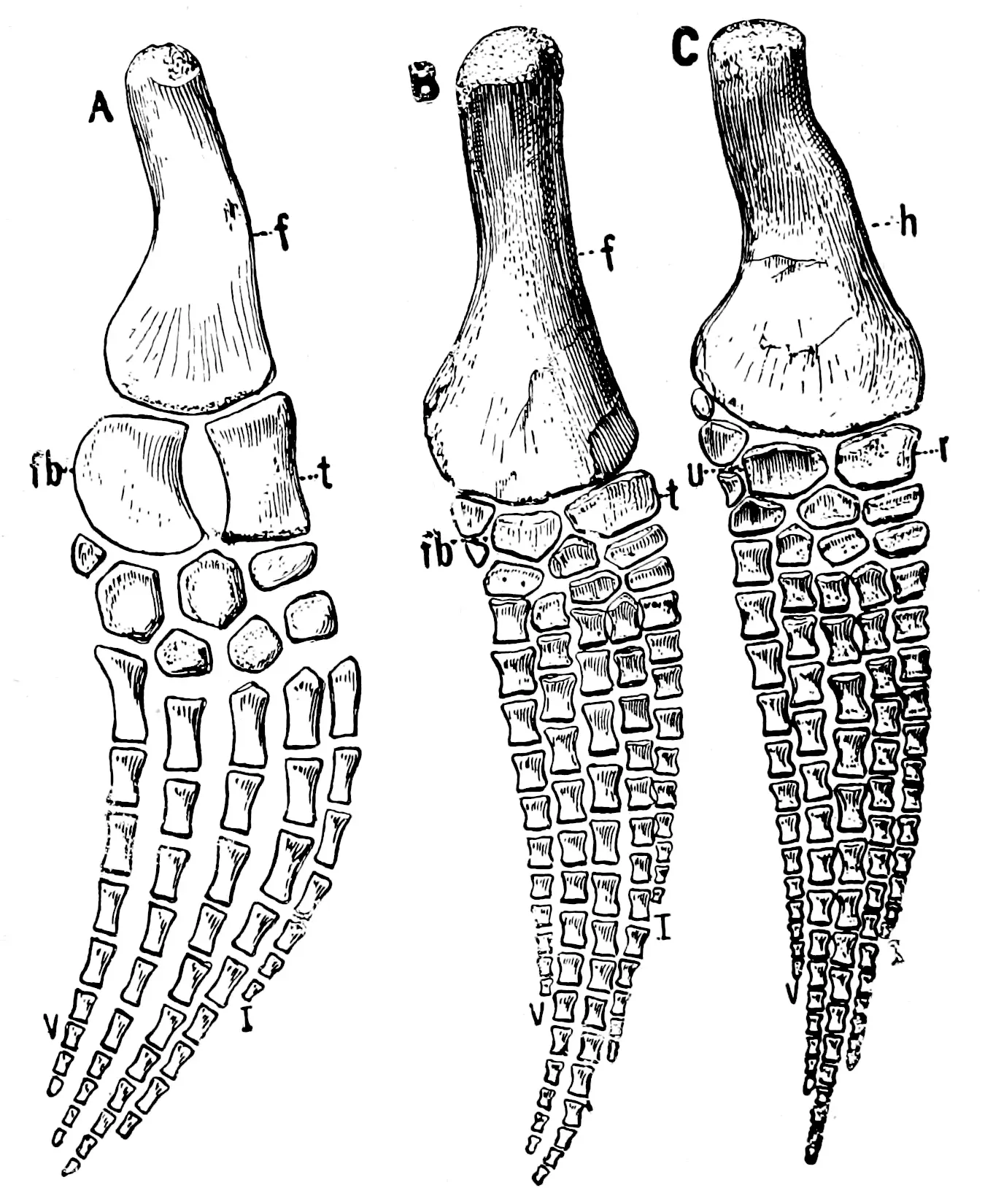
In many marine reptiles, what used to be hands and feet transformed into rigid flippers with an almost absurd number of finger bones. Instead of five fingers like ours, some had long, paddle‑like structures where the digits were stretched, duplicated, and packed together into a stiff blade. In plesiosaurs and some ichthyosaurs, the joints between these bones became reduced, turning the limb into something more like an oar or a wing than a flexible hand. These flippers let them “fly” underwater, using lift and subtle angle changes rather than just brute-force paddling.
The result was surprisingly graceful movement; especially in plesiosaurs, the four‑flipper system likely produced a kind of underwater flight reminiscent of penguins or sea turtles, but in stereo, front and back. To me, this is where you really feel how far they had moved away from their land‑dwelling ancestors: you are not looking at a lizard that learned to swim, you are looking at a creature whose limbs have been completely reinvented for three‑dimensional motion. It is as if evolution took the idea of arms and legs and ran it through a marine design studio, coming out with a set of sleek carbon‑fiber paddles instead.
4. Shockingly Long Necks: Plesiosaurs That Broke All the Rules
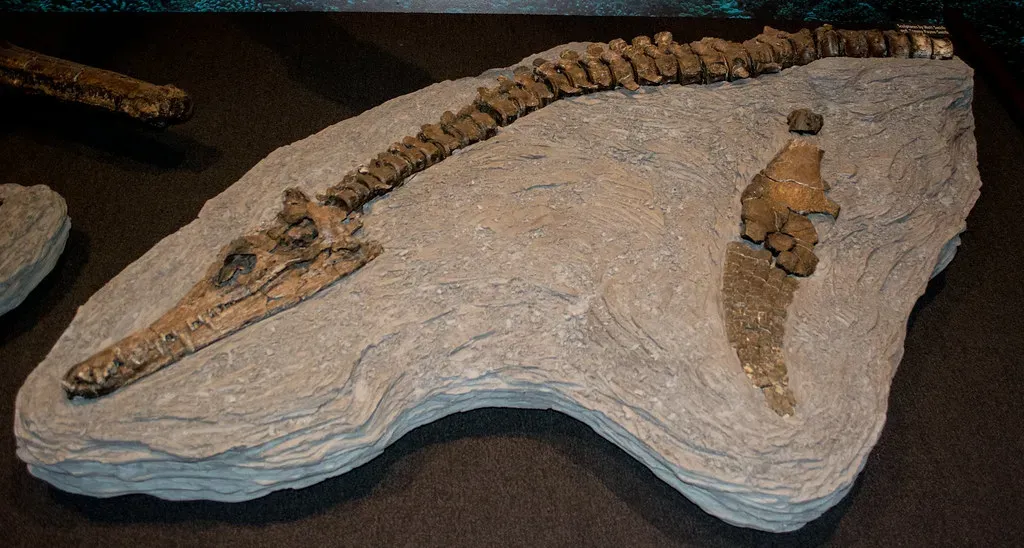
Plesiosaurs with extremely long necks, like Elasmosaurus, look almost comical at first glance: small heads, enormous bodies, and a neck made of dozens of vertebrae stretching out like a biological periscope. From a modern perspective, that neck seems like a liability, easy to snap or attack, and awkward to maneuver quickly. But fossils suggest these animals thrived for a very long time, which means that strange neck must have been a winning strategy in the right conditions. One popular idea is that the long neck allowed them to sneak their small heads close to schools of fish or squid while the bulky body stayed farther away, reducing how alarming they looked to prey.
Visually, I always picture a plesiosaur gliding just below a cloud of fish, its body motion smooth and slow, while the neck weaves like a flexible stalk through the water. It is almost like a stealthy robotic arm on a massive submarine, reaching out from a safe distance to grab dinner. Whether they used their necks more horizontally, vertically, or in tight curves is still debated, but that’s part of what makes them so captivating: they break our intuition about what a “sensible” animal design should look like and remind us that evolution often optimizes for a narrow niche, not for our sense of aesthetics.
5. Built‑In Buoyancy and Bone Tweaks: Controlling Float and Sink
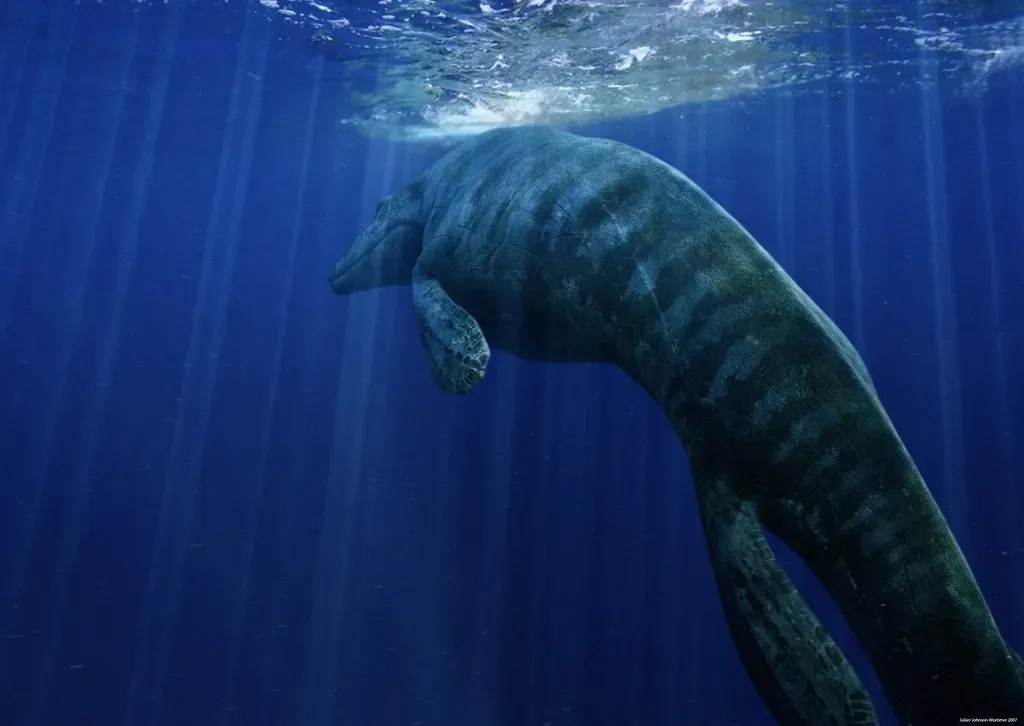
Living full‑time in the ocean is not just about swimming; it is also about staying at the right depth without wasting energy. Many marine reptiles evolved specialized bone structures to help with buoyancy control. Some had unusually dense bones in their ribs and limbs, which acted almost like built‑in ballast, helping them stay submerged rather than bobbing to the surface. Others developed lighter, more spongy internal bone textures that reduced weight, more suited to active, fast swimmers in the open ocean. These differences in bone density can still be detected in fossils and give us clues about how they lived.
To me, it is like comparing a heavy diving belt used by scuba divers with the neutral‑buoyancy setup of a free diver; both are ways of solving the same problem, but tuned to different lifestyles. Slow, ambush‑style hunters might have embraced heavier skeletons to help them lurk close to the seafloor, while streamlined predators went for lighter builds to stay agile and fast. The fact that we can infer something as subtle as “how floaty they were” from ancient bones is quietly mind‑blowing, and it shows how much hidden engineering went into turning a land reptile into an efficient ocean specialist.
6. Live Birth at Sea: Reptiles That Abandoned the Shore
One of the most dramatic shifts in marine reptile evolution was the move to giving birth in the water instead of laying eggs on land. Fossils of ichthyosaurs and some other groups have been found with embryos preserved inside the body, even in the process of being born tail‑first, a pattern that helps prevent newborns from drowning. That is a strong sign that these animals had completely cut their ties with beaches for reproduction, unlike modern sea turtles that still have to haul out to lay eggs. Skipping the shoreline meant they could spend their entire lives in open water without the risk and energy cost of dragging their heavy bodies onto land.
I find that incredibly bold from an evolutionary standpoint, because it means their entire life cycle depended on the ocean behaving well enough for newborns to survive. It also makes them feel more like whales than like the reptiles we know today, another example of convergent evolution arriving at similar reproductive solutions in completely unrelated lineages. When you picture a pod of ichthyosaurs or mosasaurs giving birth in open water, with tiny versions of themselves already swimming, it brings a surprisingly emotional dimension to these animals: they were not just monsters; they were parents adapted to one of the harshest nurseries imaginable.
7. Turbocharged Lungs and Efficient Breathing: Air‑Breathers in a Watery World
All marine reptiles, from plesiosaurs to mosasaurs, still breathed air, which meant every dive was a timed mission between breaths. Their success depended on lungs and circulation systems that could pack in and use oxygen efficiently. Although soft tissues rarely fossilize, anatomical clues such as ribcage shape, chest volume, and comparisons with modern diving animals suggest they were capable divers. Many likely combined large lung capacity with high oxygen extraction in the blood and muscles, allowing them to stay submerged long enough to hunt effectively. Some even show skeletal adaptations that hint at strong, flexible trunks able to withstand pressure changes during dives.
When you think about it, every surfacing to breathe was a moment of vulnerability, so better lungs meant more time hidden below the waves where they were in control. I sometimes imagine them as analog versions of modern submarines, surfacing just enough to “take in air” before slipping back into the depths for another patrol. Staying competitive with sharks and large fish required not just speed and teeth, but also a clever internal engine that could ration oxygen with ruthless efficiency. That invisible respiratory engineering is part of what made them true masters of their environment rather than temporary visitors.
8. Reinforced Skulls and Crushing Jaws: Specialized Killing Machines
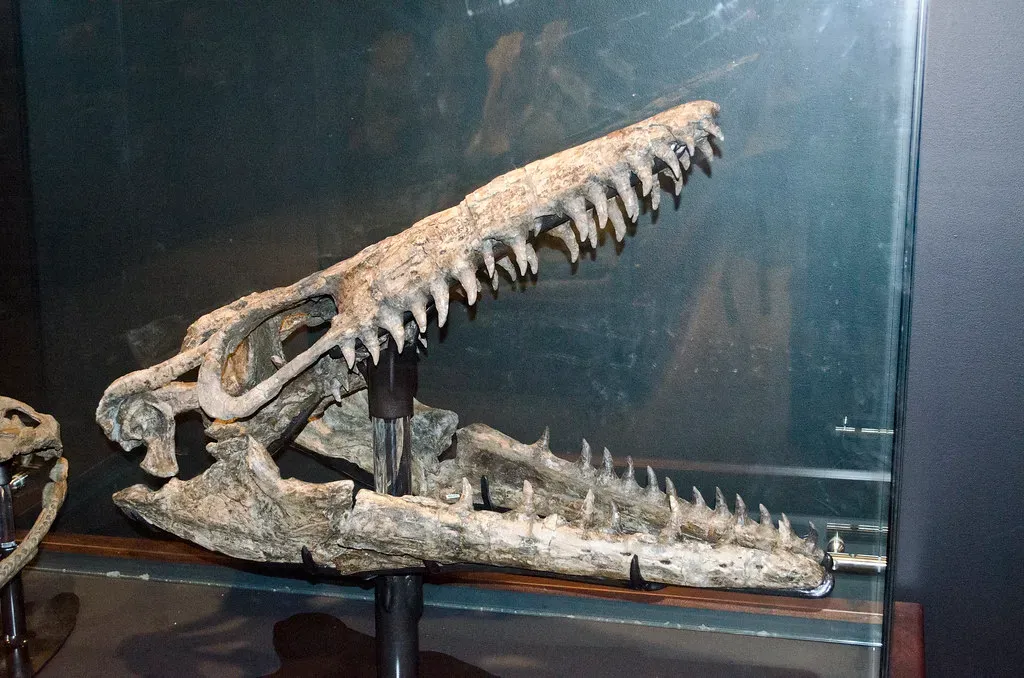
Marine reptiles did not all have the same kind of bite; their skulls and jaws evolved into remarkably different tools tailored to their chosen prey. Some ichthyosaurs had long, narrow snouts packed with small, needle‑like teeth ideal for grabbing slippery fish and squid. In contrast, many mosasaurs developed deep, robust skulls with heavy jaw muscles and stout teeth capable of crunching through shells, bones, and even the armor of other marine reptiles. Paleontologists can see thickened bone in key areas of the skull and jaw, like natural shock absorbers designed to handle violent impacts and twisting bites.
In my mind, these adaptations turn their heads into specialized power tools: the long, thin snouts are like precision pliers, while the short, bone‑crushing jaws are more like industrial bolt cutters. This level of specialization suggests that ancient oceans had complex food webs where being a generalist might not have been enough at the top. The reinforced skull structures remind us that the seas they ruled were not gentle; they were loud, violent, and full of animals capable of doing serious damage, and those that survived had the hardware to give as good as they got.
9. Tail Propulsion and Body Flexing: Very Different Swimming Styles
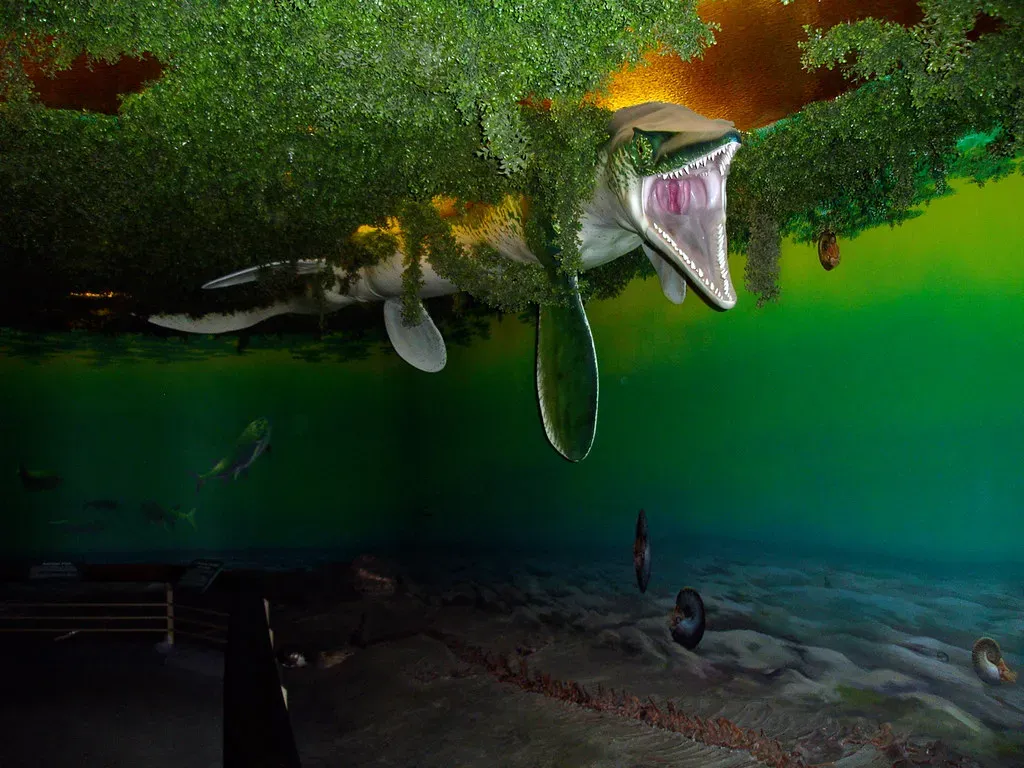
Not all marine reptiles swam the same way, and that variability is one of the most bizarre yet beautiful aspects of their evolution. Ichthyosaurs relied heavily on their crescent tail fins and powerful side‑to‑side body movements, much like a tuna or shark. Mosasaurs used long, muscular tails with flukes plus substantial body flexing, closer in spirit to giant swimming snakes tuned for high speed and power. Plesiosaurs, on the other hand, seem to have relied more on their four flippers, with their tails playing a lesser role, an approach more similar to underwater flight than to classic fish‑style swimming.
It is a bit like watching a crowded pool where everyone has invented their own stroke: some are doing a dolphin kick, some are paddling like kayaks, and some are gliding like four‑winged planes. That diversity of propulsion methods tells us there was more than one way to be successful in ancient oceans. Personally, I love that it messes with the simple idea that there is a single “best” swimming design; instead, evolution kept remixing the same basic ingredients – tail, trunk, flippers – and the result was a living experiment of movement that probably looked spectacular and chaotic from the viewpoint of any unlucky prey animal.
10. Sensory and Hunting Tricks: From Hydrodynamics to Possible Body Armor
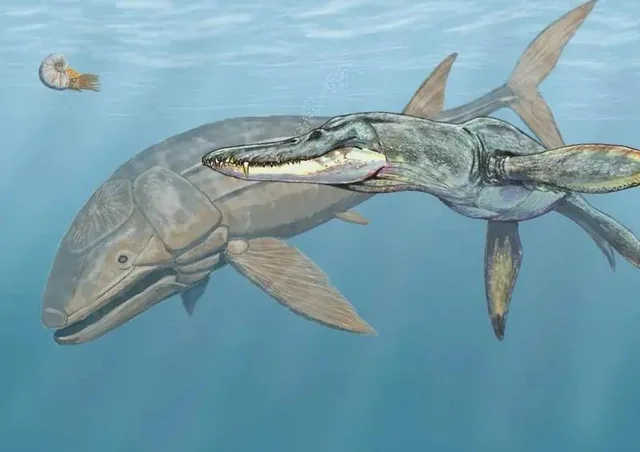
Beyond eyes, tails, and jaws, marine reptiles also carried an array of subtle features that gave them an edge in the hunt. The shapes of their snouts, the placement of their nostrils, and the texture of their skin impressions in some fossils hint at streamlined profiles designed to cut through water quietly. Some species show evidence of bony plates or heavily built ribs that may have doubled as protection against attacks from rivals or larger predators. Others have teeth and jaw arrangements suggesting they could grip and manipulate struggling prey with surprising finesse rather than relying only on brute force.
These details might not look as dramatic in a museum as a giant skeleton, but they are like the hidden settings in a high‑performance machine: fine‑tuning that separates a good design from a great one. When I think of these reptiles, I do not just imagine blunt monsters smashing around; I picture highly specialized hunters that blended stealth, speed, and protection in a way that fit their exact ecological role. For all the gaps we still have in the fossil record, the evidence we do see paints a picture of oceans teeming with experimental designs, some of which were so effective they ruled the seas for tens of millions of years.
Conclusion: Strange Designs, Ruthless Efficiency, and a Very Alien Ocean
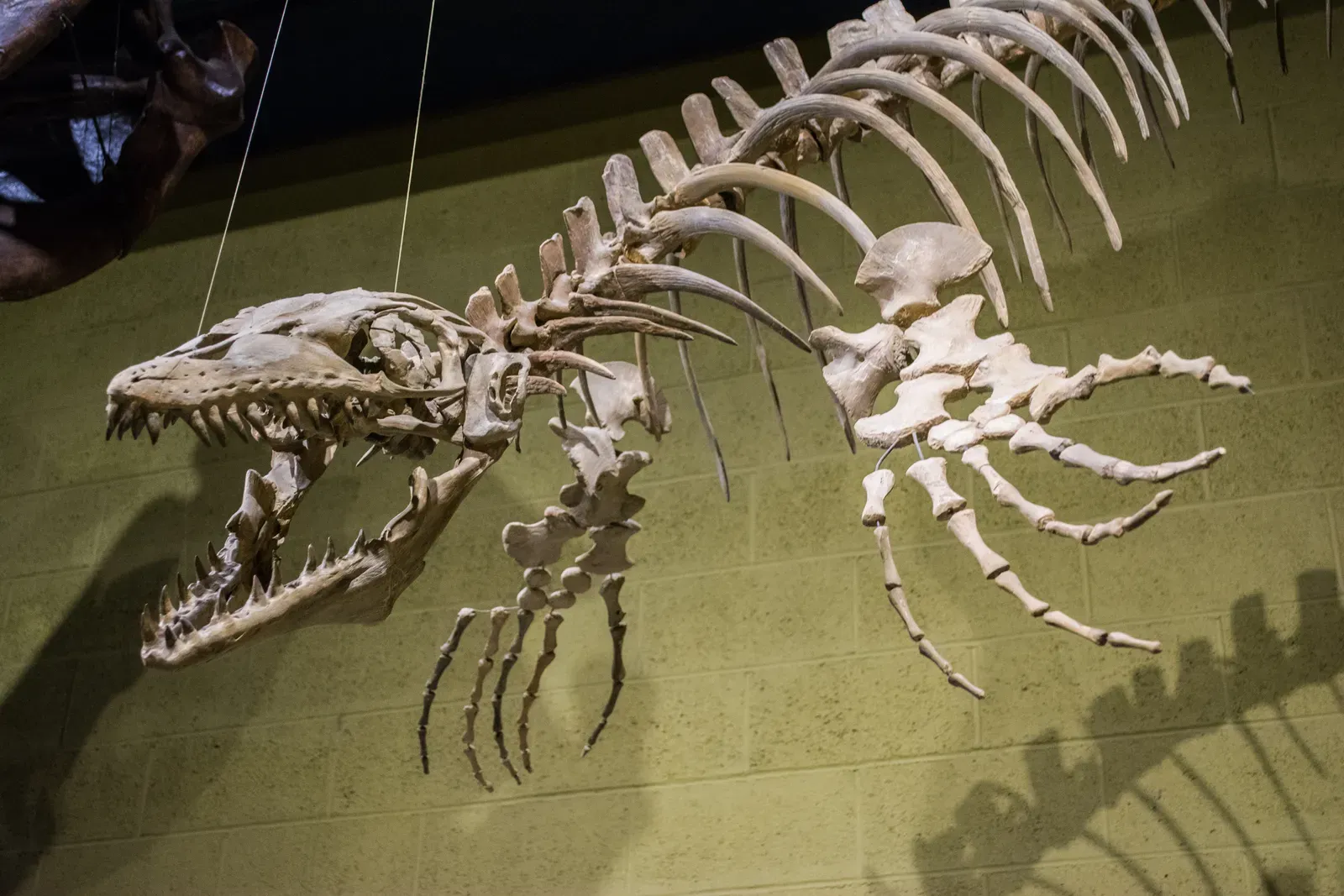
The deeper you look into marine reptiles, the harder it is to dismiss them as just “sea dinosaurs.” They were their own wild, inventive line of experiment, rewriting the reptile body plan again and again to tackle every challenge the ocean could throw at them. From fish‑shaped ichthyosaurs with enormous eyes to long‑necked plesiosaurs and crushing‑jawed mosasaurs, their bizarre features were not just random oddities; they were ruthless optimizations for speed, stealth, buoyancy, and survival. In many ways, they show that the ocean rewards extreme specialization, even when it looks utterly strange to us.
My own opinion is that we tend to underestimate just how alien Earth’s past really was, because we keep trying to fit it into modern categories like “looks like a dolphin” or “kind of like a crocodile.” These animals deserve to be seen on their own terms: as boundary‑pushing, fully committed marine predators that mastered the water long before whales and seals ever existed. Their story is a reminder that evolution is less like a careful engineer and more like a daring hacker, breaking and rebuilding body plans in surprising ways whenever there is an opportunity. Next time you look at the ocean, it is worth asking yourself: how many equally bizarre experiments are waiting out there right now, just written in a different era’s code?