
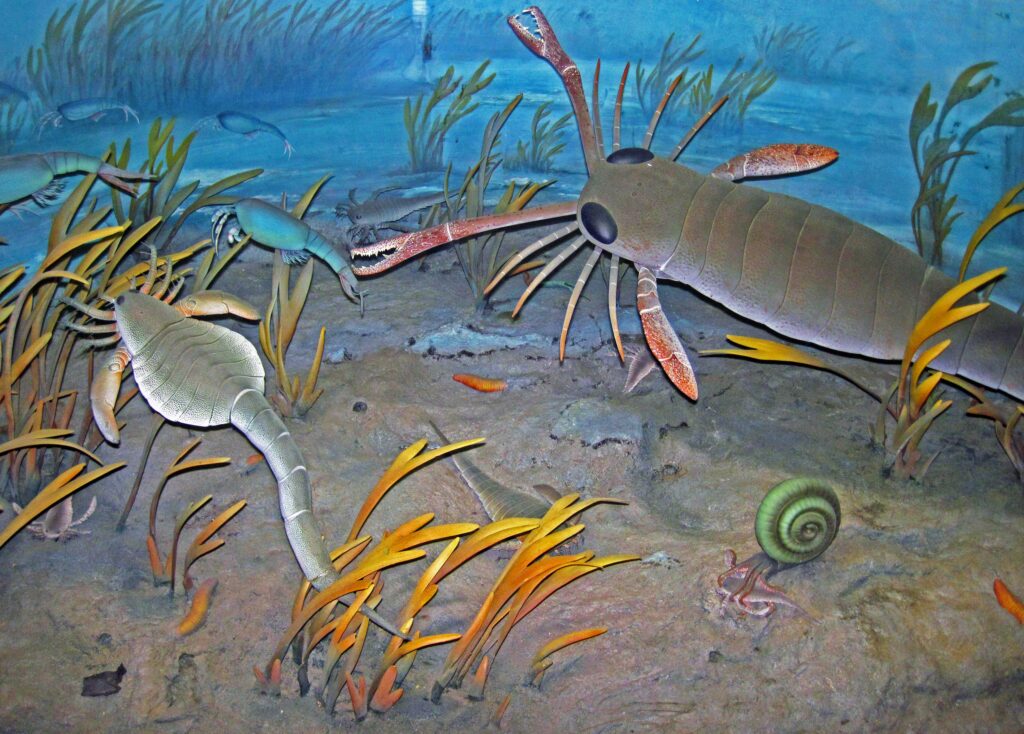
Picture an ocean where survival looked less like a polished nature documentary and more like a chaotic brainstorming session for possible life-forms. Limbs went in every direction, eyes popped up in the strangest places, and armor, spikes, and bizarre feeding tubes were apparently the height of fashion. If you dropped a modern marine biologist into those waters, they’d probably feel like they were scrolling through the weirdest parts of the internet, but in real life.
What makes these ancient seas so fascinating is that they capture evolution when it was still “test-driving” ideas. Many of the creatures you’ll meet below vanished without leaving any direct descendants, while a few became the surprisingly humble ancestors of animals we know today. Together they make the early oceans feel less like a serene blue world and more like an evolutionary hackathon where nature threw everything at the wall to see what stuck.
Anomalocaris: The Nightmare Shrimp That Ruled the Cambrian
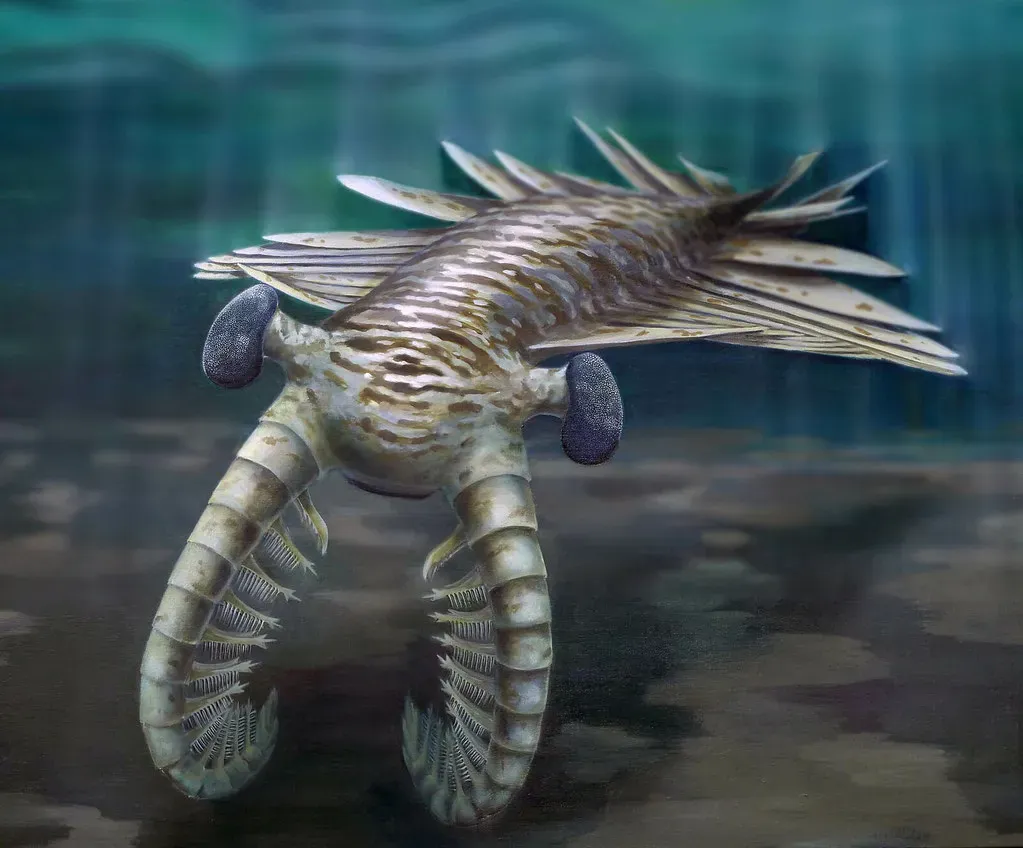
If you were a small, soft-bodied animal swimming in Cambrian seas, Anomalocaris was the last thing you wanted to see coming toward you. It was one of the earliest large predators, with a torpedo-shaped body, big flaps for swimming, and spiked, grasping appendages at the front that worked like terrifying salad tongs. Add in its circular, toothy mouth and big, complex eyes, and you get something that looks like it escaped from a sci‑fi concept artist’s sketchbook.
For a long time, scientists actually misassembled its fossils, thinking the grasping arms and mouth belonged to different animals entirely. Once the pieces clicked into place, Anomalocaris suddenly upgraded from “weird little shrimp” to “apex predator.” I always imagine the Cambrian ocean like an experimental video game level, and Anomalocaris is that unexpectedly overpowered boss the developers quietly nerf later by letting evolution move on without it.
Opabinia: The Five-Eyed Enigma With a Vacuum-Cleaner Face
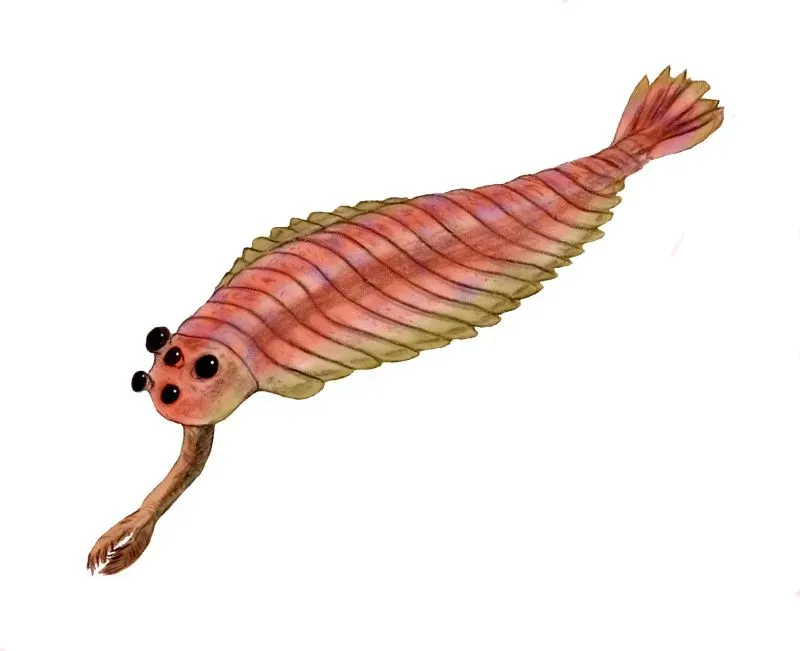
Opabinia is the creature that makes even veteran paleontologists laugh in disbelief. It had five eyes perched on its head and a long, flexible snout ending in a little claw, like the world’s strangest grabber tool. Its body was soft and segmented, fringed with lateral flaps for swimming, giving it a kind of hovering, ghostlike presence in the water column.
When Opabinia was first reconstructed and presented to scientists, the room reportedly erupted in laughter – not because it was a joke, but because it just looked that ridiculous. To me, Opabinia is the poster child for the idea that evolution is not “designed” or elegant; it is opportunistic, messy, and surprisingly creative. This animal feels like nature asked, “Can I put a claw on a flexible hose and give it five eyes?” and then never bothered to ask why.
Hallucigenia: The Walking Needle Cushion
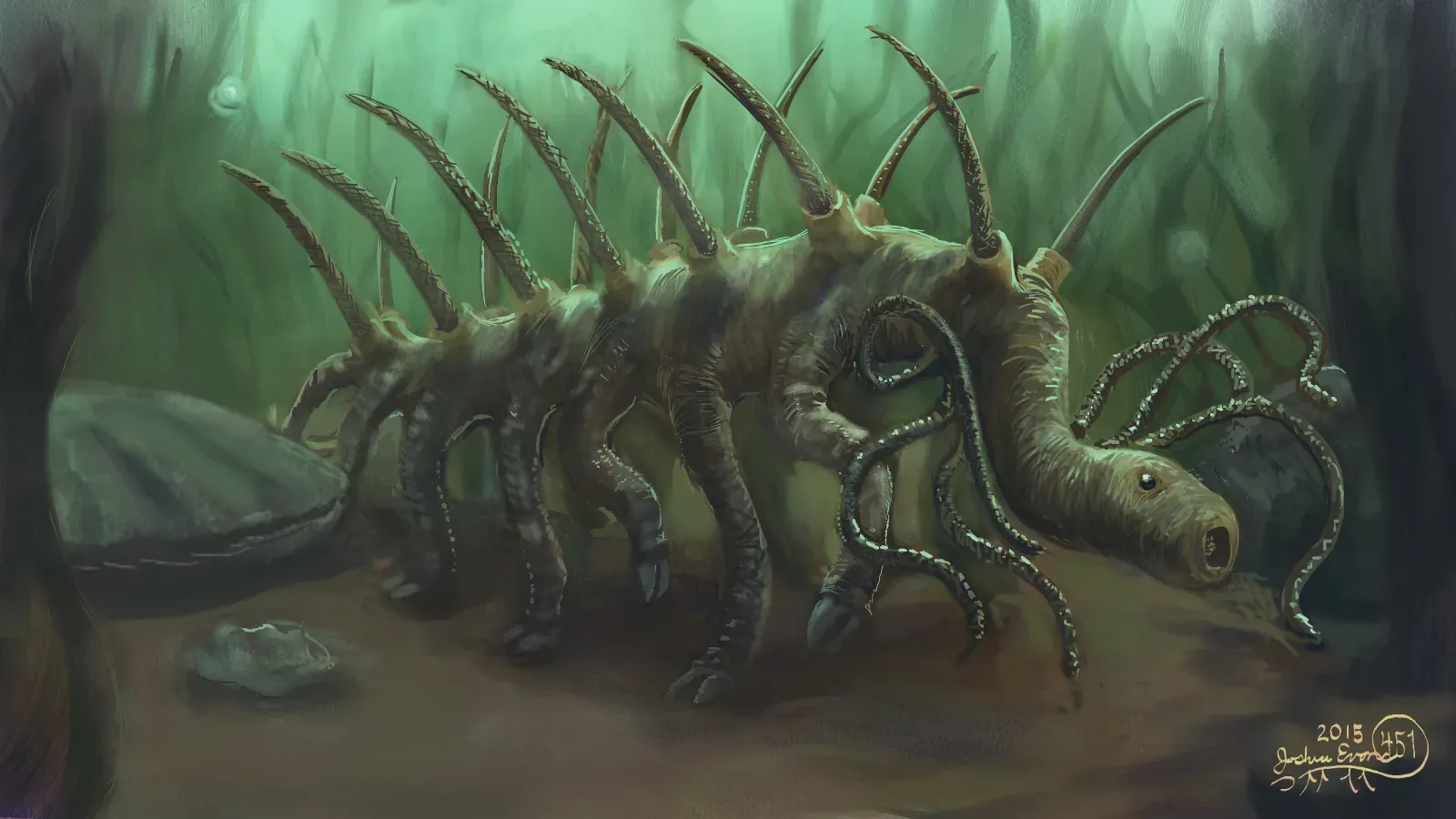
Hallucigenia looks exactly like its name suggests: a biological hallucination. Early reconstructions showed a tube-like body, spindly legs on one side, and long spikes on the other – but scientists originally put it upside down. For years, textbooks showed it walking on its spikes with its fleshy tentacles waving awkwardly in the water, because no one could quite believe the opposite arrangement made any sense either.
Later discoveries and more detailed fossils flipped the animal the “right” way up: spikes on top for defense, soft legs below for walking, and a simple head with a mouth and claws at the front. This tiny Cambrian oddball is now thought to be related to the ancestors of velvet worms, those charmingly squishy modern creatures. I find that wild: the leap from this spiky fever dream to today’s cute velvet worms is one of those evolutionary plot twists that reminds you how long and twisty the story of life really is.
Dunkleosteus: The Armored Tank With a Guillotine for a Jaw
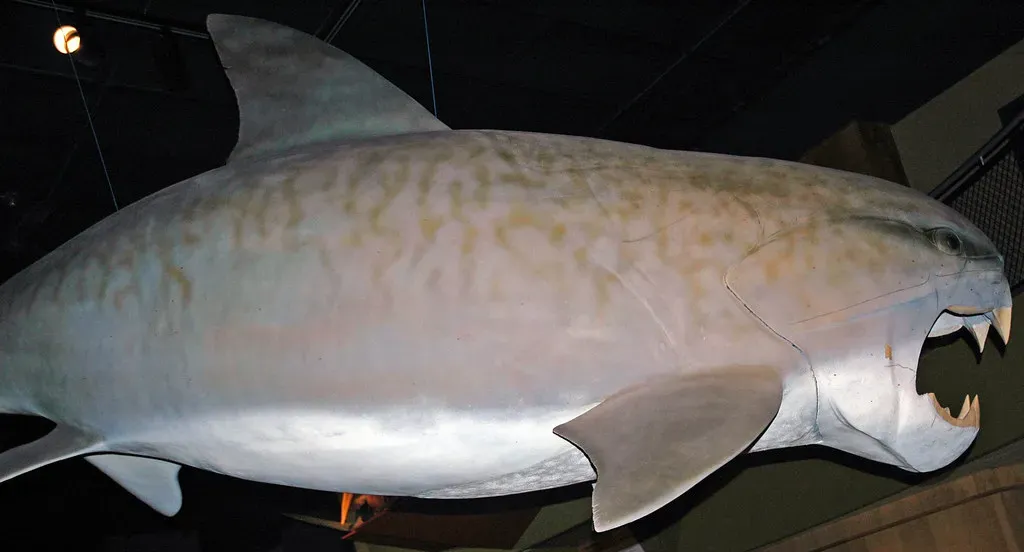
Jumping far forward in time from the Cambrian, Dunkleosteus dominated Devonian seas like a swimming armored tank. Instead of typical teeth, it had massive bony plates that formed blade-like edges, slamming together with incredible force. Its head and front body were encased in thick armor, making it look almost mechanical, as if someone tried to design a war machine and accidentally gave it gills.
Estimates suggest Dunkleosteus could reach lengths comparable to a bus and generate a bite among the most powerful of any fish that ever lived. Despite this, it probably had a fairly simple body behind all that armor, almost like evolution overspent its budget on the skull and just sketched in the rest. Whenever people imagine ancient oceans as gentle, they forget that something like Dunkleosteus was out there casually biting through armor and shell as if it were soft fruit.
Eurypterids: The Sea Scorpions That Pushed Size Limits
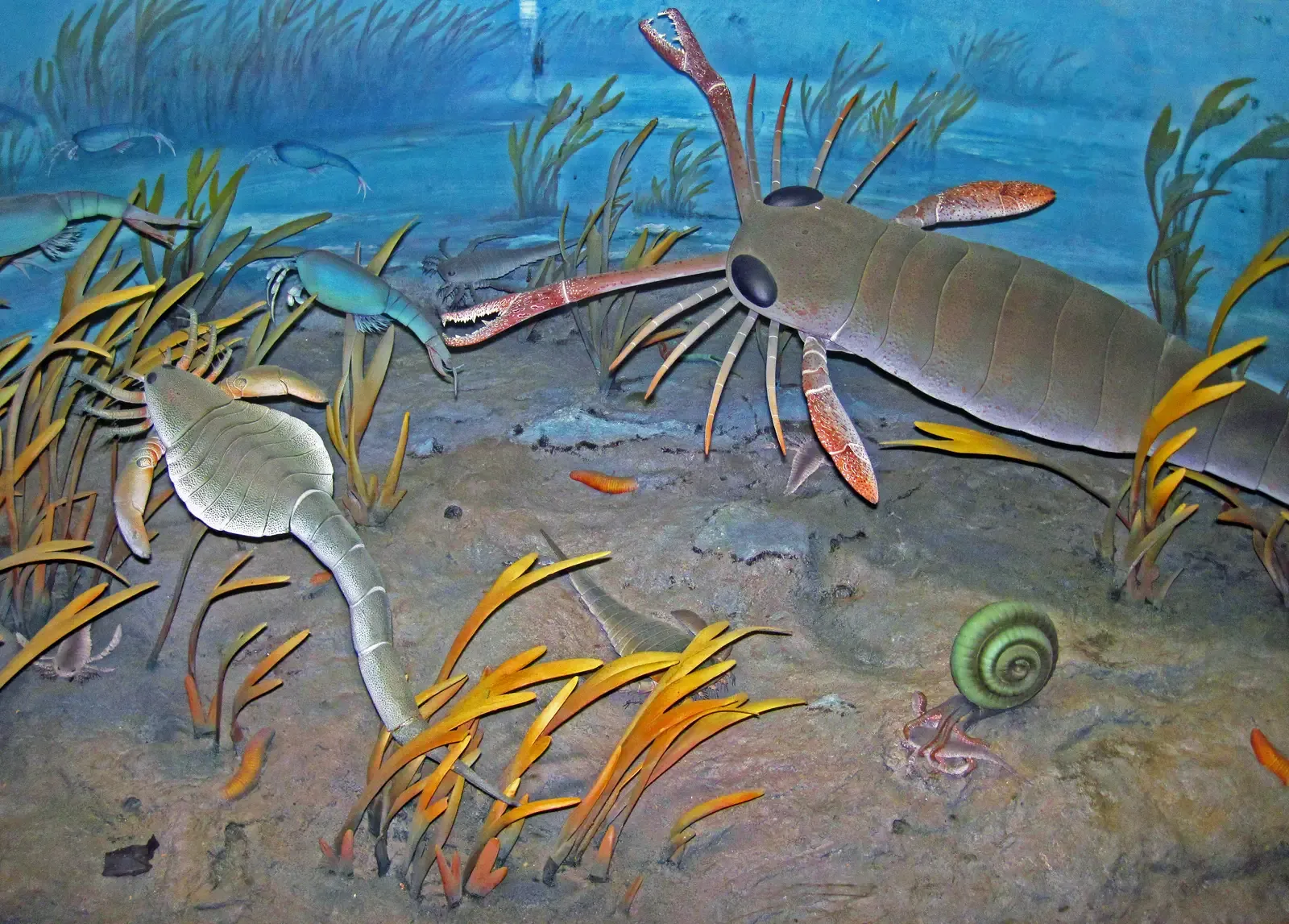
Eurypterids, often called sea scorpions, looked like the bad-tempered cousins of modern horseshoe crabs and scorpions combined. Some were small and probably harmless, but others grew to lengths taller than a human, which is deeply unsettling to picture crawling or swimming near the shore. With paddle-like limbs, segmented armor, and in some species, long spined tails, they were clearly built for a mix of swimming and ambush.
These animals ruled coastal and shallow waters for millions of years, and some likely hunted fish and other arthropods. If you have ever been startled by a crab scuttling near your feet, imagine that reaction and multiply it several times when the creature is human-sized and shaped like a giant scorpion. In my opinion, the fact that sea scorpions are gone is one of evolution’s kinder decisions for our collective peace of mind.
Helicoprion: The Shark With a Buzzsaw Hidden in Its Jaw
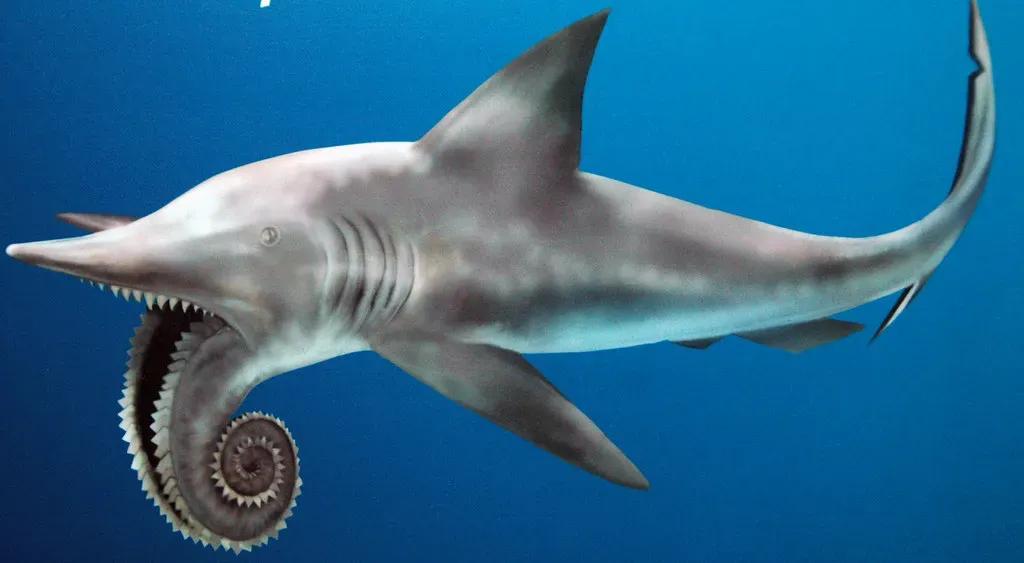
Helicoprion is one of those fossils that looks like a prank at first glance. Its most famous feature is a spiral of teeth, preserved like a coiled saw blade, that left scientists arguing for decades about where it even sat in the mouth. Early reconstructions put the spiral on the snout, under the chin, or even protruding like some strange facial ornament, because no one had seen anything like it before or since.
The current best-supported view is that the tooth whorl sat in the lower jaw, rolling new teeth into the spiral as the animal grew, and possibly helping slice or grip soft prey like squid. Imagine biting into your food with a rotating razor built into your gums; that is the kind of experimental engineering evolution was playing with here. To me, Helicoprion is the perfect example of how the fossil record keeps humbling us: every time we think we know what a shark-like creature can look like, another prehistoric curveball shows up.
Trilobites: The Original Modular Arthropod Designs
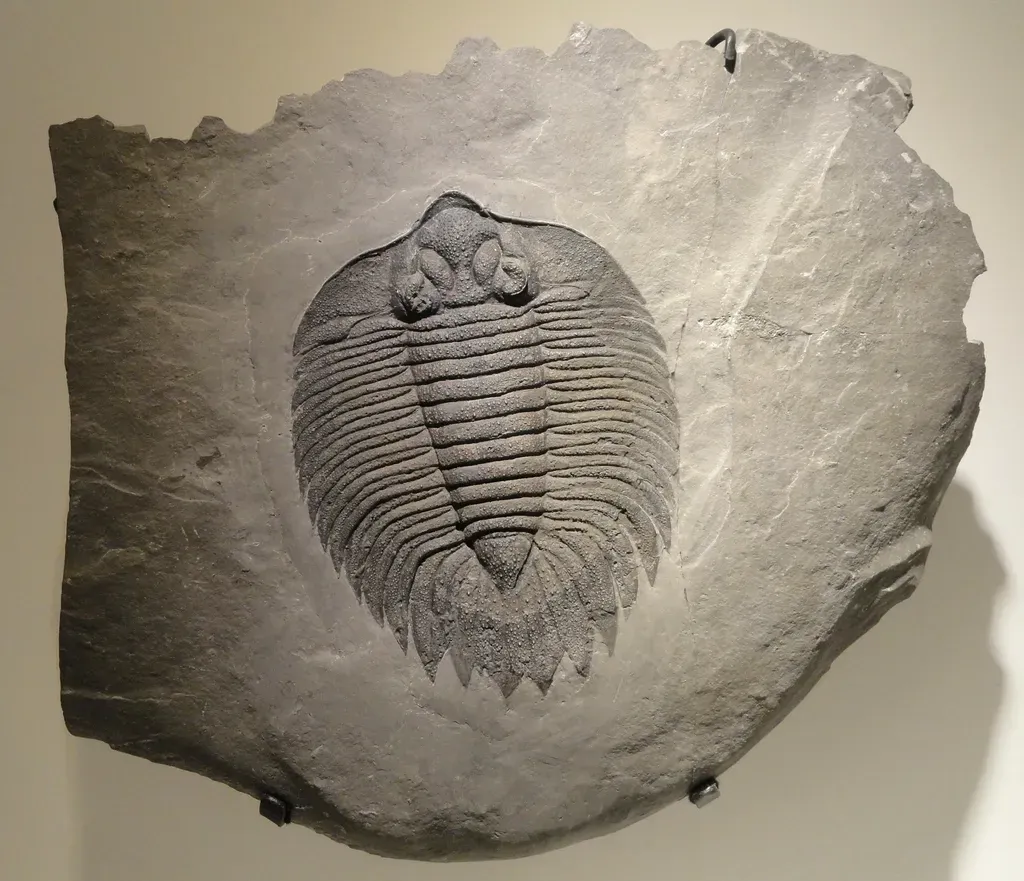
Trilobites may be less immediately bizarre than some Cambrian oddities, but they are quietly one of the most mind-bending groups. They came in countless shapes and sizes, with some sporting long spines, elaborate head shields, or even complex compound eyes that rival those of modern insects. Their bodies were divided into three main lobes and multiple segments, giving them a kind of modular, snap-together design that evolution endlessly tinkered with.
Some trilobites rolled up into tight balls like armored pill bugs, others developed spiny crowns that look almost ornamental, and a few had strangely elongated snouts or tail spines. When I scroll through images of them, it feels like flipping through different “skins” for the same basic character in a game. Trilobites make the ancient oceans look less like a static environment and more like a massive product line where evolution kept releasing limited-edition models for hundreds of millions of years.
Wiwaxia: The Spiky Slug Wrapped in Metallic Confusion
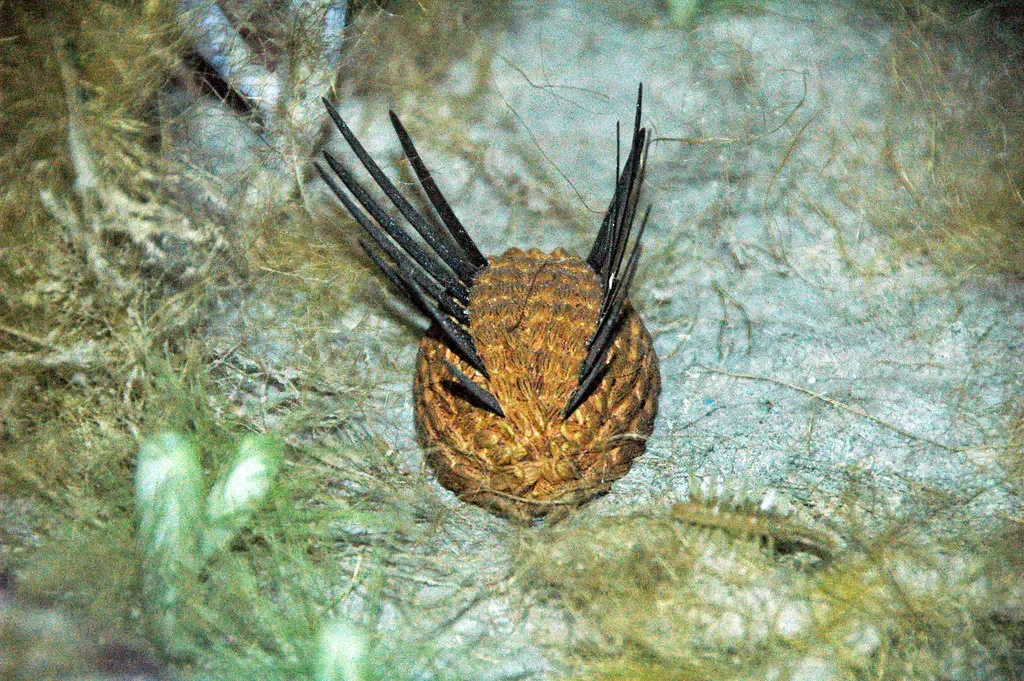
Wiwaxia was a small, soft-bodied creature covered in overlapping scales and large dorsal spines, giving it a hedgehog-meets-armored-slug vibe. Its body was low and oval, creeping along the seafloor while its array of spines stuck up like biological barbed wire. The scales, or sclerites, were arranged in neat rows, almost like roof tiles, which makes the whole animal look strangely tidy despite its oddity.
Scientists have argued for years over exactly where Wiwaxia fits on the tree of life, with some seeing links to mollusks and others to annelid worms. That murky identity adds to its charm, as if it is evolution’s half-finished draft, sitting somewhere between familiar categories. I like to think of Wiwaxia as nature’s experiment in extreme anti-predator fashion: instead of running faster, it basically turned itself into a walking, spiky do-not-touch sign.
Tully Monster: The Unsolved Puzzle of a Lost Ecosystem
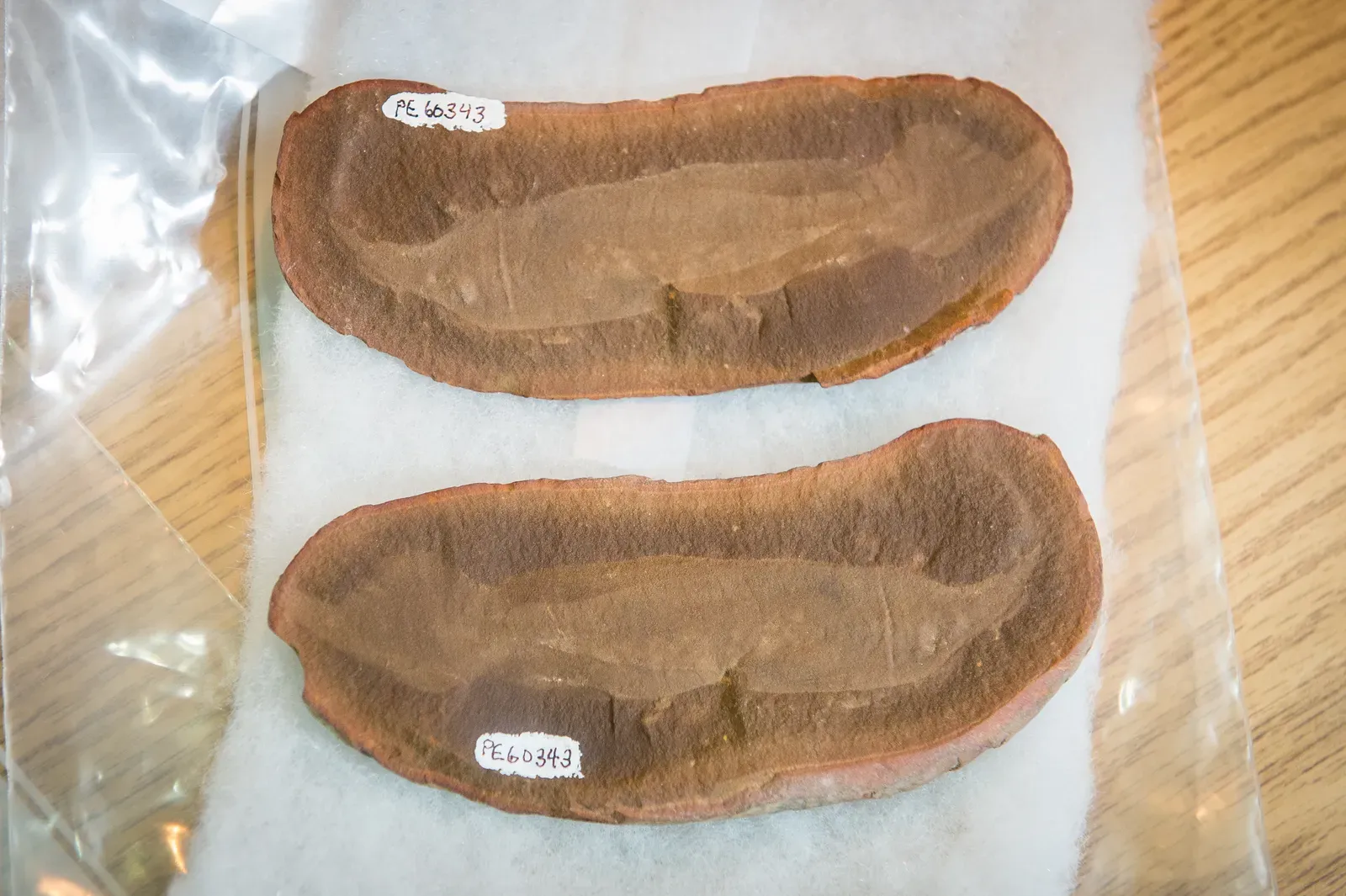
The Tully Monster, known from fossils in what is now Illinois, is one of the most persistent biological mysteries. It had a torpedo-shaped, soft body, stalked eyes, and a long, flexible proboscis ending in a claw-like mouth with teeth. The fossils are so strange and flattened that scientists have debated whether it was a vertebrate, an invertebrate, or something in between that we simply do not have a living equivalent for today.
Various studies have suggested links to jawless fishes, while others argue it does not quite fit neatly there either, leaving its true identity unsettled. This ambiguity is exactly why it feels like part of an evolutionary experiment gone off in a direction we never got to see through. Whenever I read about the Tully Monster, I get the sense we are staring at a puzzle piece from a larger scene we can no longer reconstruct, a reminder of how much of ancient life is still just out of reach.
Pikaia: The Awkward Early Blueprint for Backbones
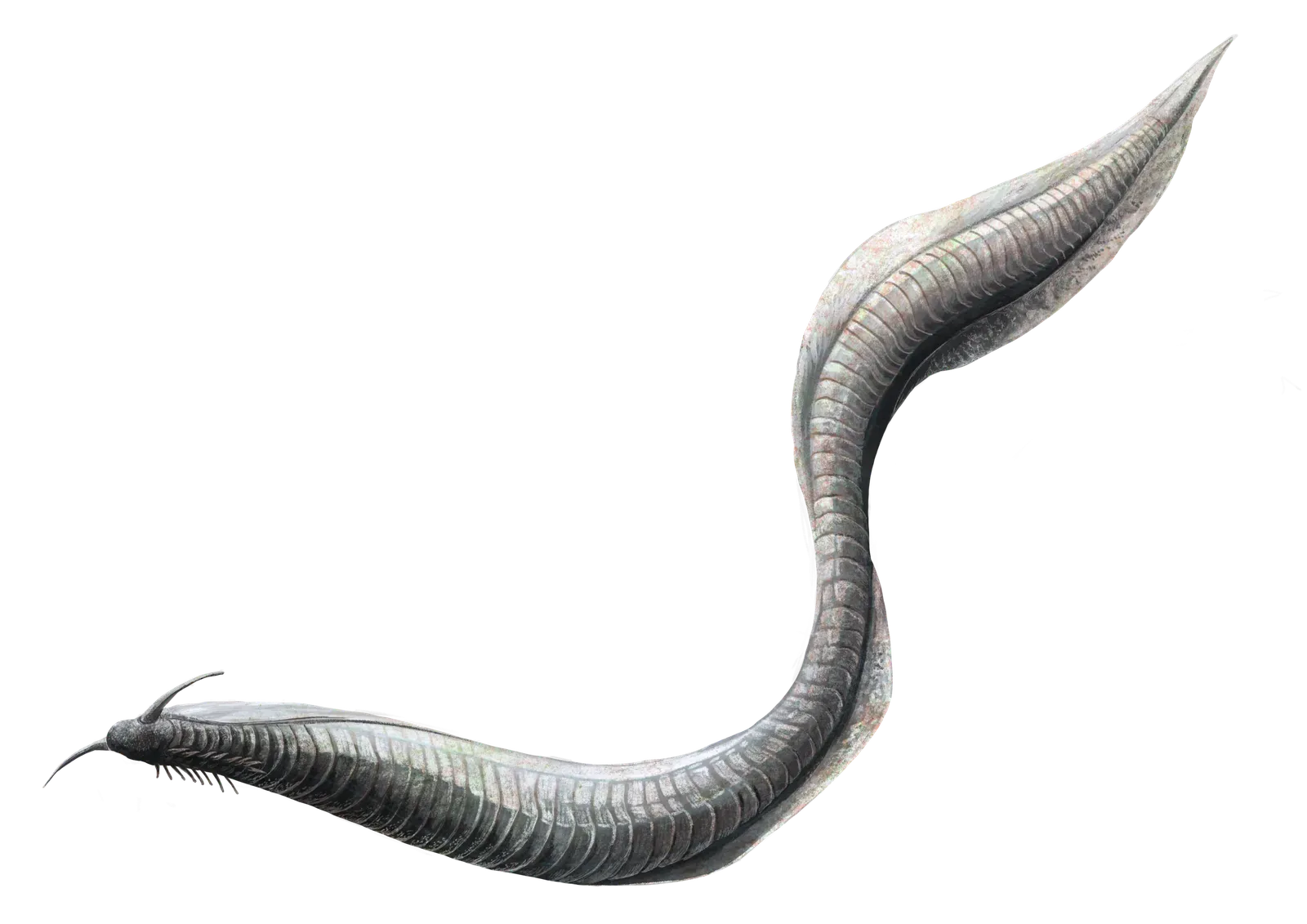
Pikaia looks almost boring at first glance: a small, eel-like creature with a simple, flattened body and a fin along its back. But hidden in that modest silhouette is a notochord, a stiff rod running along its length that marks it as one of the earliest known chordates, the broader group that includes all animals with backbones. In other words, this unremarkable little swimmer might be close to the kind of body plan that eventually led to fish, amphibians, reptiles, birds, and mammals.
What I love about Pikaia is how un-dramatic it appears compared to the claws, spikes, and armor of its neighbors. In an ocean filled with experimental hardware, Pikaia is like a quiet beta version of a software platform that will someday run most of the major “apps” of vertebrate life. It is a humbling thought that our own evolutionary story may trace back to something so small and easily overlooked in those wild Cambrian seas.
Conclusion: Evolution’s Wild Phase Was Never Really Over
Looking back at these ten creatures, it is tempting to think of the ancient oceans as a chaotic testing ground that has since calmed down into a more sensible, streamlined world. But I do not really buy that. To me, the real lesson is that evolution has always been wild; we just happen to be more familiar with today’s weirdness, from anglerfish with glowing lures to deep-sea worms that live on volcanic vents. The past only looks stranger because enough time has passed for its failed experiments to pile up like concept art in the archives.
My opinion is that we underestimate how provisional everything still is, including us. Pikaia, Hallucigenia, and Anomalocaris once felt as established in their ecosystems as sharks and whales do now, yet they ultimately disappeared or morphed into something utterly different. If evolution could treat those designs as temporary, there is no reason to think our current version of life is the final draft. When you imagine these ancient oceans, do you see a finished masterpiece – or just one wild chapter in a story that is still very much being written?