
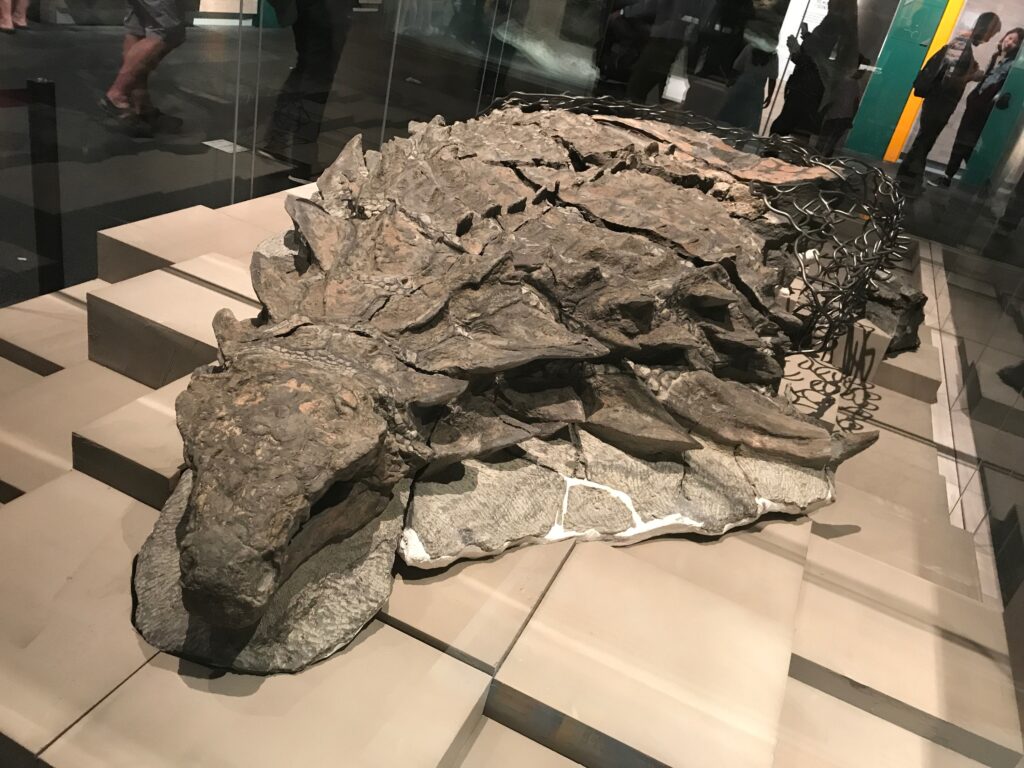
Most people assume a 110-million-year-old dinosaur is just a jumble of loose bones sitting in a museum drawer somewhere, waiting to be pieced together like a puzzle. But in 2011, a heavy equipment operator at a Canadian mine hit something that wasn’t rock at all – it was a dinosaur that still looked, in almost every sense, alive. Scientists now call it the best-preserved armored dinosaur ever found on Earth.
No cleaned skeleton. No scattered fragments. A body. What’s still attached to it, more than 110 million years after it died, sounds less like paleontology and more like science fiction. Here’s what researchers actually found.
#1 – Its Original Three-Dimensional Body Shape
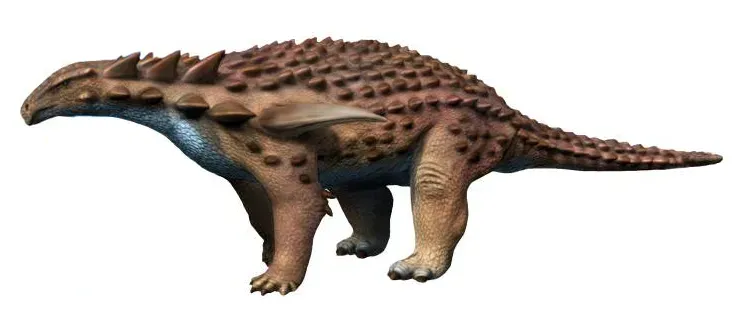
Most fossils get crushed flat over millions of years, turning a once-living animal into something closer to a pressed flower. This one didn’t.
While most prehistoric remains end up compressed after fossilization, this specimen retained the nodosaur’s original shape, along with the arrangement of its armor plates and patches of skin and soft tissue. That’s not a small detail – it means researchers aren’t guessing at proportions from a flattened silhouette. They’re looking at a body that still has depth, curvature, and contour almost exactly as it did the day the animal died. The fossil is preserved in genuine 3D, not the pancaked 2D slabs most dinosaur discoveries produce. That alone makes it one of a kind.
#2 – Its Armor Plates, Still Sitting in Their Original Positions
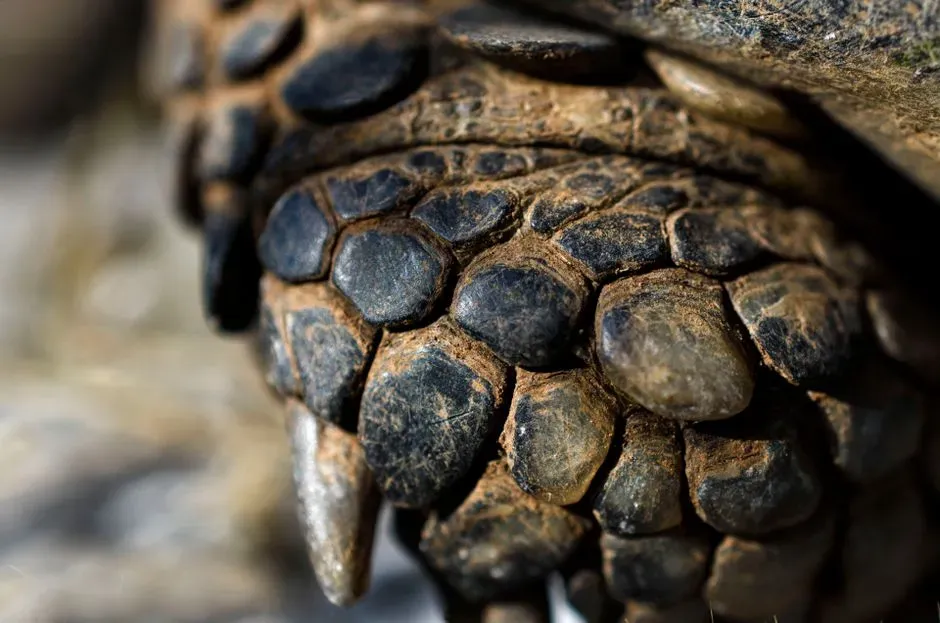
Here’s the part that stunned even veteran fossil hunters: the armor didn’t just survive. It never moved.
The osteoderms and scales that make up the body armor have been preserved in the exact position they occupied when this dinosaur roamed Alberta during the Early Cretaceous. Scientists aren’t reconstructing a guess at how the plates were arranged across the back and flanks – they’re looking at the actual, undisturbed armor layout. Most museum displays of armored dinosaurs are educated reconstructions. This one isn’t. Every plate is exactly where the animal put it 110 million years ago. For decades, illustrators had to guess how nodosaur armor actually overlapped. Now they don’t have to guess anymore.
Fast Facts
- Discovered on March 21, 2011, by heavy equipment operator Shawn Funk at the Suncor Millennium Mine, roughly 17 miles north of Fort McMurray, Alberta
- Formally named Borealopelta markmitchelli in 2017, honoring museum preparator Mark Mitchell
- A member of Nodosauridae, a family of armored dinosaurs closely related to Ankylosaurus but without a club tail
- Now on permanent display at the Royal Tyrrell Museum of Palaeontology in Drumheller, Alberta
#3 – Its Keratin Sheaths Still Covering the Bone
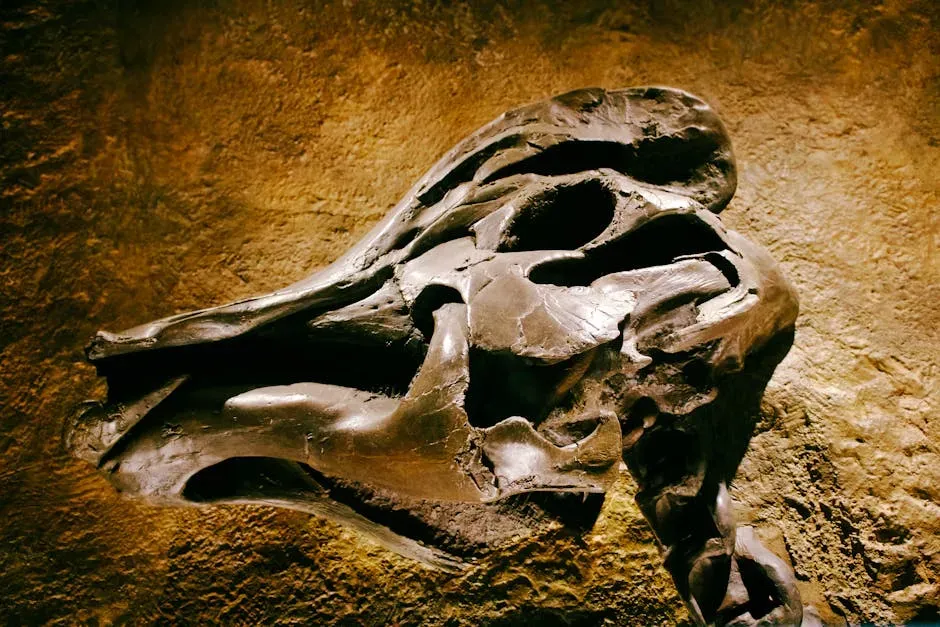
Bone alone doesn’t tell you what an animal actually looked like in life – the soft covering does. And this fossil kept that covering too.
The remarkable preservation of its armored plates, along with pockets of preserved scale, is finally letting paleontologists understand the true size and shape of the creature’s defenses. Most armored dinosaur reconstructions rely purely on bony osteoderm shape, ignoring the fact that a keratin sheath – the same material found in fingernails and rhino horn – would have added extra length and a very different silhouette in life. The neck shows alternating osteoderm bands with preserved keratinous coverings, and traces of overlying skin survived in several areas too. This is one of the only dinosaur fossils on Earth where the actual keratin covering survived, not just the bone underneath.
#4 – Its Actual Skin, Patterns and All
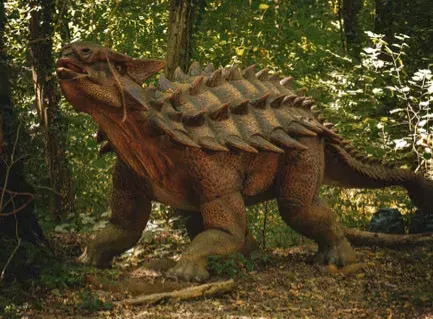
Skin almost never survives fossilization. This time, it did – and it kept its texture.
This fossilized nodosaur dates back over 110 million years, and remarkably, its skin still retains visible patterns. That’s an almost unheard-of level of preservation for soft tissue this old. Most people picture “dinosaur skin” as an artist’s rubbery guess based on modern reptiles. This specimen removes the guesswork entirely – the actual epidermis is sitting right there under museum glass in Alberta. You are looking at real Cretaceous skin, not a sculptor’s interpretation of it. Some paleontologists argue this single detail alone makes the specimen worth more scientifically than a dozen complete skeletons.
#5 – Its Polygonal Scales, Still Arranged in Their Natural Mosaic
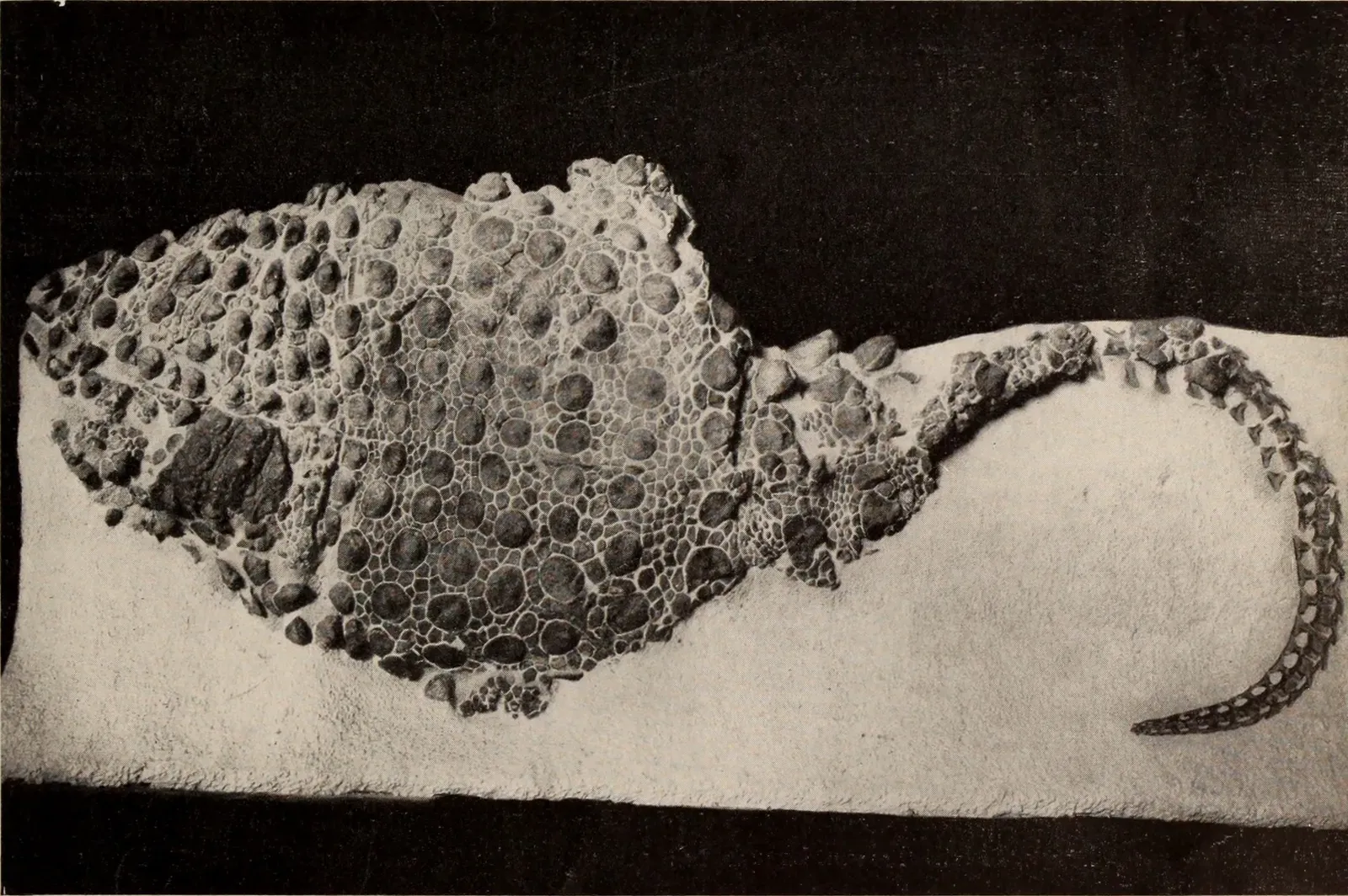
Between the big armor plates, smaller scales filled in the gaps – and remarkably, those tiny details held up too.
Researchers documenting the specimen noted alternating cervical osteoderm bands with preserved keratinous sheaths and polygonal scales along the neck, plus lateral thoracic osteoderms with keratinous coverings and polygonal scales across the flank. These aren’t vague impressions – they’re distinct, countable, geometric scale shapes still locked into the surrounding tissue. This detail lets scientists map exactly how the small scales interlocked with the bigger bony plates to form one continuous defensive surface, rather than isolated armor “islands.” The tiny polygonal scales survived just as clearly as the massive plates around them, the kind of preservation most fossil labs never see in a career.
#6 – Its Reddish-Brown Coloration
Dinosaur color used to be pure speculation. This fossil turned it into measurable science.
An analysis of the fossilized skin revealed the ancient creature had a reddish-brown coloration, paired with camouflage in the form of countershading – despite being roughly the size of a small car. Scientists pulled this from microscopic evidence rather than assumption, detecting minuscule remnants of pigment that let them reconstruct the dinosaur’s actual coloring, a feature that may have also helped it attract mates. Most dinosaur documentaries you’ve watched are still guessing at color – this one didn’t have to. That puts it in a very small club of dinosaurs where color has been scientifically confirmed rather than artistically invented.
Worth Knowing
- Scientists identified the color using fossilized melanosomes, the same pigment-carrying structures found in the skin of living animals
- The pigment pattern faded from a darker back to a lighter belly, the classic blueprint of countershading
- This makes it one of the very few dinosaurs on Earth with scientifically confirmed coloring rather than an artist’s best guess
#7 – Its Countershading Camouflage Pattern
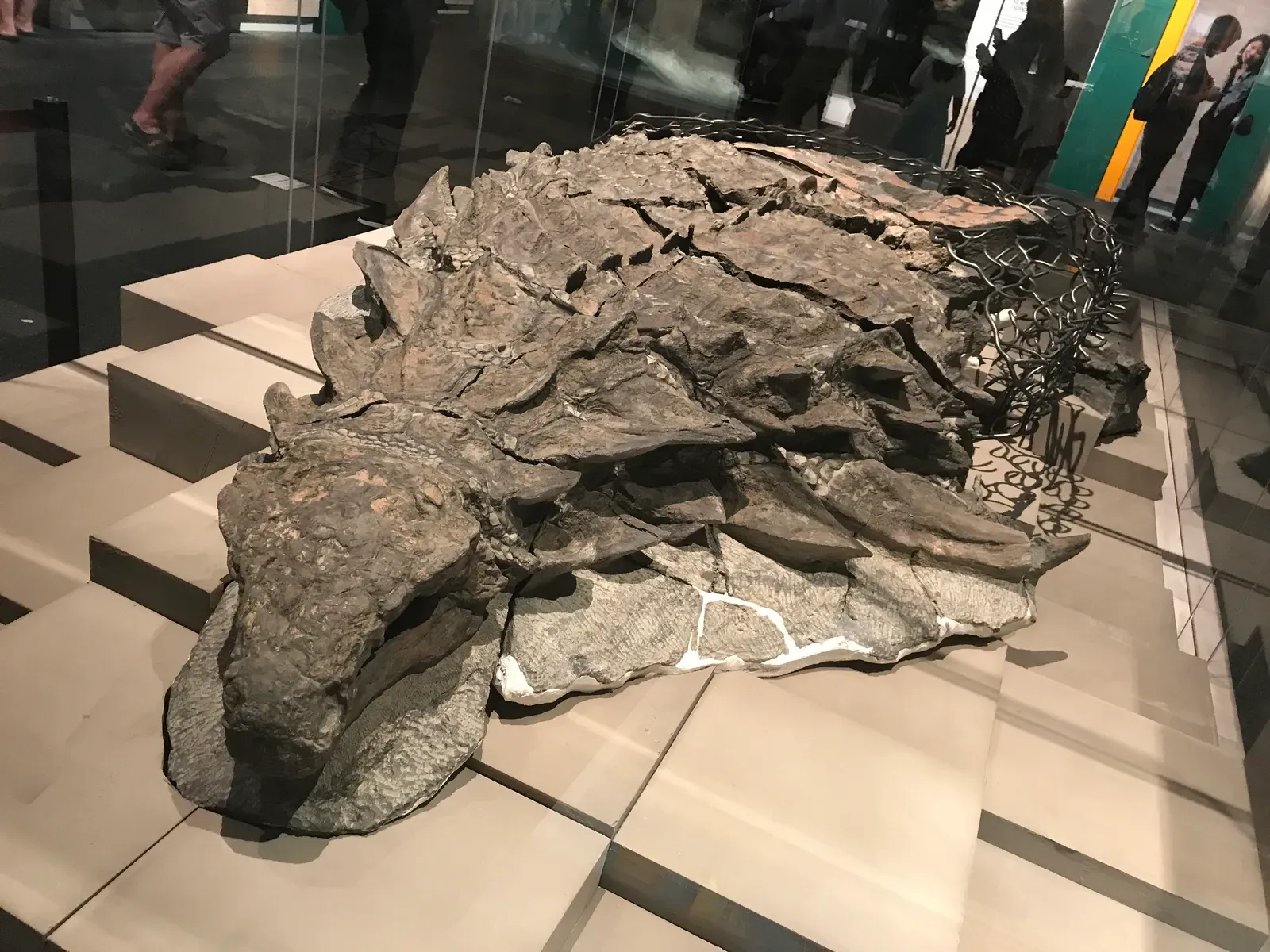
A 3,000-pound armored tank shouldn’t need camouflage. Yet it had it anyway – and that single fact rewrote assumptions about who was hunting whom in the Early Cretaceous.
The skin exhibited countershading, a common camouflage pattern in which an animal’s underside is lighter than its back, typically seen in animals under real predation pressure. Modern large herbivores that face little to no predation, whether because of their size or isolation, generally don’t bother evolving countershading at all. A three-thousand-pound walking tank still needed to hide from something. Some researchers argue this single detail alone is reason enough to rethink the food chain assumptions built around armored dinosaurs.
We don’t just have a skeleton. We have a dinosaur as it looked in life, with skin and armor and even some of its stomach contents intact.
Caleb Brown, Royal Tyrrell Museum
#8 – Its Head, With Facial Detail Still Intact
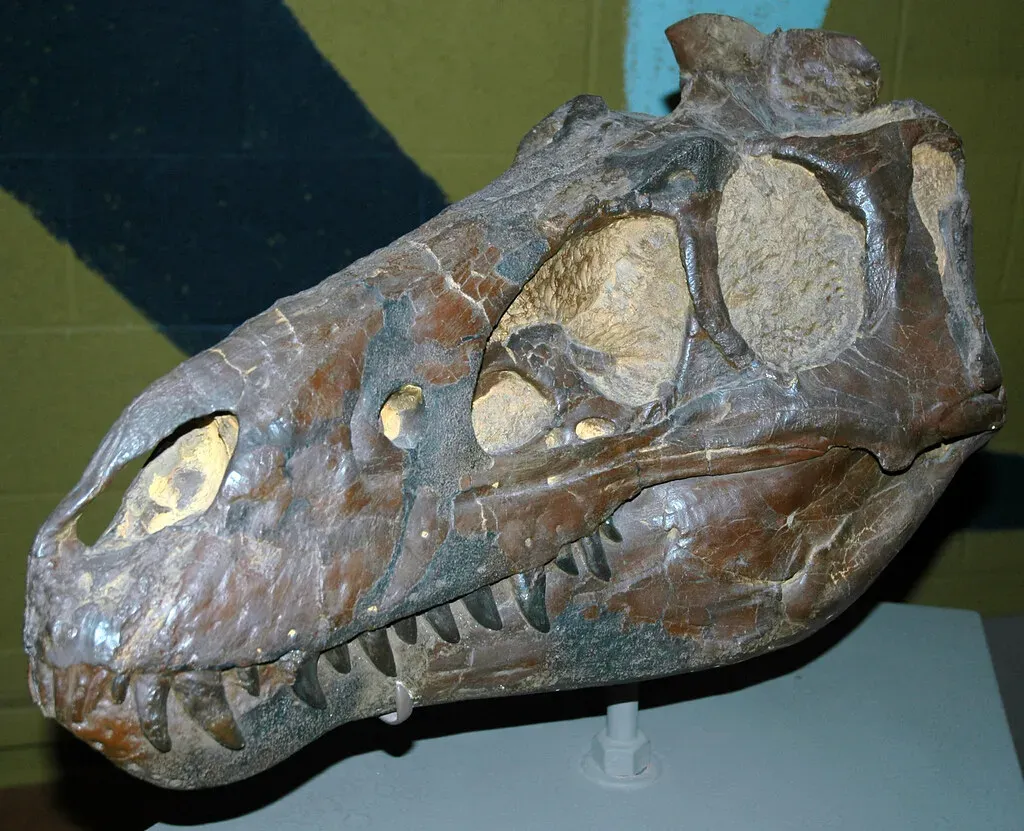
Most dinosaur skulls found in the fossil record are crushed, scattered, or missing pieces entirely. This one still looks like a face.
Paleontologists describe the find as extraordinarily well preserved – essentially mummified, with skin, facial contours, and even gut contents intact. The holotype preserves the head, neck, most of the trunk and sacrum, a complete right forelimb, and a partial left forelimb and hand. Researchers even CT scanned the skull to study its internal structure, though the dense surrounding rock limited what those scans could reveal. You can still make out the shape of its snout and the contours of its face, something almost no other armored dinosaur specimen on the planet allows.
#9 – Its Neck Spikes and Cervical Armor Bands
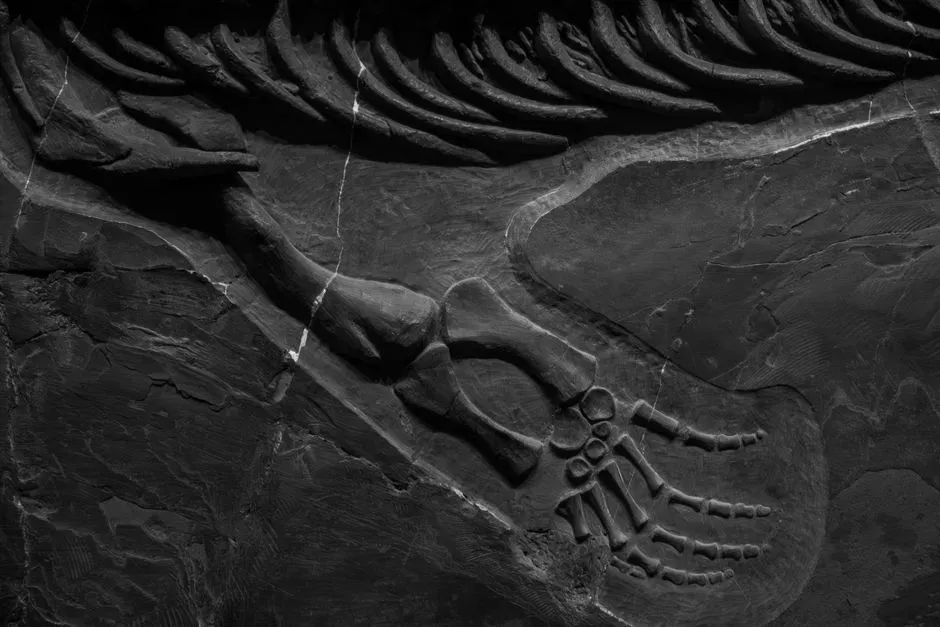
The neck is usually one of the most vulnerable, and most fragile, parts of any armored animal. On this fossil, it’s one of the best-preserved sections of all.
A close-up view of the neck shows alternating cervical osteoderm bands, preserved keratinous sheaths, and polygonal scales woven between them. This banding pattern hands scientists an actual blueprint of how the neck’s defense system was layered – hard bone underneath, keratin sheath covering it, and flexible scale rows filling the connective gaps. It’s the kind of soft-tissue-to-hard-tissue relationship that almost never survives fossilization in any dinosaur, let alone one this old. The neck armor alone gave researchers more anatomical information than most complete dinosaur skeletons combined.
At a Glance
- Preserved region: snout to hips, including a complete right forelimb and hand
- Skin, scales, and keratin sheaths all survived together on the same specimen
- Armor stayed locked in its original life position instead of being reconstructed by scientists
- Widely regarded as the most complete, three-dimensionally preserved nodosaurid ever found
#10 – Its Forelimb and Hand
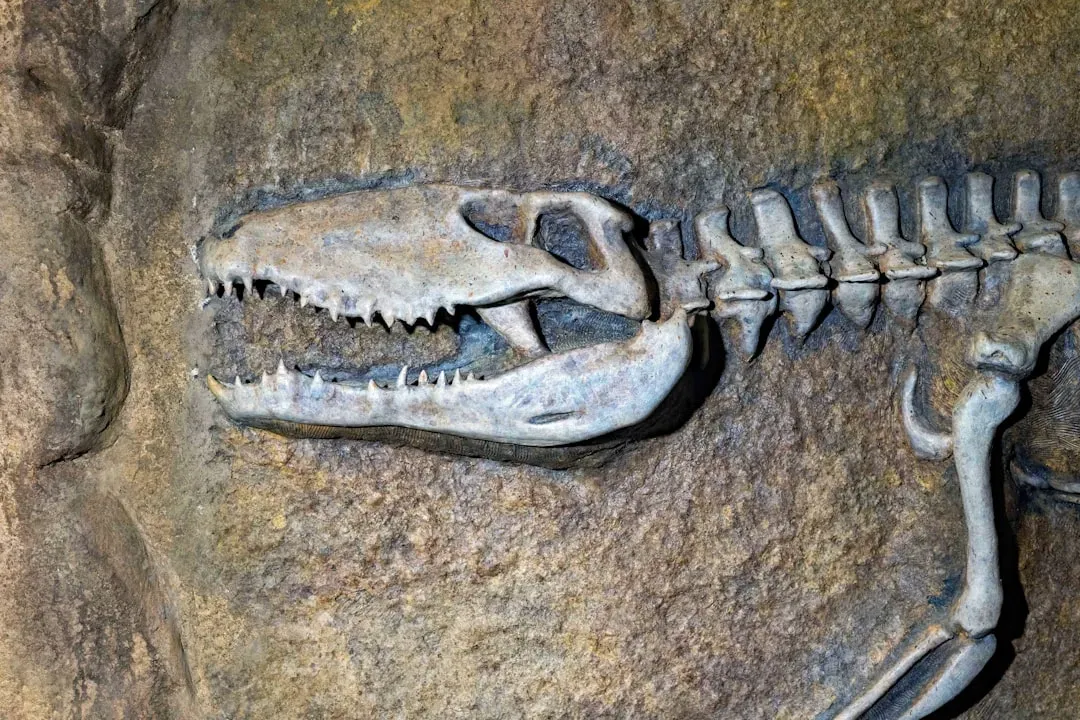
A dinosaur’s hand can reveal how it walked, how it fed, and how it defended itself – and this one kept both hand and foot intact.
The holotype preserves a complete right forelimb and hand, plus a partial left forelimb, with osteoderms still in place and nearly complete soft-tissue surfaces preserved across the limbs, hand, and foot. That means researchers aren’t just looking at bone shape – they’re looking at the actual soft-tissue surface of the hand, still positioned exactly as it was in life. This kind of preservation on limb extremities is exceptionally rare, since hands and feet are usually the first parts of a carcass to be scavenged or scattered before fossilization even begins. The animal’s actual hand – skin, armor, and all – survived largely intact.
#11 – Its Last Meal, Still Sitting in Its Stomach
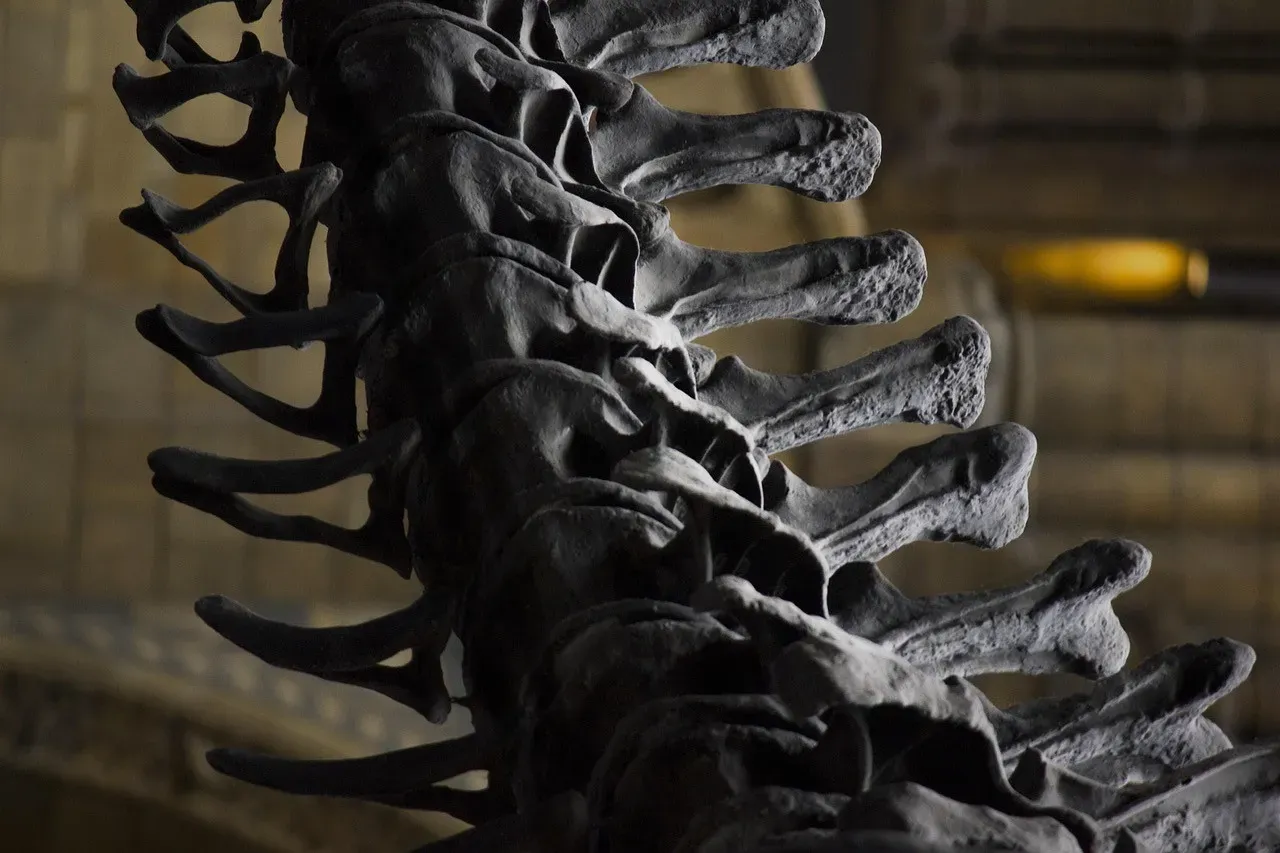
This is the detail that turned the fossil from a curiosity into a genuine scientific milestone: its final meal never left its body.
Dinosaur stomachs and diet evidence are rarely preserved at all – a few seeds or twigs have turned up in dinosaur guts before, but never conclusive proof of an actual plant diet. Roughly 110 million years ago, this nodosaur ate ferns in a recently burnt landscape, likely ambling through the aftermath of a wildfire and gobbling up delicate green ferns pushing up through the ash. The mass in its stomach, about the size of a soccer ball, was made almost entirely of ferns. The plant fragments were preserved down to the cellular level, according to researchers. This isn’t a reconstructed diet – it’s a literal, physical meal, frozen in time.
Quick Compare
- Borealopelta: roughly 18 feet long, nearly 3,000 pounds, stomach packed with ferns preserved down to the cellular level
- Kunbarrasaurus (Australia): the only other armored dinosaur ever found with digested plant matter in its stomach
- Key difference: Borealopelta was larger, and its stomach contents came through in far sharper detail, giving scientists their clearest picture yet of a dinosaur’s final meal
#12 – Its Gizzard Stones
Alongside the fern fragments, scientists found something most people don’t even know dinosaurs used at all: swallowed stones that helped it digest.
The gut contents included stones the animal had ingested to help break down tough plant matter, sitting right alongside the fern material. By embedding fragments of the gut contents in resin, researchers were able to slice them thin enough to study under a microscope, revealing thousands of tiny fossilized plant particles. This combination – stomach stones and cellular-level plant matter in the same digestive mass – is essentially unheard of in the dinosaur fossil record. This fossil proves exactly how one specific animal processed its food on the actual day it died. That’s not a reconstruction. That’s a receipt.
#13 – Its Original Weight, Almost Unchanged
After 110 million years, you’d expect a fossil to weigh a fraction of what the living animal did. This one barely lost anything.
The nodosaur weighed approximately 3,000 pounds in life, and today the mummified specimen still weighs around 2,500 pounds. Minerals didn’t just coat the animal – over millions of years on the ocean floor, minerals gradually took the place of its armor and skin, preserving it in the lifelike form now on display. That mineral replacement is exactly why the fossil retained so much of its original mass instead of crumbling into a lightweight husk. A block of “rock” in a Canadian museum weighs almost exactly what the living animal did the day it died. That single number sums up everything unusual about this discovery.
The Bottom Line
Most fossils give scientists bone fragments and educated guesses. This nodosaur gave them skin, armor, keratin, coloration, camouflage, a face, a hand, a last meal, digestion stones, and nearly its original body weight – all in one specimen. It took technician Mark Mitchell over 7,000 hours across six years just to expose it, and the payoff rewrote assumptions about dinosaur color, predation, and anatomy along the way.
Whether it truly deserves the title “best-preserved dinosaur on Earth” is still debated in paleontology circles, but the evidence sitting in Drumheller makes a hard case to argue against. My honest take? A fossil that still has its last lunch in its stomach doesn’t need a marketing title – it already speaks for itself. Which detail surprised you the most – the stomach contents, the color, or the fact that it still weighs 2,500 pounds? Drop your pick in the comments.