Evolution is one of those topics that most of us think we “get” until we stumble on a detail that sounds almost absurd. Animals that can swap sex depending on who is around, plants that domesticated us as much as we domesticated them, fish turning into land-walkers and then back into fish again – it sounds more like science fiction than biology class. Yet the wildest part is this: the stranger the story, the more ruthlessly it has been tested by millions of years of survival.
As someone who grew up on neat textbook diagrams of a chimp slowly standing up into a human, I remember the first time I realized how messy the real story is. Evolution is not a straight ladder but a chaotic, brilliant tangle of experiments, dead ends, and lucky breaks. The ten facts below at first glance, but they are grounded in solid, repeatable science – and once you see them, it gets very hard to look at yourself, or any living thing, the same way again.
1. You Are Part Fish, Part Reptile, Part Ape
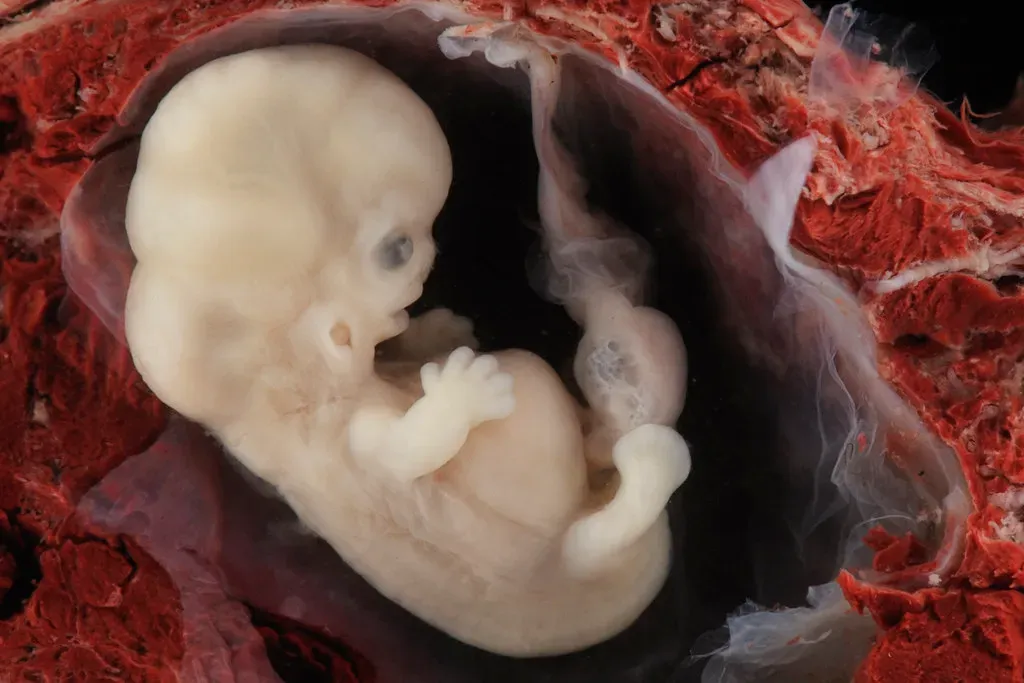
It sounds like something a kid would draw in crayon, but your body is basically a remix of earlier animals layered on top of each other. The bones in your arm and hand trace straight back to lobe-finned fish that crawled onto land hundreds of millions of years ago, and your inner ear is an evolutionary mash-up of jaw bones that moved, shrank, and changed jobs. Even the way your embryo develops – with gill-like arches in the neck region – quietly betrays that deep aquatic history.
Then there’s the reptile and mammal side of you. Your spine, rib cage, and many skull features reflect a shared ancestry with ancient reptile-like creatures, while your warm blood, hair, and complex brain are mammal innovations layered on top. When people say humans are apes, they are right, but it is only the top chapter of a very long story. If you could scroll backward through your lineage, you would not see clean breaks, but gradual shifts where fish-like turned to amphibian-like, then reptile-like, then mammal-like, then ape, then you.
2. Whales Are Hoofed Mammals That Went Back to the Ocean
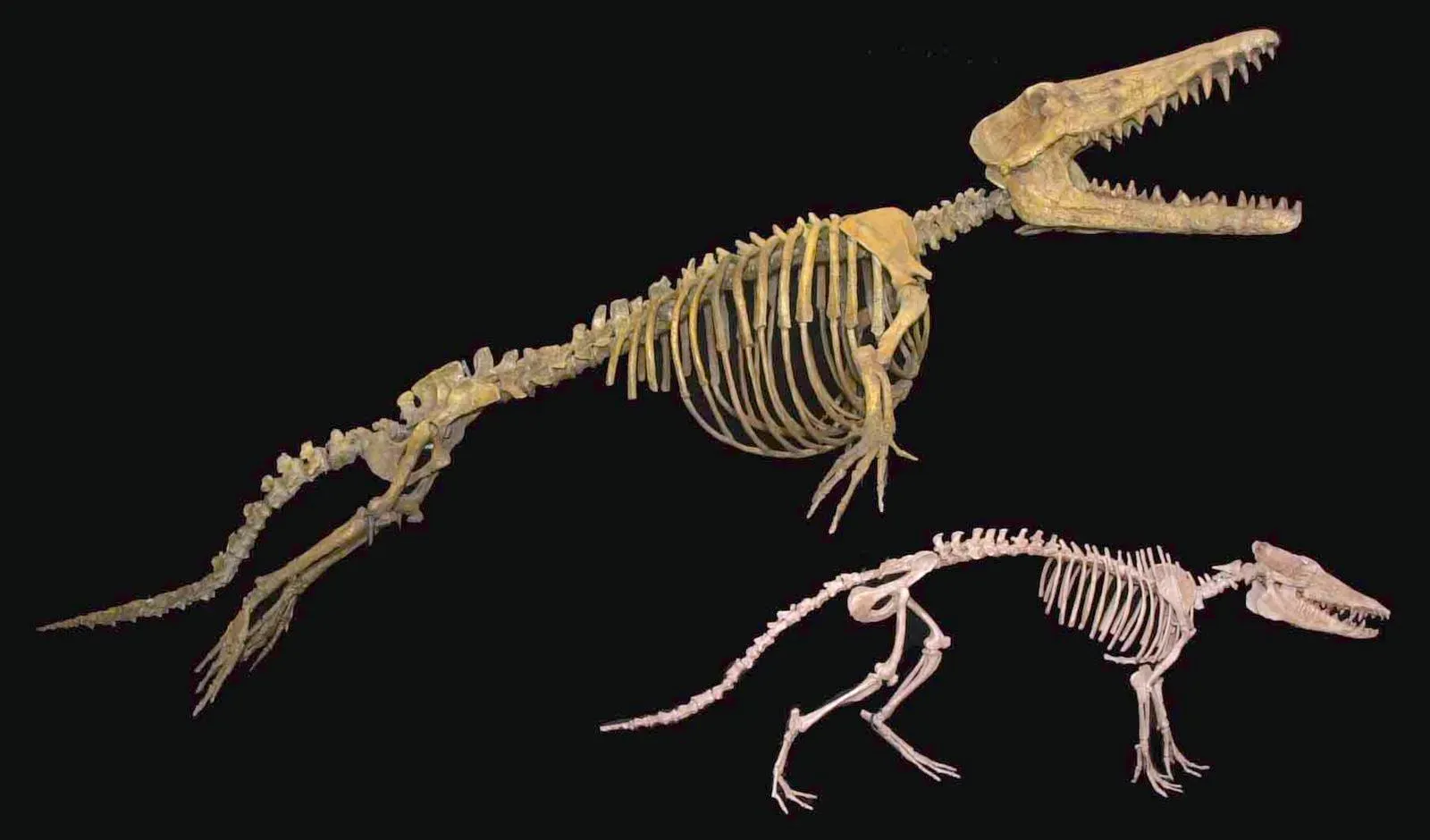
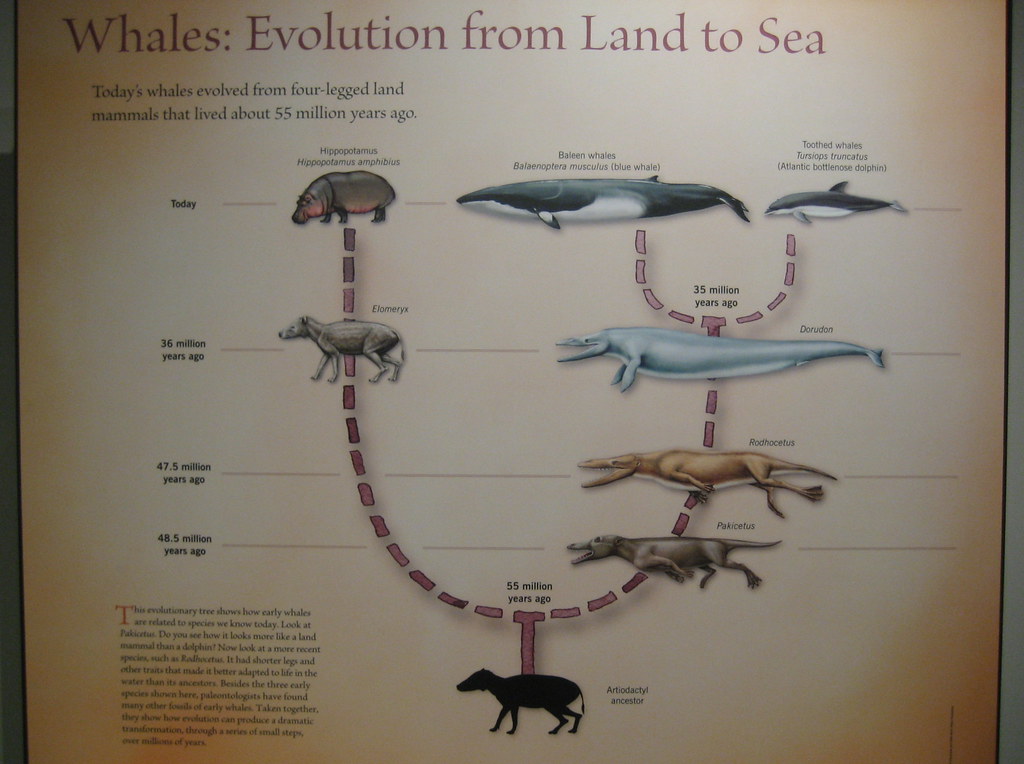
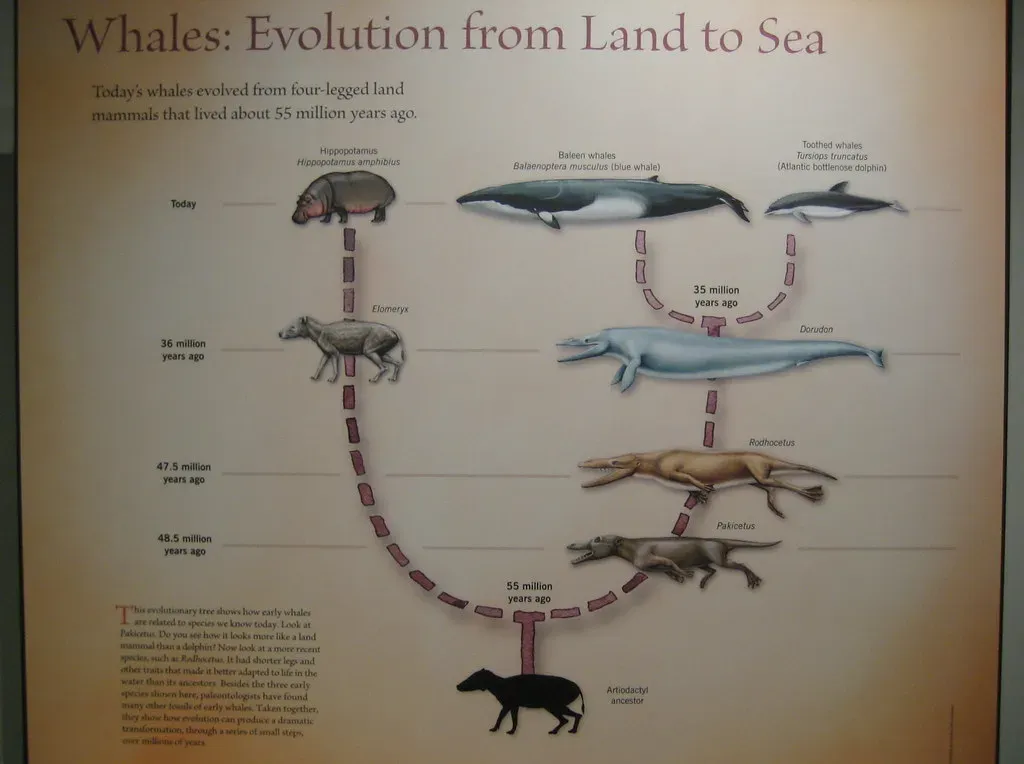
Whales seem so perfectly made for the ocean that it feels wrong to call them anything but sea creatures, yet their ancestors walked on land on four legs and had hooves. Early whale relatives, discovered in fossil beds in places like Pakistan, had ankles and limb bones that clearly place them in the same broader group as hippos and other hoofed mammals. Over millions of years, those limbs shrank, tails broadened into powerful flukes, nostrils migrated to the top of the head, and a land mammal turned into the largest marine animal ever known.
What blows my mind is how much of their land-animal past still shows up in their bodies. Whales and dolphins still have tiny, hidden pelvic bones that no longer connect to legs but linger as ghostly reminders of walking ancestors. Their need to surface for air, the way their spines move up and down rather than side to side, and even the way their embryos briefly form hind limb buds all point back to a time when their predecessors trotted along riverbanks instead of diving for squid. Evolution did not start them over; it hacked what already existed and pushed it in a radically different direction.
3. Birds Are Living Dinosaurs With Modified Arms for Wings
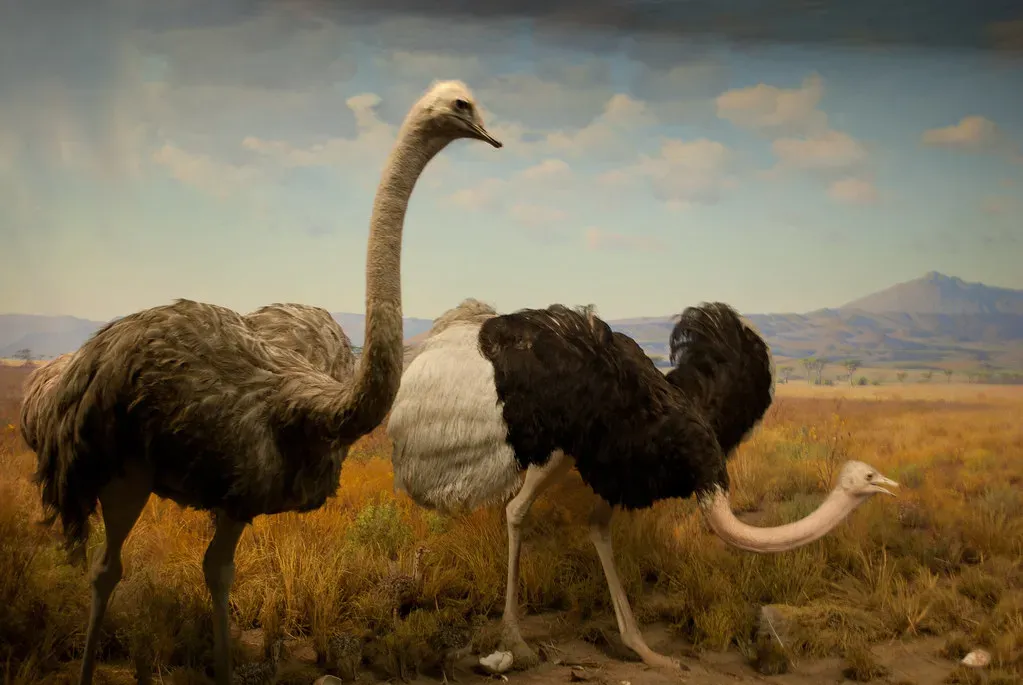
The idea that birds are dinosaurs sounds like a meme until you look at the bones and feathers. Paleontologists have found a long series of fossils with a mix of traits: toothed, long-tailed, clawed-armed reptiles that also sported feathers, wishbones, and birdlike hips. Step by step, over many species and millions of years, those arms lengthened, fingers fused, and feathers became more specialized until something that could only glide or flap awkwardly turned into a skilled flier.
Modern birds still carry that dinosaur heritage in plain sight. Their scaly feet, three-toed legs, and the way they lay hard-shelled eggs tie them closely to theropod dinosaurs like the famous predators of popular imagination. When a crow cocks its head and sizes you up with that sharp, sideways stare, you are looking into the eyes of a very small, very successful dinosaur descendant. It is not that dinosaurs vanished; it is that one branch survived by taking to the skies and shrinking down.
4. Evolution Repeatedly “Invented” Eyes From Scratch
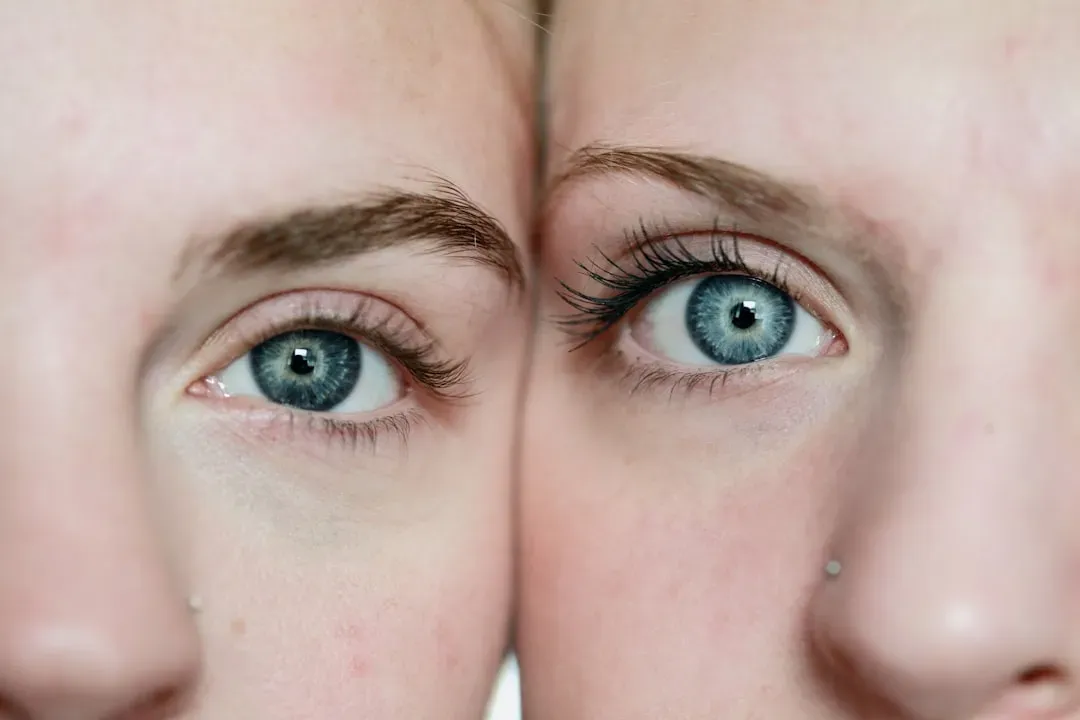
Eyes feel so complex that it is tempting to assume they must have formed only once and then spread everywhere, but evolution did something wilder: it came up with light-sensing organs independently many times. Some eyes are simple pits that just tell an animal which way the light is, others are compound mosaics like those in insects, and others are camera-style lenses like ours and those of octopus relatives. These different eye types rely on similar basic chemistry but are built from different starting tissues and structures.
Even more staggering, octopus and squid eyes reached a camera-like design comparable to our own through an entirely separate evolutionary path. Their retinas are wired in the opposite direction, avoiding a blind spot that vertebrates are stuck with, which is a nice reminder that evolution is not aiming for perfection, just “good enough to survive and reproduce.” The fact that complex eyes arose independently in multiple lineages shows how powerful natural selection is at turning vague light sensitivity into high-resolution vision when the environment rewards it.
5. Some Animals Can Switch Sex Based on Social Cues
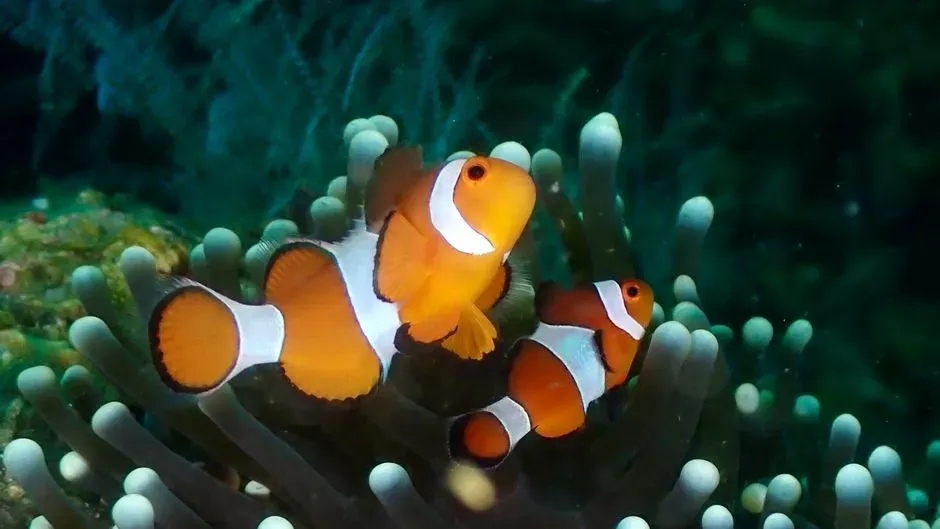
If you grew up thinking sex is a fixed, binary trait stamped at conception, evolutionary biology will happily wreck that illusion. In many fish species, such as clownfish and certain wrasses, individuals can change sex during their lifetime in response to social conditions. A smaller male may turn female if needed, or a dominant female may transform into a male if the group’s top male disappears, complete with shifts in hormones, behavior, and even anatomy.
This is not a biological party trick; it is a brutally efficient way to maximize reproductive success in a changing environment. When mates are scarce, or group sizes are small, the ability to flip roles can mean the difference between leaving descendants and vanishing locally. It challenges our human habit of treating our own model as the default and everything else as weird. In reality, flexibility in sex and reproduction is widespread in nature, and our way is just one among many working strategies that evolution has explored.
6. Natural Selection Can “See” Down to Tiny DNA Copy Errors
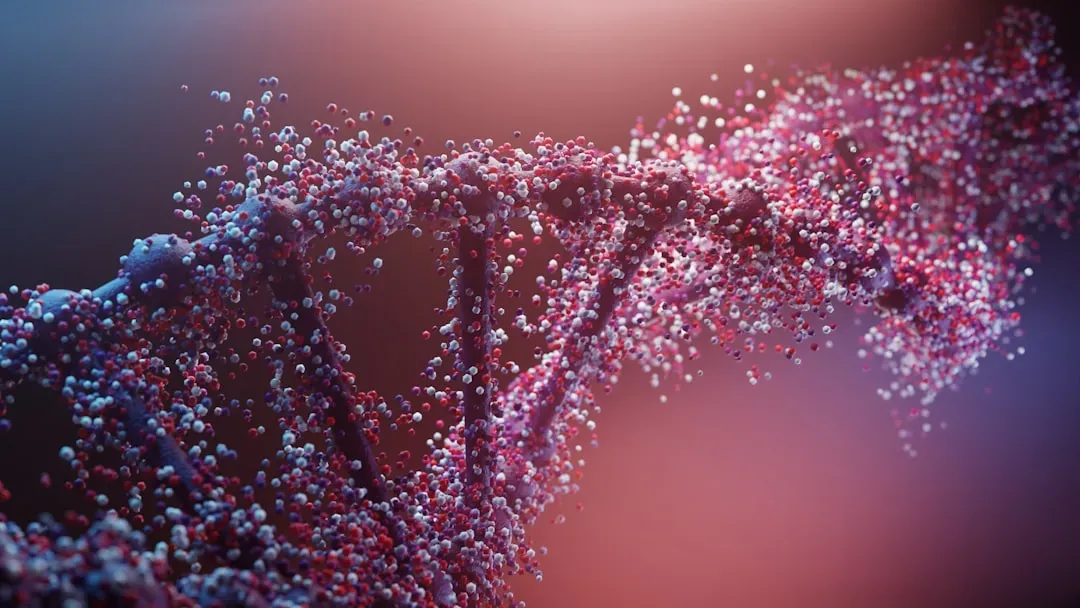
It sounds almost magical that blind trial and error at the DNA level could build something as intricate as a hummingbird or a human brain, but that is exactly what natural selection operates on. Every generation, countless small copying errors slip into DNA when cells divide or when sperm and eggs are formed. Most changes do nothing noticeable, some are harmful, and a small fraction bump survival or reproduction up even a tiny bit – and those tiny edges add up over long stretches of time.
The wild part is how sensitive this process is. A barely noticeable change in a protein shape, a tweak in when a gene switches on during development, or a slight change in behavior can be enough for some individuals to leave more offspring than others. Over thousands or millions of generations, that statistical nudge can turn a drab ancestor into something dramatically different: a giraffe with a long neck, a bat with echo-based navigation, or a plant with a toxin that deters nearly all its grazers. Evolution does not have foresight, but natural selection is relentless in filtering which random DNA variations get to stick around.
7. Your Genome Is Full of Ancient Viruses and “Junk” That Turned Useful
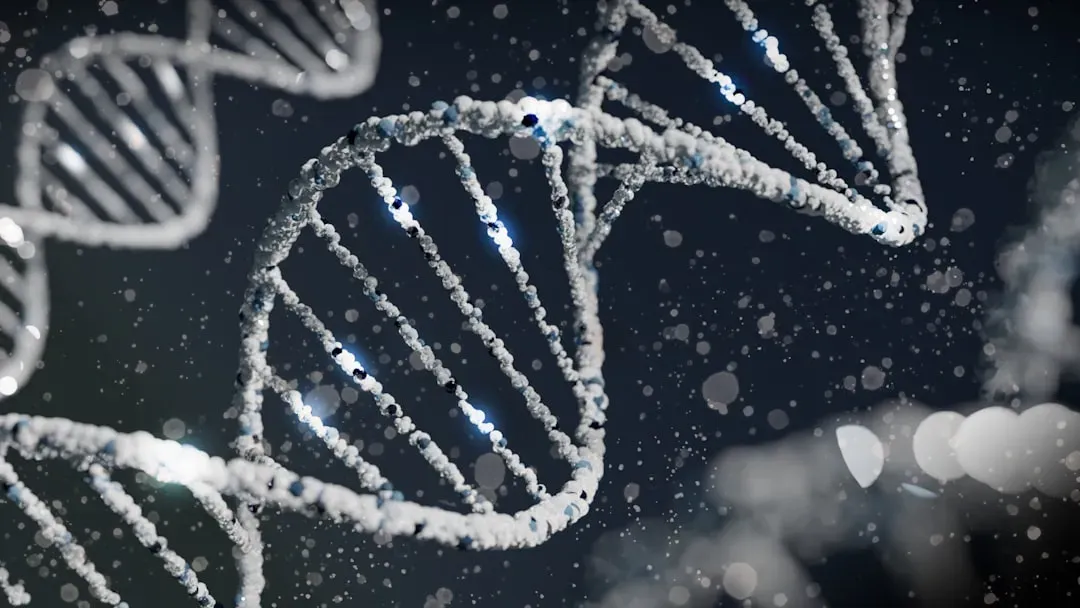
One of the most unsettling discoveries of modern genetics is that a large share of your DNA is not classic genes at all, but leftover sequences from ancient viruses and repetitive elements. Over countless generations, retroviruses infected our ancestors and pasted their genetic material into germline cells, meaning those viral stretches were inherited like any other DNA. Most of these bits have been mutated into harmless fossils, just riding along for the ride inside our chromosomes.
Here is the twist that feels almost poetic: some of those viral leftovers were repurposed for important jobs. Parts of the genetic toolkit that help build the human placenta, for example, trace back to viral proteins that once helped viruses fuse with host cells. What started as an infection became infrastructure. It is as if your operating system quietly integrated pieces of old malware into its core code and then used them to run essential services.
8. Evolution Can Produce the Same Solution Multiple Times
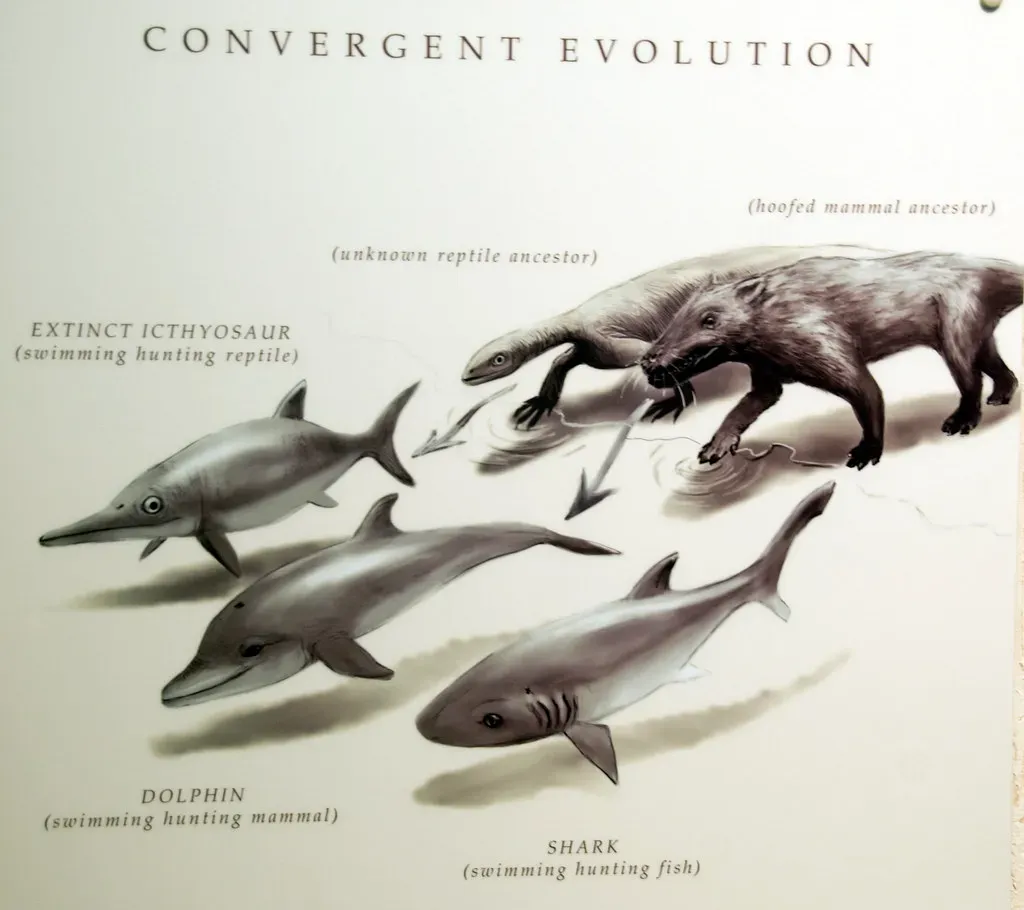
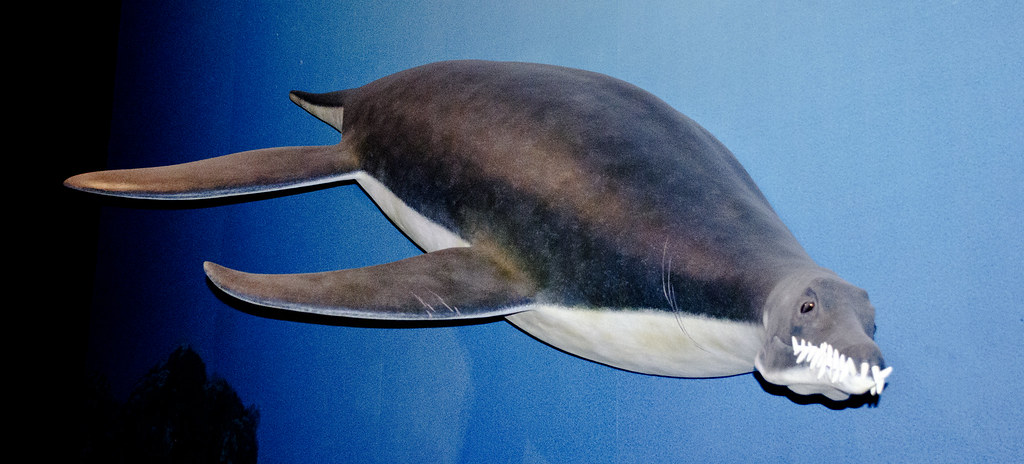
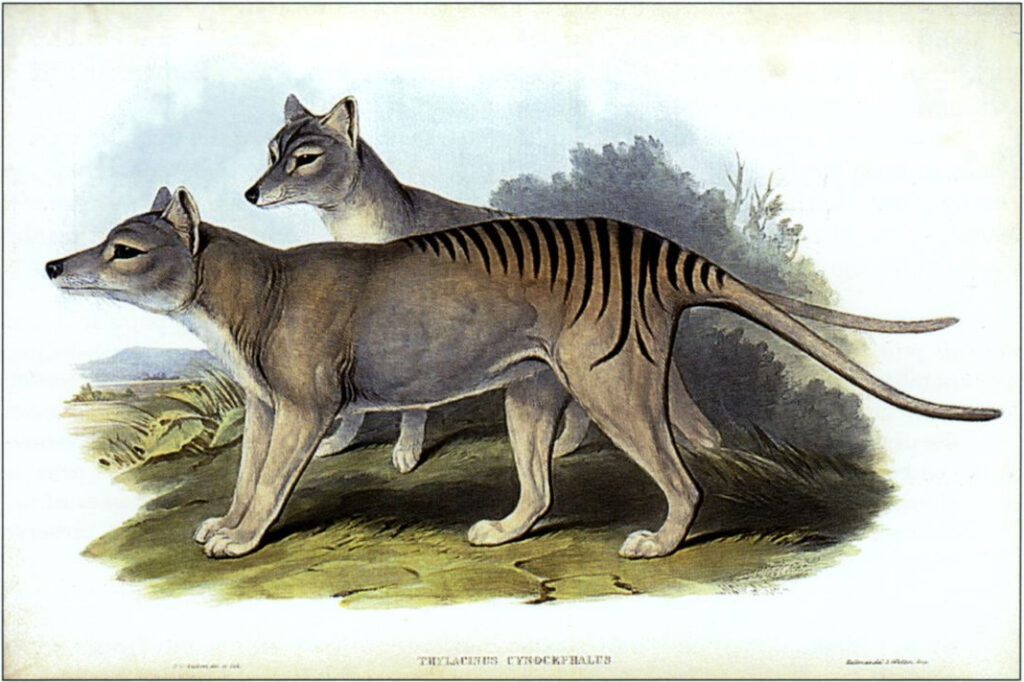
We usually picture evolution as a wandering path with unique outcomes, but life keeps repeating itself. Very similar body plans, behaviors, and tricks have evolved independently in totally different lineages, a pattern called convergent evolution. Classic examples include the sleek, torpedo-shaped bodies of sharks, dolphins, and extinct marine reptiles, or the camera-like eyes in cephalopods and vertebrates, which we already touched on. These groups did not copy each other; they were all pushed toward similar designs by similar environments.
This repetition shows that evolution, while blind, is not random chaos. When organisms face the same physics, chemistry, and ecological pressures, some solutions are simply more efficient and get discovered again and again. It also means that if we somehow rewound the history of life and let it run again, we might still see familiar patterns: gliding or flying creatures, burrowers, fast swimmers, symbiotic partnerships. The exact species would differ, but the broad strategies might feel strangely recognizable, like hearing a new song that still follows a familiar rhythm.
9. Humans Are Still Evolving – Right Now
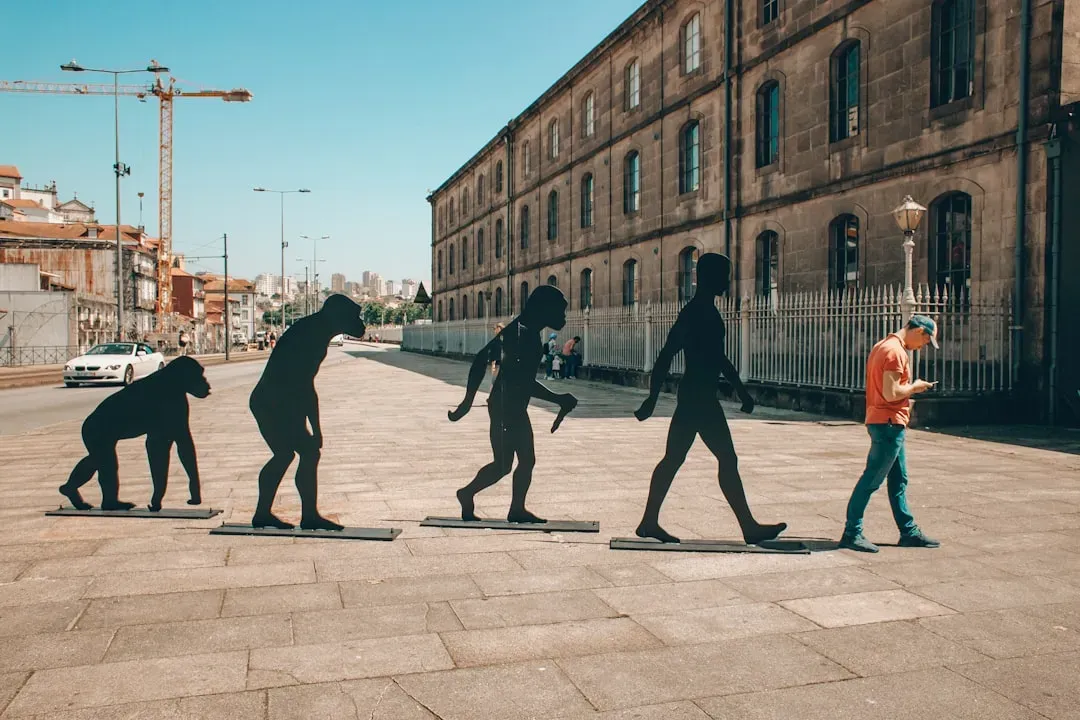
There is a stubborn myth that humans somehow “stopped evolving” once we invented medicine or technology, as if culture flipped an off-switch on biology. In reality, evolution never stopped; the pressures just changed. Traits that affected survival in harsh, pre-industrial environments are no longer the only big players, while others, such as resistance to certain diseases, adaptation to high altitudes, or the ability to digest new foods, are still under selection in various populations. Genetic studies in recent decades have revealed signatures of relatively recent selection scattered across the human genome.
Even cultural habits can feed back into biological evolution. Populations that historically relied heavily on dairy, for example, saw genetic variants for lactose tolerance in adulthood spread over time, while others did not. Urbanization, global travel, changing diets, and shifting family sizes are all new evolutionary landscapes humans are navigating, whether we realize it or not. We are not frozen at some final, ideal form; we are a snapshot in a moving process that will keep going as long as our descendants exist.
10. Evolution Has No Goal, Yet Produces Jaw-Dropping Complexity
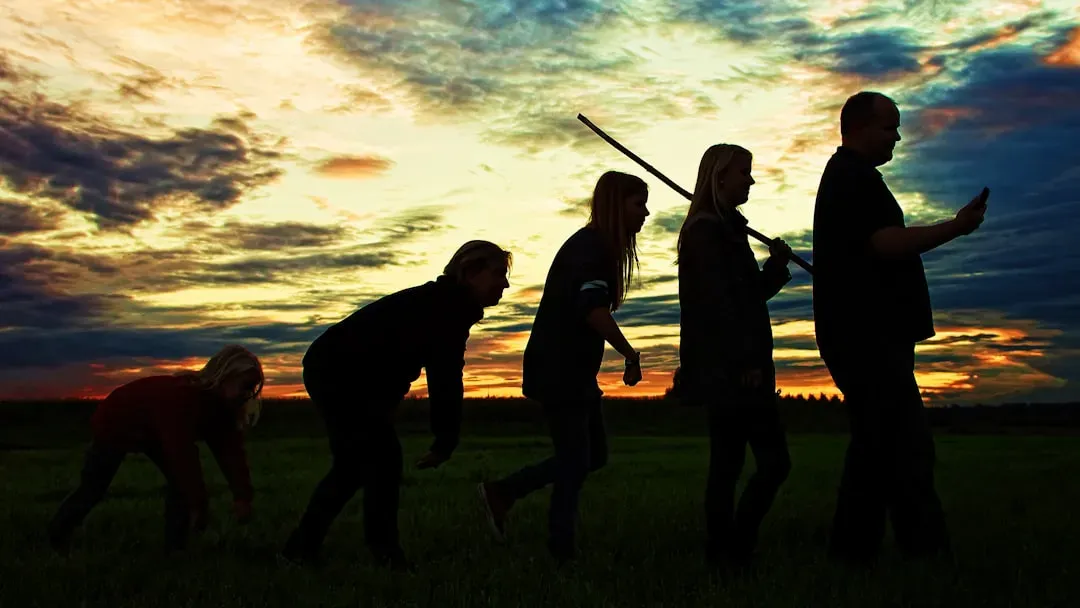
It is incredibly hard to shake the feeling that evolution is “trying” to make things smarter, faster, or better, but that is us projecting our own goal-driven thinking onto a process that has none. Evolution does not aim at intelligence, beauty, or moral progress; it only filters which variations can hang on in a particular environment at a particular time. Dinosaurs dominated for ages without inventing smartphones, and countless bacteria and insects are outrageously successful without large brains or long lives.
What feels is that something so directionless produces such intricate results: orchids that trick insects with fake mates, social systems in ants and termites that rival human cities in complexity, and a nervous system in your skull capable of contemplating the process that created it. To me, that makes evolution more awe-inspiring, not less. We are not the end goal of a cosmic ladder, just one of many surprising outcomes of a blind, ruthless, but profoundly creative process.
Conclusion: The Strangest Part Is That This Is All Real
The more I learn about evolution, the more I think the “normal” view of life is the biggest illusion of all. We like tidy categories and simple origin stories, but the actual history written in bones, DNA, and living species is wilder than any myth: land mammals turning back into sea giants, dinosaurs shrinking into sparrows, viruses becoming part of our reproductive toolkit. Once you accept that, the world around you stops being a static backdrop and turns into an ongoing, messy experiment that has been running for billions of years.
What matters, in my opinion, is not treating evolution as a dry list of facts but as a way of seeing. It reminds us that everything alive is temporary yet deeply connected, that “” traits often have long, patient backstories, and that humans are neither separate from nature nor its pinnacle. We are a recently arrived player surfing on top of a vast, ancient wave of change. The real question is not whether evolution can do things – it clearly can – but whether we are willing to update our sense of what is possible when we look in the mirror.