Imagine standing on a shoreline a few hundred years ago and watching a flightless “sea parrot” waddle past your feet, or glancing up at the sky and seeing flocks of birds so dense they literally darken the sun. That sounds like fantasy, but it is recent history. Many of the most astonishing animals humans have ever encountered have disappeared in just a few lifetimes, often right under our noses. Others vanished long before cities, writing, or agriculture, yet they shaped the world our species walked into. When you put those stories side by side, the scale of what has been lost becomes uncomfortably real.
In this article, we’ll look at ten species that lived alongside modern humans, people with clothes, ships, cameras, and newspapers, who watched them die out – or helped push them over the edge. Then we’ll jump far back in time to ten remarkable creatures that disappeared long before written history, animals our distant ancestors might have seen but never recorded. These lost species are not just curiosities in a museum; they are warnings, mirrors, and sometimes, oddly, a kind of comfort. They remind us that extinction is both a natural process and, in our era, a human-driven crisis. Some of these stories are gutting, some are quietly eerie, and all of them raise the same nagging question: what will people 500 years from now say about the animals we let slip away?
1. Passenger Pigeon – The Sky Darkener Our Great-Great-Grandparents Killed Off
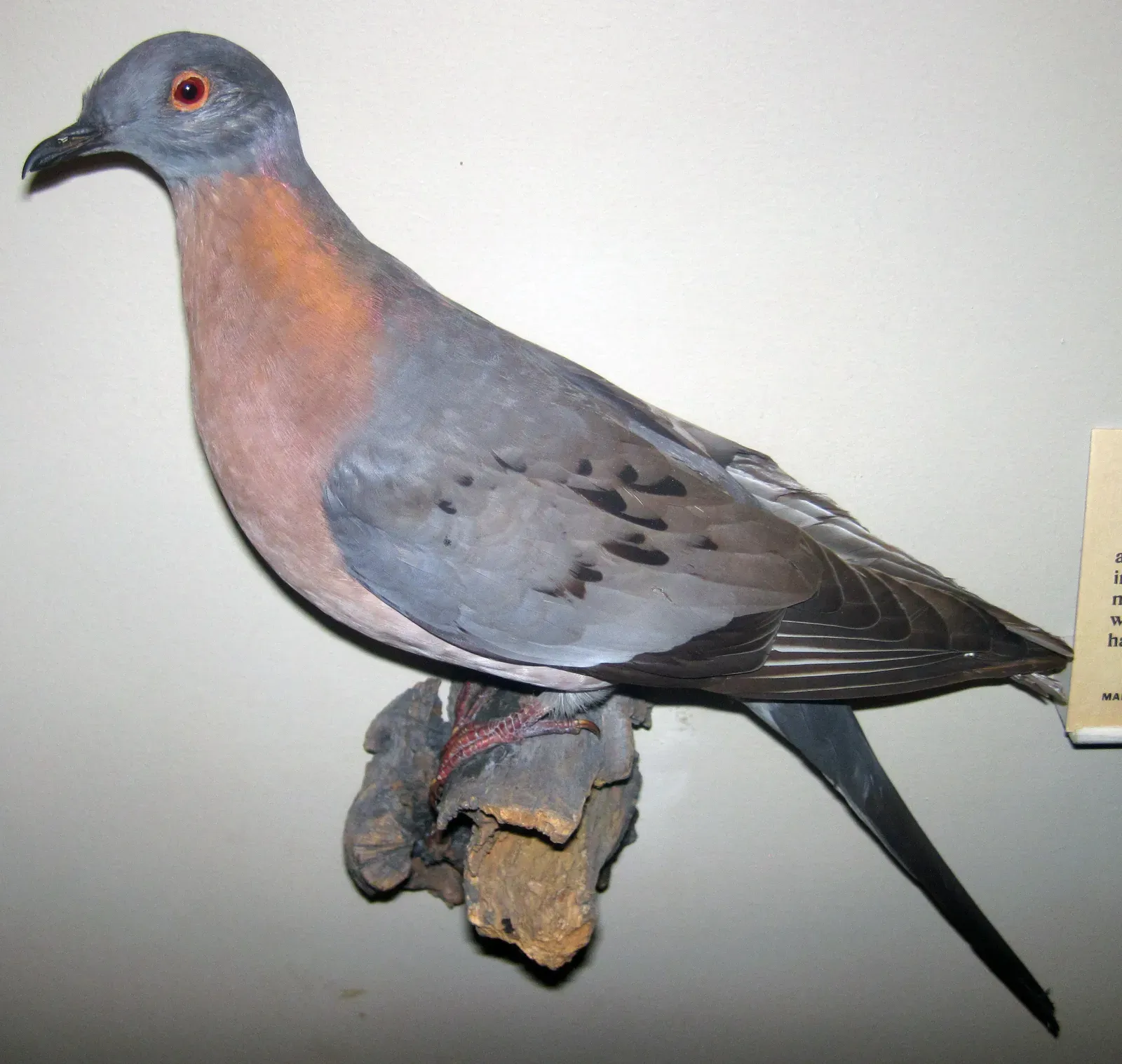
Only a couple of centuries ago, passenger pigeons were so abundant in North America that flocks were described as living storms, turning day into dusk as they passed overhead. Early accounts describe their numbers in the billions, with roosting colonies stretching for many dozens of miles, branches sagging under their weight, forests booming from the sound of their wings. It is almost impossible for us to imagine that level of abundance today, in an era where seeing a few dozen birds in one place feels like a treat, yet this was normal life for people in the eighteenth and early nineteenth centuries.
That normality collapsed with frightening speed once commercial hunting and large-scale deforestation kicked in. Passenger pigeons were trapped, shot, and shipped to cities as cheap meat, and their nesting woods were logged and cleared for farmland at a pace the birds simply couldn’t survive. By the late nineteenth century, their gargantuan flocks were gone; by 1914, the last known individual, a captive bird named Martha, died in a zoo. For me, the most chilling part of this story is not the final death, but how long people assumed a species so numerous could never really disappear. It’s a harsh reminder that abundance is not protection, and that what looks endless can be erased within a single human lifespan.
2. Great Auk – The “Northern Penguin” Hunted on the Doorstep of Modern Science
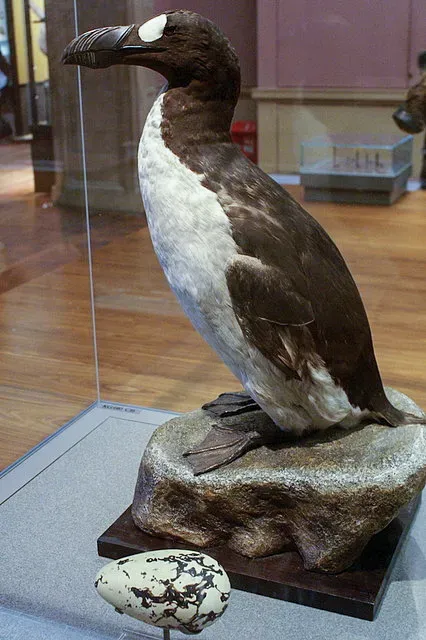
The great auk was a large, black-and-white, flightless seabird of the North Atlantic, often compared to a penguin even though it lived thousands of miles from the Southern Hemisphere. For centuries, sailors and coastal communities around the North Atlantic hunted these birds for meat, oil, and feathers, gathering them from rocky islands where they nested in dense colonies. These animals were not mythical or distant; they were as real and accessible to early modern Europeans as gulls and puffins are to us today. Illustrations, museum skins, and even mounted specimens still show us exactly what we lost.
By the early nineteenth century, the great auk had become rare, and that rarity ironically increased its value to collectors and museums racing to secure specimens. Small, isolated breeding sites were raided, sometimes with shocking brutality, to obtain skins and eggs for scientific cabinets and private collections. The last confirmed birds were killed in the 1840s on a remote North Atlantic island, effectively ending the story of a species that had survived Ice Age climate swings but not human greed. Whenever I see its glass-eyed replicas in a museum, I cannot help thinking how surreal it is that we let a bird go extinct after we already had telescopes, universities, and newspapers. We were informed and organized – and still chose trophies over survival.
3. Dodo – The Icon of Extinction We Turned into a Joke
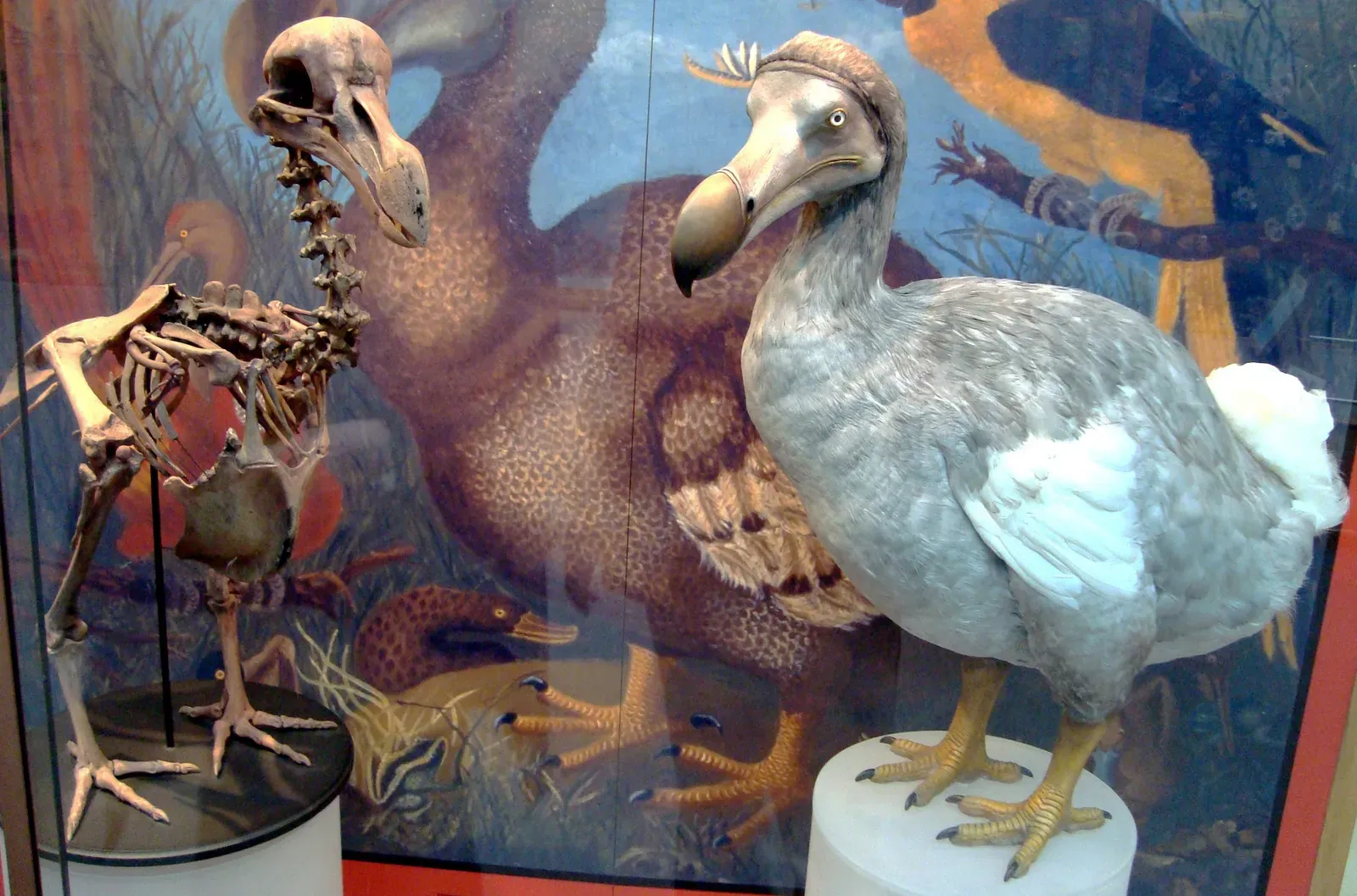
The dodo of Mauritius has become a cultural punchline, a symbol for something stupid or doomed, but the real animal was simply a large, flightless island pigeon doing its best in a world without mammalian predators. When European sailors reached Mauritius in the late sixteenth and early seventeenth centuries, they encountered a bird that had never evolved to fear humans. Accounts describe them as approachable and easy to catch, a trait that would have served them well against storms and simple accidents, but proved fatal against hungry, armed visitors.
Direct hunting was only one part of the story. As ships arrived, they brought rats, pigs, and other invasive animals that devoured dodo eggs and trampled nesting sites, while forests were cleared and disturbed. Within about a century of sustained contact, the dodo was gone, disappearing in the late 1600s, long before photography but squarely inside the era of written records and global trade. What bothers me is how we often treat the dodo as a cartoonish inevitability, as if it was destined to fail, rather than as an early warning about how quickly isolated island species can collapse under sudden pressure. Turning it into a joke lets us dodge the more uncomfortable truth: the dodo’s story is a dry run for the damage we still cause on islands today.
4. Tasmanian Tiger (Thylacine) – A Striped Ghost of the Twentieth Century
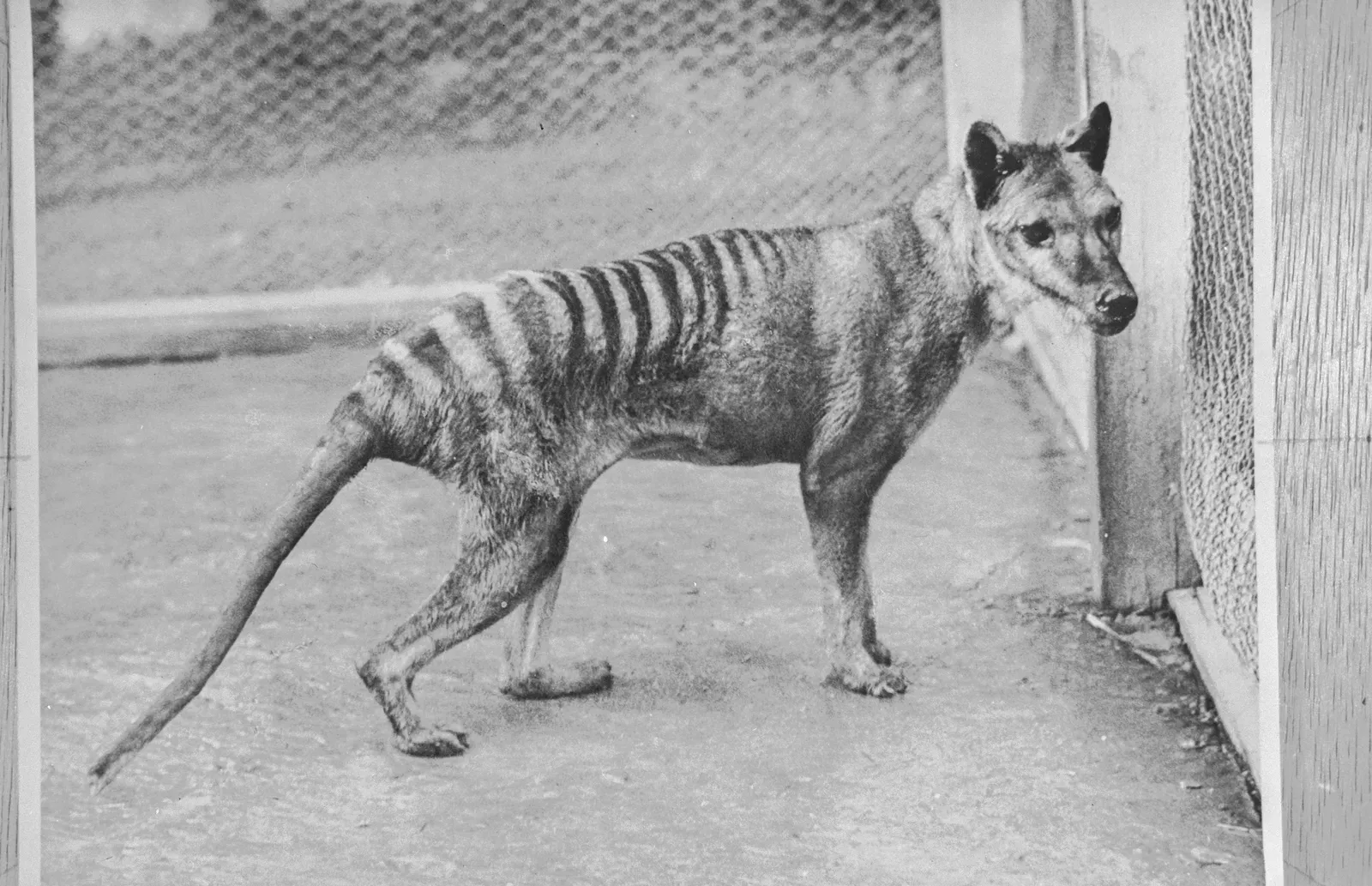
Unlike the dodo or great auk, the thylacine – often called the Tasmanian tiger or Tasmanian wolf – stepped into the era of film and photography before it vanished. This carnivorous marsupial, native to Tasmania and formerly mainland Australia and New Guinea, looked eerily dog-like but carried its young in a pouch, a reminder that evolution loves to remix familiar shapes. Footage from the 1930s shows the last captive individual pacing a concrete enclosure, yawning and stretching just like any bored zoo animal. It is jarring to realize that this is already an extinct species, not some living dog relative we could still visit.
European settlers considered thylacines a threat to sheep and other livestock, and governments offered bounties that encouraged widespread hunting. At the same time, habitat loss and competition with introduced dogs added pressure to already shrinking populations. The last known thylacine died in captivity in 1936, and despite periodic unconfirmed sightings, no solid evidence has emerged since. I find the thylacine’s case particularly haunting because it overlaps so directly with modern conservation thinking: protected areas existed, biology was an established science, and yet we still failed to act in time. It forces an uncomfortable question about current endangered species: are we repeating history with full knowledge of the ending?
5. Stellar’s Sea Cow – A Giant Herbivore Erased in Just a Few Decades
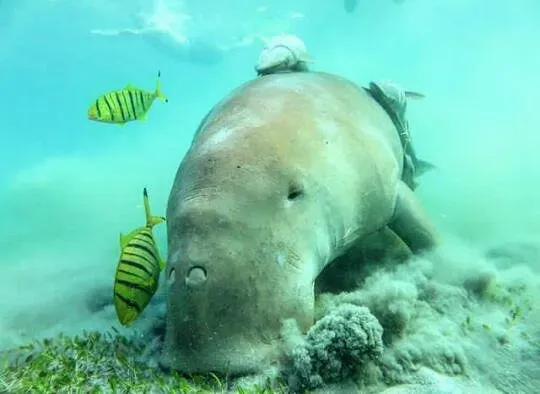
Stellar’s sea cow was an enormous marine mammal, related to manatees and dugongs, that once grazed on kelp in the cold North Pacific around the Commander Islands. When it was formally described in the eighteenth century by a naturalist traveling with Russian explorers, it was already restricted to a tiny fragment of its former range. These animals could reach well over ten meters in length, moving slowly through coastal waters, feeding at the surface where they were almost absurdly easy for hunters to approach. To people relying on limited local resources, a slow, massive, fatty animal must have looked like a floating treasure chest.
Once discovered, Stellar’s sea cows were hunted relentlessly for their meat, fat, and hide, with no meaningful regulation or restraint. Within roughly about three decades of their scientific description, they were gone, hunted to extinction by the late 1700s. That timescale is what stuns me: from first formal recognition by science to complete disappearance in less time than many of us spend in our careers. It feels like reading a thriller where the main character is introduced and killed off in the same chapter. The lesson here is brutally clear – sometimes scientific discovery and destruction happen almost in the same breath, especially when economic demands are allowed to trump any sense of restraint.
6. Caribbean Monk Seal – The Vanishing Neighbor of Modern Beachgoers
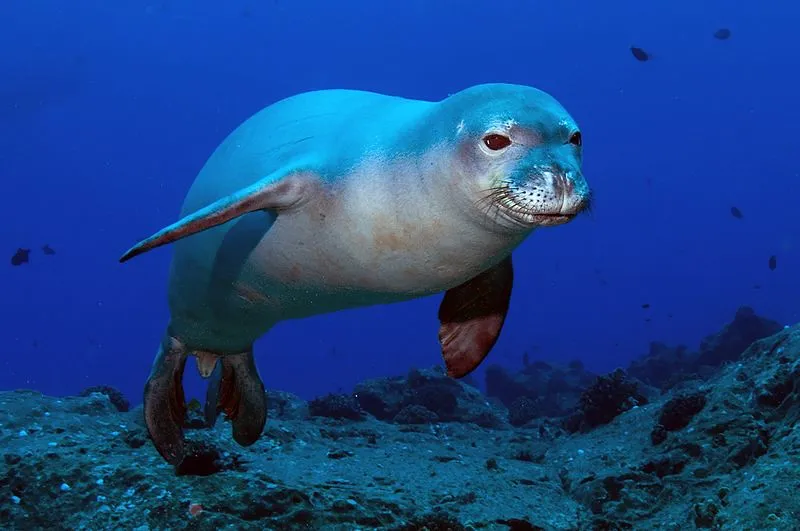
The Caribbean monk seal once swam in warm waters from the Gulf of Mexico and Caribbean Sea to nearby Atlantic coasts, basking on beaches that are now crowded with tourists and resorts. Early explorers and fishers hunted these seals for oil and meat, and later they also suffered from overfishing of the fish and invertebrates they relied on. By the twentieth century, sightings had become rare, and scientists began to worry that the species might already be functionally gone from large parts of its range. Still, sporadic reports kept hope alive that remnant groups might persist in remote areas.
It was not until the early twenty-first century that the Caribbean monk seal was officially declared extinct after extensive surveys failed to find any surviving populations. For people living along those coasts today, it is unsettling to realize that an entire species of seal disappeared from an ocean they still swim in, in the same time it takes a person to go from childhood to retirement. The beaches look lively and full, yet one of their original inhabitants is no longer there. To me, this loss carries a very different emotional flavor than ancient extinctions; it feels less like deep time and more like misplacing a neighbor you never bothered to know until it was too late.
7. Moa – Giant Birds Our Human Cousins Literally Ate to Death
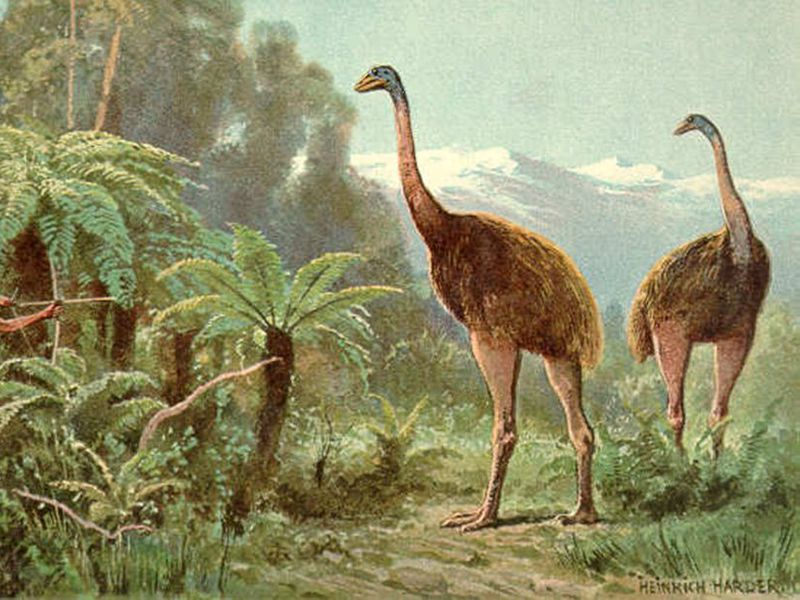
The moa were several species of large, flightless birds that once roamed New Zealand, some of them towering higher than an adult human. For hundreds of thousands of years they evolved in a world without land mammals like deer or big cats, filling many of the herbivore roles taken by hooved animals elsewhere. When Polynesian settlers, the ancestors of today’s Māori, arrived in New Zealand around the late thirteenth century, they encountered a land full of naïve, slow-breeding giants. Archaeological sites reveal moa bones in cooking pits and tools made from their remains, clear evidence that humans and moa overlapped in real, everyday life.
Within only a few centuries, overhunting and habitat burning drove all known moa species to extinction, likely by the early second millennium. This is one of the starkest examples of how even small human populations with simple technology can completely restructure an entire ecosystem. The moa story often gets used to blame early peoples, but I think it is more honest to see it as part of a repeating human pattern. Whether with stone-tipped spears or industrial trawlers, we are astonishingly good at removing the largest, slowest-breeding animals from a system. The difference now is that we understand those consequences in advance and can choose to act differently, even if we do not always manage to do so.
8. Aurochs – The Wild Ancestor of Modern Cattle That Lived into Recorded History
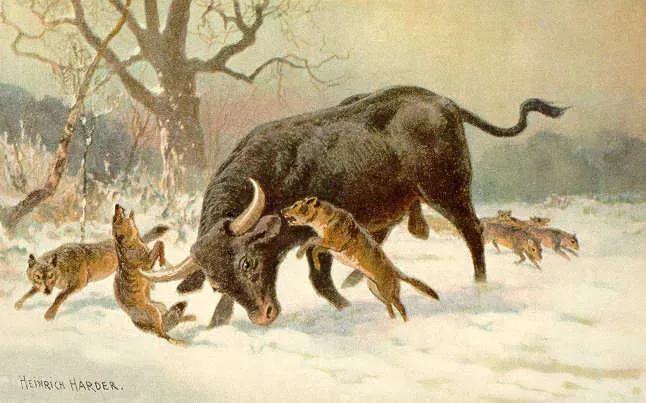
The aurochs was the wild, massive ancestor of domestic cattle, once ranging across much of Europe, North Africa, and parts of Asia. Ancient cave paintings show powerful, broad-horned bovines that almost certainly depict aurochs, and written records from classical and medieval times describe fearsome wild cattle inhabiting forests and marshes. Over millennia, humans domesticated some populations into the cows we know today while continuing to hunt and compete with remaining wild herds. As agriculture expanded, aurochs habitats were drained, cleared, and fragmented, squeezing them into smaller and more vulnerable pockets of land.
By the late medieval and early modern periods, aurochs had become ever rarer, surviving mainly in protected royal hunting grounds in Eastern Europe. The last known individual died in the seventeenth century in what is now Poland, with officials at the time reportedly aware they were witnessing the end of a lineage stretching back hundreds of thousands of years. I find something especially bittersweet about the aurochs: its descendants surround us on farms and in fields, yet the original wild form is gone forever. It is like having countless photographs of someone’s children but knowing the person themselves has disappeared. That tension between loss and continuity makes the aurochs feel closer and more personal than many other extinct animals.
9. Quagga – The Half-Striped Zebra That Faded into Museum Specimens
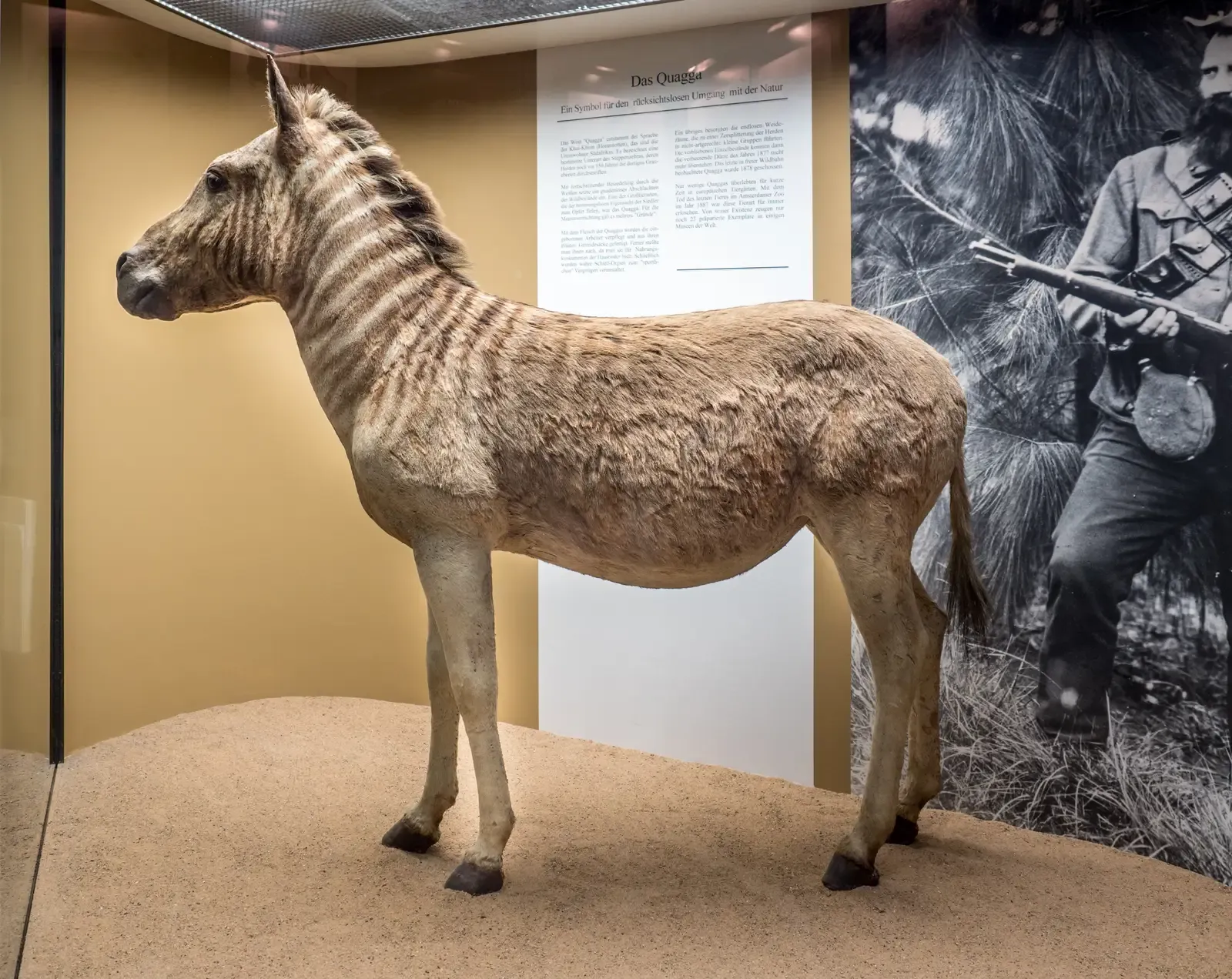
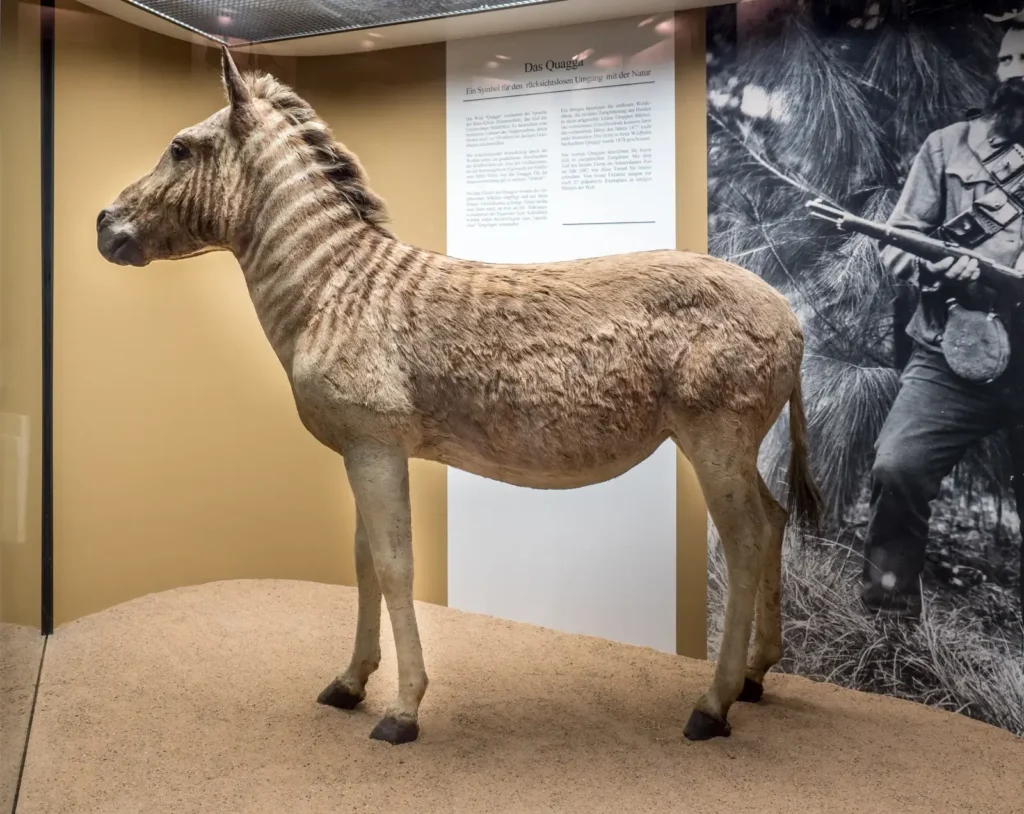
The quagga was a distinctive population or subspecies of plains zebra that lived in South Africa, recognizable by its bold stripes on the front half of the body, fading into a mostly solid brown rear. In the nineteenth century, quaggas grazed the same landscapes that would later be taken over by farms, ranches, and towns. European settlers and hunters targeted them as agricultural pests and for their hides, while domestic livestock transformed grasslands and added pressure through competition. Unlike some ancient creatures, the quagga was photographed alive, and mounted skins still display its odd, almost unfinished-looking pattern.
By the late 1800s, wild quaggas had been hunted out, and the last known captive animal died in a European zoo. At the time, people did not fully grasp that this was a distinct form on the brink of extinction; it was simply considered one type of zebra among many. Later genetic work confirmed its close relationship to other plains zebras, inspiring modern “breeding back” projects that select for similar coat patterns in living zebras. Personally, I find these efforts both fascinating and slightly unsettling. They highlight how much we crave a second chance, yet no matter how close the appearance, the exact, original quagga with its unique history and local adaptations is gone. What we can recreate in pattern, we cannot fully reconstruct in identity.
10. Woolly Mammoth – The Ice Age Giant That Outlived the Pyramids
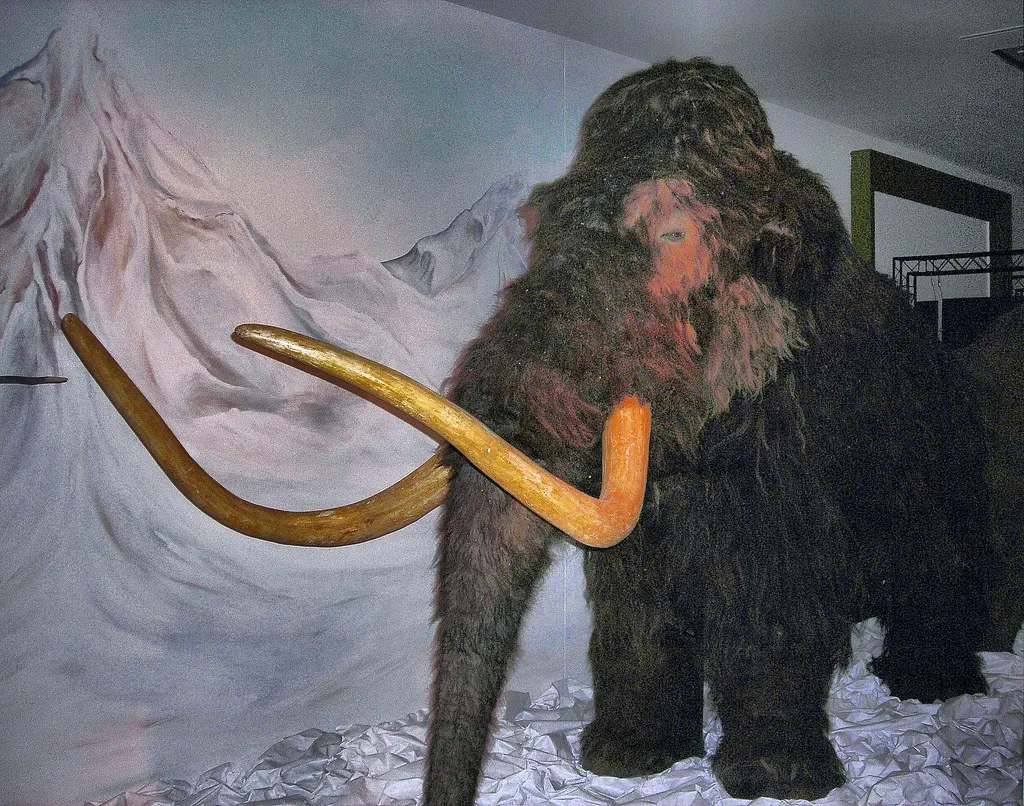
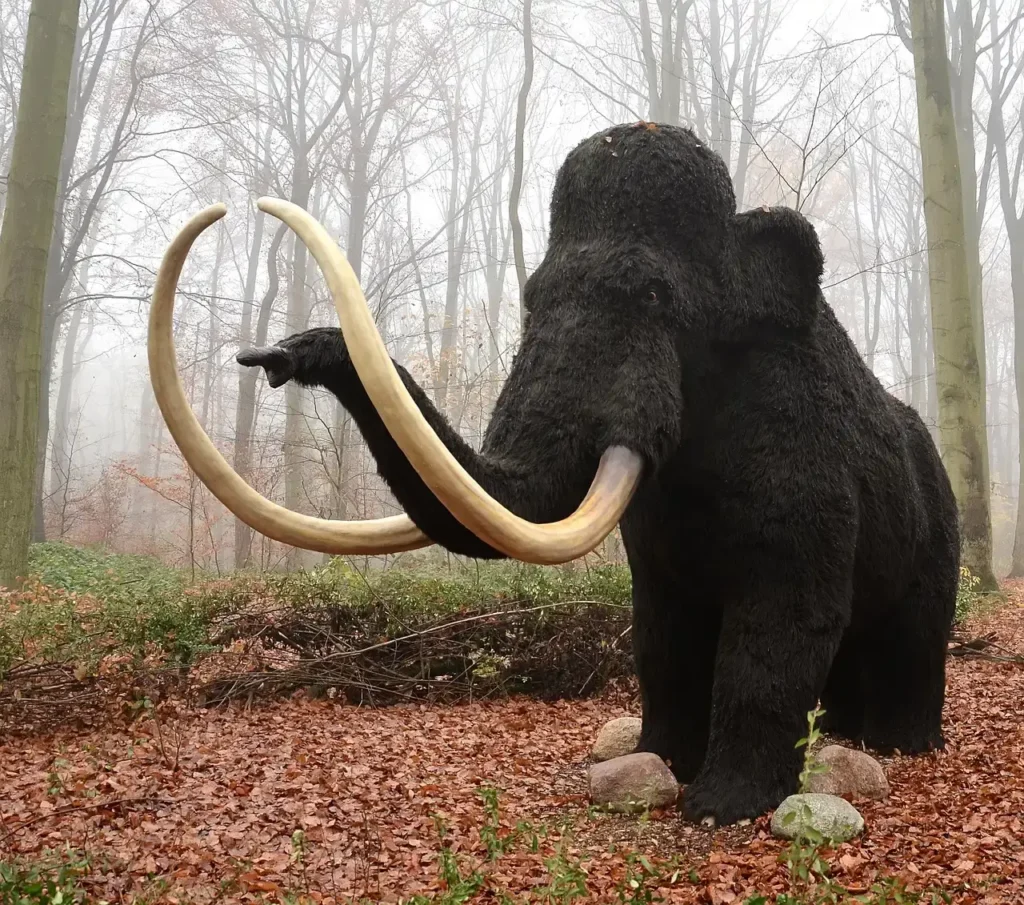
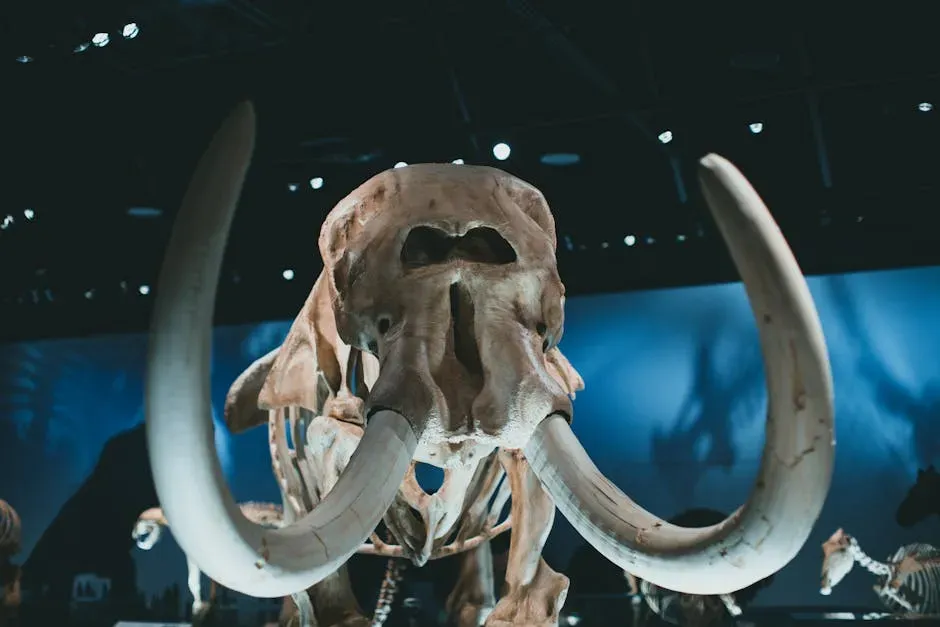
Woolly mammoths feel like creatures from a world of stone axes and mammoth-bone huts, yet small populations actually survived well into the age of written civilization. While most mammoth populations vanished at the end of the last Ice Age, isolated groups persisted on remote Arctic islands for thousands of additional years. Evidence suggests that some of these island-dwelling mammoths were still alive when humans elsewhere were building monumental structures and developing complex civilizations. That time overlap alone makes the mammoth feel oddly modern despite its shaggy, prehistoric branding.
Scientists debate exactly how much of their decline was driven by climate warming versus overhunting, but it is clear that humans and mammoths coexisted on multiple continents for a long time. Today, frozen mammoth remains are fueling discussions about de-extinction, with researchers exploring the possibility of editing elephant genomes to recreate mammoth-like traits. I have mixed feelings about that idea. On one hand, the thought of seeing a mammoth-like animal walking the tundra again is thrilling and almost healing. On the other hand, reviving a symbolic few individuals without the vast steppe ecosystems they once roamed risks feeling more like a theme park gesture than true restoration. It forces us to confront what we really want from the past: living beings or living ecosystems.
11. Neanderthals – The Other Humans Who Walked Beside Us
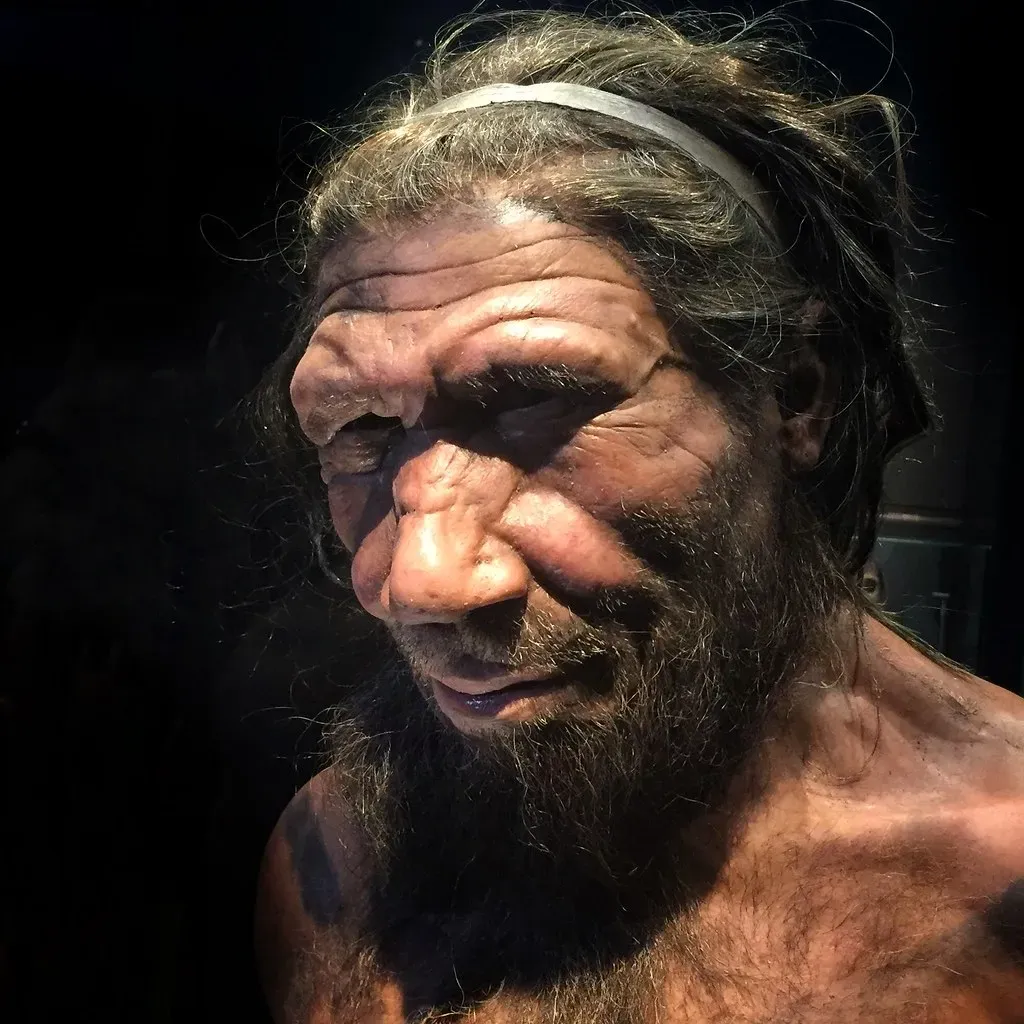
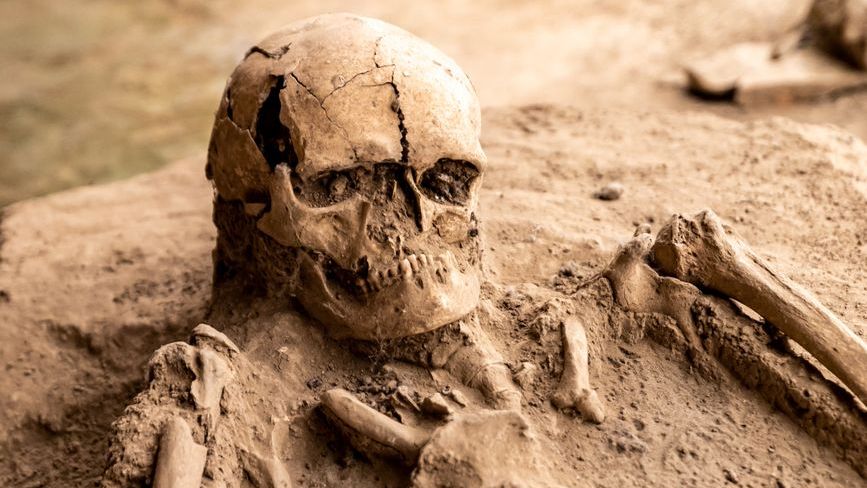
Neanderthals were not giant apes or half-mythical cave monsters; they were another kind of human, closely related to us, who inhabited Europe and parts of western Asia for hundreds of thousands of years. They made tools, controlled fire, hunted large animals, and likely had complex social lives in Ice Age landscapes that would have been both brutal and beautiful. Genetic studies now show that nearly half or more of living people outside Africa carry small fragments of Neanderthal DNA, evidence that our ancestors not only met Neanderthals but had children with them. That makes their extinction feel less like the vanishing of a separate species and more like the loss of a close branch on our own family tree.
By around forty thousand years ago, Neanderthals had disappeared as a distinct group, replaced or absorbed by expanding populations of Homo sapiens. Researchers argue about the exact causes – climate shifts, competition, disease, or some mix of factors – but the end result is clear: the world that our direct ancestors inherited was a little emptier of human diversity. For me, Neanderthals are the ultimate reminder that we are not, and never were, the only way for a human to be. Their story quietly undermines any easy narratives about superiority and destiny. It suggests that survival may sometimes come down to timing, luck, and flexibility more than any grand, built-in advantage.
12. Woolly Rhinoceros – The Horned Giant Built for Ice and Grass
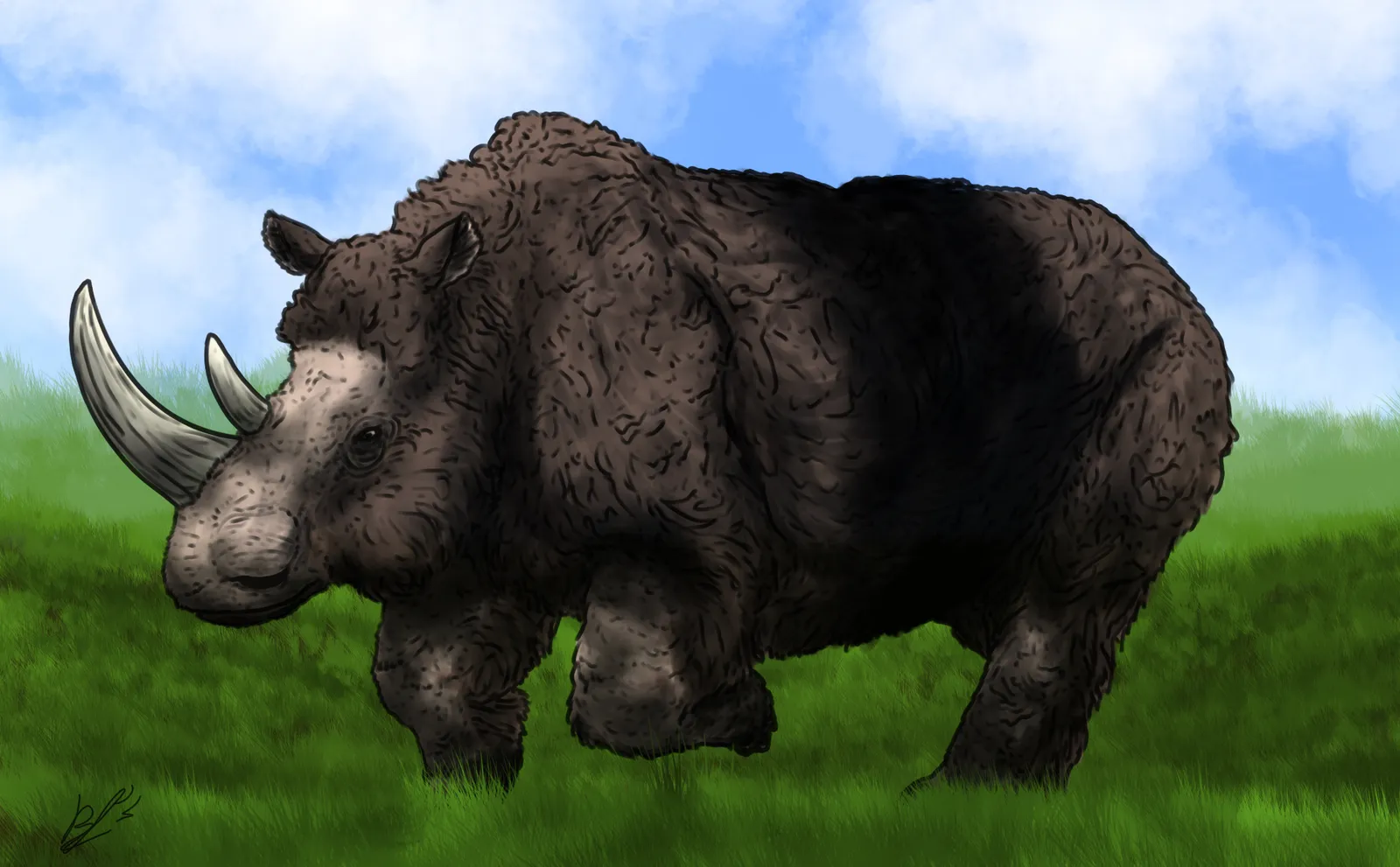
The woolly rhinoceros was another Ice Age specialist, a massive, shaggy herbivore with a huge forward-curving horn that roamed Eurasian plains alongside mammoths and early humans. Cave art shows outlines that strongly resemble woolly rhinos, indicating that ancient artists not only saw them but considered them compelling enough to draw. These animals were built for cold, open landscapes, using their horns to sweep snow aside and reach the grasses beneath. To prehistoric humans trekking across wind-scoured steppes, a woolly rhino must have been both a powerful danger and a potential feast.
Fossil and climate records suggest that woolly rhinos declined as the Ice Age ended and their specialized habitats shrank and fragmented. Hunting pressure from expanding human groups likely added another layer of stress, particularly as shifting vegetation patterns left fewer safe refuges. Their disappearance left a noticeable hole in the large-mammal communities of northern Eurasia, one that no surviving species fully fills. When I think about them, I picture a living tank of fur and horn designed for a very specific world that no longer exists. They are a reminder that sometimes evolution paints itself into a corner; survival becomes nearly impossible once the environment moves on, especially when human hunters are part of that changing backdrop.
13. Irish Elk (Giant Deer) – Antlers as Wide as a Small Car
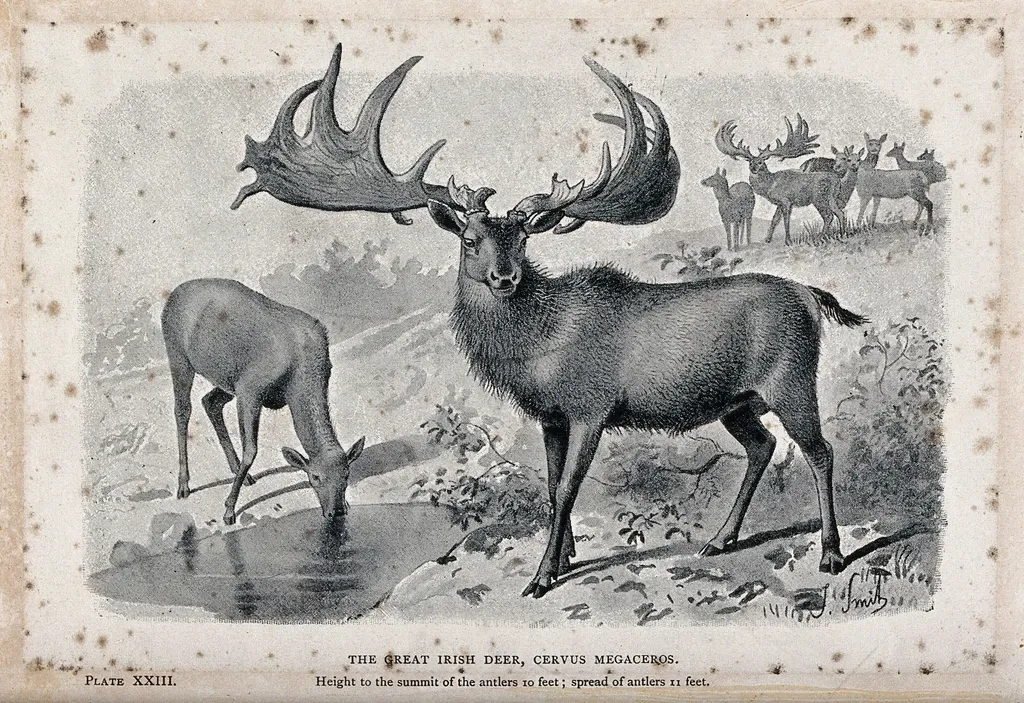
The so-called Irish elk, more accurately a giant deer, is famous for its astonishingly large antlers that could span more than the length of a person lying on the ground. Despite the name, it was not confined to Ireland and was not a true elk in the modern sense, but the label has stuck. These animals roamed across parts of Eurasia, feeding on grasses and other vegetation in open or lightly wooded habitats. Their skulls and antlers show a dramatic investment in display structures, hinting that sexual selection played a major role in shaping their look, much like over-the-top peacock tails.
The giant deer disappeared around the end of the last Ice Age, and researchers continue to debate whether climate-driven habitat changes, nutrient demands from their oversized antlers, or human hunting was the primary driver. The likely reality is a combination: shrinking habitat, tougher winters or summers, and the added stress of being a desirable target for people needing meat, bone, and antler. When I see their massive skulls in museums, I feel a mix of awe and unease. Evolution had pushed them into a spectacular, showy design that may have been hard to maintain once the environment shifted even slightly. Their story feels like a warning about how quickly beauty and extravagance can turn into vulnerability when the rules of the game change.
14. Cave Lion – A Top Predator That Haunted Both Forests and Human Minds
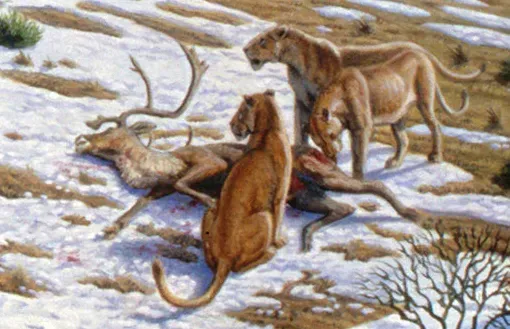
The cave lion, a large cat related to modern lions, once prowled across Europe and parts of Asia, preying on big herbivores from deer to young mammoths. This predator left such a deep impression on ancient humans that it appears in numerous cave paintings and carved figurines, often with striking detail. Like today’s big cats, cave lions likely played a crucial role in keeping herbivore populations in check and shaping the structure of their ecosystems. Sharing a landscape with them would have been both terrifying and awe-inspiring for early people, who were sometimes prey themselves.
By the end of the last Ice Age, cave lions had vanished from Europe and much of their broader range. Climate warming, shrinking open habitats, declining prey populations, and human competition could all have played parts in their downfall. The loss of a top predator cascades through a food web, changing how plants grow and smaller animals behave, even if those ripples are hard to reconstruct so long after the fact. For me, the emotional weight of the cave lion’s extinction lies in how directly it touches our storytelling instincts. This was an animal that stalked our ancestors’ dreams and nightmares, then quietly disappeared, leaving only shadows of pigment on stone and scattered bones in caves.
15. Giant Ground Sloths – Slow Giants of the Americas
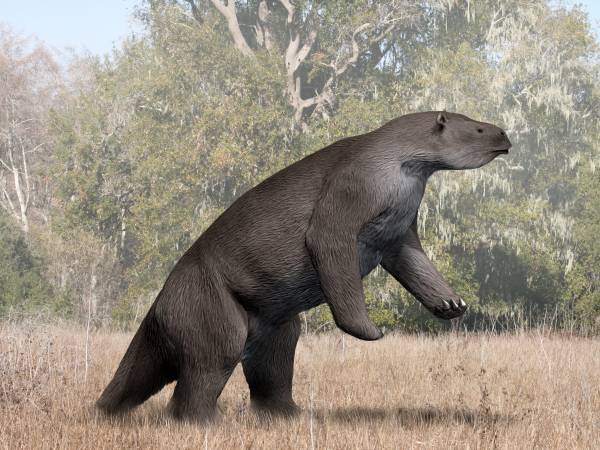
Giant ground sloths, some as large as modern elephants, once lumbered across the Americas, browsing on leaves, branches, and sometimes even cacti. These were not tree-dwelling, palm-sized sloths but formidable, ground-based herbivores with massive claws they could use to pull down vegetation or defend themselves. Fossil tracks and remains suggest they occupied a wide range of environments, from open grasslands to forests, often sharing space with early human settlers. To the first people entering the Americas, a standing ground sloth must have looked like a moving boulder with claws, slow but far from harmless.
Most giant ground sloth species disappeared around the same general time window when humans spread across the continents and climates were shifting at the end of the last Ice Age. As with many large prehistoric mammals, there is ongoing debate about the exact balance between environmental change and hunting. Given their size, slow breeding, and likely low population density, even relatively modest hunting could have had devastating effects. I find these animals oddly endearing, maybe because modern sloths seem so vulnerable and harmless. Imagining colossal versions of them wandering ancient landscapes brings home how different the Americas were before humans fully settled in, and how much of that original strangeness has been edited out.
16. Megatherium and the South American Lost Giants
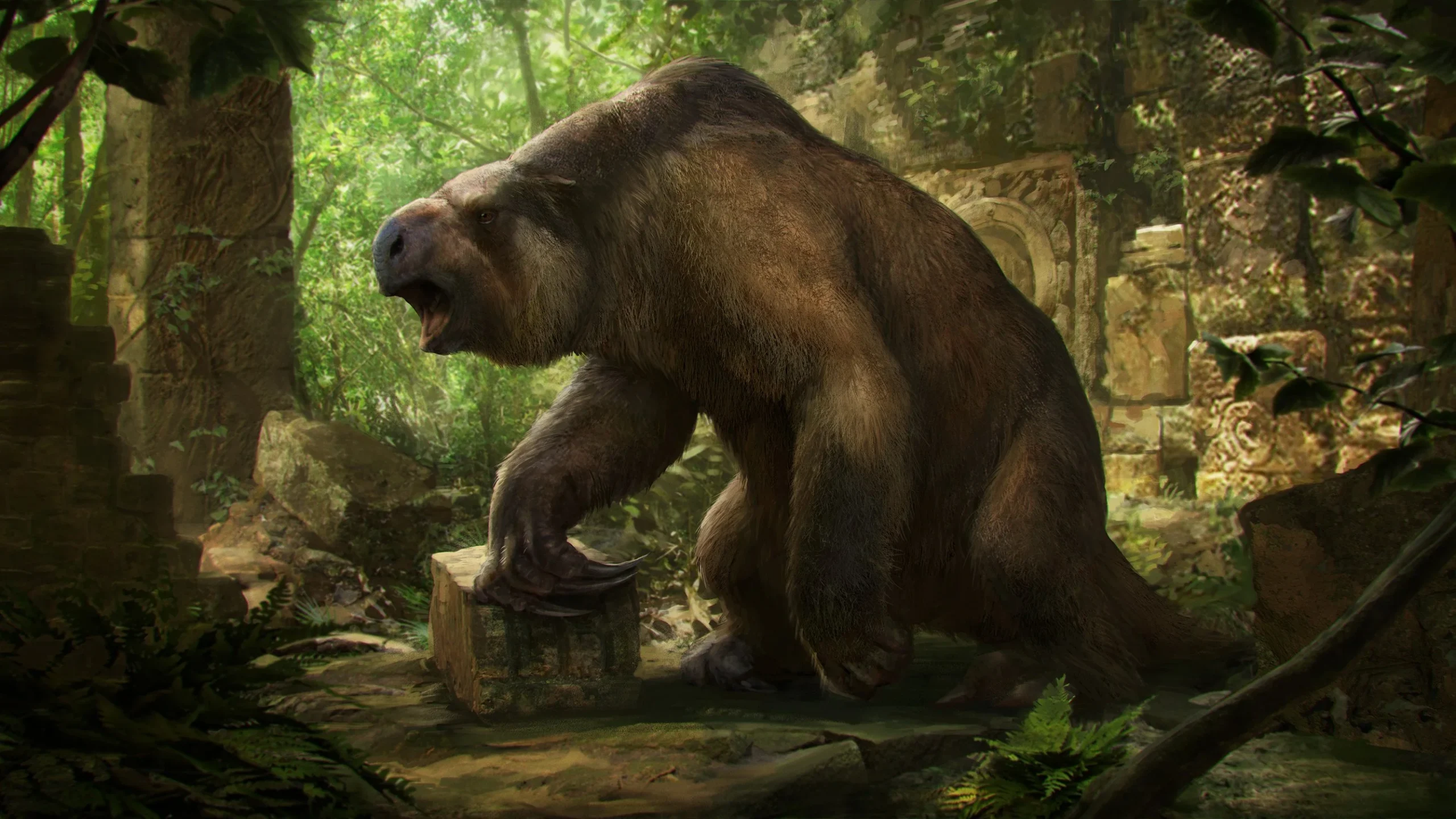
Megatherium, one of the largest ground sloths ever known, lived primarily in South America and could rival modern elephants in mass. This giant herbivore likely walked on all fours most of the time but could rear up on its hind legs to reach higher vegetation, using its immense tail for balance. In ecosystems crowded with other outsized mammals like giant armadillos and oversized relatives of modern hoofed animals, Megatherium would have been a slow-moving but powerful presence. Early humans in South America almost certainly encountered these giants, and some archaeological sites suggest interaction, possibly including hunting.
By several thousand years ago, Megatherium and many of its fellow South American megafauna had vanished. As in other parts of the world, the pattern lines up with the arrival of humans and periods of environmental fluctuation. The more I read about this period, the more it feels like a continent-scale experiment in what happens when a suite of massive herbivores is removed in a short span of time. Forest structures, fire regimes, and plant communities would all have shifted in response, setting up the modern landscapes we now see as normal. It is humbling to realize that what we think of as natural is, in many places, a post-collapse world that has already lost some of its most impressive characters.
17. Short-Faced Bears – Predators Built for a Different World
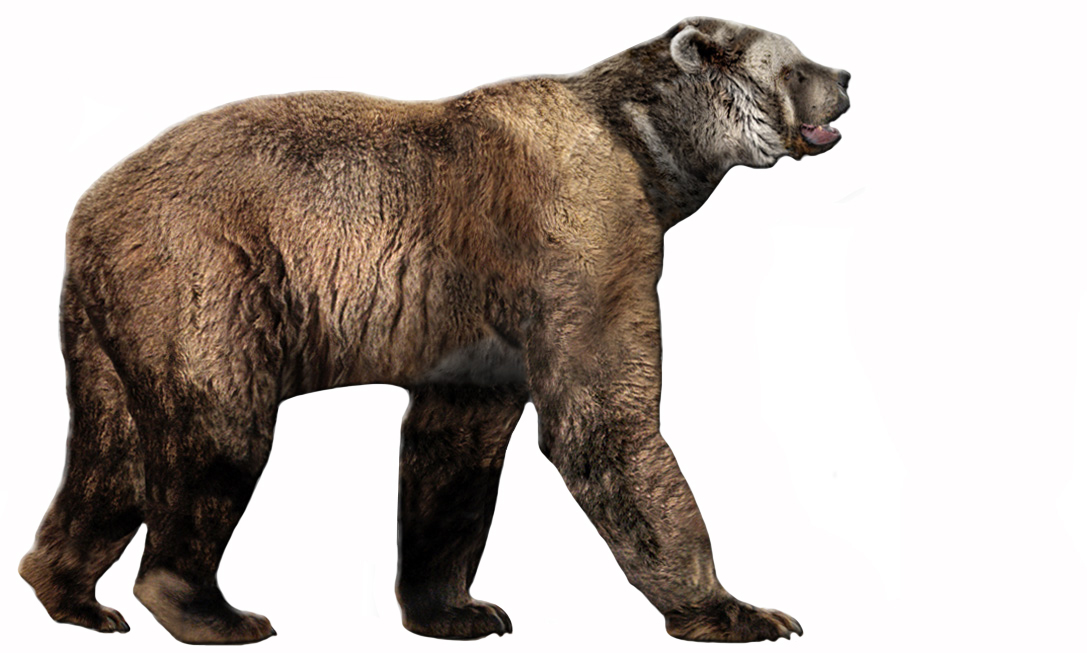
Short-faced bears were large bears that lived in the Americas during the Ice Age, with some species among the biggest terrestrial mammalian carnivores of their time. They had long legs and a somewhat shortened face compared to modern bears, features that may have made them efficient walkers or runners across open environments. These predators and scavengers would have shared the landscape with mammoths, ground sloths, early horses, and human groups spreading throughout the continents. To a person on foot, encountering a short-faced bear would have been an emergency, not a curiosity, and the risk of competition over carcasses must have been high.
As the Ice Age drew to a close and many large herbivores disappeared, short-faced bears also vanished from the fossil record. Losing key prey and facing competition and hunting from humans likely narrowed their options until they could no longer maintain viable populations. Modern bears occupy some of the ecological space they left behind, but no direct equivalent remains. I often think of short-faced bears as symbols of a world that ran on different rules – fewer people, more huge animals, and a constant chess game between giant herbivores and giant carnivores. Their disappearance helped open the door to the kind of ecosystems our species thrives in, though that change came at an enormous cost in lost diversity.
18. Saber-Toothed Cats – Blades of Bone in a Changing Climate
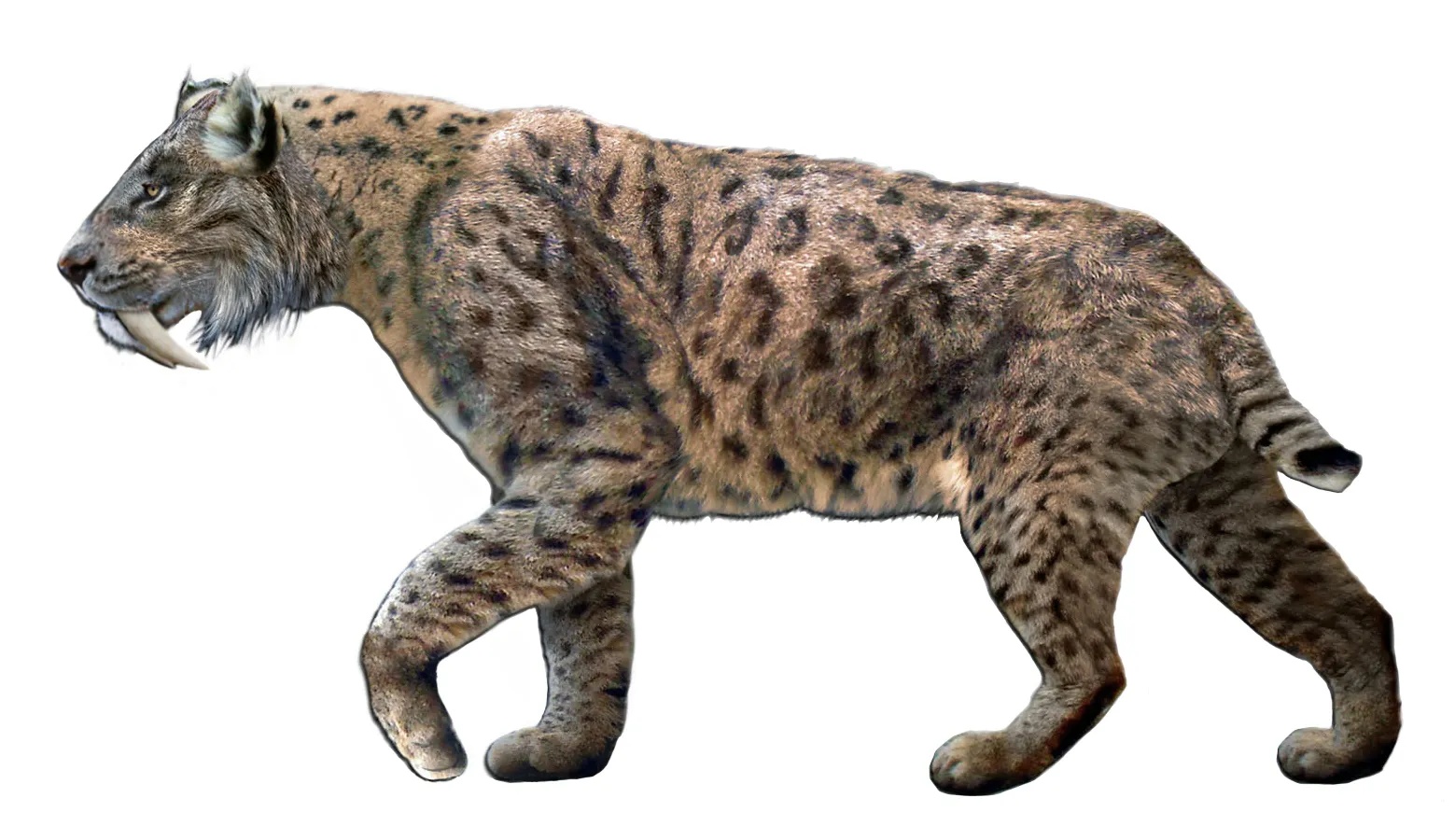
Saber-toothed cats, including the famous Smilodon, are among the most visually striking extinct animals, known for their elongated, knife-like upper canine teeth. These predators lived in the Americas and elsewhere, preying on large herbivores and possibly using ambush tactics rather than long chases. Fossil sites containing many individuals suggest complex social interactions or repeated visits to rich food sources, such as natural traps where prey animals fell and died. Saber-toothed cats coexisted with early humans, who would have perceived them as both threats and as competitors for meat in a lean, often dangerous world.
Like many other large Ice Age mammals, saber-toothed cats disappeared around the time climates warmed and human populations expanded and intensified their use of the landscape. As big herbivores declined and habitats changed, highly specialized predators built for taking down massive prey would have struggled. Modern big cats survive, but none carry quite the same dramatically exaggerated teeth. When I picture saber-toothed cats, I imagine a design that pushed predation to an extreme, only to become unsustainable when the underlying conditions shifted. They feel like a reminder that success in one era can become a liability in the next, especially when climate and human pressures pile up.
19. Giant Moa-Like Birds and Other Island Titans
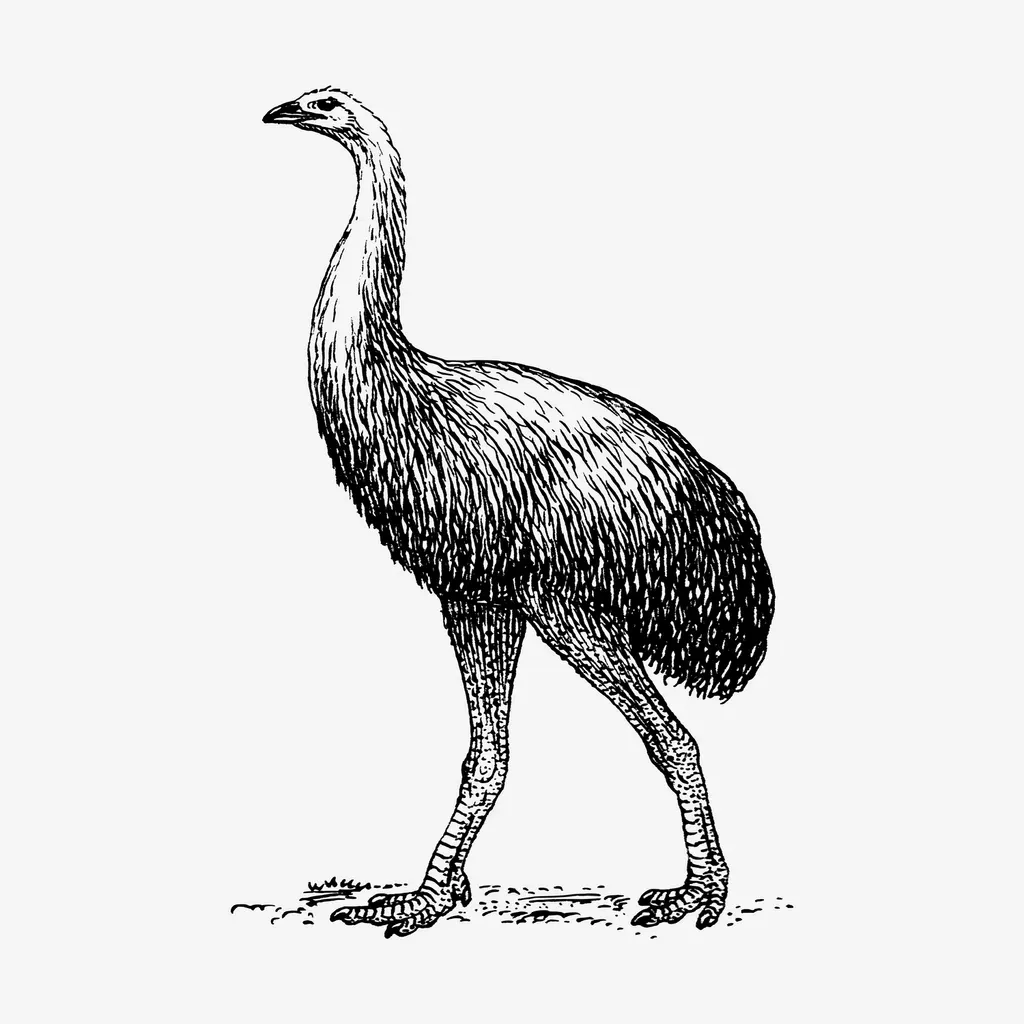
Beyond New Zealand’s moa, many islands once hosted their own large, flightless birds, some of which disappeared before modern records but after humans arrived. These birds often evolved in predator-free environments, growing large and losing flight as an unnecessary expense, a strategy that works brilliantly until people and their companion animals show up. Early settlers on islands in the Indian and Pacific Oceans likely found these trusting, hefty birds to be easy sources of meat, eggs, and feathers, valuable resources in unfamiliar territories. Over time, hunting and habitat disturbance chipped away at populations that had never faced such constant pressure.
While not all of these species are as well-known or precisely dated as the dodo or moa, the pattern is strikingly consistent: isolation, gigantism, naivety, and then rapid decline post-human arrival. Many of these birds left behind subfossil bones and, in some cases, oral traditions or early travelers’ accounts hinting at their former presence. I see these island giants as fragile experiments that nature ran in the absence of large land predators, experiments abruptly ended by the arrival of our own species. Their stories blend into a sobering chorus that tells us island ecosystems are both uniquely fascinating and uniquely vulnerable whenever humans, with our fire, tools, and introduced animals, step ashore.
20. What Extinction Stories Say About Us – And What Comes Next
Looking across these twenty lost animals, from the passenger pigeon and thylacine to Neanderthals and saber-toothed cats, a pattern jumps out that is hard to ignore. Whenever humans enter a new landscape or dramatically change the way we use one, large, slow-breeding species tend to vanish first. Sometimes climate change or shifting vegetation sets the stage, and sometimes we are the main driver, but we are almost always part of the story. I do not think we can honestly talk about extinction as a purely natural process anymore, not when so many recent losses happened within sight of our ships, guns, and cameras. Extinction has become less like distant geology and more like a moral and political choice woven into everyday life.
At the same time, I do not think the only honest reaction is despair. The fact that our ancestors watched some of these creatures disappear means our generation knows exactly what is at stake, in a way they often did not. We have conservation tools, legal frameworks, and ecological knowledge they could not have imagined, plus a growing public awareness that more and more people actually care about. My opinion is that the real tragedy would be to remember the dodo, mammoth, and Neanderthal as cautionary tales and then treat today’s endangered species as background scenery. If future generations look back on us the way we look back on those who shot the last great auk or locked up the last thylacine, it will not be because we lacked information; it will be because we chose convenience over responsibility. When you think about that, which of today’s animals do you most hope will never end up as just another haunting entry on a list like this?