If you grew up picturing “pterodactyls” as shrieking dinosaurs with bat wings, you’re in for a shock. The real animals behind that cartoon image – pterosaurs – were far stranger, more varied, and more impressive than most people ever realize. They were the first vertebrates to achieve powered flight, and for more than 160 million years they owned the skies in a way birds never quite have.
As you walk through their story, you start to see why many paleontologists quietly think of them as the real aerial monarchs of the Mesozoic. From fuzz-covered bodies and airplane‑sized wings to bizarre crests and unexpected lifestyles on the ground, pterosaurs keep overturning your assumptions the closer you look. By the end, you might never look at the phrase “flying reptile” the same way again.
1. Pterosaurs Were Not Dinosaurs – But They Were Close Cousins
You’ve probably heard people use “pterodactyl” as if it were just another kind of dinosaur, but that’s not how their family tree works. Pterosaurs and dinosaurs shared a distant common ancestor, then split into their own branches early in the Triassic, more than two hundred million years ago. Both belong to a wider group of reptiles called archosaurs, which also includes crocodiles, but pterosaurs form their own distinct order separate from Dinosauria.
When you zoom in on the bones, the differences jump out. Dinosaurs have a distinctive hole all the way through the hip socket, while pterosaurs have more of a shallow depression instead. Their limbs, vertebrae, and skulls are reshaped by flight in ways dinosaurs never show. So when you call a pterosaur a dinosaur, you’re basically doing the same thing as calling a dolphin a fish: you’re close in spirit, but wrong in the details that matter.
2. They Ruled the Skies for Over 160 Million Years
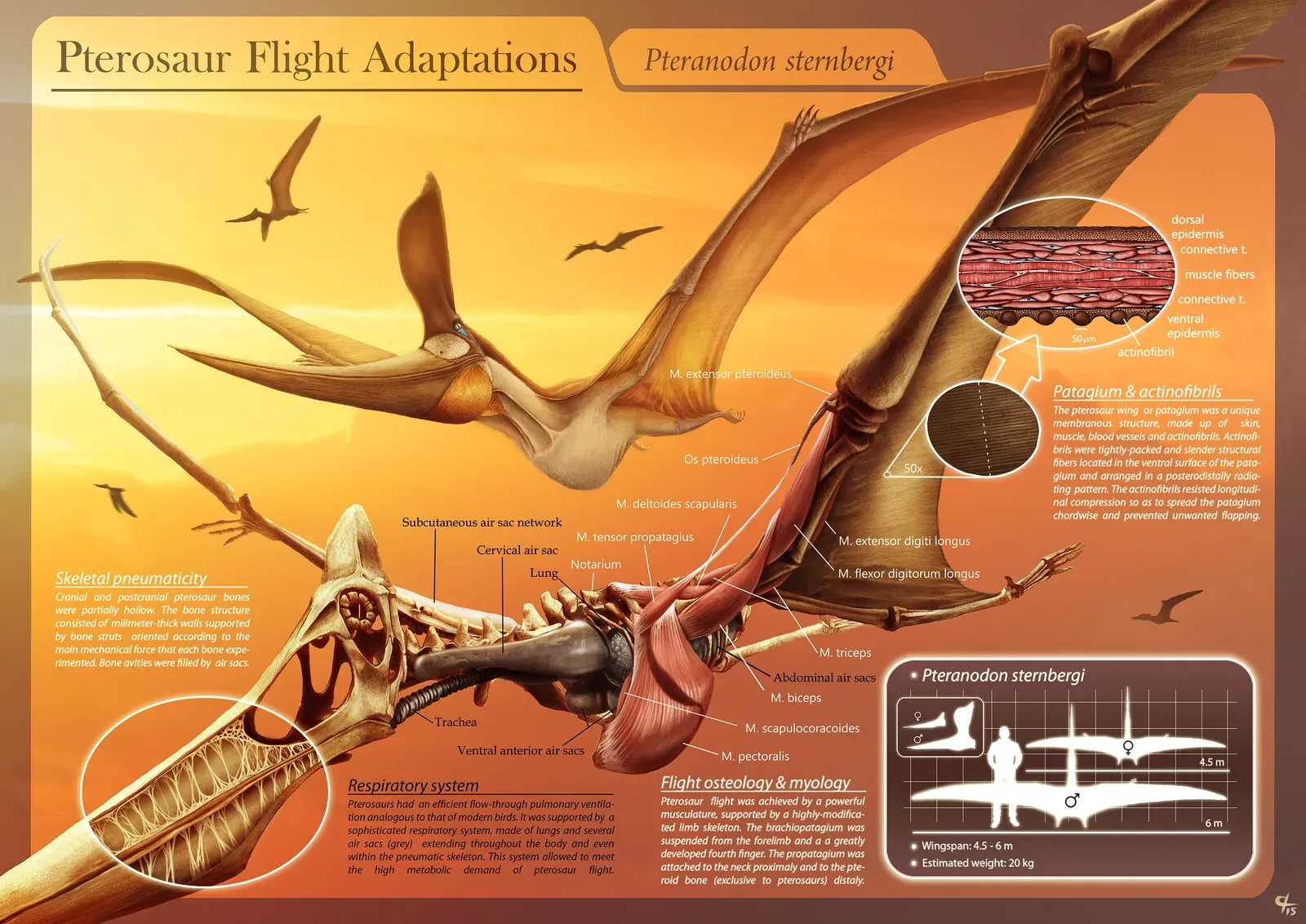
If you want to talk about success, you need to look at how long pterosaurs stayed on the planet. They first appear in the fossil record during the Late Triassic, roughly about 230 million years ago, and they make it all the way to the end of the Cretaceous, around 66 million years ago. That means they were soaring, gliding, and flapping their way across ancient skies for well over one hundred and sixty million years.
To put that in perspective, your own species has existed for only a tiny sliver of that time. Over their run, pterosaurs saw the rise of big sauropod dinosaurs, the evolution of feathered theropods, the breakup of supercontinents, and multiple climate swings. Through all of that, they kept diversifying, shifting from small, long‑tailed early forms to huge, short‑tailed giants at the end. When the asteroid finally ended their story, they had already reinvented themselves several times over.
3. The Largest Pterosaurs Were Bigger Than Any Bird That Ever Lived
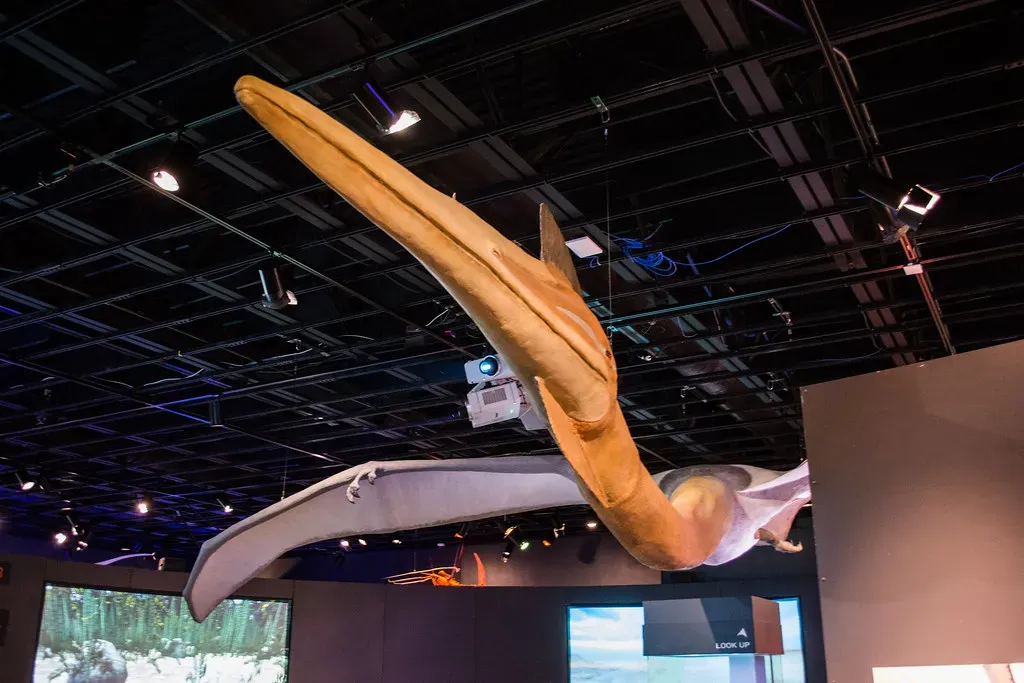
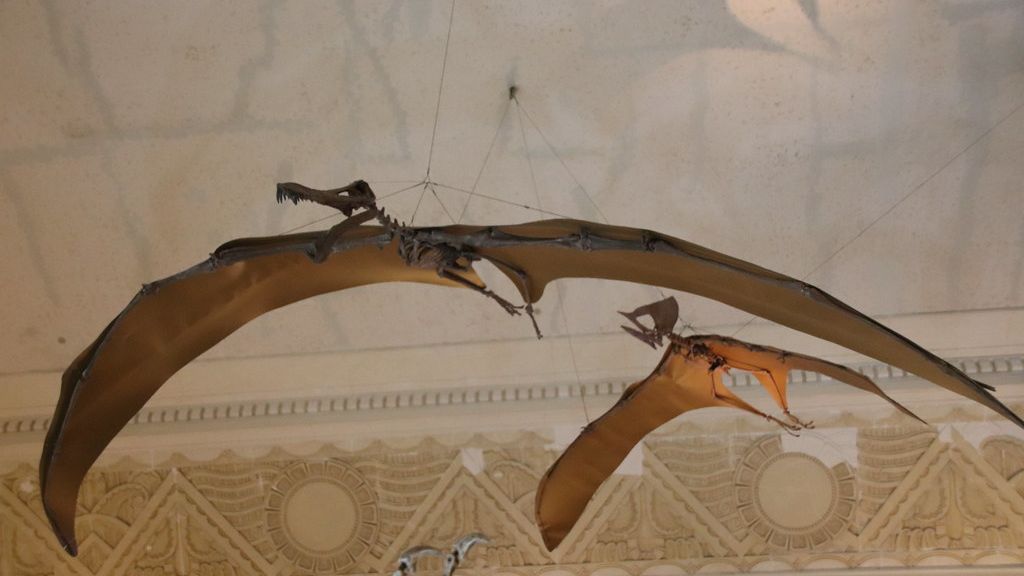
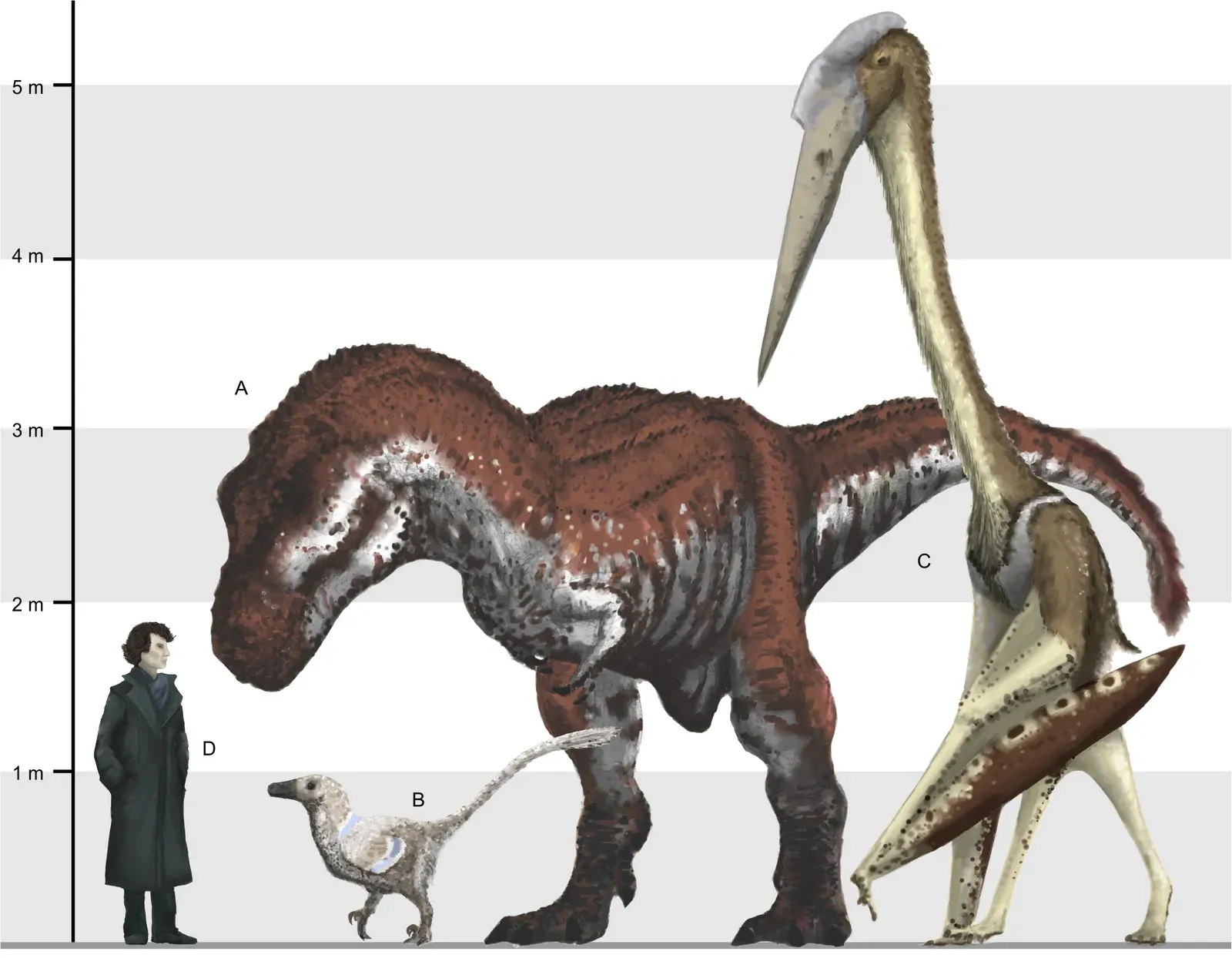
When you picture a flying animal, your brain probably jumps to an eagle, an albatross, maybe a condor if you like the dramatic stuff. Now imagine something with a wingspan twice that of the largest modern bird, and you’re getting close to the biggest pterosaurs. Species like Quetzalcoatlus and other giant azhdarchids are estimated to have wings that stretched around ten or even eleven meters from tip to tip, roughly comparable to a small private plane.
You might wonder how an animal that size could even get off the ground. Research on their bones and biomechanics suggests they used a powerful quad‑launch: pushing off with all four limbs like a spring‑loaded vault, then catching the air with those vast membranous wings. Once airborne, they probably flew more like huge gliders than frantic flappers, riding thermals and wind currents the way modern vultures and storks do, but at a scale nature has never matched since.
4. Some Pterosaurs Were Tiny Enough to Fit in Your Arms
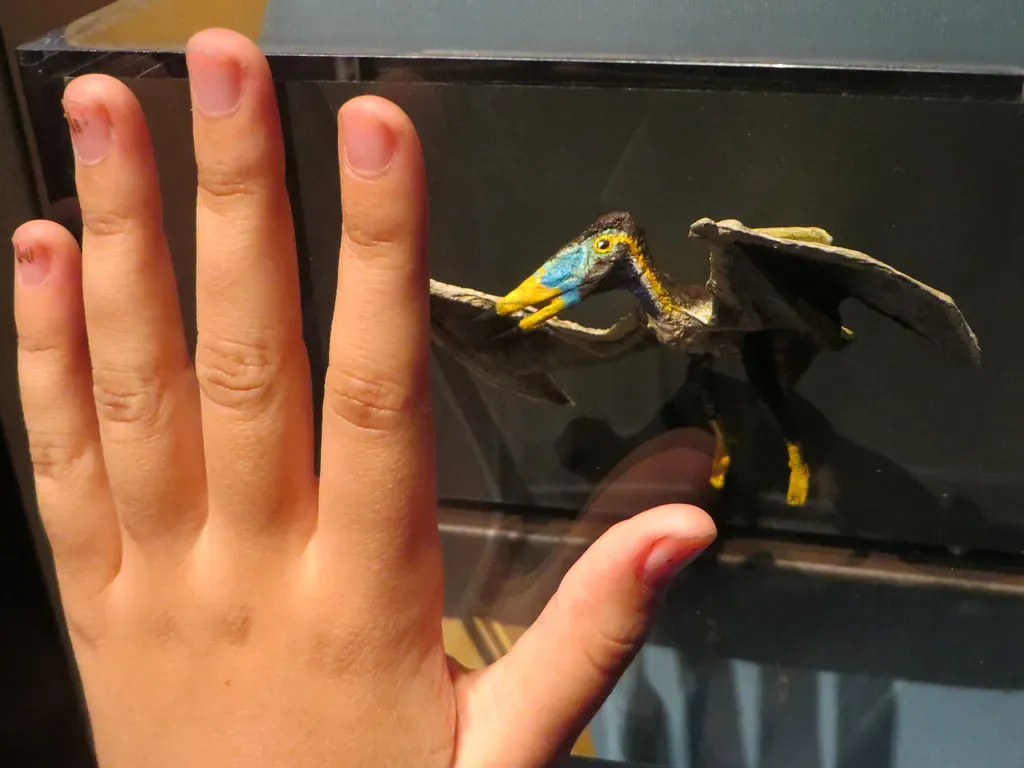
It’s easy to get hypnotized by the giants and forget that pterosaurs came in a wide range of sizes. At the other extreme from the plane‑sized azhdarchids, you find species with wingspans under half a meter, small enough that you could cradle them in your arms. Some early pterosaurs and small anurognathids would have been no larger than a modern pigeon or small owl in wingspan, though their body proportions were very different.
Recent discoveries have even turned up Triassic pterosaurs small enough that you can imagine one perching comfortably on your shoulder, at least in theory. These little fliers probably hunted insects, small fish, or other bite‑sized prey, filling ecological roles similar to bats or swallows today. So when you think “pterosaur,” you should not just picture colossal sky monsters; you should also see flocks of little, darting forms corkscrewing through the evening air like living arrows.
5. Their Wings Were High‑Tech Membranes, Not Just Bat‑Like Flaps
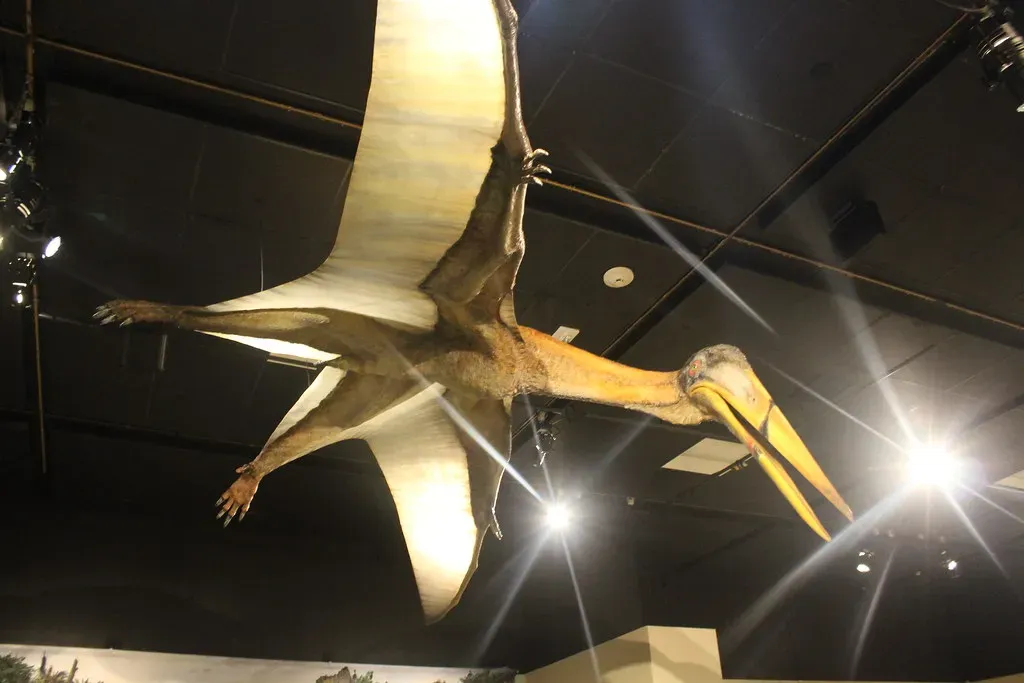
If you glance at a pterosaur skeleton, one feature jumps out immediately: that absurdly elongated fourth finger. This single finger supported most of the wing, which was made of a skin‑and‑muscle membrane stretching to the body and, in many species, down to the hind limbs. It might look simple in drawings, but when you look closely at well‑preserved fossils, you see something much more sophisticated than a loose sheet of skin.
Inside the membrane, you find a dense network of microscopic fibers, often called actinofibrils, that stiffened and reinforced the wing. Some fossils also show a kind of aerodynamic fairing where the wing met the body, smoothing airflow in the same way aircraft designers shape the roots of modern wings. You can think of a pterosaur wing as a living, adjusting composite material: it could flex, twist, and subtly reshape itself in flight, giving these animals a level of control that rivals or even exceeds what most birds can do.
6. Many Pterosaurs Were Covered in Fuzz, Not Naked Reptile Scales
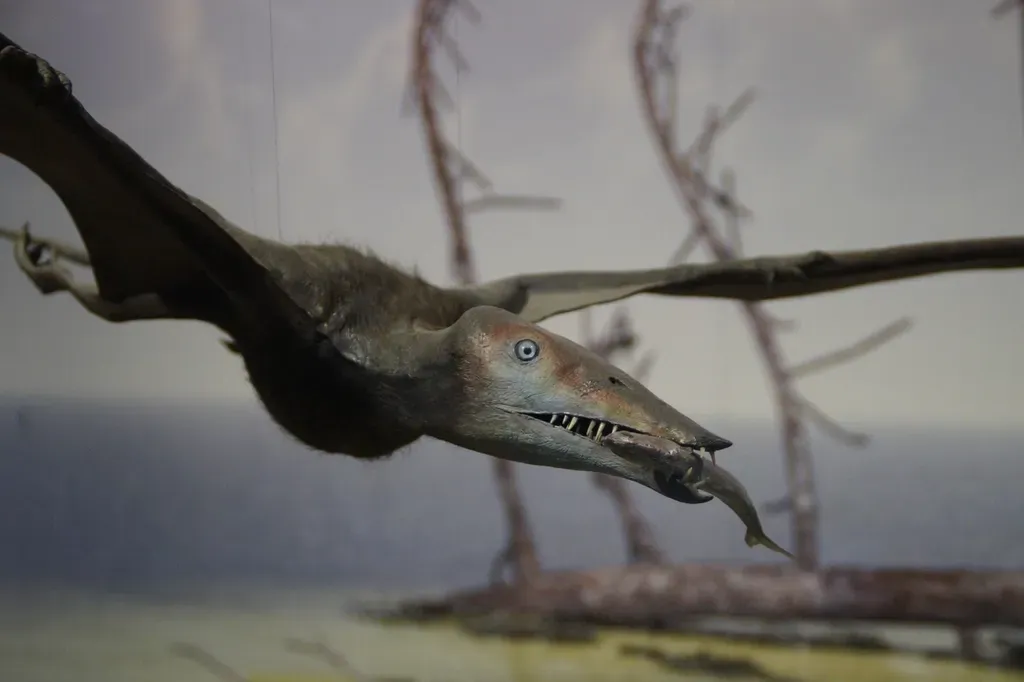
Popular art often shows pterosaurs as bare, leathery creatures, like flying lizards with wings. Fossils tell you a very different story. Several spectacular specimens preserve a covering of hair‑like filaments called pycnofibres over much of the body. These fibers form a dense pelt rather than a few scattered bristles, more like the coat of a small mammal than the scaly skin you might expect from a reptile.
That fuzz matters because it hints at how these animals lived. Insulation only makes sense if you are generating your own body heat and moving enough to need to hold on to it, so the pelt fits beautifully with the idea that pterosaurs were active, warm‑blooded fliers. Some fibers even seem to show branching structures, nudging you toward the idea that they are distant cousins of the feathers you see on birds today. Next time you imagine a pterosaur, try picturing something more like a flying, fuzzy greyhound than a smooth‑skinned bat.
7. Their Crests Were Spectacular – And Probably Meant to Impress
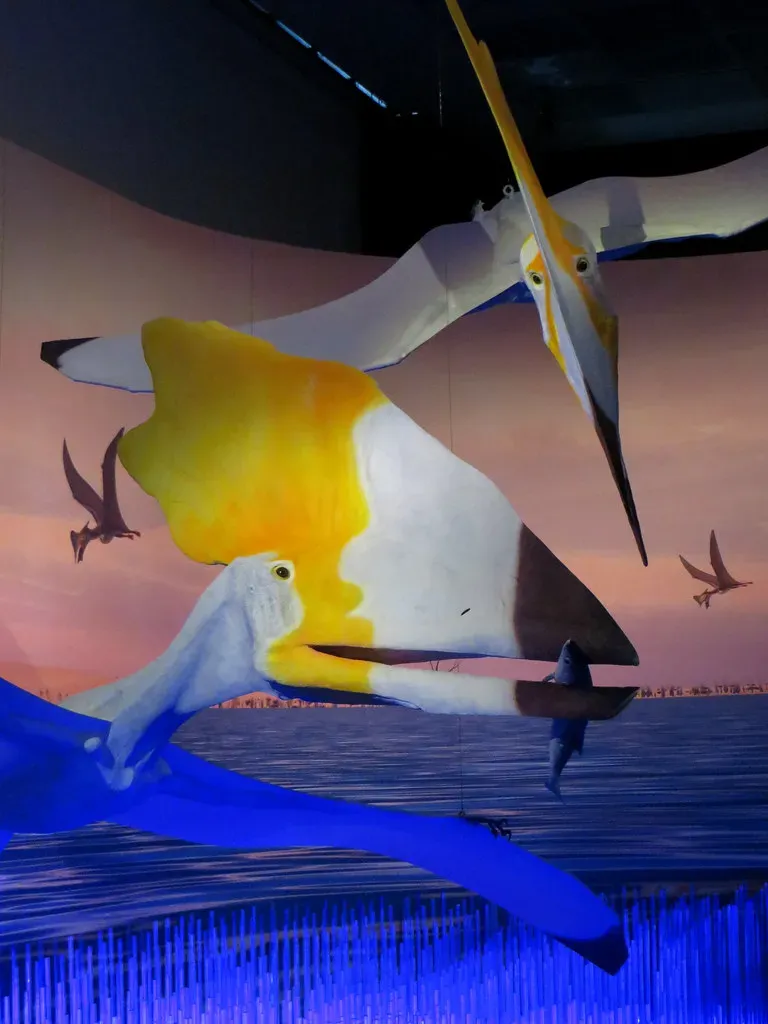
One of the most eye‑catching things you notice in pterosaur reconstructions is the wild variety of head crests. Some species carry blade‑like crests jutting back from the skull, others sport tall sails, and some may have had soft tissue extensions that turned modest bony ridges into full‑blown banners. Even in species where the bone only hints at a crest, there is growing evidence that extra soft tissue sometimes completed the showpiece.
Why would a flying reptile lug around such dramatic headgear? The most convincing explanations so far point you toward display and signaling. Crests likely helped individuals recognize members of their own species, and they may have played roles in mate choice, a bit like antlers in deer or tail feathers in birds of paradise. When you picture a pterosaur colony, you can imagine not just wings beating and beaks snapping, but vivid crests glowing in the sun, turning those cliffs or beaches into a prehistoric air show.
8. They Walked on All Fours and Could Be Surprisingly Good on Land
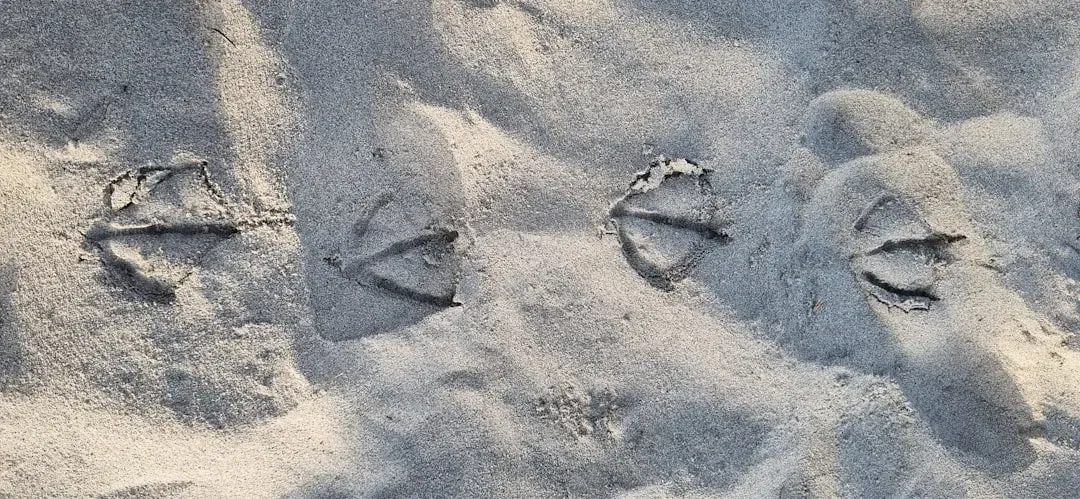
You might assume that something built so extremely for flight would be clumsy when it touched the ground, but pterosaur trackways tell a more balanced story. Fossilized footprints show clear impressions of both hands and feet, laid down in regular patterns that point to confident, four‑legged walking. Instead of dragging their wings, they folded that long finger upward and walked on the stronger bones of the hand, with the smaller fingers pointing backward.
In some groups, particularly the big azhdarchids, limb proportions and trackways suggest they were competent terrestrial stalkers. You can picture these giants striding across floodplains or coastal flats on long, stork‑like legs, using their long necks to snap up small animals. So while flight shaped almost every inch of their skeletons, it did not turn them into helpless cripples when they landed. They were more like very specialized wading birds: optimised for air, but still able to handle themselves on the ground.
9. Baby Pterosaurs May Have Been Ready to Fly Soon After Hatching
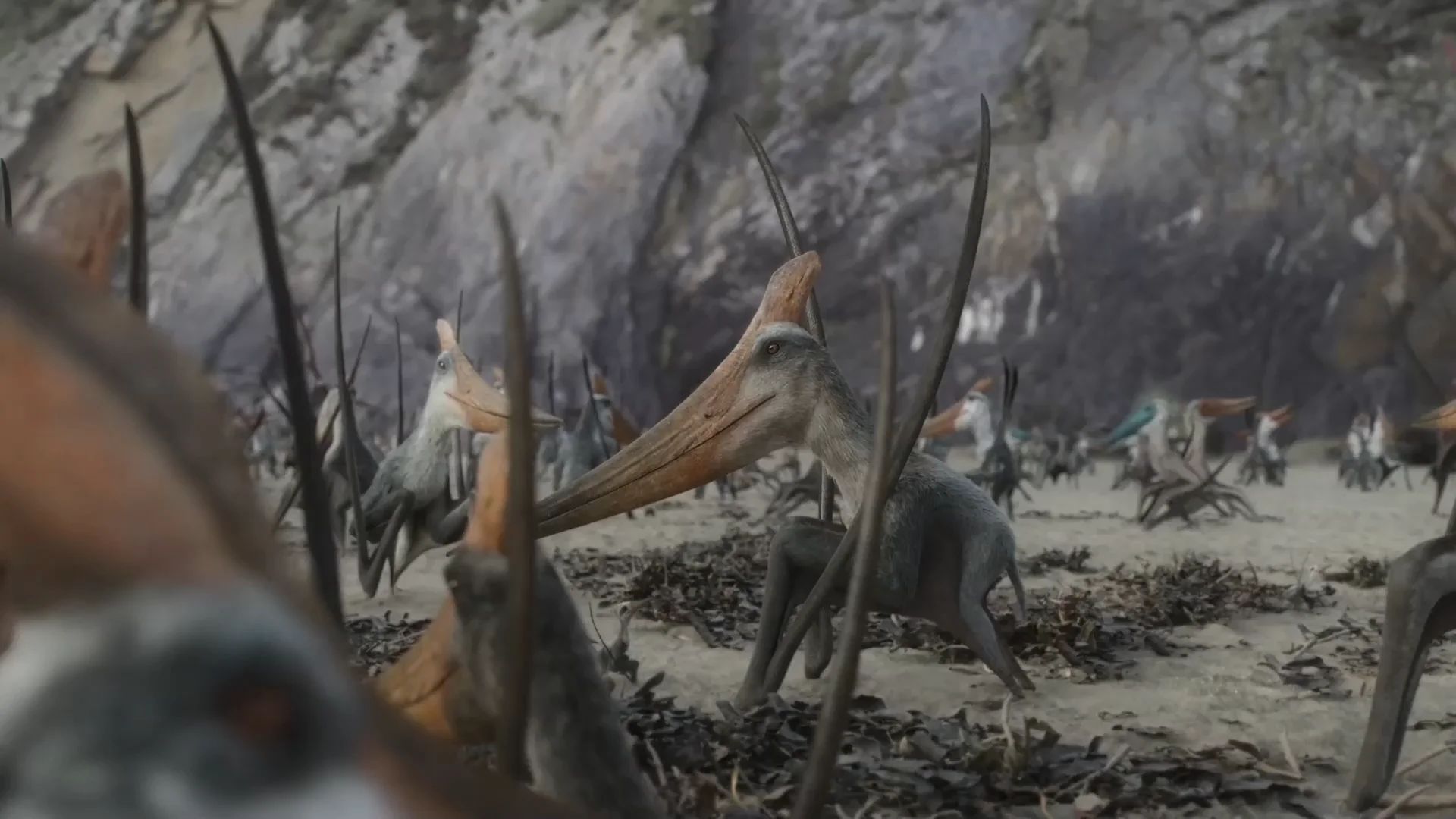
When you think about baby birds, you probably picture fluffy, helpless chicks waiting for their parents to bring food. Pterosaur hatchlings seem to have followed a very different script. The smallest skeletons and embryos show wings that are already proportionally long and well developed, with mineralized bones strong enough to handle mechanical stress. That combination points you toward the idea that young pterosaurs, sometimes called “flaplings,” were capable fliers very early in life.
That does not necessarily mean a hatchling launched into a stormy sky on day one, but it does suggest a lifestyle where youngsters quickly became independent foragers. Instead of hanging around the nest for weeks, they may have headed off to exploit tiny prey their oversized parents ignored. You can imagine a beach or lagoon shoreline where adults are cruising high over the water while clouds of miniature pterosaurs zip around lower down, each age group carving out its own layer of the air.
10. Their Origins Are Still Mysterious, Even After Two Centuries of Study
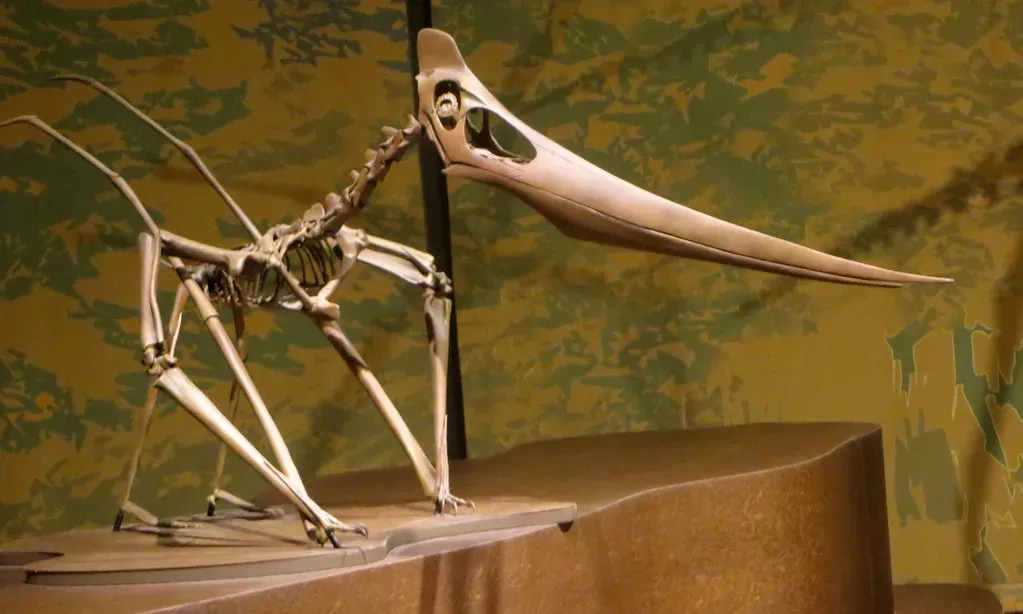
Here’s one of the strangest facts you learn when you start digging into pterosaurs: even after more than two hundred years of research, their exact ancestry is still not fully nailed down. You know they are archosaurs and fall closer to dinosaurs than to crocodiles, but the immediate, non‑flying relatives that led to the first pterosaur have not been clearly identified in the fossil record. Their skeletons are so heavily modified for flight that they almost erase the trail behind them.
That mystery makes every new Triassic fossil exciting, because each small, lightly built reptile with elongated limbs might represent a piece of the missing story. Some recent work on small tree‑climbing reptiles and early pterosaur relatives is starting to sketch a picture of agile, possibly arboreal ancestors experimenting with gliding and leaping. For now, though, you are looking at a group that seems to burst into the record already adapted for powered flight, like a movie that skips the slow origin montage and jumps straight to the aerial chase.
Conclusion: Rethinking the “Pterodactyl” in Your Imagination
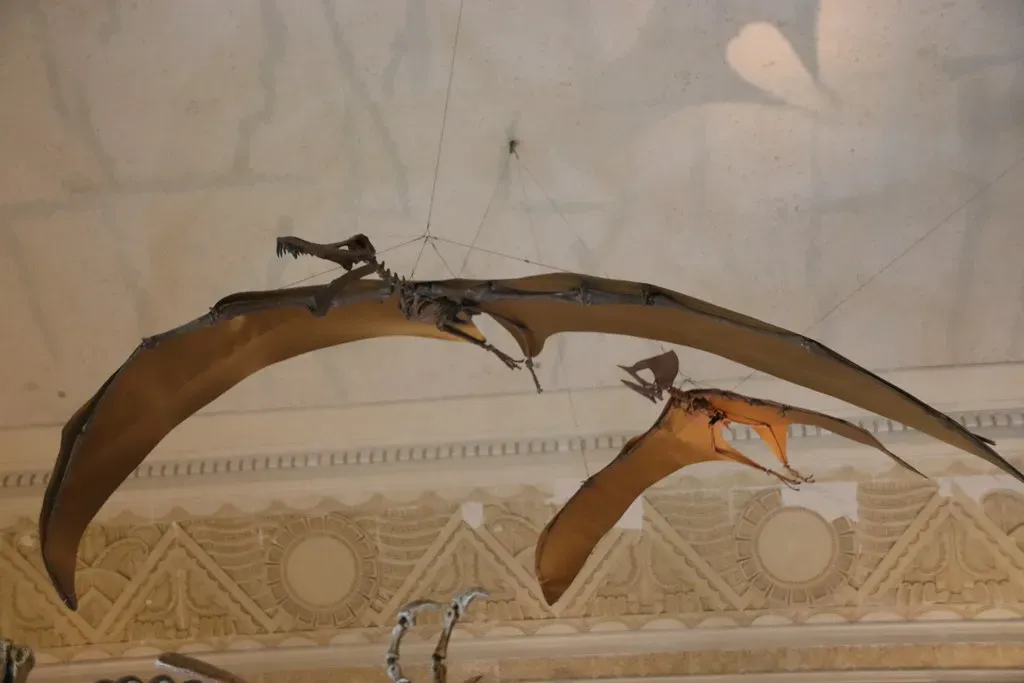
When you put all these strands together, the cartoon pterodactyl from childhood feels painfully flat. In reality, you are dealing with warm‑blooded, fuzz‑covered, high‑performance fliers whose wings were closer to living engineering projects than simple skin flaps. They ranged from shoulder‑perching miniatures to giants that would dwarf any modern bird, walked capably on all fours, and probably filled the ancient skies with a chaotic mix of colors, crests, and behaviors that you’re only just starting to glimpse through the fossil record.
The more you learn about them, the more pterosaurs force you to widen your sense of what a reptile can be, and what flight can look like when evolution has millions of years to tinker. You do not have any flying reptiles in the world today, so every slab of rock with a faint outline of wing membrane or a spray of pycnofibres becomes a rare window into a truly alien style of life. Next time you see an albatross or a gliding seabird, will you catch yourself wondering what it would have been like to stand on a Cretaceous shoreline and watch a pterosaur horizon darken with their shadows?