Nature has always been a game of hide and seek. Long before humans even existed, the ancient world was already running a ruthless survival tournament where the best hiders won and the visible ones vanished – from the gene pool, forever. What makes this story even more breathtaking is that we are only now, through astonishing advances in paleontology, beginning to uncover just how sophisticated those hiding strategies really were.
You might think camouflage is a modern trick, something belonging to chameleons and cuttlefish. Honestly, think again. Camouflage didn’t evolve because animals wanted to hide. It evolved because those who could hide survived longer, mated more, and left behind more offspring – inheriting the traits that made their ancestors less visible. The ancient world was full of creatures quietly perfecting that very same trick, millions of years before we ever thought to look for the evidence. Let’s dive in.
1. Psittacosaurus: The Forest-Dwelling Master of Shading
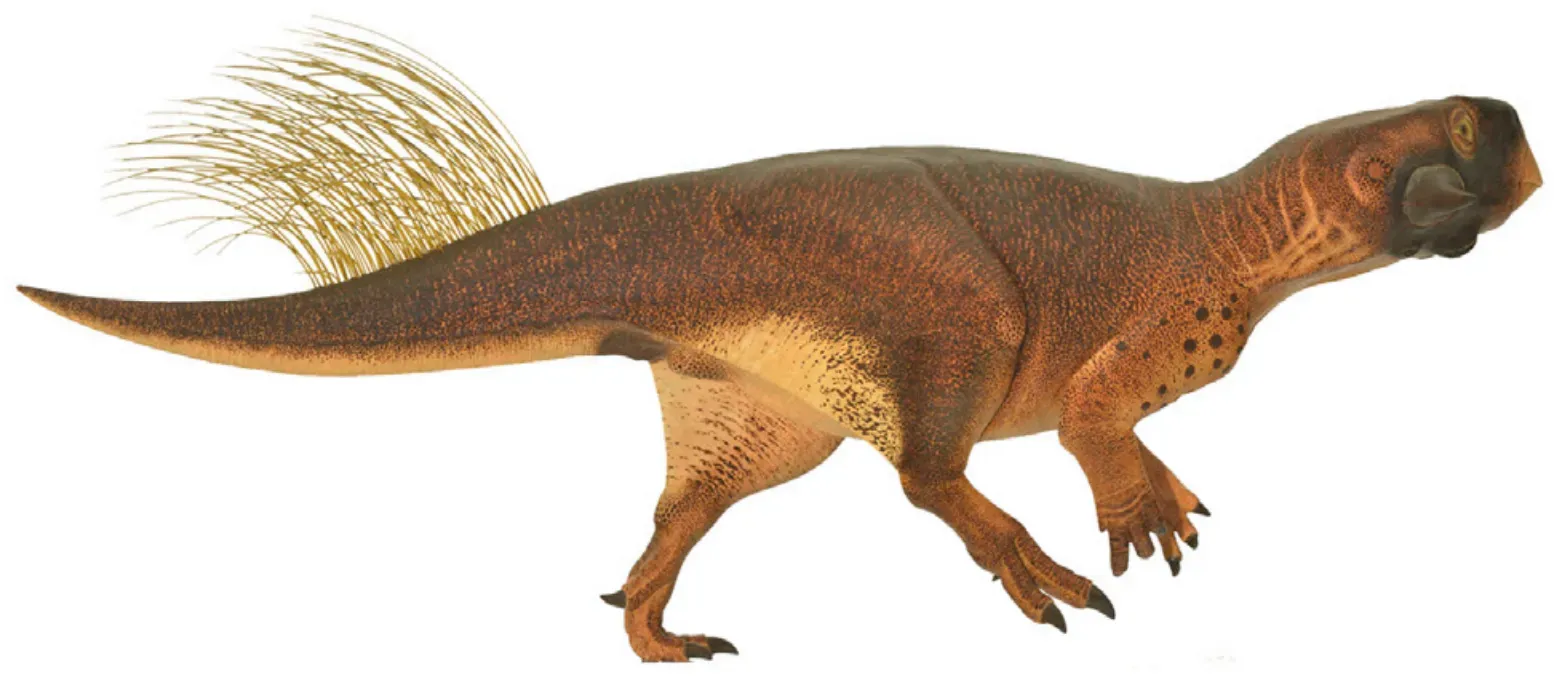
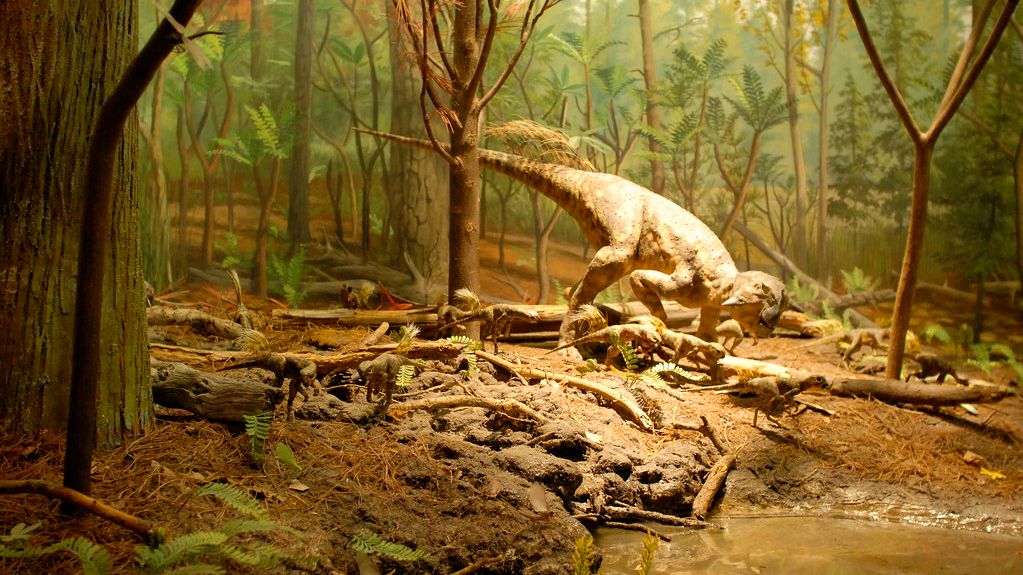
You wouldn’t expect a horned dinosaur to be stealthy, but Psittacosaurus pulled it off with remarkable elegance. Psittacosaurus, whose name means “parrot lizard,” was a smallish, horned dinosaur that ran about on two legs eating nuts and seeds in what is now northeastern China. What makes this creature extraordinary isn’t its diet or its horns – it’s what researchers found preserved in its fossilized skin.
The animal had a dark back that gave way to a pale belly – a kind of dark-to-light color gradient that counteracts the light-to-dark gradient created by illumination from the sun. This pattern, known as countershading, is common among modern animals ranging from dolphins to deer, helping both predators and prey blend in with their surroundings. Even more impressively, because the light in an open savanna comes straight down and casts harsh shadows, animals there have sharp dark-to-light transitions in pigmentation located at the top of their bodies, whereas in forests, light is more diffuse and pigmentation transitions tend to be farther down on the body and less sharp. The Psittacosaurus pattern matched the forest type – giving scientists a direct window into the habitat this dinosaur actually called home.
2. Sinosauropteryx: The Bandit-Masked Hunter of Open Lands
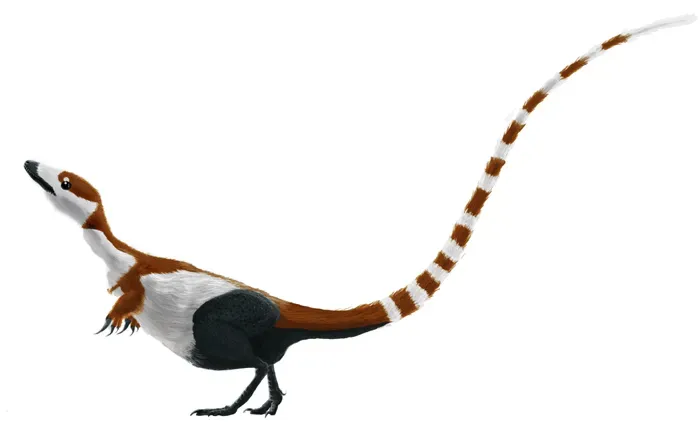
Sinosauropteryx is one of the most scientifically significant dinosaurs ever found, not because of its size or ferocity, but because of its color. A team led by Fucheng Zhang in 2010 examined the melanosomes in a little compsognathid from Early Cretaceous China called Sinosauropteryx, which was historically important as the first non-bird dinosaur to be discovered with preserved feathers back in 1996. Let’s be real – discovering actual color in a dinosaur was a jaw-dropping moment for science.
The Sinosauropteryx is a perfect example of a dinosaur with a “bandit mask.” This carnivorous dinosaur lived in what is now eastern China during the Early Cretaceous period. Since it lived in open areas as well as some forests, its bandit mask marking reduced glare, giving it a clearer line of sight. Beyond that striking facial pattern, analysis revealed a clear case of countershading – a common camouflage technique where an animal is darker on its upper surfaces and lighter on its belly. This pattern helps to flatten an animal’s appearance by offsetting the natural shadows cast by overhead light, and the presence of countershading in Sinosauropteryx strongly suggests it lived in open, well-lit environments.
3. Borealopelta: The Tank That Still Had to Hide
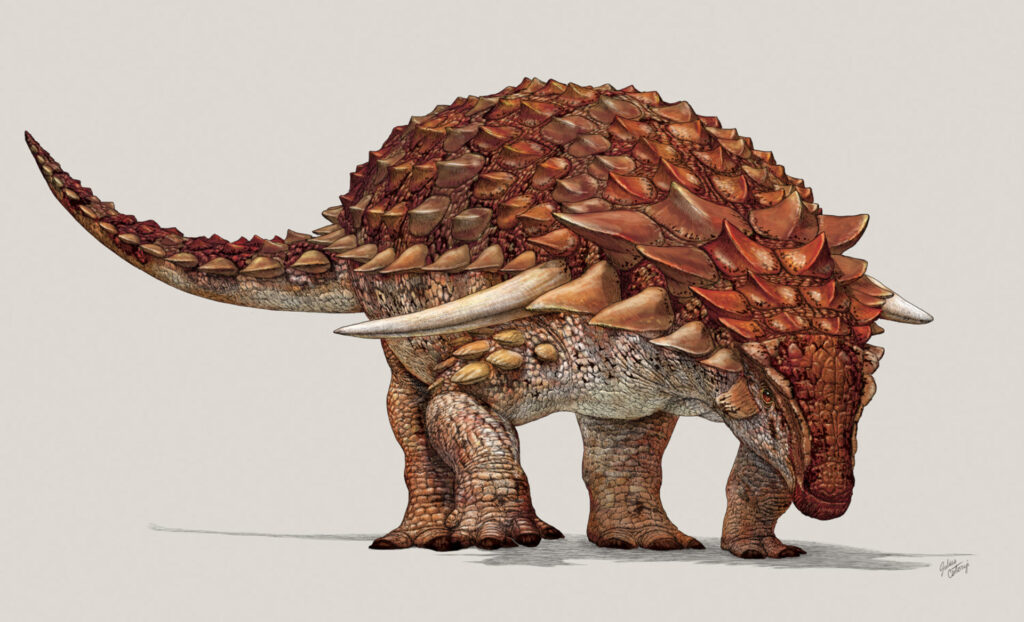
Here’s the thing – when you picture a heavily armored dinosaur the size of a small car, you probably don’t think “camouflage.” Yet Borealopelta markmitchelli turns that assumption completely on its head. An analysis of the fossilized skin of Borealopelta markmitchelli, the most well-preserved of the armored dinosaurs ever unearthed, revealed that the ancient creature had a reddish-brown coloration and camouflage in the form of countershading – and that despite being the size of a tank, it was still hunted by carnivorous dinosaurs.
Preserved evidence of countershading suggests that the predation pressure on Borealopelta, even at large adult size, was strong enough to select for camouflage from visual predators. Think about what that actually means for a moment. This indicates that it still needed to hide from predators despite weighing roughly 3,000 pounds – the size of a small rhino. Modern animals that large don’t bother with countershading because there’s really nothing large enough around to threaten them. The Cretaceous was, by any measure, a terrifying place to be alive.
4. Ichthyosaur: The Dolphin-Shaped Phantom of the Deep
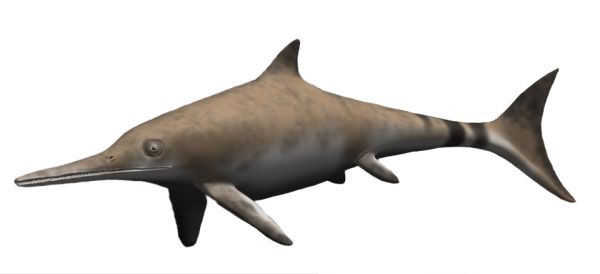
The ichthyosaur looked remarkably like a modern dolphin – streamlined body, long slim snout, and a powerful tail. One species of ichthyosaur was practically invisible in the murky depths of Jurassic seas, thanks to dark pigmentation that covered its entire body. That was one conclusion of a study that provided an unprecedented peek at the coloration of sea creatures alive during or soon after the dinosaur era. The science behind this discovery is genuinely remarkable.
Researchers found dark eumelanin pigment in the fossil remains of this ichthyosaur, and one scientist suspects it was uniformly dark, like modern deep-diving sperm whales, which are camouflaged by their coloration in the ocean’s depths. This theory is supported by other evidence that the ichthyosaur might have been a deep diver, such as its large eyes. It’s hard to say for sure whether this was primarily camouflage or thermoregulation at work, but the evidence points convincingly toward a creature perfectly adapted to its shadowy world.
5. Mosasaur: The Ocean’s Dark and Deadly Predator
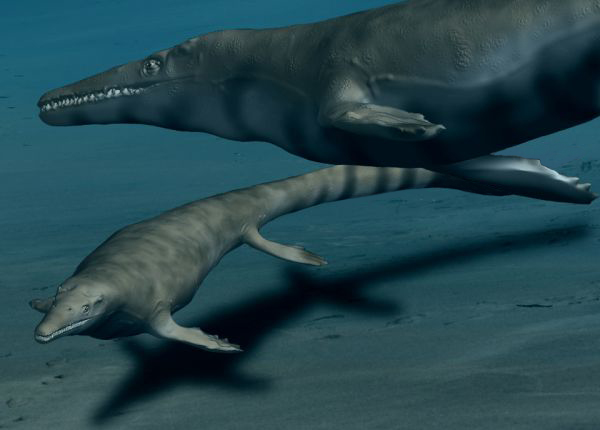
If you want to understand just how widespread camouflage was among ancient marine giants, look no further than the mosasaur. Mosasaurs were giant marine lizards from 98 to 66 million years ago that could reach 15 meters in body length. These weren’t shy little fish – they were apex predators of the Cretaceous seas, and yet they too had reason to hide.
In the mosasaur, the pigments were concentrated on the upper surfaces of the animal’s body. Studies suggest that this dark-above-and-light-below color scheme, known as countershading, helps provide camouflage. When lit from above and seen from the side, the lighter underside would be in shadow, helping the creature blend into the background. Pigments preserved in fossilized skin of these prehistoric animals revealed they were, at least partially, dark-colored in life – a feature that probably contributed to more efficient thermoregulation, as well as provided means for camouflage and protection against harmful UV radiation.
6. Trilobites: Spotted Survivors of the Ancient Seafloor
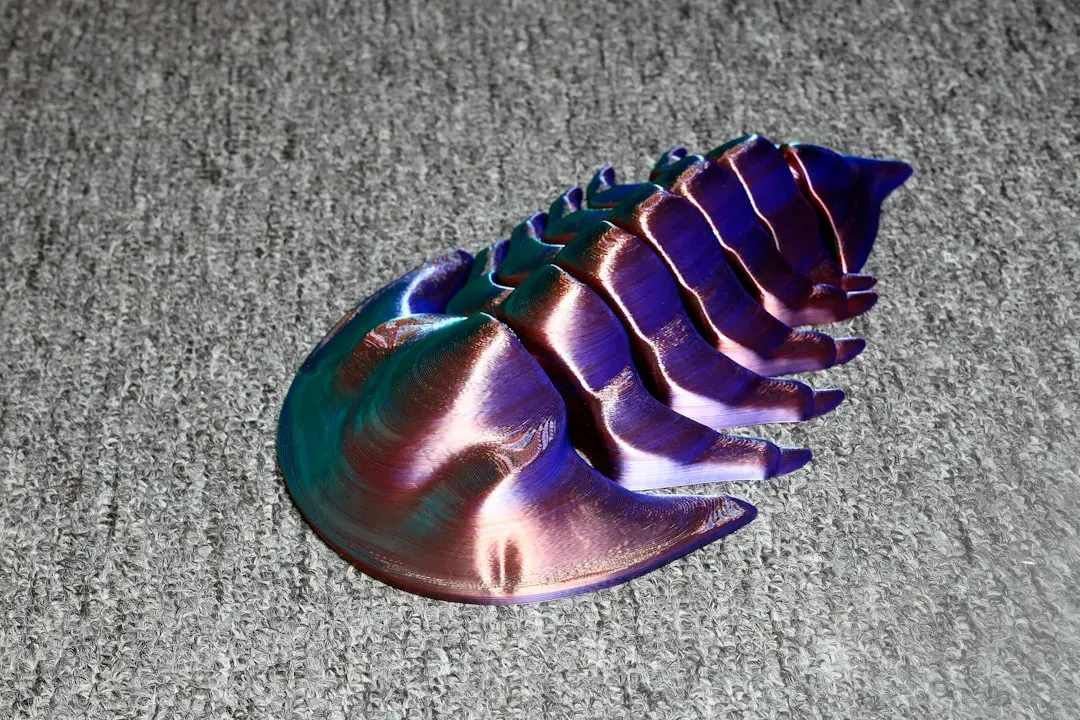
Long before dinosaurs walked the Earth, the ocean floors of the Cambrian and Ordovician periods were crawling with trilobites – ancient arthropods that were among the first animals to develop complex eyes. Fossil evidence shows that early Cambrian animals like trilobites had compound eyes, which meant they could detect shapes and motion. Where there are eyes, there is the pressure to hide from them.
These trilobites would have appeared spotted in life. Leopard-like patterns of brown spots on lightly colored exoskeletons and white dots on darkly colored shells would have served as camouflage to hide from predators looking for a meal on the sea floor. These dots, made of tiny spheres embedded in the trilobite exoskeletons, were not randomly scattered across the surfaces of the creatures – they were concentrated in symmetrical patterns on the surfaces above and below the eyes and along furrows on their backs. Honestly, it sounds almost like modern leopard spots, perfected half a billion years before leopards existed.
7. Cretophasmomima melanogramma: The Ancient Stick Insect Ginkgo Impersonator
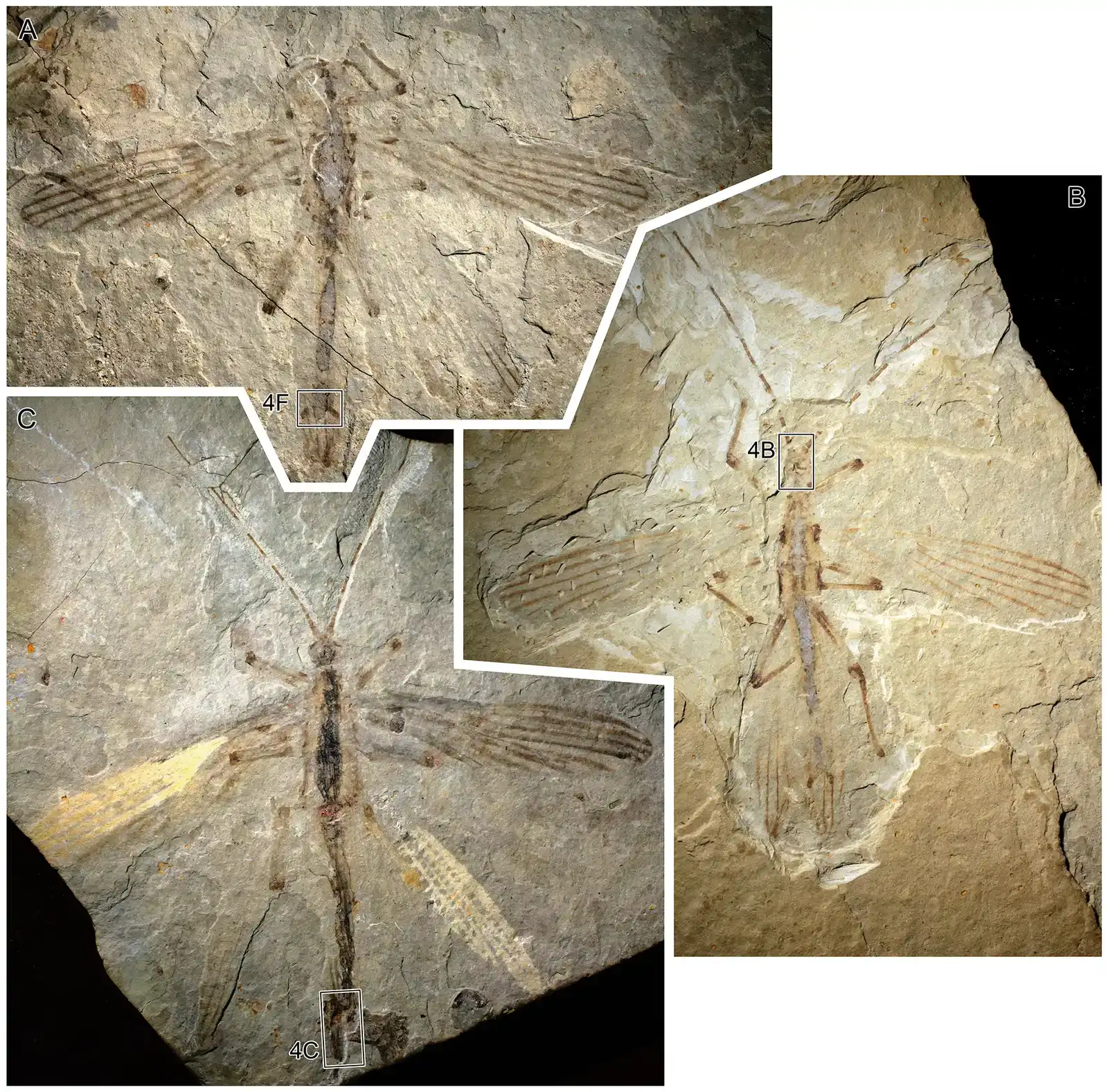
Some camouflage strategies are about color. Some are about shape. This one was about both simultaneously. Walking stick insects disguised themselves as leaves starting some 126 million years ago, even before the advent of flowering plants. The fossil discoveries from modern-day Mongolia mark some of the earliest examples of the twig-mimicking stick insects. This is plant mimicry taken to a breathtaking extreme.
The newly discovered species Cretophasmomima melanogramma sported wings with thin, dark, parallel lines threading through them. When still, the wings created a tongue-like shape that hid the insect’s abdomen. In the same fossil layer, researchers found a distant relative of the ginkgo plant with pale leaves and similar dark-veined lines running through it. The discovery of both specimens suggests the insect had evolved ginkgo-leaf mimicry to evade predators. Think of it like wearing a costume that exactly matches the wallpaper behind you – invisible in plain sight.
8. Green Lacewing Larvae: The Original Trash-Carrier of the Cretaceous
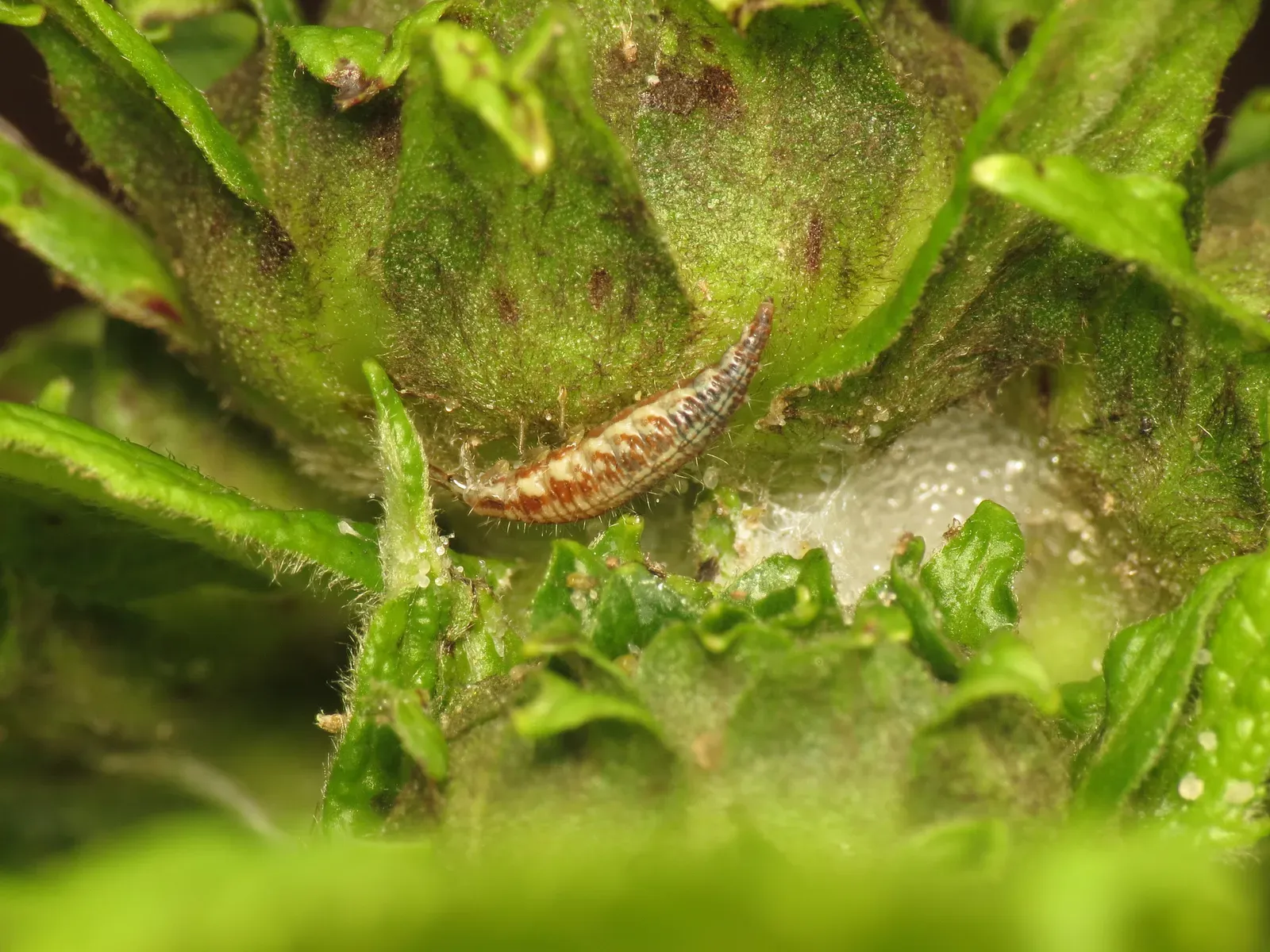
This one is genuinely one of the strangest camouflage strategies in all of natural history, ancient or modern. This adaptive behavior occurs in insects, most famously in green lacewing larvae who nestle trash among setigerous cuticular processes, known as trash-carrying, rendering them nearly undetectable to predators and prey, as well as forming a defensive shield. Researchers reported an exceptional discovery of a green lacewing larva in Early Cretaceous amber from Spain with specialized cuticular processes forming a dorsal basket that carried a dense trash packet.
Remarkably, not only does the specimen have the specialized morphological structures for carrying debris, but its trash packet, comprising a dense cloud of fern trichomes, is intact – demonstrating that the antiquity of the trash-carrying behavior extends to at least the Early Cretaceous. This specialized camouflage strategy implies certain morphological and behavioral adaptations and, more remarkably, highlights the long-term stasis of this behavior in green lacewings, stretching over at least 110 million years. The same trick, unchanged, for over 110 million years. That tells you just how effective it really was.
9. Microraptor: The Iridescent Four-Winged Enigma
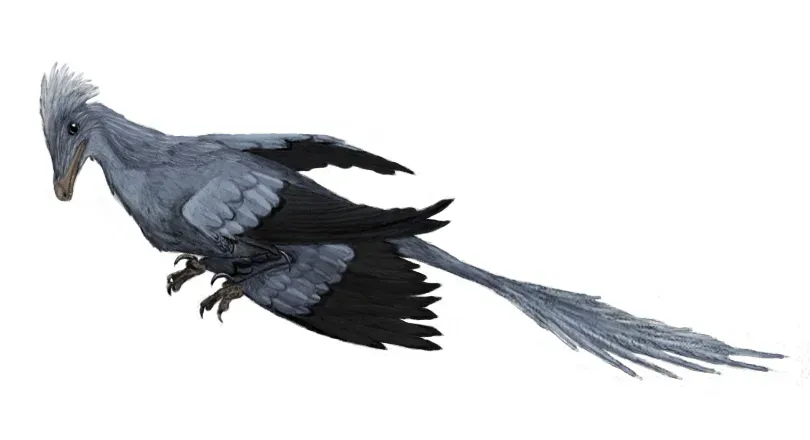
Microraptor occupies a genuinely fascinating corner of the prehistoric world – a four-winged flying dinosaur from Early Cretaceous China that managed to be both visually striking and cleverly concealed all at once. Microraptor was a four-winged flying dromaeosaur from Early Cretaceous China. A study in 2012 revealed the first evidence of prehistoric iridescence – Microraptor’s melanosomes were arranged in a particular pattern found in modern iridescent birds.
In 2012, the stacked arrangement of melanosomes found in the feathers of the four-winged dinosaur Microraptor was shown to create an iridescent sheen similar to that of a modern raven. Iridescence in nature isn’t just decoration – it can serve as a form of disruptive visual effect, making it harder for predators to accurately judge size, shape and distance. Animals today commonly use color for camouflage, startling or confusing predators, advertising their toxins, and communicating. It is likely that ancient animals used color in the same ways. Microraptor was arguably doing all of the above at once.
10. Prehistoric Fossil Snake: The Blotched Ambush Artist
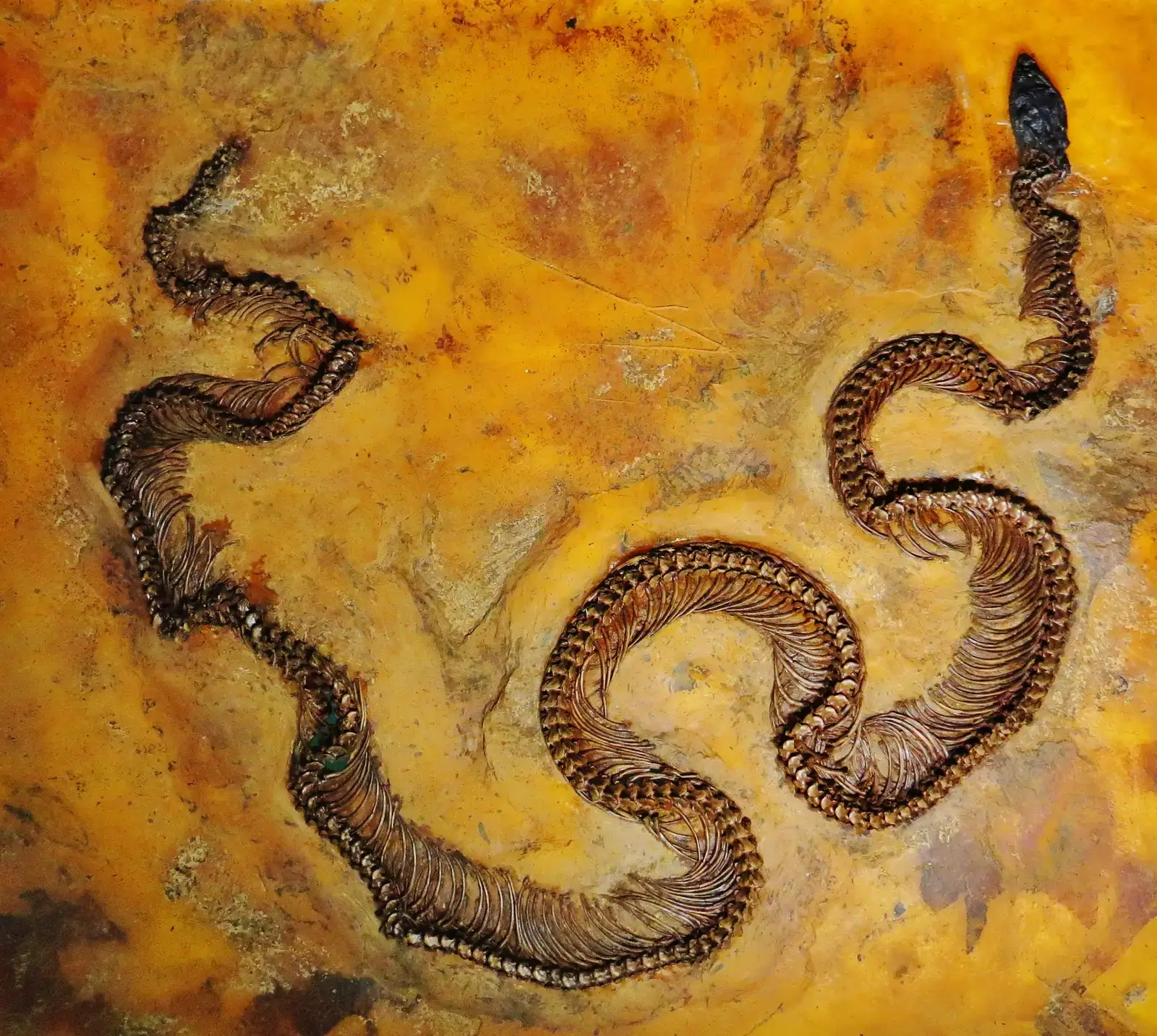
One of the more quietly astonishing discoveries in the world of fossil color reconstruction involved the preserved skin of an ancient snake. Each pigment cell type has a different shape, size, and location, and scientists used electron microscopy to identify them in the fossil snakeskin, concluding that the creature once sported blotches of green, black, and yellow-green, with a pale underbelly. These types of blotches are really good at breaking up the body outline for camouflage, and researchers believe the snake probably evaded predators during the day by hiding among leaves, as many modern snakes do.
The fossil snake was almost certainly using color for camouflage. It had quite striking blotches along its length, and those blotches probably served as disruptive camouflage, to break up the body outline in strong light. Microscopic pigment-bearing cell structures known as melanosomes can persist in fossils for tens of millions of years, and studies of preserved pigments have allowed scientists to reconstruct the actual colors of a wide range of extinct animals, including a number of dinosaurs. The snake is proof that this elegant science works even for the most delicate, ancient of creatures.
Conclusion: The Ancient Art of Disappearing
What strikes you most, when you step back and look at all of these ancient creatures together, is how universal the drive to hide truly was. From a thumbnail-sized lacewing larva dragging fern fluff across its back, to a three-thousand-pound armored dinosaur quietly relying on shading to avoid something even larger – every single creature on this list found a way to disappear into its world.
Over thousands or millions of generations, these subtle advantages accumulated. Natural selection works like an invisible sculptor – it doesn’t design from scratch; it modifies what already exists. When a mutation causes an animal’s fur, scales, or skin to be just a shade closer to its surroundings, it may mean the difference between life and death. That quiet pressure, playing out over geological time, built some of the most ingenious disguises the world has ever seen.
The best part? This type of analysis reveals the potential of the emerging field of fossil coloration. By reconstructing long-lost shades, paleontologists can detect and investigate ancient behaviors that have previously been hidden from view. We are only at the beginning of understanding what the prehistoric world truly looked like. Which of these ancient hiders surprised you the most? Share your thoughts in the comments below.