Most people picture the Mesozoic Era as a ground war – massive theropods crashing through ferns, everything trembling at the footsteps of a T. rex. That picture is missing something enormous. Directly overhead, winged reptiles with 30-foot wingspans were already scanning the landscape for their next meal, and some of them walked on land too. Scientists who study biomechanics and fossil anatomy have spent years quietly building the case that these creatures weren’t just impressive – they were genuinely more dangerous than most of what crawled below.
The ten pterosaurs ahead range from early Triassic ambush hunters to late Cretaceous island tyrants that filled the top predator slot in ecosystems with no competition at all. A few of them will be familiar. Others were discovered recently enough that their full terror hasn’t quite reached public awareness yet. Either way, by the time you reach number one, the whole idea of “dinosaurs ruled the Earth” is going to need some serious revision.
#10 – Pteranodon: The Ocean Stalker That Made Coastal Life Genuinely Dangerous
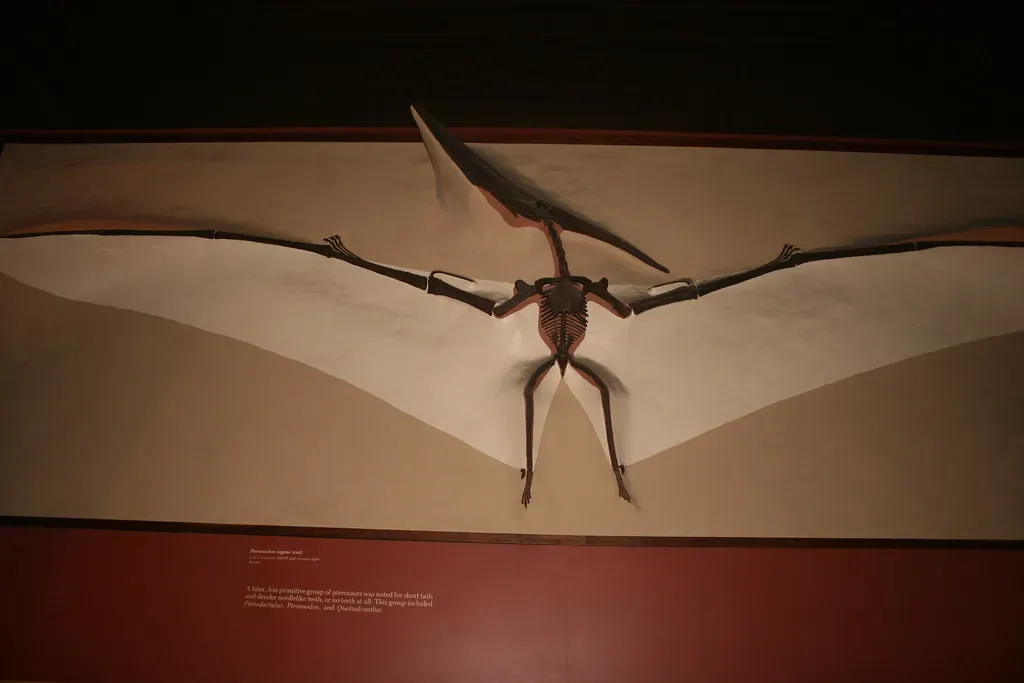
Pteranodon is probably the pterosaur most people can picture, and yet most people drastically underestimate it. Its wingspan routinely hit 20 feet or more in females and stretched to a staggering 25 feet in the largest males, and it used those wings to patrol vast stretches of ancient coastline with almost no energy expenditure – gliding on thermal columns the way an albatross works the open ocean today. While ground animals were stuck competing for territory on narrow shorelines, Pteranodon simply flew past all of it, covering distances in hours that a land predator couldn’t manage in days.
What makes it genuinely unsettling isn’t the size – it’s the developmental advantage. Fossil evidence suggests juveniles could fly almost immediately after hatching, which meant no vulnerable crawling phase on the ground where anything with teeth could end them. Adults used their long bony crests for steering and likely display, and those elongated beaks speared fish with the precision of a thrown javelin. Pteranodon wasn’t competing with the dinosaurs below it. It was operating in a completely separate lane – and winning.
Fast Facts
- Wingspan: Up to 25 feet (7.6 m) in the largest males; females averaged around 12 feet
- When it lived: Late Cretaceous, roughly 86–84 million years ago
- Where fossils were found: Niobrara Formation – Kansas, Nebraska, Wyoming, Alabama, and South Dakota
- Diet: Primarily fish, crabs, and mollusks; caught via aerial diving and surface skimming
- Known specimens: More than 1,200 – more than any other pterosaur genus on record
#9 – Nyctosaurus: The Crested Nightmare Built for Skies Nothing Else Could Reach
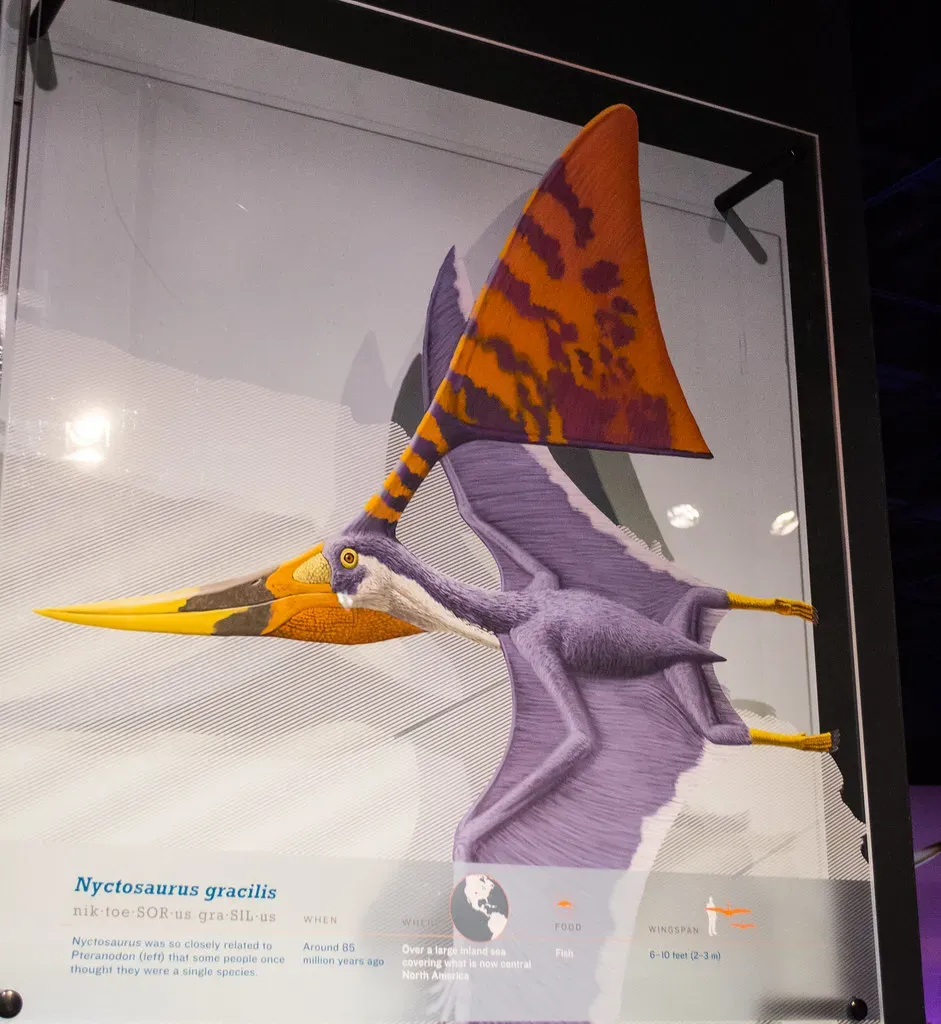
Nyctosaurus had a wingspan of roughly 8 to 10 feet, which sounds modest until you see the crest. Some specimens carry an antler-like bony structure so large it dwarfed the rest of the skull – a piece of anatomy so extreme that scientists still debate whether it was for aerodynamic control, species recognition, or sexual selection pushed to a near-absurd degree. Whatever its purpose, this animal was built for performance. Its skeleton was so lightweight that it could execute rapid mid-air direction changes that no theropod could track, let alone follow.
Nyctosaurus hunted in open sky, which meant it operated in an environment where land predators were completely helpless. No ambush, no pursuit, no chance. It thrived through the Late Cretaceous in a niche that was essentially predator-free from below, and its extreme anatomy suggests it was optimized for that freedom rather than just surviving in it. When your hunting ground is unreachable by everything else alive, you don’t need to be the biggest animal in the world – you just need to be the best at what you do up there.
#8 – Dimorphodon: The Small Early Flier With a Bite That Surprised Everyone
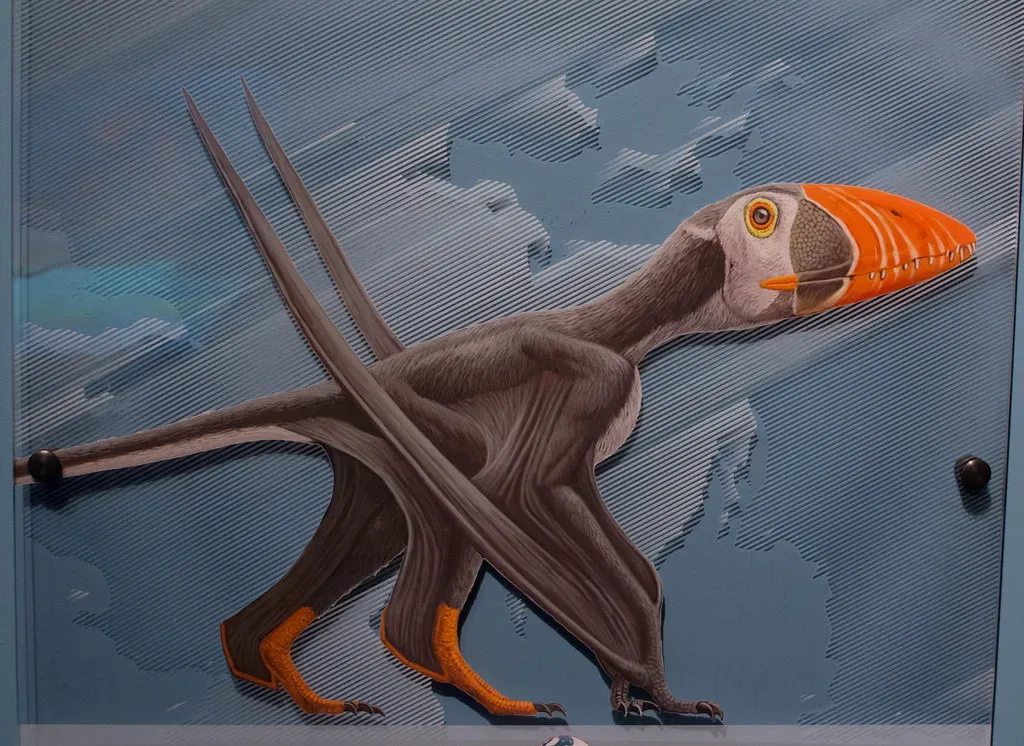
Dimorphodon lived during the Early Jurassic, long before the giant azhdarchids arrived, and its wingspan only reached about 4 feet. But size isn’t the whole story. That deep, robust skull carried teeth designed for more than snatching insects – paleontologists believe it was capable of tackling prey considerably larger than what most animals its size would attempt. Its build was stocky and muscular by pterosaur standards, and it moved with real agility on the ground as well as in the air.
The feature that sets Dimorphodon apart from later pterosaurs is its launch capability. It could push off from the ground using all four limbs simultaneously, achieving rapid takeoff that gave it a serious ambush advantage over the sluggish early dinosaurs sharing its ecosystem. Imagine something the size of a large hawk that can sprint on the ground, leap into the air instantly, and bite harder than its body size suggests. For the small terrestrial animals of the Early Jurassic, Dimorphodon wasn’t an afterthought – it was a genuine threat from multiple directions at once.
#7 – Tapejara: The Crested Specialist That Owned Every Coastline It Touched
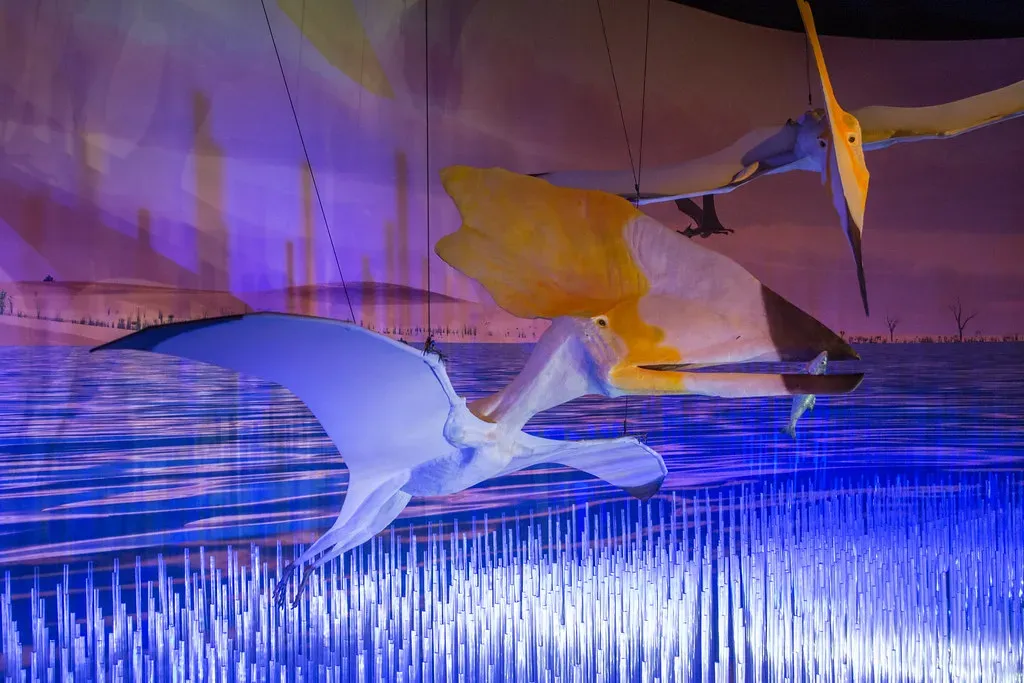
Tapejara is one of those pterosaurs that looks almost too dramatic to be real. The head crest on some species extended well above the skull and forward past the beak, creating a sail-like structure that researchers now believe functioned as a dynamic rudder – giving Tapejara a level of in-flight maneuverability that bulkier ground carnivores couldn’t come close to matching. With a wingspan of roughly 10 to 12 feet, it was large enough to be dangerous and agile enough to be precise, a combination that most predators have to sacrifice one for the other to achieve.
Its hunting ground was coastal and island environments – terrain that was often broken, rocky, and difficult for large terrestrial predators to navigate effectively. Tapejara didn’t care. It approached from above, skimmed or plucked prey with surgical accuracy, and was gone before anything on land had time to react. In ecosystems where the geography itself limited what ground animals could do, Tapejara turned flight into an absolute competitive advantage rather than just a useful escape route.
Quick Compare: Crested Pterosaurs at a Glance
- Pteranodon: Backswept crest used for balance and display; no teeth; ocean patroller
- Nyctosaurus: Antler-like crest of debated function; extreme lightweight build; open-sky hunter
- Tapejara: Tall sail-like crest functioning as rudder; coastal and island specialist
- Dimorphodon: No large crest; relied on robust skull and teeth for close-range ambush predation
#6 – Cryodrakon boreas: The Frozen Dragon That Rewrote the Size Rulebook
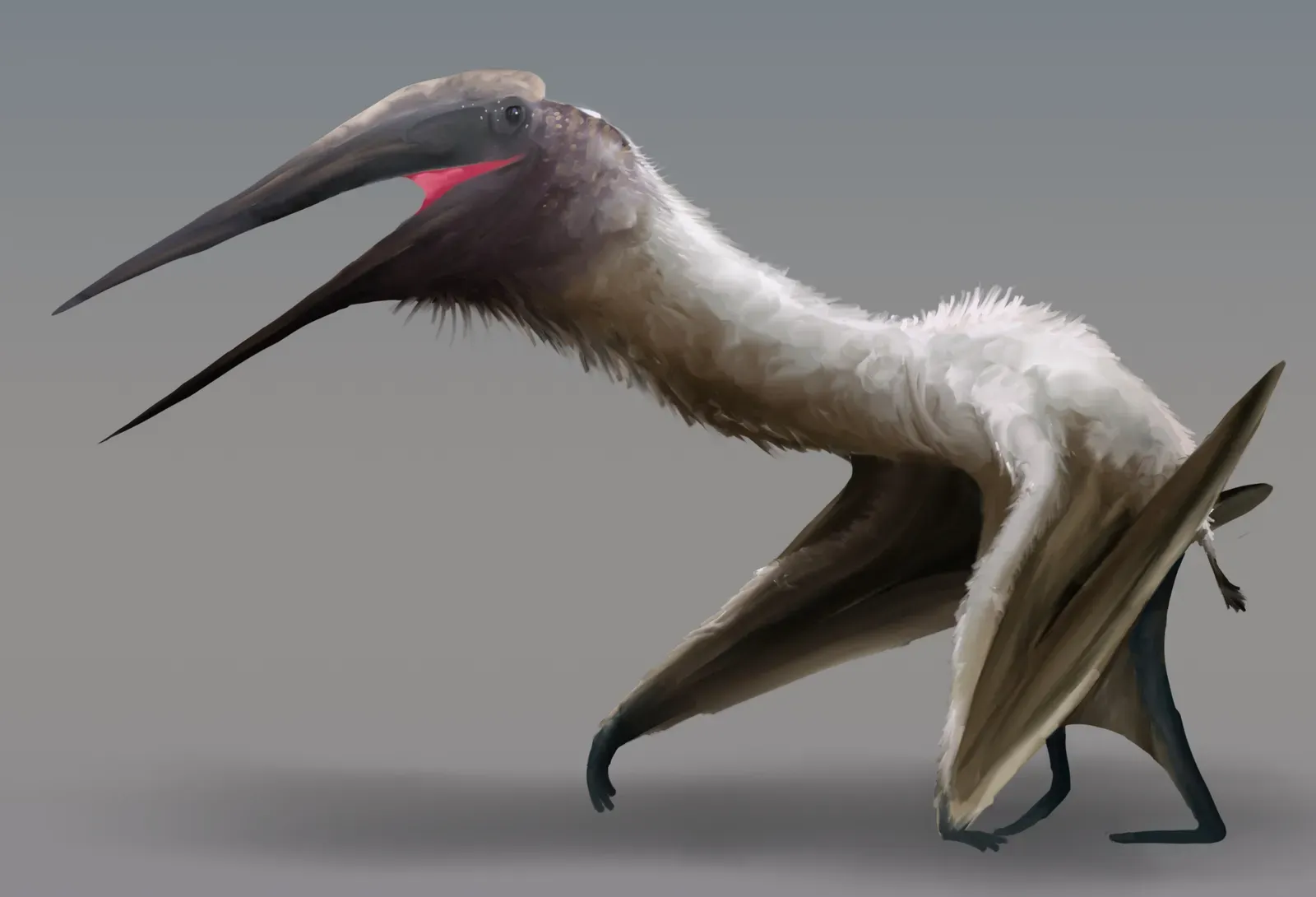
When Cryodrakon boreas was formally described in 2019, it quietly dismantled the assumption that giant pterosaurs were exclusively a tropical or subtropical phenomenon. Named by paleontologists David Hone, Michael Habib, and François Therrien, this animal lived in what is now Alberta, Canada – far from the warm coastlines typically associated with massive azhdarchids – and it carried a wingspan approaching 33 feet and a body mass estimated at up to 250 kilograms. Its name translates to “cold dragon of the north winds,” and it earned every syllable. It sits among the heaviest flying animals ever confirmed by fossil evidence.
What Cryodrakon reveals about pterosaur dominance is geographic: these animals weren’t limited to warm, fish-rich coasts. They pushed into northern ecosystems and apparently thrived there, outcompeting or simply coexisting above whatever land predators occupied the region below. Its robust bones supported long-distance travel on a scale that ground animals simply couldn’t replicate. The fact that something this large was flying over essentially Canadian latitudes during the Cretaceous means the aerial reign of azhdarchids was far more global than anyone originally suspected.
At a Glance
- Formally named: 2019, in the Journal of Vertebrate Paleontology
- Wingspan: Up to 10 m (33 ft) – comparable to Quetzalcoatlus
- Weight estimate: Up to 250 kg (550 lb)
- Lived: Approximately 76.5–74.8 million years ago in southern Alberta
- Prey: Likely small vertebrates, lizards, mammals, and juvenile dinosaurs
#5 – Arambourgiania: The Elongated Giant Whose Neck Was a Weapon in Itself
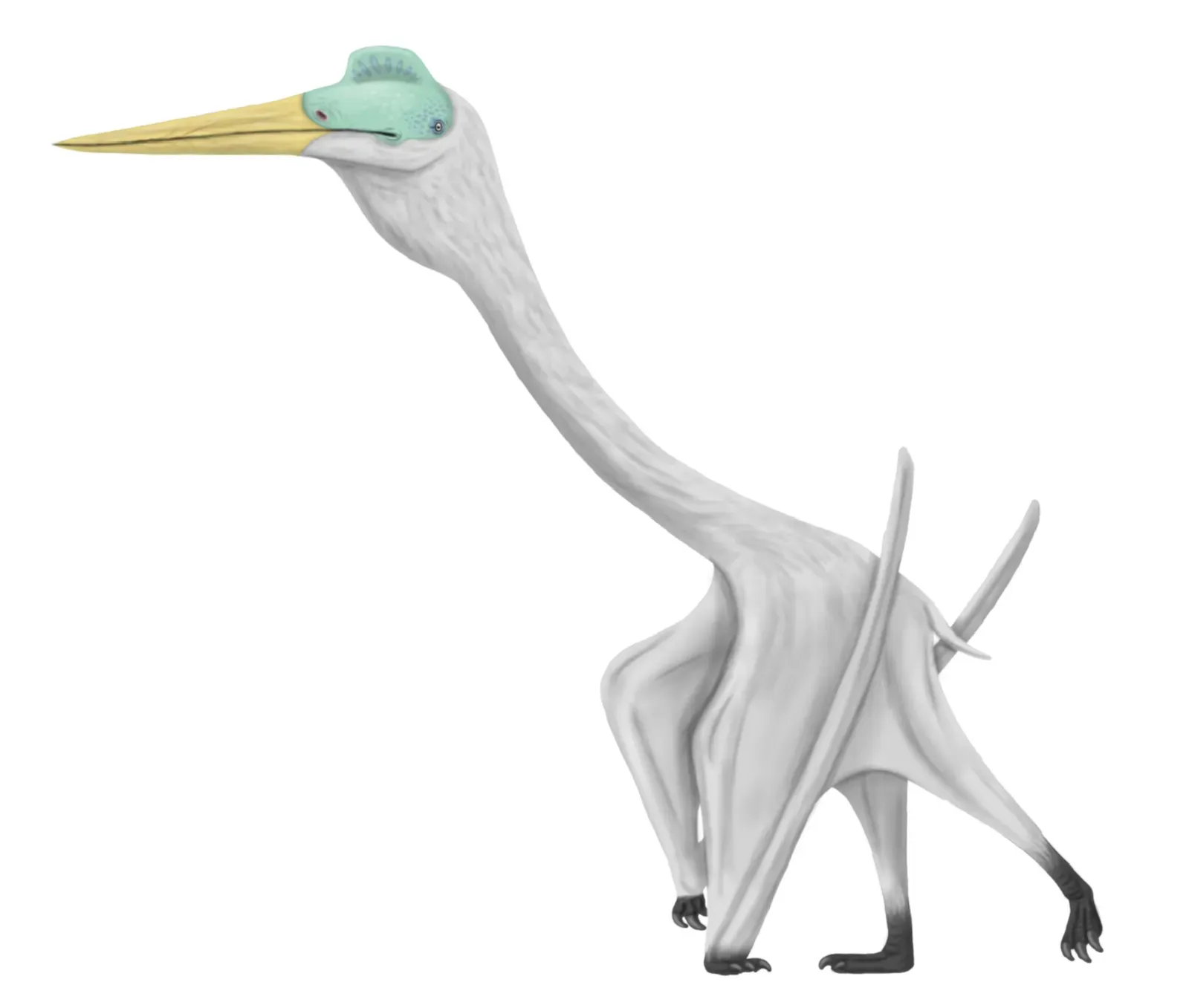
Arambourgiania philadelphiae is known from fragmentary remains, but what those fragments revealed was enough to put it among the most extreme animals ever documented. It belongs to the azhdarchid group and carried one of the longest necks relative to body size of any flying creature – an extraordinary structure that let it scan enormous swaths of landscape from altitude before committing to a dive. Think of it as a biological surveillance tower with wings, capable of identifying prey from distances that ground predators couldn’t even perceive.
The detail that truly sets Arambourgiania apart is structural. Biomechanical modeling of related azhdarchid neck vertebrae shows these bones were engineered to handle compressive and bending stresses that would catastrophically fracture a simpler design – hollow internally, reinforced by internal struts, stronger per unit of weight than almost anything in vertebrate anatomy. That neck wasn’t a fragile liability. It was a precision instrument capable of striking with real force, and it gave Arambourgiania a versatility as a hunter that its sheer size alone doesn’t fully capture.
#4 – Thapunngaka shawi: Australia’s Sky Apex That Nobody Saw Coming
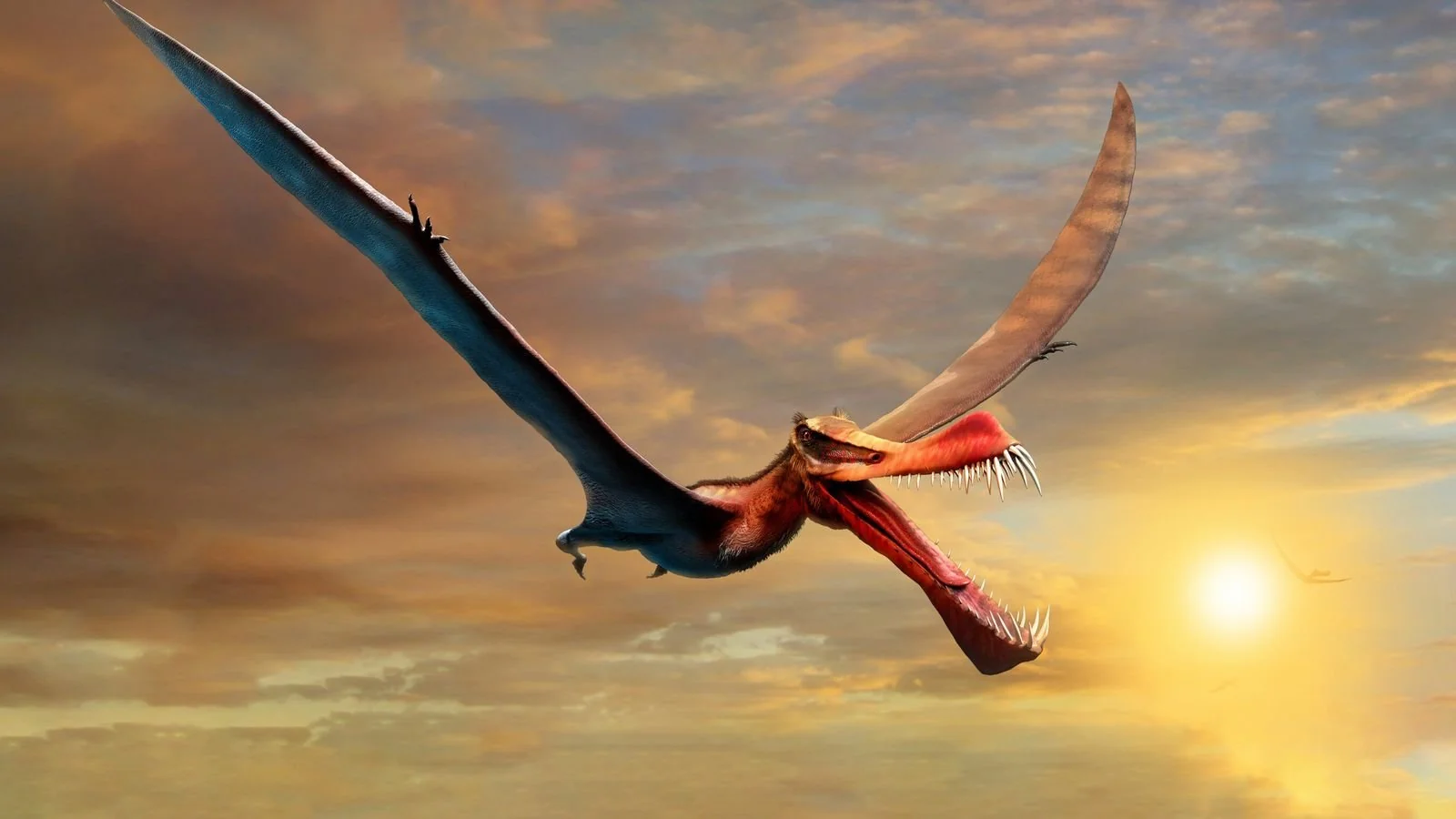
Thapunngaka shawi was described in 2021 from fossils found in Queensland, and it immediately became the largest pterosaur ever discovered in Australia. From the mid-Cretaceous, this animal patrolled ancient shorelines with a substantial wingspan and a powerful build suited for snatching both marine and terrestrial prey. Its jaw alone – long, lance-like, and lined with teeth – was a formidable tool, and the muscles supporting it suggest it could generate real striking force rather than just passive skimming.
What makes Thapunngaka scientifically significant beyond its sheer size is what it says about prehistoric Australia. The conventional assumption held that Australian Cretaceous fauna trended smaller and more isolated than what was found on the northern continents. Thapunngaka shattered that assumption. It wasn’t a minor local variant – it was a full apex predator operating at continental scale, filling the same dominant aerial role that Quetzalcoatlus and Hatzegopteryx filled elsewhere. Giant pterosaurs didn’t just visit Australia. They owned it.
Worth Knowing
- Thapunngaka’s name comes from the Wanamara language of the First Nations people of Queensland
- Its lance-like, toothed jaw was adapted for high-impact prey capture – not gentle skimming
- Its description in 2021 reshaped the understanding of apex predator diversity in prehistoric Australia
- It occupied the same ecological niche as Quetzalcoatlus and Hatzegopteryx on other continents
#3 – Phosphatodraco: The Moroccan Hunter That Turned Flight Into a Scouting Advantage
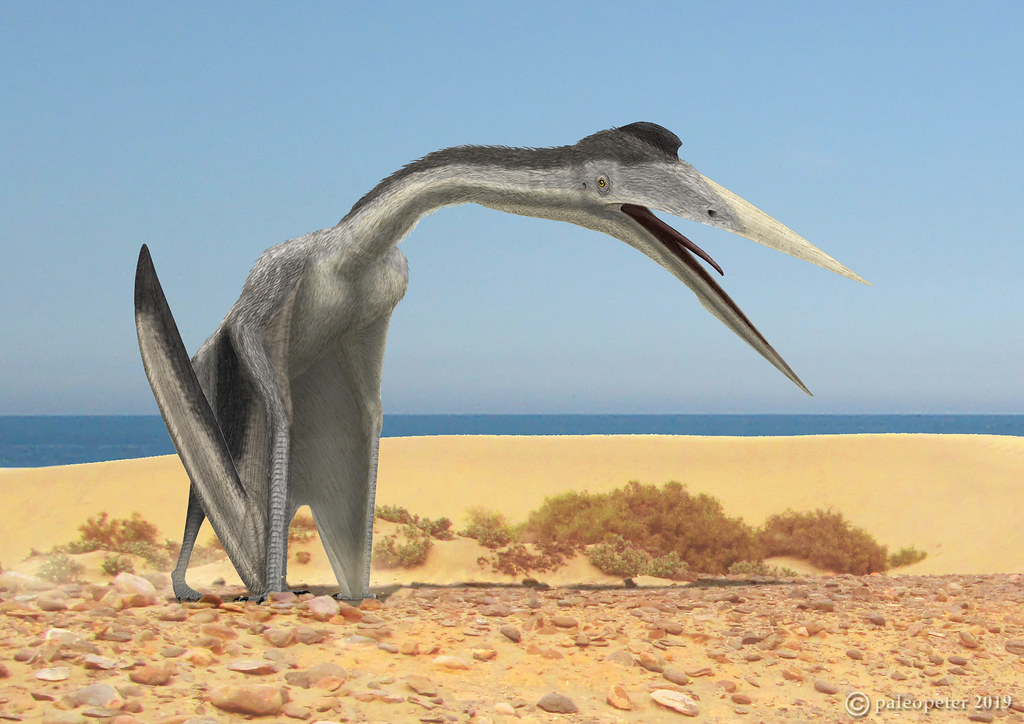
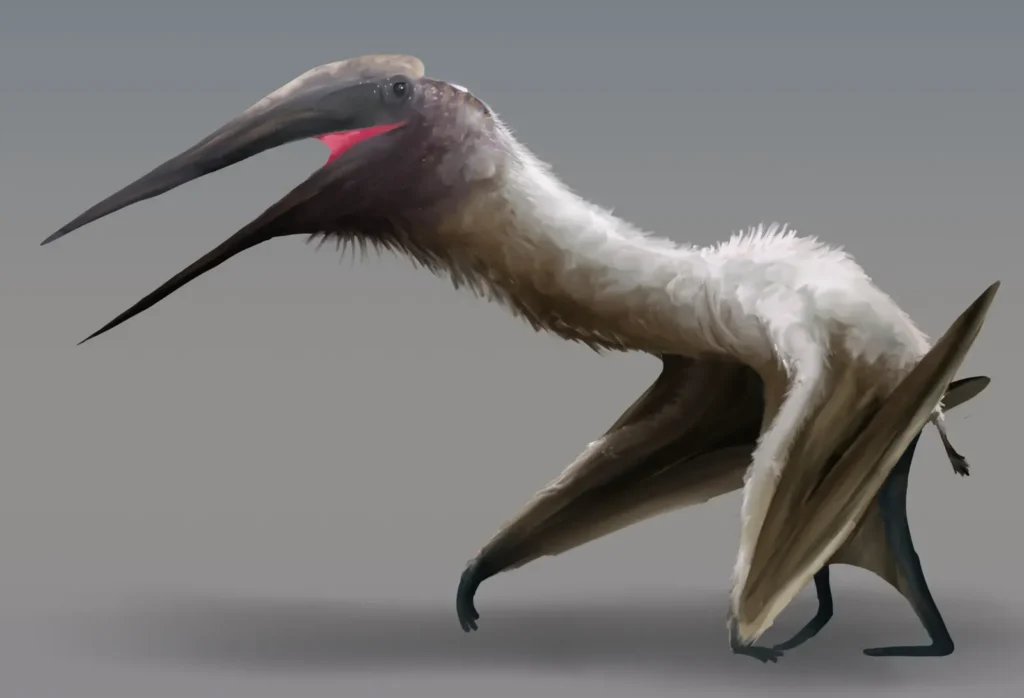
Phosphatodraco mauritanicus comes from the Late Cretaceous phosphate beds of Morocco, and it represents one of the clearest examples of a pterosaur that didn’t treat flight as its only tool. With a wingspan approaching that of its famous azhdarchid relatives and a sturdy, robust frame, it was built for a hunting style that combined aerial reconnaissance with active terrestrial pursuit. Spot the prey from above, land nearby, close the distance on four limbs, and strike. It’s a strategy that made it deadlier than any pure air or pure ground specialist operating in the same environment.
Fossil evidence from closely related azhdarchids – particularly well-preserved trackways – confirms these animals walked competently and efficiently on all fours, with a gait more like a large shorebird than a clumsy reptile dragging its wings. Phosphatodraco almost certainly shared that capability. In the rich, prey-dense environments of Late Cretaceous North Africa, that combination of mobility, size, and aerial advantage would have made it one of the most formidable predators in the region – not despite its ability to fly, but because of how strategically it used that ability.
#2 – Quetzalcoatlus northropi: The Texas Titan That Stood Eye-to-Eye With a Giraffe
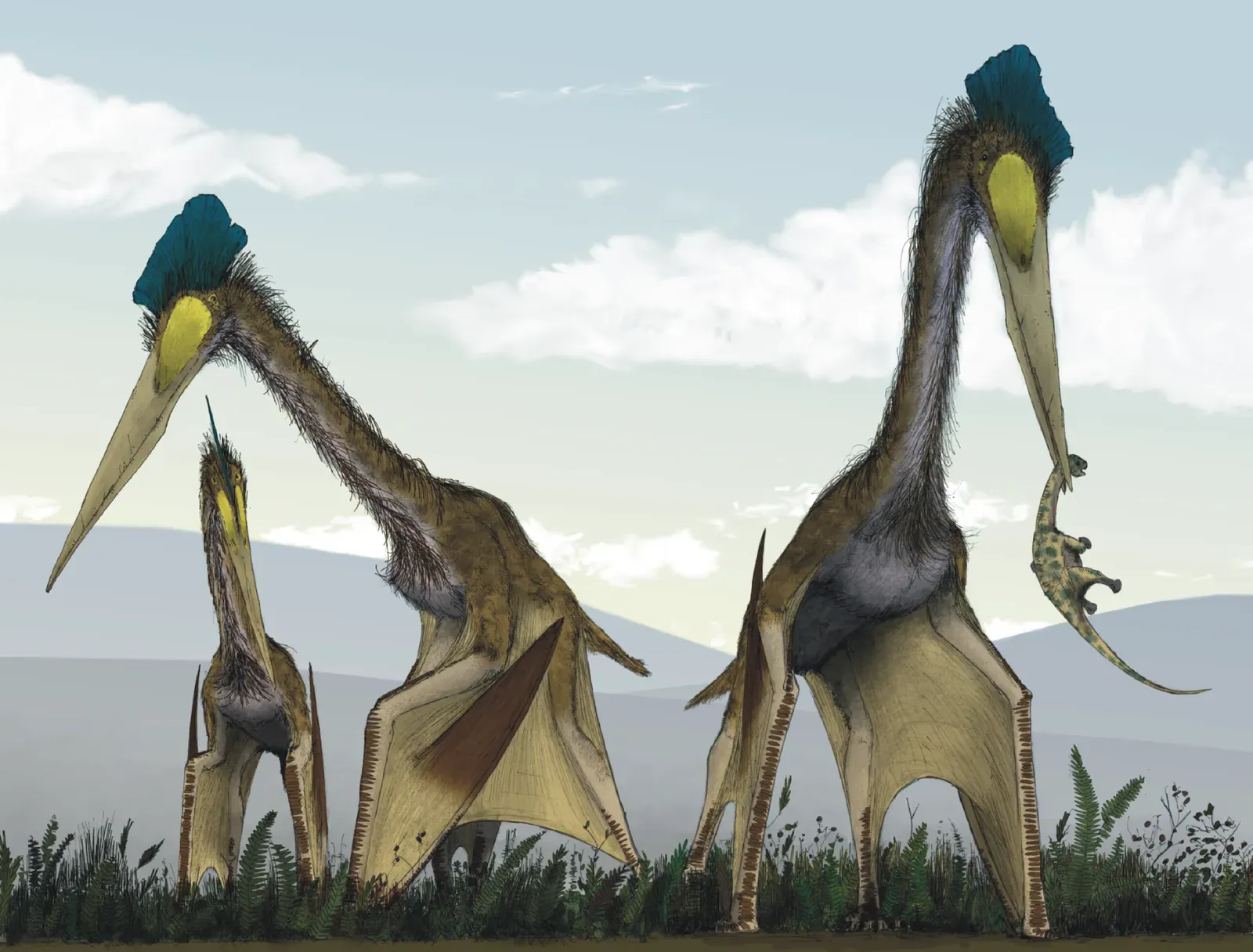
Quetzalcoatlus northropi is the creature that tends to stop conversations cold once people grasp the actual numbers. Wingspan estimates consistently land at 33 to 36 feet. Standing height of roughly 16 feet when grounded. A body mass that estimates place at 200 to 250 kilograms – roughly the weight of a large male lion – based on hollow bones and volumetric reconstructions. It didn’t just live alongside the large dinosaurs of Late Cretaceous North America – it physically towered over many of them when it landed. And it landed often, because it wasn’t primarily a fisherman.
The research that genuinely reframed Quetzalcoatlus came from detailed biomechanical studies showing it behaved much more like a massive heron than a pelican – stalking across open floodplains, using that long neck to spear sizable terrestrial prey rather than hovering over water. Despite its enormous mass, it could launch itself skyward from a standing position using its powerful forelimbs, transitioning from ground predator to aerial traveler in seconds. Whatever it targeted couldn’t outrun it on land and certainly couldn’t escape it in the air. That’s not a flying animal that occasionally hunts. That’s an apex predator that occasionally flies.
Quetzalcoatlus was not a graceful soaring bird. It was more like a scaled-up ground stalker that happened to have wings.
Mark Witton, pterosaur paleontologist
At a Glance: Quetzalcoatlus northropi
- Wingspan: 10–11 m (33–36 ft) – comparable to a small aircraft
- Standing height: Approximately 5 m (16 ft) – as tall as a giraffe
- Weight: Estimated 200–250 kg (440–550 lb)
- Fossils found: Big Bend National Park, Texas; first discovered in 1971
- Hunting style: Terrestrial stalker; used a 3-meter neck to strike ground prey
- Launch method: Quadrupedal vault – no running start required
#1 – Hatzegopteryx: The Island Tyrant With a Neck Built to Break Things
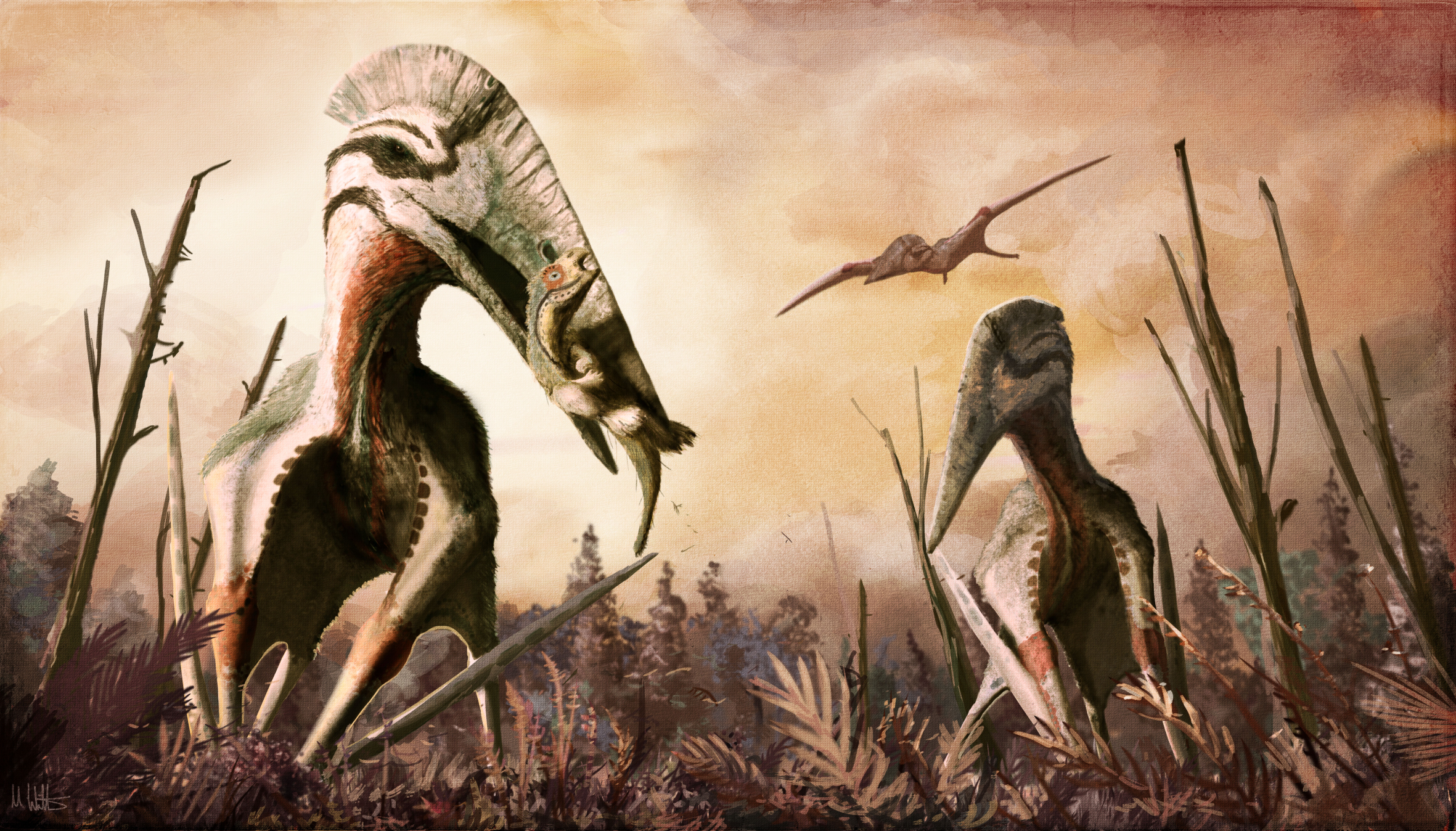
Hatzegopteryx thambema lived on what was then a large island in the Tethys Sea – the landmass that would eventually become Transylvania – and on that island, there were no large theropod dinosaurs. No competition. No checks. Into that vacuum stepped Hatzegopteryx, and it filled the apex predator role so completely that paleontologists describe it as one of the most unambiguous examples of ecological dominance in the entire Mesozoic fossil record. Its estimated wingspan of 10 to 12 meters matched or exceeded Quetzalcoatlus, but where Quetzalcoatlus was lean and built for distance, Hatzegopteryx was stocky, dense, and built for violence.
The neck tells the whole story. Where most azhdarchids had long, slender cervical vertebrae optimized for reach and flexibility, Hatzegopteryx had short, massively reinforced neck bones with a spongy internal structure – filled with a network of thin bony struts, like the inside of a sponge – that researchers compare to impact-absorbing architecture in a crash helmet. The ventral bone walls of its neck vertebrae measured 4 to 6 millimeters thick, nearly double that of most other giant azhdarchids. This neck wasn’t designed for gentle fish-skimming – it was engineered to absorb the shock of striking and subduing prey too large to swallow whole. On an island where it faced no rival large enough to contest a kill, Hatzegopteryx didn’t need to be subtle. It needed to be unstoppable. By every measure the fossil record offers, it was exactly that.
Why It Stands Out
- Wingspan: 10–12 m (33–39 ft) – among the largest of any known flying animal
- Skull width: Estimated up to 0.5 m wide – the broadest of any pterosaur
- Neck bones: Bone walls 4–6 mm thick – nearly double those of Arambourgiania
- Ecological role: Sole apex predator on Hațeg Island; no large theropods to compete with
- Body mass: Estimated 200–250 kg, reinforced for terrestrial impact predation
- First described: 2002, by Buffetaut, Grigorescu, and Csiki from Romanian fossil beds
The real takeaway from all ten of these animals isn’t just that flying reptiles were large – it’s that they were strategically dominant in ways the ground-level picture of the Mesozoic completely misses. They crossed continents, colonized isolated islands, developed necks that functioned as weapons, and hunted prey on the ground with the same efficiency they brought to the sky. T. rex gets the movies and the merchandise, but Hatzegopteryx was running an entire island ecosystem with zero competition and a neck designed to crush. The sky wasn’t a safe place to look up. It was where the apex predators actually lived.