
If you’ve ever stared at a weird gadget and wondered what on earth it’s for, you’re in good company with archaeologists. All over the world, they keep digging up ancient tools and objects that clearly meant something to the people who made them, yet in the present day we’re still guessing. Some theories sound reasonable, others are wild, and a few are downright hilarious, but none have been proven beyond all doubt.
What fascinates me is this simple thought: if so many of our own modern tools vanished and were dug up in a few thousand years, how many would actually make sense without context? A USB stick, a hair straightener, a pizza cutter – out of context, they’re just mysterious shapes. That’s more or less where we are with the artifacts you’re about to meet. They sit right on the edge between science and imagination, reminding us how much of the human story is still missing.
The Antikythera Mechanism: A Bronze Computer Lost in Time
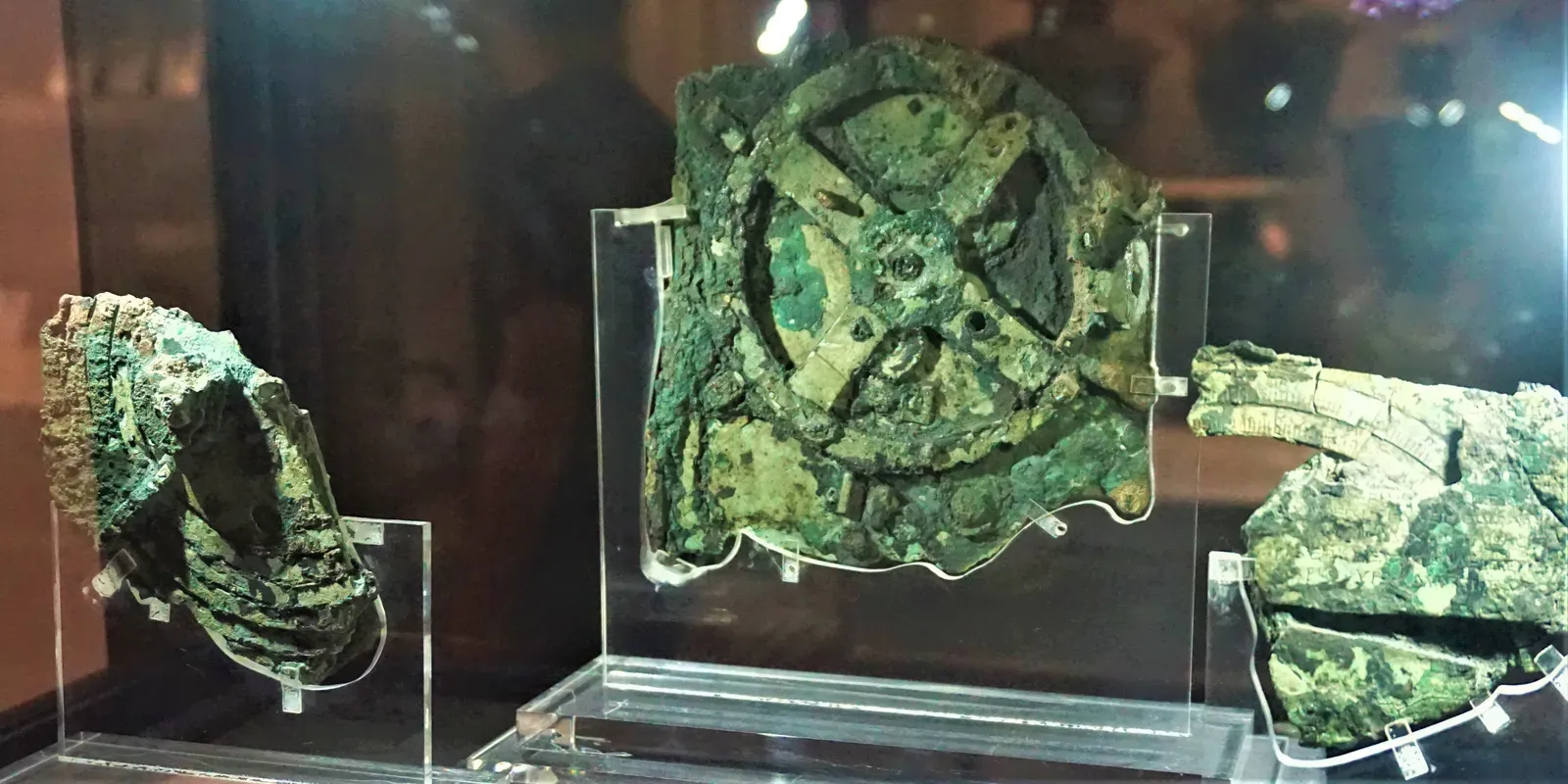
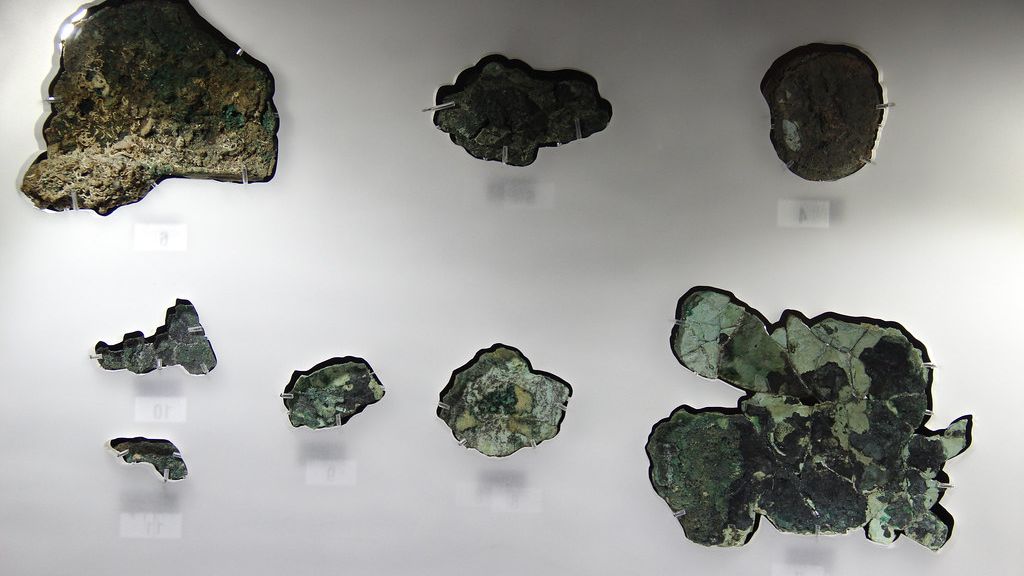
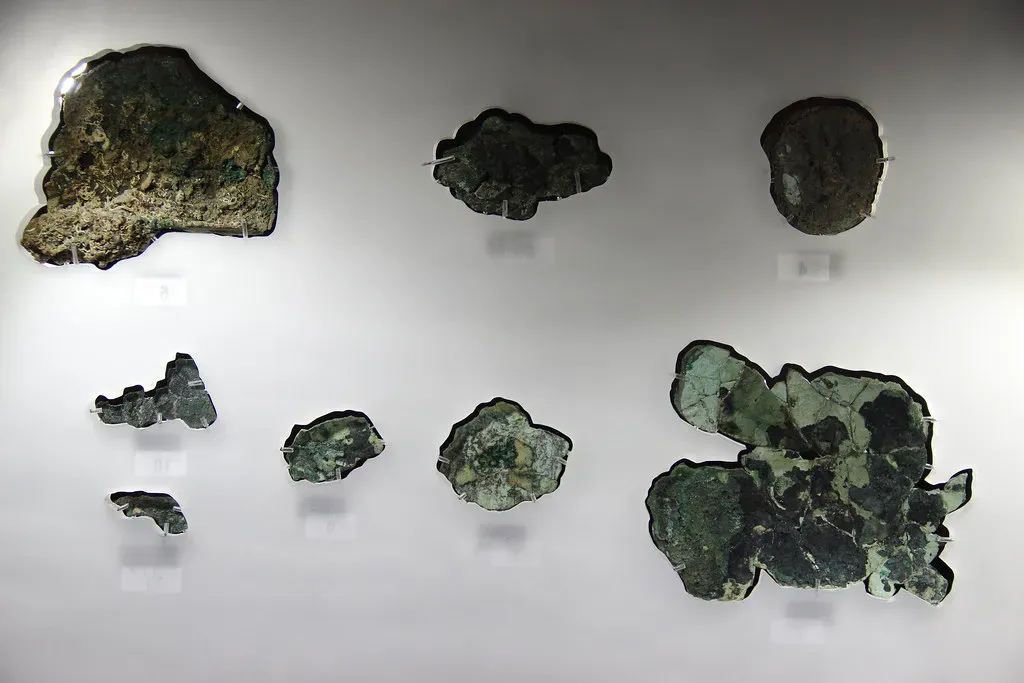
The Antikythera Mechanism is the poster child for ancient tools that should not exist at the level of complexity they show. Pulled from a shipwreck off a Greek island and dated to roughly the second or first century BCE, it looks like a corroded lump of bronze until you scan it and find a miniature city of interlocking gears inside. Most scholars agree it tracked astronomical movements and eclipses, and might even have predicted the timing of athletic games, but the real shock is how sophisticated its gearing system is for such an early date.
Imagine dismantling an old mechanical watch and then realizing it was built before anyone was supposed to know how to make watches at all. That is essentially the Antikythera dilemma. We understand some of what it did, but we still do not fully know who commissioned it, how widespread such devices were, and why no clear technological lineage connects it to later European mechanisms. To me, it hints at forgotten pockets of expertise in the ancient world, the kind of specialized knowledge that can blossom in one workshop and then vanish without leaving a trace in the written record.
Roman Dodecahedrons: Twelve-Sided Metal Mysteries
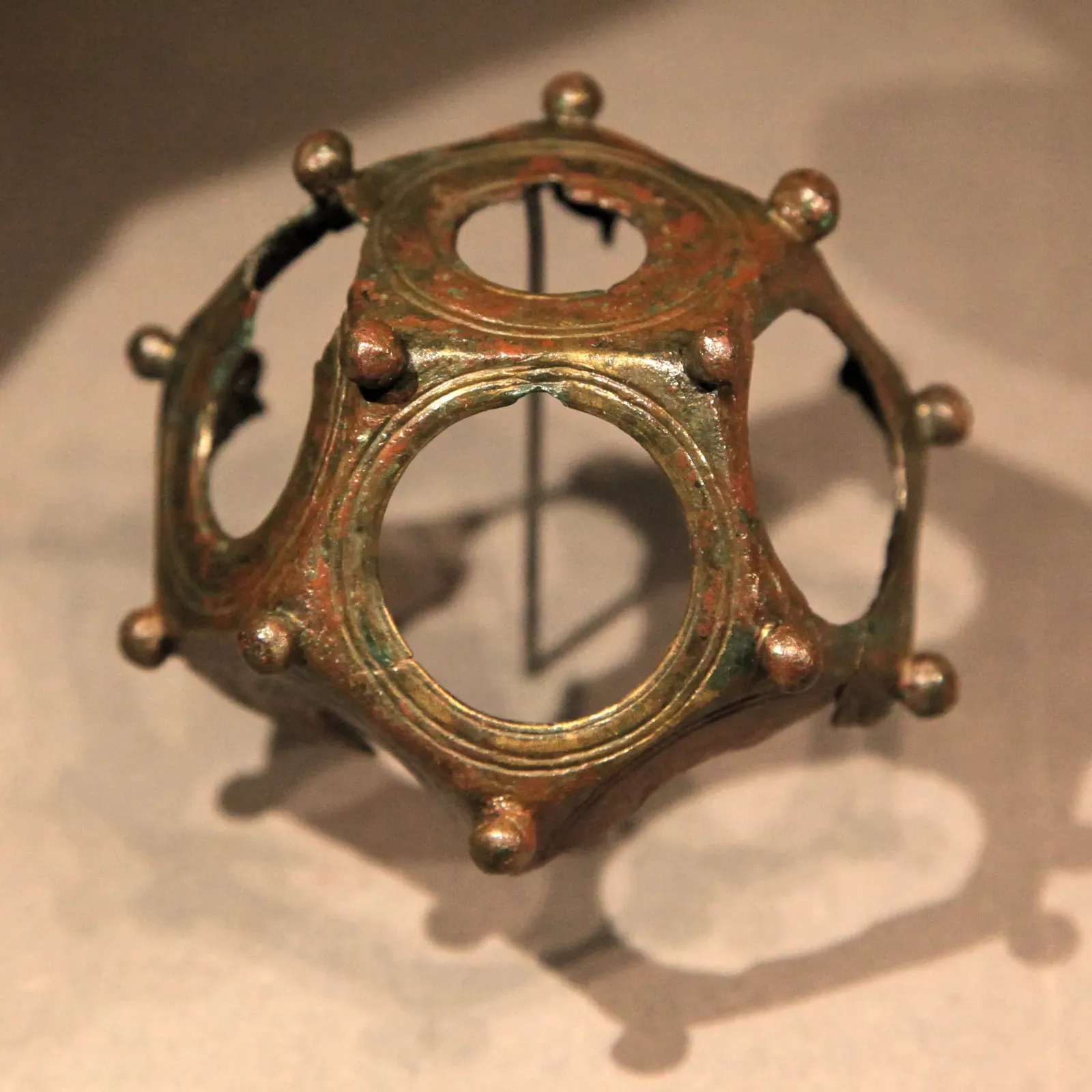
Roman dodecahedrons are small hollow bronze objects with twelve flat faces, each face punched with a circular hole of varying size, and little knobs on the corners. They show up across parts of the Roman Empire, from Britain to Central Europe, and they’re carefully made, which suggests they mattered. Yet no surviving Roman text even mentions them. If they were boringly common tools, you’d expect at least one writer to complain about them or describe how to use them, and that silence is almost as puzzling as the objects themselves.
Because we lack clear evidence, theories have exploded: candlestick holders, measuring devices, knitting aids for gloves, surveying tools, religious objects, even instruments for divination. Some of these ideas are creative and might work physically, but none cover all finds or their varied locations and wear patterns. I find it strangely comforting that even with 3D modeling and experimental archaeology, we still cannot agree on what these little gadgets were for. They are a humbling reminder that everyday life in the past can be more alien than we think.
The Baghdad Battery: Power Source or Misunderstood Jar?
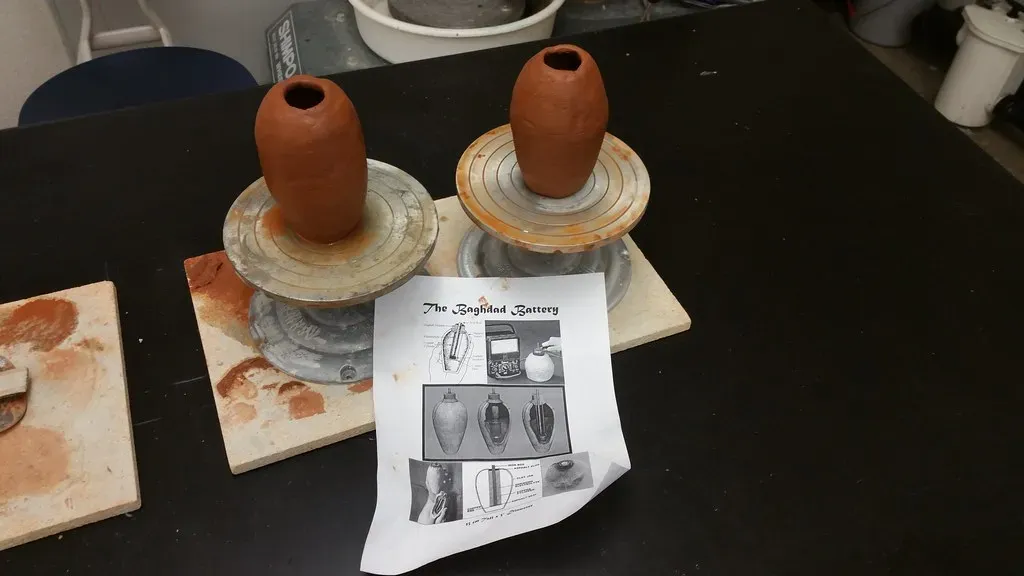
The so‑called Baghdad Battery is actually a group of ceramic jars found near modern-day Baghdad, each containing a copper cylinder and an iron rod. When reconstructed, the setup looks suspiciously like a simple galvanic cell – in other words, a primitive battery. If you pour an acidic liquid such as vinegar into a replica, you can produce a small electric current. That has led to the idea that people in the Parthian or Sasanian periods somehow stumbled upon electrochemistry long before it was formally described.
But here’s the problem: we have no solid evidence that anyone at the time used these jars for electricity at all. There are no wires, no descriptions, no clear associated devices. Alternative explanations range from storage containers for scrolls to ritual objects meant to hold something symbolically important. Personally, I think calling them “batteries” might be jumping the gun, yet it is hard to ignore how neatly their structure fits a working electrical cell. Until we find one in a clear original context, with tools that show exactly how it was used, this little cluster of jars will keep sparking arguments in every museum hallway.
The Phaistos Disc: A Fired-Clay Code No One Can Crack
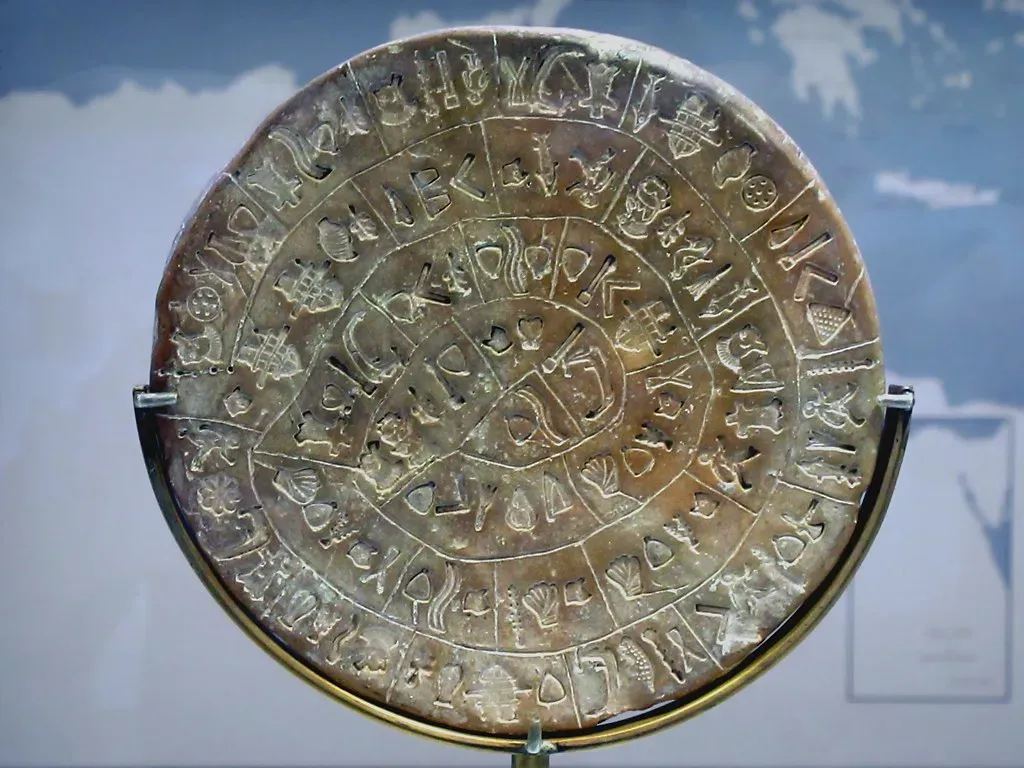
The Phaistos Disc, found on the island of Crete, is a flat round piece of fired clay with a spiral of stamped symbols on both sides. Each symbol was pressed into the wet clay using individual stamps, which suggests a kind of movable type long before the printing press. The disc is usually dated to the second millennium BCE, making it truly ancient in terms of written technology. Scholars have cataloged the symbols, compared them to other scripts, and tried to decipher them for decades, but the text refuses to give up its secrets.
The main problem is that we only have a single disc. One text, no matter how carefully preserved, is a terrible dataset if you want to decode a writing system scientifically. It is like trying to learn an entire language from one short message you cannot even be sure is complete. Some researchers think it is a sacred hymn, others see it as a game board, a legal document, or a form of magical ritual. I lean toward it being some kind of formal or ceremonial record, but in truth, we simply do not know. Until another disc or a related inscription turns up, the Phaistos Disc will remain the archaeological equivalent of an unsent email in a mailbox full of dust.
The Saqqara Bird: Toy, Symbol, or Ancient Glider?
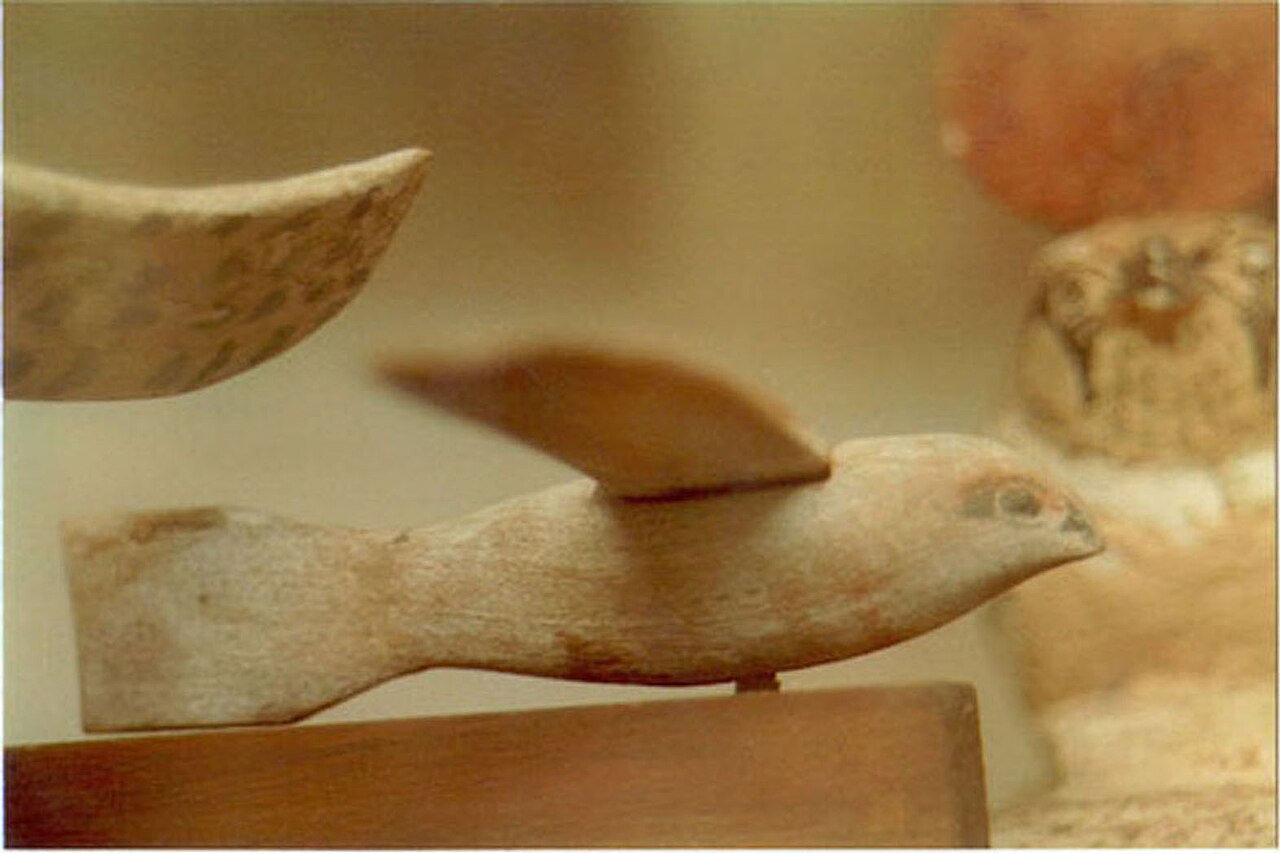
In a tomb at Saqqara in Egypt, archaeologists found a small wooden object shaped like a bird, with wings and a tail but no clear eye for hanging it like a typical decoration. It dates to around the second century BCE and has often been described as resembling a simple glider. That resemblance has fueled claims that ancient Egyptians might have understood the basics of aerodynamics more than we give them credit for, even if they never built full-scale flying machines.
More cautious interpretations suggest it could be a toy, a religious symbol associated with the soul, or a ceremonial object released or displayed during rituals. Experimental models made to its proportions can glide to some extent, but that does not prove it was intended as an early scientific model of flight. To me, the Saqqara Bird lands in that tricky space where a practical toy and a spiritual object can overlap. The idea that someone, somewhere by the Nile carved a little wooden bird and absentmindedly tested how far it could glide feels very human – and completely plausible – yet science cannot pin down that moment of curiosity in a definitive way.
The London Hammer: An Iron Tool in the Wrong Rock
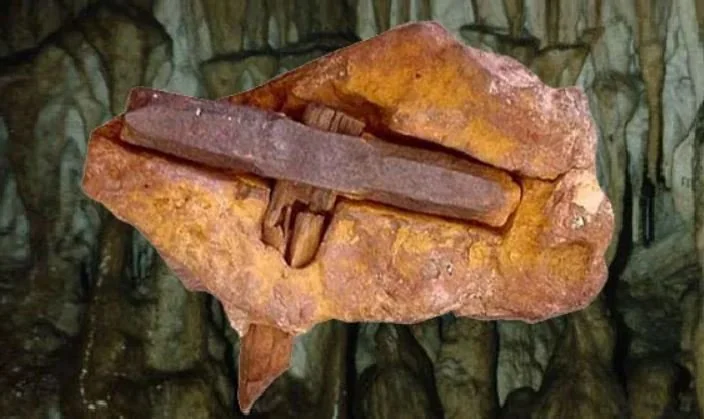
The London Hammer, discovered near London in Texas, is an iron hammerhead partly encased in a concretion of rock-like material. At first glance, photographs give the impression that a modern-style hammer was found fossilized in genuinely ancient stone, which would be impossible if taken literally and has made it a favorite subject in fringe theories. The wooden handle is partly mineralized, and the hammerhead itself resembles nineteenth-century tools more than anything truly ancient.
Most geologists and archaeologists explain the apparent mystery as a case of a relatively recent hammer becoming trapped in a mineral-rich deposit that hardened around it, creating the illusion of great antiquity. However, the object continues to circulate online as evidence of something stranger, mainly because the original find circumstances were not well documented and the concretion material looks convincingly old to an untrained eye. What interests me is not that it likely has a straightforward explanation, but how strongly people want it to rewrite history. The hammer shows how a single ambiguous artifact can become a cultural Rorschach test for our hopes, doubts, and favorite theories about the past.
Ancient Stone Spheres of Costa Rica: Precision with No Clear Purpose
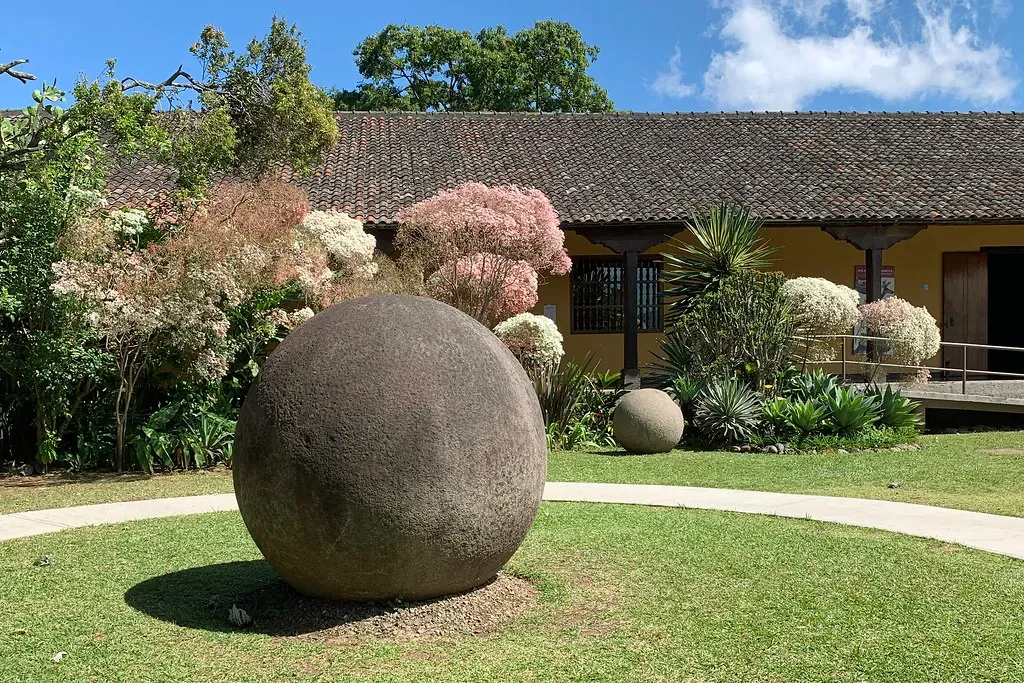
Scattered across parts of Costa Rica, archaeologists have cataloged hundreds of large stone spheres carved with striking precision. Some are the size of a fist, others rival a small car, and many are made from dense igneous rock that would have required serious effort and planning to shape. They are usually attributed to pre-Columbian cultures that flourished before Spanish contact, but we lack written records from those societies to tell us why the spheres mattered so much.
Suggested functions range from boundary markers and status symbols to astronomical alignments and ritual objects. A few surviving arrangements hint that their placement may have carried symbolic or social meaning, perhaps tied to authority or cosmology, yet no single explanation covers all known contexts. I think the most reasonable view is that they served multiple roles, much like monuments and public art do today, with practical, political, and spiritual layers all mixed together. The real puzzle is not only what they signified, but how a community decided it was worth the enormous labor to carve and move them, and then allowed that meaning to fade so completely that even their stories did not survive.
Neolithic Stone Balls of Scotland: Palm-Sized Puzzles

In contrast to Costa Rica’s massive spheres, Neolithic stone balls from Scotland are roughly palm-sized, intricately carved, and often decorated with knobs and patterns. They date back several thousand years, placing them in a time of early farming communities, long before written records in the region. Over five hundred of these objects have been found, usually made from sandstone or similar materials, and many exhibit careful symmetry and design that must have taken real time and skill.
Ideas about their purpose run from weapons and weights to status objects, ritual tools, and even devices for calculating or learning. Replicas have been tested for use in hunting or as components of mechanical systems, but no interpretation has convinced everyone. What strikes me is how much deliberate artistry went into things that could fit easily into your hand. They might have been the kind of object you pass from one person to another during conversations, meetings, or ceremonies, dense with meaning we can no longer read. In a way, they feel like ancient fidget tools, but with a seriousness and symbolism we have lost touch with.
Conclusion: The Tools That Keep History Open-Ended
Looking across these eight artifacts, a pattern emerges: each one is close enough to our own world that we can imagine a use for it, but distant enough that our guesses never quite land with certainty. Some, like the Antikythera Mechanism, show off technical brilliance we did not expect; others, like the Roman dodecahedrons or Neolithic stone balls, show a level of care and craftsmanship that seems almost too much for a mere toy or trinket. In every case, the gap between what we know and what we want to know is precisely what makes them so compelling. They invite us to project, argue, and experiment, but they stubbornly hold back the final answer.
My own opinion is that we often underestimate how inventive, playful, and complex ancient people were. We want single, tidy explanations, yet real human societies rarely work that way. A tool can be sacred and practical at the same time; a gadget can be both a teaching aid and a status symbol; a carved object can exist simply because someone loved making it. Maybe that is the real message of these unexplained tools: they tell us less about lost civilizations with impossible technologies, and more about our own reluctance to accept ambiguity. In a world addicted to instant answers, perhaps a little mystery is exactly what keeps our curiosity alive. Which of these puzzles would you most like to hold in your own hands and try to figure out for yourself?