If you think modern animals are weird, you’re in for a shock. Long before dinosaurs thundered across the land, oceans and swamps were packed with creatures so bizarre that, when scientists first dug them up, they honestly weren’t sure which way was up or where the mouth went. You’re not just looking at bigger versions of today’s animals; you’re looking at entire evolutionary experiments that never made it to the present.
As you walk through this list, imagine standing on an ancient shoreline or diving into a Cambrian sea. You’d see five-eyed swimmers, nightmare fish with chainsaw jaws, and giant “bugs” big enough to give you second thoughts about going outside. By the end, you may feel oddly grateful for our very ordinary pigeons, squirrels, and house cats. Let’s time-travel to meet ten of the strangest animals that ever lived.
1. Anomalocaris – The “Abnormal Shrimp” of the Cambrian Seas

You start in the Cambrian oceans, over half a billion years ago, staring at something that looks like it was designed by a committee that never met. Anomalocaris was about as long as your arm, with a soft, torpedo-shaped body, a ring-shaped mouth full of overlapping plates, and two spiny, grasping appendages jutting out in front. For years, scientists actually mistook its parts for separate animals, which tells you just how strange it looked to modern eyes.
Picture this creature swimming above the seafloor using rows of undulating side flaps, a bit like a manta ray made of flexible armor plates. You’d see those front limbs snatch prey – probably soft-bodied animals – then funnel them into that circular mouth under its head. For a long time, Anomalocaris was thought to be a fearsome shell-crusher, but newer research suggests it probably preferred softer meals and may not have been the invincible apex predator people once imagined. Either way, if you were a small Cambrian critter, this was the last thing you wanted to see gliding overhead.
2. Opabinia – The Five-Eyed Trunk-Bearer
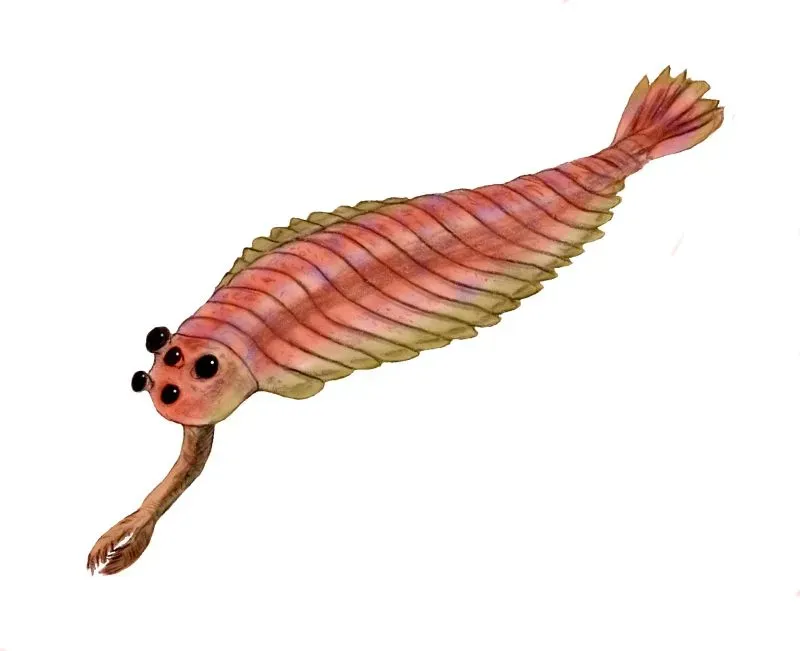
Now imagine turning around in that same Cambrian sea and seeing something even stranger: a palm-sized swimmer with five eyes perched on stalks and a long, flexible trunk ending in a little grabber. That’s Opabinia, an animal so odd that, when it was first reconstructed, the scientists in the room reportedly laughed. If you had to sketch an “alien sea bug” from scratch, you’d probably draw something like this without realizing it already existed.
As you look closer, you’d notice a series of flaps along its sides that it used to swim, plus gill-like structures for breathing underwater. The trunk would reach forward, grab bits of food or soft animals from the seafloor, then curl back to deliver them to a mouth tucked underneath the head. Those five eyes likely gave it a wide field of view in murky waters, letting it spot both prey and danger. Standing there, you’d realize that early animal evolution tried out body plans we no longer see today, and Opabinia is one of the clearest reminders of how experimental life once was.
3. Hallucigenia – The Walking Needle Nightmare
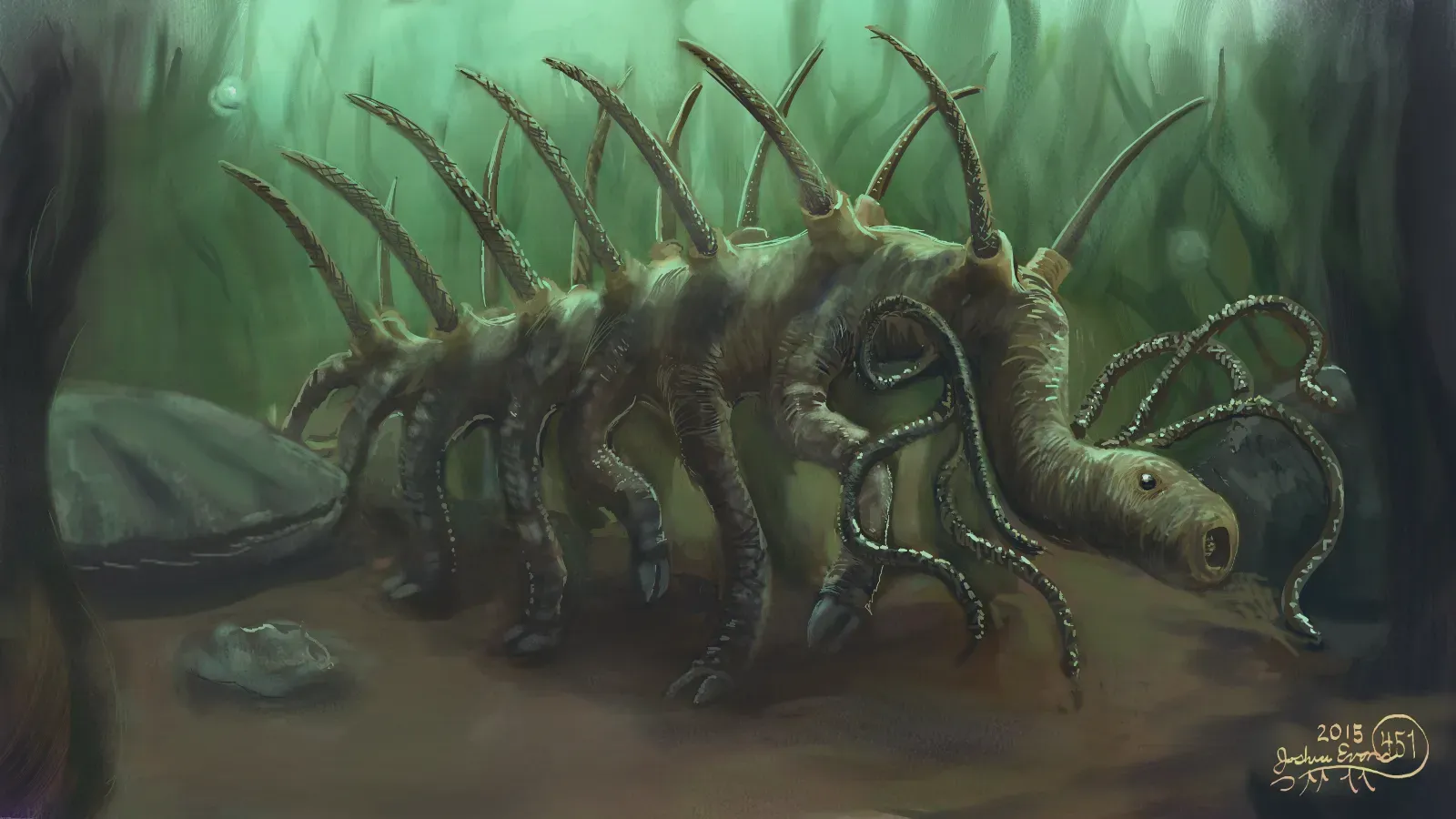
Shift your gaze to the seafloor, and you’ll meet a creature that looks like it crawled out of a surrealist painting. Hallucigenia is tiny, only a few centimeters long, but it more than makes up for its size with pure weirdness. For years, scientists could not even agree which side was up; early reconstructions had it walking on spines with tentacles on its back, which seems hilarious in hindsight.
Today, you’d see it more accurately as a worm-like body supported by pairs of soft, stubby legs, with rows of hard spines sticking upward like a defensive fence. Its head is small and simple, with a basic mouth and possibly tiny eyes, and it probably grazed on organic material or microscopic life on the seafloor. If you bent down to pick it up – not that you’d want to – those spines would make sure you remembered it. Hallucigenia shows you that sometimes evolution protects you not by making you fast or strong, but by making anything that tries to bite you deeply regret the decision.
4. Dunkleosteus – The Armored Fish With a Guillotine for a Jaw
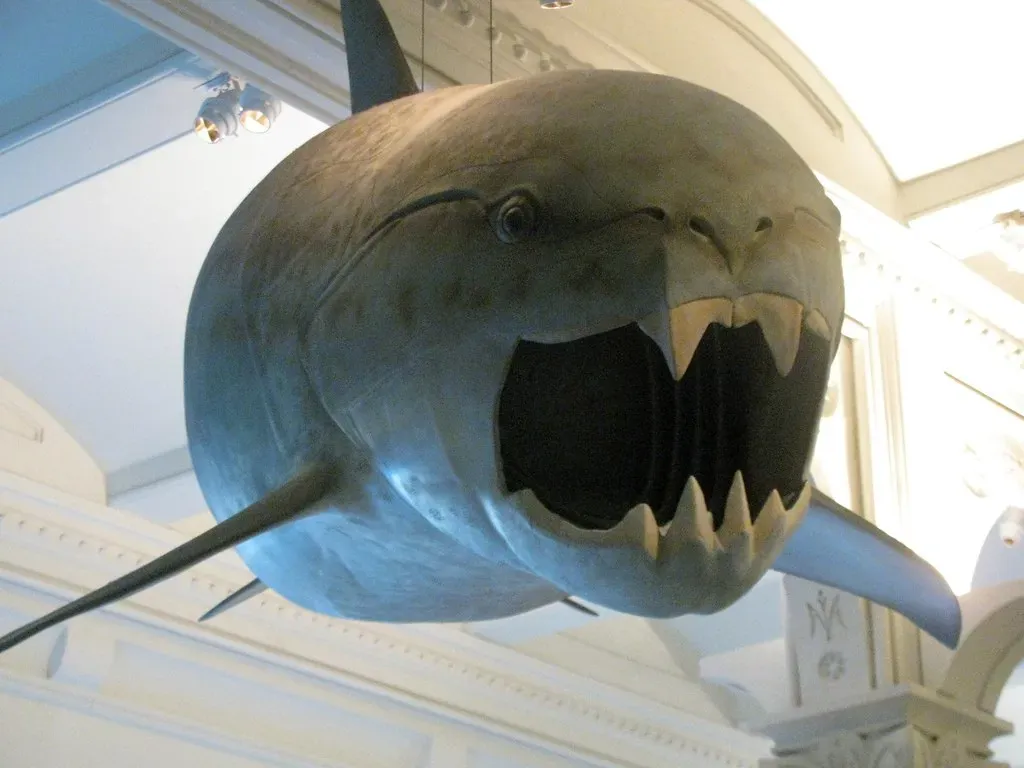
Fast-forward to the Devonian seas, often called the Age of Fishes, and you’ll meet a predator that feels much more like a movie monster: Dunkleosteus. Instead of teeth, this gigantic armored fish had sharp bony plates in its jaws, forming a sort of natural guillotine. Some estimates suggest it could open and snap its jaws with tremendous force, enough to crunch straight through hard armor and bone.
If you were diving nearby, you’d see a front half wrapped in interlocking bony plates, almost like a medieval tank, tapering back into a more flexible, fishlike body. At up to several meters long, it would dwarf you in the water, cruising around with slow, confident power. You might watch it swallow prey almost whole, shearing off huge chunks in a single bite. Compared to a modern shark, Dunkleosteus looks like someone combined a fish, a bulldozer, and a paper cutter – and then let it loose in the ocean.
5. Helicoprion – The Shark With a Buzzsaw in Its Mouth
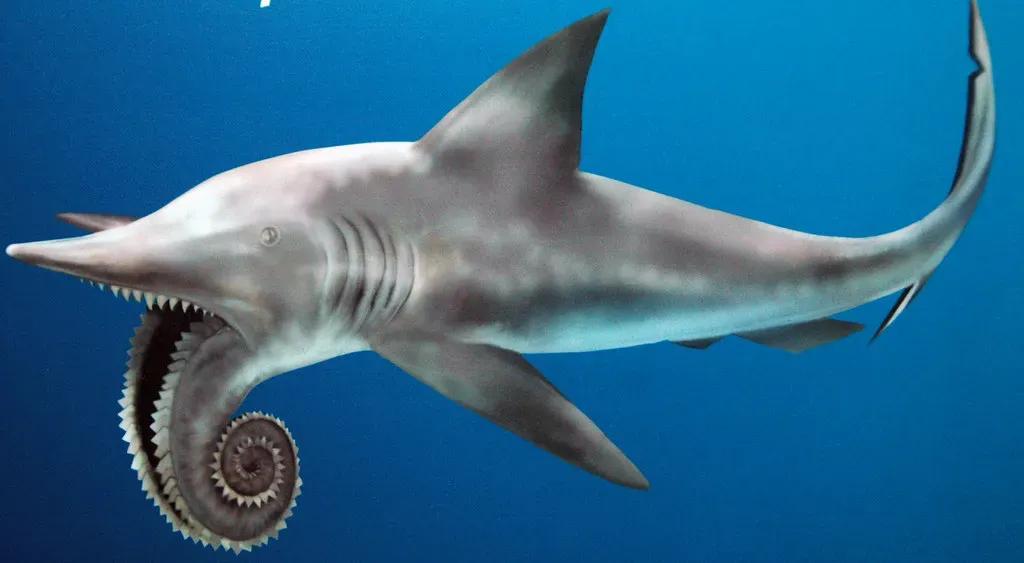
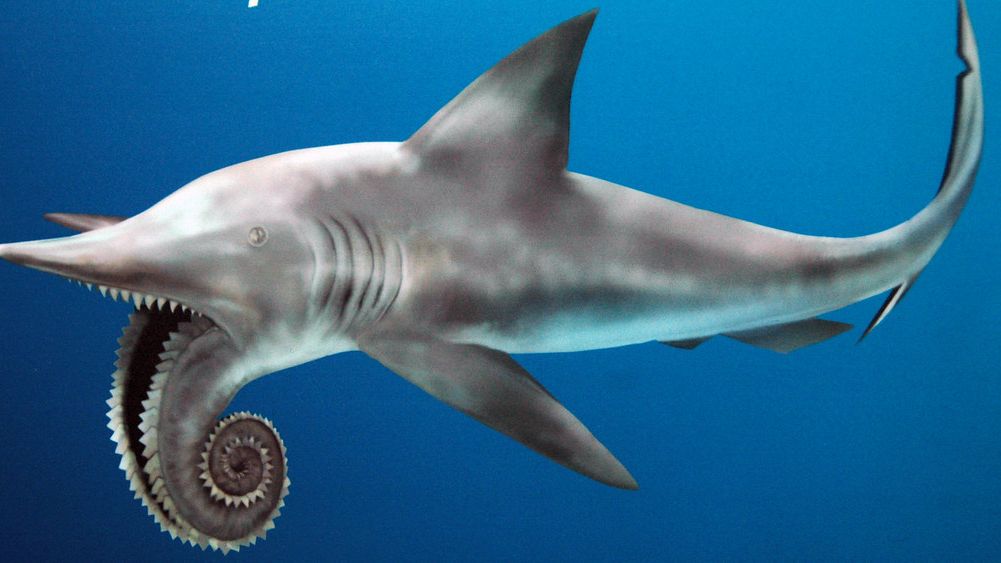
While you’re still catching your breath from Dunkleosteus, another jaw-dropping oddity appears in the fossil record: Helicoprion. At first glance in an artist’s reconstruction, you’d swear somebody is playing a prank. This shark-like animal had a bizarre spiral of teeth – like a coiled buzzsaw – embedded in its lower jaw. For a long time, no one could quite figure out where that tooth spiral fit, and early drawings put it everywhere from the snout to the throat.
Modern interpretations place that spiral inside the lower jaw, where new teeth grew in the center and older ones were pushed outward, forming a rolled-up conveyor belt of blades. If you watched it hunt, you’d likely see it scissor through soft-bodied prey like squid, using that tooth spiral to slice and pull food into its mouth. You can imagine how unsettling it would be to see a familiar shark silhouette approach, only for it to open its jaws and reveal a rotating saw of teeth. It’s a reminder that even something as basic as “jaws with teeth” has been reimagined many times in Earth’s history.
6. Arthropleura – The Millipede Big Enough to Walk Beside You
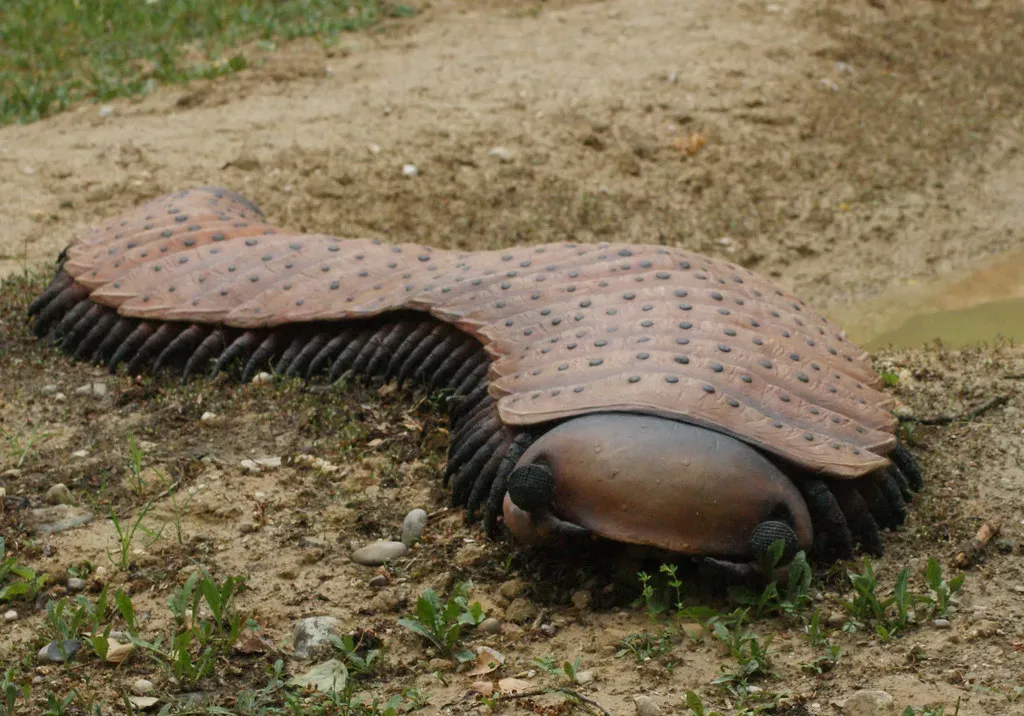
Leave the water and walk into a lush Carboniferous forest, and you’ll encounter something that might make your skin crawl even if you love bugs. Arthropleura was a giant millipede-like arthropod that could grow longer than a small car. When you picture a centipede on your wall and already feel uneasy, imagine one as long as your living room casually sliding between tree roots.
The air in those forests contained more oxygen than today, which helped arthropods like Arthropleura reach such impressive sizes. Evidence suggests it likely fed on plant material and decaying matter, not people-sized prey, so you probably wouldn’t be on the menu. Still, seeing its segmented armor plates clicking and flexing as it moved across the leaf litter would be unforgettable. You’d hear a faint rustle, look up, and watch this many-legged tank glide past, making modern insects seem positively modest by comparison.
7. Meganeura – The Dragonfly With Airplane-Model Wings
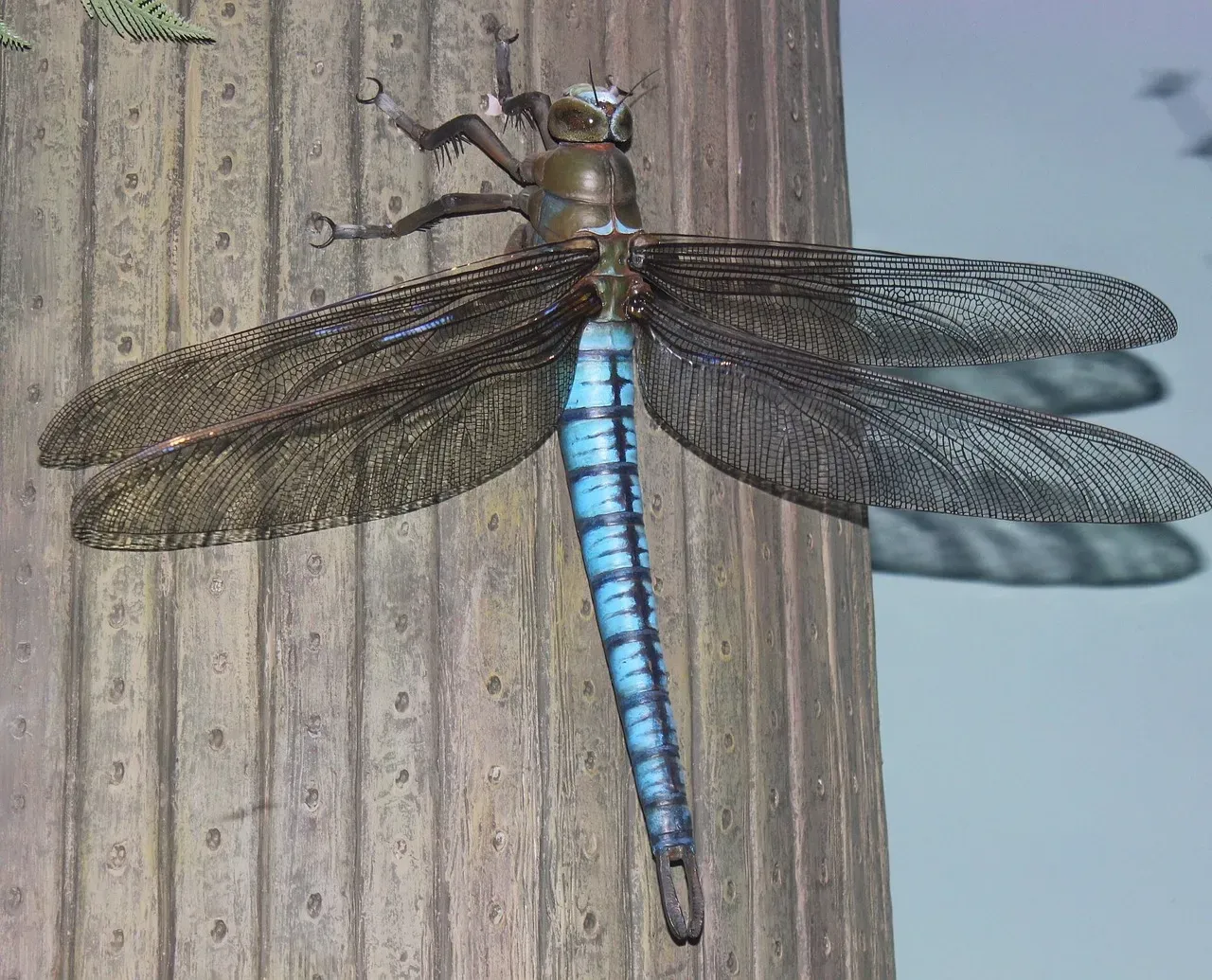
Look up into that same Carboniferous sky, and you’d see another oversized arthropod drifting overhead: Meganeura, a giant dragonfly-like insect with wingspans that rival a modern hawk. If one flew past your face, you’d instinctively duck, not because it wanted to hurt you, but because your brain is not used to seeing an “insect” that large. Its long, veined wings would flash in the dappled forest light as it darted between huge tree ferns.
Meganeura was likely a predator, swooping down on other insects and perhaps small invertebrates, using its spiny legs to cage prey midair. The high oxygen levels of the time again helped power its sizeable body and flight muscles. You can imagine the buzzing sound it made, deeper and more substantial than a modern dragonfly’s whir. Standing there, you’d realize you were essentially living inside a planet-sized insectarium, where the buzzing, crawling, and skittering were on a whole different scale.
8. Tully Monster – The Illinois Mystery With No Easy Label
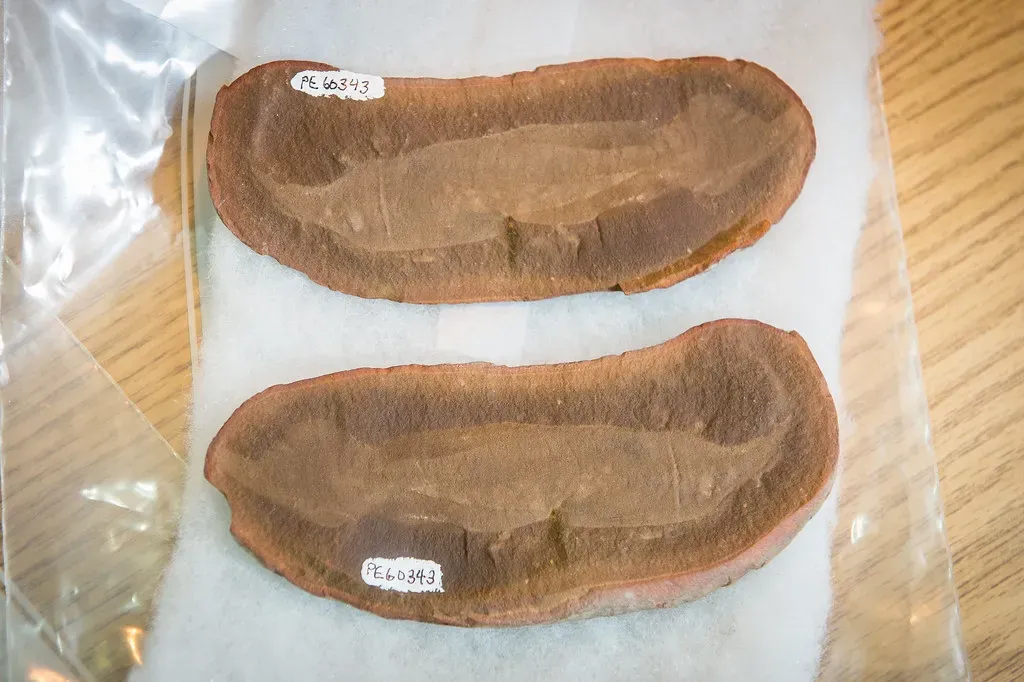
Jump much closer to our time geologically, into what is now Illinois, and you’ll meet an animal that still confuses scientists today: the Tully monster. Its fossils show a soft-bodied creature with a torpedo-shaped body, a pair of stalked eye structures, and a long, flexible snout ending in a little claw-like mouth. At first glance, you’d probably tilt your head and wonder whether you’re looking at a worm, a fish, or some kind of cartoon character gone wrong.
Researchers have debated for years where to put it on the tree of life – some evidence suggests it might be related to vertebrates, others have questioned that – and the debate is not fully settled. If you swam alongside it in its shallow, murky waters, you’d see it probing around with that snout, possibly grabbing small prey or scavenging. Its body lacked obvious armor or big jaws, so it doesn’t come across as a terror, just deeply odd. You’re reminded that not every prehistoric creature fits neatly into the categories you learned in school; some, like the Tully monster, stubbornly resist simple labels.
9. Mosasaurus – The Ocean Lizard That Could Swallow You Whole
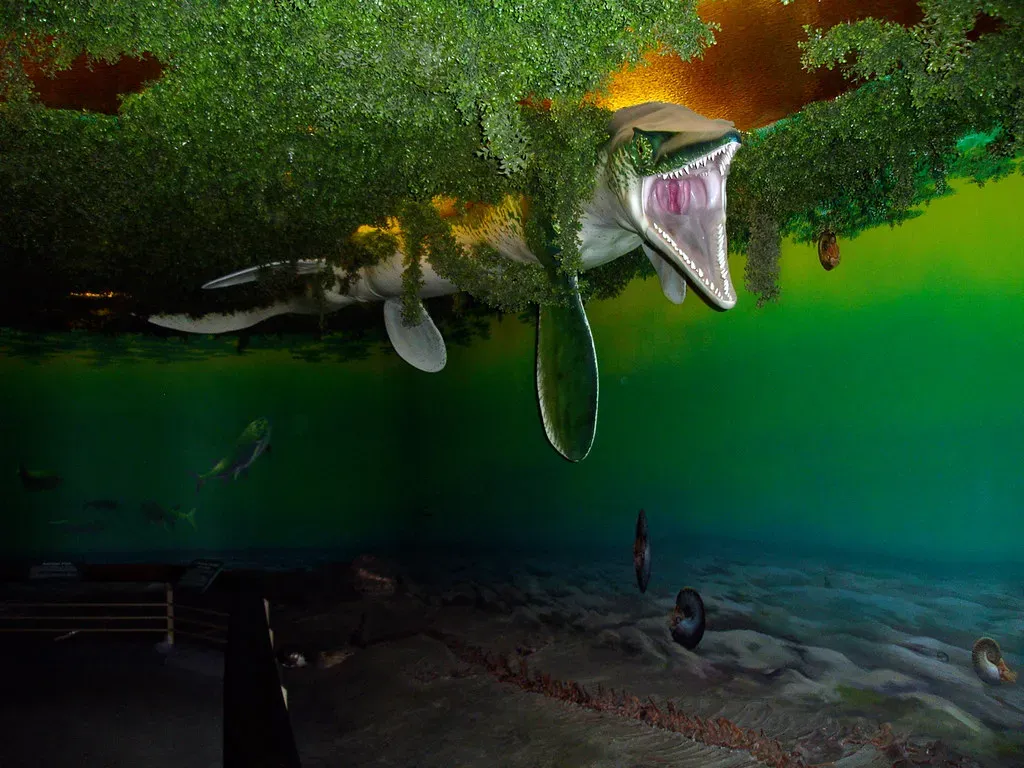
As you move into the late Cretaceous seas, dinosaurs still dominate the land, but in the water, you’d meet something else entirely: mosasaurs, with Mosasaurus as one of the most famous. Imagine a huge, streamlined marine reptile with a head somewhat like a crocodile’s, a long body powered by a tail fluke, and paddle-like limbs. If you watched the right documentary lately, you might already have a mental image – but standing next to one would be a different experience.
Mosasaurus could grow to lengths exceeding a city bus, and its jaws were full of sharp, conical teeth built for gripping slippery prey. Fossil evidence shows they ate fish, squid, smaller marine reptiles, and probably anything else they could catch, including members of their own kind. You’d see it glide beneath you in deep blue water, then surge upward to snatch prey in a sudden burst of speed. Compared to the more alien Cambrian animals, Mosasaurus feels familiar in a dinosaur-era way, but its scale and power make it one of the ocean’s most intimidating experiments.
10. Therizinosaurus – The Clawed Herbivore That Looks Like a Monster
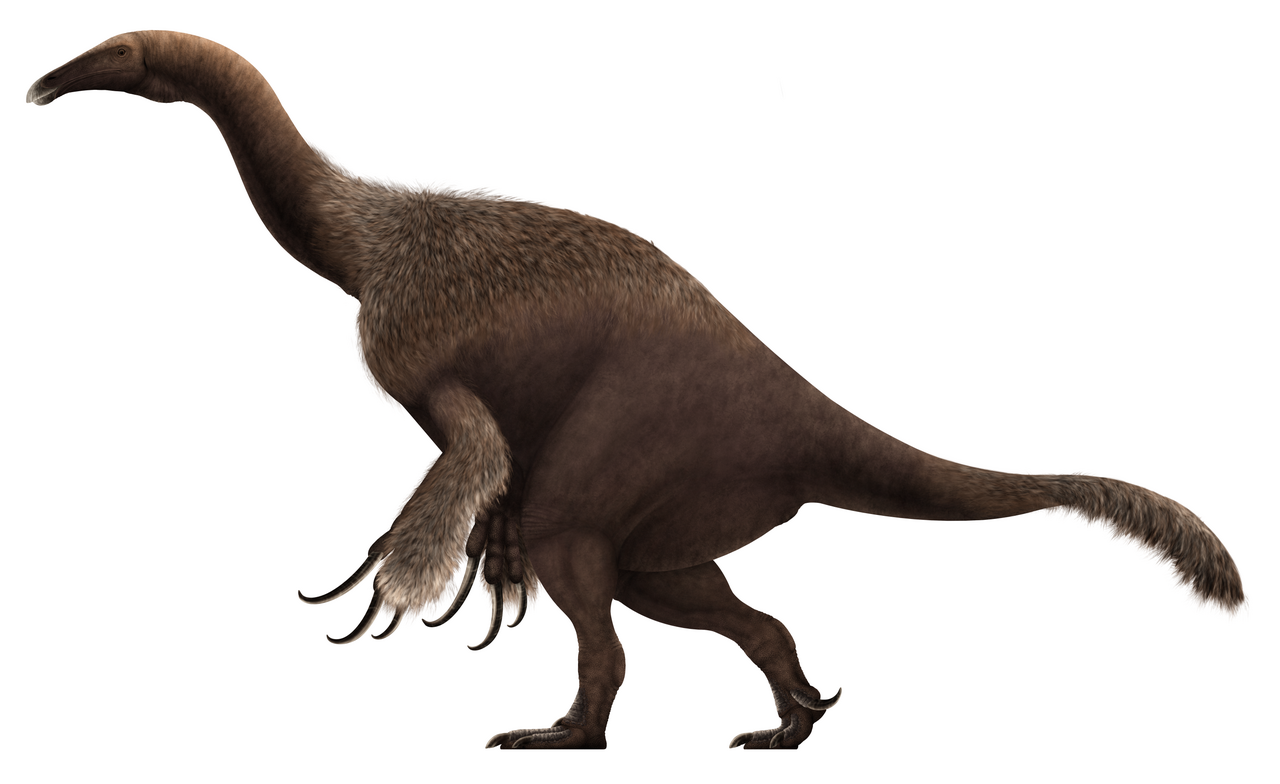
Finally, step back onto land in the late Cretaceous and meet a dinosaur that challenges your idea of what a “plant eater” should look like. Therizinosaurus was a large, feathered theropod with a pot-bellied body, long neck, and a small head – but the real showstoppers were its claws. Each hand carried massive, sickle-shaped claws that could reach lengths longer than your forearm, making it look like a walking nightmare from a creature design studio.
Despite those terrifying weapons, evidence strongly suggests it ate mostly plants, using its beak and long neck to browse vegetation, while the claws may have helped pull down branches or defend against predators. If you saw it in person, feathers covering its body and arms would soften its look slightly, but those huge claws would still dominate your attention. It’s a good reminder that you can’t always judge a diet by the hardware; in , gentle giants sometimes came wrapped in very scary packaging. Standing there, you might find yourself strangely fond of it, impressed by how evolution mixed “monster” and “herbivore” into one unforgettable animal.
Conclusion – A Planet of Failed Experiments and Lucky Survivors
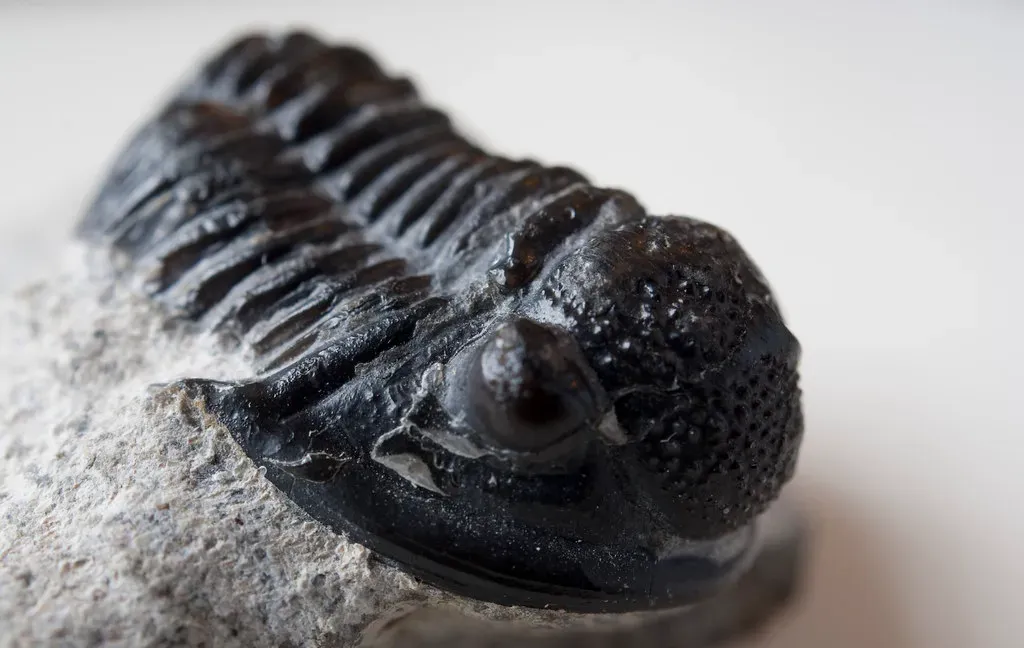
When you look back over these ten strange animals, you’re really looking at a history of trial and error on a planetary scale. Evolution tried out five-eyed swimmers, spiral-toothed sharks, giant insects, and clawed plant-eaters, then kept some ideas and quietly scrapped others. The animals you see today – dogs, crows, jellyfish, even you – are the survivors of that long, messy process, built on the bones of countless evolutionary experiments that vanished.
Next time you see a “weird” modern creature, like a platypus or a deep-sea anglerfish, remember that by prehistoric standards, it’s actually pretty tame. The truly wild designs are buried in rock, waiting for someone to notice a strange fossil and try to piece the story together. In a way, learning about these ancient oddities lets you see your own world with fresh eyes, as if it, too, might someday look like a strange chapter in a much longer book. Looking at this parade of lost creatures, which one would you least want to meet – and which one secretly fascinates you the most?