
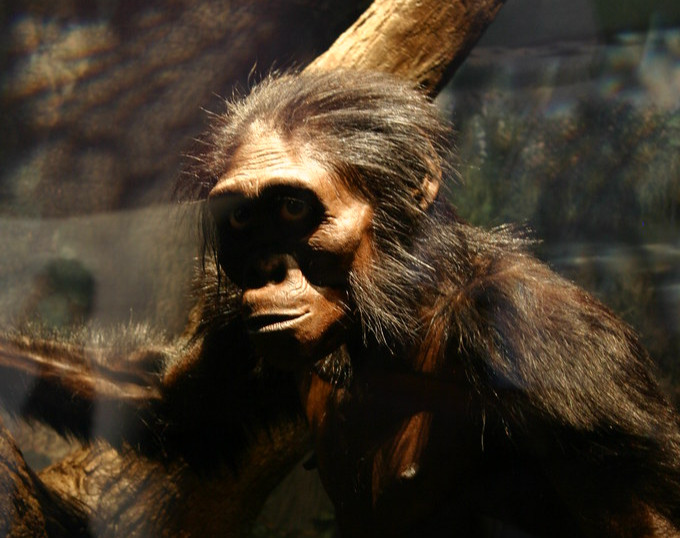
Most people assume Lucy is just “a really old skeleton in a museum.” Actually, she might be the single most information-dense fossil ever pulled out of the ground.
A tooth can tell you a species existed. A jawbone can tell you roughly what something ate. But a full body – arms, legs, spine, pelvis, ribs – can tell you how something lived, how it died, and how it moved through the world.
Forty-six years after she made global headlines, scientists are still mining new secrets out of her bones. Here’s what paleoanthropologists actually say Lucy revealed that no other single fossil ever could.
#1 – She Proved Walking Came Before Thinking
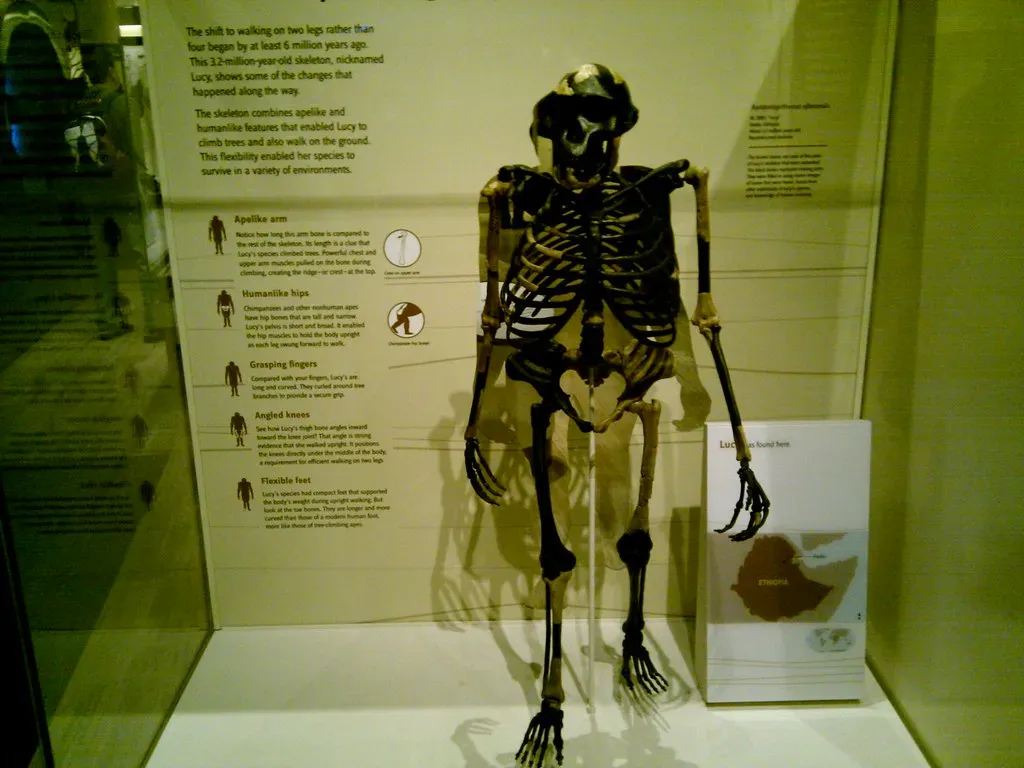
For nearly a century, scientists assumed brains got big first, and walking upright followed as some kind of clever adaptation. Lucy blew that theory apart the moment researchers laid her skeleton out on a table.
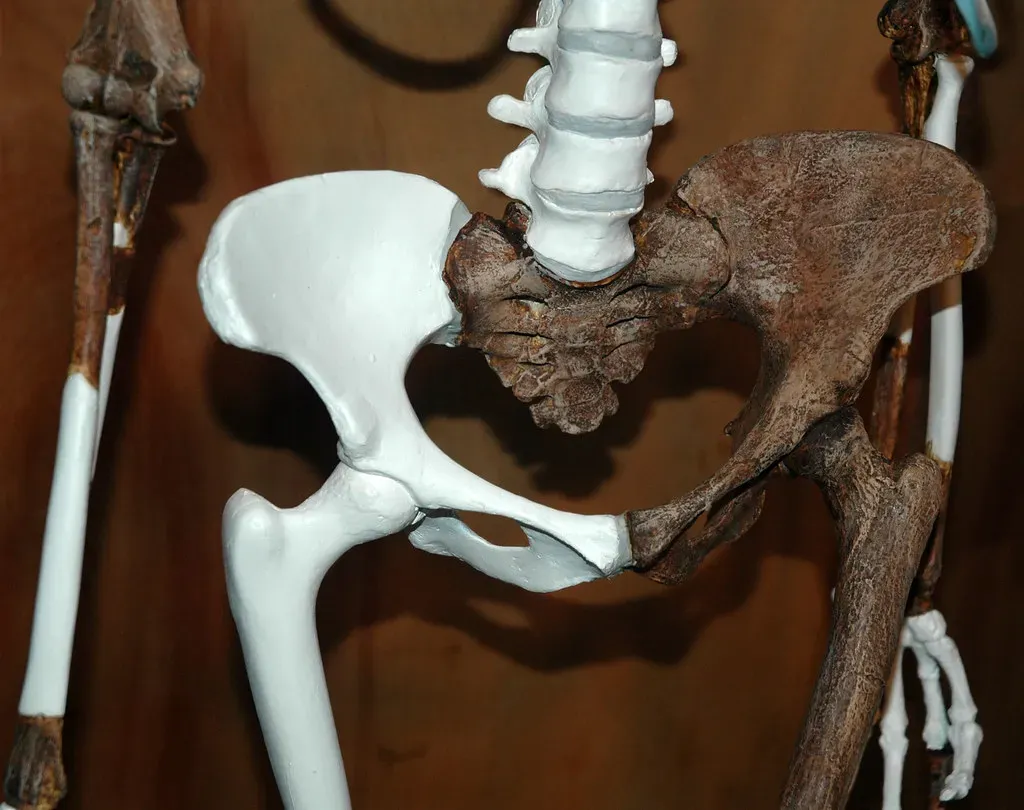
Her skull was tiny – about chimpanzee-sized. But her pelvis and leg bones were unmistakably built for walking on two legs, even though she still had long arms, short legs, and an ape-like chest and jaw. No fossil before her had ever shown a small brain paired with a fully upright walking body in the same skeleton. That single, impossible-seeming combination ended a century-long argument in one dig season.
That discovery didn’t just rewrite a textbook line – it rewrote the entire order of human evolution. And her skeleton had another surprise most people never expect from a 3-million-year-old fossil.
#2 – She Was Shockingly Complete for Her Age
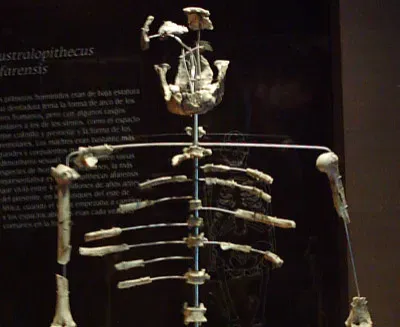
Most fossils from three million years ago are a tooth, a jaw fragment, or a lone chip of bone. Lucy was different, and that difference is exactly why she became a household name.
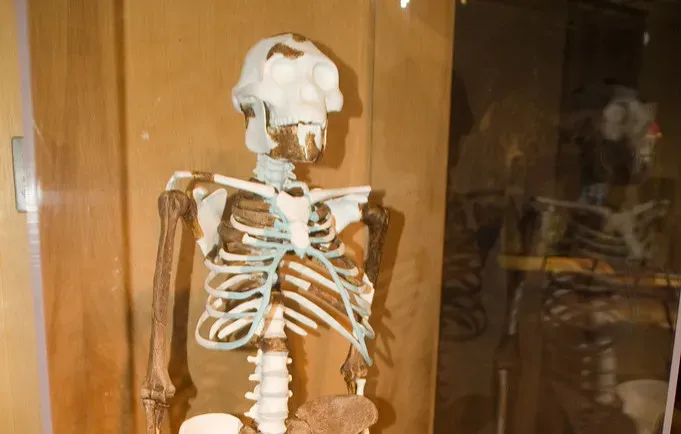
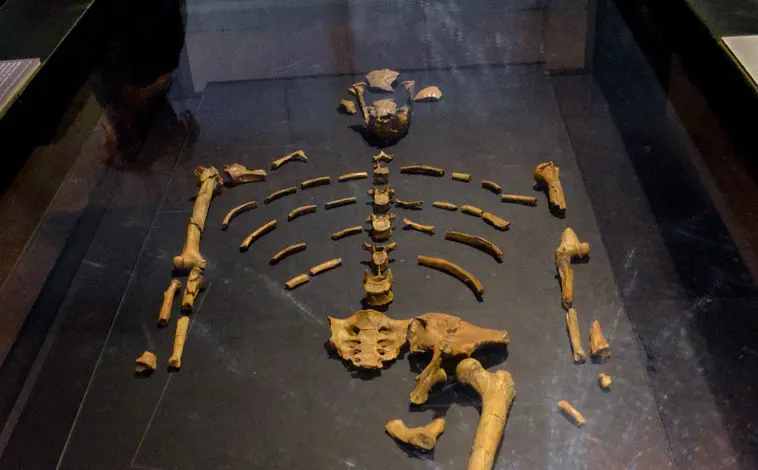
She’s a collection of several hundred fossilized fragments making up about 40% of the skeleton of a female Australopithecus afarensis – 47 bones out of 207, including parts of her arms, legs, spine, ribs, pelvis, jaw, and skull. That level of completeness had never been seen before in a hominin this old. Because bones from both sides of her body survived, scientists could mirror the missing pieces and reconstruct far more of her than what was physically dug out of the dirt.
Fast Facts
- 47 bones recovered out of a possible 207 – roughly 40% of the skeleton
- Fragments included arms, legs, spine, ribs, pelvis, jaw, and skull
- Bones from both sides of the body let scientists mirror missing pieces
- Considered one of the most complete hominin skeletons of her age ever found
A single tooth can confirm a species existed. A near-half skeleton can confirm how that species stood, walked, and lived out an entire lifetime – and that’s before you even get to what her hips gave away.
#3 – Her Hips Revealed She Was Female
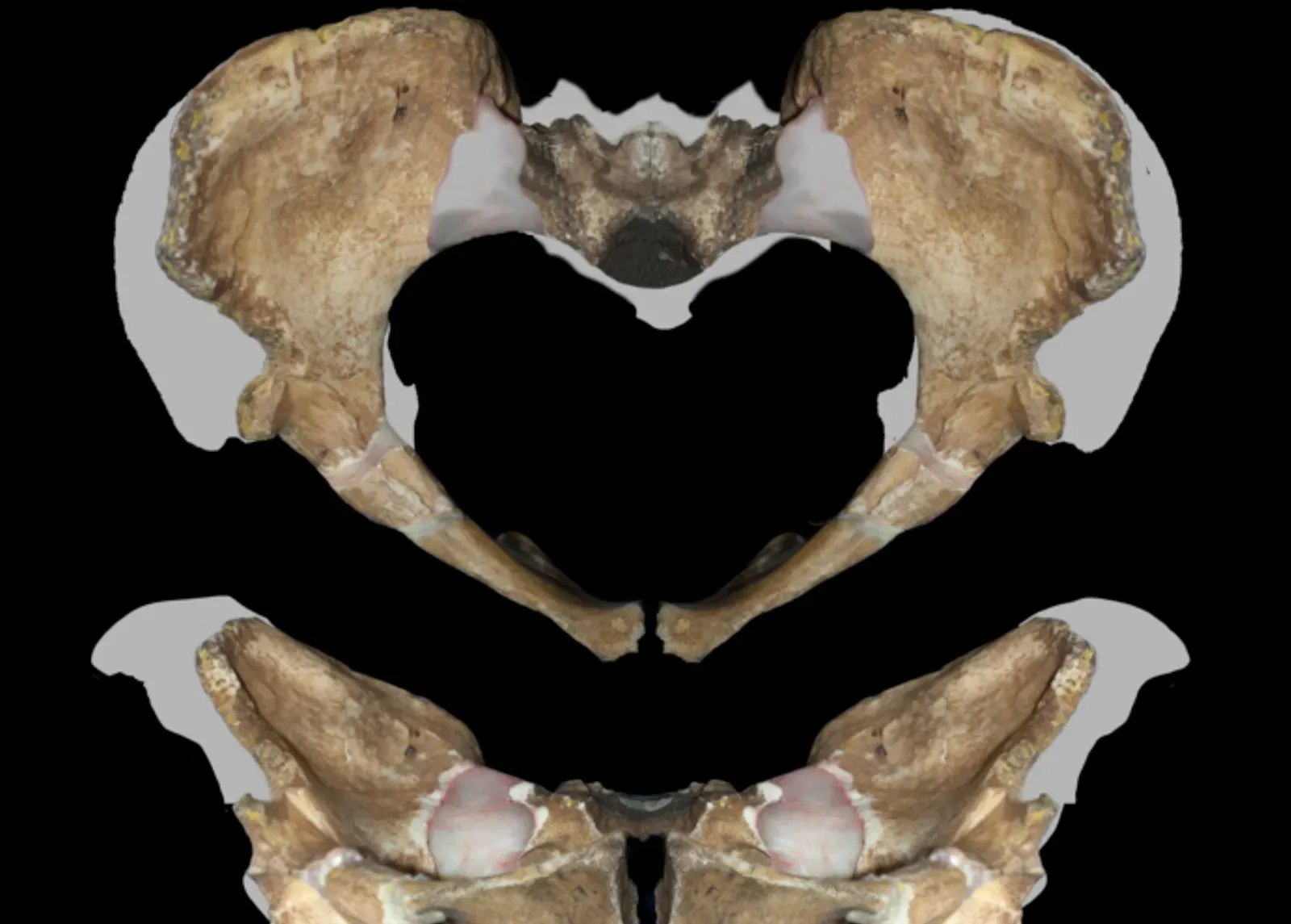
Sex is one of the hardest things to determine from ancient bone fragments – unless you happen to have a pelvis. Lucy had one, and it changed how scientists read every australopithecine find that came after her.
The shape of her pelvic bones confirmed she was female. That single detail mattered enormously, because researchers already suspected her species showed major size differences between males and females. Her small stature, once confirmed as an adult female rather than a juvenile, became the baseline for understanding size differences between the sexes in early humans. Without that pelvis, she could easily have been mistaken for a juvenile, or even an entirely different species.
Knowing her sex reshaped how scientists interpreted every other bone fragment from her species afterward. But nothing about Lucy carried more weight than the species she ended up founding.
#4 – She Became the Founding Member of an Entire Species
Lucy wasn’t just a curiosity find sitting in a drawer somewhere. She became the reference point for naming a brand-new branch on the human family tree.
During the 1970s, two fossil-hunting teams were digging up ancient human ancestors in East Africa – one led by Donald Johanson at Hadar in Ethiopia, the other led by Mary Leakey over 1,500 kilometers away at Laetoli in Tanzania. The fossils from both sites looked strikingly similar and were roughly the same age, but they didn’t match any known species. So in 1978, researchers gave them a new name: Australopithecus afarensis. Lucy essentially became the anatomical anchor for an entirely new species classification. Without her completeness, those scattered Hadar and Laetoli fossils might have stayed an unsolved puzzle for decades longer.
Naming a species after a skeleton is rare. Doing it because that skeleton single-handedly solved the puzzle is rarer still.
#5 – She Died Young, Not Old
It’s tempting to look at a small-brained, ape-like skeleton and assume it belonged to a child. Lucy’s own bones proved otherwise.
An erupted wisdom tooth and several fused bones told researchers she was already a young adult – some estimates put her age at death around 15 or 16. That means Lucy had already reached full skeletal maturity despite standing barely over three feet tall. Her tiny size wasn’t childhood – it was simply what a grown woman of her species looked like. Misreading her as a juvenile would have thrown off calculations about body size, brain-to-body ratios, and life expectancy for her entire species.
Getting her age right was the foundation everything else got built on. It also raises an uncomfortable question about how she actually spent her final years.
#6 – She Never Fully Left the Trees
Walking upright didn’t mean Lucy gave up life above the ground. Her upper body still carried unmistakable signs of a species that climbed for survival.
Her skeleton clearly shows a bipedal, upright walking gait similar to ours – but a 2016 study argues Australopithecus afarensis was, at least partly, still tree-dwelling. Her shoulder blades, curved fingers, and arm proportions all hint at climbing ability that a pure biped simply wouldn’t need. This half-walker, half-climber body plan is something no purely terrestrial or purely arboreal fossil could ever demonstrate on its own. It’s proof that evolution doesn’t flip a switch overnight – it blends old survival strategies with new ones, sometimes for hundreds of thousands of years, before one finally wins out.
That in-between body plan is one of the most debated parts of her story. It’s also, oddly enough, connected to how she may have died.
#7 – Her Brain Size Set the Baseline for an Entire Field
Before Lucy, scientists lacked a solid, physical benchmark for exactly how small an early hominin brain really was compared to a fully walking body.
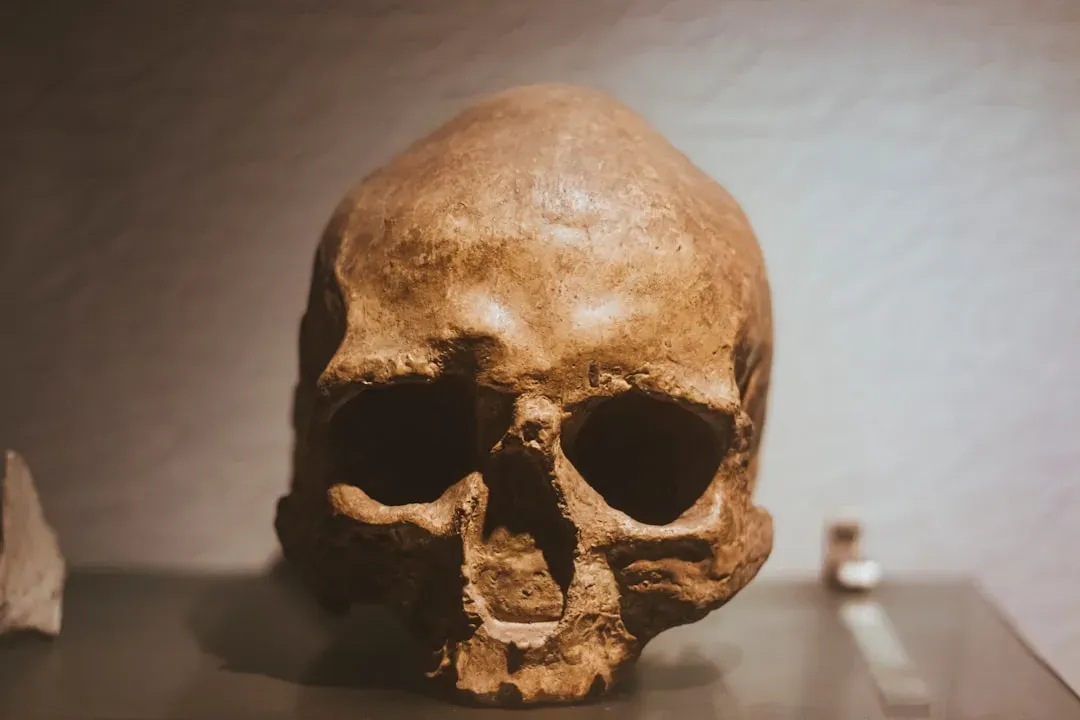
Recent facial reconstruction work has pinned down specifics researchers could only estimate for decades. One study puts her endocranial volume at roughly 391cm³ – similar to a chimpanzee’s, and far smaller than the roughly 1,350cm³ inside a modern human skull. That’s less than a third the size of a modern human brain, sitting inside a body that was already walking upright full-time. This single number became the anchor point every future hominin brain-size comparison gets measured against.
Quick Compare: Brain Size
- Chimpanzee: roughly 350-400cm³
- Lucy (A. afarensis): roughly 391cm³
- Modern human: roughly 1,350cm³
Without Lucy’s skull fragments, researchers wouldn’t have a reliable early data point to track just how dramatically brain size exploded over the following three million years.
#8 – Her Bones May Reveal How She Died
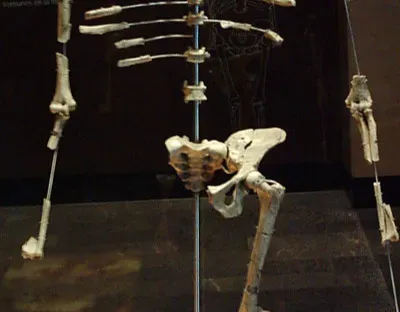
Most ancient fossils give up zero clues about cause of death. Lucy’s skeleton, unusually, hinted at her very last moments alive.
Her upper body was clearly adapted for climbing, and some researchers have theorized she died falling out of a tree. CT scans of her bones show clean break patterns consistent with a fatal fall. A fatal tree fall would be almost poetic – killed by the very climbing behavior her bones prove she never fully gave up. Not every researcher agrees with this interpretation, and it remains genuinely debated, but it’s a rare case where fracture patterns on ancient bone can be read almost like a forensic case file.
Reading a 3.2-million-year-old cause of death sounds like science fiction. Few fossils this old even have enough skeletal integrity left to attempt that kind of analysis.
#9 – Her Discovery Site Kept Giving Up Evidence
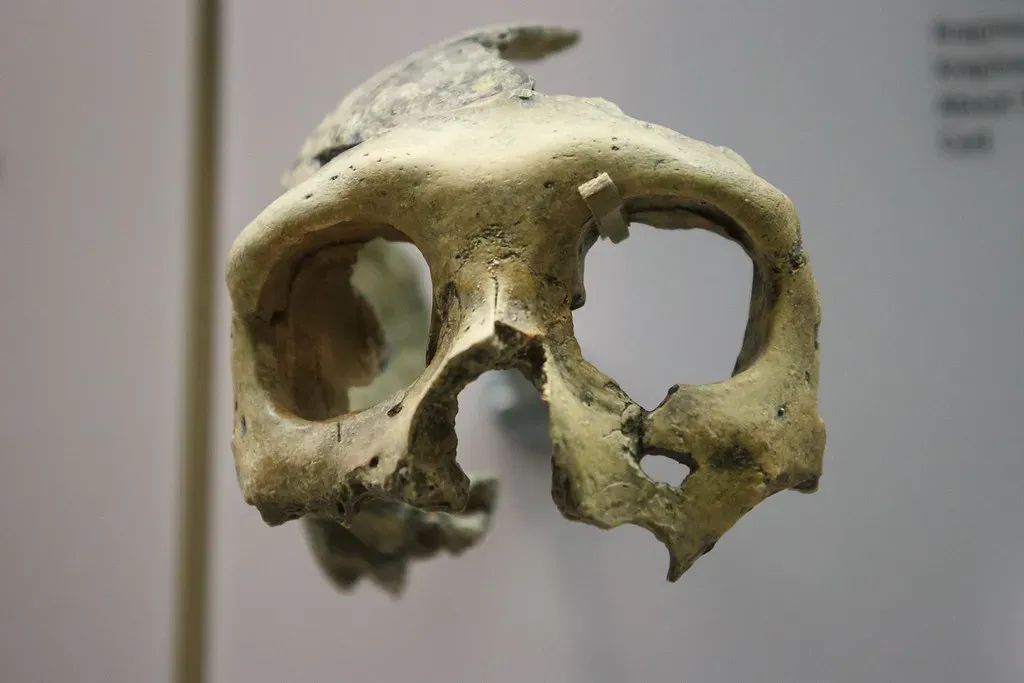
Lucy wasn’t a one-off miracle. The ground she came out of turned out to be one of the richest hominin sites on the planet.
That same site yielded dozens of other hominid fossils between 1973 and 1977, and Hadar has since produced about 90 percent of the nearly 600 fossils now attributed to her species. Just a year after Lucy’s discovery, researchers found something even more startling nearby: over 200 hominin fossils representing at least 13 individuals, including four children, nicknamed “The First Family.” That group proved Lucy wasn’t a fluke individual – she belonged to an actual breeding population. Without that follow-up evidence, skeptics could have argued she was some genetic oddball rather than a representative of a widespread, established species.
At a Glance: The Hadar Site
- Produced dozens of hominid fossils between 1973 and 1977
- Roughly 90% of all ~600 known A. afarensis fossils trace back to Hadar
- “The First Family” find added 200+ fossils from at least 13 individuals
- Included the remains of four children, hinting at group living
One skeleton opened the door to an entire lost population – and eventually, to a face.
#10 – She Finally Got a Face
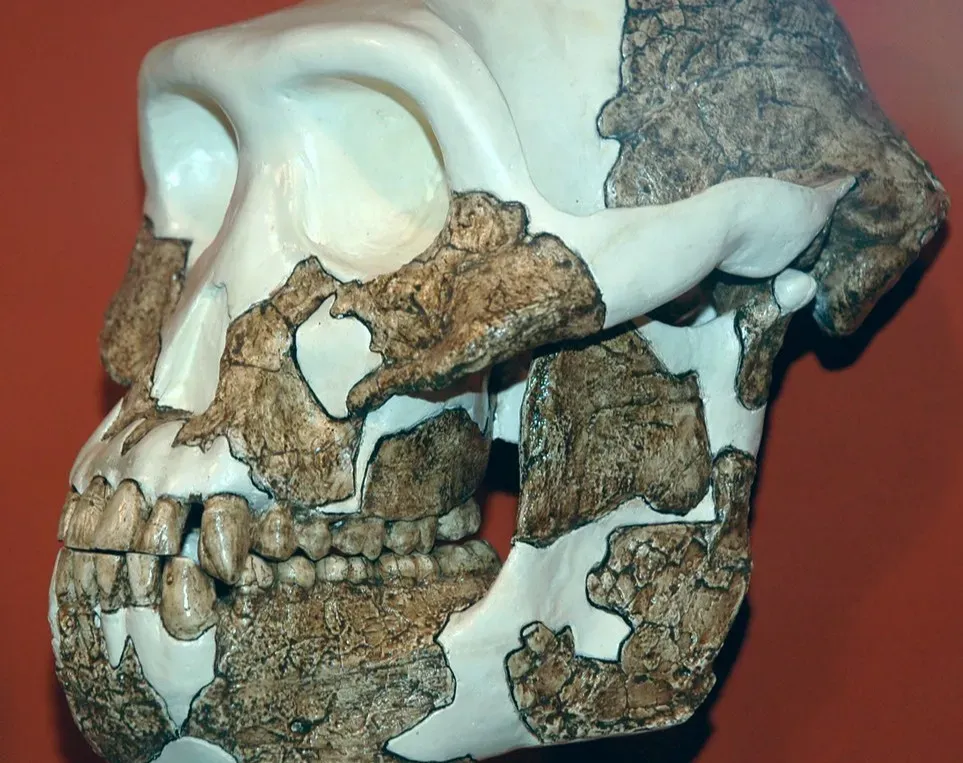
For fifty years, Lucy was a name attached to a pile of bones – no eyes, no expression, nothing that made her feel like an individual who once actually lived and breathed.
That changed recently, when researchers used her skull fragments to digitally reconstruct her likely facial appearance. Lead researcher Cicero Moraes described the moment of finally seeing her face like this:
“Like glimpsing a bridge to the distant past.”
Cicero Moraes
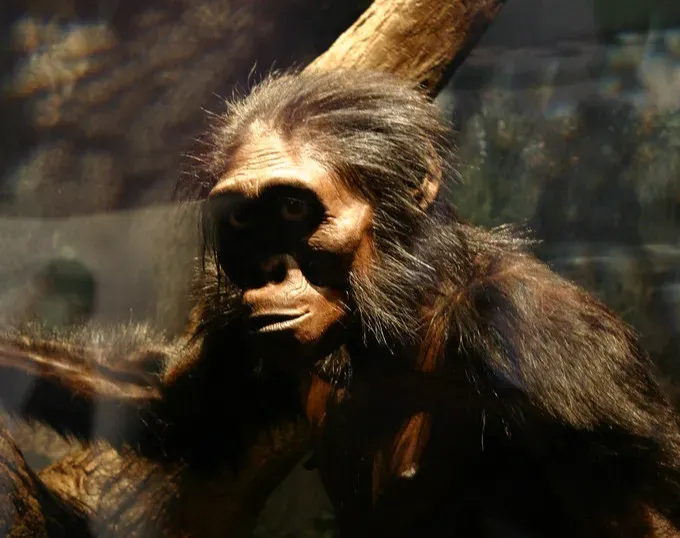
He also noted the reconstruction “offers an anatomically coherent representation of a female Australopithecus afarensis,” despite the limitations of the surviving cranial fragments. This is the first time anyone has essentially “seen” what she may have looked like in life. A single tooth can’t give you a face. Lucy could.
#11 – She Turned Fossils Into Celebrities
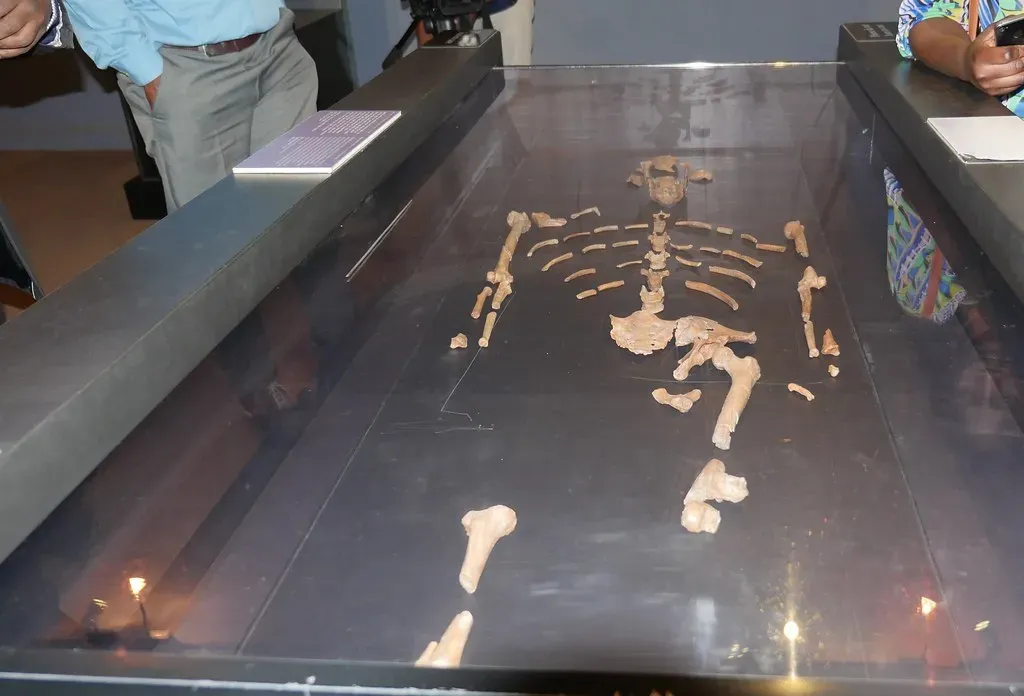
Before 1974, human evolution was a niche academic subject buried in journals nobody outside the field ever read. Lucy changed that overnight.
One curator flatly called her “one of the first celebrity fossils.” Her nickname alone tells the story – it comes from the Beatles song “Lucy in the Sky With Diamonds,” which played on repeat during the celebration party after her discovery. A funny party nickname ended up doing more for public science funding than most academic papers ever manage. One associate curator of human evolution has noted her discovery came at a critical moment for public awareness that Africa is the cradle of humankind, helping secure funding for the entire field going forward.
Worth Knowing
- Named after the Beatles song played at her discovery celebration party
- Called “one of the first celebrity fossils” by a museum curator
- Helped raise public awareness that Africa is the “cradle of humankind”
- Her fame is credited with helping secure funding for paleoanthropology
That’s a controversial thing to admit in scientific circles, but it’s true: pop culture appeal opened doors that dry data alone never could have.
The Bottom Line
Lucy isn’t famous because she’s old. Plenty of older fossils exist. She’s famous because she’s complete enough to answer questions no fragment ever could – how she walked, how she died, what she looked like, and what species she belonged to.
Most people assume fossils just confirm what scientists already suspected. Lucy did the opposite – she overturned a century-old assumption about brains versus bipedalism with a single discovery.
Whether she truly fell from a tree, or whether her arboreal habits were purely secondary to walking, is still genuinely debated among researchers today. That unresolved argument is exactly why she still matters: a 3.2-million-year-old skeleton that can still make scientists disagree is worth more than a hundred fossils everybody’s already stopped arguing about.