
Most people assume that once a dinosaur or ancient creature gets its scientific name, that identity is locked in forever. It isn’t. Paleontology has quietly rewritten dozens of “settled” identities over the past two decades, discovering that supposed separate species were actually the same animal at different ages – or, in some cases, that one skeleton was mistaken for three completely different creatures.
Museums have had to swap skulls, rename fossils, and in a few embarrassing cases, admit they’d displayed an animal upside down for over a century. Here’s what paleontologists actually say about the extinct animals we’ve all been getting wrong.
#12 – Raptorex: The “Mini T. Rex” That May Never Have Existed
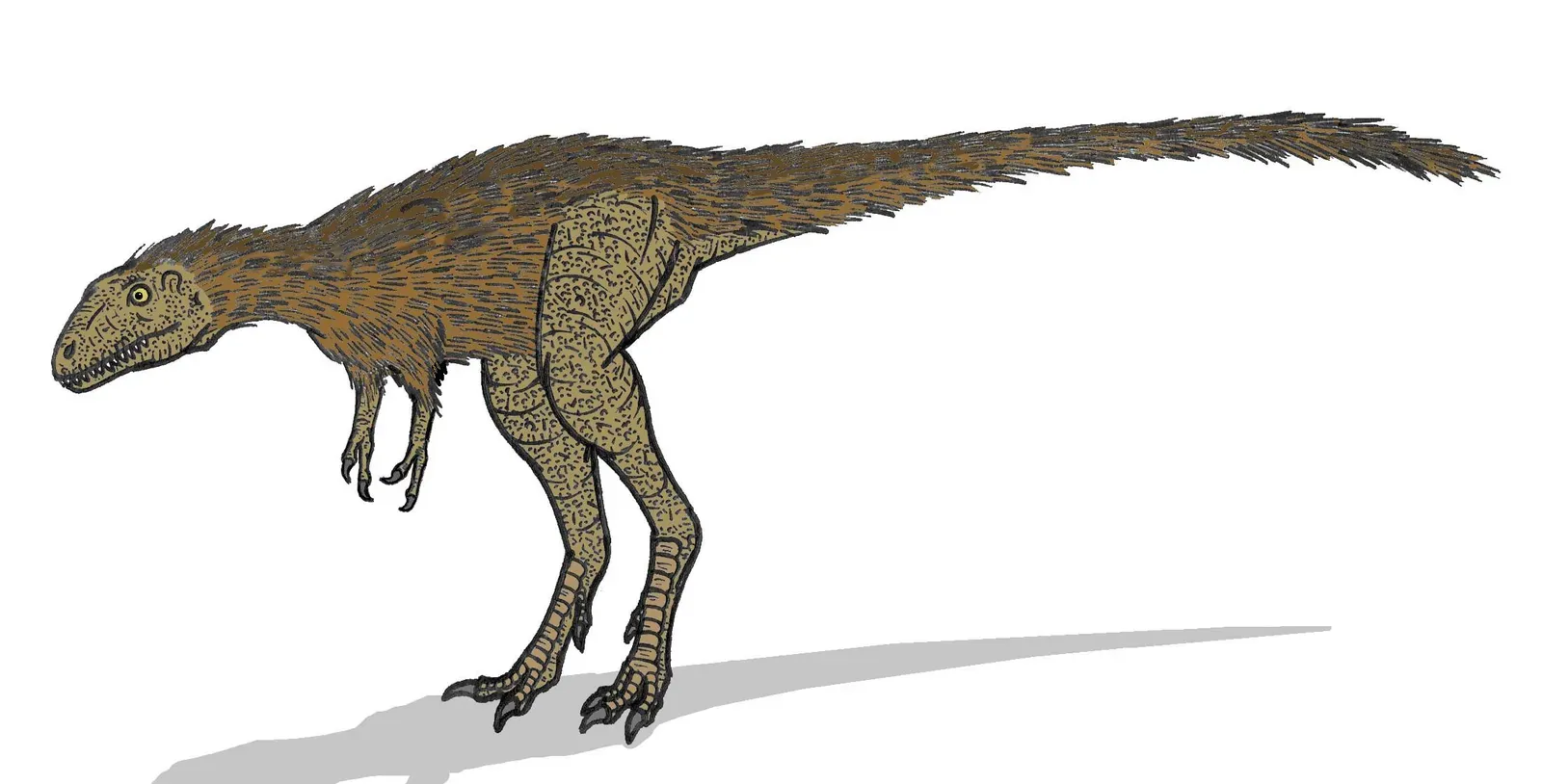
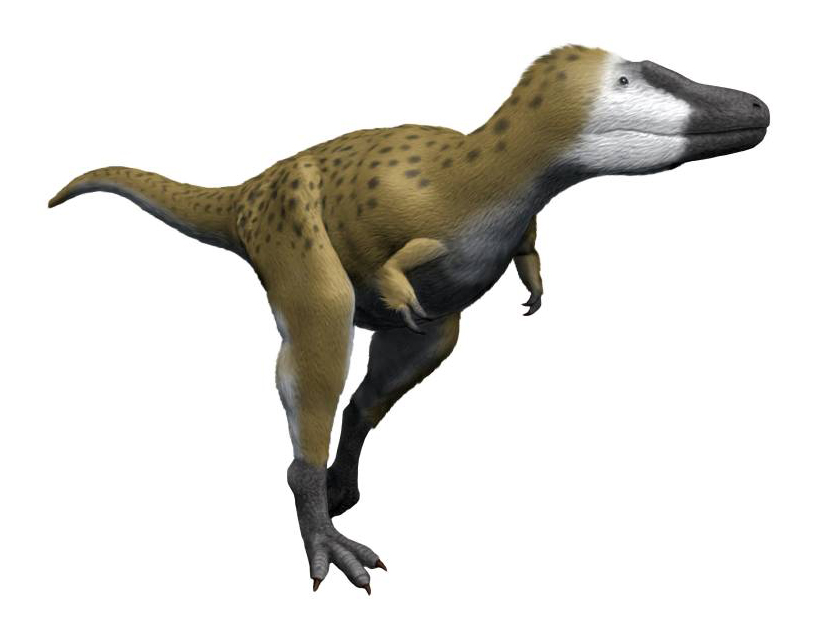
Raptorex was marketed as evolution’s rough draft – a pint-sized tyrannosaur proving that the terrifying T. rex body plan evolved millions of years before the giant itself showed up.
That story fell apart fast. Multiple paleontologists have argued the specimen isn’t a distinct genus at all, but simply a juvenile Tarbosaurus, the Asian cousin of T. rex. If true, “Raptorex” wasn’t a miniature evolutionary preview – it was just a teenager with growing to do. The proportions that made scientists excited (long legs, tiny arms) are exactly what you’d expect from a young tyrannosaur that hadn’t yet bulked up into an adult predator. **The “revolutionary missing link” may have simply been a kid.** This is a pattern you’re about to see over and over: paleontologists mistaking a growth stage for an entirely new branch of the family tree. But that’s nothing compared to what we found about #11…
#11 – Stygimoloch: The “Demon Dinosaur” That Was Just a Teenager
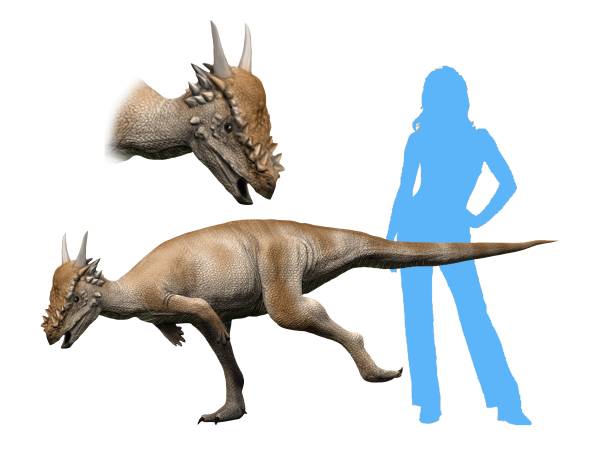
Stygimoloch was named after a Canaanite demon for a reason – its skull was covered in menacing horns and spikes that looked like nothing else in the fossil record.
Turns out those demonic horns may have been a phase. Researchers now argue Stygimoloch might represent an early growth stage of Pachycephalosaurus, the dome-headed dinosaur it was long considered a separate relative of. As pachycephalosaurs aged, their skulls apparently reshaped dramatically – horns and spikes present in youth were reabsorbed and replaced by the thick, smooth dome scientists associate with mature adults. **The “demon dinosaur” name might belong to a dinosaur going through an awkward growth spurt, not a distinct species at all.** This isn’t a fringe theory, either – it’s part of a wider reckoning with how badly paleontologists have underestimated how much dinosaur skulls changed with age. But #10 takes that idea even further.
#10 – Dracorex Hogwartsia: Named After Hogwarts, Undone By Growth Charts
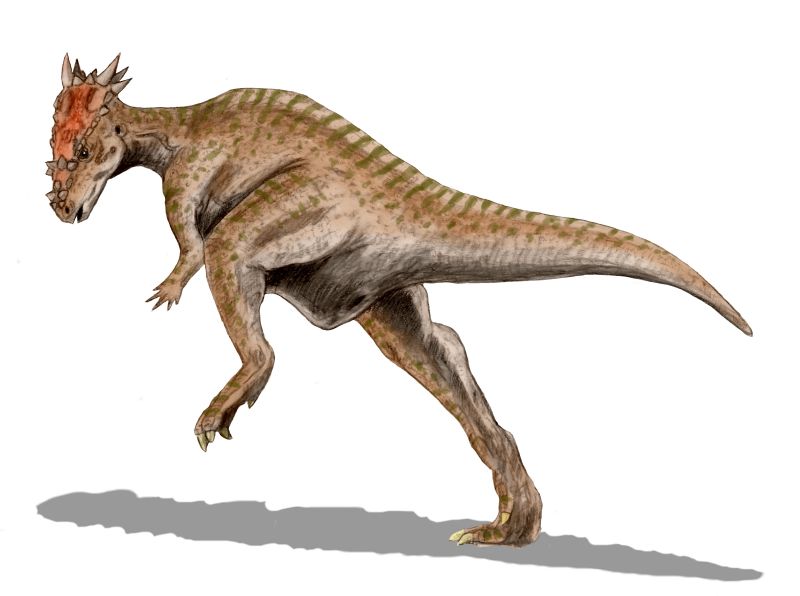
Dracorex hogwartsia sounds like it belongs in a fantasy novel, and honestly, its origin story kind of is one – it was literally named in partnership with the Harry Potter franchise for its dragon-like, spiky skull.
The magic didn’t last. Like its horned cousin Stygimoloch, Dracorex is now considered by many researchers to be an early growth stage of Pachycephalosaurus, meaning the “dragon king” and the “demon dinosaur” might just be the same species photographed at two different birthdays. **Three separately-named dinosaurs may have actually been one animal wearing different skulls throughout its life.** The idea, championed by paleontologists Jack Horner and Mark Goodwin, reshaped how scientists think about dome-headed dinosaurs entirely – no longer as a diverse family of similar-looking cousins, but possibly as a single lineage that looked wildly different at each life stage. Skeptics still push back, arguing the sample size is too small to be certain. But #9 involves a mistake so old it happened before dinosaurs even had a proper reputation.
Worth Knowing
- Dracorex, Stygimoloch, and Pachycephalosaurus all come from the same Late Cretaceous Hell Creek Formation – the same rock layer that produced T. rex and Triceratops.
- The “one growth series” theory was formally proposed in 2007 by paleontologists Jack Horner and Mark Goodwin.
- Dracorex hogwartsia was named in 2006, making it one of the more recently christened dinosaurs on this list.
- Not every paleontologist agrees – some argue the fossil sample is still too small to confirm all three are the same species.
#9 – Elasmosaurus: The Fossil Cope Put Together Backwards
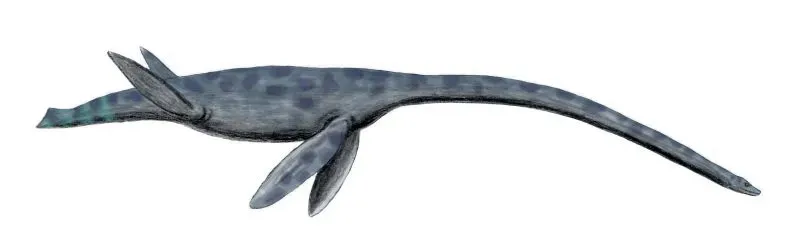
Long before dinosaur wars became a meme, one of paleontology’s founding fathers made a mistake so famous it’s still taught in textbooks as a cautionary tale.
Edward Drinker Cope, racing to out-publish his rival Othniel Charles Marsh during the notorious 19th-century “Bone Wars,” reconstructed the long-necked marine reptile Elasmosaurus with its skull placed on the tip of its tail instead of its neck. The error assumed the short segment was the neck and the long segment was the tail – completely backwards for an animal whose neck made up more than half its body length. **One of history’s most influential paleontologists literally put the head on the wrong end of the skeleton**, and it took a rival scientist publicly pointing it out to correct it. The humiliation reportedly fueled decades of professional rivalry. But #8 isn’t a mix-up of body parts – it’s a mix-up of an entire body feature.
#8 – Iguanodon: The Nose Horn That Was Actually a Thumb
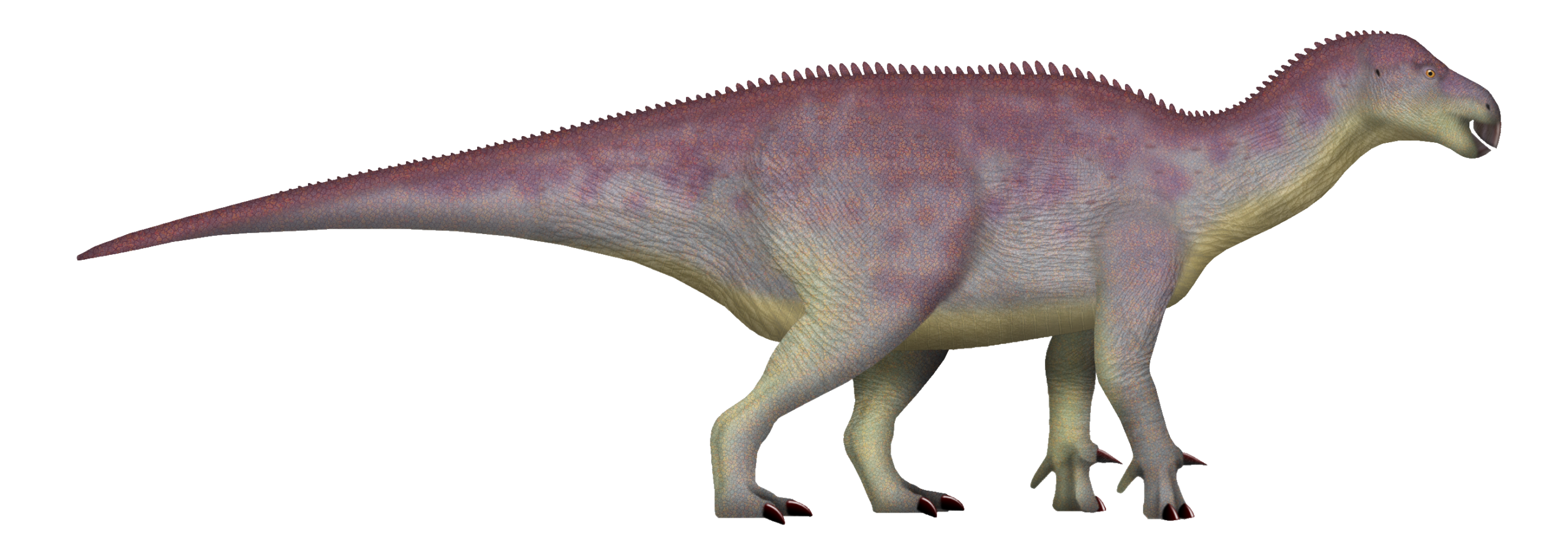
When Gideon Mantell first pieced together Iguanodon in the 1820s, he had almost nothing to go on – a handful of teeth and bone fragments from one of the very first dinosaurs ever scientifically described.
Working with what he had, Mantell placed a large, cone-shaped spike on the animal’s nose, giving early Iguanodon a rhino-like appearance that appeared in illustrations for decades. Later discoveries of complete skeletons revealed the truth: that “horn” wasn’t on the face at all. **It was actually a sharp thumb spike, likely used for defense or foraging, attached to the animal’s hand.** The corrected reconstruction transformed Iguanodon from a horned nose-beast into a bipedal plant-eater with surprisingly weaponized thumbs. It remains one of the clearest examples of how a handful of disconnected bones can lead brilliant scientists to a completely wrong picture. But #7 involves an animal that wasn’t even classified in the right category of life.
#7 – Basilosaurus: The “King Lizard” That Was Secretly a Whale
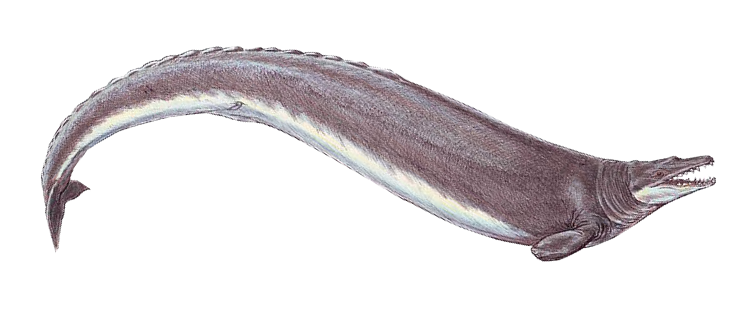
Basilosaurus literally means “king lizard,” which tells you exactly how confident scientists were when they first named it in the 1830s from massive vertebrae found in the American South.
The name stuck even after researchers realized their mistake, because taxonomic rules generally don’t allow renaming once a species is formally described. **This “reptile” is actually one of the earliest known whales**, an ancient, elongated marine mammal that still retained tiny, functionally useless hind legs – a leftover from its land-walking ancestors. Basilosaurus swam through Eocene seas roughly 40 million years ago, long before whales lost every visible trace of their four-legged past. Today it stands as one of evolutionary biology’s favorite teaching examples: proof that whales didn’t start in the ocean, they walked their way in. Scientists were so sure it was a giant sea serpent that the wrong name has now outlived the wrong idea by nearly two centuries. But #6 stayed misunderstood for even longer – because for fifty years, nobody had more than its arms.
Fast Facts
- Length: roughly 50 to 59 feet long – about the length of two city buses parked end to end.
- Lived during the Late Eocene, approximately 41 to 35 million years ago.
- Its vestigial hind legs measured only about 2 feet long – far too small to walk or swim with.
- Estimated body weight: somewhere between 5,000 and 8,000 kilograms.
- Despite the “lizard” name, it’s classified as an early archaeocete, a direct ancestor group of modern whales.
#6 – Deinocheirus: Fifty Years of Nightmares Built From Two Giant Arms
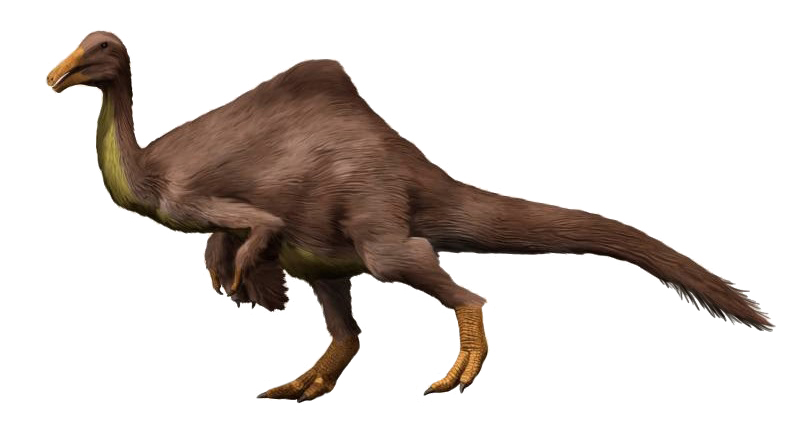
In 1965, paleontologists in Mongolia unearthed a pair of dinosaur arms so enormous – over eight feet long, tipped with massive claws – that the discovery alone sparked five decades of speculation.
With no skull, no legs, and no body to examine, scientists assumed Deinocheirus belonged to some kind of colossal, terrifying predator, possibly even bigger and scarier than T. rex. Popular reconstructions leaned into that fear, depicting a monstrous claw-wielding killer. When more complete skeletons finally surfaced in 2014, the reveal stunned the paleontology world. **Deinocheirus wasn’t an apex predator at all – it was a humpbacked, duck-billed, plant-eating giant ornithomimosaur**, more closely related to lanky “ostrich dinosaurs” than to any fearsome carnivore. Its enormous arms, it turns out, were likely used for foraging and defense, not disemboweling prey. Half a century of monster movies got it completely backwards. But #5 is still an active fight, and paleontologists haven’t agreed on a winner.
#5 – Torosaurus: Is It Really Just a Grown-Up Triceratops?
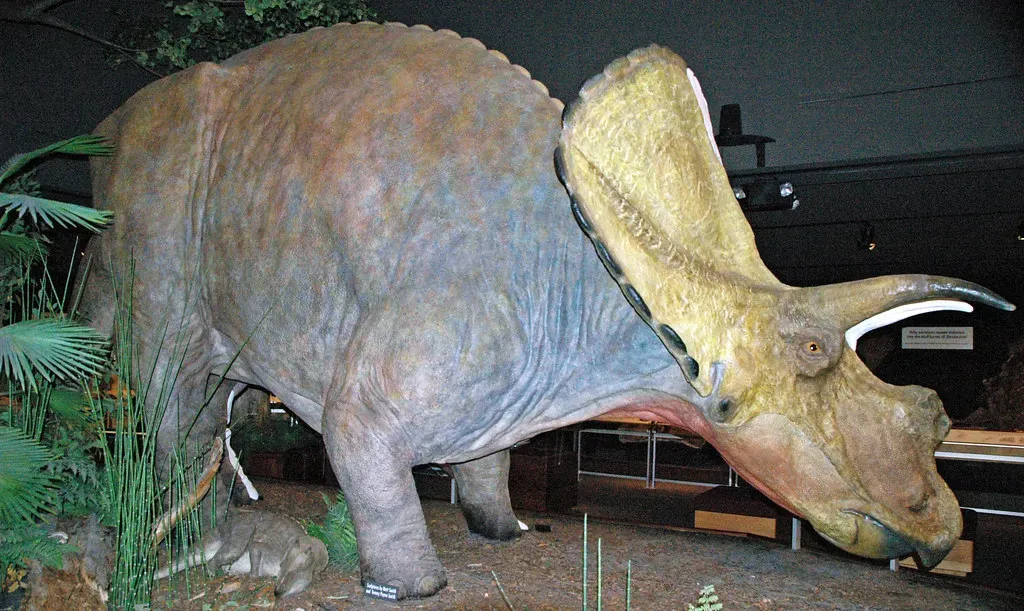
For over a century, Torosaurus and Triceratops were treated as close cousins – similar horned dinosaurs living side-by-side in the same Cretaceous landscape.
Then in 2010, researchers Jack Horner and John Scannella proposed something wilder: the confusion over Triceratops and Torosaurus was easy to understand because juvenile dinosaurs weren’t just miniature versions of adults – they looked very different, and their skulls changed radically as they matured. Their argument was that Torosaurus wasn’t a separate genus at all, just a fully mature Triceratops whose solid frill had finally grown the large, distinctive holes associated with old age. **Every single Torosaurus skull ever found belongs to an adult – not one juvenile has ever turned up**, which is exactly what you’d expect if it’s simply an old Triceratops. But in 2012, Yale researchers pushed back hard, arguing the existence of physically mature specimens of Triceratops and relatively immature specimens of Torosaurus would be impossible if Torosaurus were an adult Triceratops. Honestly, this fight probably won’t end soon – and that’s a good thing, because it’s forcing paleontologists to finally take dinosaur growth stages seriously. But #4 is a mystery that got solved just months ago.
#4 – Nanotyrannus: The “Teenage T. Rex” Debate Just Got Flipped
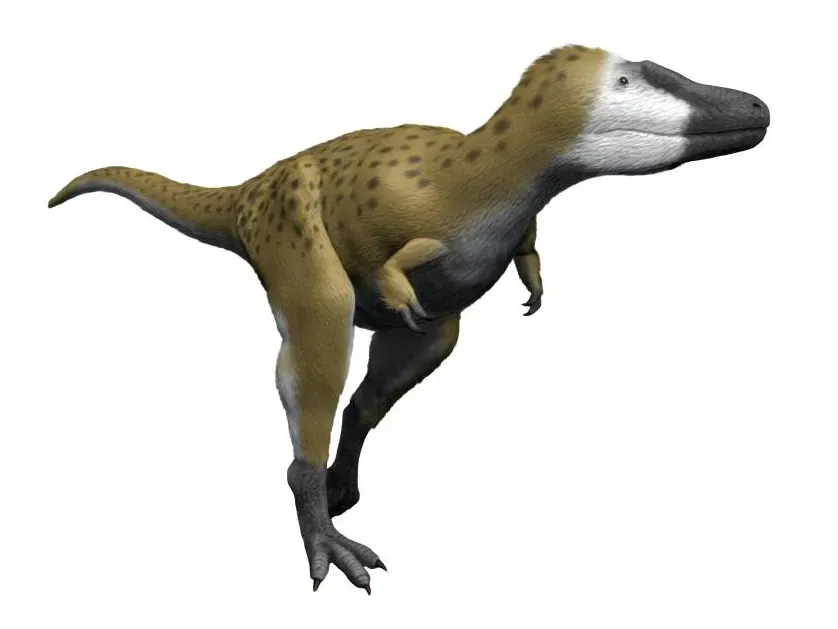
For nearly four decades, most paleontologists dismissed Nanotyrannus as nothing special – just an awkward, gangly juvenile Tyrannosaurus rex that hadn’t hit its adult growth spurt yet.
That consensus collapsed in 2025. Researchers confirmed that the tiny tyrannosaur Nanotyrannus is indeed its own species and not a young T. rex, using an unconventional trick: instead of slicing long bones (which the Nanotyrannus holotype doesn’t have much of), scientists analyzed a slender throat bone that supports the tongue to check its growth rings. The results were definitive – the animal was already mature, not a juvenile giant-in-the-making. **A predator once dismissed as an awkward teenager turned out to be a fully grown, distinct species that hunted alongside actual juvenile T. rexes**, competing for the same prey in the same ecosystem. Not everyone’s convinced – some paleontologists still ask “if every small skeleton is Nanotyrannus, where are the juvenile T. rexes?” But that’s nothing compared to what we found about #3, where the reconstruction itself was flipped completely upside down.
At a Glance
- 1942: The first Nanotyrannus skull is discovered in Montana’s Hell Creek Formation.
- 1946: The skull is described as a species of Gorgosaurus, not a distinct genus.
- 1988: Paleontologist Robert Bakker and colleagues reclassify it as the new genus Nanotyrannus.
- 2025: A Nature study analyzing the “Dueling Dinosaurs” fossil confirms it as a mature, distinct species.
- The holotype skull measures roughly 57 centimeters long – about half the length of an adult T. rex skull.
#3 – Hallucigenia: The Creature Displayed Upside Down for Over a Decade
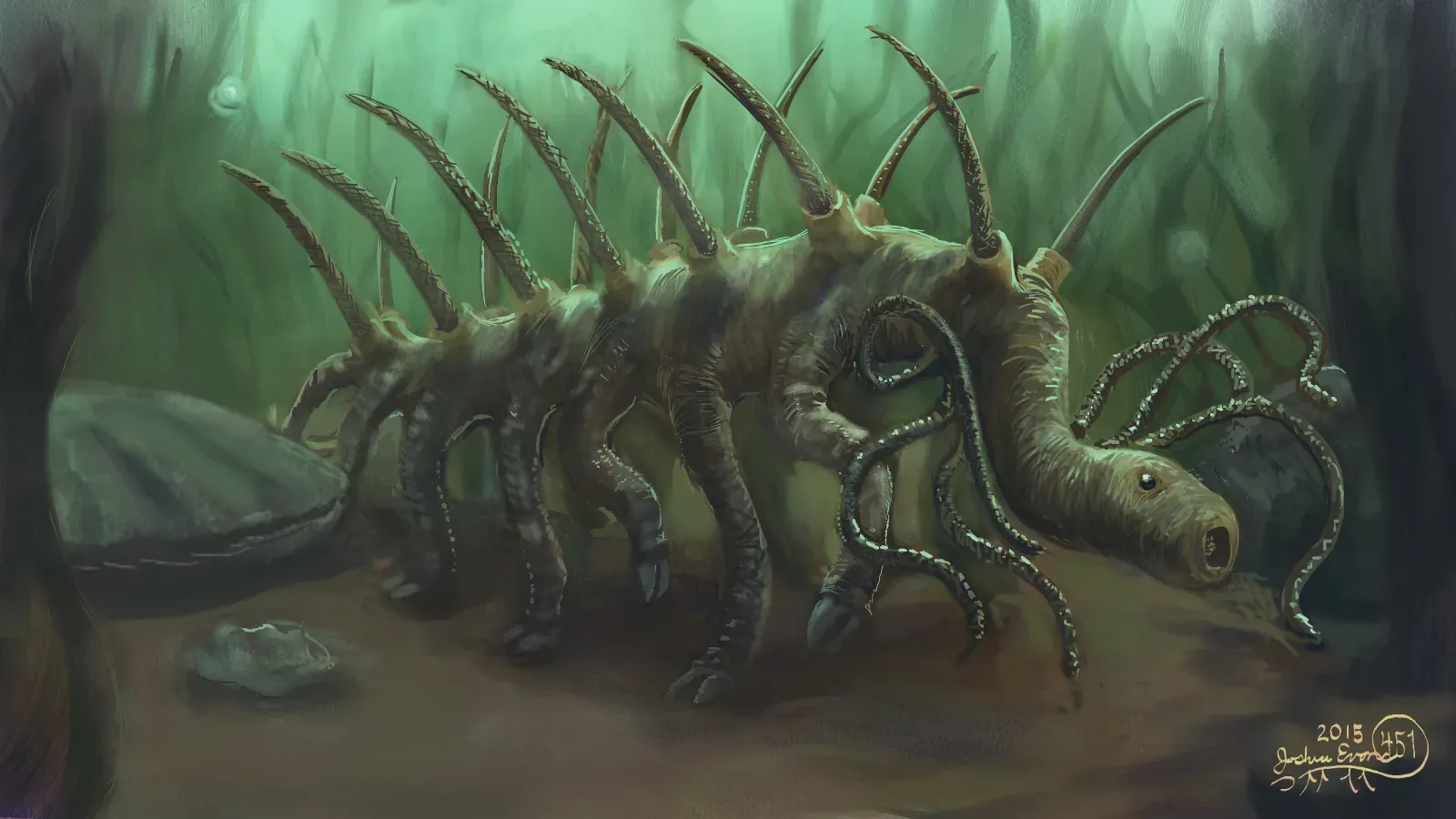
Few misidentifications are as spectacularly wrong as Hallucigenia, a bizarre worm-like Cambrian creature first described from Burgess Shale fossils in the 1970s.
Paleontologist Simon Conway Morris interpreted the fossil’s rigid spines as legs and its soft, flexible tentacles as some kind of strange feeding structure – meaning museums and textbooks displayed the animal completely inverted. It wasn’t until 1991, when better-preserved fossils turned up in China, that researchers realized Hallucigenia had been reconstructed upside down and backwards, and the tentacles were actually paired legs while the stiff spines probably protected the animal from predators. **For over a decade, the scientific record had this animal walking on what were actually defensive spikes, while its real legs were mistaken for a mouth apparatus.** It’s now understood as a lobopodian, likely an early ancestor of modern velvet worms – one of the strangest survivors of the Cambrian explosion. But #2 is even harder to believe, because it wasn’t one mistake. It was three.
#2 – Anomalocaris: The “Three Species” That Were Secretly One Giant Predator
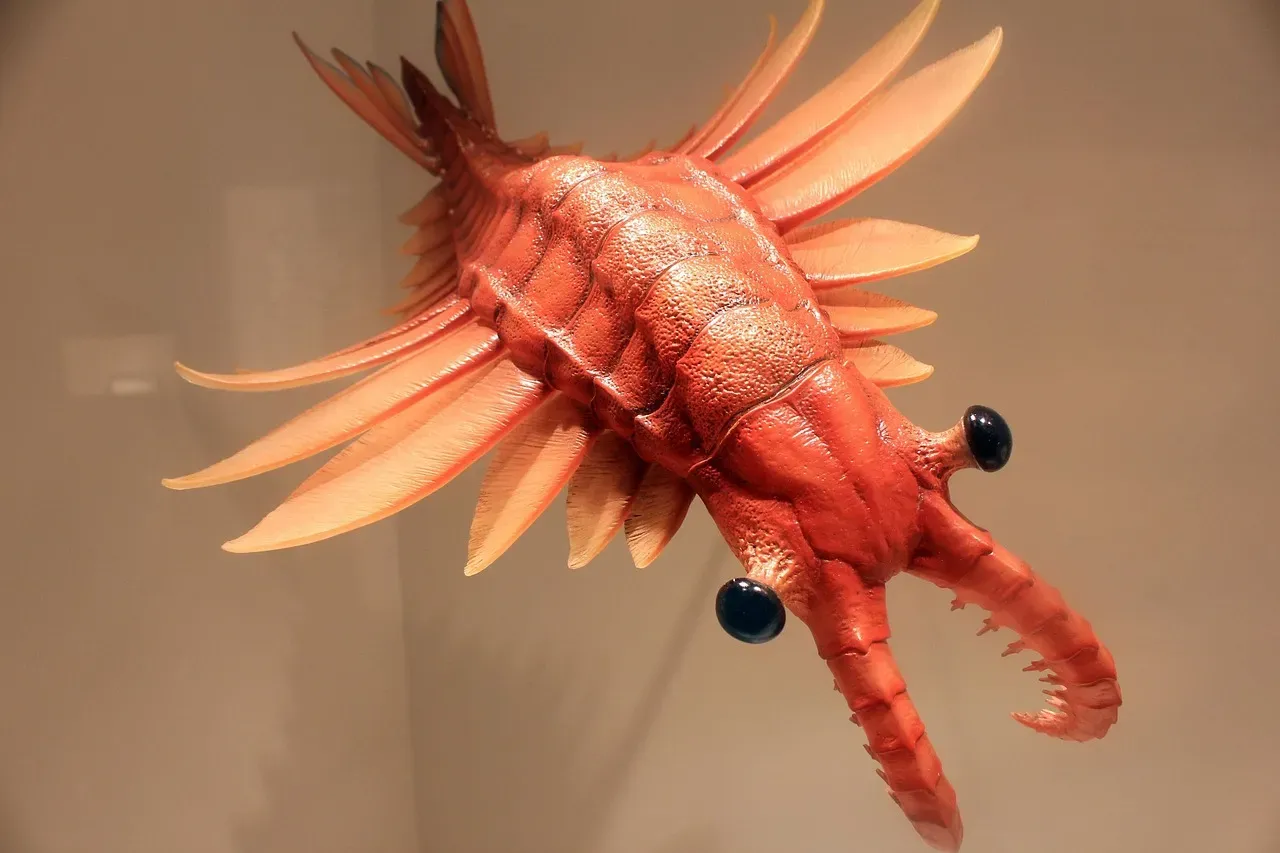
Before it became famous as one of the largest and most fearsome predators of the Cambrian period, Anomalocaris existed in scientific literature as three completely unrelated animals.
The mistake started in 1892, when a fossilized “arm” was described as the tail of a shrimp-like crustacean. Decades later, Charles Doolittle Walcott discovered a circular, ring-shaped fossil and, mistaking it for a completely different organism, placed it in the genus Peytoia as a jellyfish. A third fossil, the animal’s soft body, got classified as a type of sponge. **Paleontologists studied a jellyfish, a shrimp tail, and a sponge for nearly a century without realizing they were staring at pieces of the exact same enormous predator.** It wasn’t until 1985 that researchers corrected the misapprehension, revealing a swimming, meter-plus-long apex predator with grasping claws and a circular, tooth-lined mouth. Its Frankenstein origin story remains one of the most cited cautionary tales in paleontology classrooms. But #1 didn’t just get misidentified once – it went extinct scientifically, twice, before finally coming back to life.
Quick Compare
- Frontal appendage (named 1892) – originally classified as the tail of a shrimp-like crustacean.
- Circular mouth (named 1911, genus Peytoia) – originally classified as a free-floating jellyfish.
- Soft body (named 1928, genus Laggania) – originally classified as a type of sea sponge.
- Reality (confirmed 1985 by Harry Whittington and Derek Briggs) – all three were body parts of one giant Cambrian predator.
#1 – Brontosaurus: The Dinosaur That Went Extinct Twice
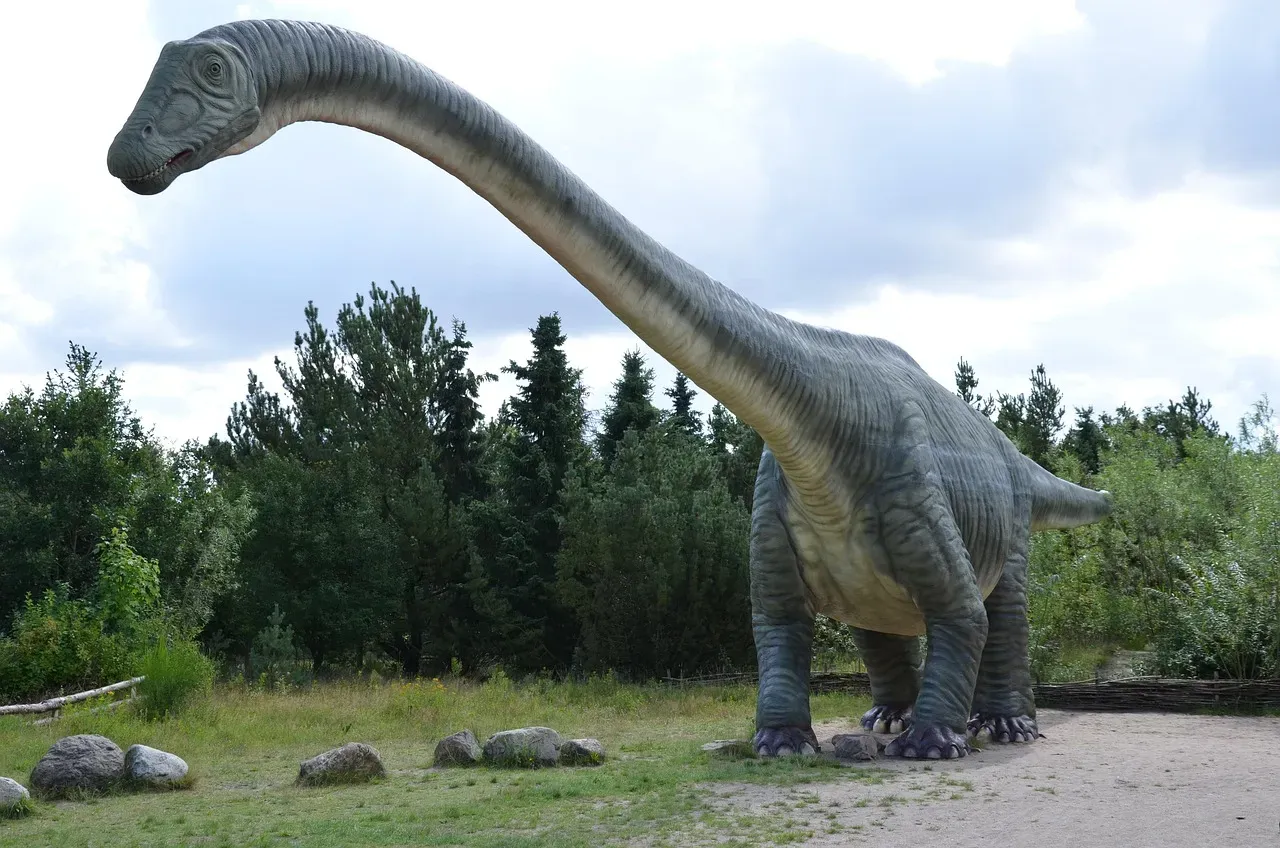
Brontosaurus might be the single most famous case of paleontological misidentification in history, and its saga spans over a century of scientific back-and-forth.
The trouble started because the original skeleton was found without a skull – in fact, neither the Brontosaurus nor the Apatosaurus were first discovered with their skulls, forcing scientists to guess. They gave it a stout, boxy head borrowed from Camarasaurus, an error that stuck for decades until researchers finally confirmed in the 1970s that it actually had a slim, horselike skull. Then, in 1903, scientists decided Brontosaurus wasn’t even its own genus – just an adult Apatosaurus – erasing the name from science for over a hundred years. **A 2015 study analyzing 477 physical traits across 81 skeletons reversed that decision entirely**, concluding Brontosaurus was different enough from Apatosaurus to merit its own genus after all. This dinosaur was wrong about its head, wrong about its own existence, and still became one of the most beloved names in science.
The Bottom Line
Here’s the uncomfortable truth this list keeps proving: paleontology isn’t a finished science – it’s a constantly revised one. Most of these “corrections” only happened because someone was willing to publicly admit the original identification was wrong, sometimes decades or even a century after the mistake was made.
Some debates, like Torosaurus versus Triceratops, still don’t have a clean answer, and honestly, that’s more honest than pretending certainty where none exists. If dinosaurs and Cambrian predators can be this misunderstood after 150 years of study, it’s worth wondering how many “settled” facts in museums today are still waiting for their own reversal. Which misidentification surprised you the most? Drop it in the comments.