
Walk into any major natural history museum and you probably assume you’re seeing the good stuff – the rare stuff, the stuff worth flying across the country for. You’re not even close.
Somewhere between 60 and 90 percent of a typical natural history collection never touches a display floor, and the animals that do make it into a case can vanish again without so much as a placard explaining where they went. Visitors shrug it off as “rotating exhibits” and keep walking.
Curators know it’s rarely that simple. Specimens get pulled for reasons ranging from decomposing pigment to outdated science to genuinely uncomfortable questions about how the animal ended up in a glass case at all. Here’s what conservators, historians, and museum insiders actually say about the extinct animals that quietly disappeared from public view – and why nobody wanted to put it on a wall plaque.
#13 – The Quagga That Was Too Fragile to Keep Under Lights
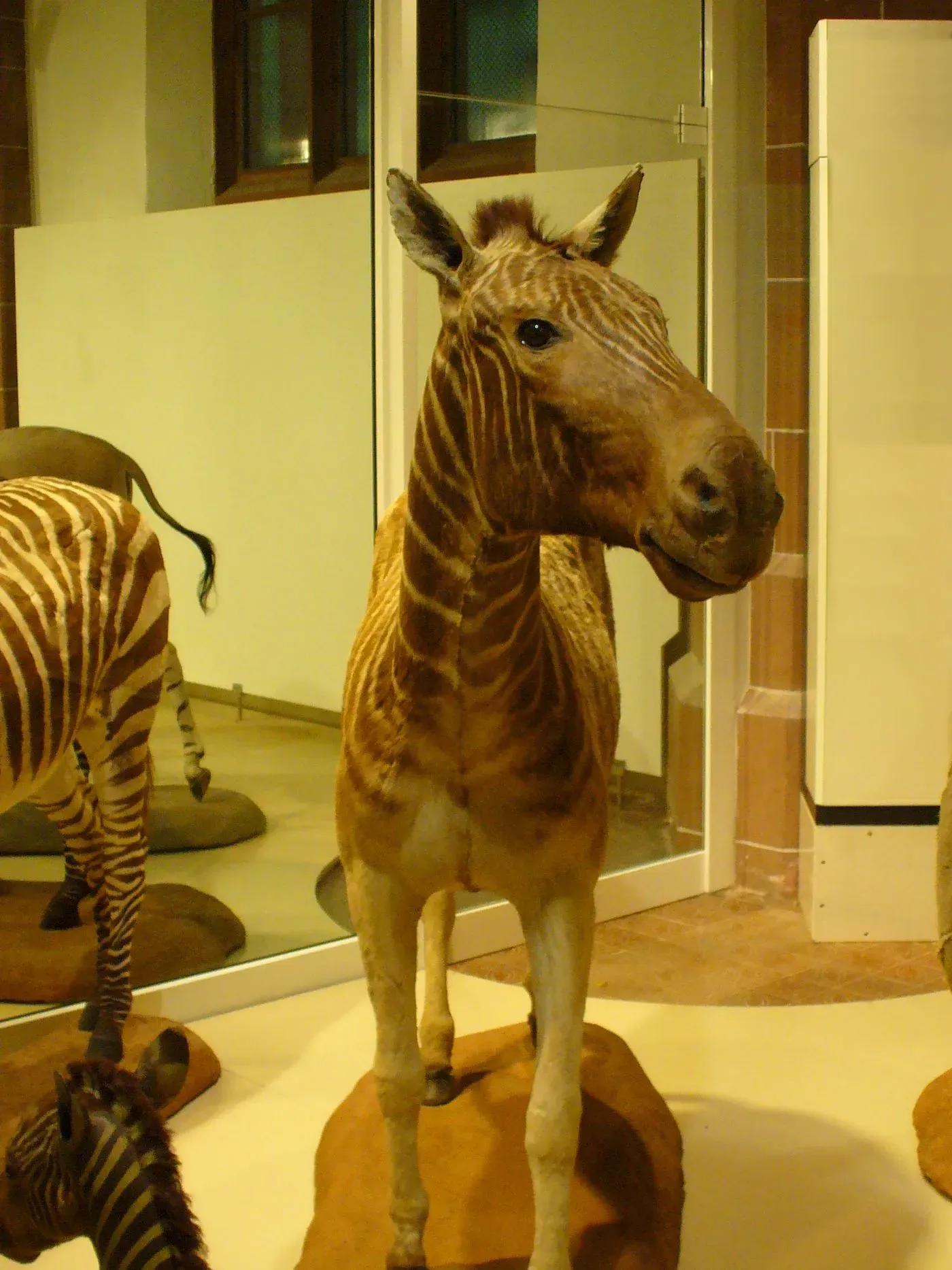
The quagga, a half-striped relative of the zebra that vanished from the wild in the 1870s, is one of the rarest taxidermy mounts on Earth – only a handful survive worldwide, and every one of them is irreplaceable. There is no living quagga tissue left anywhere to make a new mount if an old one fails, which means each existing specimen carries the entire weight of public memory for the species.
That scarcity is exactly why so many quagga mounts have quietly retreated into climate-controlled storage instead of gallery floors. Continuous light exposure fades hide pigment and dries out old tanning agents until the skin becomes brittle, and once that happens, the damage can’t be undone. Museums holding a quagga mount often display it for a limited season, then rotate it out indefinitely rather than risk the last physical evidence of the species crumbling under gallery lighting.
#12 – The Great Auk Specimens Museums Won’t Risk Under Glass
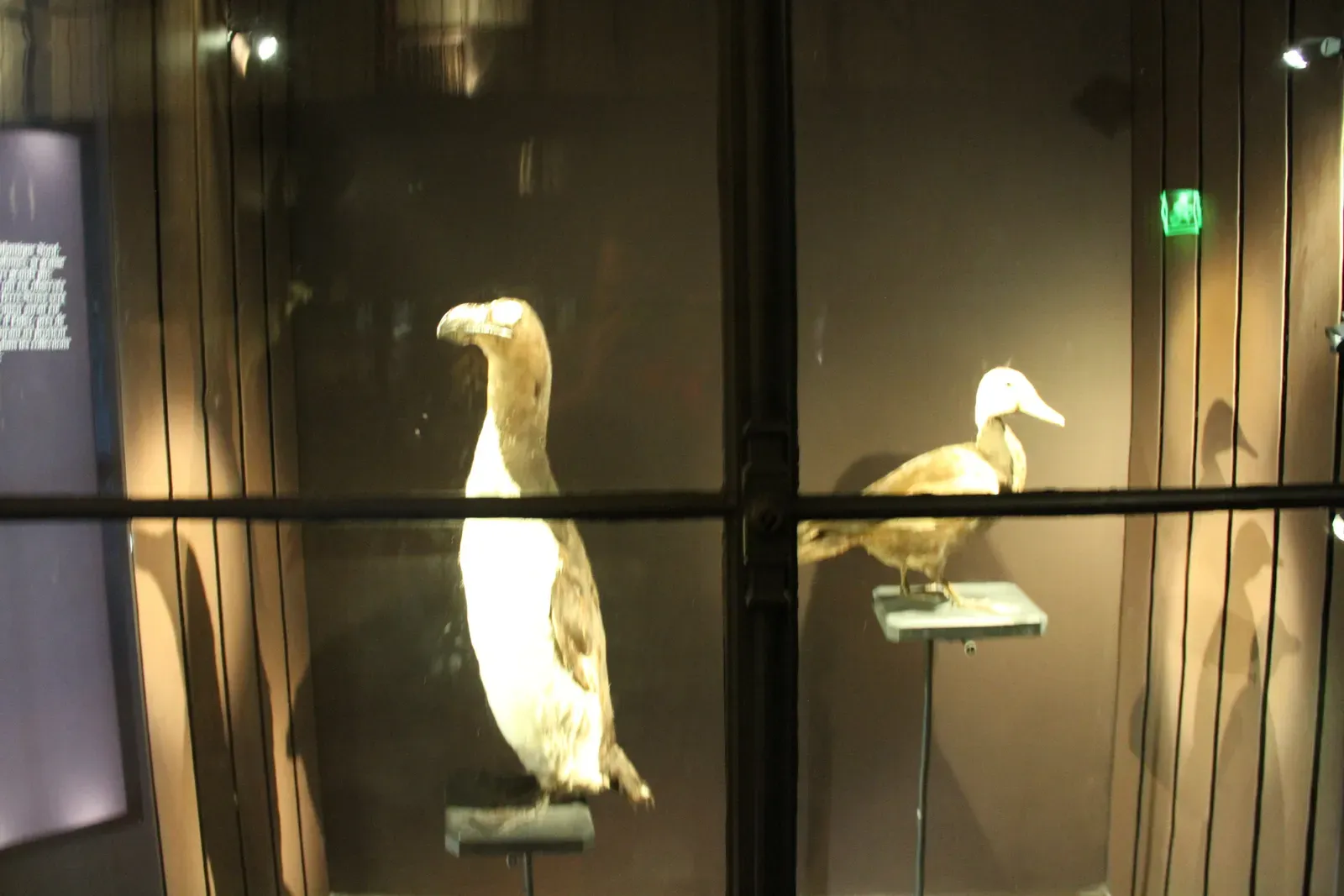
The Great Auk, a flightless North Atlantic seabird hunted into oblivion for its feathers, eggs, and oil, went extinct in 1844 – and what little remains of it today is almost entirely locked away rather than shown to the public. Fewer than 80 skins and roughly 75 eggs survive in collections worldwide, which turns every single specimen into a genuine rarity instead of a routine museum object.
What most visitors don’t realize is that surviving Great Auk specimens are so scarce and so scientifically valuable that institutions treat them almost like archival documents rather than exhibition pieces. Taxidermy from that era is especially vulnerable to pests, light, temperature swings, and humidity, and improper display accelerates decay that can never be reversed. For a species with essentially zero replacement specimens left on the planet, that risk calculus almost always favors the vault over the gallery.
#11 – The Carolina Parakeet Colors That Faded Right Off the Bird
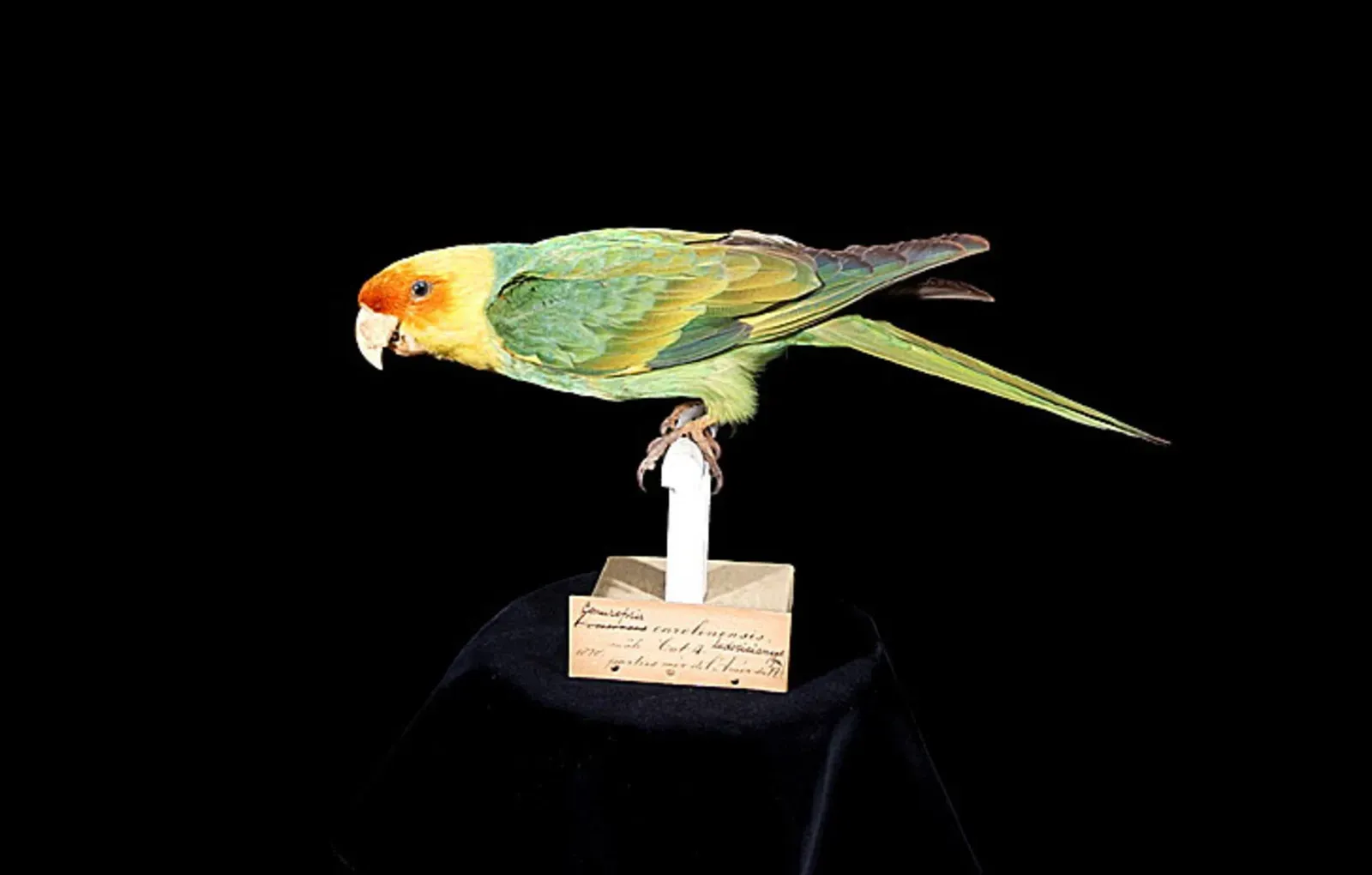
North America’s only native parrot species, the Carolina Parakeet, went extinct in 1918, and the specimens that survived it are now facing a slower, second extinction – one of color. Their once-vivid green and yellow plumage bleaches out under sustained gallery lighting, turning a scientifically vital bird into a dull, unrecognizable shadow of what it actually looked like alive.
Once curators noticed the fading, many made the call to pull mounts from permanent display and keep them in dark, humidity-controlled drawers instead, bringing them out only for limited research access or short-term exhibits. This isn’t unique to the parakeet – it’s part of a broader pattern across collections, where light, pests, temperature, and humidity quietly erode taxidermy that can never be re-collected. For a bird with no surviving population left to replace it, protecting the pigment matters more than keeping the case full.
Fast Facts
- Extinct by 1918, with the last known captive bird dying that year
- Only parrot species that was ever native to the continental United States
- Vivid green-and-yellow plumage degrades rapidly under continuous gallery lighting
- Most surviving mounts now live in dark, humidity-controlled storage instead of display cases
#10 – Steller’s Sea Cow, the Giant Museums Can Never Actually Mount
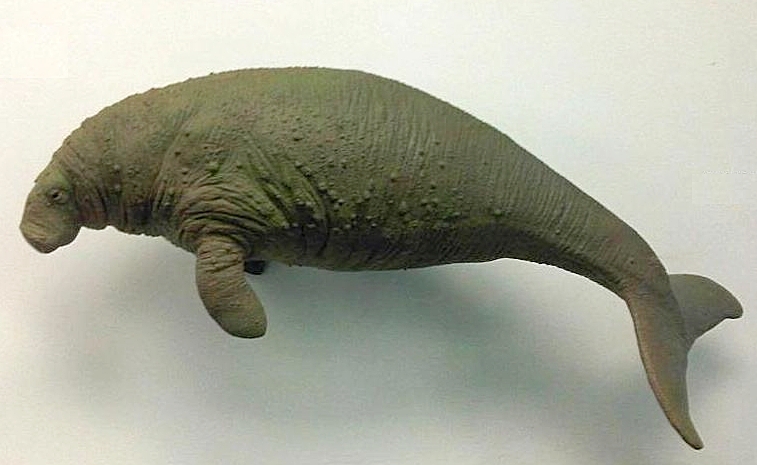
Steller’s sea cow, a slow-moving, walrus-sized marine mammal related to manatees, was discovered by European science in 1741 and hunted into extinction just 27 years later – a window so short that no soft-tissue specimen was ever properly preserved. Every museum “display” of this animal is either a skeleton, a model, or a life-sized reconstruction, because there has never been a genuine taxidermy mount of the species in existence.
That absence creates an odd problem for exhibit designers: how do you display an animal wiped out before science could properly document its soft tissue? Many institutions solved this decades ago with painted plaster models built from incomplete sailor accounts, and as those old reconstructions were quietly recognized as speculative rather than accurate, several were pulled from permanent halls without much public explanation. The animal that vanished almost as fast as it was discovered left almost nothing behind to display honestly.
#9 – The Xerces Blue Butterfly Too Delicate to Ever Sit Under Glass Long-Term
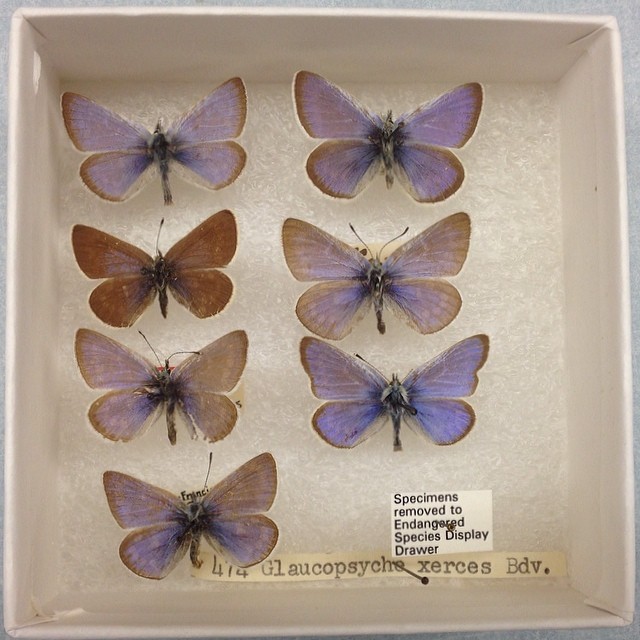
The Xerces Blue was the first American butterfly species officially declared extinct due to urban development, vanishing from San Francisco’s coastal dunes by the early 1940s. Insects like this one present a preservation nightmare most visitors never think about, because pinned specimens are among the most fragile objects any museum owns.
Conservators are blunt about why: certain insects, delicate deep-sea creatures, and other small, complex organisms are too fragile or decompose too quickly to be preserved lifelike for long-term display. Even pinned and boxed, wing scales shed with vibration and light exposure over decades, meaning a specimen displayed continuously for fifty years can look meaningfully worse than one kept in dark storage. Many collections holding original Xerces Blue specimens now show them only in rotating, short-term cases, precisely because every display cycle costs the specimen a measurable amount of detail.
#8 – The Labrador Duck Nobody Photographed While It Was Still Alive
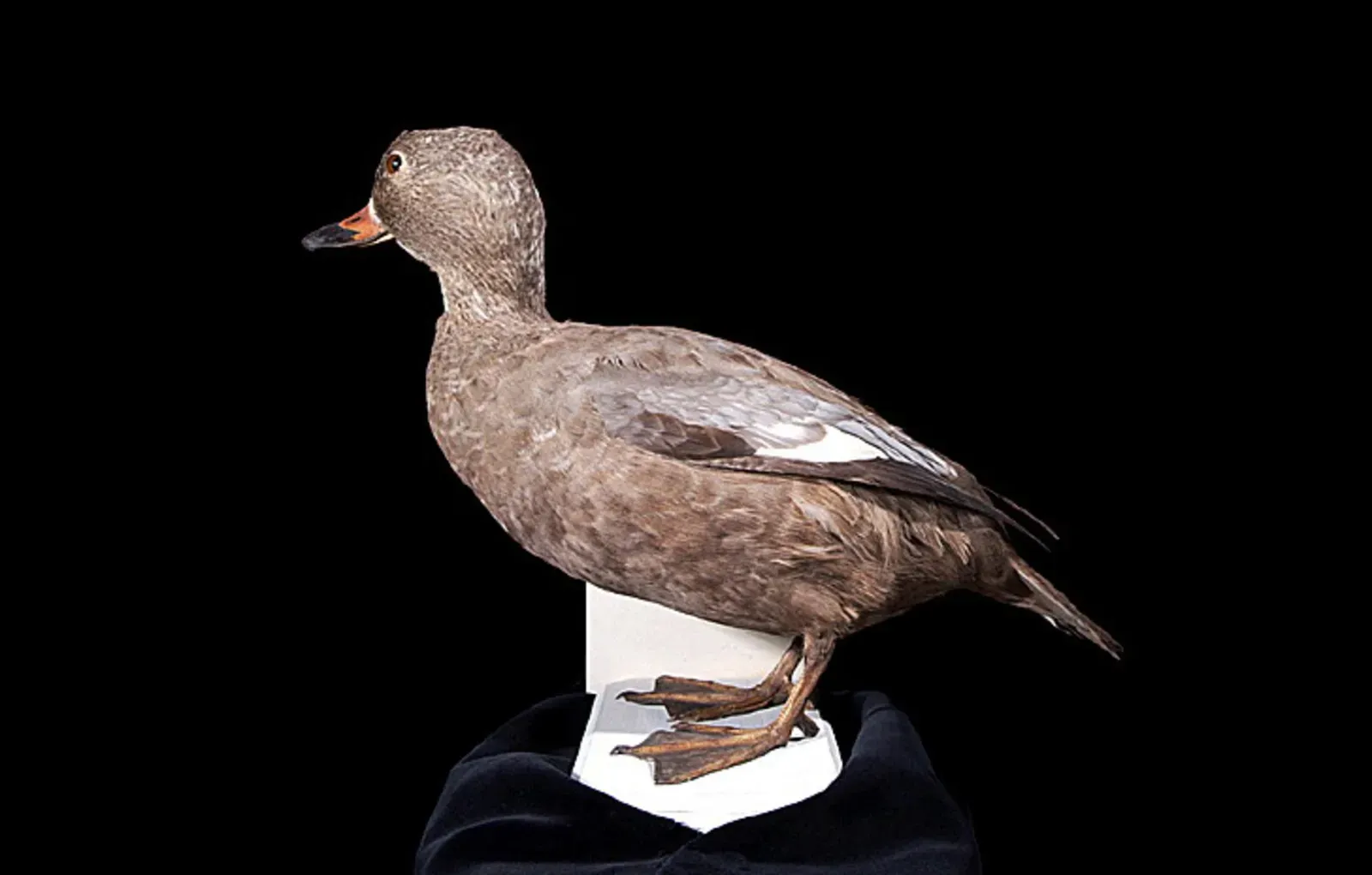
The Labrador Duck disappeared around 1878, and unlike more famous extinctions, it vanished so quietly that scientists still aren’t entirely sure why it declined – no verified photograph of a living one exists, and fewer than 60 specimens survive in collections worldwide. That scarcity alone makes every existing mount effectively priceless, and priceless objects tend to get locked away rather than shown daily.
Because so few specimens exist, and because each one carries irreplaceable genetic and morphological data, many institutions treat their Labrador Duck mounts more like rare manuscripts than exhibit pieces – accessible to researchers, but rarely rotated onto public floors. This mirrors a broader shift across natural history collections, where the rarest extinction-era specimens are increasingly reserved for study rather than spectacle. Visitors who grew up seeing one on a childhood museum trip may search for it today and simply find an empty case.
#7 – The Caribbean Monk Seal That Vanished Without Anyone Noticing
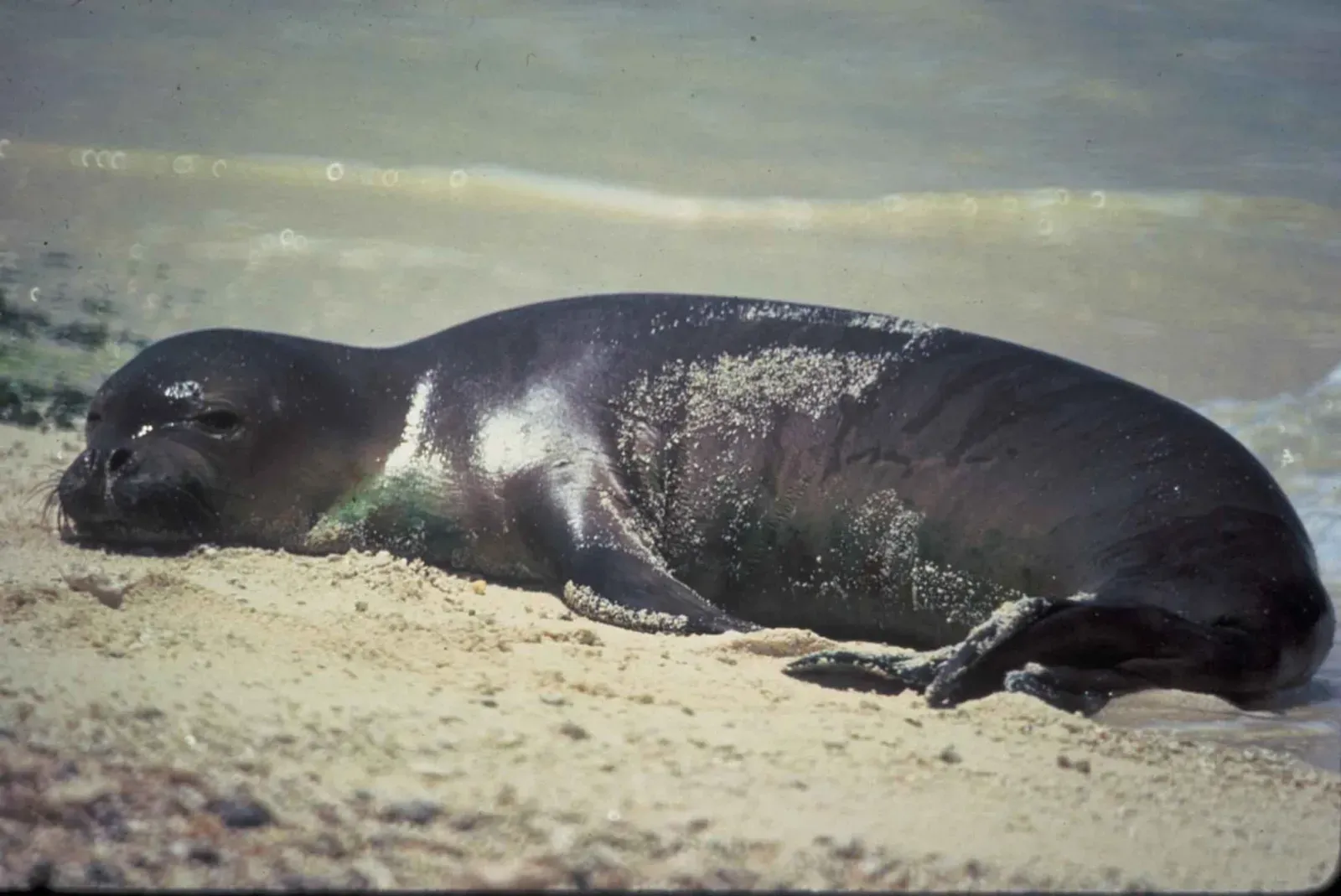
The Caribbean Monk Seal was the only seal species native to the Gulf of Mexico and Caribbean, and it disappeared so gradually that its extinction wasn’t formally confirmed for decades after the last confirmed sighting in the mid-20th century. Specimens collected before that point remain some of the only physical evidence the species ever existed at all.
What’s striking is how deliberately institutions now keep that evidence out of daily view. Because the species no longer exists anywhere in the wild, museum specimens are the only physical way to answer new scientific questions about it – which is exactly why curators guard them rather than parade them. The animal is essentially being protected from the public even in death, treated as a scientific archive rather than an exhibit, a curatorial choice that says more about ongoing extinction anxiety than any wall text ever could.
#6 – The Golden Toad That Decayed Before Anyone Could Preserve It Properly
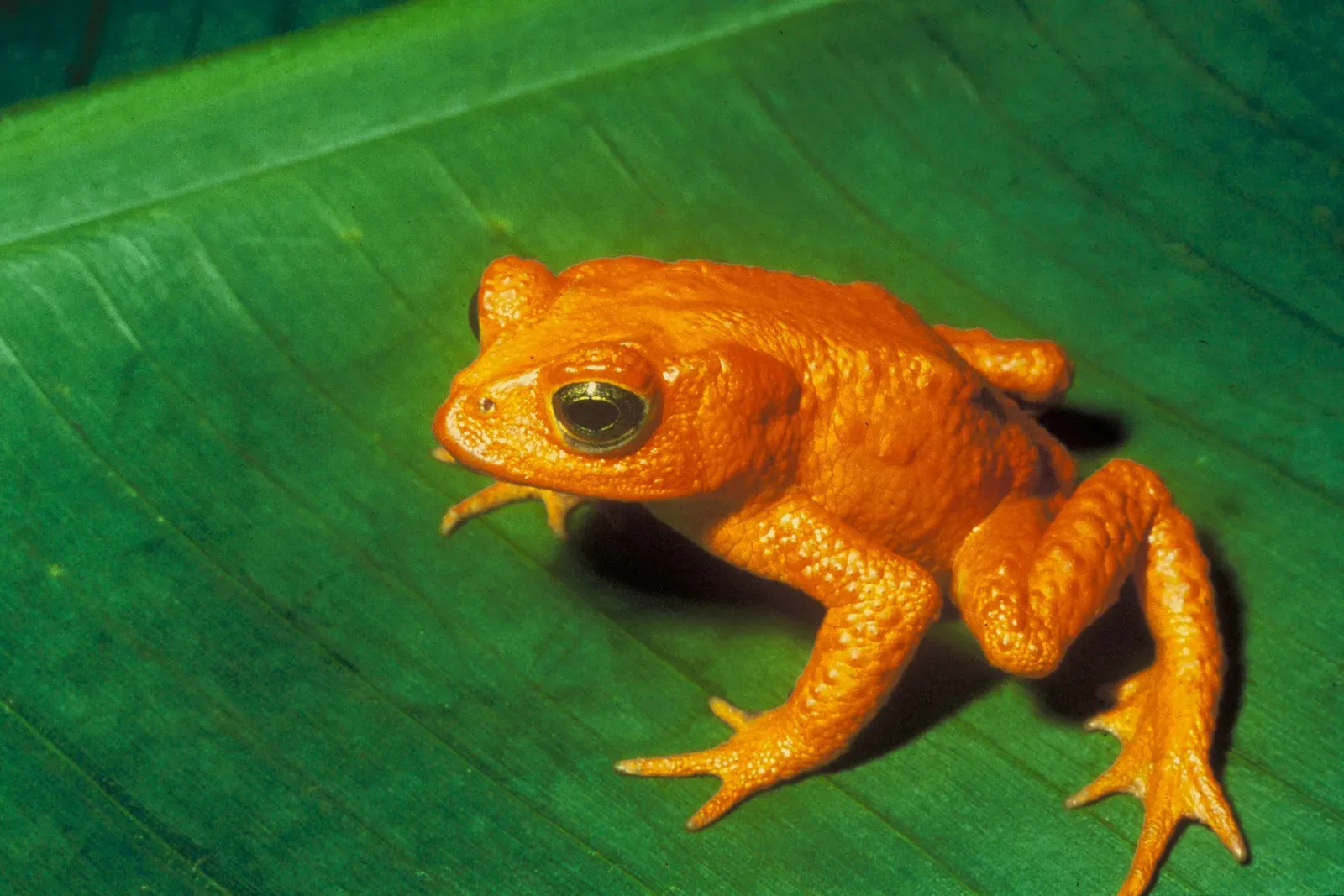
Costa Rica’s Golden Toad was last seen in 1989, and its disappearance became one of the earliest, most cited casualties of climate-linked amphibian decline – yet almost no museum anywhere has a lifelike mount of one on permanent display. Amphibian skin simply doesn’t preserve the way fur or feathers do, shriveling and discoloring almost immediately after death unless specimens are fixed in fluid rather than mounted dry.
That biological reality means most surviving Golden Toad evidence exists as preserved wet specimens in jars, kept in research collections rather than in galleries where lighting and humidity swings would destroy them within years. Museums that do want to represent the species to the public typically fall back on photographs, illustrations, or resin models instead of the real animal – a workaround increasingly used across natural history exhibits when the genuine article isn’t practical or ethical to display.
Worth Knowing
- Last confirmed sighting: 1989, in Costa Rica’s Monteverde Cloud Forest
- Frequently cited as one of the earliest documented climate-linked amphibian extinctions
- Amphibian skin degrades almost immediately unless preserved in fluid rather than mounted dry
- Most public-facing representations rely on photos, illustrations, or resin models instead of real tissue
#5 – The Heath Hen That Outlived Its Own Exhibit Case
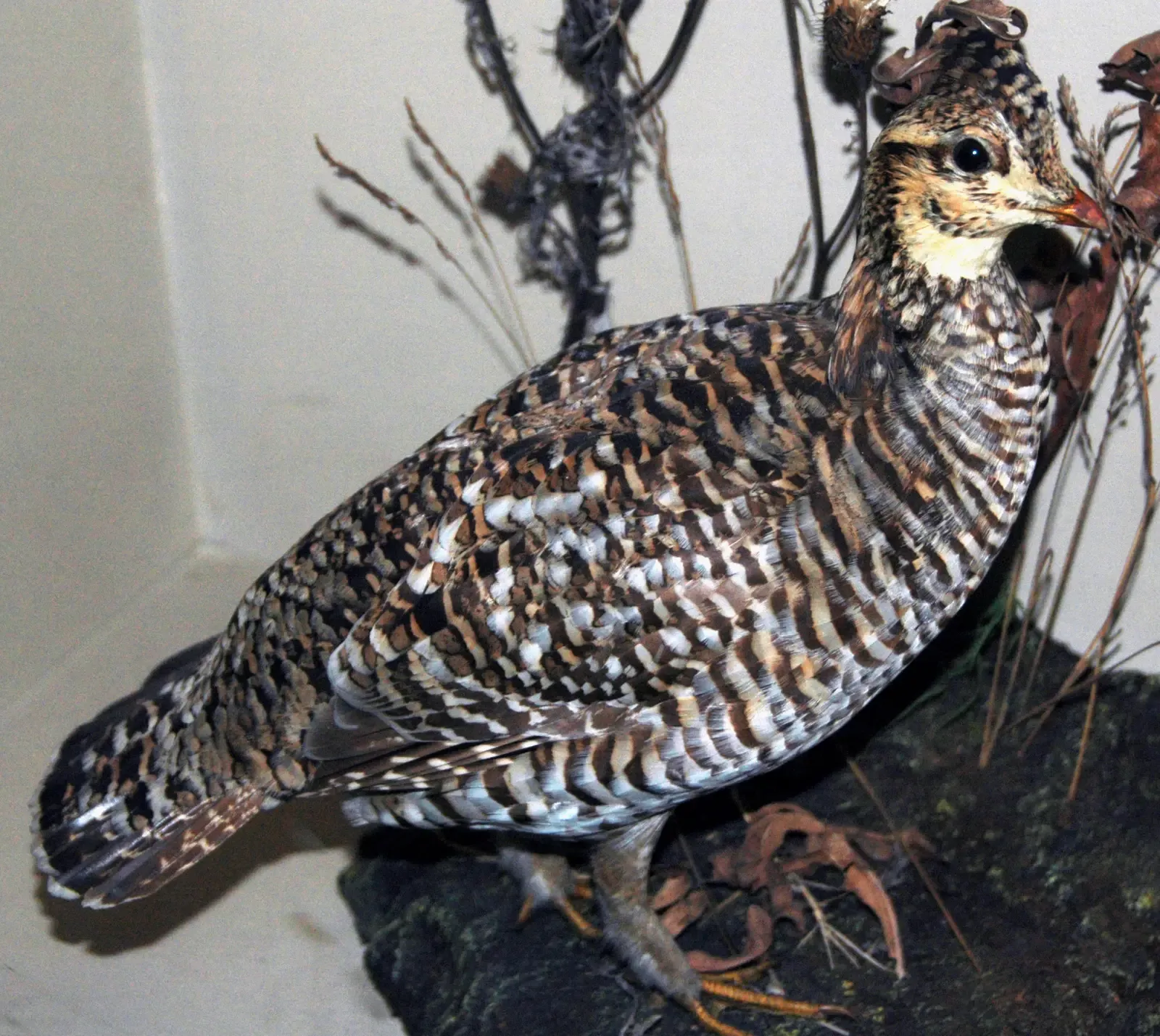
The Heath Hen, a grassland relative of the prairie chicken once so common across the eastern United States that it was treated as a cheap, unremarkable food source, was hunted to extinction by 1932 – and for decades afterward, its mounted specimens were treated as prized centerpieces in taxidermy collections.
What changed is the venue, not the interest. Rather than sitting in permanent natural history halls, many surviving Heath Hen mounts now surface mainly in specialty and traveling taxidermy exhibitions rather than mainstream museum floors. The bird that was once so common it was considered a nuisance is now rare enough that seeing one requires seeking out a niche show, not a standard science museum visit. That quiet migration from permanent galleries to specialty circuits says a lot about how extinction stories get deprioritized once the initial shock fades.
#4 – The Irish Elk Skeleton That Got Recontextualized, Not Removed
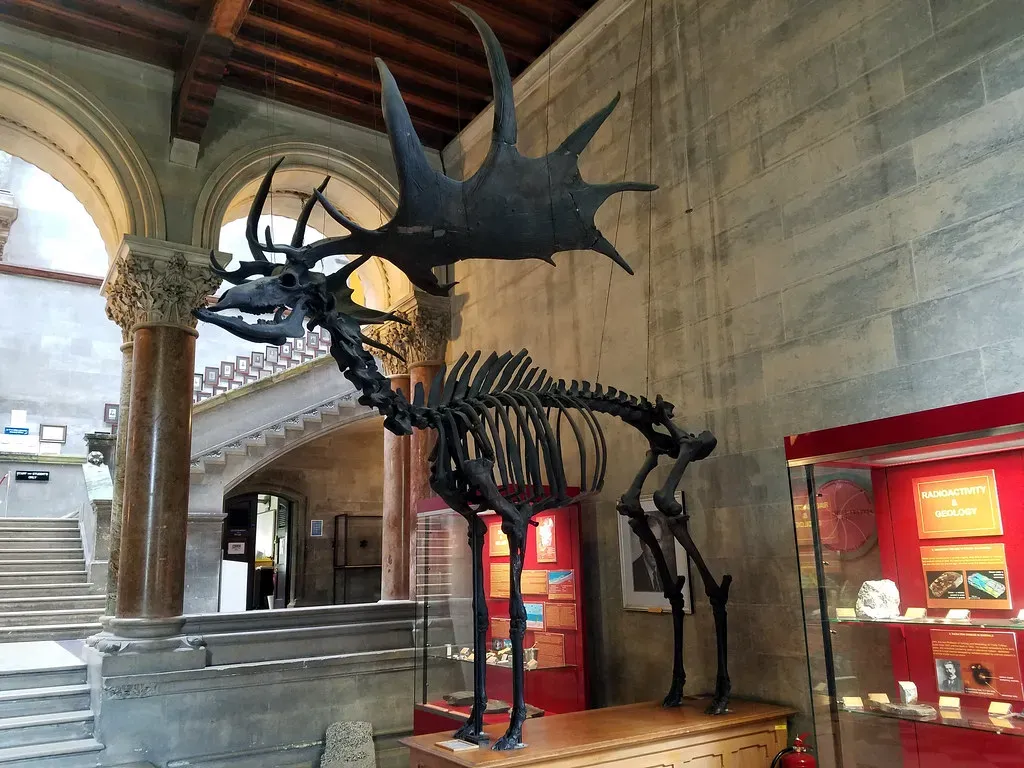
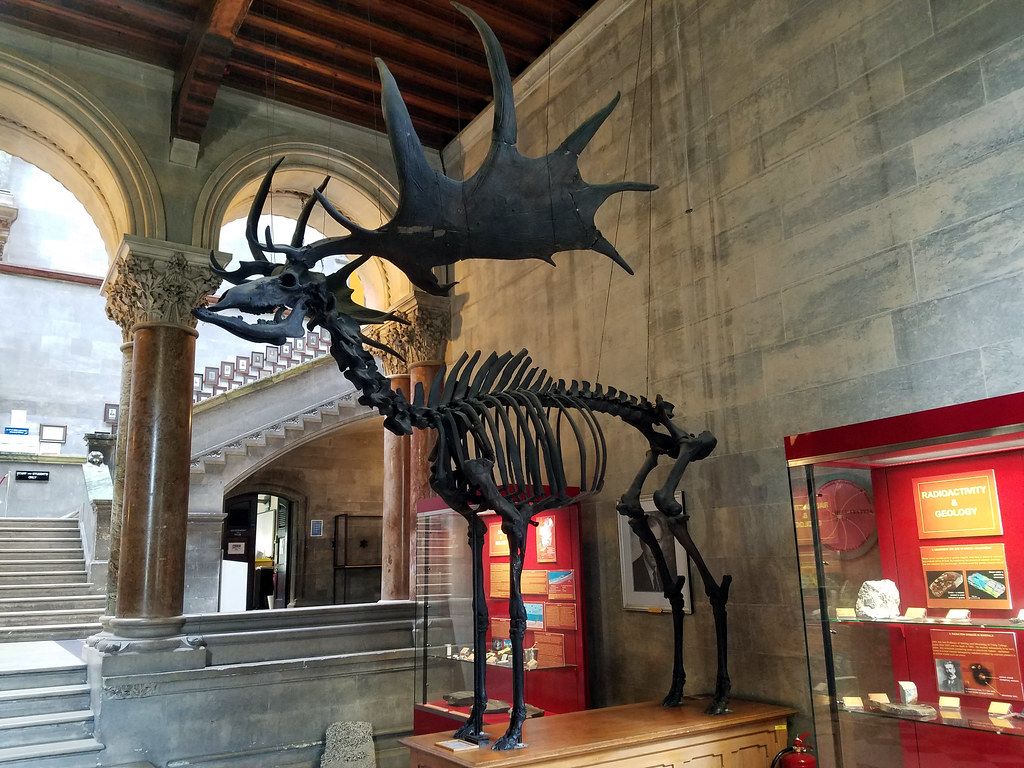
The so-called Irish Elk – actually a giant deer that went extinct roughly 7,700 years ago – was displayed for over a century as evidence for an outdated evolutionary theory suggesting the species antlered itself into extinction through unstoppable, runaway growth. That explanation has been scientifically abandoned, yet the antler-driven-doom mount remained a museum showpiece for generations after biologists moved on.
As paleontology corrected course, many institutions holding these massive skeletons quietly reworked their signage or shifted the mounts out of central sightlines rather than confront visitors with a headline theory scientists no longer believe. This reflects a documented pattern across paleontological displays, where approaches that once reflected the science of their time have since been dismantled or reconfigured as knowledge advanced. The elk didn’t disappear from museums – the wrong story about it did.
#3 – The Bone Wars Dinosaur Mounts Museums Had to Quietly Take Apart
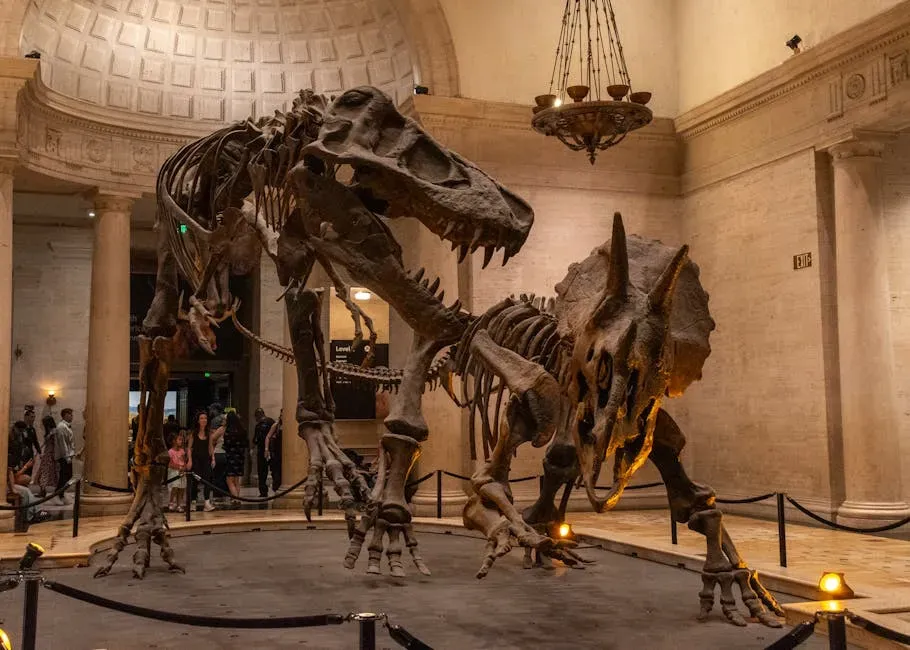
During the notorious 19th-century “Bone Wars,” rival paleontologists Edward Drinker Cope and Othniel Charles Marsh raced to describe new species faster than each other, and speed came at the cost of accuracy. Some of their early mounted skeletons contained real errors – bones from different individuals combined, joints positioned in ways no living animal could achieve.
Nobody hung a sign admitting the skeleton in the lobby was scientifically incorrect. For decades, generations of visitors walked past mounts that were, quite literally, put together wrong. Instead, as understanding improved, many of these flawed skeletons were dismantled or rebuilt behind the scenes and reintroduced later with corrected posture, using tools unavailable to the original builders. Today’s museums even use 3D printing to recreate missing bones with precise replicas based on complete specimens of closely related species.
Quick Compare
- 19th-century mounts: assembled quickly, sometimes mixing bones from different individuals
- Modern reconstructions: built using 3D-printed replicas based on complete related specimens
- Old approach: prioritized speed and public spectacle over anatomical accuracy
- Current approach: corrected posture and anatomy, reintroduced quietly after research
#2 – Martha the Passenger Pigeon, Kept Alive in Memory But Rarely on Tour
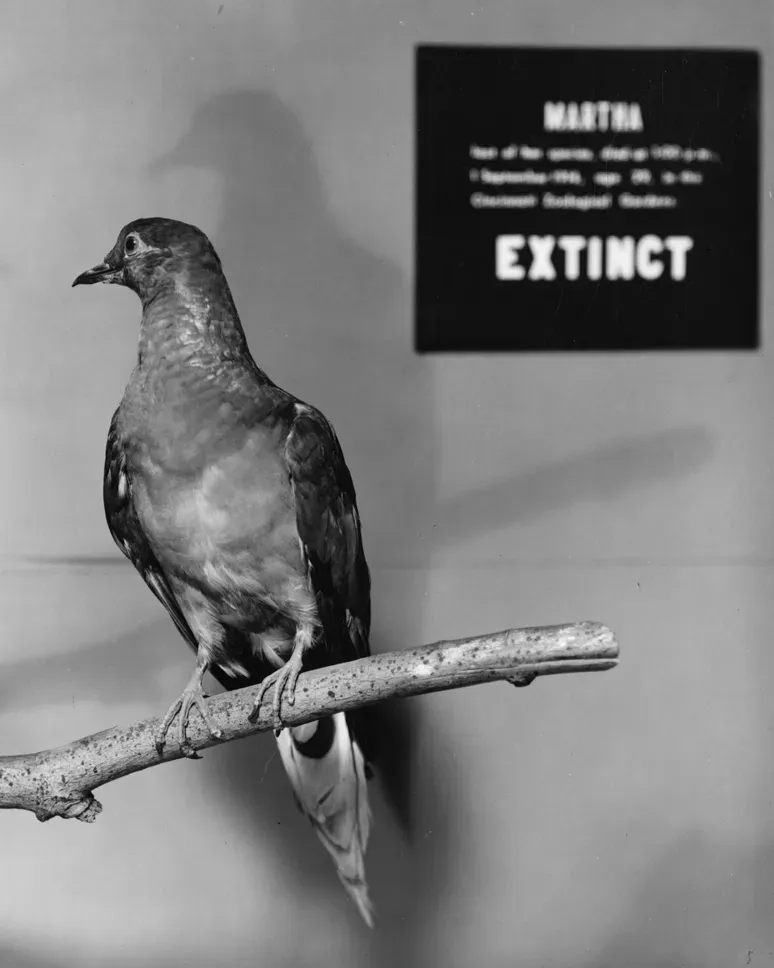
Passenger pigeons once flew in flocks so massive they blotted out the sun over entire American cities, and then the species went extinct within a single human generation. Martha, the very last known passenger pigeon, died in captivity in 1914, and her preserved body – now housed at the Smithsonian’s National Museum of Natural History – became arguably the single most symbolically loaded taxidermy specimen in American science.
Despite that symbolic weight, or maybe because of it, Martha has spent long stretches of her post-mortem existence off permanent public view, brought out for centennial anniversaries and special extinction-themed exhibits rather than kept under glass year-round. The most famous extinct bird in American history isn’t a daily attraction – she’s an occasional event. That pattern reflects a broader institutional instinct: the more scientifically and emotionally significant a specimen is, the more sparingly museums tend to expose it to the wear of continuous display.
#1 – The Dodo Skeleton That Doesn’t Actually Exist Anywhere on Earth
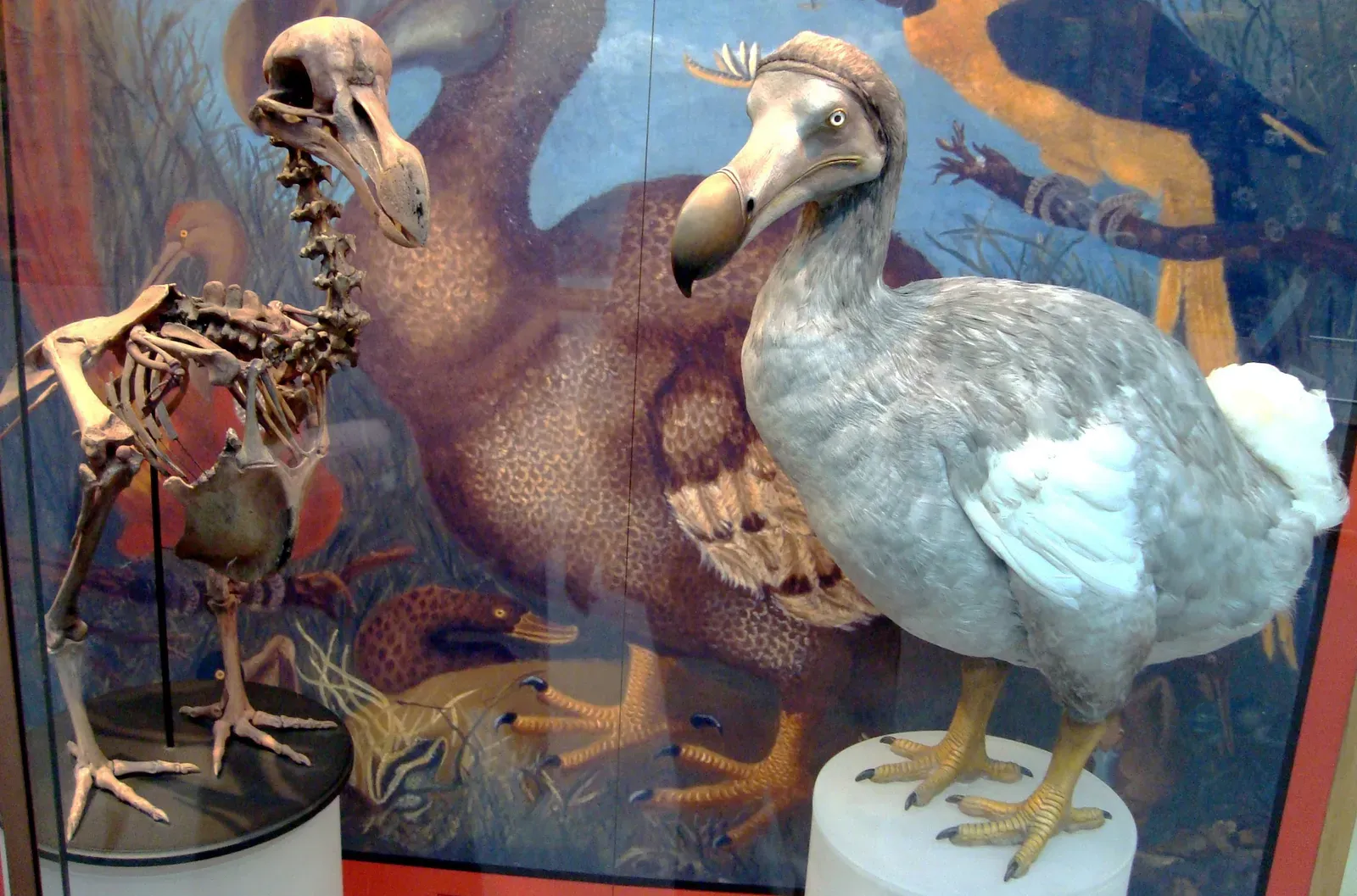
Here’s the fact that stuns almost every visitor who hears it: there is no complete, single-skeleton dodo specimen anywhere in the world. The bird went extinct by the late 1600s, before scientific collection practices existed to properly preserve one, and virtually every dodo skeleton on public display today is either a composite built from multiple bones or an outright model.
The bird everyone assumes they’ve seen a real skeleton of is, in almost every museum on the planet, an educated guess made of plaster, resin, and mismatched bones. A recent scholarly look at how institutions display extinction pointed out that while it’s no longer possible to encounter a dodo in the wild, we can still come face-to-face with it in museums, where the remains of extinct species – taxidermied, skeletal, drawn, or sculpted – stare back at us from display cases. Most museums don’t put that distinction on the placard, and most visitors never think to ask.
The Bottom Line
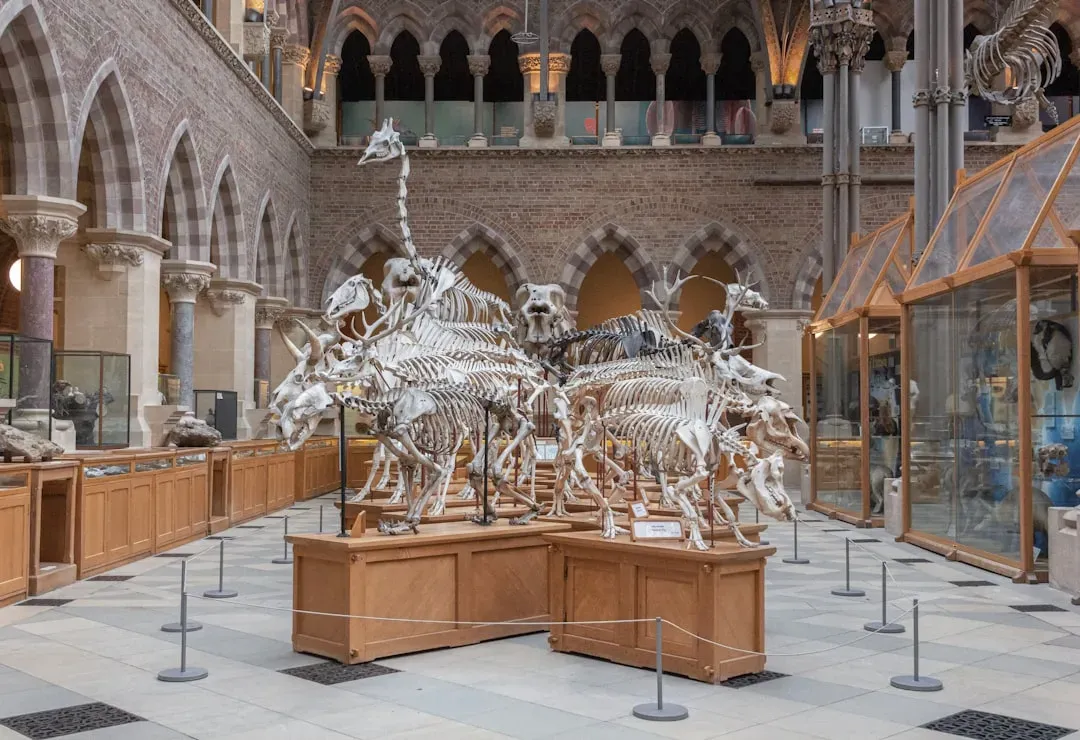
The pattern across all 13 of these cases isn’t secrecy for secrecy’s sake. It’s a mix of fading pigment, fragile tissue, outdated science, and institutions quietly protecting irreplaceable evidence from the wear of daily display.
At a Glance
- Most natural history museums display only a small fraction of their total holdings at any given time
- Fragile taxidermy, faded pigment, and outdated science are the most common reasons specimens get pulled
- Several “extinct animal” mounts on display today are partial reconstructions, not complete original specimens
- Rare specimens are increasingly treated as research archives rather than permanent exhibits
But that doesn’t make the silence acceptable. Museums owe visitors an actual explanation when a beloved extinct-animal exhibit disappears, not an empty case and a shrug. At a moment when extinction rates are accelerating worldwide, hiding these stories in storage rooms feels like exactly the wrong instinct.
The public should be seeing more extinction evidence, not less – and with the real story attached, not a blank wall where a quagga, a Great Auk, or a Heath Hen used to stand.