
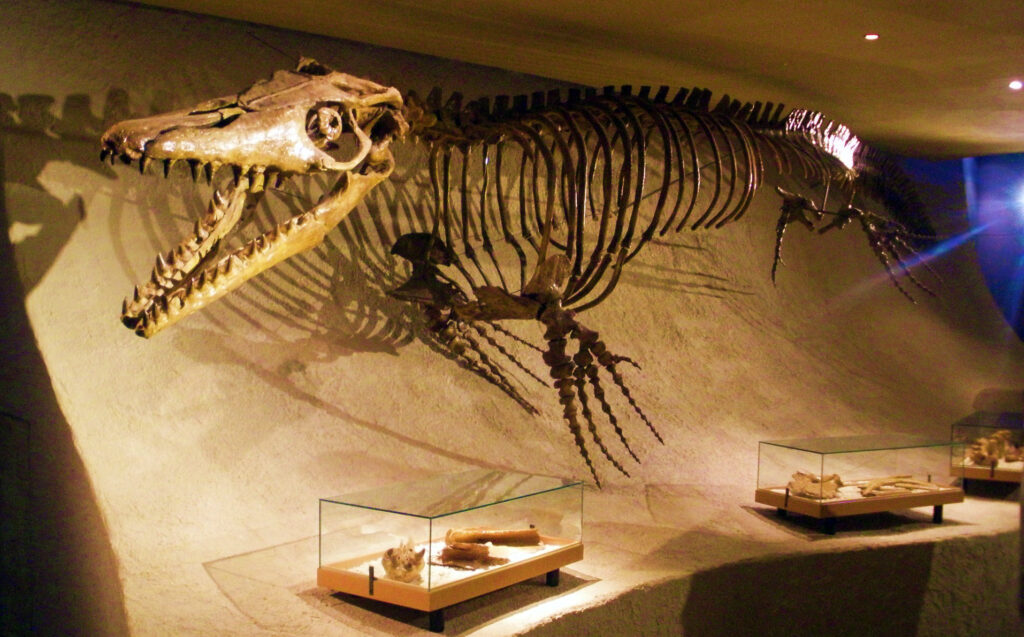
You’ve probably stood under a towering dinosaur skeleton at some point in your life, neck craned back, fully trusting that what you were looking at was frozen, literal truth. Bones don’t lie, right? Except a huge number of the most famous fossils on Earth were never quite telling the truth in the first place.
Heads got swapped onto the wrong bodies. Thumbs became horns. Tails dragged on museum floors for a century when they should have been floating in the air. Some of these mistakes are almost funny once you know them – and once you do, you’ll never look at a museum hall the same way again. Here are 20 fossils that experts have quietly, and sometimes not so quietly, admitted were put together wrong.
#1 – The First Iguanodon: The Spike That Belonged on Its Thumb
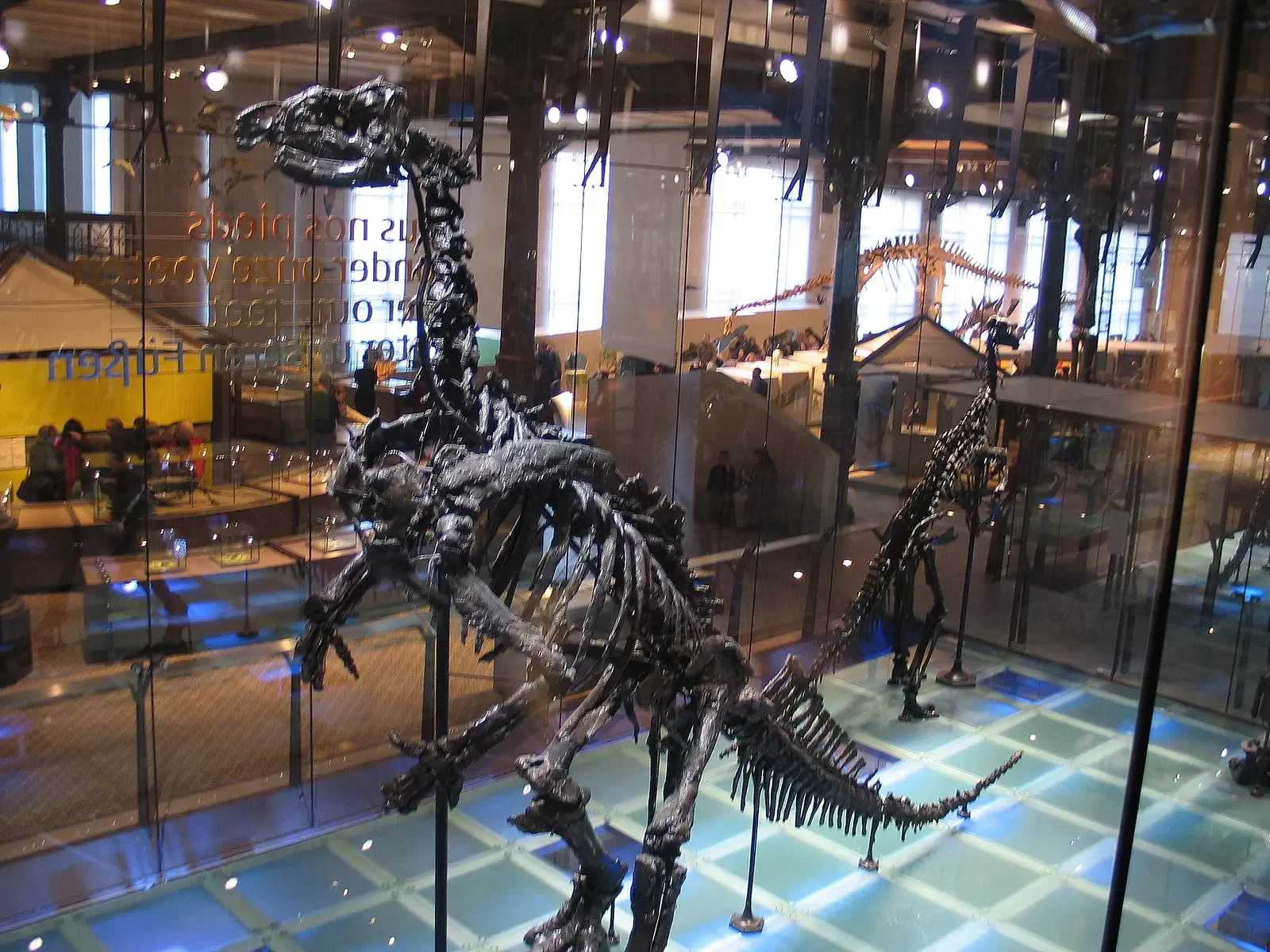
For decades, the iconic Iguanodon at Crystal Palace in London strutted around with a giant horn jutting proudly from its nose. Early 1800s scientists took one look at the strange spike-shaped bone and assumed it belonged on the face, like a rhino’s horn. It made for a dramatic statue. It was also completely wrong.
Better skeletons later revealed the embarrassing truth: that “horn” was actually a thumb spike, likely used for defense or display, sitting on a sturdy hand rather than a snout. Modern reconstructions show Iguanodon standing more horizontally, thumb spikes pointed outward, not sprouting from its skull. Thousands of illustrations, toys, and public statues were built around a face that never existed.
#2 – Brontosaurus: The “Thunder Lizard” Built on the Wrong Head
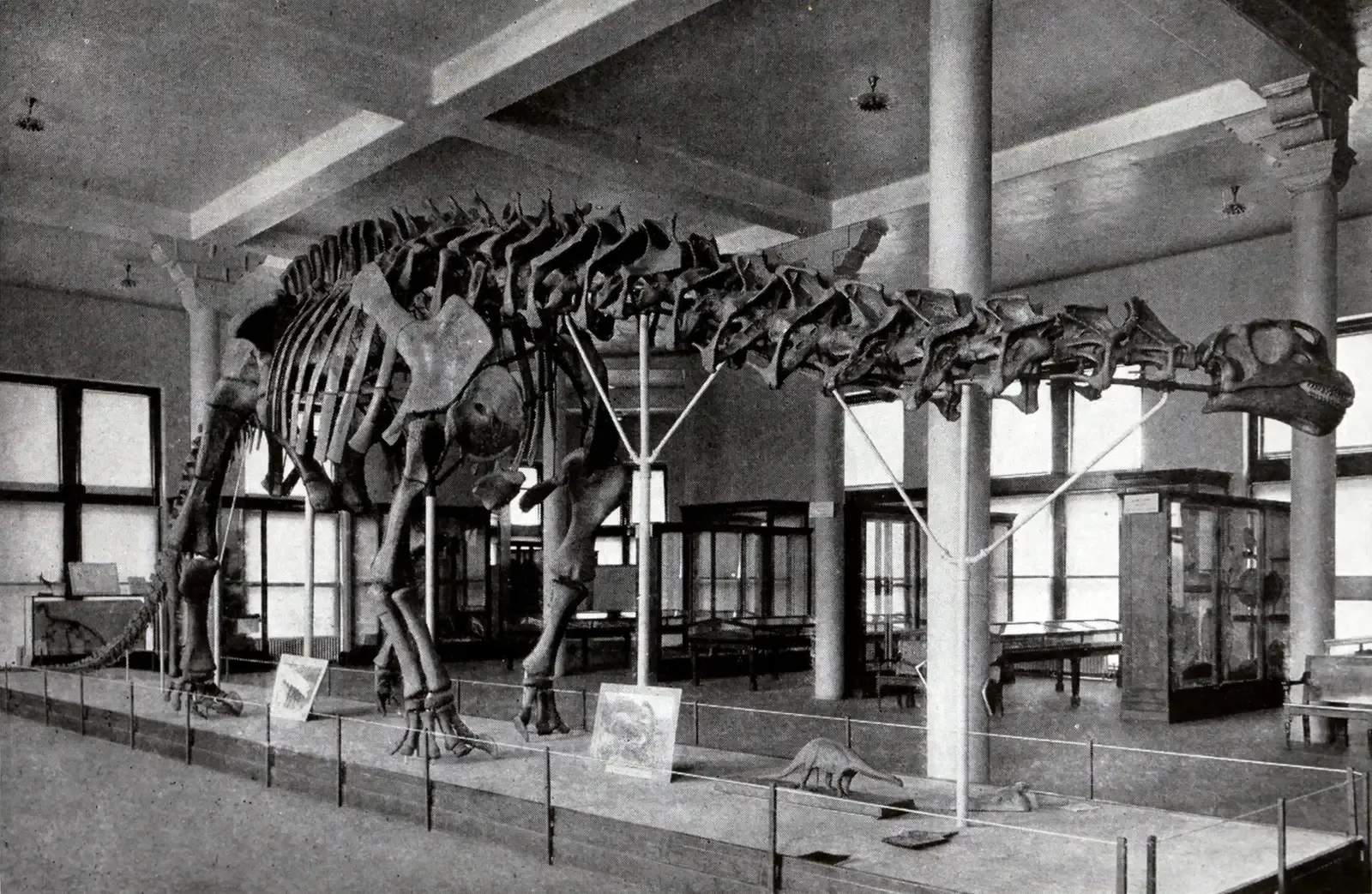
The Brontosaurus saga might be the messiest fossil drama in history. During the chaotic “Bone Wars” of the late 1800s, a nearly complete sauropod body turned up without a skull. Rather than wait for the real one, a scientist simply grabbed a head from a different long-necked dinosaur, likely Apatosaurus or Camarasaurus, and bolted it on.
For decades, museums proudly displayed a chimera stitched from two different animals. The name Brontosaurus was even dropped entirely for years, folded into Apatosaurus. Only recently have paleontologists argued that subtle spine differences justify reviving the name, but now paired with an accurate skull, not the chunky guesswork version millions of people grew up loving.
#3 – Spinosaurus: The “Aquatic Monster” That Had to Be Rebuilt from Scratch
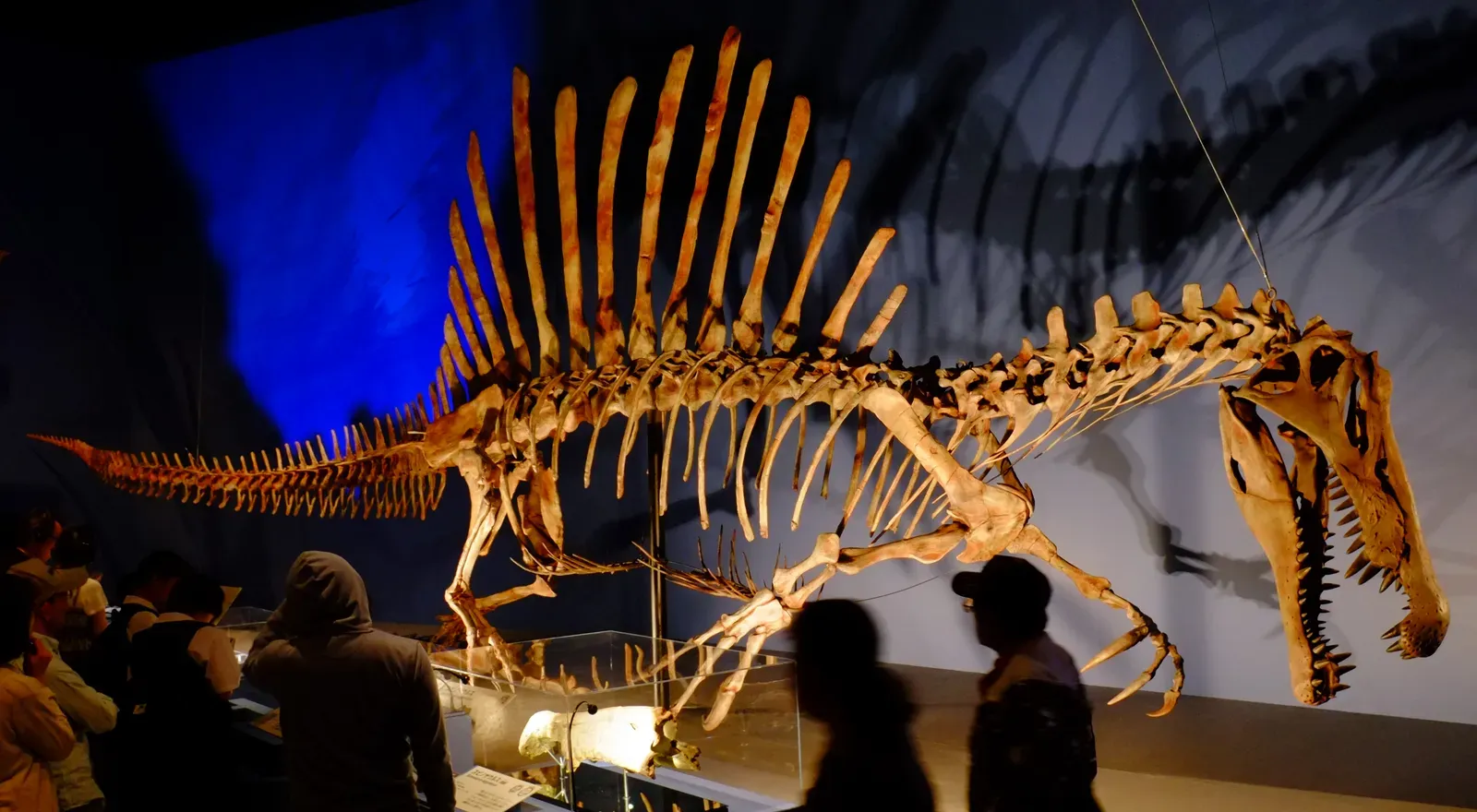
No big dinosaur has been rewritten as many times as Spinosaurus. The original fossils, collected in Egypt, were destroyed during World War II, leaving scientists to rebuild the animal from fragments and guesswork borrowed from relatives. For decades, it stood in museums as basically a T. rex with a sail bolted onto its back.
Then new finds delivered a shock: shorter hind legs, a longer, paddle-like tail, and adaptations pointing toward a semi-aquatic lifestyle. Earlier mounts had scaled up generic theropod bones and simply guessed at the rest. Now 3D models suggest Spinosaurus swam more like a crocodile, body held low and horizontal. Even the newest reconstructions come with a shrug from researchers, who openly admit they may still have it wrong.
Fast Facts
- Original Spinosaurus fossils were destroyed in a 1944 bombing raid on Munich.
- It lived roughly 95 million years ago in what is now Egypt and Morocco.
- Its sail could reach several feet tall along the spine.
- Many researchers consider it longer than T. rex, though built very differently.
- Newer fossils point to a paddle-like tail suited for swimming.
#4 – Deinonychus & Velociraptor: The “Naked” Raptor Mounts Missing Their Feathers
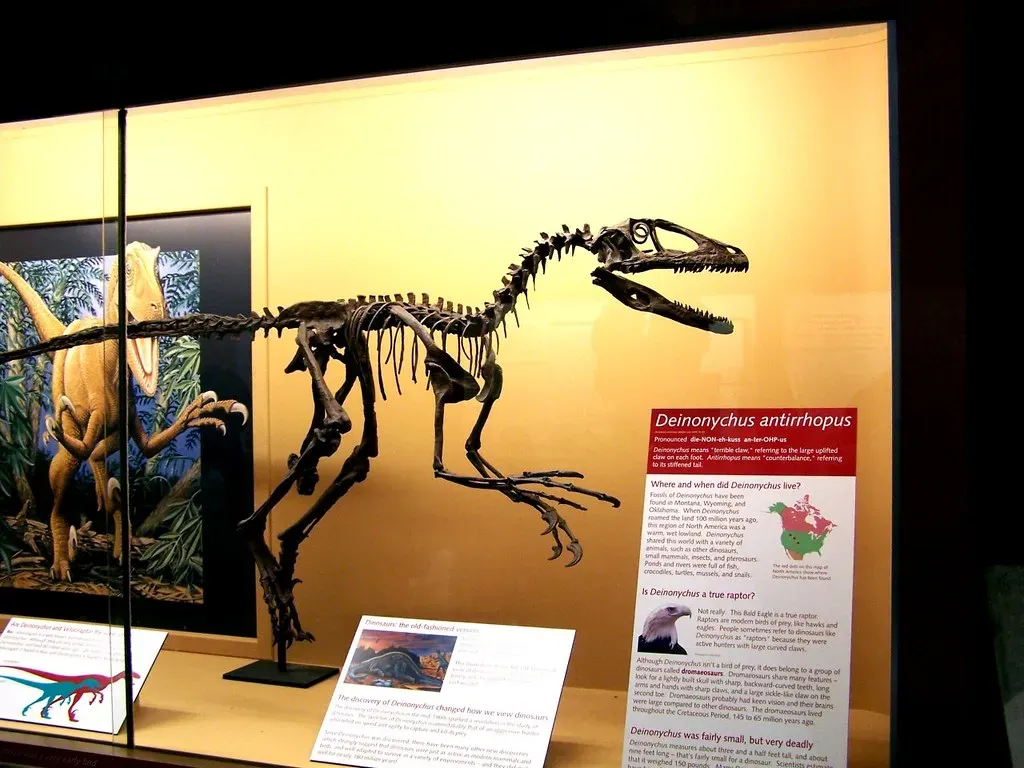
Most people’s mental image of a raptor comes straight from the movies: scaly, lizard-skinned, and eerily smooth. The fossils tell a different story. Many dromaeosaurs, including relatives of Velociraptor and Deinonychus, carry clear feather attachment points along their bones – evidence museum mounts simply ignored for years.
Those old displays were scientifically outdated almost the moment feathered fossils started pouring out of China. Experts now call the classic “naked” raptor mounts anatomically incomplete, missing a major part of the animal’s actual body. Some institutions have updated their models with full plumage; others keep the old scaly look because it’s what visitors expect. Raptors, it turns out, were less stealthy lizard and more terrifying bird.
#5 – Megalosaurus: Europe’s First Named Dinosaur, Assembled Like a Giant Lizard
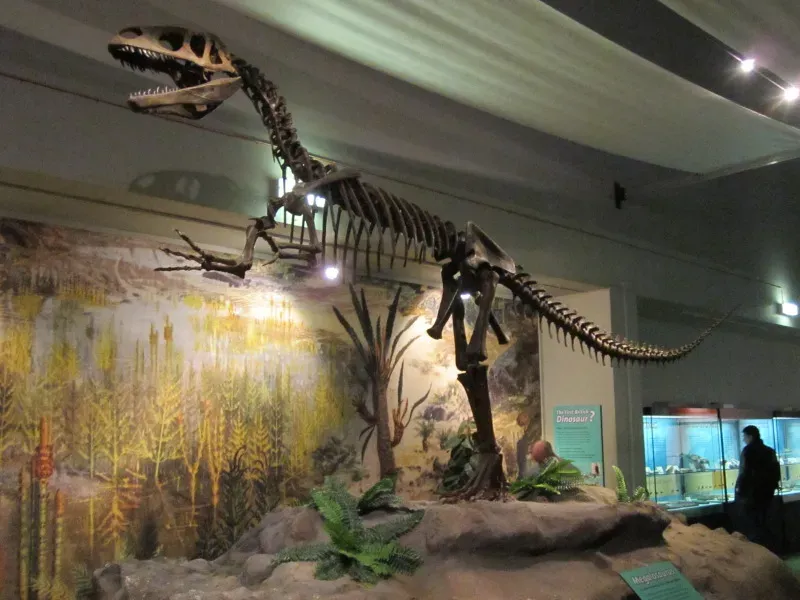
Megalosaurus was the very first dinosaur ever formally named, back in 1824, and early reconstructions treated it like an oversized Komodo dragon. The fossils were fragmentary, so artists simply stretched the bones into a lumbering, belly-dragging, four-legged reptile because that’s what “giant lizard” was supposed to look like.
More complete theropods later revealed the truth: Megalosaurus walked on two legs, with a bird-like hip structure and a far more agile build. Some old museum casts even mixed bones from multiple individuals or related species into a single mosaic labeled as one animal. The real creature was quicker and leaner than the heavy Victorian monster generations of visitors were shown.
#6 – Archaeopteryx: The “First Bird” Posed Like a Ground-Dwelling Reptile
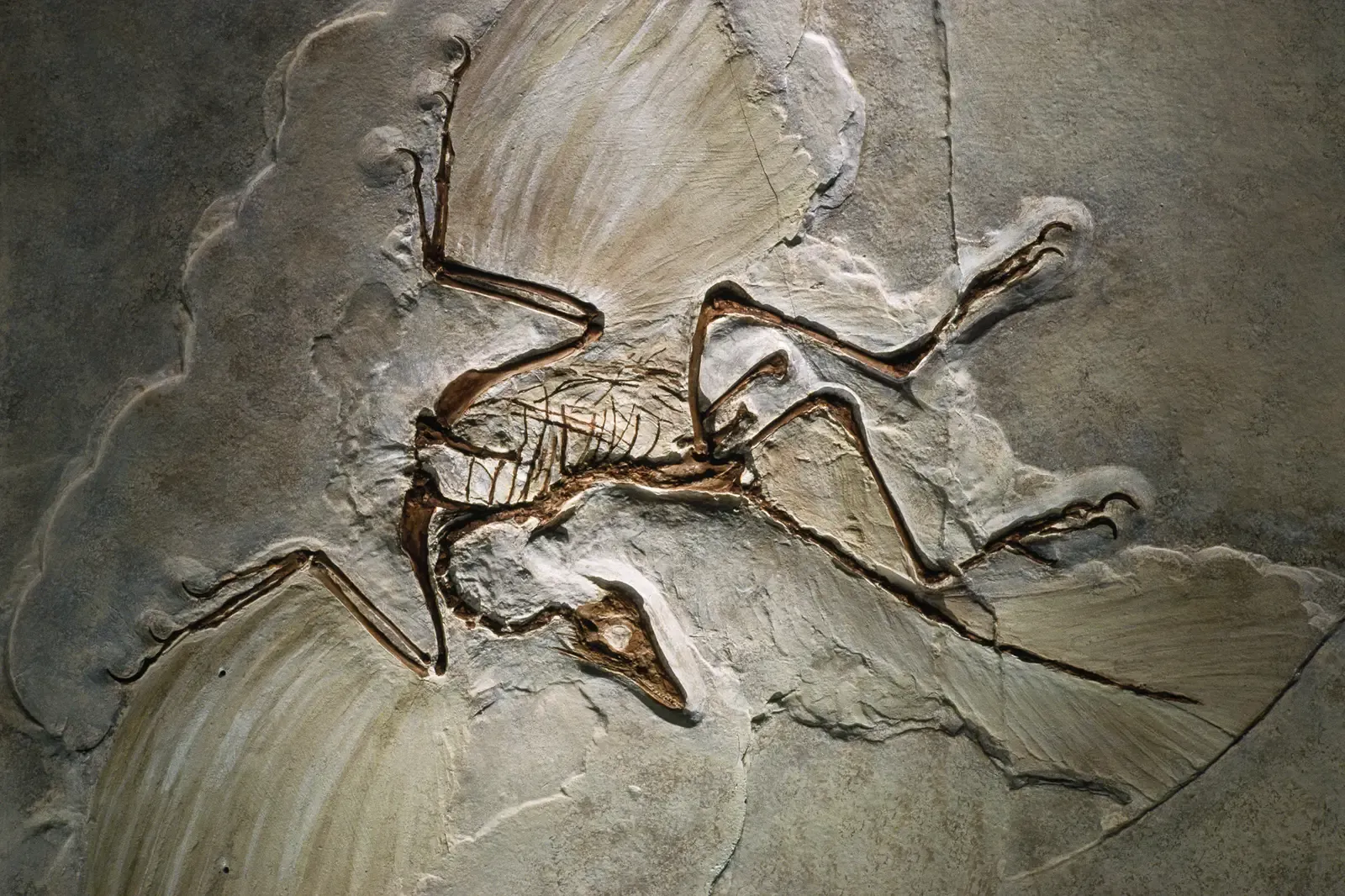
Archaeopteryx is famous as the missing link between dinosaurs and birds, yet older mounts often posed it flat and sprawling, pinned to a slab like a lizard. Some early reconstructions even gave it a downward-hanging tail and awkwardly splayed wings – a pose modern biomechanics says would have been nearly impossible for a living animal.
New analysis shows Archaeopteryx likely held its wings above its body, with a tail that could actively assist balance rather than just dangle. Early mounts also underplayed its feather coverage, treating plumage like decorative fringe instead of flight-critical hardware. Experts now admit that many “classic” displays accidentally made one of the most bird-like creatures in the fossil record look like a reptile.
#7 – Plateosaurus: The “Quadruped” That Was Probably Mostly Bipedal
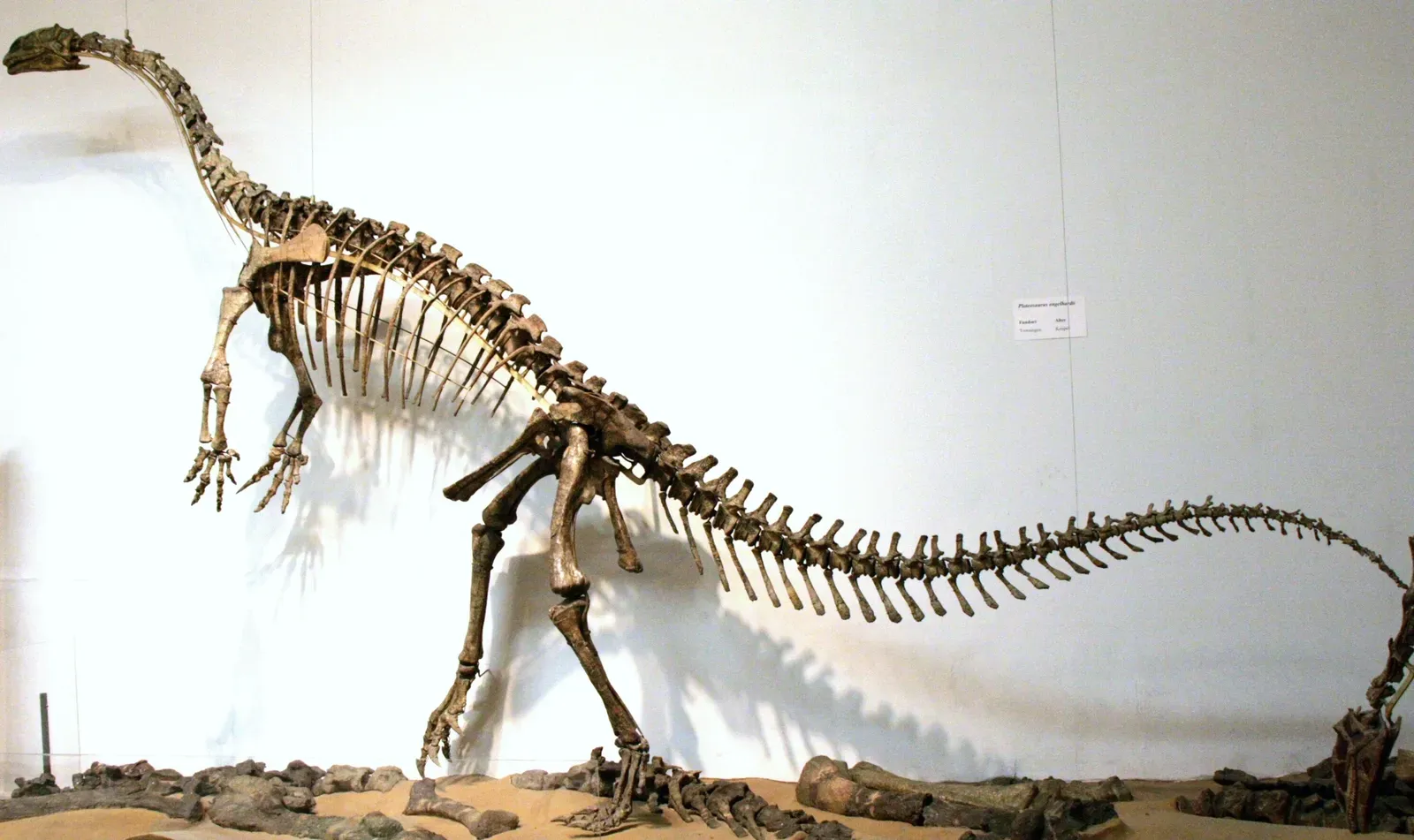
For years, Plateosaurus was mounted like a proto-sauropod, a chunky herbivore stomping around on all fours. Detailed studies of its limb bones tell a different story: the forelimbs were too short and weak for sustained walking on four legs. Some early mounts literally forced the front legs into positions the joints couldn’t actually reach.
Modern reconstructions suggest Plateosaurus was primarily bipedal, powered by strong hind limbs, with its arms mainly used for feeding and stability. Some museums have had to completely re-engineer their skeletons, shifting the center of mass and reworking the shoulders. It turns out this animal was closer to a giant, plant-eating kangaroo than a shrunken sauropod.
#8 – Stegosaurus: Tail Dragger Turned Lethal “Thagomizer” Wielder
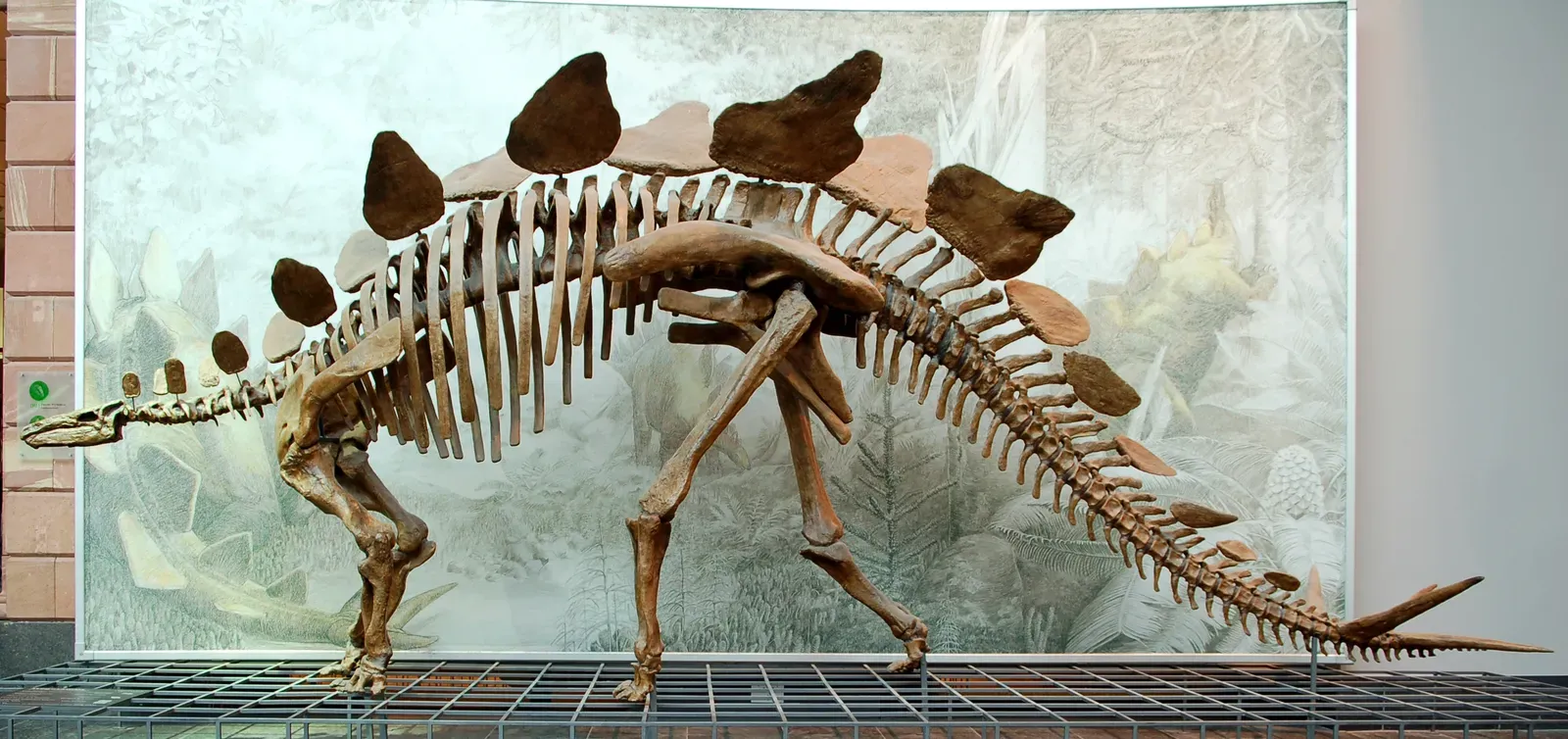
For decades, Stegosaurus was mounted with neatly paired back plates and a tail dragging along the ground like a lazy reptile. Both details are now considered wrong. Trackway evidence and joint studies show large dinosaurs carried their tails aloft, and biomechanical work suggests the tail spikes, once dismissed as decoration, formed a highly mobile, genuinely dangerous weapon known as the “thagomizer.”
Older mounts also lined the plates up symmetrically, like a neat row of fins. Newer interpretations show a staggered pattern that likely boosted both display and possibly temperature regulation. When museums finally lifted the tail and twisted the spikes outward, Stegosaurus went from “dim-witted plant-eater” to “walking tank with a mace on its backside.”
Quick Compare
- Old view: tail dragged flat on the ground behind a sluggish body.
- New view: tail held aloft, swung actively as a weapon.
- Old view: plates arranged in a neat, symmetrical row.
- New view: plates staggered in a single, offset line.
- Old view: passive, dim-witted herbivore; New view: agile animal with a genuine defensive arsenal.
#9 – Pterosaur Mounts: Wings Posed Like Bats, Ankles Bent Backwards
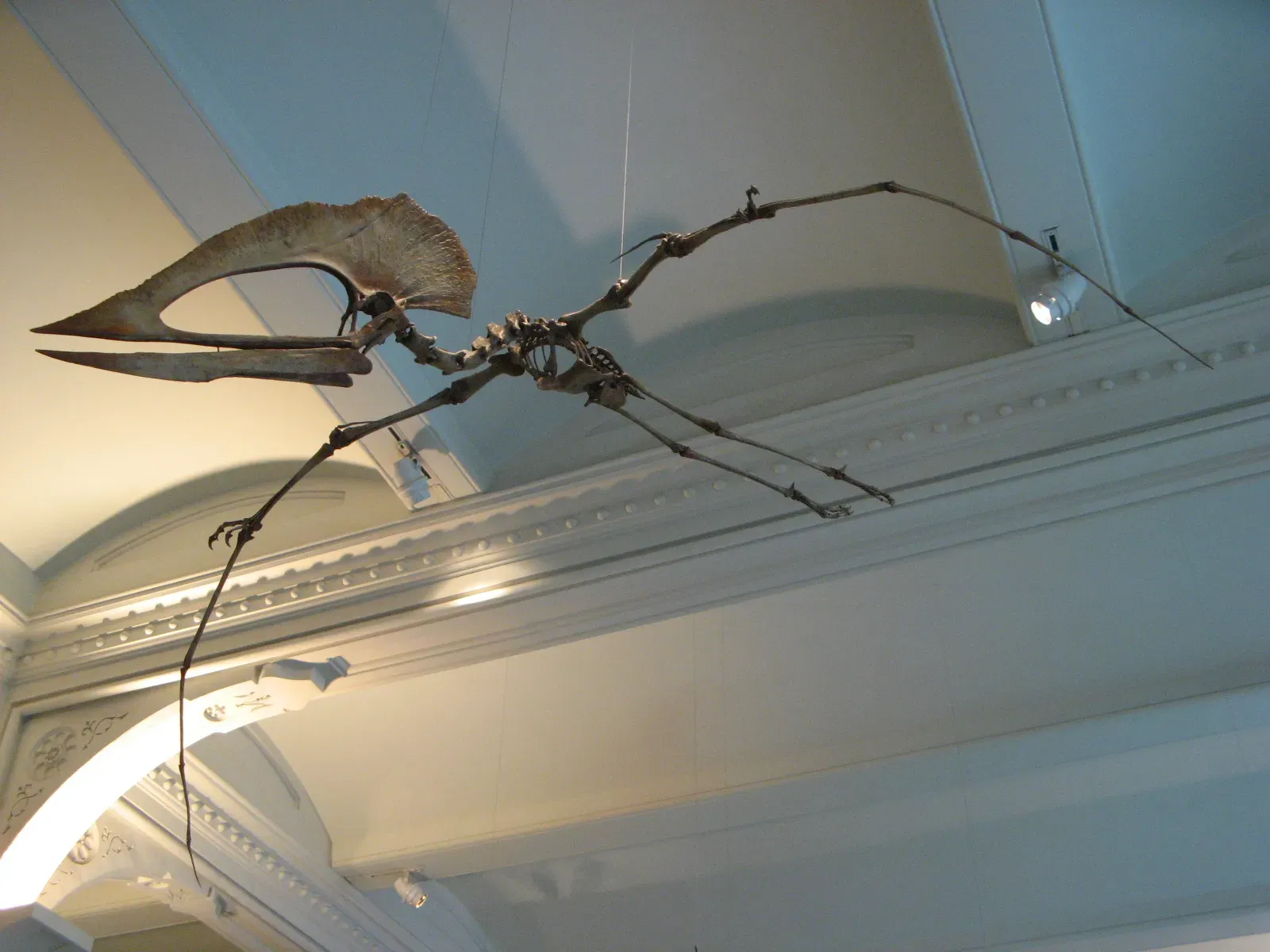
Pterosaurs spent a long time being treated as honorary bats. Early skeletal mounts often attached the wing membranes incorrectly to the legs or tail, and posed the animals in ways that would have dislocated real joints. Some dramatic ceiling displays twisted hips and ankles well beyond any realistic range of motion.
Modern work on tracks and 3D joint modeling shows pterosaurs were competent quadrupedal walkers with far more complex wing anatomy than the flimsy sky-lizard image suggests. The membrane likely attached to a specialized bone called the pteroid, not stretched down to the ankles like a bedsheet. Many classic mounts are now considered anatomically impossible, and some museums have quietly retired them for good.
#10 – Hadrosaur “Duck-Bills”: Heads Tilted Wrong, Tails on the Floor
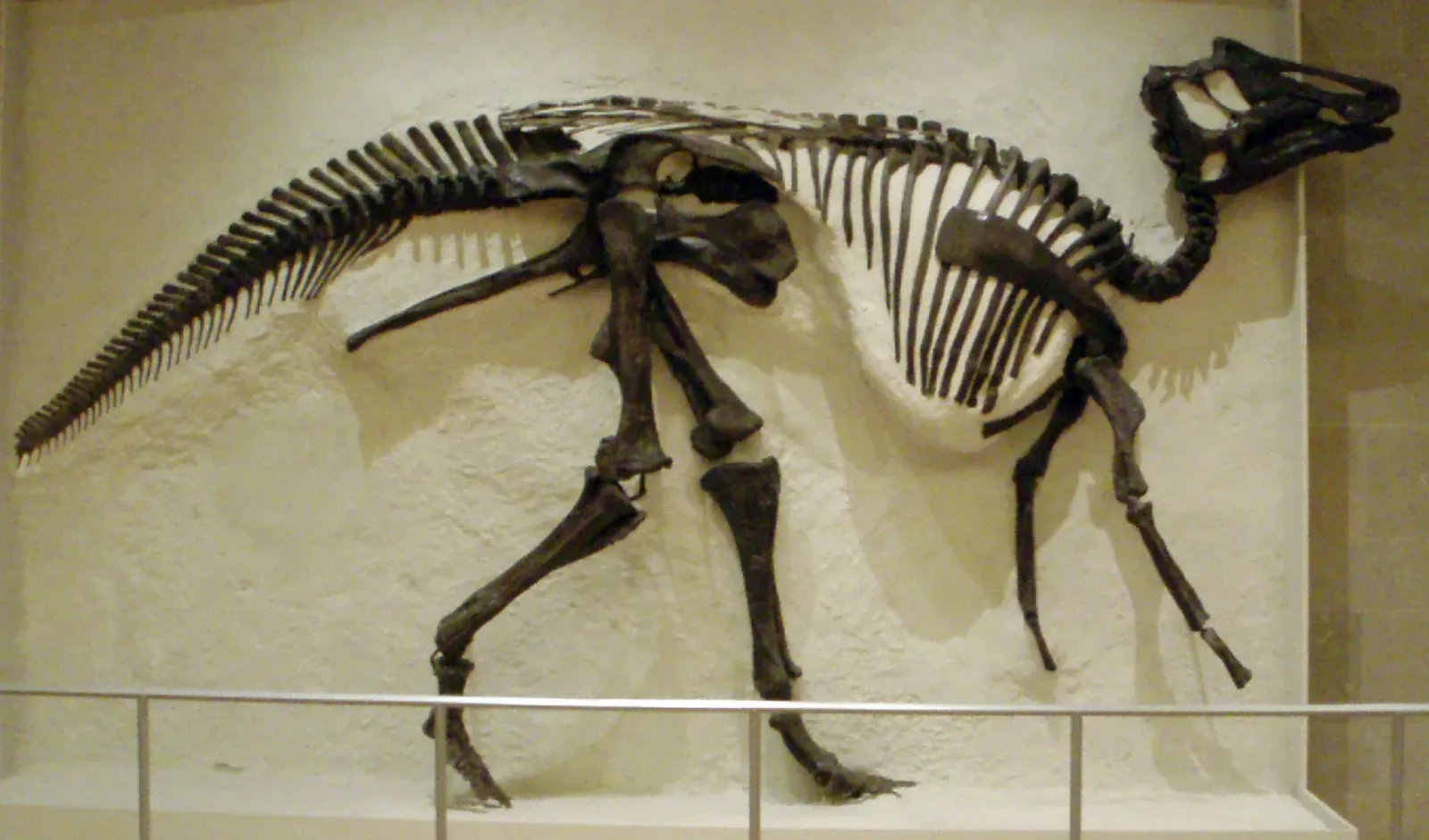
Hadrosaurs were long mounted as swamp-dwellers, tails dragging, necks curved into a swan-like S-shape. That image came from outdated assumptions that they lived like giant amphibious cows. Closer study of the vertebrae shows their spines and tails actually formed a stiff, horizontal bridge, nothing like the sagging curve museums loved to display.
Old mounts forced the vertebral column into unnatural bends that real cartilage never could have handled. Newer reconstructions straighten the back, lift the tail fully off the ground, and push the head forward, painting the picture of an agile land animal instead of a swamp cow. Even the hands were once misassembled, palms facing down instead of inward – a pose modern anatomy flatly rejects.
#11 – The “Fighting Dinosaurs”: Misunderstood Positions in a Legendary Fossil
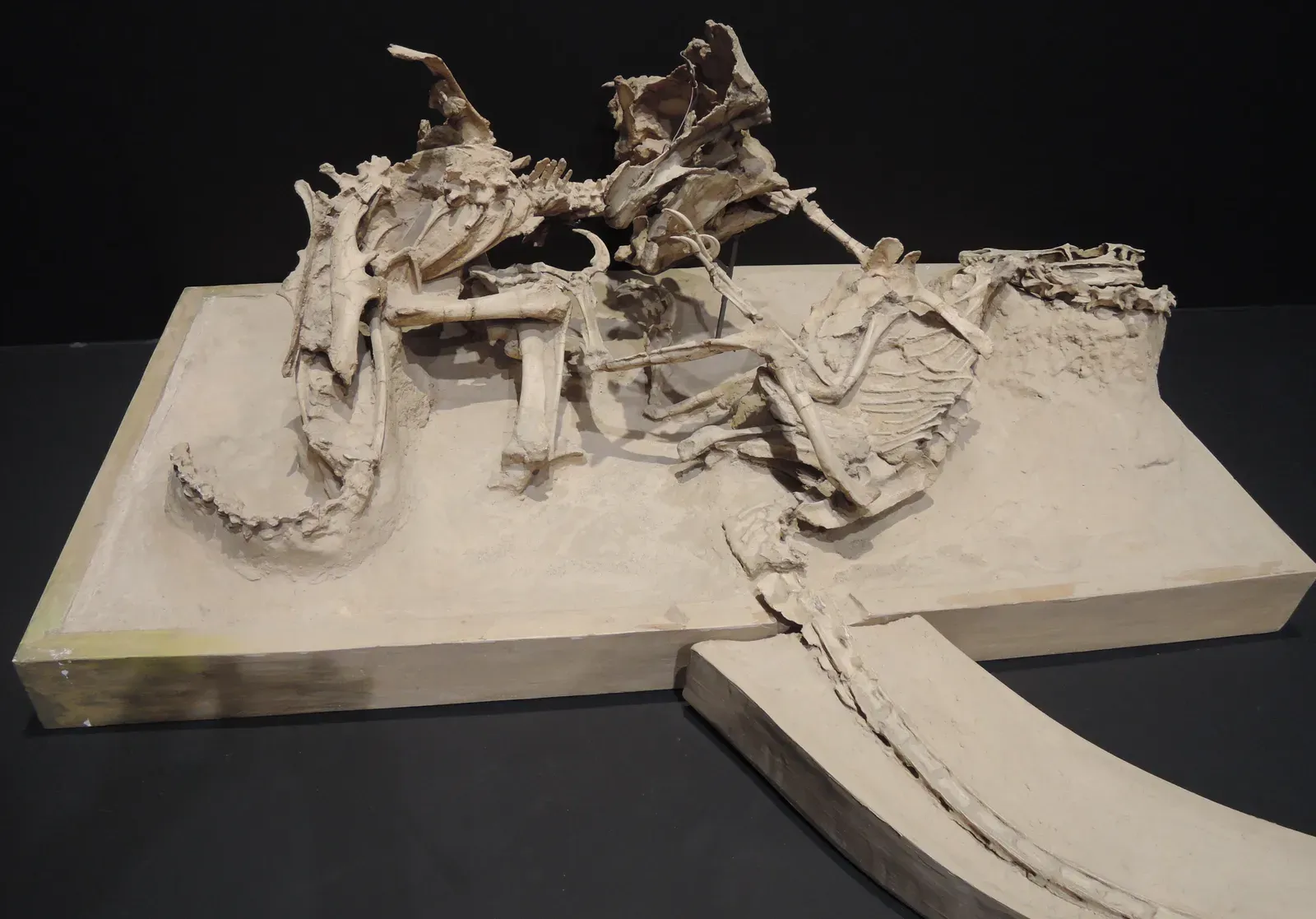
The famous “Fighting Dinosaurs” fossil from Mongolia – a Velociraptor locked with a Protoceratops – wasn’t technically assembled wrong, but its posture was long misread. Early mounts and drawings framed it as a clean, Hollywood-style duel frozen mid-battle. Later study of the surrounding sediment suggests something messier: rapid burial in a collapsing sand dune that twisted both bodies into positions that may not reflect a real fighting stance at all.
Some exhibits quietly “neatened” the limb angles for drama rather than strict accuracy, smoothing over dislocations caused by death and burial. Paleontologists now admit the prettified versions may mislead visitors about how these animals actually moved or fought. The real scene was probably far more chaotic than the tidy diorama suggests.
#12 – Mosasaur Skeletons: Swimming Like Eels Instead of Sharks
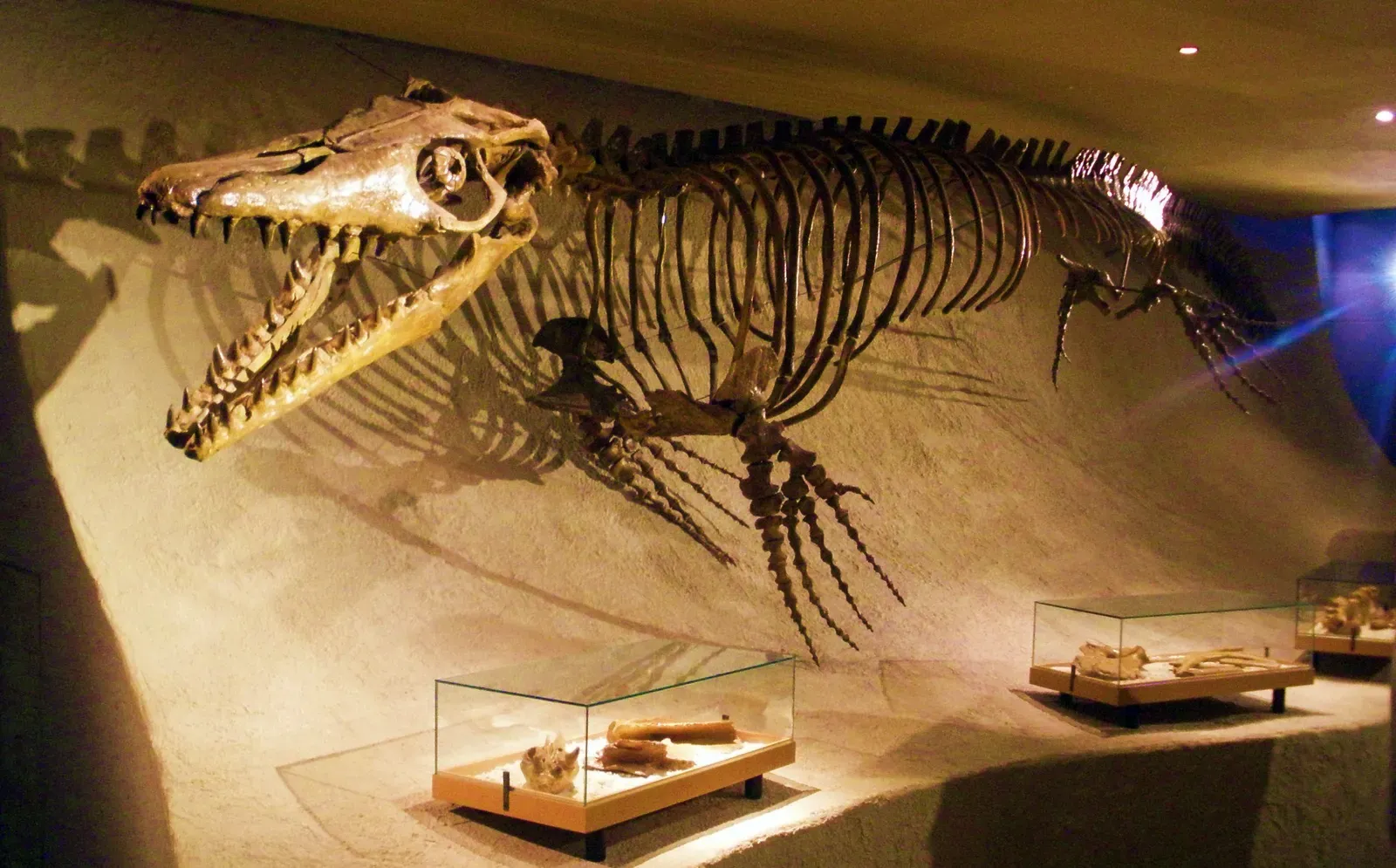
Early mosasaur mounts often portrayed these marine reptiles as snake-like, sinuous swimmers, spines curling dramatically from head to tail. That image came from incomplete skeletons and a lazy assumption that they moved like giant sea serpents. Later discoveries revealed something very different: a deep, downturned tail fluke built for powerful, shark-like propulsion.
Many classic mounts ignore that fluke entirely, leaving the spine in one smooth, simple curve instead of the sharp kink seen in well-preserved specimens. Some even posed the forelimbs as loose, sprawling paddles rather than compact flippers. If your mental image of a mosasaur comes from an old museum display, you’re likely picturing a swimming style the real animal never used.
#13 – Dimetrodon: The Wrong Kind of “Early Dinosaur” in the Wrong Pose
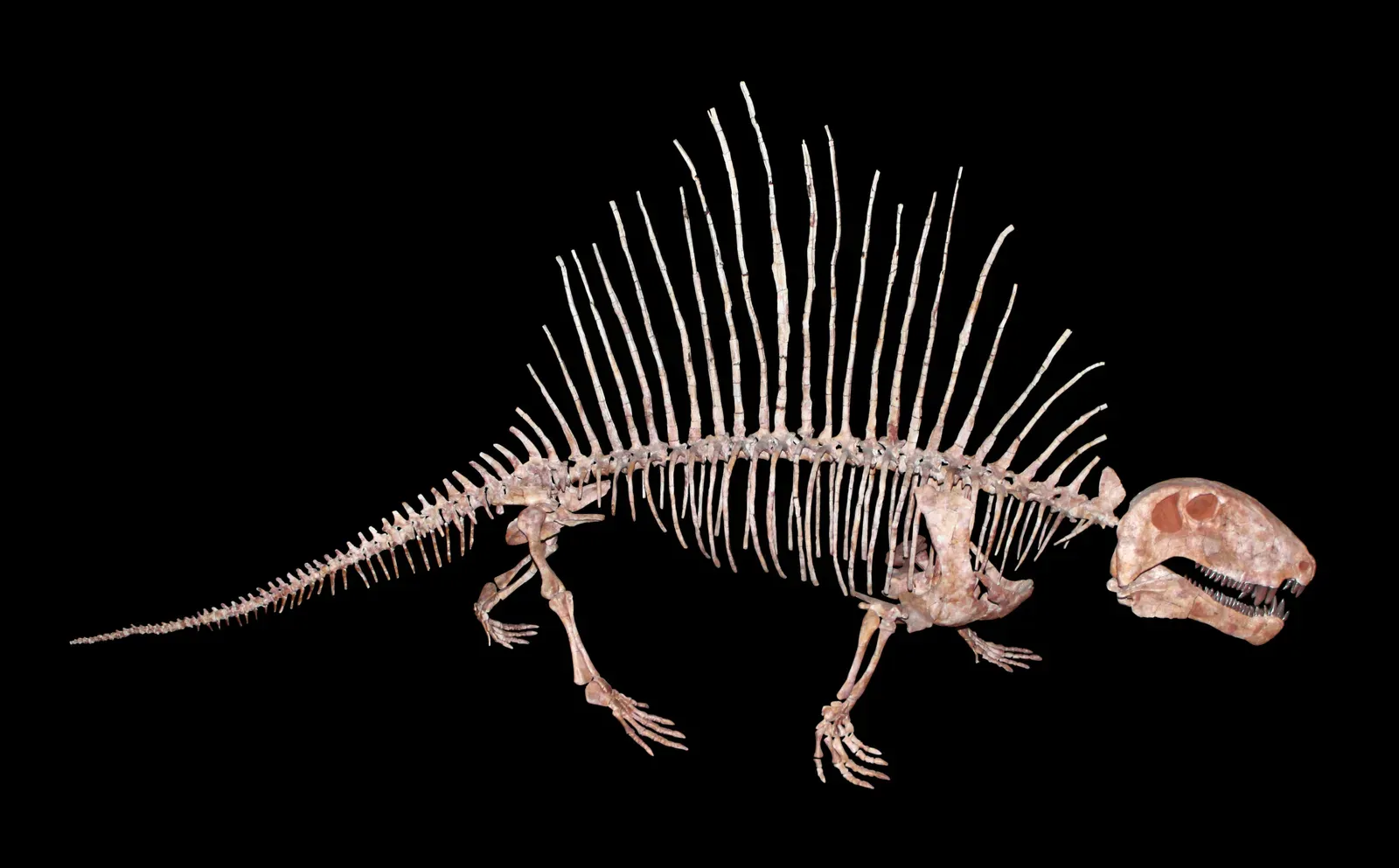
Dimetrodon gets mislabeled as a dinosaur constantly, and old museum mounts didn’t help. Many displays gave it a sprawling, belly-dragging gait, like an oversized lizard, and placed it near dinosaur exhibits, reinforcing the confusion. In reality, Dimetrodon is a synapsid, more closely related to mammals than reptiles, and evidence suggests it held a more upright, partially erect stance.
Older reconstructions also spaced the sail vertebrae too evenly, ignoring subtle variations that would have shaped its actual silhouette. Newer mounts correct the limb angles, lifting the body higher off the ground, and adjust the spine to match the real fossil spacing. The animal that emerges looks less like a crocodile with a fan and more like a serious, active predator – which has real implications for how we picture our own distant relatives.
Worth Knowing
- Dimetrodon lived long before dinosaurs, roughly 295 to 272 million years ago.
- It’s a synapsid, part of the lineage that eventually led to mammals.
- Despite the toy-aisle reputation, it was never a dinosaur at all.
- Its sail is thought to have helped with body temperature regulation and display.
#14 – Theropod Hands: “Bunny Hands” That Couldn’t Actually Rotate
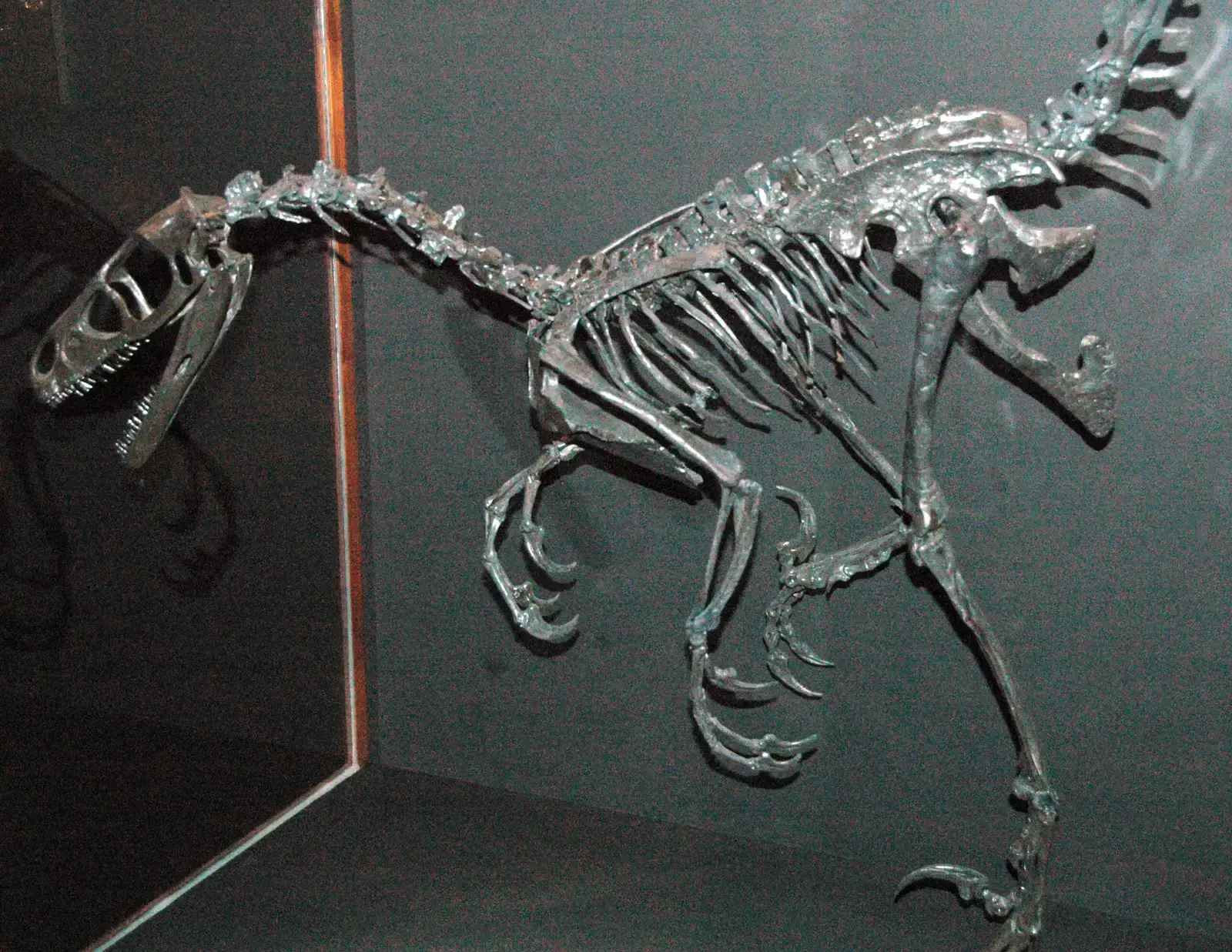
If you’ve seen a two-legged dinosaur skeleton with its hands facing palm-down, you’re probably looking at a mount that’s anatomically wrong. Many classic theropod displays gave them pronated “bunny hands,” as if they could clap or grab like a human. Detailed joint analysis shows most theropods’ forearm bones simply couldn’t rotate that way – their palms faced each other, frozen in a permanent clapping position.
This isn’t a cosmetic detail. It misleads people about how these predators actually grabbed prey, carried objects, or balanced their weight. Fixing it means dismantling arms and reorienting the radius and ulna, which is expensive and disruptive, so some museums still leave the wrong version standing even though experts agree it’s incorrect.
#15 – Elasmosaurus: The Sea Reptile Once Mounted with Its Head on the Wrong End
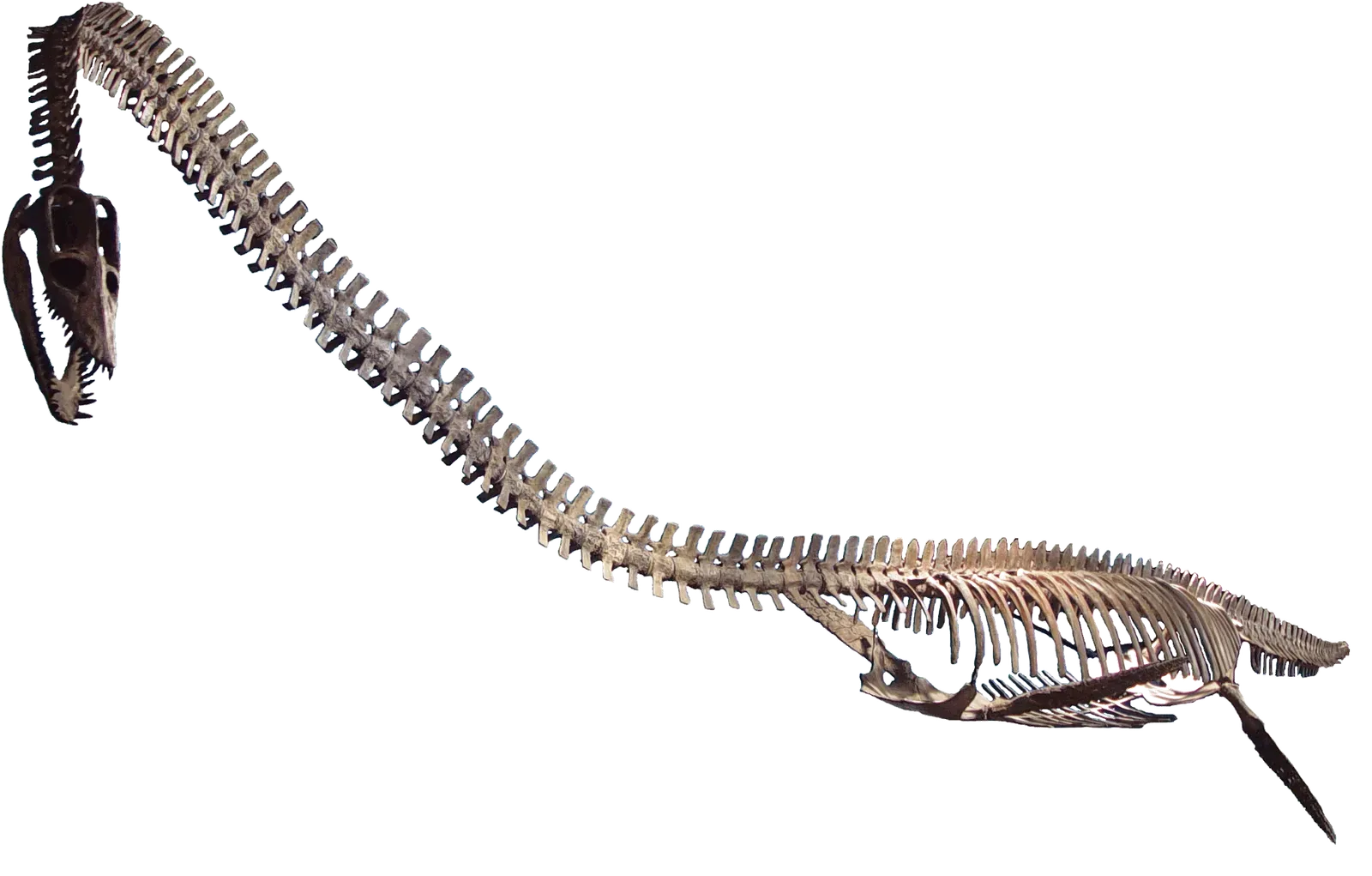
Elasmosaurus might be the single most infamous misassembly in the history of paleontology. When its long-necked skeleton was first reconstructed in the 1860s, the scientist mistakenly attached the skull to the wrong end of the spine – at the tail. The result was a bizarre animal with a short neck and an impossibly long tail that never actually existed.
Even after the head was moved to the correct end, early mounts still posed Elasmosaurus with its neck rearing straight up like a swan. Modern biomechanical modeling suggests that kind of vertical bending was unlikely; the neck was better built for gentle horizontal sweeps, not periscope-style theatrics. The legend of the backward Elasmosaurus still gets told in paleontology classes as a cautionary tale about jumping to conclusions.
#16 – Protoceratops: Baby and Adult Skeletons Accidentally Mixed
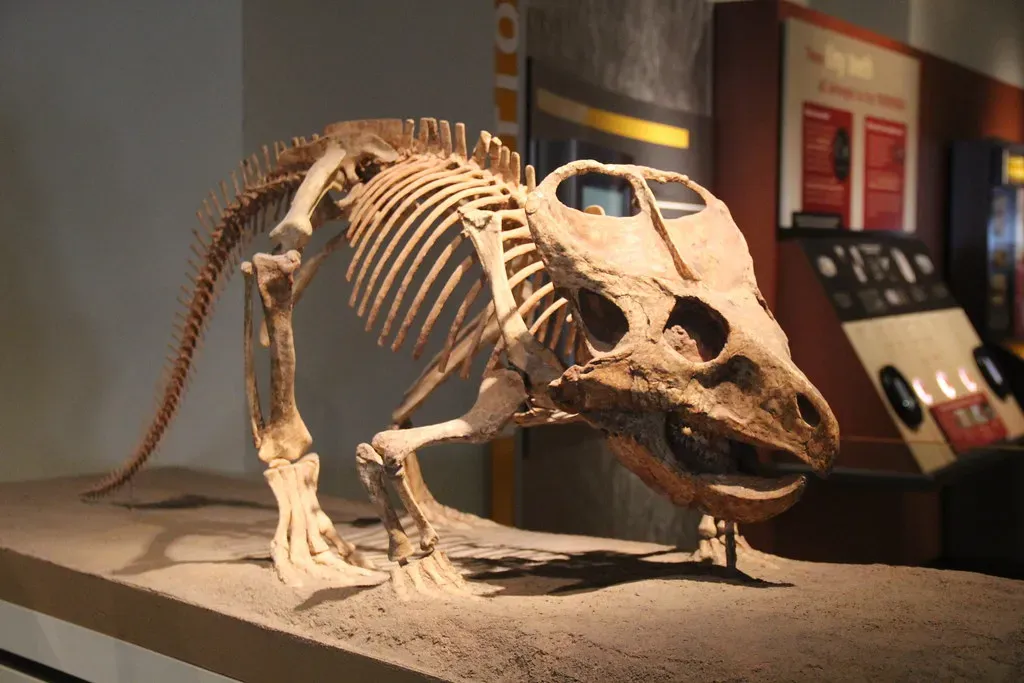
Protoceratops skeletons from Mongolia are famously abundant, which created a strange problem of its own. In some older displays, bones from multiple individuals – sometimes different growth stages entirely – were combined into a single “composite” skeleton. That meant a juvenile skull could end up paired with a subadult body, quietly distorting the animal’s real proportions.
Experts now stress that growth stages matter enormously: young Protoceratops had different head shapes, frill sizes, and posture than adults. Mixed-age composites erased those differences in the name of building a “perfect” display. Modern exhibits are more honest, sometimes showing several partial skeletons instead of one Frankensteined ideal. It’s less photogenic, but a lot closer to the truth.
#17 – Sauropod Necks: Swan-Like Curls That Joints Couldn’t Handle
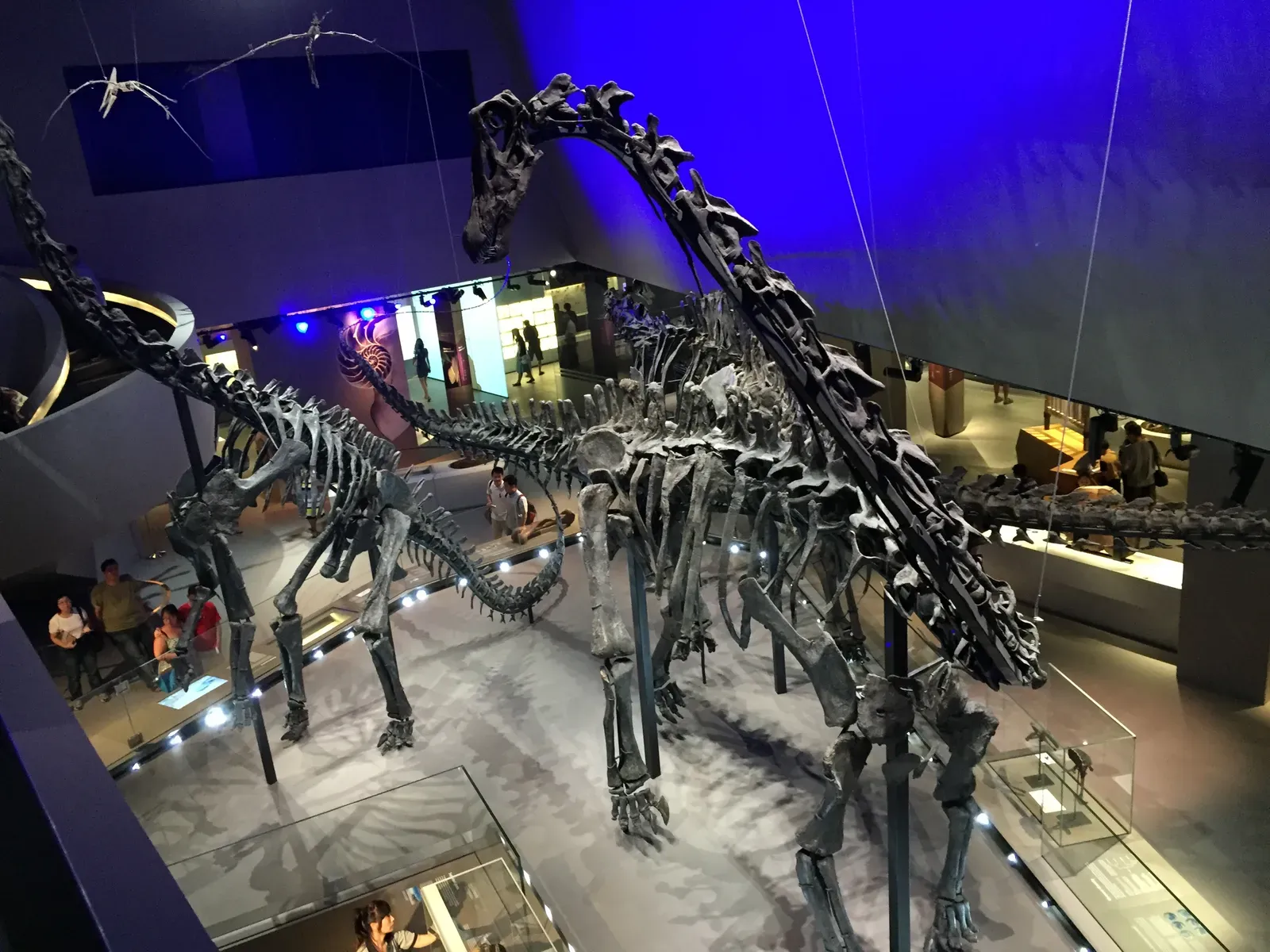
Those dramatic museum poses where long-necked sauropods curl their necks into graceful S-shapes, towering over balconies, look stunning. Many of them are also biomechanically impossible. Early mount builders treated vertebrae like flexible beads on a string, allowing far more vertical bend than real cartilage and joint surfaces would have permitted.
Later digital modeling showed sauropod necks were built mainly for horizontal reach, with very limited upward flexion. Some famous mounts had to be quietly “flattened,” necks brought down and vertebrae reoriented to match the actual joint anatomy. It may disappoint visitors who loved the skyscraper look, but it better reflects how these animals actually fed – broad sweeps across the ground, not giraffe-style browsing at the treetops.
#18 – Anchiornis and Early Feathered Dinosaurs: Colorful, but Jointed Wrong
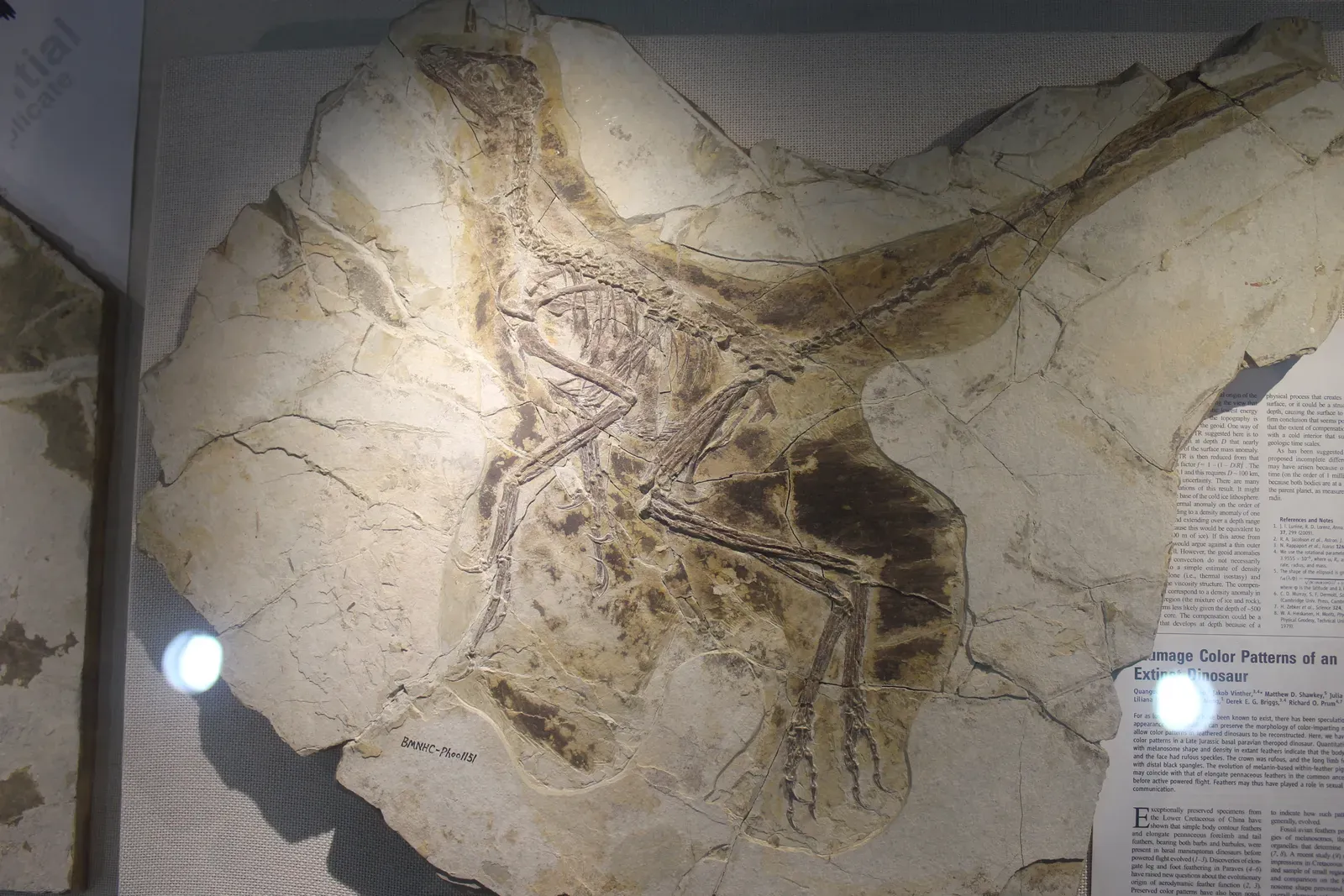
After feathered dinosaurs like Anchiornis were discovered, museums rushed to build life-sized models complete with reconstructed colors. Some of the earliest displays, though, got the limb posture and wing-fold mechanics wrong, forcing legs into splayed positions beyond any realistic range and attaching wings incorrectly along the arm.
Later study of feather attachment and bone microanatomy revealed a far more complex, asymmetrical wing structure than early models suggested. Some mounts even underrepresented leg feathers clearly visible in the fossils, apparently because four-winged dinosaurs looked “too weird” for the public. The colors may have been surprisingly accurate – the skeleton underneath them was not.
At a Glance
- Anchiornis was small, roughly the size of a pigeon.
- It lived during the Late Jurassic, around 160 million years ago.
- Fossilized melanosomes let scientists reconstruct its likely coloring.
- It sported feathers on both its arms and legs, giving it a four-winged look.
#19 – T. rex: Tail Down, Body Upright, and a Posture Now Rejected
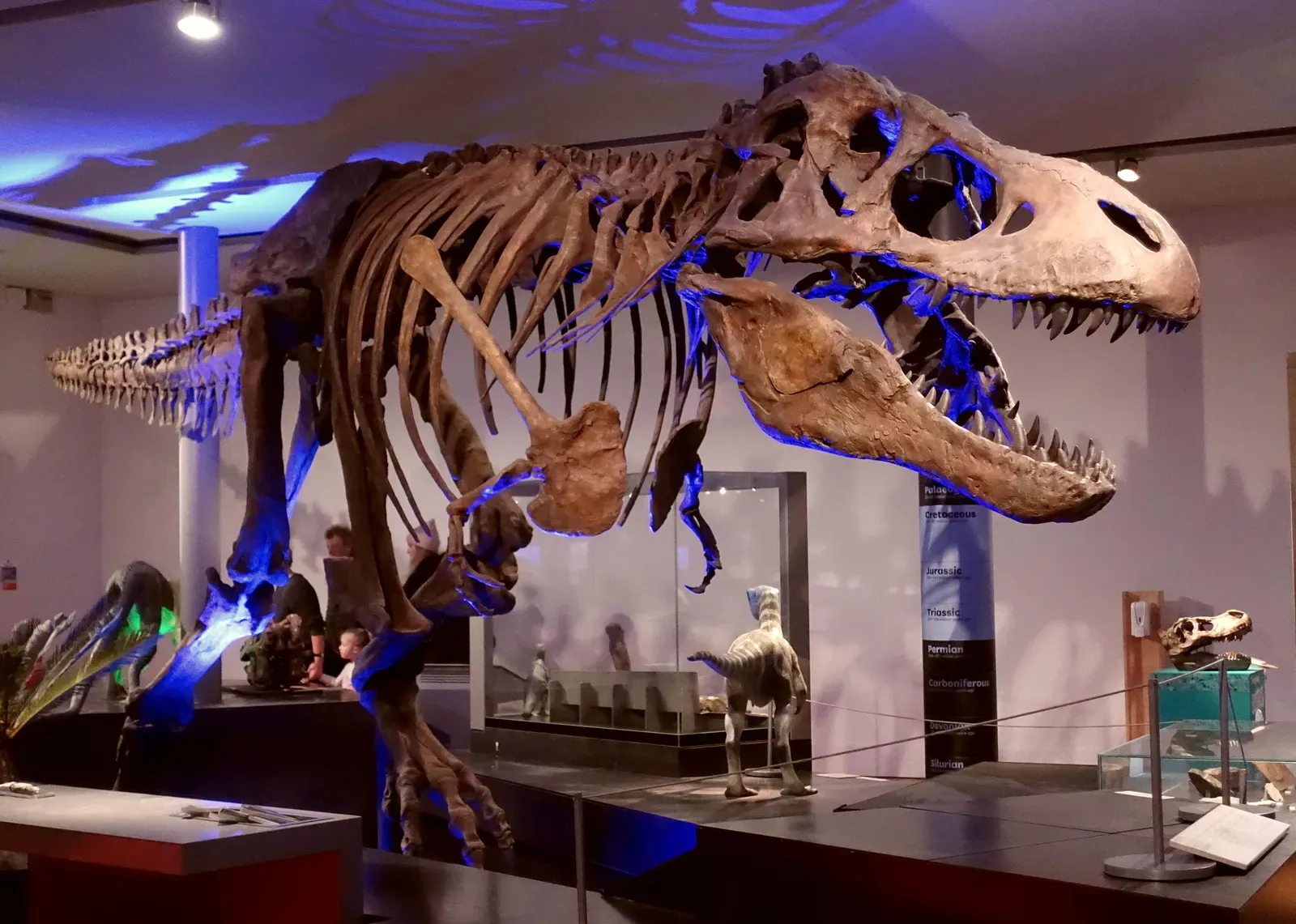
The classic Tyrannosaurus rex pose – standing upright like a kangaroo, tail scraping the ground, head held high – is one of the most famous wrong assemblies in all of science. Early mounts followed early 1900s assumptions, balancing the body almost vertically with the tail acting as a tripod leg.
The old view of Tyrannosaurus as a slow, tail-dragging behemoth is dead and buried.
Robert Bakker, paleontologist
Biomechanical studies later showed that upright posture would have dislocated joints and put brutal strain on the spine, and that the animal’s center of mass sat much farther forward than anyone assumed. Modern reconstructions align the vertebrae horizontally, with the tail held rigidly aloft as a counterbalance. Some museums spent millions physically lowering their T. rex skeletons into the corrected stance, quietly admitting their star attraction had been standing like a guy in a rubber suit for generations.
#20 – “Composite” Dinosaurs: Chimeras Built from Multiple Species
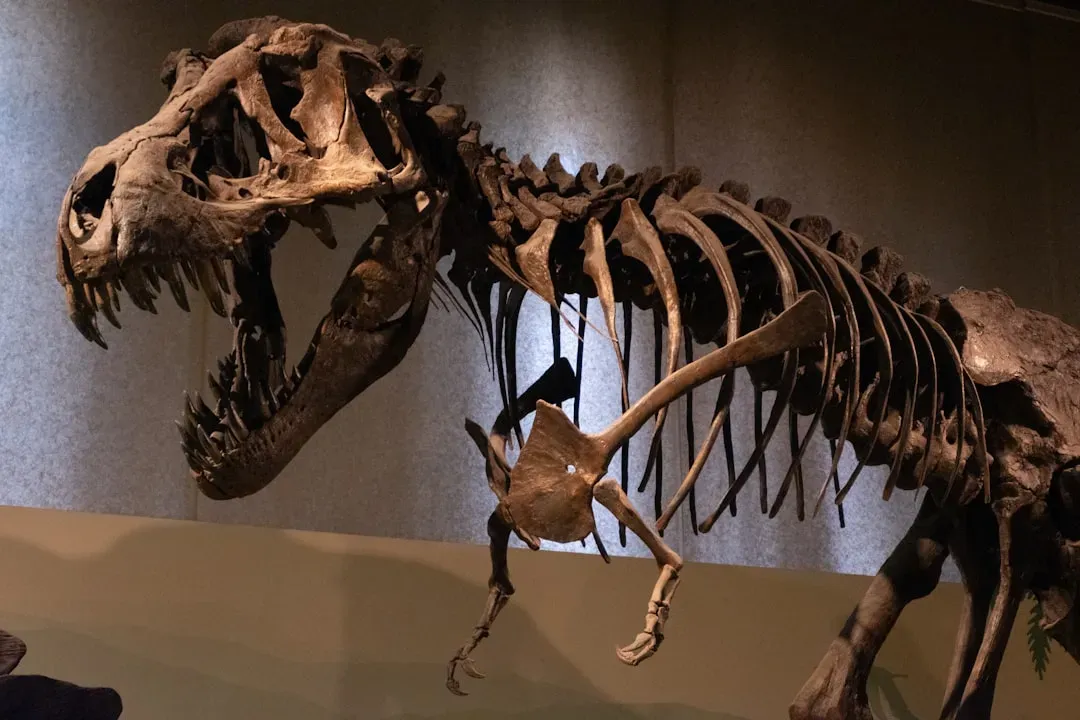
The most uncomfortable admission from experts isn’t about any single famous species – it’s about a long-standing practice. In the rush to attract crowds, museums historically assembled dramatic, “complete” skeletons using bones from multiple individuals, and sometimes multiple species entirely, then labeled the whole thing with one confident name.
In some cases, isolated skulls were paired with unrelated bodies, or missing limbs were filled in using bones from similar but distinct dinosaurs. Even done in good faith, this created chimeras that never actually walked the Earth. Today, more institutions mark composites clearly and favor authentic partial skeletons over polished fakes, but older mounts still stand quietly in some halls, rewriting reality in favor of spectacle.
The Bottom Line
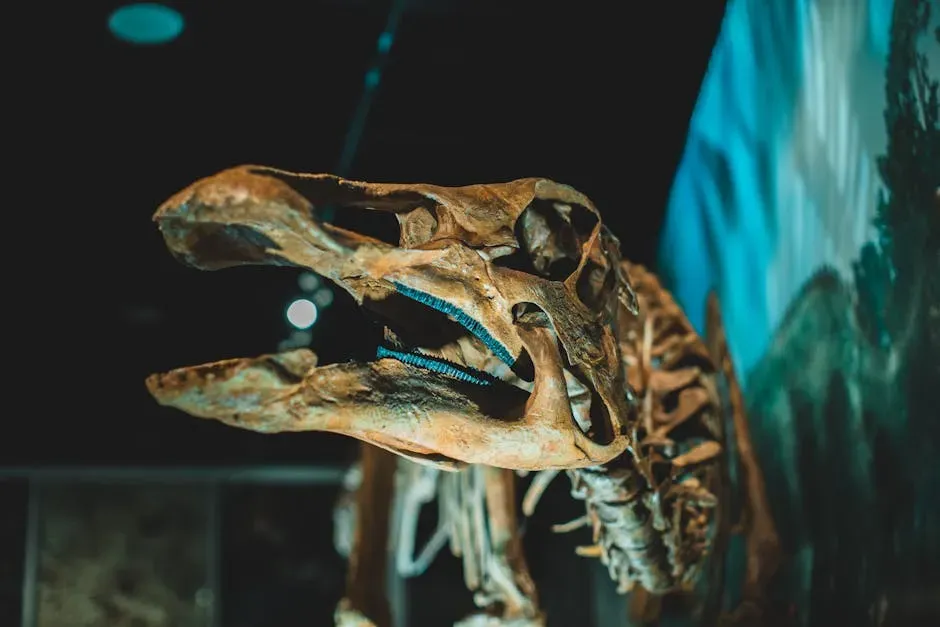
Walk into any fossil hall and it’s tempting to treat every skeleton as an exact snapshot of a lost world. As these 20 cases show, plenty of “iconic” mounts were built on guesses, missing bones, and outdated assumptions – from Brontosaurus’s borrowed skull to Elasmosaurus’s backward head to a kangaroo-postured T. rex that stood wrong for nearly a century.
Here’s my honest take: none of that makes these fossils less amazing. It makes them more human. Every skeleton in a glass case is really a snapshot of what scientists believed at the moment they built it, not a final verdict carved in stone. The bones haven’t changed – our willingness to admit we got it wrong has. So which “wrong but beloved” version would you actually miss if a museum quietly fixed it tomorrow?