There is something almost impossible to describe about standing inches away from the bones of a creature that walked the earth sixty-five million years before you were born. It’s humbling, a little surreal, and honestly a bit of a gut punch to your sense of scale in the universe. Fossils are not just rocks. They are locked-in chapters of a story that has been written over billions of years, and the United States happens to hold some of the most jaw-dropping pages in that book.
From the sun-scorched deserts of Arizona to the rolling plains of Nebraska, this country is riddled with fossil treasures that you can visit right now, often for little to no cost. Whether you’re a lifelong paleontology nerd or just someone who wants a truly unforgettable road trip stop, what’s ahead might genuinely surprise you. Let’s dive in.
Dinosaur National Monument, Utah and Colorado
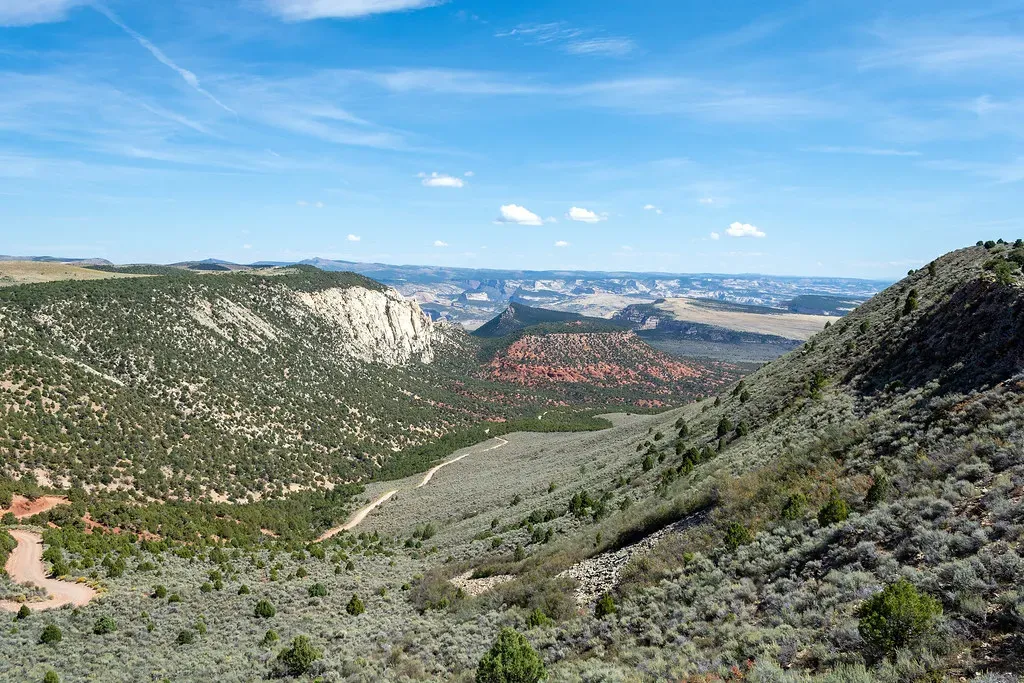
Let’s be real – if you’re going to pick just one fossil site in the United States, this is the one. Located on the border of Colorado and Utah, Dinosaur National Monument is a must-visit for any dinosaur enthusiast, and it is home to over 1,500 dinosaur fossils, including Allosaurus and Stegosaurus. It’s the kind of place where the phrase “seeing is believing” actually means something.
You can see more than 1,500 fossils at the site’s Quarry Exhibit Hall, most of them still partially embedded in the rock – and you can even touch dinosaur remains from 149 million years ago. That’s not a typo. You can literally reach out and feel the bones of a Jurassic-era giant with your bare hands. Situated between Utah and Colorado, this stretch of mountains, canyons, and desert comprises a major chunk of the Morrison Formation, an expansive sedimentary rock unit considered the most productive source of near-complete dinosaur skeletons in North America.
Petrified Forest National Park, Arizona
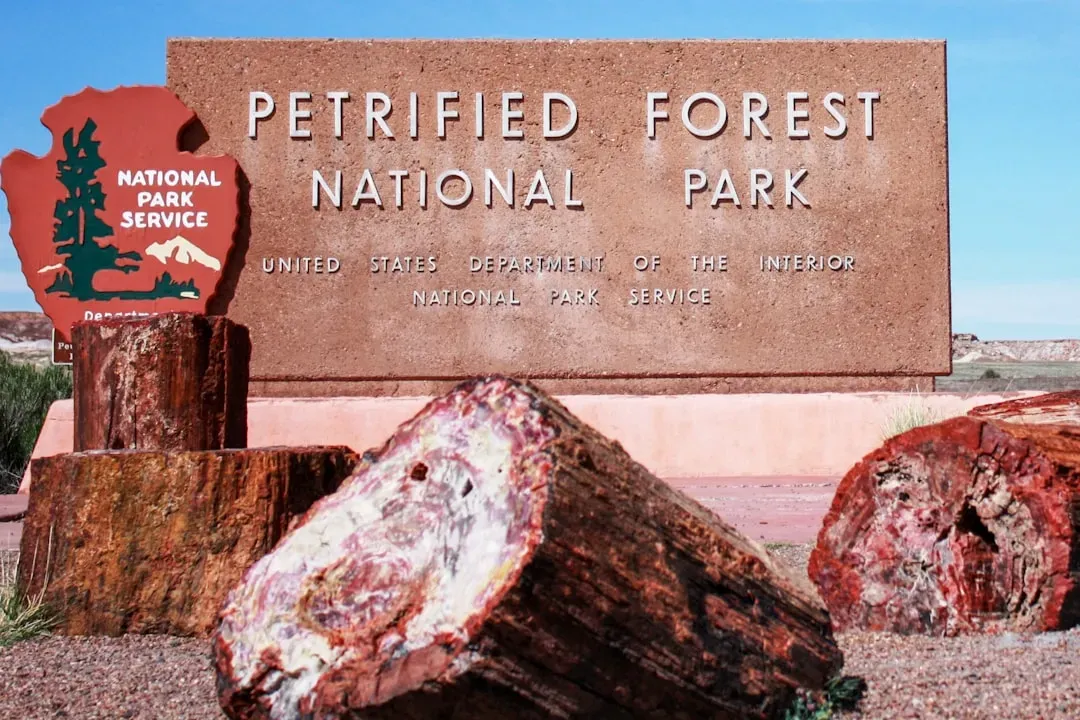
Perhaps the best-known of the paleontology-oriented parks and monuments, Petrified Forest covers 346 square miles in northeastern Arizona and early pioneers were intrigued by its abundance of brightly colored, petrified logs – which is exactly why this area became a national monument in 1906, to protect its paleontological resources from commercialization and rampant collecting. Few landscapes in America look quite so otherworldly.
Petrified Forest is among the world’s top sources of Triassic Period fossils. Although famed for its iconic, multicolored fossil logs and bizarre badlands topography, the park also yields fossils of amphibians, predatory reptiles, and most importantly, the earliest-known dinosaurs. Recent fossil recoveries continue to provide new insight into dinosaur evolution during the Late Triassic Period, a time that paleontologists call the “dawn of the dinosaurs.” Think of it as a front-row seat to the very beginning of the dinosaur age.
Florissant Fossil Beds National Monument, Colorado
Florissant Fossil Beds National Monument features one of the richest and most diverse fossil deposits in the world, with up to 1,700 species. Sequoia tree fossils here are some of the largest diameter petrified trees in the world, and they stand massive among the insect and plant fossils in the monument. I know it sounds a little crazy, but some of these tree trunks are simply enormous up close.
This site, about two hours south of Denver, is one of the most diverse insect fossil sites in the world, with an impressive trove of specimens from the late Eocene Epoch roughly 35 million years ago. It is amazing to think that hundreds of fragile creatures survived for millennia sandwiched between thin layers of shale, including beetles, caddisflies, dragonflies, lacewings, and mayflies. Among these many arthropods was the first fossilized butterfly ever discovered in North America. Research projects are ongoing, so if you have ever wanted to visit a working fossil site, Florissant is about as close as you can get.
Badlands National Park, South Dakota
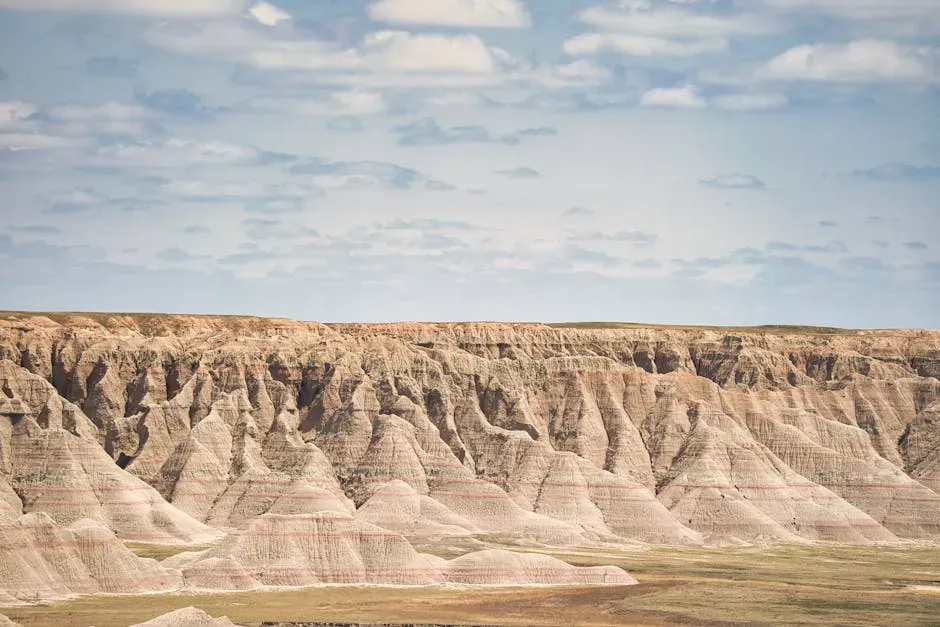
Badlands National Park in South Dakota is a popular destination for fossil hunters, with the park being home to one of the richest fossil beds in the world, with over 69 million years of history. The landscape itself looks like the surface of another planet, all jagged spires and layered rock in shades of amber and grey. It is strangely beautiful, and honestly a little eerie.
Paleontologists continue to find remarkable specimens in the Badlands even today, as the park continues to reveal ancient fossils through ongoing erosion. The list of fossil types found here is extensive, including plants, mammals, reptiles, birds, amphibians, and mollusks. Be sure to not miss the Fossil Preparation Lab at the Ben Reifel Visitor Center, where you can watch paleontologists at work and learn about the park’s ancient fossil beds. Watching science happen in real time is something you won’t forget.
Waco Mammoth National Monument, Texas
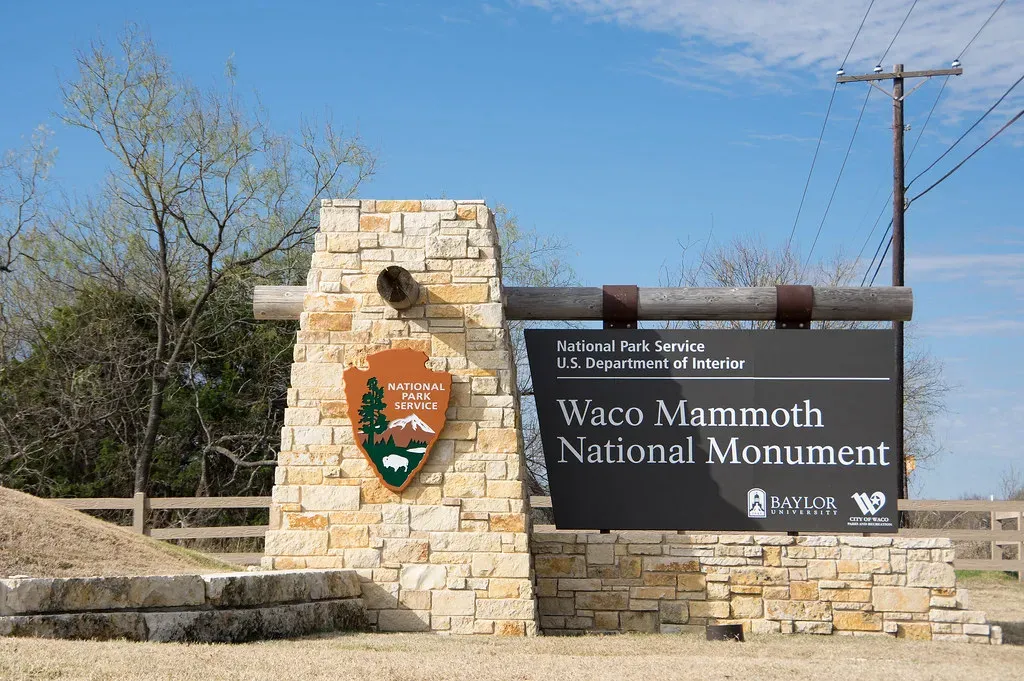
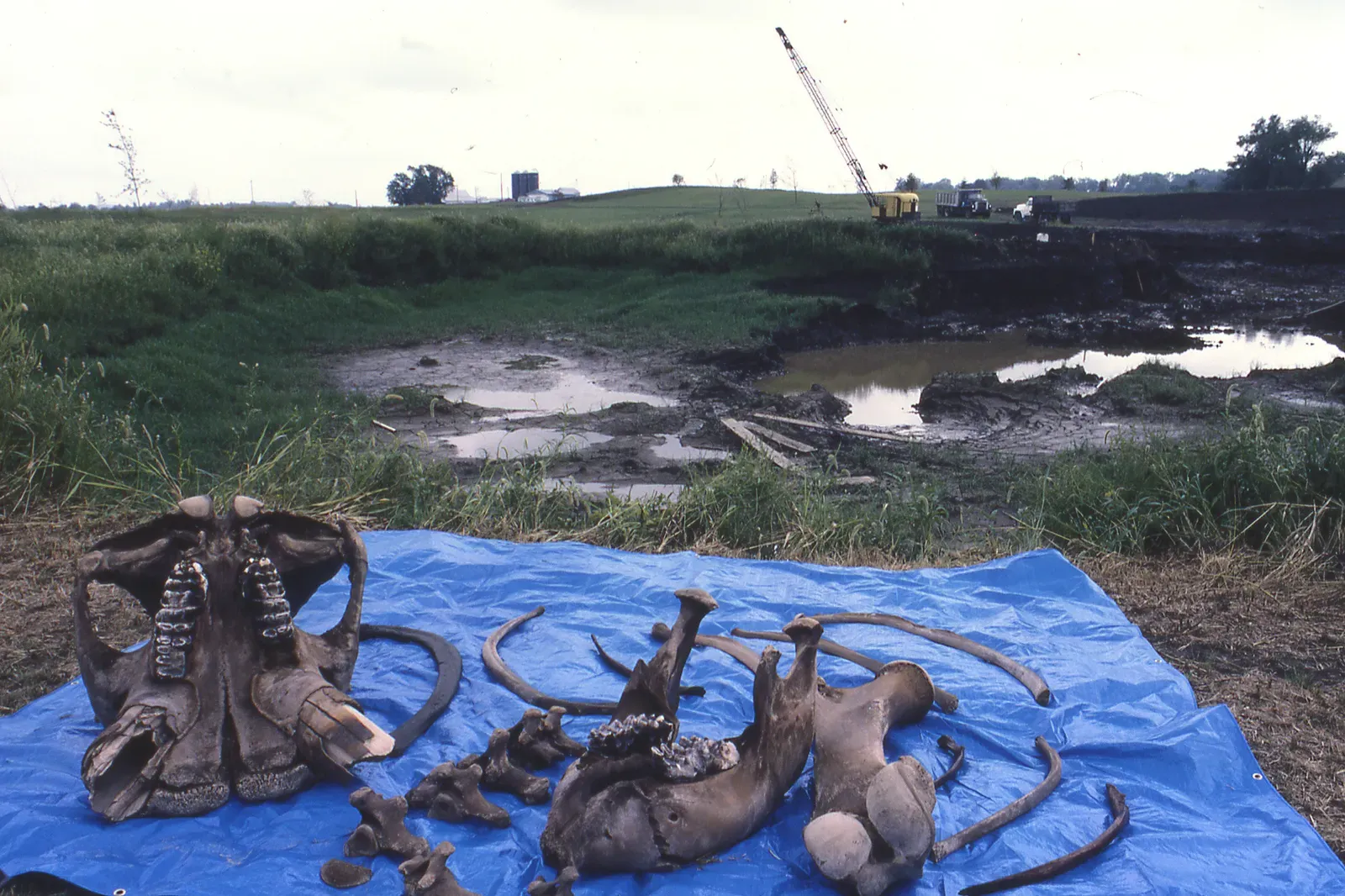
This one reads like a movie. Discovered in 1978 by Paul Barron and Eddie Bufkin while searching for arrowheads along the Bosque River, the site revealed a remarkable story: a nursery herd of mammoths, likely trapped by flash floods between 65,000 and 72,000 years ago, preserved in the sediment. Two teenagers looking for arrowheads accidentally stumbled onto one of the greatest paleontological discoveries in American history. Wild, right?
Standing as tall as 14 feet and weighing 20,000 pounds, Columbian mammoths roamed across what is present-day Texas thousands of years ago. Today, the fossil specimens represent the nation’s first and only recorded evidence of a nursery herd of ice age Columbian mammoths. You can step into the climate-controlled Dig Shelter to see fossils in situ, walk scenic trails, and engage in educational programs like the Junior Ranger program. It is one of just a handful of climate-controlled dig sites in the entire country.
Ashfall Fossil Beds State Historical Park, Nebraska
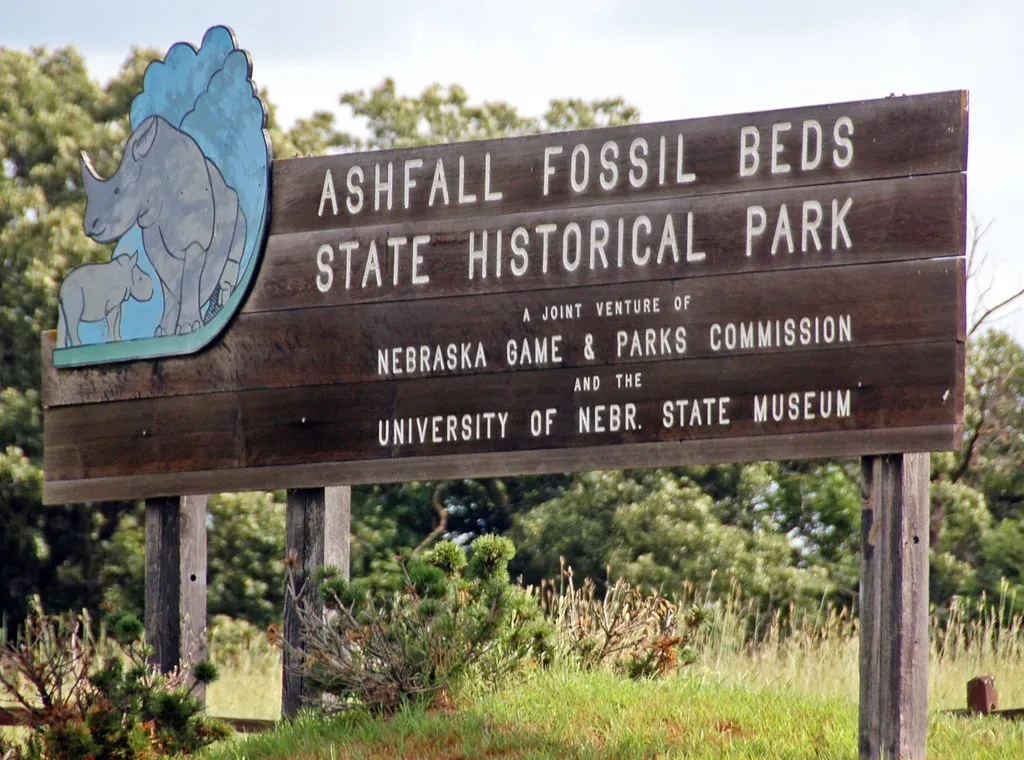
Picture a watering hole on a prehistoric Nebraska savannah. Twelve million years ago, a massive volcanic eruption hundreds of miles away blanketed the landscape in a thick layer of ash. The Ashfall deposit preserves the fossilized remains of ancient animals that perished in a dense volcanic ash fall approximately 12 million years ago; the animals had come to a waterhole seeking relief, and the ash drifted downwind from the Bruneau-Jarbidge supervolcano eruption in present-day Idaho, nearly 1,000 miles west of the site.
A large number of very well-preserved fossil Teleoceras (extinct hippo-like relatives of rhinos), small three-toed and one-toed horses, camels, and birds have been excavated here. Many animals were preserved with their bones articulated; one rhino still bears her unborn fetus, while others retain the contents of their last meal. The bones show features that indicate the animals died of lung failure induced by inhaling volcanic ash. The 17,500-square-foot pavilion known as the Hubbard Rhino Barn lets you observe as paleontologists carry out excavations of new discoveries exactly where the fossilized remains lie preserved, with specially constructed walkways affording an unobstructed close-up view during the summer field season.
John Day Fossil Beds National Monument, Oregon
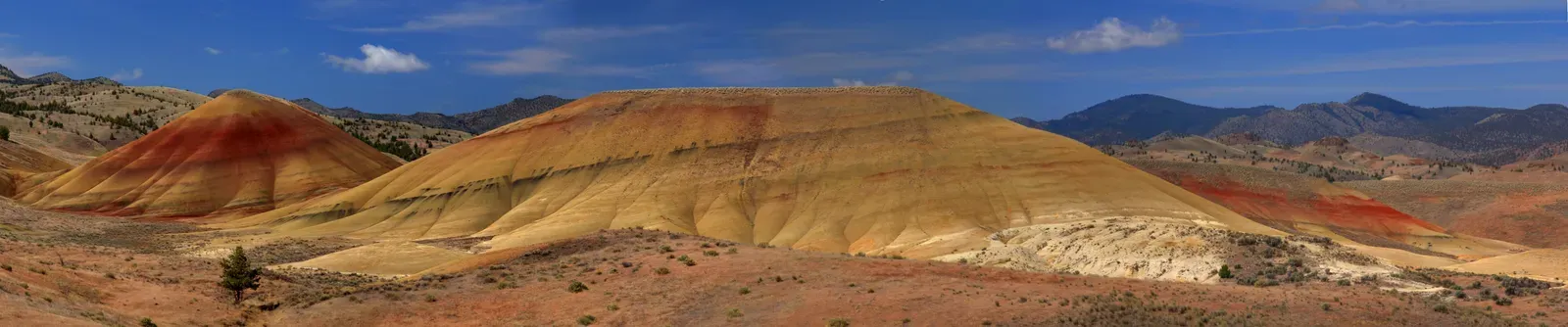
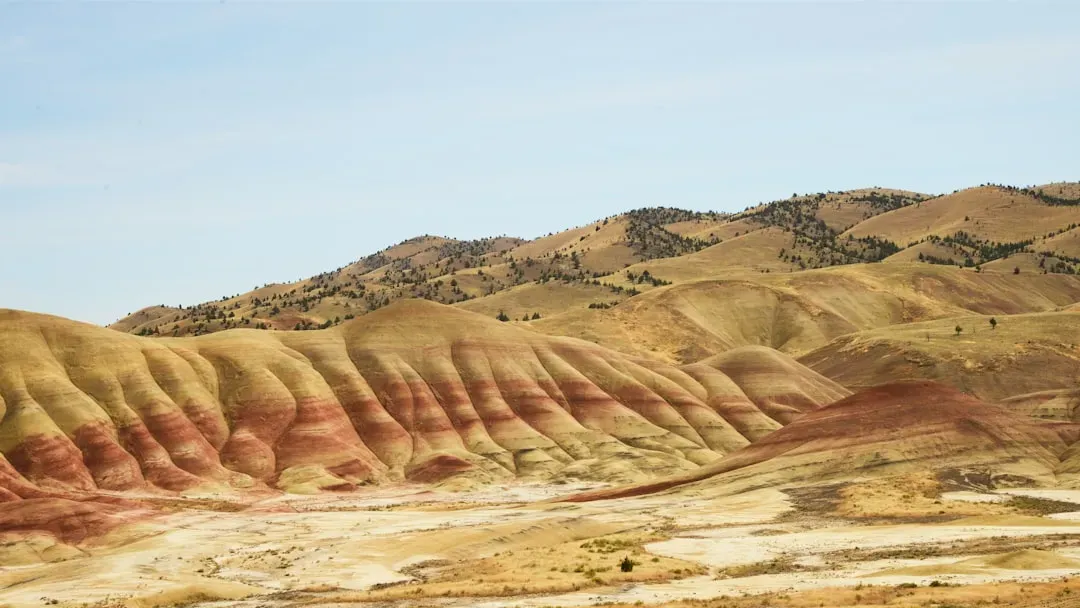
Most people don’t think of Oregon as a fossil hotspot, and that is honestly their loss. Over tens of millions of years, the shifting volcanic landscape of the John Day River basin has collected an impressive catalog of ancient life. Because of this, the three units of the monument established in the area – Clarno, Sheep Rock, and Painted Hills – are immensely valuable, among the few places on Earth where scientists can study the progression of evolution over a period of time.
The fossils at this picturesque site span 40 million years and offer one of the richest evolutionary records of the Cenozoic Era, including prehistoric alligators, bears, dogs, pigs, horses, cougars, and even hippopotamuses. Visit the Thomas Condon Paleontology Center in the Sheep Rock Unit to see more than 500 of these fossils on display. The Clarno Palisades, west of the town of Fossil, are a striking landform created 44 million years ago by a series of volcanic mudflows called lahars. The Palisades preserve fossils from a time when the region was very different from the near-desert environment that exists today, when tiny four-toed horses, huge rhino-like brontotheres, crocodilians, and meat-eating creodonts roamed ancient jungles.
Hagerman Fossil Beds National Monument, Idaho
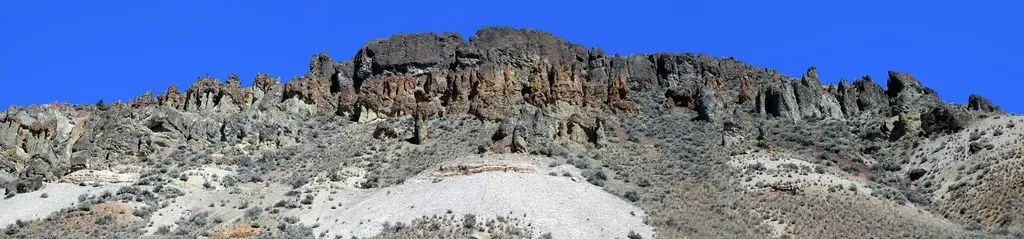
Southern Idaho might be the last place you’d expect to find a world-class paleontological treasure. Yet here it is. Hagerman Fossil Beds National Monument features the world’s richest known deposit of the Hagerman Horse, Equus simplicidens, thought to be the link between prehistoric and modern horses. Paleontologists consider Hagerman one of the most important sites in the world for the fossil history of horses. It’s essentially the missing link that explains how the animals galloping around farms today came to be.
Before western scientists came to this area, the Lakota Sioux knew that this area of what is now Nebraska was rich in the bones of long-extinct animals. According to the National Park Service, this national monument has one of the world’s most complete collections of mammal fossils from the Miocene epoch, which lasted from about 23 million years ago to 5 million years ago. It’s hard to say for sure whether any single site tells a more complete evolutionary story, but Hagerman is certainly in the conversation.
Agate Fossil Beds National Monument, Nebraska
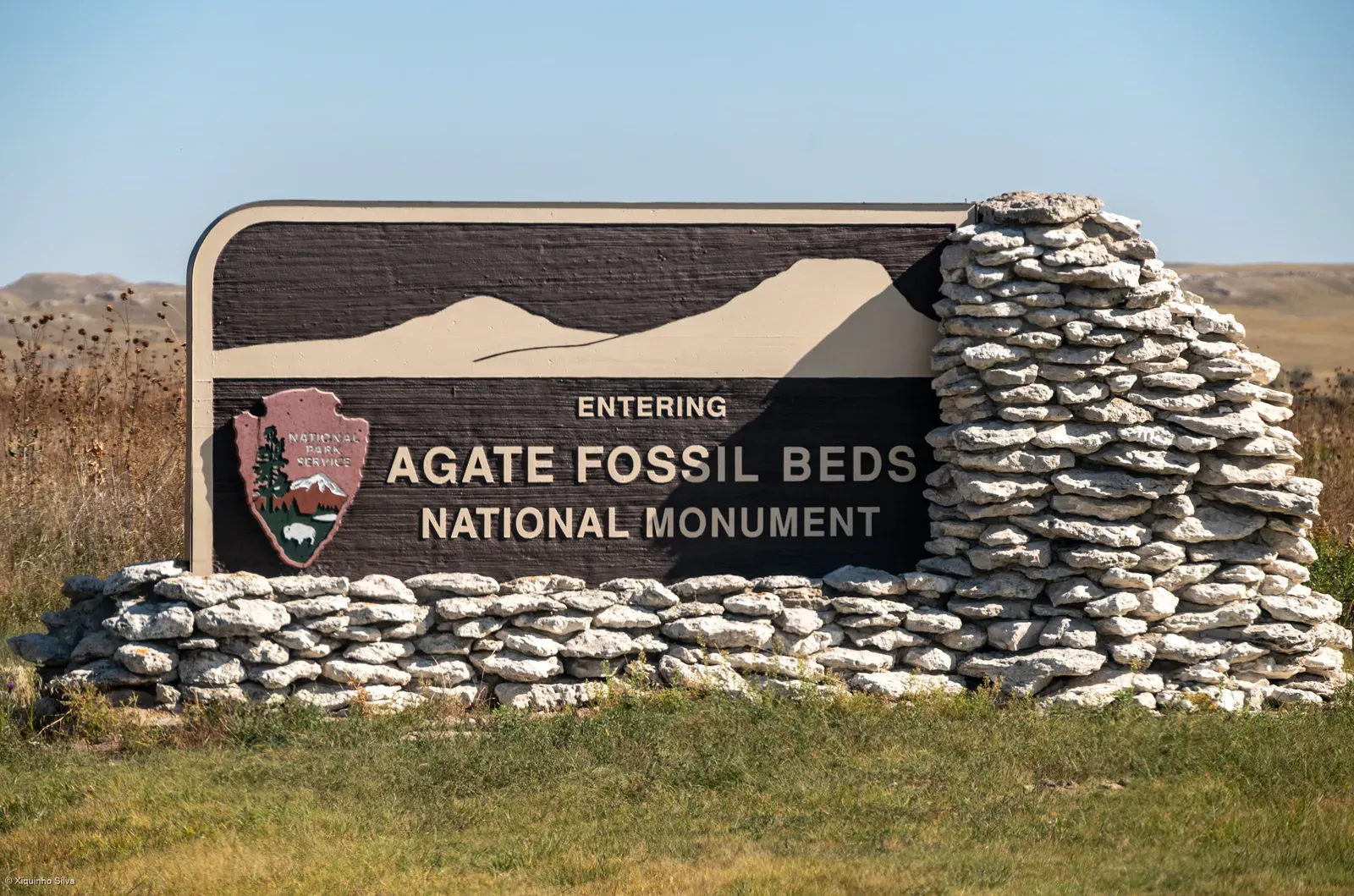
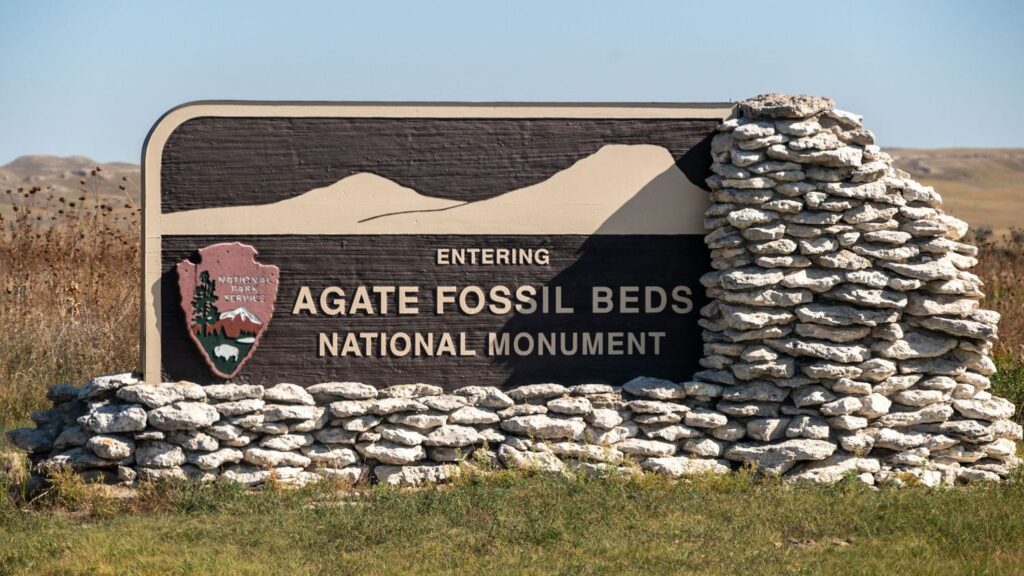
Agate Fossil Beds National Monument is one of the most important paleontological sites in the world for Miocene-age mammals. Several quarries in the monument, especially the bone beds at Carnegie and University Hills, include dense concentrations of bones that are both well-preserved and have yielded many nearly complete skeletons. The sheer density of material found here is something that still impresses scientists today.
Fossils of Menoceras (a small rhino), the pig-like Daeodon, Daphoenodon (bear dogs), Moropus (a distant relative of the horse), and Stenomylus, a diminutive gazelle-like camel, have been recovered from the monument. Burrows of Daphoenodon and Palaeocastor (ancient beaver) are also present at the site, with the latter being known as Daemonelix, or “Devil’s Corkscrews,” for their spiral shapes. You can hike 2.7 miles on the paved Fossil Hills Trail to see the site where James Cook first discovered fossil bones in the 1880s, and the one-mile Daemonelix Trail features the famous Devil’s Corkscrew and fossilized grassland soil and ancient sand dunes.
Fossil Butte National Monument, Wyoming
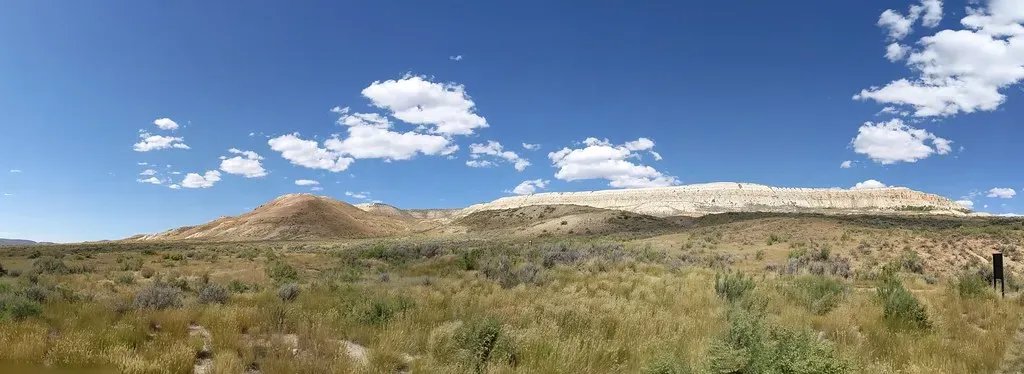
Located in southwestern Wyoming, 15 miles west of Kemmerer, this area protects part of the fossil-rich Fossil Butte Member of the Eocene Green River Formation. Established in 1972, Fossil Butte National Monument covers 13 square miles and hosts 20,000 visitors annually. During the Eocene Epoch some 50 million years ago, this region was a subtropical-lake ecosystem. Imagine a warm, shallow lake teeming with life where Wyoming’s cold sagebrush plains now stretch to the horizon.
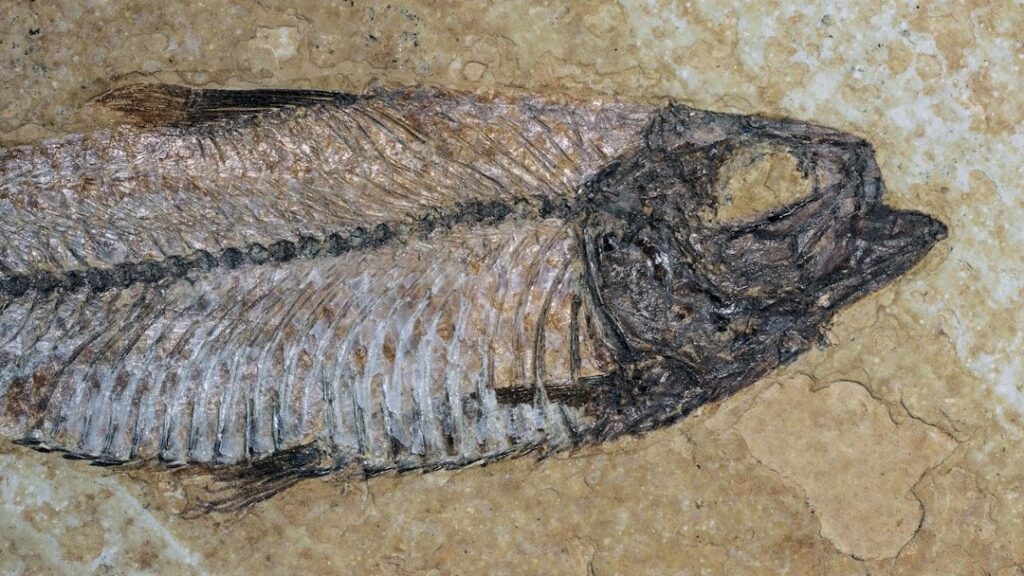
Fifty-mile-long Fossil Lake, the smallest of three fresh-water lakes, deposited fine-grained sediments that were a near-perfect host for the fossilization of detailed, articulated skeletons, particularly those of fish. Today, Fossil Butte is recognized as a world-class paleontological site, and fossil fish are by far its most abundant fossils; the 27 identified species include paddlefish, stingrays, gars, herrings, and perches, all preserved in great detail and as long as 20 inches. These fish fossils are so beautifully preserved, they look almost like paintings in stone.
Hell Creek Formation, Montana
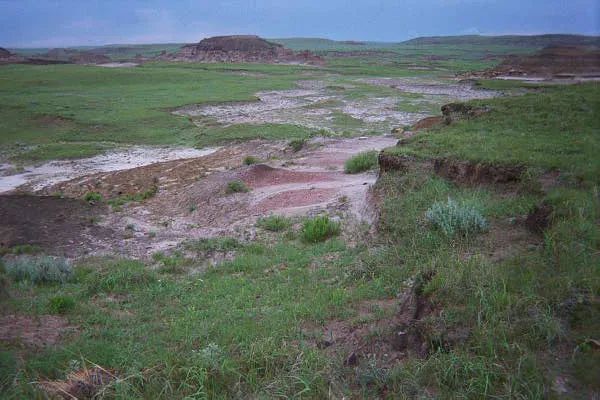
If Jurassic Park is your reference point for prehistoric excitement, then the Hell Creek Formation in northeastern Montana is your real-world equivalent. It is perhaps best known for the highly fossiliferous Hell Creek Formation, exposed primarily on state and federal lands and composed of freshwater clays, mudstones, and sandstones deposited during the last part of the Cretaceous. The formation has produced important assemblages of invertebrates, plants, mammals, fish, reptiles, and amphibians, with an impressive inventory that includes Tyrannosaurus and Triceratops.
The Tanis site in North Dakota contains possible evidence of the Chicxulub meteorite impact – such as the chaotic mixing of fossil carcasses and a layer of glass tektites with associated impact impressions – deposited minutes to hours after the impact. A recent Triceratops discovery is the centerpiece of a new Visitor Center at Makoshika State Park near Glendive, and the park has a number of interpretive trails that are part of the Hell Creek Formation, a 65-million-year-old rock layer that winds through the Badlands of Montana. This is the kind of place where the weight of deep time genuinely settles over you.
Guadalupe Mountains National Park, Texas
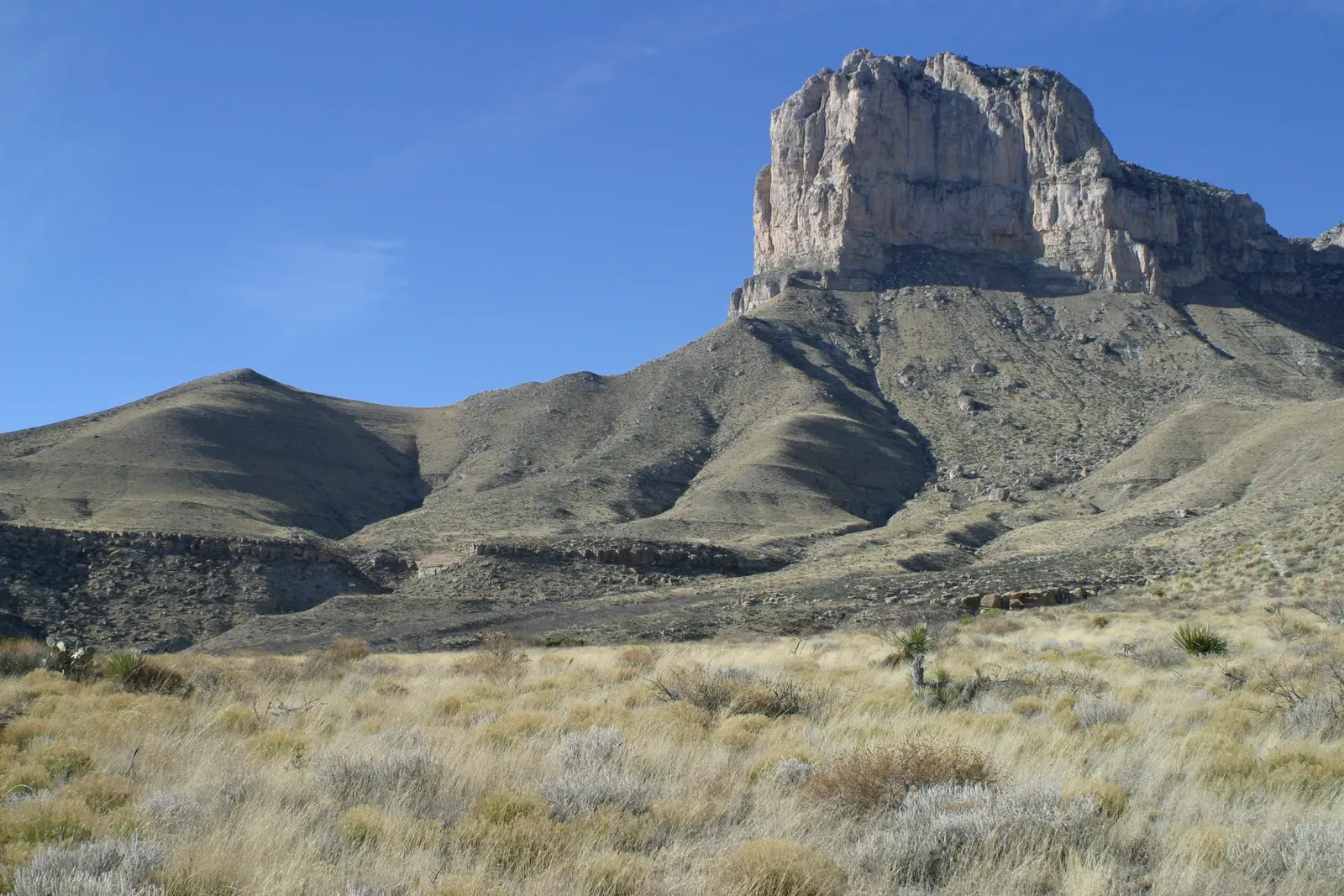
Here is a mind-bending thought for you: the dramatic peaks of West Texas were once completely submerged beneath a tropical inland sea. The American Southwest is known for its arid climate, yet this park showcases remnants from an underwater world that existed 265 million years ago when this part of West Texas was covered by a tropical inland sea 400 miles long. Standing on dry desert rock and imagining ancient ocean currents flowing overhead is exactly the kind of perspective shift that makes fossil sites so powerful.
Today, this area, known as the Permian Reef, is one of the best-preserved fossil reefs on Earth, with numerous tiny marine creatures embedded in the park’s rock. The predominant organisms in this reef were sponges, although algae, corals, oysters, sea urchins, snails, and trilobites all lived in this sea over millions of years. Scientists have studied historic sea level rises and drops here to understand how these climate-driven changes affected the ecosystem. You can see examples of these fossils throughout the park, and the 8.4-mile Permian Reef Trail in McKittrick Canyon offers interpretive signs highlighting various aspects of this ancient sea and its diverse lifeforms.
Conclusion: The Past Is Closer Than You Think
Here’s the thing about fossil sites – they do something no museum display really can. They put you in the exact spot where life once thrived, suffered, and was preserved by the strange mercy of geology. You are not looking at a replica or a recreation. You’re looking at the real thing, still locked in the earth where it landed millions of years ago.
Fossils and paleontological sites are irreplaceable and nonrenewable. They are invaluable to science as they provide our only evidence of the history of life on Earth, and a single fossil may be the only evidence of the existence of an entire species. That alone makes every one of these sites worth protecting, and worth visiting with real attention and care.
Whether you’re traveling across the country or simply driving through a state you’ve underestimated, one of these twelve sites might be closer to you than you ever imagined. The bones are out there, waiting. Will you go looking? Share your favorite fossil hunting memory or which site you’re adding to your bucket list in the comments below.