Most people picture science as this clean, confident march forward – fossil gets found, experts get excited, textbooks get updated. The reality is far messier, and honestly, far more fascinating. Some of the most important prehistoric discoveries in human history were greeted not with wonder but with accusations of fraud, contamination, or wishful thinking. Real scientists, with real credentials, looked at real evidence and said: “No. That cannot be.”
What’s wild is how often they were spectacularly wrong. The twelve discoveries below didn’t just survive skepticism – they eventually broke the frameworks that produced it. A few rewrote entire branches of science. And at least one of them came down to a single finger bone. Keep reading, because the further down this list you go, the stranger it gets.
#12 – Altamira Cave Paintings Defied Every Timeline Experts Held Dear
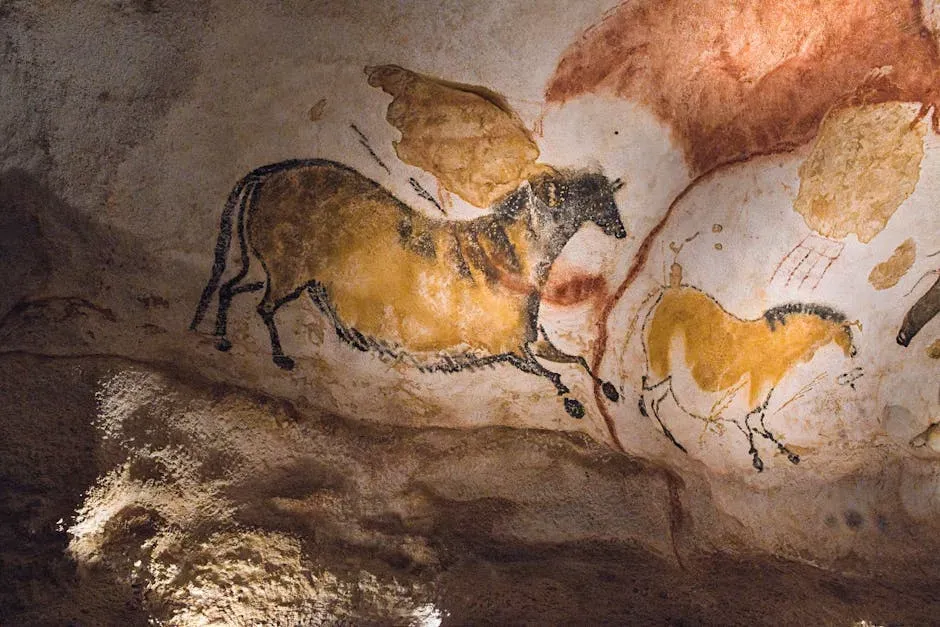
When amateur archaeologist Marcelino Sanz de Sautuola and his young daughter stumbled across sweeping bison murals in Spain’s Altamira cave in 1879, the reaction from the scientific establishment wasn’t wonder – it was contempt. Leading researchers flatly insisted that Paleolithic humans were too cognitively primitive, too tool-poor, too everything to have produced paintings that vivid, that technically refined, that alive. The prevailing image of early humans was essentially one of dim-witted brutes scraping out a survival. Art this sophisticated didn’t fit that story, so the story won. Sautuola was publicly branded a fraud.
He died in 1888 without vindication. Only after similar paintings were confirmed at multiple other sites across France and Spain – La Mouthe, Font-de-Gaume, Lascaux – did the scientific community finally, quietly, admit it had been wrong. The Altamira paintings date back more than 20,000 years and remain among the most technically accomplished prehistoric art ever found. The deeper sting: the resistance had nothing to do with the evidence being weak. It had everything to do with assumptions about who our ancestors were allowed to be.
Fast Facts
- Altamira cave is located near Santillana del Mar in Cantabria, northern Spain, and runs approximately 270 meters (886 feet) long
- The cave contains roughly 930 individual paintings depicting bison, deer, boars, oxen, and abstract symbols
- Paintings span two main cultural periods: the Solutrean (about 21,000–17,000 years ago) and the Magdalenian (about 17,000–11,000 years ago)
- For a quarter of a century after the 1879 discovery, the scientific community dismissed the paintings as modern forgeries
- Altamira was designated a UNESCO World Heritage Site and today visitors explore a faithful replica – the original is closed to protect the art
#11 – The Plesiosaurus Skeleton Was Branded a Crude Fake
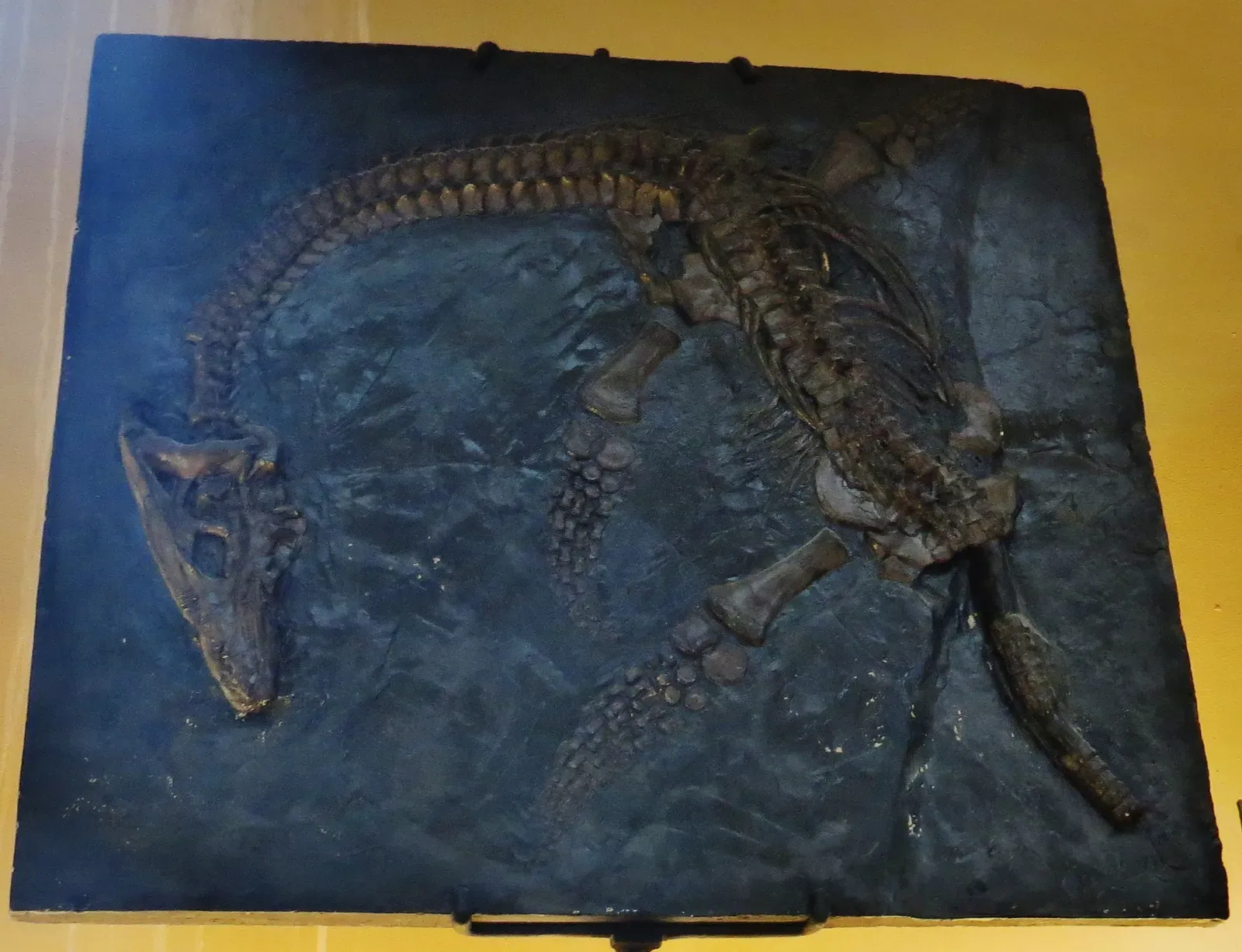
Mary Anning pulled a complete plesiosaur skeleton from the cliffs at Lyme Regis in 1823, and it looked like something a child might have invented – a barrel-shaped body attached to a neck so absurdly long that it made up more than half the animal’s total length. The French anatomist Georges Cuvier, the most respected comparative anatomist alive at the time, publicly questioned whether the specimen was a composite of mismatched bones or an outright fabrication. A neck that long, he argued, violated the basic structural logic of vertebrate animals. The math didn’t work. The biology didn’t work. Therefore, the fossil must be wrong.
It was not wrong. As more plesiosaur specimens surfaced across England and Europe, the anatomical picture sharpened: these were real marine predators that hunted Jurassic seas for millions of years, and their extraordinary necks were exactly as strange as Anning’s first find suggested. What makes this story linger is who was right and who was wrong. Cuvier was a titan of science. Anning was a working-class woman with no formal training who had taught herself everything she knew from the cliffs. The fossil record didn’t care about credentials.
#10 – Living Coelacanths Shattered the Extinction Narrative
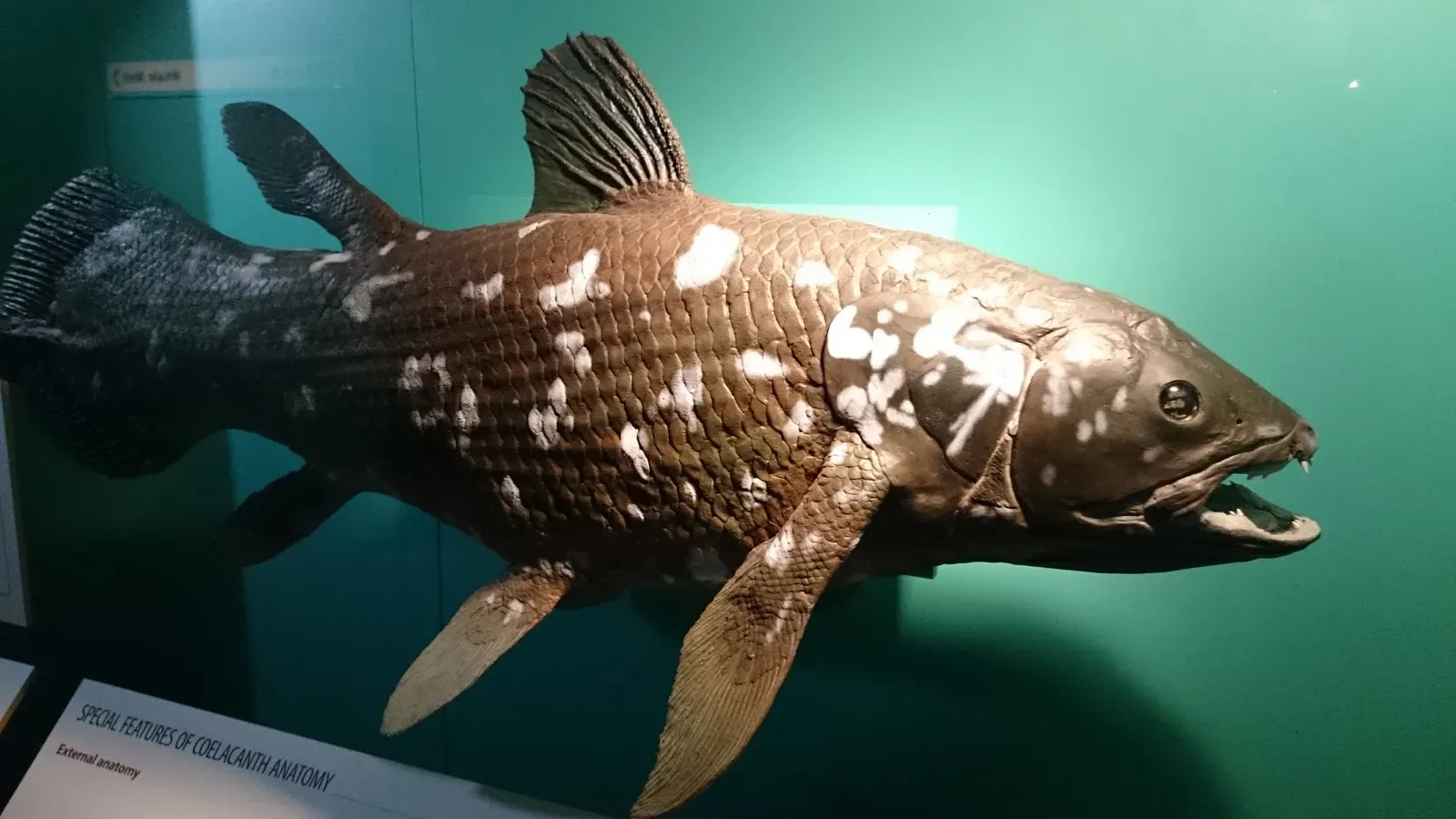
In December 1938, a trawler working off the South African coast hauled up a five-foot, steel-blue fish that had no business being alive. Museum curator Marjorie Courtenay-Latimer spotted it in the catch, recognized it as something impossible, and reached out to ichthyologist J.L.B. Smith. His reaction, once he finally saw the specimen, was one of the most unguarded moments of scientific shock on record. The coelacanth – a lobe-finned fish with a body plan identical to fossils from over 66 million years ago – had been declared extinct with the dinosaurs. The specimen wasn’t a close relative or a lookalike. It was, to a remarkable degree, the same animal.
Initial responses from the broader scientific community ranged from polite skepticism to outright dismissal. Misidentification was the favored explanation. Then a second specimen turned up in 1952 near the Comoro Islands, and the debate collapsed. Coelacanths turned out to be thriving in deep Indian Ocean waters, completely undetected for over six decades of modern marine biology. The fish’s discovery didn’t just embarrass extinction science – it raised an uncomfortable question that oceanographers still wrestle with: what else is down there that we’ve declared gone?
The sea, once it casts its spell, holds one in its net of wonder forever.
Jacques Cousteau
#9 – Dinosaur Soft Tissue Refused to Decompose on Schedule
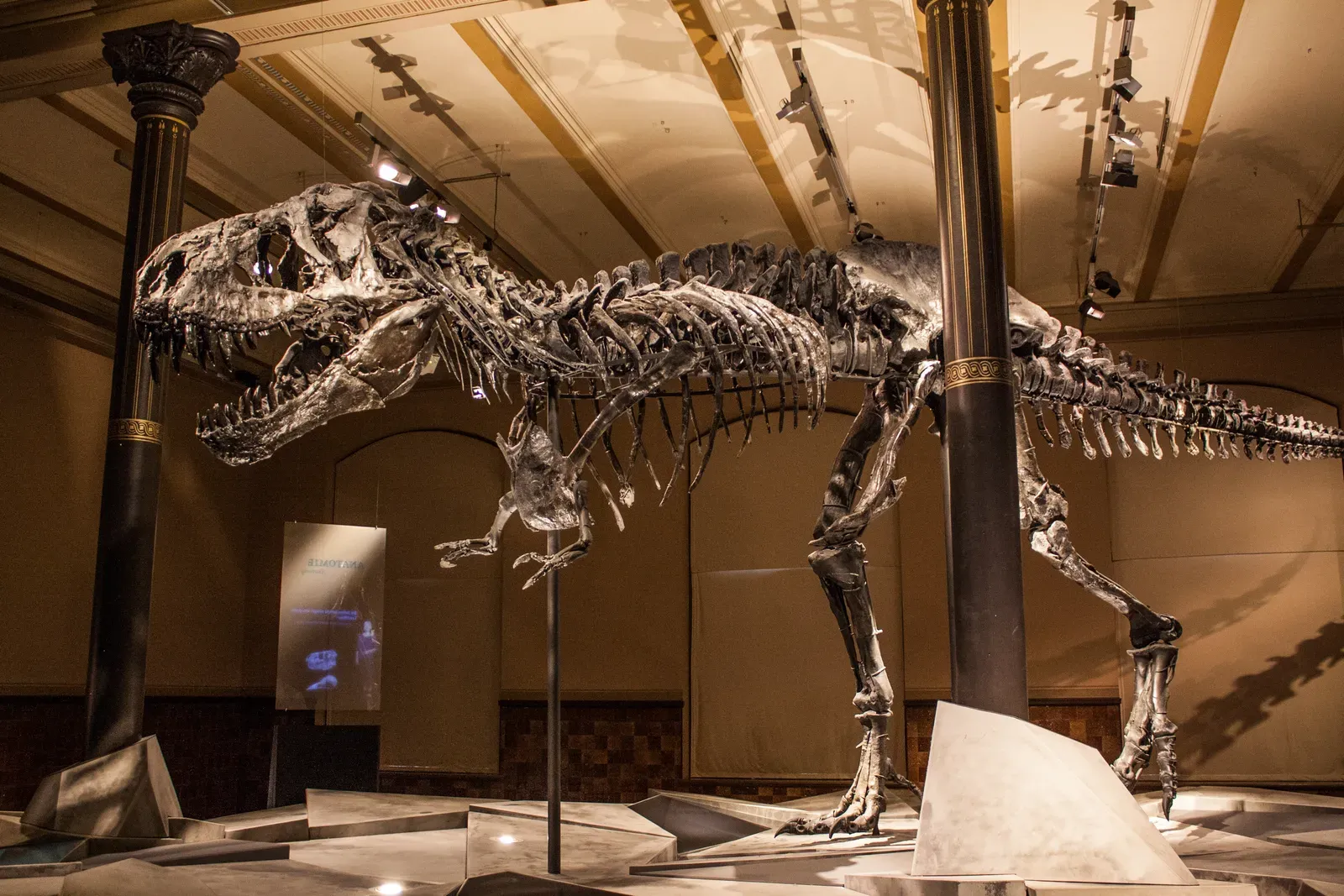
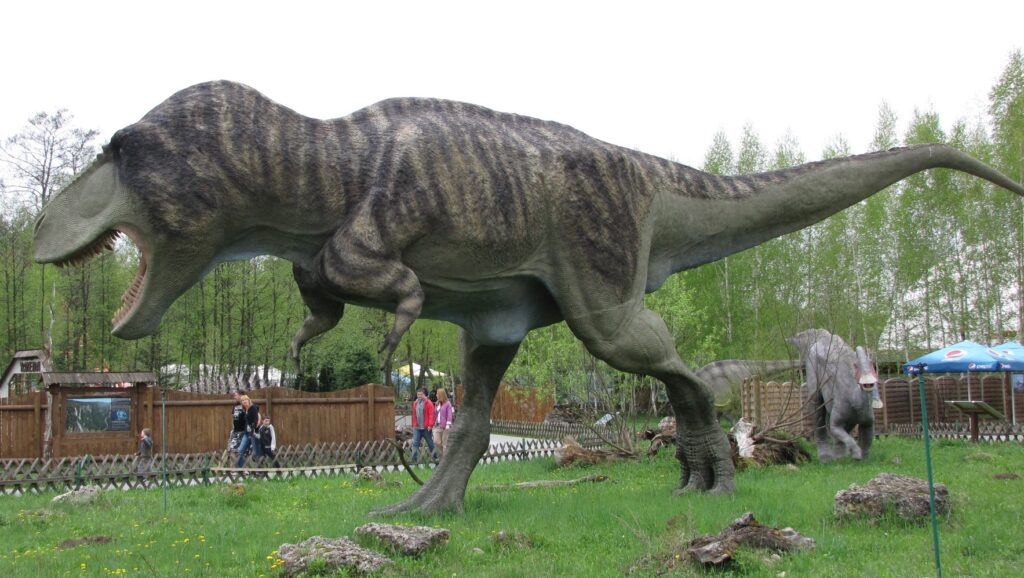
In 2005, paleontologist Mary Schweitzer published findings that sent shockwaves through the field: inside the hollow femur of a 68-million-year-old Tyrannosaurus rex, she had found flexible, transparent blood vessels. Not impressions. Not mineral replacements. Actual soft tissue structures that bent when manipulated. The scientific community’s response was swift and brutal. Colleagues suggested contamination. Others questioned her methodology. The near-universal assumption was that biological material simply could not survive 68 million years of fossilization – the chemistry made it impossible, and therefore the results had to be wrong.
Schweitzer pushed back, and the data held. Protein sequencing identified clear collagen signatures in the tissue, and those sequences aligned most closely with modern birds – a striking molecular confirmation of the dinosaur-to-bird evolutionary link that had previously rested entirely on skeletal evidence. Subsequent studies found preserved biomolecules in other specimens, including a Brachylophosaurus and a mosasaur. The mechanism of preservation is still debated, with iron from hemoglobin emerging as a leading candidate for why some tissue survived. The lesson Schweitzer’s work delivered was blunt: sometimes “impossible” just means the model needs updating.
Worth Knowing
- Soft tissue preservation had been considered chemically impossible beyond roughly 1 million years – Schweitzer’s find pushed that boundary back 68 times further
- The collagen sequences recovered from the T. rex femur matched most closely with modern chickens and ostriches, not reptiles
- Iron chelation from hemoglobin is the leading proposed mechanism: it may act as a natural preservative by cross-linking proteins
- Preserved organic material has since been reported in specimens from multiple species and continents, suggesting Schweitzer’s T. rex was not an isolated anomaly
#8 – Feathered Dinosaurs Overturned the Reptile-Only Paradigm
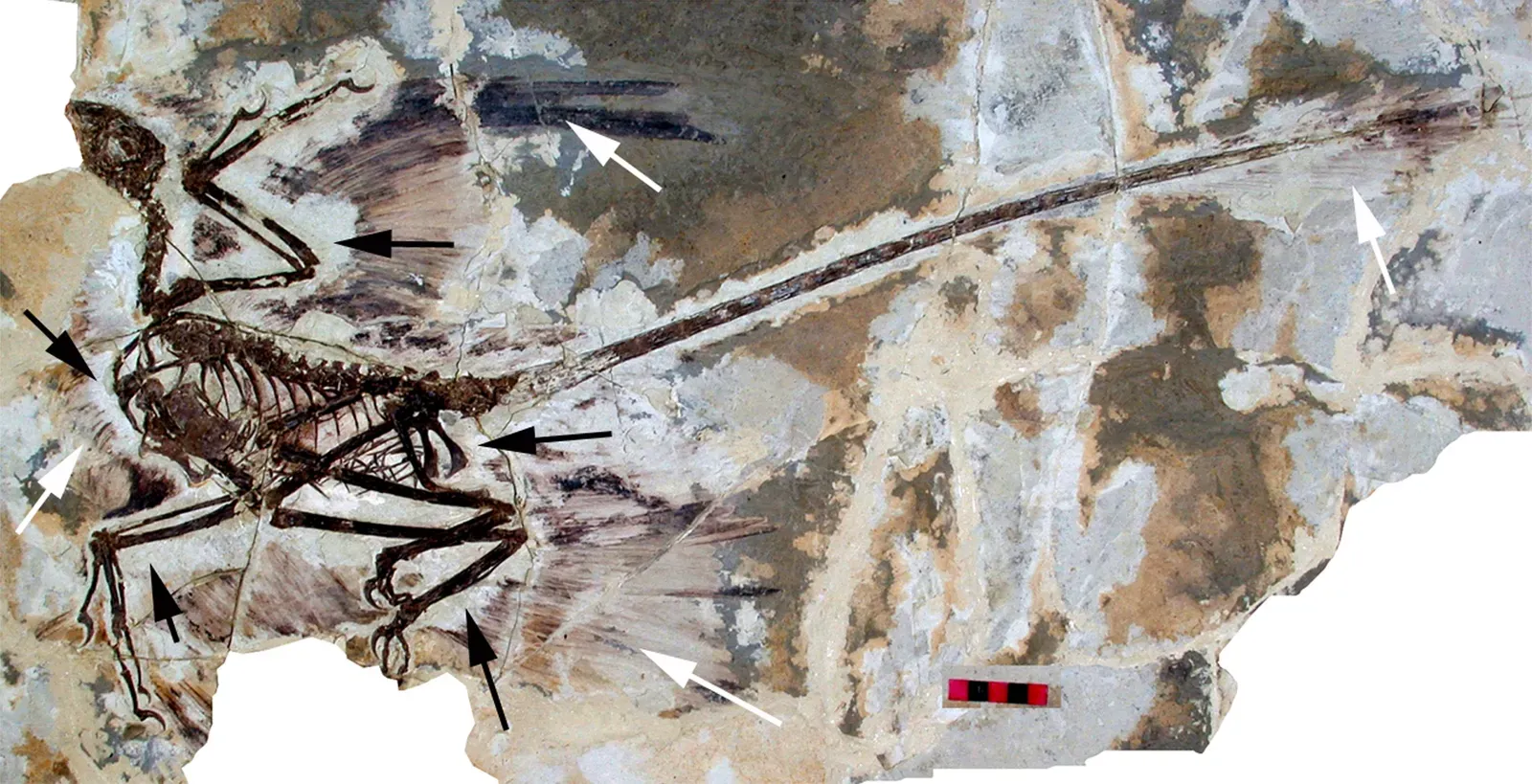
When fossils from China’s Liaoning province began surfacing in the 1990s showing clear feather impressions on unmistakably dinosaur bodies, the Western paleontological establishment was not immediately convinced. Feathers were a bird feature. Dinosaurs were reptiles. That boundary had held for over a century, and some researchers were not about to abandon it based on specimens coming out of a country whose fossil-export practices were already under scrutiny. Accusations of doctored specimens circulated. Skeptics pointed to the Archaeoraptor embarrassment – a genuine chimera fossil created by a Chinese farmer gluing pieces together – as reason for caution.
But the Liaoning beds kept producing. Sinosauropteryx, Caudipteryx, Microraptor – specimen after specimen showed not just feather impressions but complex, branched feather structures, color-producing melanosomes, and in Microraptor’s case, four fully feathered limbs arranged in a configuration that suggested a gliding capability no one had predicted. The fossils weren’t outliers. They were a pattern. By the mid-2000s, the argument had effectively flipped: the question was no longer whether non-avian dinosaurs had feathers, but which ones didn’t. It turns out that T. rex almost certainly had them, at least in patches. The fearsome lizard-king of popular imagination was, in part, a bird.
#7 – Homo floresiensis “Hobbits” Were Called Pathological Dwarfs
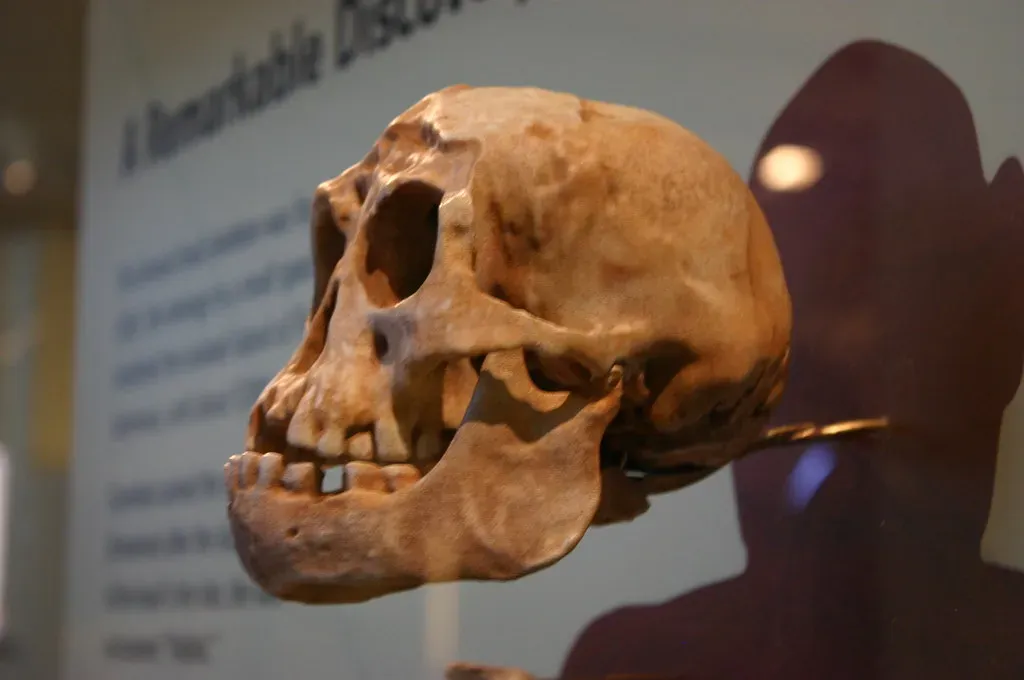
The 2003 excavation of Liang Bua cave on the Indonesian island of Flores produced a hominin skeleton that measured just over a meter tall, with a brain roughly the size of a grapefruit and skeletal features that looked both primitive and peculiar. The team concluded they’d found a new species – Homo floresiensis – that had survived on the island until as recently as 50,000 years ago. The backlash was immediate and personal. Critics argued the specimen was simply a modern human with microcephaly, or possibly a pygmy with a developmental disorder. One vocal opponent insisted for years that the skull morphology matched known pathological conditions and that no new species designation was warranted.
What made the counterargument compelling – and what eventually carried the day – was the accumulation of additional skeletons showing consistent features across multiple individuals. You can explain away one unusual skull. You cannot explain away a population. The wrist bones alone proved decisive: Homo floresiensis had a wrist structure closer to African apes and early hominins than to any modern human, healthy or otherwise. The tools found alongside the remains showed sophisticated flaking technique despite the tiny brain, a combination that still genuinely puzzles researchers. Homo floresiensis likely descended from an earlier hominin lineage that reached Flores long before modern humans, then evolved in isolation. The island made them small. The island also, eventually, hid them from us for 50,000 years.
At a Glance: Homo floresiensis
- Height: Approximately 3 ft 6 in (1.06 m) – shorter than most modern 8-year-olds
- Brain volume: Around 380–420 cc, roughly one-third the size of a modern human brain
- Timeframe: Lived from approximately 700,000 to 60,000 years ago on Flores, Indonesia
- Tools: Stone tools associated with the species date to between 190,000 and 50,000 years old
- Key anatomical flags: Broad, flared hipbones; no chin; protruding brow ridges; large flat feet relative to leg length
- Shrinking mechanism: Recent research suggests body size reduction occurred by slowing post-birth growth – a process called insular nanism
#6 – Göbekli Tepe’s Monumental Architecture Came Too Early
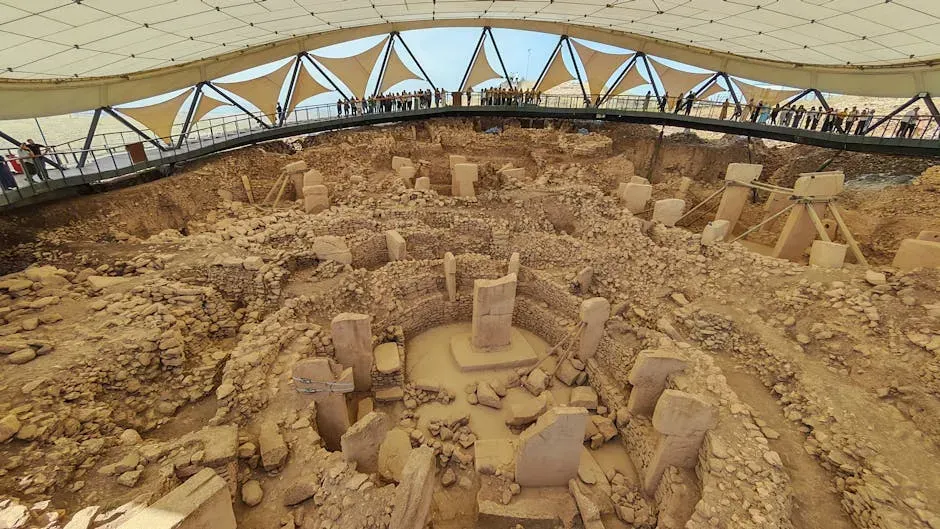
The textbook sequence ran like this: humans settled into farming, farming produced surplus, surplus enabled specialization, specialization eventually allowed some people to stop growing food and start building monuments. It was a clean, logical, deeply satisfying model. Then Klaus Schmidt started digging at a hilltop in southeastern Turkey in 1994 and found T-shaped limestone pillars – some standing nearly six meters tall and weighing up to 20 tons – arranged in elaborate circles decorated with carved foxes, vultures, scorpions, and abstract symbols. The site dated to roughly 11,600 years ago. Hunter-gatherers built it. There was no farming. There was no city. There was no surplus economy. There was just this.
The initial resistance wasn’t outright denial so much as prolonged bewilderment. Scholars spent years finding alternative explanations that might preserve the old model. Maybe the dating was off. Maybe the builders weren’t true hunter-gatherers. Maybe it was smaller and simpler than it looked. None of those exits held. Göbekli Tepe didn’t just predate Stonehenge by six millennia – it inverted the entire assumed relationship between social complexity and agriculture. Some researchers now argue the monument-building itself may have driven the transition to farming, reversing the arrow of causation entirely. The site is still only partially excavated, and what remains buried is, by all geophysical estimates, considerably larger than what’s been found.
Quick Compare: Göbekli Tepe vs. Other Ancient Monuments
- Göbekli Tepe (Turkey): ~11,500 years old – built by hunter-gatherers with no pottery, no writing, no farming
- Stonehenge (England): ~5,000 years old – built by early farming communities
- The Great Pyramid (Egypt): ~4,500 years old – built by a state-level agricultural civilization
- Excavated so far: 43 large megalithic pillars uncovered; up to 250 more are estimated still buried beneath the hill
- What’s missing: No houses, no cooking hearths, no trash pits – the site appears to have been a ceremonial destination, not a settlement
#5 – Anomalocaris Was Reassembled from Parts Labeled as Separate Animals
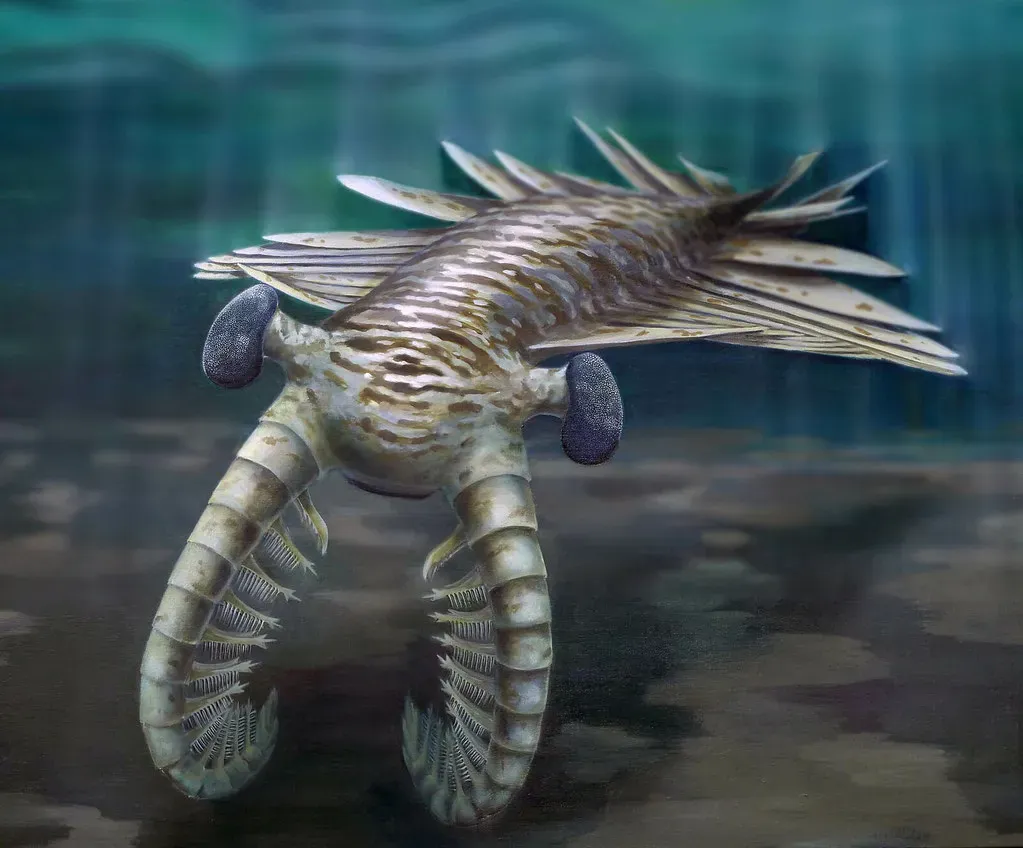
For decades, paleontologists working the Cambrian Burgess Shale formation were unknowingly cataloguing pieces of the same animal under different names and different species. The circular, pineapple-slice-shaped mouth structure was classified as a jellyfish. The curved, segmented grasping appendages were logged as a shrimp-like creature. A third fragment, the soft body itself, was described as a sea cucumber. All three sat in museum drawers, comfortably misidentified, until the 1980s when Cambridge paleontologist Harry Whittington and his colleagues began reconstructing Burgess Shale organisms in detail and realized the “shrimp” claws matched attachment points on the “sea cucumber” body.
When the full picture emerged, it was genuinely unsettling. Anomalocaris canadensis reached nearly a meter in length during a geological period when most animals were measured in millimeters. Its compound eyes, preserved in exquisite detail in some specimens, were among the most sophisticated visual systems in the entire Cambrian ocean. The circular mouth, lined with overlapping plates, could crush the shells of trilobites. It was an apex predator in a world where apex predators weren’t supposed to exist yet – and it had been sitting in pieces in museum collections for nearly a century before anyone realized what they were looking at. The fragments were so unlike anything living that no one thought to connect them.
#4 – Prototaxites Towered as an Unclassifiable Giant
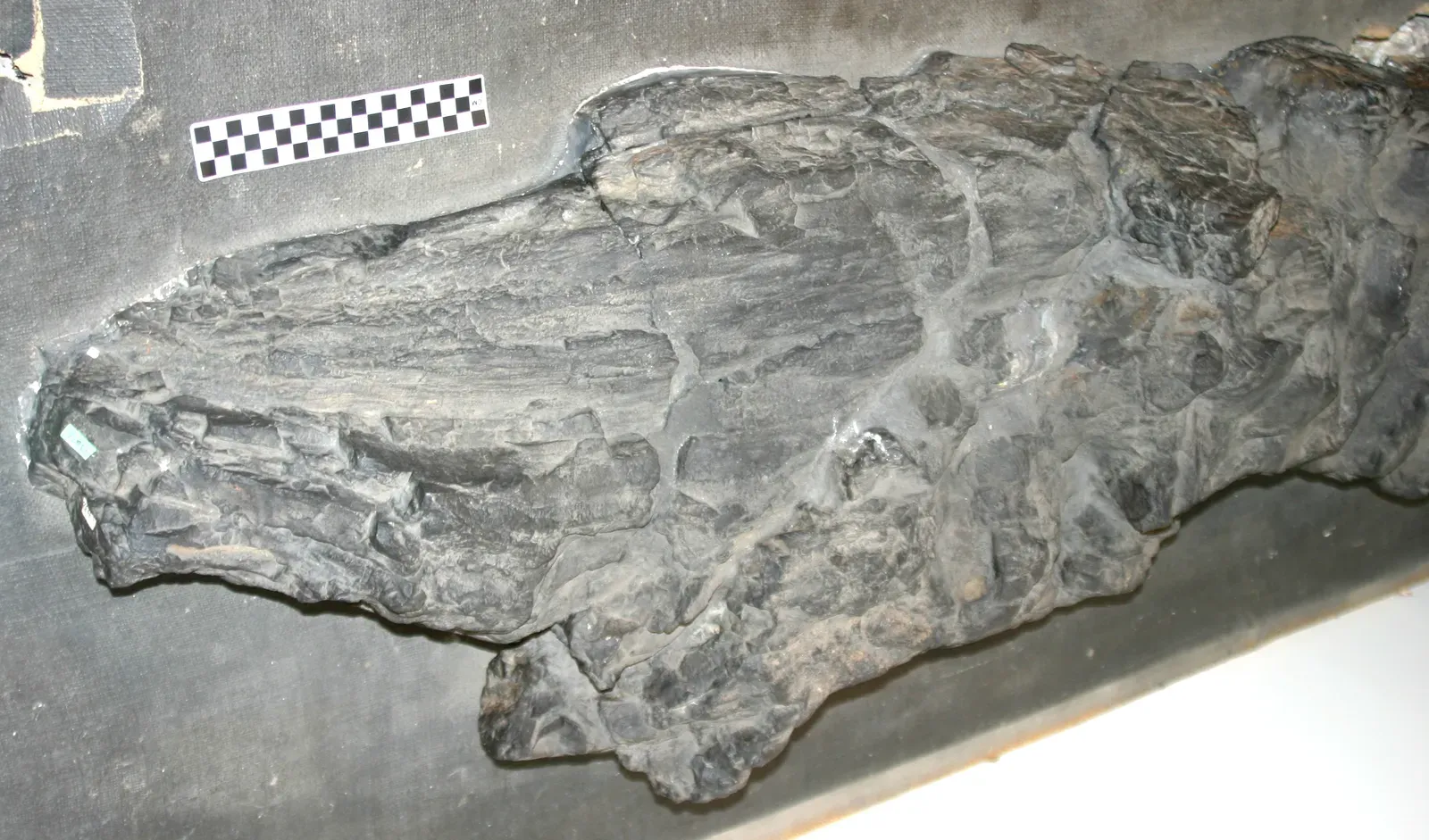
Imagine stumbling across fossils of nine-meter-tall, trunk-like organisms in 400-million-year-old rock, in a period when the tallest known land plants barely cleared your knee. That was the situation facing nineteenth-century botanists who first encountered Prototaxites in Devonian deposits. The fossils were enormous, clearly terrestrial, and stubbornly resistant to classification. Early researchers called them giant algae. Others proposed rolled mats of liverworts. Some descriptions stretched across decades of debate without resolution. The organisms had no obvious evolutionary relatives, living or extinct, and their internal structure – a tangle of interwoven tubes – matched nothing in the plant kingdom.
The breakthrough came in 2007 when carbon isotope analysis of Prototaxites fossils produced a chemical signature consistent with fungi, not plants. The leading interpretation now holds that Prototaxites was a massive fungal organism – essentially a giant mushroom relative – that dominated early terrestrial landscapes for tens of millions of years before true trees evolved and outcompeted it. For a stretch of deep time, these enormous fungal towers were the largest living things on land. That’s a sentence that should stop you cold. The tallest organism on the Devonian landscape was a fungus the height of a three-story building, and we only figured that out in 2007.
#3 – Ediacaran Organisms Displayed Impossible Body Plans
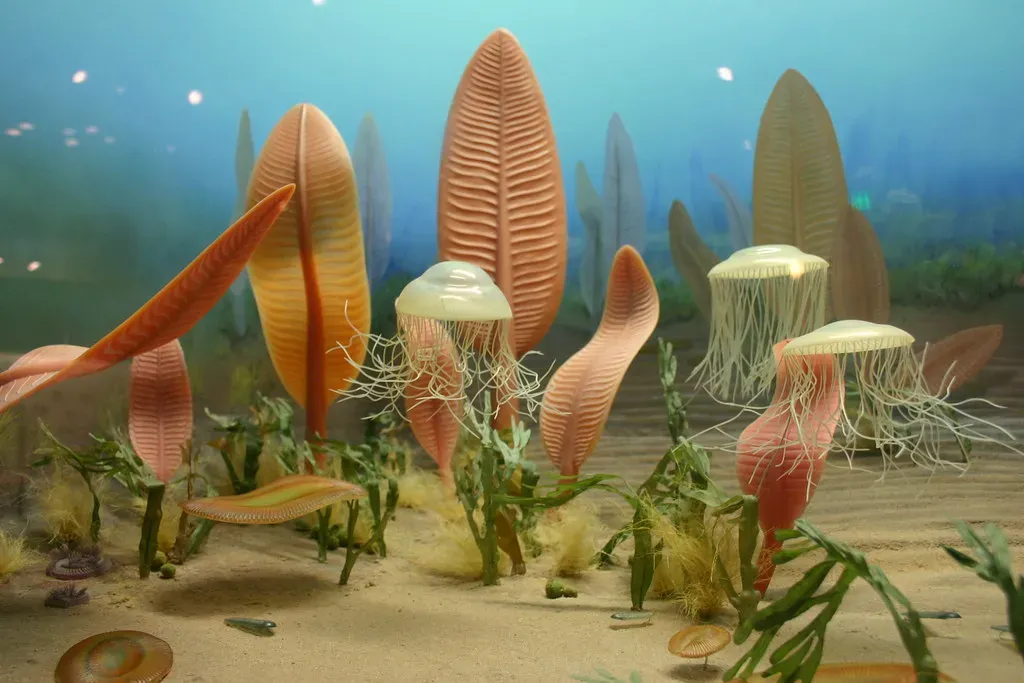
The Ediacaran biota – soft-bodied organisms preserved in 570-million-year-old rocks from Australia, Namibia, and Newfoundland – don’t look like anything. That’s not a casual observation; it’s the central scientific problem. Some are radially symmetrical like starfish. Others show fractal branching like ferns. Several have a quilted, air-mattress texture that corresponds to no known biological architecture. They leave no trace of mouths, guts, reproductive organs, or nervous systems. They appear, in the fossil record, fully formed and mysteriously diverse, and then most of them vanish before the Cambrian explosion begins. Researchers spent decades debating whether they were animals, plants, fungi, lichens, or something else entirely.
The most provocative hypothesis, proposed by paleontologist Adolf Seilacher, was that Ediacaran organisms represented a completely separate kingdom of life – a failed evolutionary experiment that left no descendants. That idea has since been partially walked back, with some Ediacaran forms now recognized as early animals. But the honest answer is that several of the most distinctive Ediacaran organisms remain genuinely unclassifiable. Dickinsonia, a ribbed oval that could grow to nearly 1.4 meters across, was variously called an animal, a fungus, and a lichen before recent chemical analysis identified cholesterol-like molecules in fossil impressions, suggesting an animal affinity. It’s still not settled. These organisms are the closest thing paleontology has to a true biological mystery – life that existed, thrived, and left us almost no way to understand it.
Why It Stands Out: The Ediacaran Puzzle
- Ediacaran fossils range from 635 to 538 million years old – predating the Cambrian explosion by tens of millions of years
- They show no mouths, guts, eyes, or nervous systems, making kingdom-level classification nearly impossible
- Dickinsonia grew up to 1.4 meters across yet left no trace of how it fed, moved, or reproduced
- Cholesterol-like biomarkers found in Dickinsonia impressions offer the strongest current evidence for animal affinity – but the debate is ongoing
- Most Ediacaran body plans disappear entirely before the Cambrian begins, leaving no clear descendants in the modern tree of life
#2 – Denisovan DNA Emerged from a Single Finger Bone
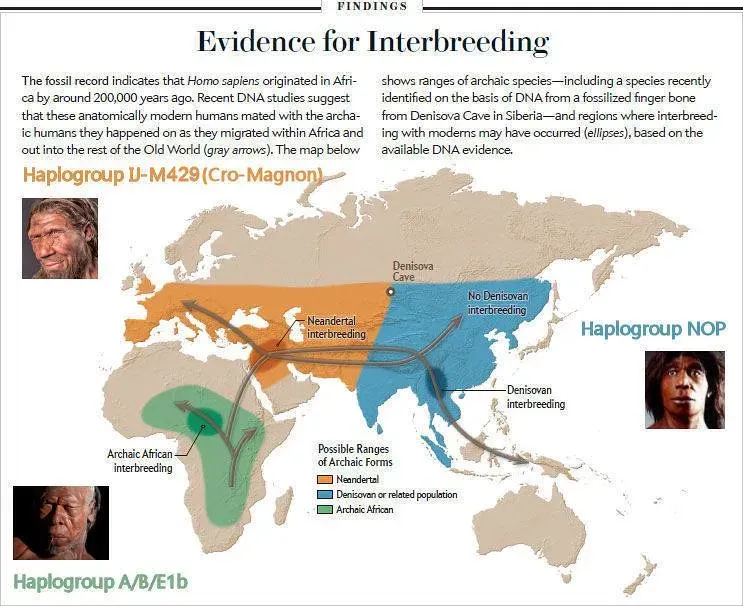
In 2010, a team led by Svante Pääbo at the Max Planck Institute extracted DNA from a finger bone fragment found in Denisova Cave in Siberia. The bone was small enough to fit in a matchbox. The genome it yielded was complete enough to rewrite human prehistory. The sequence matched neither Neanderthals nor modern humans – it was something else, something that had lived alongside both and interbred with at least one of them. No skull. No skeleton. No physical description of what a Denisovan looked like. Just a genome, and a lineage hiding inside it that no one had suspected existed.
What the data revealed about our own ancestry was the part that truly unsettled researchers. Modern Melanesian populations carry roughly 3 to 5 percent Denisovan DNA. Tibetan populations carry a specific Denisovan gene variant – EPAS1 – that allows them to thrive at high altitude with lower oxygen levels. That adaptation, one of the most physiologically remarkable traits in any living human population, came from a species we didn’t know existed until a decade and a half ago. Additional Denisovan teeth and a partial jaw have since been found, but the physical picture remains fragmentary. We know more about their genome than their face. We know they shaped our biology in ways we’re still discovering. We know almost nothing else. That gap between knowledge and mystery is, depending on your disposition, either deeply unsatisfying or the most exciting open question in all of paleoanthropology.
#1 – Tiktaalik Bridged Fish and Tetrapods in Precise, Undeniable Detail
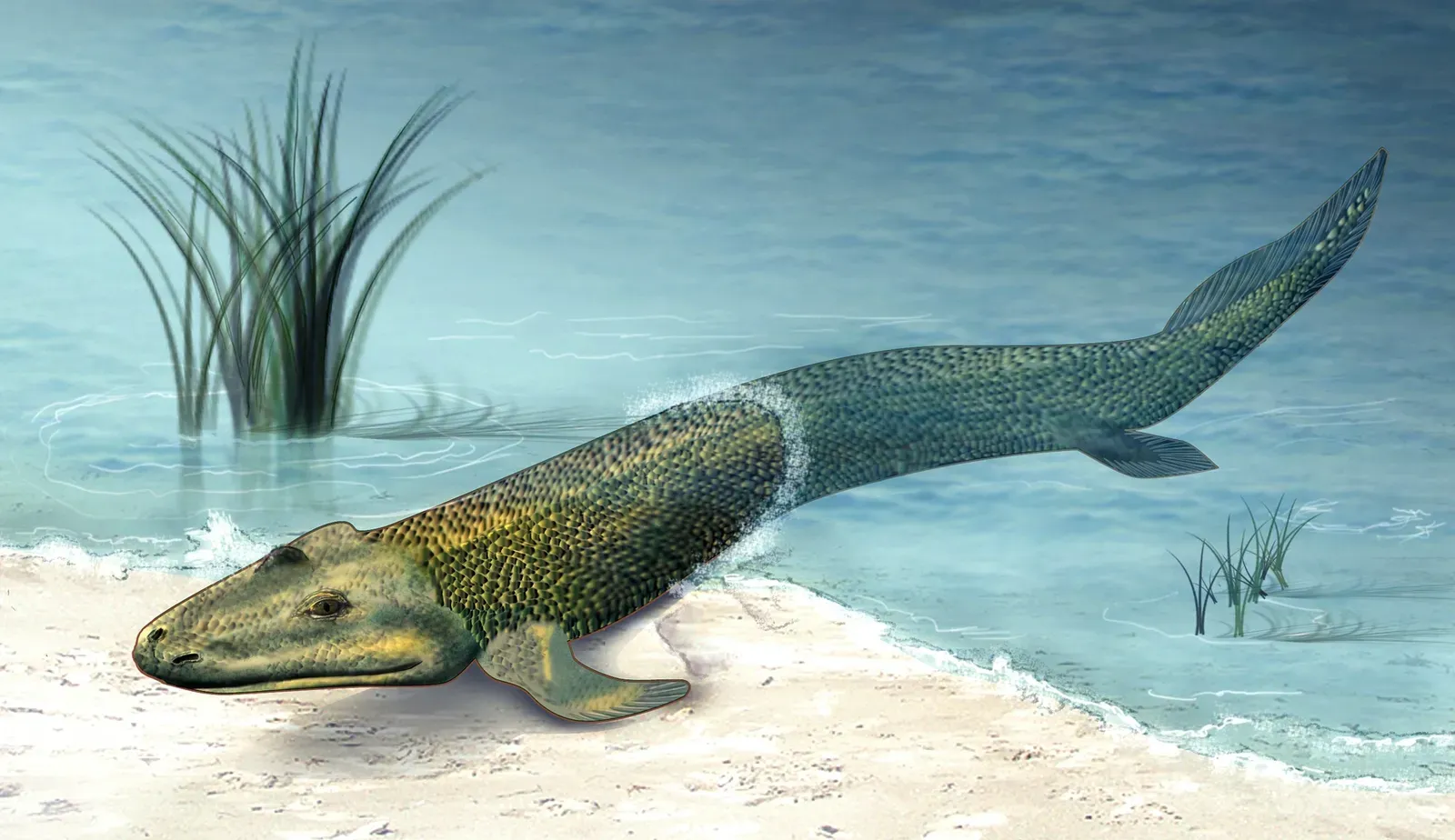
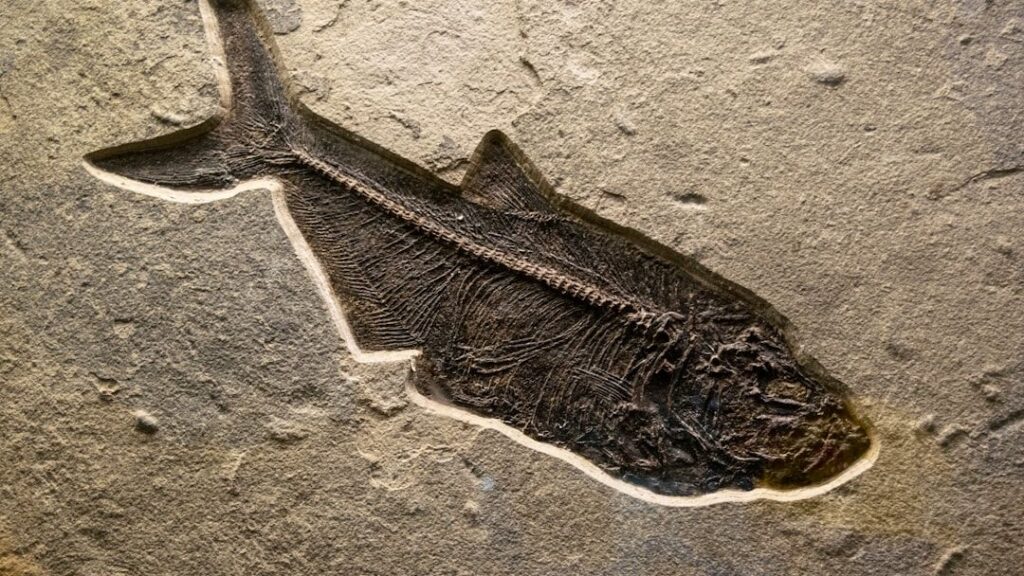
The discovery of Tiktaalik roseae in 2004 on Ellesmere Island in Arctic Canada was different from most paleontological surprises in one crucial way: its discoverers had predicted exactly where to find it. Neil Shubin and his team calculated that a transitional fossil between lobe-finned fish and early tetrapods should exist in 375-million-year-old Devonian freshwater deposits. They identified rock formations of the right age and environment in the Canadian Arctic and spent years searching. When they finally found Tiktaalik, it had everything the theory had predicted: fins with an internal wrist structure, a neck that could move independently of its shoulders, and a flattened head with eyes on top suited to shallow-water ambush hunting. It was almost insultingly perfect.
Early skepticism centered on whether Tiktaalik actually walked – whether those proto-limb fins could bear weight on land or merely prop the animal up in shallow water. That question was partially answered in 2014 when a description of Tiktaalik’s hind fins revealed they were larger and more developed than anyone had expected, suggesting a four-limbed locomotion pattern that preceded the fully terrestrial gait of later amphibians. The creature is now considered one of the most complete evolutionary transitions in the fossil record: a fish that was learning to be something else, frozen in stone at precisely the moment the experiment began. Every terrestrial vertebrate alive today – every reptile, mammal, bird, and amphibian – traces its body plan back through something very much like Tiktaalik. It’s not just a missing link. It’s the hinge point of a story four hundred million years in the making.
Fast Facts: Tiktaalik roseae
- Discovered in 2004 after a four-year targeted search in Ellesmere Island’s Fram Formation, Nunavut, Canada
- Lived approximately 375 million years ago during the Late Devonian Period; grew up to 2.7 meters (about 9 feet) long
- Its name comes from the Inuktitut word for “large freshwater fish,” chosen with input from the local Inuit community
- Key transitional features: mobile neck, wrist-like fin bones, robust ribs capable of supporting body weight, and eyes positioned on top of a flat skull
- 2014 analysis of pelvic fin material revealed a ball-and-socket hip joint – suggesting hind-limb locomotion began evolving before vertebrates left the water
- Research was published April 6, 2006 in Nature and made international headlines overnight
These Discoveries Didn’t Just Survive Skepticism – They Demolished It
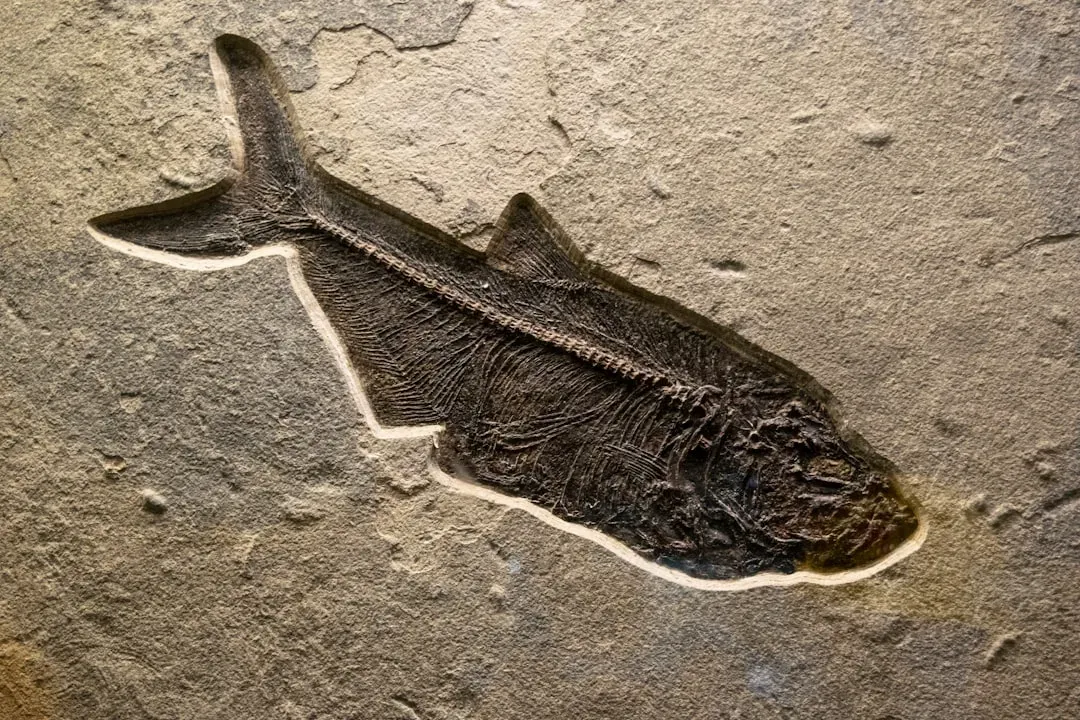
Looking at these twelve cases together, the pattern is hard to ignore and harder to dismiss. In almost every instance, the discovery that faced the fiercest resistance turned out to be the most consequential. The soft tissue in T. rex bone. The genome from a finger fragment. The hunter-gatherers who built a cathedral before they built a farm. The resistance wasn’t random – it was structural. Science, at any given moment, is defended by people who built careers on the existing model, and paradigm-shifting evidence threatens that model directly. That’s not a flaw in science; it’s an inevitable feature of how human institutions work. The flaw is in pretending otherwise.
What actually moves science forward isn’t consensus – it’s stubborn data. Fossils that refuse to fit. Genomes that shouldn’t exist. Tissue that has no business surviving 68 million years. The evidence in these cases didn’t ask for permission. It just kept accumulating until the resistance ran out of arguments. And if history is any guide, the next discovery on this list is already sitting in a drawer somewhere, mislabeled, waiting. The question worth sitting with isn’t which of these surprises you the most. It’s this: what assumption are we holding onto right now that the next find will finally crack open?