
That assumption is wrong more often than paleontologists like to admit. Some of the strangest creatures ever pulled from ancient stone have spent decades, occasionally more than a century, refusing to fit into any known category, sparking arguments that have split entire departments over something as basic as which end is the head.
A few of these fossils have been “solved” by confident headlines, only to be un-solved again a few years later by a fresh set of scans. Others are still sitting in scientific limbo right now, with no consensus in sight. Here are 13 specimens that turned paleontology’s tidy textbook version of prehistory into an open, occasionally embarrassing, argument.
#13 – Tribrachidium: The Three-Armed Puzzle Nobody Can Place
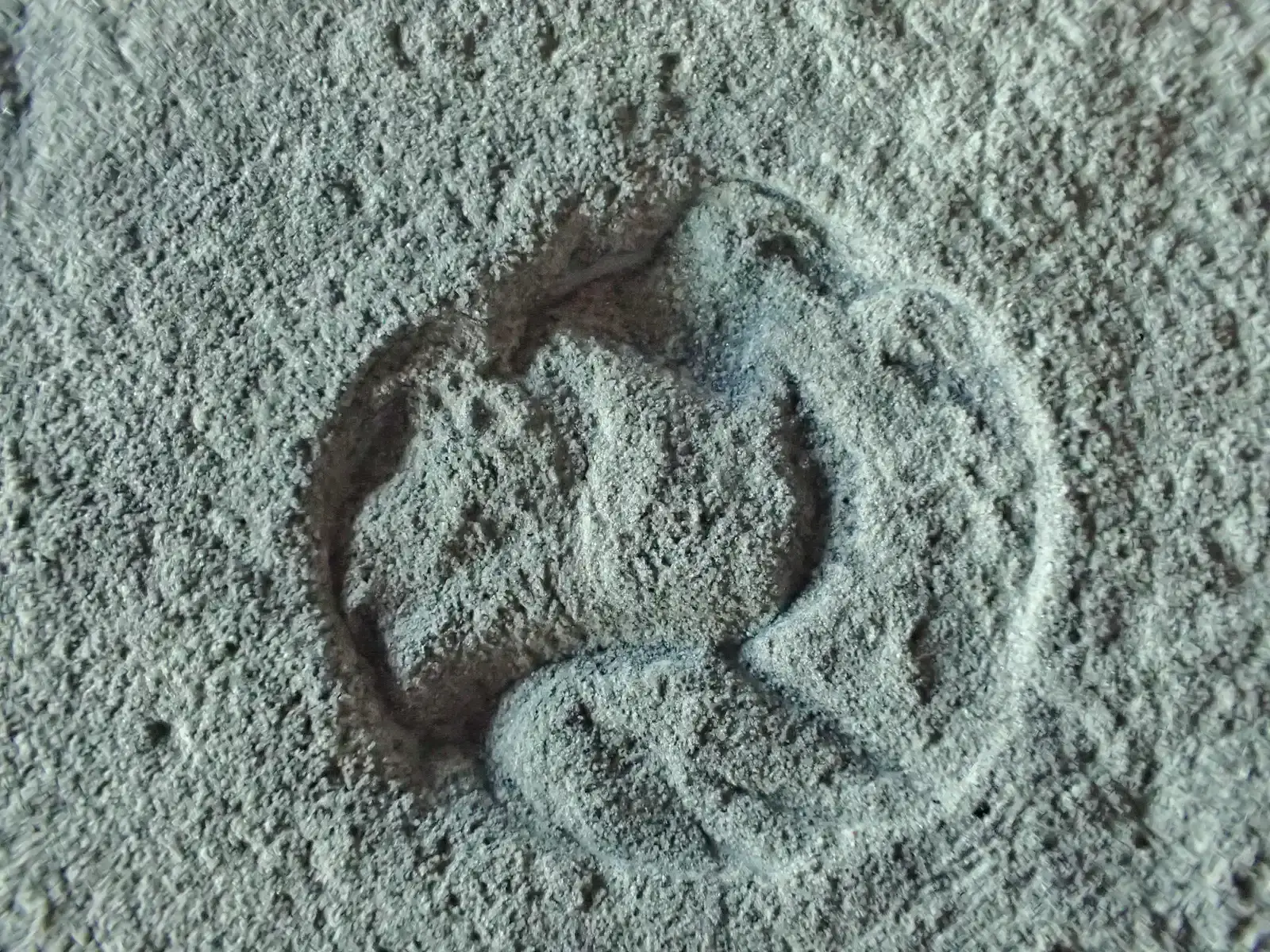
Tribrachidium heraldicum looks like it was designed by committee, and that’s exactly the problem.
This Ediacaran-period fossil, dated to roughly 555 million years ago, has a body built on three-fold symmetry – a shape almost unheard of in the modern animal kingdom, where bilateral (two-sided) symmetry dominates. Most animals you know, from insects to whales, have a clear left and right side. Tribrachidium has none of that. It has three raised, curved ridges radiating from a central point, like a lopsided pinwheel pressed into stone.
Paleontologists still can’t agree on what phylum, if any, Tribrachidium belongs to. Some have proposed it was an early echinoderm relative – the group that includes starfish, which also show unusual symmetry. Others argue it might not be an animal at all, but something closer to a mat-forming organism with no direct descendants alive today.
Fast Facts
- A dome-shaped body typically 2 to 4 cm in diameter, dating to roughly 555 to 550 million years ago in the late Ediacaran
- Known from South Australia’s Flinders Ranges, Russia’s White Sea region, and Ukraine
- Classified in the extinct group Trilobozoa, with no living relatives sharing its triradial body plan
- No mouth, gut, or sensory organs have ever been confirmed in any specimen
Because Ediacaran fossils rarely preserve soft internal structures, there’s no gut, no mouth, and no obvious sensory organs left to study. That absence of evidence has kept this three-armed oddity stuck in scientific limbo for decades, with no clear way to break the tie.
#12 – Yi qi: The Dinosaur That Grew Bat Wings
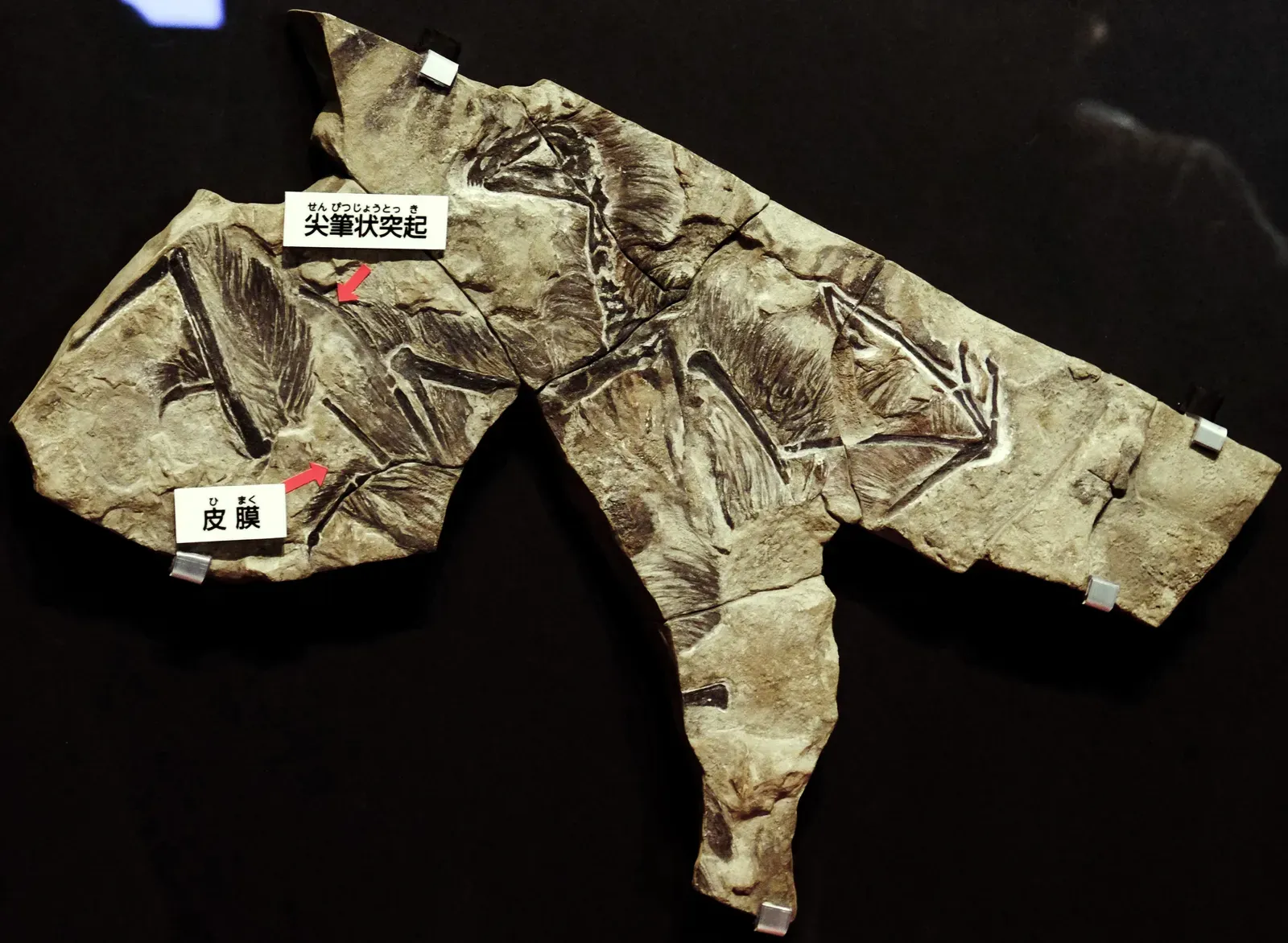
A small, sparrow-sized dinosaur with membrane wings sounds like science fiction, but Yi qi is real, and it broke the rules of what dinosaurs were supposed to look like.
Discovered in China and described in the mid-2010s, this scansoriopterygid dinosaur had rod-shaped bones extending from its wrists, unlike anything seen in any other dinosaur, feathered or otherwise. Instead of true feathers forming a wing surface like Archaeopteryx or modern birds, Yi qi appears to have stretched a skin membrane across these rods, essentially building a bat-style wing on a dinosaur skeleton. This was the first non-avian dinosaur ever found with evidence of membranous, rather than feathered, wings.
The controversy hasn’t cooled down since. Some researchers argue Yi qi could only glide short distances between trees, not achieve powered flight. Others question whether the strange wrist rods have been correctly interpreted at all, given how fragile and unusual the fossil is.
It represents an evolutionary experiment that seemingly went nowhere – a dead-end branch that tried a completely different solution to flight than the feathered dinosaurs that eventually became birds.
#11 – Longisquama: The Fossil That Might Have Rewritten Bird Evolution
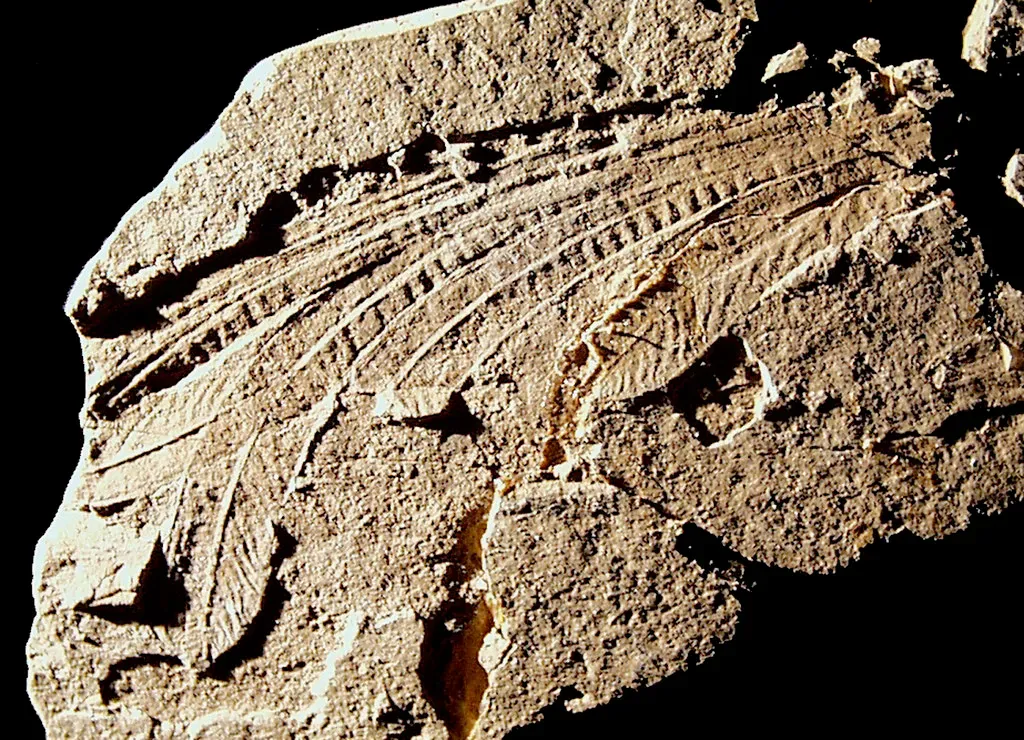
A single slab of Triassic rock from Kyrgyzstan has fueled one of paleontology’s most heated arguments for over 60 years, and it centers on a small reptile called Longisquama insignis.
The fossil shows a row of long, paired, feather-like appendages running down its back. To some researchers, these structures looked suspiciously like early feathers, which would suggest that feather-like structures evolved in reptiles completely unrelated to dinosaurs – a claim that would upend the accepted story of bird origins. Other scientists have countered that the “feathers” are simply elongated scales, or even fossilized plant fronds that happened to be preserved right next to the animal’s body.
The debate hinges entirely on a single, imperfectly preserved specimen, with no second fossil ever found to settle it. That’s precisely the kind of case that keeps paleontologists divided at conferences. Without additional specimens, there’s no way to run comparative studies or check for consistency across individuals.
Longisquama remains a cautionary tale about how much scientific certainty rests on having more than one example of something strange. Until another one turns up, the argument over whether this reptile hints at a second origin of feathers isn’t going away.
#10 – Thylacosmilus: The Saber-Toothed Predator That Might Not Have Been One
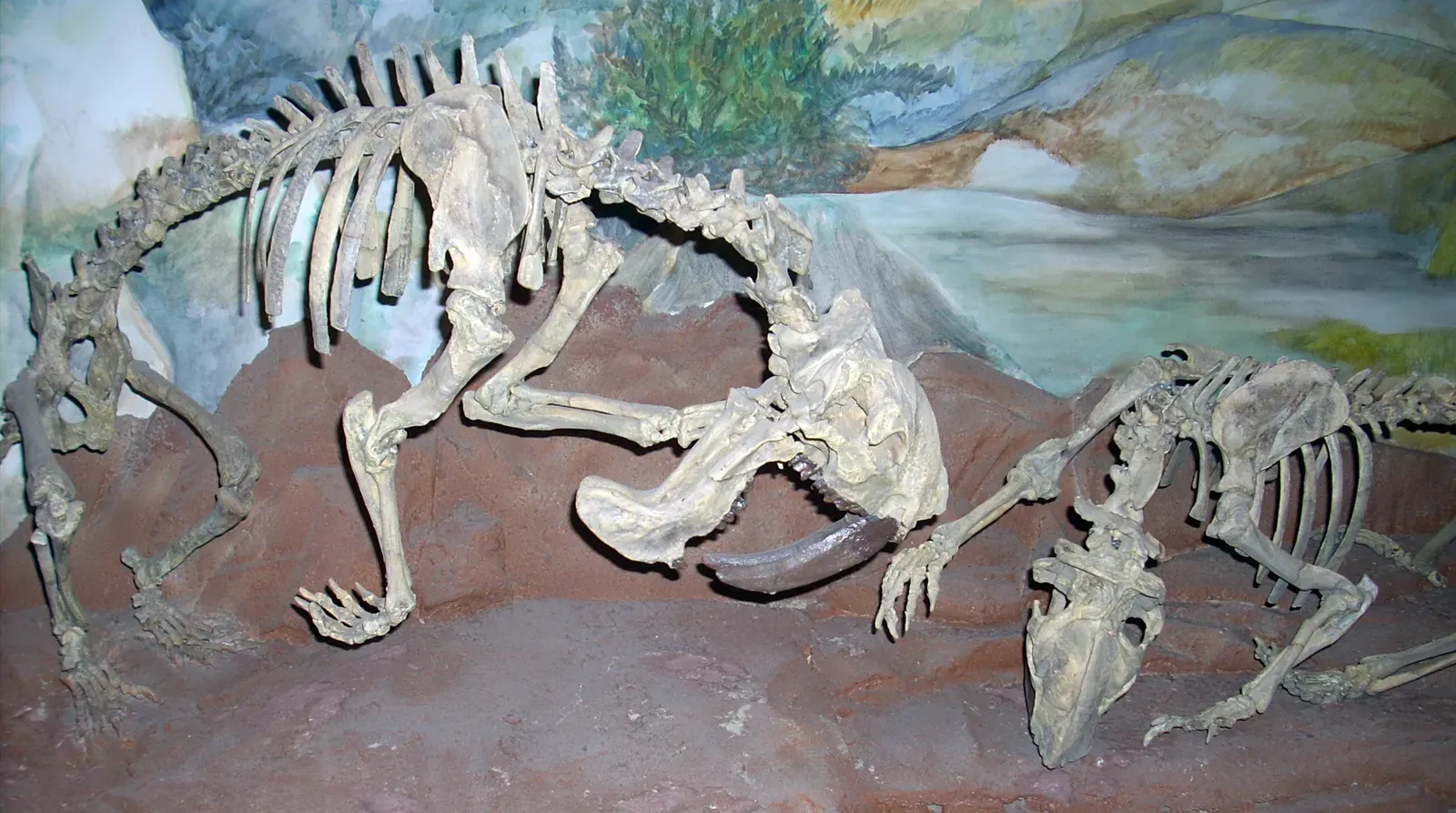
Everyone assumes an animal with saber teeth the length of steak knives must have been a ferocious hunter, but Thylacosmilus is forcing scientists to reconsider that assumption entirely.
This South American marsupial predator, which lived millions of years before humans, had canines that grew continuously throughout its life, much like a rodent’s incisors, and a skull built completely differently from placental saber-tooth cats like Smilodon. For decades, textbooks presented it as a marsupial mirror image of the saber-tooth cat, a case of convergent evolution producing near-identical killing machines. But biomechanical studies of its jaw and bite force have revealed it likely couldn’t deliver the kind of powerful, stabbing bite typically associated with saber-toothed predators.
That mismatch between anatomy and expected behavior has opened up a genuinely controversial debate: was Thylacosmilus using those teeth for something other than classic predation, perhaps scavenging or feeding on soft tissue rather than actively killing large prey? Many paleontologists now argue the “saber-tooth predator” label slapped on this animal for generations may be more assumption than evidence.
It’s a rare case where better tools revealed less certainty, not more.
#9 – Spinosaurus: The Dinosaur Reconstructed From Scratch, Twice
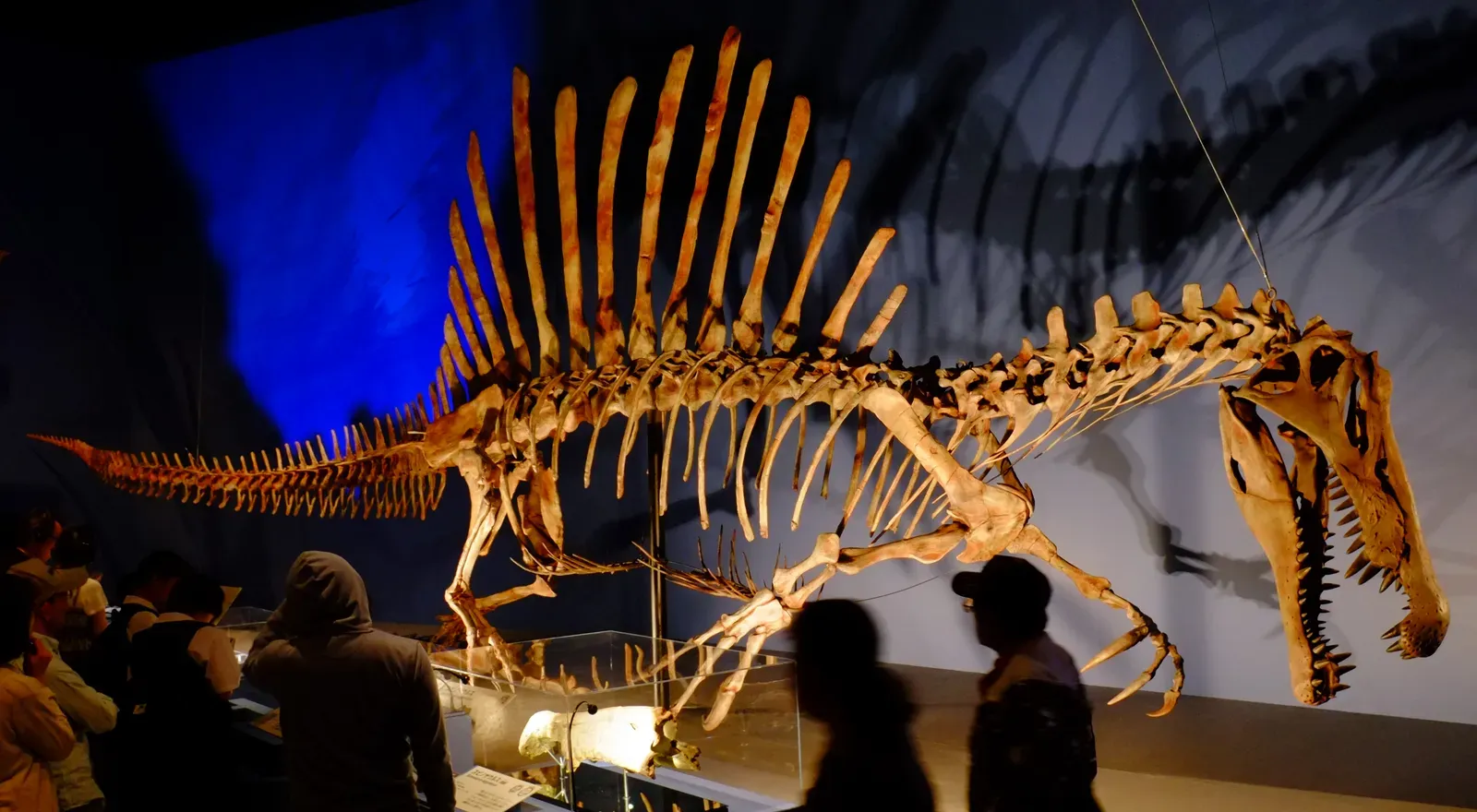
Spinosaurus aegyptiacus has the strange distinction of being one of the largest predatory dinosaurs ever discovered, and also one of the most fought-over.
The original fossils, unearthed in Egypt in the early 1900s, were destroyed during a bombing raid in World War II, meaning paleontologists spent decades working only from old sketches and written descriptions. When new, more complete remains finally surfaced in Morocco, they revealed something bizarre: an unusually long, paddle-like tail structure that reignited a furious argument over whether Spinosaurus could actually swim and hunt underwater. This became the first dinosaur seriously proposed to have lived a substantially aquatic lifestyle, a claim that directly contradicts a century of assuming large theropods were exclusively land-based hunters.
Quick Compare
- 1915 original: Pictured as a conventional, land-based theropod – the only version scientists had before the fossils were destroyed in WWII
- 2014 reconstruction: Short hind limbs and dense bones suggested a semi-aquatic wader spending much of its time in water
- 2020 tail discovery: A long, paddle-shaped tail found in Morocco pointed toward active swimming, not just wading
- Current stance: Camps remain split between a heron-style shallow wader and a crocodile-style active swimmer
The debate is far from settled. Some researchers back the swimming, fish-hunting Spinosaurus model, pointing to its dense bones and paddle tail. Others insist it more likely waded in shallows like a heron rather than swimming like a crocodile, arguing the aquatic reconstruction has been oversold.
When two respected camps of scientists can’t agree on whether a 50-foot predator swam or waded, you know the fossil record still has secrets left.
#8 – Anomalocaris: The Predator Scientists Accidentally Split Into Three Animals
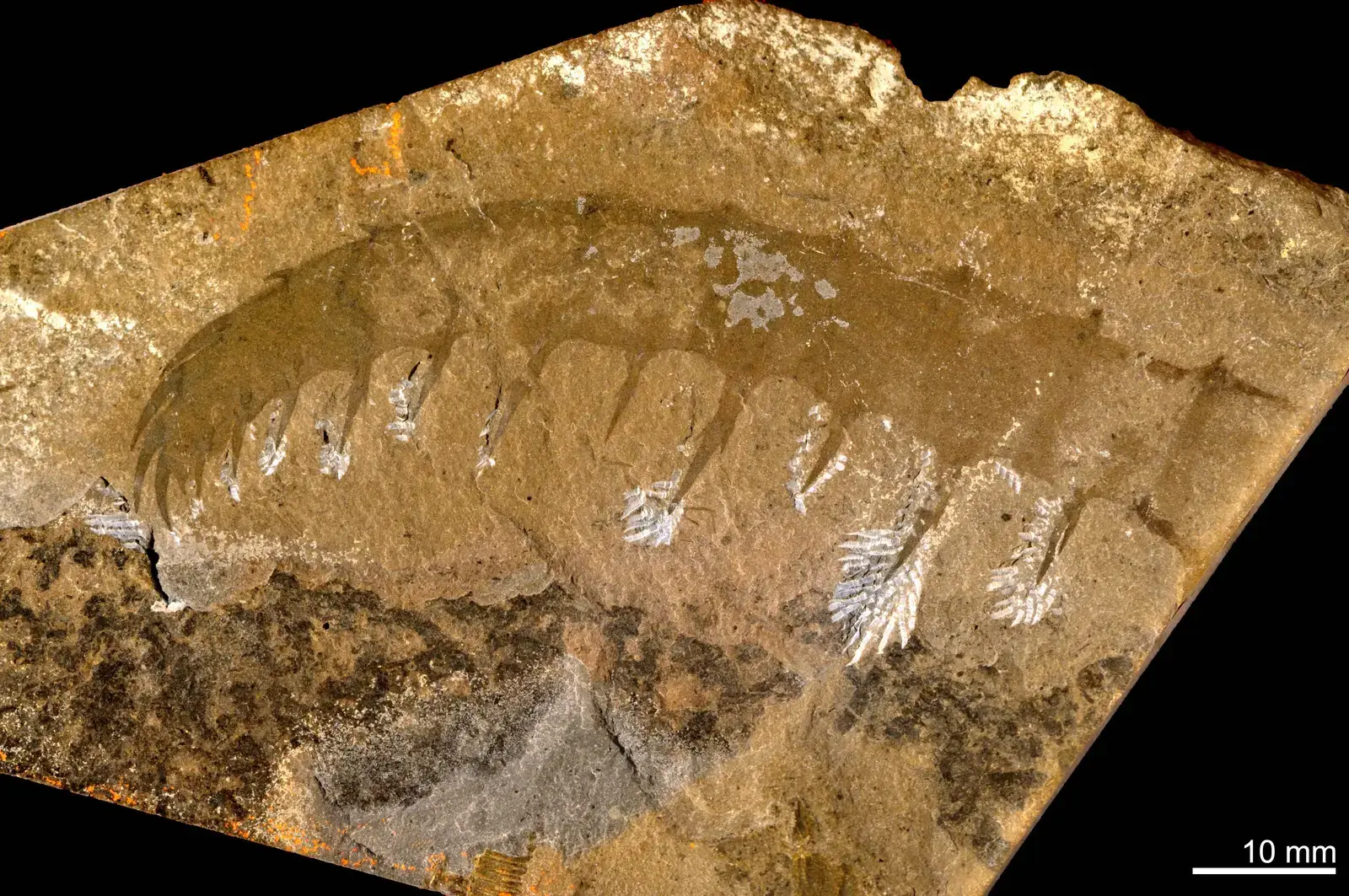
Long before anyone figured out what Anomalocaris actually was, paleontologists had unknowingly given its individual body parts three entirely separate identities.
Originally, several fossilized parts discovered separately – the mouth, frontal appendages and trunk – were thought to be three separate creatures, a mix-up that went uncorrected for nearly a century. Prior to 1985, various pieces of this invertebrate oddball were taken to be parts of sea cucumbers, arthropods, and jellyfish. It took dedicated researchers piecing together fragments from multiple museum drawers to realize they were looking at one single, terrifying Cambrian predator all along. A creature so odd that its very name means “abnormal shrimp” – and even that description undersells how genuinely strange it was.
With a segmented body, eyes on stalks, and a pair of formidable, grasping appendages set on either side of a mouth that looked like a camera-shutter-of-doom, Anomalocaris was one of the weirdest and most wonderful creatures of the Cambrian seas. Once scientists finally assembled the full picture, it became clear this was one of the earliest apex predators on the planet, patrolling ancient seas roughly half a billion years ago.
The saga of Anomalocaris remains a favorite cautionary tale in paleontology classrooms about how easily incomplete fossils can send an entire field down the wrong path for generations.
#7 – Nectocaris: The Squid That Might Not Be a Squid At All
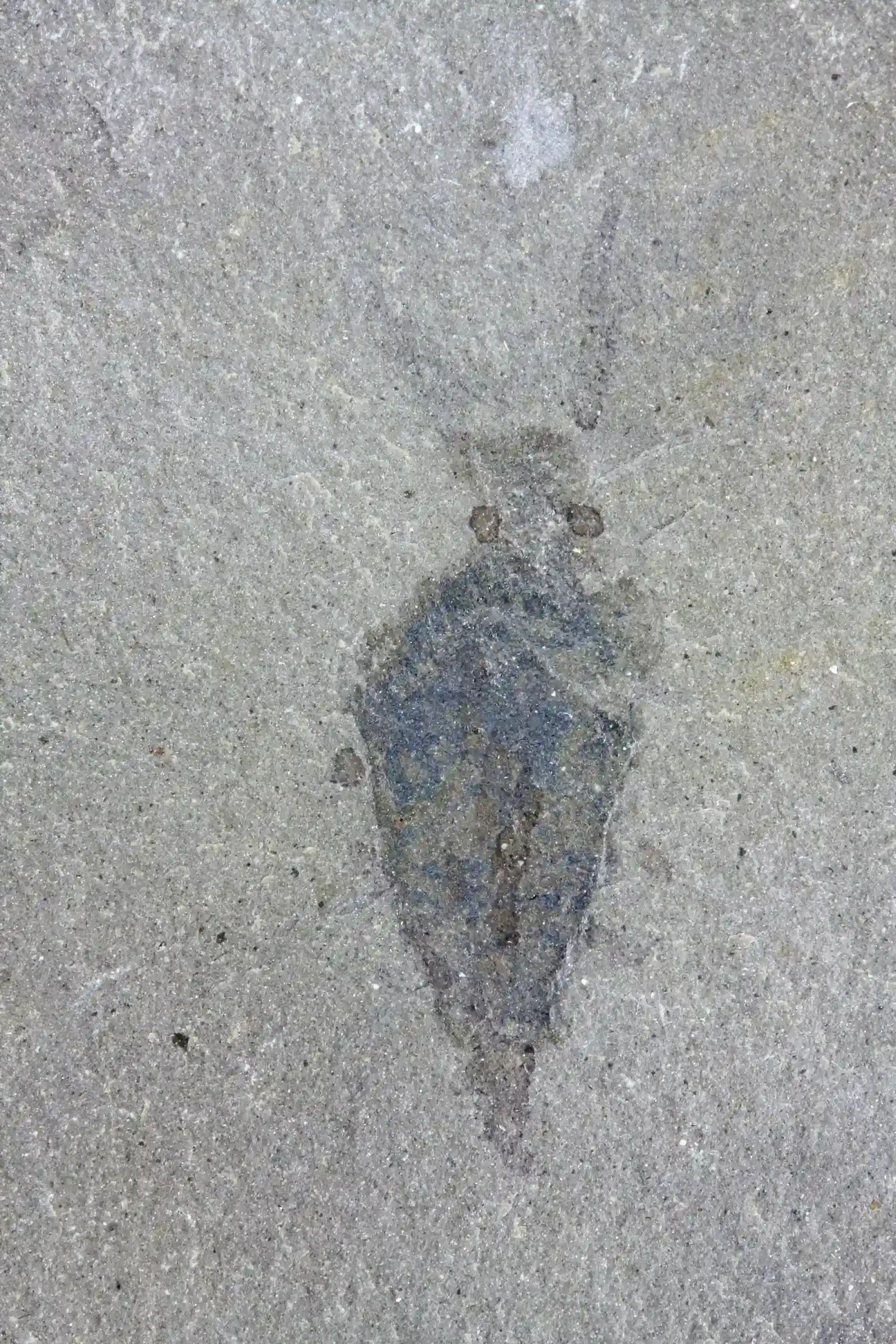
For over three decades, a single smudge on a rock slab from British Columbia kept an entire branch of invertebrate paleontology guessing.
Since its description in 1976, the 505-million-year-old fossil Nectocaris pteryx from British Columbia’s famous Burgess Shale had vexed scientists. Known from a single specimen – appearing as little more than a smear on a rock slab – this creature seemed to be equal parts chordate and arthropod. Then, in 2010, new specimens seemed to solve the mystery, suggesting Nectocaris was an early ancestor of squid and octopuses, a stem-cephalopod that would push back the origin of that entire group by tens of millions of years. The announcement briefly made headlines as one of the great fossil “solutions” of the decade.
That confidence didn’t last. Other paleontologists were skeptical of the new squid on the block, noting the clearer specimens looked awfully similar to a group of well-known Burgess Shale creatures called anomalocaridids, and the stem-cephalopod hypothesis could not be affirmed beyond the shadow of a doubt.
Today, the evolutionary identity of Nectocaris is just as mysterious as ever. Paleontologists have gained a more accurate picture of what this animal generally looked like, but where it fits in the tree of life remains uncertain – whether it was a true anomalocaridid, some unknown lophotrochozoan, or something else entirely has yet to be determined.
#6 – Opabinia: The Fossil So Weird Scientists Laughed at the First Slideshow
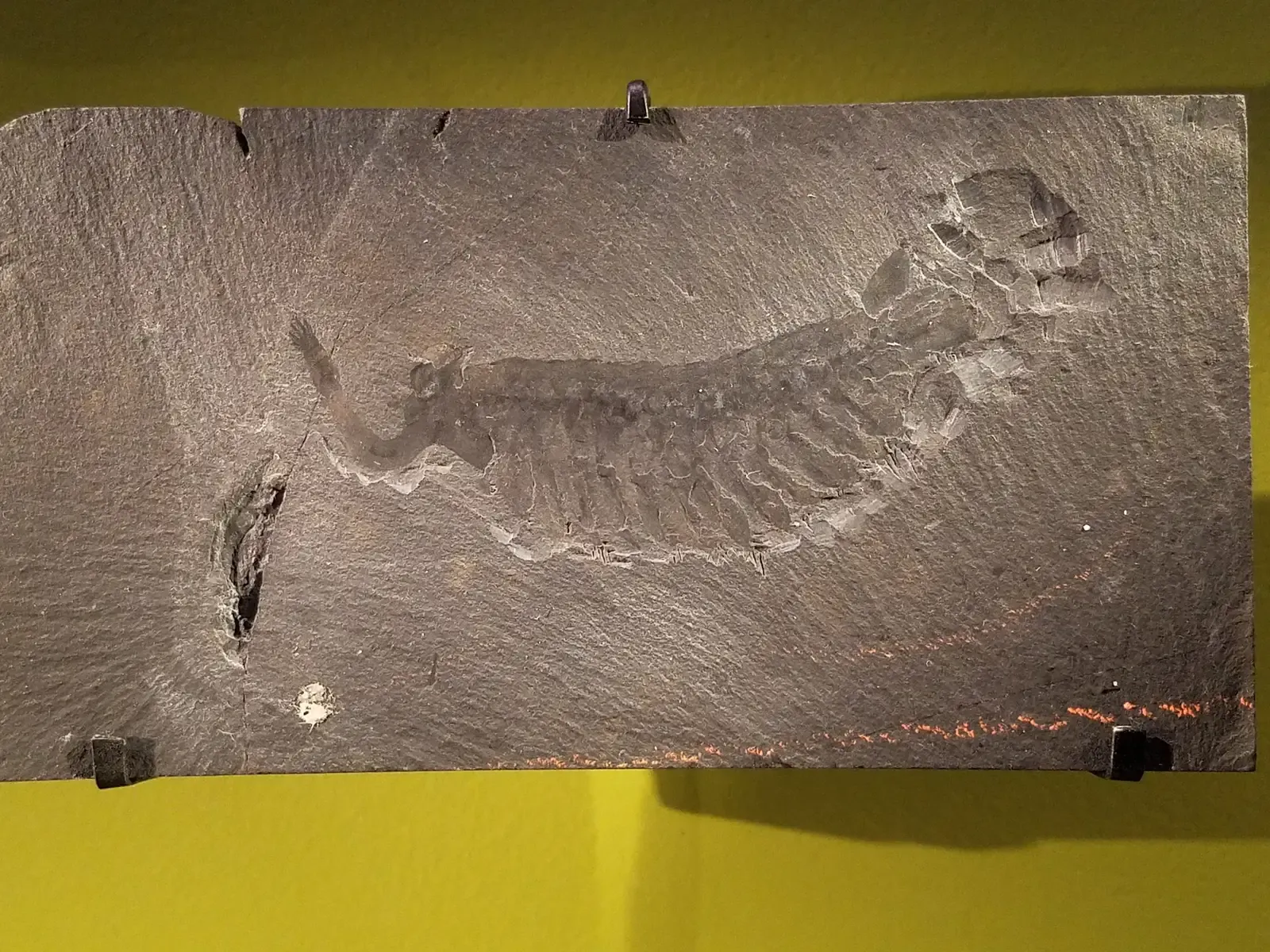
When Opabinia regalis was first presented to a room full of paleontologists in 1972, the reaction was reportedly outright laughter – and honestly, it’s hard to blame them.
This half-billion-year-old creature has five eyes mounted on stalks and a long, flexible proboscis ending in a jaw-like pincer, a combination that doesn’t resemble any modern animal group whatsoever. Opabinia regalis, with its head bearing five stalked eyes and a proboscis, remains the only opabiniid species confidently identified and is only known from a single quarry in the Burgess Shale. Despite decades of intense study, only one other confirmed relative of this animal has ever turned up anywhere on Earth, making it one of the rarest body plans in the entire fossil record.
Worth Knowing
- Found in the Middle Cambrian Burgess Shale of British Columbia, dated to about 505 million years ago, with a body length up to 7 cm
- First described in 1912 by Charles Doolittle Walcott, who initially interpreted it as a possible annelid worm
- It’s now generally interpreted as lying below the anomalocaridids on the stem leading to living arthropods
- Only one other opabiniid-type relative has ever been confirmed worldwide
Researchers generally place Opabinia somewhere near the base of the arthropod family tree, sharing a rough body shape with Anomalocaris and other radiodonts. But “somewhere near the base” is about as specific as anyone can get. Anomalocaris and Opabinia illustrate the complicated history of research into many Cambrian soft-bodied taxa, a result of their unfamiliar morphologies compared to the occupants of modern oceans.
It remains one of the single strangest creatures ever formally described by science, and paleontologists still debate exactly how those five eyes functioned together.
#5 – Dickinsonia: The Fossil That Might Not Even Be an Animal
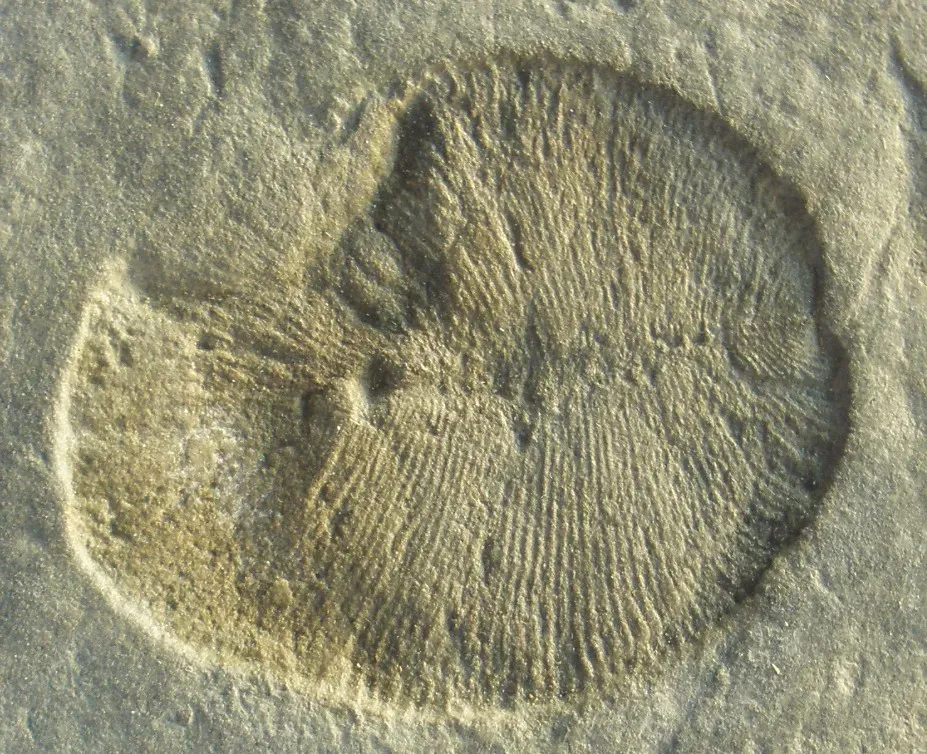
Here’s a genuinely uncomfortable question for paleontology: what if one of the most famous Precambrian fossils in the world isn’t actually an animal?
Dickinsonia is a flattened, oval-shaped organism with ridged segments, and it has been found at fossil sites in Australia and along Russia’s White Sea coast, with some specimens growing up to a meter in length. That’s a genuinely massive size for an organism this ancient and this structurally simple, which only deepens the mystery of what it actually was.
For decades, its classification has bounced around wildly. Most scientists seem to think that Dickinsonia was a kind of annelid worm, but others say it was a cnidarian polyp, and it may be something else entirely. Some more recent proposals have even suggested it might belong to a completely extinct kingdom of life with no modern equivalent at all, neither animal, fungus, nor anything currently recognized in biology textbooks.
Given that Dickinsonia lived hundreds of millions of years before recognizable animal body plans became common, this uncertainty isn’t a minor footnote – it cuts to the heart of how and when complex life on Earth actually began.
#4 – Deinocheirus: The Dinosaur Known Only by Its Terrifying Arms for 50 Years
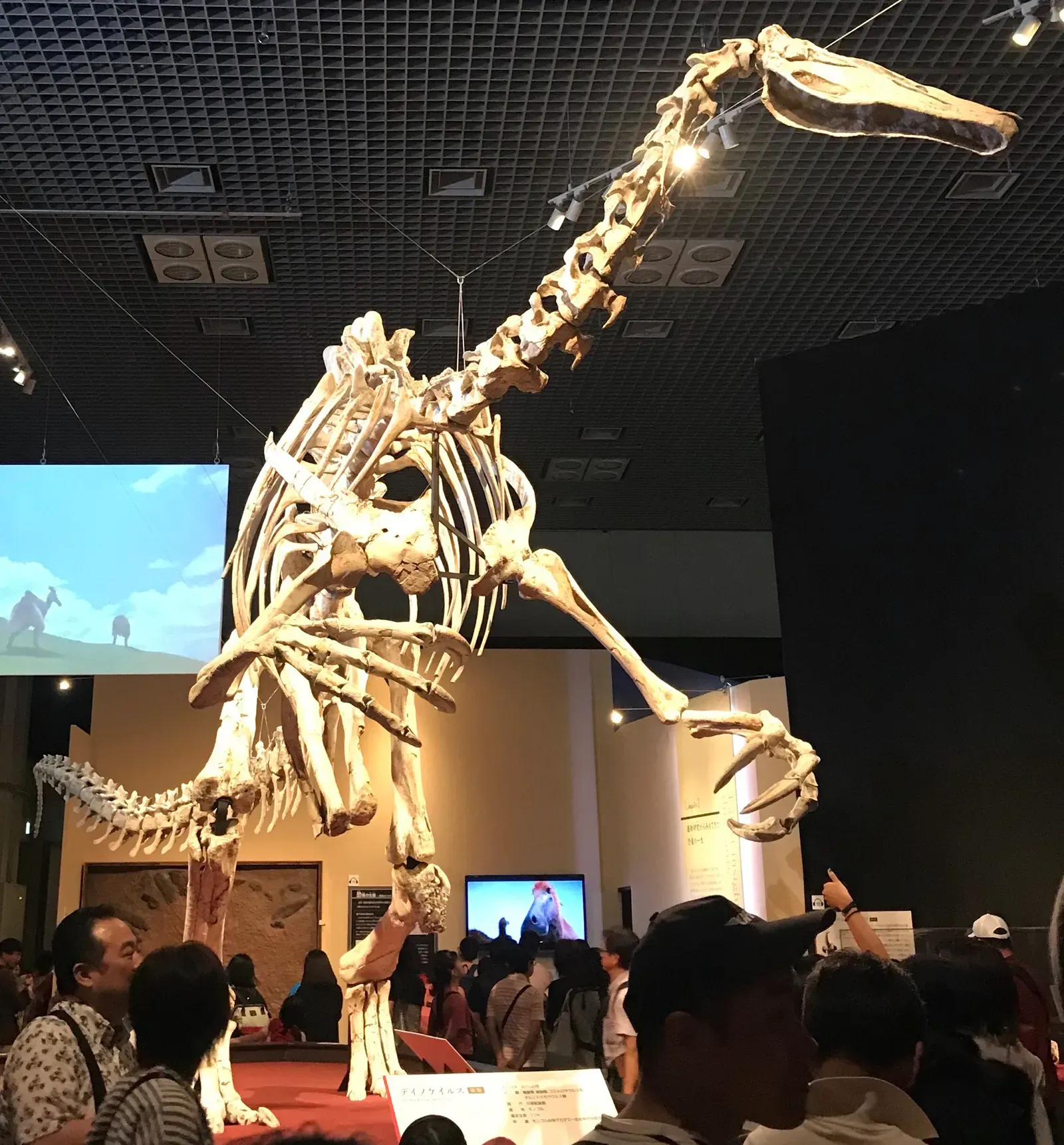
Imagine finding a pair of eight-foot-long dinosaur arms tipped with massive claws, and then spending the next five decades with absolutely no idea what the rest of the animal looked like.
The original set of massive arms used to name Deinocheirus were discovered in 1965 in the roughly 70-million-year-old rock of southern Mongolia, and whether this dinosaur was a carnivore, a herbivore, or an omnivore was unknown and open to speculation. In the absence of more complete remains, early reconstructions were at times wildly speculative – in 1970, one paleontologist even argued that Deinocheirus was a giant sloth-like climber that hung beneath the branches of enormous trees. For nearly half a century, this “mystery dinosaur” existed in the public imagination as nothing more than a terrifying pair of disembodied claws.
The wait finally ended in 2014. A team of paleontologists led by Yuong-Nam Lee finally discovered two well-preserved specimens of Deinocheirus, revealing the complete body behind those terrible hands, with Stephen Brusatte from the University of Edinburgh noting that the new specimens showed Deinocheirus was much weirder than anyone could have imagined – a colossal, slow-moving, horse-headed, hump-backed dinosaur that looks like something out of a bad sci-fi movie.
It turned out to be a giant, plant-and-fish-eating relative of the ostrich-mimic dinosaurs, a reveal so strange that it arguably raised more questions about dinosaur diversity than it answered.
#3 – Helicoprion: The Shark With a Buzz-Saw Where Its Mouth Should Be
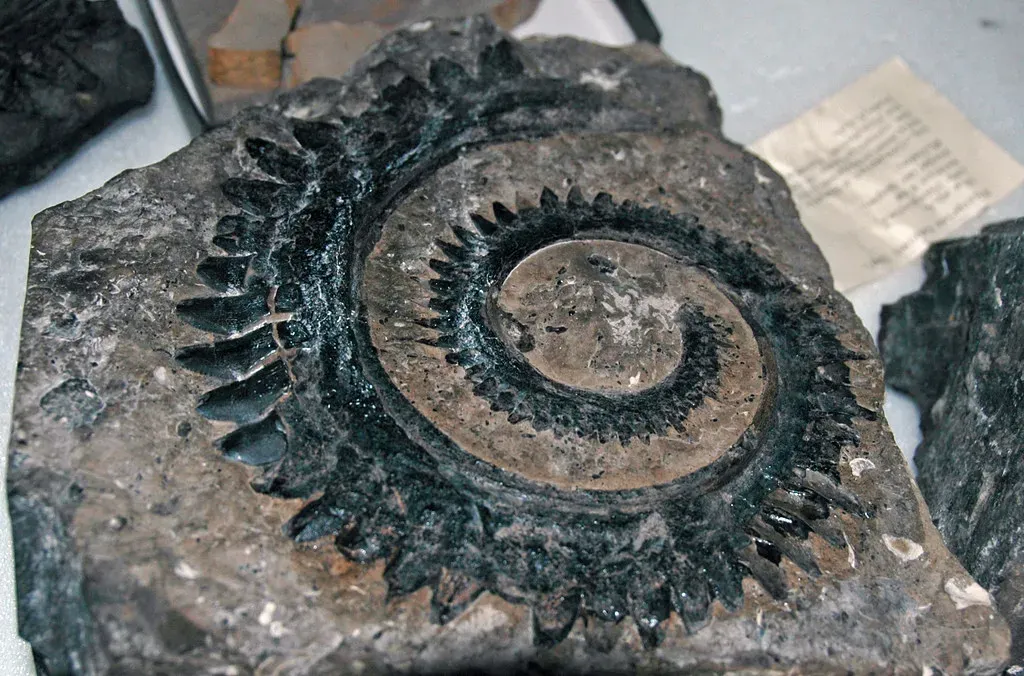
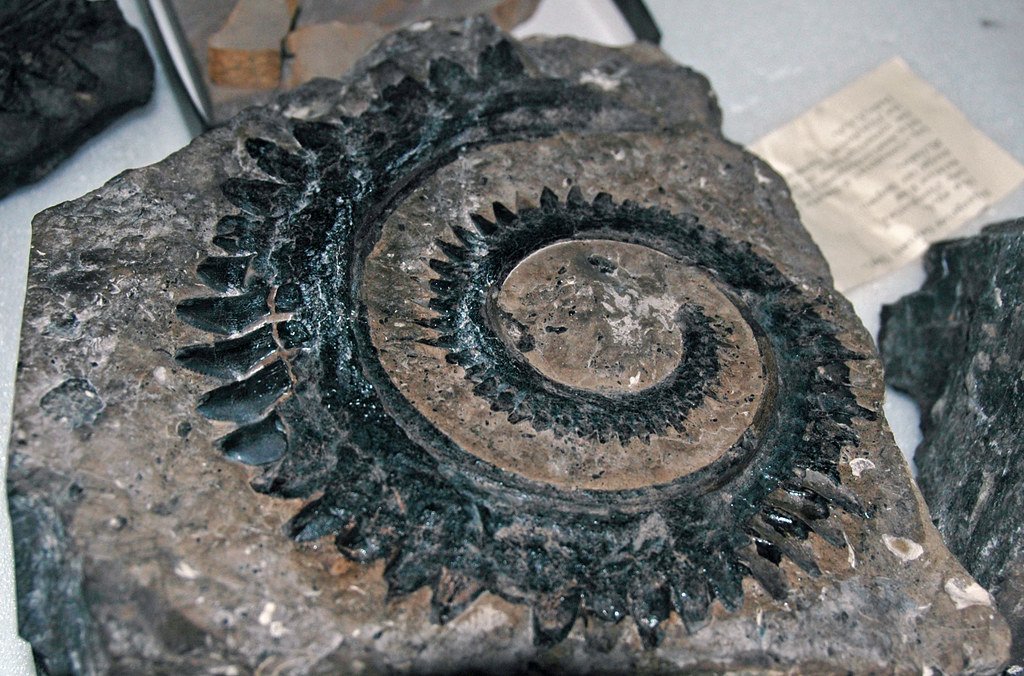
Few fossils have been reconstructed as many contradictory ways as the spiral tooth whorl of Helicoprion, and the reason comes down to one frustrating fact: sharks don’t fossilize well.
Like other chondrichthyan fish, Helicoprion had a skeleton made of cartilage, which makes it difficult to determine what the animal actually looked like because the skeleton rarely fossilized, and almost all Helicoprion specimens survive only as fossilized “tooth whorls” – teeth embedded in a spiraled root. That left over a century of pure guesswork. Through the 1900s, scientists debated where these tooth whorls were located on the animal, with some postulating the spiral sat on the lower jaw, some claiming it sat on the upper jaw, and yet others claiming it sat on the dorsal fin. One especially bizarre proposal even tucked the entire tooth spiral into the animal’s throat, functioning like an internal buzz saw.
It wasn’t until CT scanning technology matured that researchers finally cracked the case. New CT scans of the spiral-tooth fossil resolved the longstanding mystery, presenting the first three-dimensional images showing the tooth whorl occupying the entire mandibular arch, supported along the midline of the lower jaw.
After more than a hundred years of wild speculation, Helicoprion finally got a mouth that made anatomical sense.
#2 – Hallucigenia: The Fossil That Was Reconstructed Completely Upside Down
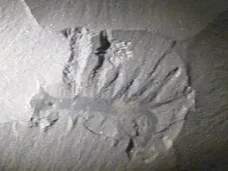
Here’s an embarrassing admission buried in the history books: for over a decade, the entire scientific community studied this Cambrian creature completely backwards, and nobody noticed.
When it was identified in the 1970s, it was reconstructed both backwards and upside down: the spines along its back were originally thought to be legs, its legs were thought to be tentacles along its back, and its head was mistaken for its tail. Even the paleontologist who originally named the creature has since admitted the mix-up on record. Simon Conway Morris, the British paleontologist who described and named Hallucigenia back in 1977, has conceded it was a bit embarrassing, saying he always suspected they might be looking at it the wrong way, but until Chinese fossils came along they couldn’t be sure.
Why It Stands Out
- Named in 1977, but studied upside down and backwards for well over a decade before the error was caught
- Its supposed “head” was actually a blob of decay fluid that had oozed out during burial, not real anatomy
- The true head wasn’t confirmed until an electron microscope revealed a tooth-lined throat
- Now classified as an early lobopodian, part of the lineage linking arthropods to modern velvet worms
Even after the orientation flip, the head-versus-tail confusion lingered for years longer. The head was once thought to be represented by a large balloon-like orb at one end of the animal, but researchers later showed this orb was not part of the animal at all – it was a blob of decay fluids that had oozed out during burial. It eventually took an electron microscope and the discovery of a tooth-lined throat to finally settle where its real head was located.
Few fossils illustrate just how easily scientific certainty can be built on a completely wrong assumption.
#1 – The Tully Monster: The Fossil That’s Been “Solved” Twice and Still Isn’t
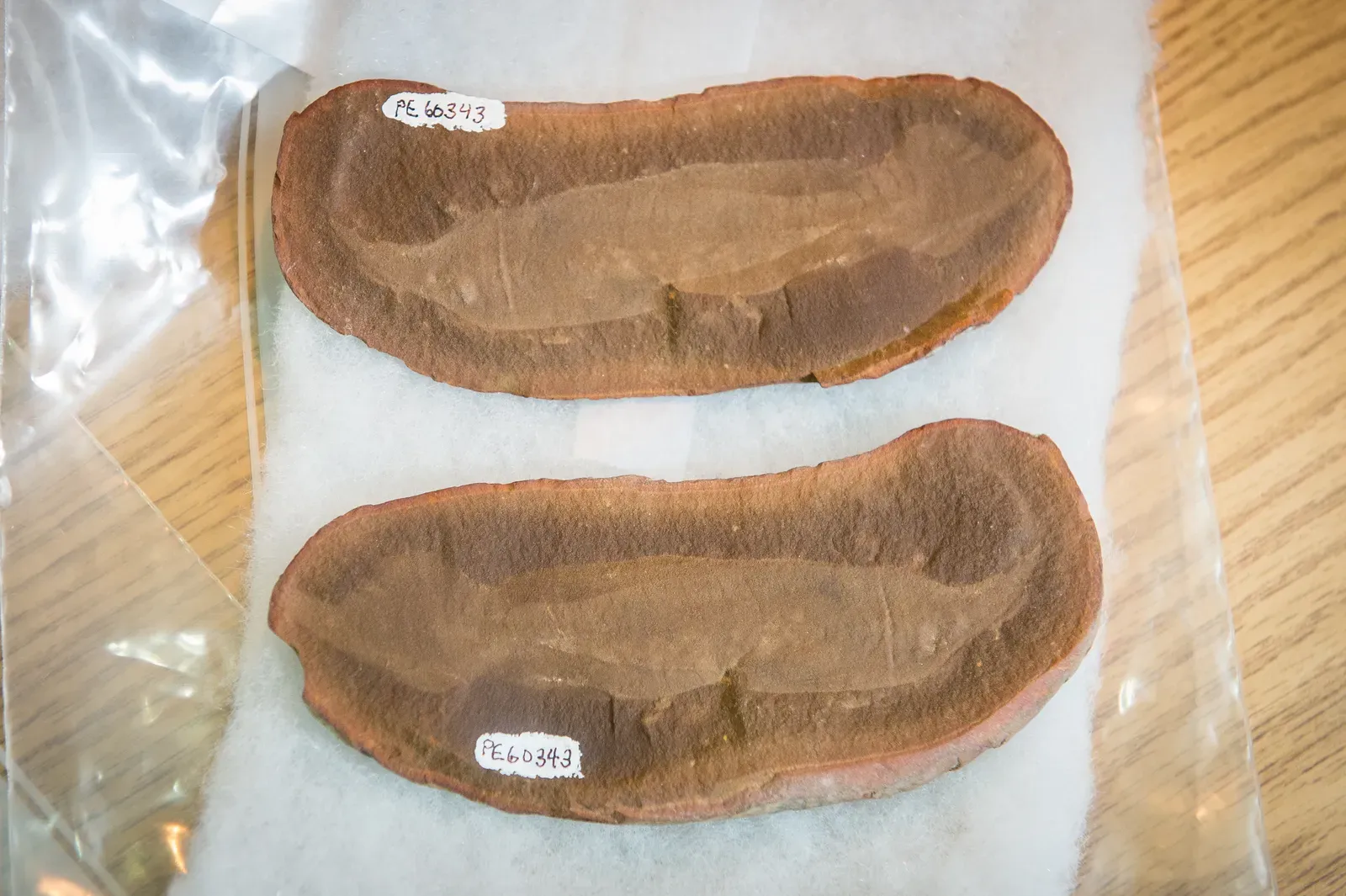
If there’s one fossil that deserves the title of paleontology’s most persistent headache, it’s the Tully Monster, and the wildest part is that experts have declared victory over this mystery more than once, only to be proven wrong again.
For decades, the Tully Monster has been one of the great fossil enigmas: discovered in 1958 and first described scientifically in 1966, it has never been definitively identified even to the level of phylum. It’s named after Francis Tully, the amateur fossil hunter who came across it in coal mining pits in northeastern Illinois and brought it to experts at the Field Museum of Natural History in Chicago for identification – who were promptly stumped. In 2016, researchers proudly announced they had solved the mystery, declaring the Tully Monster a strange vertebrate related to the lamprey.
Tullimonstrum was a nightmarishly aberrant fish that runs into biological, functional, and taphonomic challenges.
Paraphrased from paleontologist Lauren Sagen and colleagues, describing the case against the vertebrate identification
The celebration didn’t last. A different group of researchers has once again raised uncertainty about what the Tully Monster actually is, suggesting it might instead be something closer to a mollusk, arthropod, or unusual chordate. Even a major 2025 study using advanced 3D imaging on over 150 specimens has pushed back toward the invertebrate camp again. This is a fossil that has now been “definitively” solved in two opposite directions by credible scientific teams – proof that some mysteries refuse to stay buried, no matter how many microscopes you point at them.
The Bottom Line
What strikes me most about this list isn’t just how bizarre these creatures were – it’s how often confident scientific conclusions got quietly reversed a few years later. The Tully Monster has been “solved” as both a vertebrate and an invertebrate by credible research teams. Hallucigenia spent over a decade being studied completely upside down by trained experts, not amateurs.
If anything, these fossils are a healthy reminder that paleontology isn’t a finished textbook – it’s an active argument, and the most “settled” answer today might get flipped by next year’s CT scanner. Which of these 13 do you think will get overturned again first? Drop your bet in the comments.