
Most people assume history is a settled subject – dusty facts locked away in textbooks, never to be touched again. But the truth is messier: museums, universities, and archaeological parks are quietly rewriting their own placards as DNA labs, satellite imaging, and tree-ring science overturn conclusions once treated as fact.
A skeleton once declared “not Native American” has been reburied as an ancestor. A death on a mountainside was reclassified as a murder after 5,300 years. Even the date of one of history’s most famous disasters may be off by two months. Here’s what historians and scientists actually say now – and the deeper into this list you go, the stranger the reversals get.
#1 – Kennewick Man Was Never Who Scientists Claimed
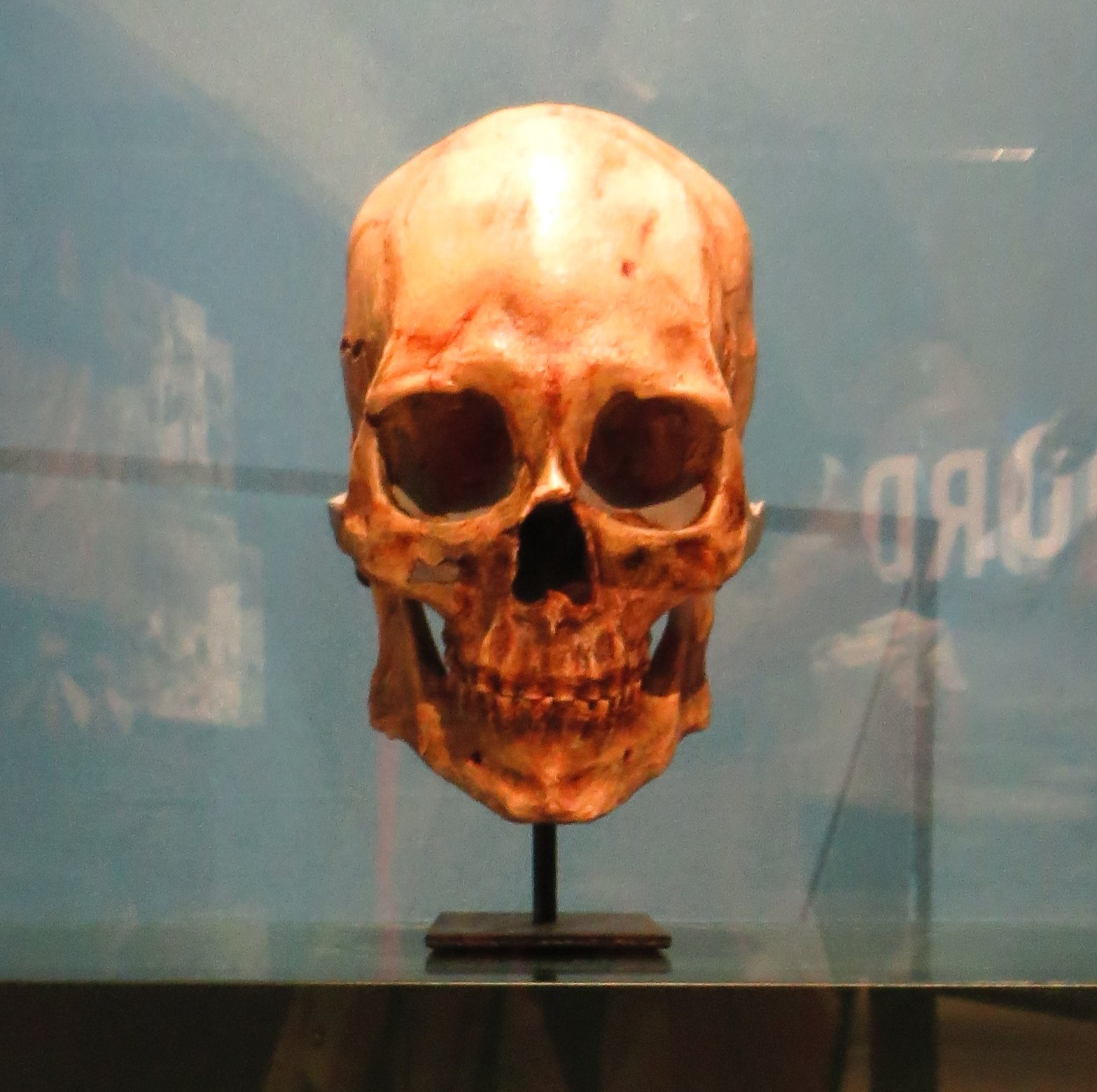
For two decades, the 8,500-year-old skeleton found on the banks of the Columbia River in 1996 sat at the center of one of America’s ugliest scientific custody battles. Anthropologists who sued for the right to study the bones argued the remains showed no relationship to Native Americans at all – early reports even floated a “Caucasian” or Polynesian-Ainu ancestry.
Skeletal-measurement studies backed them up again and again. Researchers insisted their bone measurements proved Kennewick Man wasn’t like Europeans, Native Americans, or any modern population, and a 2014 morphometric study doubled down, tying him instead to circumpacific populations from Japan and Polynesia.
Fast Facts
- Discovered: July 1996, along the Columbia River near Kennewick, Washington
- Estimated age at time of death: roughly 8,500 years old
- DNA breakthrough published: 2015, confirming Native American ancestry
- Formally repatriated to a coalition of Columbia Basin tribes: February 2017
Then DNA caught up to the argument. Genetic testing in 2015 and 2016 blew the theory apart: the Ancient One turned out to be more closely related to Native Americans – specifically Columbia Plateau tribes – than to any other population on Earth.
The reversal wasn’t cosmetic – it changed a legal outcome. Geneticists at the University of Chicago independently confirmed the findings, the Corps of Engineers formally recognized Kennewick Man as Native American, and Congress ultimately required the remains be repatriated within 90 days. Twenty years of “objective” skeletal science had been quietly wrong the entire time. The next reversal is even stranger: an entire Viking landing got pinned to one exact year, thanks to a solar storm frozen inside a tree.
#2 – The Vikings Beat Columbus by Exactly 471 Years, and Now We Know the Precise Year
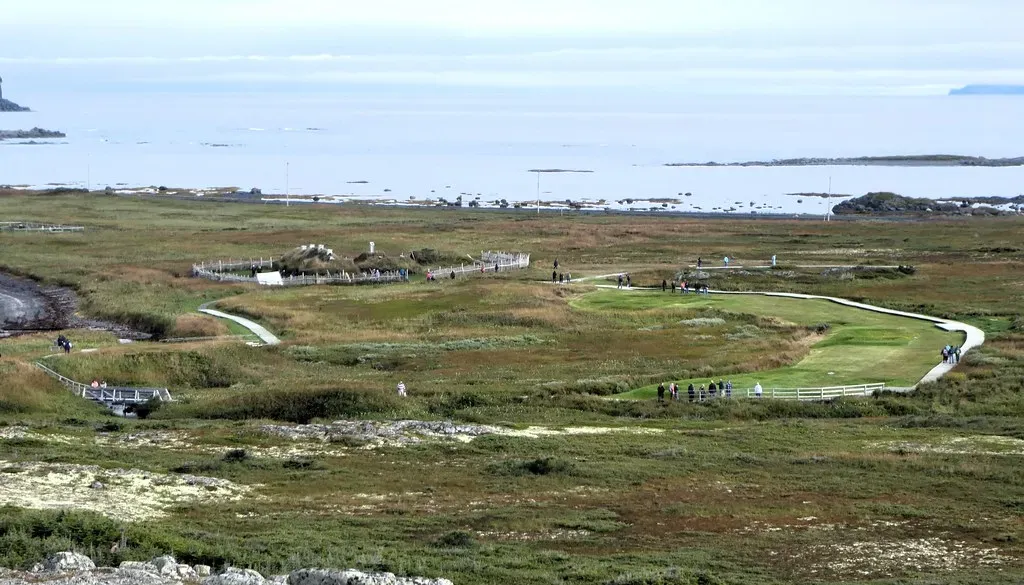
Historians always suspected the Norse reached North America before Columbus, but “sometime around 1000 CE” was as specific as anyone could get for sixty years. That changed in 2021 when scientists found a way to read a solar storm buried inside tree rings.
The first permanent Viking settlement in North America – a seaside outpost in Newfoundland known as L’Anse aux Meadows – had tantalized archaeologists for more than 60 years, until scientists finally landed on a precise date: tree rings show a Viking ax felled trees on the continent exactly 1000 years ago, in 1021 CE. “The precision is astounding,” says Rachel Wood, a radiocarbon scientist at the Australian National University who wasn’t involved in the study.
At a Glance
- Site location: L’Anse aux Meadows, Newfoundland, Canada
- Original excavation: 1960s, led by Helge and Anne Stine Ingstad
- Dating method: cosmic-ray solar storm signature from 993 CE, counted forward in tree rings
- Confirmed landing year: 1021 CE, exactly 471 years before Columbus’s 1492 voyage
Here’s how it worked: researchers radiocarbon dated the rings in three chunks of wood, looking for a telltale spike in carbon-14, and found it in all three pieces in the 29th ring from the edge – meaning the trees stopped growing 28 years after a 993 CE solar flare, landing on the year 1021 CE. The wood had been cut with metal blades that Indigenous peoples in the region didn’t produce, confirming Norse presence beyond doubt.
What historians once treated as legend has become archaeologically dated fact. Archaeologist Davide Zori put it plainly: “We always knew we were right around 1000, but 1021 is a huge deal… This shows the sagas are correct to within a decade.” Even that precision looks casual next to what happened to Pompeii’s death date.
#3 – Pompeii’s Death Date May Be Two Months Later Than Every History Book Says
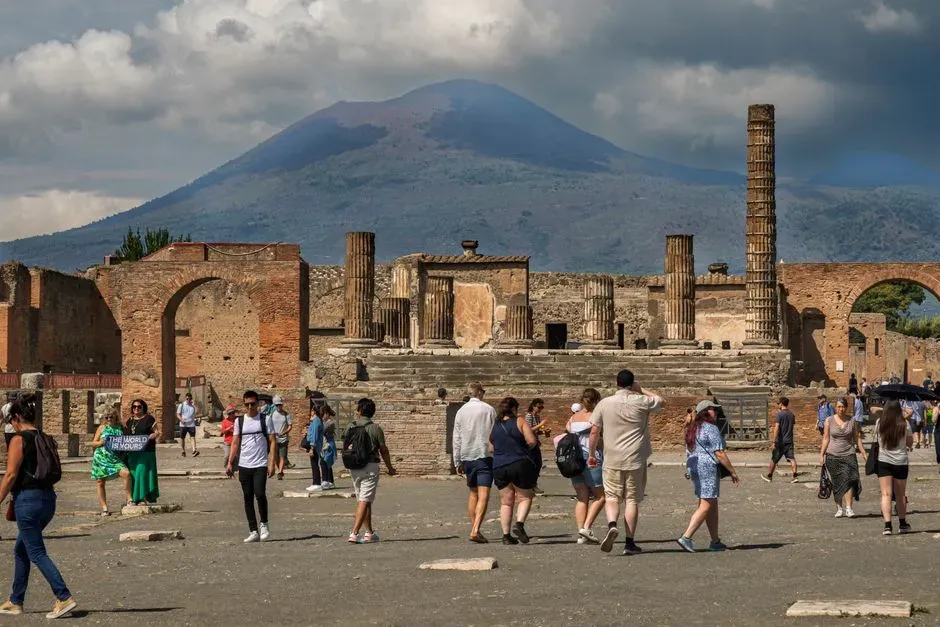
Generations of students memorized August 24, 79 CE as the day Vesuvius buried Pompeii. Historians are no longer confident that’s true – and the evidence comes from something as mundane as chestnuts and heavy coats.
The clincher came from a wall. Archaeologists discovered a worker had scrawled a date on a house at Pompeii: “the 16th day before the calends of November,” which translates to October 17 – nearly two months after the eruption was supposed to have already happened.
The clothing evidence is just as striking. Plaster casts of victims show some wearing heavy tunics or cloaks, and archaeologists found charcoal brazier heaters inside houses – details that make little sense in the height of an Italian August. An archaeobotanist studying the site adds that pomegranates, figs, and chestnuts found carbonized in the ruins all point to a harvest season, not midsummer.
Italy’s own Minister of Culture admitted the implications outright.
Today, with much humility, perhaps we will rewrite the history books because we date the eruption to the second half of October.
Alberto Bonisoli, Italy’s Minister of Culture
Not every scholar agrees – the park itself later pushed back, and the debate remains genuinely unsettled among specialists. But no reversal on this list is quite as embarrassing as the one that fooled scientists for four decades straight.
#4 – Piltdown Man Fooled the Scientific World for Four Decades
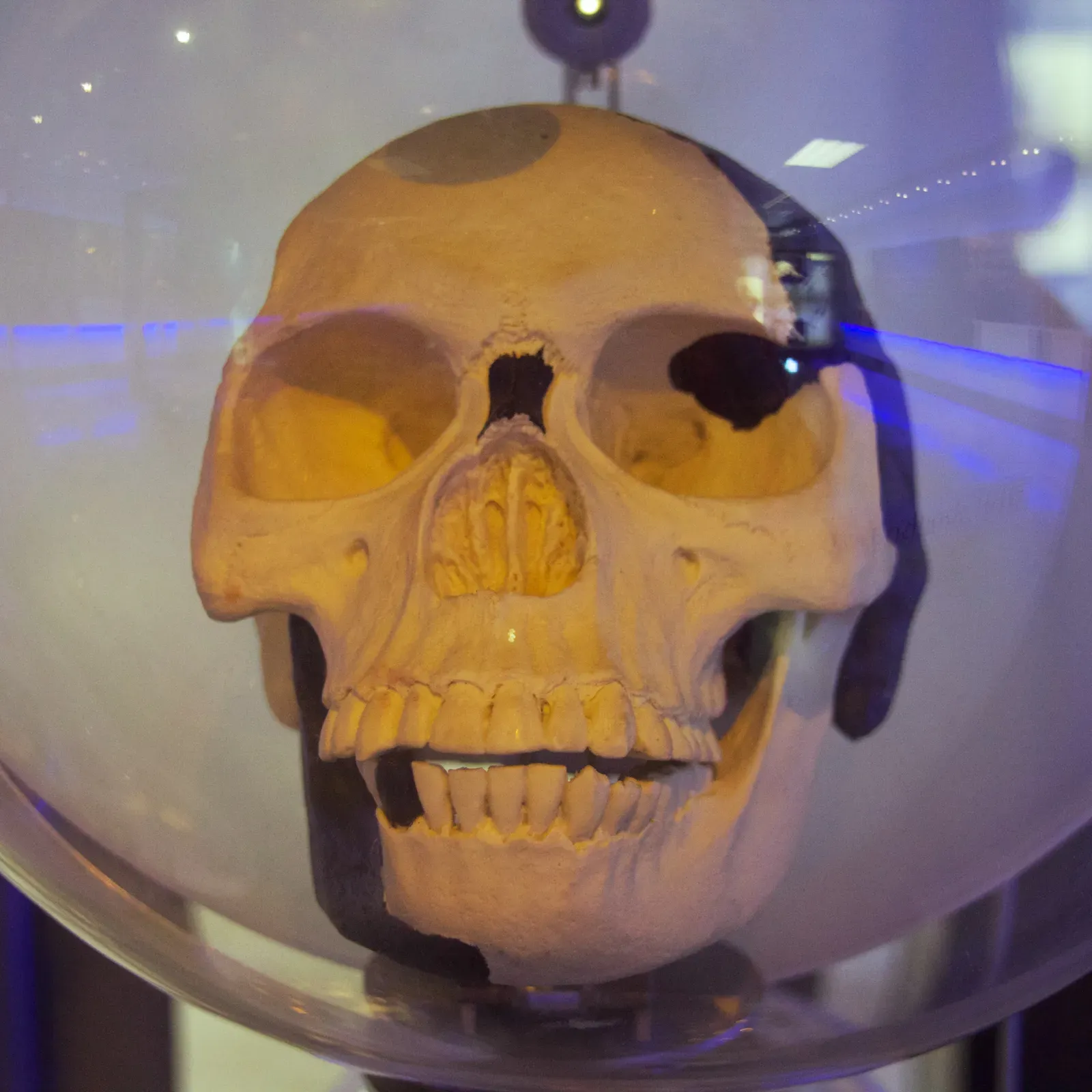
Before there was fake news, there was Piltdown Man – a “missing link” skull unearthed in England in 1912 that convinced the world’s leading anatomists they’d found proof of early human evolution. It took 41 years for anyone to admit the whole thing was a hoax.
The skull combined a human cranium with an orangutan jaw, deliberately filed down and stained to look ancient. Respected scientists at the British Museum championed it as genuine for decades, even as fossil discoveries elsewhere – like the Taung Child in South Africa – contradicted its supposed evolutionary placement. Historians now describe Piltdown Man not as a scientific discovery at all, but as a case study in confirmation bias.
When fluorine dating and closer forensic examination finally exposed the fraud in 1953, it forced an uncomfortable reassessment of how national pride and professional reputation had blinded an entire scientific establishment. The identity of the forger is still debated, with suspects ranging from an amateur archaeologist to a museum insider.
What’s certain is that the case permanently changed how paleoanthropologists verify fossils, demanding independent testing before any “discovery” is accepted. The next correction turned a moldy museum piece into the ancient world’s most impressive machine.
#5 – The Antikythera Mechanism Wasn’t a Toy – It Was a 2,000-Year-Old Computer
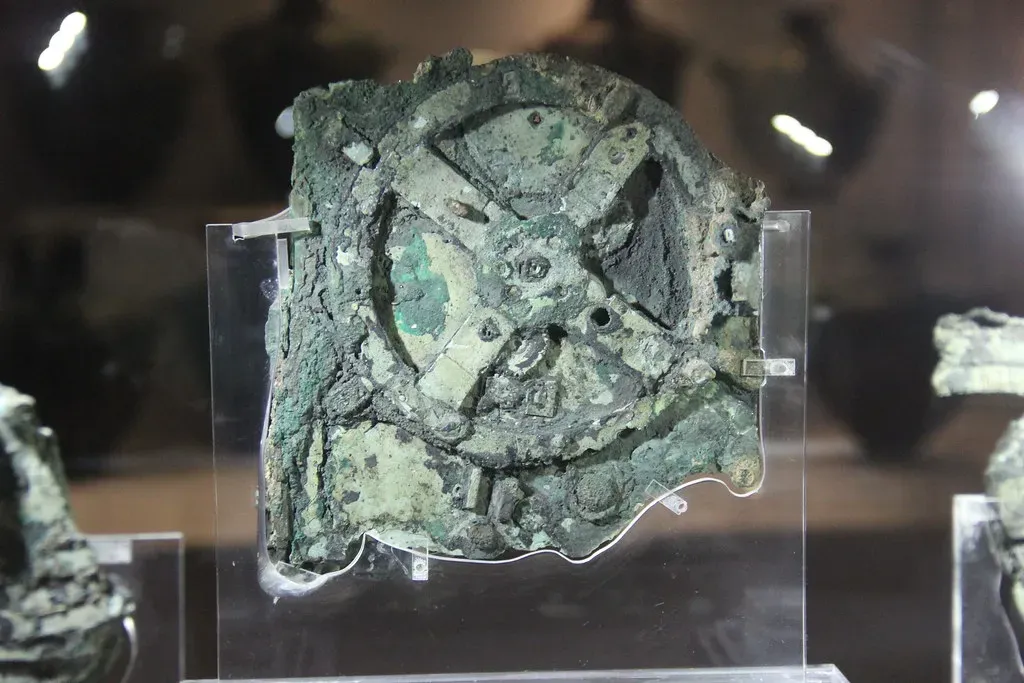
Fished out of a Roman-era shipwreck in 1901, this corroded bronze lump sat in museum storage for decades, dismissed as little more than a curiosity. Historians now recognize it as one of the most sophisticated machines the ancient world ever produced.
X-ray and CT imaging over the past twenty years revealed over 30 interlocking bronze gears inside the device, capable of predicting solar and lunar eclipses, tracking the four-year cycle of the ancient Olympic Games, and modeling the irregular orbit of the moon. No comparable technology appears again in the historical record for over a thousand years.
Why It Stands Out
- Contains more than 30 precision-cut bronze gears, unmatched for centuries
- Could predict solar and lunar eclipses years in advance
- Tracked the four-year cycle of the ancient Olympic Games
- Recovered from a shipwreck near the Greek island of Antikythera in 1901
- Gear complexity rivals clockwork not seen again until the 1700s
Early 20th-century archaeologists initially catalogued it as a simple astrolabe or navigational tool – a reasonable guess given the era’s understanding of ancient engineering. That description has been thrown out entirely.
Researchers now compare its gear-train complexity to 18th-century European clockwork, suggesting Hellenistic engineers had mechanical knowledge that was essentially lost and not rediscovered for well over a millennium. Nothing on this list is as violent, though, as what forensic scientists found hiding in a frozen hiker’s shoulder.
#6 – Ötzi the Iceman Wasn’t a Frozen Hiker. He Was Murdered.
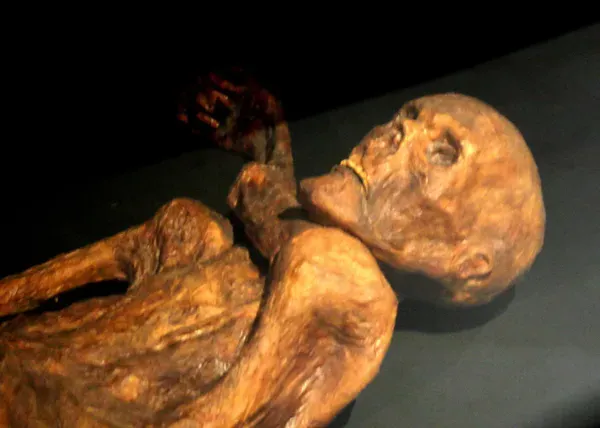
When hikers discovered a naturally mummified body poking out of an Alpine glacier in 1991, the initial assumption was simple: an unlucky traveler caught in a storm 5,300 years ago. That story collapsed within a decade of forensic re-examination.
A CT scan in 2001 revealed an arrowhead lodged in Ötzi’s shoulder, tearing through an artery – an injury forensic scientists now agree would have caused rapid, fatal blood loss. He didn’t freeze to death; he bled out after being shot in the back. Further analysis found unhealed cuts on his hand consistent with a close-quarters knife fight shortly before his death, along with the blood of four different people on his weapons and clothing.
The updated narrative reframes Ötzi entirely: not a solitary wanderer, but a man fleeing a violent confrontation, possibly a raid or blood feud, who collapsed in the mountains while trying to escape. His stomach contents even reveal he ate a hearty meal of ibex meat shortly before dying, suggesting the attack was sudden rather than the result of a long pursuit.
The next correction is more colorful, literally – it repainted an entire army.
#7 – The Terracotta Army Was Never Meant to Be Seen in Gray
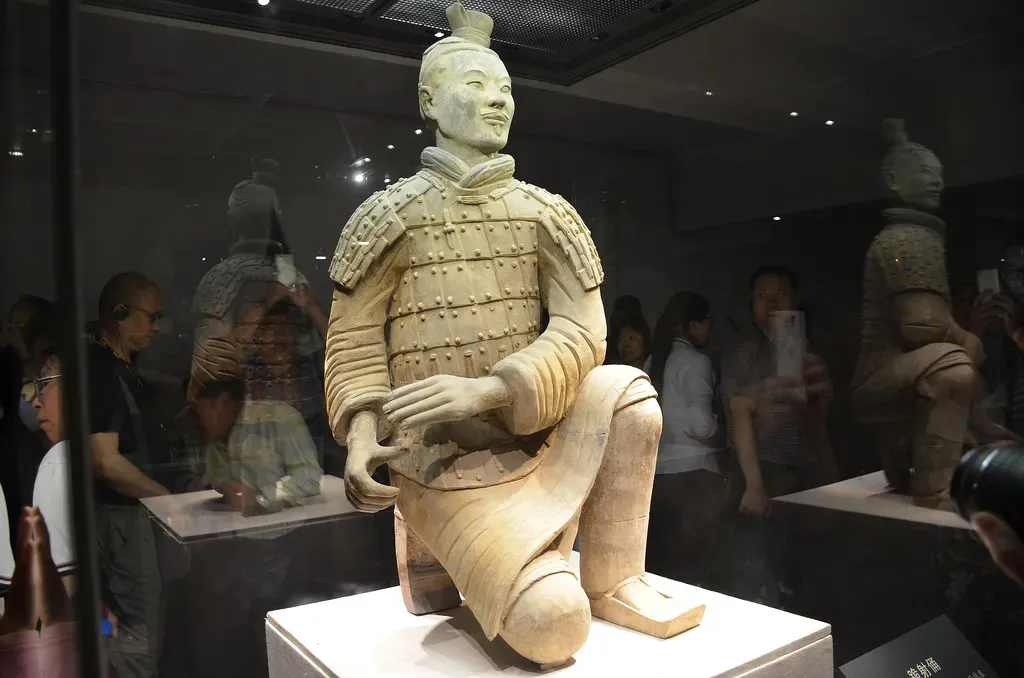
Tourists photographing China’s 8,000-strong Terracotta Army see rows of solemn gray-brown soldiers. Archaeologists now know that image is almost entirely wrong – the original army was a riot of color.
Excavation reports since the 1990s confirm the warriors were originally painted in vivid pigments: pink faces, black hair, and armor detailed in green, red, purple, and blue lacquer. The paint simply couldn’t survive contact with air after 2,200 years underground, flaking off within minutes of exposure during early excavations before conservators developed methods to stabilize it. Some experts argue this color loss represents one of the greatest accidental destructions of ancient art in modern archaeological history.
Worth Knowing
- More than 8,000 soldiers, horses, and chariots make up the full army
- Original pigments included pink skin tones, black hair, and lacquered armor in red, green, and purple
- Exposed paint could flake away within minutes without modern conservation
- No two soldiers share identical facial features, hinting at individualized craftsmanship
The reinterpretation goes beyond paint. Historians increasingly view the army not as a static funerary display but as a deliberately individualized force – facial features, hairstyles, and armor details vary soldier to soldier, suggesting the emperor’s craftsmen aimed for something closer to a portrait army than mass-produced statues.
Two decades just vanished from one of South America’s most famous ruins, next.
#8 – Machu Picchu Is at Least Two Decades Older Than Textbooks Claimed
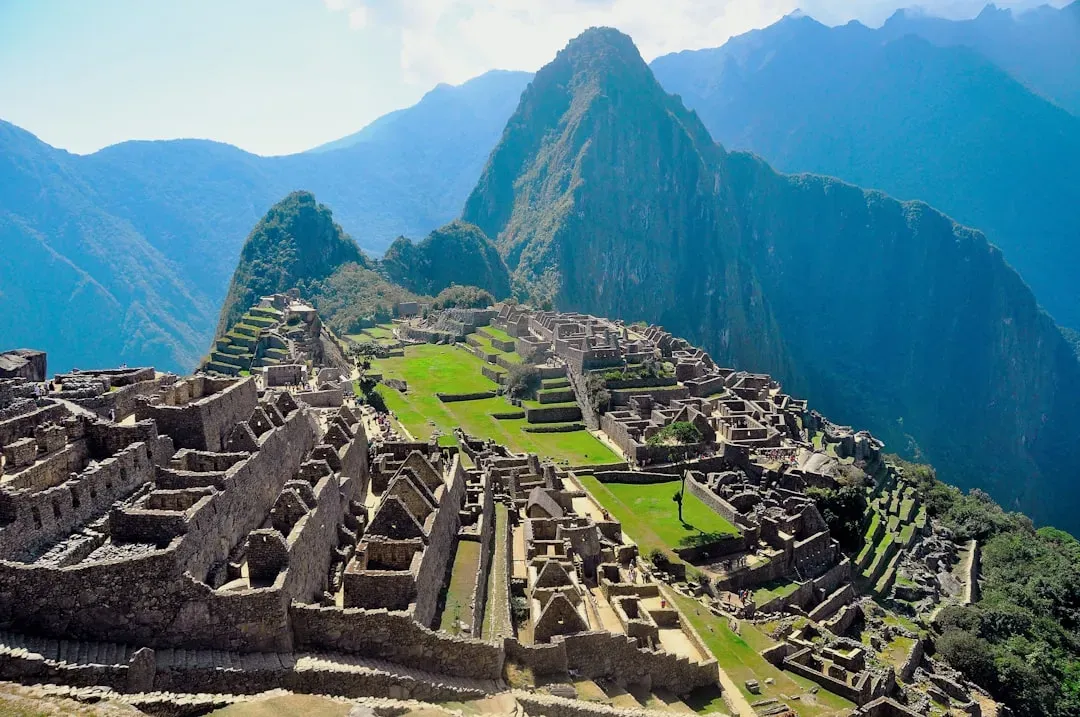
For most of the 20th century, Machu Picchu’s construction was pinned to around 1440, based on colonial-era Spanish records describing the reign of Inca ruler Pachacuti. Radiocarbon dating of human remains from the site’s cemeteries has since pushed that timeline back significantly earlier, closer to 1420.
That twenty-year gap matters more than it sounds. Historians had long relied on Spanish chronicles written decades after the fact, documents now understood to be imprecise at best about pre-conquest Andean chronology. Direct dating of bone collagen, rather than secondhand colonial paperwork, is now considered the more reliable source, and it suggests Inca expansion and monumental building began earlier than any European document ever recorded.
The site’s purpose has also been reframed. Rather than a purely religious pilgrimage site, most archaeologists now describe Machu Picchu as a royal estate – a retreat built for Pachacuti himself and his family, staffed year-round rather than reserved for occasional ceremony. That shift changes how historians interpret the entire complex, from agricultural terraces to residential quarters.
The next site’s biggest mystery isn’t who built it – it’s who’s missing from it.
#9 – Sutton Hoo’s “King’s Grave” May Not Have Held a King’s Body at All
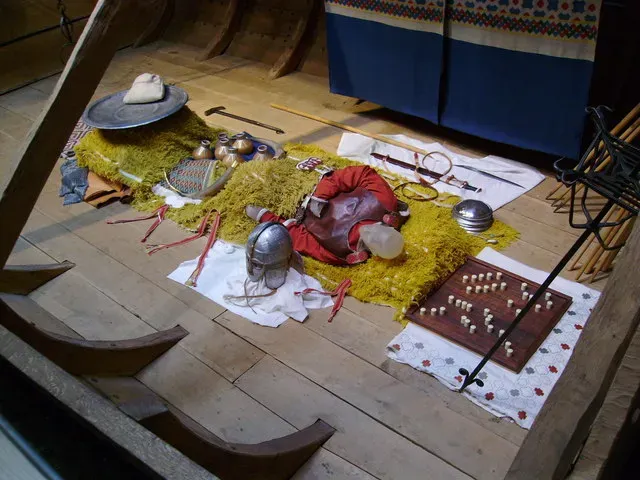
When archaeologists excavated an Anglo-Saxon ship burial in England in 1939, they uncovered a treasure haul rivaling any in Western Europe – gold buckles, a ceremonial helmet, silver bowls from Byzantium. The assumption was immediate: this had to be a king, likely Raedwald of East Anglia.
There was just one problem historians have wrestled with ever since: no skeleton was ever found. Acidic soil conditions in the burial mound had dissolved the body entirely, leaving archaeologists to debate for decades whether a body had even been placed there originally, or whether the ship burial was symbolic.
Modern soil-phosphate testing has since confirmed that a body almost certainly was present and decomposed completely, quieting some of the wilder theories. But the identity question remains genuinely unresolved among specialists – while Raedwald remains the leading candidate, no inscription or definitive evidence confirms it.
Historians increasingly present Sutton Hoo not as “the tomb of Raedwald” but as an anonymous elite burial that reveals more about Anglo-Saxon trade networks and craftsmanship than about any single ruler’s identity. One finger bone was about to rewrite the entire human family tree, next.
#10 – Denisovans Rewrote the Human Family Tree From a Single Finger Bone
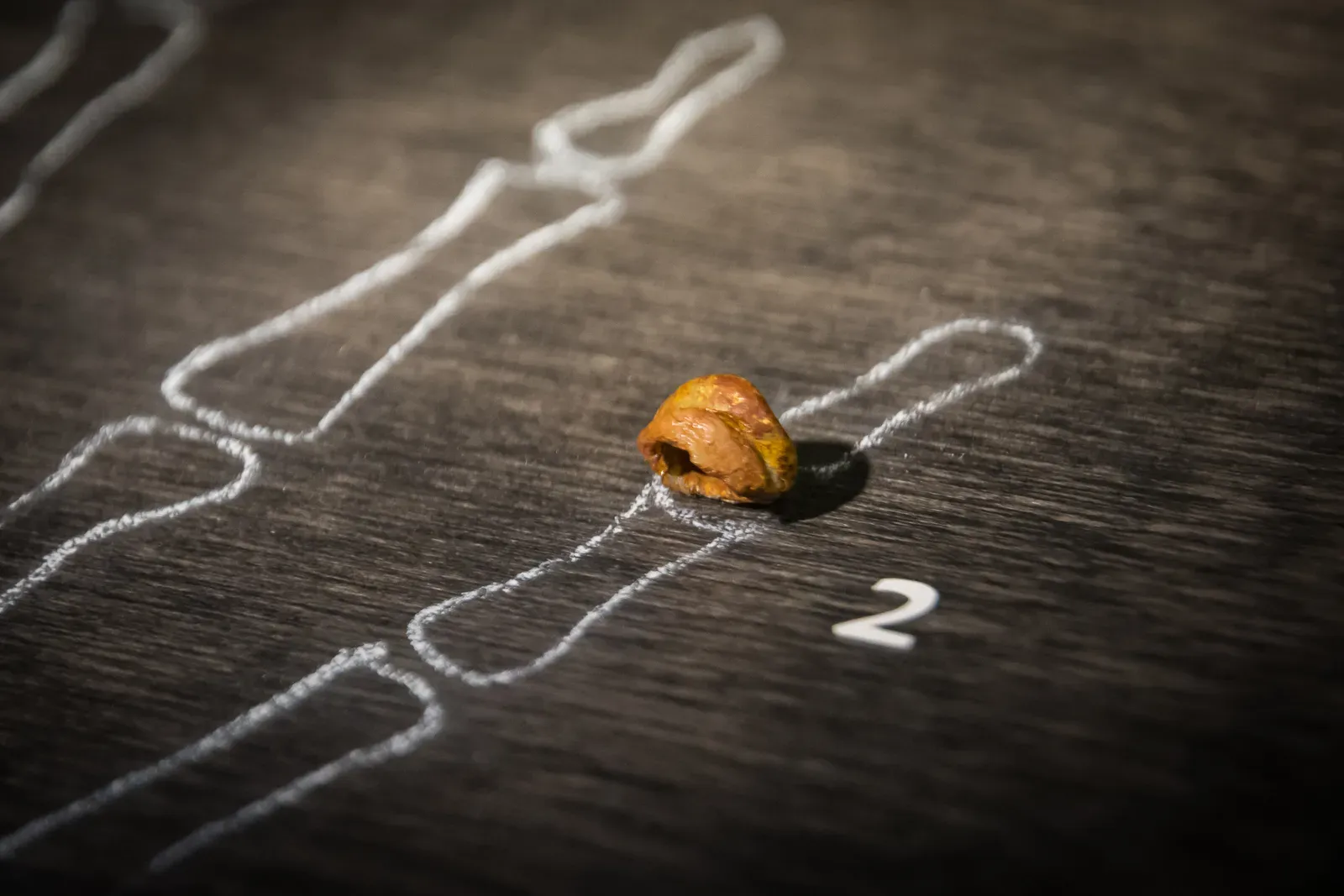
In 2010, a tiny finger bone fragment found in a Siberian cave produced a genome that didn’t match Neanderthals or modern humans. Historians of human evolution had to add an entirely new branch to the family tree based on genetics alone, without ever finding a complete skeleton.
Most people assume “ancient human relatives” means Neanderthals – but millions of people alive today carry DNA from this second, lesser-known group, particularly populations in Melanesia and parts of Asia, where Denisovan ancestry can account for several percent of the genome. That statistic alone forced textbooks describing human migration out of Africa to be substantially rewritten.
What makes this reinterpretation ongoing rather than settled is that scientists still haven’t found a complete Denisovan skeleton. Everything known about their possible appearance comes from a handful of teeth, bone fragments, and the genetic legacy left in living populations – making Denisovans arguably the most significant human relative ever identified almost entirely through absence rather than physical remains.
The next find suggests something with a brain a third the size of ours may have buried its dead on purpose.
#11 – Homo naledi May Have Buried Its Dead Before Modern Humans Even Existed
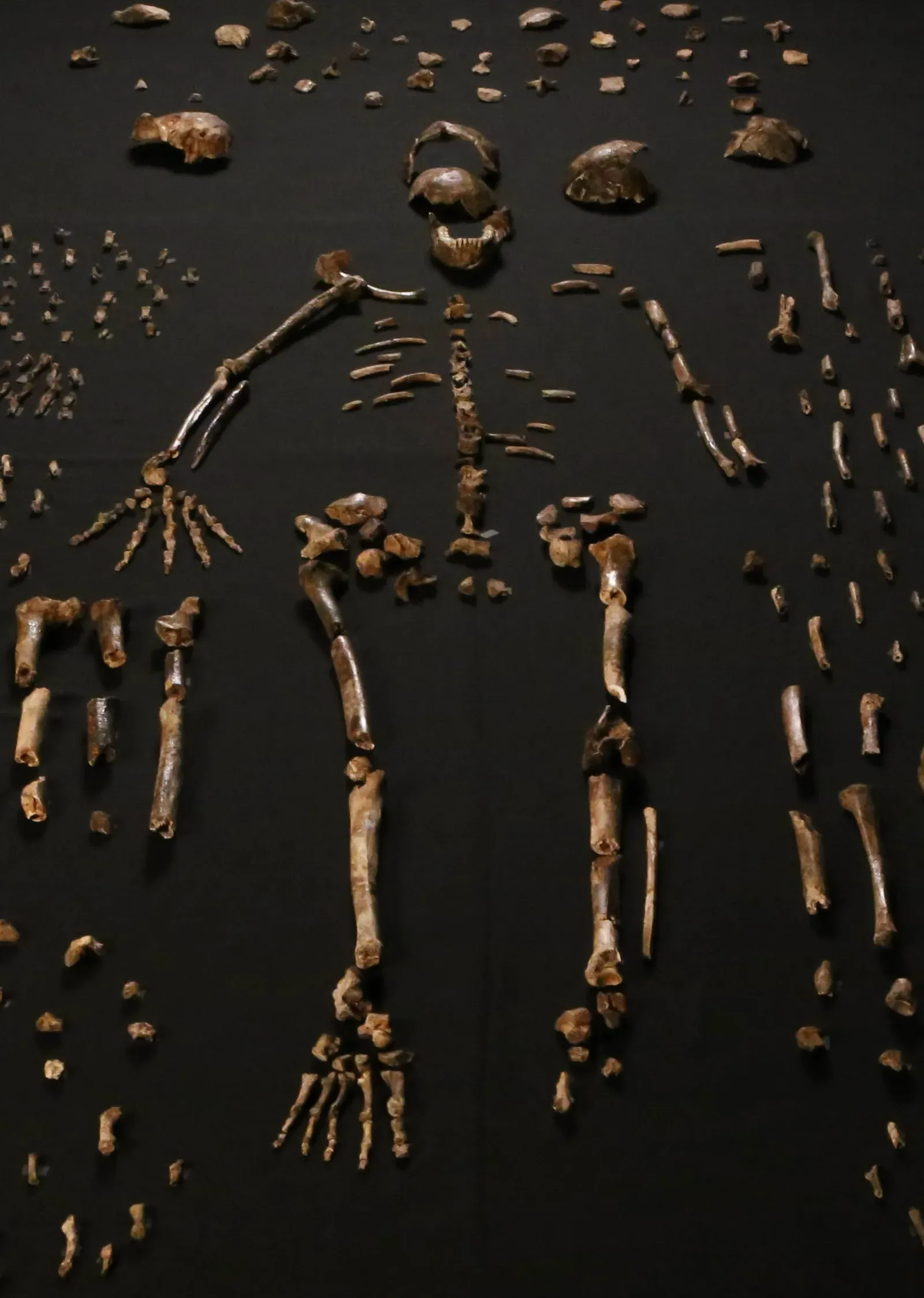
When cavers discovered fossil remains deep in South Africa’s Rising Star cave system in 2013, the skeletons belonged to a small-brained, primitive-looking hominin species unlike anything in the fossil record. The bigger shock came from where the bones were found: in a chamber accessible only through a treacherous, narrow passage, seemingly deliberately placed there.
Researchers argue this points to intentional burial – a behavior long assumed to require the larger brains and complex cognition of modern humans or Neanderthals. If confirmed, it would mean a species with a brain roughly one-third the size of ours engaged in ritual behavior toward its dead, hundreds of thousands of years earlier than previously thought possible for any hominin.
The claim remains one of the most contested in modern paleoanthropology. Critics argue the bones could have washed into the chamber naturally or fallen through a different, now-collapsed entrance, rather than being carried and placed there deliberately.
Whichever side proves correct, the discovery has already forced historians of human cognition to admit that “brain size equals ritual behavior” was an oversimplified assumption all along. The next reversal flips the entire order civilization was taught to follow.
#12 – Göbekli Tepe Proved Temples Came Before Farming, Not After
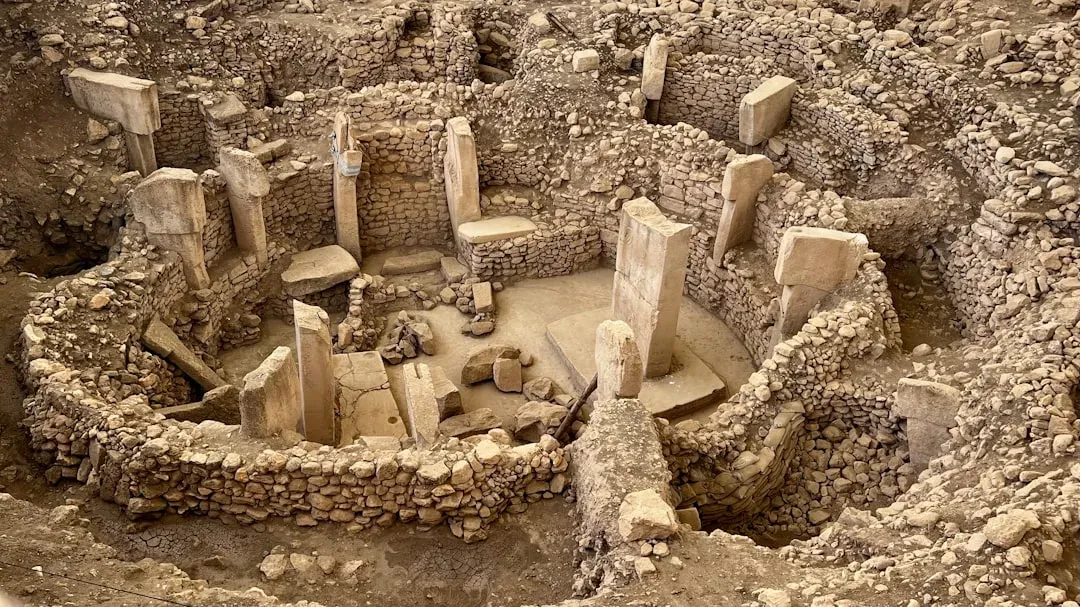
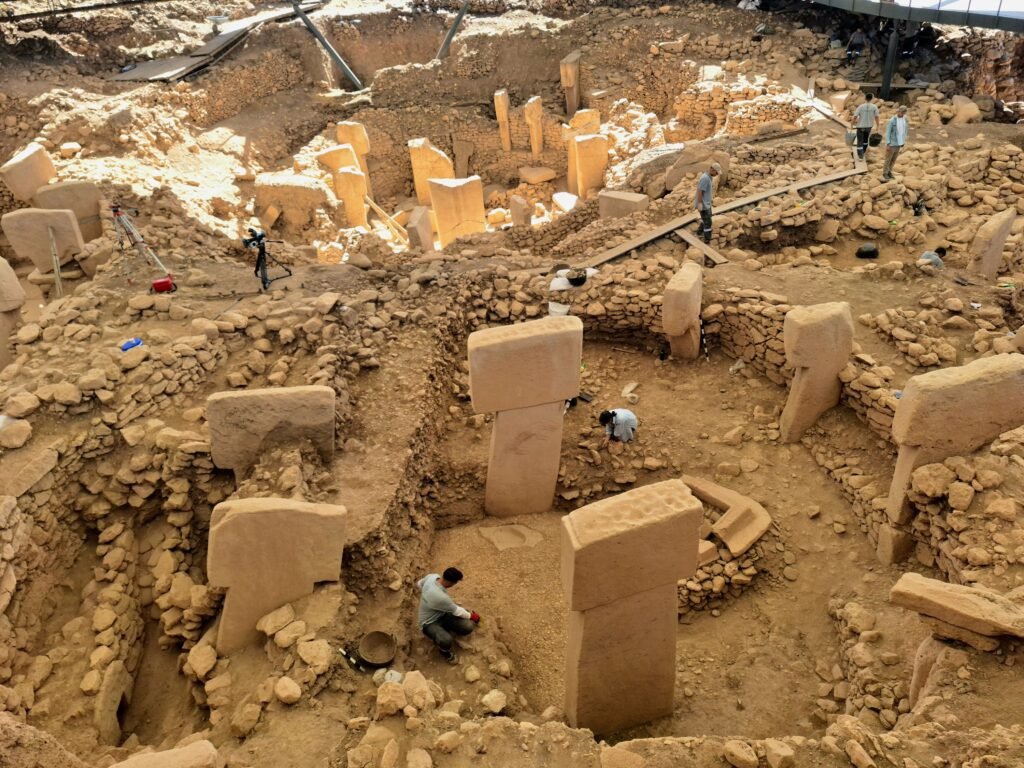
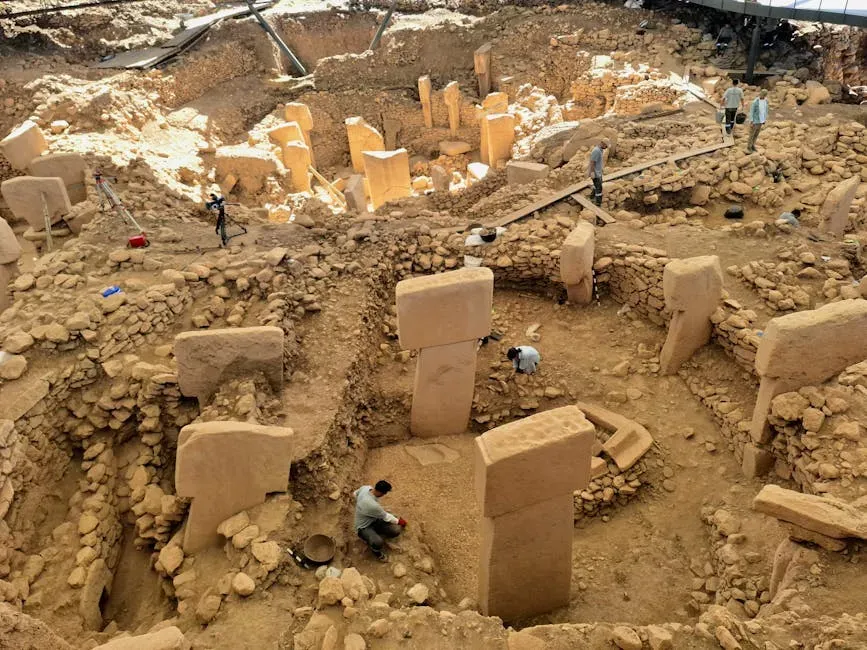
For most of the 20th century, archaeologists taught a tidy sequence: humans settled down, developed agriculture, and only then – once fed and stable – built temples and organized religion. The excavation of Göbekli Tepe in Turkey, beginning in earnest in the 1990s, blew that sequence apart.
The massive carved limestone pillars at the site date to roughly 9600 BCE, thousands of years before evidence of organized agriculture appears anywhere in the region. That timeline forced a fundamental reversal: hunter-gatherers, not farmers, built the first known monumental religious structures, apparently gathering in large enough numbers to organize construction before anyone had settled into permanent farming villages.
Quick Compare
- Old sequence: farming first, surplus food, then temples and religion follow
- New sequence: mass gatherings and temple-building first, farming develops to feed the workers
- Site age: roughly 9600 BCE, predating Stonehenge by thousands of years
- Builders: hunter-gatherers, not settled agricultural communities
Historians now argue the causation ran backward from what textbooks assumed – that the need to feed large groups gathering for religious or ceremonial purposes may have driven the development of agriculture, rather than agriculture creating the surplus that allowed religion to flourish.
It remains one of the most actively debated reinterpretations in archaeology, precisely because it challenges a foundational assumption about how civilization itself began. And the case that changed everything for how ancient remains get studied? It circles right back to where this list started.
#13 – Kennewick Man’s Ancestry Fight Reshaped How All Ancient Remains Are Studied
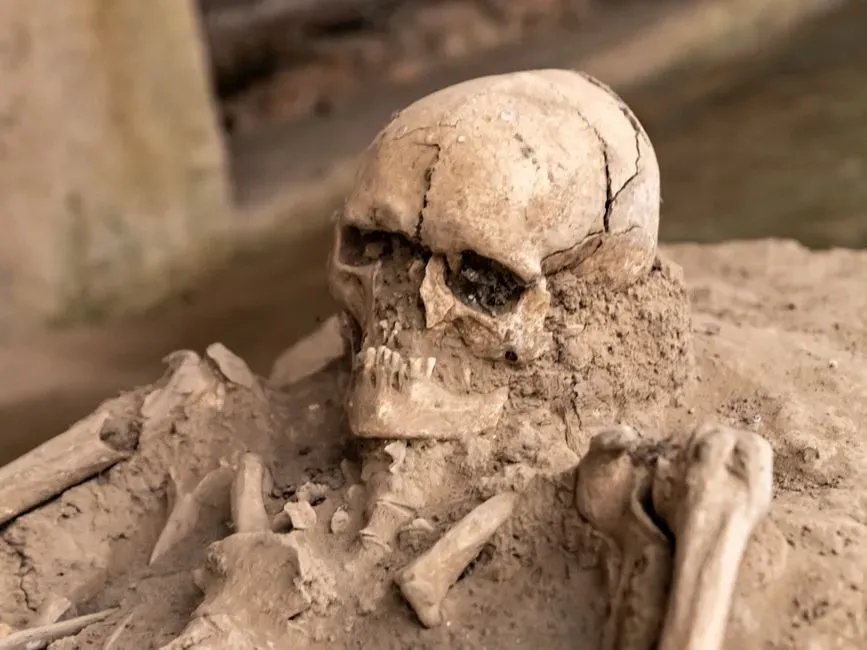
While Kennewick Man’s individual case already reshaped legal precedent, historians and archaeologists now point to it as the pivotal moment that changed research ethics across the entire field of ancient human remains. Before 2015, DNA testing on ancient skeletons was often treated as a secondary, optional step behind skeletal measurement.
The reversal proved that visual and morphometric analysis – the gold standard for over a century – could be confidently wrong, even when conducted by respected specialists using rigorous methodology. That realization has pushed museums and universities worldwide to prioritize genetic testing before drawing conclusions about ancestry, particularly on remains connected to living descendant communities.
The case also permanently altered the relationship between scientists and Indigenous communities. Tribes had insisted on Kennewick Man’s Native American identity from the moment of discovery in 1996, based on oral history and cultural knowledge, while court-sanctioned scientists spent nearly two decades disputing it. When DNA ultimately vindicated the tribes’ original position, it became a cautionary example cited across anthropology departments: traditional knowledge and scientific skepticism aren’t opposites, and dismissing one in favor of the other can waste twenty years and millions of dollars proving what communities already knew.
The Bottom Line
History isn’t static – it’s a living argument, constantly revised as better tools expose old mistakes. A murder weapon hid in a mummy’s shoulder for a decade before anyone noticed. A civilization’s temples predate its farms. A skeleton’s ancestry flipped entirely once DNA replaced guesswork. Even Pompeii’s death date, memorized by millions of students, may be off by two months.
That’s not a flaw in the discipline – it’s the whole point. The scientists who spent twenty years insisting Kennewick Man wasn’t Native American weren’t lying; they were wrong with total confidence, which might be the most human mistake on this entire list. History doesn’t get rewritten because it failed the first time. It gets rewritten because we finally built a tool good enough to ask it a better question.