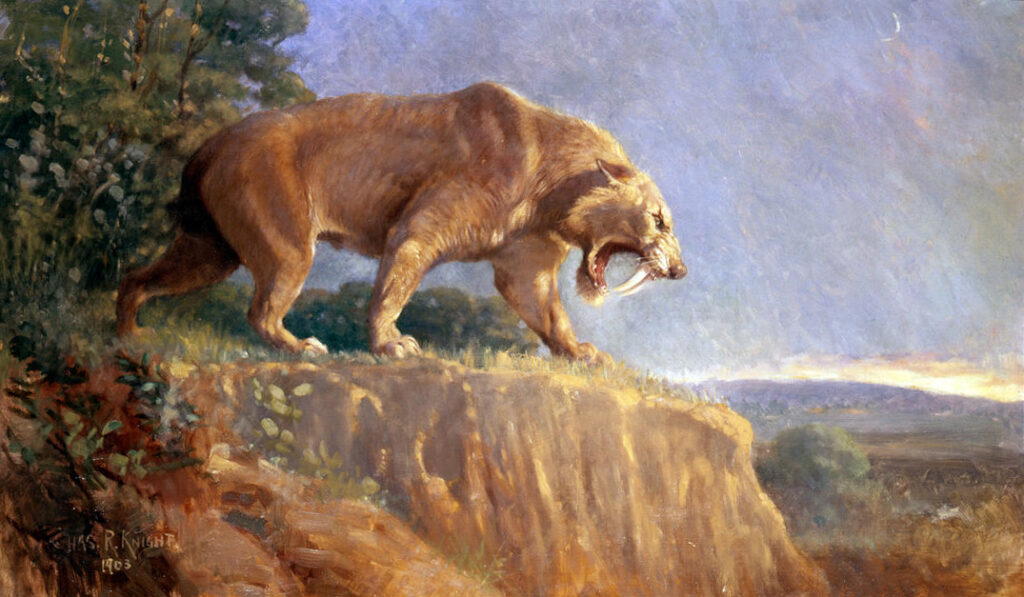
Most people picture the saber-tooth exactly the way Hollywood taught them: a giant snarling lion with two steak-knife fangs jutting permanently out of its mouth, sprinting across the tundra to crush a mammoth’s skull. Turns out almost none of that survives contact with the fossil record.
Paleontologists who’ve spent decades digging through the La Brea tar pits and running skulls through 3D scanners are now quietly walking back some of the most repeated “facts” about this Ice Age predator. Some myths were invented in the 19th century by illustrators guessing at gaps in the bones. Others came from studying dead, relaxed cat mouths instead of live ones. Here’s what thirteen of those invented “facts” actually look like once the tar-pit evidence gets the final word.
#13 – The “Saber-Toothed Tiger” Name Is a Complete Fabrication
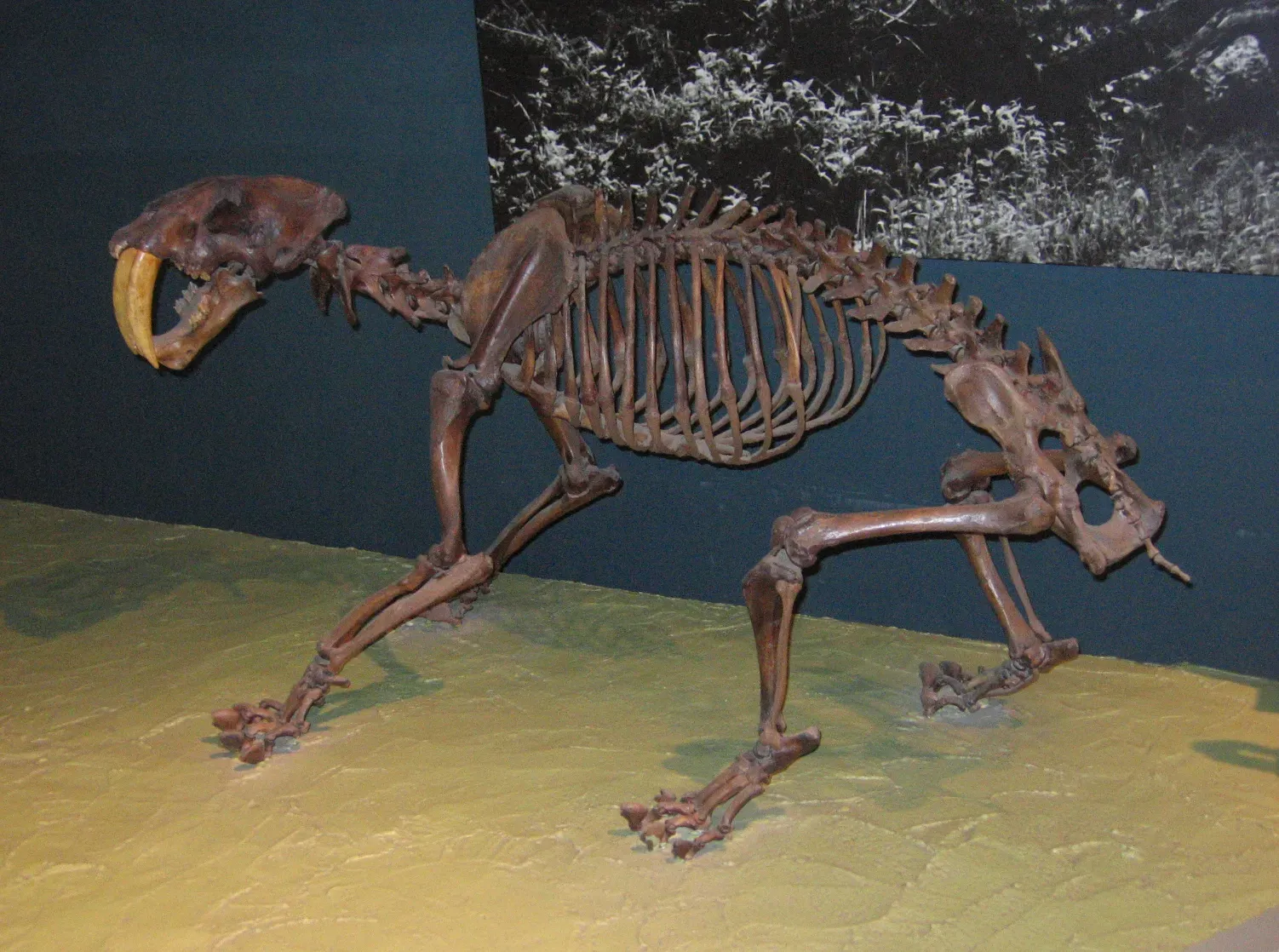
Here’s the one that trips up almost everyone: it was never a tiger. Smilodon doesn’t even belong to the same branch of the cat family as tigers. Tigers sit in the Pantherinae group, while Smilodon belongs to an entirely separate subfamily called Machairodontinae, a lineage that split off the cat family tree long before anything resembling a modern tiger existed.
Researchers have been correcting this for years, pointing out that a more accurate name is simply “saber-toothed cat.” The distinction isn’t pedantry, it’s genetics. A saber-toothed cat and a tiger are about as closely related as a wolf is to a hyena – superficially similar predators from very different family trees. And the identity confusion doesn’t stop there.
#12 – Every Fossil Ever Called “Saber-Tooth” Is Not Smilodon
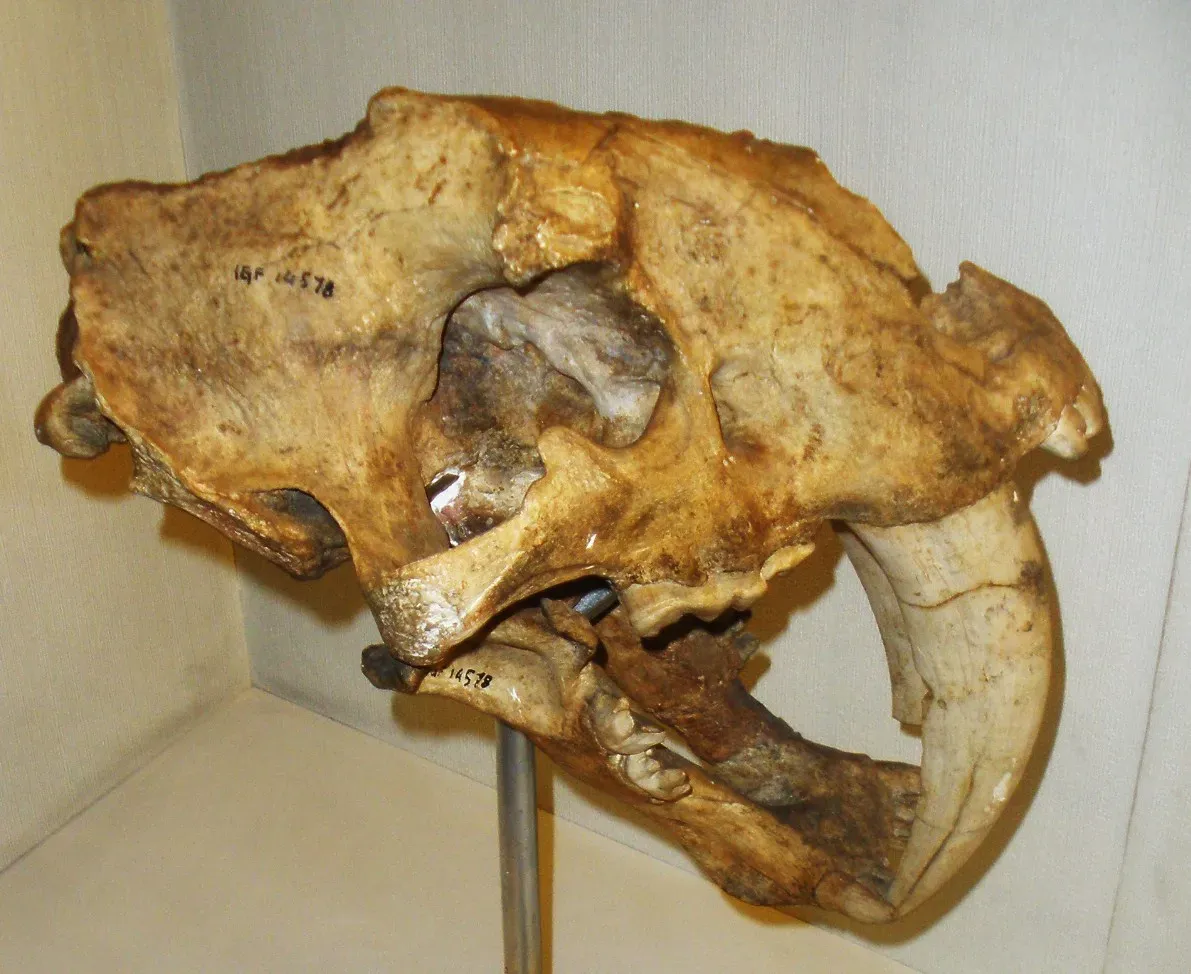
Most people use “saber-tooth” as if it names one single animal. It’s actually an umbrella term covering dozens of distinct, unrelated genera that evolved similar teeth independently. Smilodon is just the most famous member of a much bigger, messier family that includes Homotherium, the scimitar-toothed cat, and even saber-toothed marsupials that weren’t cats at all.
Scientists have flagged this exact confusion, noting that the nickname gets lumped onto unrelated animals that just happen to share the same dental trick. The fossil record keeps getting stranger, too – researchers recently detailed the weight and diet of an extinct saber-toothed marsupial, proving the saber-tooth body plan evolved more than once, in completely different mammal groups, tens of millions of years apart. One nickname, dozens of unrelated animals borrowing the same terrifying grin.
Quick Compare
- Smilodon – the most famous saber-tooth, known primarily from La Brea tar pit fossils
- Homotherium – the scimitar-toothed cat, a separate genus with its own distinct build
- Saber-toothed marsupials – unrelated pouched mammals that evolved the same dagger-tooth look independently
- The umbrella term “saber-tooth” – covers all of the above, despite none sharing a recent common ancestor
#11 – Its Fangs Were Always Visible, Even With Its Mouth Shut
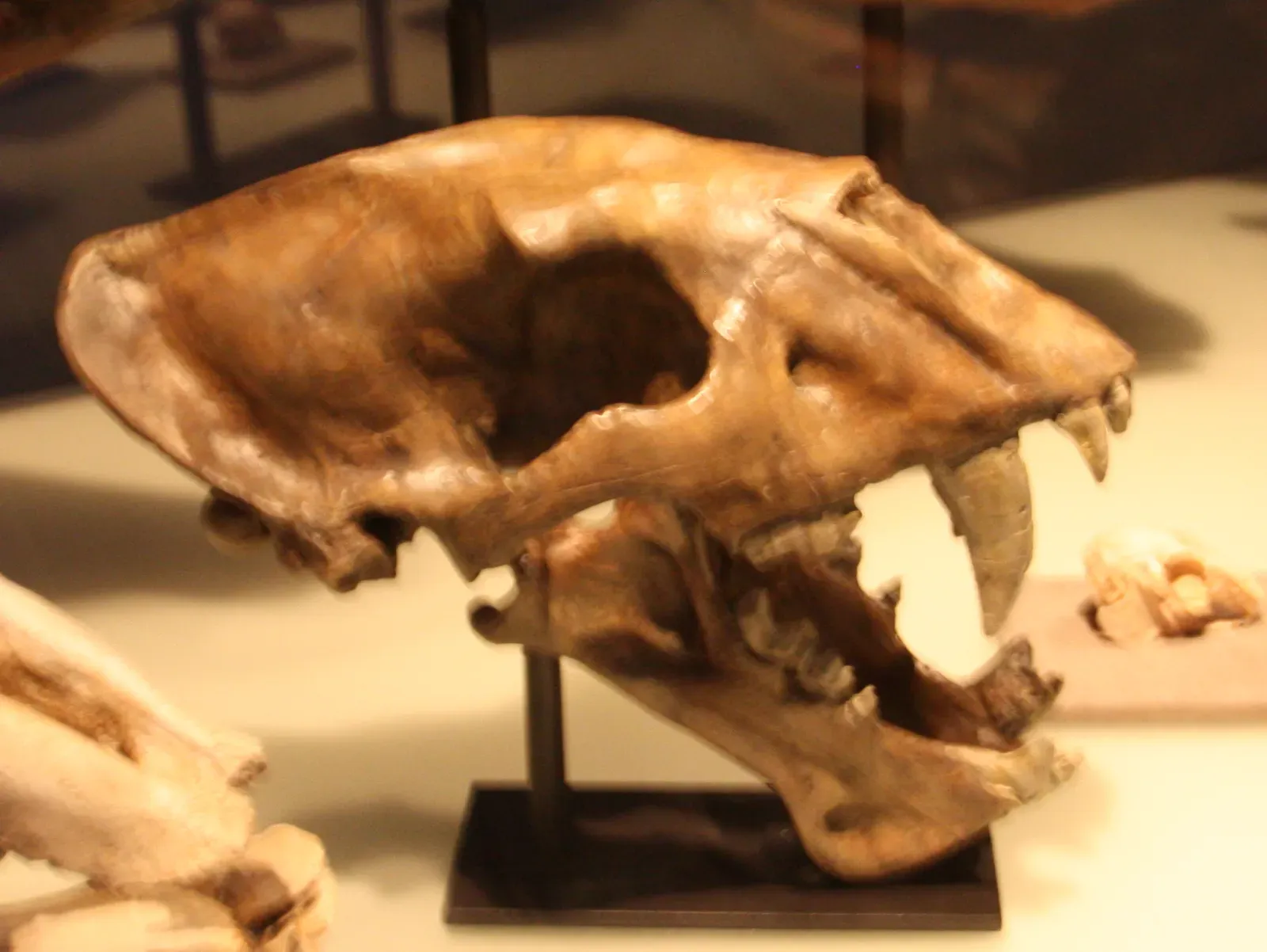
For over a century, every museum diorama and movie poster showed the same image: two massive fangs hanging visibly below the closed jaw. New 3D scans suggest that at least one saber-tooth species tucked its teeth completely out of sight. Researchers studying Homotherium latidens found its mouth could fully conceal those famous daggers.
A study published in Quaternary Science Reviews found that some of these big cats likely hid their dagger-shaped weapons inside their mouths until they were ready to strike. The team reached that conclusion after observing live big cats, re-examining old fossil dissections, and building a 3D scan of a Homotherium skull. Interestingly, Smilodon itself never got this makeover – its six-inch canines really were too long to hide, no matter how stretchy its lips got.
#10 – It Had a Skull Built Exactly Like a Modern Lion’s
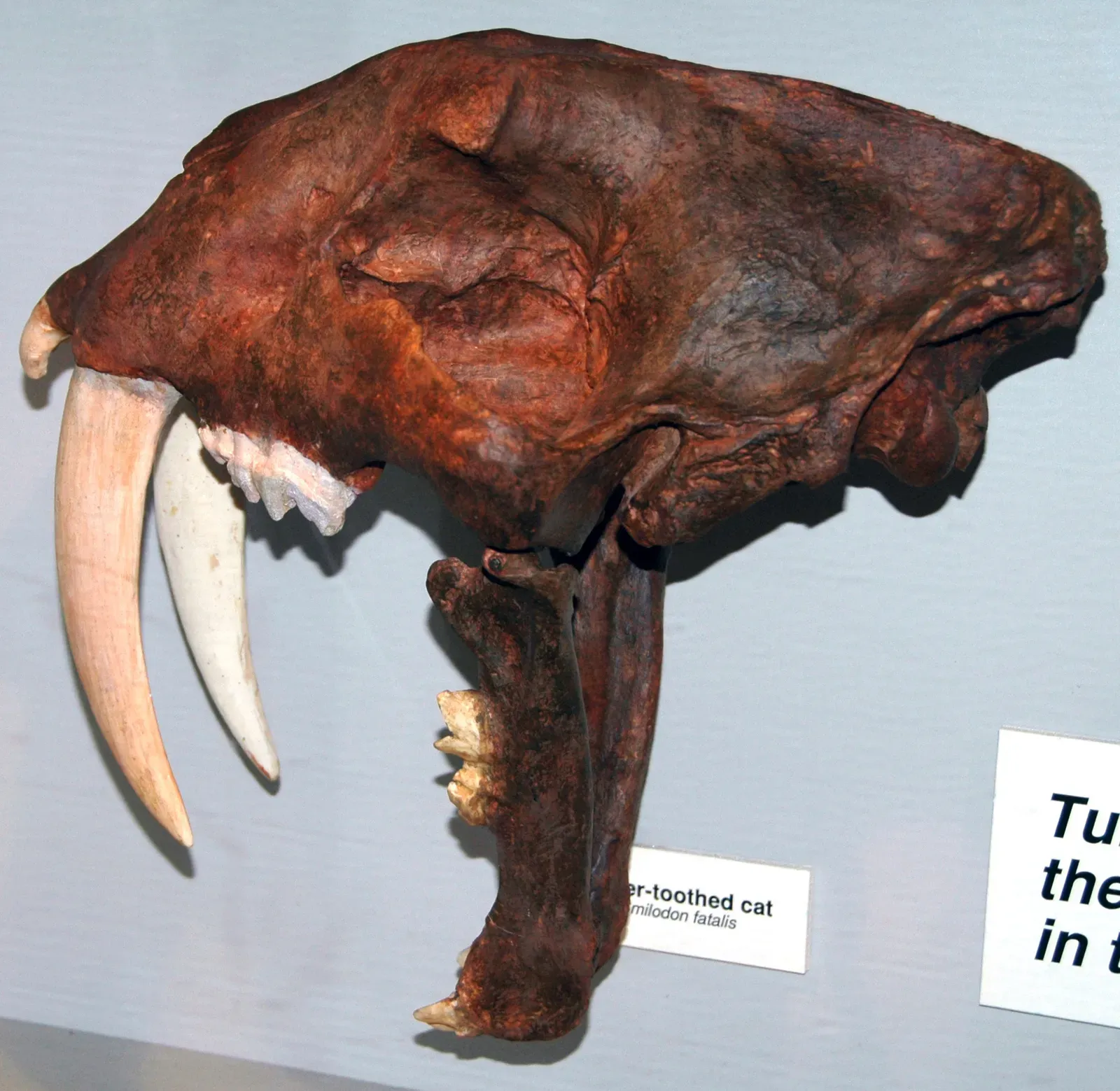
Slap two long teeth onto a lion skull and you’ve basically got a saber-tooth, right? Wrong. The entire skull architecture was reshaped to support those fangs, and the result looked nothing like a lion underneath the fur. Paleontologists studying Smilodon skulls describe a blunt, robust face built to anchor massive tooth roots, not the streamlined snout of a modern big cat.
Researchers who study Smilodon anatomy note that aside from the front teeth, the skull had a particularly blunt, heavily reinforced face just to hold those huge canine roots in place, which means the popular reconstructions showing Smilodon as a lion with long fangs bolted on are simply wrong. On top of that, the cat needed unusually stretchy lips just to close its mouth around those blades. As one anatomist put it, the lips had to stretch enough to let the jaw open wide, which likely meant loose jowls like a St. Bernard’s – and probably just as much drool.
#9 – It Ran Down Prey Like a Cheetah or Lion
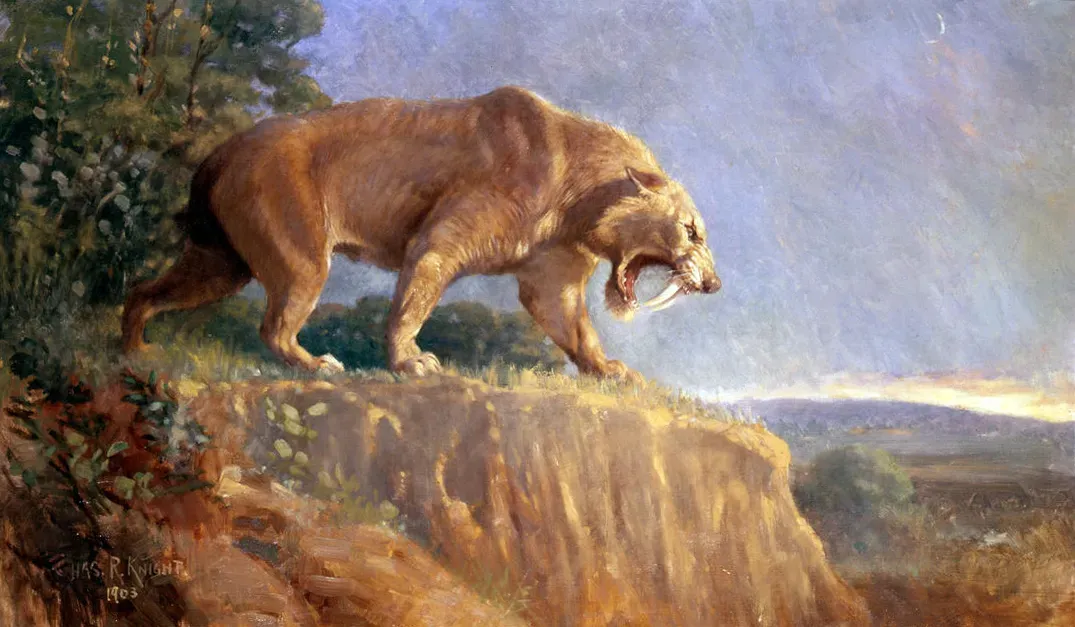
Every nature documentary reenactment shows the saber-tooth in a full sprint, chasing herds across open ground. The actual body plan made fast, sustained chasing almost physically impossible. Its build simply wasn’t engineered for speed – it was engineered for raw grappling power at close range.
Researchers who’ve studied Smilodon’s proportions point out that evolution built it into a powerful hunter, but that came at a real cost: reduced speed. The cat was muscular and heavy enough that sprinting would have been a serious challenge, and it’s highly unlikely it could run anywhere close to a modern lion, let alone a cheetah. Instead, many scientists believe it relied on ambush hunting – hiding in vegetation, letting prey wander close, then using powerful forelimbs to grab and pin the animal before delivering one precise killing bite. This wasn’t a chase-scene predator. It was a heavyweight wrestler waiting in the brush.
#8 – Its Bite Could Crush Bone Like a Modern Lion’s
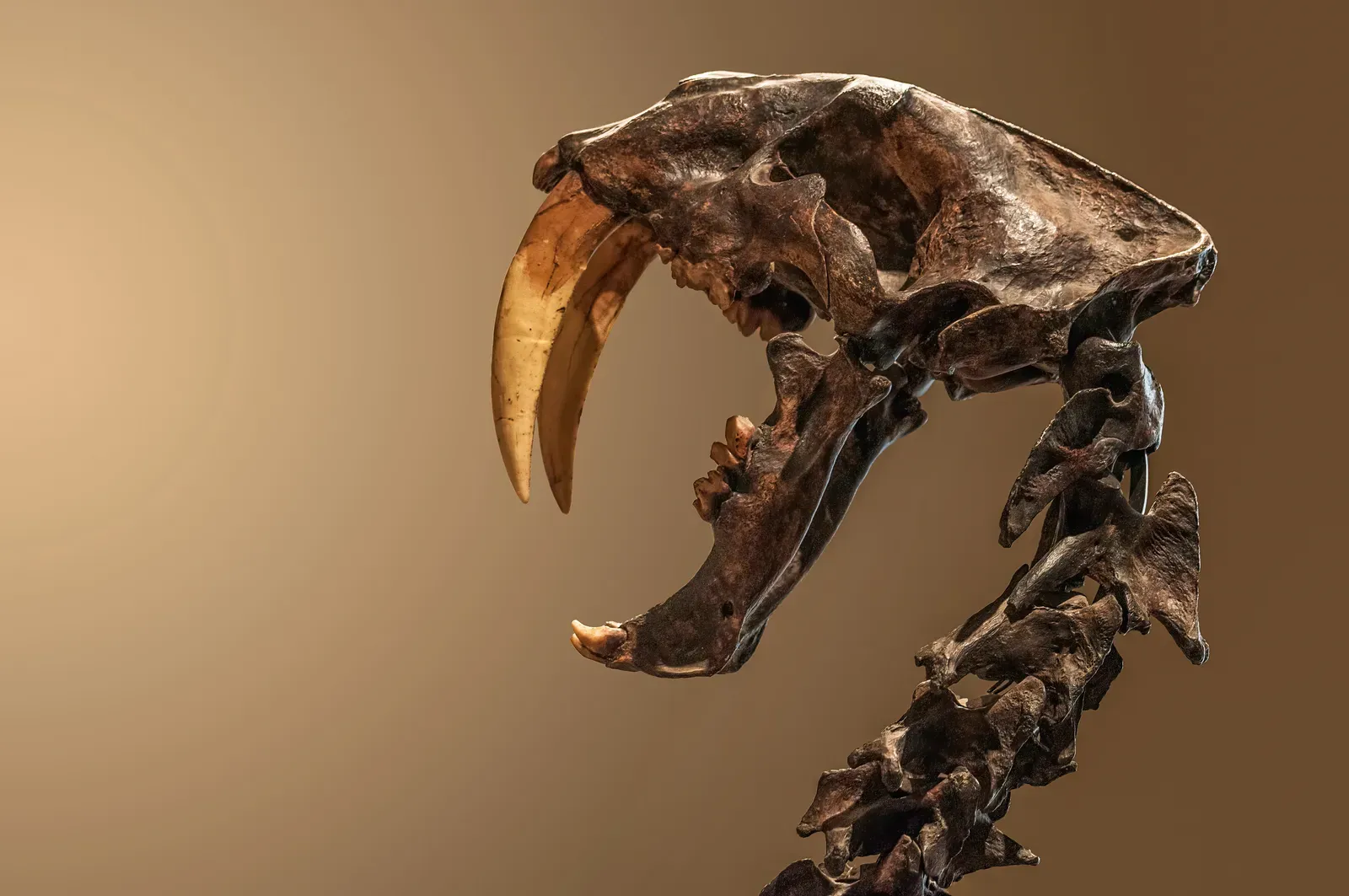
If you assumed those massive fangs came with a bone-crushing bite to match, you assumed wrong. Digital reconstructions show Smilodon’s bite was almost embarrassingly weak compared to a modern lion’s. Researchers who built 3D models of both skulls found the difference wasn’t subtle – it was dramatic.
A study published in the Proceedings of the National Academy of Sciences found the saber-tooth’s bite carried just one-third the strength of a lion’s.
For all its reputation, Smilodon had a wimpy bite.
Stephen Wroe
The team traced this to skull mechanics – Smilodon’s relatively small lower jaw made room for its lengthy sabers, but it cost the animal serious bite force. The fangs weren’t crushing weapons. They were precision tools that only worked once bite force was taken out of the equation entirely.
Fast Facts
- Smilodon’s bite carried roughly one-third the force of a modern lion’s
- Its lower jaw was proportionally smaller to make room for its long sabers
- Killing power came from forelimb strength, not jaw strength
- The fangs functioned as precision tools, not crushing weapons
#7 – Those Fangs Delivered the Killing Bite Immediately
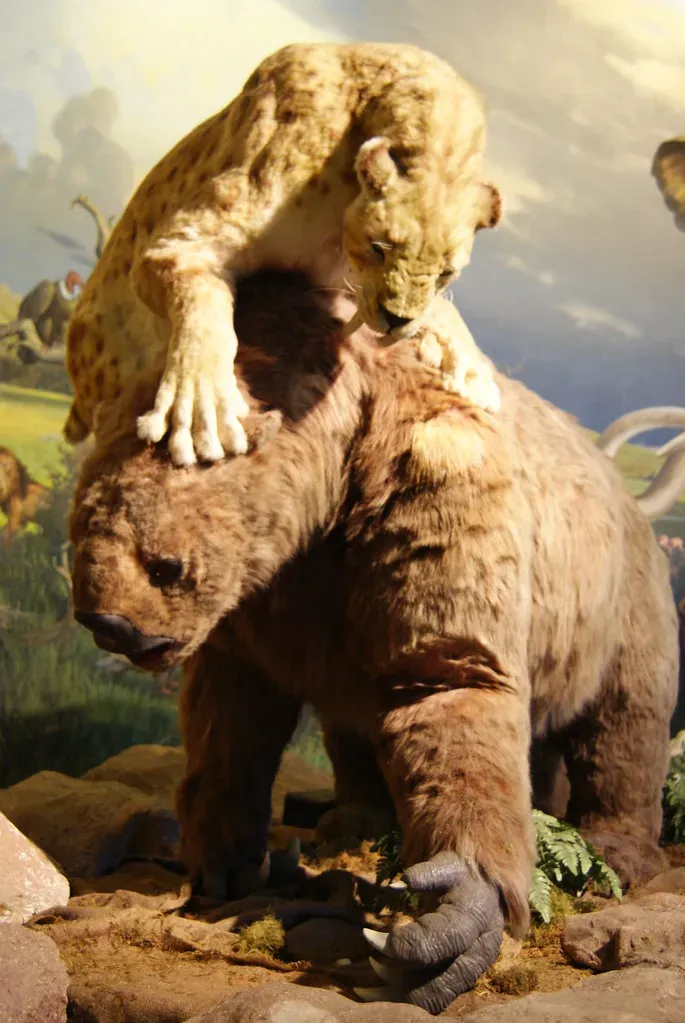
Picture a saber-tooth ambushing a bison and instantly plunging its fangs into whatever body part it reaches first. That’s backwards. The teeth were the last step of the attack, not the first. Before those fangs ever touched flesh, the cat had to physically overpower and completely immobilize its prey using something else entirely – its arms.
Researchers reconstructing the attack sequence explain that Smilodon used its powerful forelimbs and oversized claws to take down prey and pin the animal in place before ever deploying its canines. This lines up with newer findings that Smilodon had freakishly strong arms – stronger, pound for pound, than any cat alive today. The sabers were the finishing move, not the opening one.
#6 – Broken Teeth Prove It Was Starving Before It Went Extinct
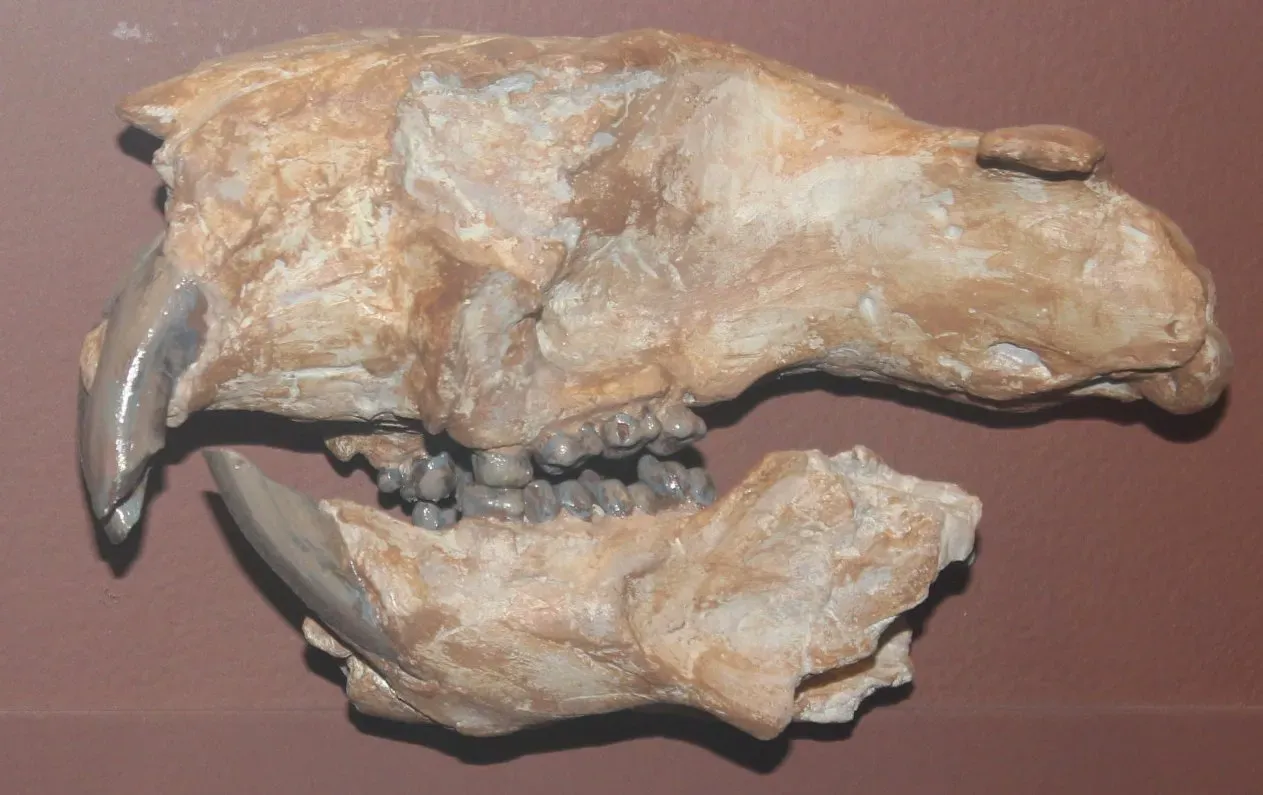
For years, the story was tragic and tidy: as prey vanished, desperate saber-tooths gnawed through entire carcasses, shattering their teeth in the process, right before going extinct. New tooth-wear analysis says that story is basically invented. The broken teeth are real. The starvation explanation behind them isn’t.
Earlier research found that teeth from American lions, saber-tooth cats, dire wolves, and coyotes at La Brea show three times the broken-tooth rate of today’s predators, which originally led scientists to suspect desperate, starving animals gnawing on bone. But newer wear-pattern analysis flips the narrative: the damage on saber-tooth teeth most closely resembles modern African lions, which sometimes crush bone while actively hunting and killing prey, not while scavenging bare carcasses. The broken teeth were an occupational hazard of the hunt itself, not a starvation diary.
Worth Knowing
- La Brea predator teeth show three times the breakage rate of modern predators
- Broken-tooth rates alone once suggested desperate, starving animals gnawing bone
- Newer wear-pattern analysis matches modern African lions, which break teeth while actively hunting
- The damage points to hard kills, not starvation-driven scavenging
#5 – It Went Extinct for One Simple, Single Reason
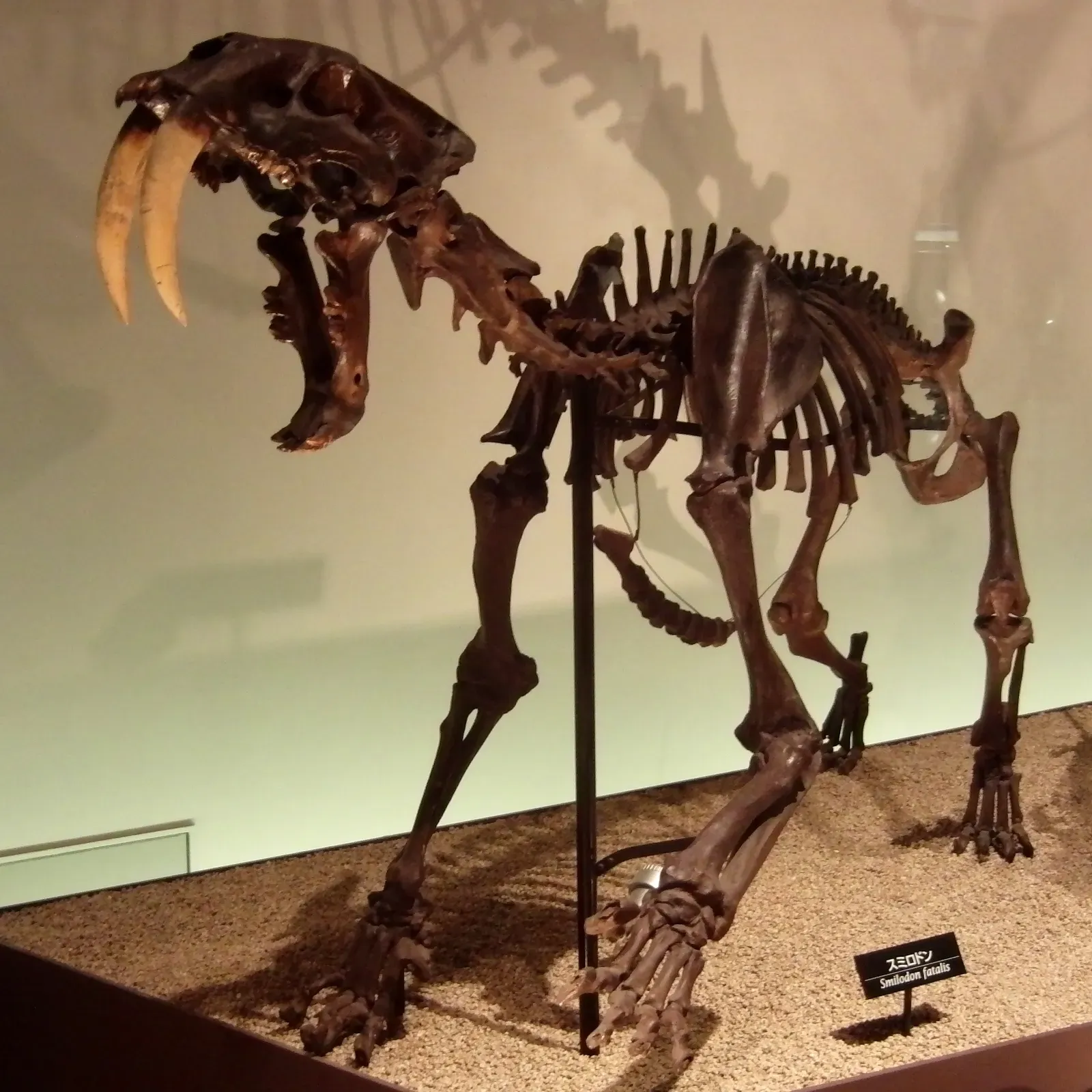
Ask most people why saber-tooths disappeared and you’ll get one tidy answer: humans hunted them out, or the ice age simply killed them. Researchers now describe the extinction as a pile-up of multiple pressures hitting all at once, not one clean villain. There’s no single smoking gun here – the real picture is far messier.
The likely answer braids several threads together: large herbivores declined sharply, and Smilodon had specialized hard on exactly that kind of big prey; the Younger Dryas cooling event and shifting climate shrank the habitable range; and competition with newly arrived Homo sapiens added the final squeeze. Over-specializing in a fast-changing world turned out to be a dangerous bet. Scientists are still actively chasing the full answer, driven by genuine curiosity about what this animal was doing right up until it disappeared.
#4 – Males Were Massive and Females Were Small, Just Like Lions
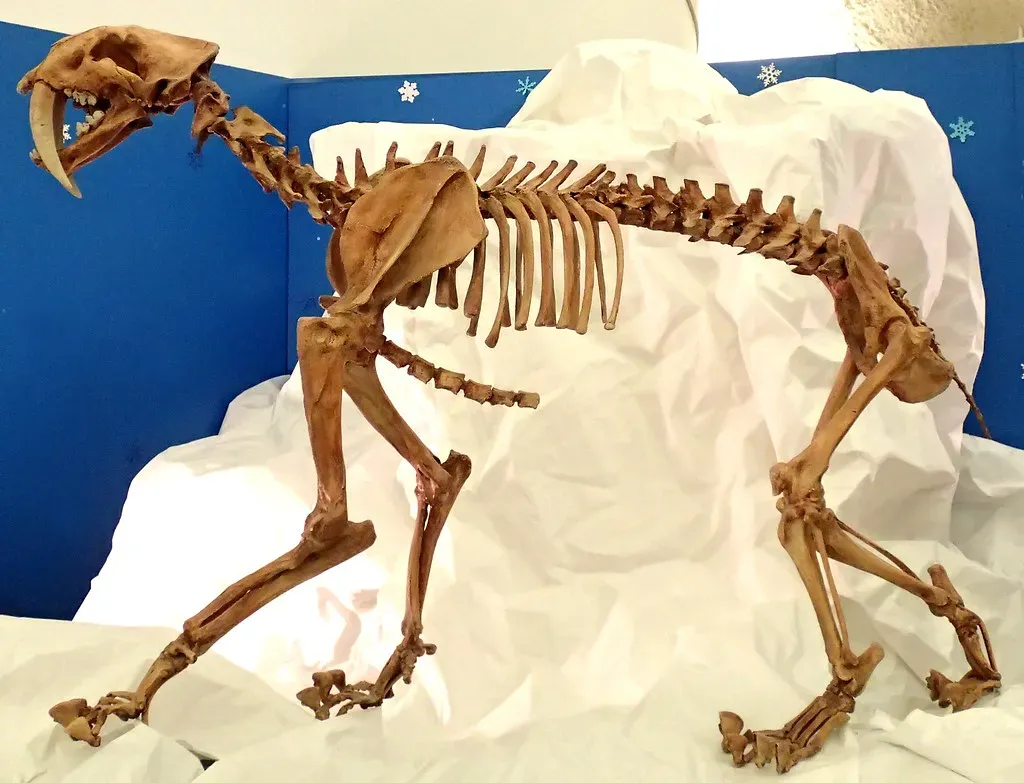
Modern lion prides run on a dramatic size gap between hulking males and noticeably smaller females. Scientists searched for that same pattern in Smilodon and came up completely empty-handed. The size difference researchers expected to find simply isn’t showing up in the fossils.
Paleontologists studying this directly say that despite searching, they haven’t found obvious evidence of a size difference between the sexes in Smilodon – researchers can’t even reliably tell which La Brea fossils are male or female. That’s genuinely strange, since sex-based size differences show up in plenty of big cats today, lions especially.
That lack of sexual dimorphism is odd.
Blaire Van Valkenburgh, UCLA paleontologist
If Smilodon really did live in prides, it apparently didn’t play by lion rules.
#3 – It Was a Solitary Hunter That Avoided Its Own Kind
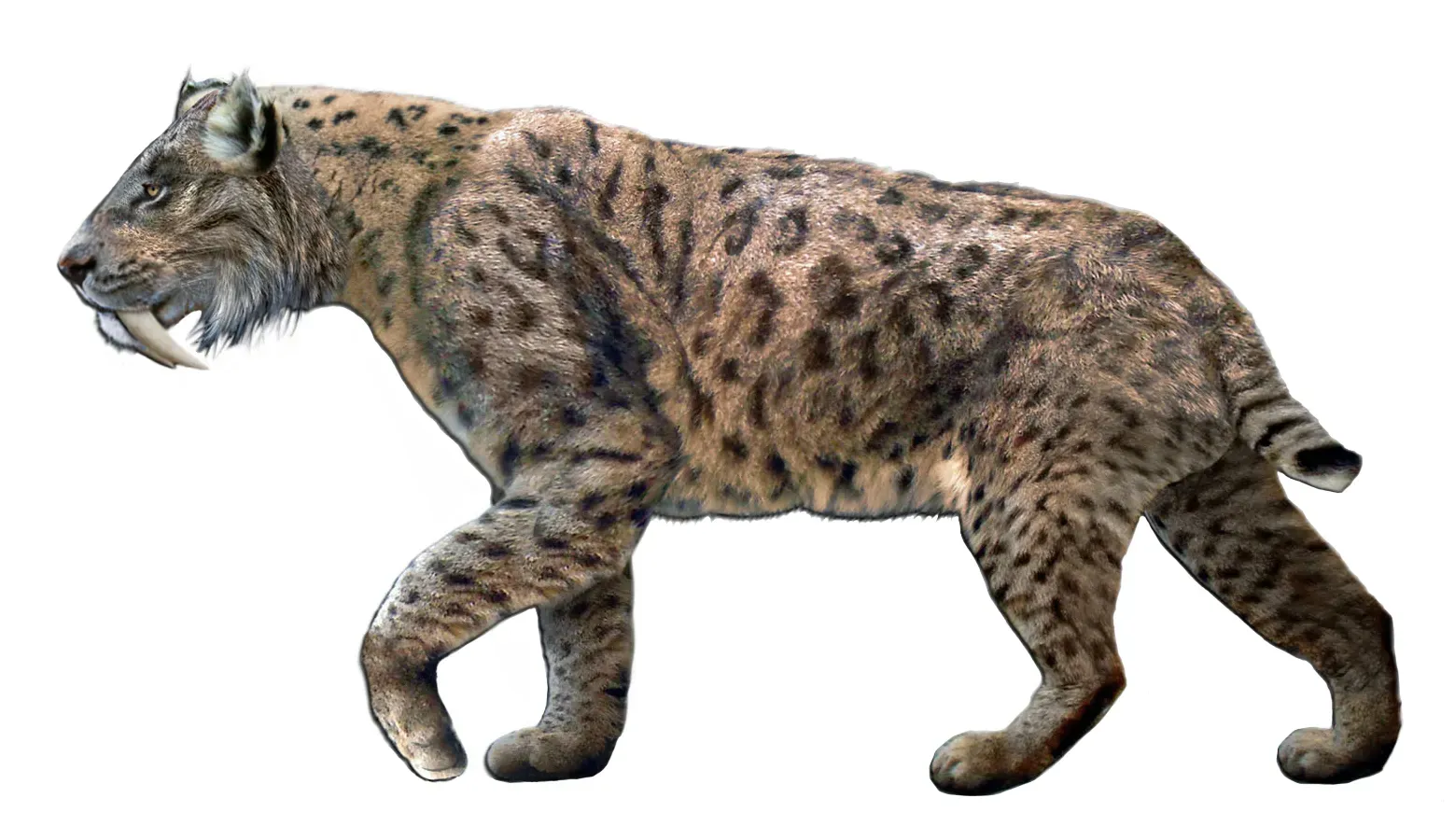
The lone predator stalking the grasslands alone makes for a great nature-documentary image. The tar pit evidence tells a very different, far more social story. The sheer number of predator fossils found clustered together doesn’t match a species that avoided contact with its own kind.
Researchers point to the numbers as the real clue: fossils of dire wolves and saber-toothed cats together outnumber herbivores roughly nine-to-one at La Brea, leading scientists to suspect both predators may have formed prides or packs, much like modern lions and wolves. Not everyone agrees – a smaller group of experts argue pack-living animals would have been smart enough to avoid getting mired in tar en masse. Still, here’s an unpopular opinion worth sitting with: the “lone predator” image was likely invented for drama, not evidence. The tar pit numbers point toward a genuinely social animal, packs and all.
#2 – It Lived Alongside Dinosaurs
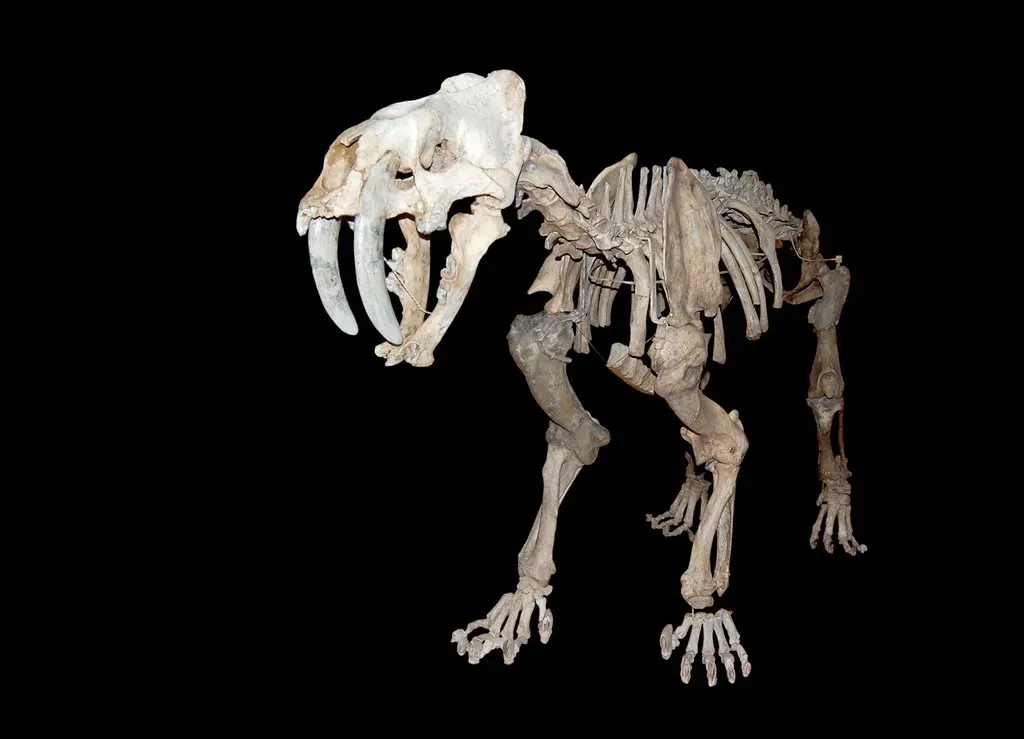
This one refuses to die in pop culture, showing up in cartoons, toy aisles, and the occasional B-movie mashup. The math isn’t even close – there’s a gap of tens of millions of years between the two. It’s an easy mistake to make since both are extinct and both look suitably prehistoric, but the timeline simply doesn’t allow it.
Dinosaurs went extinct 66 million years ago. Smilodon lived and died out roughly 10,000 to 12,000 years ago. The two species never crossed paths, not even close. To put that in perspective, Smilodon is closer in time to us – to smartphones and skyscrapers – than it ever was to a T. rex.
At a Glance
- Dinosaurs went extinct: roughly 66 million years ago
- Smilodon lived until: roughly 10,000-12,000 years ago
- Gap between the two: tens of millions of years, with zero overlap
- Smilodon is closer in time to smartphones than to a T. rex
#1 – Saber-Tooth Cats Might Still Be Out There Today
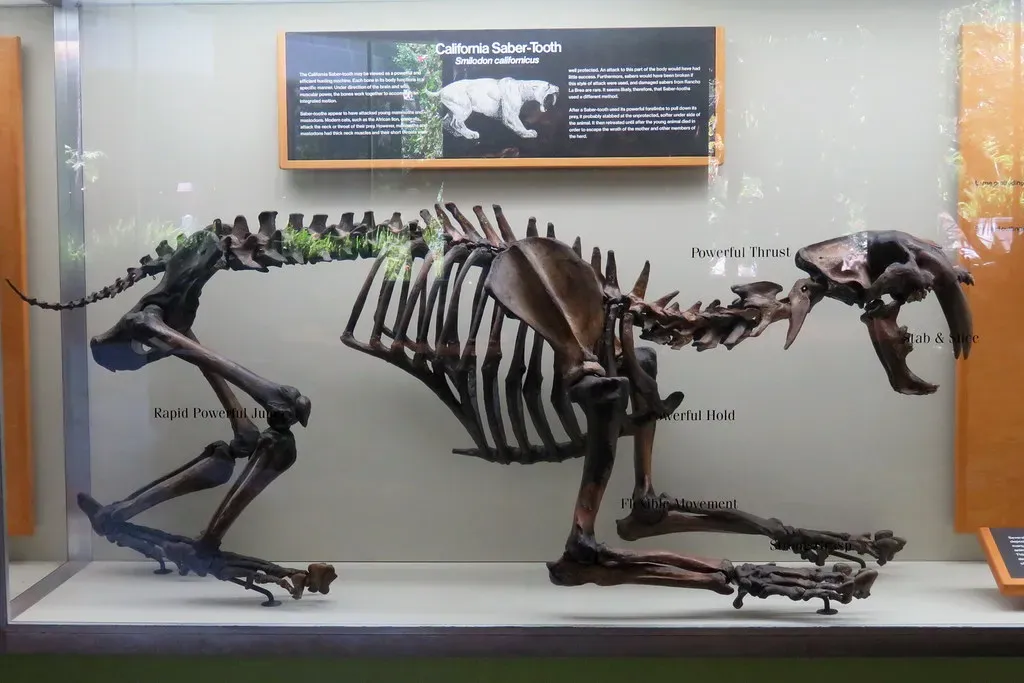
This is the myth that refuses to stay buried, fueled by grainy trail-cam photos and cryptid forums claiming a modern sighting. Every single verified fossil record confirms this species has been gone for roughly ten thousand years, with zero exceptions. Any modern encounter gets explained the same way, every single time.
Researchers are blunt about it: the last Smilodon died out around 10,000 years ago, so no saber-toothed cat survives anywhere on Earth today, and any “sighting” is almost always a misidentified big cat with unusually prominent canines. Even so, the fascination hasn’t faded – scientists recently celebrated finding a frozen Homotherium cub preserved in Russian permafrost, decades after paleontologists first started hoping for exactly that kind of find. That excitement alone tells you everything: if living saber-tooths were actually out there, nobody would need a permafrost miracle to get this thrilled about seeing one.
The Bottom Line
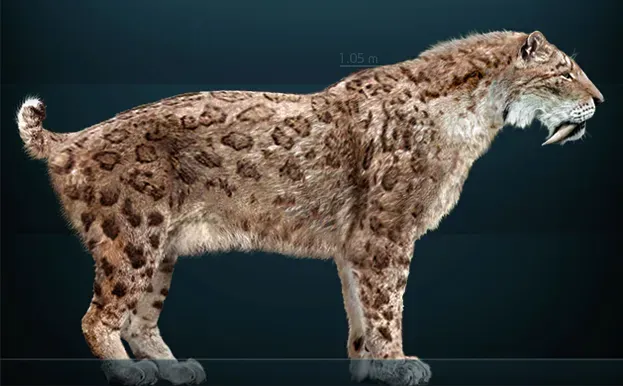
The saber-tooth we grew up with – a lion with bolted-on fangs, sprinting after prey with a bone-crushing bite – was mostly invented by early illustrators filling in gaps that science hadn’t answered yet. The real animal was stranger and, frankly, more impressive: a slow, muscular ambush predator with a weak bite, freakishly strong arms, an oddly lion-less family tree, and possibly a genuine social life.
If you ask us, the wimpy-bite, wrestler’s-body version is far more interesting than the cartoon we were sold for decades. Which of these invented facts surprised you the most? Drop it in the comments.