
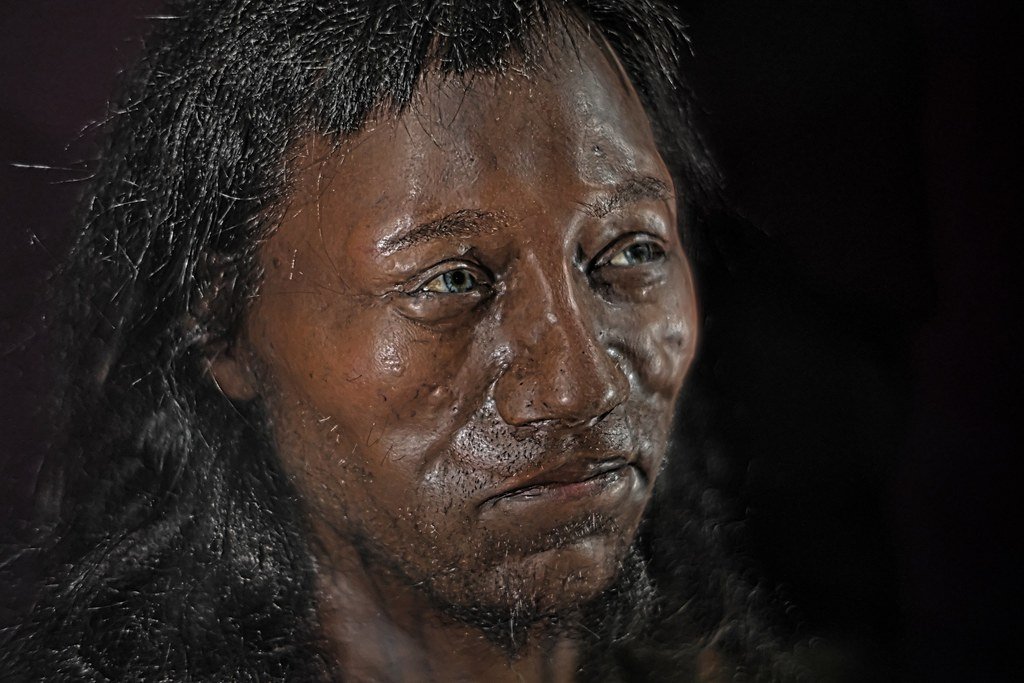
Most people picture ancient Britain as a land of pale, blond warriors battling the cold – a scene straight out of a period drama. But that picture is completely wrong, and one 10,000-year-old skeleton pulled from a Somerset cave proved it.
When scientists finally sequenced his full genome in 2018, they didn’t just identify a man – they dismantled a national myth about what “British” has always meant. Here’s what the genetic evidence actually says about the very first Britons, and why some of it still makes people uncomfortable.
#1 – The Accidental Discovery That Rewrote British History
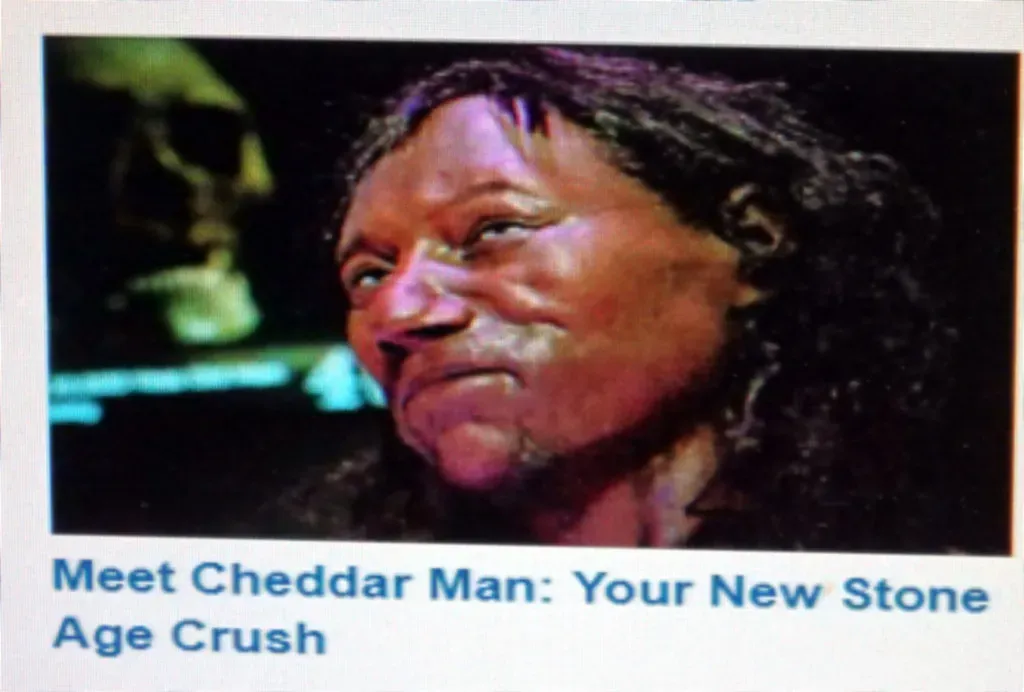
Nobody was looking for the origins of the British people in 1903. Workers were simply digging a drainage trench inside Gough’s Cave, a limestone tourist attraction in Cheddar Gorge, Somerset, when they stumbled onto something extraordinary buried beneath their feet.
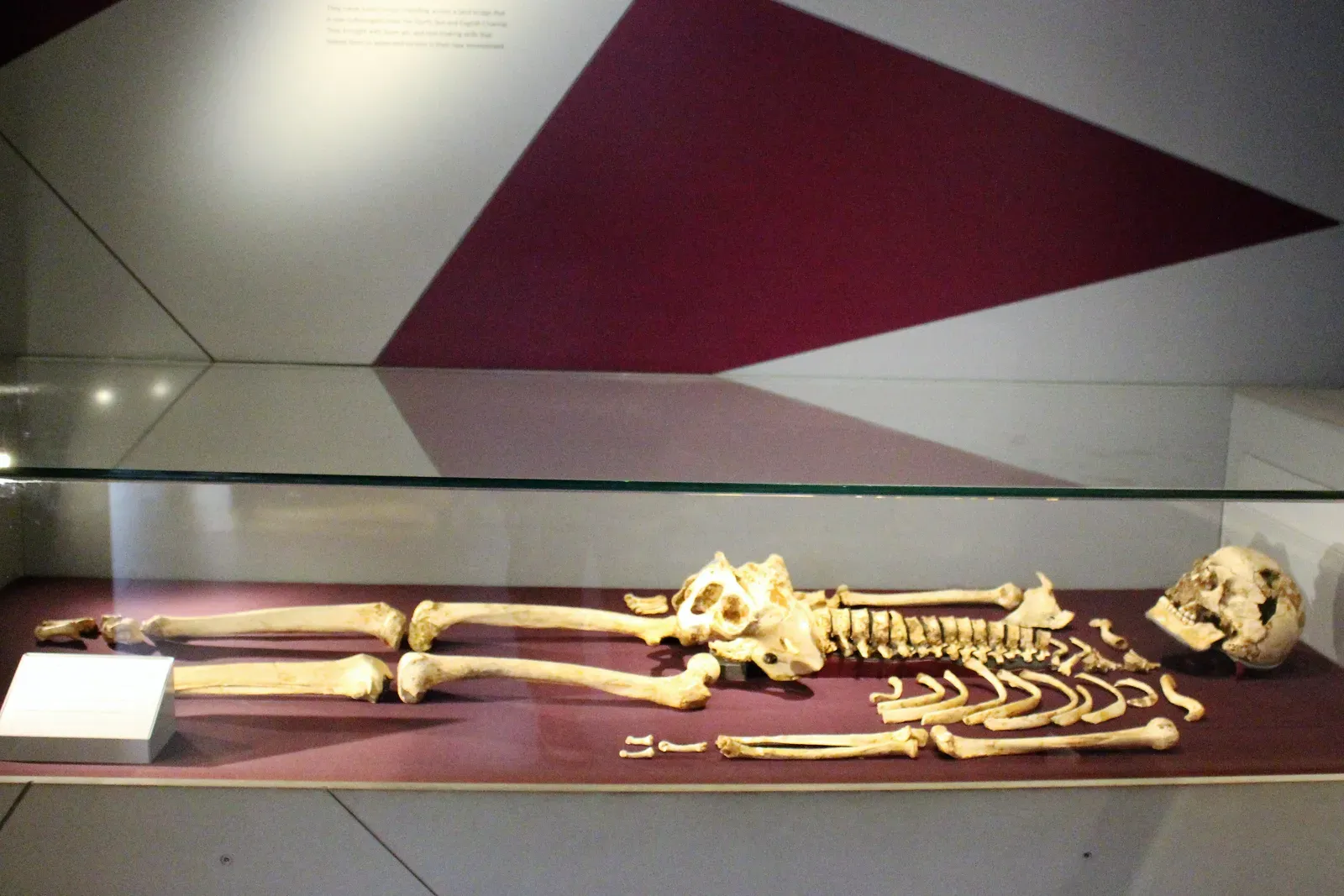
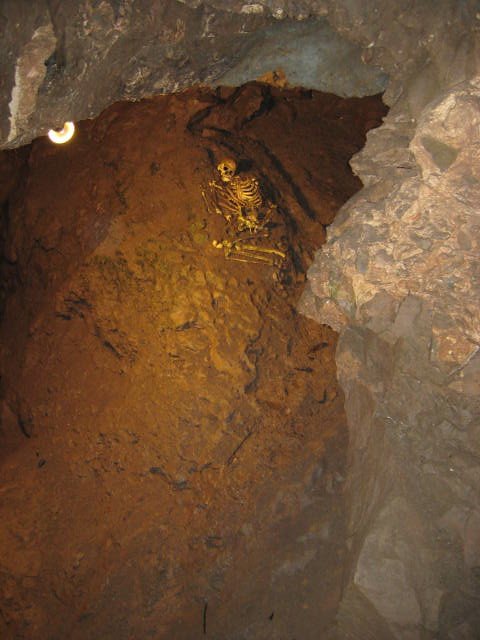
What they found was a prehistoric man’s remains, dating back 10,000 years to the Mesolithic Era, revealing he was part of a hunter-gatherer group in ancient Britain. The skeleton was almost entirely intact, an almost unheard-of stroke of luck for remains this old.
That completeness is exactly why he matters so much. Ancient DNA from Cheddar Man, a Mesolithic skeleton discovered in 1903 at Gough’s Cave, is the oldest almost complete skeleton of our species, Homo sapiens, ever found in Britain. No fragment, no partial jawbone – an entire skeletal record of a real person who walked, hunted, and died in what would eventually become England.
For over a century, that skeleton sat mostly as a curiosity. It took modern genetic sequencing technology, decades later, to unlock what his bones had been hiding all along. The wait turned out to be worth it – because what scientists eventually extracted from his skull would upend everything people assumed . And that’s before we even get to the part where he isn’t Britain’s oldest resident at all.
#2 – He’s Not Even Britain’s Oldest Human Trace
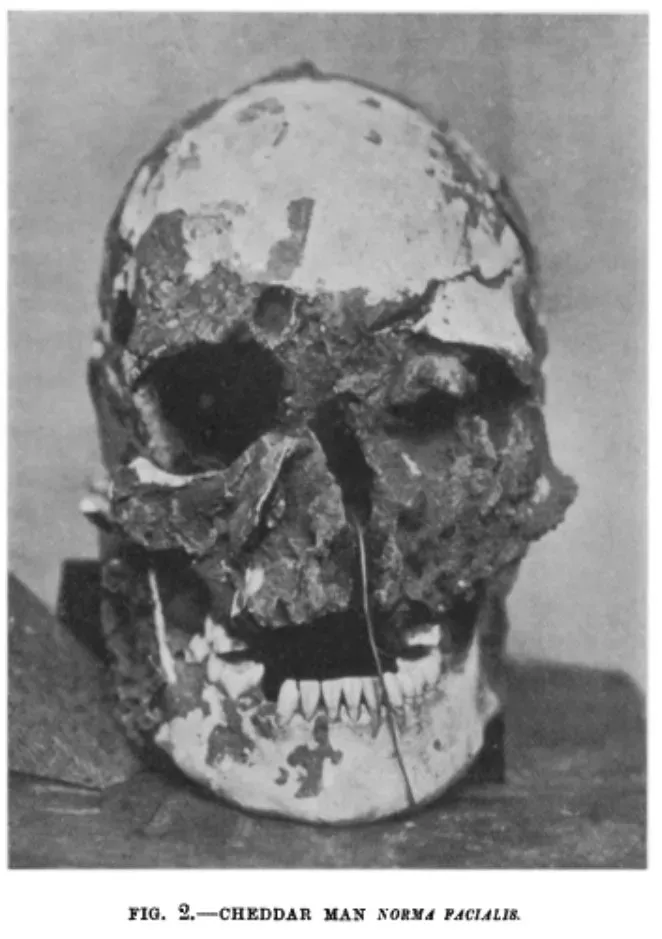
Here’s a detail that surprises almost everyone: Cheddar Man wasn’t the first human in Britain at all. He was just the oldest complete one.
Although Britain has been inhabited by a variety of human species for hundreds of thousands of years, the earliest evidence of modern humans is between 40,000 and 45,000 years old. That means fully modern people were wandering the British landscape tens of thousands of years before Cheddar Man ever drew breath.
Fast Facts
- Modern humans first reached Britain roughly 40,000-45,000 years ago
- Hunter-gatherers camped in Gough’s Cave about 14,800 years ago
- Cheddar Man himself lived approximately 10,000 years ago
- Doggerland still linked Britain to mainland Europe until around 8,000 years ago
His own cave tells an even older story. Long before he arrived, Gough’s Cave already had a violent, complicated human history stretching back around 14,800 years, when a resilient group of hunter-gatherers established camp in Cheddar Gorge, occupying the numerous cave sites within it.
So Cheddar Man represents a specific chapter, not the opening line. He belongs to the wave of hunter-gatherers who resettled Britain after the Ice Age finally loosened its grip, making him a snapshot of a very particular, very cold-adjacent moment in prehistory. What nobody expected, though, was just how young he was when that chapter ended.
#3 – A Young Man Cut Down in His Prime
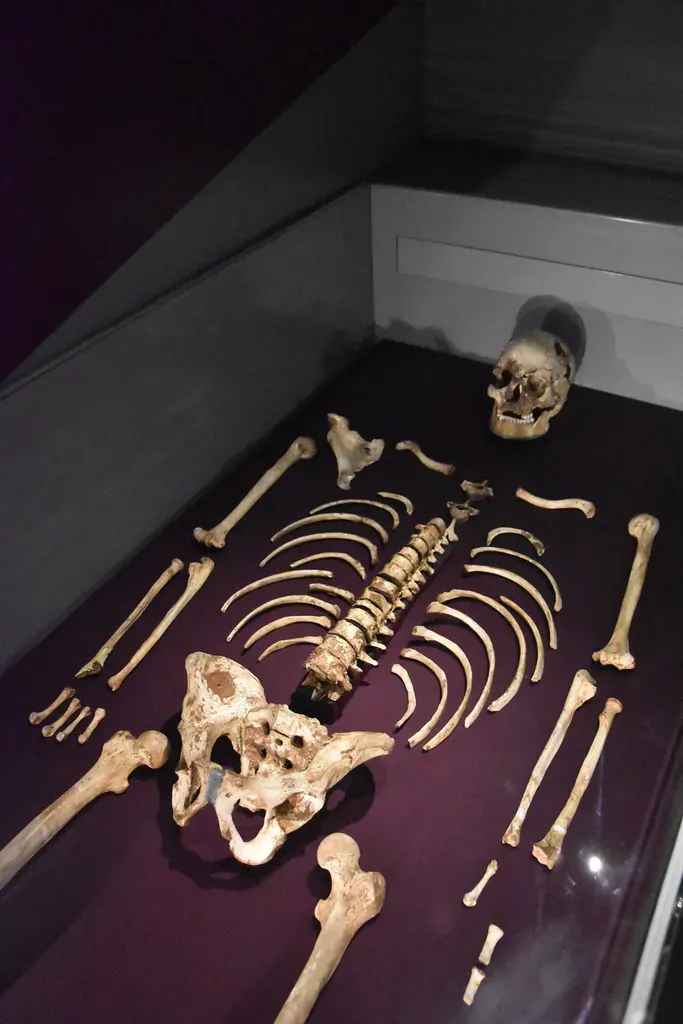
Cheddar Man wasn’t an elder statesman of his tribe. He was barely an adult.
Researchers determined he stood about five-foot-five and was in his early twenties when he died in Britain some 10,000 years ago. That’s shockingly young by modern standards, though entirely typical for a Mesolithic hunter-gatherer whose life expectancy rarely stretched into what we’d now call middle age.
His skeleton offers more physical clues than just height. It revealed a narrow pelvis and a hole in the skull, details that hint at both his physical build and the mystery surrounding his final days. He was a working member of a demanding, physically brutal society, and his bones bear the marks of that lifestyle.
Most people assume “ancient man” means grizzled and weathered, but Cheddar Man died at an age when most of us today are still finishing university or starting our first real jobs. That’s a sobering reminder of just how short – and how hard – Mesolithic life really was. And his skull holds a clue about exactly how it ended.
#4 – The Mysterious Hole in His Skull
This is where Cheddar Man’s story stops being purely scientific and starts feeling like a genuine cold case.
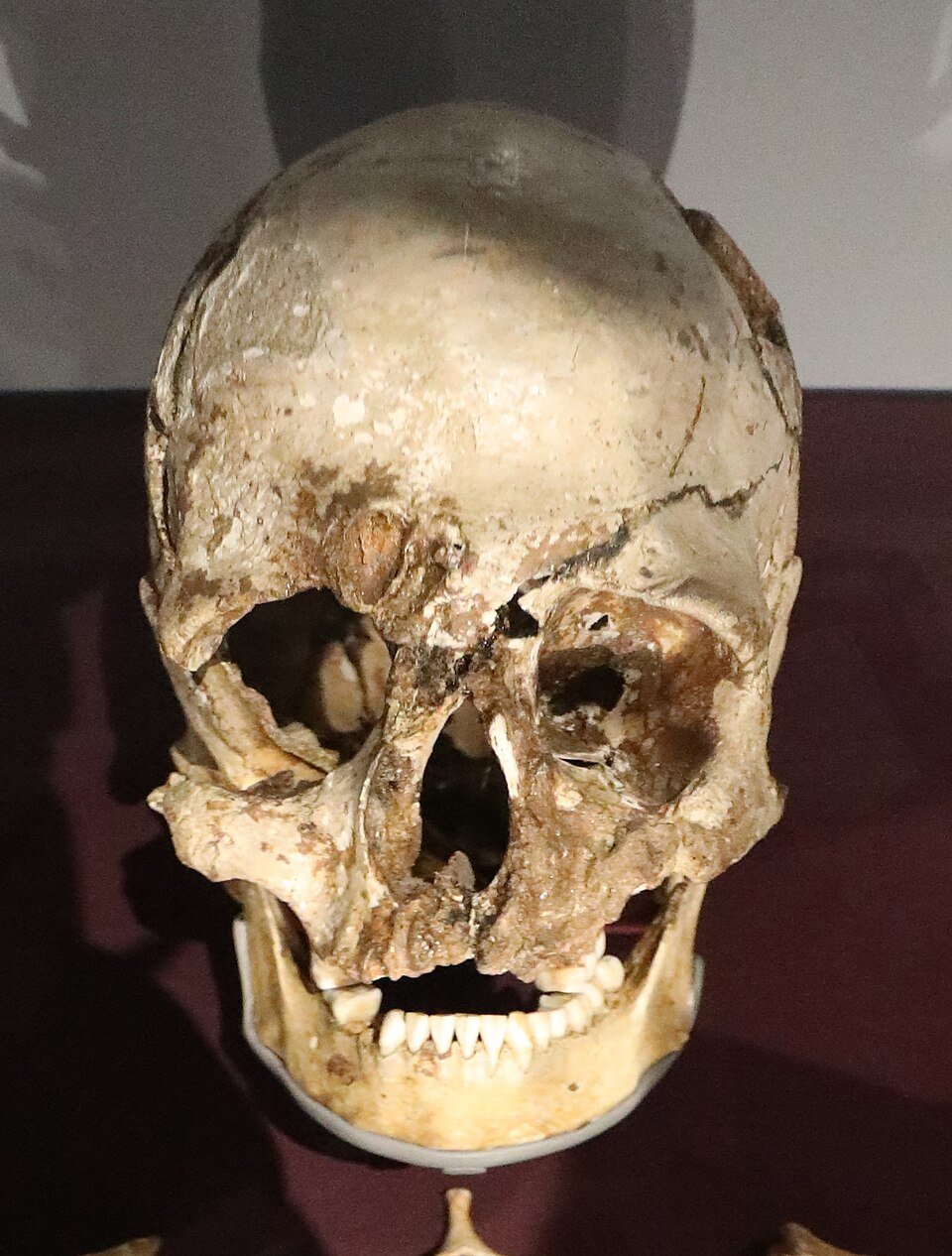
Examiners found a large crater-like lesion just above the skull’s right orbit, suggesting the man may have also been suffering from a bone infection. That’s a significant, visible wound – not a small nick, but a crater large enough to catch the eye of every researcher who has studied his remains since 1903.
Combined with this, the skeletal remains date to around the mid-to-late 9th millennium BC, corresponding to the Mesolithic period, and it appears that he died a violent death. Violent deaths weren’t unusual for the era, but having physical evidence preserved well enough to analyze more than 10,000 years later is genuinely rare.
Was it an accident? A fight? An infection that spiraled out of control? Nobody can say for certain, and that ambiguity is precisely what keeps researchers coming back to re-examine the same bones decade after decade. His burial only deepens the mystery.
#5 – He Was Buried Completely Alone
Here’s a detail archaeologists find genuinely strange: Cheddar Man wasn’t buried the way his community usually buried its dead.
It is not unusual for Mesolithic remains to be found in caves, but it is unusual that he was found buried alone, when it was common at the time to have communal burials. That’s led researchers to suggest either he was special in some way, or that he simply curled up and died there.
That single sentence hides two wildly different possibilities. Maybe he was a person of unusual status – a leader, a healer, someone whose death demanded a separate, solitary send-off. Or maybe there was no ceremony at all, and he simply collapsed alone in the dark, cool cave, dying where he lay with nobody there to help him.
This is exactly the kind of ambiguity that divides researchers. Some lean toward the “special burial” theory because of how carefully positioned his body was found. Others argue we’re romanticizing what might have simply been a tragic, solitary death. Getting any answers at all meant scientists had to do something almost unthinkable to his skull.
#6 – Scientists Drilled Into His Skull to Get Answers
Extracting usable DNA from a 10,000-year-old skeleton isn’t as simple as swabbing a cheek. It requires genuinely invasive, precise techniques.
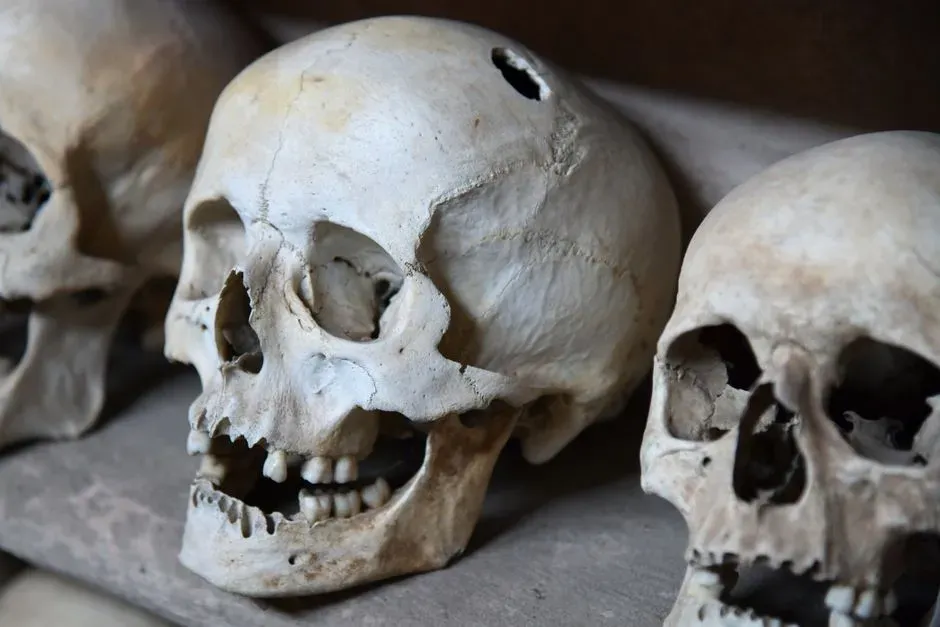
Researchers extracted his DNA by drilling a hole in his skull to draw out bone powder, a process that sounds almost archaeologically sacrilegious but was the only way to reach genetic material that had survived intact for millennia.
That drilling wasn’t random guesswork, either. Scientists have learned that to obtain DNA from ancient remains, the best place to look are the densest bones available, since these are more likely to have protected the DNA inside – leg bones or teeth are often good bets, but it turns out the best place is the inner ear.
Worth Knowing
- Dense bones preserve ancient DNA best – the inner ear often outperforms teeth and leg bones
- Cool, dry, temperature-stable caves slow DNA breakdown for thousands of years
- Drilling into bone remains a standard technique for reaching intact genetic material
The inner ear detail genuinely surprises people. It’s not the leg, not the jaw, not even the teeth – it’s a tiny, dense bone tucked deep inside the skull that turned out to be the best genetic time capsule evolution ever accidentally built. What that preserved DNA revealed next is the headline that made Cheddar Man famous.
#7 – Dark Skin and Blue Eyes: A Combination Nobody Expected

This is the finding that made global headlines, and for good reason.
The first modern Briton had dark skin and blue eyes, London scientists said, following groundbreaking DNA analysis of the remains of a man who lived 10,000 years ago. The museum’s Chris Stringer called it “very surprising that a Brit 10,000 years ago could have that combination of very blue eyes but really dark skin.”
Even more strikingly, the DNA research revealed blue eyes, dark curly hair, and “dark to black” skin. That’s not a light tan. That’s a genuinely dark-skinned individual with the kind of pale, piercing blue eyes people typically associate with Scandinavian ancestry.
Most people assume skin tone and eye color travel together neatly – dark skin with dark eyes, pale skin with light eyes. Cheddar Man’s genome proves that assumption is a modern invention, not a biological rule. Researchers even confirmed that skin color was not always a proxy for geographic origin in the way it is often seen to be today. Turning that data into an actual face made things even stranger.
#8 – His Face Genuinely Doesn’t Look Like Anyone Alive Today
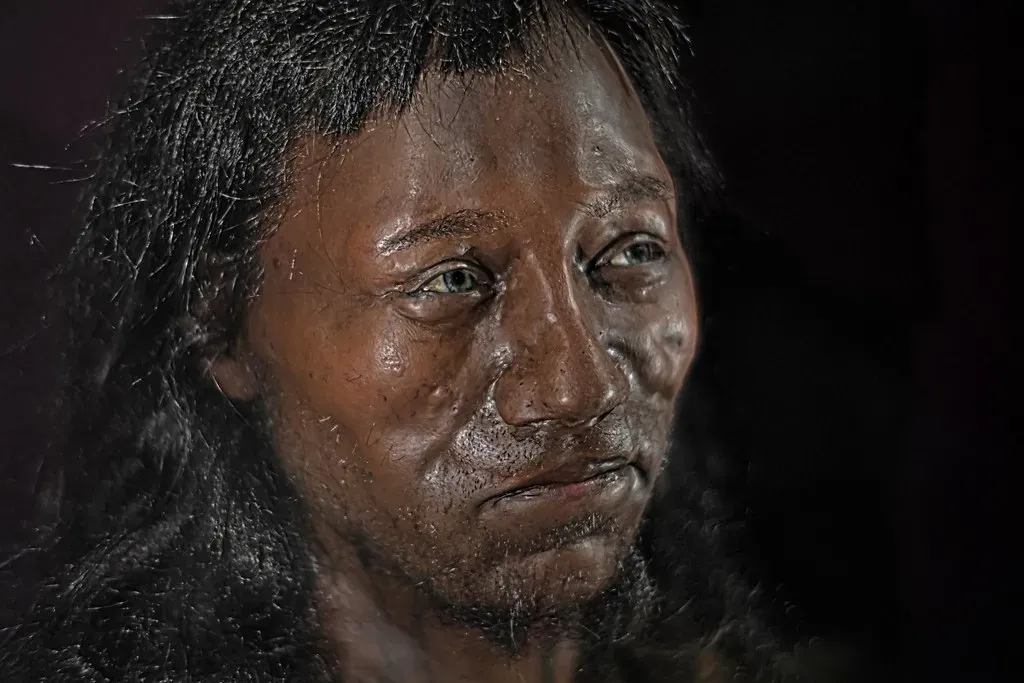
Once scientists knew his coloring, the next step was reconstructing an actual, physical face – and the result unsettled even the experts.
Ian Barnes, a project scientist at the Natural History Museum, explained that the real shock wasn’t just skin tone. It was the whole package together.
For me, it’s not just the skin color that’s interesting, it’s that combination of features that make him look not like anyone that you’d see today. Not just dark skin and blue eyes, because you can get that combination, but also the face shape. So all of this combines together and make him just not the same as people you see around today.
Ian Barnes, Natural History Museum
Bringing that face to life required cutting-edge techniques. Experienced Dutch model makers Adrie and Alfons Kennis used 3D scans and printing to add the “flesh” to his reconstructed bones. The final bust featured shoulder-length dark hair and short facial hair.
This is the part that genuinely humbles people. We tend to assume ancient humans looked like slightly rougher versions of ourselves. Cheddar Man’s reconstruction argues the opposite – he’s a face from a genuinely different genetic world, one that doesn’t map neatly onto any modern ethnic category. And somehow, his own name turned out to be a genetic joke.
#9 – Despite His Name, He Couldn’t Handle Dairy

There’s a delicious irony buried in Cheddar Man’s biology, and it has nothing to do with cheese.
Despite his name, Cheddar Man would have been unable to digest milk as an adult, since lactose tolerance only spread through Europe several thousand years later, during the Bronze Age. The man whose name is forever linked to one of England’s most famous cheeses would have gotten violently ill from drinking a glass of milk.
At a Glance
- Lactose tolerance spread through Europe during the Bronze Age
- Cheddar Man died roughly 10,000 years ago – long before that mutation existed
- Every known European of his era shared the same lactose intolerance
This wasn’t a personal quirk – it was universal for his entire population. Like all Europeans of the time, he was lactose intolerant, according to the DNA analysis conducted at UCL and the Natural History Museum.
This single genetic fact quietly demolishes another assumption – that dairy farming and “traditional” European diets stretch back to time immemorial. In reality, the ability to digest milk into adulthood is a relatively recent evolutionary add-on, arriving thousands of years after Cheddar Man had already died. His name is a coincidence of geography, not diet. So how exactly did his ancestors end up in Britain in the first place?
#10 – His Ancestors Walked to Britain Across a Lost Land
Before Britain was an island, it was simply the western edge of a much larger continental landmass – and that connection explains exactly how Cheddar Man’s people got there.
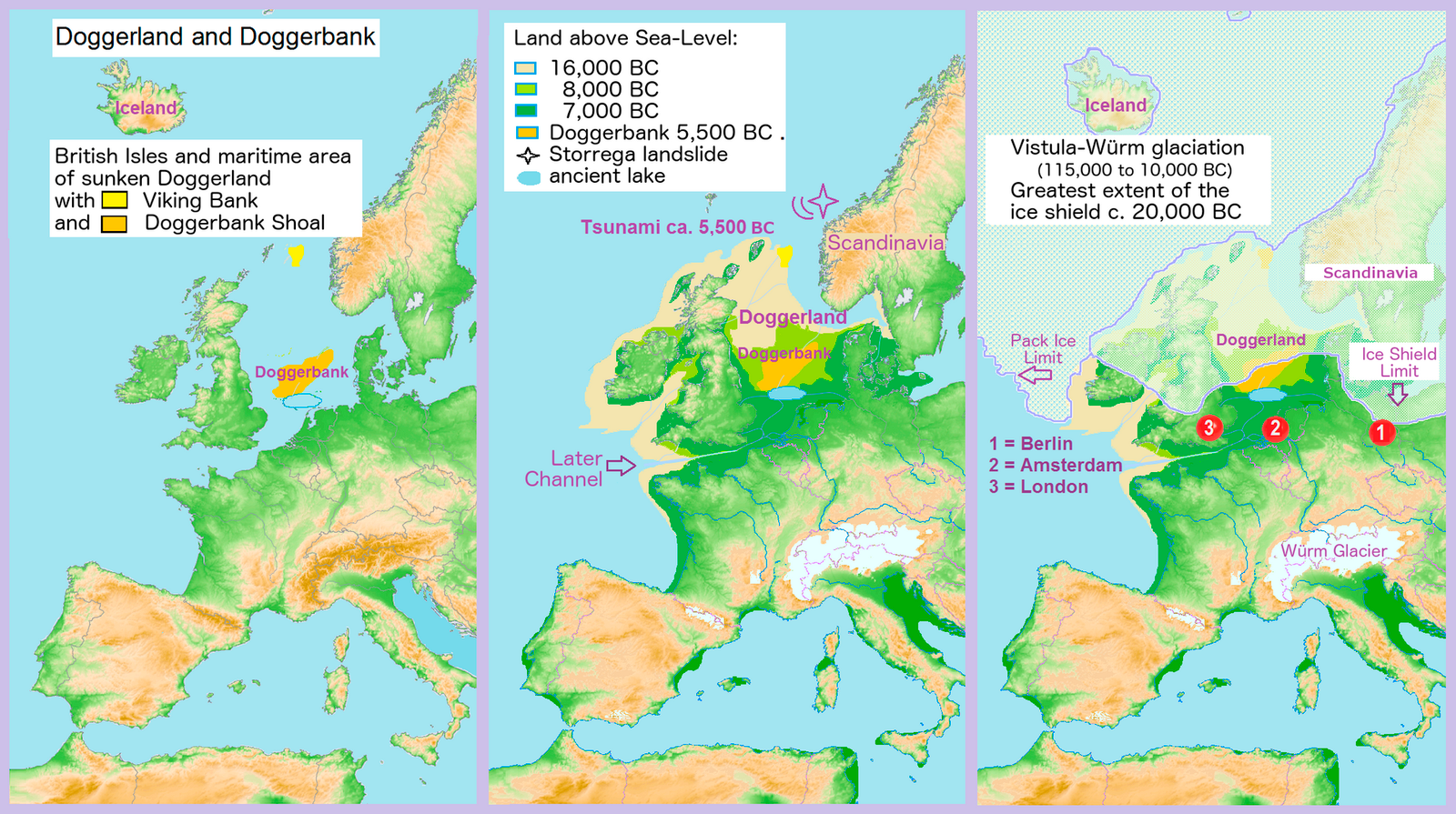
For most of the last Ice Age, Britain was too cold and inhospitable for humans to live there year-round. As the climate warmed around 12,000 years ago, hunter-gatherer groups began to resettle the region during what’s known as the Mesolithic Period. Britain was still connected to continental Europe by a vast, low-lying plain called Doggerland, which allowed people and animals to move freely between the two regions, until rising sea levels submerged it beneath the North Sea around 8,000 years ago.
That means Cheddar Man’s ancestors didn’t sail anywhere. They simply walked west, following game and rivers across a landmass that no longer exists, now buried beneath the North Sea.
Genetically, this migration left fingerprints across the continent. Analysis of his DNA proved he’s genetically similar to other dark-skinned individuals from the Mesolithic era found in Spain, Hungary, and Luxembourg. His family tree, in other words, stretches across half of Europe – proof that “British” ancestry was never a self-contained, isolated bloodline. And somewhere along that family tree, the connection gets almost uncomfortably close to home.
#11 – A Local Schoolteacher Shares His DNA

This might be the single detail that turns Cheddar Man from a museum exhibit into something genuinely personal for modern Britons.
DNA testing in 1997 revealed that matrilineal relations of the ancient man still lived in the region. Adrian Targett, a high school teacher, was a DNA match. A living, breathing history teacher, working just up the road from Gough’s Cave, carried a direct maternal genetic thread back to a man who died 10,000 years earlier.
The genetic marker linking them has a name: the mitochondrial DNA of Cheddar Man was assigned to haplogroup U5b1 by a Natural History Museum study in 2018 using next-generation sequencing. This lineage wasn’t rare or unique to Cheddar Man specifically – U5 was the main haplogroup of Mesolithic European hunter-gatherers, present at 83% in European hunter-gatherers before the influx of Middle Eastern farmers.
That statistic matters for interpreting the connection correctly. Targett’s link is genuine, but it’s shared by countless others who happen to carry the same ancient maternal marker – a reminder that “descended from Cheddar Man” is more about deep population history than a single unbroken family tree. Still, Targett holds the record for “farthest traced descendant by DNA” – a title that makes the next statistic sting a little more.
#12 – Only 10% of Modern Britons Share His Bloodline
Here’s the statistic that puts everything else into perspective: Cheddar Man’s genetic legacy in modern Britain is smaller than most people assume.
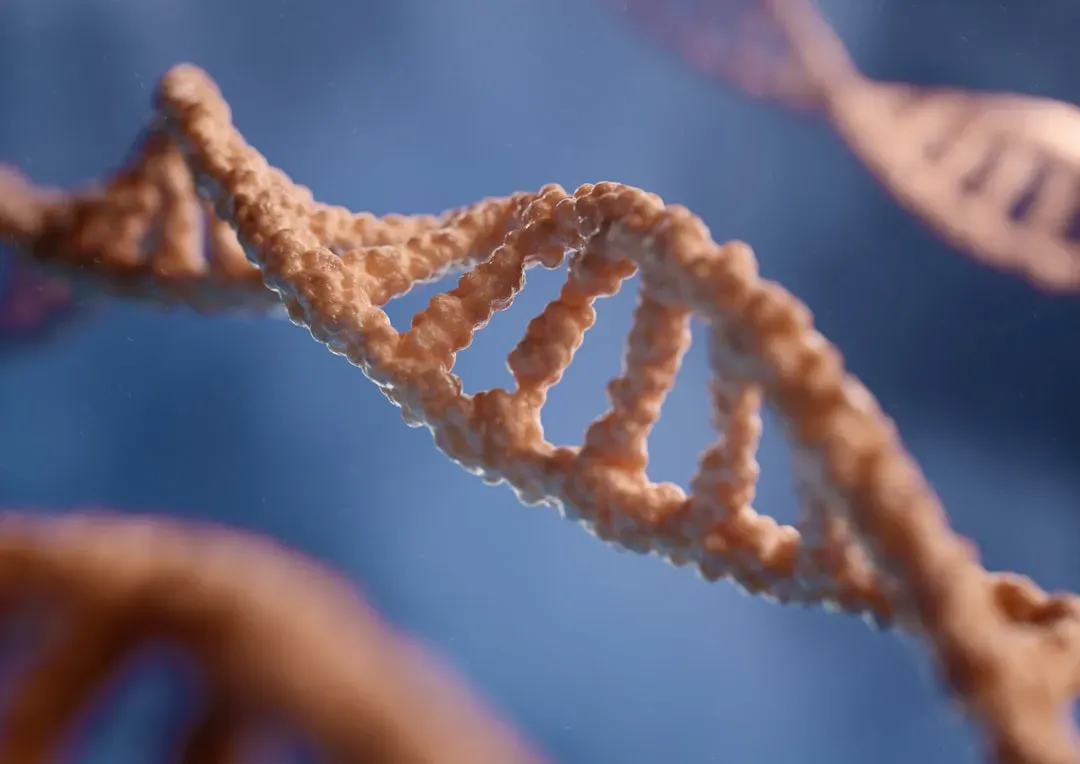
When scientists look at genetic variation in modern British people today, they find that – for those without a recent history of migration – around 10% of their ancestry can be attributed to the ancient European population to which Cheddar Man belonged, a group referred to as western European Mesolithic hunter-gatherers.
Why so low? Because Cheddar Man’s people didn’t remain Britain’s sole inhabitants forever. The British population was largely, if not completely, replaced by incoming farmers around 6,000 years ago, bringing entirely new genetic lineages, new agricultural practices, and eventually the traits – brown eyes, lighter skin, lactose tolerance – that we now consider stereotypically “European.”
Quick Compare
- Mesolithic hunter-gatherers (Cheddar Man’s group): dark skin, blue eyes, roughly 10% of modern British ancestry
- Neolithic farmers (arrived around 6,000 years ago): lighter skin, brown eyes, lactose tolerance, and the majority of modern British ancestry
This is arguably the most controversial takeaway of the entire discovery. Genetically, the people who live in Britain today are far more connected to Neolithic farmers who arrived thousands of years later than to Cheddar Man himself. The “first Britons” and “modern Britons” are, genetically speaking, two largely different populations wearing the same geographic address. But the strangest chapter of this story isn’t even about Cheddar Man himself.
#13 – His Own Cave Hid an Even Darker Secret
Save the most unsettling revelation for last: Cheddar Man wasn’t the only remarkable set of human remains pulled from Gough’s Cave – and the earlier occupants left behind something far more disturbing.
Thousands of years before Cheddar Man was even born, around 14,800 years ago, a resilient group of hunter-gatherers established camp in Cheddar Gorge, leaving behind one of the richest assemblages in north-western Europe of Magdalenian butchered human and faunal remains. Their vibrant cultural practices apparently included funerary rites entailing ritual cannibalism.
The physical evidence is unmistakable. Researchers found extensive evidence for defleshing, disarticulation, chewing, crushing of spongy bone, and the cracking of bones to extract marrow, with human tooth marks on many of the postcranial bones providing incontrovertible evidence for cannibalism. Among the remains were several people, including two teenagers and a child who was around 3 years old.
Crucially, this wasn’t desperate survival cannibalism. Palaeolithic cannibalism at Gough’s Cave appears to have been a cultural choice rather than a necessity for survival, according to Dr. Silvia Bello of the Natural History Museum.
A sophisticated culture of butchering and carving human remains.
Dr. Silvia Bello, Natural History Museum
The same cave that gave Britain its most beloved ancient ancestor also hid ritualized cannibalism millennia earlier – proof that the story of Britain’s first inhabitants is stranger, older, and darker than any single skeleton could ever reveal.
The Bottom Line
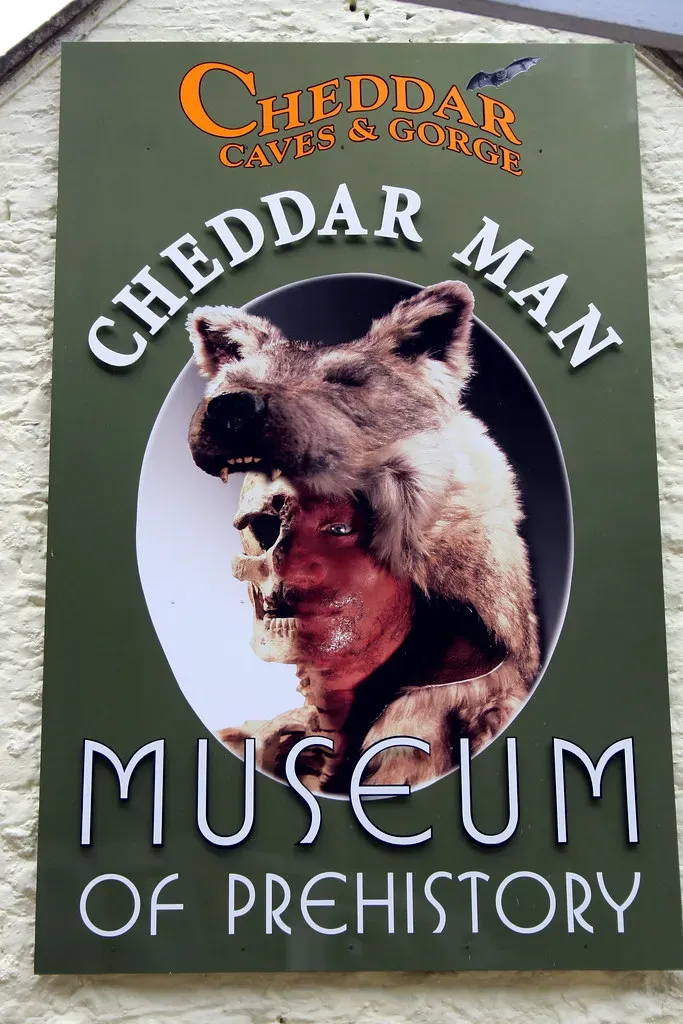
Cheddar Man forces an uncomfortable but necessary reckoning: the earliest Britons were dark-skinned, blue-eyed, lactose intolerant, and genetically closer to Mediterranean and Central European populations than to most people living in Britain today. His story isn’t a footnote – it’s a direct challenge to the idea that “native” British identity has ever been fixed, pure, or unchanging.
Add in a violent, unexplained head wound, a lonely burial, and a cave with an earlier cannibalistic history, and you get a prehistoric puzzle science is still piecing together. Genetics doesn’t care about modern borders or assumptions – it just tells the truth. So, does this change how you think about “British” identity? Drop your take in the comments.