
Most people picture human evolution as a slow, dusty march of stone tools and broken skulls scattered across Africa. Then one flooded cave in northern Spain blew that timeline apart. – the “Pit of Bones” – has produced the single largest cache of ancient human fossils ever discovered on Earth, and some of what researchers pulled out of that 43-foot vertical shaft reads less like paleontology and more like a 430,000-year-old crime scene.
There’s a murder weapon down there. There’s a sword with a name straight out of Arthurian legend. There’s a child’s skull with a genetic condition doctors still treat in hospitals today. Four decades of cramped, backbreaking excavation turned up all of it, and what the scientists actually found still splits the field into arguments. Here’s the full list, counting down to the discovery that made international news for all the wrong reasons.
#13 – The Forgotten Predators Nobody Expected
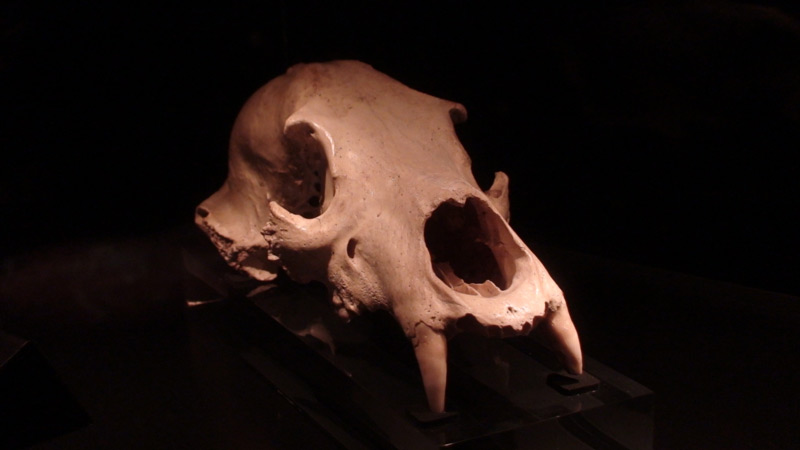
Before anyone found a single human bone in this cave, researchers were pulling out something else entirely: a wealth of cave-bear fossils and a nearly-complete human jaw that quietly changed the direction of an entire scientific career. The cave wasn’t originally a human site at all. It was a predator trap, and the bones prove it.
Alongside the now-famous human remains, excavators catalogued a minimum of 23 foxes, 3 large felids, 1 wolf, and 4 mustelids mixed into the same sediment. That’s not a coincidence. Small carnivores kept tumbling into the same vertical shaft that trapped everything else, generation after generation, for tens of thousands of years.
Most visitors assume this was purely a “human” site. It wasn’t. It was a natural ecological funnel that happened to also catch hominins, and that distinction matters enormously for how scientists interpret everything else found here. It’s the question every paper on this site eventually has to answer: did people fall in by accident, or were they put there on purpose?
#12 – A Cave Bear Graveyard 166 Skeletons Deep
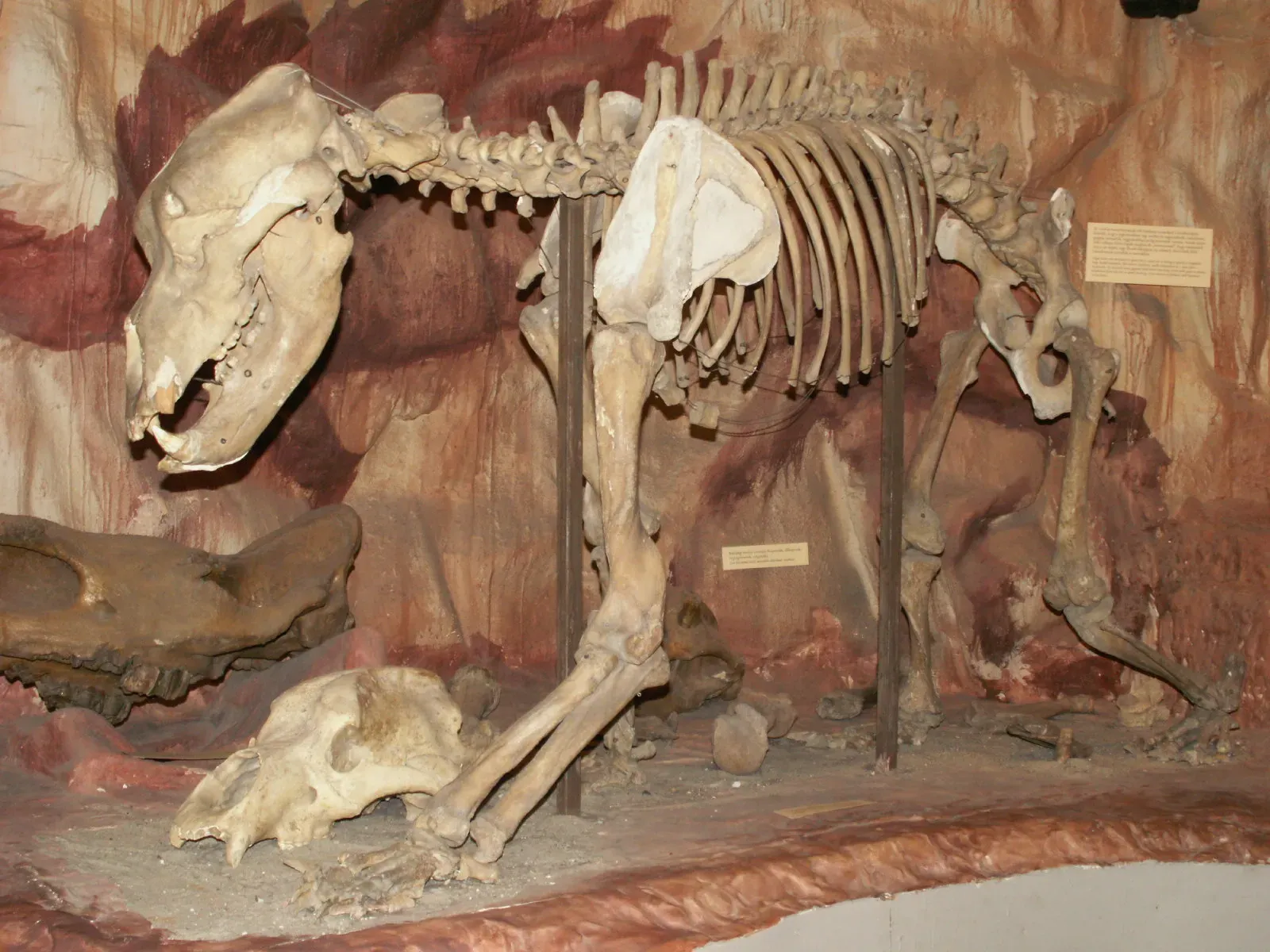
If foxes and wolves seem like a footnote, the cave bear numbers are staggering. Researchers identified parts belonging to 166 bears (Ursus deningeri) mixed into the breccia beneath the human layer. That’s not a den. That’s a mass grave built up over millennia.
The species itself, a Middle Pleistocene cave bear, is the reason this site got dug up in the first place. A doctoral student named Trinidad Torres kept digging in this exact spot to finish his thesis on bear bones – he had no idea he was about to stumble onto one of the most important paleoanthropological sites of the 20th century.
Dating work later confirmed why the bear layer matters so much scientifically. The site contains at least 28 individual bears in a mud breccia underlying the human remains, with U-series and ESR dating placing the layer between 200,000 and 320,000 years old. The bear layer essentially became a natural clock, sealing the human bones beneath it and helping scientists pin down just how ancient this population really was.
#11 – A Skeleton Puzzle With Every Single Piece Present
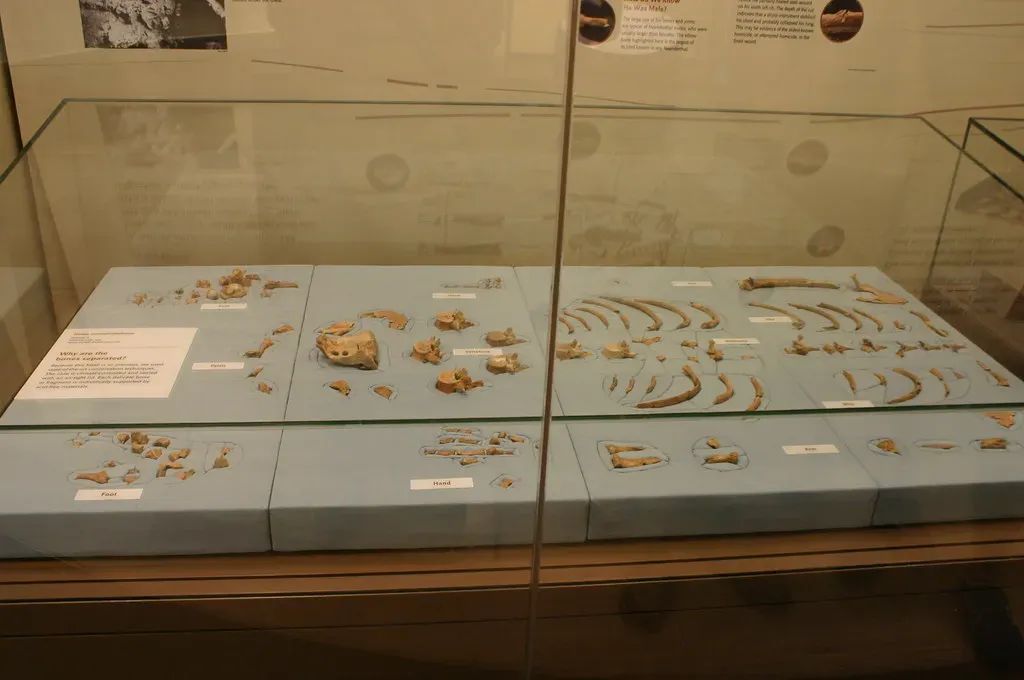
Most fossil hominin discoveries give you a jawbone, maybe a partial skull, and researchers spend decades arguing about what the rest of the body looked like. broke that pattern completely.
Ribs, vertebrae, hand bones, foot bones, mandibles – nearly every bone type imaginable has been pulled up piece by piece over decades of digging. That unprecedented completeness is reshaping how scientists classify Neanderthal evolution and how much individual variation existed inside a single Middle Pleistocene population.
Physically, these people were built like tanks. The chest and waist are broad and robust like Neanderthals, but the limbs run longer, and both sexes may have stood around 170 cm tall and weighed roughly 90 kg. That’s essentially modern-adult size, in a species that predates modern humans by hundreds of thousands of years. Most people assume early hominins were small and hunched – this population looked closer to an NFL linebacker’s build.
Fast Facts
- Nearly every bone type recovered: ribs, vertebrae, hand and foot bones, mandibles
- Estimated height: around 170 cm (roughly 5’7″) for both sexes
- Estimated weight: roughly 90 kg (about 198 lbs) – essentially modern-adult mass
- Chest and waist broad and robust like Neanderthals, but with proportionally longer limbs
#10 – Middle Ear Bones So Delicate They Shouldn’t Exist
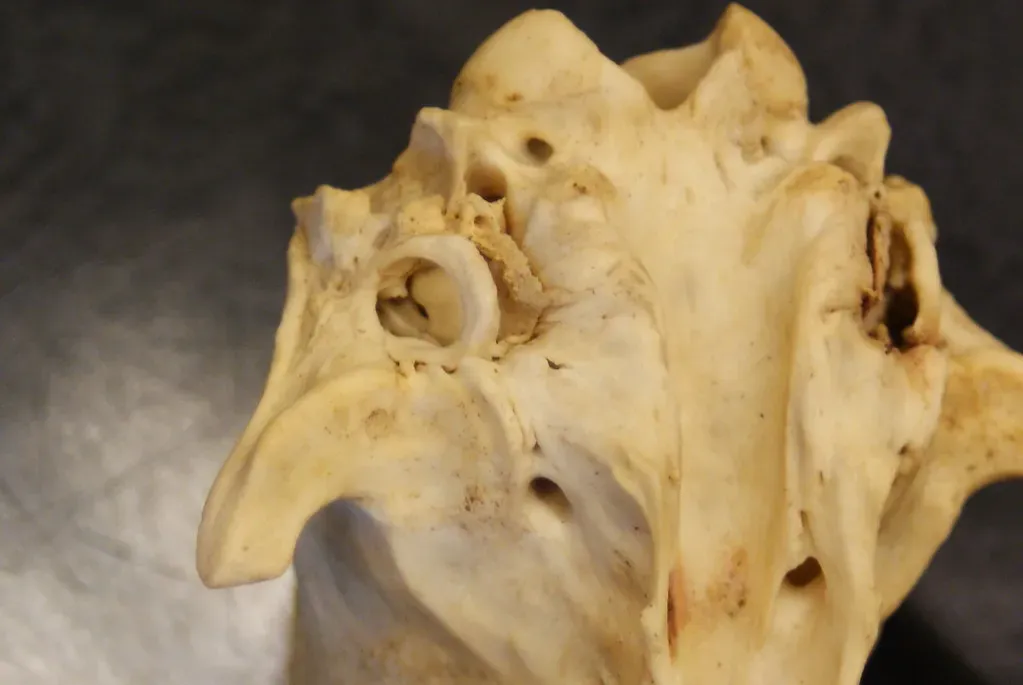
Here’s the detail that stuns anatomists more than any skull: the tiniest, most fragile bones in the human body survived here intact, including the hyoid and the three middle ear ossicles.
These ossicles are smaller than a grain of rice. They almost never survive fossilization anywhere else on Earth, because they’re the first things to disintegrate or scatter after death. Finding them here, in multiples, across multiple individuals, tells researchers something critical about exactly how these bodies ended up in the pit.
It also opened up an entirely new research avenue: hearing capability in extinct hominins. By modeling the shape and dimensions of these ossicles, scientists can estimate the auditory range these individuals could actually perceive – and compare it directly to modern human hearing. Their sensitivity overlapped significantly with our own, a detail that would be completely unknowable without this exact kind of preservation.
#9 – Hyoid Bones That Suggest They Could Talk
If the ear bones tell us what they could hear, the hyoid bones hint at what they might have said. Researchers recovered two hyoid bones from the site, and the results surprised linguists who assumed complex speech was a much later development.
Both hyoids are humanlike in shape and size, clearly different from the hyoid bones of chimpanzees and Australopithecus afarensis. That’s not a subtle distinction – chimp and australopith hyoids sit differently in the throat and simply can’t produce the same range of sounds ours can.
Comparisons didn’t stop there. Researchers matched the Sima hyoids against Neanderthal specimens Kebara 2 and SDR-034 to study sexual variation across time, and the range of difference in the fossil sample matched what you’d see in living humans today. This is one of the more controversial findings tied to the site: it implies spoken language capability may have existed far earlier in the human lineage than most textbooks admit.
#8 – The First Human Teeth That Started It All
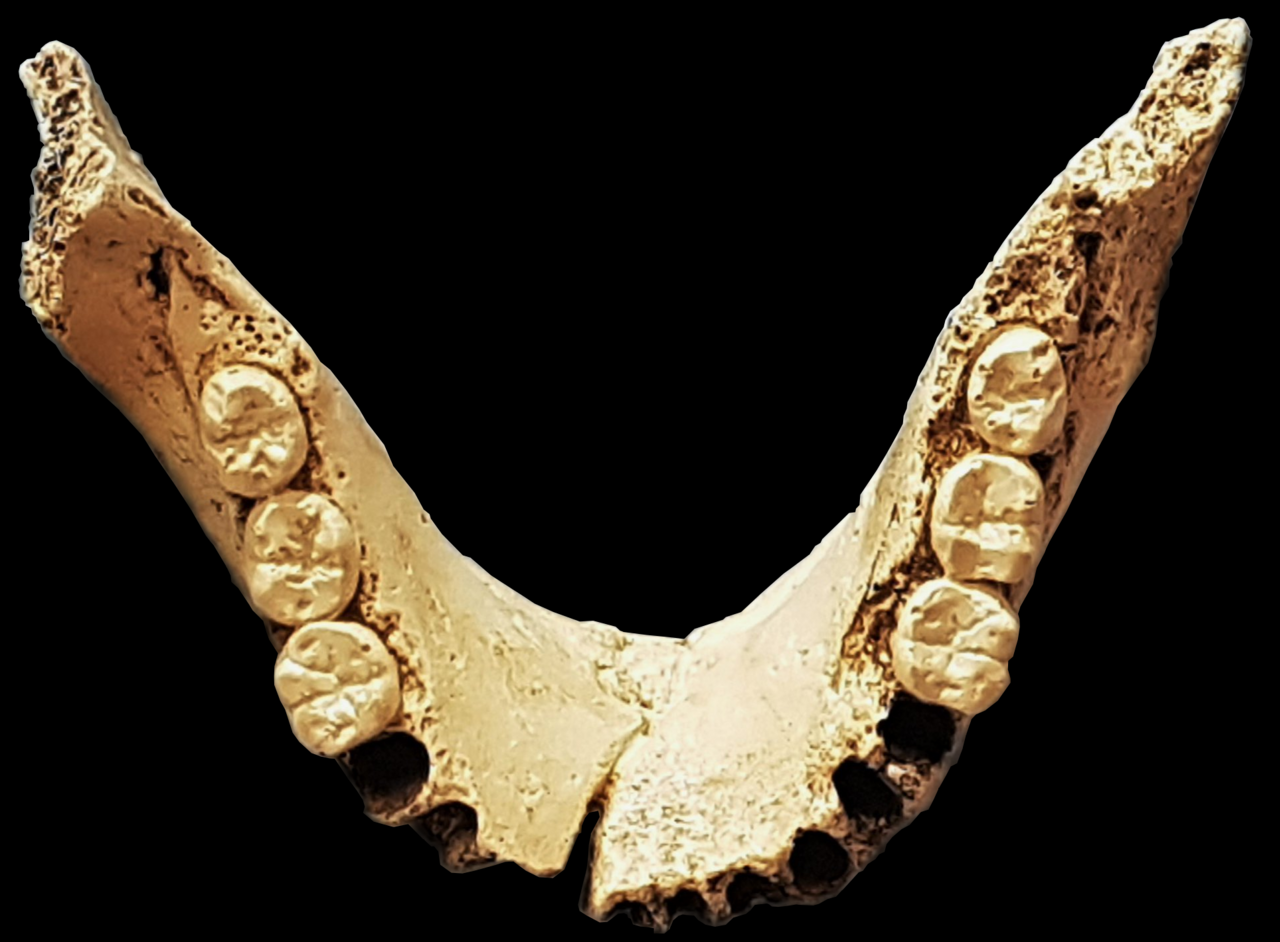
Long before headlines called this the world’s richest hominin site, it was just three teeth in a bag of disturbed sediment. In 1983, a small sample was collected during a brief visit to the cave, and it yielded three human teeth buried among a mountain of bear remains. Systematic excavation began the following season.
Three teeth doesn’t sound like much. But it was enough to convince Emiliano Aguirre’s team to haul lights, scaffolding, and pulley systems into a cave that required crawling through a 43-foot vertical shaft just to reach the excavation floor. The Sima was hard to access, low in oxygen, and had already been picked over for decades by bear-fossil hunters, which meant even more painstaking work to clear the disturbed layers.
Every major fossil that followed – every named skull, every pelvis, every hand axe – traces back to that first handful of teeth found in a backpack of dried river sediment. The world’s most important hominin site nearly got written off as just another bear den. It took actual tooth enamel to prove otherwise.
#7 – Cranium 6, Nicknamed “Ruy”
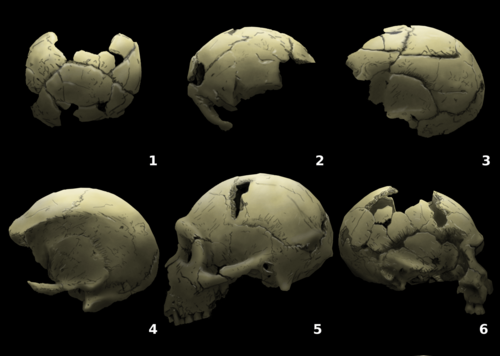
Not every skull from this site earns Hollywood-level attention, but each one adds a critical data point to the population picture. Cranium 6 got the affectionate nickname “Ruy” from the excavation team – one of several complete or near-complete skulls that let researchers eventually reconstruct facial variation across an entire ancient community.
At a Glance
- 20 crania total assembled from the pit’s fragments
- Cranium 9 – belonged to an early teenager
- Cranium 15 – belonged to an elderly individual
- Cranium 16 – belonged to a late adolescent
- Cranium 17 – belonged to a young adult
Four specimens in particular stand out from the rest, spanning early adolescence all the way to old age, which lets scientists study growth, aging, and facial variation within a single ancient population – something almost no other Middle Pleistocene site allows.
Ruy fits into that same painstaking reconstruction effort, fragment by fragment, cave season after cave season. What’s genuinely wild is that researchers can now compare an elderly individual’s skull directly against a teenager’s from the exact same population – something almost no other Middle Pleistocene site on the planet allows. That level of population-scale comparison simply doesn’t exist anywhere else in the fossil record this old.
#6 – Cranium 14, The Child Named “Benjamina”
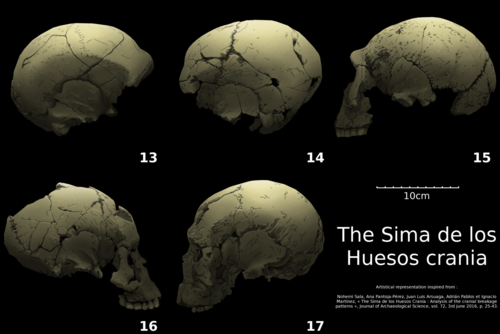
This is where the science turns genuinely heartbreaking. Cranium 14 belonged to a young child researchers nicknamed “Benjamina.” What they found in her skull became one of the most cited medical paleopathology cases in the world.
Benjamina is now recognized as the earliest documented case of lambdoid craniosynostosis in the human fossil record, dated to roughly 530,000 years ago. Craniosynostosis is a condition where skull plates fuse too early – in modern infants it requires surgical correction. This child had no such option.
A child found with craniosynostosis dating back to 530,000 years ago provides evidence of food sharing in early humans.
research team
She lived long enough for the deformity to become visible on her fossilized skull, which means someone was caring for a child who likely couldn’t fully care for herself. Many researchers argue this single skull says more about the roots of human compassion than any tool found at the site – a genuinely controversial claim, but a hard one to dismiss.
#5 – Cranium 4, The Skull Called “Agamemnon”
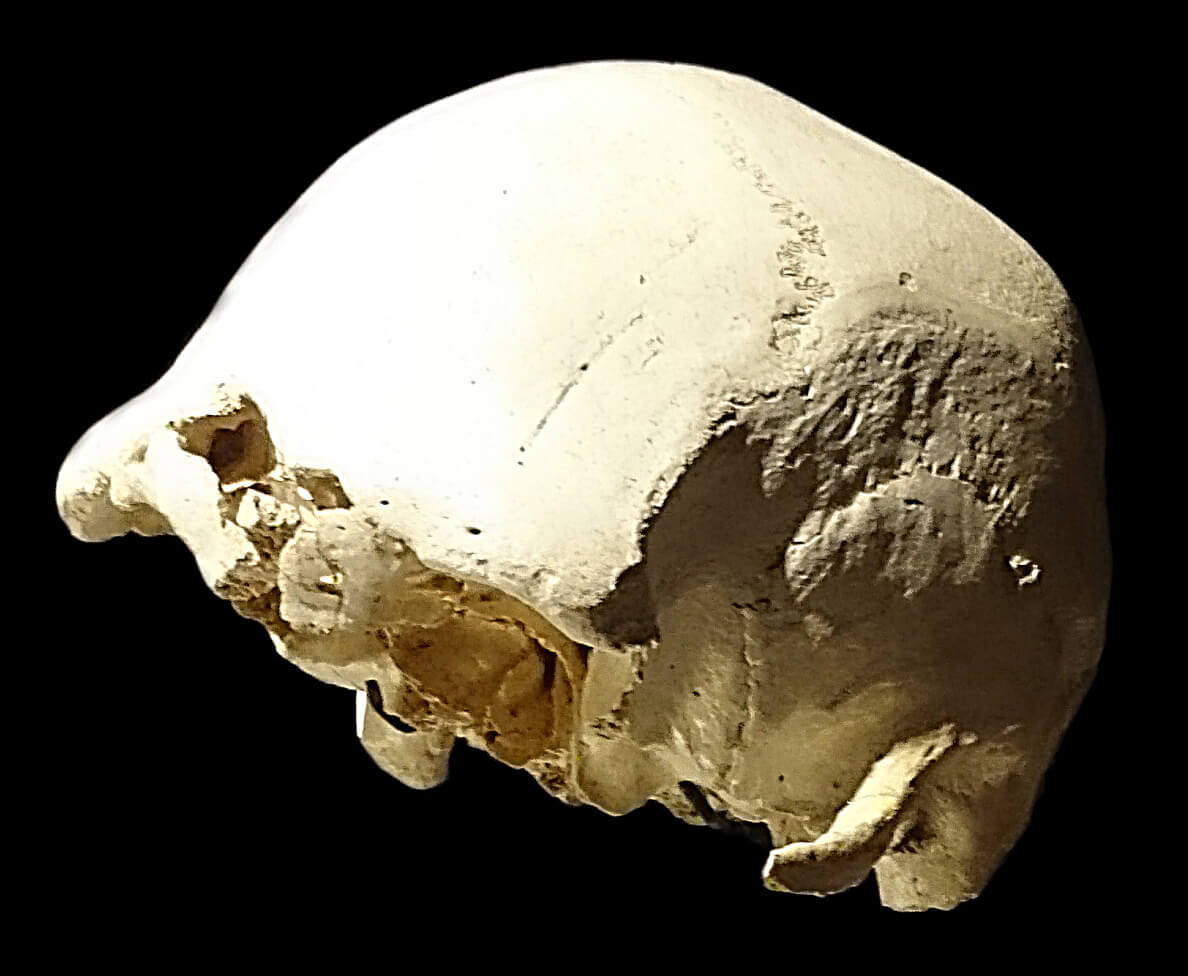
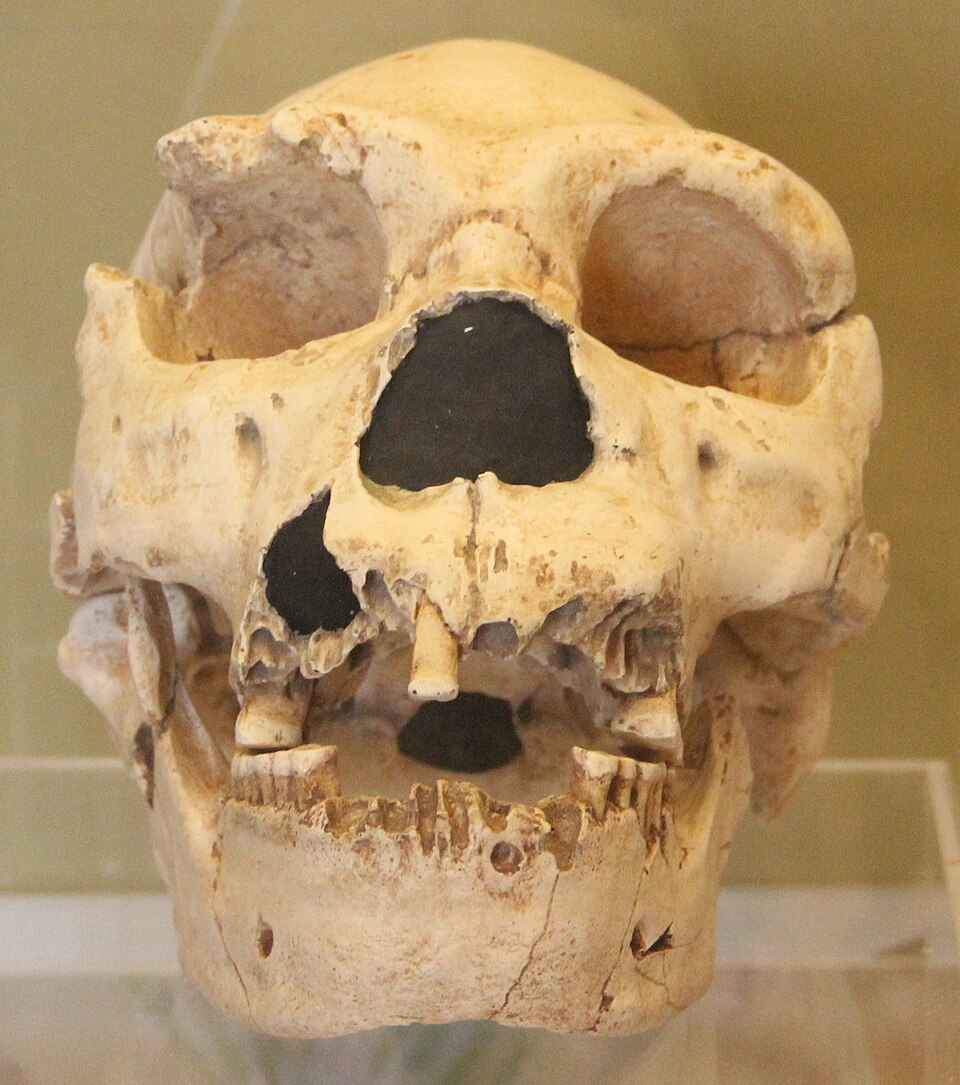
In 1992, a nearly complete skull nicknamed “Agamemnon” surfaced from the pit. At the time, only three other European skulls predating the Late Pleistocene had ever approached that level of completeness. The Greek warrior-king nickname wasn’t random flair – it reflected genuine excitement from a team that had spent years finding fragments and finally hit something whole.
Agamemnon’s discovery landed at a pivotal moment in the excavation’s history, right as the team was proving human fossils here weren’t randomly scattered by water or accident but represented something more deliberate. The skull’s completeness let researchers directly measure cranial capacity, facial projection, and brow-ridge thickness in ways fragmentary remains simply can’t support.
This skull became one of the anchor specimens for classifying the entire population as pre-Neanderthal. Museums today display Agamemnon alongside his more famous cave-mate Miguelón, and visitors to the Museum of Human Evolution in Burgos can walk right up to Agamemnon, Miguelón, Elvis, Excalibur, and Benjamina in person, decades after their discovery.
#4 – “Elvis,” The Pelvis That Rewrote 3 Million Years of History
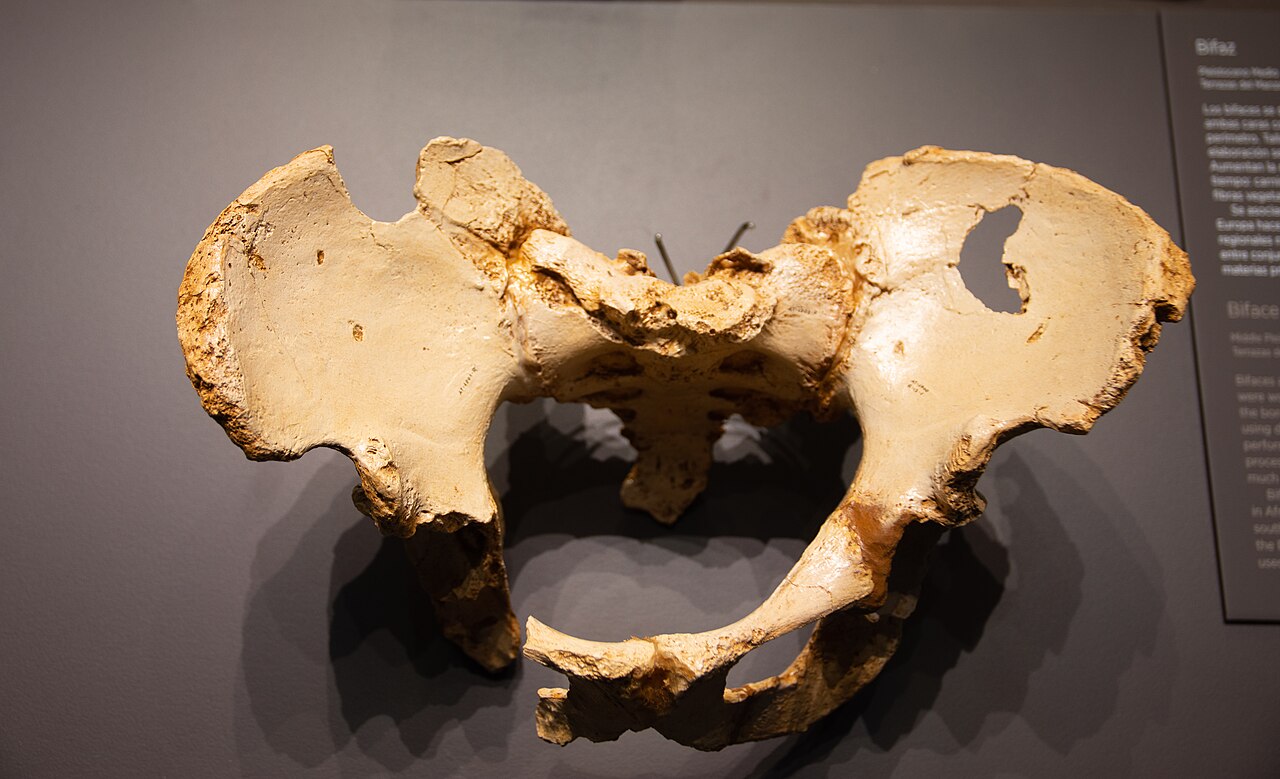
In 1994, excavators found something so fragile that extracting it nearly failed multiple times. Fragment by fragment, over days of painstaking work, the team rescued a set of bones in an extremely delicate state, eventually reconstructing what turned out to be an almost complete human pelvis. It got nicknamed Elvis, inevitably.
The significance of this single bone is hard to overstate. For a span of more than three million years – between Lucy’s partial pelvis and the next comparable Neanderthal specimen – no equivalent piece existed anywhere in the fossil record. Think about that gap: three million years of human evolutionary history, and this one pit produced the missing anatomical link for hip structure and childbirth mechanics.
Before Elvis, researchers were essentially guessing at how these populations gave birth and walked, piecing together assumptions from fragments found at much older or much younger sites. This one bone closed that gap completely, and it forced scientists to rewrite their assumptions about body proportions in archaic humans.
#3 – Cranium 5, “Miguelón,” The Most Complete Skull on Earth
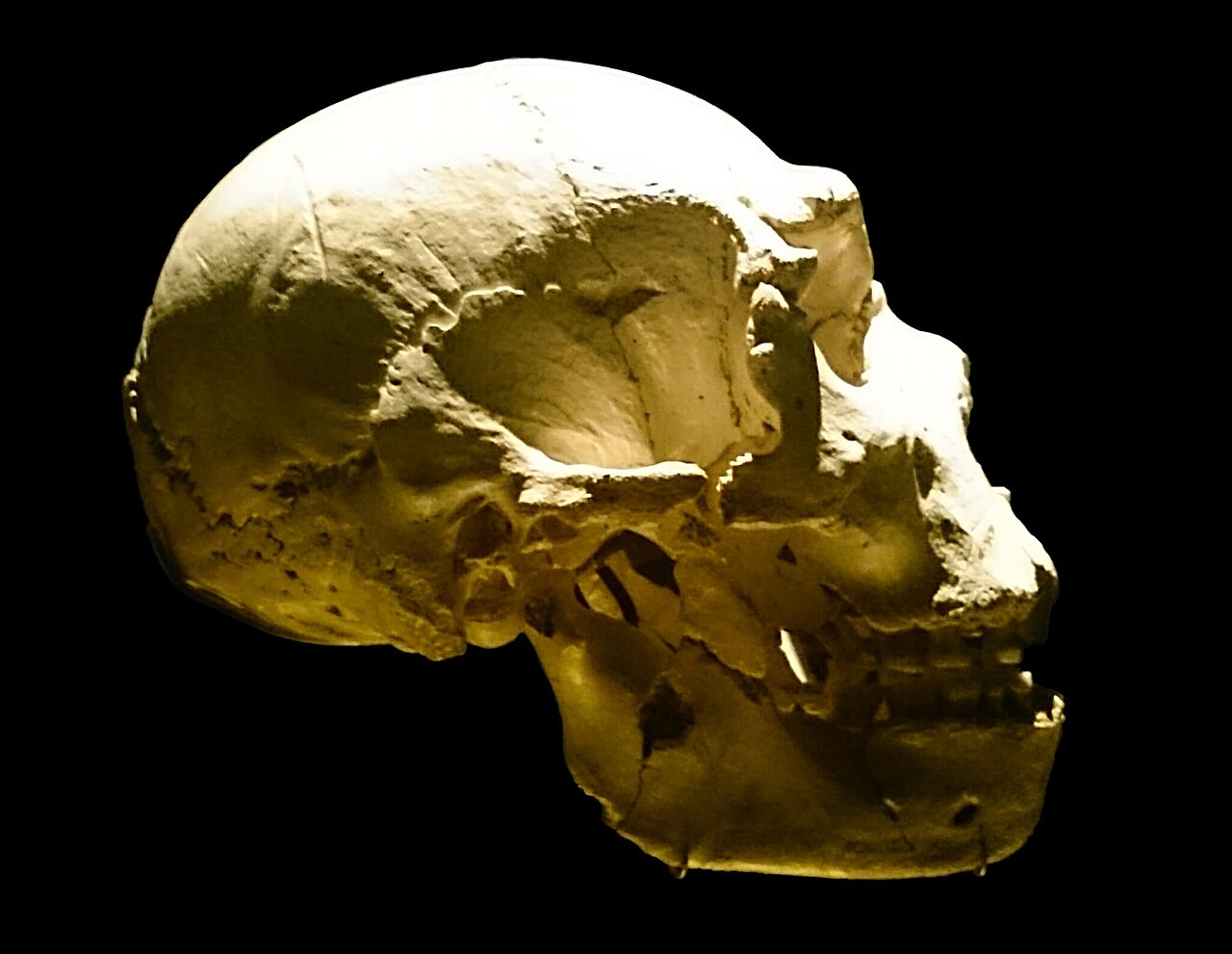
If there’s a single rock-star fossil from this cave, it’s Cranium 5. Nicknamed “Miguelón,” it stands as one of the most anatomically complete Middle Pleistocene skulls ever recovered anywhere on the planet, and it anchors nearly every major paper written about this population’s evolutionary status.
The population Miguelón belongs to sits in an unusual evolutionary spot. It falls inside the broader “Neanderthal clade” but outside Homo neanderthalensis proper – not quite a Neanderthal, but not exactly something else either. It’s a genuine evolutionary bridge species.
Why It Stands Out
- Brow ridges inflated like a Neanderthal’s, but a rear skull that’s less robust
- A pointed “house-like” cranial profile instead of a rounded “bomb-like” one
- Brain volume averaging 1,241 cc – on the low end of the Neanderthal range
- Neanderthal-style shovel-shaped incisors and taurodontism, but different cusp patterns
Without Miguelón’s completeness, the entire “pre-Neanderthal” classification debate would still be far murkier than it is today.
#2 – “Excalibur,” The Sword-Named Hand Axe That Shouldn’t Be There
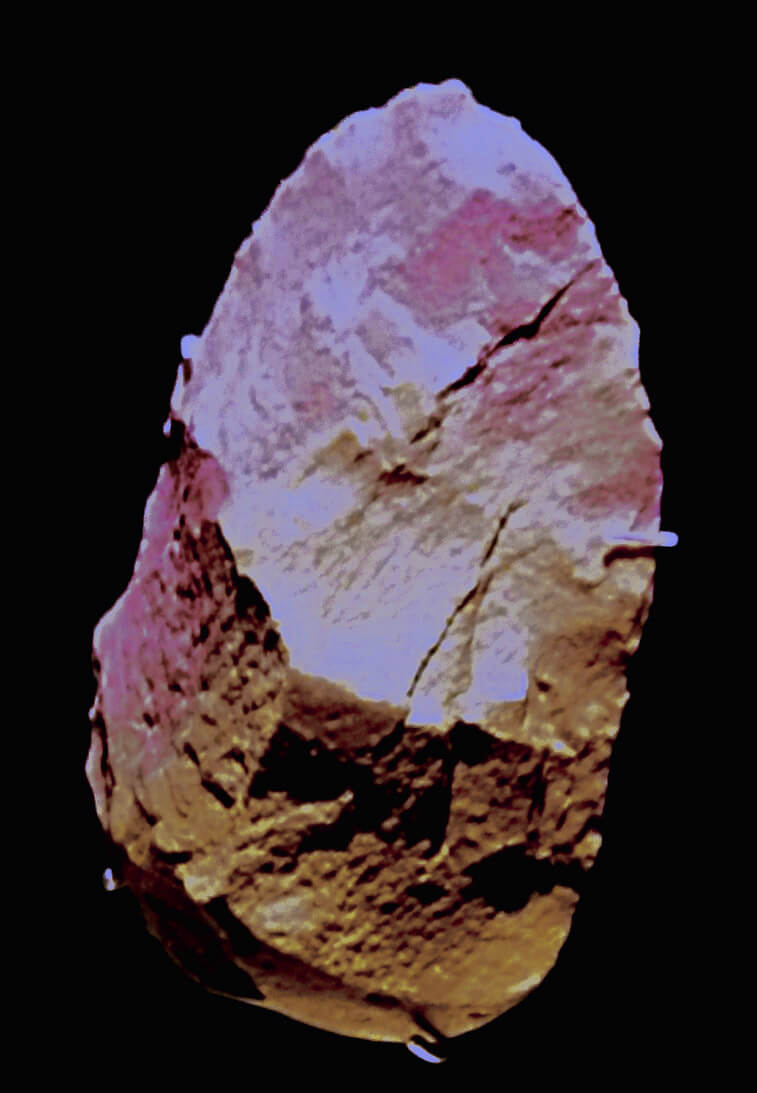
Here’s the discovery that turns this site from impressive to genuinely eerie. In 1998, excavators pulled out the only stone tool ever found in the entire pit – a hand axe carved from red quartzite, a rock that barely exists anywhere near the cave.
That material mismatch is the whole mystery. Among the hundreds of lithic pieces recovered from nearby contemporary sites, none share this stone. Someone carried this specific red rock from somewhere else entirely, shaped it into a weapon, and apparently never used it for practical work – traceology studies couldn’t confirm any use-wear at all, since the surface has been altered in ways that erase such marks.
So why was it there? Many archaeologists believe “Excalibur” was placed at the site – already functioning as a burial ground roughly 400,000 years ago – as a deliberate offering, which is exactly why it earned a name lifted straight from Arthurian legend. If that interpretation holds, this single red hand axe is the earliest known evidence of ritual or symbolic behavior in the entire human lineage. That’s a genuinely controversial claim among archaeologists, and it’s precisely the kind of detail that starts arguments in comment sections everywhere.
#1 – Cranium 17, The 430,000-Year-Old Murder Victim
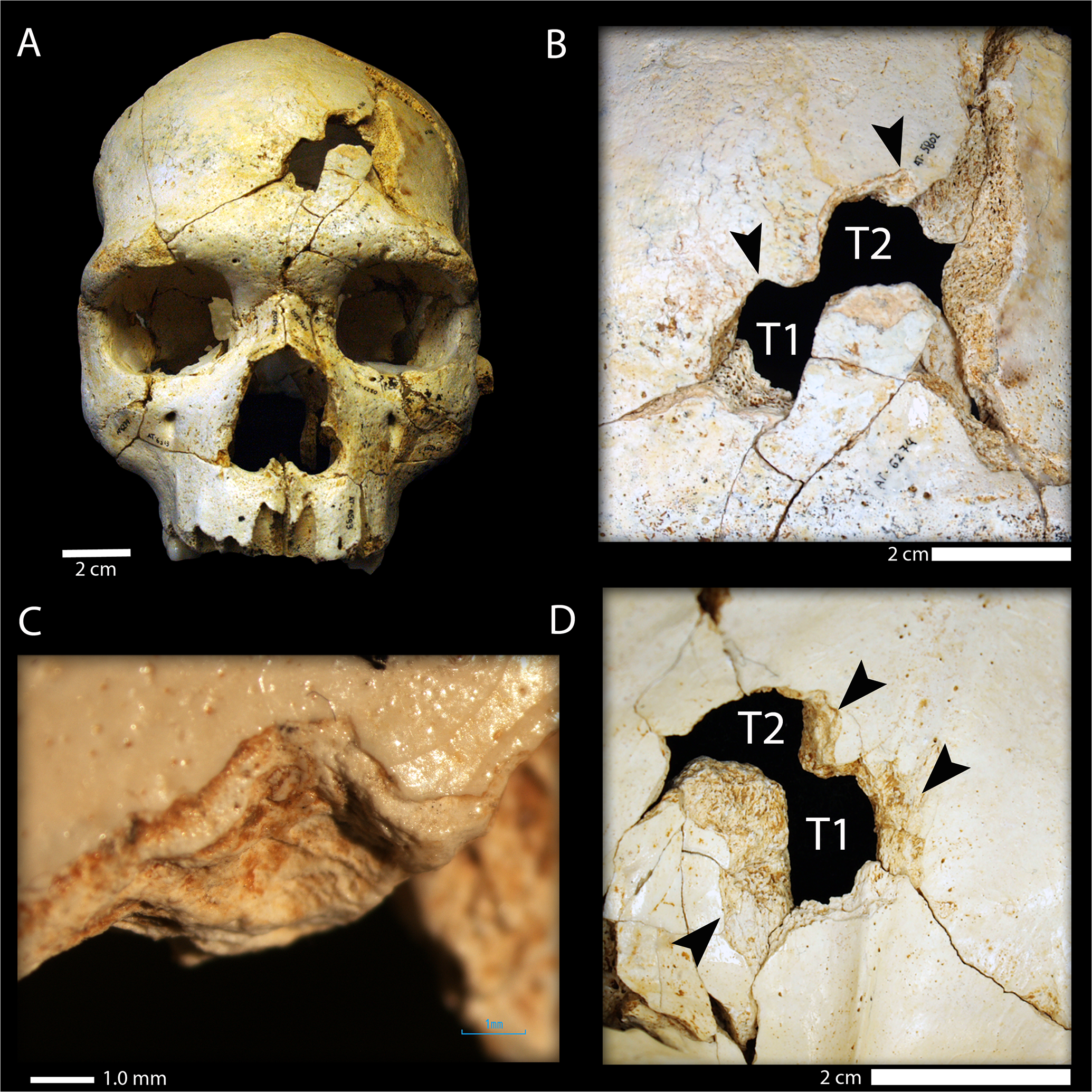
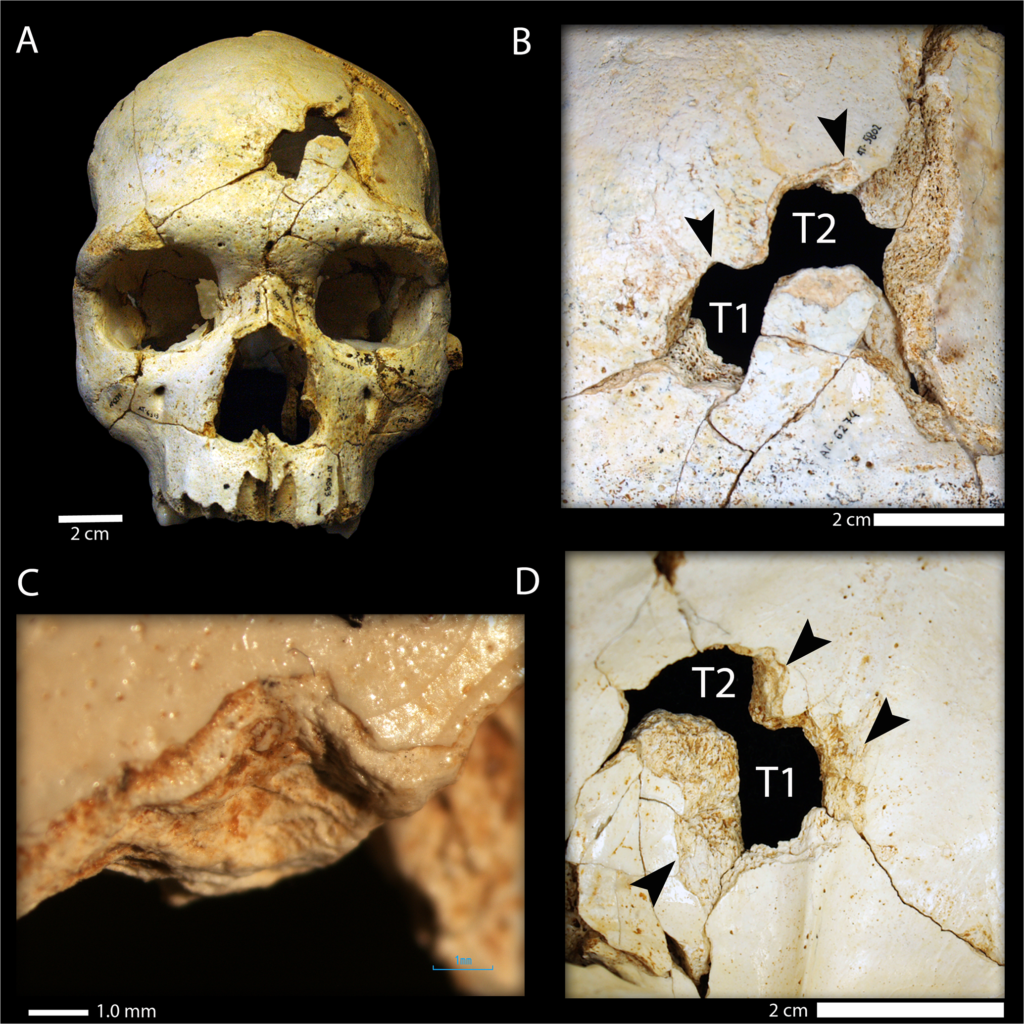
Everything else at this site is fascinating. This is the discovery that made international headlines because it reads like an actual homicide case file. Among the 17 skulls recovered from the pit, Cranium 17 is a nearly complete specimen built from 52 bone fragments, preserving a full facial skeleton belonging to a young adult – and showing two penetrating lesions on the frontal bone, directly above the left eye.
Worth Knowing
- Cranium 17 was reconstructed from 52 separate bone fragments
- Two penetrating lesions were found directly above the left eye
- Contour and trajectory analysis show both wounds came from the same object
- Similar violence markers appear on Cranium 5 and Cranium 11
Researchers didn’t stop at simply describing the wounds. They ran the skull through modern forensic protocols, using contour and trajectory analysis on the fractures. Two blows, same weapon, same target area. That’s not a fall off a cliff. That’s a targeted, repeated attack.
Follow-up research strengthened the case even further, confirming violence as the likely cause of the perimortem fractures on Cranium 17, with similar signs probable on Cranium 5 and Cranium 11. That suggests interpersonal violence wasn’t a one-off tragedy here – it was a recurrent behavior in this Middle Pleistocene population, nearly half a million years before anyone could call it a crime. Combined with the theory that bodies were deliberately placed in this pit as a form of early burial, Cranium 17 forces an uncomfortable question researchers still argue over: were these people disposing of a victim, or honoring a death regardless of its cause?
The Bottom Line
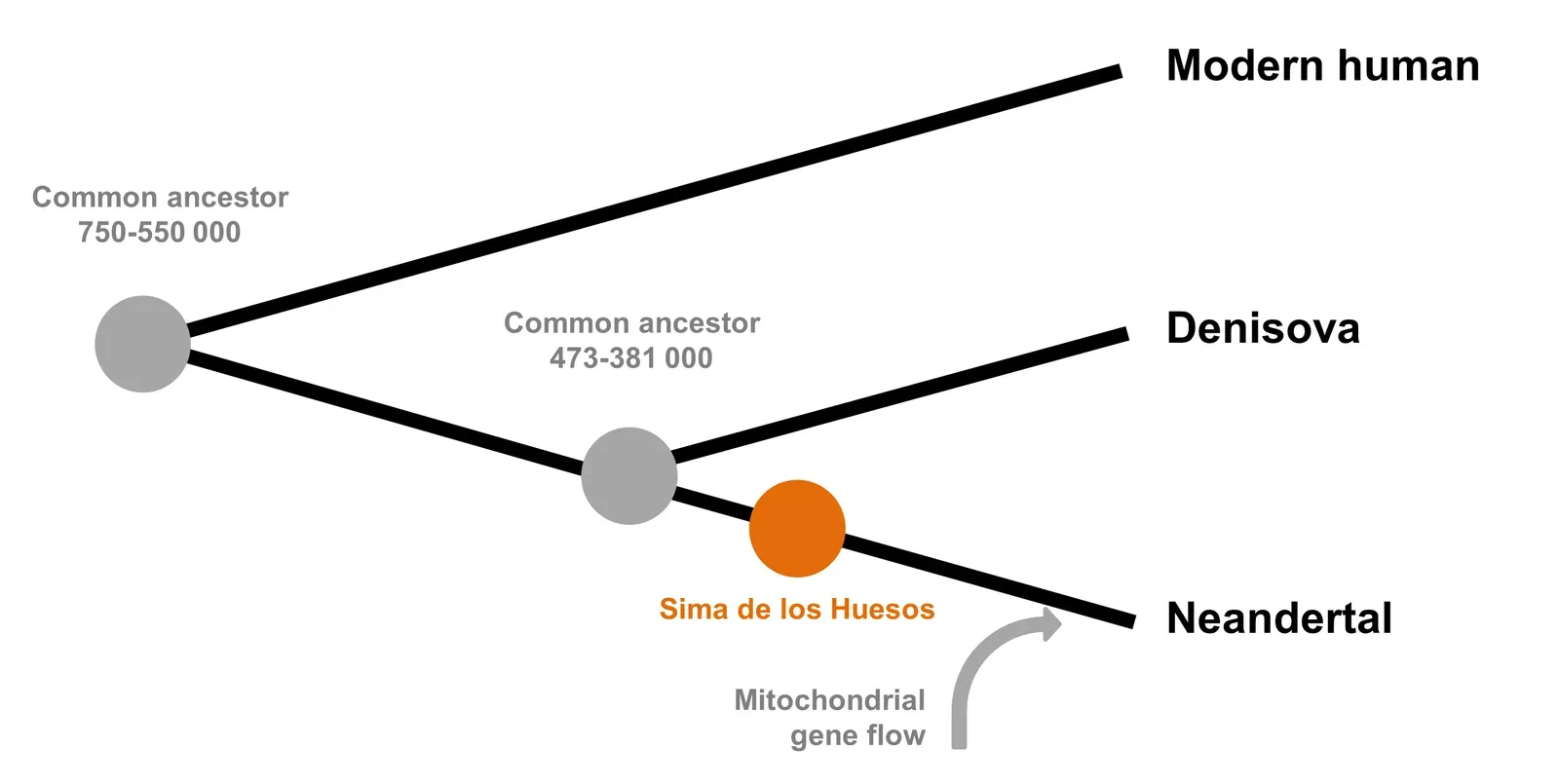
isn’t just a fossil site – it’s the closest thing paleoanthropology has to a cold case file. From a red quartzite “sword” that may be the oldest offering in human history, to a child’s fused skull that hints at ancient compassion, to a young adult killed by repeated blows to the head 430,000 years before anyone could call it murder, this cave keeps forcing scientists to rewrite what “early human” actually means.
The evidence strongly suggests these people buried their dead, cared for the disabled, and occasionally killed each other – sometimes all within the same small community. That’s a far messier, far more human picture than most textbooks ever admit, and it’s why this flooded shaft in northern Spain still matters more than almost any other site on Earth.