
On July 17, 1981, a packed tea dance inside the Kansas City Hyatt Regency turned into the deadliest structural collapse in American history in roughly ten seconds. A hundred and fourteen people died under two steel walkways that were swaying with the music one moment and crushing the crowd below the next. Most retellings stop there, treating it like bad luck – a freak accident nobody could have stopped.
That’s not what actually happened, and structural engineers have known it for more than four decades. The walkways didn’t come down because of an earthquake, a hurricane, or some impossible design problem no one could have foreseen. They came down because of a two-word change on a shop drawing that nobody bothered to recalculate. Forty-five years later, that single unchecked detail still shapes how every building in America gets designed, reviewed, and stamped – and the 13 lessons buried inside that failure are still argued over in engineering offices today.
#1 – A “Minor” Fabrication Tweak Doubled the Load and No One Recalculated
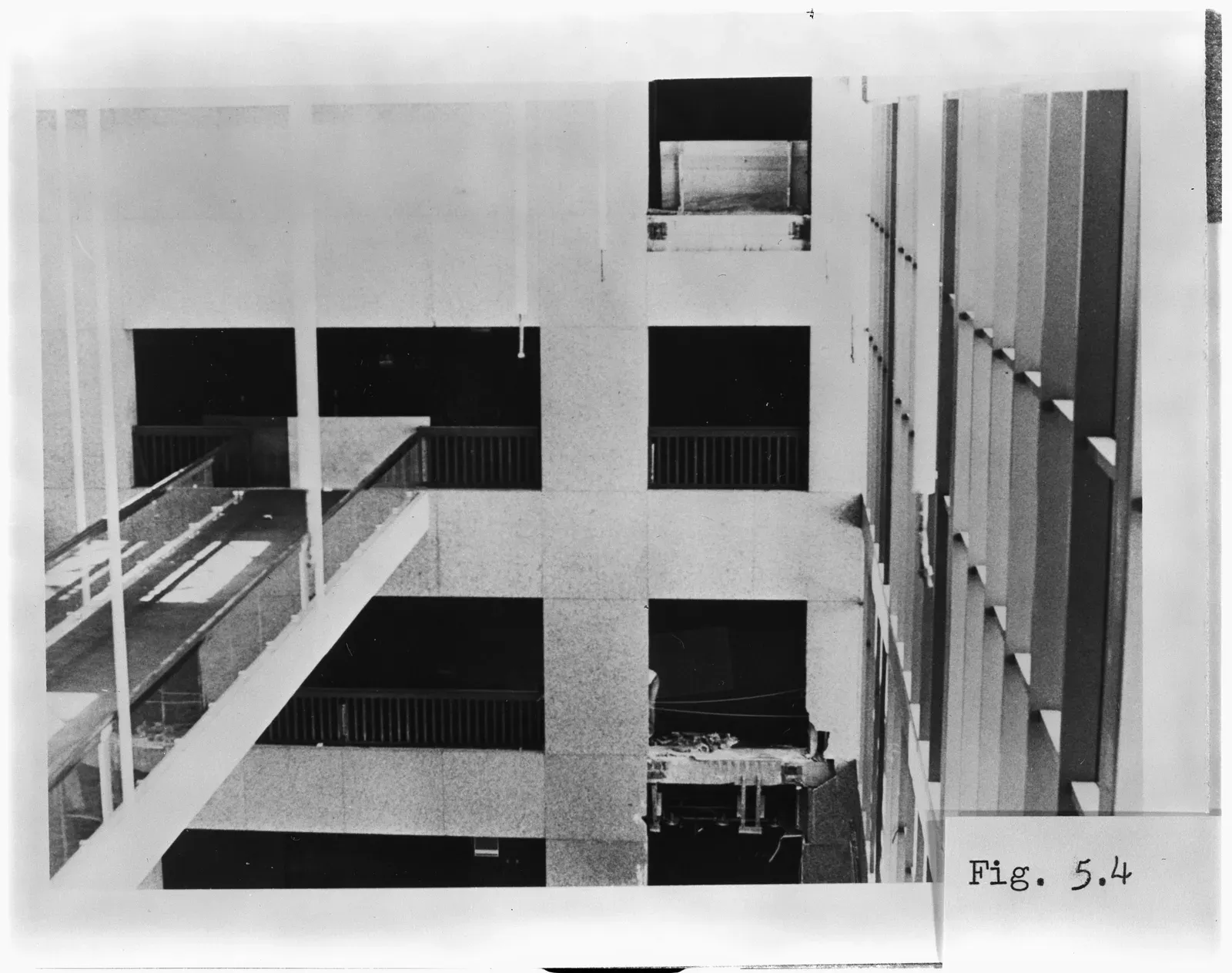
The collapse didn’t start with bad materials or an earthquake. It started with a single change on a shop drawing that nobody re-analyzed. The original design called for both walkways to hang from one continuous set of hanger rods, threaded through the upper walkway’s box beams and anchored beneath the lower walkway.
That original design was already cutting it close on margin. But during fabrication, the steel contractor, Havens Steel, discovered that threading one continuous rod through the entire structure was nearly impossible to build in practice. So they proposed what looked like a harmless fix: swap the single long rod for two shorter ones. One would hang from the ceiling to support the fourth-floor walkway; the other would run from there down to the second-floor walkway.
Nobody ran the new numbers. That’s the whole disaster in one sentence. The switch to a two-rod system meant the upper walkway’s connection now had to carry the weight of both walkways combined instead of just its own – effectively doubling the load on a joint that was never redesigned to handle it. The finished connection could withstand only an estimated 30 percent of the minimum load required by code. A building code violation that small usually gets caught in an inspection. This one got caught by gravity, in front of a crowd.
Fast Facts
- The walkways fell at roughly 7:05 p.m. during a crowded Friday tea dance.
- The collapse killed 114 people and injured another 216, making it one of the deadliest structural failures in U.S. history.
- The redesigned connection carried only about 30 percent of the load required by code – before a single dancer stepped onto it.
- The fatal change appeared on just one revised shop drawing, buried inside a package of 42 drawings submitted for review.
#2 – Small Drawing Changes Are Actually Load-Path Decisions

Every structural engineering student now learns this the hard way: a two-inch change on paper can be a life-or-death change in steel. What looked like a drafting convenience was actually a complete redesign of how forces traveled through the building.
Modern engineering education frames it bluntly – the details are where the physics actually lives. A change in connection geometry isn’t just a drafting note; it’s a load-path decision. An assumption about continuity isn’t just a simplification for the math – it defines how the structure will genuinely behave the moment weight is placed on it.
What makes this lesson haunt new engineers is how invisible it was. The difference between the original connection and the revised one might not have jumped off the page to a reviewer flipping through a stack of shop drawings on deadline. But the structural implications were catastrophic. Many engineers now argue the real danger in modern practice isn’t complexity at all – it’s the quiet assumption that “small” changes don’t deserve a full recalculation. That opinion still sparks arguments in engineering forums decades later.
#3 – “Reviewed” Used to Mean Something Very Different Than “Checked”

Before 1981, engineers routinely stamped shop drawings without independently verifying every connection’s math – and that was considered normal, acceptable practice across the industry. The Hyatt collapse exposed exactly how dangerous that gap really was.
Industry veterans describe the old standard plainly: prior to the collapse, “approval” of shop drawings meant checking for adherence to the general design concept, not verifying that the engineering behind it actually held up. A reviewer could sign off on a drawing that looked right without ever confirming it was structurally sound.
That distinction sounds like semantics, but it’s the difference between a rubber stamp and a real safety check. The Hyatt case became a standard case study in structural engineering and ethics courses across the country, teaching generations of students that “approval” means verifying conformance with design intent – not glancing at a drawing and moving on. Most engineers today don’t realize this single word-choice fight reshaped an entire profession’s legal exposure.
#4 – The Engineer of Record Can’t Outsource the Final Responsibility

You can delegate tasks. You can’t delegate accountability. That’s the brutal lesson Missouri’s licensing board hammered home when it went after the two named engineers of record instead of the junior staffer who actually reviewed the drawings.
“The conduct of Duncan from initial design through shop drawing review and through the subsequent requested connection review … supports the Commission’s finding of conscious indifference to non-delegable professional duty.”
Missouri Court of Appeals
The court also affirmed engineer Gillum’s “gross negligence,” ruling that as engineer of record he failed “to assure that the Hyatt engineering designs and drawings were structurally sound … prior to impressing thereupon his seal,” and failed “to assure adequate shop drawing review.” Even when the actual reviewer was a junior associate who wasn’t even an ASCE member, the seal-holder took the fall.
That excuse – “I assigned it to someone else” – didn’t hold up in 1985, and it still doesn’t hold up today. This remains one of the most controversial points in engineering law classrooms, because plenty of working engineers privately argue it’s unfair to punish the top signer for a subordinate’s oversight. The courts disagreed, and that disagreement is now baked into licensing law nationwide.
#5 – A Disputed Phone Call Taught the Industry to Distrust Verbal Approvals

One of the most unsettling facts about Hyatt Regency is that the fatal design change may have been approved over the phone – with zero paper trail to prove it either way. The fabricator claimed to have called the design engineer to approve the switch. The design engineer denied ever receiving that call.
There was no documentation of the change anywhere except a single revised shop drawing, quietly included in a package of 42 drawings submitted for review. Buried in that stack, one silent revision became the deadliest sentence never written down.
Ethics researchers still use this exact scenario to test students: does the disputed phone call actually change the outcome of the case? Why or why not? Today, every major engineering firm requires written change orders and documented submittal logs specifically because of this ambiguity – a rule written in blood, not bureaucracy.
#6 – There Was an Earlier Warning the Industry Almost Ignored
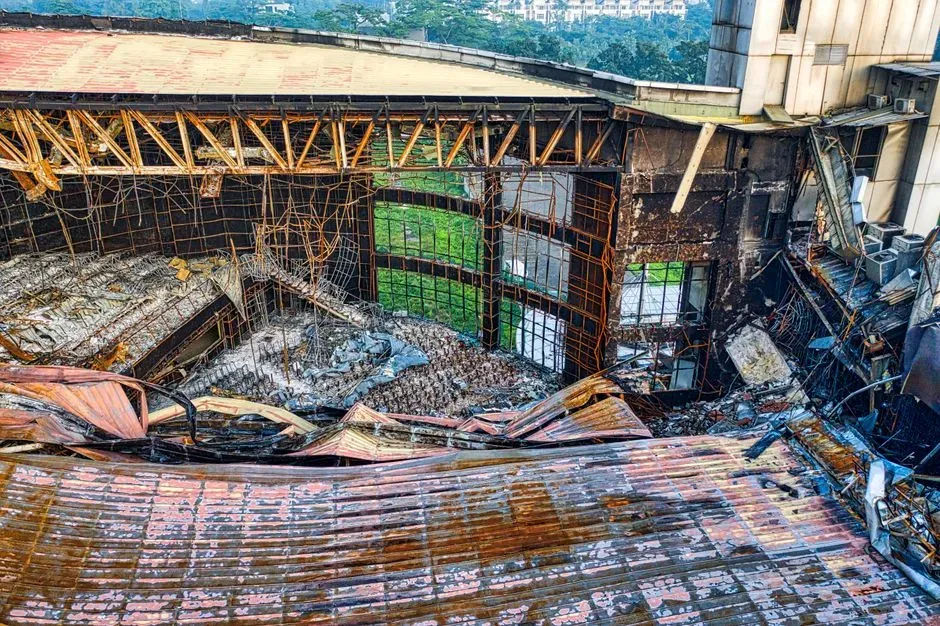
Here’s the detail that makes engineers wince every time: the atrium roof itself partially failed during construction, months before the walkways came down – and nobody treated it as a warning about the rest of the building.
The record shows a firm that missed its own red flag. Evidence at the hearing showed that the engineering firm failed to conduct appropriate investigations even after that earlier roof collapse during construction – a clear sign that something was structurally wrong somewhere on the project.
Most people don’t realize a building can warn you it’s failing before anyone actually gets hurt – and that Hyatt Regency did exactly that. A full connection audit across the atrium system at that point could have caught the rod problem months before the tea dance. Some engineers argue this earlier incident, not the final rod change, was the real moment of professional failure – because it’s where a full-scope review could have caught everything else downstream.
Worth Knowing
- The atrium roof partially collapsed during construction, well before the walkways were ever installed.
- No systemwide connection audit followed that earlier failure.
- Investigators later found the design firm never conducted an adequate review even after the warning.
- A single full-scope inspection at that stage could plausibly have caught the rod problem months before the tea dance.
#7 – Independent Connection Calculations Are Non-Negotiable Now

Nobody had actually run the numbers on the two-rod system before it went into steel. That single fact is why “connection design” is now treated as its own specialized engineering discipline rather than an afterthought tucked into the general structural drawings.
The failure to calculate wasn’t a rounding error – it was a total absence of analysis. The engineering firm did not exercise due care in reviewing or approving the altered connection, and the two-rod design was never properly checked to confirm it could handle the newly doubled load.
Even the shop drawings themselves lacked the detail needed to catch the problem. The connections weren’t adequately detailed, the fabricator hadn’t performed calculations on them, and the technician assigned to review the drawings didn’t run any calculations either. An entire chain of people quietly assumed someone else down the line had already done the math. Modern connection-design standards exist specifically to close that gap for good.
#8 – Licensing Boards Will Revoke Careers Even Without a Criminal Conviction

No one went to prison for Hyatt Regency. But the professional consequences were arguably harsher than jail – total, permanent removal from a field they’d spent entire careers building.
The criminal side of the story ended quietly. The design engineers were cleared of criminal negligence, and a federal grand jury eventually declined to pursue charges at all, closing that chapter for good.
The licensing side told a very different story. In 1984, Missouri’s Board for Professional Engineers opened disciplinary proceedings against the two engineers and their firm. After a 27-day hearing, the tribunal issued findings spanning 442 pages, found all three grossly negligent, and revoked their licenses outright. This is the part most engineering students remember longest: you can walk out of a courtroom clean and still lose everything you built your career on. Every state licensing exam question about “professional conduct” traces its DNA back to this exact ruling.
Quick Compare
- Criminal case: Grand jury declined to pursue charges; engineers cleared of criminal negligence.
- Licensing case: 27-day hearing, 442 pages of findings, all three parties ruled grossly negligent.
- Outcome: No prison time, but permanent revocation of engineering licenses for both engineers of record.
#9 – Appeals Courts Confirmed: The Seal Is a Legal Commitment, Not a Formality

Duncan, Gillum, and their firm fought the license revocation all the way up the Missouri court system. They lost every single argument they raised.
The Missouri Court of Appeals rejected all of their “legalistic” challenges and let the revocations stand. That ruling didn’t just end two careers – it cemented a doctrine that governs every licensed engineer working today: as a legal matter, the buck stops at the engineer of record, full stop.
Even ASCE’s own ethics tribunal weighed in separately, showing how deeply the professional community split over how much blame one signature deserves. The society’s board found the engineer “vicariously responsible” for the tragedy “but not guilty of gross negligence nor of unprofessional conduct,” and suspended him from membership for three years. That split verdict remains genuinely controversial among practicing engineers – some think three years was a slap on the wrist for 114 deaths.
#10 – It Didn’t Take an Earthquake, a Storm, or a Bomb
This is the fact that unsettles new engineers most: the walkways failed under nothing more dramatic than people standing and dancing. No hurricane. No seismic event. Just ordinary static weight, the kind engineers calculate for every single day without a second thought.
Investigators were blunt about how mundane the actual trigger was – the box beam connections failed under static load, not even dynamic or seismic forces. A structure engineered for a party failed at a party.
That single fact reframes the entire tragedy. It wasn’t an exotic, unpredictable event that no design code could have anticipated. It was a shop drawing review failure – the kind that happens in project offices every single day, just without the fatal consequences. Most people don’t realize how ordinary the physics were, which is exactly why this case terrifies engineers more than flashier disasters do.
#11 – Forensic Structural Investigation Became a Real Discipline Because of This Collapse

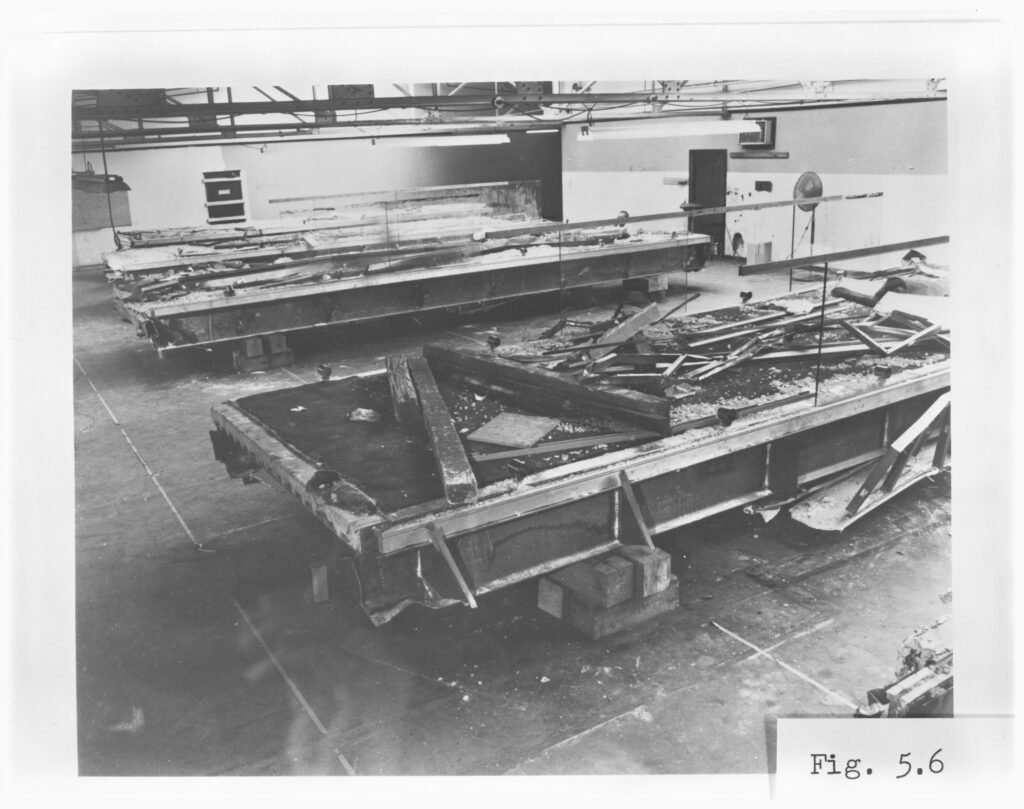
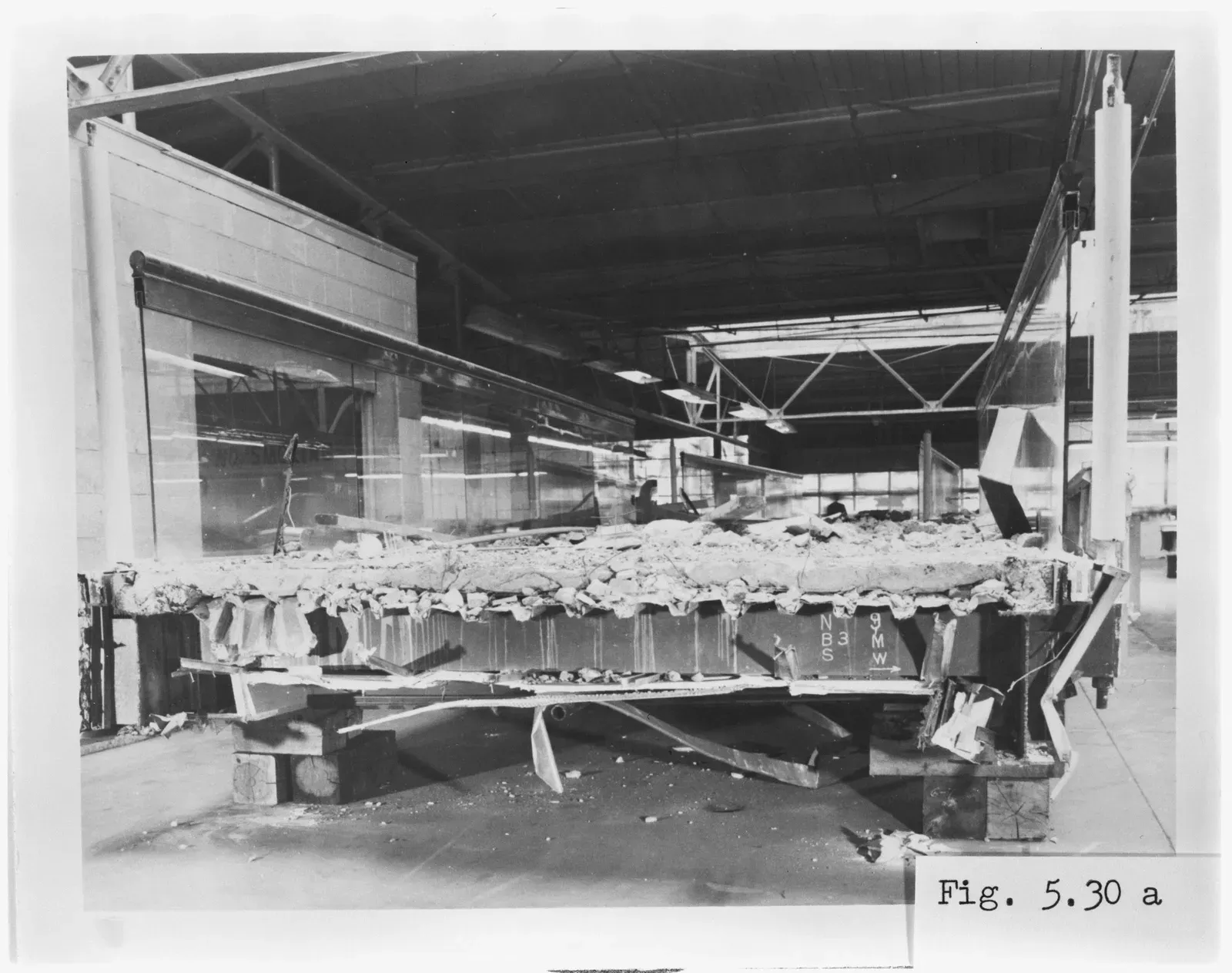
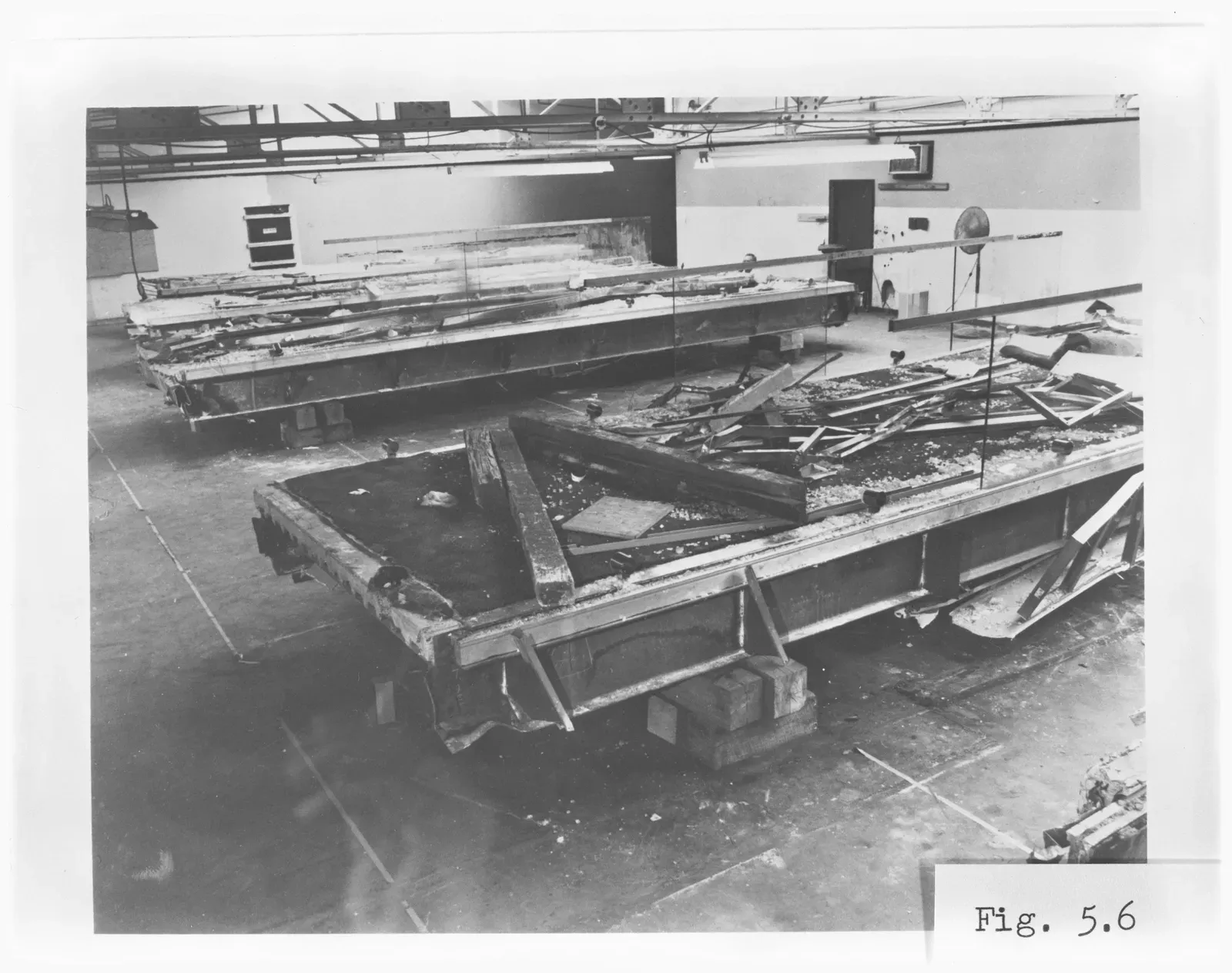
Before Kansas City, there wasn’t much of a formal playbook for scientifically reconstructing why a building fell down. The National Bureau of Standards essentially wrote one from scratch in response to this exact disaster.
The scale of that federal investigation was massive for its time. The Bureau, now known as NIST, worked alongside local authorities to conduct a thorough technical reconstruction of the failure. Their findings pointed directly at poor communication, insufficient review processes, and a failure to follow basic engineering protocols.
“the most devastating structural collapse ever to take place in the United States“
National Bureau of Standards, February 1982
That federal report – NBSIR 82-2465 – became a template still referenced in structural failure analysis today. Forensic engineering experts still cite this document as the moment their field gained real scientific legitimacy – a discipline born directly out of tragedy rather than academic theory.
#12 – Engineering Programs Still Teach This Case Because Nothing Else Combines Ethics, Physics, and Law So Cleanly
Ask almost any structural engineering graduate from the past three decades, and they’ll tell you they studied Hyatt Regency – often more than once, in more than one course.
Universities treat it as uniquely valuable teaching material for exactly that reason. The case works equally well in structural design, statics, and materials classes, and just as well as a general lesson in the consequences of professional shortcuts. Few real-world disasters combine hard physics with hard ethics so neatly in one package.
The case has become genuinely global in its reach. Today, the Hyatt Regency collapse is taught in engineering programs worldwide as a cautionary tale and a call to uphold the highest standards of practice. It’s also become a favorite subject for structural failure researchers, journalists, and even Pulitzer-winning investigative reporting. The same case study appears, almost word for word, in ethics curricula on multiple continents – a rare kind of engineering consensus that transcends borders and building codes alike.
#13 – Modern Software Might Have Caught It, But Judgment Still Can’t Be Automated
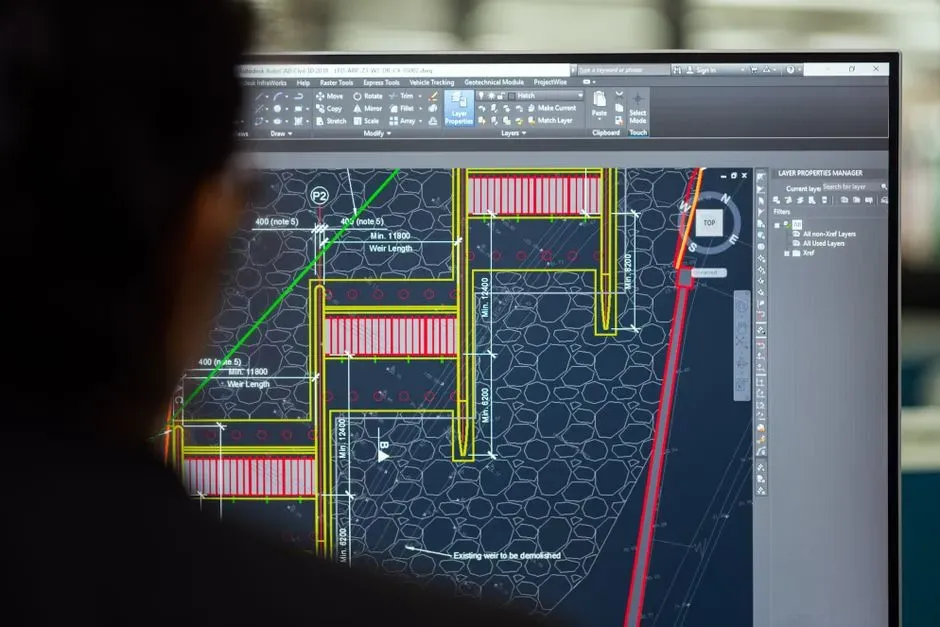
This is the debate raging in engineering offices right now: could today’s clash-detection and BIM comparison tools have flagged the fatal rod change before it ever reached the steel yard?
Some firms are already testing exactly that question against the historical drawings. Given that the deviation was clearly visible on the shop drawing – two rods where the structural drawings showed one – a systematic digital comparison between design intent and shop drawing would almost certainly have flagged it.
But even the most optimistic voices in that debate stop short of full automation. Nobody’s saying software replaces a structural engineer’s judgment. A flagged alert reading “shop drawing shows two offset hanger rods where the structural drawing specifies a single continuous rod – connection load path has changed” would only have been useful if a human engineer took it seriously and re-examined the design. This is where engineers genuinely disagree today – some insist software would have caught it instantly, while others argue that trusting a checklist over professional scrutiny is the exact same complacency that killed 114 people in the first place.
The Bottom Line
![The Bottom Line ([1] Page on which image is used; also contains license information.[2] Direct link to image., Public domain)](https://nvmwebsites-budwg5g9avh3epea.z03.azurefd.net/dinoworld/542cac9e13a1dbfc07c884811b25a07e.webp)
Strip away the steel and the legal jargon, and Hyatt Regency comes down to one brutal truth: 114 people died because a change on a shop drawing was never recalculated. No earthquake, no exotic materials, no unprecedented engineering challenge – just a routine fabrication tweak, an unverified phone call, and a signature that assumed someone else had already done the math.
The licenses were revoked, roughly $140 million in settlements were paid, and the profession rewrote its rulebook on shop drawing review because of it. Frankly, the most unsettling lesson isn’t the physics – it’s how ordinary the failure really was. Somewhere right now, on an active job site, a fabricator is proposing a “minor” change to make something easier to build. Whether an engineer stops to run the numbers again is still, forty-five years later, entirely a matter of judgment. Which of these 13 lessons do you think matters most for engineers today? Drop your take in the comments.