Most people picture pterosaurs as “flying dinosaurs” with pointy heads and leathery wings. That image barely scratches the surface. They weren’t dinosaurs at all – they were a completely separate reptile lineage that beat birds into the sky by millions of years, and some of them ended up looking less like animals and more like alien concept art.
Giant antler-shaped crests. Bristle-filled mouths built for filter-feeding. Bodies covered in fuzz instead of scales. The fossil record keeps getting weirder every year, and paleontologists are still arguing over what half of these creatures actually looked like alive. Here are the fourteen flyers that prove dinosaurs never had a monopoly on strange.
#14 – Dsungaripterus, the Pterosaur Nobody Wanted to Call Pretty
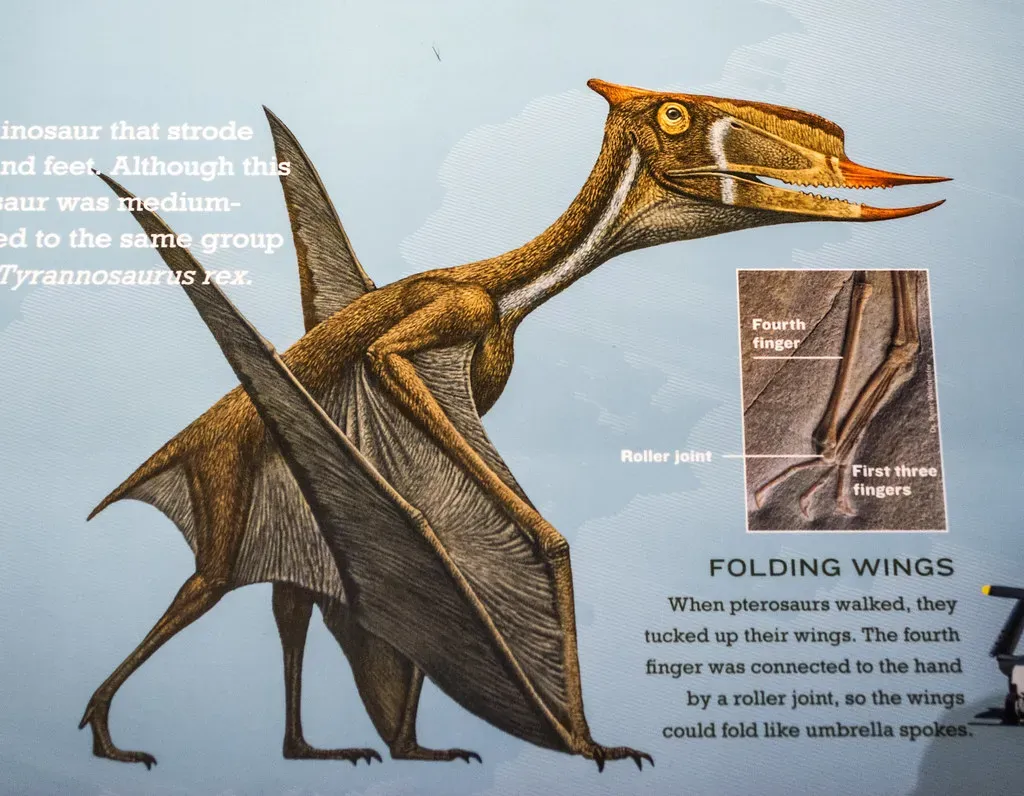
Paleontologists have a nickname for this one, and it isn’t flattering.
Often called the ugliest pterosaur ever discovered, Dsungaripterus earned that reputation from its oversized head and strange, upward-curving jaws. It lived during the Early Cretaceous in what’s now China’s Junggar Basin, and its skull was unlike anything else flying at the time – long, narrow, and topped with a bony crest running from snout to skull. Paleontologists suspect that crest doubled as a rudder, helping stabilize the animal mid-flight.
Unlike the fish-snatching pterosaurs everyone imagines, this one had a completely different lunch menu. The front of its jaw had no teeth at all, narrowing to a toothless point, while flat teeth further back were built for cracking open shellfish armor. At just 3 to 3.5 meters (9.8-11.5 ft) across the wings, it wasn’t especially huge – it was simply built unlike anything else sharing its sky.
At a Glance
- Lived during the Early Cretaceous in the Junggar Basin, China
- Wingspan: roughly 3 to 3.5 meters (9.8-11.5 ft)
- Diet: shellfish, cracked open using flat rear teeth
- Signature feature: toothless, upward-curving jaw tip
- Bony crest likely worked as a mid-flight stabilizer
And that’s just the appetizer. Next up is the fossil that proved pterosaurs weren’t scaly at all.
#13 – Sordes Pilosus, the “Furry Devil” That Rewrote the Textbooks
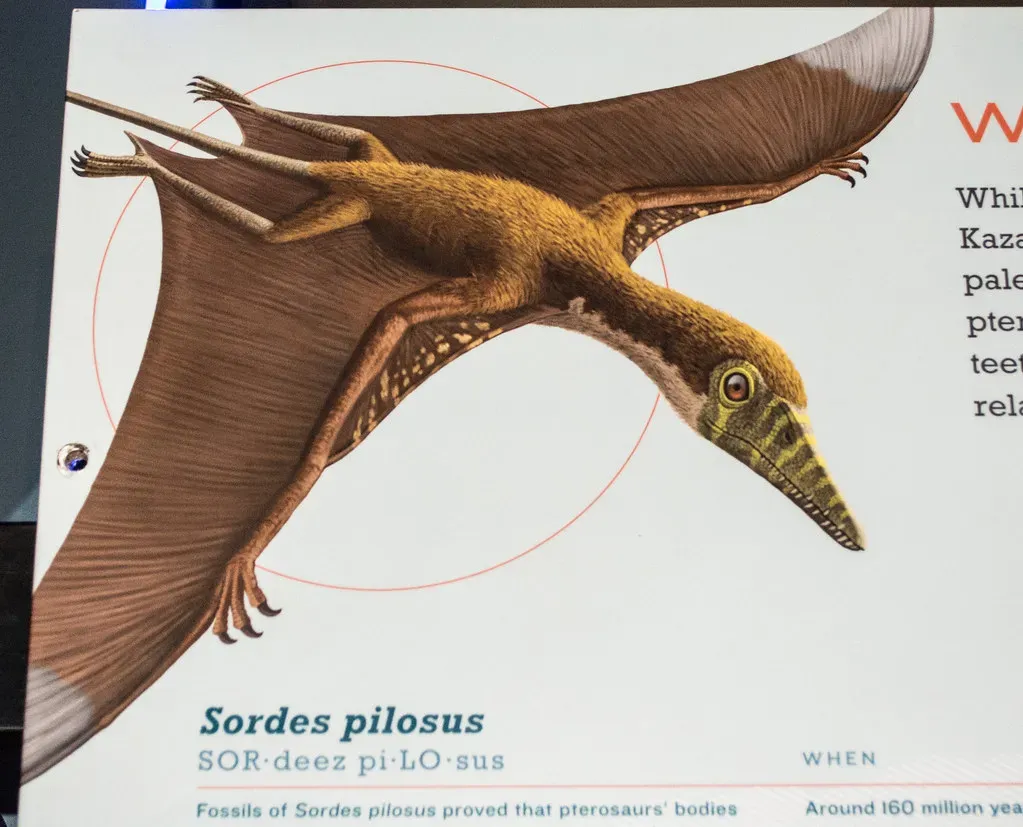
For decades, scientists argued pterosaurs were scaly like lizards. One fossil ended that debate for good.
Sordes pilosus – literally “hairy devil” – emerged from the late Jurassic rock of Kazakhstan holding a secret nobody expected. Preserved alongside its wing membranes were traces of soft, hair-like filaments covering its body, later named pycnofibres. It was the first unequivocal proof that pterosaurs weren’t smooth and scaly like lizards at all.
That single specimen changed how every pterosaur has been illustrated since – out went the cold, reptilian skin, in came a fuzzy coat closer to what you’d find on a bat. Its jaw backs up the fuzzy-hunter image too: the teeth toward the rear were smaller and more numerous than the front ones, built for crushing rather than tearing. Slippery amphibians, tough-shelled bugs – Sordes wasn’t picky, as long as it could crunch.
Sordes changed the textbooks. The next creature on this list changed what a pterosaur was even allowed to look like.
#12 – Anurognathus, the Bat-Faced Insect Assassin
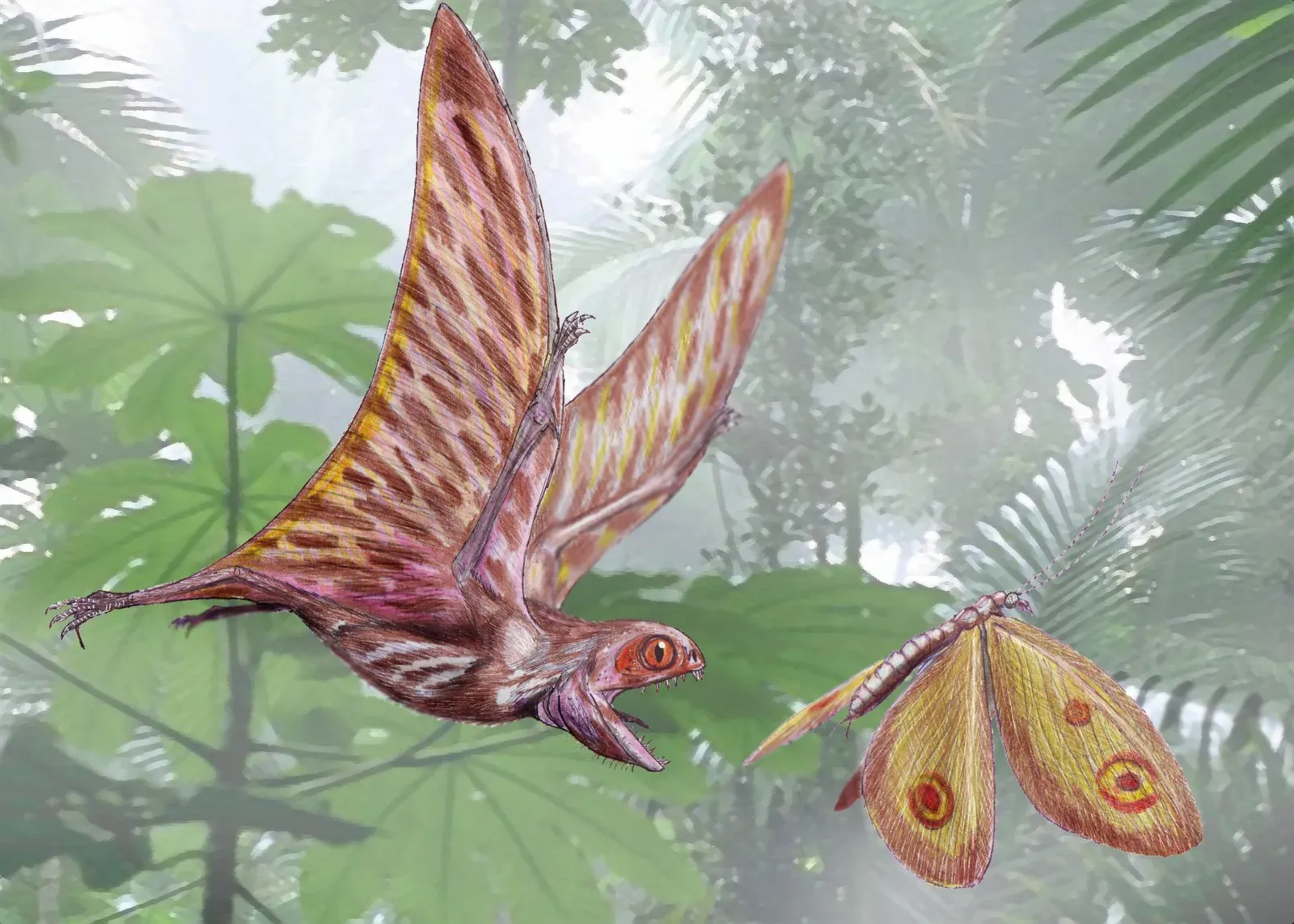
If you dropped this creature into a modern forest at dusk, you’d swear it was a bat, not a reptile.
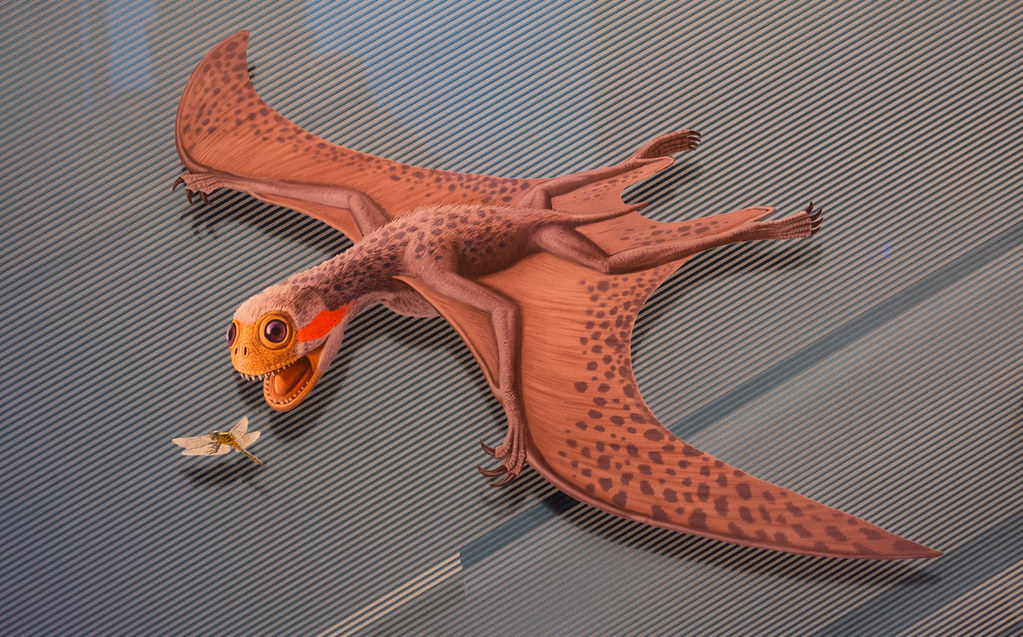
Anurognathus was tiny, short-tailed, and built with an almost comically wide, flattened head and enormous eyes for its size. Paleontologists generally agree it hunted flying insects on the wing, using a broad mouth more like a nightjar or a bat than any typical “pterodactyl” silhouette. Its stubby tail – vanishingly short compared to earlier long-tailed pterosaurs – made it far more agile in tight aerial turns, letting it snatch prey mid-flight rather than glide and swoop like its bigger cousins.
Most people picture pterosaurs as slow, lumbering fliers, but Anurognathus argues the opposite. Its proportions suggest a nimble, hovering hunter closer in lifestyle to a swift or a bat than to the giant sky-giants that get all the attention. It’s a reminder that “pterosaur” covered an entire ecological spectrum, not one body type.
Anurognathus proved pterosaurs could be tiny and nimble. The next one proves they could be pink.
#11 – Pterodaustro, the Flamingo That Time Forgot
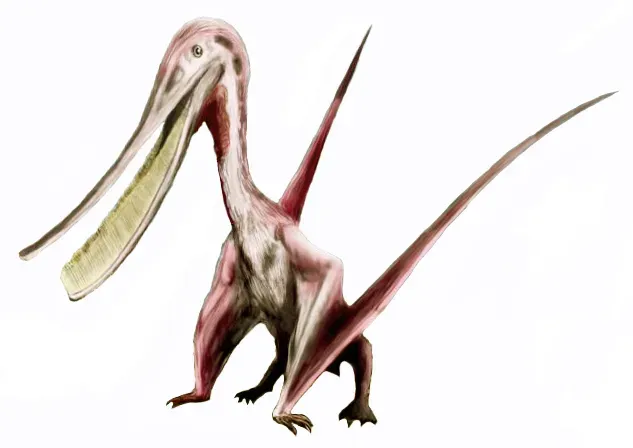
Imagine a pink pterosaur wading through a lagoon like a flamingo. That’s not fan art – that’s a real, published hypothesis.
Pterodaustro had small grinding teeth in its upper jaw and around a thousand bristle-like structures lining its mouth, built from real dental tissue but shaped more like hair than teeth. That mouth made it a filter-feeder, possibly living a life similar to modern flamingos, combing shallow water for small crustaceans. Researchers even found gizzard stones inside some fossils – an unusual trait for any pterosaur.
Here’s where it gets stranger: bacteria picked up by flamingos in their diet gives them their signature pink color, which has led some researchers to speculate that Pterodaustro may have been pink too. On top of that, the scleral rings in its eyes suggest it was nocturnal – a bristle-mouthed, possibly pink, night-shift filter feeder. Try fitting that into the “flying dinosaur” stereotype.
Worth Knowing
- Around 1,000 bristle-like structures lined its mouth for filtering small prey
- Gizzard stones found in fossils hint at internal grinding of tough food
- Scleral eye rings suggest a nocturnal lifestyle
- Possibly pink, thanks to pigmented bacteria in its diet – just like flamingos today
If Pterodaustro sounds strange, wait until you see what evolution stuck on the next pterosaur’s head.
#10 – Tupandactylus, the Pterosaur Wearing a Sailboat on Its Head
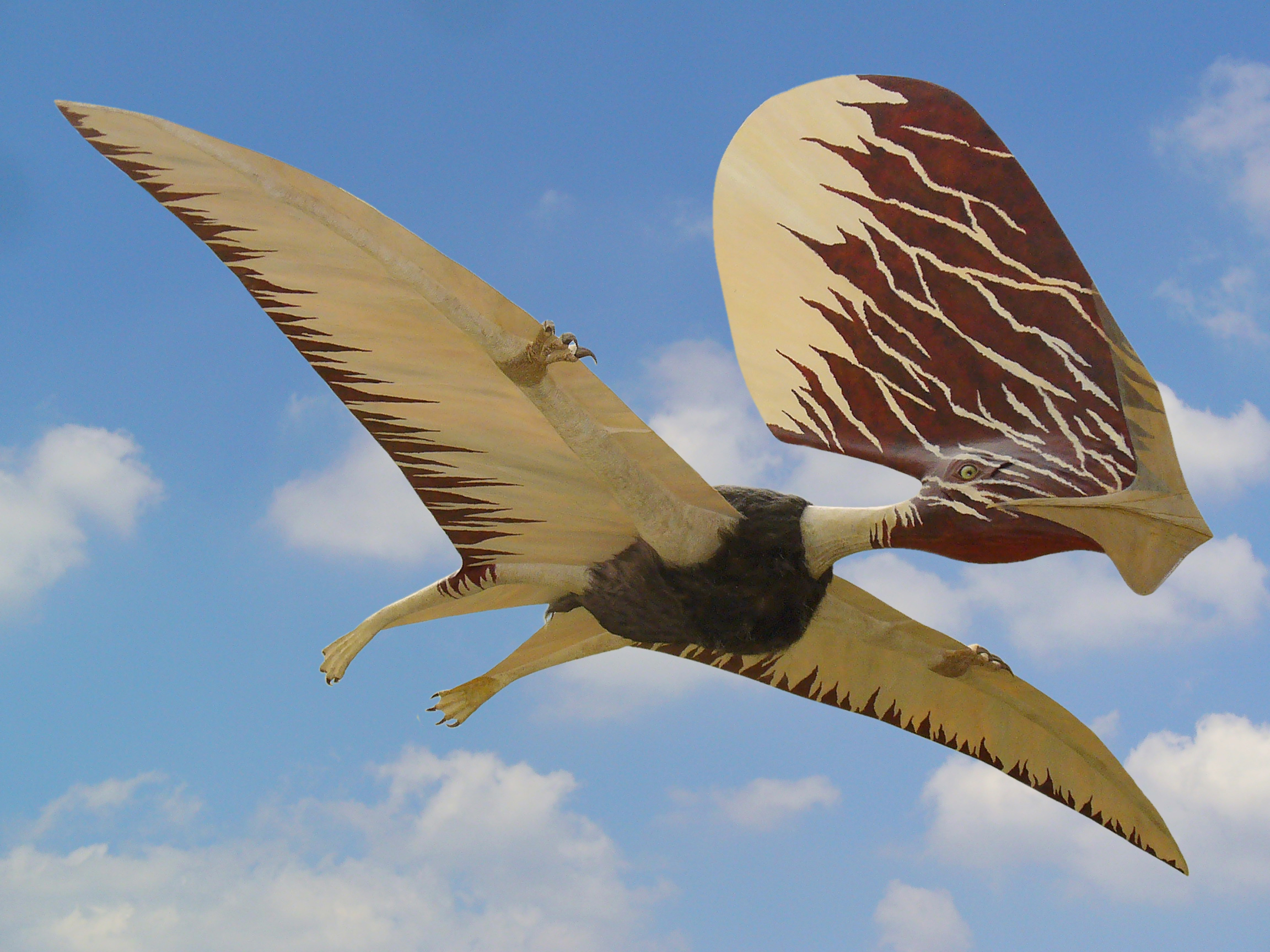
This one didn’t just have a crest. It had a billboard.
Tupandactylus imperator had a huge sail-like extension that dwarfed the rest of its head, making its skull look almost comically small next to the bony, fan-shaped display jutting up and back from its face. Unlike most crests, which were narrow ridges, this structure was broad enough that some reconstructions show it larger than the animal’s entire torso. It’s genuinely hard to believe this thing could fly at all, yet the fossil record says it managed just fine.
Diet-wise, Tupandactylus belonged to a toothless group called tapejarines. Researchers think their short skulls, downturned snouts, and oddly shaped beaks point toward fruit-eating rather than hunting – a strategy that let them thrive without ever needing teeth. A fruit-eating pterosaur with a sail on its head sounds like fiction, but it’s Brazilian Cretaceous fact.
Tupandactylus wore a sail. The next pterosaur wore something that looks suspiciously like a crown.
#9 – Thalassodromeus, the Pterosaur With a Crown Fit for a Pharaoh
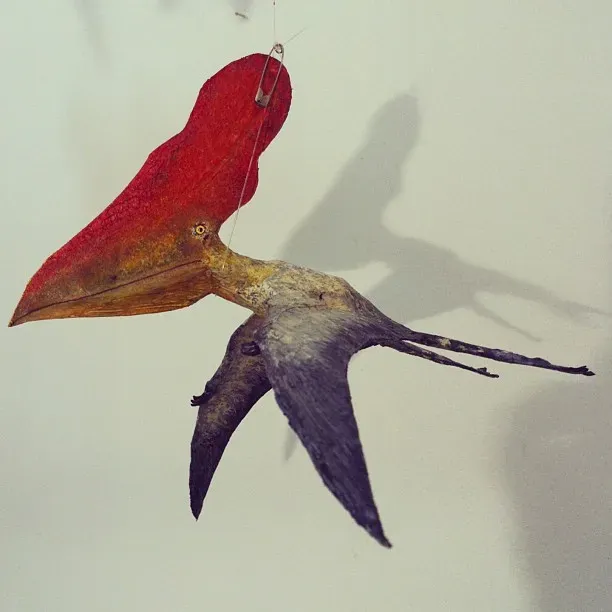
Egyptologists and paleontologists rarely cross paths, but this fossil forced the collision.
The most striking feature of Thalassodromeus is its highly ornate head crest, one of the largest known among pterosaurs, which from the side resembles the pharaoh crowns depicted in artwork of ancient Egyptian gods. That resemblance is baked right into its name – it was called T. sethi because researchers thought the crest resembled the crown of the god Seth, though it actually looks more like the crown worn by a different Egyptian god, Amun. Even its scientific name is based on a mix-up.
Function is still debated, but researchers have floated some memorable theories. It may have helped the animal attract a mate the way a peacock’s tail does, or it may have worked as a built-in radiator, since the crest was packed with blood vessels that could have helped regulate body temperature. Either way, it carried one of the largest skulls and proportionally one of the biggest cranial crests of any vertebrate, living or extinct.
A pharaoh’s crown is one thing. Losing your fingers entirely is another.
#8 – Nyctosaurus, the Pterosaur That Grew Antlers on Its Skull
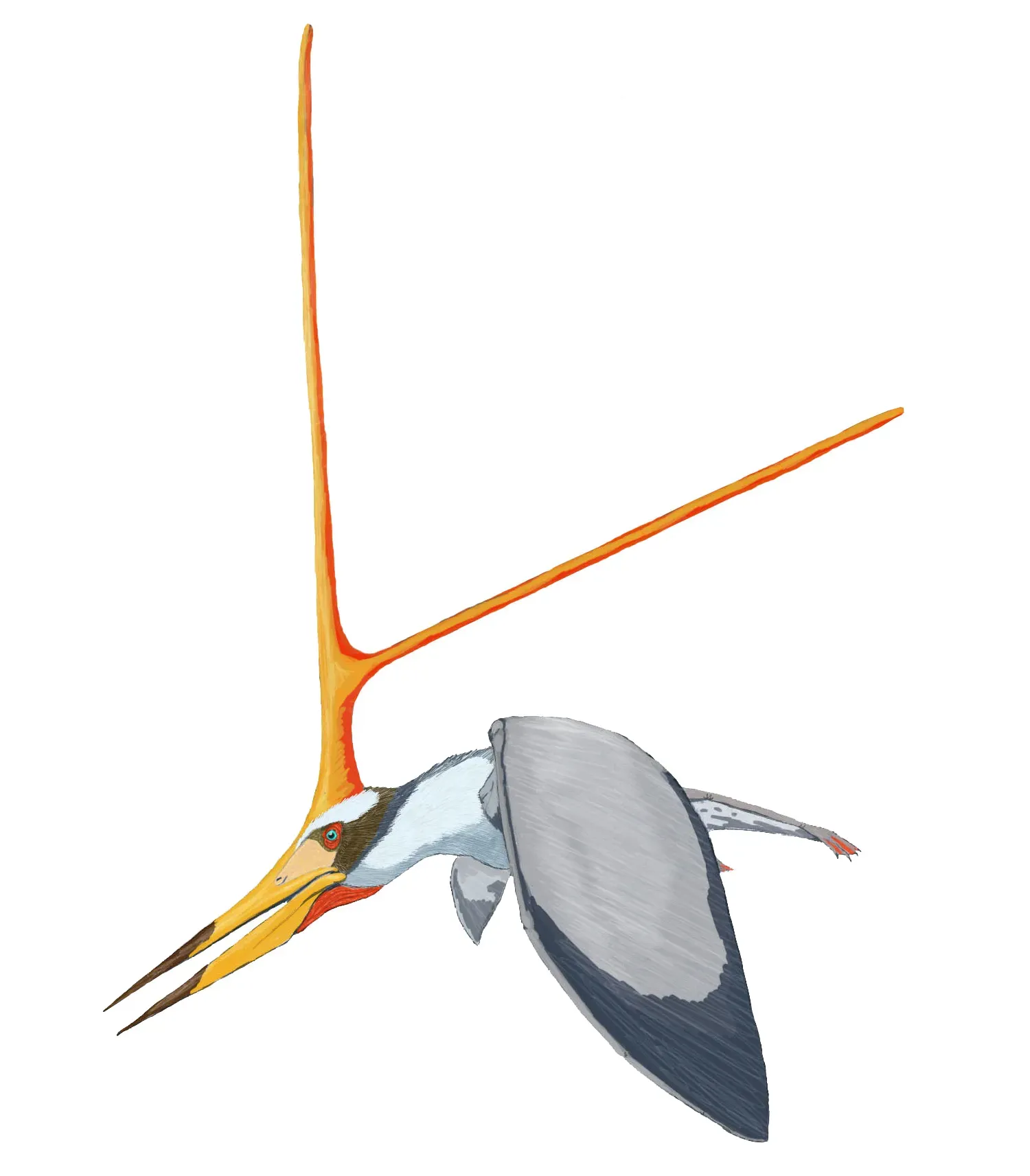
This creature lost its fingers and grew a bony antenna three times the length of its own head. Nature doesn’t get much stranger.
Nyctosaurus took minimalism to a strange extreme. It’s the only pterosaur known to have lost every clawed finger on its wings except the single long digit that supported the wing membrane itself. That alone makes it an evolutionary oddball among oddballs – every other known pterosaur kept at least some grasping digits.
Then there’s the crest, one of paleontology’s favorite unsolved mysteries. Rising more than half a meter high in an unmistakable “L” shape, it was once thought to have supported a skin sail; today most researchers accept the crest was pretty much as preserved, sometimes nicknamed a pterosaur “deer antler.” Light as it was, nobody’s entirely sure it did anything useful at all.
Nyctosaurus lost its fingers chasing weirdness. This next one kept its teeth – and turned them into fishing hooks.
#7 – Rhamphorhynchus, the Needle-Toothed Fisher With a Rudder Tail
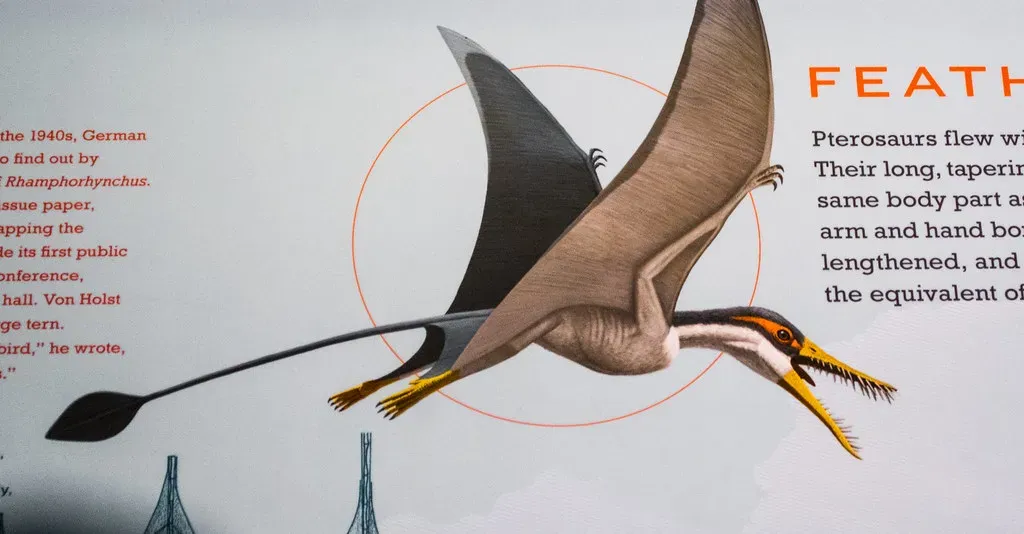
Long before Pteranodon became the poster child for pterosaurs, this needle-jawed hunter was patrolling Jurassic lagoons.
Rhamphorhynchus belonged to the older, long-tailed branch of pterosaurs, and its most distinctive feature was a stiff tail that ended in a diamond-shaped vane of skin – essentially a built-in rudder for mid-air steering. Combine that with a mouth full of thin, outward-jutting teeth, and you get an animal clearly engineered for snatching slippery fish out of the water at speed, then stabilizing itself instantly afterward without stalling out.
Its jaw geometry is the real giveaway of a specialized lifestyle. The interlocking, needle-like teeth pointed slightly forward and outward, forming an efficient trap for fish rather than a chewing mechanism – grab and swallow, not bite and gnaw. It’s a design so different from later toothless pterosaurs that it’s easy to forget they belonged to the same broader group at all.
Quick Compare
- Long-tailed pterosaurs (like Rhamphorhynchus): stiff, vaned tails for steering; needle-like teeth built for grabbing fish
- Short-tailed pterosaurs (like Pterodactylus and later giants): little to no tail; often toothless beaks built for very different diets
- Shared trait across both groups: wings supported by a single elongated finger and a membrane, not feathers
Rhamphorhynchus fished with precision. The next name on this list is the one that made pterosaurs famous in the first place.
#6 – Pterodactylus, the Original “Weird” That Started It All

Every pterosaur owes its nickname to this one animal, and honestly, it deserved the fame.
Pterodactylus was the very first pterosaur ever discovered, back in the 18th century, and it’s the reason every member of this entire group got stuck with a nickname that isn’t scientifically accurate for most of them. Since that first find, scientists have described more than 200 additional pterosaur species – yet the public image of “a pterodactyl” still defaults to this one animal’s silhouette, even though most actual pterosaurs looked nothing like it.
Its mouth was its most telling feature. This flying predator was a generalist carnivore packing around 90 teeth into a jaw, and it lived alongside the earliest dinosaurs. A near-mammal-level tooth count in a reptile’s mouth was jarring enough to 18th-century naturalists that some initially mistook the fossil for a swimming creature, not a flier. It took decades of debate before scientists settled on what we now consider common knowledge.
Pterodactylus set the template. The next fossil broke it in half – literally.
#5 – Darwinopterus, the Fossil That Looked Like Two Animals Stitched Together
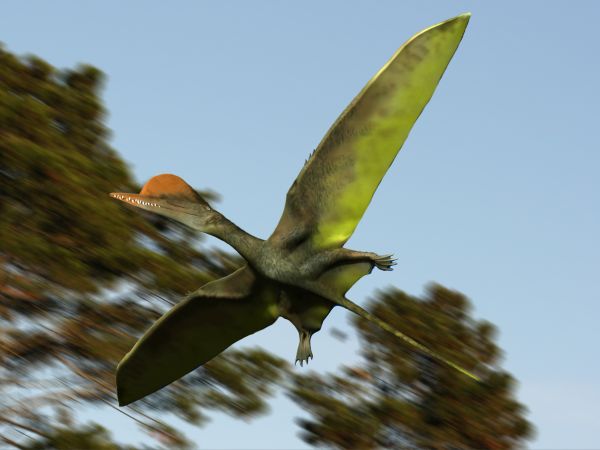
This one single fossil did more to explain pterosaur evolution than almost any other discovery of the last twenty years.
Darwinopterus stunned researchers because its skull and neck looked like they belonged to the advanced, short-tailed pterodactyloid pterosaurs, while its body, wings, and long tail looked like they belonged to the older, primitive long-tailed group entirely. It was, in effect, a transitional creature caught mid-evolution, showing that the head evolved its modern shape before the rest of the body caught up – a pattern paleontologists now call modular evolution.
That mismatch made Darwinopterus one of the most cited pterosaur fossils in modern paleontology classrooms. It essentially proved that pterosaur evolution didn’t happen as one smooth package deal – different body regions changed on their own separate timelines, sometimes millions of years apart from each other. Few single fossils have reshaped an entire evolutionary narrative this cleanly.
Darwinopterus rewired how scientists think about evolution. The next pterosaur just wants a little more credit.
#4 – Tupuxuara, the Toothless Wader With a Cousin’s Reputation
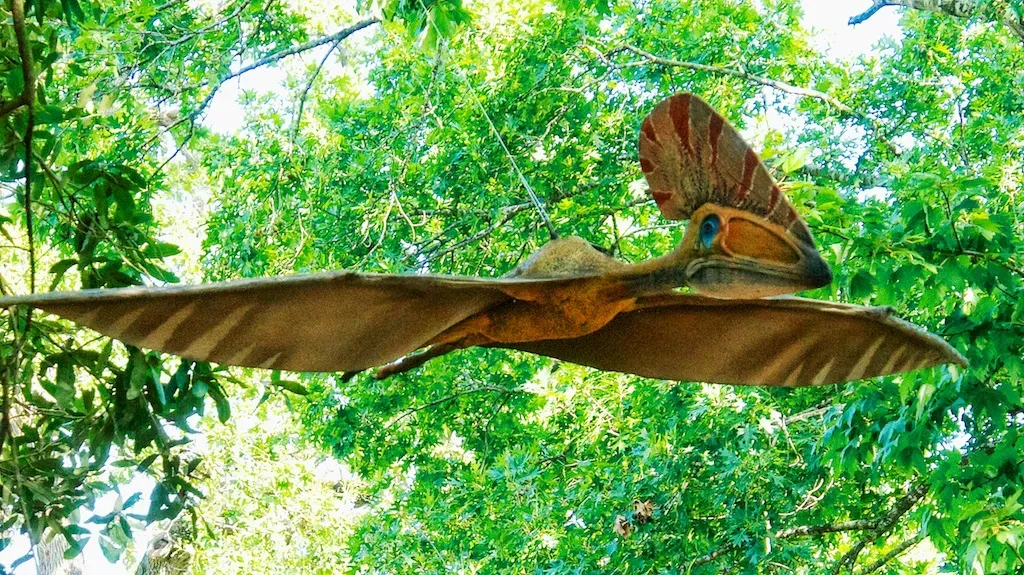
Live in the shadow of a more famous relative long enough, and you become the “other” pterosaur nobody names first. That’s Tupuxuara’s fate.
Tupuxuara is closely related to Thalassodromeus, sharing the same toothless beak, prominent bony crest, and body built more for wading than aerial acrobatics. Early reconstructions actually compared Thalassodromeus to Tapejara, before researchers realized it was Tupuxuara – and the wider azhdarchid line – that its skeleton truly resembled. Most depictions now show this whole group stalking marshes and lagoons on foot, like modern storks, rather than snatching prey from the air.
Here’s the controversial opinion nobody wants to hear: Tupuxuara was probably the more common, more successful animal of the two, yet it gets a fraction of the attention Thalassodromeus receives simply because its crest isn’t quite as photogenic. Fame in paleontology, it turns out, runs on the same rules as social media – flashier wins, even when the science says otherwise.
Tupuxuara never got its due. The next animal on this list earned its reputation the hard way – through raw structural force.
#3 – Hatzegopteryx, the Island Giant That Hunted Like a Heron From Hell
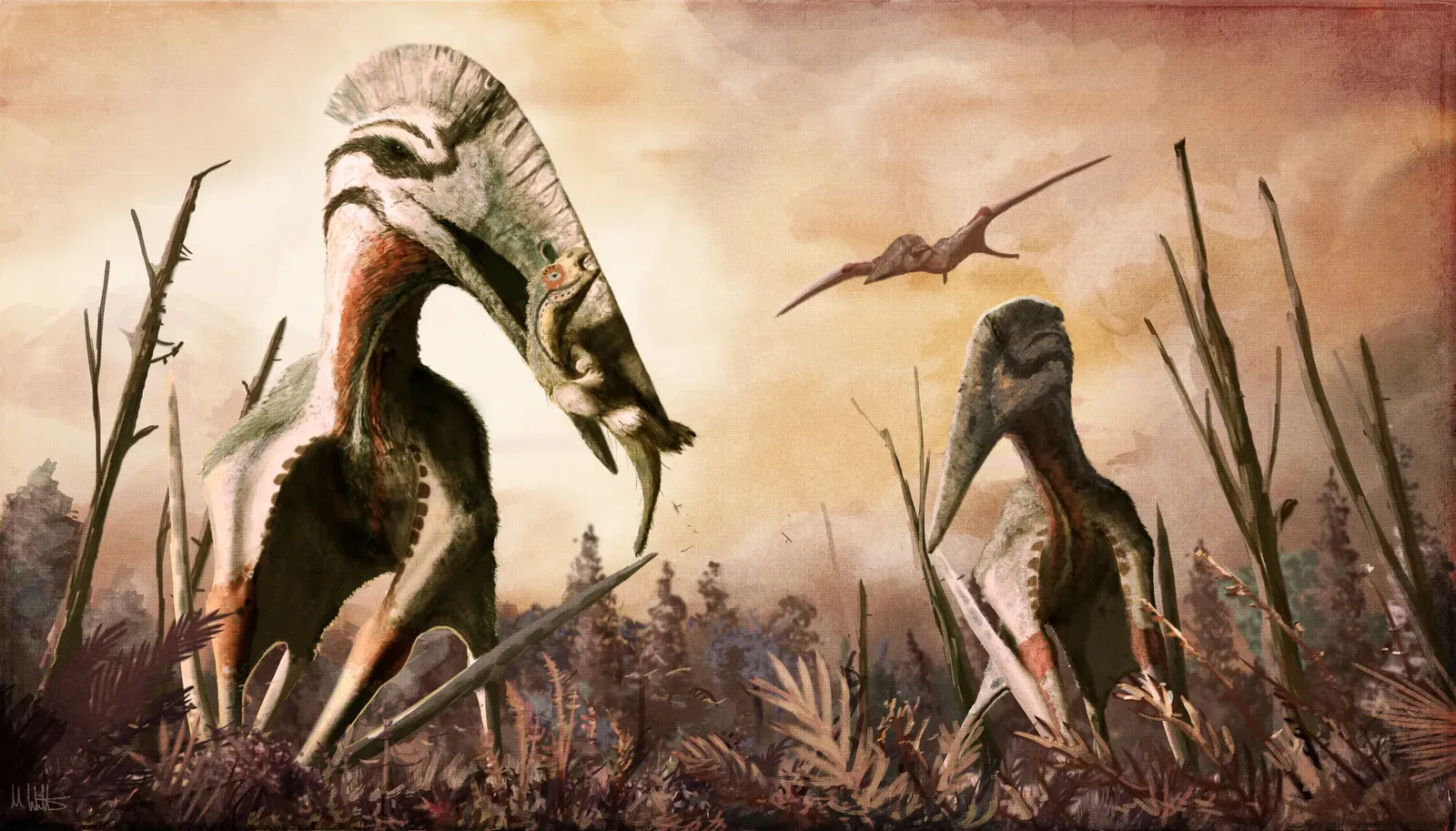
Picture a pterosaur with a skull built less like a bird and more like a battering ram. That’s Hatzegopteryx.
Hatzegopteryx was more robustly built than its relatives, with a shorter neck and a heavier skull and beak. Its skull was huge, estimated at least 1.6 meters (5.25 ft) and possibly as much as 2.5 meters (8.2 ft) long, with stout, ridged bones built for serious muscle attachment. Unusually among giant azhdarchids, its bones had a spongy internal texture instead of being hollow, and its short, heavily muscled neck – about half the length of other azhdarchids with comparable wingspans – could withstand strong bending forces most fliers simply couldn’t survive.
That’s the opposite design philosophy from almost every other giant flier in history. Most large pterosaurs went as light and hollow as possible, while Hatzegopteryx leaned into raw structural strength instead. Azhdarchids are thought to have hunted like giant terrestrial storks, and this island-dwelling giant likely stalked and stabbed small dinosaurs and other animals stranded on its isolated Cretaceous landmass.
Fast Facts
- Skull length: estimated 1.6 to 2.5 meters (5.25-8.2 ft)
- Neck length: roughly half that of other azhdarchids with similar wingspans
- Bone structure: unusually spongy rather than hollow
- Likely prey: small dinosaurs and other animals stranded on its island habitat
Hatzegopteryx hunted like a nightmare heron. The next pterosaur sparked a nightmare of a different kind.
#2 – Jeholopterus, the Anurognathid Tangled in a Vampire Controversy
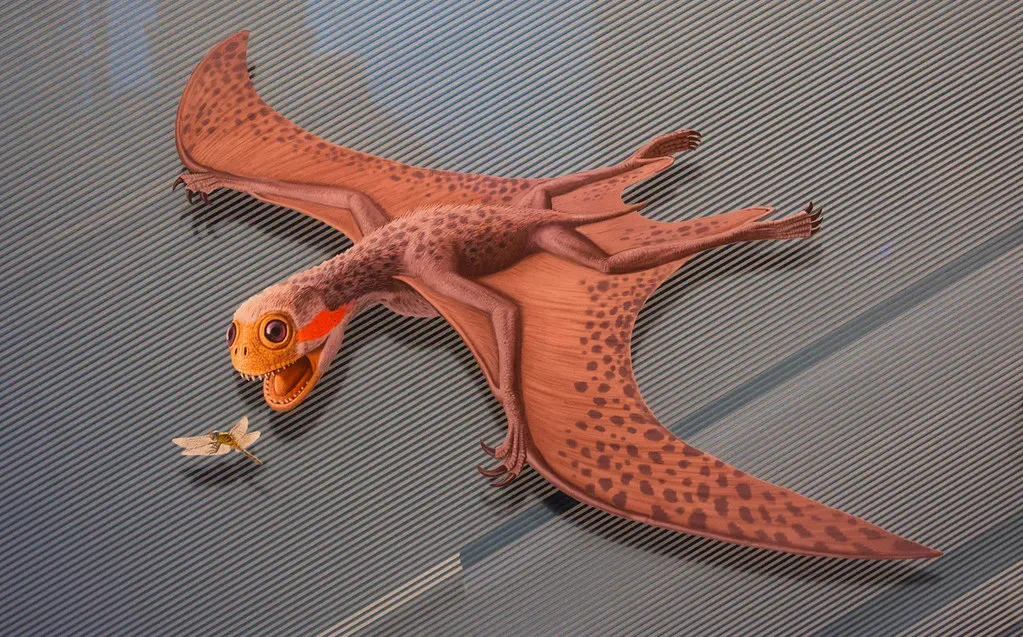
This small, fuzzy pterosaur from China has one of the most disputed reputations in the entire fossil record.
Jeholopterus belongs to the same short-tailed, wide-mouthed anurognathid family as the insect-hunters covered earlier, complete with big eyes and a compact, agile body built for nimble flight. What makes it infamous isn’t its anatomy alone – it’s a controversial hypothesis, proposed by one researcher and never accepted by the broader paleontological community, suggesting the animal might have fed on the blood of larger dinosaurs using specialized claws and mouthparts.
Most paleontologists reject the “vampire pterosaur” idea outright, and for good reason: the evidence is thin and the interpretation heavily disputed. Still, the debate itself says something fascinating about pterosaurs in general – their anatomy is so alien compared to living animals that even trained scientists sometimes reach wildly different conclusions from the exact same bones.
The vampire controversy is strange enough. Nothing, though, prepares you for the sheer size of what’s coming next.
#1 – Quetzalcoatlus, the Giraffe-Sized Reptile That Somehow Flew
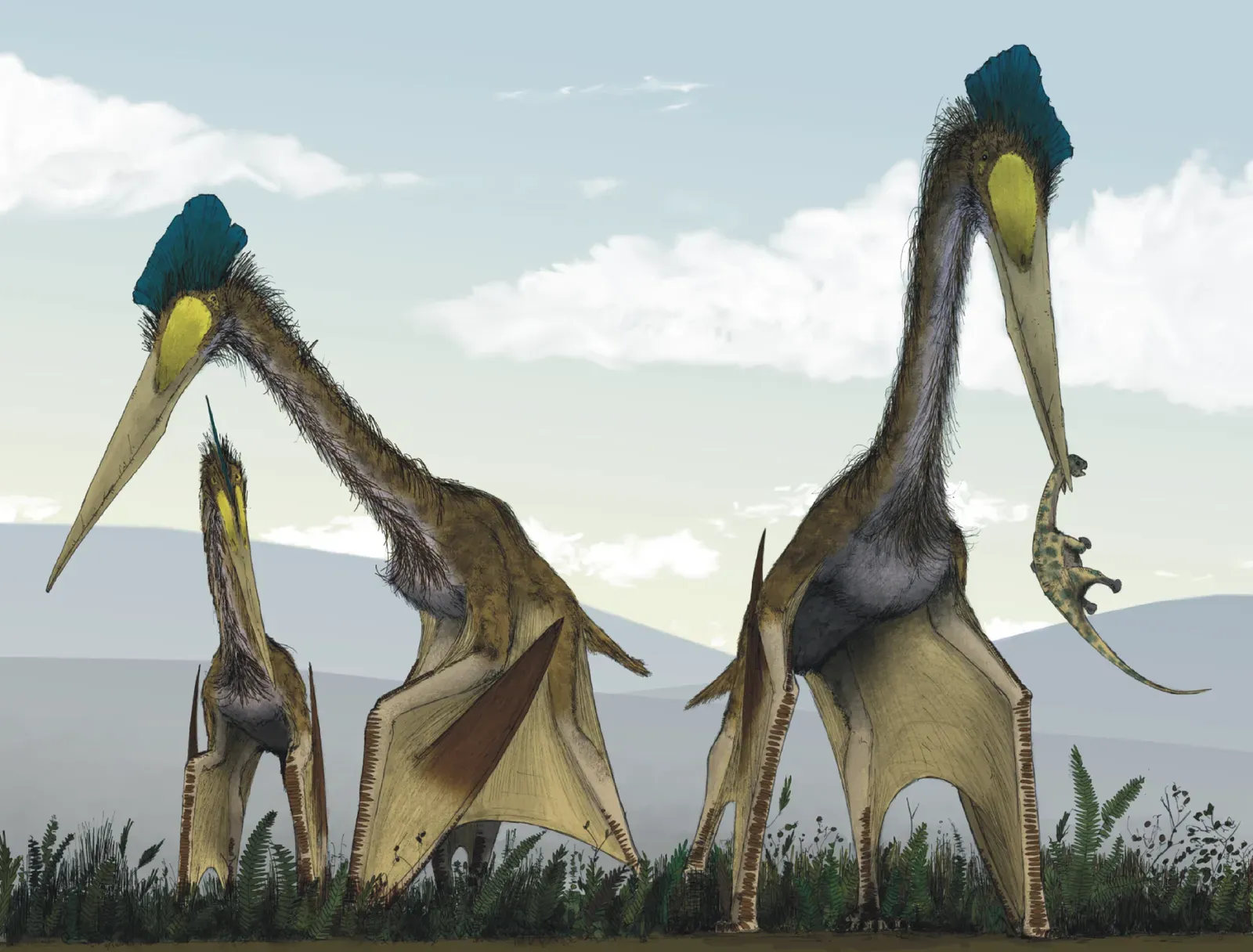
Nothing on this list prepares you for the sheer scale of the animal that ends it.
Paleontologists estimate that Q. northropi stood about 5 meters (16 feet) tall and had a wingspan of up to 11 meters (36 feet). That’s taller than a giraffe, with wings wider than a city bus, and it wasn’t a myth – it was a living, breathing reptile walking around Late Cretaceous Texas. It’s unlikely Quetzalcoatlus ate dinosaurs, since its long jaw had no teeth, and was better suited to probing wetlands for invertebrates – a strangely humble diet for such an enormous animal.
For decades, scientists genuinely debated whether something this large could physically fly at all. An analysis of existing Quetzalcoatlus fossils in 2021 provided evidence that Q. northropi could indeed fly, and because of its massive wings, it likely took off by leaping some 2.5 meters (about 8 feet) into the air before flapping its powerful wings to reach an altitude at which it could soar like a condor. A giraffe-height animal launching itself into the sky on a single leap remains one of the single strangest facts in all of paleontology – stranger than anything a dinosaur ever managed.
Why It Stands Out
- Stood about 5 meters (16 ft) tall – taller than a giraffe
- Wingspan reached up to 11 meters (36 ft), wider than a city bus
- Toothless jaw suited for probing wetlands, not hunting dinosaurs
- 2021 fossil analysis suggests it launched into flight with a single leap of about 2.5 meters (8 ft)
The Bottom Line
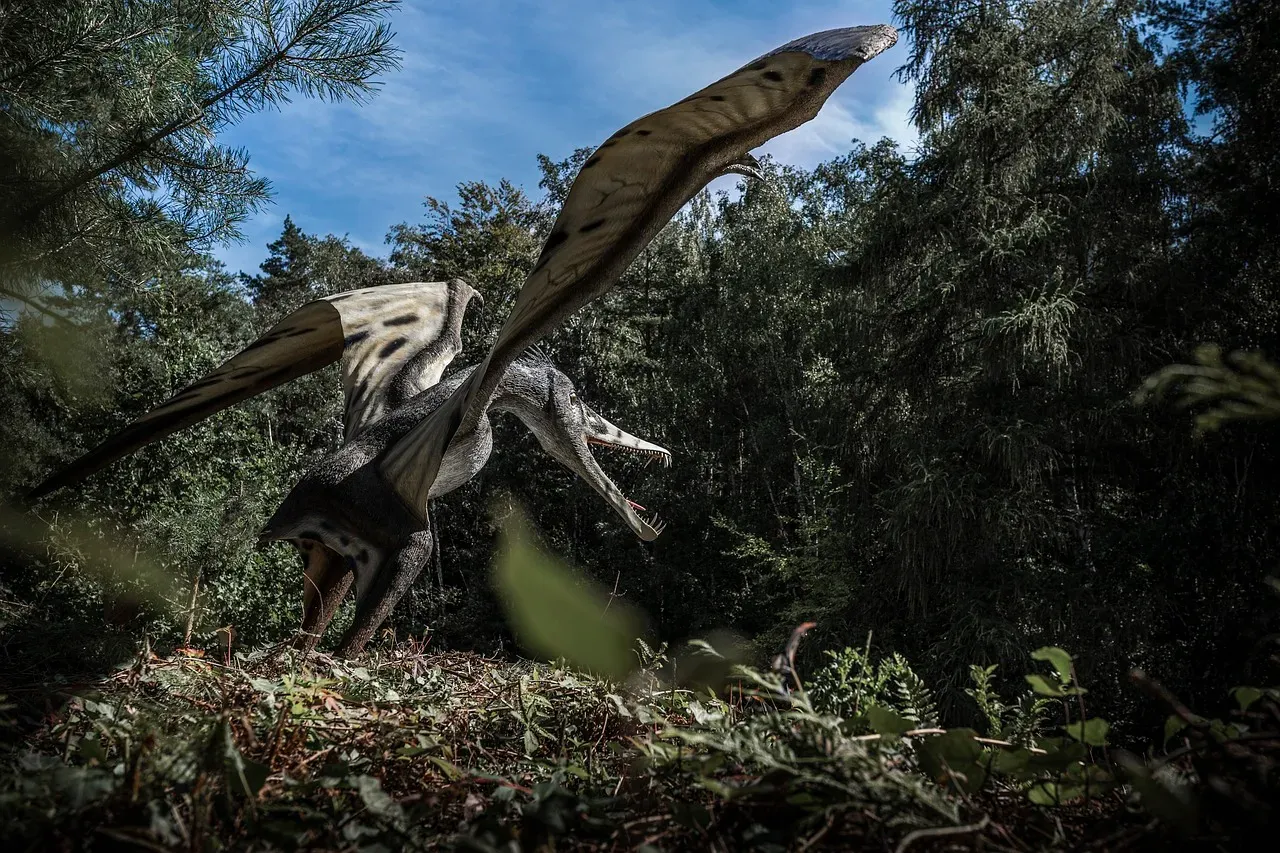
Dinosaurs get the movie franchises, but pterosaurs deserve the reputation for pure biological weirdness. From a flamingo-mimicking bristle-mouth to a giraffe-sized giant that leapt into flight, these animals experimented with body plans nothing alive today would dare attempt.
Honestly, the “vampire pterosaur” controversy alone proves how little we still understand about these creatures compared to their dinosaur neighbors. If you ask us, pterosaurs are the most underrated animals in the entire fossil record – dinosaurs just had better publicists.
Which one of these fourteen do you think deserves its own blockbuster movie? Drop your pick in the comments.