Most people picture the great white as the ocean’s ultimate nightmare – a 15-foot missile with 300 teeth stalking the shallows. That image is almost quaint compared to what actually patrolled prehistoric seas.
Scientists studying fossil vertebrae, skulls, and bite marks have confirmed that dozens of ancient marine animals dwarfed today’s most feared shark, some by a factor of four or five. A few of these creatures are so large they’re forcing paleontologists to rewrite textbooks right now. Here’s what the fossil record actually says about the true giants of the deep.
#14 – Helicoprion, the Buzzsaw-Jawed Shark Relative
Helicoprion didn’t look like any predator alive today, and that’s exactly why it terrifies paleontologists. This Permian-period cartilaginous fish carried a spiral of teeth curled inside its lower jaw like a circular saw blade – a feature so bizarre that scientists spent nearly a century arguing over where it even attached to the skull.
Its tooth whorl alone could span nearly a foot across in the largest individuals. Researchers now believe Helicoprion used that whorl to slice through soft-bodied prey like squid and ammonites, rolling flesh into the spiral with each bite. Size estimates remain debated, but multiple reconstructions place mature adults well beyond the six-meter mark most great whites never reach. That puts this shark-like oddball solidly ahead of the ocean’s modern apex predator, decades before real sharks even diversified. But that’s nothing compared to what we found about #13.
Fast Facts
- Era: Permian period, long before modern sharks diversified
- Signature feature: a spiral tooth whorl nearly a foot across
- Diet: soft-bodied prey like squid and ammonites
- Estimated size: mature adults likely topped six meters
#13 – Archelon, the Turtle That Ate Like a Tank
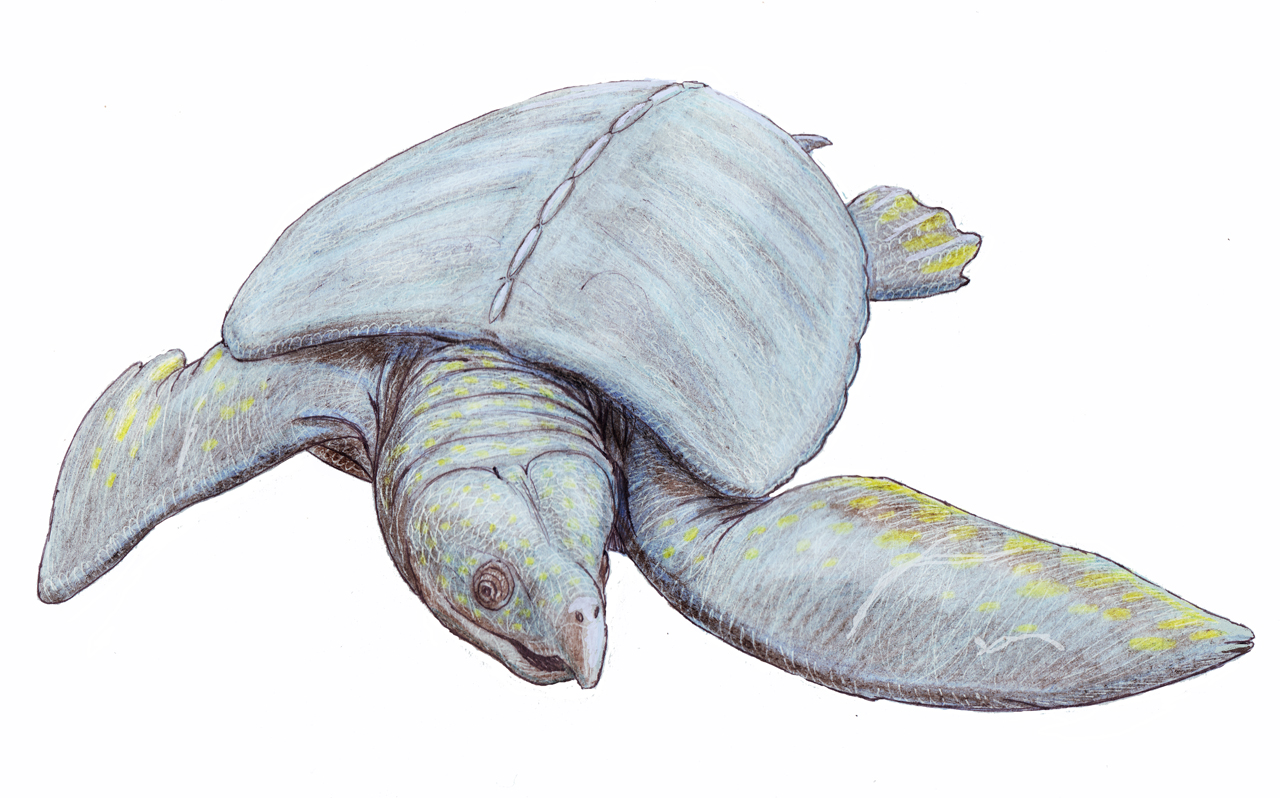
Archelon wasn’t fast, and it didn’t need to be – nothing wanted to mess with a sea turtle the size of a small car. This Late Cretaceous giant cruised the Western Interior Seaway with a shell built more like armor plating than a modern turtle’s streamlined dome.
Complete skeletons show it stretched roughly 15 feet from beak to tail, making it the largest turtle ever confirmed in the fossil record. Its jaws were built for crushing, not slicing, likely feeding on mollusks, jellyfish, and whatever slow-moving prey it could corner. Unlike sleek predators on this list, Archelon’s size was a defense strategy as much as a hunting tool – few Cretaceous predators could get a grip on a shell that broad. Still, size alone doesn’t win every argument in prehistoric oceans, and #12 proves it in a much bloodier way.
#12 – Xiphactinus, the Fish That Swallowed Its Meals Whole
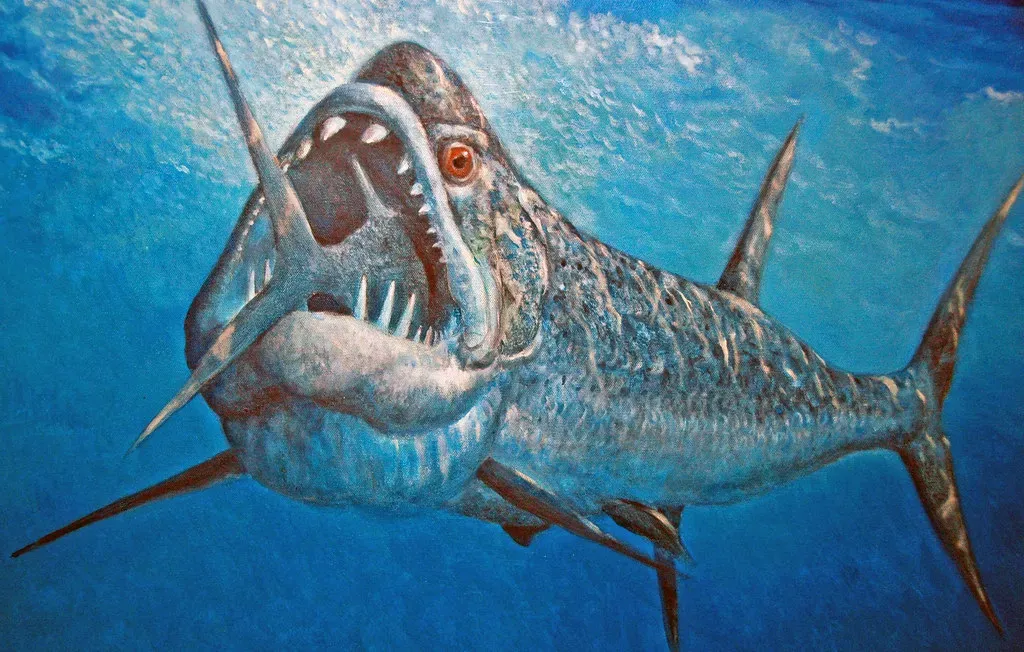
Xiphactinus earned its nickname “the bulldog fish” the hard way, and one famous fossil proves it. This predatory bony fish patrolled Late Cretaceous seas with a mouth full of fang-like teeth angled backward to trap struggling prey.
Paleontologists uncovered a specimen with an entire smaller fish preserved inside its stomach cavity, apparently swallowed so violently that the meal ruptured its predator’s gut. That single “fish-within-a-fish” fossil became one of the most iconic discoveries in vertebrate paleontology. Reaching lengths that regularly topped six meters, Xiphactinus wasn’t shy about targeting prey nearly its own size. It shared the same seas as early mosasaurs, and fossil evidence suggests neither species was safe from the other. That rivalry looks tame, though, next to what #11 was capable of doing with a single bite.
#11 – Liopleurodon, the Myth That’s Still Impressively Real
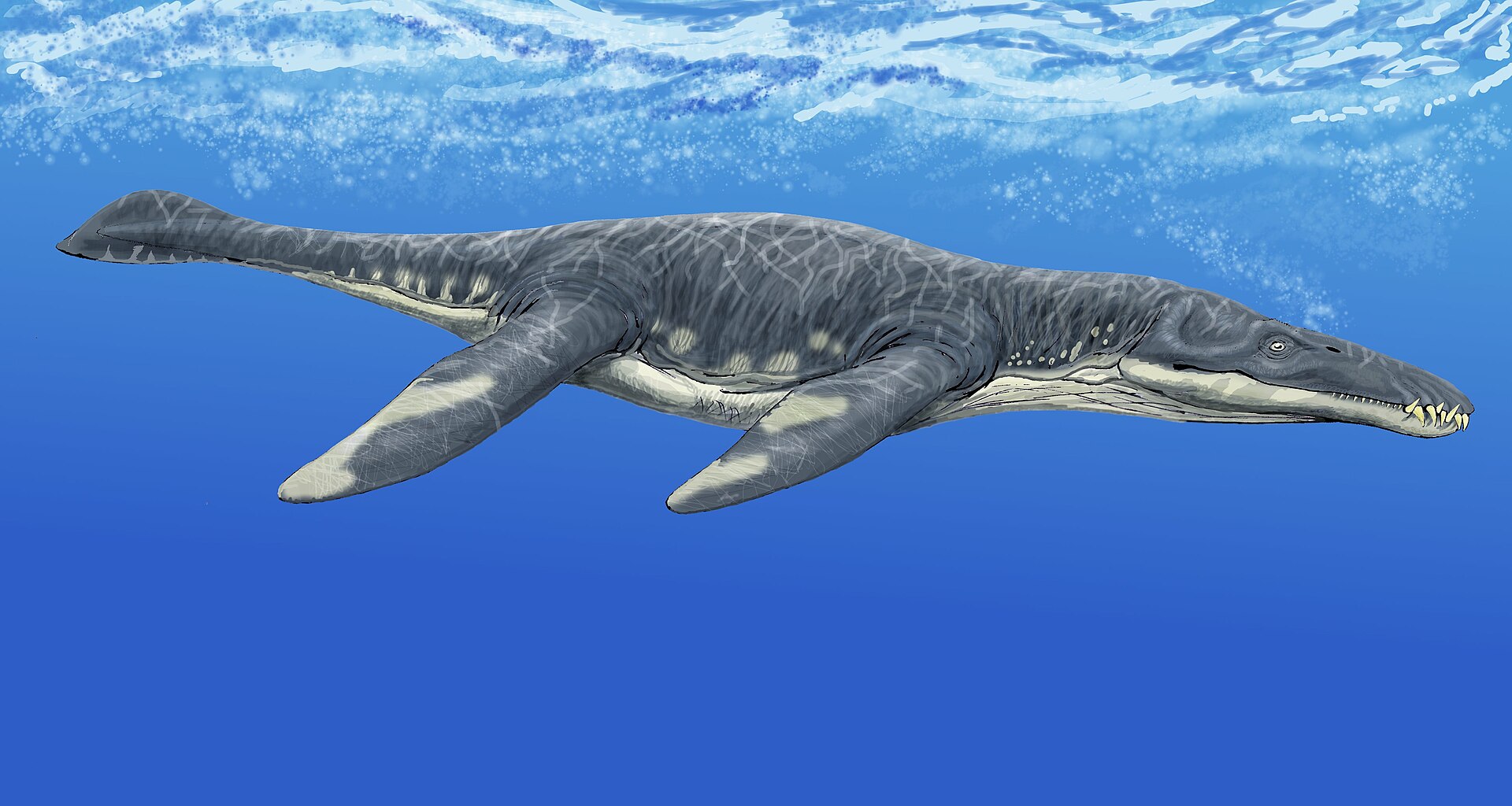
Pop culture oversold Liopleurodon so badly that most people now believe the wrong size entirely, and that’s worth correcting loudly. A famous 1990s documentary claimed this pliosaur reached 25 meters – a figure paleontologists have since rejected as wildly exaggerated based on incomplete fossil comparisons.
The real Liopleurodon likely measured closer to six or seven meters, still comfortably larger than an average great white shark. Even the corrected, more modest estimate still makes it a formidable Jurassic predator with a skull built for crushing bone. Many amateur enthusiasts still cite the inflated number online, which frustrates researchers trying to correct the public record. The controversy hasn’t hurt its reputation, though – Liopleurodon remains one of the most recognizable Jurassic marine reptiles ever named. What came next in the pliosaur family tree, however, dropped any pretense of subtlety.
#10 – Kronosaurus, the Skull That Could Crush a Small Car
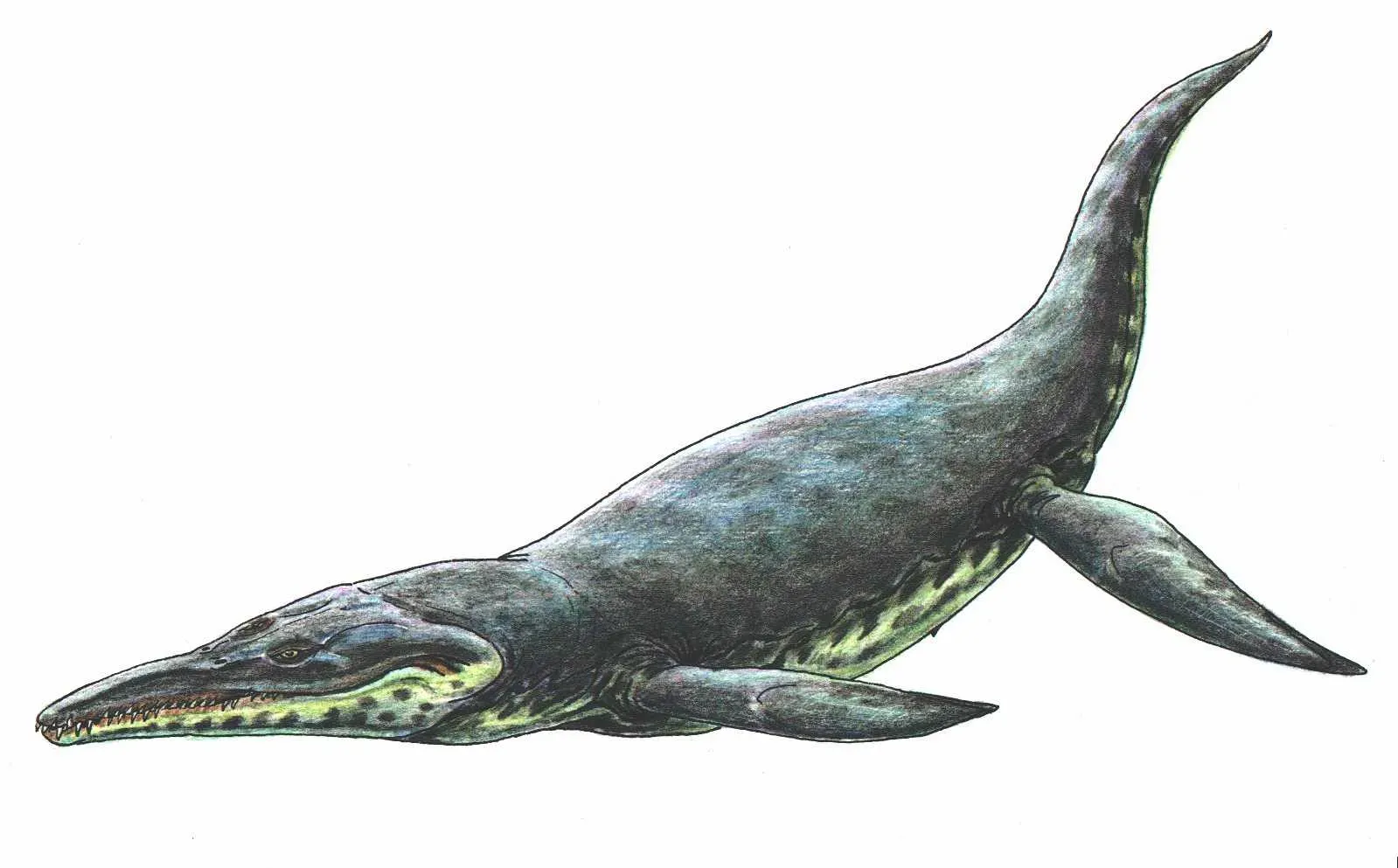
Kronosaurus didn’t need a long body to be terrifying – its head did most of the intimidating on its own. This Early Cretaceous pliosaur carried a skull that alone could stretch close to three meters, packed with conical teeth built for puncturing thick hide and bone alike.
Early reconstructions in the 20th century wildly overestimated its total length by adding too many vertebrae to the mounted skeleton, a mistake museums have since corrected. Even the revised, more conservative estimate still places Kronosaurus comfortably past nine meters nose to tail. That’s roughly double the length of most great white sharks swimming today. Kronosaurus hunted using raw bite force rather than speed, snapping onto prey and letting its jaw strength do the rest of the work. Speaking of overwhelming size, #9 barely had a body at all compared to its neck.
#9 – Elasmosaurus, the Neck That Broke the Rules of Anatomy
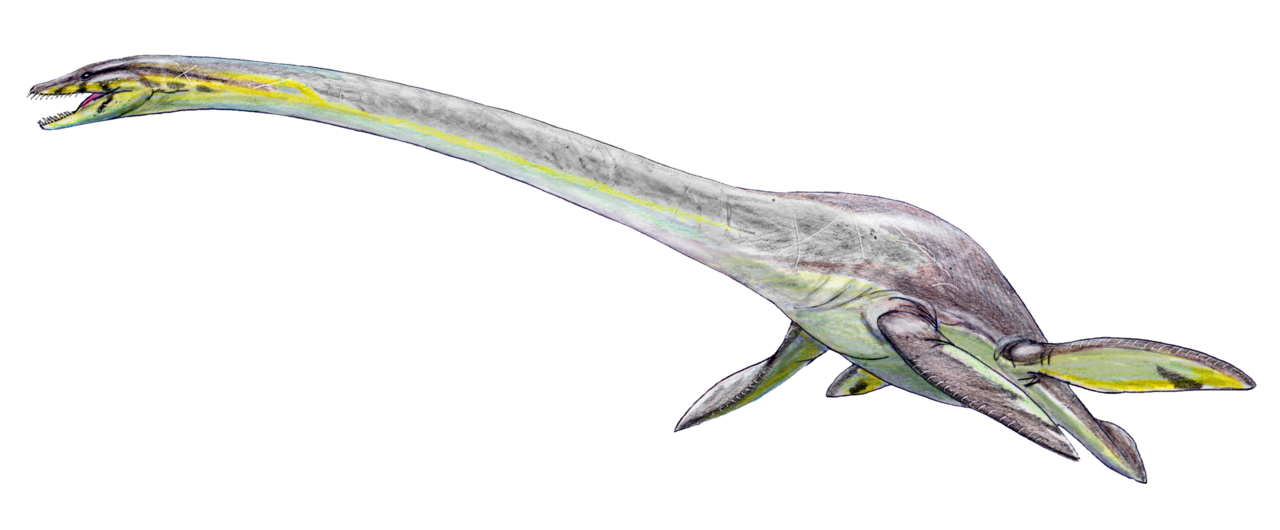
Elasmosaurus looked less like a sea monster and more like a serpent that wandered into the ocean by accident. This Late Cretaceous plesiosaur carried an absurdly long neck containing far more vertebrae than any land animal ever evolved, stretching its total body length well past ten meters.
More than half of that length belonged to the neck alone, a proportion so extreme that the original 1868 reconstruction famously placed the head on the wrong end of the skeleton. Scientists corrected the error, but the embarrassment became paleontology legend. Despite the odd body plan, Elasmosaurus was a genuine predator, likely snapping up fish and small marine reptiles with quick sideways strikes of that impossibly long neck. Its size still dwarfs any modern shark by a wide margin. But #8 traded a long neck for something arguably more useful in a fight.
#8 – Tylosaurus, the Mosasaur Built Like a Torpedo
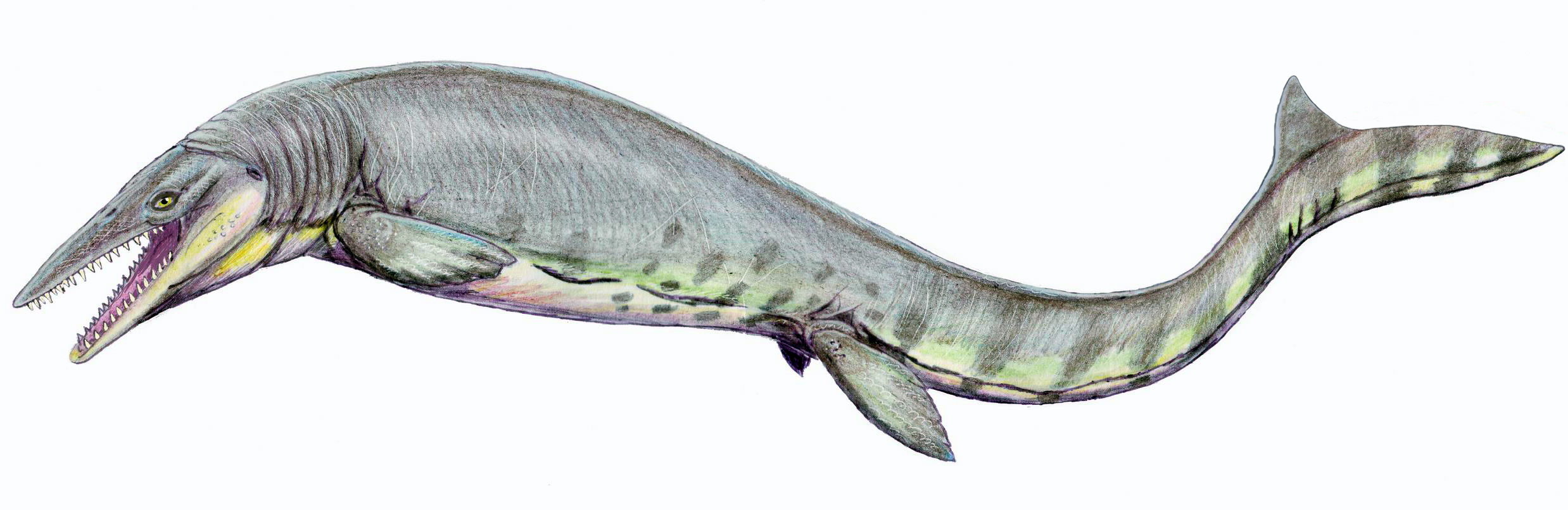
Tylosaurus was the ocean’s answer to a battering ram, built for speed, impact, and absolutely nothing subtle. This mosasaur cruised Late Cretaceous seas with a long, cylindrical body and a solid, elongated snout that likely doubled as a weapon for ramming prey before the bite even landed.
The largest known articulated skeleton, nicknamed “Bruce,” reached a length of 13.3 meters, rivaling modern sperm whales in overall length. Fossilized stomach contents reveal it ate an astonishing range of prey, from smaller mosasaurs to diving birds and sharks. That means Tylosaurus was eating other apex predators for lunch, something no great white regularly attempts today. Its scales even show hydrodynamic patterning similar to modern shark denticles, reducing drag as it hunted. That same seaway held an even heavier rival waiting in #7.
#7 – Mosasaurus, the Giant Lizard That Redefined Extinction
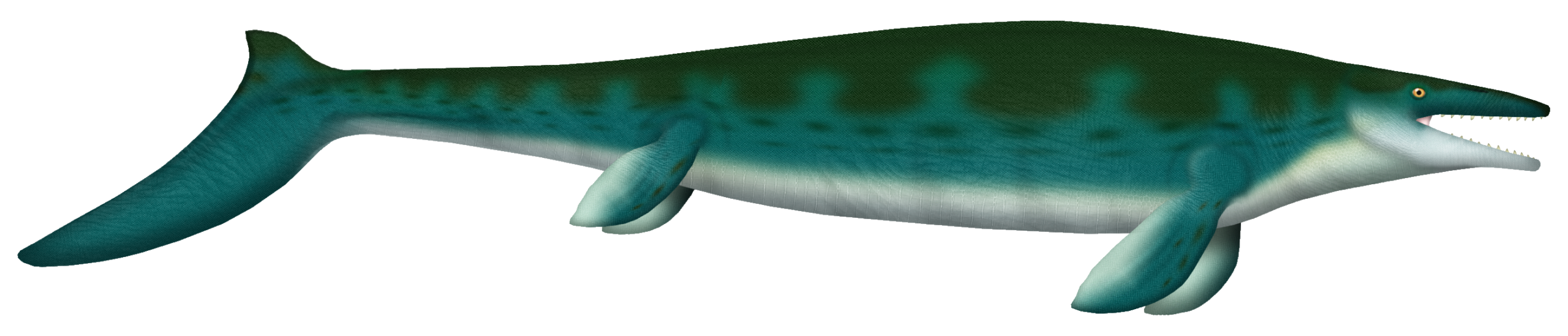
Mosasaurus has a strange claim to fame: its fossil skull was one of the first pieces of evidence that convinced scientists extinction was actually real. Discovered near Maastricht in the 1770s, that single skull helped Georges Cuvier argue that entire species could vanish from Earth forever, reshaping the young science of paleontology.
Mosasaurus hoffmannii reached around 13–14 metres in length and weighed an estimated 14,000–15,000 kg, making it one of the largest predators in its ecosystem. Older estimates once pushed that number closer to 17 meters, but tighter fossil analysis has scaled that figure back considerably. Even the corrected, more modest size still makes Mosasaurus more than double the length of a large great white. It wasn’t a dinosaur at all, but a giant marine lizard most closely related to today’s monitor lizards. Its cousin waiting at #6 traded reptile scales for something entirely different.
Worth Knowing
- First skull unearthed near Maastricht in the 1770s
- Helped convince Georges Cuvier that extinction was real
- Estimated length: 13-14 meters; weight: 14,000-15,000 kg
- Not a dinosaur – its closest living relatives are monitor lizards
#6 – Basilosaurus, the Whale That Still Had Legs
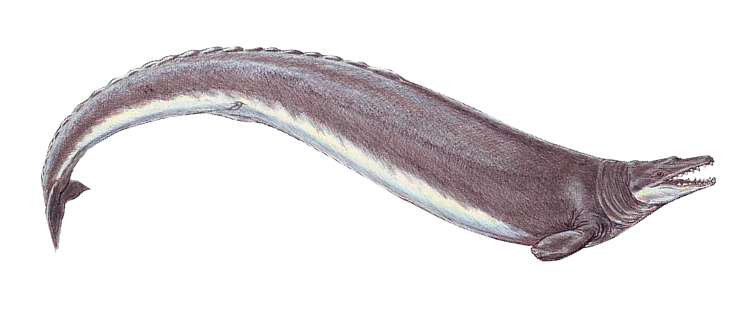
Basilosaurus proves that whales didn’t start out gentle – the earliest ones were built like sea serpents with teeth. This Eocene predator was one of the first fully aquatic whales, complete with tiny vestigial hind limbs that hint at its recent evolutionary jump from land-dwelling ancestors.
Its body stretched into a long, eel-like shape well beyond the length of any great white swimming today, and its narrow skull was packed with sharp, serrated teeth built for slicing through fish and smaller marine mammals. Fossil bite marks on other whale skeletons suggest Basilosaurus occasionally hunted animals nearly its own size. Its name literally translates to “king lizard,” a naming mistake made before scientists realized it was a mammal, not a reptile. That early confusion still shows up in textbooks today. The next entry belongs to a much closer whale relative that hunted with terrifying precision.
#5 – Livyatan Melvillei, the Whale With T-Rex-Sized Teeth
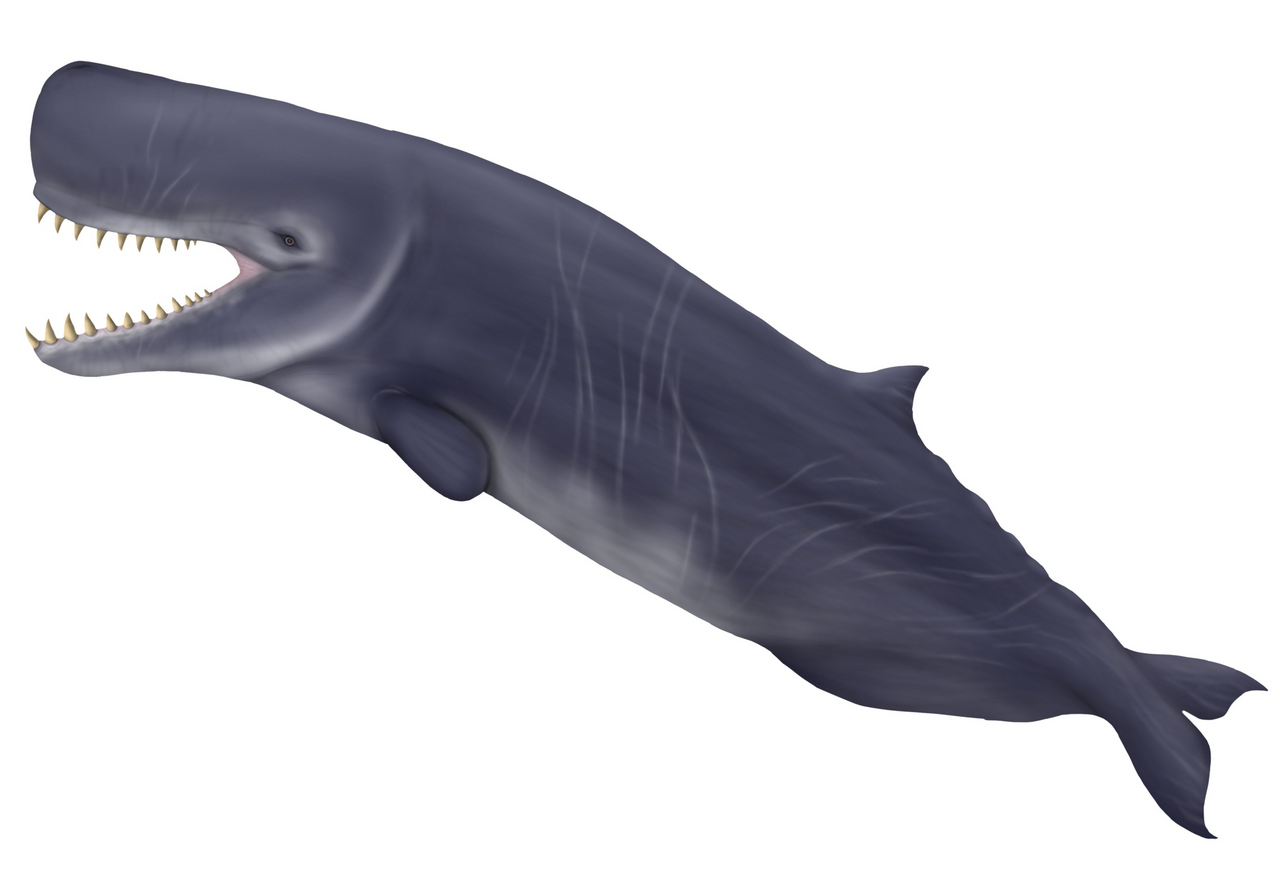
Livyatan melvillei is proof that not every ocean giant needs a shark’s body plan to become an apex predator. Its total length has been estimated at about 13.5–17.5 meters, similar to that of the modern sperm whale, making it one of the largest predators known to have existed.
Unlike today’s sperm whales, which only have functional teeth in the lower jaw, Livyatan’s teeth measured 36.2 centimeters – the largest biting teeth of any known animal, excluding tusks. Researchers describe its jaws as capable of delivering the biggest tetrapod bite ever documented in the fossil record. Livyatan likely preyed upon baleen whales, seals, dolphins, sharks of all sizes, turtles, and giant squid, hunting near the surface rather than diving deep like modern sperm whales. It shared its Miocene oceans with an equally massive shark rival, creating one of the most brutal predator-versus-predator ecosystems ever documented. That shark shows up later on this list – but first, #4 belonged to something that barely had teeth at all.
#4 – Leedsichthys, the Gentle Giant That Still Dwarfed Everything
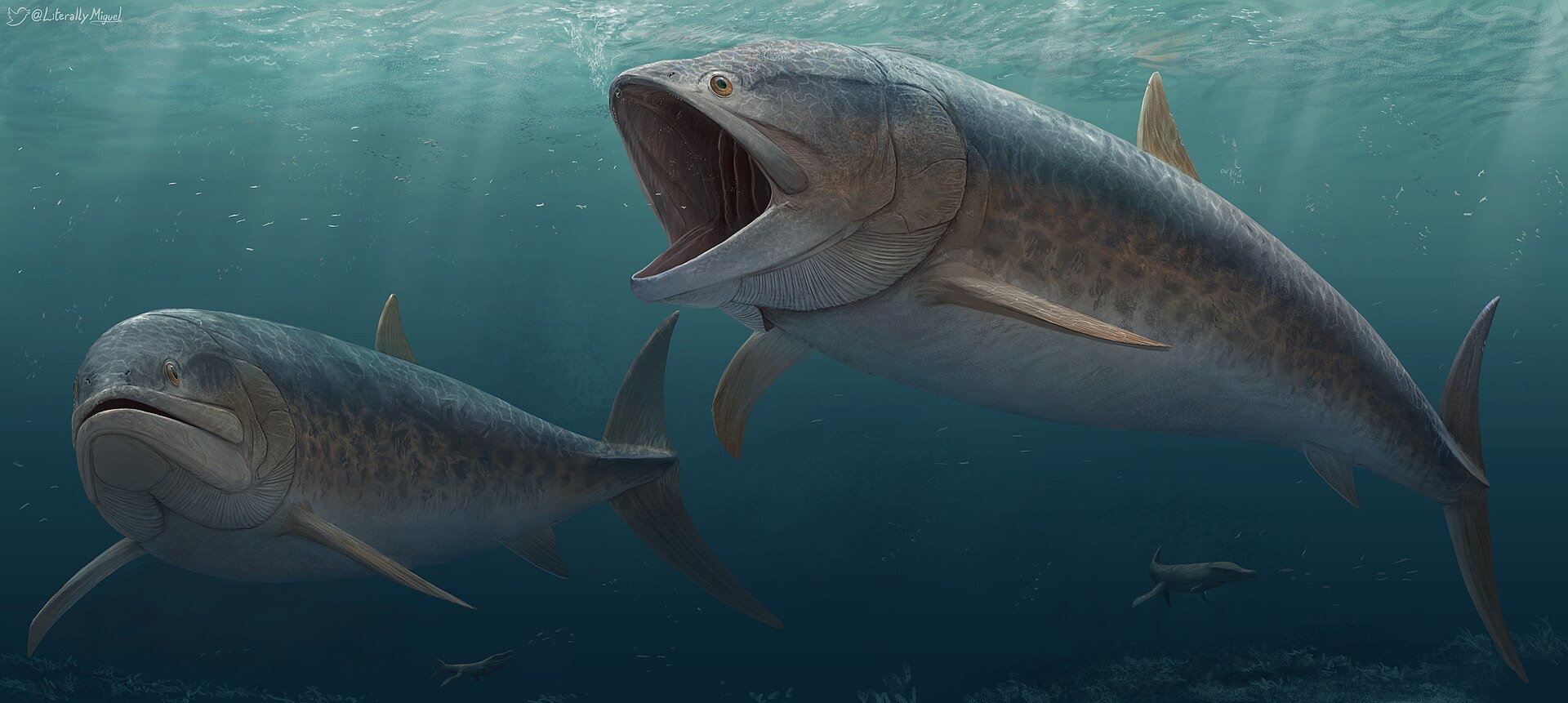
Leedsichthys proves size and danger aren’t the same thing. This was one of the biggest fish that ever lived, and it barely hunted anything. It fed by filtering plankton through comb-like structures in its gills, much like a modern whale shark or basking shark does today.
Its true size sparked decades of scientific argument, with early estimates wildly exaggerated before more careful fossil analysis brought the numbers down to a more defensible range still well beyond a great white’s typical length. Even the conservative modern estimate places Leedsichthys among the largest bony fish to ever swim in Earth’s oceans. Its fragmented fossil remains, mostly scattered bone plates and fin rays, made reconstructing an accurate skeleton notoriously difficult. That difficulty is exactly why estimates swing so widely between studies. Compare that gentle giant to #3, an early ocean hunter that proves size showed up in marine reptiles almost immediately.
#3 – Cymbospondylus Youngorum, the Ichthyosaur That Got Huge Fast
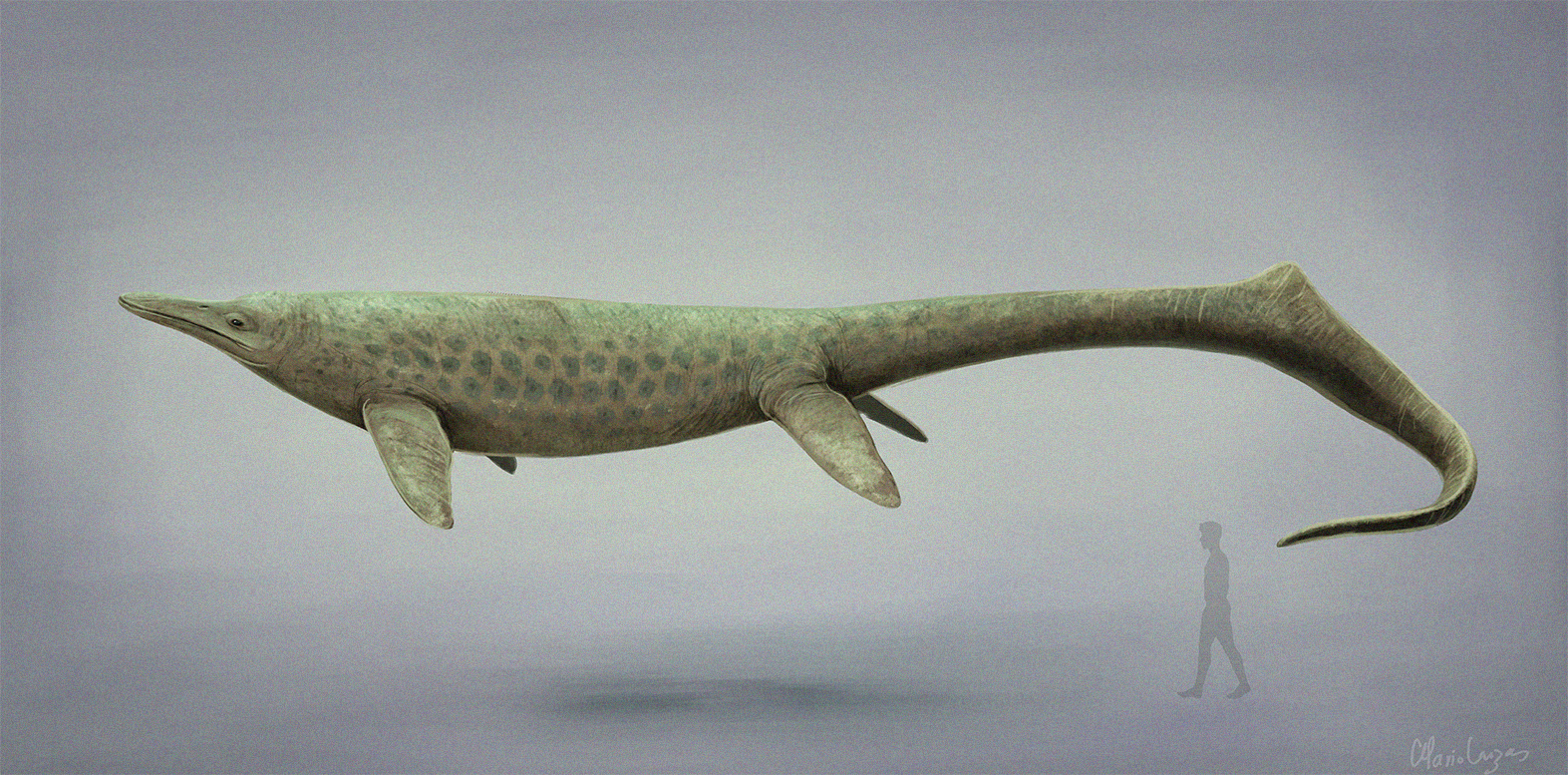
Cymbospondylus youngorum shocked paleontologists by proving that giant ocean reptiles didn’t need tens of millions of years to evolve – they got there almost immediately. This early Middle Triassic ichthyosaur, estimated to be around 15–17 meters in length, shows that ichthyosaurs reached giant body size as little as 3–5 million years after their first appearance.
That’s an evolutionary sprint by paleontological standards, especially for a lineage that started out looking more like lizards than whales. Researchers now consider this discovery proof that ocean giants can evolve almost as fast as ecological opportunity allows. Its body plan still retained some ancestral traits, but its sheer size already rivaled modern sperm whales millions of years before more famous marine reptiles appeared. That rapid rise set the stage for even larger ichthyosaurs to follow. And #2 on this list might be the single largest marine animal paleontologists have ever formally described.
#2 – Ichthyotitan Severnensis, the Reptile Rewriting the Record Books
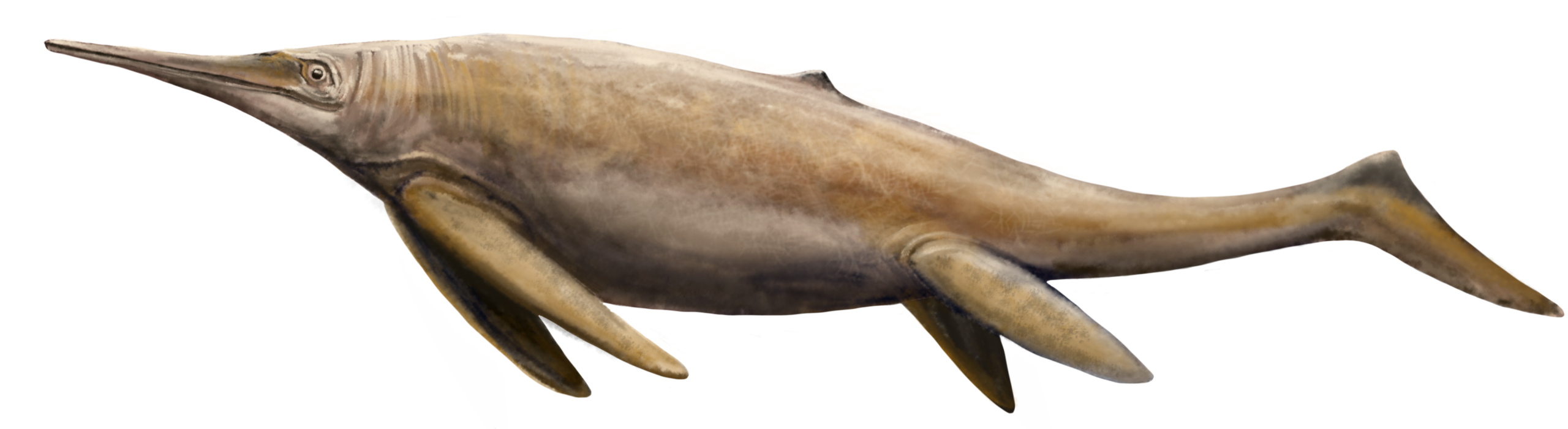
Ichthyotitan severnensis is so new to science that its full impact hasn’t even settled into textbooks yet, and it may already be the largest marine reptile ever named. Named from Late Triassic remains in the UK, it probably represents the largest marine reptile formally described.
Its closest known relatives, the shastasaurid ichthyosaurs, already included genera like Shonisaurus popularis at 16 meters and the middle Norian Shonisaurus sikanniensis at 21 meters. Isolated jaw fragments linked to this new giant suggest body size estimates ranging from 22 to more than 30 meters, according to researchers analyzing the fossil material. That range remains provisional since complete skeletons haven’t surfaced yet, but even the low end dwarfs every great white ever measured by a factor of four or five. Paleontologists are actively searching Rhaetian-age rock formations hoping to confirm just how large this animal truly got. Still, one predator on this list has actual near-complete vertebral columns backing up its record-breaking size – and it takes the top spot for good reason.
Quick Compare: Shastasaurid Giants
- Shonisaurus popularis: about 16 meters
- Shonisaurus sikanniensis: about 21 meters
- Ichthyotitan severnensis: estimated 22 to 30+ meters (provisional)
#1 – Megalodon, the Shark That Just Got Bigger (Again)
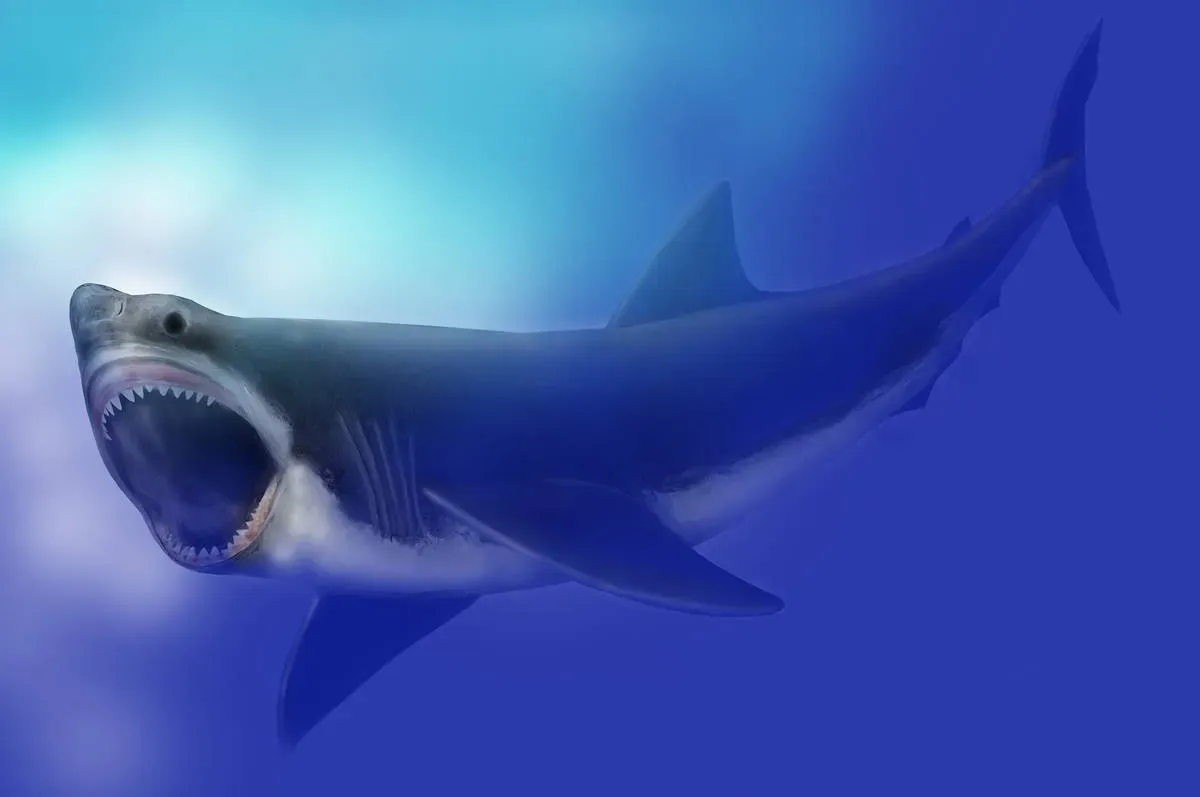
Megalodon has spent decades as the poster child for prehistoric ocean terror, and new fossil analysis just confirmed it deserves every bit of that reputation. A 2025 study analyzing vertebral fossils from Belgium and Denmark concluded megalodon may have grown to a staggering 24 meters in length – some 4 to 9 meters longer than previously believed – and weighed an estimated 94 tonnes.
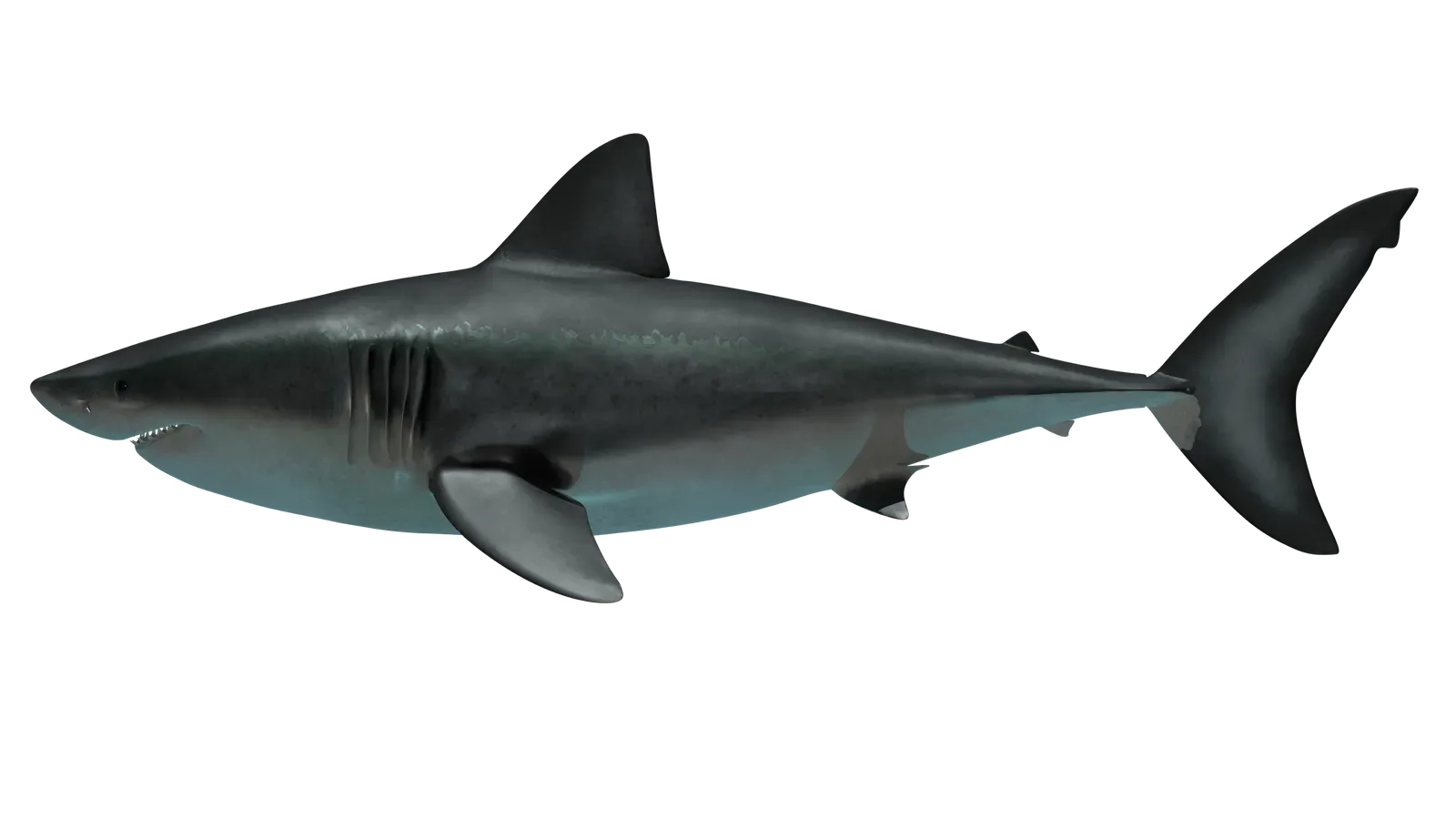
That revision was strengthened further when researchers rediscovered vertebrae long thought destroyed, confirming these animals might have lived for nearly a century and grown even longer than 24 meters. Newborn megalodons may have already measured close to 12 feet at birth, according to the same fossil evidence. Perhaps most surprising, researchers now believe megalodon didn’t even look like an oversized great white. Its vertebral column suggested a relatively slender body shape rather than the stockier build of modern white sharks, which would have made it more hydrodynamically efficient. That means the “giant great white” image most people picture is scientifically outdated – the real animal was longer, leaner, and considerably more efficient at moving through open ocean than pop culture ever gave it credit for.
At a Glance
- Estimated max length: up to 24 meters
- Estimated weight: around 94 tonnes
- Newborn size at birth: roughly 12 feet
- Body shape: slender and hydrodynamic, not stocky like a great white
The Bottom Line
The evidence is clear: the great white, for all its reputation, would have been prey-sized company in most of these prehistoric oceans. Megalodon alone may have topped 24 meters, while Livyatan’s bite and Ichthyotitan’s disputed 30-meter estimates suggest science still hasn’t found the true ceiling on ancient ocean giants.
Not every legendary giant held up under scrutiny, either. Dunkleosteus, once billed as a 10-meter monster, got quietly demoted to shark-sized proportions once researchers actually measured it properly – proof that even paleontology isn’t immune to exaggeration. My honest take: the real story here isn’t just that these animals were bigger, it’s that the ocean has always rewarded extremes, and every “final” record on this list will probably get broken again the next time someone cracks open the right rock formation. Which of these ancient predators genuinely shocked you the most? Drop your pick in the comments.