
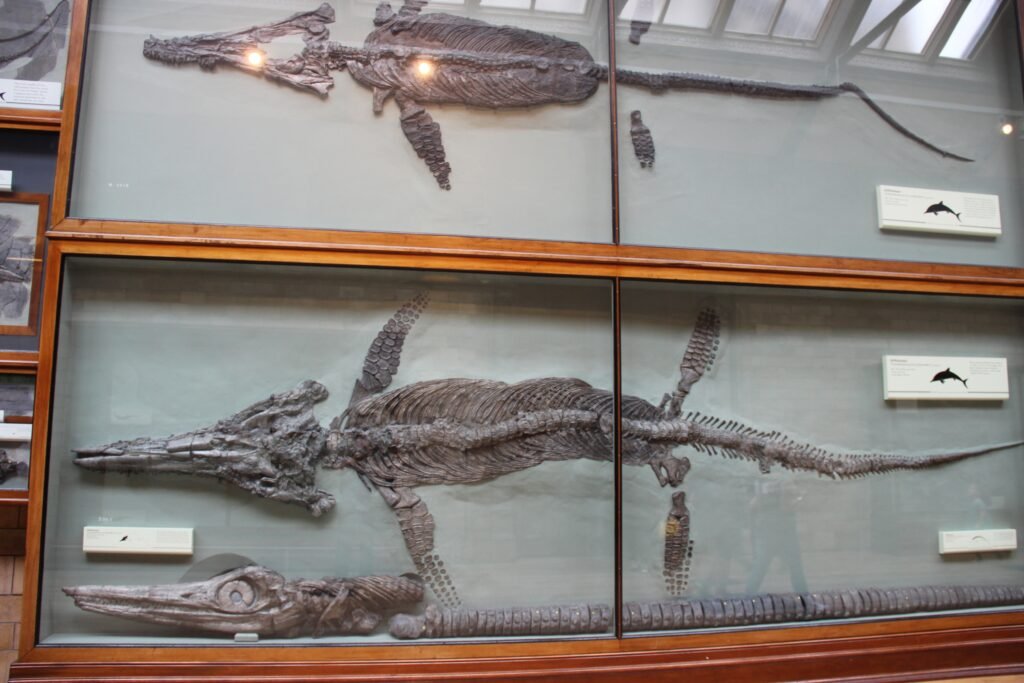
Most people assume dinosaur and sea-monster skeletons in museums are basically finished jigsaw puzzles, just missing a few stray pieces. That assumption is almost entirely wrong.
Some of the most iconic prehistoric sea monsters ever put on display were built from a single tooth, a crushed skull, or a spiral of fossilized cartilage that researchers argued over for a hundred years. Paleontologists have spent generations turning scraps into scientific icons, and more than once, they got it spectacularly, embarrassingly wrong before finally getting it right. Here’s what the fossil record actually says about these guesswork giants, and just how thin the evidence really was.
#14 – Liopleurodon, the Monster Built on a Jawbone
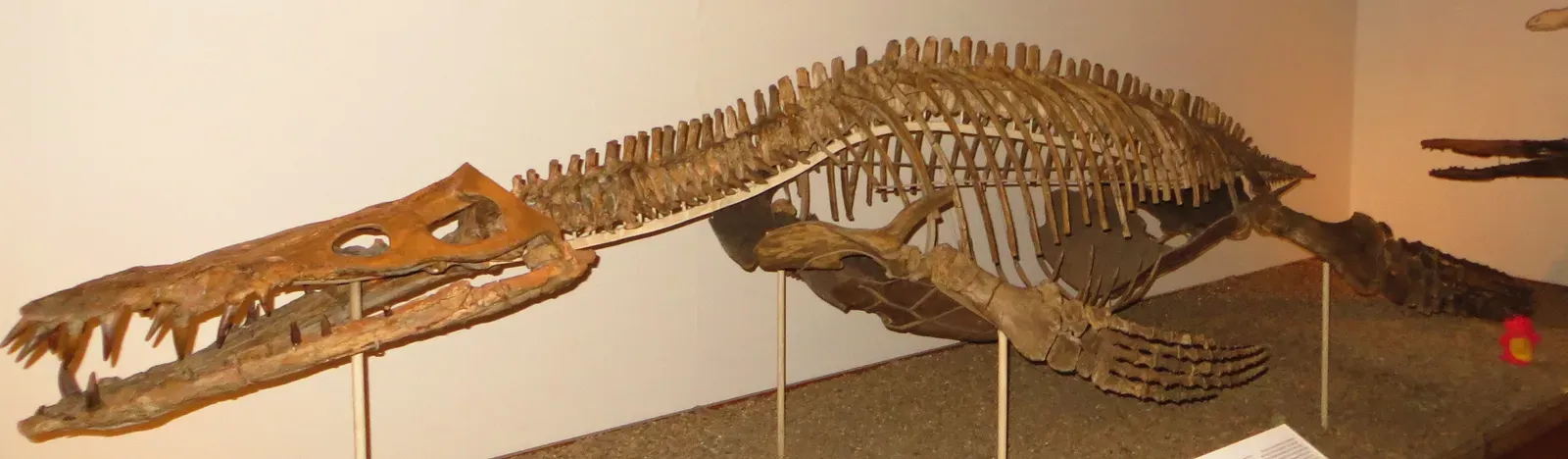
Liopleurodon became a household name almost entirely because of a television documentary, not because of a complete skeleton. The BBC’s “Walking with Dinosaurs” turned this Jurassic pliosaur into a 25-meter ocean tyrant, and that image stuck in the public imagination for a generation.
The actual fossil evidence tells a far more modest story. Most Liopleurodon specimens consist of isolated teeth, partial jaws, and fragments of skull, with no single specimen ever confirmed anywhere near the documentary’s exaggerated length. Scientists now believe the real animal topped out closer to 6-7 meters, a formidable predator, but nowhere near the leviathan pop culture imagined. This is a case where the “reconstruction” wasn’t built from missing bones so much as missing restraint. But #13’s fossil graveyard hides something even stranger.
Fast Facts
- Documentary-claimed length: roughly 25 meters (82 feet)
- Scientifically supported length: about 6-7 meters (20-23 feet)
- Fossil evidence: isolated teeth, partial jaws, and skull fragments only
- Time period: Middle to Late Jurassic, roughly 160 million years ago
#13 – Shonisaurus, the Ichthyosaur Nevada Almost Lost to History
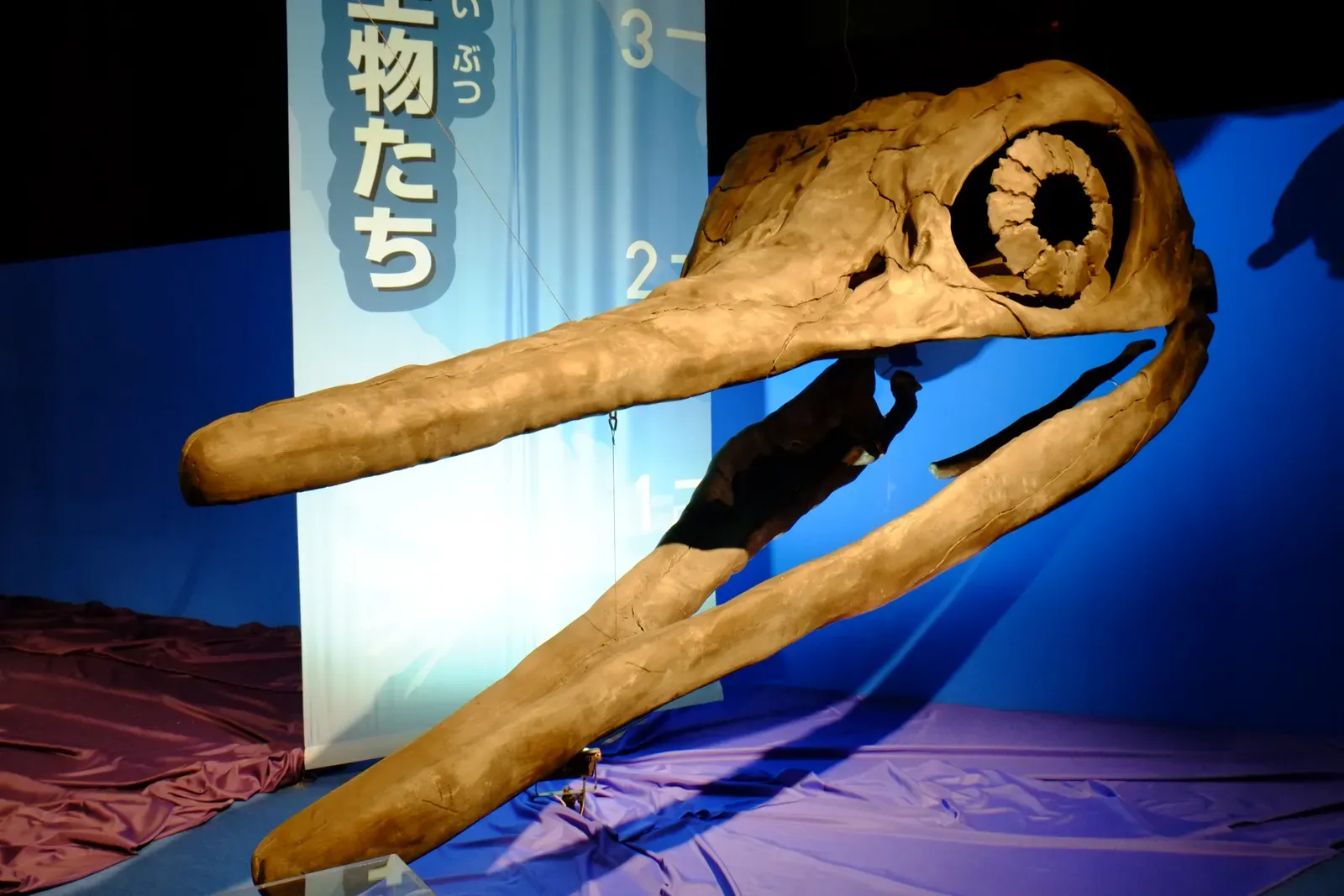
Shonisaurus is the official state fossil of Nevada, and it earned that title from a graveyard of ichthyosaurs found stacked together in the desert, far from any ocean today. That mass-death site, discovered in the mid-20th century, handed paleontologists dozens of individuals, but even with that abundance, most specimens are heavily compressed, distorted by millions of years of rock pressure.
Reconstructing what this dolphin-shaped reptile looked like in life meant flattening out crushed skulls and comparing bone proportions across many partial skeletons rather than relying on one perfect specimen. Researchers still debate exactly how large the biggest individuals grew, with estimates shifting every time new material gets studied. Some experts argue the “record-breaking” size claims tied to this genus deserve more skepticism than documentaries usually give them. Compared to what happened with #12, though, this is barely a footnote.
#12 – Nothosaurus, the Half-Formed Sea Reptile
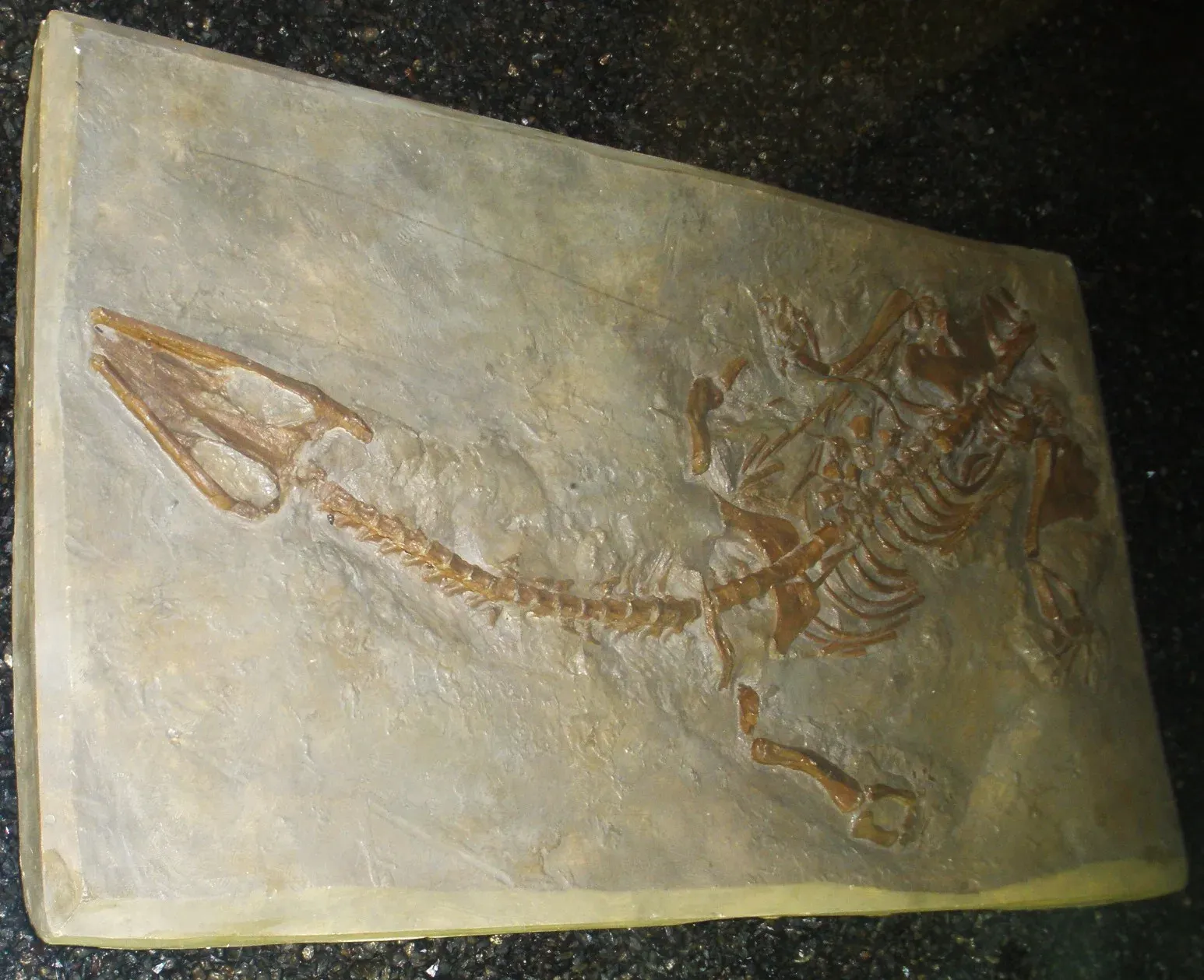
Long before plesiosaurs ruled the seas, Nothosaurus prowled Triassic coastlines with a body that looked like an unfinished draft of a true marine reptile. Its limbs weren’t quite flippers and weren’t quite legs, and for decades scientists had to reconstruct its lifestyle almost entirely from skulls and partial skeletons rather than full-body fossils.
Most Nothosaurus material recovered consists of skull fragments and isolated limb bones, forcing researchers to piece together locomotion theories using comparative anatomy from better-preserved relatives. This partial evidence is part of why Nothosaurus is often called a “transitional” animal, probably capable of both swimming and hauling itself onto rocks like a modern seal. Many paleontologists suspect it spent as much time ambushing prey from shorelines as it did swimming in open water, though the fragmentary limb evidence keeps that debate alive. Nothing about Nothosaurus, though, compares to the reconstruction disaster waiting at #11.
#11 – Kronosaurus, the Pliosaur With Too Many Vertebrae
![#11 - Kronosaurus, the Pliosaur With Too Many Vertebrae (Flickr: Kronosaurus [217/366], CC BY-SA 2.0)](https://nvmwebsites-budwg5g9avh3epea.z03.azurefd.net/dinoworld/15b92ebe34800bf07e568152c8623c6c.webp)
Kronosaurus has one of the most infamous reconstruction blunders in paleontological history. When Harvard’s Museum of Comparative Zoology mounted their famous skeleton in the 1950s, technicians filled in gaps in the incomplete fossil with plaster, and in doing so, stretched the animal’s spine far longer than it should have been.
For decades, museum-goers admired a Kronosaurus that was scientifically inaccurate in its very proportions. The original fossil material was so incomplete that the extra vertebrae went unnoticed by casual visitors for generations, until paleontologists finally went back and corrected the skeleton’s length using better anatomical comparisons. It’s a textbook example of how reconstruction isn’t just about art, it’s about resisting the temptation to make an incomplete skeleton look more impressive than the evidence supports. And Kronosaurus’s stretched spine is nothing next to the political chaos surrounding #10.
#10 – Mosasaurus, the Sea Monster That Predates Modern Paleontology
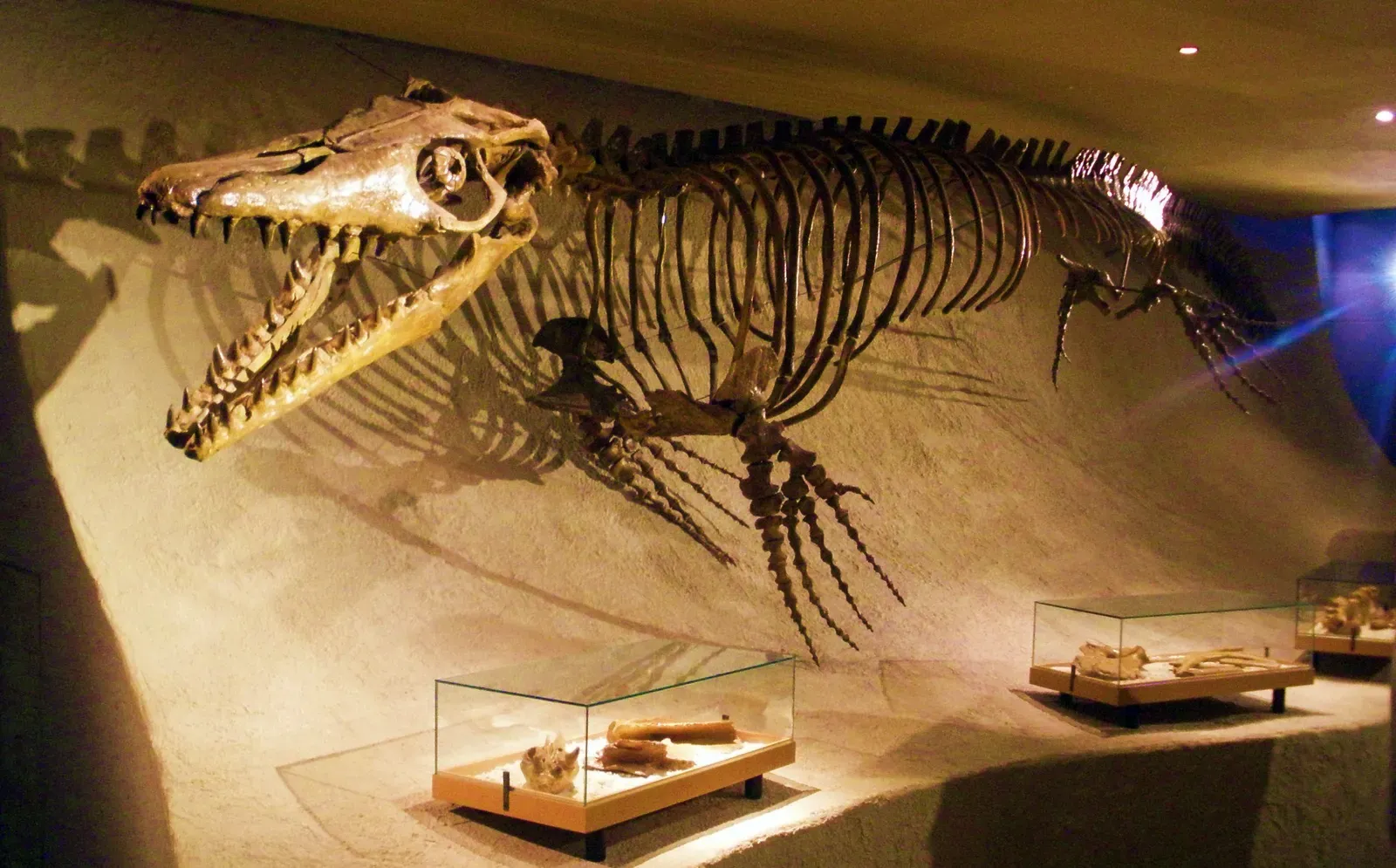
Mosasaurus holds a strange distinction: it was one of the first giant marine reptiles ever recognized as a fossil, discovered in a Dutch limestone quarry in the late 1700s, decades before the word “dinosaur” was even coined. Naturalists had no framework for understanding what they were looking at, and some early theories proposed it belonged to a giant crocodile or even a whale.
The original type specimen has an especially rocky history. The skull was seized during the French Revolutionary Wars and hauled off to Paris, complicating scientific study for years. Everything scientists know about Mosasaurus anatomy today is built on later discoveries and comparisons across dozens of related mosasaur genera, since the founding specimen itself came with more political drama than anatomical completeness. Its modern pop-culture image, largely shaped by a certain dinosaur theme park franchise, exaggerates its size well beyond what fossil evidence actually supports. Yet Mosasaurus’s rocky history is nothing compared to the outright scandal at #9.
#9 – Elasmosaurus, the Skeleton Assembled Backwards
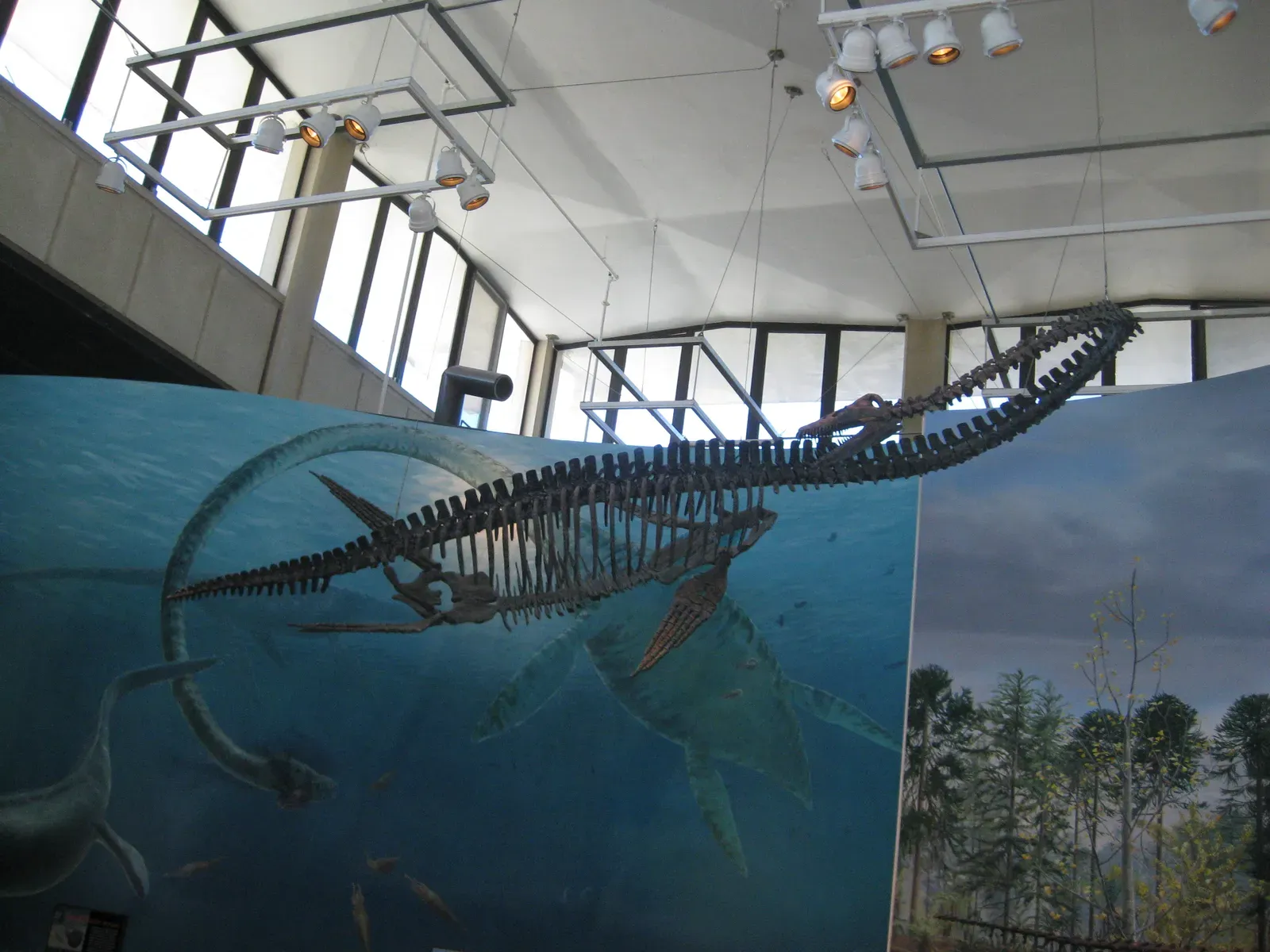
Few fossil blunders are as famous, or as embarrassing, as Edward Drinker Cope’s original mount of Elasmosaurus in the 1860s. Working with an incomplete, jumbled skeleton, Cope reconstructed the animal with its skull placed on the tip of its tail instead of at the end of its impossibly long neck.
The mistake was so significant it fueled part of the bitter rivalry known as the “Bone Wars,” after fellow paleontologist Othniel Charles Marsh publicly called out the error. Elasmosaurus is now recognized for having one of the longest necks relative to body size of any animal in Earth’s history, containing far more neck vertebrae than any land animal. But it took a genuine scientific feud, not just careful lab work, to sort out which end was which on this scrappy, jumbled skeleton. As dramatic as the Bone Wars were, #8 hides an even bigger fossil gap.
Worth Knowing
- Cope’s original error: skull mounted on the tail instead of the neck
- Public correction came from rival Othniel Charles Marsh, sparking the “Bone Wars”
- Elasmosaurus carries far more neck vertebrae than any land animal alive today
- The fix reshaped how scientists mount every long-necked marine reptile since
#8 – Shastasaurus, the Giant Built From Scattered Bones
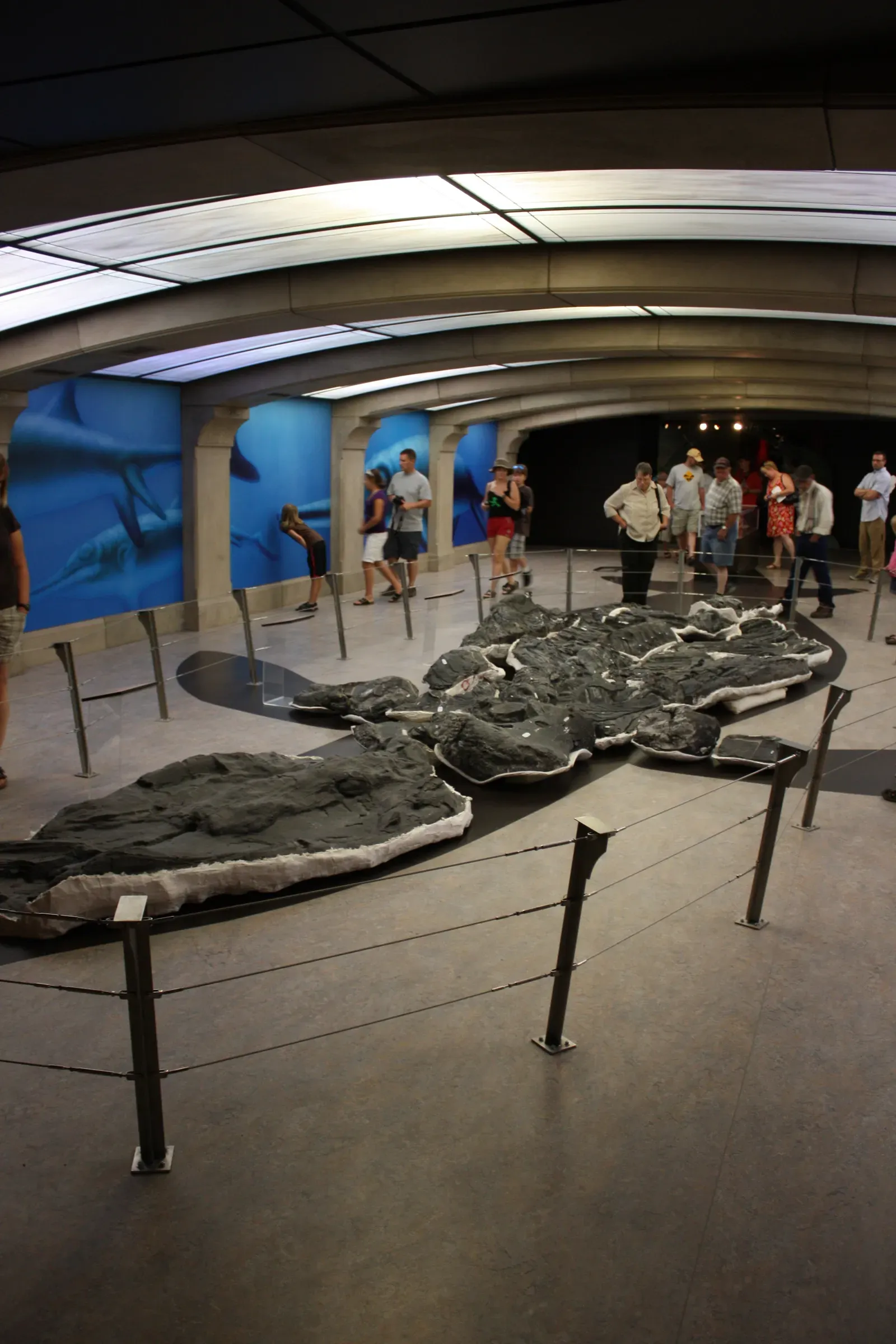
Shastasaurus holds a claim that sounds almost unbelievable: some researchers consider it a candidate for the largest marine reptile that ever lived. Yet the fossil evidence supporting that title is far thinner than most people assume, coming from a scattering of partial skeletons rather than one definitive giant specimen.
According to current fossil records, Shastasaurus was the largest known marine reptile in existence, but its jaws were short and toothless, hinting at a highly specialized diet of soft-bodied cephalopods rather than the fearsome bite most people picture on a “sea monster.” Reconstructing its feeding strategy required inferring behavior from limited skull material, since a toothless mouth on a creature this large baffled early researchers. Many paleontologists now suspect it sucked in prey rather than biting it, a theory built almost entirely from comparative anatomy rather than direct fossil evidence of feeding in action. Shastasaurus’s toothless mystery pales next to the giant eyeball waiting at #7.
#7 – Temnodontosaurus, the Giant Eye With a Body Attached
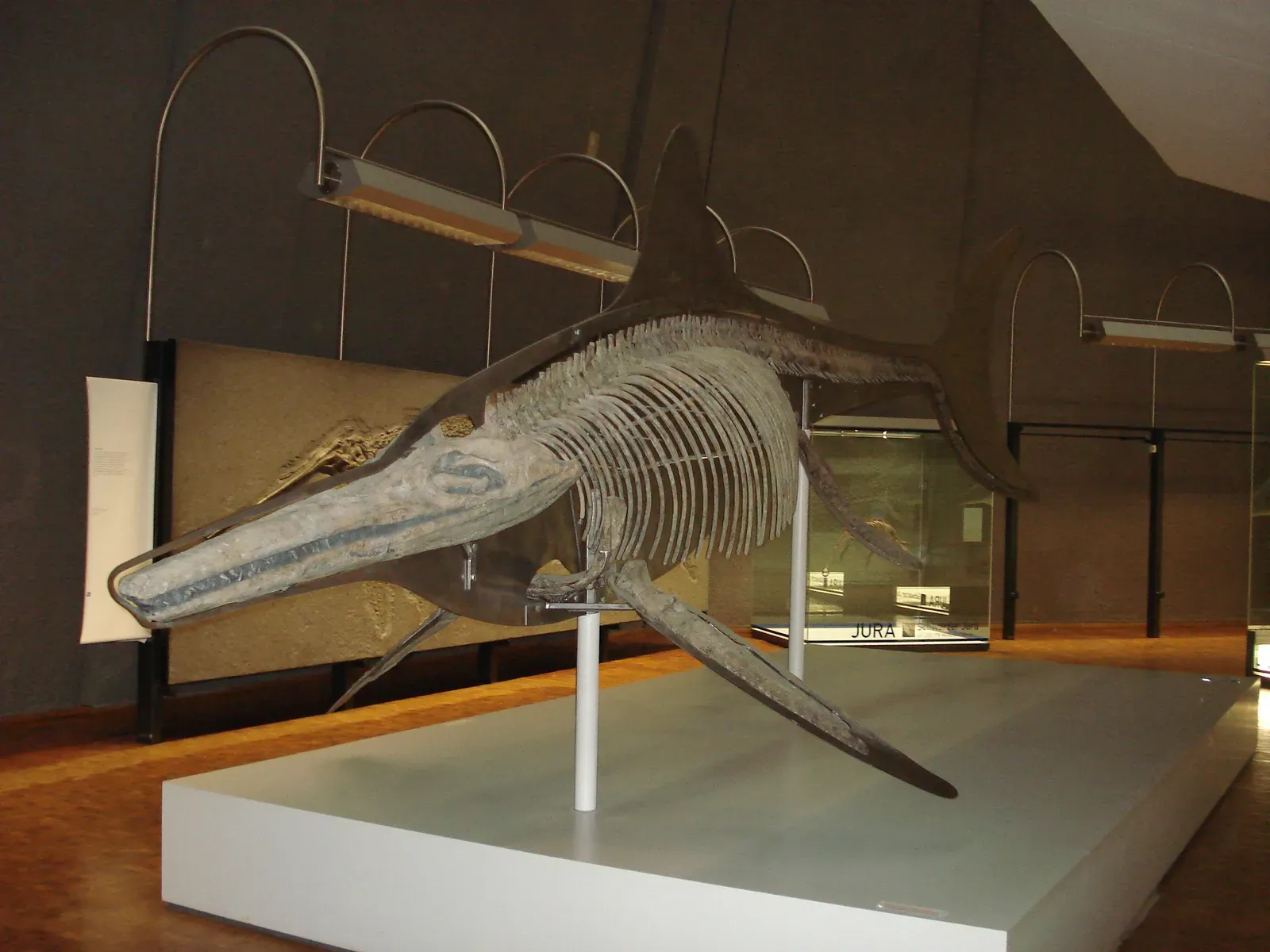
Temnodontosaurus is famous for having what may be the largest eyes of any animal that ever lived relative to body size, but understanding the rest of its anatomy took far longer to piece together. The very first specimen was discovered in the early 1810s by Joseph Anning, brother of legendary fossil hunter Mary Anning, embedded in cliffs along England’s Dorset coast.
One of the largest ichthyosaurs, Temnodontosaurus is widely believed to have the largest eyes in the animal kingdom, and it fed on cephalopods and smaller ichthyosaurs. Since its initial discovery, researchers have identified several additional species within the genus, many based on partial or fragmentary skeletal material collected across England, Germany, and France. Surveys of dozens of specimens have even revealed healed injuries on many skeletons, suggesting these giant predators regularly fought each other, evidence scientists only pieced together by comparing pathologies across an entire scattered fossil collection rather than any single “complete” skeleton. Temnodontosaurus’s giant eye is remarkable, but #6 rewrote its entire body plan.
#6 – Tanystropheus, the “Pterosaur” That Was Secretly a Sea Reptile
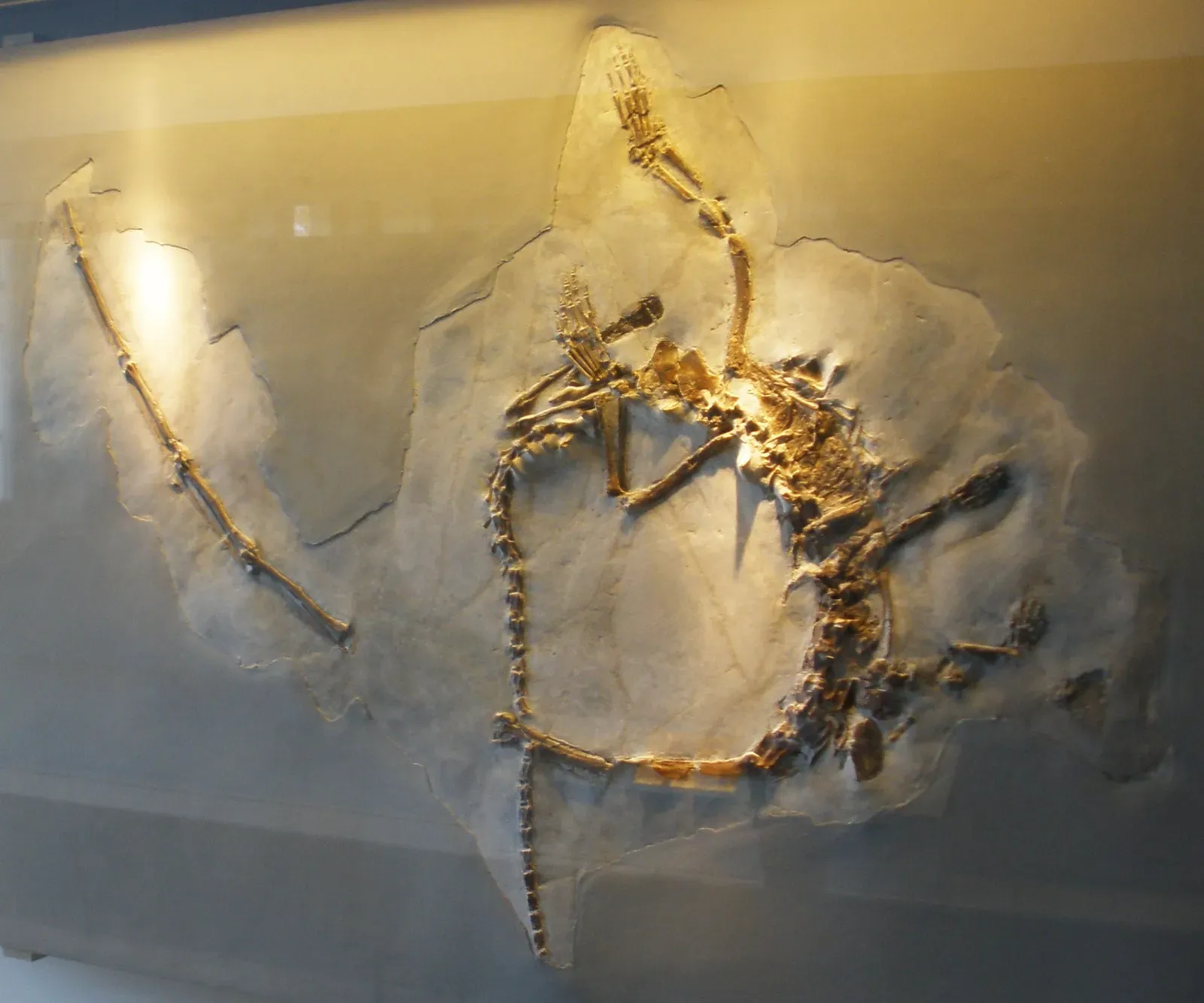
Few reconstruction stories are stranger than Tanystropheus. When it was first described in 1852, paleontologists were so confused by its bizarre, elongated bones that they initially classified it as a flying pterosaur, believing the long bones were finger bones supporting a wing membrane.
At one point, paleontologists thought it was a flying pterosaur, like a pterodactyl, and that its long, hollow bones were phalanges in the finger that supported the wing. It took years of further study to realize those bones actually belonged to an absurdly long neck, three times the length of the creature’s torso, attached to a reptile that spent its life hunting in coastal waters rather than soaring through the sky. Scientists remained uncertain for decades whether smaller specimens represented juveniles or an entirely separate species, a confusion only resolved through modern comparative analysis of the fragmented fossil record. Tanystropheus got misclassified for decades, but #5 has never even been fully found.
#5 – Dunkleosteus, the Apex Predator With No Confirmed Body
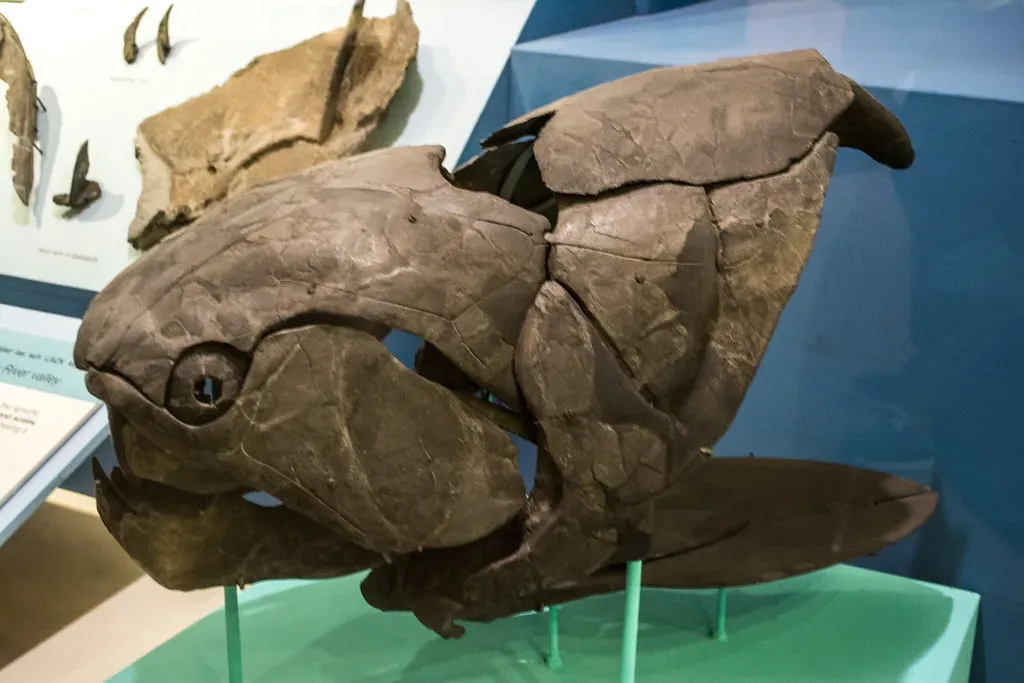
Dunkleosteus might be the most famous armored fish in history, an armor-plated Devonian predator often depicted as a 30-foot shark-like terror. But here’s the uncomfortable truth: scientists have never found a complete body of this animal, only the armored head and thorax plates that made it famous.
Despite popular interest, D. terrelli is only known from disarticulated plates of the head shield, and a few articulated remains of incomplete pectoral fins, meaning its general body shape and size remain genuinely unknown even today. For decades, reconstructions borrowed body shapes from smaller, more completely preserved armored fish relatives, essentially guessing at the missing 80% of the animal. A 2023 study went so far as to argue Dunkleosteus may have been considerably shorter and stouter, a “chunky” fish, than the sleek shark-like predator shown in most textbooks and documentaries. It’s a genuinely unsettled scientific debate, and depending on which paleontologist you ask, you’ll get a different answer about what one of history’s most iconic predators actually looked like below the neck. Dunkleosteus’s missing body is unsettling enough, but #4’s name is a straight-up scientific mistake.
“An 11-foot Dunkleosteus is essentially the same weight as a 15-foot great white shark. These things were built like wrecking balls.”
Russell K. Engelman, Case Western Reserve University
#4 – Basilosaurus, the Whale Mistaken for a Sea Serpent
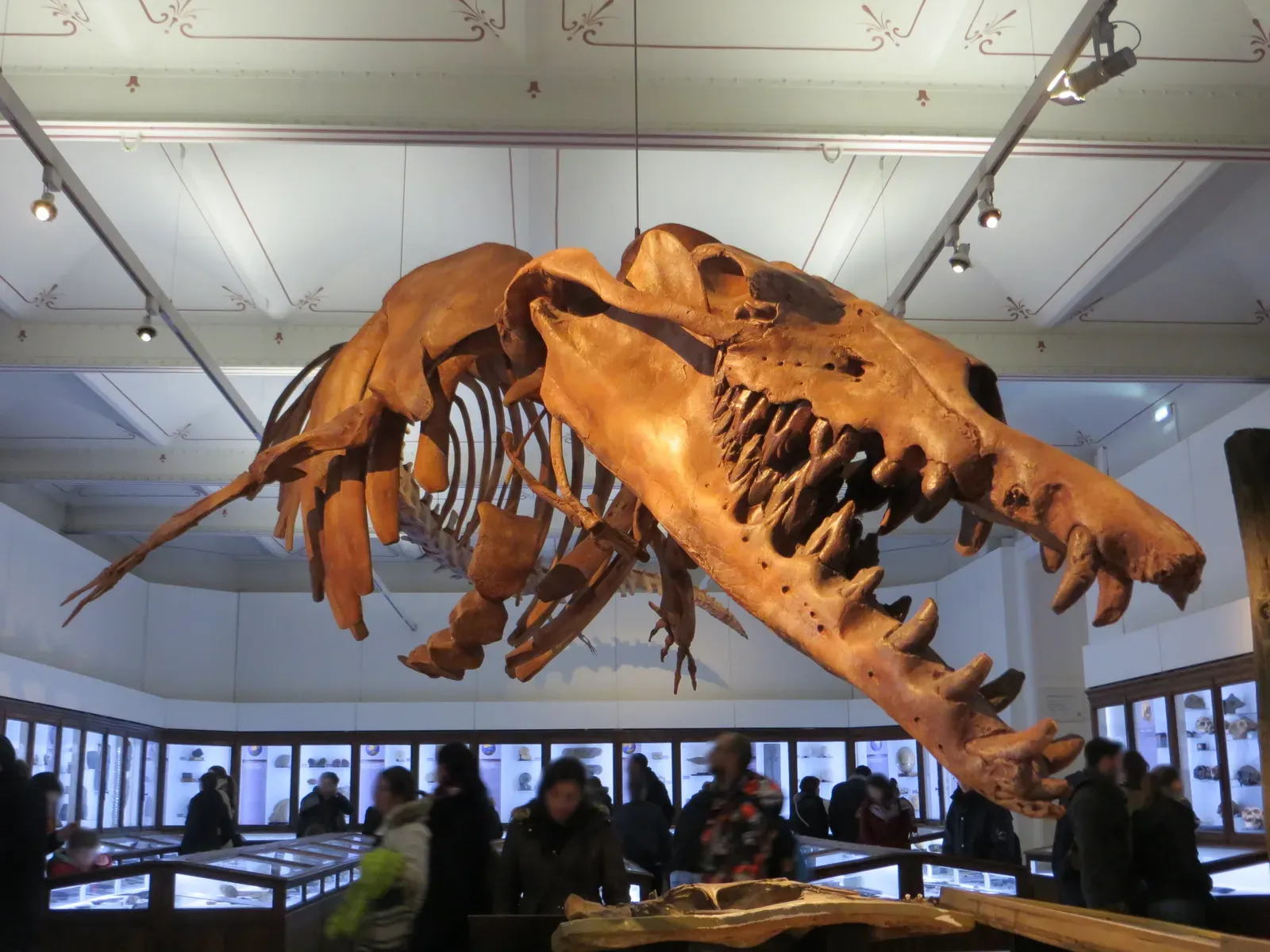
Basilosaurus literally means “king lizard,” and that name is a fossil-record embarrassment that stuck. When enormous vertebrae from this ancient whale were first unearthed in the American South in the 1800s, scientists assumed they belonged to a giant marine reptile, hence the misleading “saurus” suffix that paleontologists have been correcting museum visitors on ever since.
Basilosaurus isis has a skeleton about 15-18 meters in length, and stomach content studies eventually revealed it was an apex predator that hunted smaller whales and large fish, information scientists only confirmed relatively recently through detailed fossil analysis in Egypt’s Wadi Al Hitan. Reconstructing its predatory behavior required more than bones; it took finding actual bite marks and stomach contents preserved alongside the skeleton to prove definitively what this misnamed “reptile” actually ate. The name never got fixed because scientific naming rules require using the original name once published, so modern textbooks are stuck permanently calling a whale a “lizard.” Basilosaurus’s misnamed skeleton is one kind of error. #3 is a different kind of achievement.
#3 – Livyatan, the Whale Rebuilt From a Single Skull
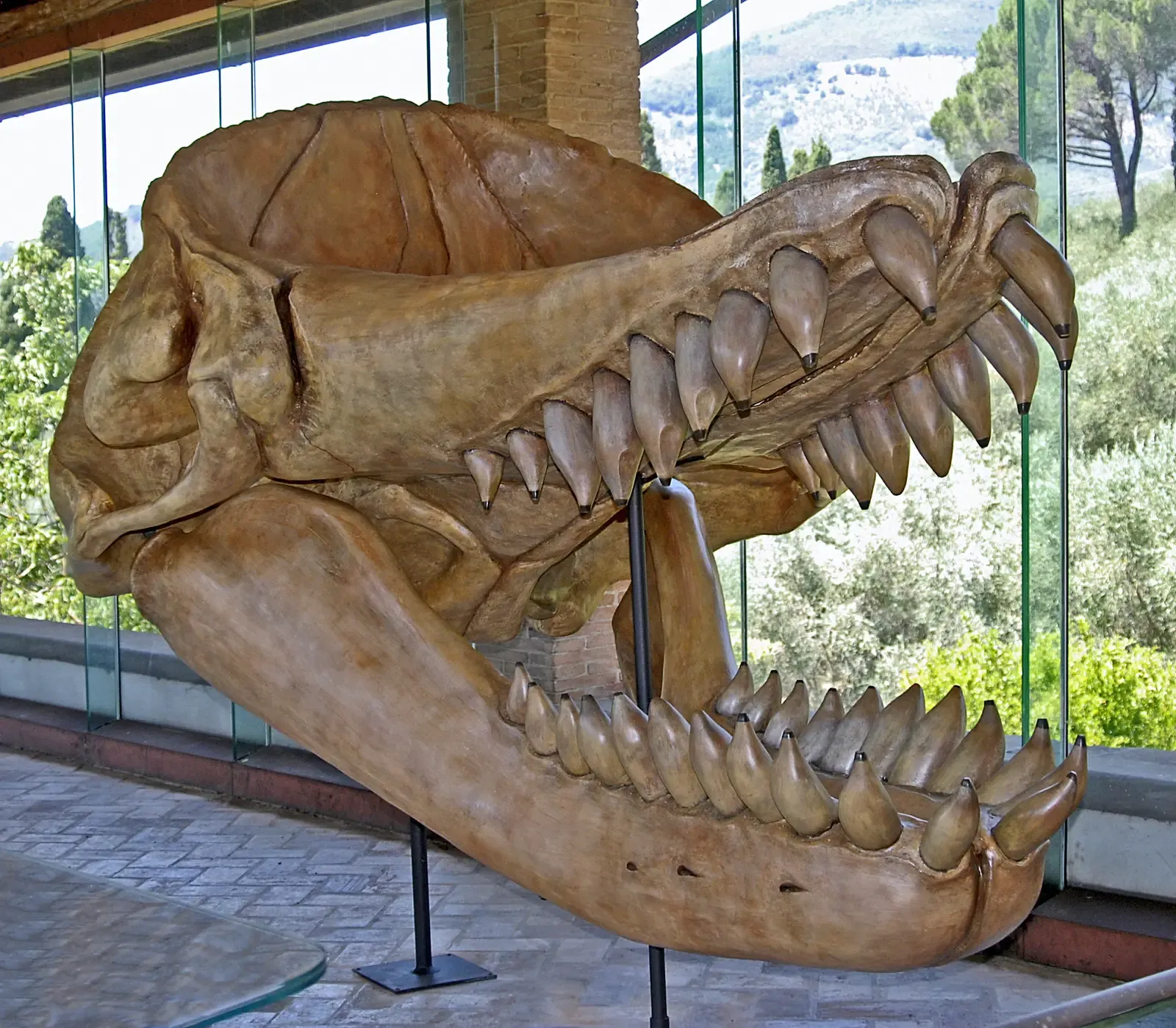
Livyatan melvillei sounds like something out of mythology, and in a sense, it is: named partly after the biblical Leviathan and partly after “Moby Dick” author Herman Melville. This massive predatory sperm whale is known almost entirely from one remarkably preserved skull discovered in Peru, rather than a full skeleton.
Scientists compared that single skull against modern sperm whale anatomy and other fossil whale relatives to estimate the animal’s total body length and bite force, essentially reverse-engineering an entire predator from one fossilized head. Basilosaurus isis, Livyatan melvillei, and modern Orcinus orca are three marine apex predators known from relatively short intervals of time, each occupying the same ecological throne at different points in Earth’s history. What makes Livyatan especially unsettling is that its teeth were built for actively hunting other whales, a genuinely different feeding strategy from the deep-diving squid hunters that modern sperm whales became, and researchers largely inferred this predatory lifestyle from tooth wear and jaw mechanics rather than direct behavioral evidence. Livyatan was rebuilt from a single skull. #2 was rebuilt from scraps nobody could even identify.
#2 – Leedsichthys, the “Problematic” Giant Fish
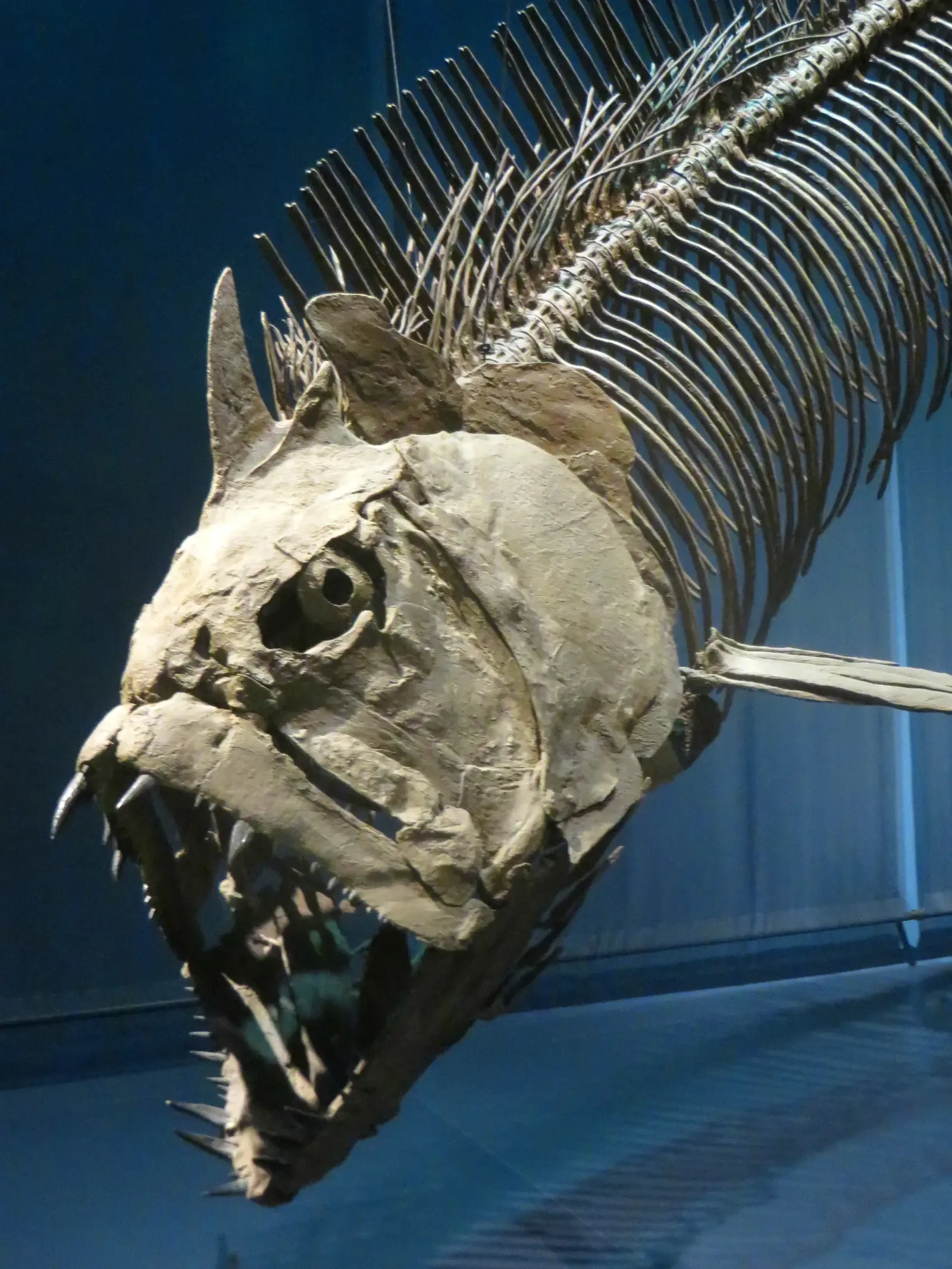
Leedsichthys earned the unfortunate species name “problematicus” for good reason. When British fossil collector Alfred Nicholson Leeds first discovered its remains before 1886, the bones were so fragmented and strange that scientists initially struggled to even recognize what kind of animal they were looking at.
Assessing Leedsichthys problematicus remains difficult because of the fragmentary nature of its Jurassic fossils, since its skeleton was lightly built and poorly ossified compared to most bony fish, meaning it simply didn’t preserve well. Early size estimates ballooned to nearly 90 feet based on isolated bone fragments, before a major 2013 study using growth-ring analysis across a wide range of specimens revised the maximum length down dramatically. A new study estimated Leedsichthys problematicus grew to a full size of around 50 feet long, still enormous, still likely the largest bony fish ever to exist, but proof that reconstructing this filter-feeding giant meant fighting a century of “arm-waving” size guesses built on scraps. Leedsichthys fought a century of size guesses. #1 fought three completely different reconstructions.
#1 – Helicoprion, the Shark Rebuilt Three Times Over
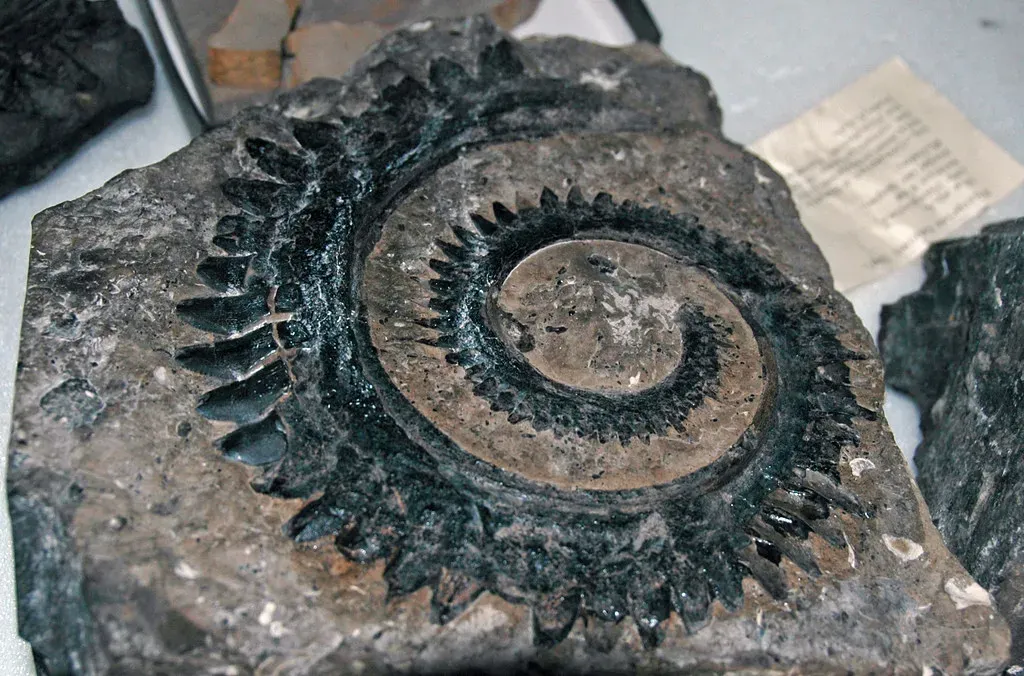
No prehistoric sea creature demonstrates the messy reality of fossil reconstruction better than Helicoprion. For over a century, this Permian shark relative was known almost exclusively from its bizarre spiral tooth whorl, a strange circular blade of teeth that gave scientists absolutely no context for where it belonged on the animal’s body.
Early 20th-century reconstructions were wild guesses: some placed the whorl on the tip of the snout like a buzzsaw, others stuck it on the tail, and some even proposed it sat on the dorsal fin. These interpretations now seem laughable, but at the time, they reflected the very real difficulty of reconstructing an animal from such an unusual fossil. Because Helicoprion had a cartilage skeleton, a material that rarely fossilizes, almost nothing besides the whorl survived to guide scientists.
The mystery wasn’t solved until 2013, when researchers CT-scanned a remarkably preserved specimen and discovered the whorl was housed entirely within the lower jaw. New CT scans of the spiral-tooth fossil resolved a longstanding mystery concerning the form and phylogeny of this ancient cartilaginous fish, revealing a “conveyor belt” feeding mechanism nobody had previously imagined. It took CT technology, not just careful guesswork, to finally end a hundred-year debate about one of the strangest reconstructions in paleontological history.
Why It Stands Out
- Went through at least three wildly different reconstructions: snout, tail, and dorsal fin placements
- Cartilage skeleton meant almost nothing but the tooth whorl ever fossilized
- Mystery finally cracked in 2013 using CT scans of a preserved specimen
- Whorl sat entirely inside the lower jaw, working like a rotating conveyor belt of teeth
The Bottom Line
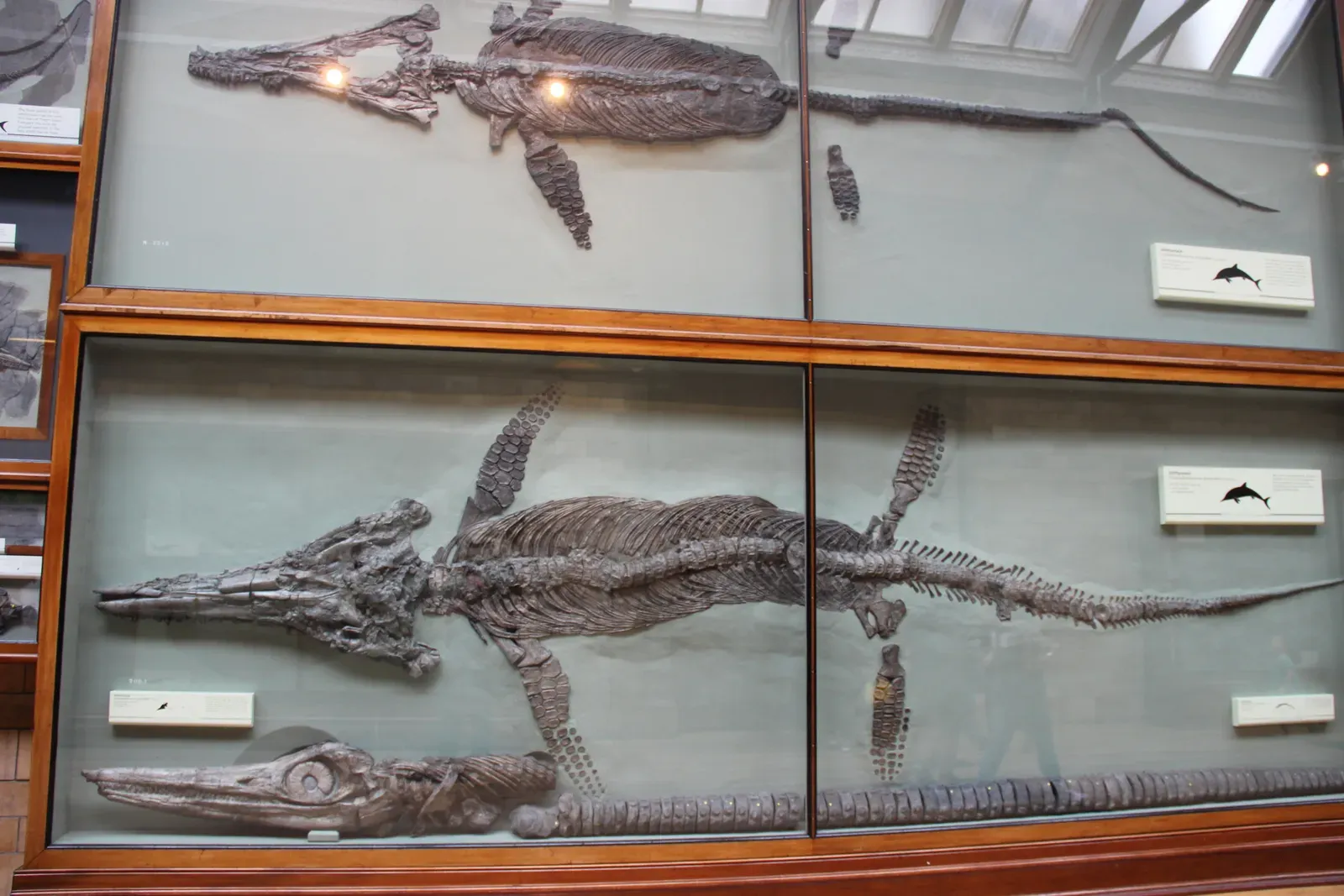
These 14 creatures prove that “scientifically accurate” reconstructions are often closer to educated guesses than most people realize. Helicoprion went through three totally different body reconstructions before CT scans finally solved it. Kronosaurus got stretched by plaster. Elasmosaurus got its head glued to the wrong end entirely.
Frankly, museum skeletons should come with a disclaimer: “Best guess, subject to change.” The real story of paleontology isn’t dusty certainty, it’s constant revision, embarrassing mistakes, and scientists quietly fixing their predecessors’ errors decades later. If a single tooth or a crushed skull can rewrite an entire sea monster’s identity, the next headline-grabbing correction is probably already sitting in a drawer somewhere, waiting for someone to finally look at it right.