For over a century, natural history museums sold us the same story: dinosaurs were scaly, cold-blooded, reptilian monsters. Walk into most exhibit halls today, and that’s still the story they’re telling. Meanwhile, paleontologists have spent three decades quietly rewriting the entire narrative, armed with feather impressions, fossilized pigment cells, and skin so well-preserved you can count individual scales.
So why hasn’t the memo reached the display floor? Some museums got the science and shelved the renovation budget instead. Others are still showing off casts built before anyone knew what these animals actually looked like. Here are 15 places where the fossil record moved on, and the museum exhibit simply didn’t follow.
#15 – Velociraptor Is Still Wearing Its Movie Costume
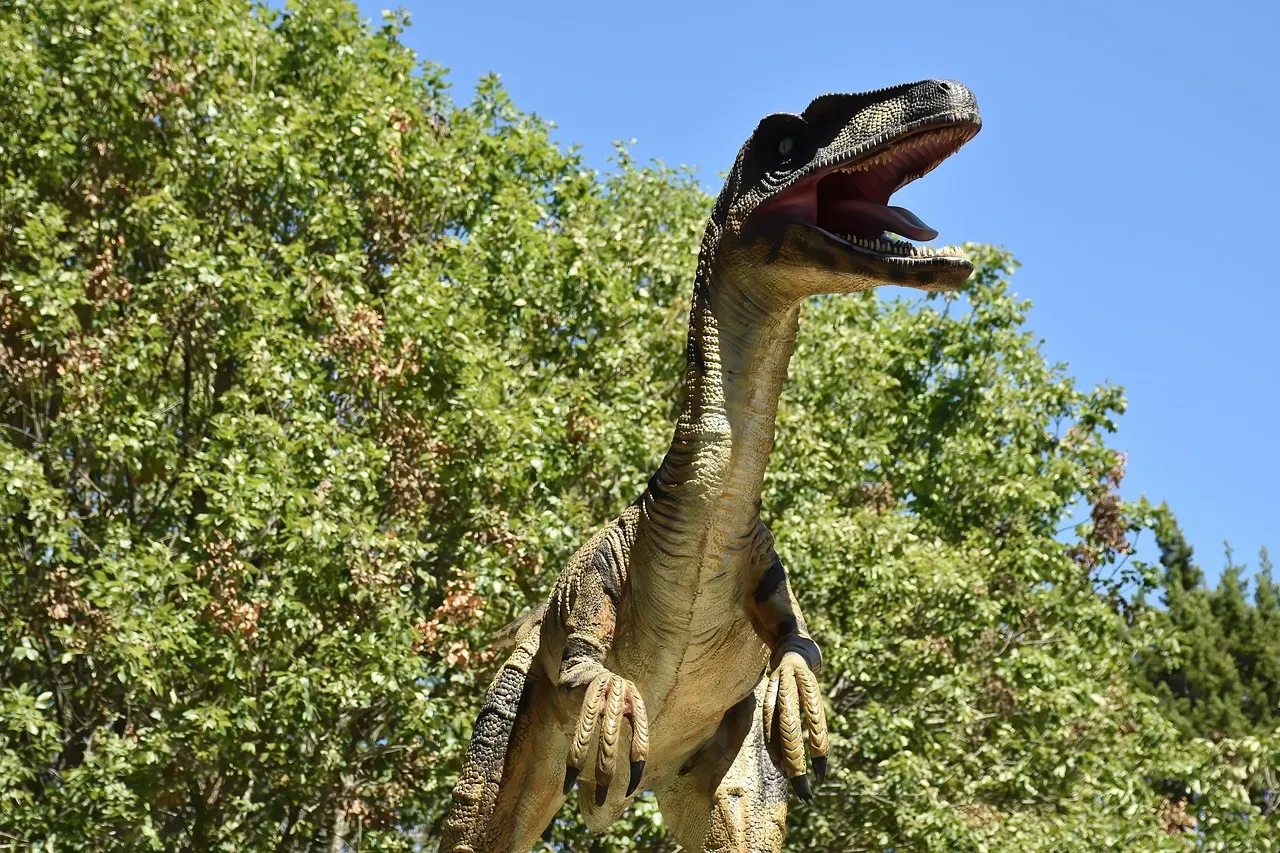
Walk into almost any regional museum gift shop and you’ll find a scaly, six-foot, man-sized raptor glaring back at you. That image is fiction, and paleontologists have known it for decades. The real Velociraptor was roughly the size of a turkey, covered in feathers, and nowhere near as terrifying as Hollywood made it look. The movie version was actually modeled more closely on a much larger dinosaur called Deinonychus.
The turkey-sized truth rarely makes it onto museum floor graphics, because the movie version sells more tickets and merchandise than the accurate one. Many exhibit designers privately admit they keep the scaly raptor around because feathered versions test poorly with casual visitors. That’s a shameful reason to mislead the public. Wait until you see what happened to the most famous dinosaur of all next.
#14 – T. Rex Got Feathers, Then Lost Them Again, and Nobody Told the Dioramas
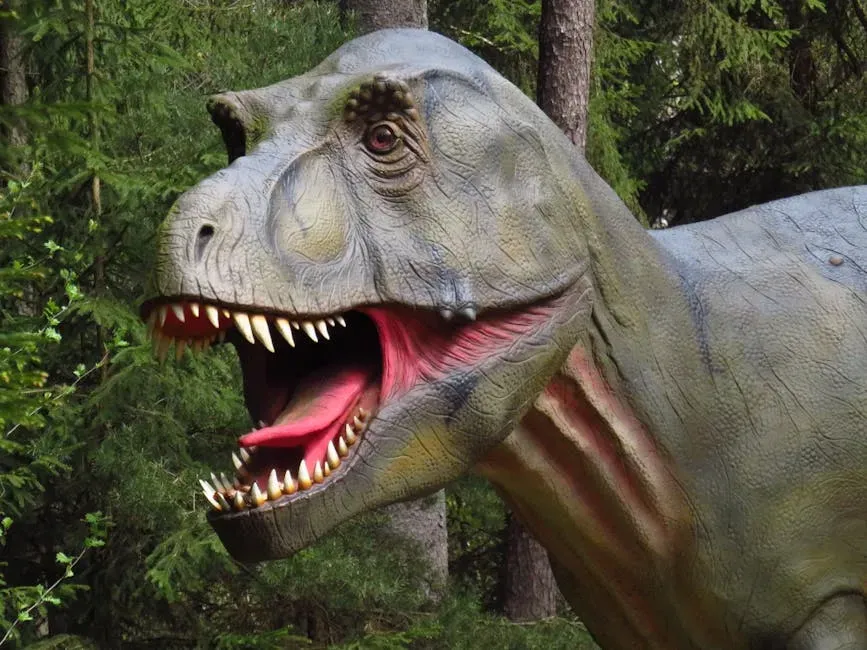
Tyrannosaurus rex has been through more wardrobe changes than any celebrity, and most museums are still displaying whichever outfit they installed last. When Yutyrannus, a 23-foot feathered tyrannosaur relative, was discovered, scientists reasoned that if one of T. rex’s close cousins had feathers, T. rex probably did too. Museums scrambled to add fuzz to their T. rex models throughout the 2010s.
Then in 2017, everything flipped again. A study published in the journal Biology Letters examined skin impressions from Montana T. rex fossils and found the skin was likely scaly, at least across the sampled body regions. That doesn’t rule out feathers on unpreserved areas like the head or spine, but most exhibits never reflect that nuance. Instead you still get either fully fuzzy or fully naked kings, standing on opposite ends of the same fossil record.
#13 – That Classic Tail-Dragging Pose Is Still Bolted to the Floor
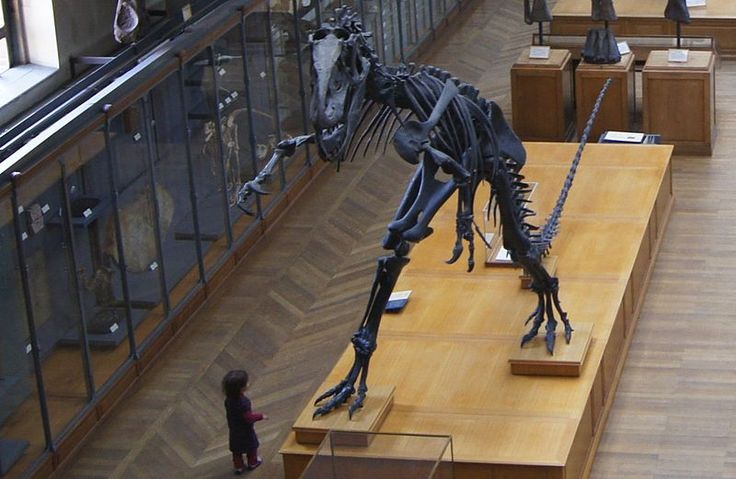
Before feathers were even part of the debate, museums got the basic posture of dinosaurs completely wrong, and some dusty dioramas never fixed it. For decades, dinosaurs were shown standing upright with their tails dragging along the ground. That posture appeared in museum displays, books, and artwork throughout the early twentieth century.
Biomechanical studies eventually showed dinosaurs actually balanced their bodies with the tail held straight out behind them, parallel to the ground, like a seesaw. This correction happened generations before feathers were even discovered, yet plenty of smaller municipal museums still display kangaroo-postured mounts because replacing a cast skeleton costs six figures. Combine an outdated tail with an outdated skin covering, and you get a display that’s wrong twice over, in two completely different scientific eras. Next up is a dinosaur whose real color makes the gray plastic versions look almost embarrassing.
#12 – Sinosauropteryx Was Ginger, and Almost No Model Shows It
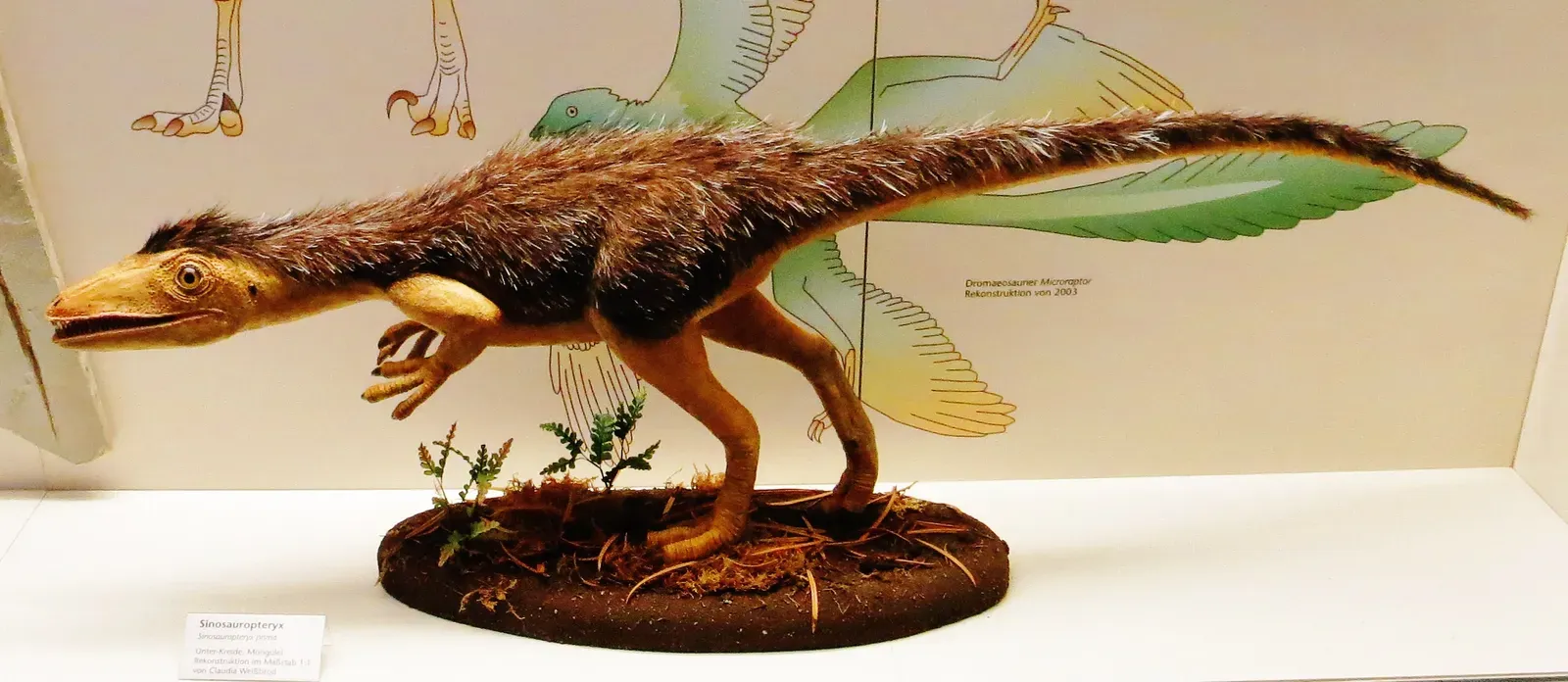
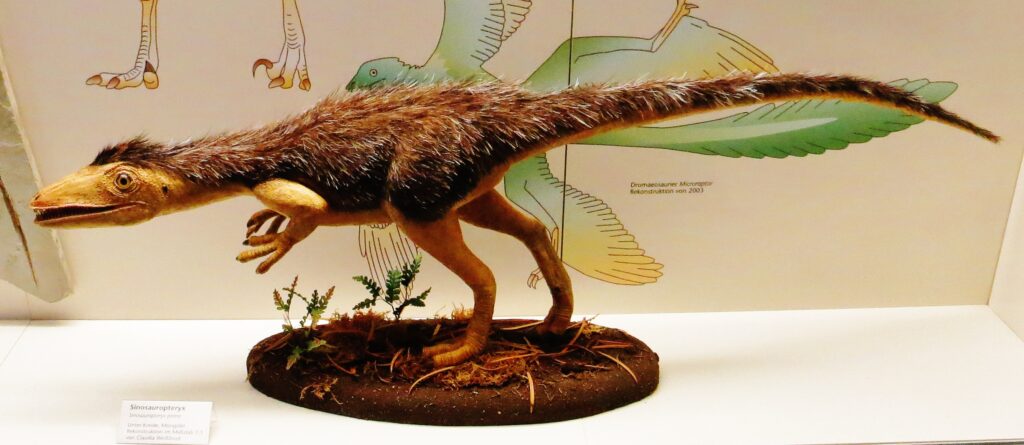
Most feathered dinosaur toys and museum models default to gray, brown, or green. Scientists have actually known the true color of at least one species since 2010. The pattern of melanosomes preserved in Sinosauropteryx revealed a reddish coat with a tiger-striped tail, making it the first confirmed ginger dinosaur.
Researchers went even further, mapping out camouflage patterns seen in living animals today, including countershading, a striped tail, and a raccoon-like “bandit mask” stripe across the eyes. This is one of the most complete color reconstructions ever done on a dinosaur, and it’s been public for over fifteen years. Yet walk through any regional dino hall and you’ll almost never see that reddish, masked reconstruction on the wall placard. Most institutions still default to generic dark gray fuzz, because repainting an existing cast is apparently harder than repainting a house.
Fast Facts
- Sinosauropteryx was described in 1996 from fossils found in Liaoning Province, China, the first non-bird dinosaur ever discovered with feather-like structures.
- It was roughly chicken-sized, with most specimens measuring close to a meter long, much of that length in an unusually long tail.
- It lived around 125 million years ago, during the Early Cretaceous.
- Its melanosome analysis gave scientists the first confirmed color map of any dinosaur, feathered or not.
#11 – The 23-Foot Feathered Giant Most T. Rex Halls Ignore
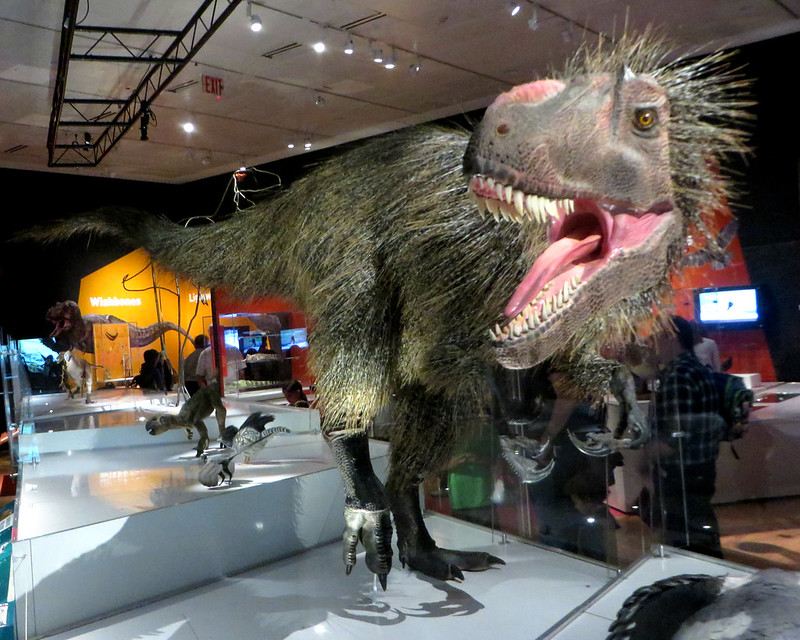
If T. rex galleries wanted to settle the feather debate honestly, they’d put its closest feathered cousin front and center. Almost none of them do. Yutyrannus huali lived 125 million years ago and remains the largest known feathered dinosaur, a 23-foot-long tyrannosaur that should completely reshape the popular image of its more famous relative.
Scientists believe these larger, feathered tyrannosaurs couldn’t fly, but likely used their primitive plumage for insulation or visual display, the same way peacocks use feathers to attract mates today. A 23-foot predator covered in shaggy plumage should be a museum showstopper, yet it barely gets a footnote next to the main T. rex mount in most galleries. Here’s an unpopular opinion: prioritizing the “scary bald lizard” over its feathered giant cousin isn’t scientific caution, it’s marketing cowardice. That bias runs even deeper once you talk to actual museum visitors, which is exactly what researchers did next.
#10 – Visitors Are Told the Truth and Simply Don’t Believe It
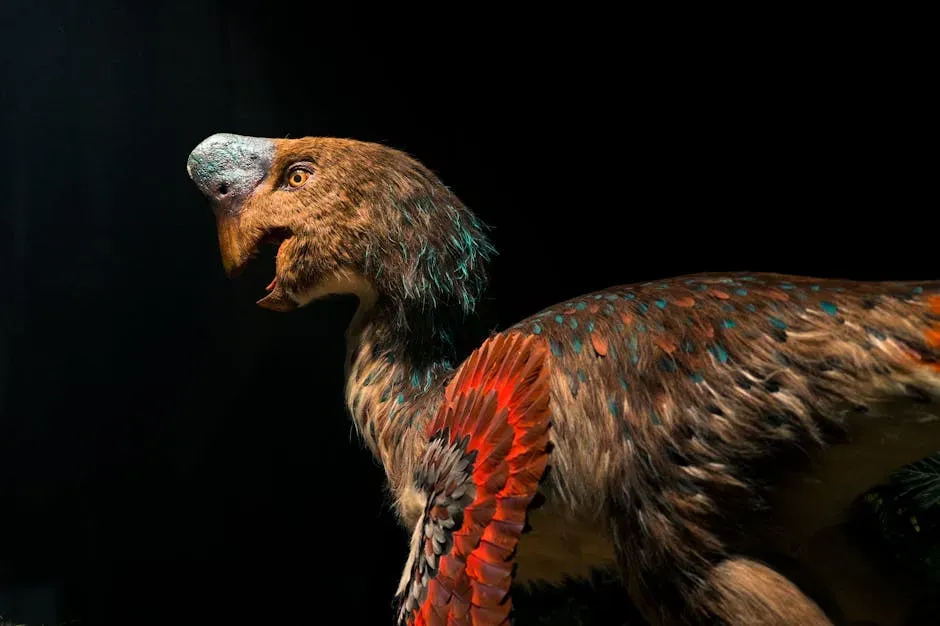
Here’s the part museums rarely admit out loud: even when they do update their exhibits, plenty of guests walk away rejecting the science entirely. A university study surveying visitor reactions found that a lack of updated dinosaur exhibits in smaller local museums breeds disbelief, or even outright denial, of new information like feathered dinosaurs.
Researchers ran an informal survey at the Buffalo Museum of Science, asking visitors for feedback on its “Rethink Extinct” exhibit. Visitors who grew up with scaly dinosaurs often treated feathered reconstructions like a trendy fad rather than settled science. That creates a vicious cycle: museums avoid full feathered makeovers because visitors resist them, and visitors keep resisting because most museums never fully commit to the change. But an even messier example of half-hearted “feathered” science happened at an exhibit that literally had the word in its name.
#9 – The “Feathered Dinosaur” Exhibit With No Actual Feathers
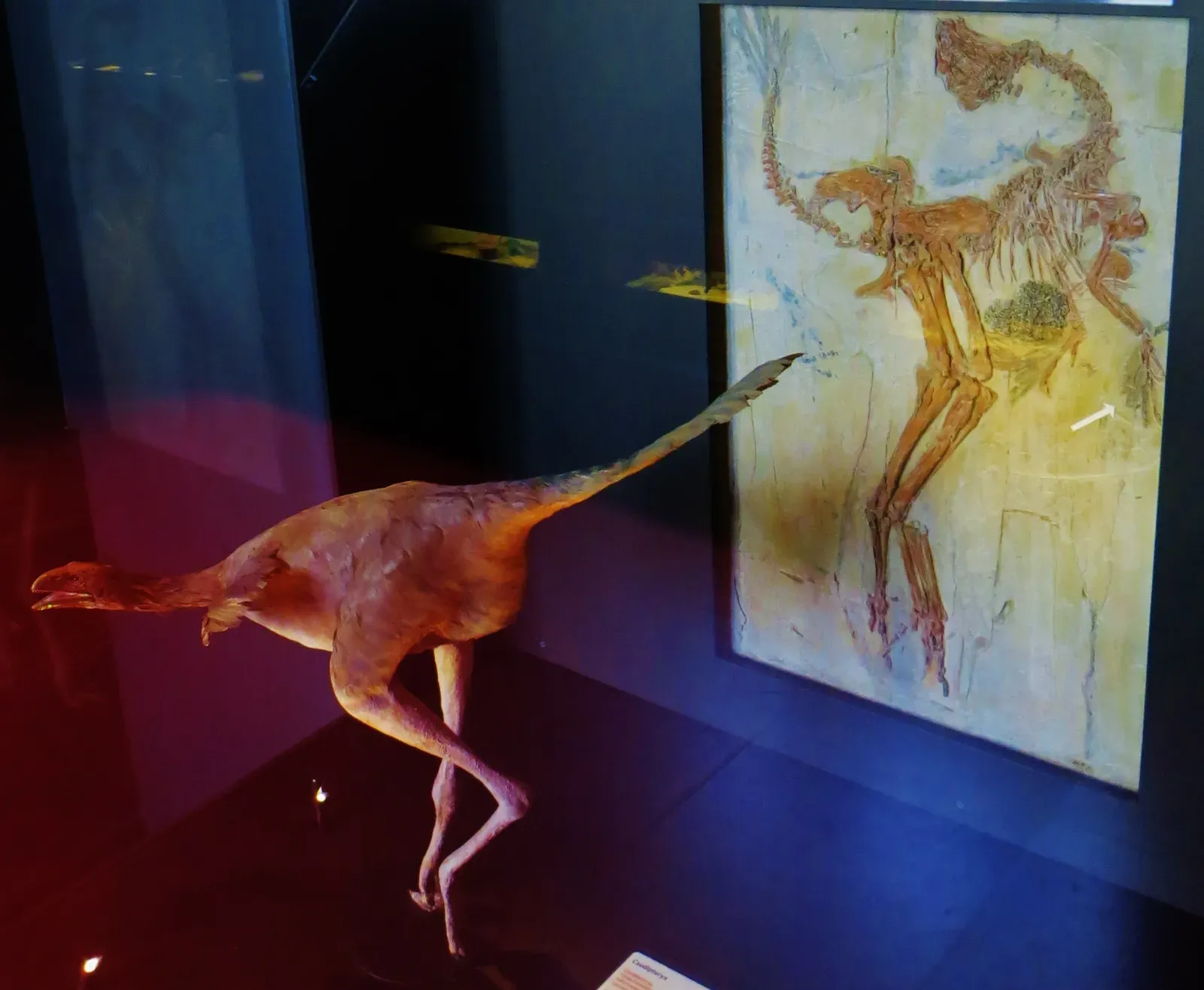
Some museums have tried to have it both ways: advertising cutting-edge feathered dinosaur science while quietly hedging on the actual physical evidence. One widely criticized touring exhibit offered displays that failed to provide clear evidence for the rise of birds from certain dinosaur lines.
Its centerpiece was a painted fiberglass facsimile of the in-situ Caudipteryx fossil, a genuinely feathered species, yet the model itself showed no clear fibers or feathers at all. A headline exhibit literally titled around feathers, with a centerpiece model showing none, is the kind of contradiction that should embarrass any curator. Whatever your stance on the broader dinosaur-to-bird debate, a museum piece should at minimum match the fossil it claims to represent. This gap between marketing and physical display points to a bigger institutional problem hiding behind almost every outdated exhibit.
#8 – Museums Are Structurally Built to Lag Behind the Science
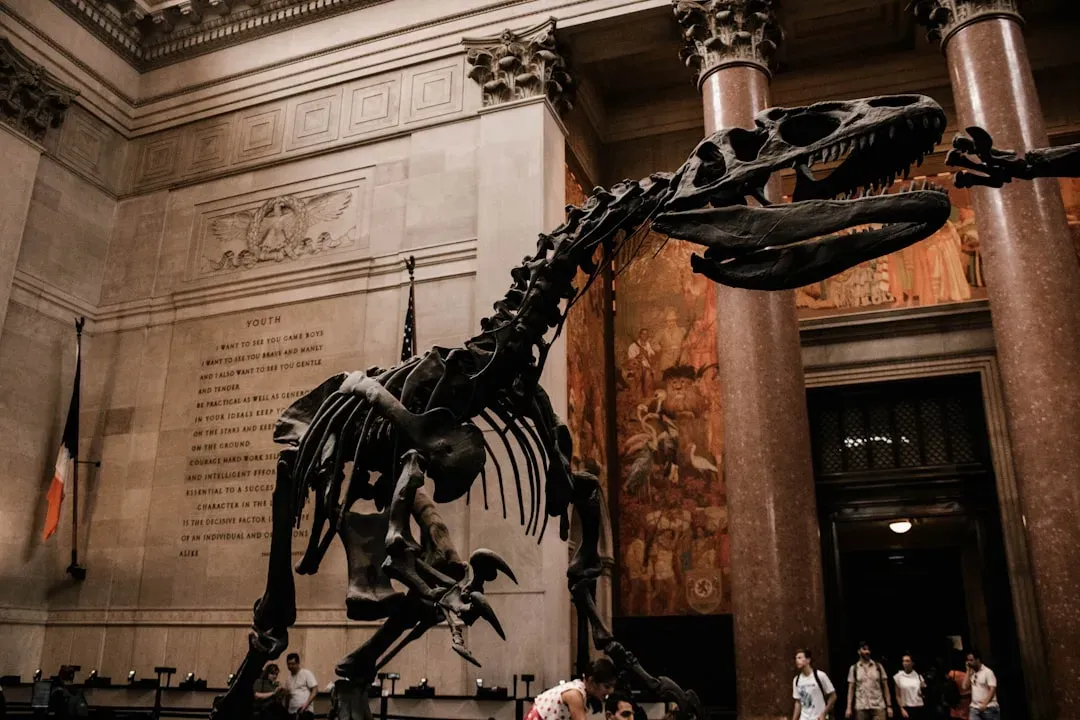
This isn’t really about laziness. It’s about how museums are physically built, and that means the gap between discovery and display is often permanent. Depictions of dinosaurs in movies, documentaries, books, and even museum displays will always lag behind the latest science, partly because paleontology itself is moving faster than ever before.
A young visitor might binge a modern feathered-dinosaur documentary, then walk into a museum and encounter the same species dressed in its outdated, early-20th-century garb. Fiberglass casts are expensive, permanent, and rarely rebuilt from scratch, which means yesterday’s best guess often becomes tomorrow’s misleading exhibit. Even the most respected institutions aren’t immune to embarrassing slip-ups, as one ten-year-old proved next.
#7 – A Ten-Year-Old Caught an Error Curators Missed for Years
If professional curators can mislabel a dinosaur silhouette for years, it says something uncomfortable about how carefully these exhibits actually get checked. The Natural History Museum in London changed a dinosaur display after a ten-year-old boy pointed out an error. The silhouette was supposed to show Oviraptor, a small carnivorous dinosaur with a parrot-like beak, but it was actually showing Protoceratops, a sheep-sized herbivore related to Triceratops.
The museum admitted that “scientific research and our understanding of the natural world are constantly changing,” and that the dinosaur gallery had been refurbished several times to reflect it. A world-class museum needed a child’s homework-level knowledge to catch a basic species mix-up. If flagship institutions miss silhouettes, imagine how many subtler feather and color errors go completely unchallenged in smaller galleries.
At a Glance
- Museum: Natural History Museum, London
- Displayed silhouette: labeled Oviraptor, a small, parrot-beaked carnivore
- Actual species shown: Protoceratops, a sheep-sized plant-eater
- Who caught the mistake: a ten-year-old visitor, not museum staff
#6 – Anchiornis Had a Red Mohawk, and Most Models Show Plain Black
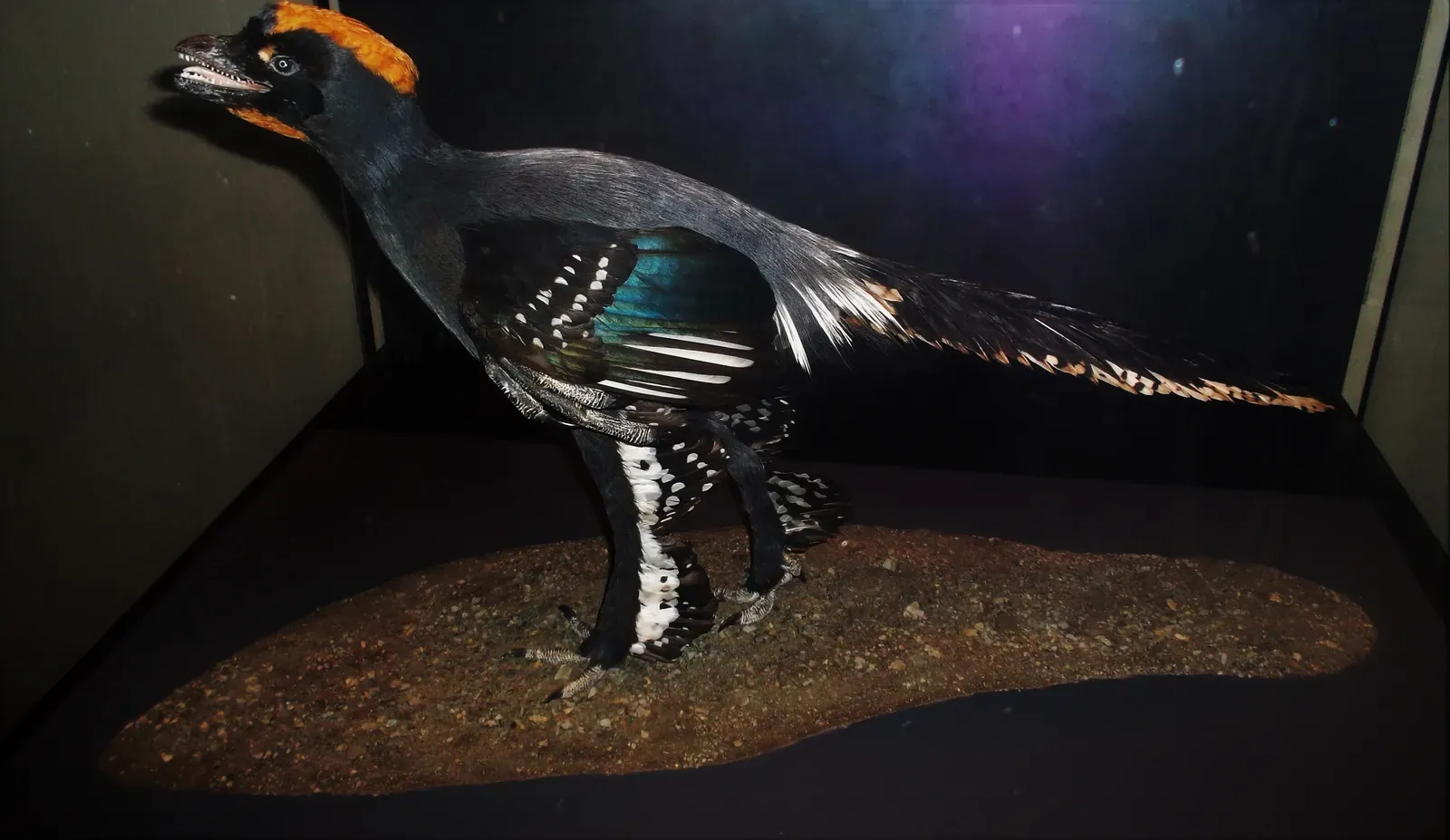
Anchiornis is one of the best-documented feathered dinosaurs in the fossil record, complete with an actual, scientifically confirmed color palette. Museums rarely bother using it. Researchers mapped out black, white, and grey feathers along with a russet head-crest on this crow-sized, four-winged, gliding dinosaur.
That’s a specific, peer-reviewed color scheme, not a guess. Yet most model kits and museum illustrations skip it entirely, defaulting instead to flat gray or brown. A dinosaur with confirmed, published plumage colors keeps getting painted like a generic rock pigeon. Given how rare this level of color certainty is in paleontology, treating it as optional feels like an active choice to underwhelm visitors.
#5 – Microraptor’s Iridescent Blue-Black Wings Rarely Survive the Gift Shop
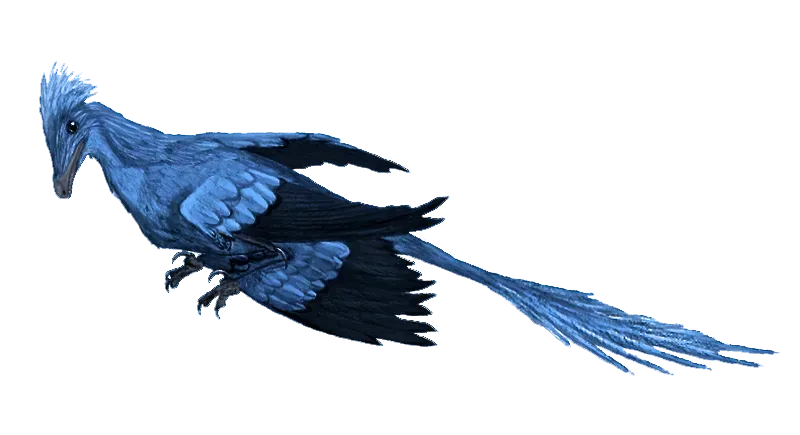
Microraptor is famous for having four wings, but the far more surprising detail is what color those wings actually were. Spoiler: not brown. Paleontologists determined its feathers carried a blue, iridescent black color scheme, essentially a glossy, crow-like sheen rather than the dull brown most illustrations still use.
Researchers studying feather structure across the Jehol fossil beds also identified a cousin of Velociraptor with long feathers on both its front and back limbs, suggesting gliding, four-winged dinosaurs may have been far more common than museums currently depict. An animal with genuine, confirmed iridescence keeps getting reduced to matte plastic in nearly every commercial model and diorama. That’s a production excuse, not a scientific one. Compared to what came next, though, Microraptor’s color story is almost modest.
#4 – Caihong the “Rainbow Dinosaur” Basically Never Appears in Color
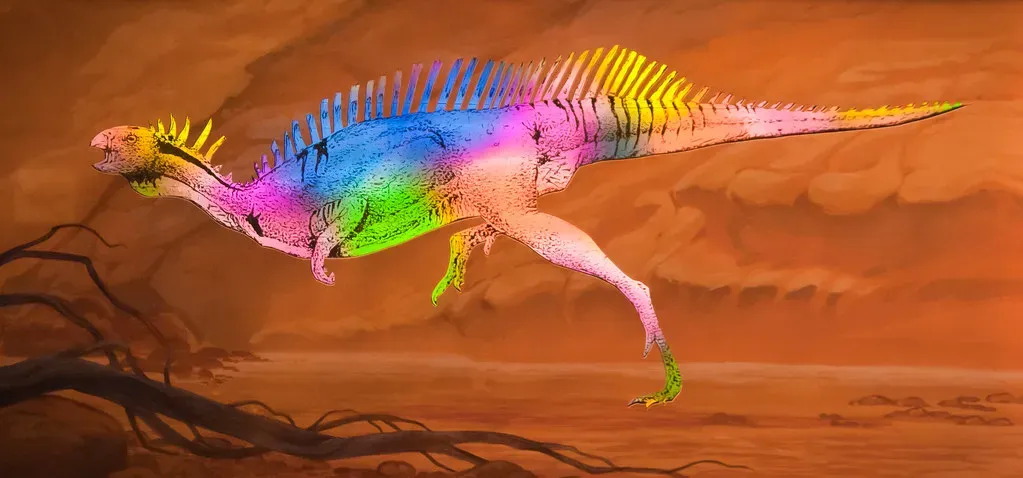
If any feathered dinosaur deserved a dramatic museum centerpiece, it’s the one nicknamed after a rainbow. Most visitors have never even heard its name. Paleontologists nicknamed this species a “rainbow dinosaur” because of the multiple iridescent colors documented across its head and neck feathers, a shimmering effect similar to a hummingbird’s throat.
This is arguably the single most visually spectacular color reconstruction in dinosaur science, and it remains almost completely absent from mainstream exhibit halls. Part of the issue is timing: Caihong was only formally described in 2018, well after most permanent museum galleries were already built and funded. That’s a fair excuse for a few years of lag, but not for a decade of silence.
Why It Stands Out
- Caihong juji was roughly duck- or crow-sized, with a bony head crest and long, ribbon-like feathers.
- It lived around 161 million years ago in Jurassic-era China, older than most other color-confirmed feathered dinosaurs.
- Its melanosomes closely matched those in modern hummingbird feathers, the earliest known evidence of iridescent, color-based display in the dinosaur lineage.
- It was formally described only in 2018, years after most dinosaur halls were already built and funded.
#3 – Feather Evidence Sat Unnoticed in a Museum Drawer for Decades
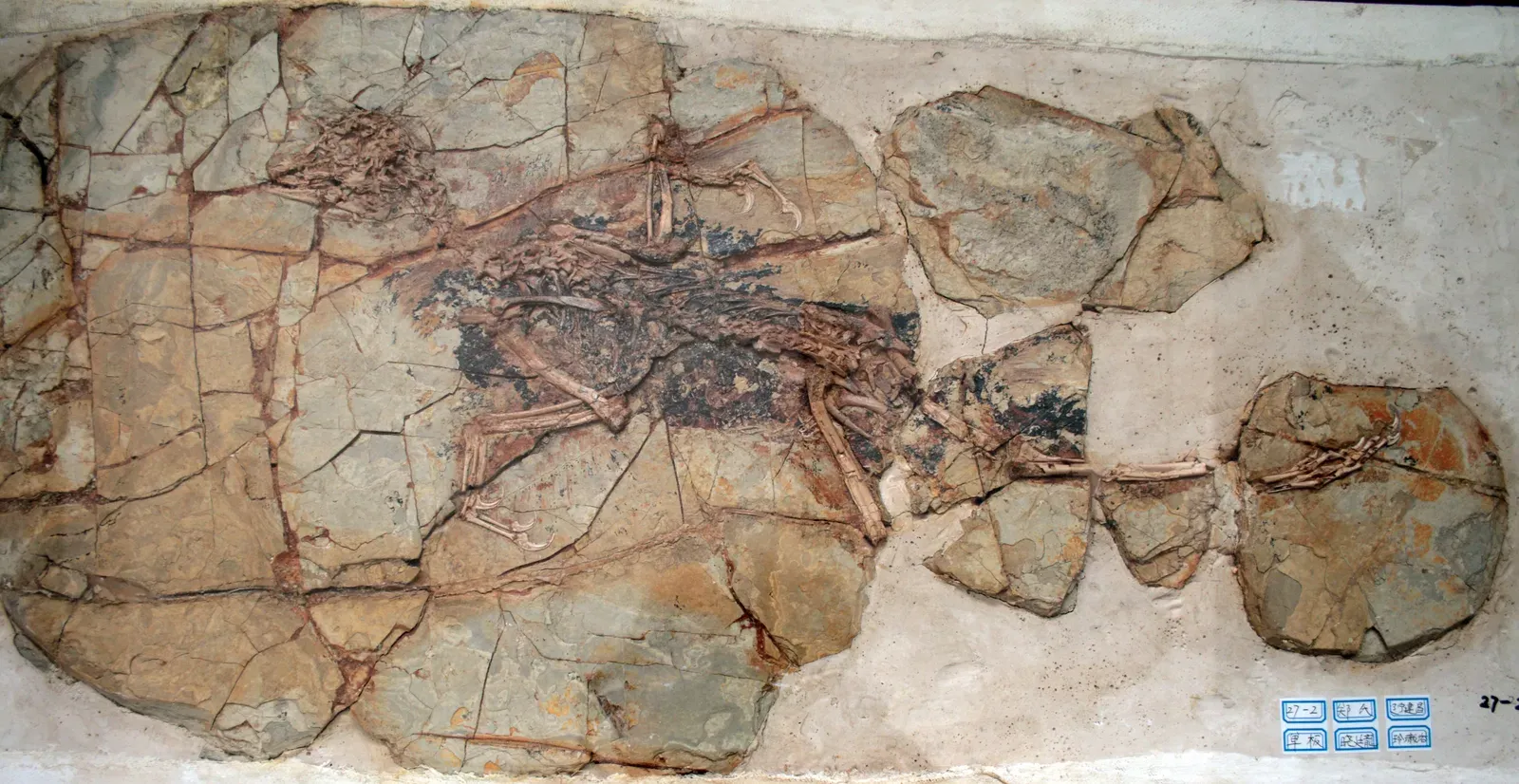
Sometimes the biggest feathered dinosaur discoveries aren’t dug out of the ground. They’re rediscovered on a shelf that’s been sitting there the whole time. One fossil with markings indicative of feathers had been in a museum collection for years, overlooked because the original collector likely wasn’t even thinking of the species as a feathered animal.
That specimen turned out to be Ornithomimus, and re-examination revealed a juvenile covered in downy, hair-like feathers, plus traces of standard feathers with a central shaft on an adult specimen. A major feathered dinosaur discovery had literally been sitting in storage the entire time, mislabeled by assumption rather than evidence. That raises an uncomfortable question: how many other fossils on display right now, or packed away in basements, are hiding feather traces nobody has bothered to look for because the display card already says “reptilian skin”?
#2 – One Museum Actually Did the Full Feathered Makeover. The Rest Haven’t Caught Up.
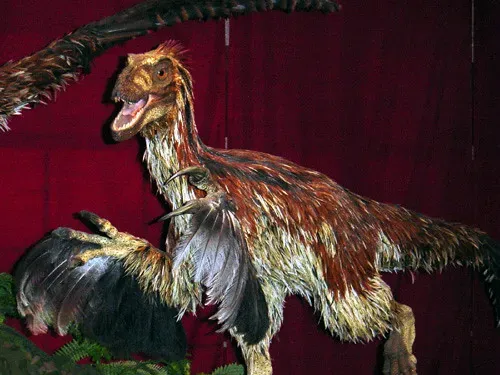
There is exactly one gold-standard example of what a truly updated feathered dinosaur hall looks like, and it makes almost every other museum look frozen in time by comparison. The American Museum of Natural History’s “Dinosaurs Among Us” exhibit made a deliberate choice: following the latest evidence, every dinosaur on display is covered in feathers.
Curator Mark Norell called it “really the first time dinosaurs have been portrayed in a true, state-of-the-art kind of way.” Even the exhibit’s own team admitted the broader industry lags behind; paleontologist Robert Bakker noted that pop culture might take a while to embrace feathered dinosaurs because it’s simply easier, and scarier, to stick with scaly green monsters. One flagship exhibit went all-in on feathers while thousands of smaller museums worldwide still haven’t touched their scaly casts. That gap between “the science exists” and “the display reflects it” is the entire theme of this list.
#1 – Museums Still Treat “Dinosaurs” and “Birds” as Two Separate Worlds
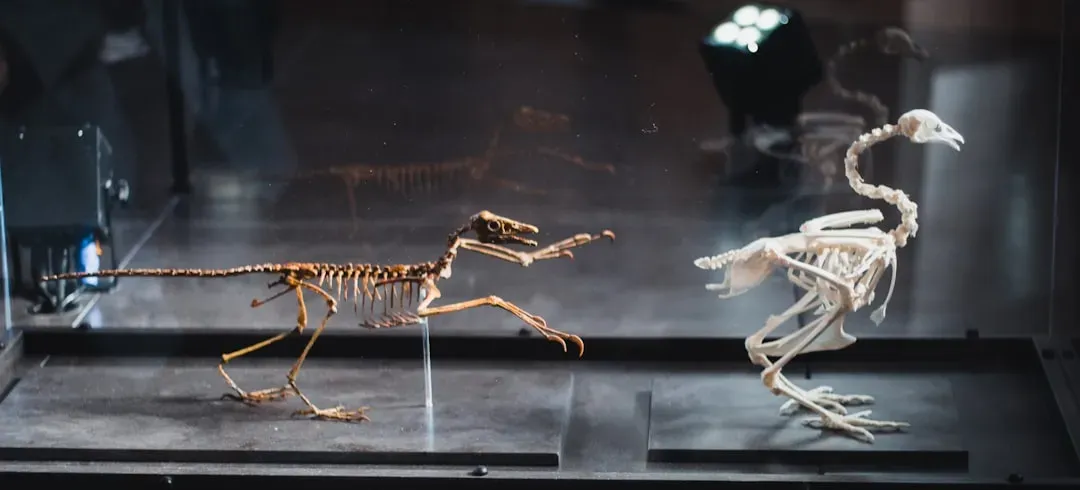
This is the granddaddy of every outdated exhibit on this list, and it’s conceptual, not cosmetic. Most museums still physically separate their dinosaur hall from their bird hall, as if the two groups aren’t even the same lineage.
It’s important that people understand dinosaurs are still among us.
Mark Norell, American Museum of Natural History
Norell isn’t speaking loosely: birds represent at least 13,000 living dinosaur species. The scientific consensus is that modern birds are living dinosaurs, descended from two-legged carnivorous theropods that survived the mass extinction by developing feathers, bigger brains, and smaller, more airborne bodies. Every sparrow at your bird feeder is, technically, a dinosaur, and almost no museum floor plan reflects that reality. Keeping “Dinosaurs” and “Birds” as separate wings isn’t a space-saving decision, it’s a failure to teach the single most important discovery in the field in the last thirty years.
Fast Facts
- Birds make up at least 13,000 living species, all technically dinosaurs.
- Modern birds descend from two-legged, carnivorous theropods, the same broad group that includes T. rex and Velociraptor.
- The lineage survived the mass extinction that wiped out every other dinosaur group by evolving feathers, sharper brains, and smaller, flight-ready bodies.
- Most museums still keep “Dinosaurs” and “Birds” in separate halls despite this settled science.
The Bottom Line
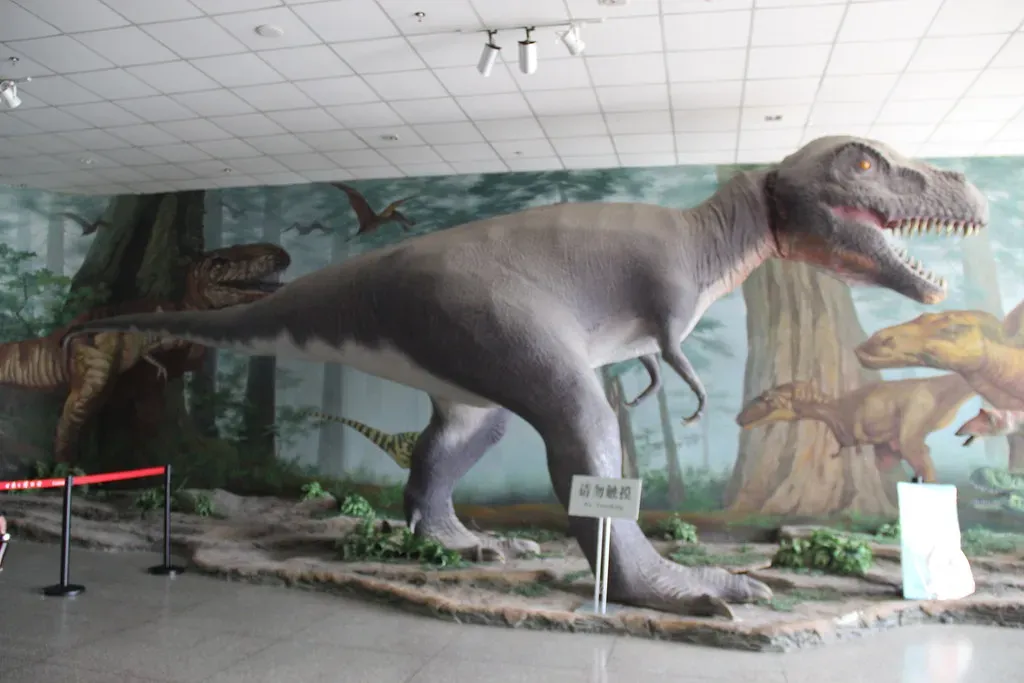
The science has been settled for years: feathers weren’t rare, T. rex’s cousins came in vivid color, and birds are dinosaurs, full stop. What hasn’t caught up is the physical infrastructure of museums themselves, stuck with expensive casts, outdated paint jobs, and exhibit halls that separate species that were never actually separate to begin with.
Some institutions, like the AMNH, have proven a full update is possible. Most simply haven’t bothered, and budget alone doesn’t fully explain that gap. At some point, sticking with the scaly, tail-dragging monster isn’t a funding problem, it’s a choice to keep selling nostalgia instead of teaching what we actually know. Which one of these outdated displays have you seen with your own eyes? Drop it in the comments.