
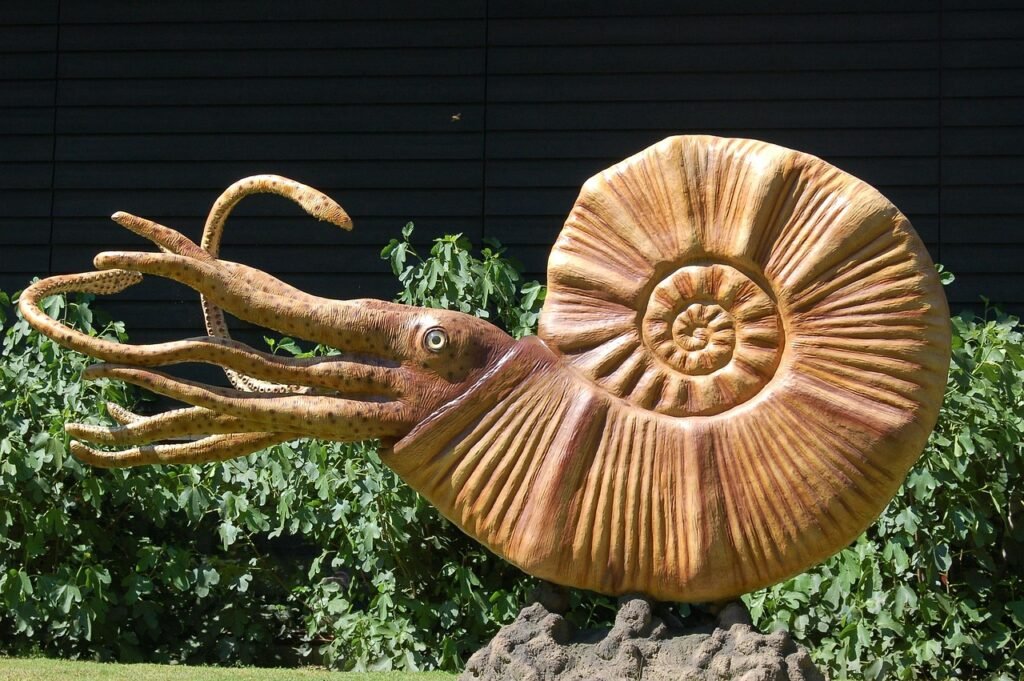
Most museum visitors assume every skeleton behind the glass is exactly what science intended it to be – precise, peer-reviewed, and permanent. But the truth is messier. For over 250 years, institutions have quietly displayed fossils, casts, and “missing links” that were later exposed as composites, misassembled skeletons, or outright forgeries, sometimes for a lifetime before anyone thought to double-check.
Some of these fooled entire scientific societies. Others fooled generations of schoolchildren who pressed their noses against the glass. Here’s what paleontologists and historians of science actually say happened once the plaster finally cracked.
#16 – Beringer’s Lying Stones
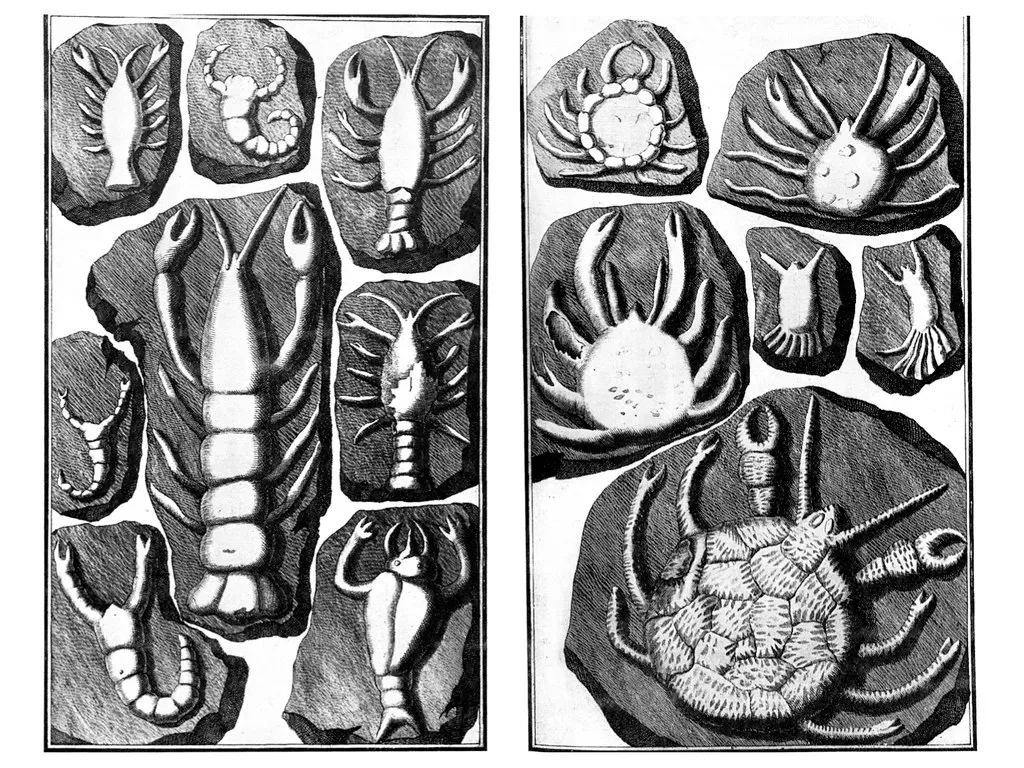
A university dean in 1725 Germany became so convinced his “fossils” were divine handiwork that he refused to believe his own eyes, even when the evidence turned against him.
Johann Beringer, dean of medicine at the University of Würzburg, hired local boys to dig for curiosities on Mount Eibelstadt. Two of his own colleagues, tired of his arrogance, carved nearly 2,000 stones into animals, symbols, and even Hebrew letters, then had the boys plant them for Beringer to “discover.”
Fast Facts
- Location: Mount Eibelstadt, just outside Würzburg, Germany
- Roughly 2,000 carved stones were planted, from insects to Hebrew script
- Beringer published a full book on the “discoveries” before the hoax unraveled
- He won a lawsuit against the pranksters, but his career never recovered
The most surprising part? He published an entire book about the stones before realizing he’d been played. Beringer, a respected physician with a serious interest in natural history, was so committed to his find that he kept digging even as students openly mocked him in the street. He won his court case against the hoaxers, but his reputation never recovered. Even stranger: the “lying stones” still exist, preserved in museums around the world with the same care given to genuine fossils.
#15 – The Cardiff Giant
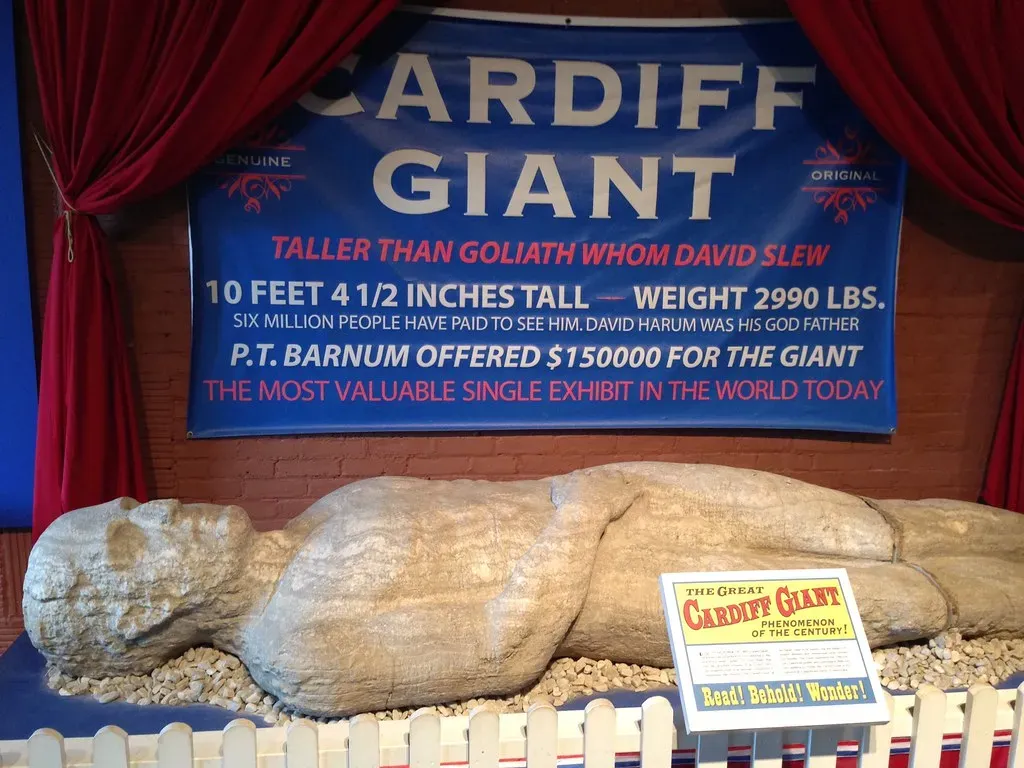
A “10-foot petrified man” fooled thousands of paying visitors before anyone thought to ask why a fossil looked suspiciously like fresh-cut gypsum.
The Cardiff Giant was carved from a block of gypsum, buried on a New York farm in 1868, and “discovered” a year later by workers digging a well. Newspapers called it proof of biblical giants. Farmers charged admission, and trains brought curious crowds by the thousands to view what was billed as a genuine fossilized man.
Most people assume the hoax was caught within days. It wasn’t. Scientists and clergy publicly debated its authenticity for weeks while the line to see it kept growing. Even after tool marks and chisel scratches were spotted on its surface, showmen kept charging admission anyway, because paying customers didn’t actually care whether it was real. That’s a pattern you’ll see again and again on this list: profit outlasting proof.
#14 – The Calaveras Skull
A human skull pulled from a California gold mine in 1866 was presented as proof that humans lived alongside extinct Pliocene animals millions of years ago.
Miners handed the skull to a state geologist who declared it ancient, based on the deep mineshaft layer it supposedly came from. Newspapers and lecture halls across the country treated it as settled science for years. Local miners, however, told a different story – several later admitted the skull may have been planted as a practical joke on the humorless geologist running the survey.
The most surprising fact: modern dating methods eventually showed the skull was barely a few thousand years old, not millions. Radiocarbon testing conducted long after the original claim confirmed it was a relatively recent human skull, not evidence of deep antiquity at all. It sat in scientific literature as a genuine curiosity for decades before anyone applied rigorous dating to settle the debate for good.
#13 – Nebraska Man’s Peccary Tooth
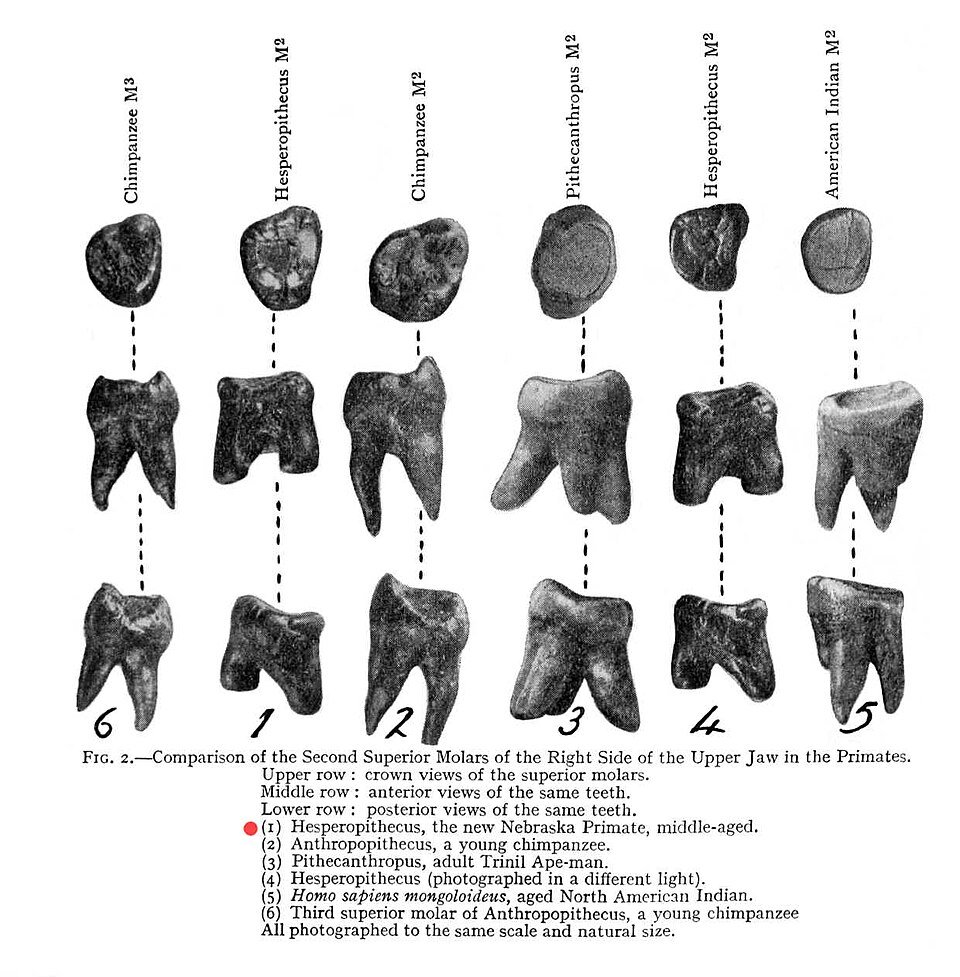
An entire “ape-man” species was built, illustrated, and even entered into a courtroom trial, based on a single worn-down tooth.
In 1917, rancher and part-time geologist Harold Cook found one molar in the Nebraska badlands. Five years later, museum president Henry Fairfield Osborn declared it belonged to the first anthropoid ape ever found in North America. Illustrators ran with the announcement, drawing a full reconstructed face and body for newspapers, all based on that single tooth.
Here’s the twist nobody expected: it wasn’t a primate at all. Five years after the announcement, Osborn’s own colleague William King Gregory concluded the tooth most likely came from an extinct peccary, a pig-like animal. “Nebraska Man” had briefly fit the museum’s ambitions a little too well, and the retraction made front-page news, but the drawings had already spread everywhere.
#12 – Peking Man’s Vanished Bones
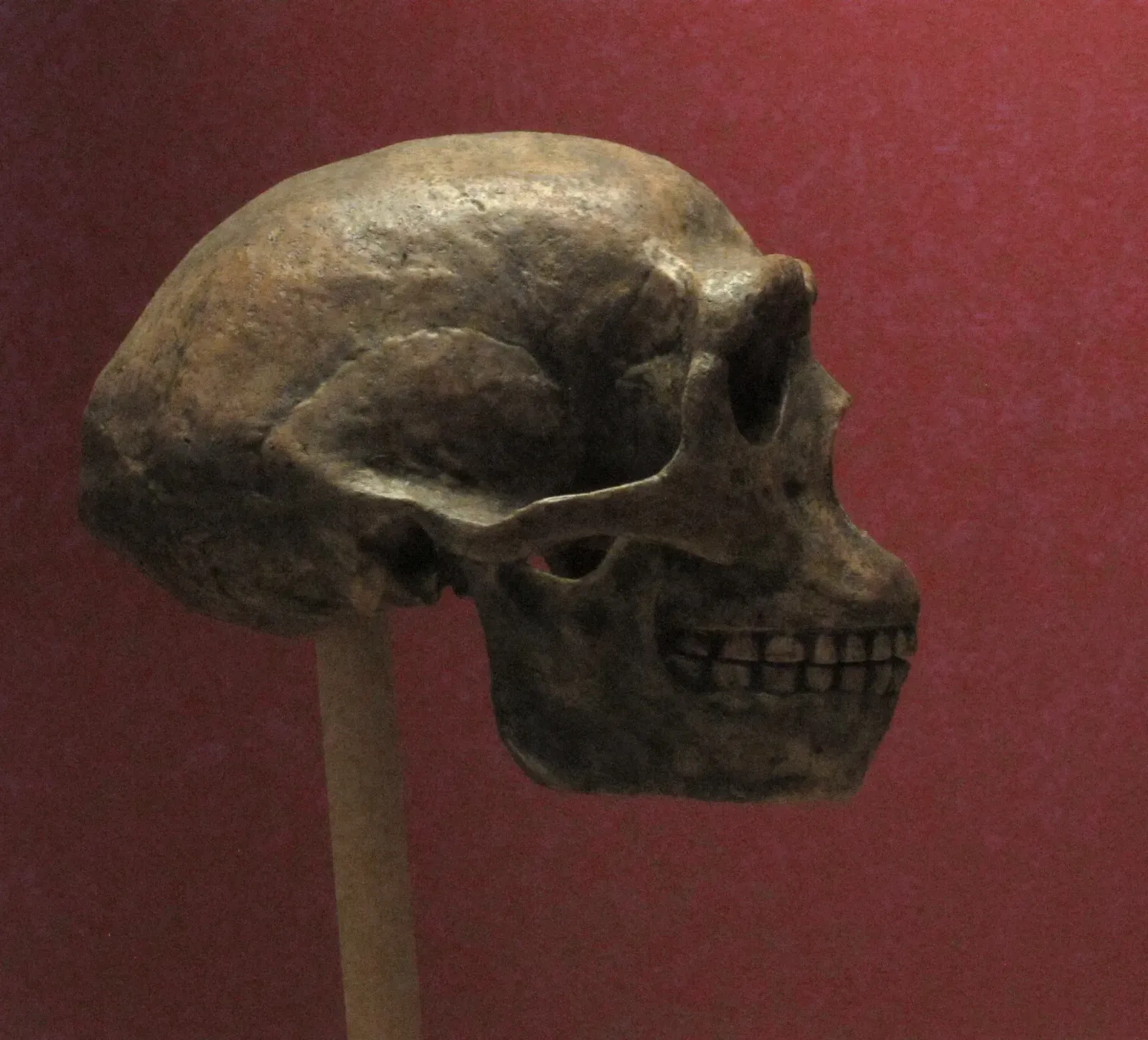
Some of the most famous human-ancestor fossils on Earth disappeared during World War II, meaning almost everyone who has ever studied them has only ever touched a plaster copy.
The original Peking Man fossils, unearthed in China during the 1920s and ’30s, were being shipped out of the country for safekeeping in 1941 when they vanished during the chaos of the war. They have never been recovered. What remains in scientific circulation are detailed casts and measurements made by researcher Franz Weidenreich before the originals disappeared.
Most textbooks never mention that the “fossils” pictured are actually copies. For decades, entire theories about early human anatomy were built exclusively from those casts, with no way to cross-check them against the real bone. Only in recent years have advanced imaging techniques on the surviving casts let scientists re-examine details earlier researchers may have gotten wrong.
#11 – Elasmosaurus’s Backward Head
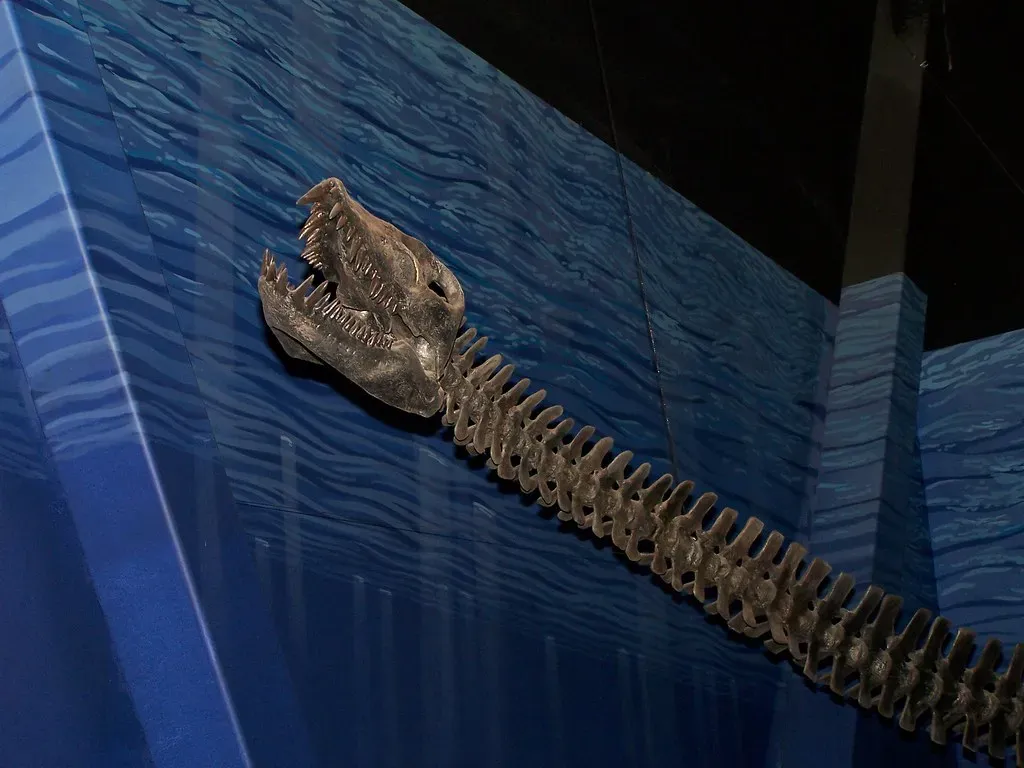
One of the most infamous blunders in paleontology history involved putting a marine reptile’s skull on entirely the wrong end of its own skeleton.
Paleontologist Edward Drinker Cope originally reconstructed Elasmosaurus with the skull mounted on the tip of the tail. At the time, he was best known as an expert on lizards, which have short necks and long tails, and no one had ever seen a plesiosaur the size of Elasmosaurus before.
The most surprising part is who actually caught the mistake. It wasn’t his rival. Othniel Charles Marsh later claimed he’d spotted the error himself, gleefully airing it in an 1890 newspaper article, but it was actually Joseph Leidy who pointed out the problem at a Philadelphia academy meeting back in 1870. Illustrations with the backward reconstruction had already circulated in print for over a year before the correction ever reached the public.
#10 – Brontosaurus’s Camarasaurus Skull
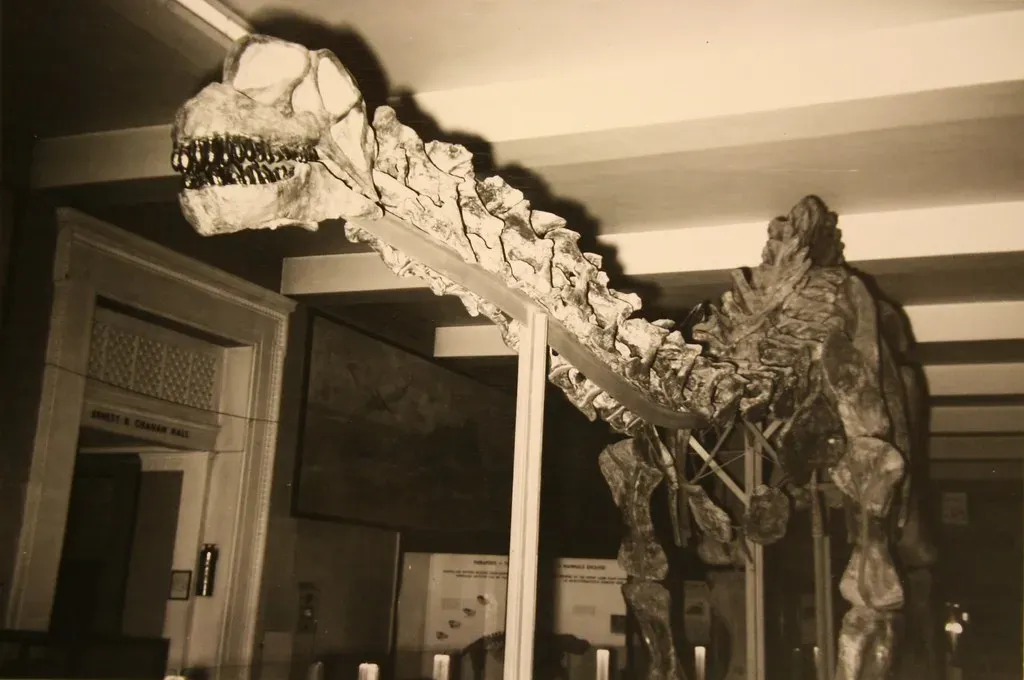
For nearly three-quarters of a century, one of the most famous dinosaurs in the world was displayed wearing a head that belonged to a completely different species.
Even though O.C. Marsh had published a full restoration of the dinosaur, then called Brontosaurus, no skull had actually been found with the skeleton. Marsh simply used a skull thought to belong to Camarasaurus, recovered from a different site entirely, to finish his mount. Museums across the country copied his version without question.
Quick Compare
- Old head: a Camarasaurus-style skull, borrowed from a separate site
- Real skull: recovered from Dinosaur National Monument, then filed away unrecognized
- Time on display with the wrong head: roughly 75 years
- Fix: Peabody Museum swapped in a cast of the correct skull in 1981 and lifted the dragging tail
Here’s the part that stuns visitors today: the real skull had actually been found decades earlier, sitting unrecognized. A skull recovered at Dinosaur National Monument was, in fact, the only legitimate skull ever found from an apatosaurine up to that point. In 1981, the Peabody Museum finally replaced its mount’s head with a cast of that correct skull, and lifted the dragging tail while they were at it, giving the animal a properly shaped head almost a century after it was first put on display.
#9 – AMNH’s Patchwork Sauropod
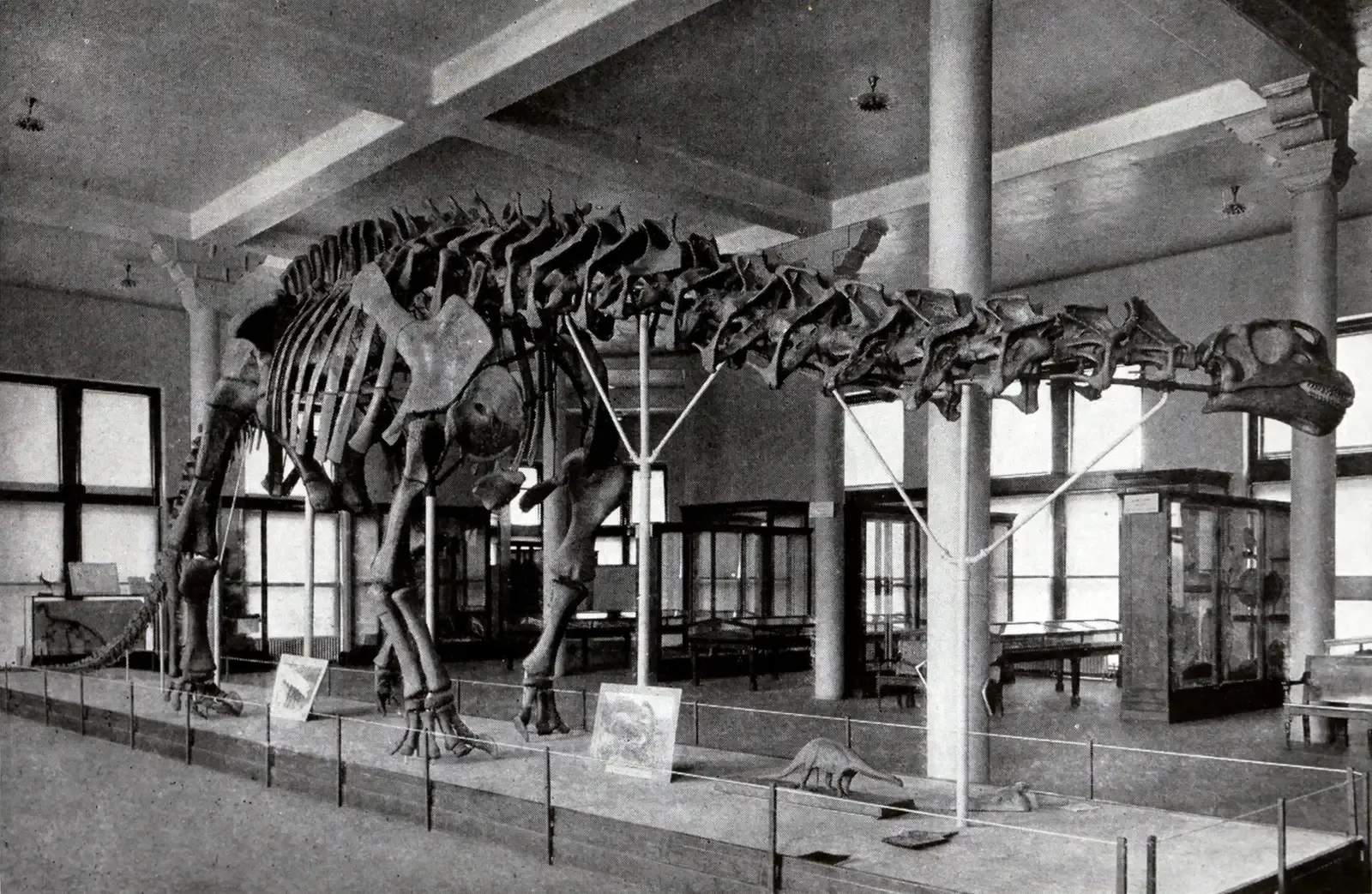
New York’s most famous dinosaur skeleton wasn’t actually one dinosaur. It was assembled from parts of at least four different animals, held together with sculpted plaster and borrowed casts.
The museum’s “Brontosaurus” took six years to mount and combined four separate specimens collected from Como Bluff, Wyoming. Since the team never found a matching head, they gave it a sculpted skull modeled after a different sauropod, Camarasaurus, and filled in the missing limb bones with casts borrowed from Marsh’s own Apatosaurus specimen.
Most visitors had no idea the skeleton in front of them was a mix-and-match creation. No placard mentioned that entire limb sections were plaster stand-ins sculpted to resemble bone. The mount stood as a “complete” specimen in the public imagination for generations, even though every expert working behind the scenes knew large portions were educated guesswork rather than actual fossil.
#8 – Diplodocus “Dippy’s” Dragging Tail
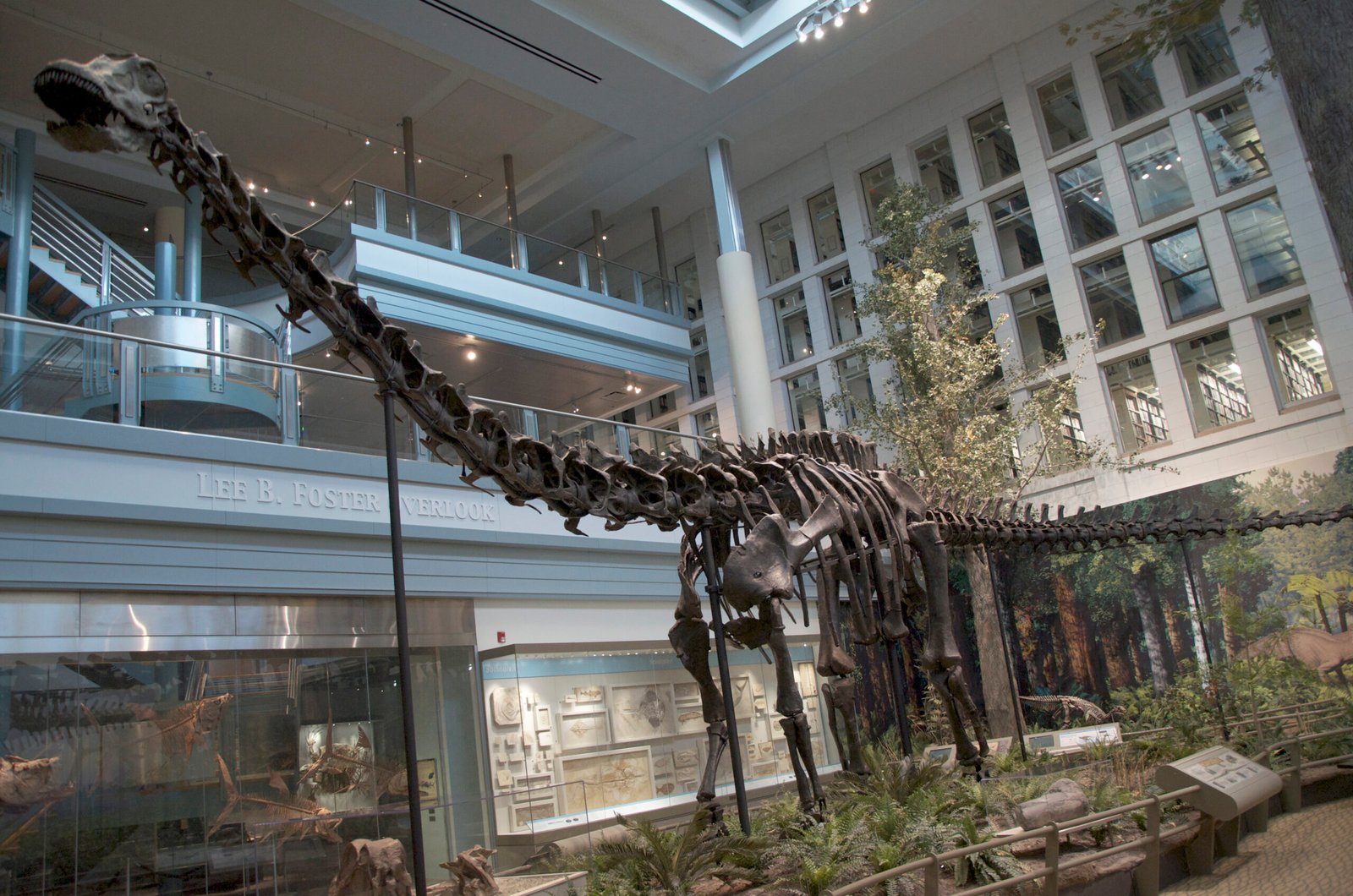
Casts of one particular dinosaur skeleton were shipped to museums across the globe in the early 1900s, and every single one of them got the tail wrong.
Known affectionately as “Dippy,” this Diplodocus cast became one of the most reproduced dinosaur skeletons in history, gifted by industrialist Andrew Carnegie to museums from London to Berlin to Buenos Aires. For nearly a century, every version of Dippy was mounted with its long tail drooping down and touching the floor, exactly as sculptors originally imagined it.
The surprising truth: fossilized dinosaur footprint trails never show any tail-drag marks at all. Researchers eventually determined there was no evidence of a dragging tail in preserved sauropod tracks, meaning the animal likely held its tail aloft like a counterbalance while walking. Museums worldwide had to physically re-engineer their Dippy casts, lifting decades-old tails off the ground one skeleton at a time.
#7 – Stegosaurus’s Plate Puzzle
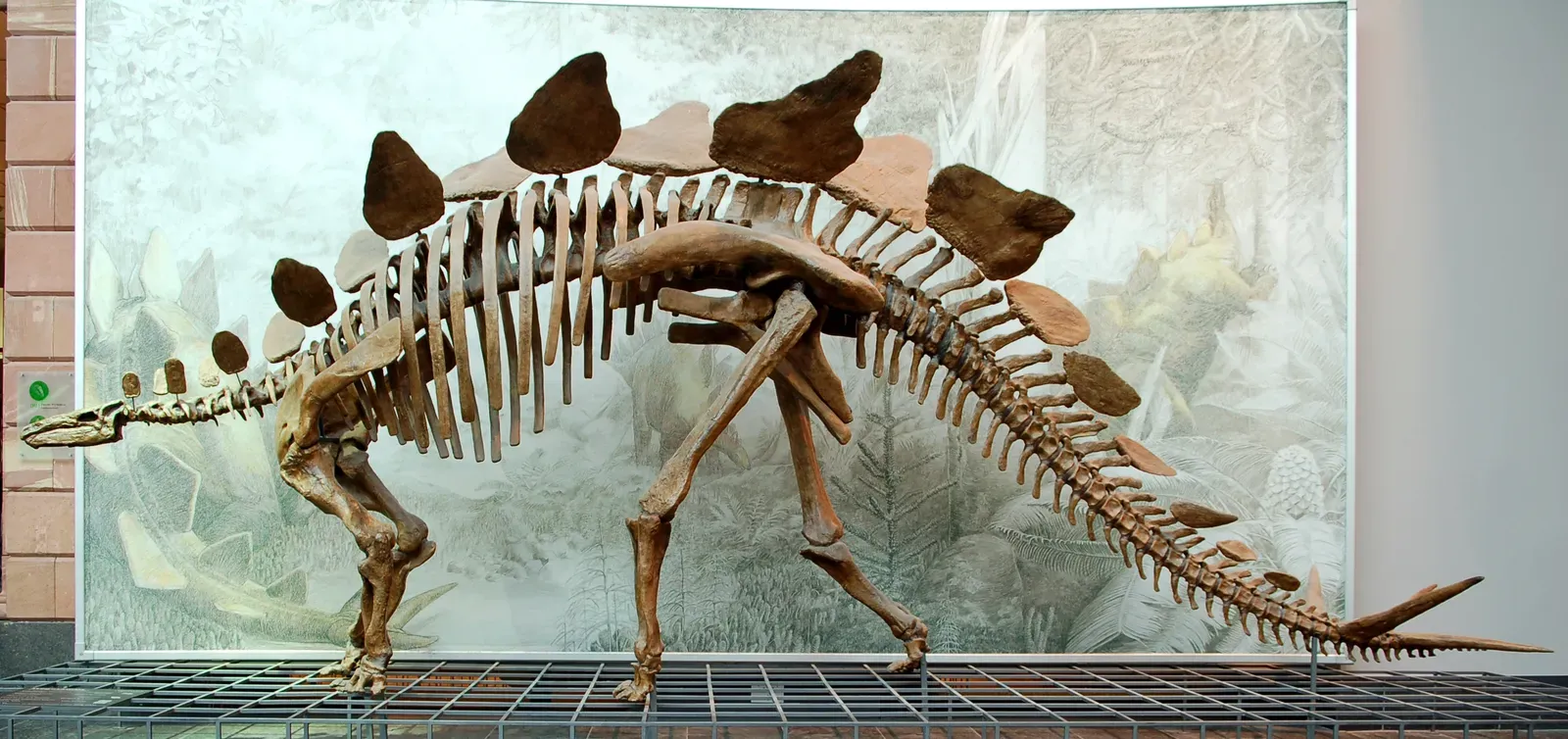
Nobody could agree for a hundred years whether this dinosaur’s iconic back plates lay flat like armor or stood upright like sails, and museums quietly displayed both wrong versions.
Early reconstructions placed the bony plates flat against the animal’s back, functioning as protective armor similar to a turtle shell. Other paleontologists insisted they stood in a single straight row down the spine, like fence posts. Both interpretations were mounted in various institutions and taught as settled fact to millions of visitors.
Here’s the surprising resolution: the plates likely stood upright in two alternating, staggered rows. Later analysis of plate symmetry, and how they attached to skin rather than bone, supported this staggered arrangement, hinting at a display or temperature-regulation function rather than pure armor. Many mounted skeletons had to be physically re-plated once the staggered-row interpretation gained wider acceptance among specialists.
#6 – T. Rex’s Tripod Tail-Drag Stance
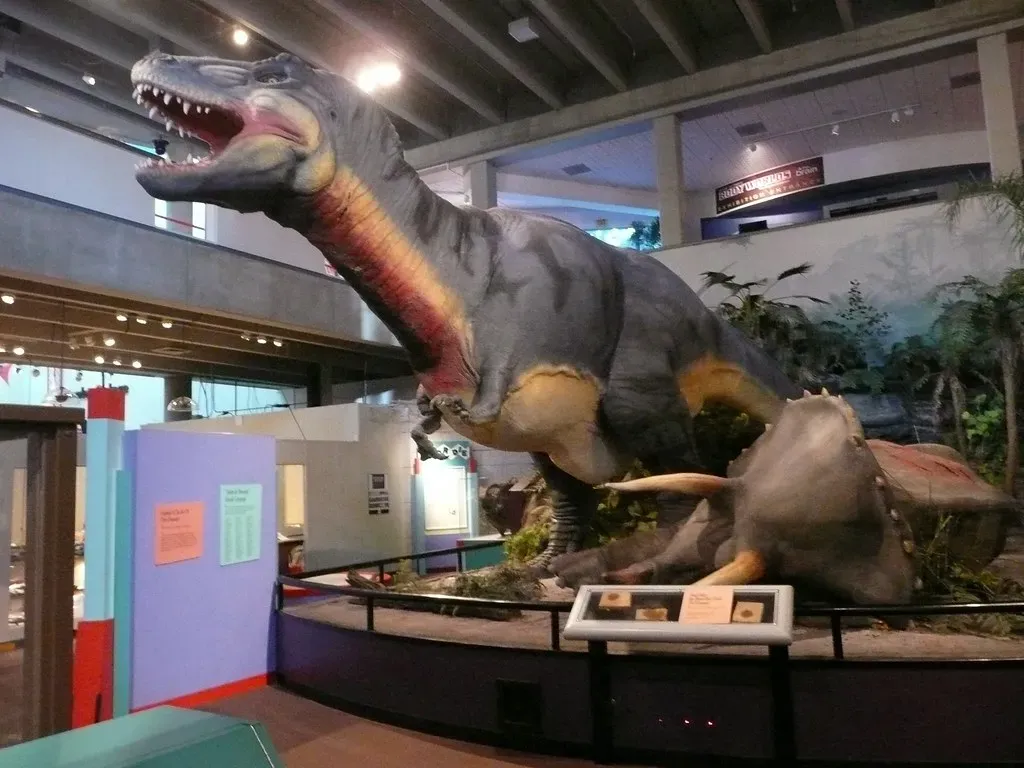
The most famous predator in history spent nearly seventy years standing in a pose that real anatomy would never have allowed.
Early twentieth-century mounts displayed Tyrannosaurus rex upright like a kangaroo, tail dragging along the ground, torso nearly vertical. This “tripod” posture appeared in museum halls, movies, and textbook illustrations for generations, cementing itself as the definitive image of the animal in the public imagination.
At a Glance
- Old pose: upright torso, tail dragging on the ground, kangaroo-style stance
- New pose: horizontal spine, tail raised as a counterbalance
- Time spent on display in the wrong pose: roughly 70 years
- Correction driven by: the “Dinosaur Renaissance” biomechanics research of the 1970s-80s
The most jarring fact: the tail-dragging pose would have made walking almost physically impossible for an animal this size. A wave of biomechanical research during the so-called “Dinosaur Renaissance” of the 1970s and ’80s showed the spine was actually held horizontally, balanced by the tail rather than dragging it. Nearly every major T. rex mount in the world had to be physically rebuilt into the now-familiar horizontal stance.
#5 – Iguanodon’s Nose-Horn Thumb
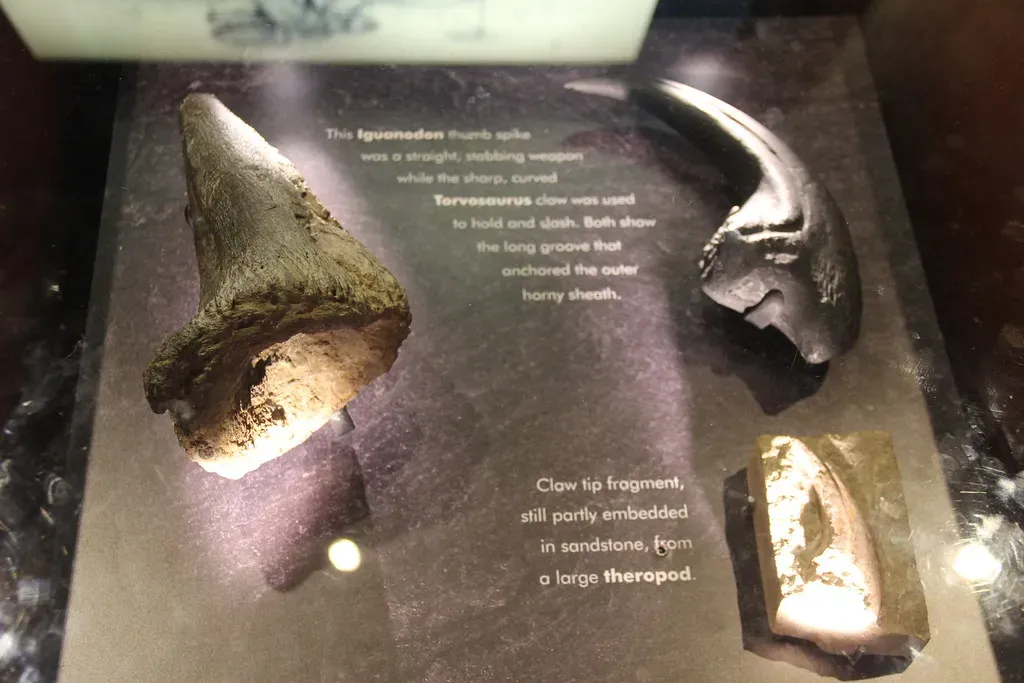
Life-size concrete dinosaur statues unveiled to the public in the 1850s gave this dinosaur a horn on its nose, using a bone that actually belonged on its hand.
The Crystal Palace Iguanodon statues, built for a London exhibition, were sculpted with a conical spike positioned squarely on the snout, based on the best guesswork available from a handful of disconnected bones. Crowds marveled at the sculptures for decades, treating them as scientifically accurate depictions of a living, breathing prehistoric world.
The surprising correction: that “nose horn” was actually a thumb spike. Complete skeletons unearthed in a Belgian coal mine in 1878 finally revealed the true skeletal layout, showing the spike belonged on the hand, likely used for defense or foraging, not the face at all. By then, the inaccurate statues had already stood on public display, unquestioned, for roughly a quarter century.
#4 – Hallucigenia’s Upside-Down, Backward Reconstruction
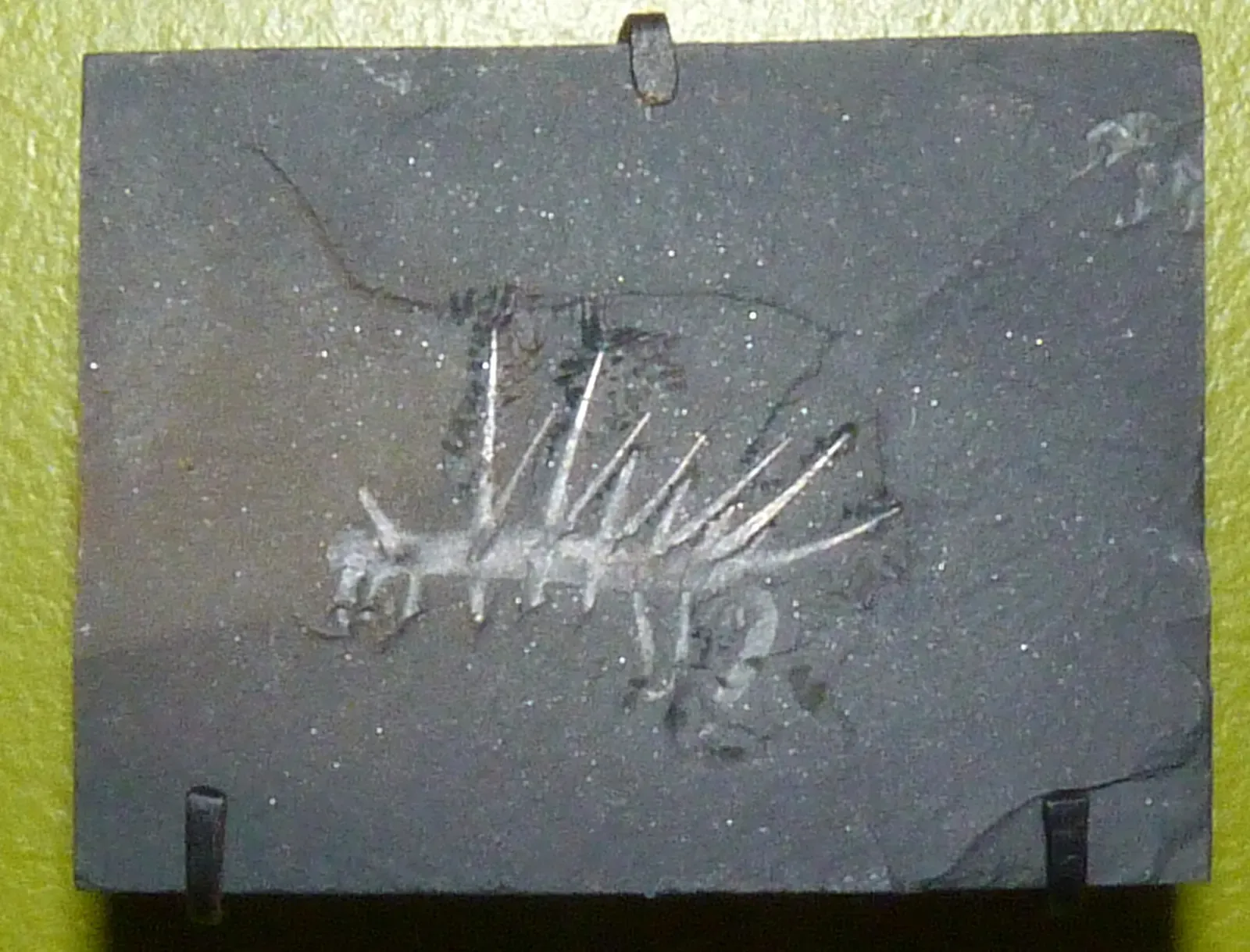
A tiny worm-like Cambrian fossil was displayed in scientific illustrations completely inverted, walking on what were actually its own defensive spikes.
When first formally described in the 1970s, this bizarre creature was interpreted as walking on rigid spines along its back, with a row of soft tentacles used for feeding along its underside. Textbooks reproduced this odd, alien-looking configuration as a textbook example of the strange body plans that emerged during the Cambrian explosion.
Here’s the twist that embarrassed the field: it was upside down and backward. Later specimens with better preservation showed the “legs” were actually paired spines meant for defense against predators, while the true walking legs and head had been misidentified as the tail. The corrected version finally emerged roughly two decades after the original reconstruction had already spread through museum displays and academic papers alike.
#3 – Archaeopteryx’s Forgery Accusation
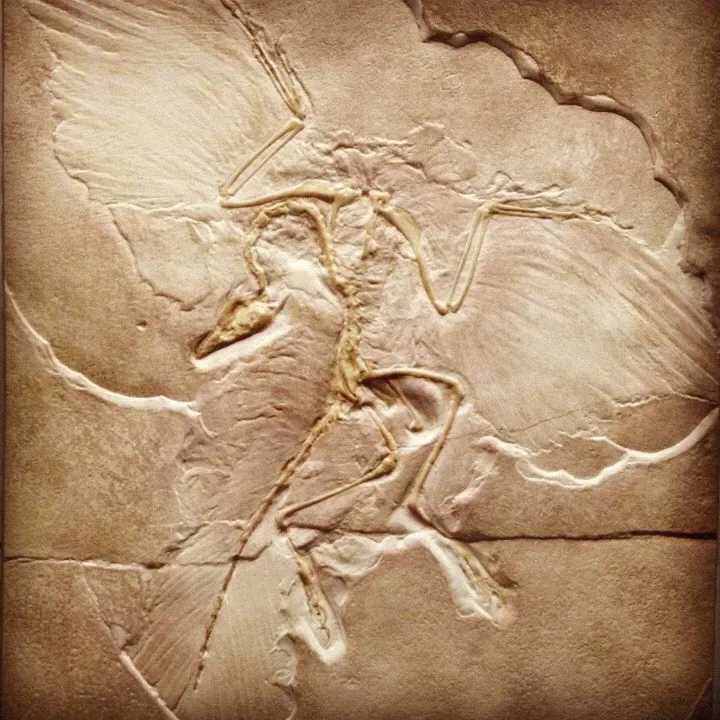
One of the most important transitional fossils ever found spent a tense stretch of the 1980s facing public accusations that its feather impressions had been faked entirely.
A pair of prominent scientists publicly claimed the feather impressions surrounding the specimen’s skeleton looked suspiciously added on, possibly pressed into wet cement decades after the original slab was discovered, in order to fabricate a missing link between reptiles and birds. The claim made international headlines and briefly threw doubt on one of paleontology’s most treasured icons.
Most people never heard how thoroughly the accusation was debunked. Detailed examination using specialized imaging revealed fine cracks running consistently through both the feather impressions and the surrounding rock matrix, proving the feathers and stone had fossilized together, not been added afterward. The controversy fizzled within a couple of years, but for a while, one of science’s most celebrated fossils sat under a very public cloud of suspicion.
#2 – Archaeoraptor: The Composite Fraud
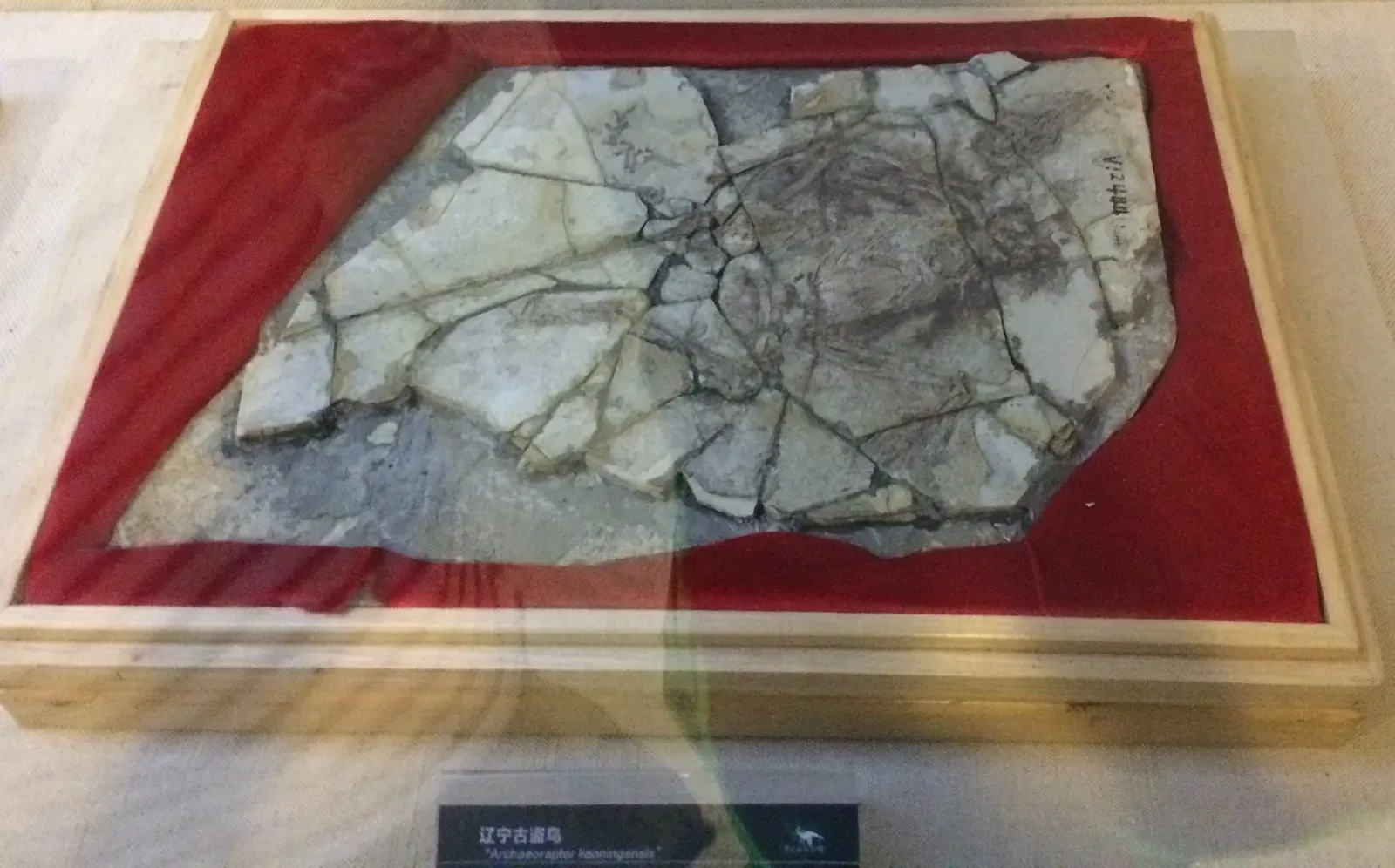
A “missing link” between dinosaurs and birds was unveiled with major fanfare in a national magazine, before anyone realized it had literally been glued together from separate fossils.
Announced amid huge publicity around the turn of the millennium, this feathered specimen was presented as compelling proof of the dinosaur-to-bird evolutionary transition. Smuggled out of a fossil-rich region and pieced together by dealers before any scientific vetting, the specimen circulated through the media pipeline faster than rigorous peer review could catch up.
Worth Knowing
- Unveiled with major publicity around 1999, before formal peer review was complete
- Origin: smuggled fossil material from a fossil-rich region of China
- The composite mixed the torso of one bird-like creature with the tail of an unrelated small dinosaur
- CT scans exposed the seam within roughly a year of the public unveiling
The most damning discovery: the tail belonged to an entirely different animal than the body. CT scans eventually revealed the specimen was a composite forgery, combining the torso of one primitive bird-like creature with the tail of an unrelated small dinosaur, physically cemented together to look seamless. It had already been publicly unveiled and celebrated worldwide before the fraud was formally identified and retracted.
#1 – Piltdown Man: The 41-Year Human Fraud
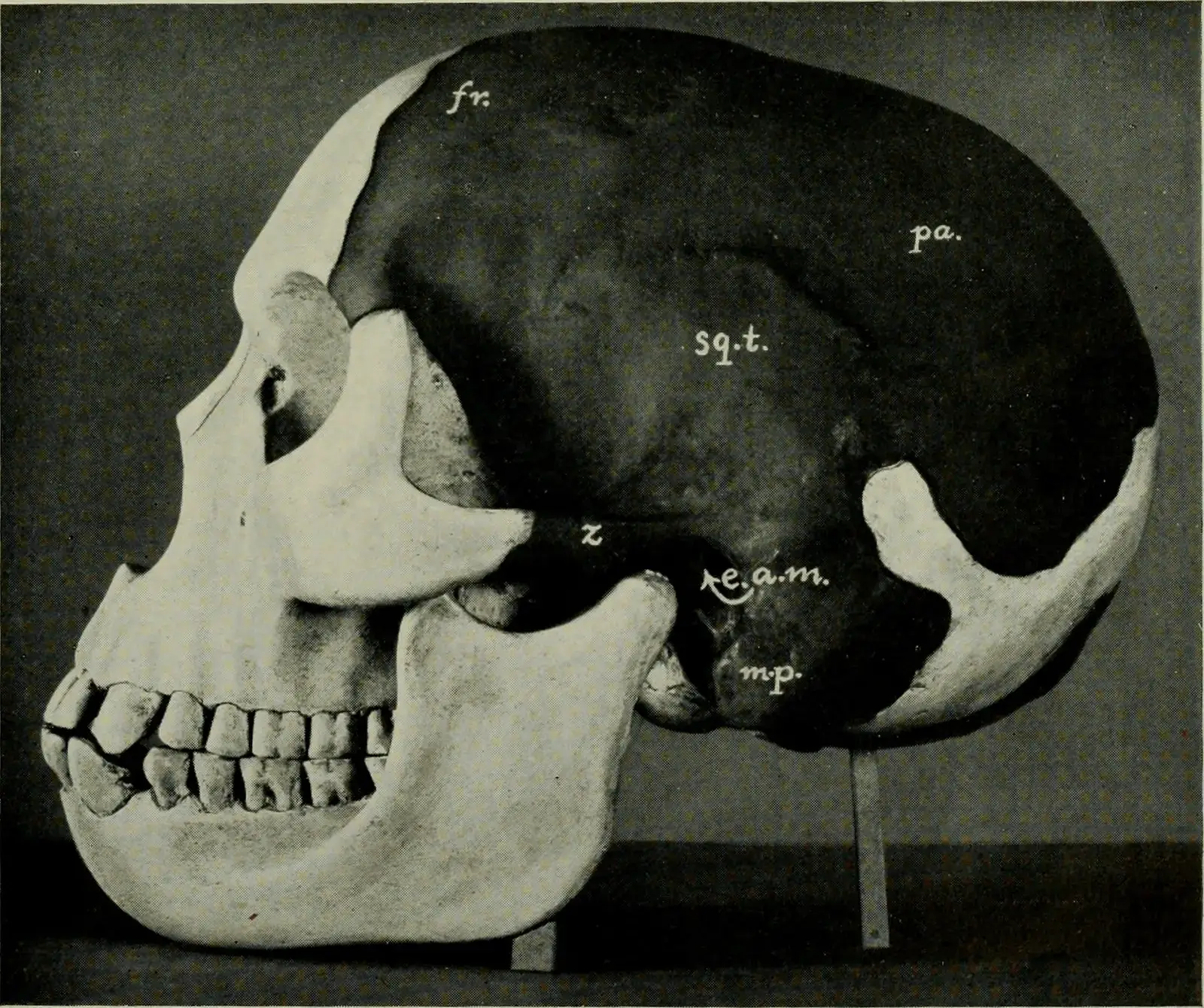
For four decades, one of the most celebrated “missing link” fossils in human evolution sat in a major museum’s collection, and it was an orangutan jaw filed down and stained to look ancient.
Unveiled in England in the early twentieth century, the specimen was presented as a genuine ancient human ancestor combining an ape-like jaw with a distinctly human-shaped skull. Prominent scientists across Europe accepted it almost immediately, folding it into textbooks, lectures, and academic debates about human origins for an entire generation.
The most shocking detail: chemical testing that could have exposed it existed for years before anyone finally used it. Fluorine dating, a method capable of estimating a bone’s age from mineral absorption, wasn’t properly applied to the specimen until the early 1950s. Once tested, the jaw and skull were revealed to be from completely different, much younger sources, deliberately treated with chemicals and files to fake the appearance of extreme age. It had fooled the scientific establishment for 41 years.
The Bottom Line
Here’s the uncomfortable pattern running through every single one of these stories: institutional trust, not evidence, kept these fossils on display long after they should have been questioned. From Piltdown Man’s four-decade deception to Brontosaurus wearing the wrong head for nearly seventy years, the common thread isn’t stupidity. It’s how rarely anyone with authority bothers to re-check a “settled” specimen.
Frankly, that should worry visitors more than it seems to. Museums love certainty, but paleontology runs on revision, and the next “iconic” skeleton could just as easily be sitting on borrowed bones right now. Which of these surprised you the most? Did we miss a fossil fake that fooled you too? Drop it in the comments.