You walk into a natural history museum and assume what’s standing in front of you is settled science, bolted together by experts who got it right the first time. That’s the whole appeal of a museum: permanence, authority, a skeleton that isn’t going anywhere.
Except it turns out some of the most famous displays on Earth have quietly been unbolted, dismantled and rebuilt from scratch after researchers realised the original version was flat-out wrong. Dinosaur poses, whale skeletons, even our own ancestors have all gone under the wrench in front of millions of unsuspecting visitors, and the reasons why are stranger than you’d expect. Here are 16 exhibits that had to be torn down once the evidence finally caught up with the display case.
#16: The Classic “Kangaroo” T. rex That Had To Be Taken Apart
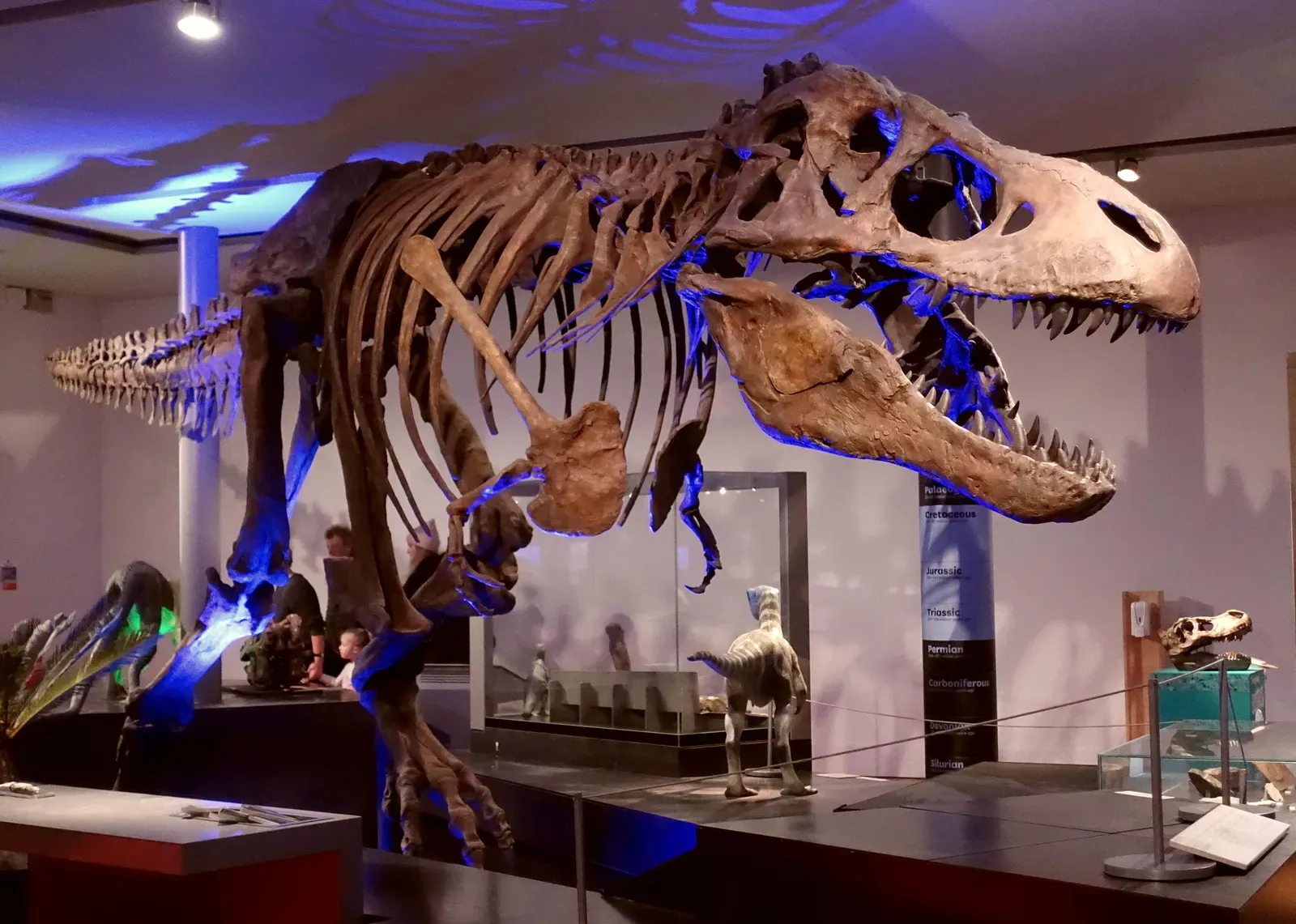
For most of the 20th century, the world’s most famous Tyrannosaurus rex mounts stood bolt upright, tail dragging on the floor like a giant tripod. It looked dramatic on postcards, and it was completely biomechanically impossible.
By the 1970s, research on joints and balance showed that T. rex actually carried its spine nearly horizontal, tail held rigid as a counterweight, more like a murderous seesaw than a Godzilla extra. At the American Museum of Natural History, technicians literally unbolted the iconic mount generations of kids had grown up with and rebuilt it low and dynamic, tail off the ground for good. Paleontologists now openly call the old tripod pose flat-out wrong, but that’s nothing compared to what happened to the dinosaur down the hall.
#15: Diplodocus “Dippy” And The Tail That Finally Came Off The Floor
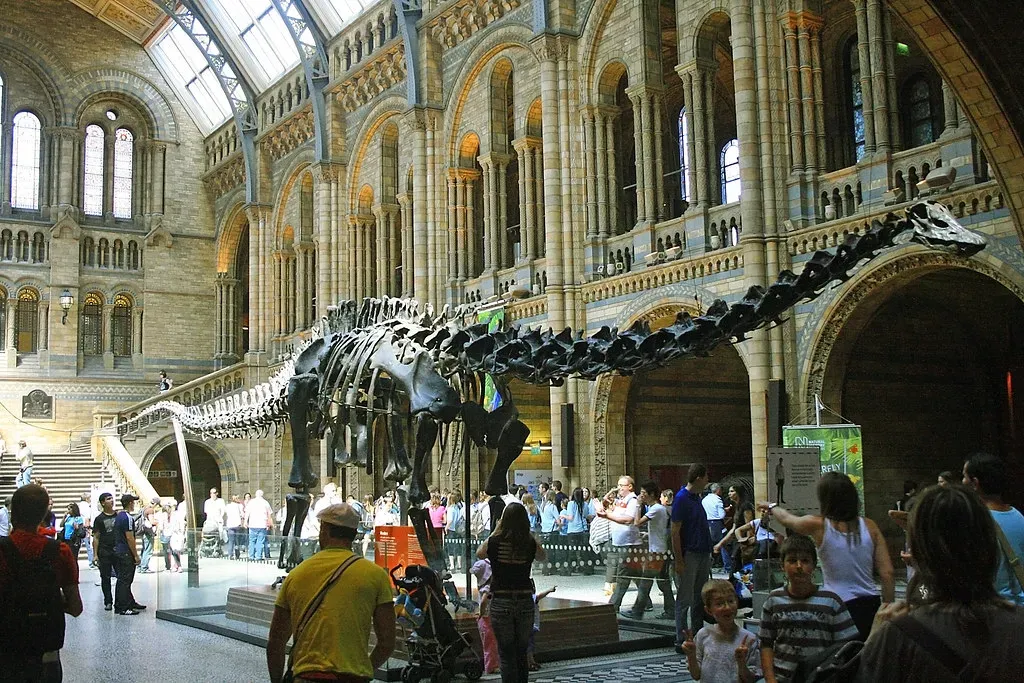
If you grew up with the famous Diplodocus cast nicknamed “Dippy,” you probably remember a huge, swamp-dwelling lizard with its tail resting politely on the ground. Early 1900s reconstructions treated long-necked sauropods as sluggish giants, and museum mounts followed that assumption for decades.
Only later did fossil trackways and biomechanics reveal that these animals held their tails high and stiff, never dragging them like oversized lizards. When London’s Natural History Museum refurbished its central hall, Dippy went on tour and came back with a more anatomically plausible stance: tail arched clear of the floor, neck adjusted, posture tightened. Those scuff-mark tail drags in vintage dioramas are now treated as pure fantasy, and the revision changed how artists paint sauropods everywhere. Most visitors barely noticed the tweak, but the whale that eventually replaced Dippy caused an even bigger rethink.
Fast Facts
- Dippy is a plaster cast, not real bone, based on 1898 Wyoming fossils
- The skeleton toured multiple UK venues before its final rehang
- Modern mounts hold the tail elevated instead of resting on the ground
- The rework also adjusted neck posture to reflect current sauropod biomechanics
#14: London’s Blue Whale “Hope” Went From Static Ceiling Prop To Diving Giant
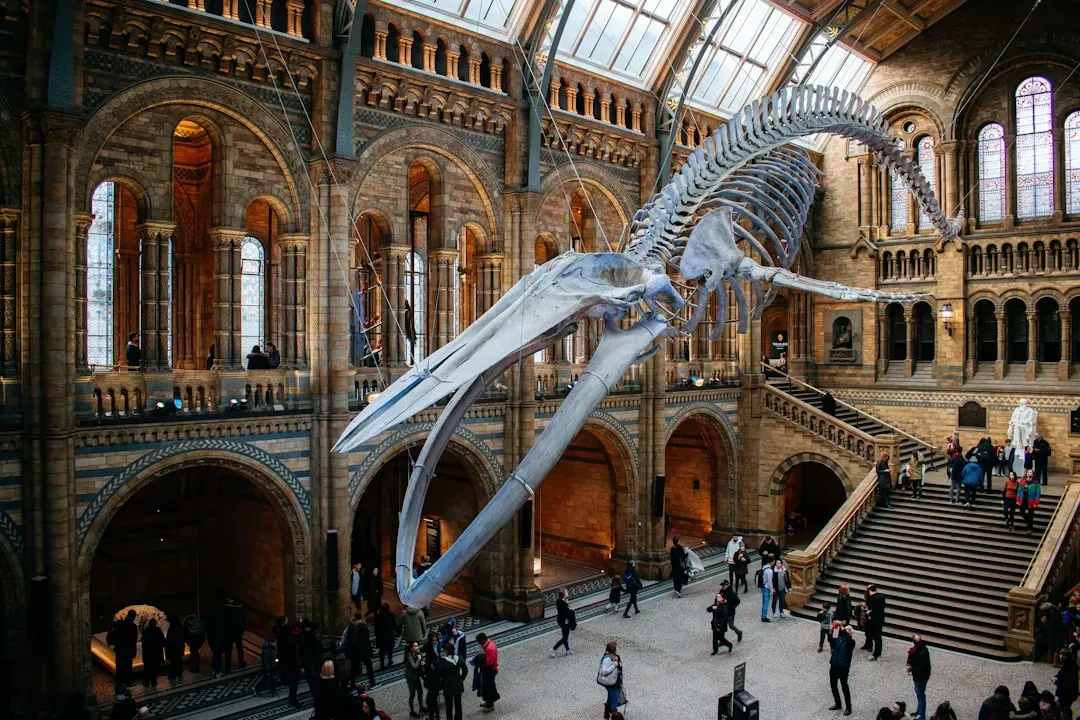
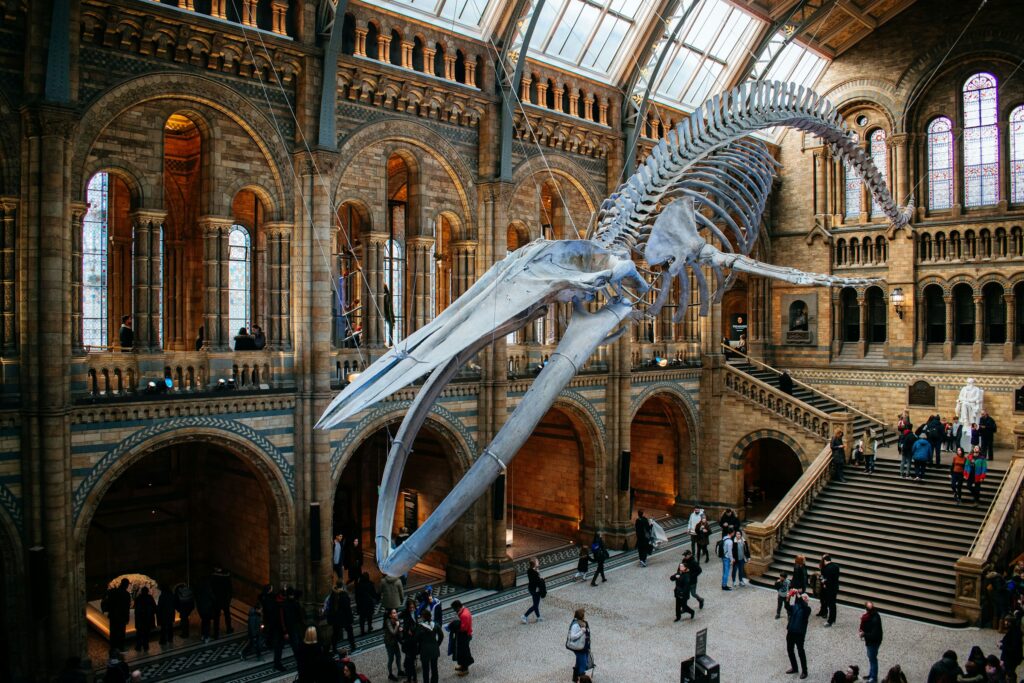
When London’s Natural History Museum replaced Dippy with a blue whale skeleton, most of the public outrage focused on losing a beloved dinosaur. What fewer people realised is that the whale itself, nicknamed “Hope,” had spent decades displayed in a flat, lifeless pose in the mammals gallery.
By 2017, fresh research on feeding behaviour showed that a truly lifelike blue whale isn’t a straight, neutral shape at all; it lunges and rolls through dense clouds of krill. Engineers dismantled the entire 128-year-old skeleton and rehung it in Hintze Hall mid-dive, jaws open in a feeding lunge, with custom metalwork built to protect the fragile old bones. The new pose also corrected the spinal curvature and flipper angles to match living whales instead of old whaling-era diagrams. Nostalgic visitors still insist the dinosaur should have stayed, but scientifically the whale upgrade wasn’t even the museum’s most extreme marine correction.
#13: Fin And Grey Whales Were Hung Like Ships, Not Swimmers
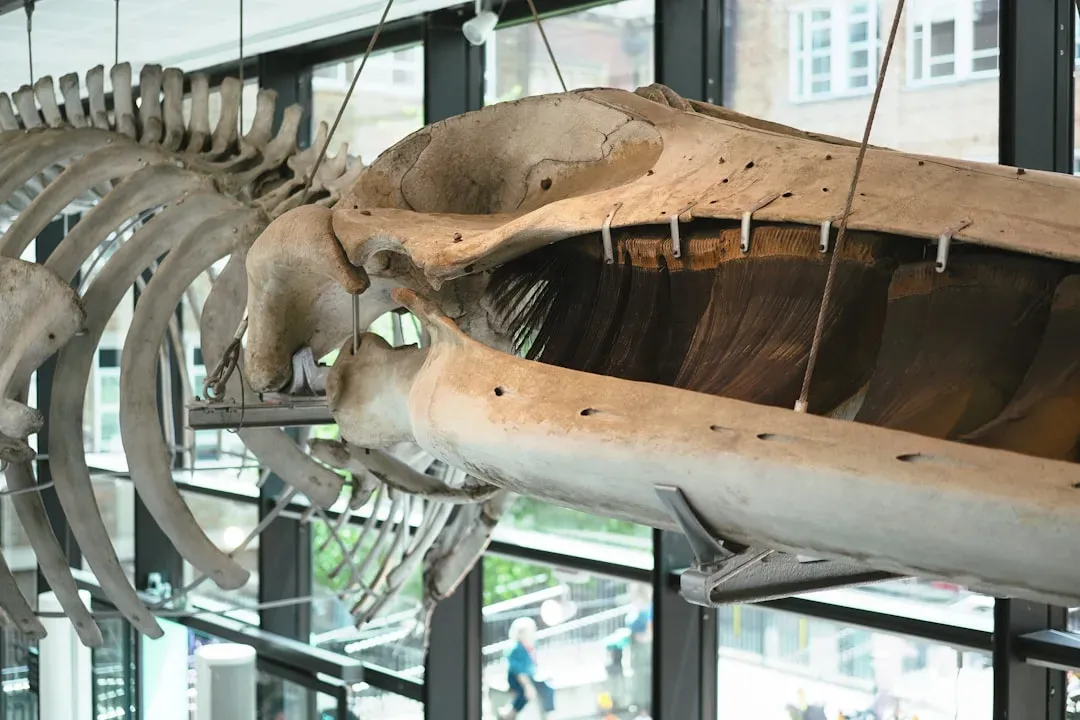
For decades, several European and American museums displayed massive fin and grey whale skeletons dead straight, with evenly spaced ribs and zero twist, essentially built like wooden ships. Marine mammal biologists eventually pointed out the obvious problem: real whales flex, roll and swim with powerful spinal undulations, and some old mounts even had vertebrae in the wrong sequence, giving the tail an unnatural curve.
During major renovations in places like Cambridge and Barcelona, conservators took the brutal step of completely dismantling century-old skeletons, cleaning every bone and rebuilding them in dynamic, anatomically correct postures. In Cambridge, a finback whale once mounted outdoors became the star of a new glass foyer with a corrected spine and flukes. In Barcelona, the entire support system was redesigned so the ribs followed modern 3D scans instead of 19th-century sketches. Most casual visitors just saw “a whale moved,” but specialists knew they were watching a quiet revolution, one that exposes an even weirder mistake next.
#12: The Charlotte Whale, A Skeleton Built Like No Real Animal
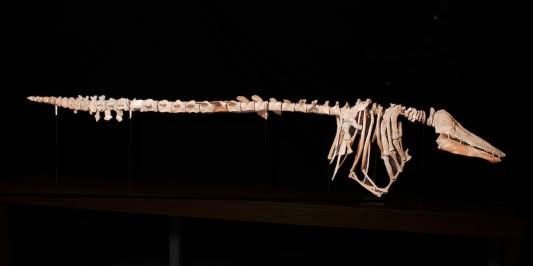
The Charlotte whale in Vermont might be the most famously wrong whale mount in North America. Discovered in a former Champlain Sea deposit and assembled in the 1800s, the skeleton was originally arranged in a strange, anatomically incorrect way, with ribs and vertebrae positioned more for visual symmetry than actual biology.
As comparative anatomy improved, it became painfully clear the original display made the animal look like a fantasy creature rather than a real baleen whale. Curators at the Perkins Museum of Geology faced a choice: leave a historic but wrong mount standing, or tear it down and start over. Their compromise was fascinating: they reinterpreted and re-mounted key parts to fit modern anatomy while still preserving the 19th-century story behind it. It’s a rare case where the “before” and “after” are both openly discussed on the same interpretive panel.
#11: Dinosaur Feet And Hands That Never Actually Existed
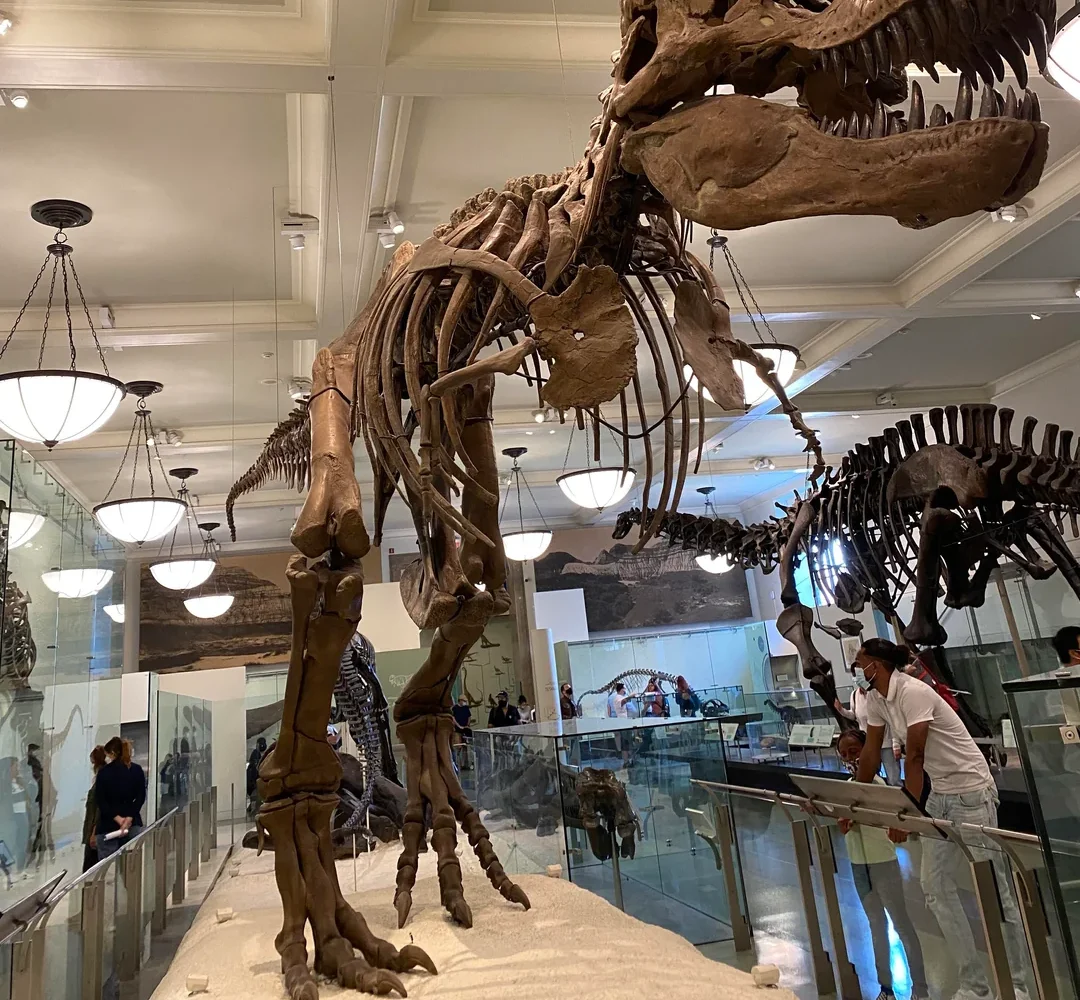
Early dinosaur mounts were part skeleton, part educated guess, and sometimes the guesses aged badly. At the American Museum of Natural History, preparators originally had no actual T. rex foot fossils at all, so they sculpted feet by extrapolating from smaller predators like Allosaurus.
Later discoveries revealed real proportional and claw differences that the guesswork had missed entirely. When the exhibit was overhauled, technicians stripped off the old plaster extremities and replaced them with casts based on genuine tyrannosaur material, correcting everything from toe length to ankle angle. Similar retrofits happened with hand positions on many theropods, rotating the wrists so they faced each other like a bird’s rather than downward like a lizard’s. Those twisted “bunny hands” you still see in old kids’ books are being quietly erased from every serious museum in the world.
#10: Neanderthals Went From Stooped Cavemen To Strong, Upright Cousins

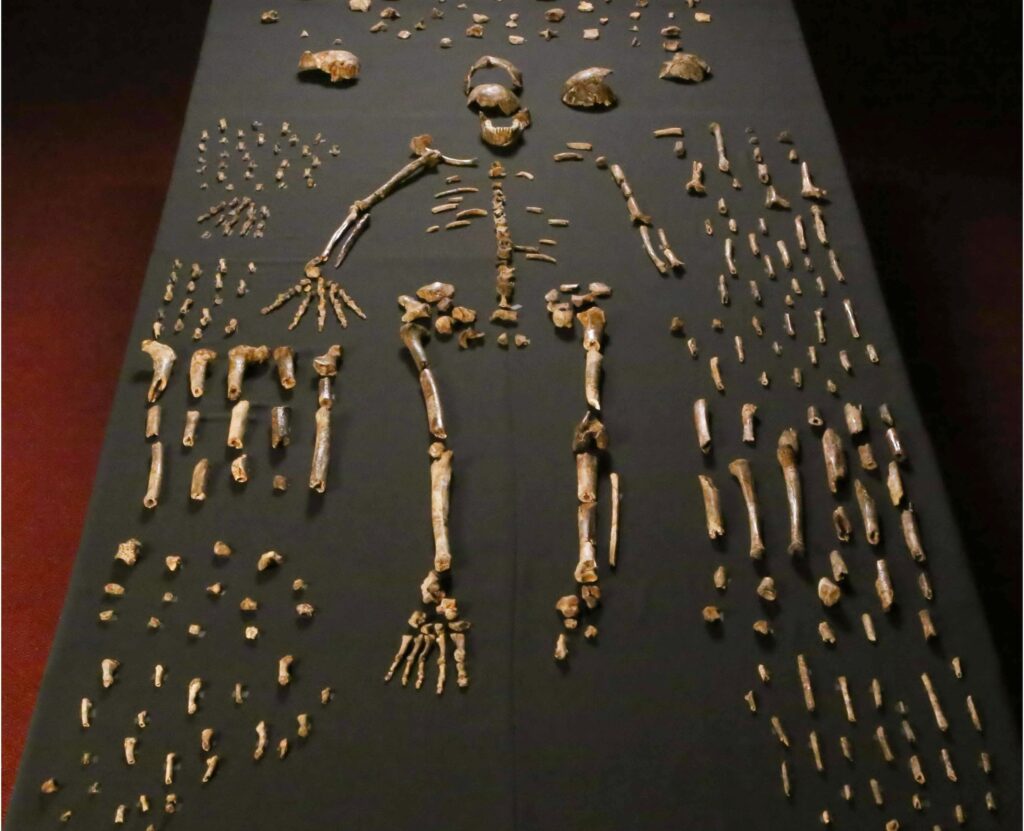
Old museum dioramas turned Neanderthals into hunched, dim-witted cavemen with bent knees and brutish faces. Those reconstructions drew heavily from one early skeleton that happened to suffer from arthritis, and its pathology was mistakenly treated as typical posture for the entire species. Whole galleries were built around that single error.
As skeletal samples grew and CT scans of joints became routine, paleoanthropologists realised Neanderthals actually had robust, fully upright skeletons and brains comparable in size to ours. Exhibits across Europe and the US were rebuilt: mannequins stood straight, faces softened, skin tones and hairstyles diversified. Many museums now explicitly state that earlier displays were shaped by 20th-century bias and a desire to sell a tidy “ladder” of human progress. It’s a rare case where the biggest correction wasn’t bone placement at all, but built-in prejudice.
#9: Saber-Toothed Cats Were Posed Like Overgrown Housecats
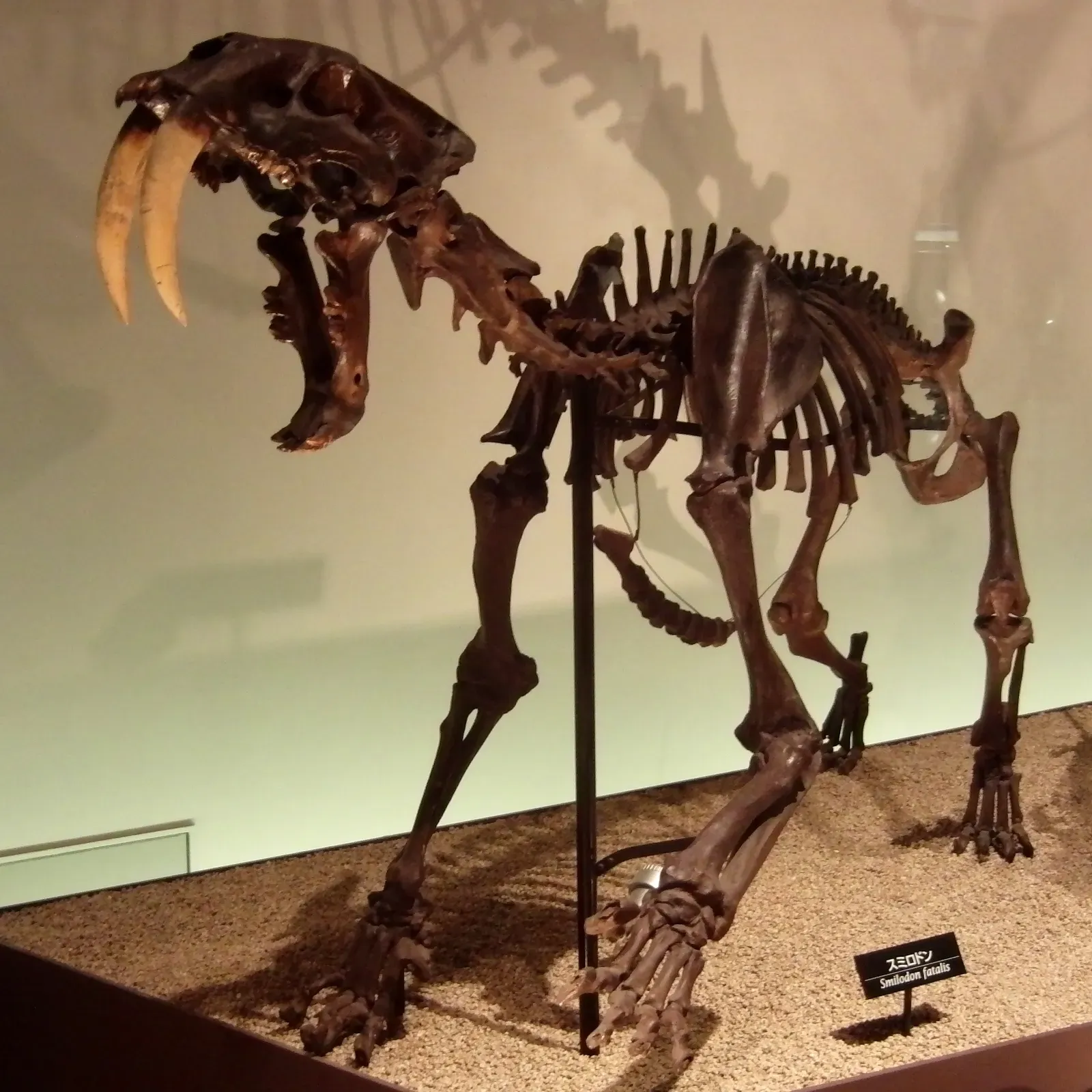
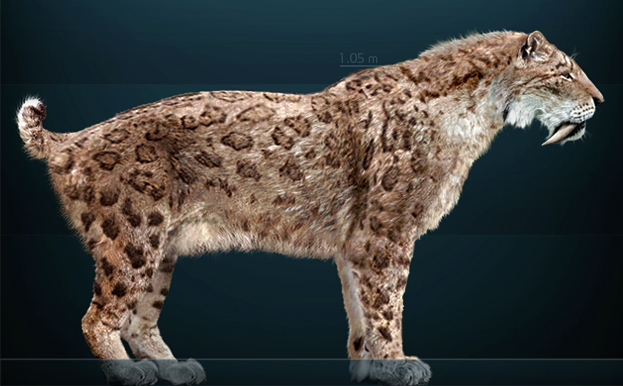
For years, Smilodon and other saber-toothed cats were mounted in a generic big-cat crouch, back arched and jaws yawning straight down like a lion mid-roar. The problem is that applying that pose to the real skulls showed the jaw would dislocate long before those massive canines ever cleared the lower jaw.
Biomechanical studies eventually proved the actual gape was much shallower, and the neck did far more of the killing work than the jaws. Museums with major Smilodon collections, especially those tied to La Brea Tar Pits research, quietly rebuilt their mounts with thicker necks, shifted shoulders and realistic jaw angles matched to actual muscle reconstructions. Some institutions now even display old and new skull poses side by side, letting visitors see exactly why the rebuild was necessary. People still argue online over which version looks “cooler,” but the next set of corrections was driven by raw numbers, not aesthetics.
Quick Compare
- Old pose: jaw yawning straight down, lion-style roar
- New pose: shallow gape, powerful neck driving the killing bite
- Old mount: thin neck, generic big-cat shoulders
- New mount: thickened neck and repositioned shoulders matched to muscle scarring on real fossils
#8: Whale Pelvic Bones Were Hidden Because Nobody Knew Where They Went
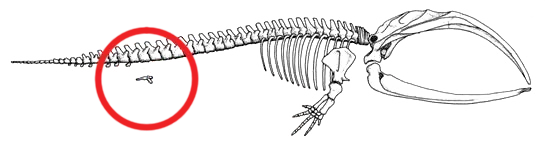
Victorian curators often quietly left whale pelvic bones off their mounts entirely. These tiny, floating bones, leftover relics of hind limbs whales no longer use, looked strange and were poorly understood at the time, so preparators simply hid them in storage or bolted them on wrong near the spine.
Modern evolutionary biology flipped that attitude completely: those same bones turned out to matter for reproductive muscle attachment, and they became a textbook example of vestigial structures. Several natural history museums have since rebuilt whale skeletons specifically to reinstall or correctly position the pelvis, often with enlarged diagrams beside it. Guides now routinely use that tiny bone to debunk the “whales are just big fish” misconception. That rethink on evolution led straight into a deeper embarrassment involving fossil horses.
#7: The “Straight Ladder” Horse Evolution Wall Got Torn Down
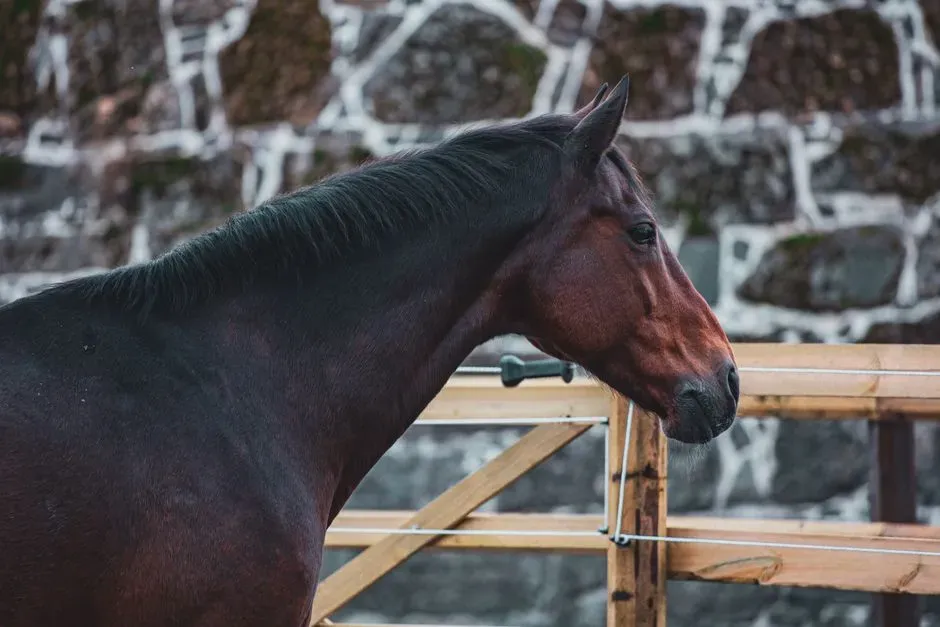
If you remember a tidy wall of horse skeletons marching from a small, many-toed Eohippus to today’s horse in one neat straight line, you remember a story that’s now considered misleading at best. Early 20th-century exhibits simplified a genuinely messy fossil record into a cartoon ladder of progress, one that fit perfectly with outdated ideas about evolution marching toward “better” animals.
As phylogenetic methods improved, paleontologists showed that horse evolution was actually a sprawling, branching bush full of side lineages and dead ends. Some museums responded by literally dismantling the linear horse wall and rebuilding it as a branching diagram with coloured lines connecting skulls and legs to show convergent evolution. Several institutions kept the old signage but bolted on blunt corrections calling the classic sequence an oversimplification. Teachers still argue over this one, because the old display was so easy to explain, but scientifically it had to go.
#6: Prehistoric Dioramas Had The Wrong Plants, And Sometimes The Wrong Continent
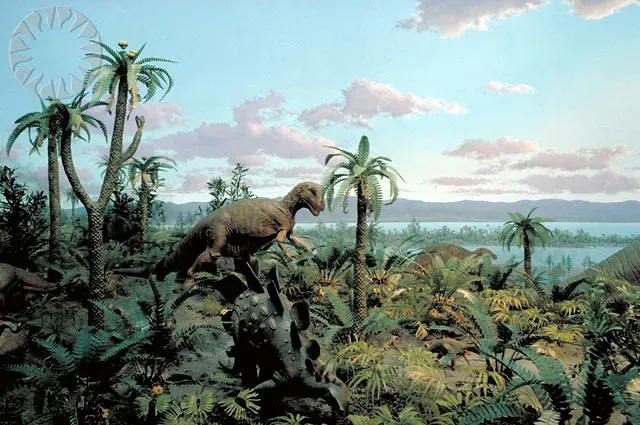
Early dinosaur halls often featured dramatic painted backdrops mixing cycads, ferns and even flowering trees under sauropods and stegosaurs. As stratigraphy and paleobotany matured, it became obvious that many of these combinations never actually coexisted in time or space, some iconic murals showed Jurassic dinosaurs standing under Cretaceous plants, or species from entirely different continents mashed together.
Rather than just repainting the backdrops, museums started rebuilding whole dioramas: updating plant species, removing out-of-place animals, and in some cases shifting entire mounts into different “time zone” galleries. Yale’s famous Age of Reptiles mural has been heavily reinterpreted through signage because parts of it no longer match current science. Newer displays now lean on fossil pollen and leaf impressions to get the vegetation right instead of relying on artistic guesswork. Purists hate seeing beloved art critiqued, but leaving it unchanged meant every school tour was walking through a mixed-up geological timeline.
#5: Pterosaurs Were Hung Like Bats That Physically Couldn’t Have Flown
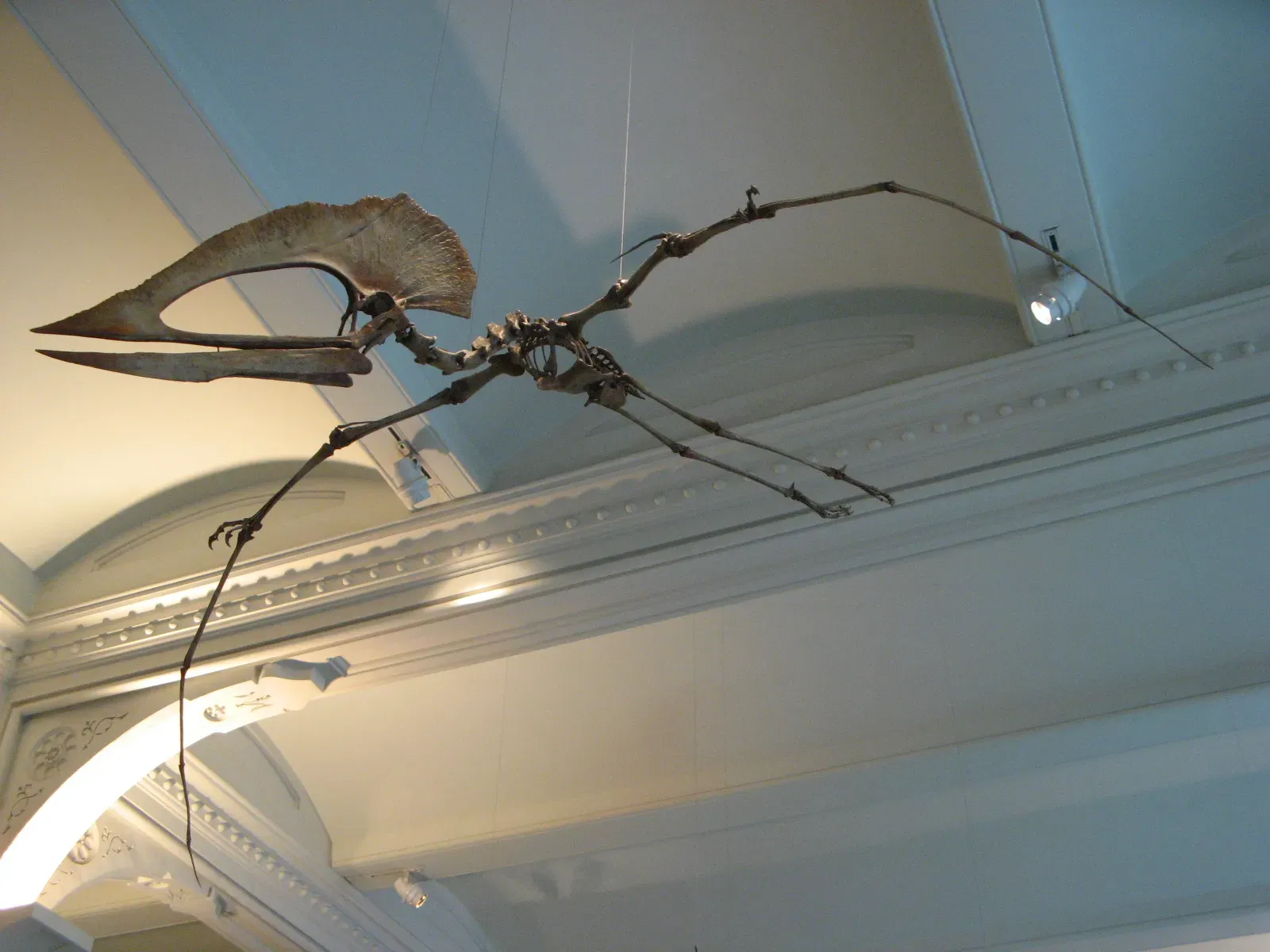
Look up in older galleries and you’ll often spot pterosaur casts suspended from the ceiling with wings drooping and legs splayed, essentially hung like giant bats. It looked intuitive, but it violated everything we now know about pterosaur wing membranes, shoulder joints and launch mechanics. Some mounts even stretched the wing membrane all the way to the ankles, a configuration flight studies now find wildly inefficient.
Once detailed studies of trackways and limb proportions emerged, a wave of remounts followed. Pterosaurs were re-suspended in active flight poses, wings properly tensioned and hind limbs angled to reflect their unusual quadrupedal launch. In some museums, the old bat-like mounts were carefully photographed and archived before coming down, because rewiring the delicate casts a second time would have been impossible. Educational panels now stress that pterosaurs weren’t flying dinosaurs or super-bats at all, but their own completely separate lineage.
#4: “Caveman” Dioramas Mixed Species That Never Actually Met
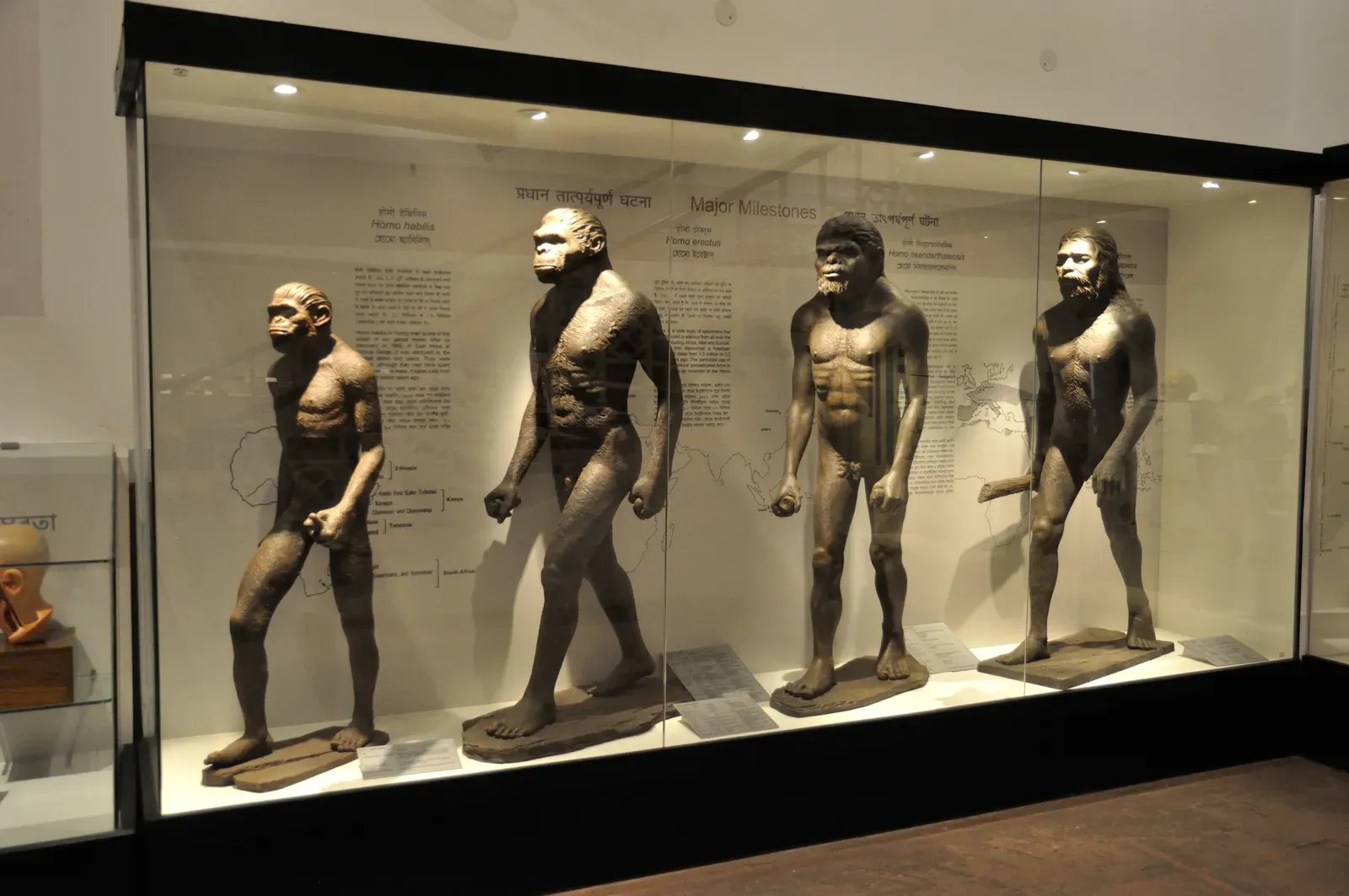
Mid-century human-evolution dioramas had a bad habit of putting Homo erectus, Neanderthals and early Homo sapiens together around one campfire scene for dramatic effect, as if they’d all lived side by side. Worse, skin colours often mapped neatly onto then-current stereotypes, with “primitive” groups given exaggerated features.
As radiometric dating and genetic work sharpened the timeline, it became undeniable that many of those cohabiting scenes were simply impossible. Museums began dismantling these tableaus and rebuilding them with accurate combinations and clear time labels, some replacing wax figures with digital reconstructions that can be updated the moment new fossils turn up. Several institutions now openly discuss how older exhibits reflected social prejudice as much as scientific uncertainty. Not everyone likes seeing childhood dioramas labelled as flawed, but that discomfort is mild compared with what happens when a blockbuster dinosaur itself has to be renamed.
#3: A Star Dinosaur Turns Out To Be The Wrong Species Entirely
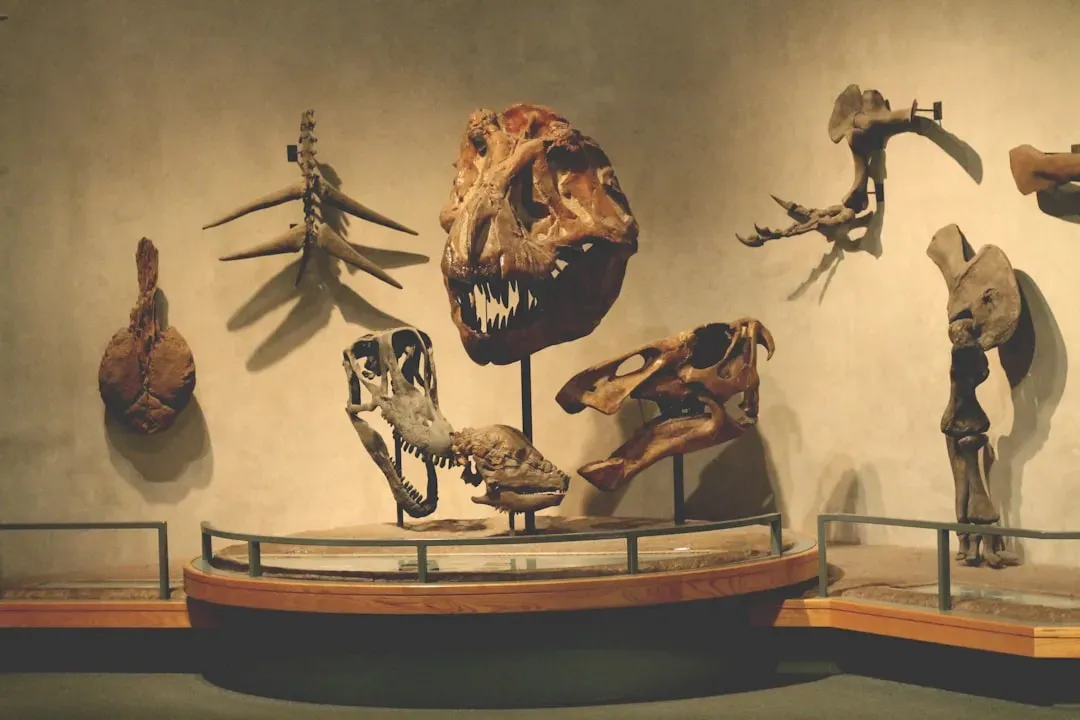
A quiet but brutal kind of rebuild happens when taxonomists decide a famous mounted dinosaur isn’t what the label has claimed for decades. As new discoveries refine what actually defines a genus or species, the traits used to identify an animal can shift underneath it. Skulls once proudly advertised as one type of ceratopsian, for example, have been reassigned to entirely different genera, forcing expensive label changes and sometimes full skull remounting to match the new relatives.
Museums face a genuine PR headache here: do they admit the animal plastered across all their gift-shop merchandise technically doesn’t exist under that name anymore? Increasingly, they do, using side-by-side signage that reads something like “Known as X from 1920 to 2005, now recognised as Y.” Others have rebuilt exhibits to emphasise broader groups, like “horned dinosaur” or “duck-billed dinosaur,” so future name changes cause less disruption down the line. It’s an imperfect fix, but at least it’s honest.
Worth Knowing
- Species reassignments usually follow decades of comparative skull and skeletal analysis
- Some museums now favor broader group labels to avoid repeated name changes
- Gift-shop merchandise often keeps the outdated name long after the exhibit is updated
- Side-by-side “then vs. now” signage is becoming standard practice at major institutions
#2: Ice Age Scenes That Forgot The Season
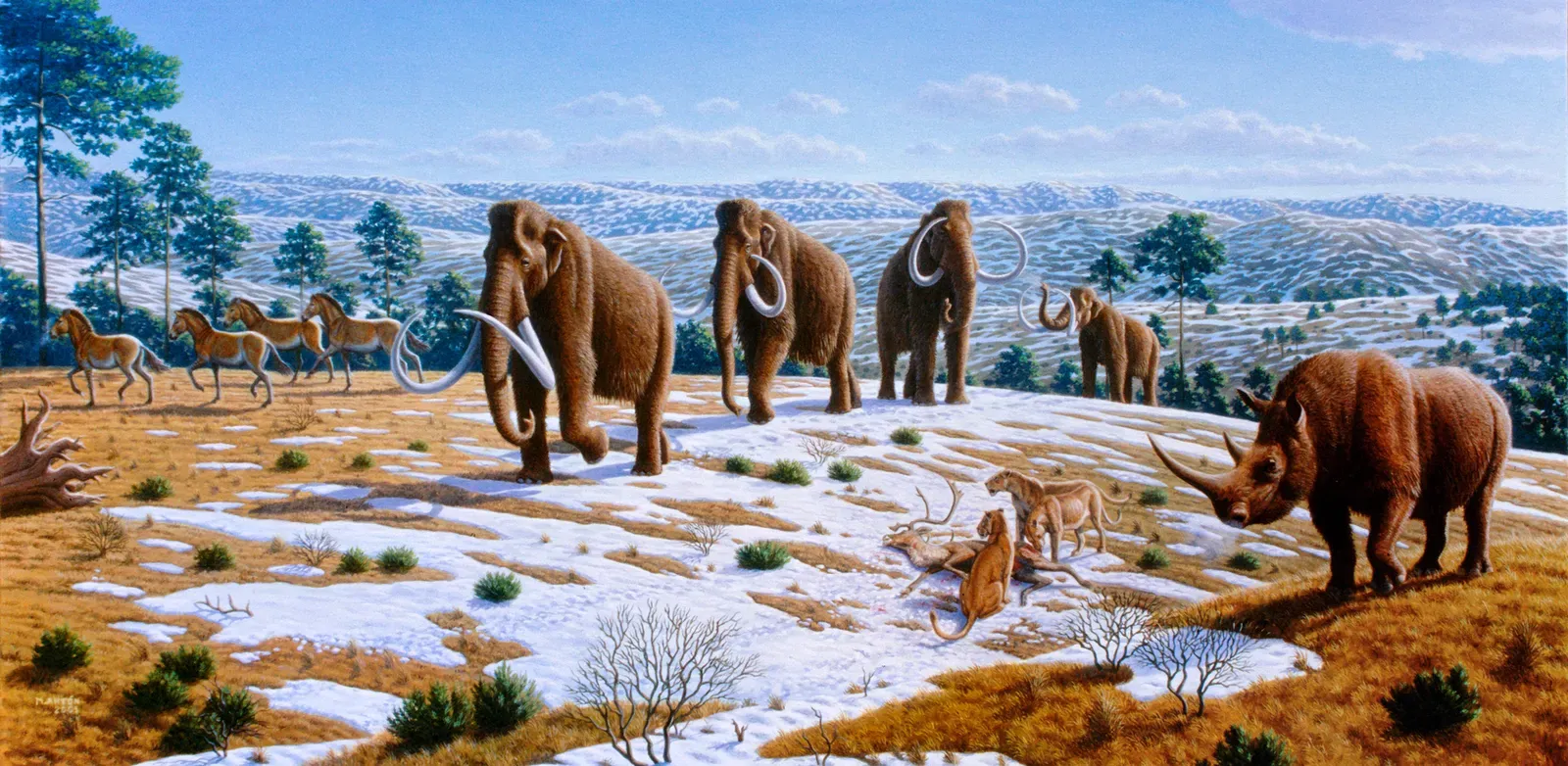
Earlier Ice Age exhibits leaned heavily into snow and cave bears but often mixed summer and winter elements in a single frozen tableau, green plants, permanent snowbanks and animals with seasonally variable coats all shown at once. As paleoecologists combined fossil data with climate models, they realised many of these dioramas were climatologically incoherent, essentially showing two different seasons happening simultaneously.
Museums rebuilding their Pleistocene halls now commit to one specific season or climate phase and stick to it: either snow-laden scenes with full winter coats and sparse vegetation, or warmer interglacial settings with entirely different plant and animal mixes. Some institutions have added wall-scale graphs of ice-core data behind the mounts to show real temperature swings over time. Others rotate lighting and soundscapes to move a single scene through a day-night cycle. The message is clear: Ice Ages were dynamic, not static cartoons, and that idea of dynamism drives the most fundamental rebuild of all.
#1: Entire Dinosaur Halls Were Re-Engineered For Feathered, Active Animals
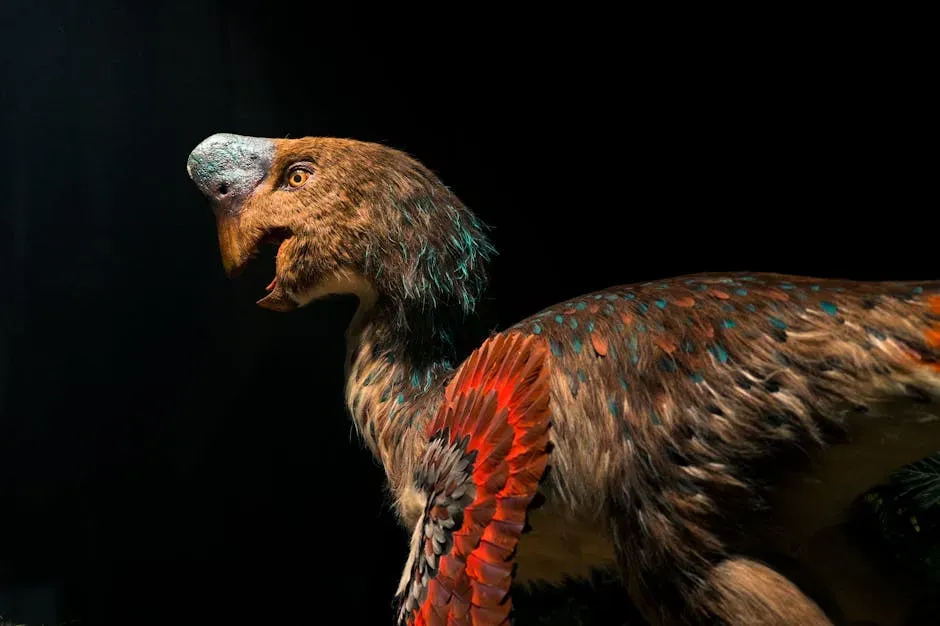
The single biggest “we got it wrong” moment in modern museum history is probably the slow, painful acceptance that many theropod dinosaurs, and possibly even some early birds, were feathered, warm-blooded and genuinely active, not the sluggish, scaly reptiles we grew up with. As feathered fossils poured out of China and elsewhere, whole galleries of shrink-wrapped, lizard-skinned mounts looked instantly outdated overnight.
In response, leading natural history museums have spent tens of millions of dollars tearing out and rebuilding dinosaur halls from the ground up. Mounts have been repositioned to show agile movement, new casts include quill knobs and proto-feather impressions, and mural art has swapped green scales for fuzz and plumage. Some institutions now display side-by-side “old school” and feathered reconstructions of the exact same species, and interactive exhibits let visitors toggle between 1980s and 2020s interpretations with a button. It’s not just about adding fluff for effect. It’s an admission that everything we once implied about metabolism and behaviour, using nothing but bare skeletons, needed to be revised.
At a Glance
- Feathered fossil finds from China reshaped dinosaur halls worldwide starting in the 1990s
- Some remounts include quill knobs and proto-feather impressions on original bone
- Interactive kiosks now let visitors toggle between “old school” and modern reconstructions
- Multi-million dollar renovations have hit major natural history museums across the US and Europe
Taken together, these rebuilds expose a truth museums rarely say out loud: every exhibit is a hypothesis in steel and plaster, not a final verdict. From a kangaroo-postured T. rex and mis-hung whales to prejudiced Neanderthal displays and a fairy-tale horse ladder, institutions have had to quietly admit that some of their most photographed, most beloved displays were selling yesterday’s science.
The good news is that the best museums have stopped treating rebuilding as an embarrassment and started treating it as part of the job. When the data changes, the bones move, no matter how many postcards or coffee mugs feature the old pose. I’d rather stand in front of a slightly less familiar skeleton and know it’s actually correct than keep worshipping a childhood memory that was wrong the whole time. If a museum is willing to tear down its own star attraction because the evidence demanded it, that’s not a failure of science. That’s science working exactly the way it’s supposed to.