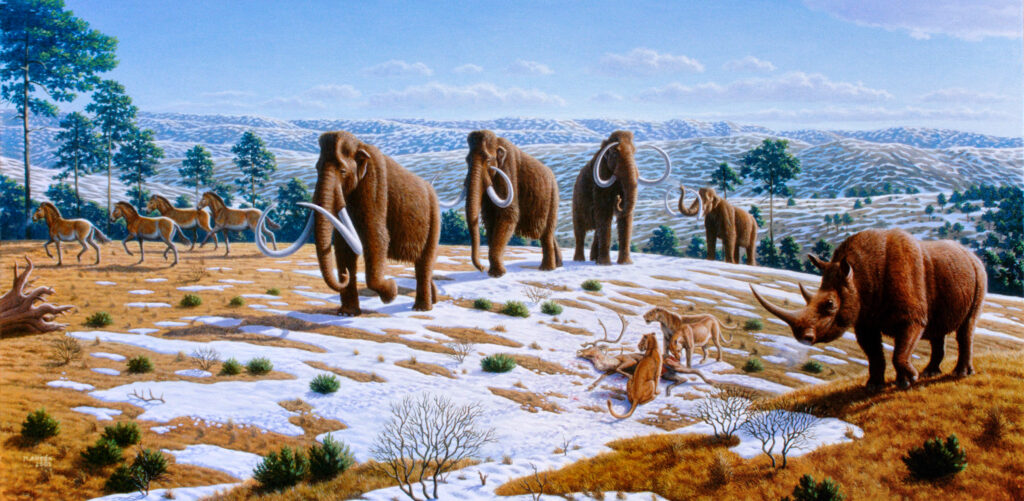
Most people picture a giant orange tiger with two massive fangs hanging out of its mouth, and that image is almost entirely wrong. Paleontologists have spent the last five years tearing apart nearly everything the public assumes about sabre-toothed cats, using CT scans, genome sequencing, 3D-printed tooth replicas, and even a frozen mummy pulled out of Siberian permafrost.
The animal that emerges from this research is stranger, more diverse, and more scientifically contested than any museum diorama suggests. Some of what’s coming sounds less like paleontology and more like a plot twist – starting with a myth so basic that most textbooks still get it wrong.
#15 – They Weren’t Tigers, and They Weren’t Even Close
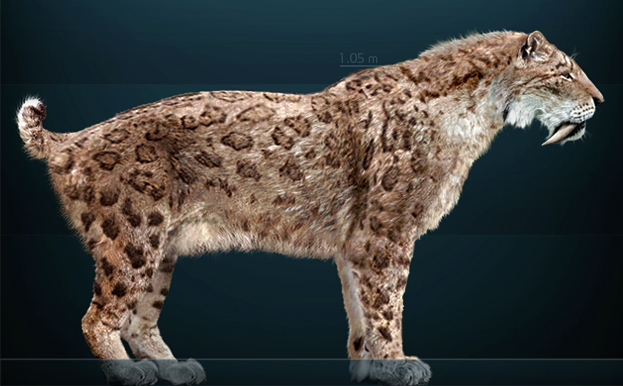
Here’s the myth-buster: sabre-toothed cats are not tigers, and calling them “sabre-toothed tigers” is a scientific error that refuses to die. Despite their name, the extinct saber-toothed cats are only very distantly related to lions, tigers, leopards, cougars, and other living cats. Smilodon has sometimes been called a saber-toothed tiger, but that’s misleading – it isn’t closely related to tigers at all.
They belong to their own branch of the cat family tree called Machairodontinae, and genome studies have confirmed just how deep that split runs. Researchers found the Homotherium genus is only very distantly related to all modern cats, having diverged from the Felidae lineage around 22.5 million years ago – a finding that supports Machairodontinae as a fully distinct subfamily. That means a sabre-toothed cat is technically just as related to a house cat as it is to a tiger, and that’s the tame part of this list.
#14 – There Wasn’t Just One “Sabre-Toothed Cat”
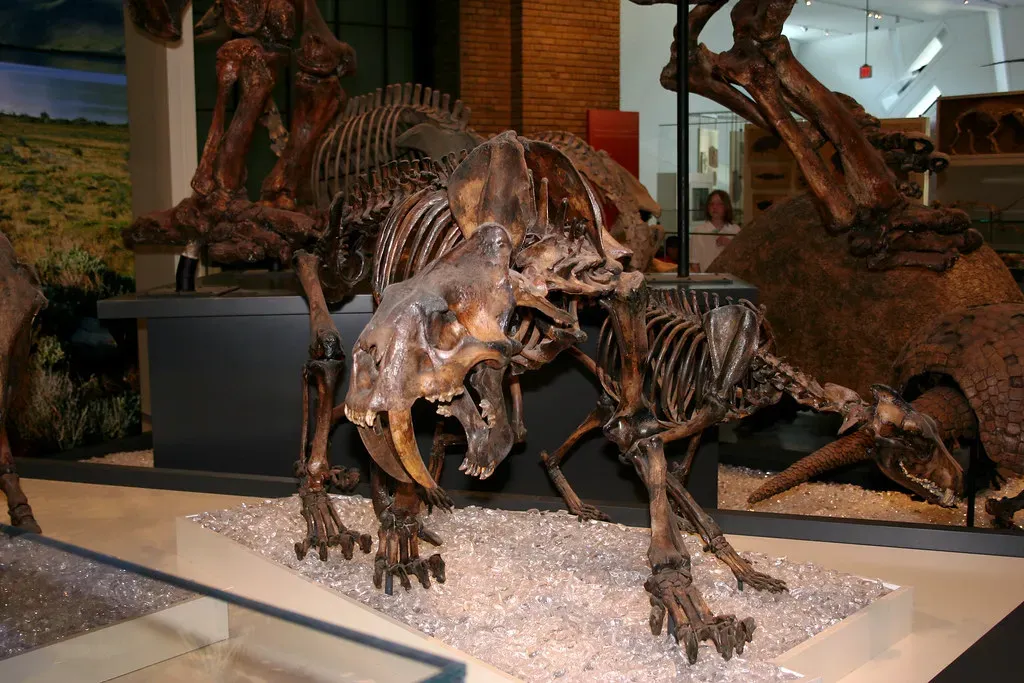
Most people think Smilodon is the sabre-toothed cat. It’s actually one of more than fifty. Biologists have identified over 50 species of saber-toothed cats that vary wildly in size, body shape, and tooth length. Some, like the dirk-toothed Smilodon, carried long, slender, dagger-like fangs, while others carried shorter, broader, curved “scimitar” teeth built for a completely different job.
These cats are usually split into two camps based on their teeth: dirk-toothed species with long, fragile blades, and scimitar-toothed species with shorter, sturdier curves. Some of the largest, like Amphimachairodus giganteus, dwarfed today’s biggest predators – imagine a cat far bigger than a lion, carrying enormous fangs. Size, though, turns out to be the least strange thing about how these animals actually grew up.
Quick Compare
- Dirk-toothed cats (like Smilodon): long, slender, dagger-like fangs built for precision strikes.
- Scimitar-toothed cats: shorter, broader, curved fangs suited to a different killing style.
- Species count: more than 50 distinct sabre-toothed cat species identified so far.
- Size extremes: Amphimachairodus giganteus dwarfed today’s biggest big cats.
#13 – Teenagers Walked Around With Double Fangs
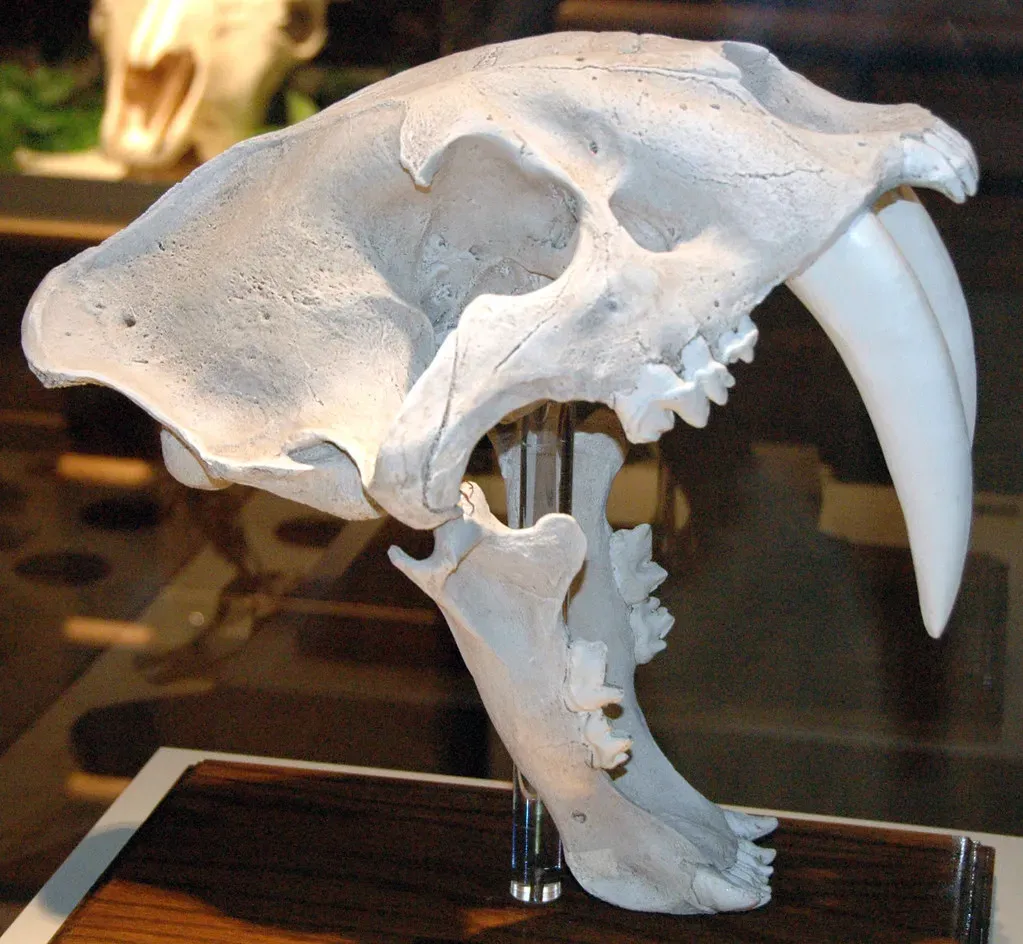
Here’s a detail almost nobody knows: young sabre-toothed cats didn’t lose their baby teeth before the adult fangs came in. They kept both sets, at the same time, for years. A recent study led by paleontologist Jack Tseng of UC Berkeley reveals that juvenile cats retained their baby teeth alongside their developing adult fangs, likely as a stabilizing mechanism.
That’s a bizarre biomechanical trade-off – carrying two full sets of teeth simultaneously just to keep the growing sabres from snapping under stress during adolescence. The research shows subadult Smilodon fatalis and other sabertooths spent a substantial amount of time living with partially erupted canines, meaning the years leading up to full canine eruption may be crucial for understanding how these predators actually functioned. A sabre-toothed cat could be walking around as a functional predator for years before its adult teeth ever fully formed, and even those finished teeth came with a catch nobody expected.
#12 – Their Signature Fangs Were Shockingly Fragile
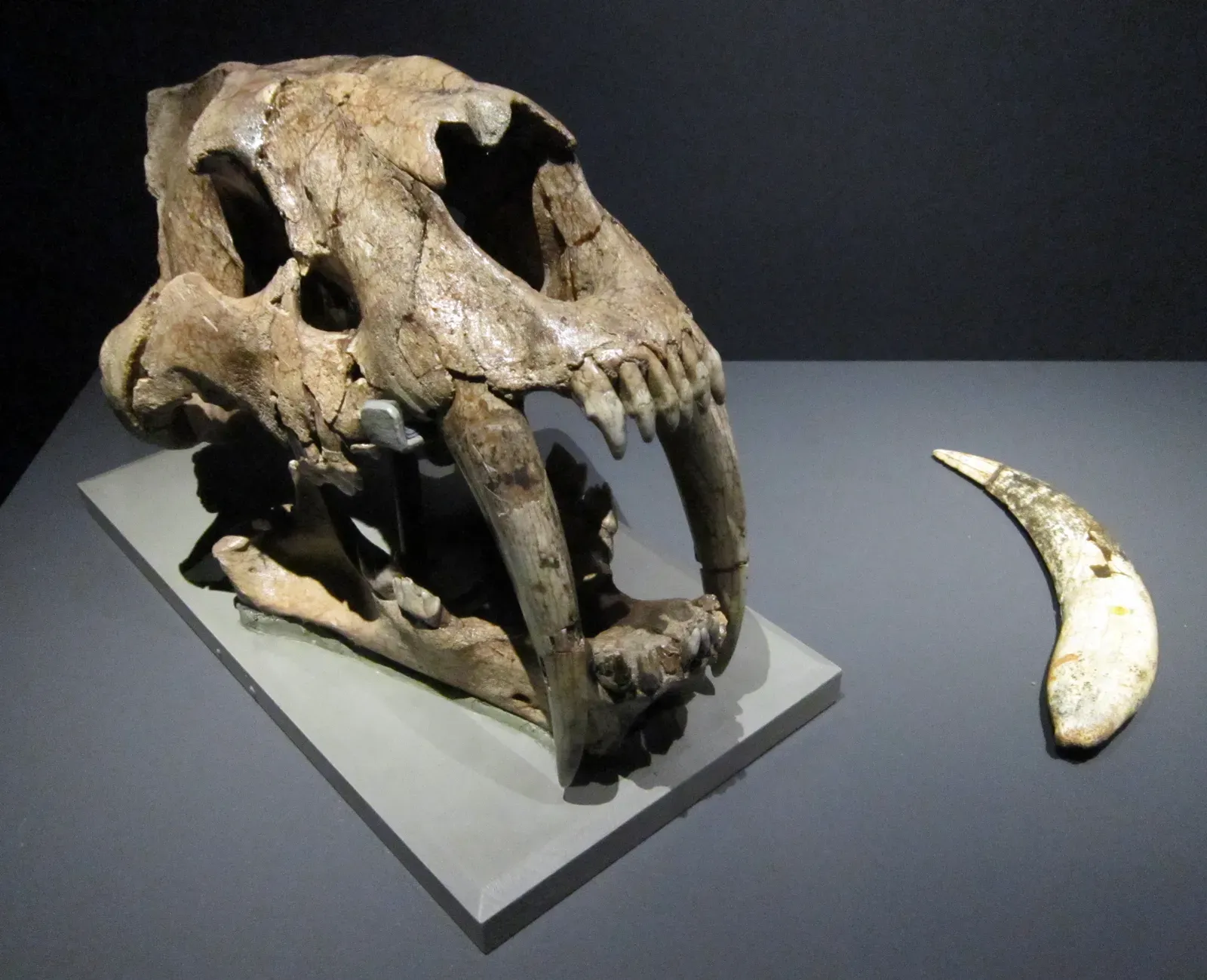
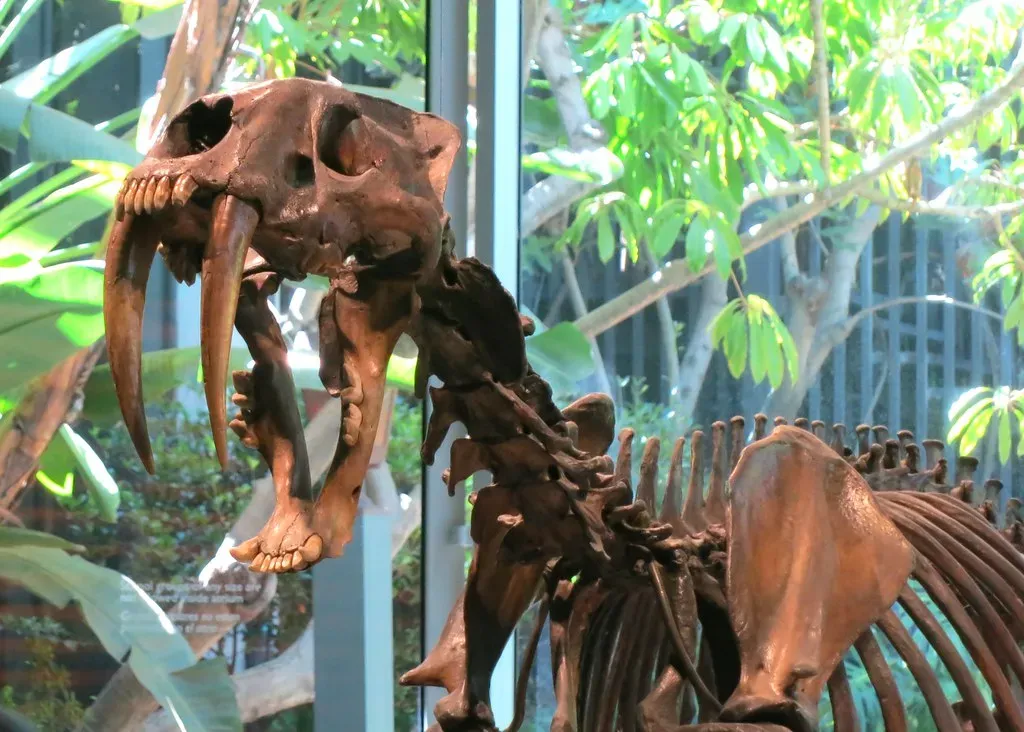
The teeth that made these cats famous were also their biggest liability. Contrary to the “unstoppable killing machine” image, sabre teeth could shatter with the wrong bite. These teeth were quite delicate and could break apart if they hit bone – a single fact that rewrites the entire predator narrative.
This wasn’t an animal that could clamp down and crush like a modern lion. It had to be surgical, treating its fangs like precision instruments rather than crushing weapons. Instead of brute force, Smilodon used its sabre-teeth as precise daggers, going for a shearing bite designed to cut through flesh and blood vessels rather than a crushing bite to the neck. One wrong bite into bone could cost the animal its entire hunting career – which raises an obvious question: how did it even open its mouth wide enough to use those teeth safely?
#11 – The Jaw Gape Was Almost Freakish
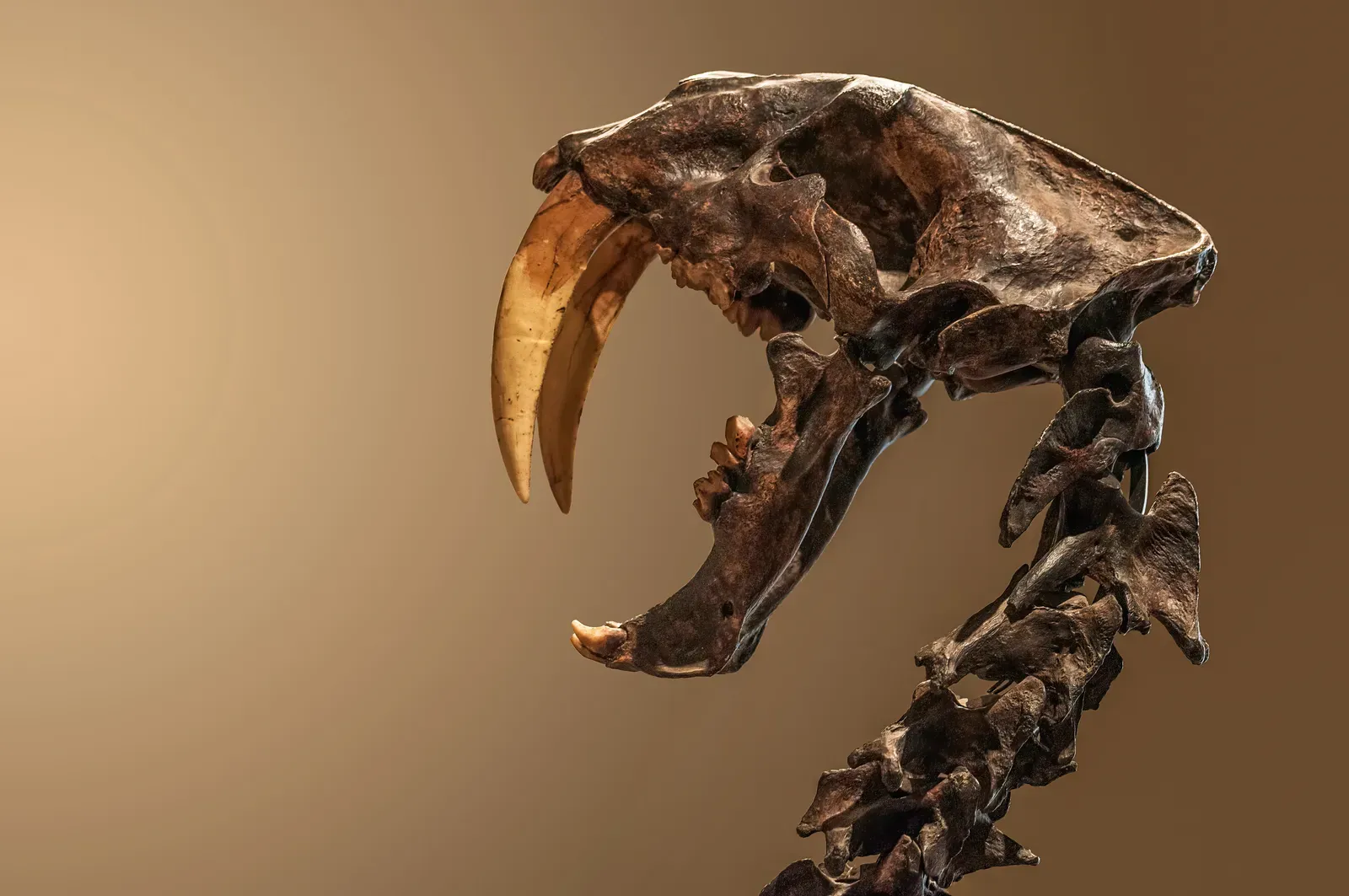
To use those delicate daggers safely, sabre-toothed cats needed a mouth that opened far wider than anything alive today. Smilodon was able to open its jaws far wider than any living cat, an adaptation forced by having oversized teeth crammed into the jaw. The jaws could gape to roughly 120 degrees – an African lion, by comparison, tops out around 70 degrees.
That extra gape let Smilodon close its jaws around a victim’s neck and puncture vital blood vessels or sever the windpipe in one motion. But that flexibility wasn’t free. Researchers believe Smilodon closed its jaws by twisting its head downward and throwing it forward, powered by a neck longer and more muscular than any modern cat’s. A bite this specialized meant the neck, not the jaw, was doing the heavy lifting – so how strong was the actual bite? Weaker than you’d guess.
#10 – The Bite Itself Was Weaker Than You’d Think
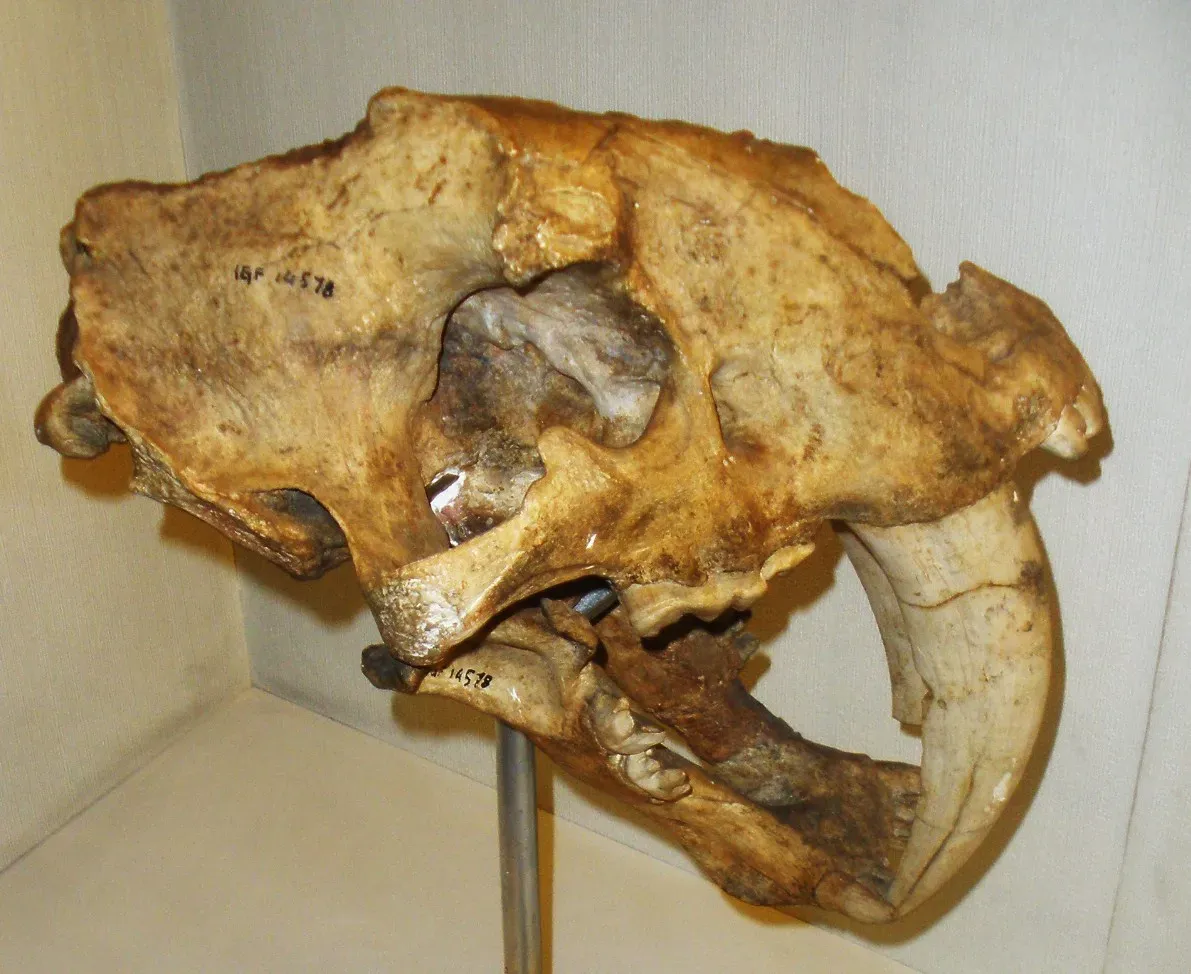
Here’s the part that upends the “apex killer” stereotype completely: pound for pound, a sabre-toothed cat’s actual bite force wasn’t as strong as a modern lion’s. For comparison, a lion’s bite force sits around 250 kg/cm2, and human bite force is about 73 kg/cm2. Researchers studying the jaw musculature found that sabre-toothed cats sacrificed raw crushing power in exchange for that enormous gape – a genuine trade-off, not an oversight.
The muscles simply couldn’t do both jobs at once. Dr. Per Christiansen described Smilodon as “outrageous in terms of its anatomy,” calling it the most highly evolved and different form compared to any modern cat. That means sabre-toothed cats had to lean on ambush, body weight, and raw forelimb strength rather than jaw power to bring prey down – and their social lives turn out to be just as counterintuitive.
#9 – A Genome Rewrote the Social Story Completely
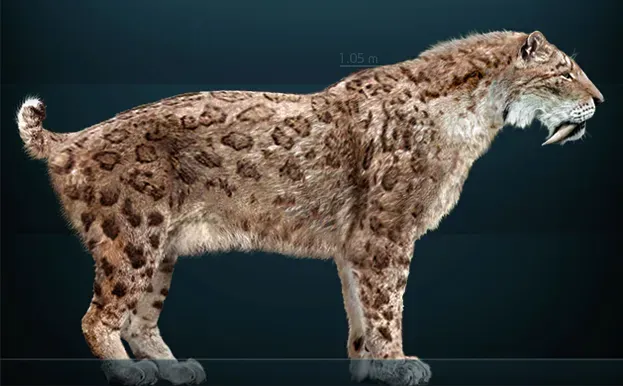
For decades, sabre-toothed cats were assumed to be solitary loners, just like most modern big cats. Then scientists sequenced an entire genome pulled from Yukon permafrost, and the story flipped. Researchers mapped the genome of Homotherium latidens, and the analysis suggests these cats were highly social and adapted to long-pursuit, endurance-style hunting.
That’s a genuinely radical finding – the closest living behavioral comparison isn’t even another cat. Lions occasionally hunt this way, but the more relevant modern analogue is the gray wolf, a primarily daytime pursuit predator of large prey. Scientists found evidence of positive selection in genes tied to vision, cognitive function, and energy consumption, all consistent with a diurnal, social hunting lifestyle. This cat may have hunted in coordinated daylight packs like wolves, not solo ambushes like tigers, and the fossil record almost hid this discovery completely.
#8 – They Were More Successful Than Their Fossils Suggest
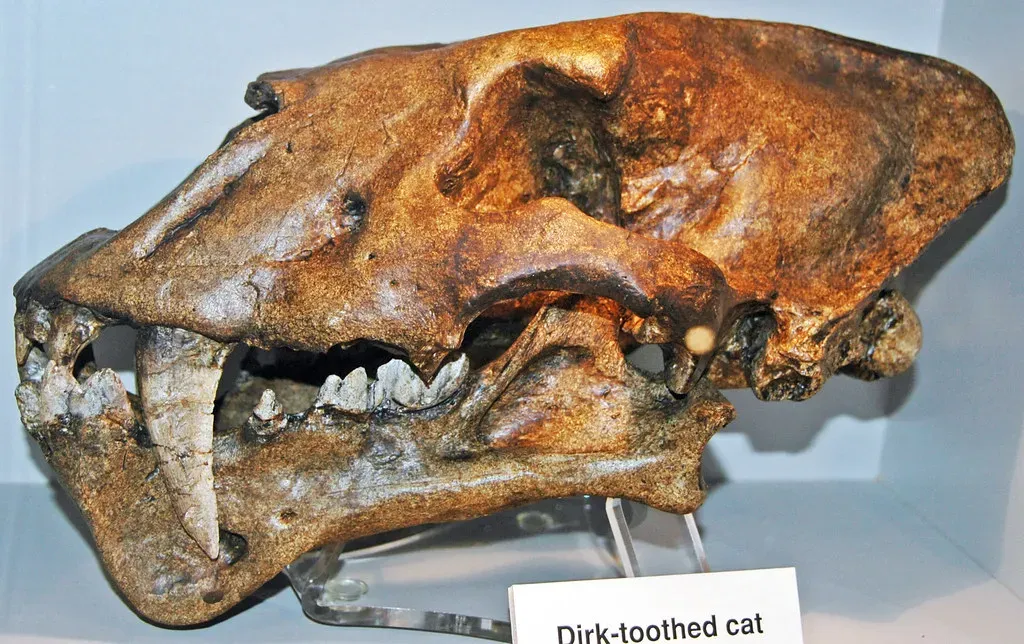
Homotherium’s fossil record is thin compared to other big Ice Age predators, and for years that was read as a sign the species was rare. The genome said otherwise. The fossil record for Homotherium is considerably more fragmentary than those of Smilodon or Panthera, which had tentatively suggested lower population densities. But genetic diversity tells a very different story than bone counts do.
The researchers found relatively high genetic diversity in the individual they studied, suggesting the lineage wasn’t just successful but genuinely abundant compared to living cat species. This wasn’t a struggling species clinging to survival – it was a global powerhouse, present on five continents for millions of years before going extinct.
This was an extremely successful family of cats.
Dr. Ross Barnett
The fossil record has been quietly underselling one of the most widespread predators in Ice Age history. Their teeth, it turns out, were hiding an engineering secret too.
#7 – The Teeth Were an Engineering Masterpiece
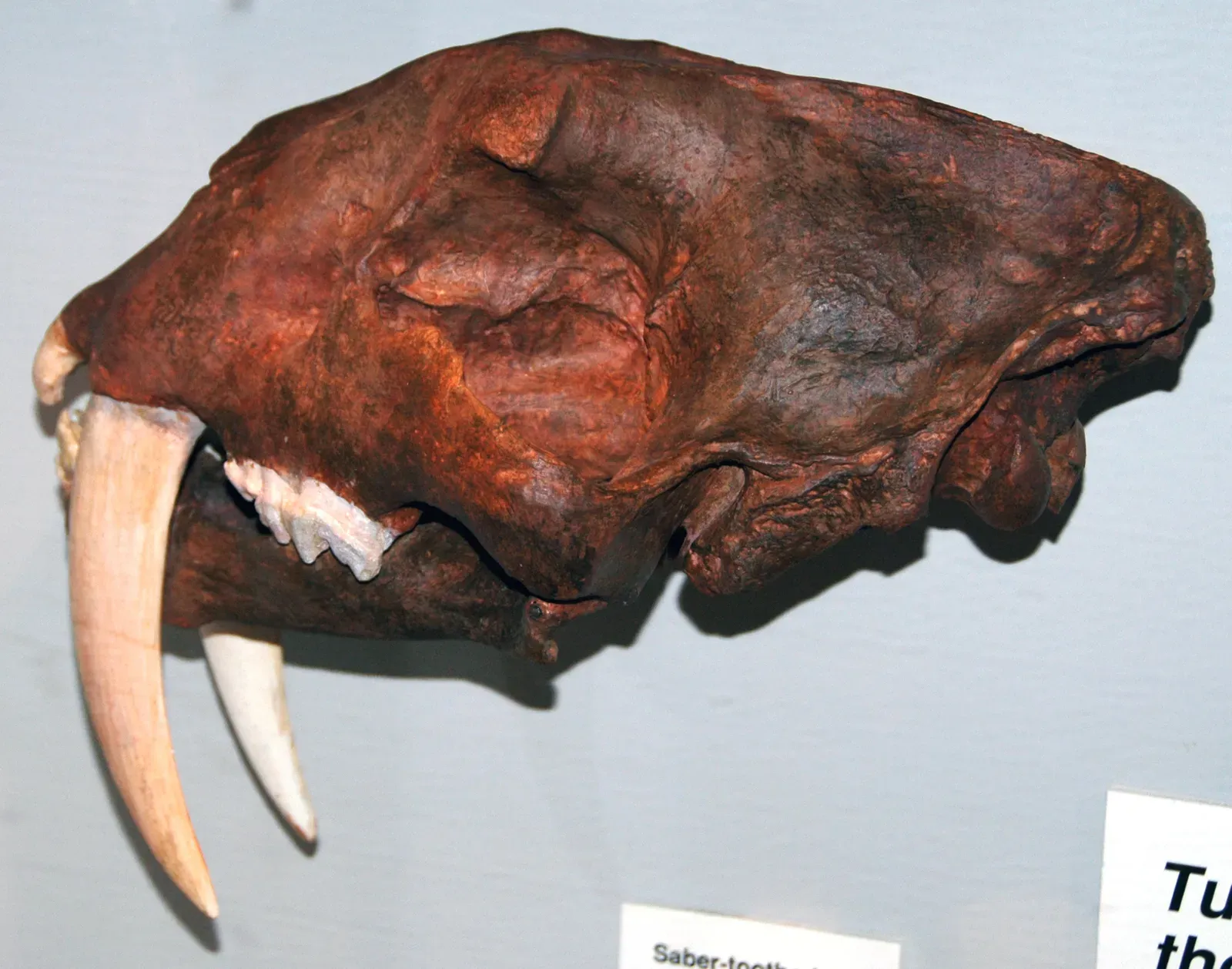
New biomechanics research treats sabre teeth less like a biological quirk and more like a solved engineering problem – one nature landed on again and again. Saber-toothed predators evolved multiple times across different mammal groups, and according to University of Bristol paleontologists, their unusual teeth were functionally optimal and highly effective at puncturing prey.
To prove it, scientists didn’t just theorize – they built the teeth and tested them physically. Using 3D-printed steel tooth replicas in real biting experiments and computer simulations, researchers analyzed 95 different carnivorous mammal teeth, including 25 saber-toothed species. “The findings not only deepen our understanding of saber-toothed predators but also have broader implications for evolutionary biology and biomechanics,” said Monash University’s Professor Alistair Evans, adding that the research could even inform bioinspired engineering designs. Sabre teeth weren’t a fluke – they were repeatedly evolved because they simply worked, and even the skulls carrying them turn out to be less unique than anyone assumed.
Fast Facts
- Researchers tested 95 carnivorous mammal teeth, including 25 saber-toothed species.
- Tooth shapes were reproduced as 3D-printed steel replicas for real biting experiments.
- Physical tests were cross-checked with computer simulations for accuracy.
- Sabre teeth evolved independently, multiple times, across different mammal groups.
#6 – Skull Shapes Exist on a Spectrum, Not a Switch
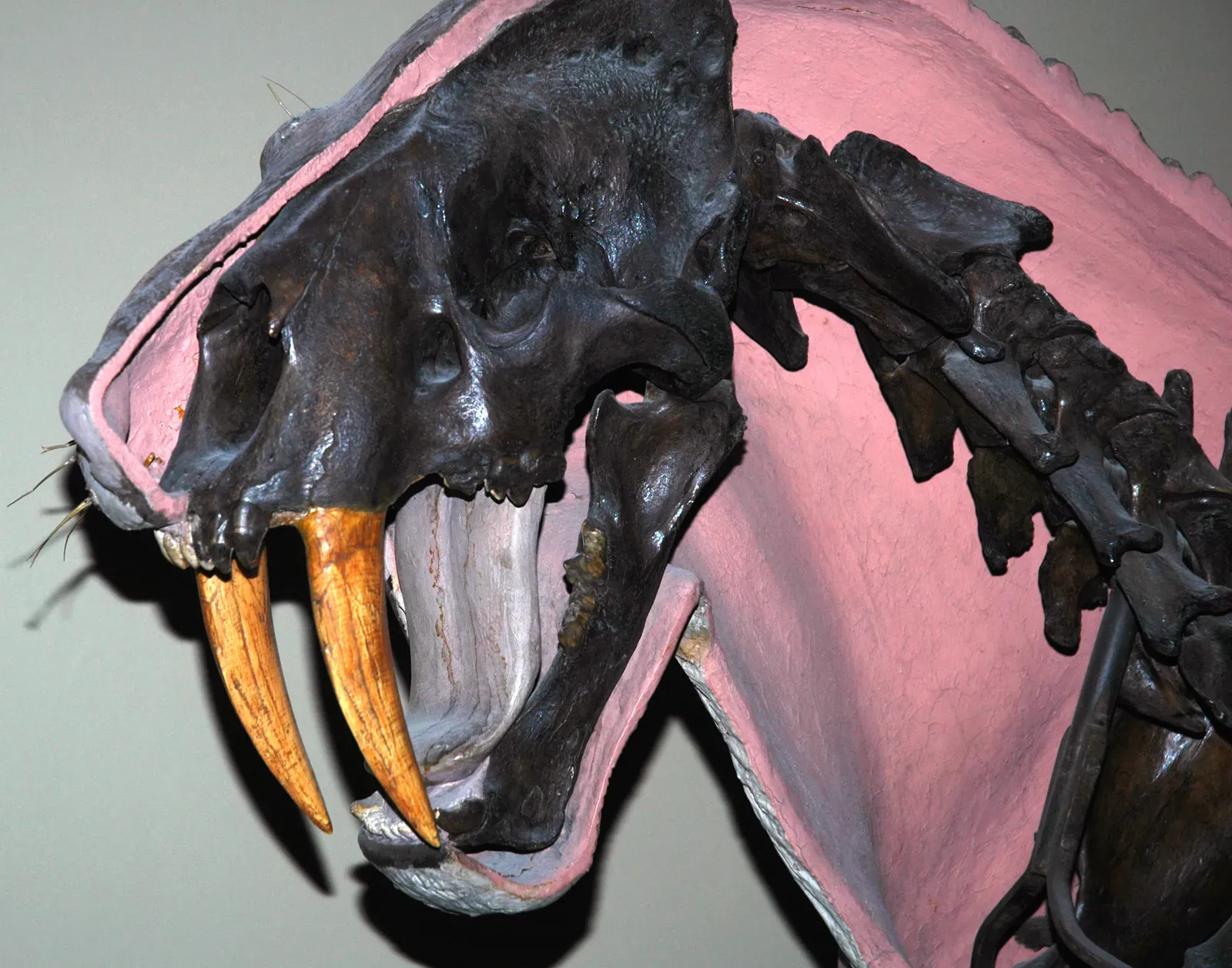
Textbooks love a clean before-and-after: normal cat skull versus sabre-toothed skull. A 2024 evolutionary study says that’s an oversimplification that doesn’t hold up. “Rather than contrasting two distinct cranial morphologies in species with elongated upper canines and those with short teeth, there is instead a continuum of form linking the smallest present-day cats and their extinct saber-toothed counterparts,” researchers explained.
Evolution didn’t flip a switch to create sabre-tooths – it slid along a dial every cat skull sits somewhere on. “From a morphological point of view, the skull of a present-day small cat is just as strange and modified as that of a large saber-toothed felid,” said Dr. Margot Michaud of the University of French Guyana. Dr. Davide Tamagnini went further, arguing this challenges how the subject is even taught: “Our study suggests that what we often think of as examples of evolutionary patterns in textbooks are actually simplified for educational purposes.” The line between “normal cat” and “monster cat” is far blurrier than any diagram admits, and that blurriness is about to get a lot more controversial.
#5 – The “Caring Pack” Theory Is Now Under Serious Fire
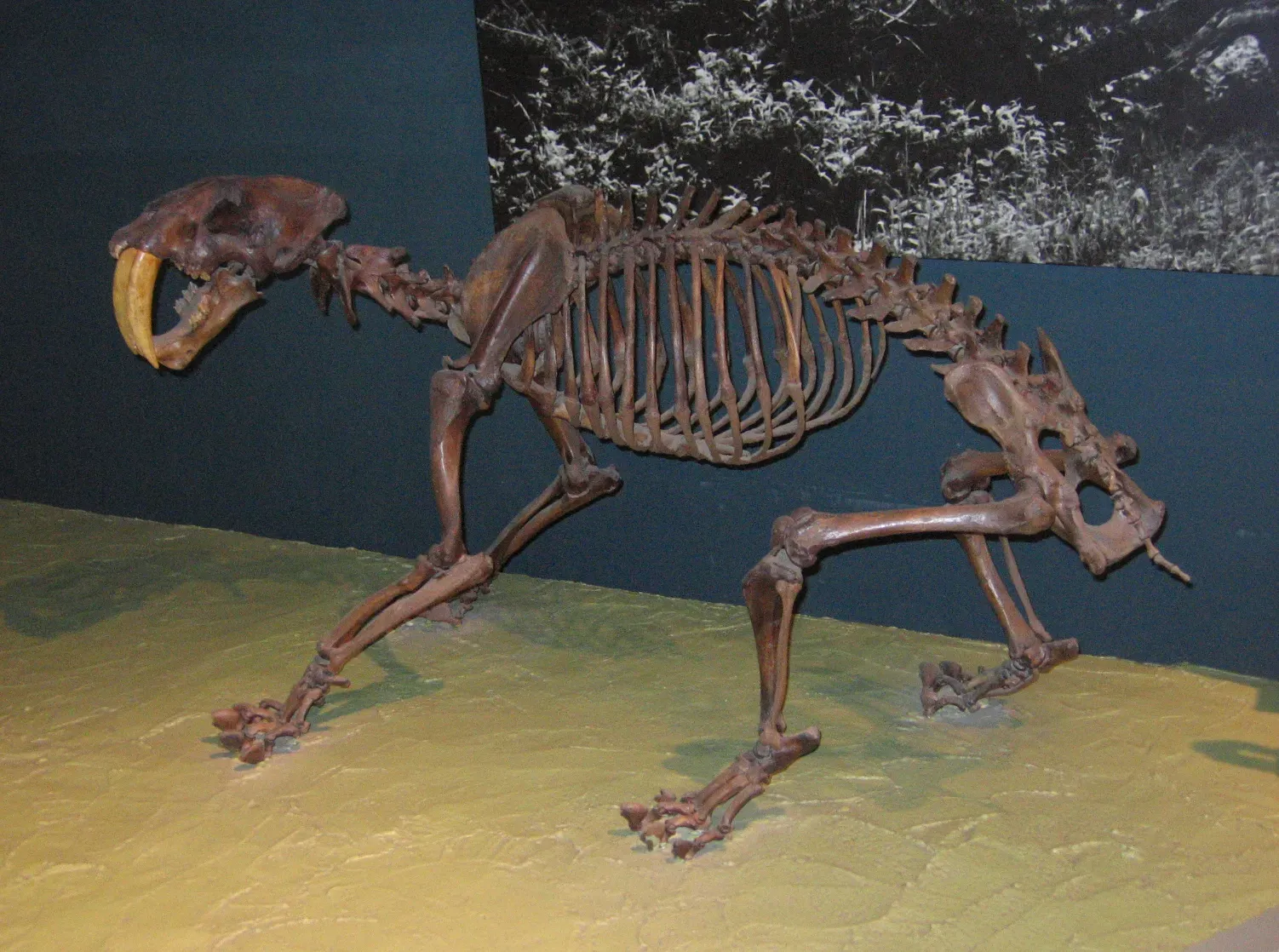
For years, the go-to story was heartwarming: injured Smilodon fossils with healed wounds proved these cats cared for wounded pack-mates. Increasingly, researchers think that’s wishful thinking. It’s been suggested that Smilodon fatalis was social because partially healed skeletal injuries were found at Rancho La Brea, California – but that conclusion assumes injured animals would die without help.
Critics point out that cats heal fast on their own, drawing on metabolic reserves without needing to feed. Dehydration, not starvation, is the bigger threat, since carcasses only provide about a quarter of the water an animal needs – meaning injured cats simply had to stay mobile enough to find water. Even the comparison data is contested: the non-social golden eagle turns up about as often as Smilodon at La Brea, while genuinely social species like grey wolves and coyotes are rare there. Some researchers now argue the famous “injured hip” long blamed on trauma may actually be a congenital condition, not proof of a caring pack. This is one of the most heated debates in sabre-tooth science right now, and meanwhile, a literal frozen time capsule was about to change the baby picture forever.
#4 – A Frozen Cub Rewrote the Baby Book
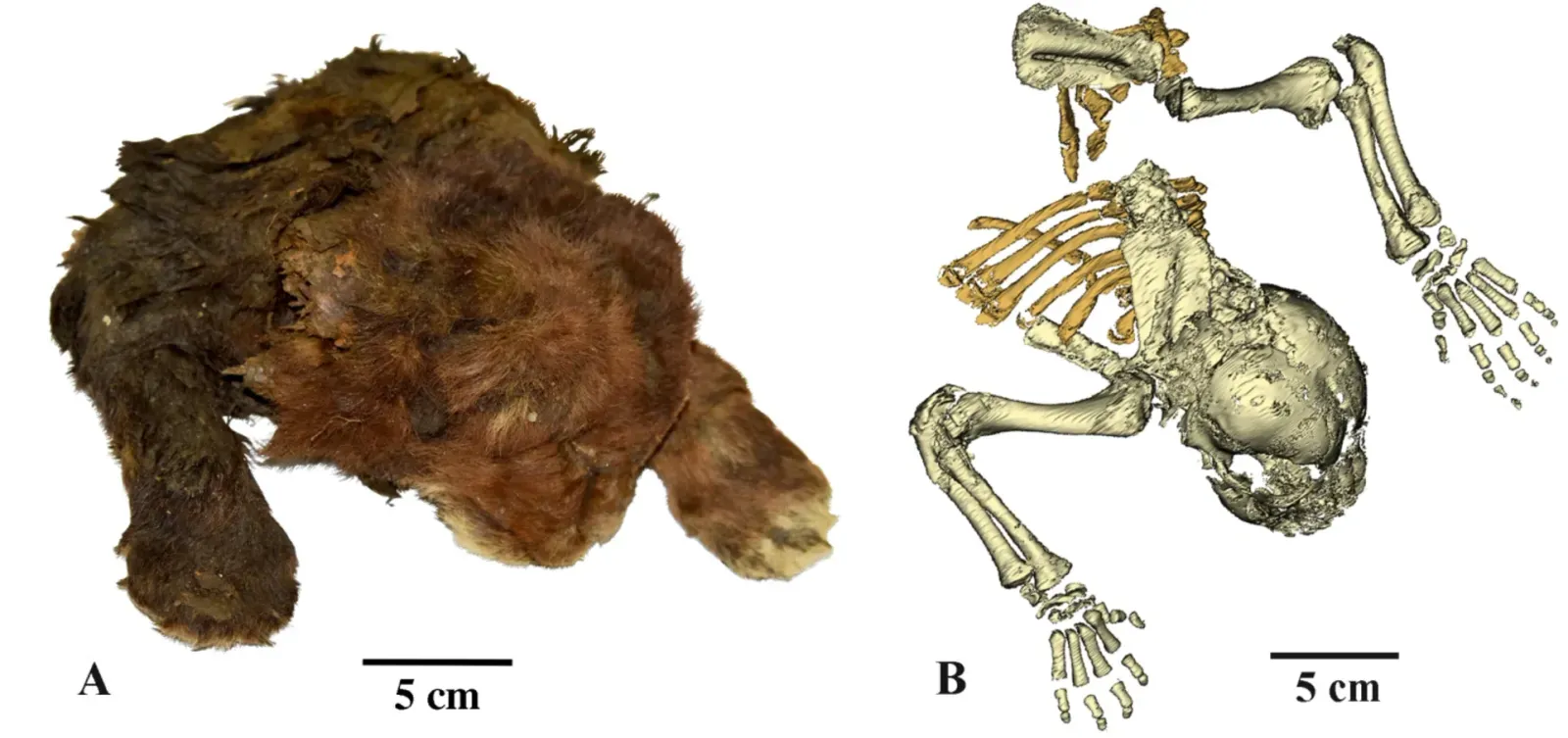
In 2024, scientists unveiled something no paleontologist had ever seen before: an actual mummified sabre-toothed cub, skin and fur intact, pulled from Siberian permafrost. These extinct carnivores, famous for bladelike canines that could measure up to 8 inches long, are distant relatives of modern big cats. What stunned researchers wasn’t the teeth – it was how different the cub’s body was from a lion cub at the exact same age.
The specimen showed a strangely shaped muzzle with a large mouth opening, small ears, a very massive neck region, elongated forelimbs, and dark coat color. That means these cats weren’t born looking like ordinary kittens that grew fangs later – they were built different from birth. A three-week-old sabre-toothed cub already had the elongated limbs and massive neck of a specialized killer, long before it ever grew a single sabre tooth. Their extinction story just got rewritten too.
Worth Knowing
- The mummified cub was recovered from Siberian permafrost, unveiled to the public in 2024.
- Adult canines in this lineage could grow up to 8 inches long.
- At just three weeks old, the cub already had elongated limbs and a massive neck.
- Skin, fur, and soft tissue were preserved – an unprecedented look at a sabre-toothed cat’s early life.
#3 – Vanishing Prey May Have Killed Them Long Before Humans Showed Up
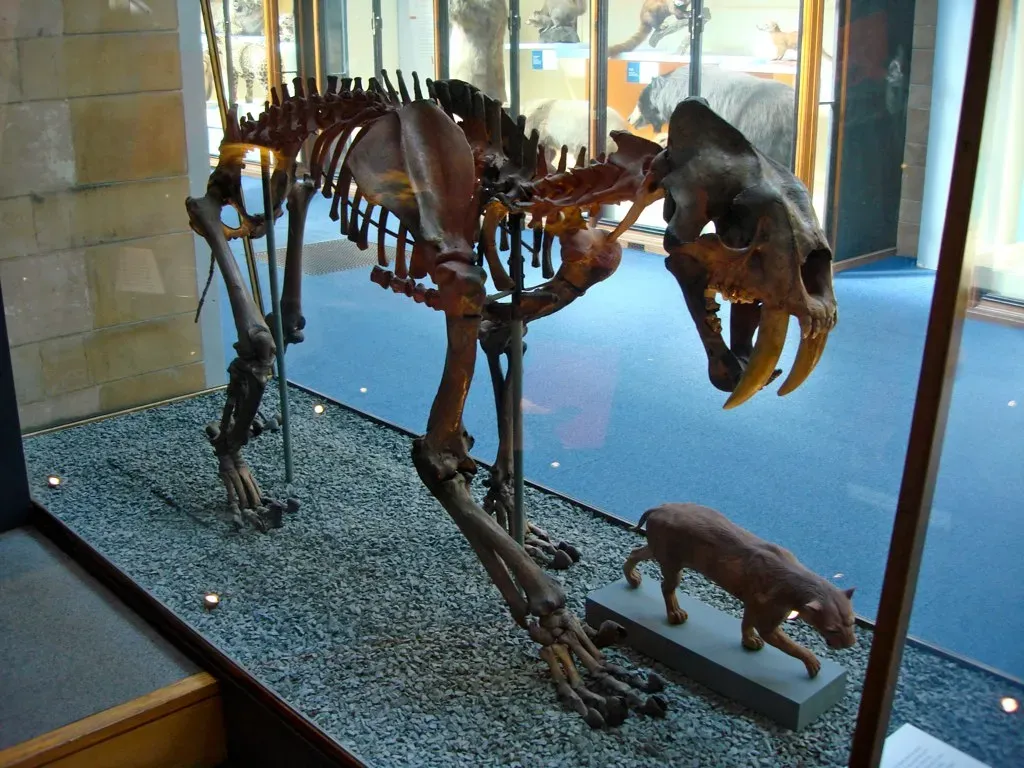
The popular extinction story blames humans and climate change exclusively. A 2025 study suggests the die-off was set in motion millions of years earlier, driven by something more basic: food running out. Researchers found that the endpoint of most sabretooth lineages occurred when prey richness for that group was at its lowest, and that reduced prey richness was directly tied to higher extinction risk.
This wasn’t a sudden Ice Age catastrophe – it was a slow-motion collapse tied to shrinking food webs over enormous timescales. The results support the idea that sabretooth extinction was linked to megafauna decline, but push the timeline back millions of years earlier than previously thought, highlighting just how much ecological pressure shaped these animals’ fate. Sabre-toothed cats may have been fighting a losing battle against a shrinking dinner table for millions of years before the final extinction event. Their brains, oddly, tell a calmer story.
#2 – Their Brains Were Surprisingly Ordinary
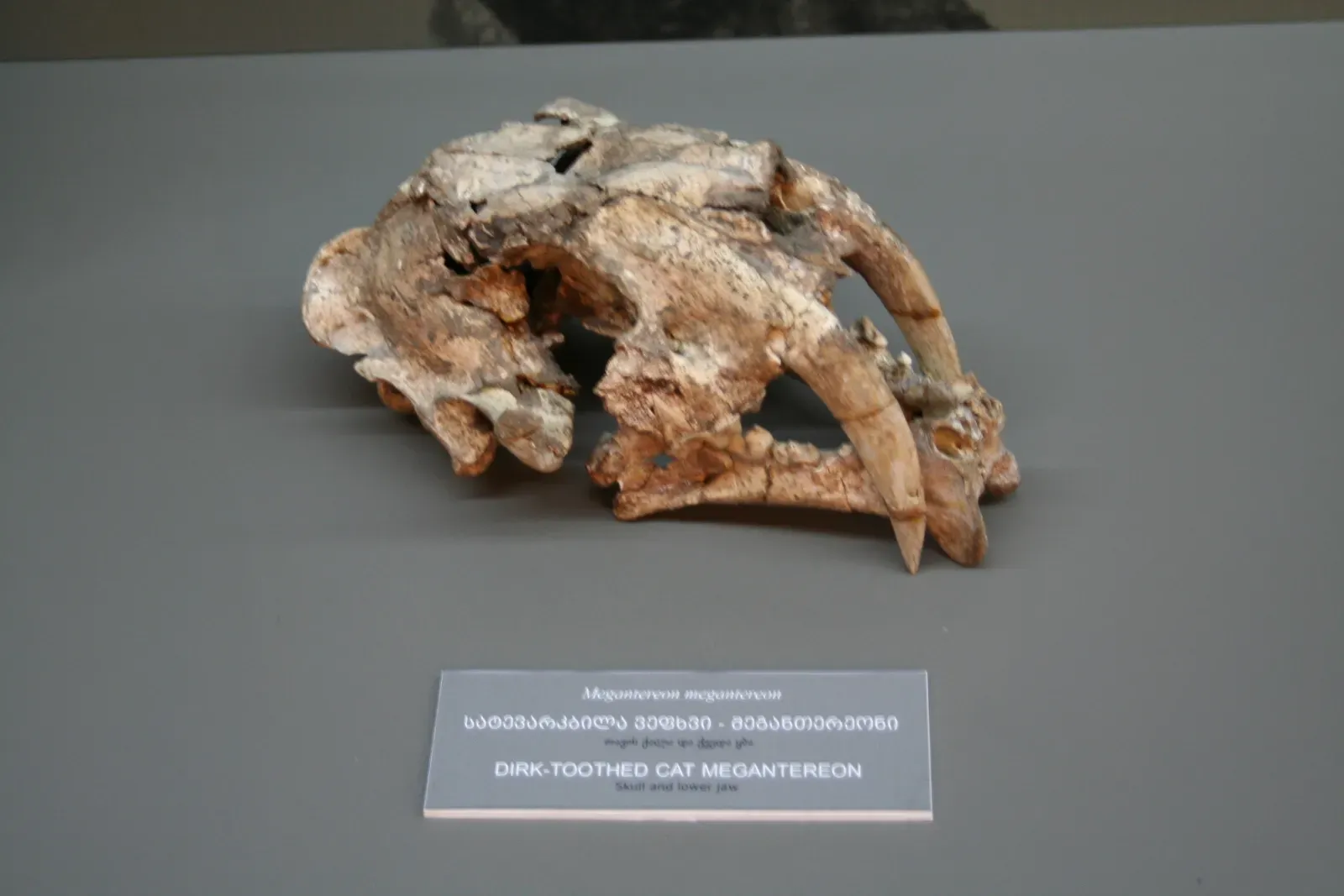
Given the extreme anatomy, you’d expect a highly specialized brain to match. New neuroanatomical scans of Megantereon – a close cousin of Smilodon – found the opposite. Analyses place M. cultridens in an intermediate position between Felinae and Pantherinae in brain shape, with its closest affinities to ecologically flexible living species like the puma and jaguar.
That’s a strange twist – this sabre-toothed predator’s brain looked more like a generalist puma’s than a specialized killing machine’s. Researchers argue this generalized neuroanatomy likely gave M. cultridens behavioral plasticity and ecological versatility in an Early Pleistocene Europe crowded with competing predators and an unusually high diversity of medium-to-large cats. The most extreme teeth in the animal kingdom were apparently running on a remarkably unremarkable brain, and the very last myth to fall might be the biggest one of all.
#1 – Not All Sabre-Tooths Hunted the Same Way
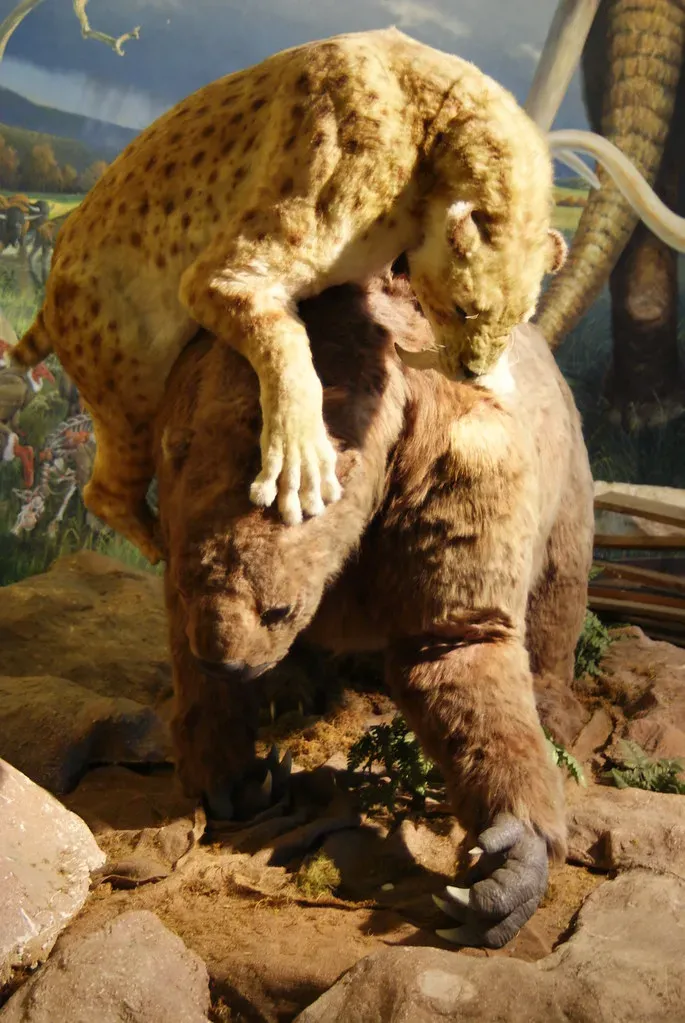
If there’s one belief researchers have overturned more than any other, it’s this: “sabre-toothed cat” was never one single hunting strategy. It was at least two completely different lifestyles wearing similar fangs. Homotherini are generally considered open-habitat pursuit predators with cursorial adaptations, while Smilodontini are regarded as ambush predators in closed or mixed habitats – a split confirmed by studies of their post-cranial bones.
One group ran prey down like wolves across open plains; the other hid in brush and pounced like a modern jaguar. Same fearsome teeth, opposite playbooks. Some species built stamina and long limbs for the chase, leaning on sharp vision, cognition, and endurance genetics, like Homotherium. Others built brute forelimb strength and ambush patience, sacrificing speed for close-range power, like Smilodon. Two predators that looked almost identical in the fang department were running two entirely different survival strategies – and neither one had anything to do with how tigers actually hunt. That contradiction is the single biggest reason researchers now say the “sabre-toothed tiger” nickname needs to be retired for good.
At a Glance
- Homotherini: open-habitat pursuit predators built for stamina and long-distance chases.
- Smilodontini: ambush predators favoring closed or mixed habitats and close-range power.
- Shared trait: both groups evolved sabre-like fangs despite opposite hunting styles.
- Key evidence: post-cranial bone studies confirm the behavioral split between the two groups.
The Bottom Line
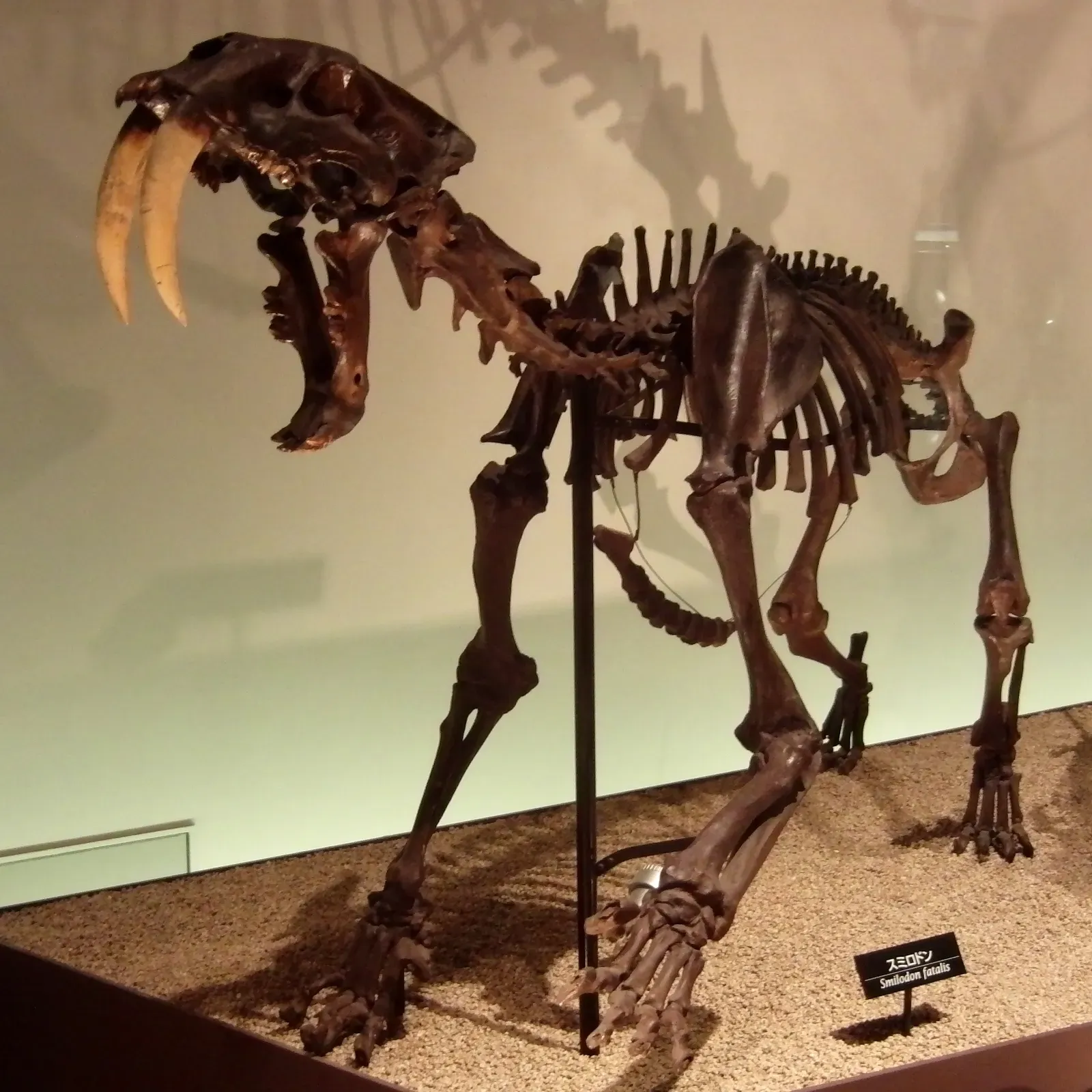
The evidence is clear: sabre-toothed cats were never one animal, one hunting style, or one social system. They were at least 50 distinct species spanning ambush predators and endurance pack-hunters, wielding teeth that were simultaneously engineering marvels and dangerously fragile. The social-care theory that dominated pop culture for decades is now genuinely disputed among specialists, and genome science has proven these cats were more successful, more widespread, and more behaviorally complex than a century of fossils ever suggested.
If you take one opinion from this list, take this one: the “loner tiger with big teeth” image belongs in a museum gift shop, not a science textbook. The real animal was messier, weirder, and far more interesting than the myth ever gave it credit for.