
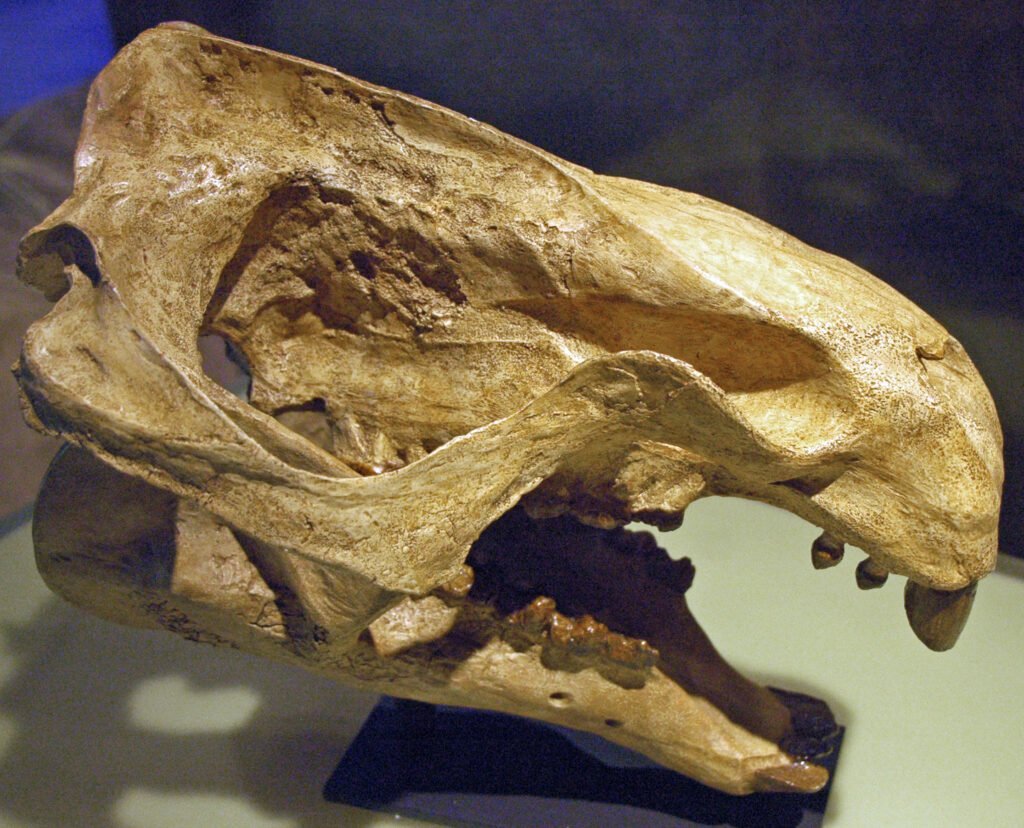
Museums love announcing triumphant discoveries. What they rarely explain is why so many of their most celebrated “ancient animal” finds later vanished from display without so much as a plaque update. For more than 150 years, fossils, cryptid carcasses, and “missing link” reconstructions have been paraded in front of cameras and reporters before anyone ran the basic test that would have killed the story in an afternoon. Some of these finds made front-page news. Almost all of them quietly disappeared the moment someone finally checked.
Some of these reversals took a matter of weeks. One took more than forty years to unravel, misleading entire generations of scientists along the way. Below are 25 of the most spectacular unveilings in the history of paleontology and cryptozoology, ranked by exactly how far the fall from grace turned out to be.
#25 – The Orce “Man” Who Turned Out to Be a Donkey
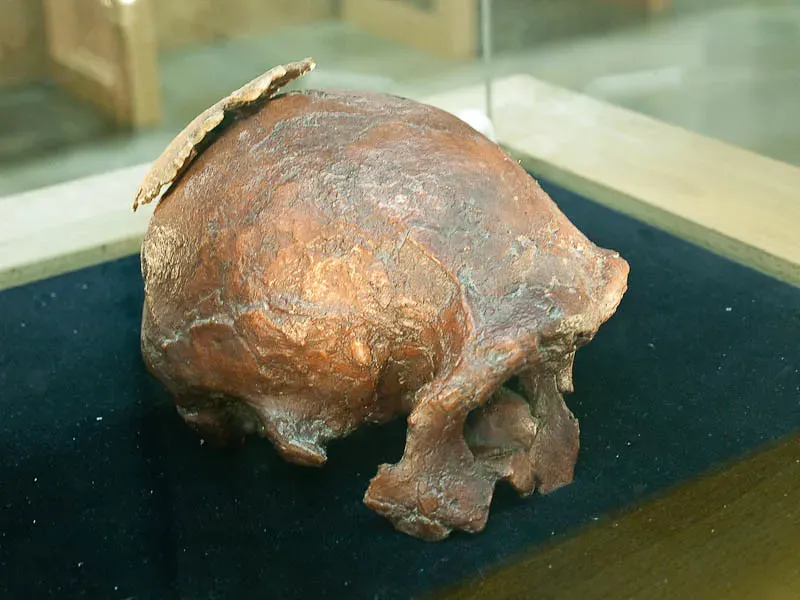
A skull fragment barely two inches across once rewrote the history of Europe overnight. In 1982, a team working near Orce, Spain, pulled a small cranial fragment from the Venta Micena site and declared it the earliest known human fossil on the continent. Spanish scientists announced the fossil belonged to a teenage boy who lived up to 1.6 million years ago, complete with detailed facial reconstructions built from a piece of bone smaller than a matchbox.
The reversal came fast and humiliating. The regional government of Andalusia sent out 500 letters canceling invitations to a three-day international symposium that had been planned to celebrate the find. French anatomists examining the fragment concluded it more closely matched a juvenile equine skull than anything hominid. Some Spanish researchers pushed back for years and the debate genuinely lingered, but the damage to the “first European” narrative was already done. Compared to what happened next on a New York beach, though, this was a quiet embarrassment.
#24 – The Montauk Monster That Was Just a Bloated Raccoon
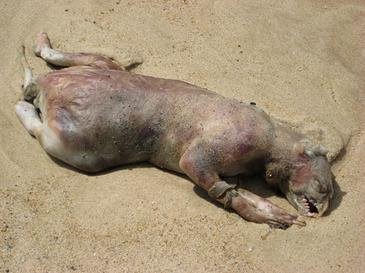
A single rotting carcass on a New York beach launched a thousand conspiracy theories in 2008. Beachgoers in Montauk photographed a strange, hairless creature with a pointed snout and clawed forelimbs, and the images went viral within hours. Cryptozoology blogs called it a mutant, a government lab escapee, or an entirely new species never catalogued by science.
The truth was far less exciting: wildlife biologists who examined the photos concluded the carcass was most likely a raccoon, badly decomposed and bloated by seawater exposure. Decomposition famously distorts jaws, strips fur, and shrinks features in ways that make ordinary animals look alien. The “beak” that fueled so much speculation was consistent with a raccoon’s jaw once the surrounding tissue had rotted away, and no lab ever tested the actual carcass since it disappeared before scientists could examine it directly. A rotting raccoon is one kind of hoax. A costume stuffed in a chest freezer is a whole different level of nerve.
#23 – The Bigfoot in a Freezer That Was Actually a Costume
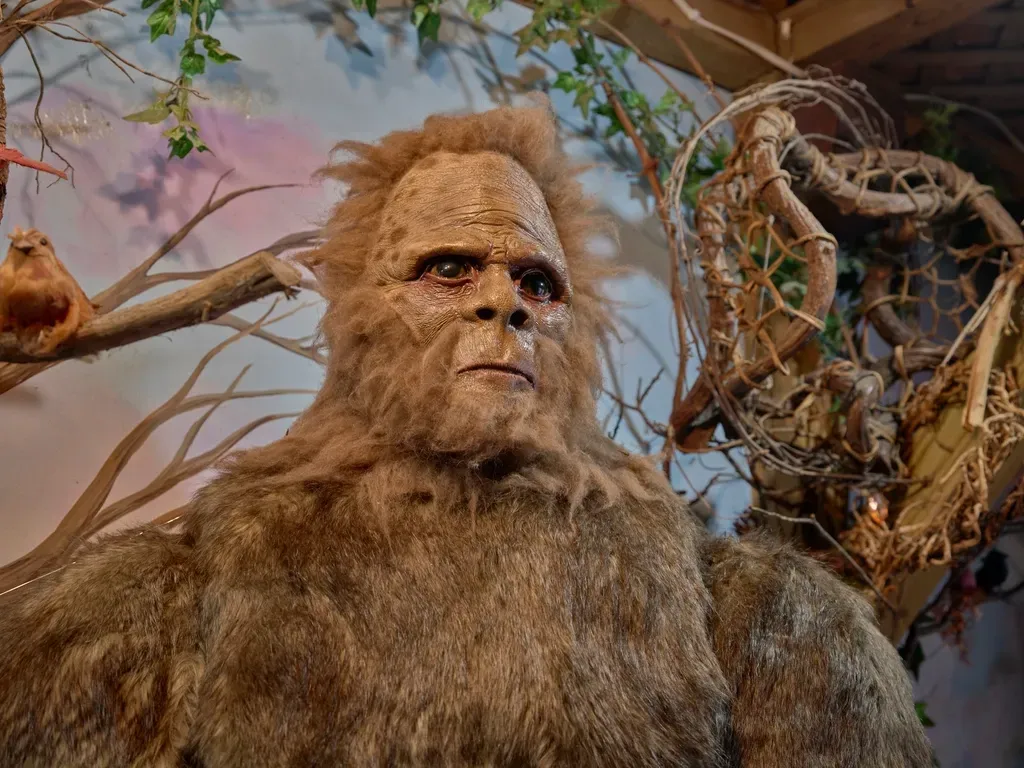
Two self-described Bigfoot hunters called a Georgia press conference in 2008 to unveil what they claimed was a genuine Sasquatch body frozen solid in a chest freezer. The men charged researchers for a peek and promised DNA testing would prove the creature’s authenticity once and for all. Cryptozoology forums exploded with excitement, and national news outlets picked up the story within a day.
When the “body” finally thawed for inspection, it turned out to be a rubber costume stuffed inside the ice, and the whole stunt was a paid publicity hoax. The organizers eventually admitted they’d been paid a sum of money to stage the discovery, and the promised DNA results never appeared for good reason. It became one of the most-cited modern examples of how quickly a fabricated “find” can spread before anyone demands the actual evidence. That scam was modern. The next one goes back to Victorian France, and it’s just as shameless.
#22 – The Moulin Quignon Jaw That Workers Planted Themselves
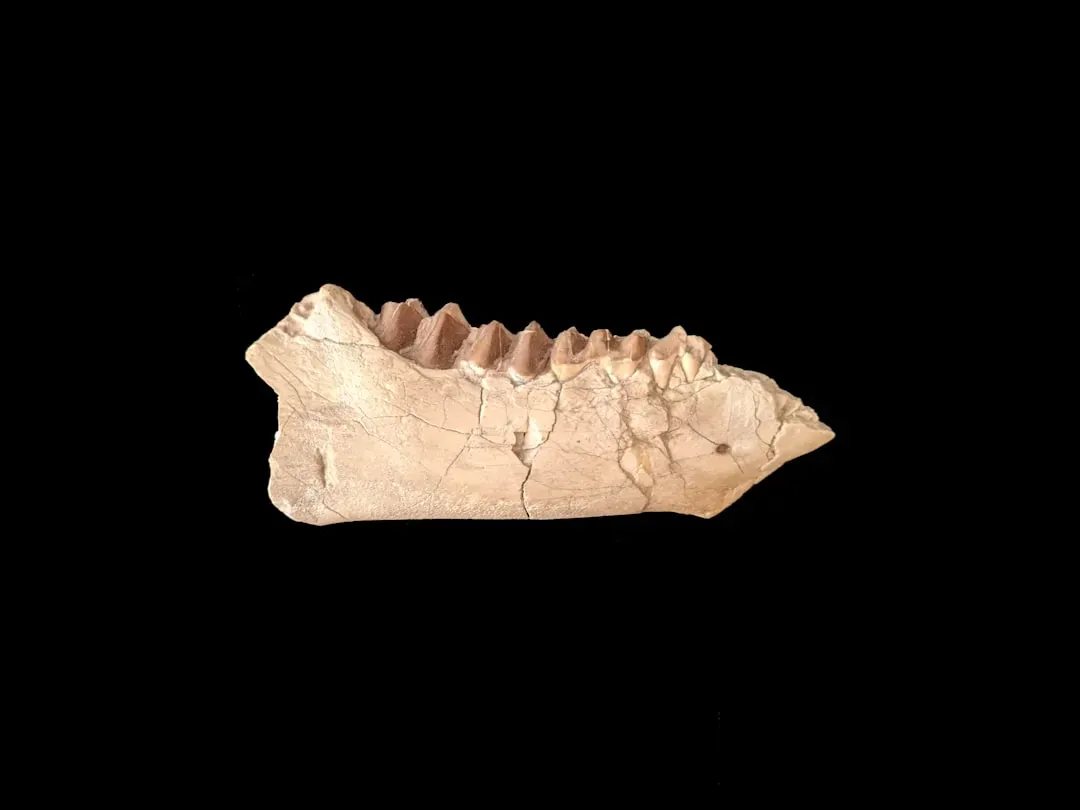
A human-like jawbone found in French gravel pits in 1863 was celebrated as proof that ancient humans lived alongside extinct Ice Age mammals. British and French geologists initially clashed fiercely over whether the jaw was genuinely ancient or a modern bone that had simply washed into older sediment. The debate turned into one of the era’s biggest scientific controversies, with entire delegations crossing the English Channel to inspect the find in person.
What finally ended the argument wasn’t a lab test – it was a confession from the gravel-pit workers themselves, who admitted they had planted the jaw to please the paying scientists searching the site. The incident became a cautionary tale about paying local diggers for discoveries, since it created a direct financial incentive to “find” exactly what buyers wanted. Even respected geologists on both sides of the Channel had been fooled for months before the truth surfaced. French diggers weren’t the only ones willing to plant evidence for a payday – American miners had their own version.
#21 – The Calaveras Skull, Planted as a Prank on a Pompous Geologist

A human skull pulled from deep gold-mining gravel in California in 1866 was presented as evidence that humans had lived in North America for over a million years. Geologist Josiah Whitney championed the skull as proof of an astonishingly ancient human presence, publishing on it extensively and defending it against skeptics for years. The skull’s mineral staining and its supposed depth in the gravel seemed to support extreme antiquity.
Later investigations revealed miners had likely planted the skull as a prank on Whitney, whom they reportedly found pompous, and fluorine dating eventually confirmed the bone was far younger than the surrounding gravel. The Calaveras Skull became a staple example in geology classrooms of why context and chain-of-custody matter more than the specimen itself. Whitney never publicly recanted his belief before his death, leaving the embarrassment to the institutions that had backed him. Some hoaxes are pranks gone wrong. The next one started with an honest fishing crew hauling something genuinely strange out of the ocean.
Fast Facts
- Pulled from gold-mining gravel in California in 1866
- Championed for years by geologist Josiah Whitney
- Widely believed to be a prank aimed squarely at Whitney
- Debunked by fluorine dating, which proved the bone was far too young
#20 – The Zuiyo-maru “Plesiosaur” That Was a Basking Shark
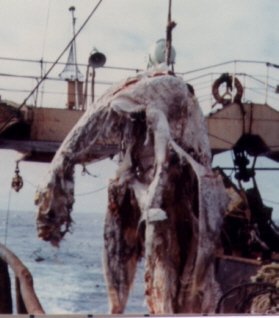
A Japanese trawler crew hauled up a massive decomposing carcass off the coast of New Zealand in 1977, and the discovery briefly convinced the world that plesiosaurs might not be extinct after all. Crew photographs showed a long-necked creature with flippers, and Japanese newspapers ran headlines suggesting a living dinosaur had been found in the deep ocean. The captain ordered the carcass tossed back before scientists could examine the actual tissue, since it was damaging the nets and smelled overwhelming.
Biochemical analysis of preserved tissue samples that were saved matched the amino acid profile of a basking shark, a species notorious for decomposing into a fake “sea serpent” shape as its lower jaw and gill structures rot away first. Basking sharks have caused more supposed sea-monster sightings than perhaps any other real animal, precisely because their decayed carcasses lose the features that make them recognizable as sharks. The Zuiyo-maru case remains the most famous instance because it had photographic documentation and crew testimony, yet still collapsed under basic biochemistry. Basking sharks fooled fishermen in 1977. Turns out they’d already fooled scientists once before, nearly two centuries earlier.
#19 – The Stronsay Beast That Earned Its Own Fake Species Name
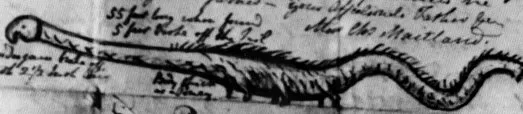
A massive carcass that washed ashore on the Scottish island of Stronsay in 1808 was so unusual that a local naturalist gave it an official scientific name on the spot. The specimen stretched over 50 feet with a long neck, small head, and what appeared to be three pairs of limbs, prompting the naturalist to christen it “Halsydrus pontoppidani” – essentially declaring a brand-new species of sea serpent. The Wernerian Natural History Society in Edinburgh formally recorded the discovery and treated it as a landmark zoological event.
Anatomist Sir Everard Home later dissected preserved vertebrae from the carcass and determined the animal was almost certainly a basking shark, its gill-rakers and jaw having rotted away to create the illusion of “limbs” and a serpentine neck. The Stronsay case predates the Zuiyo-maru incident by nearly 170 years, yet it followed an almost identical decomposition pattern. It stands as one of the earliest documented examples of a formally named “species” being quietly abandoned once real anatomical study caught up with public excitement. Not every misidentified “monster” comes from the sea. Some get kept as sacred relics in a monastery for generations.
#18 – The Yeti Scalp That Was Actually a Himalayan Goat-Antelope
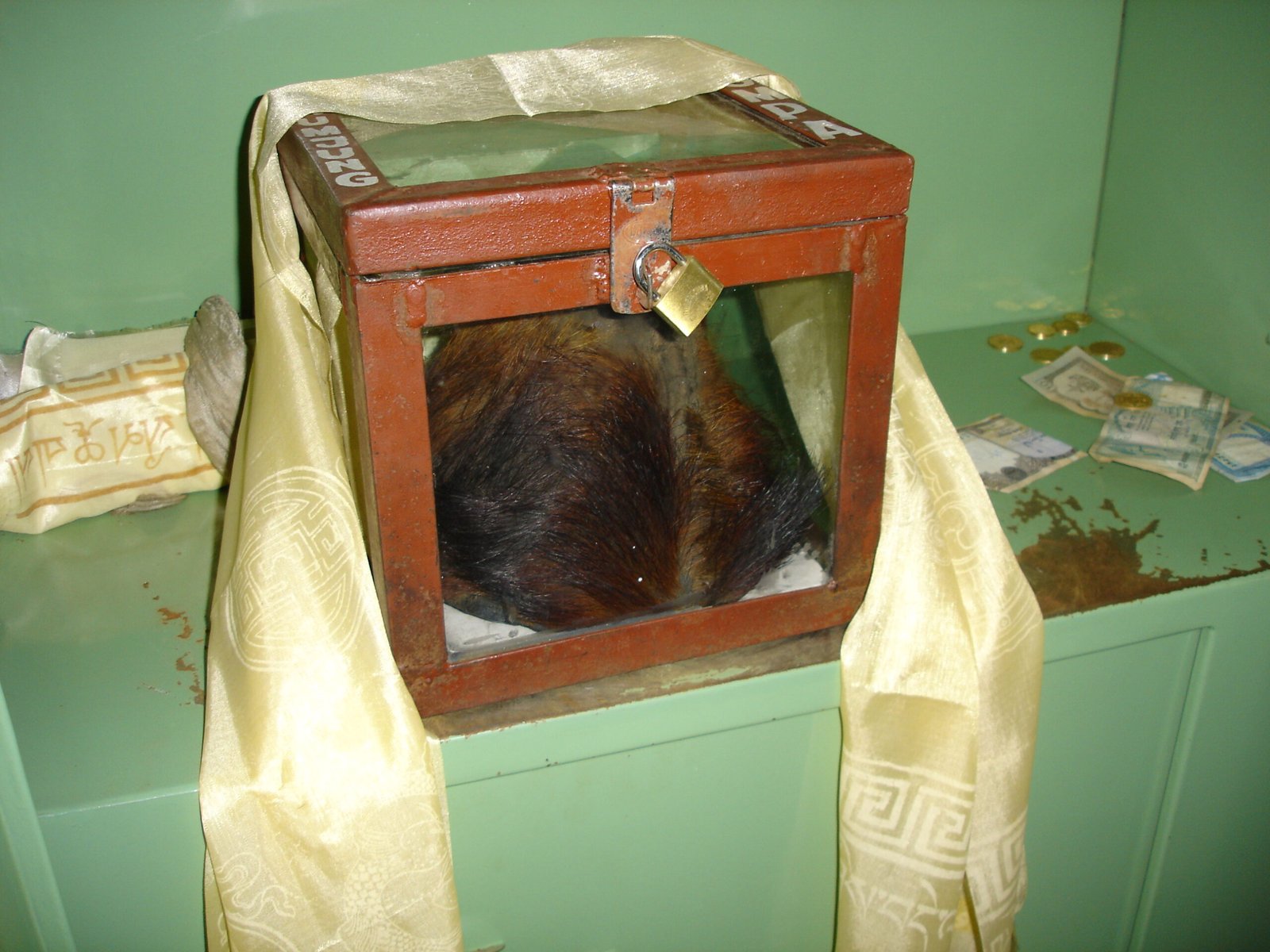
For decades, a Buddhist monastery in Khumjung, Nepal, displayed a conical, hair-covered relic as the scalp of a genuine Yeti, drawing pilgrims and mountaineering expeditions eager for a glimpse. Sir Edmund Hillary himself borrowed the relic in 1960 to have it examined by Western scientists, hoping to finally settle the Yeti question with hard evidence. The monastery’s monks had treated the object as sacred for generations, and its texture and shape genuinely resembled nothing immediately familiar to Western zoologists at the time.
Hair and tissue analysis eventually matched the scalp to the skin of a serow, a goat-antelope native to the Himalayas, whose hide can be shaped into a dome that mimics a primate skullcap. The monastery kept displaying the relic long after the scientific verdict came in, since its cultural and religious significance to the local community was separate from its zoological accuracy. It remains one of the clearest cases of a “cryptid” specimen being both genuinely ancient in cultural use and definitively mundane in biological origin. A holy relic turning out to be a goat is strange enough. Next is an entire museum built on stones nobody wanted to admit were fake.
#17 – The Ica Stones Carved With Modern Dental Drills
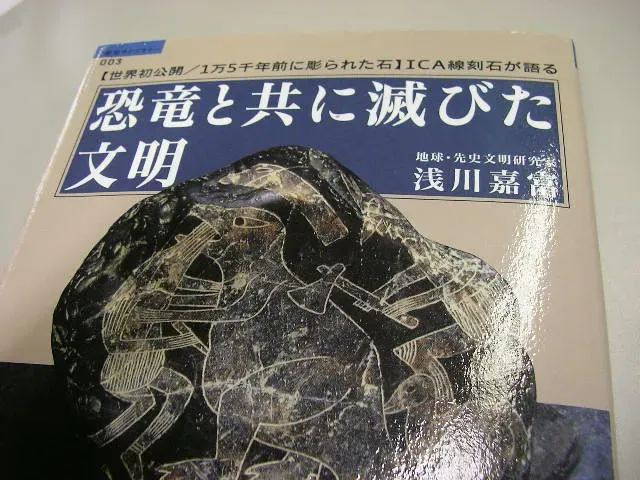
Thousands of engraved stones from Ica, Peru, appeared to show ancient humans riding dinosaurs, performing surgery, and observing astronomical events centuries before such knowledge should have existed. Dr. Javier Cabrera amassed a collection of over 10,000 stones starting in the 1960s and built an entire private museum around the theory that they proved an advanced lost civilization coexisted with prehistoric reptiles. The stones spread rapidly through alternative history circles as supposed proof that mainstream paleontology had the timeline of human and dinosaur coexistence wrong.
The local farmers who originally sold Cabrera the stones eventually admitted, on camera, to carving them themselves using modern dental drills, motivated by tourist demand and the money Cabrera was paying per stone. Geological analysis of the stone surfaces also showed fresh cutting marks inconsistent with genuine ancient patina, reinforcing the confession. Despite the admitted forgery, the Ica Stones museum remains a tourist attraction in Peru today, kept alive more by folklore than by any lingering scientific credibility. Peru wasn’t the only country with a dinosaur-shaped tourist trap. Mexico had one too, and it ran for decades.
#16 – The Acámbaro Figurines and Their Dinosaur Problem
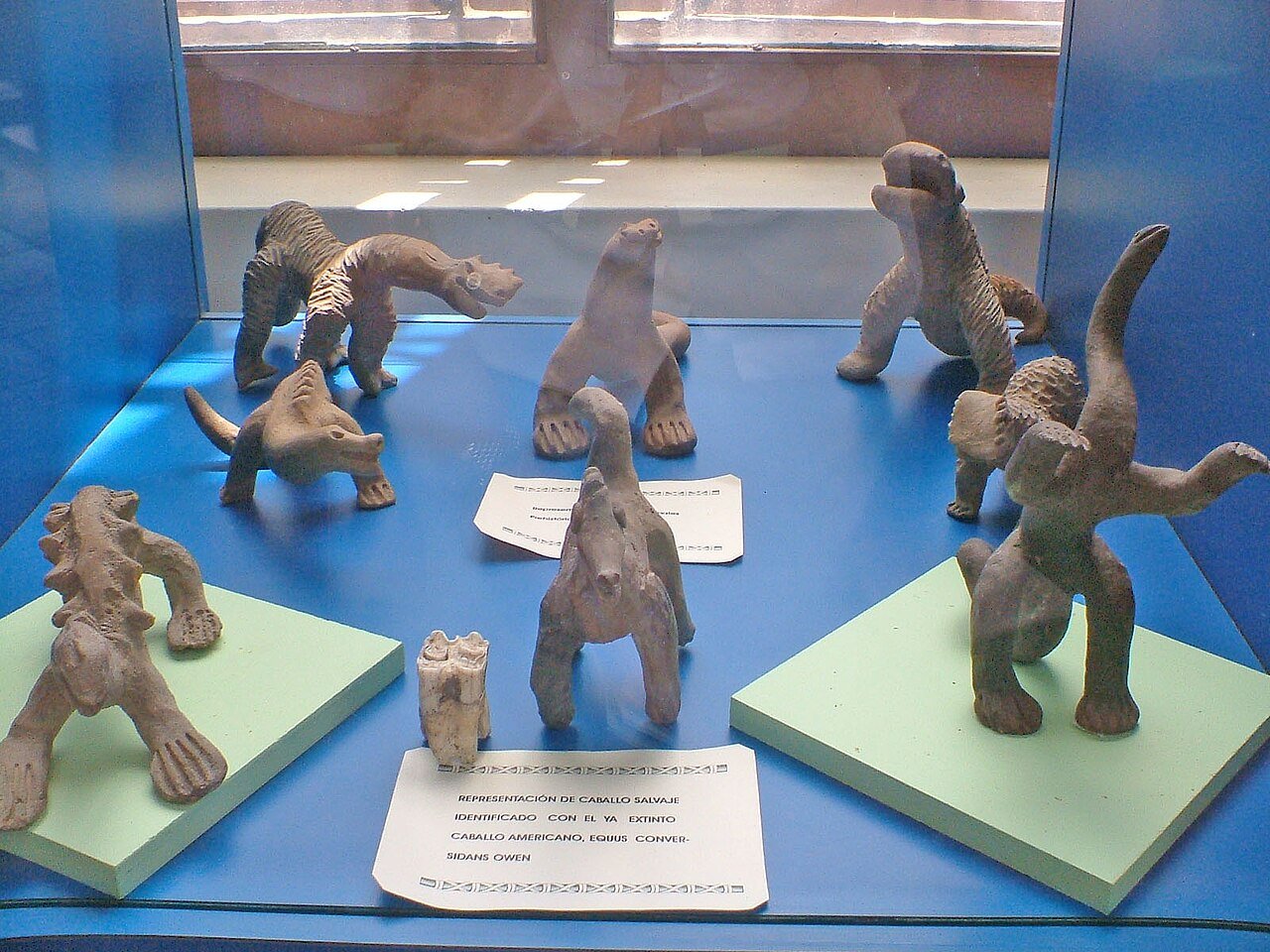
Thousands of small ceramic figurines unearthed near Acámbaro, Mexico, in the 1940s appeared to depict dinosaurs, prompting claims that ancient Mexican civilizations had encountered living prehistoric reptiles. Waldemar Julsrud, a German merchant living in Mexico, financed local diggers to uncover the collection and promoted it aggressively as evidence overturning the accepted extinction timeline. The sheer volume of the find, numbering in the thousands, made it hard for casual observers to dismiss as a simple one-off fake.
Radiocarbon testing conducted decades later dated the clay to a period consistent with modern manufacture rather than any pre-Columbian civilization, and multiple archaeologists documented ongoing local production of similar figurines for the tourist and collector trade. Interviews with residents of the region years later revealed a small cottage industry had grown around producing the figurines to sell to eager foreign buyers like Julsrud. The Mexican National Institute of Anthropology and History never endorsed the collection’s authenticity, and mainstream archaeology treats it as a well-documented fabrication case. Ceramics are one thing. This next hoax convinced two respected scientists they were looking at a frozen caveman.
#15 – The Minnesota Iceman That Was Latex All Along
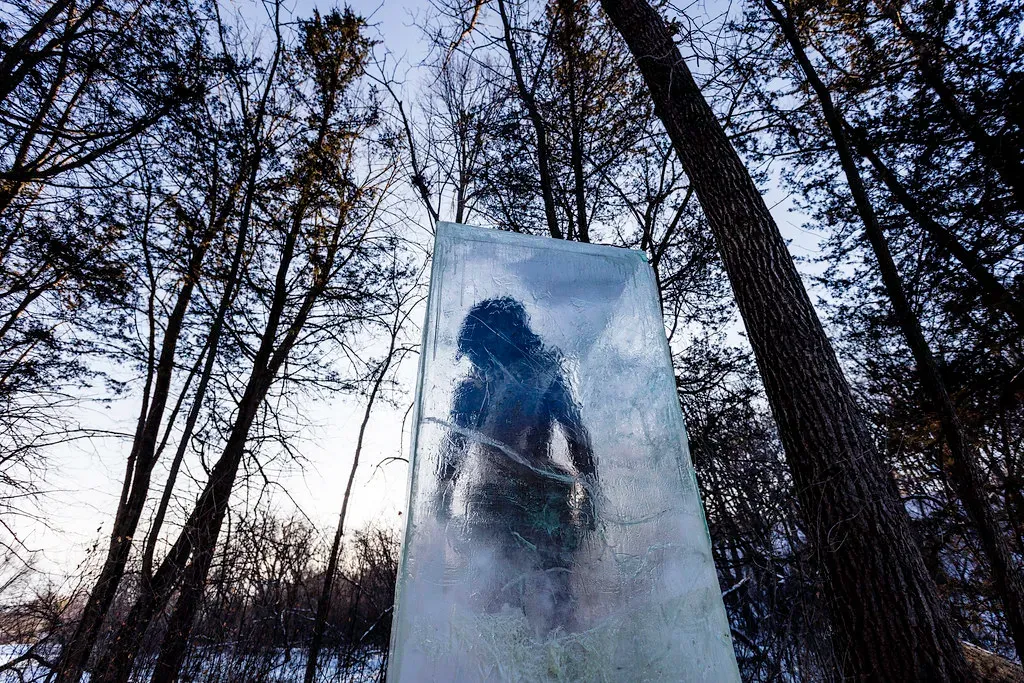
A hairy, humanoid body encased in a block of ice toured American carnival sideshows in 1968, billed as a genuine specimen of a prehistoric hominid preserved since the last Ice Age. Two respected primatologists, Ivan Sanderson and Bernard Heuvelmans, examined the frozen figure and published accounts insisting it displayed genuine anatomical features consistent with an unknown hominid species, lending the exhibit unusual scientific credibility for a carnival attraction. The showman touring the specimen refused to allow independent thawing or tissue sampling, citing the “owner’s” wishes, which only heightened suspicion among skeptics.
The exhibit’s owner later admitted the original specimen had been destroyed and replaced with a manufactured latex-and-hair model, and the “hominid” that scientists had examined and defended was never anything more than a sideshow prop. The case became a textbook example of how even trained scientists can be misled when denied hands-on access to a specimen. Sanderson never fully retracted his enthusiasm before his death, leaving the scientific embarrassment largely unresolved in the literature. If scientists can be fooled by a latex prop, imagine what a grainy photograph can do to an entire country’s imagination.
#14 – The Loch Ness “Surgeon’s Photograph” and Its Toy Submarine
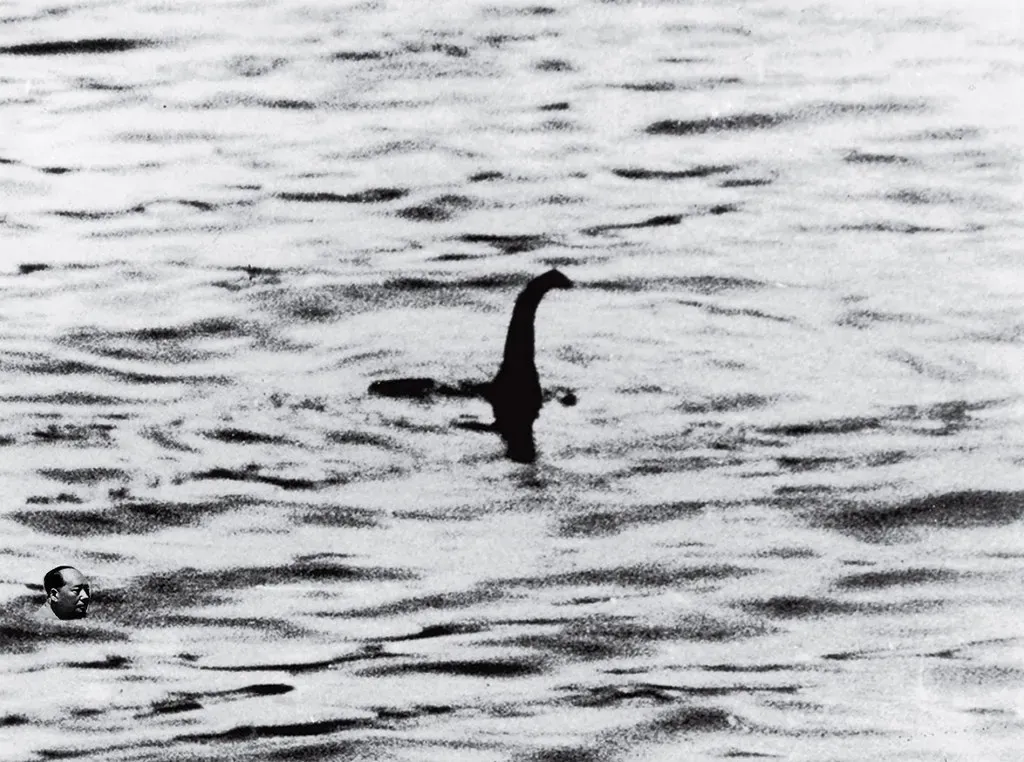
The single most famous image in cryptozoology, a grainy 1934 photograph showing a long neck rising from Loch Ness, was attributed to a respected London surgeon and treated as the best evidence ever captured of the monster. For nearly 60 years, the “Surgeon’s Photograph” anchored global belief in Nessie, reprinted in countless books, documentaries, and tourism campaigns for the Scottish Highlands. Researchers debated the ripple patterns and scale of the object in the water for decades, with some insisting the physics ruled out a hoax.
In 1994, one of the original conspirators confessed on his deathbed that the “monster” was a toy submarine fitted with a sculpted head, built and photographed as revenge against a newspaper that had previously humiliated one of the hoaxers. The confession named the specific participants and described how the model was sunk in the loch immediately after the photo was taken to destroy the evidence. Despite the confirmed hoax, the image remains so culturally embedded that many tourism materials still reference it without correction. Decades before toy submarines, one showman was already perfecting the art of the profitable fake.
Worth Knowing
- Photo taken in 1934 and attributed to a respected London surgeon
- Anchored global Nessie belief for nearly 60 years
- Confession didn’t surface until 1994, on a conspirator’s deathbed
- The “monster” was a toy submarine fitted with a sculpted head
#13 – The Feejee Mermaid That Fooled a Generation
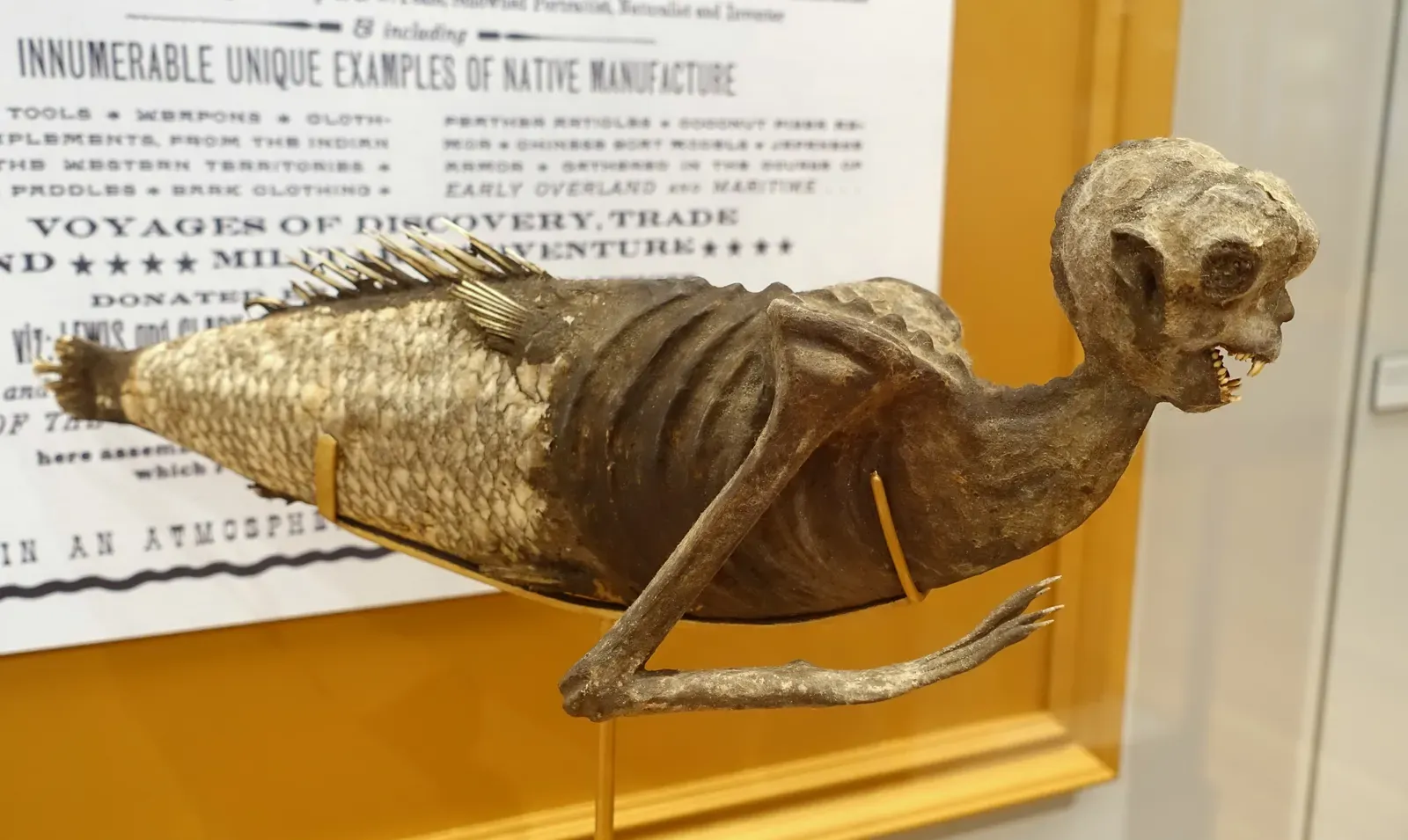
P.T. Barnum unveiled his “Feejee Mermaid” in 1842, promoting it through newspaper plants and staged scientific endorsements as a genuine specimen caught off the coast of Fiji. Barnum hired a fake “scientist” to tour cities ahead of the exhibit, giving supposedly independent lectures on the creature’s authenticity to build anticipation before the public ever saw it. Crowds paid to view what was described as definitive proof that mermaids existed in nature, and the exhibit became one of the most profitable attractions of Barnum’s early career.
The specimen was actually the torso and head of a juvenile monkey sewn onto the tail of a fish, a composite craft technique common among Japanese and Indonesian fishermen for over a century before Barnum ever acquired one. These composite “mermaid” creations, often called Jenny Hanivers when made from rays, were originally sold to sailors as curiosities rather than scientific specimens. Barnum never formally apologized, treating the eventual exposure as simply part of the show business he openly admitted to practicing. Barnum sold a fake torso. The next huckster went bigger, stitching together an entire 114-foot skeleton.
#12 – Albert Koch’s Sea Serpent Stitched From Five Whale Skeletons
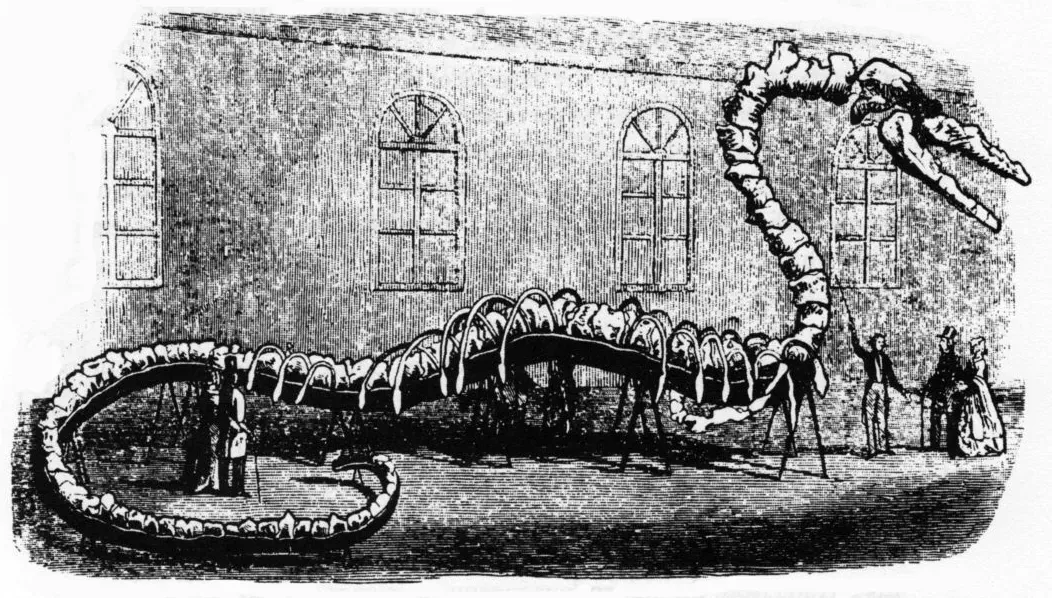
Showman Albert Koch unveiled a 114-foot sea serpent skeleton in 1845, calling it “Hydrarchos” and claiming it was the fossilized remains of a colossal ancient reptile. Koch toured the assembled skeleton through American and European cities, charging admission and publishing pamphlets describing the creature’s supposed biology in vivid, invented detail. The sheer scale of the skeleton made for a genuinely awe-inspiring exhibit, and crowds lined up specifically because nothing like it had ever been displayed before.
Naturalists eventually determined the skeleton was assembled from the bones of at least five separate individual Basilosaurus, an extinct primitive whale, stacked and arranged to exaggerate the length far beyond any single animal’s actual size. Basilosaurus itself was a genuine and remarkable prehistoric whale, making Koch’s fraud particularly frustrating to paleontologists who felt the real science was more than impressive enough without embellishment. Koch repeated the same composite-skeleton trick with a second “monster” years later, suggesting the first exposure did little to slow his showmanship. Even legitimate scientists got the bones wrong sometimes, and one of the field’s biggest names built his mistake in public.
#11 – Cope’s Backward Sea Monster Skeleton

Edward Drinker Cope, one of the era’s most prominent paleontologists, unveiled a reconstructed Elasmosaurus skeleton in 1868 as a triumphant new discovery in the emerging field of marine reptile fossils. Cope presented detailed illustrations and descriptions to the scientific community, confident in his reconstruction of this long-necked marine reptile’s anatomy. His rival, Othniel Charles Marsh, reportedly visited to examine the mounted skeleton in person and noticed something deeply wrong with the arrangement.
Marsh determined that Cope had mistakenly placed the skull on the tip of the tail rather than the neck, essentially reconstructing the animal backward, since elongated marine reptile necks were not yet well understood by paleontologists at the time. Cope reportedly tried to buy back every copy of his published paper to prevent the embarrassing error from circulating further. The blunder became one of the opening shots in the decades-long “Bone Wars” rivalry between Cope and Marsh, a feud that shaped and distorted American paleontology for a generation. A backward skull is embarrassing. A fake government scientist on primetime television is something else entirely.
#10 – The “Mermaid” Documentary Discovery Channel Had to Walk Back

Discovery Channel aired “Mermaids: The Body Found” as a documentary-style special, presenting fabricated government scientists, staged interviews, and computer-generated “evidence” as though it were a genuine scientific investigation into mermaid biology. The special was framed with enough production polish and false scientific authority that surveys afterward found a significant portion of viewers believed mermaids were a real, documented species. Marine biology organizations issued public statements clarifying that no such research, agency, or evidence existed, since the entire premise was scripted fiction.
Discovery Channel eventually added disclaimers acknowledging the special was fictional entertainment, quietly walking back the “documentary” framing after mounting criticism from scientists and journalists over the deliberate blurring of fact and fiction. The backlash focused heavily on how a network historically associated with credible nature programming had chosen to market fabricated content using the visual language of real science journalism. The controversy became a frequently cited case study in media literacy courses about manufactured scientific-sounding “evidence.” The mermaid special wasn’t even Discovery’s biggest offender. They tried the same trick with a shark the following year.
#9 – The Fake Megalodon “Documentary” That Sparked a Real Investigation

Discovery Channel’s “Megalodon: The Monster Shark Lives” aired in 2013 during Shark Week, presenting staged sonar readings, fabricated eyewitness accounts, and actors posing as scientists to suggest the extinct giant shark might still be alive today. The special drew Discovery’s largest Shark Week audience up to that point, in large part because many viewers didn’t realize the entire premise was fictional until well after watching. Marine biologists and paleontologists were furious, pointing out that Megalodon’s extinction roughly 3.6 million years ago is supported by extensive fossil and ecological evidence with no credible modern sighting data whatsoever.
Discovery Channel eventually confirmed publicly that Megalodon does not exist today and that the special was a work of fiction, following sustained pressure from the scientific community and government agencies asking why a factual-sounding disclaimer wasn’t clearer from the start. The network aired a similar fictional Megalodon special again the following year, prompting renewed criticism that the walk-back hadn’t actually changed programming strategy. It remains one of the most cited examples of a major broadcaster manufacturing a “discovery” narrative purely for ratings. Not every walked-back discovery was a deliberate fraud, though. Sometimes hope alone was enough to convince an entire field.
#8 – The Ivory-Billed Woodpecker “Rediscovery” That Quietly Faded
![#8 - The Ivory-Billed Woodpecker "Rediscovery" That Quietly Faded (By Original photo by Arthur A. Allen, 1935 [1], watercolored by Jerry A. Payne, USDA-ARS, CC BY 3.0 us)](https://nvmwebsites-budwg5g9avh3epea.z03.azurefd.net/dinoworld/974a3d1908f792279b2cb4fcf04a64f6.webp)
In 2005, a team of ornithologists announced in the journal Science that they had confirmed sightings of the ivory-billed woodpecker in Arkansas, a species widely presumed extinct since the mid-20th century. The announcement triggered a wave of federal funding, a dedicated search program, and international media coverage celebrating the rediscovery of what birders called the “Lord God Bird.” A blurry video clip was presented as the key piece of supporting evidence, showing a large woodpecker in flight through dense forest canopy.
Independent ornithologists who reviewed the same video argued the bird’s wing pattern was more consistent with a pileated woodpecker, a common and unremarkable species, and years of intensive follow-up searches failed to produce a single new photograph, feather, or nest. The U.S. Fish and Wildlife Service ultimately proposed delisting the ivory-billed woodpecker as extinct nearly two decades later, effectively closing the book on the celebrated 2005 announcement. The case remains a sensitive subject among birders, some of whom still maintain the original sighting was genuine despite the lack of follow-up evidence. Hope faded quietly there. The next case flipped twice, and scientists still aren’t sure they got it right the second time.
#7 – The Tully Monster’s Reversed Identity
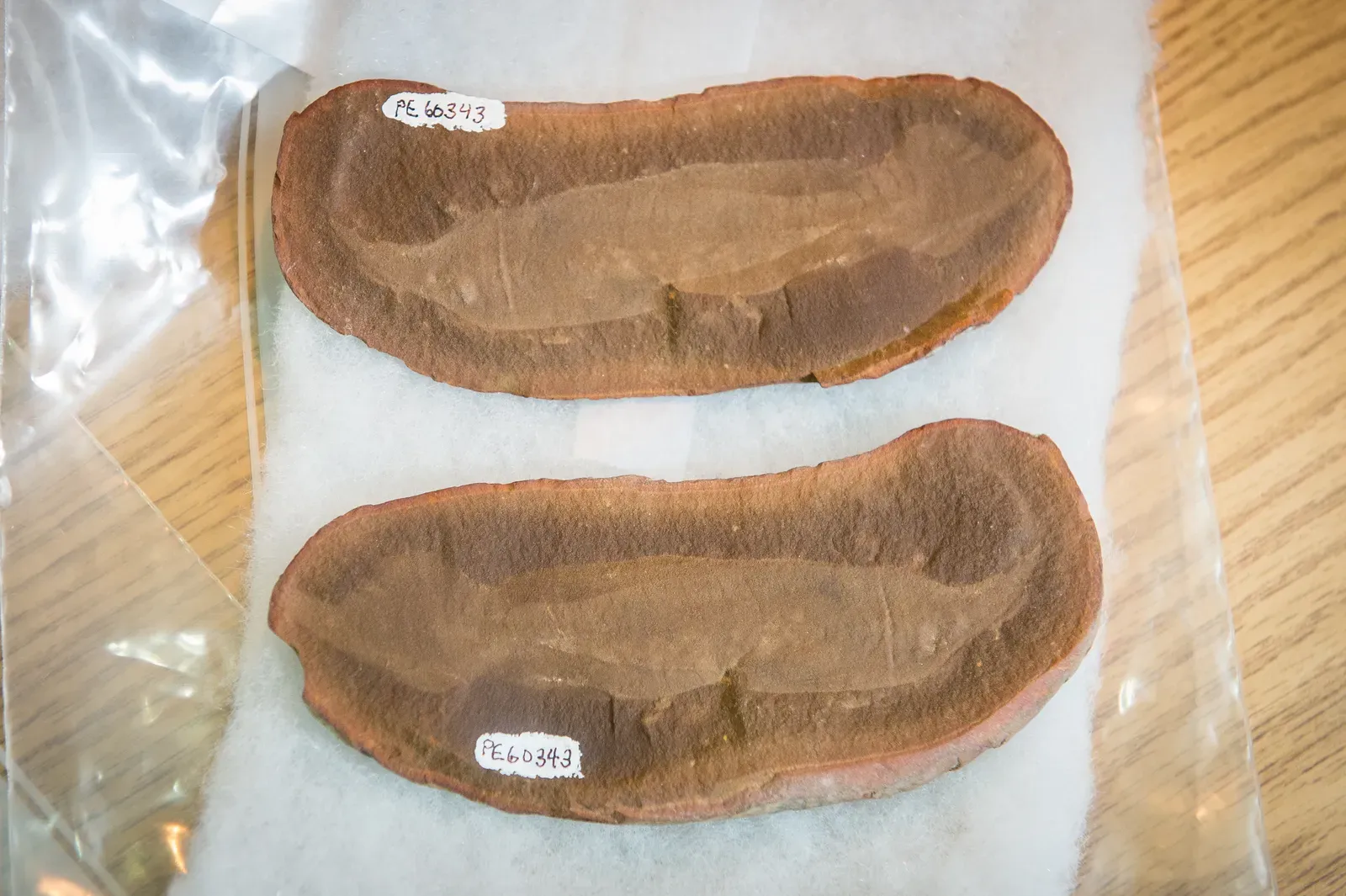
The Tully Monster, a bizarre 300-million-year-old creature first found in the Mazon Creek fossil beds of Illinois in 1955, baffled scientists for six decades before a landmark study seemed to finally solve the mystery. In 2016, researchers publishing in Nature claimed the fossil showed characteristics of a vertebrate, possibly related to jawless fish like lampreys. The paper made international headlines, framing the strange, tube-eyed, clawed-mouth animal as a missing evolutionary link finally placed correctly on the tree of life.
A separate 2019 study published in Proceedings of the Royal Society B directly challenged the vertebrate classification, and a 2023 study using 3D laser scanning of over a thousand specimens concluded the vertebrate identification simply didn’t hold up under close anatomical scrutiny. Researchers found that the Tully Monster displayed segmentation in its head region that extended from its body, a characteristic not known in any vertebrate lineage. Today, more than 2,000 examined specimens later, paleontologists have essentially reverted to admitting they don’t know exactly what the Tully Monster is. Not knowing what an animal is one problem. Not being legally allowed to have studied it at all is a different scandal completely.
Quick Compare
- 2016 study: classified the Tully Monster as a vertebrate, possibly lamprey-related
- 2019 study: directly challenged that vertebrate classification
- 2023 study: 3D scans of over 1,000 specimens found the vertebrate ID didn’t hold up
- Current status: classification remains officially unresolved
#6 – The Feathered Dinosaur Retracted Over Stolen Fossils, Not Bad Science
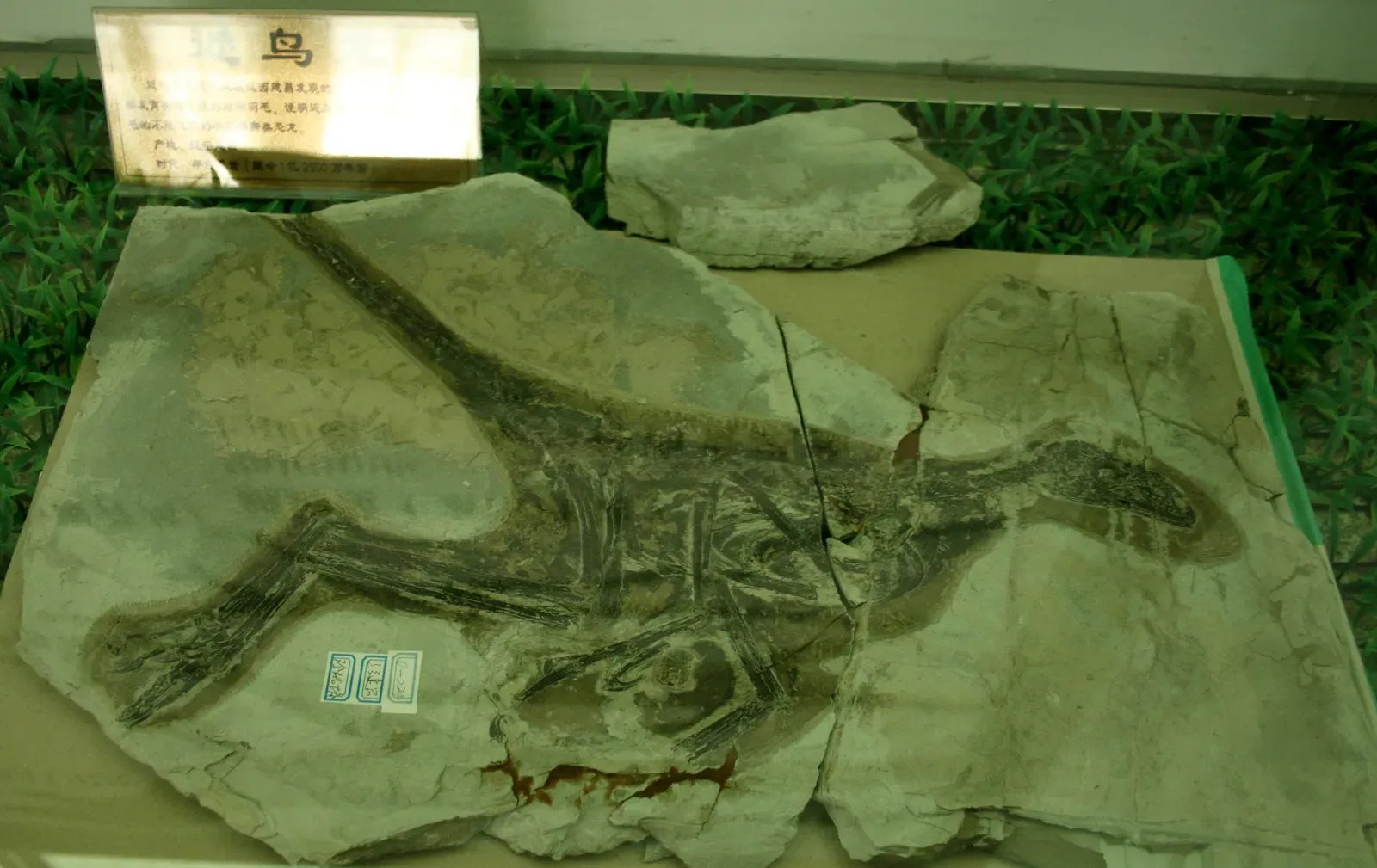
Ubirajara jubatus was unveiled in December 2020 as a genuine breakthrough: the first non-avian dinosaur found in the Southern Hemisphere with elaborate shoulder plumage, unlike anything else known in the fossil record. Researchers described it as the first Gondwanan non-avian theropod preserved with integumentary structures, including slender monofilaments and a pair of elongated, ribbon-like structures likely emerging near its shoulders. The find genuinely excited paleontologists, since feathered dinosaur fossils from South America were essentially unheard of at the time.
The celebration collapsed almost immediately once Brazilian paleontologists noticed something troubling. The fossil had apparently been exported from Brazil in 1995 without the legally required permits, and none of the paper’s authors were Brazilian. After a months-long social media campaign, the journal formally retracted the study in September 2021 over the fossil’s legal status – an extreme rarity in paleontology. Germany returned the fossil to Brazil in June 2023, and the name “Ubirajara jubatus” was stripped from the official scientific record in November 2022, leaving it with zero remaining nomenclatural standing. Ownership disputes are a modern problem. Go back far enough, and scientists were fooled by something even simpler: seawater and alcohol.
#5 – The “Primordial Slime” That Was Just Seawater and Alcohol

In 1868, biologist Thomas Huxley announced the discovery of Bathybius haeckelii, a gelatinous substance found on the ocean floor that he believed represented a living, undifferentiated layer of primitive protoplasm covering the seabed. The finding was celebrated as direct physical evidence supporting Ernst Haeckel’s theories about the origin of life, since it appeared to be a literal, visible bridge between non-living chemistry and the first living organisms. Huxley named the substance in Haeckel’s honor, and it was folded into biology textbooks and lectures as a genuine biological entity for nearly a decade.
The HMS Challenger scientific expedition later determined the substance was simply calcium sulfate precipitated out of seawater by the alcohol used to preserve dredged samples, meaning Huxley had essentially discovered a chemical reaction, not a living organism. Huxley quietly and publicly admitted his error once the Challenger findings were presented, a rare instance of gracious scientific retraction for the era. The episode is still taught today as a caution against over-interpreting ambiguous samples to fit a preferred theory. Huxley’s mistake stayed relatively quiet. The next one came with a full media campaign before anyone got to check the facts.
#4 – “Ida,” the Missing Link That Wasn’t
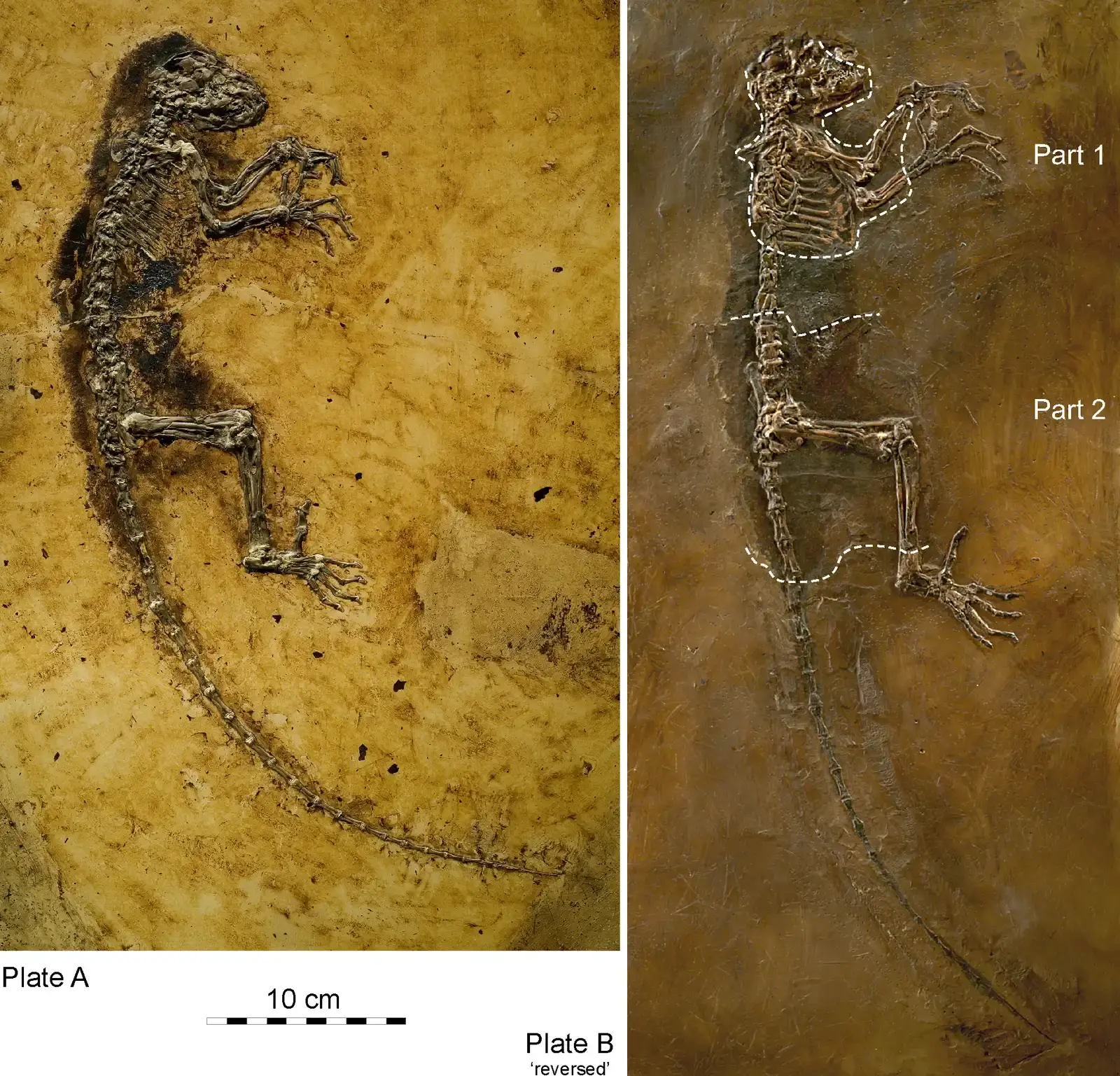
In 2009, an exceptionally well-preserved 47-million-year-old primate fossil named Darwinius masillae was unveiled with a Hollywood-style media blitz, a History Channel documentary, a book deal, and a name – “Ida” – chosen specifically to make headlines. Researchers and publicists described the fossil as a critical “missing link” directly connecting early primates to the human evolutionary line, and the press coverage was unprecedented for a paleontology announcement. The fossil itself was genuinely remarkable, preserved in extraordinary detail including fur outlines and stomach contents.
Independent primatologists who reviewed the actual data following the media campaign concluded Ida belonged to a lemur-like branch of the primate family tree that was not a direct ancestor of monkeys, apes, or humans at all, contradicting the “missing link” framing almost entirely. Scientists openly criticized the coordinated marketing rollout for prioritizing hype over standard peer review timelines, noting the publicity campaign was arranged before independent experts had a chance to weigh in. Darwinius remains a scientifically valuable fossil, just not the ancestor headline writers were told it was. Ida had a documentary. The next “missing link” had a courtroom, and it was built from a single tooth.
#3 – Nebraska Man, Built Entirely From One Pig Tooth
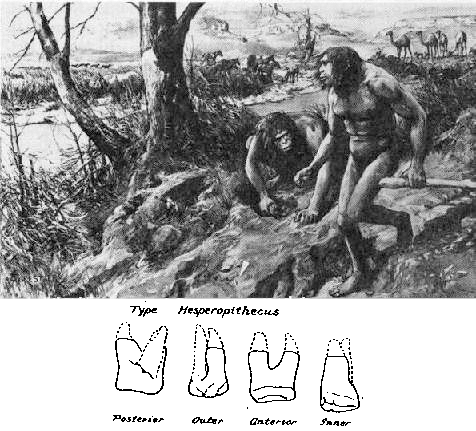
In 1922, a single fossilized tooth found in Nebraska was presented to the scientific world as evidence of an early ape-man species, promptly named Hesperopithecus haroldcookii in its honor. Illustrators produced detailed reconstructions of the supposed ape-man’s face, posture, and even his wife and family, all extrapolated from that single tooth. The find played a highly publicized role in the 1925 Scopes “Monkey Trial,” where it was cited as scientific support for human evolutionary theory in the American courtroom debate over teaching evolution.
Additional excavation at the same Nebraska site in 1927 recovered more complete remains showing the tooth actually belonged to an extinct species of peccary, a wild pig relative, not any kind of primate whatsoever. The scientists involved retracted the classification relatively quickly once the fuller skeleton was unearthed, to their credit, but the damage to public trust had already spread through newspapers and courtroom testimony. Nebraska Man remains one of the most frequently cited cautionary tales about extrapolating too much from too little physical evidence. A tooth caused one scandal. A glued-together fossil caused an even bigger one, and National Geographic’s name was on it.
#2 – Archaeoraptor, National Geographic’s Glued-Together Dinosaur
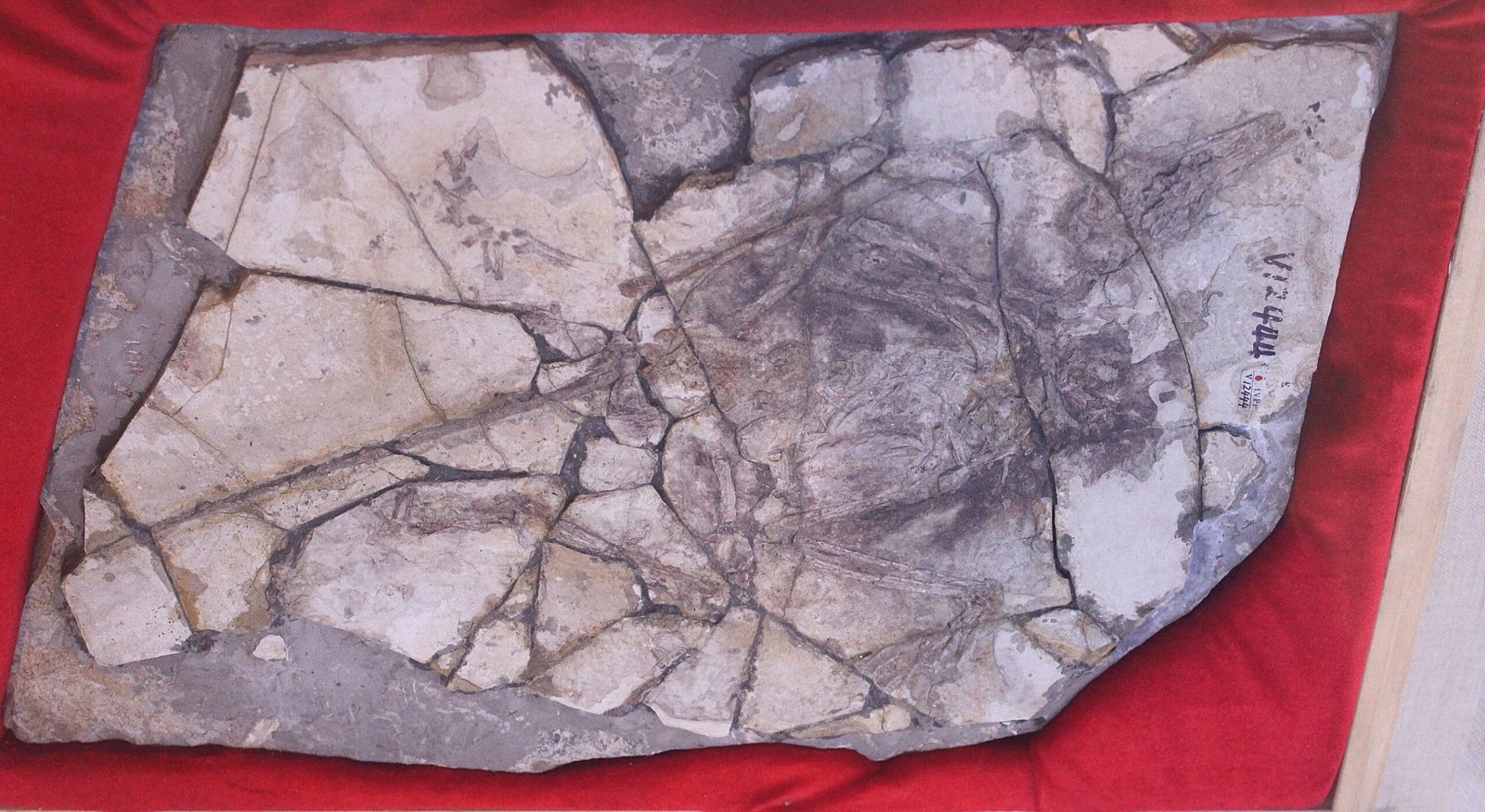
In November 1999, National Geographic unveiled Archaeoraptor liaoningensis as a stunning “missing link” fossil, combining bird-like wings with a small dinosaur tail, and framed it as definitive proof of the evolutionary connection between dinosaurs and birds. The magazine ran the story despite the fact that Storrs Olson, curator of birds at the Smithsonian, had warned ahead of time that the fossil was probably a hoax, and a paper describing it had already been rejected by both Nature and Science.
A closer investigation revealed the fossil had been smuggled out of China and assembled from pieces of at least two different, unrelated animals glued together to create a convincing chimera. Two of the component fossils were later determined to be from two genuinely new species of dinosaur, Microraptor and Yanornis. National Geographic published a formal retraction in their March 2000 issue, acknowledging that Archaeoraptor was a composite fossil rather than a genuine evolutionary link, in one of the most public scientific climbdowns in the magazine’s history. National Geographic’s retraction was public and painful. But nothing on this list touches the hoax that fooled science for forty straight years.
#1 – Piltdown Man, the Hoax That Fooled Science for Four Decades
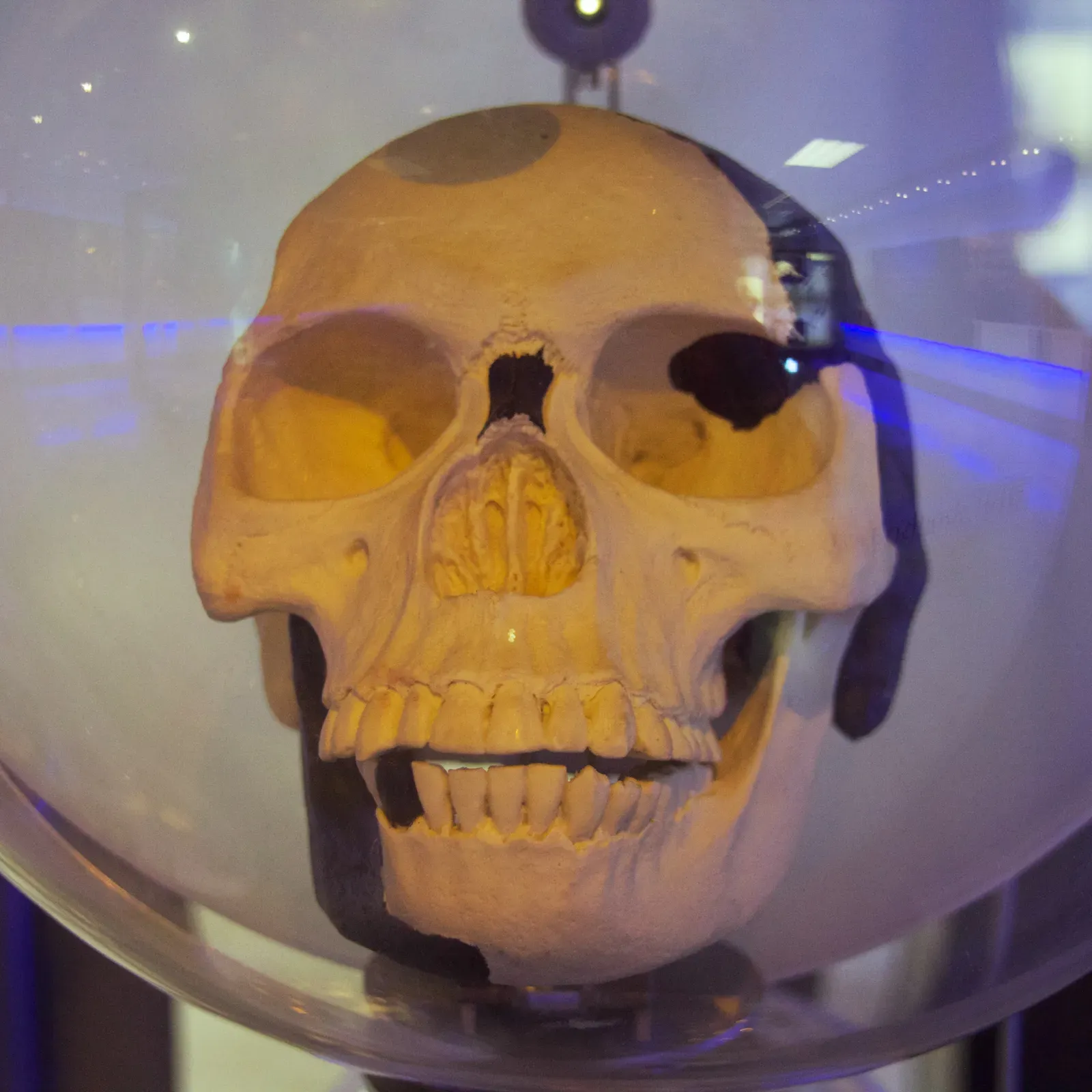
No entry on this list even comes close to the scale, duration, or embarrassment of Piltdown Man. Discovered in England starting in 1908 and formally announced in 1912, the “Piltdown Man” skull was presented as a genuine 500,000-year-old human ancestor, combining what appeared to be a large, human-like braincase with an ape-like jaw. British scientists celebrated it as proof that human intelligence evolved before other physical traits, and crucially, that the earliest humans had originated in Britain rather than France or Germany, feeding national scientific pride for decades.
Fluorine dating conducted in 1953 finally revealed the skull was a deliberate forgery combining a modern human cranium with the filed-down jawbone of an orangutan, with the teeth artificially aged and stained to match the surrounding gravel. The hoax stood unchallenged in mainstream science for over 40 years, misleading generations of researchers and derailing legitimate lines of human evolutionary research that might have otherwise gained more attention. To this day, the identity of the actual forger remains disputed, with amateur archaeologist Charles Dawson the prime and most widely accepted suspect. It remains the single most damaging scientific fraud in the history of paleoanthropology, precisely because it wasn’t a quick embarrassment – it was a four-decade-long institutional failure.
Why It Stands Out
- Announced in 1912, not exposed until 1953 – a run of over 40 years
- Combined a modern human cranium with a filed-down orangutan jaw
- Fed national pride by placing the earliest humans in Britain
- The forger’s true identity is still disputed today
The Bottom Line
The pattern across all 25 cases is strikingly consistent: big announcements move fast, but real verification moves slow, and the gap between those two speeds is where every one of these hoaxes and mistakes managed to survive. National Geographic, Discovery Channel, respected museums, and celebrated professors all fell for versions of the same trap – publicity outpacing peer review. Some, like Piltdown Man, fooled the world for generations. Others, like the Montauk Monster, collapsed within weeks once actual biologists looked closely.
My honest take after digging through all of this: the fossils and carcasses were never really the problem. The problem is how badly institutions want a headline before they’ve earned one, and how rarely anyone with a microphone is willing to say “let’s wait for the lab results” before the press release goes out. Science eventually got every one of these stories right. It just never seems to get there before the myth has already sold a million magazines.