South Africa – Paleontologists have confirmed the first fossilized egg from a mammal ancestor, a 250-million-year-old specimen housing a Lystrosaurus embryo from the Karoo Basin. This breakthrough resolves a longstanding debate about early mammalian reproduction and illuminates survival tactics after Earth’s most devastating extinction event. Advanced imaging revealed the embryo died inside a soft-shelled egg, offering clues to how Lystrosaurus thrived amid global catastrophe 252 million years ago.
A Curled Embryo Sparks Evolutionary Excitement
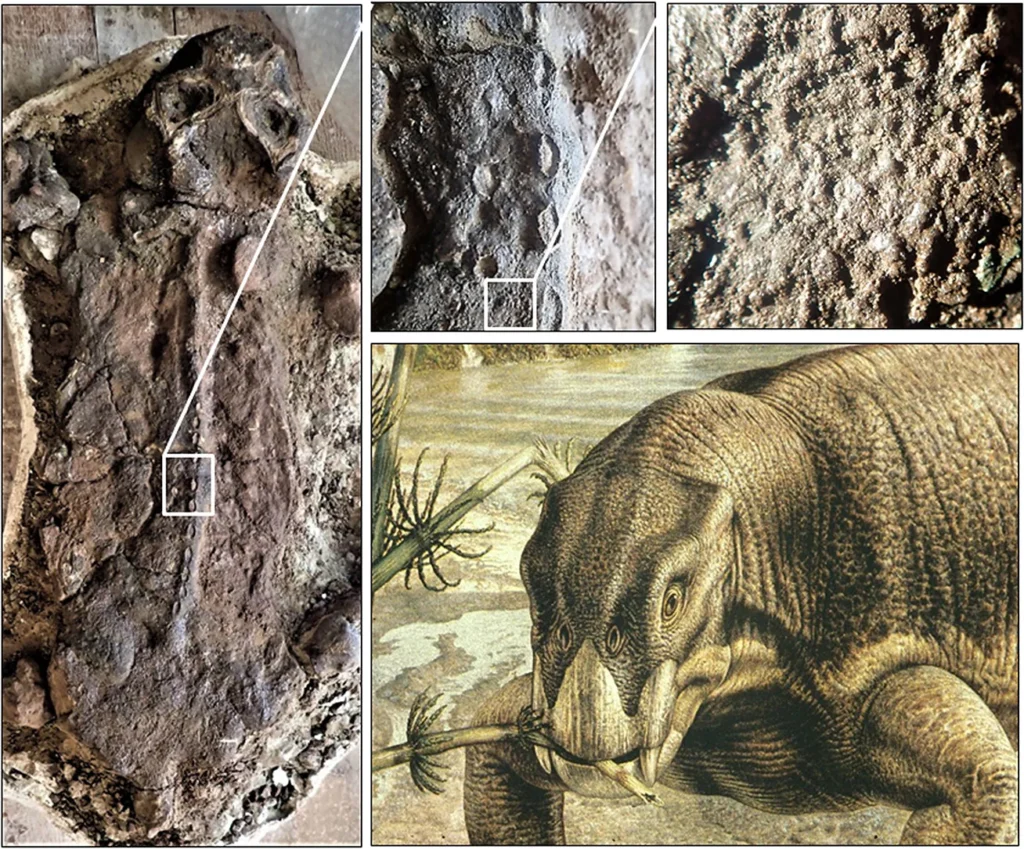
A Curled Embryo Sparks Evolutionary Excitement (Image Credits: Reddit)
Researchers experienced a pivotal moment when high-resolution scans exposed an unfused jaw in the tiny Lystrosaurus skull, a feature exclusive to pre-hatching embryos in modern birds and turtles. Professor Julien Benoit of the University of the Witwatersrand described his reaction: “When I saw the incomplete mandibular symphysis, I was genuinely excited… The fact that this fusion had not yet occurred shows that the individual would have been incapable of feeding itself.” This 34.5-millimeter skull, preserved in a 73-millimeter nodule, curled tightly as if nestled in an egg.
The fossil, unearthed in 2008 near Oviston in the Eastern Cape by John Nyaphuli, sat in the National Museum in Bloemfontein for years. Synchrotron X-ray CT scans at the European Synchrotron Radiation Facility in France finally unveiled its secrets in 2026. Professor Jennifer Botha noted, “This discovery breaks entirely new ground. For over 150 years of South African paleontology, no fossil had ever been conclusively identified as a therapsid egg.” Two additional perinate specimens bolstered the case, showing varying ossification stages.
Decoding the Evidence of Egg-Laying
Several traits confirmed the embryo perished inside an egg. Its posture traced an ovoid outline, while weak bone ossification and disarticulated elements indicated it could not yet stand or feed independently. No hard shell remained, pointing to a soft, leathery covering typical of early amniotes.
Key indicators include:
- Unfused mandibular symphysis with visible Meckel’s cartilage, fusing only before hatching in oviparous species.
- Large estimated egg volume of 115 cubic centimeters, suggesting nutrient-rich yolk for advanced development.
- Absence of tusks and incomplete skeletal fusion, matching embryonic stages.
- Nodule shape aligning with amniote egg dimensions.
These features ruled out post-hatching death, cementing oviparity in non-mammalian synapsids like Lystrosaurus, a dicynodont therapsid.
Lystrosaurus Dominates After the Great Dying
Lystrosaurus, a pig-sized herbivore with a beak and tusks, endured the End-Permian extinction that eradicated 90% of species through volcanism, ocean acidification, and drought. Post-event, it comprised up to 95% of Karoo vertebrates, burrowing and foraging in arid riverbeds.
Large eggs offered survival edges. Their low surface-area-to-volume ratio minimized water loss through leathery shells in desert conditions. Benoit explained, “Lystrosaurus eggs would lose less water through their leathery shell than those of other species of that time.” Precocial hatchlings emerged developed enough to feed on tough plants, evade predators, and mature rapidly for quick reproduction.
Reshaping Mammalian Reproductive History
The find anchors egg-laying deep in synapsid evolution, predating lactation’s emergence. Unlike monotremes’ tiny eggs, Lystrosaurus produced sizable ones without milk, implying yolk sustained advanced embryos. This strategy fueled population booms in barren ecosystems.
Researchers suggest lactation initially moistened eggs before shifting to nourish live young. Benoit added, “The study provides strong support for the hypothesis that lactation may have initially evolved not as a way to nourish offspring but to keep the leathery eggs laid by mammal ancestors moist.” Future studies will probe viviparity’s timeline.
Key Takeaways
- First direct evidence of egg-laying in early mammal relatives, via Lystrosaurus embryo.
- Precocial development and large, leathery eggs enabled post-extinction dominance.
- Insights into lactation’s origins and adaptive reproduction during crises.
This fossil not only closes a 150-year gap in paleontology but also underscores resilient strategies that propelled mammal lineage forward. In an era of environmental upheaval, Lystrosaurus’ story reminds us of reproduction’s power in recovery. What do you think about these ancient survival tactics? Tell us in the comments.