You know that kid in school who drew the same roaring T. rex on every notebook, every folder, every lunchbox? In the dinosaur popularity contest, T. rex is the homecoming king, the class president, and the star quarterback rolled into one. But here’s the twist: in the prehistoric world, it wasn’t the only nightmare stalking the landscape, and in some ways, it wasn’t even the scariest. There were killers with bigger bite forces, nastier weapons, and hunting strategies that sound more like horror movie scripts than children’s cartoons.
What fascinates me is how often we confuse fame with danger. T. rex is on every T‑shirt, but many of its deadliest rivals barely make it onto museum posters unless you go looking for them. When I first fell down the dinosaur rabbit hole as a kid, I remember discovering one of these obscure monsters in a dusty library book and thinking: how is this not the star of every blockbuster? So let’s pull back the curtain on five terrifying dinosaurs that, frankly, deserve a lot more respect – and maybe a place on the lunchbox, if kids could handle it.
Giganotosaurus: The Oversized Apex That Could Out-Mass T. Rex
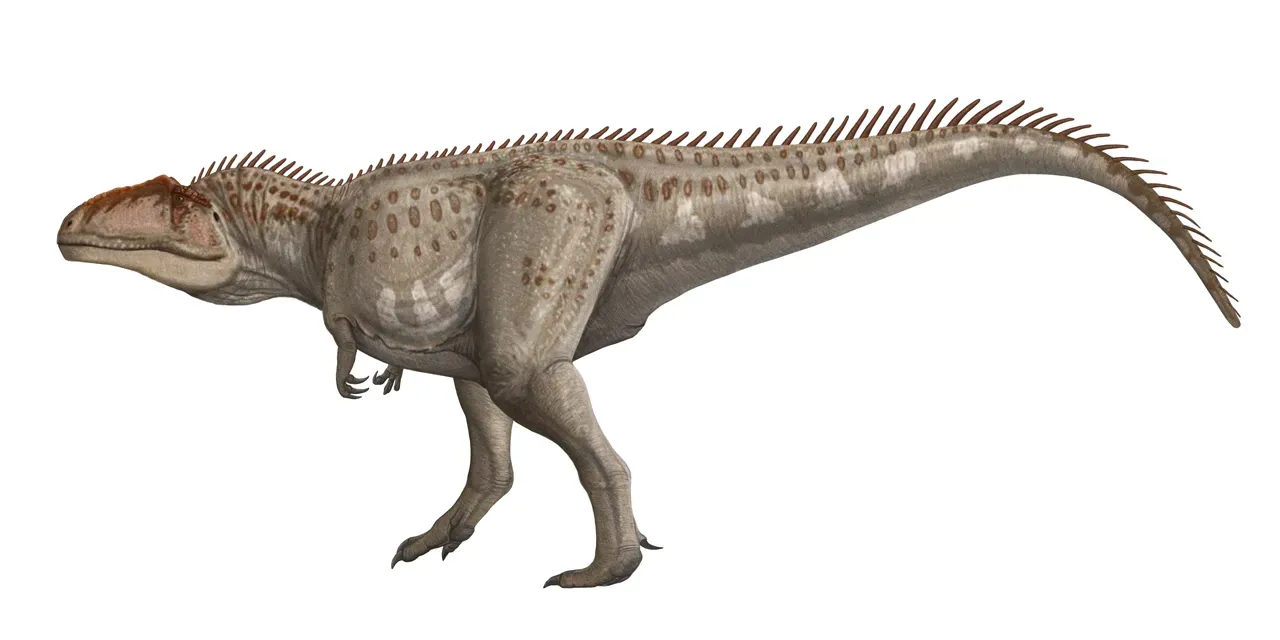
Imagine T. rex, then quietly drag the size slider just a little to the right – longer body, heavier frame, a skull built less like a blocky hammer and more like an elongated bone‑slicing guillotine. That’s Giganotosaurus, a predator from what’s now Argentina that may have grown slightly longer than T. rex, with some estimates placing it around the size of a city bus. It lived several million years earlier than T. rex, ruling its own ecosystem as the top carnivore, and it likely hunted giant plant‑eaters such as titanosaurs that made even big meat‑eaters look small. Standing near that thing in life would feel like standing next to a moving freight car with knives for teeth.
What makes Giganotosaurus particularly unsettling is the way its anatomy suggests a different style of killing. Its teeth were more blade‑like than the thick, bone‑crunching teeth of T. rex, hinting at a slash‑and‑bleed strategy instead of a single catastrophic crunch. Some paleontologists have suggested it might have hunted in loose groups, or at least taken advantage of multiple predators converging on massive prey, turning every hunt into a chaotic feeding event. Even if the group‑hunting idea turns out to be overstated, the combination of size, speed, and slicing weaponry is disturbing. It is the prehistoric equivalent of a very large, very fast butcher that never runs out of blades – and almost nobody outside dinosaur fandom can even pronounce its name.
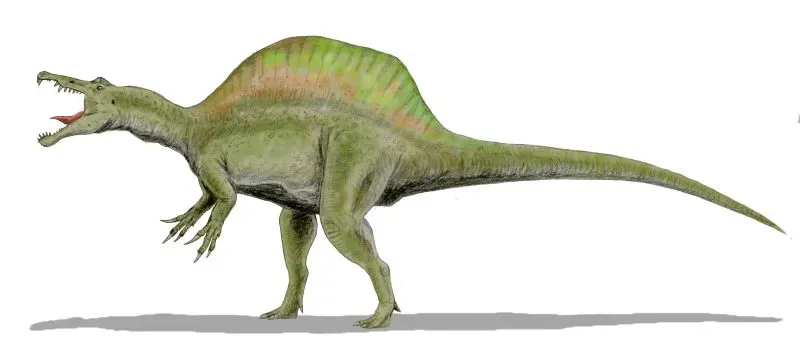
Spinosaurus: The River Monster Built Like a Crocodile on Steroids
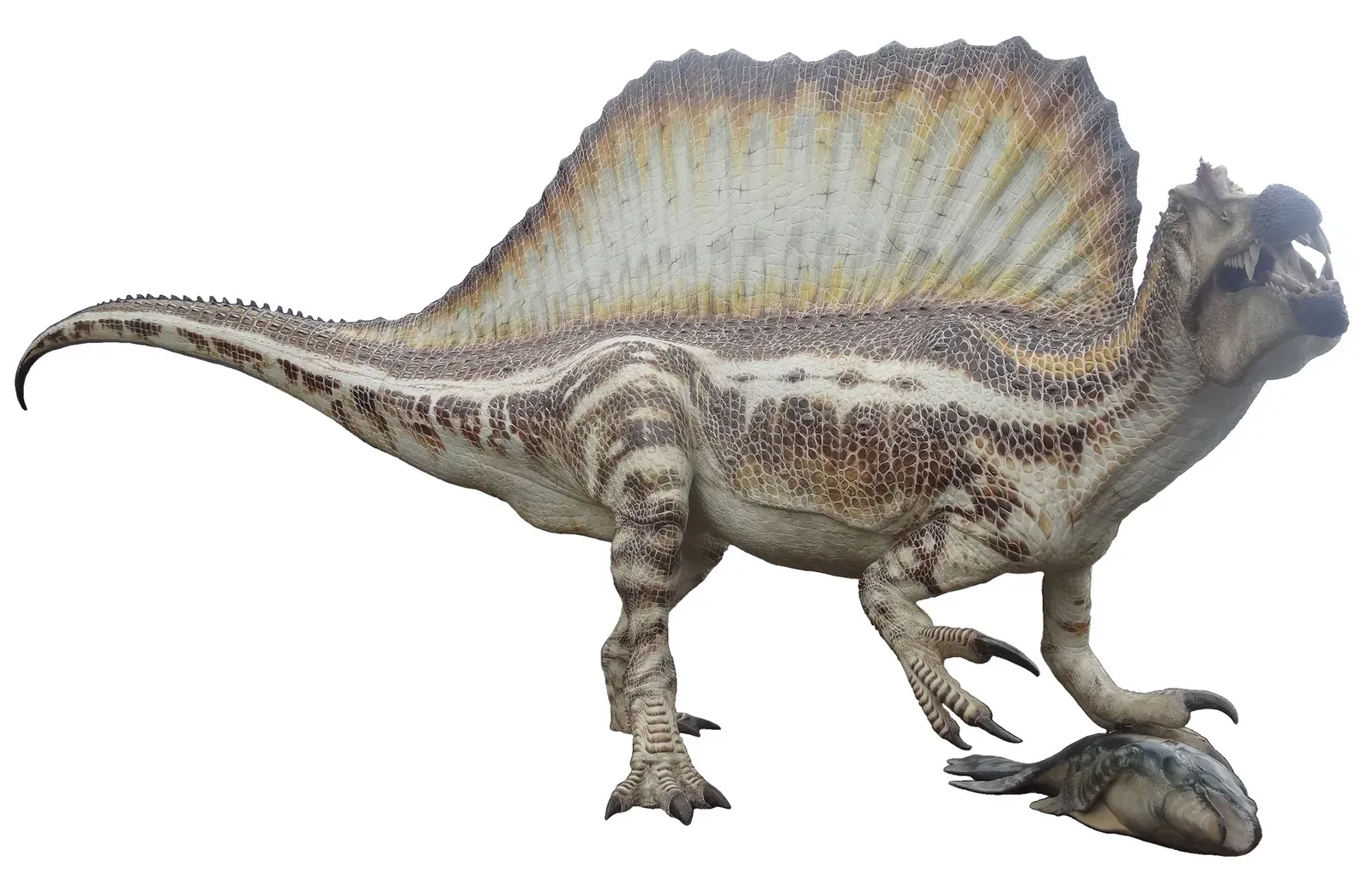
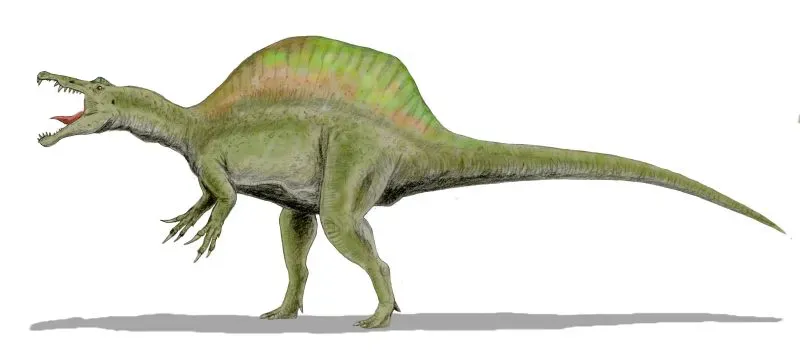
If Giganotosaurus is the oversized land stalker, Spinosaurus is the aquatic nightmare that makes lakes and rivers feel unsafe. Picture a predator longer than T. rex, with a crocodile‑like snout full of conical teeth, a long, muscular tail adapted for swimming, and a sail‑backed body that looks like something a special effects team would get told to tone down for being too unrealistic. Fossils from North Africa suggest that Spinosaurus spent much of its time in and around water, hunting fish and other aquatic prey, and possibly ambushing anything unlucky enough to meet it at the shoreline. Its skull alone stretched longer than most people are tall, a biological spear designed to grip slippery victims.
The real horror factor with Spinosaurus is that it breaks the comforting rule many of us learned as kids: giant predators are mostly land‑based and easy to avoid if you just don’t go into the jungle. Spinosaurus turns the river into a hunting ground, a bit like a super‑charged crocodile that traded stealth for size and intimidation. Reconstruction debates are still ongoing – scientists keep updating their views as new fossils are found – but the broad picture is clear: this was a semi‑aquatic super‑predator comfortable in a three‑dimensional world of water where prey had nowhere to hide. If T. rex is the king of the shoreline, Spinosaurus is the unseen terror beneath the surface, and that psychological punch alone makes it, in my view, far more unnerving.
Carcharodontosaurus: The “Shark‑Toothed” Car Dismantler
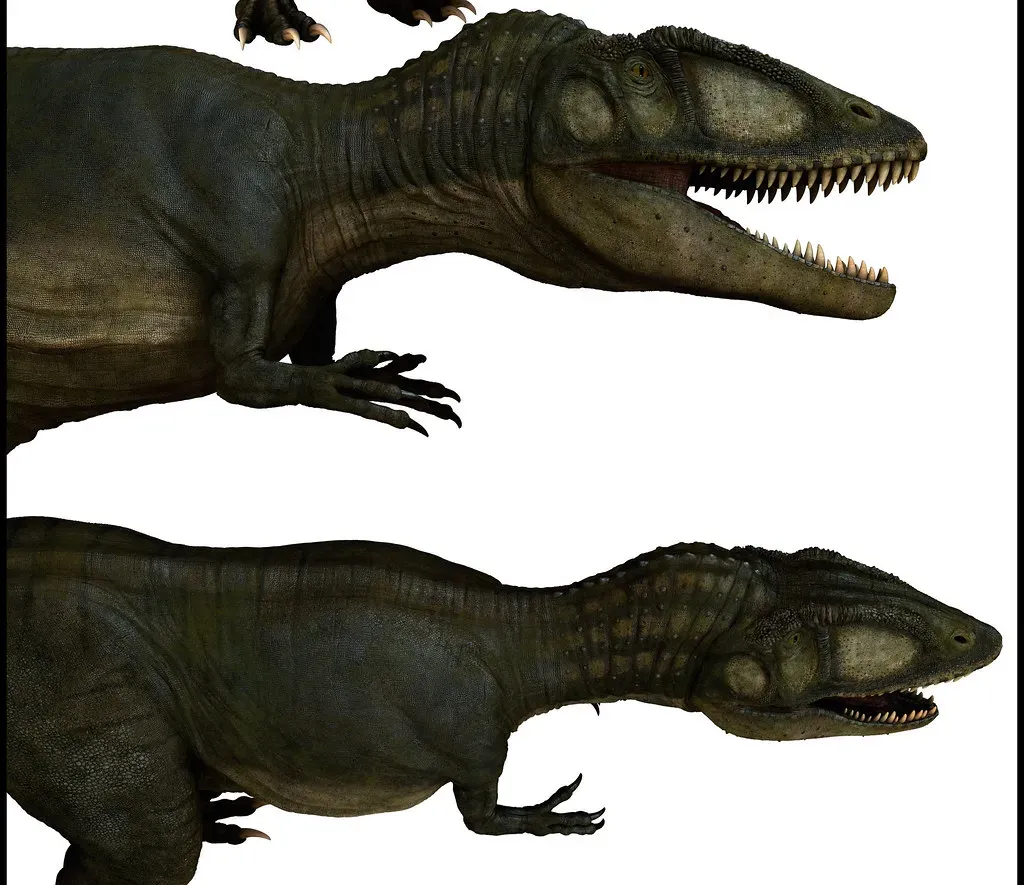
Even its name is a bit of a warning sign: Carcharodontosaurus translates to something like “shark‑toothed lizard,” and it earned that title with rows of serrated teeth reminiscent of a great white. This North African giant rivaled T. rex and Giganotosaurus in length, with a massive skull armed with narrow, deeply serrated blades perfect for carving flesh from bone. In its environment, it likely preyed on huge herbivores, using those teeth to inflict devastating wounds that would bleed and weaken its victims. Think less about crunching through a car, more about methodically cutting it into parts while it’s still moving.
What gives Carcharodontosaurus an extra layer of terror is how little room it left for mercy in the food chain it occupied. Its skull shows adaptations for powerful bites combined with head‑shaking motions, much like modern predatory sharks tearing chunks from their prey. You can almost imagine it lunging in, clamping down, then thrashing side to side, ripping off great strips of meat while the animal is still struggling. In a way, it represents weapon specialization taken to an extreme: not the all‑purpose brutality of T. rex, but a dedicated, high‑efficiency flesh removal machine. The fact that most people have never heard of it, despite that arsenal, makes its absence from lunchboxes feel almost like a collective oversight.
Utahraptor: The Ambush Pack Hunter With Knife‑Blades on Its Feet
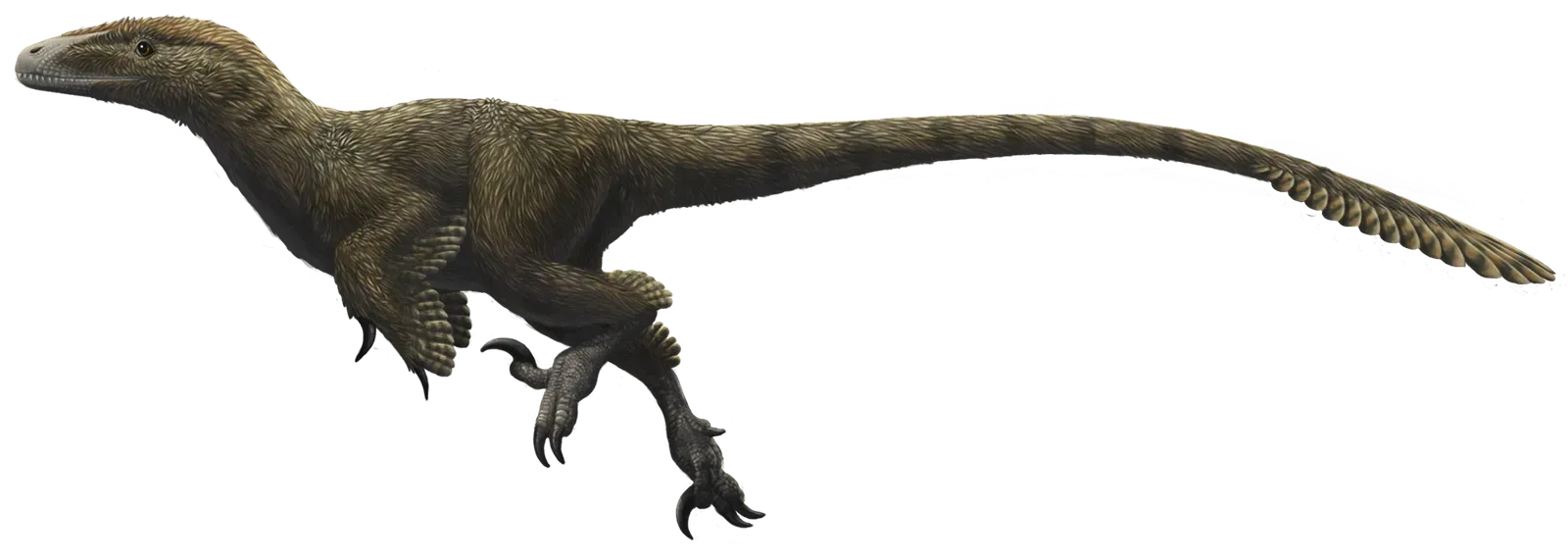
Utahraptor is what happens when you scale up the smaller “raptors” made famous in movies and give them the mass and power to tackle prey many times their size. Unlike its smaller cousin Velociraptor, which was about the size of a large turkey in real life, Utahraptor was closer to a polar bear in size and far more heavily built. Each foot carried a retractable sickle‑shaped claw that could reach the length of a grown person’s hand, and its limbs were built for strong, rapid kicks and slashing motions. Add in a likely coat of feathers, and you get a predator that looked less like a scaly lizard and more like a nightmare bird with knives attached.
The real disturbing idea with Utahraptor is the possibility of coordinated hunting behavior. While the details are still debated, there is evidence hinting at groups of individuals preserved together, suggesting some level of social or at least opportunistic pack behavior. If that interpretation holds, then imagine not one, but several large, hyper‑agile predators working together to bring you down – leaping, slashing, biting, and withdrawing before you can react. Even if they were only loosely social, a cluster of hungry Utahraptors around a wounded animal would have been a scene of pure chaos. T. rex may be terrifying one‑on‑one, but a pack of knife‑footed killers coming at you from different angles might be even worse, especially when they are roughly at human eye level.
Therizinosaurus: The Peaceful‑Looking Herbivore With Horror‑Movie Claws
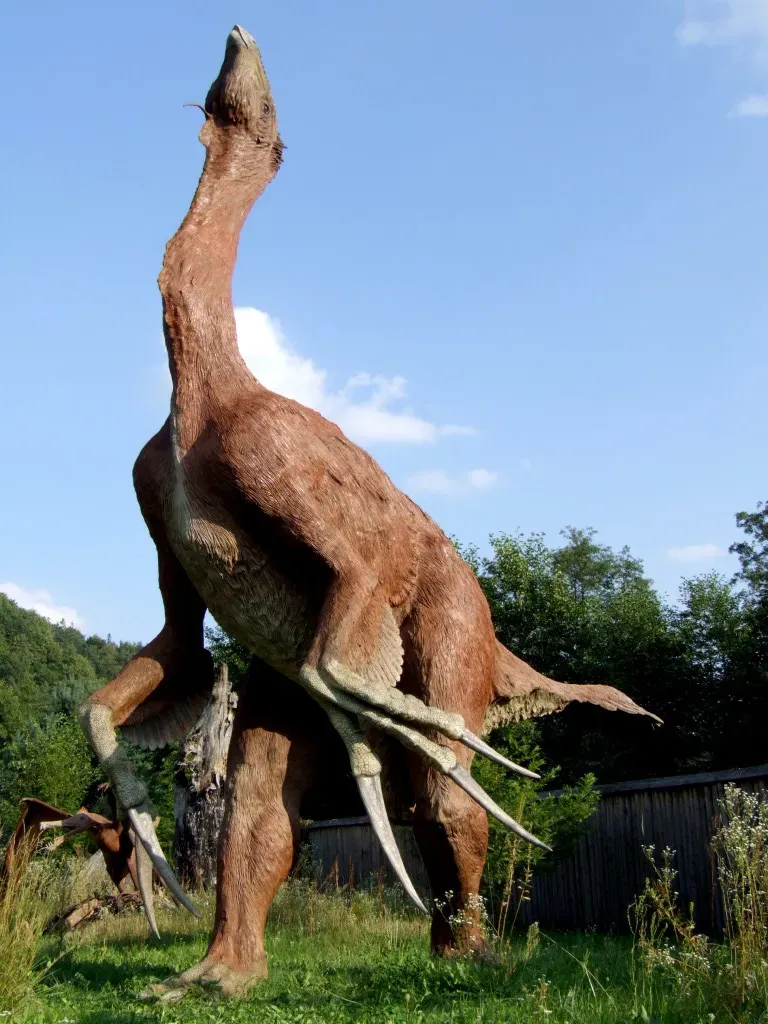
At first glance, Therizinosaurus feels like an odd pick for a “more terrifying than T. rex” list. It was likely a mostly plant‑eating dinosaur, with a pot‑bellied body, long neck, and a beaked mouth better suited to cropping vegetation than ripping flesh. But then you see the hands. Each arm ended in absurdly long claws that could reach the length of a grown person’s arm, curved like scythes and sharp enough to slash through branches – or anything foolish enough to get too close. The contrast between its likely gentle diet and those monstrous weapons is exactly what makes it so deeply unsettling.
To me, Therizinosaurus embodies a different kind of fear: not the relentless hunter, but the quiet giant you should absolutely never provoke. Its claws might have been used mainly for pulling down branches, stripping foliage, or defensive displays, yet in a fight they would have turned it into a blender of bone and tendon. Picture an angry, towering creature swinging those scythes in wide arcs, each swipe able to open deep, lethal wounds. Even large predators would have thought twice before taking it on, because one well‑placed strike could be catastrophic. T. rex might chase you, but Therizinosaurus feels like the one you accidentally surprise – and then instantly regret it for the last few seconds of your life.
Conclusion: The Real Monster Was Never Just the Celebrity Carnivore
The more you look past T. rex and into the roster of lesser‑known giants, the more you realize how narrow our pop‑culture view of dinosaurs really is. Giganotosaurus and Carcharodontosaurus stretched the limits of size and slicing power, Spinosaurus rewrote the rules by turning waterways into hunting grounds, Utahraptor made coordinated agility genuinely frightening, and Therizinosaurus proved that even an herbivore could be armed like a horror‑movie villain. These animals were not just variations on the same theme; they were radically different experiments in how to dominate, survive, and terrify in their own worlds. Reducing prehistoric terror to a single famous skull on a T‑shirt almost feels like an injustice to how wildly creative evolution can be.
Personally, I think we cling to T. rex because it’s simpler to have one crowned monster than to admit the past was full of creatures that were every bit as formidable, and sometimes even more so in certain ways. Once you know about the river‑haunting Spinosaurus or the scythe‑handed Therizinosaurus, T. rex starts to look less like the undisputed king and more like one heavyweight contender in a very crowded ring. Maybe that’s the real thrill: understanding that nature did not stop at one apex predator, but kept pushing the boundaries of what a dangerous animal could be. Next time you see a dinosaur lunchbox, you might find yourself wondering what terrifying stories are missing from that glossy plastic surface – and which of these forgotten monsters you’d least want to meet in the flesh.