There is something deeply humbling about the idea that every living thing on this planet, including you, exists only because of a series of violent cosmic accidents. Rocks hurtling through space, planets crashing into each other, microscopic organisms accidentally poisoning the atmosphere. It sounds like chaos. Honestly, it was. Yet somehow, out of all that destruction and upheaval, life not only survived but flourished in ways that are still difficult to fully comprehend.
The story of life on Earth is not a quiet, gradual rise. It is a series of dramatic turning points, each one triggered by events so enormous they defy the imagination. Some of these moments nearly wiped everything out. Others accidentally paved the road for creatures like us to eventually walk it. So let’s dive into the five prehistoric celestial events that did not just shape the world you live in today. They defined it entirely.
1. The Theia Impact: The Catastrophic Collision That Built Our Moon
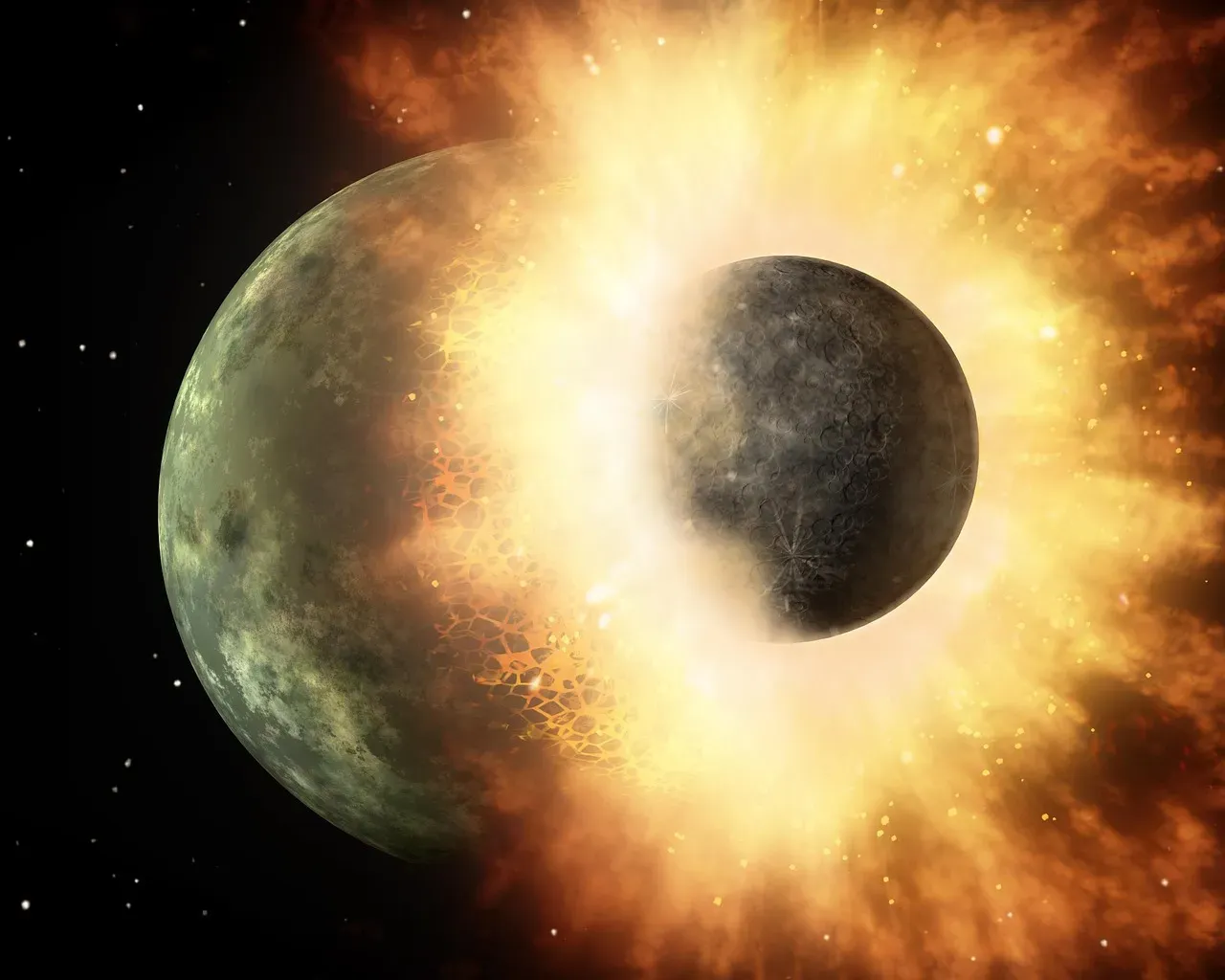
You want to talk about a bad day? Try this one. Approximately 4.5 billion years ago, in the early Hadean eon, a Mars-sized protoplanet collided with the proto-Earth, and some of the ejected debris later re-accreted to form the Moon. This hypothetical planet, which scientists have named Theia, was not some passing stranger. According to the Giant Impact Hypothesis, a Mars-sized object named Theia collided with a proto-Earth 4.5 billion years ago, turning both objects into molten lava, which eventually coalesced and cooled to form the Earth and Moon.
The impact would have released an enormous amount of energy, resulting in widespread melting of Earth’s surface and ejecting vast amounts of debris into space. Think of it like slamming two balls of clay together at unimaginable speed. What came out of that collision was not just a Moon. It was a completely reshaped planet. The Moon’s formation had significant consequences for Earth. Its gravitational influence plays a crucial role in stabilizing Earth’s axial tilt, which affects seasonal variations and climate patterns. Additionally, the presence of the Moon has been linked to tidal forces that have shaped coastal ecosystems and influenced biological evolution. Without Theia smashing into us, you would not have stable seasons. You would not have tides. The coastal environments that likely nurtured early complex life might never have existed at all.
2. The Late Heavy Bombardment: When Space Turned Earth Into a Punching Bag
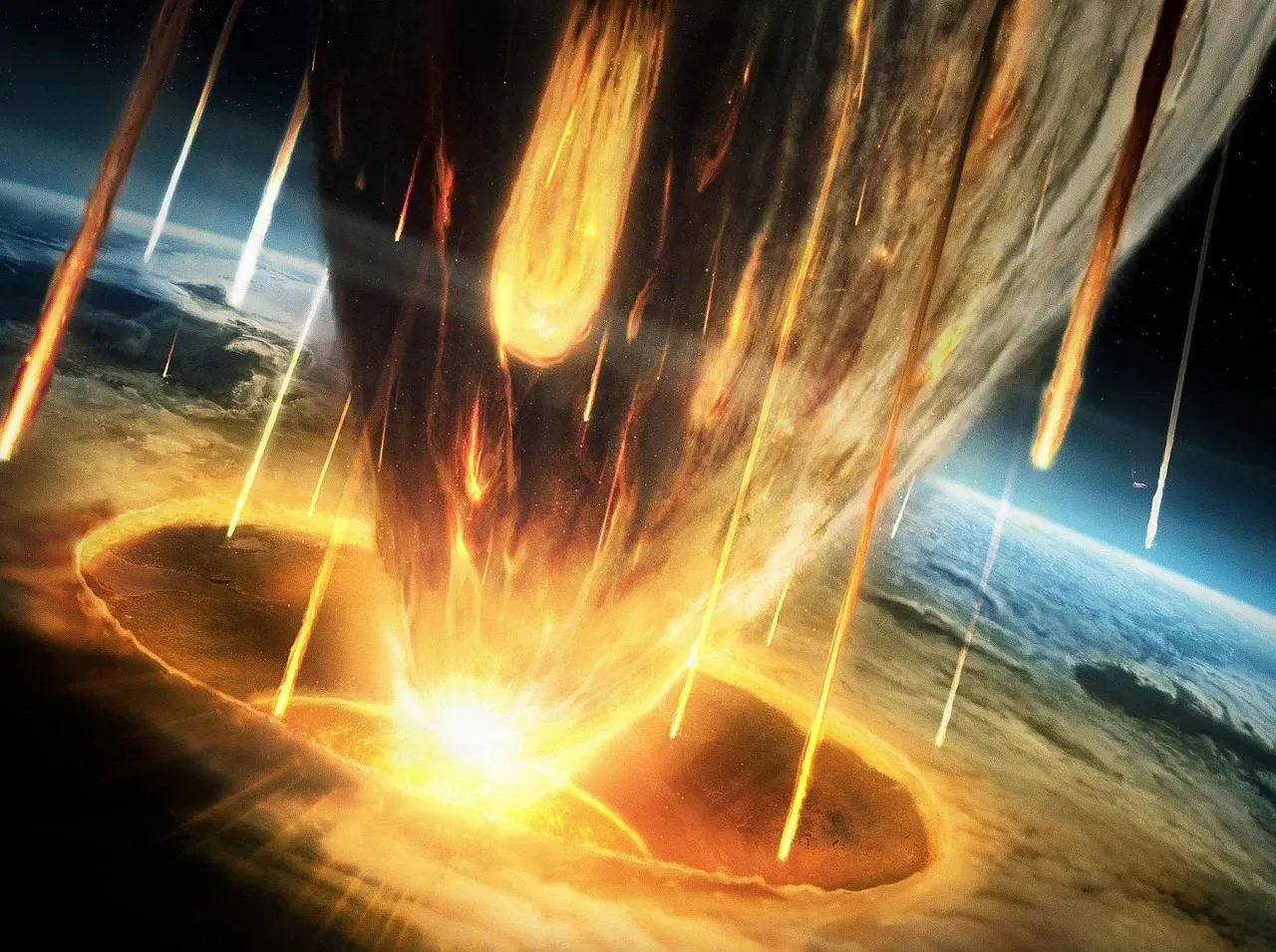
If the Theia impact was the opening act, the Late Heavy Bombardment was the encore nobody asked for. A period of intense meteorite impacts, called the Late Heavy Bombardment, began about 4.1 billion years ago and concluded around 3.8 billion years ago, at the end of the Hadean. You need to wrap your head around what this actually looked like. During the Late Heavy Bombardment, the Moon was hit by 1,700 meteors that made craters over 100 kilometers across. Earth could easily have received ten times as many impacts of this size, with some being much larger.
Here is the thing though. Despite how terrifying that sounds, it may not have destroyed the possibility of life. In fact, the opposite appears to be true. Although many believe the bombardment would have sterilized Earth, research shows it would have melted only a fraction of Earth’s crust, and microbes could well have survived in subsurface habitats, insulated from the destruction. Even more fascinating, hydrothermal vents may have provided sanctuaries for extreme, heat-loving microbes known as hyperthermophilic bacteria following bombardments, and even if life had not emerged by 3.9 billion years ago, such underground havens could still have provided a crucible for life’s origin on Earth. Destruction and creation, all rolled into one relentless cosmic storm.
3. The Great Oxidation Event: When Tiny Organisms Accidentally Poisoned the World
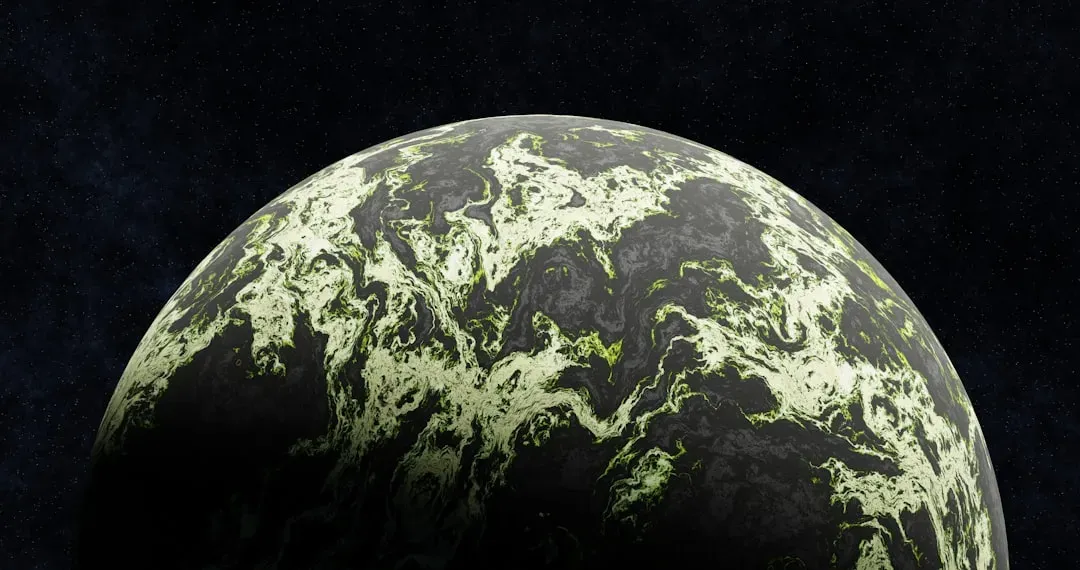
This one is almost darkly comic if you think about it. Around 2.4 billion years ago, a type of microscopic bacteria called cyanobacteria began producing oxygen as a byproduct of photosynthesis. Sounds harmless enough, right? Wrong. Since life was totally anaerobic 2.7 billion years ago when cyanobacteria evolved, oxygen acted as a poison and wiped out much of anaerobic life, creating an extinction event. Imagine breathing air that kills you. That was the reality for the vast majority of life on Earth at the time.
The cyanobacteria changed everything, but not at first. For a while, as they produced free oxygen as their waste, iron would bond with it and the environment could keep up with the production. At some point, though, as cyanobacteria flourished, the minerals and other sinks became saturated. They could no longer absorb the oxygen being produced. It built up in the water, in the air. To the other bacteria living in the ocean, oxygen was toxic. Yet here is where the story pivots beautifully. Some organisms could use that oxygen in their own metabolic processes. Combining oxygen with other molecules can release energy, a lot of it, and that energy is useful. It allowed microscopic plants to grow faster, breed faster, live faster. The anaerobic species died off, falling to the oxygen-burning organisms, which prospered in this new environment. The Great Oxidation Event was simultaneously the planet’s first mass extinction and the greatest biological revolution in Earth’s history.
4. The Permian-Triassic Extinction: The “Great Dying” That Nearly Ended Everything
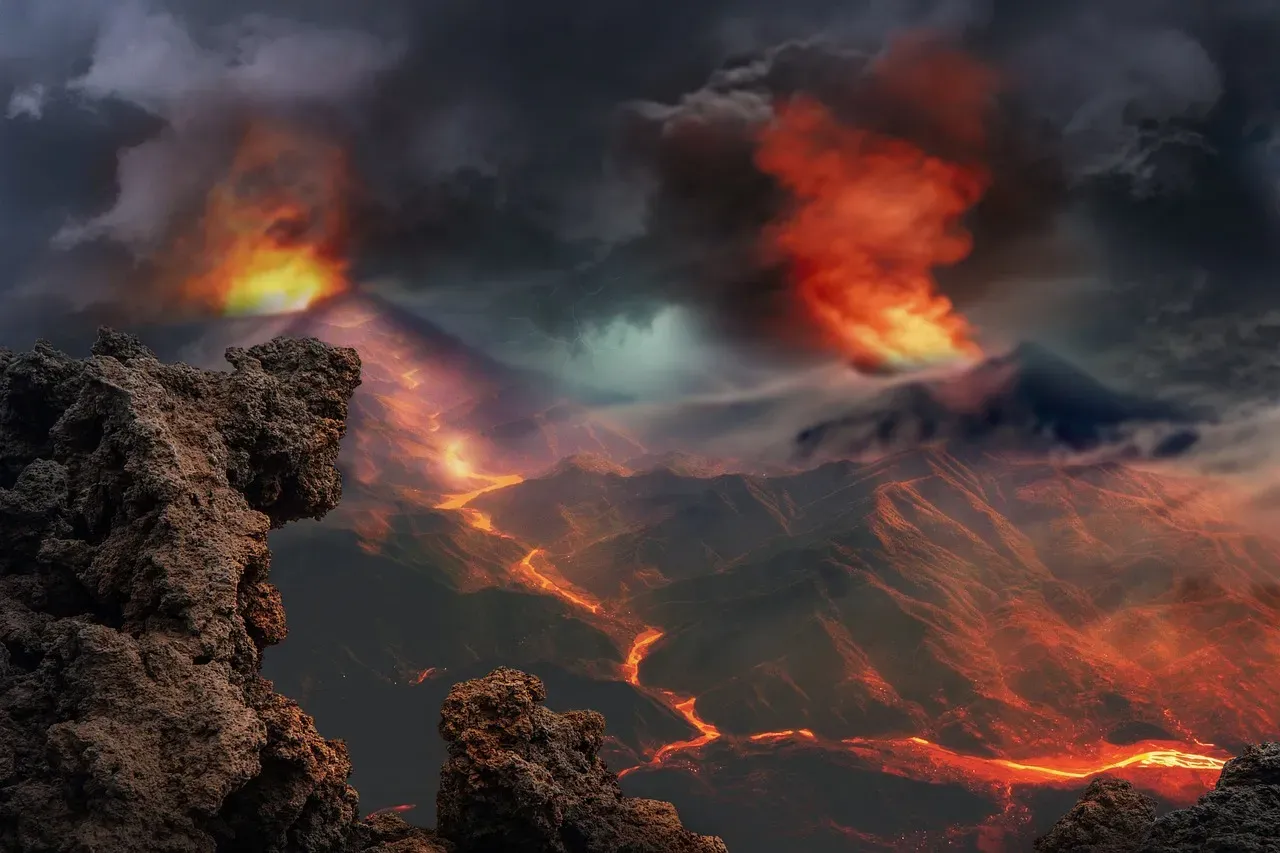
Nothing in Earth’s entire history compares to what happened roughly 252 million years ago. Not the dinosaur-killer. Not the ice ages. Also known as the Great Dying, global ecosystems collapsed as roughly nine in every ten species perished in this extinction event 250 million years ago. Let that sink in for a moment. Nearly everything alive on Earth was gone. Known as the Great Dying, the Permian-Triassic extinction event was Earth’s most severe extinction, eliminating over ninety-five percent of marine species and seventy percent of terrestrial vertebrate species, with the leading cause believed to be massive volcanic eruptions from the Siberian Traps, which triggered catastrophic climate change, ocean anoxia, and acidification.
The scientific consensus is that the main cause of the extinction was the flood basalt volcanic eruptions that created the Siberian Traps, which released sulfur dioxide and carbon dioxide, resulting in oxygen-starved, sulfurous oceans, elevated global temperatures, and acidified oceans. The chain reaction was almost incomprehensible in scale. Nickel released by the Siberian Traps triggered marine bacteria to produce massive amounts of methane. Combined with an injection of carbon dioxide and sulfate aerosols, runaway global warming pushed ocean temperatures to catastrophic levels. Remarkably, oxygen levels slowly rose, only returning to pre-extinction levels after five million years, corresponding to when the climate became more stable and life regained its former diversity. Five million years. That is how long the planet struggled to breathe again. And yet, life came back. Changed, reshaped, and in many ways more resilient than before.
5. The Chicxulub Asteroid Impact: The Day That Ended the Age of Dinosaurs
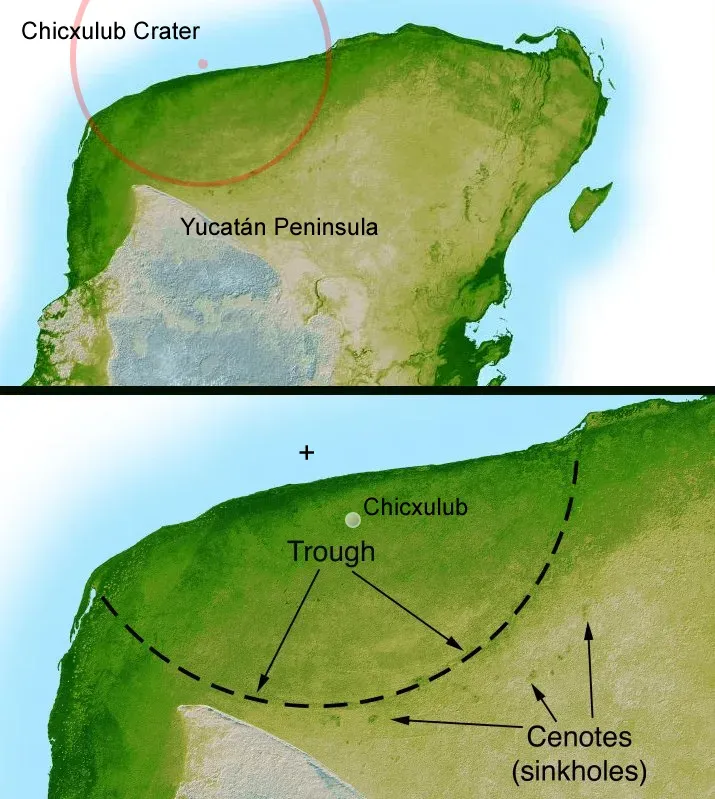
The Chicxulub Impact, occurring approximately 66 million years ago, marked a pivotal moment in Earth’s history. A massive asteroid, estimated to be around 10 kilometers in diameter, collided with the Yucatán Peninsula in present-day Mexico. The impact unleashed an unimaginable amount of energy, creating the Chicxulub crater, which is over 150 kilometers in diameter. The energy involved is almost impossible to picture. The enormous amount of energy generated by this impact was equivalent to ten thousand times the world’s nuclear arsenal, ejecting into the atmosphere huge quantities of dust particles and gases. In seconds, a world that had been ruled by dinosaurs for tens of millions of years was set on a completely different course.
Over a short period of time, several hundred billion tons of CO2, SO2 and water vapor released by the vaporized target rock were injected into Earth’s atmosphere. An abrupt and global perturbation of the Earth system followed: the climate became unstable, fine dust suspended in the atmosphere blocked sunlight, decreasing or even stopping photosynthesis. This ecological catastrophe caused the famous mass extinction which saw the demise of the dinosaurs and more than half of Earth’s fauna and flora on land and in the oceans. Yet for all its destruction, this event is precisely why you are here reading this. These events triggered a mass extinction, including dinosaurs, and led to the subsequent macroevolution of mammals. Think about that. Without a rock from space wiping out the dominant life forms of the Mesozoic, the small, nocturnal, scrambling ancestors of every mammal alive today, including you and me, might never have gotten their moment in the sun. What looks like an ending was also the most dramatic beginning in the history of complex life.
Conclusion
Every time you look up at the Moon, breathe in a lungful of oxygen, or simply feel grateful to be alive, you are living in the aftermath of these five extraordinary cosmic events. The Theia impact gave Earth a stabilizing companion. The Late Heavy Bombardment may have actually helped life take root rather than eliminating it. Microscopic cyanobacteria accidentally poisoned the world into producing the oxygen you depend on every second. The Great Dying nearly erased life entirely, yet life crawled back. The Chicxulub asteroid cleared the stage for mammals to rise.
It is a remarkable chain of improbable events, each one violent, catastrophic, and yet somehow essential. Despite their devastating nature, or perhaps because of it, these cataclysmic events reshaped Earth’s geology and created the conditions necessary for complex life to gain a foothold, ultimately sculpting the planet into the one we know today. The universe did not design Earth to be hospitable. Hospitability was an accident, forged from disaster after disaster. The next time something goes wrong in your world, maybe it helps to remember that every good thing about this planet started the same way. What do you think life would look like today if even one of these events had unfolded differently?