You might think science fiction writers have the most creative imaginations on the planet. Giant aliens, toxic worlds, creatures with five heads and no sense of humor. Honestly, they’ve got nothing on planet Earth itself. Our planet has hosted ecosystems so jaw-droppingly alien, so fundamentally weird, that even the most ambitious screenwriter would probably struggle to pitch them with a straight face.
The truth is, Earth’s past reads less like a natural history textbook and more like a fever dream. From oceans filled with organisms that don’t fit into any known category of life, to forests crawling with insects the size of your forearm, the prehistoric world was something else entirely. Buckle up, because what follows will make you see this planet in a completely new light.
The Ediacaran Seafloor: Earth’s First and Strangest Garden
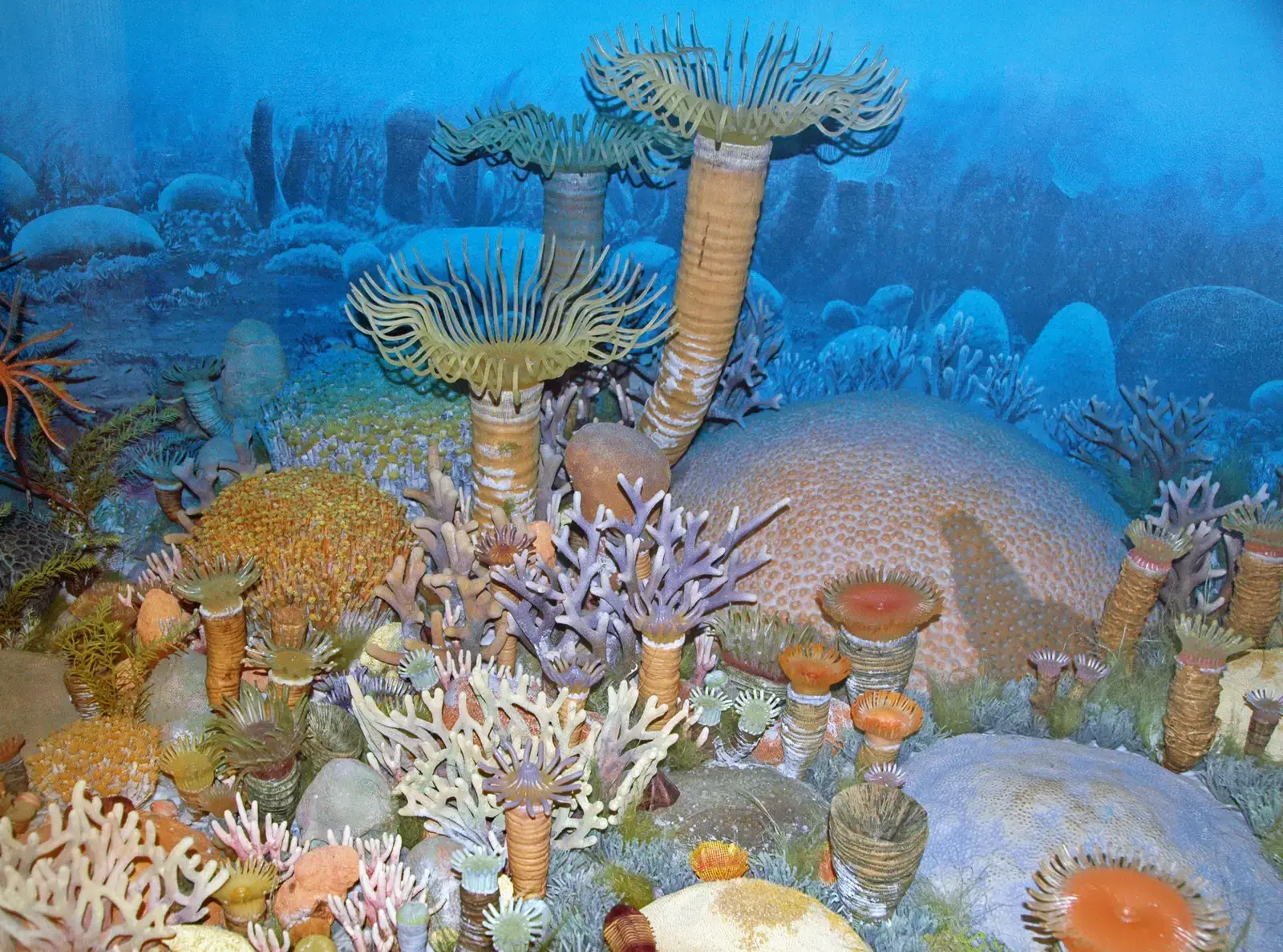
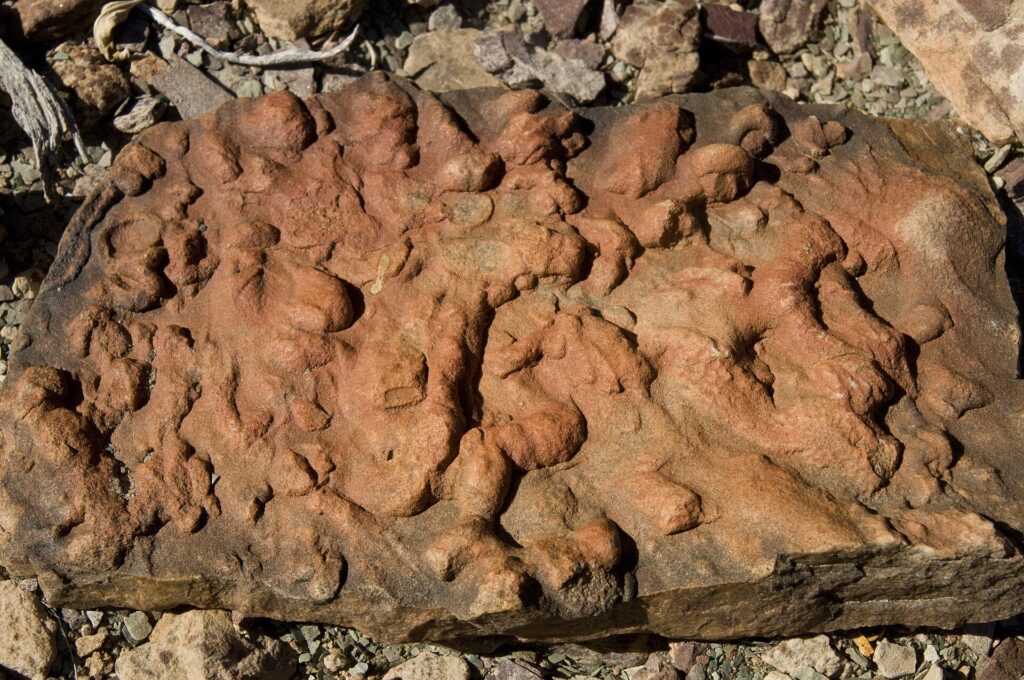
Imagine sinking to the bottom of an ancient ocean, roughly 570 million years ago, and finding a world that looks like a cross between a quilt, a fern garden, and something a small child might design in a fever dream. Roughly 570 million years ago, during a chapter of Earth history known as the Ediacaran period, something remarkable happened: soft-bodied organisms living on the seafloor were buried by sand and preserved with extraordinary precision, leaving behind detailed fossil impressions that defy expectations. This wasn’t just any ocean floor. It was a canvas for what may have been the very first experiment in complex multicellular life.
Most macroscopic fossils from this period are morphologically distinct from later life-forms, resembling discs, tubes, mud-filled bags, or quilted mattresses. Due to the difficulty of deducing evolutionary relationships among these organisms, some paleontologists have suggested that these represent completely extinct lineages that do not resemble any living organism. Some researchers even went so far as to propose these creatures belonged to their own kingdom entirely, separate from animals, plants, and fungi. Perhaps the most iconic of these enigmatic fossils belong to a group known as the rangeomorphs, found in late Ediacaran rocks. These are feather- or bush-shaped and show self-repeating fractal growth patterns that resemble the outlines of modern fern fronds. They are not, however, related to plants. Rangeomorphs lived deep in the sea, far below the depth where light could penetrate to allow photosynthesis, and they lacked any evidence of a mouth or gut. Think about that for a second. Life that grew in fractal patterns, in total darkness, with no mouth, no gut, and no real equivalent alive today. That’s not evolution. That’s art.
The Carboniferous Coal Swamps: A Forest From a Nightmare
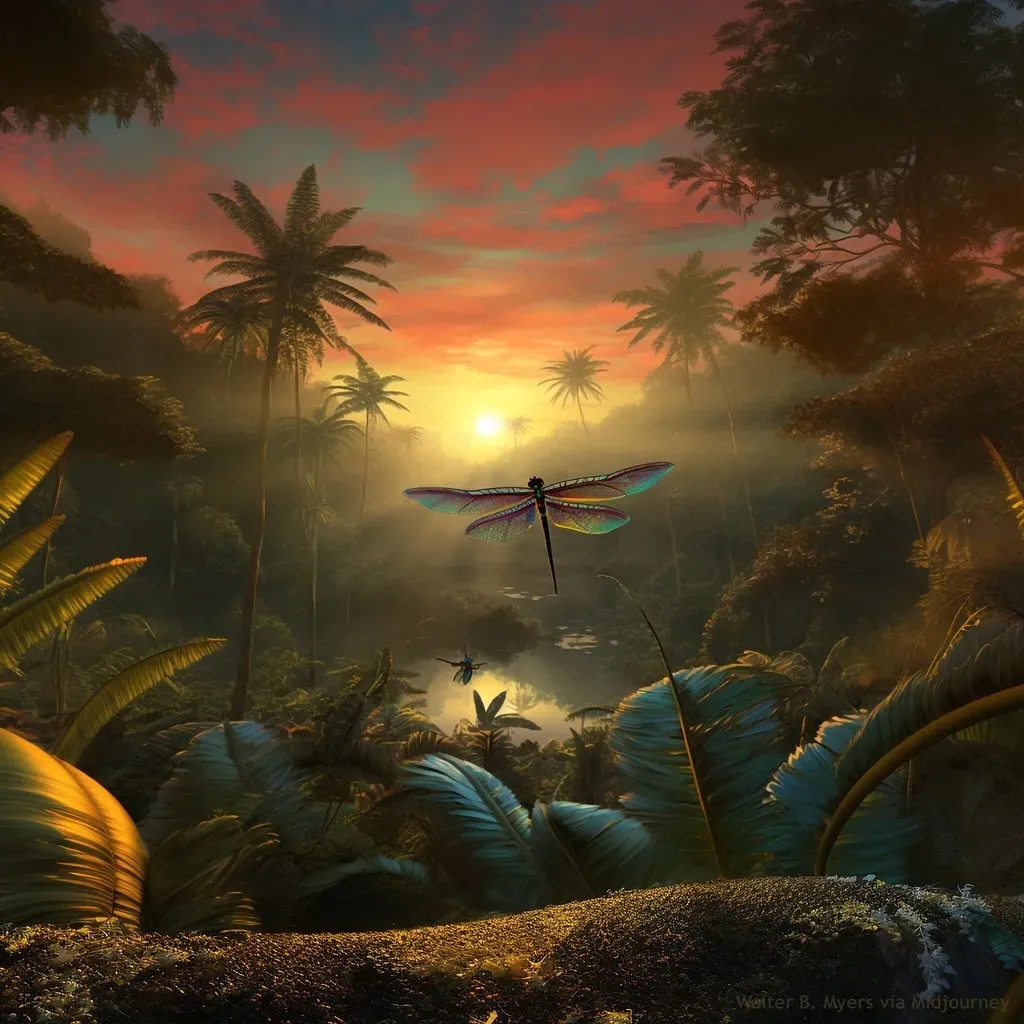
Here’s the thing – if you walked into a Carboniferous forest today, you probably wouldn’t survive the shock alone. All of this paints a very surreal picture of ancient Earth. It would have been a moist, swampy place covered in endless fields of timber and giant ferns, crawling with insects the size of your arm or larger. This was a period spanning from roughly 359 to 299 million years ago, and the rules of nature were simply different. Very, very different.
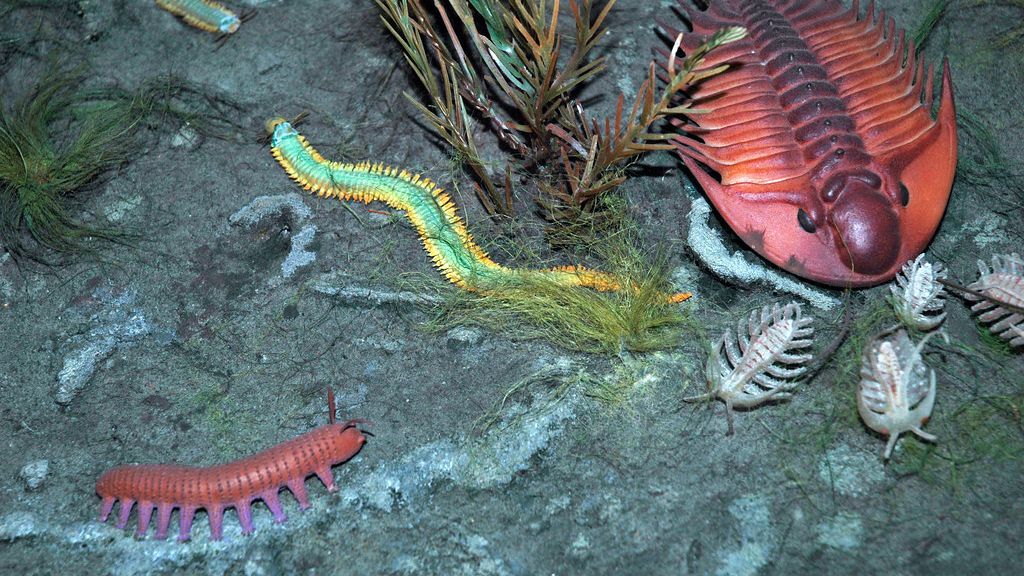
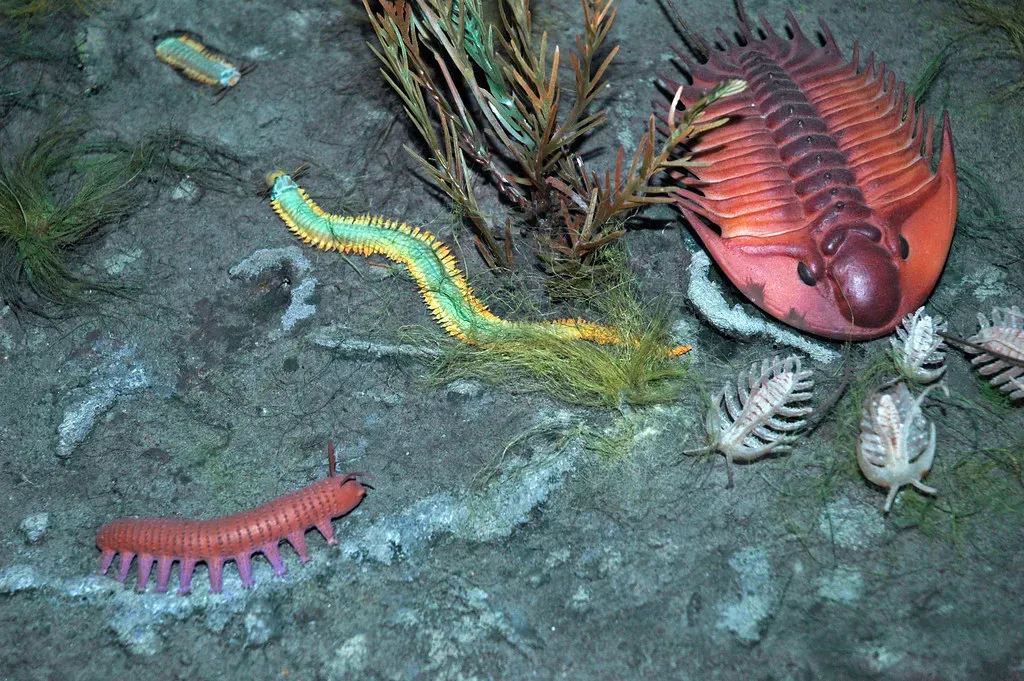
Due to the large number of trees and plants on Earth, large quantities of oxygen were released into the air, increasing oxygen levels to approximately 35 percent of the Earth’s total atmosphere. This was significantly higher than today’s oxygen levels, which account for only 21 percent of the atmosphere’s total content. That extra oxygen did something extraordinary to insect life. Arthropleura was a giant millipede that fed on the Carboniferous plants. At 8 feet long, it was the largest known terrestrial arthropod that ever lived. Meanwhile, overhead, Meganeura monyi is known as one of the largest flying insects of the Carboniferous period, with a wingspan of approximately 75 centimeters, living between 305 and 299 million years ago. Let’s be real – a dragonfly with a wingspan wider than your kitchen table is the stuff of genuine nightmares. And you would’ve been walking past them like they were common houseflies.
The Early Triassic Dead Zone: When the Ocean Almost Gave Up
Most people have heard about the Great Dying, the Permian-Triassic extinction that wiped out the vast majority of life on Earth around 252 million years ago. But fewer people talk about what happened immediately after. The Permian-Triassic extinction event, often referred to as the “Great Dying,” occurred approximately 251 million years ago and is considered the most severe extinction event in Earth’s history. It resulted in the loss of around 90 percent of marine species and 70 percent of terrestrial vertebrate species due to a combination of volcanic eruptions, climate changes, and oceanic anoxia, which reduced oxygen levels in both the atmosphere and oceans. The world that emerged in the aftermath was grotesque in its own quiet way.
Research found that after the extinction, it took about 5 million years for animals at the top of the food chain to emerge, but it took about 50 million years for the underlying ecosystem to bounce back. What you had in the meantime was an ocean where large predators swam above a seafloor that was essentially dead and oxygen-starved. Because surface waters are subjected to a lot of mixing of oxygen due to wave action, the low-oxygen water was typically confined to the seafloor. This means that animals at the bottom of the food chain, like corals and sponges on the seafloor, would have suffered the most in a low-oxygen ocean, more so than more mobile animals like the ichthyosaurs that evolved soon after. You could think of it like a skyscraper that still has penthouse apartments available, but the entire foundation is missing. Somehow the building stayed up. Somehow.
The Cretaceous Polar Forests: Trees Living in Months of Total Darkness
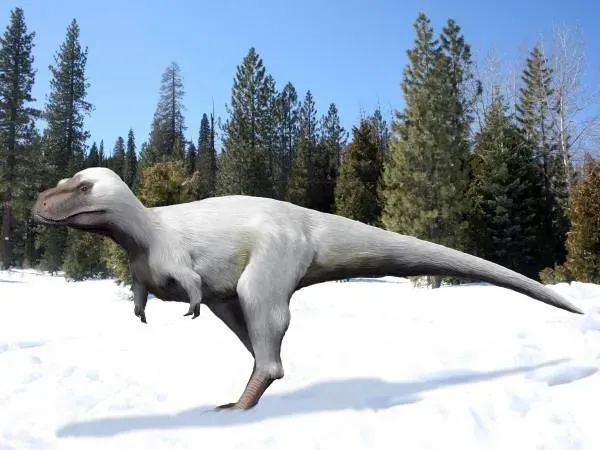
You’ve probably imagined the age of dinosaurs as a hot, swampy, tropical world. That’s partly true. But here’s the part that genuinely surprises people: there were forests at the poles. Full, proper forests, during the age of dinosaurs, growing in regions that spent months each year in total polar darkness. There is evidence from West Antarctica of polar forests that would have been dominated mainly by conifers, things like podocarps, araucarias, and probably ginkgo trees as well, with understories of ferns and cycads. Unlike the temperate rainforests that exist today in North America’s Pacific Northwest, each winter the Cretaceous polar forests would have had to survive four months of the year living in the total darkness of polar night.
I think this is one of the most underappreciated facts in all of paleontology. You had trees, ferns, and dinosaurs, all functioning in a high-latitude ecosystem with climate conditions that would challenge almost anything alive today. Herbivorous dinosaurs may also have been ecosystem engineers, meaning they changed the places where they lived through their behaviour. When these dinosaurs ate plant seeds, they may have passed through their guts and out in their poo, which helped to spread seeds across the animal’s habitat as they moved around. So you had gigantic dinosaurs acting as reforestation machines, spreading seeds through polar woodlands, in a world warmer than anything we’ve experienced in human history. It’s hard to say for sure exactly how these ecosystems maintained themselves through the dark months, but they clearly did. And that’s incredible.
The Ediacaran to Cambrian Transition: When an Entire Kingdom Vanished
The Cambrian Explosion gets all the fame, and fairly so. But what came just before it, and what it replaced, is arguably even more astonishing. The Ediacaran world wasn’t just weird; it was a completely separate chapter of life that simply ceased to exist. The Ediacaran marks the first widespread appearance of complex multicellular fauna following the end of the Cryogenian global glaciation known as the Snowball Earth. These were creatures that had risen from a nearly completely frozen planet, developed extraordinary body forms over tens of millions of years, and then vanished almost without trace.
If these enigmatic organisms left no descendants, their strange forms might be seen as a “failed experiment” in multicellular life, with later multicellular life evolving independently from unrelated single-celled organisms. That possibility is genuinely staggering. You may be looking at an entirely separate attempt at complex life, one that ran for tens of millions of years, produced creatures of spectacular variety, and then was erased from the planet. It had long been thought that the Ediacara fauna became entirely extinct at the end of the Precambrian, most likely because of heavy grazing by early skeletal animals. However, more recently, it was thought that environmental events such as changes in sea level played a greater role in the extinction of many Ediacaran organisms. Whichever way you look at it, an entire world of living things was replaced almost wholesale by a different kind of life. The Cambrian was not a continuation. It was a revolution.
Conclusion
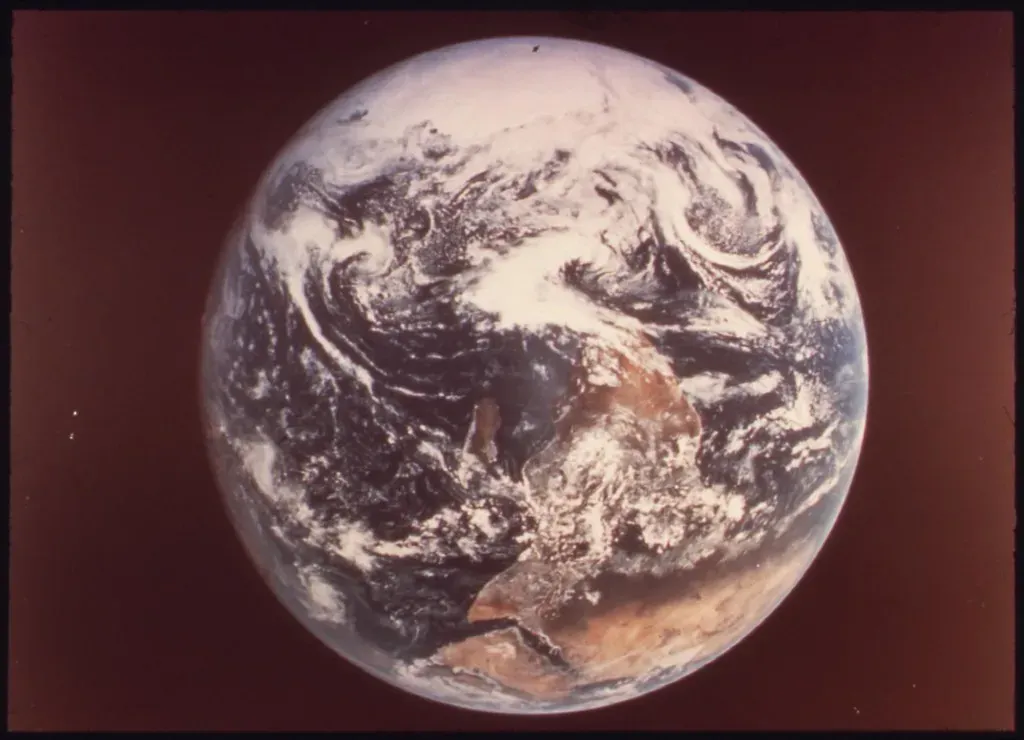
Earth has worn many faces over its 4.5 billion years, and the ones it wore in deep prehistory were stranger than almost anything we’ve imagined in our fiction. From oxygen-drunk swamps crawling with arm-length insects to silent post-apocalyptic oceans slowly stitching themselves back together, from fractal sea creatures without mouths to polar dinosaur forests surviving months without sunlight, every one of these ecosystems shatters the comfortable idea that nature always makes sense.
The more science digs into Earth’s ancient past, the more it reveals a planet that has reinvented itself, again and again, in ways that should not have worked but did. That resilience is remarkable. It’s also humbling. Perhaps the most honest takeaway is this: the planet we think we know is just the latest draft. Many wilder versions existed before us, and if history is any guide, something equally strange may come after.
Which of these five worlds surprised you the most? Share your thoughts in the comments below.