Dinosaurs ruled the Earth for over 160 million years. That’s not a lucky streak – that’s mastery on a scale we can barely comprehend. Yet for all the fossilized bones, footprints, and eggs scientists have dug from the ground, something remarkable remains true: we still don’t really know how these creatures behaved in life. Their bones tell us what they looked like. Their teeth hint at what they ate. But the living, breathing, roaring, socializing, parenting animal? That part stays frustratingly out of reach.
Here’s the thing – dinosaur behavior is difficult for paleontologists to study since much of paleontology is dependent solely on the physical remains of ancient life. Trace fossils and paleopathology can give only so much insight. It’s a bit like finding a photograph of someone’s skeleton and being asked to describe their personality. Some things just don’t preserve. And yet, every new discovery chips away at the mystery a little more, making what remains all the more fascinating. Let’s dive in.
Did Dinosaurs Really Travel in Mixed-Species Herds?
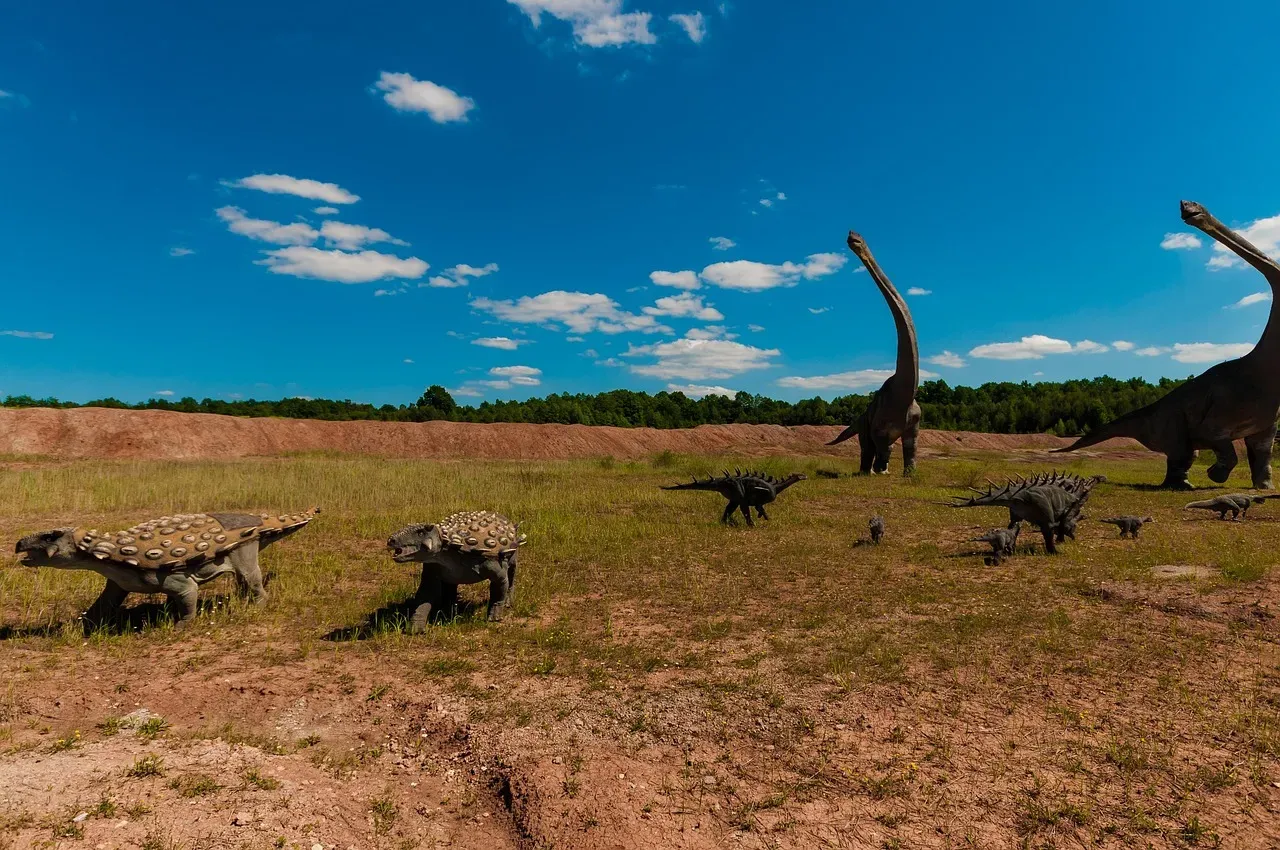
You’ve seen wildebeest and zebras thundering across the Serengeti together, two completely different species sharing the same dusty trail. Turns out, dinosaurs might have done something surprisingly similar. Footprints of a multispecies herd of dinosaurs discovered in Canada demonstrate the social interaction between different dinosaur species roughly 76 million years ago, in a study published in the journal PLOS One. That discovery, made at one of the world’s most famous fossil sites, completely reframed how scientists think about prehistoric social life.
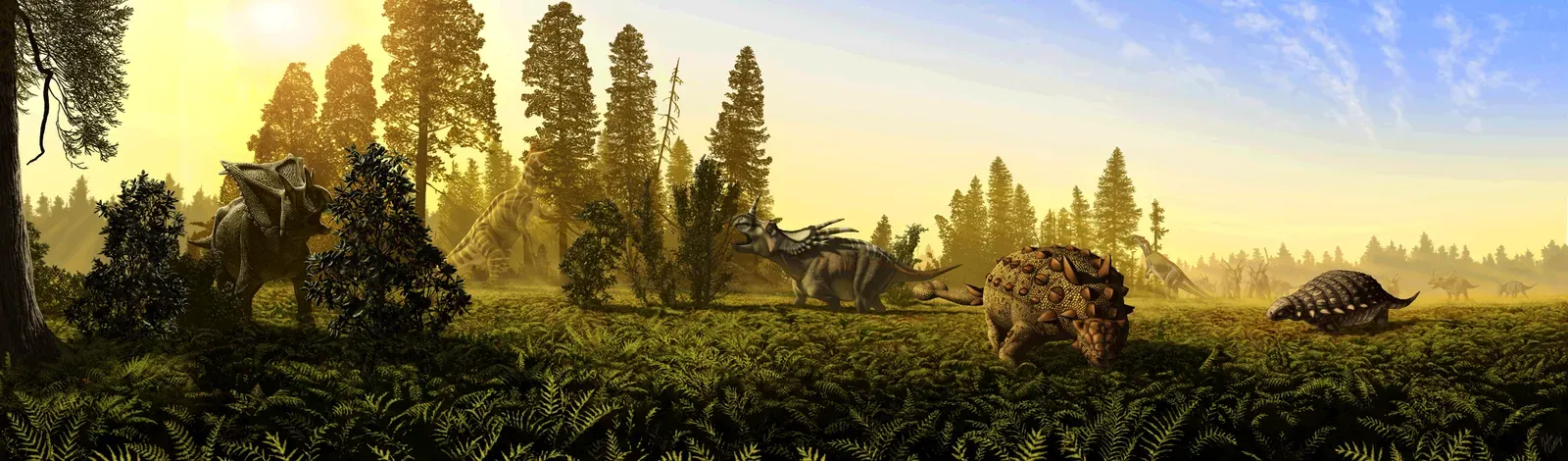
Footprints uncovered in Alberta could be evidence that some dinosaurs moved in herds comprising multiple different species. Many of the newly described footprints were made by ceratopsians – the group of horned dinosaurs that includes Triceratops. The 13 ceratopsian tracks are thought to belong to at least five individuals, but another set of footprints walking among the herd is thought to belong to an ankylosaurid, a different group entirely which includes the tank-like Ankylosaurus. To make it even more dramatic, two large Tyrannosaurus rex trackways were also discovered walking side-by-side and perpendicular to the herd, raising questions about whether these huge predators were stalking the group.
The presence of other dinosaur footprints among the ceratopsians led researchers to believe these trackways could show the first evidence of mixed-species herding behavior in dinosaurs, similar to how modern wildebeest and zebras travel together across the African plains. The two T. rex footprints also raise the prospect that multispecies herding may have been a defense strategy against common apex predators – though the research team admits more evidence is needed to confirm this. Honestly, the idea of horned and armored dinosaurs banding together for mutual protection gives you a whole new level of respect for the Cretaceous world.
How Did Dinosaurs Communicate With Each Other?
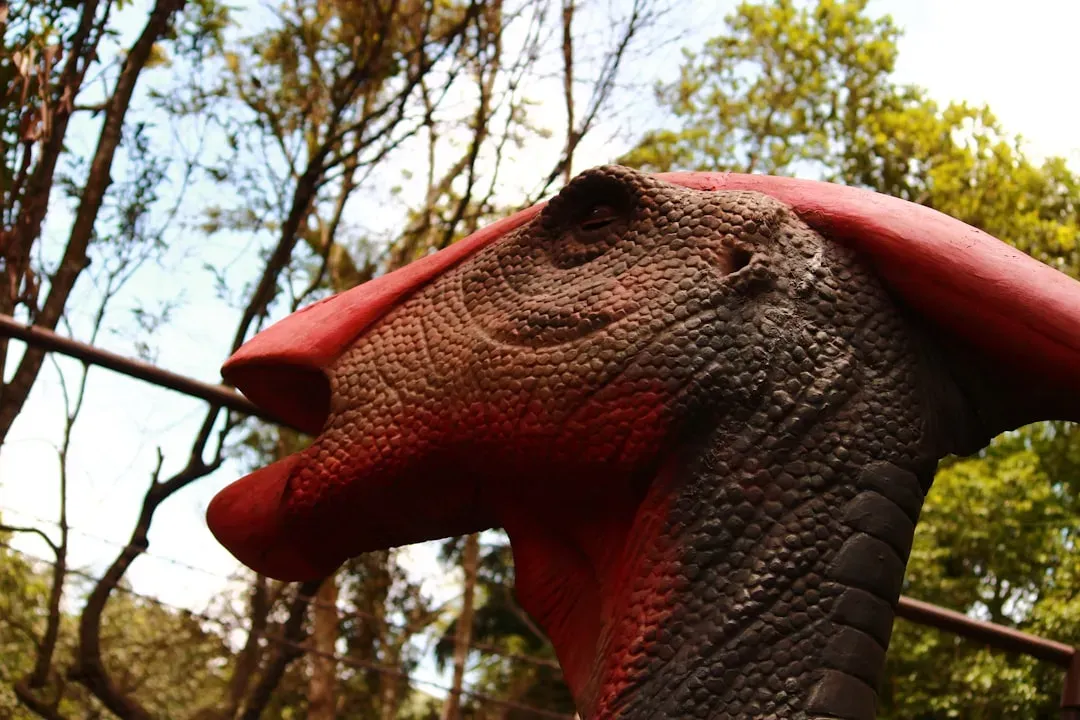
Forget the thundering roars from the movies. The reality of how dinosaurs communicated is far stranger and, in many ways, more interesting. When you picture a dinosaur, you probably hear that terrifying roar from Jurassic Park. For decades, we’ve imagined these prehistoric creatures making earth-shaking sounds that matched their massive size. But recent scientific discoveries suggest something surprising: dinosaurs might have been much quieter than we thought. The evidence points toward something more subtle – and more alien.
Some duck-billed dinosaurs, called hadrosaurs, had elaborate crests that contained long and resonant extensions of the breathing tracts. Studies found that these crests are naturally resonant and could easily produce low-frequency sounds. Think of it like a built-in trombone attached to their skull. Studied from an acoustical perspective, researchers found that the crest of Parasaurolophus truly was capable of acting as a resonating chamber for sound. The internal anatomy of the crest was very similar to a woodwind instrument, and adult Parasaurolophus likely communicated over long distances through low-frequency sounds. Beyond sound, visual displays played a significant role in dinosaur communication, with elaborate crests, frills, and horns serving as their language – employed during mating rituals and to assert dominance within their communities.
The Baffling Question of Dinosaur Parental Care
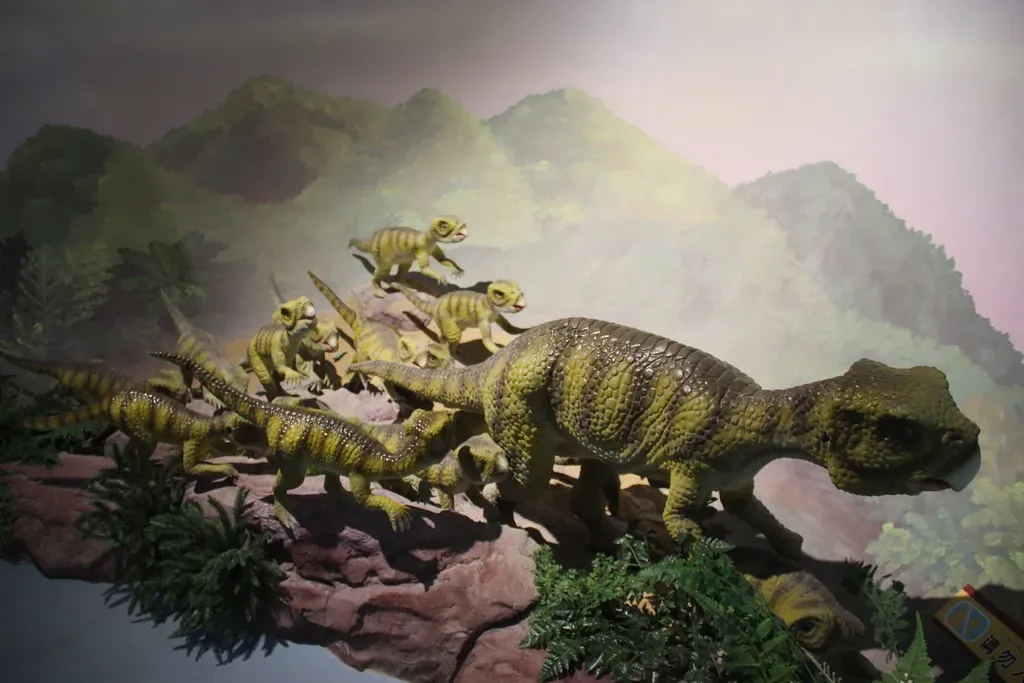
Were dinosaurs attentive, nurturing parents – or did they lay their eggs and walk away? I think most people assume it was the latter, imagining something cold and reptilian. The truth, however, is far more complex and, depending on the species, surprisingly tender. One matter of debate is whether dinosaur parents stuck around to guard their eggs or, like today’s sea turtles, laid them and left their offspring to fend for themselves. The answer seems to vary by species.
In the 1970s, paleontologist Jack Horner discovered what was later dubbed “Egg Mountain” in Montana: a gigantic, fossilized nesting site of hundreds of specimens of duck-billed Maiasaura dinosaurs from up to 80 million years ago. This was one of the first findings that helped researchers learn more about how much some dinosaurs parented even after their babies hatched. Evidence of trampled eggshells suggests the hatchlings were in the nest for a while, and plant matter found in the nests suggests parents may have fed the young before they ventured out. Yet for the giants, the story is different. The biggest dinosaurs might have done little to look after the next generation. For some groups like sauropods – including long-necked giants like Apatosaurus and Brachiosaurus – there is no evidence of post-laying care. Paleontologists have found expansive nesting grounds where dinosaurs laid eggs in geothermally warm areas, perhaps for incubation, but researchers have no evidence that the parents stuck around.
Did Dinosaurs Hunt in Packs – or Were They Loners?
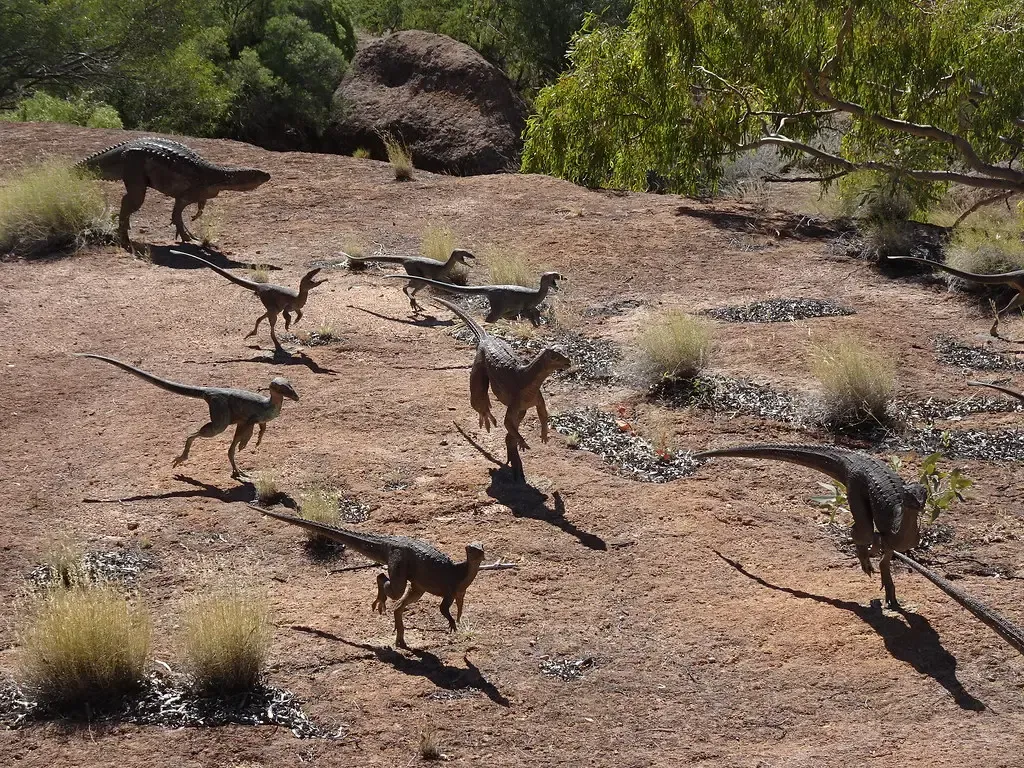
Thanks to movies like Jurassic Park, the image of raptors hunting in coordinated packs is seared into popular culture. But let’s be real: Hollywood isn’t a paleontology textbook. In Jurassic Park, raptors were seen hunting in packs. But a movie is just a movie. Much of what we saw was a product of imagination, including the hunting behaviors of dinosaurs. Though some footprints have been preserved showing that different dinosaurs walked alongside one another, we don’t know why they were doing this.
Interpretations of dinosaur behavior are generally based on the pose of body fossils and their habitat, computer simulations of biomechanics, and comparisons with modern animals in similar ecological niches. As such, the current understanding of dinosaur behavior relies on speculation, and will likely remain controversial for the foreseeable future. There is general agreement that some behaviors common in crocodiles and birds – dinosaurs’ closest living relatives – were also common among dinosaurs. The presence of large carnivore bonebeds, like the many Allosaurus specimens found at the Cleveland-Lloyd Quarry in Utah, hints at group behavior. The many specimens of Allosaurus at the Cleveland-Lloyd Quarry in Utah may denote a herd of animals attracted to the site for the common purpose of scavenging. Whether that was coordinated hunting or opportunistic gathering remains, frustratingly, an open question.
How Early Did Complex Social Herd Behavior Actually Begin?
For a long time, scientists believed that sophisticated herd behavior – the kind with social structure, age-segregated groups, and long-term bonds – was a relatively late development in dinosaur evolution, limited to the big, well-known species of the Cretaceous. Then a remarkable discovery in South America flipped that assumption on its head. Researchers from MIT, Argentina, and South Africa found that Mussaurus patagonicus may have lived in herds as early as 193 million years ago, a full 40 million years earlier than other records of dinosaur herding.
The exceptional fossil occurrence from Patagonia includes over 100 eggs and skeletal specimens of 80 individuals of Mussaurus, ranging from embryos to fully-grown adults. Most specimens were found in a restricted area, with some articulated skeletons grouped in clusters of individuals of approximately the same age. These new discoveries indicate the presence of social cohesion throughout life and age-segregation within a herd structure, in addition to colonial nesting behavior, providing the earliest evidence of complex social behavior in Dinosauria, predating previous records by at least 40 million years. Think of it like discovering that the tradition of family reunions is tens of millions of years older than anyone imagined. As paleontologist Diego Pol noted, “We know very little about dinosaur behavior, but most of what we know is based on very late dinosaurs from the Cretaceous. We have very, very little to no information about dinosaur behavior at the beginning of their history.” That honest admission from a leading expert says it all.
Conclusion: The Mystery Is the Point
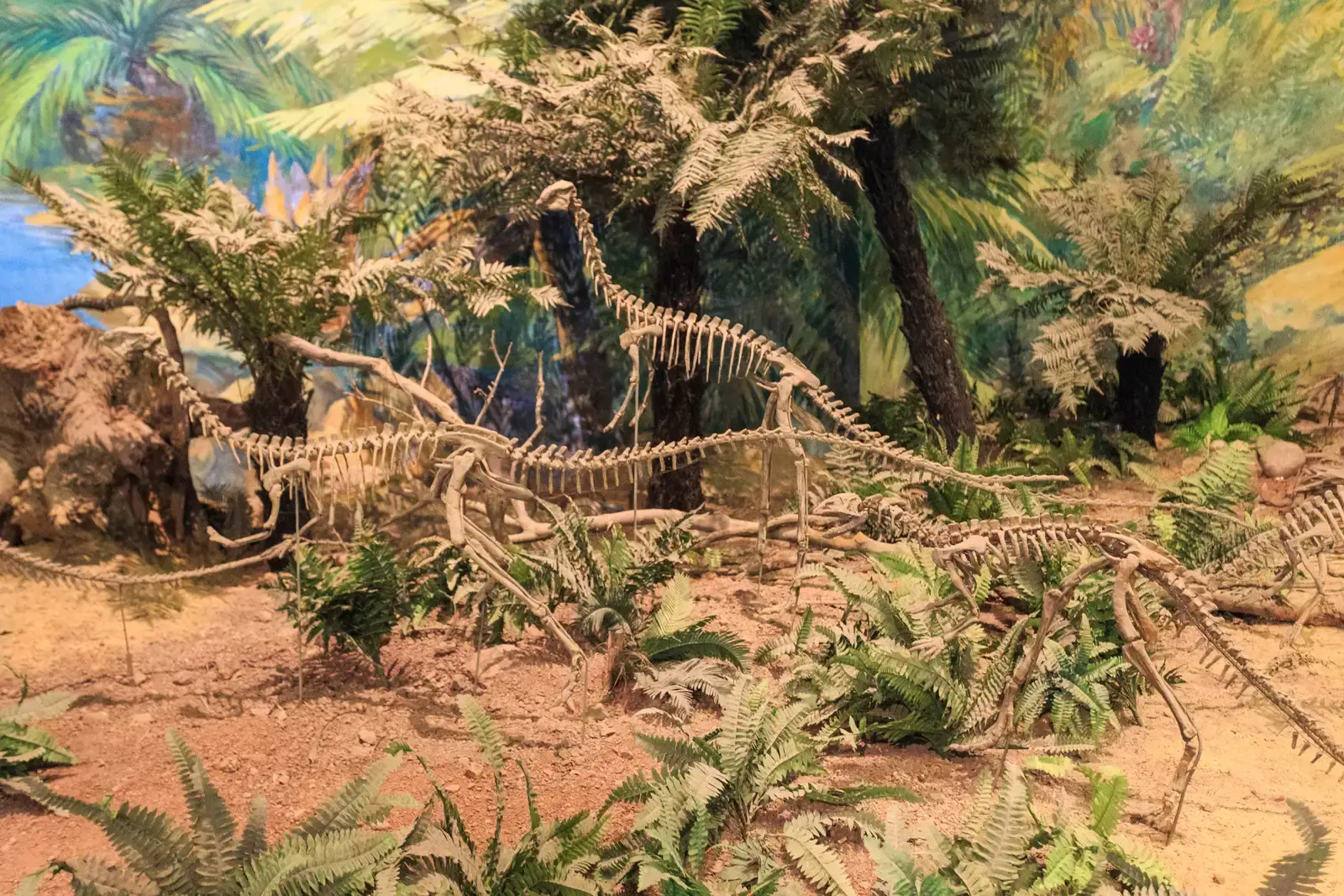
What makes dinosaur behavior so endlessly compelling is precisely the fact that we will probably never have all the answers. Behaviors don’t fossilize. Sound doesn’t leave a rock record. You can’t excavate a roar, a tender moment of parental care, or a coordinated hunt from the stone. As paleontologist Paul Sereno put it to young fans of the field: “If you’re an enthused kid thinking maybe we found everything – no, we have not.” Plenty of work remains to make new discoveries and solve more mysteries about how dinosaurs lived.
Every trackway, every bonebed, every fossilized nest cracks the door open just a little wider. We know dinosaurs better than ever before. Paleontologists continue to find new species at a remarkable pace, more accurately reconstructing familiar dinosaurs with each passing year. Despite all our recent advances in understanding the Age of Reptiles, dinosaurs still present us with a slew of unresolved questions. That’s not a failure of science – that’s the most exciting kind of science there is. The more you learn, the more you realize how deep the rabbit hole goes.
So the next time you see a dinosaur skeleton in a museum, towering in frozen silence over the crowd, remember: what you’re looking at is only half the story, and we’re still writing the rest. What do you think we’ll discover next? Tell us in the comments.