
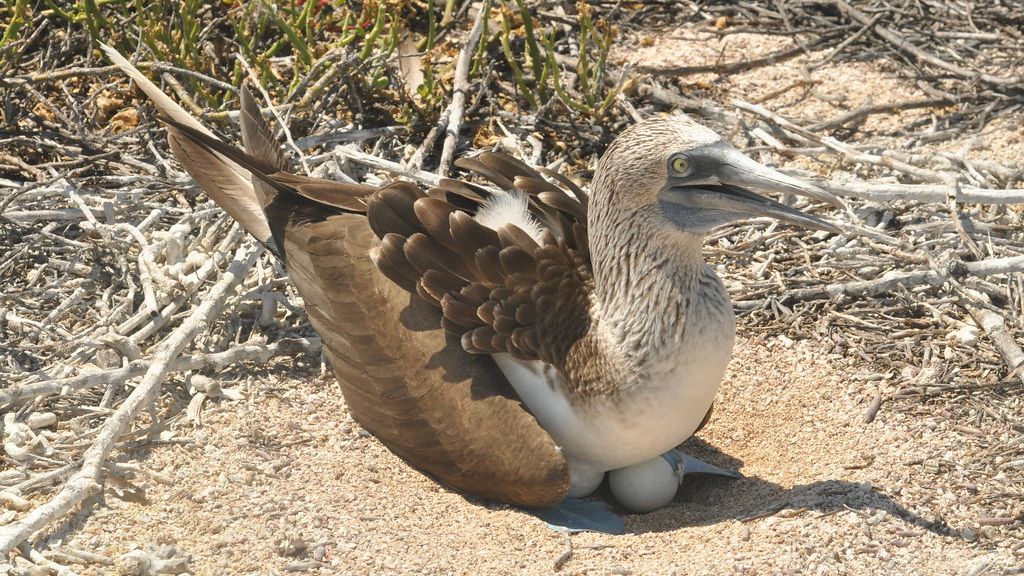
If someone told you dinosaurs were still walking around, you’d probably picture a movie reboot, not a bird on a fence or a reptile basking on a log. But the wild truth is that the age of dinosaurs never fully ended; it just got a rebrand, swapped scales for feathers, and hired better PR. Some of the creatures around us today are not just vaguely “dinosaur‑ish” – they are direct descendants or extremely close relatives, still carrying ancient blueprints in their bones and behavior.
Once you start seeing modern animals as living dinosaurs in disguise, everyday nature suddenly feels a lot more epic. A stroll past a pond turns into a safari through deep time, and a seagull stealing your fries starts to look suspiciously like a tiny, opportunistic theropod. Let’s walk through seven incredible animals that are, in a very real sense, dinosaurs with updated branding – and talk about what makes them feel so ancient, so familiar, and so astonishingly alive right now.
1. Chickens: The T-Rex You Had for Lunch
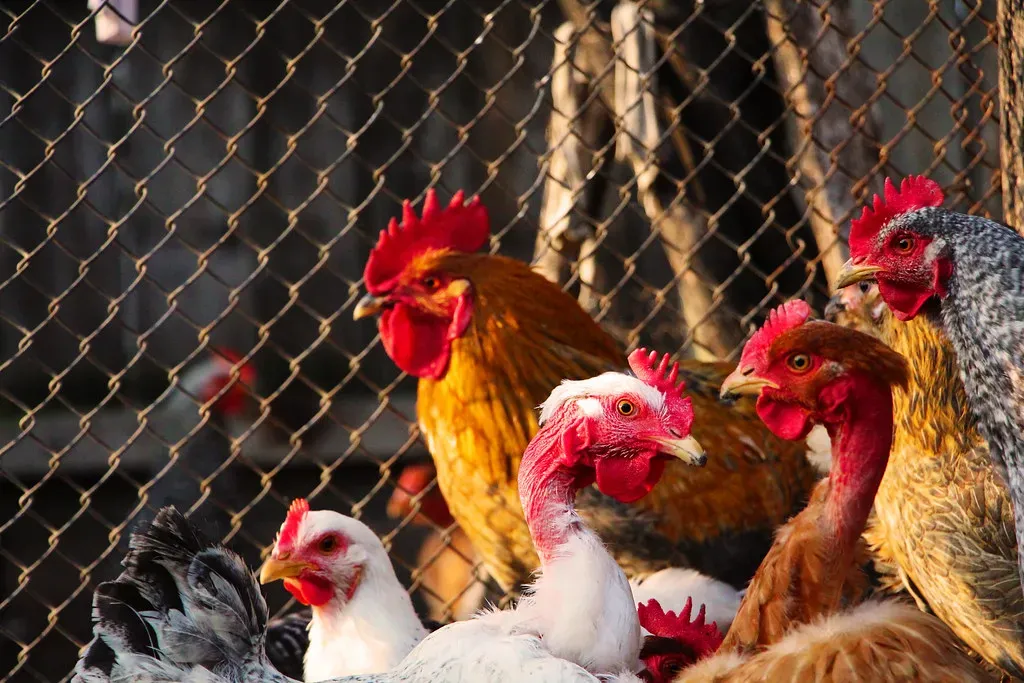
It sounds like a joke, but chickens might be the most “basic” dinosaurs you meet every single day. Genetic and anatomical research has shown that birds are the only surviving dinosaur lineage, and chickens are a poster child for this transformation. Their skeletons still carry the hallmark of theropod dinosaurs: a three-toed foot, a wishbone, and a surprisingly similar hip structure that links them back to fearsome ancestors that once ruled the planet.
What blows my mind is how easy it is to forget this when you’re holding a chicken nugget. Scientists have even run experiments tweaking gene expression in chicken embryos that can partially activate ancient traits, like more dinosaur‑like snouts, hinting at how close the genetic wiring really is. Watch a chicken run, scratch, and tilt its head with that sideways stare, and suddenly it looks like a tiny, feathered raptor pacing your backyard. You are literally watching a dinosaur forage around the picnic table – it just happens to cluck instead of roar.
2. Ostriches: Velociraptors on a Treadmill
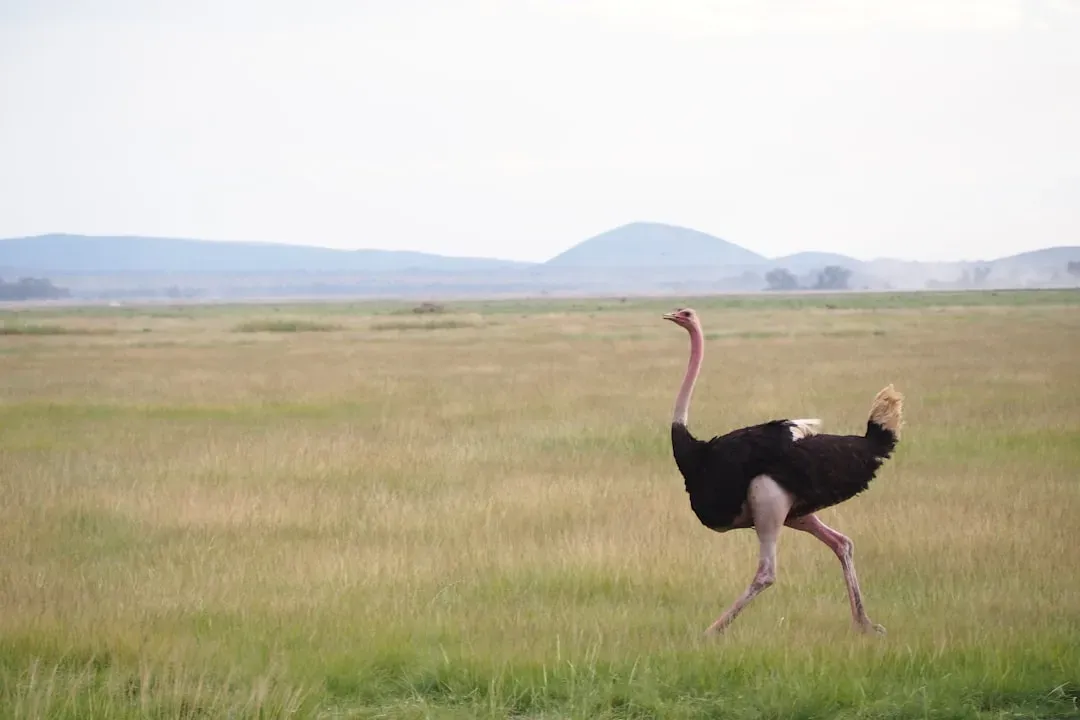
If chickens are the everyday dinosaurs, ostriches are the track‑star versions – tall, intense, and absolutely built for speed. These gigantic birds are part of a group called ratites, which represent some of the most primitive living birds in terms of anatomy. Their long, powerful legs, reduced wings, and rigid, lightweight skeleton feel like the design brief for a land‑running theropod stretched into modern form, and their claws are no joke if you get on the wrong side of them.
When you watch an ostrich sprint across open land, it’s like looking at a storyboard for how small, feathered dinosaurs might have moved. They use the same kind of balancing act, with their long neck and torso acting almost like a counterweight, giving them stability at high speed. There’s something eerily ancient in the way they run with that head bobbing and eyes scanning, as if they’ve never entirely left the era where predators and prey were both armed with teeth the size of your fingers.
3. Crocodiles: The Unbothered Tank from the Triassic
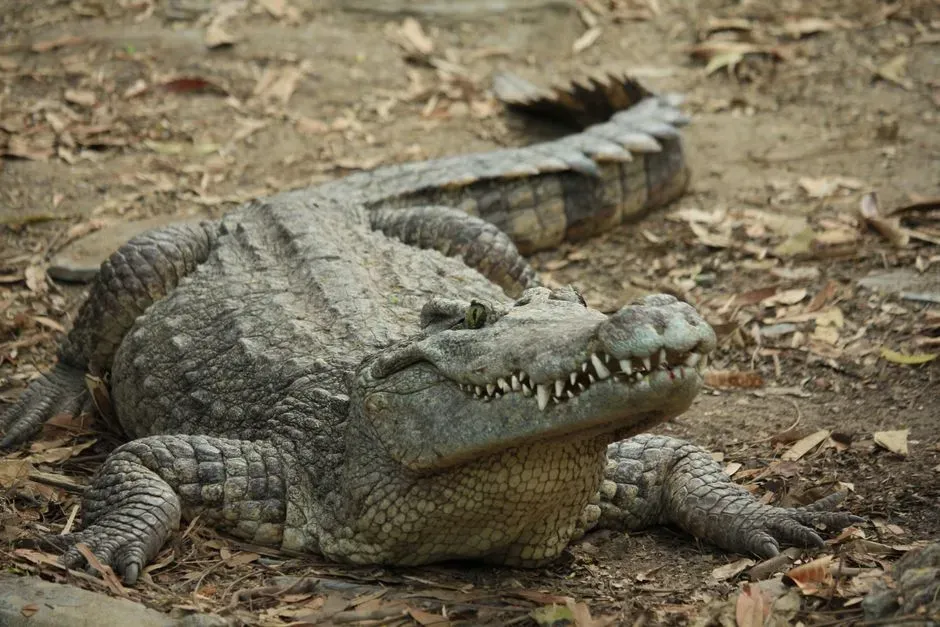
Crocodiles feel like the grumpy neighbors of the dinosaur world who refused to move out when the asteroid hit. While not technically dinosaurs, they belong to the same broader group of reptiles called archosaurs, and many of their ancient relatives prowled the same landscapes as giant sauropods and tyrannosaurs. Modern crocs still carry that deep‑time design: armored skin, powerful jaws, and eyes and nostrils positioned perfectly for lurking at the water’s edge.
What makes crocodiles so “dinosaur‑adjacent” is how little their overall lifestyle has needed to change over tens of millions of years. Their bodies are like living museum pieces, updated just enough to survive new climates and shifting continents. When you see one drifting silently through a swamp, barely rippling the surface, it feels like a time machine moment – this is almost exactly what a large prehistoric predator would have looked like as it waited for something unlucky to wander too close.
4. Alligators: Backyard Relatives of Ancient Giants
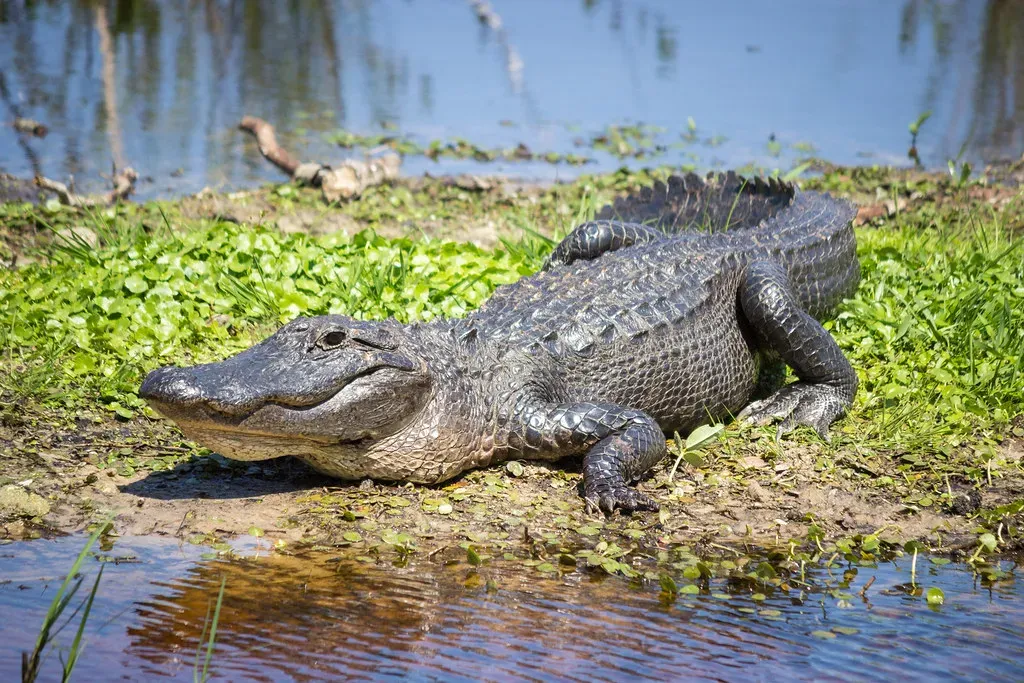
Alligators often get lumped in with crocodiles, but they deserve their own spotlight as living links to the age of reptiles. Their broader snouts and more relaxed, freshwater lifestyle echo a different branch of the ancient crocodile family tree. They thrive in marshes, rivers, and ponds, slipping between water and land with the same stealthy ease that made their ancestors such successful ambush hunters long before mammals ever dreamed of dominating the planet.
Spend a little time watching an alligator bask on a bank and then slide silently into the water, and you start to see that old-world patience. Their heart and lung systems are surprisingly efficient, helping them hold their breath for extended periods and control blood flow in ways that echo their prehistoric cousins. To me, there’s something humbling about the fact that in parts of the world, you can look out behind a grocery store or a golf course and see an animal whose basic blueprint predates human history by a geological eternity.
5. Cassowaries: Jungle Raptors in Neon Armor
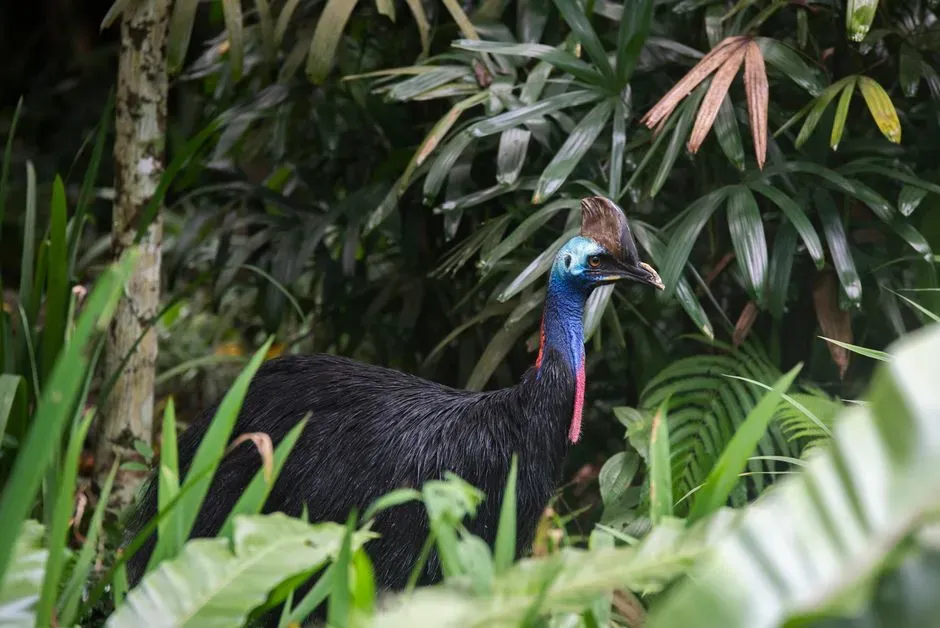
Cassowaries look like someone tried to design a dinosaur for a sci‑fi movie and accidentally made it real. These massive, flightless birds roam the rainforests with glossy black feathers, bright blue necks, and a bony helmet on top of their heads called a casque. That helmet, along with their powerful legs and dagger‑like inner toe claw, gives them a striking resemblance to artistic reconstructions of mid‑sized theropod dinosaurs that might have moved through dense vegetation, using their bodies to push aside branches and debris.
They are famously capable of defending themselves, and their kicks can be seriously dangerous, which only reinforces the sense that you’re dealing with a creature that never lost its ancient self‑confidence. Behaviorally, they feel like forest‑dwelling raptors: shy, solitary, and very capable if threatened. When I first learned that these birds play a crucial role in spreading seeds of large rainforest trees, it made them seem even more like modern stand‑ins for extinct dinosaurs that once shaped entire ecosystems simply by walking, eating, and moving through their world.
6. Tuatara: The Reptile Left on the Cutting Room Floor of Evolution
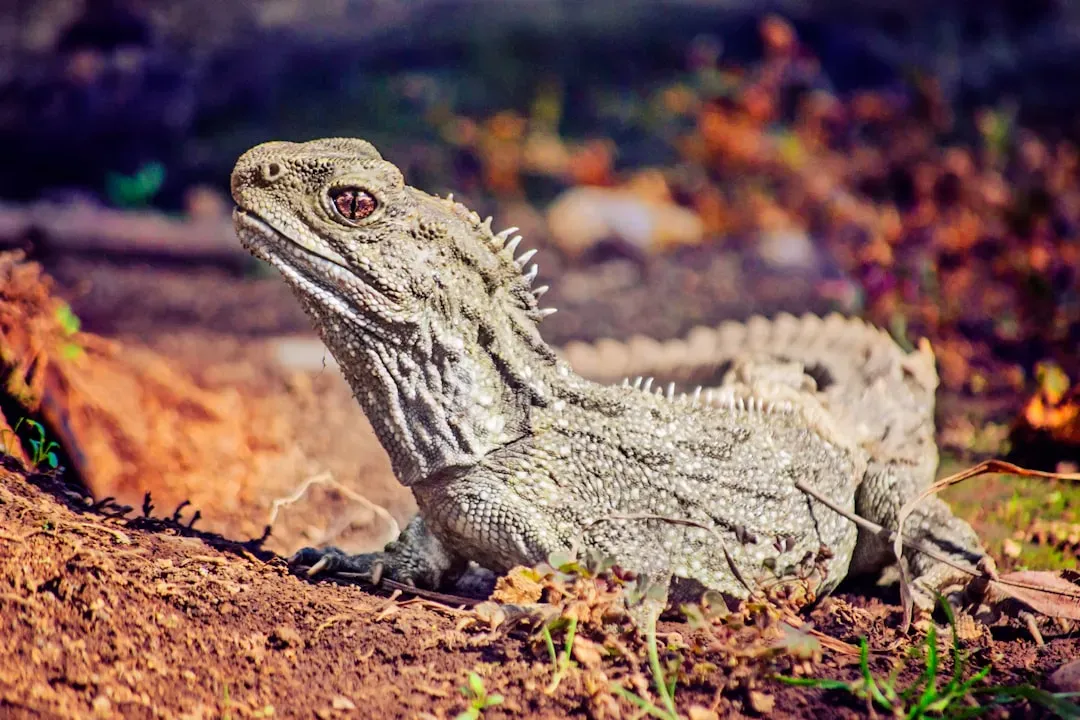
The tuatara is one of those creatures that looks like a lizard at first glance, but biologically, it is living in its own quiet branch of the reptile family tree. It is the last survivor of a group that flourished alongside dinosaurs, and its skull, teeth, and even its brain structure are like a snapshot of ancient reptilian anatomy preserved in the present. One particularly strange feature is the so‑called “third eye” on the top of its head when it is young, a light‑sensitive organ that hints at sensory systems far older than our modern way of seeing the world.
Tuatara also grow and age at a slow, almost stubborn pace, living for many decades and remaining reproductively active much later in life than most reptiles. That slow‑motion lifestyle, combined with their preference for cool, coastal environments, makes them feel almost like leftover prototypes from an experiment in reptile design that the rest of evolution moved on from. When you see a photo of a tuatara perched on a rock, you are not just looking at an odd lizard; you’re looking at a lineage that watched entire dynasties of dinosaurs rise and fall and simply kept going.
7. Cassowary Cousins and the Birds We Ignore: Pigeons, Gulls, and Beyond
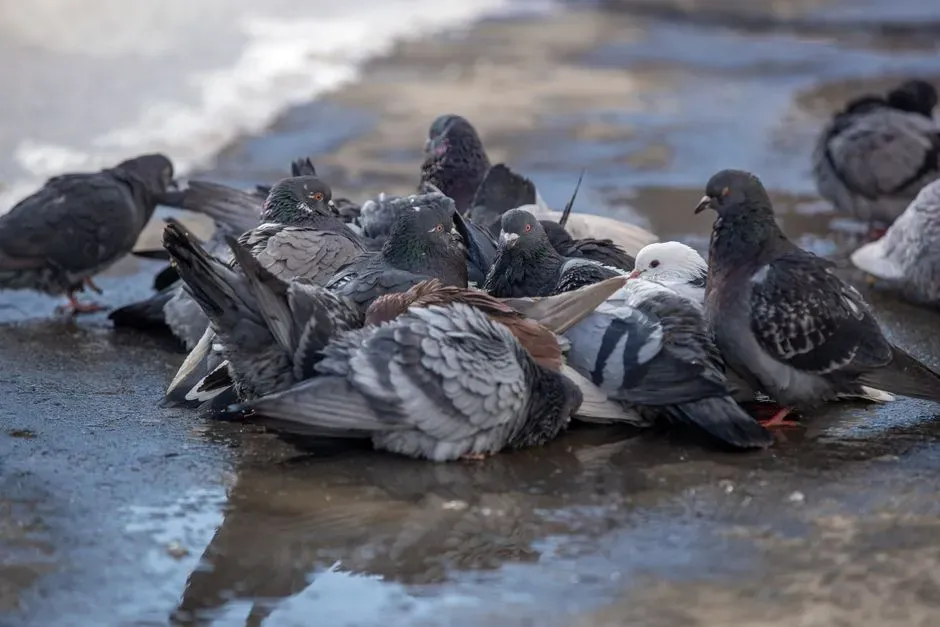
It is easy to point at the exotic birds and reptiles and say they look dinosaur‑like, but the more unsettling realization is that very ordinary city birds are just as much dinosaurs as their flashier cousins. Pigeons bobbing around train stations, gulls screaming over parking lots, and crows inspecting trash cans all share the same core theropod ancestry as ostriches or cassowaries. Their bone structure, lung system, and even their feathers trace directly back to the small, agile dinosaurs that outlived their larger relatives and took to the skies.
What makes this so fascinating is the attitude shift it invites. That gull stealing your sandwich is not just a nuisance; it is a modern raptor that adapted perfectly to a concrete jungle instead of a primeval forest. Personally, once I started thinking of everyday birds as tiny, feathered dinosaurs, I never saw them as boring again. Their intelligence, social behavior, and fearless scavenging suddenly felt like echoes of ancient survival strategies honed over tens of millions of years.
Conclusion: Dinosaurs Never Died, We Just Renamed Them
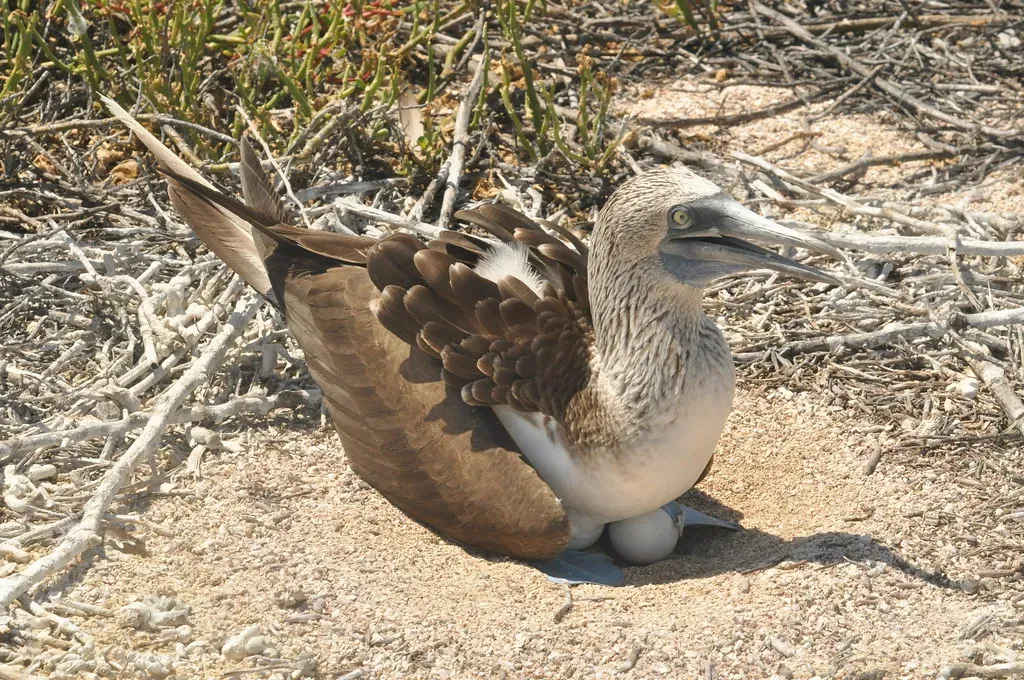
To me, the most thrilling part of all this is how it demolishes the neat, comforting story that dinosaurs are “gone” and we are something completely separate and new. The fossil record and modern genetics tell a messier, more beautiful story: evolution rarely hits a hard reset, it just edits, revises, and occasionally gives a successful design a new coat of feathers. Chickens, ostriches, crocodiles, alligators, cassowaries, tuatara, and even that smug pigeon on the sidewalk are living proof that the so‑called Age of Dinosaurs simply morphed into the Age of Birds, with some reptilian side characters still hanging on.
I think we massively underestimate how wild our world already is because we keep looking for monsters on movie screens instead of in our own backyards. Once you realize your lunch, your local pond, and the trees above your street are full of creatures carrying dinosaur DNA and body plans, daily life starts to feel a lot less ordinary. In a way, the asteroid did not end their story; it just forced the survivors to get clever, resilient, and weirdly marketable. Next time a bird eyes you from a fence or a reptile slips into the water, ask yourself: are you really looking at “just an animal,” or are you locking eyes with a very patient dinosaur that never left?