If you think you already know the story of how humans first came to call North America home, think again. The tale is far older, far stranger, and far more dramatic than most of us were ever taught in school. For decades, scientists operated on a tidy, comfortable timeline. Then the evidence started coming in, piece by piece, footprint by footprint, gene by gene, and that timeline began to crack wide open.
What researchers have uncovered in recent years doesn’t just tweak the old story. It fundamentally rewrites it. From frozen caves to buried desert lakebeds, from ancient DNA hidden in infant bones to fossilized human feces in Oregon, every new discovery seems to push the limits of what we thought was possible. So buckle in, because what you’re about to read might completely change how you see the first chapter of human life on this continent. Let’s dive in.
Footprints in New Mexico Shatter the Timeline of Human Arrival
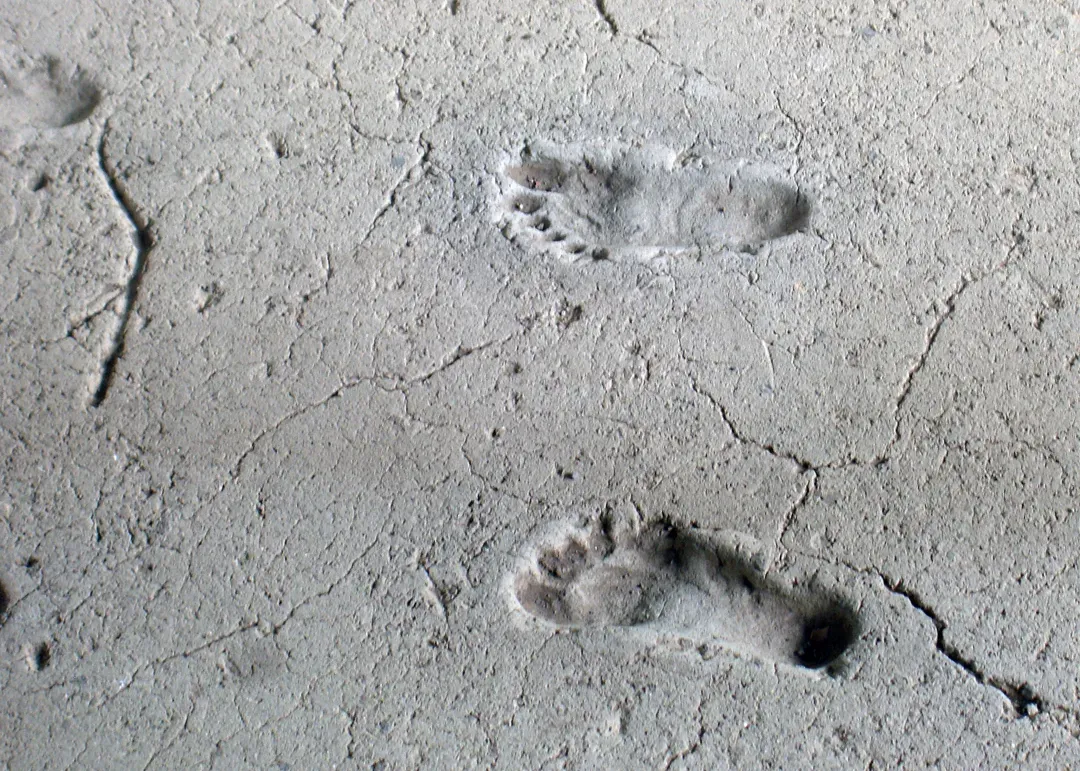
(Original text: self-made), CC BY-SA 3.0)
Here’s the thing that still blows my mind: someone walked across a muddy lakebed in what is now New Mexico during the last Ice Age, and we can still see where they stepped. A 2021 discovery of human footprints in relict lake sediments near White Sands National Park in New Mexico demonstrated there was a verifiable human presence in the region dating back to the Last Glacial Maximum, between 18,000 and 26,000 years ago. That’s not a small revision to the old story. That’s the old story being thrown out entirely.
Skeptics pushed back hard, arguing the dating methods were unreliable. So scientists went back and tried again, this time with different materials. A new paper found that the mud is between 20,700 and 22,400 years old, which correlates with the original finding that the footprints are between 21,000 and 23,000 years old. The new study marks the third type of material used to date the footprints, and by three different labs. Two separate research groups now have a total of 55 consistent radiocarbon dates. At some point, the sheer weight of consistent evidence becomes nearly impossible to argue away.
The Clovis Culture Was Not the Beginning
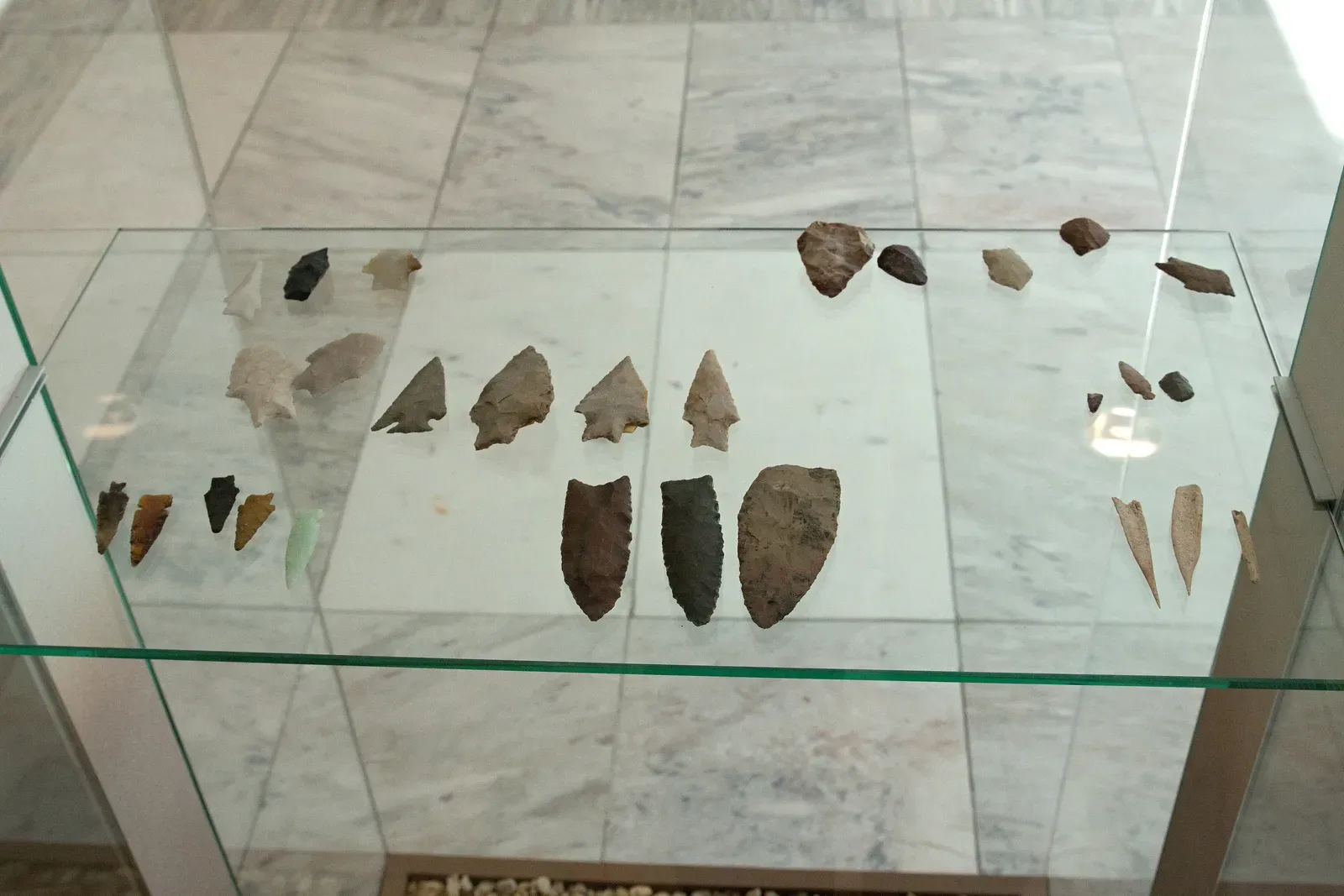
For most of the twentieth century, one theory dominated everything. For many years, archaeologists believed the first human culture in the Americas were the Clovis people, thought to have arrived in Alaska after crossing a land bridge known as Beringia from Siberia around 13,500 years ago. The Clovis were named after the place in New Mexico where, in 1929, an amateur archaeologist first found their distinctive stone points. Think of it like the scientific equivalent of a creation myth. One origin, one moment, one people.
That neat story has since been dismantled from multiple angles. At Oregon’s Paisley Caves, fossilized human feces date back 14,300 years. In Texas, at Buttermilk Creek complex, stone tool fragments date back 15,500 years. At Arroyo Seco 2 in Argentina, archaeologists discovered 14,000-year-old butchered animal bones. Meadowcroft Rockshelter in Pennsylvania may have a history of at least 16,000 years. Each of these sites predates Clovis, and together they tell a story of people already spread far and wide long before the famous stone points ever appeared.
Meadowcroft Rockshelter: A Home Used for Thousands of Years
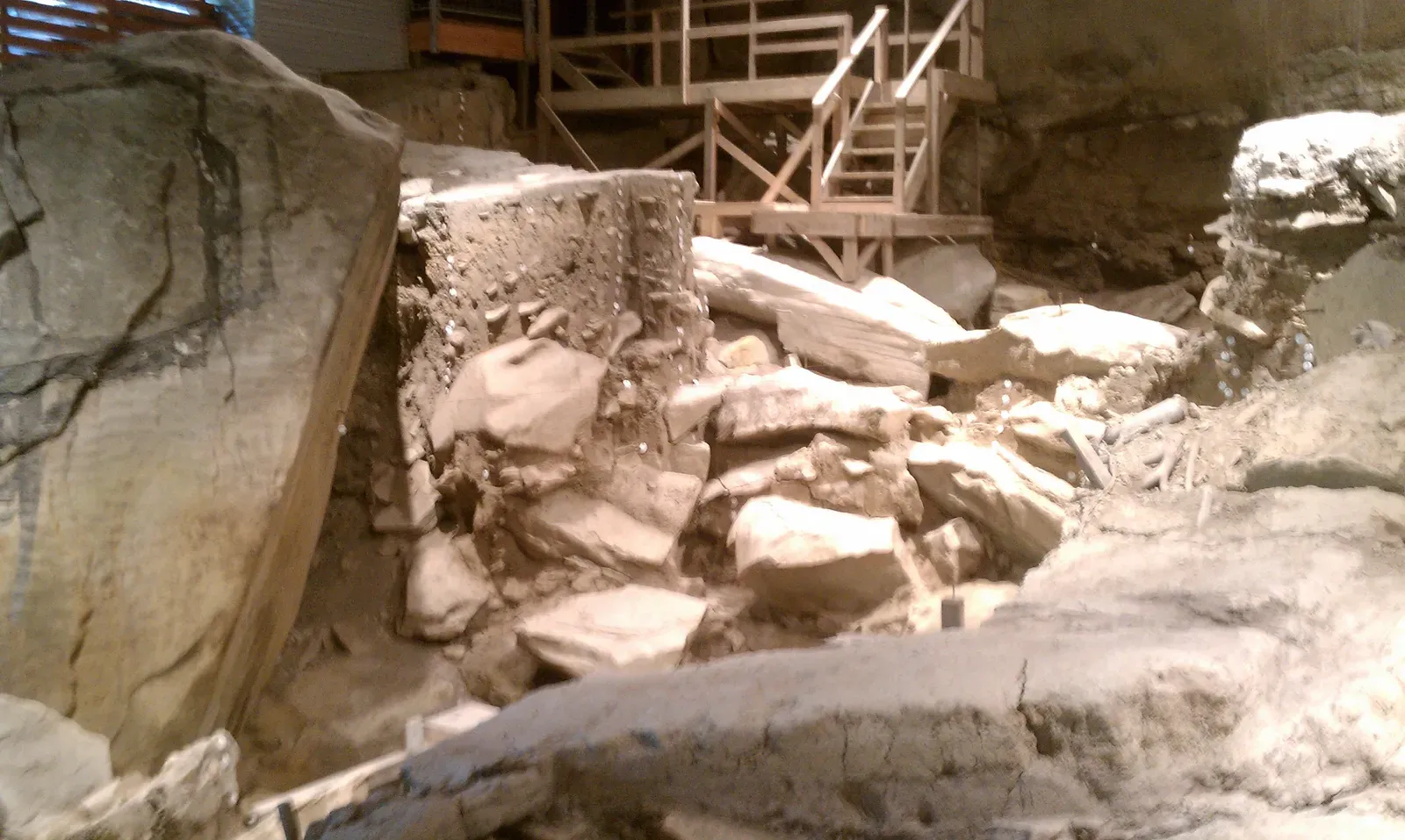
You might not have heard of Meadowcroft Rockshelter, hidden away in Pennsylvania not far from Pittsburgh. Honestly, more people should know about it. It was older than any other site found in the New World, dating to somewhere between 16,000 and 19,000 years old. Given that 1970s understanding of human migration to the Americas had human habitation dating back only 10,000 to 12,000 years, this was a major find. Even more remarkable is that the rock shelter showed signs of continuous human habitation up until the 18th century, making it not only the earliest known place of human habitation in North America, but also the longest continually used site.
What makes Meadowcroft so compelling is just how much ordinary life it preserved. During excavations, over 20,000 artifacts have been recovered. The discovery of items such as wood and bone tools, baskets, pottery, and deer bones have helped to fill out the story of the pre-Clovis peoples that occupied the site. Archaeologists have even discovered a 12,000-year-old spearhead, the oldest ever found in North America. Imagine generations upon generations of people returning to the same rocky overhang as a kind of home base for thousands of years. That’s not survival. That’s civilization in its earliest form.
Ancient DNA Reveals a Far More Complex Migration Story

If you thought humans simply walked across a land bridge, arrived in North America, and spread south in one great wave, the genetics are here to complicate your afternoon. As research progressed in the 2000s, the narrative shifted from a single migration event to multiple small, diverse groups entering the continent at various points in time. This indicates that people might have populated North and South America as early as 15,000 to 20,000 years ago, which some believe support a coastal migration route. It was never one people, one journey, one moment.
The DNA extracted from ancient remains has been particularly eye-opening. Geneticists discovered that a Beringian population split from Siberian groups about 36,000 years ago. Around 25,000 years ago, they became isolated, forming a new genetic group linked to today’s Indigenous populations, which divided into two main lineages between 14,500 and 17,000 years ago, reflecting the dispersal associated with the early peopling of the Americas. It reads less like a single expedition and more like an enormously complex, slow unfolding drama spread across tens of thousands of years.
The “Kelp Highway”: Ancient Humans May Have Sailed Their Way South
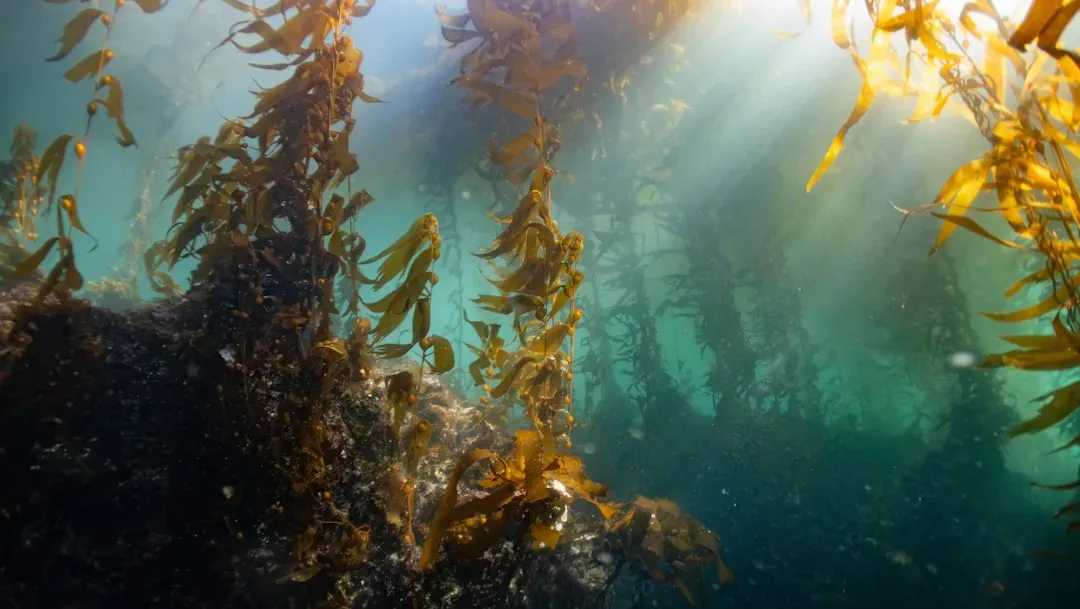
Here’s one of the more surprising twists in this whole story. Some researchers now believe that early humans didn’t just walk into North America, they may have paddled their way down the coast, following an ancient ecological corridor rich in food. A 2007 article proposed a “kelp highway hypothesis,” a variant of coastal migration based on the exploitation of kelp forests along much of the Pacific Rim from Japan to Beringia, the Pacific Northwest, and California. Once the coastlines of Alaska and British Columbia had deglaciated about 16,000 years ago, these kelp forest habitats would have provided an ecologically homogenous migration corridor, entirely at sea level, and essentially unobstructed.
Think of the kelp highway like an ancient version of a food-lined road trip route. You’d never starve because the ocean kept delivering. Early migrants to the Americas were likely seaworthy. Many archaeologists now agree that the first humans who traveled to the Americas more than 15,000 years before present used a coastal North Pacific route. Their initial migration was from northeastern Asia to Beringia, where they settled for thousands to more than ten thousand years. The ocean wasn’t a barrier. For these people, it was almost certainly a highway.
The Clovis People’s Diet Was Nothing Like You’d Expect
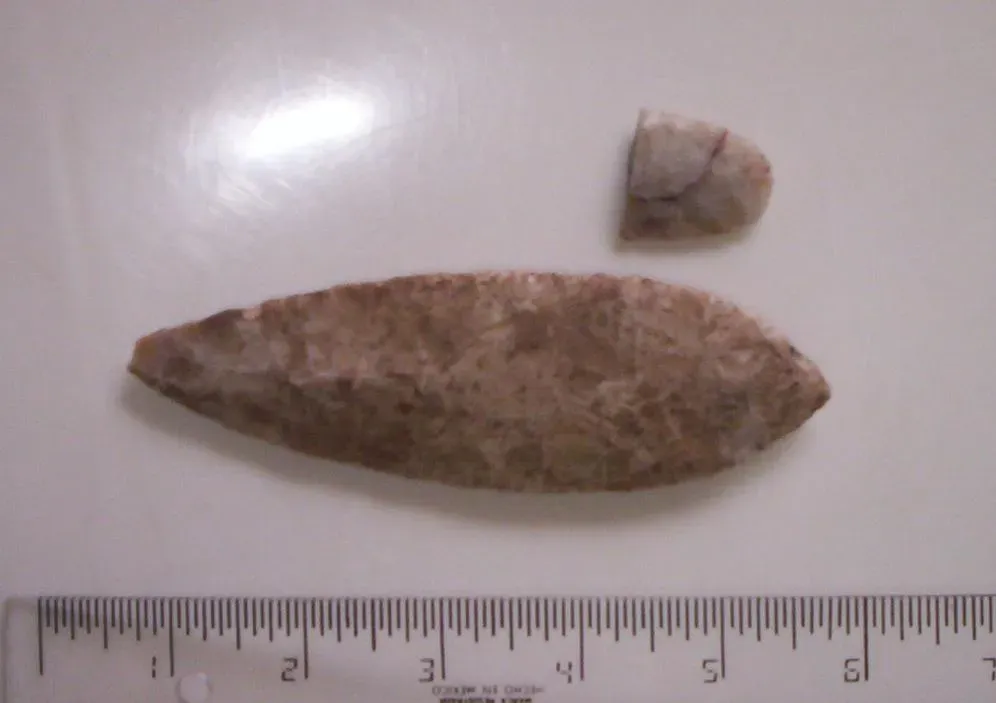
When most people picture Ice Age hunters in North America, they imagine massive mammoths being brought down by brave warriors armed with spears. It’s a thrilling image. It’s also, it turns out, largely a myth. The Clovis culture is not exclusively associated with large animals, with several sites showing the exploitation of small game like tortoises, with jackrabbits being found at around roughly one in three of all sites. It is generally agreed that the people who produced the Clovis culture were reliant on big game for a significant portion of their diet, while also consuming smaller animals and plants, though some authors have argued for a generalist hunter-gatherer lifestyle.
Meanwhile, the evidence from Paisley Caves in Oregon tells an even more varied food story. Fossilized human feces preserved in the arid environment of Paisley Caves in Oregon provide direct evidence for the oldest known human presence in North America. The coprolites, dating to around 14,000 years ago, give insight into the diet of pre-Clovis people. They ate large megafauna such as mammoths, in common with other Ice Age populations, but the Paisley Caves evidence also reveals diets rich in seeds, rodents, and insects, suggesting a more varied menu than had been previously supposed. Coprolites were not the only pre-Clovis artifacts found at Paisley Caves: a small section of bulrush fiber was also uncovered, which researchers think may have been part of floor matting or a basket. These weren’t just nomadic hunters. They were resourceful, adaptable people making the most of everything around them.
Ancient Genome of a Clovis Child Confirmed the Link to Modern Native Americans
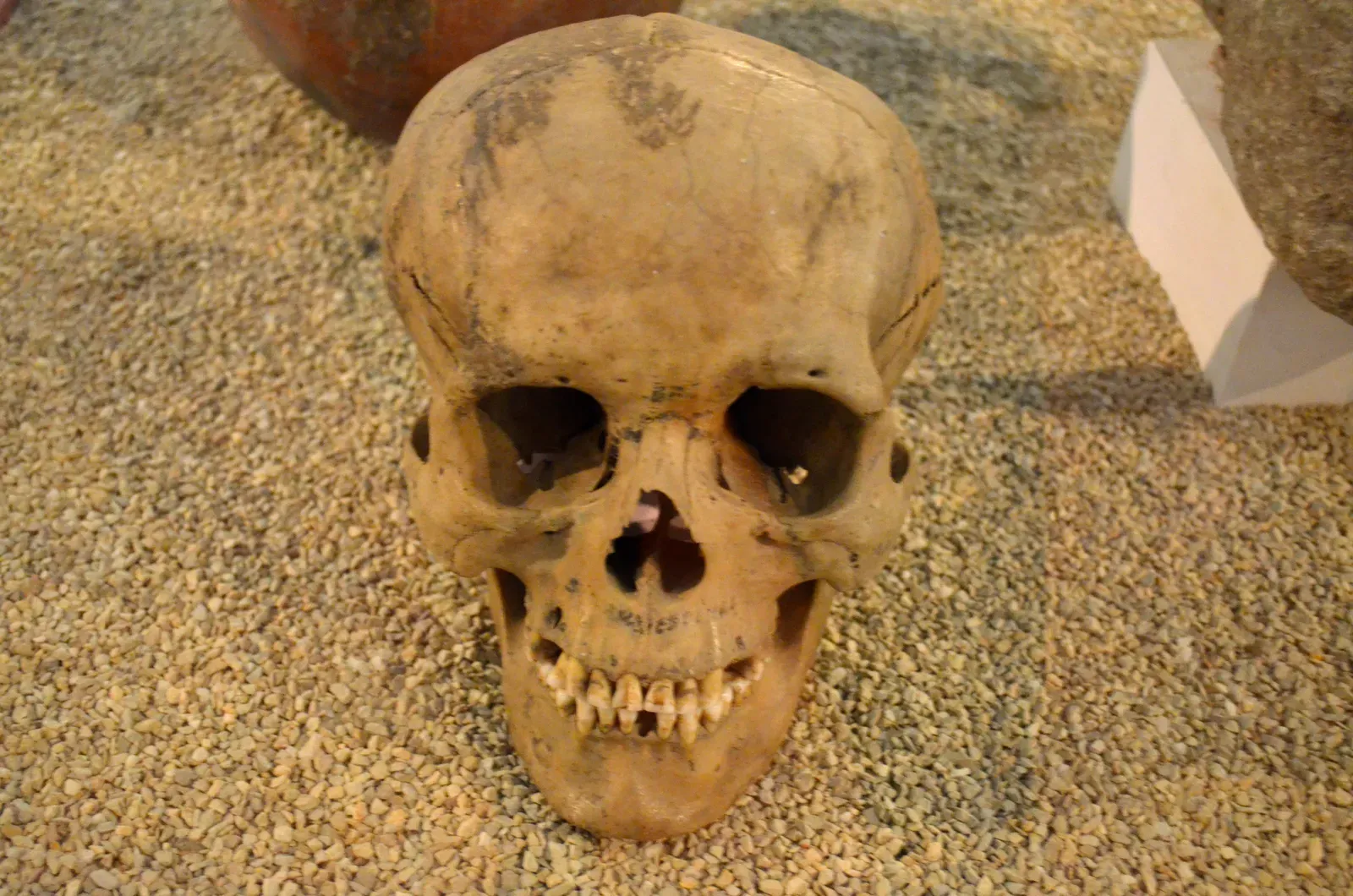
Perhaps one of the most emotionally striking discoveries in all of this research involves a very small set of remains: those of an infant child found in Montana. Only one human burial has been directly associated with tools from the Clovis culture. It was a young boy found buried in Montana, who has a close genetic relation to some modern Amerindian populations, primarily in Central and South America. He has also been shown to share DNA with the 24,000-year-old Mal’ta boy from central Siberia. That single child connects threads that stretch from ancient Siberia all the way to living communities across the Americas today.
The genetic picture that emerged from this child’s remains quietly upended some long-standing alternative theories. Comparisons indicate strong affinities with DNA from Siberian sites, and virtually rule out close affinity with European sources. The DNA shows strong affinities with all existing Native American populations, which indicated that each of them derives from an ancient population that lived in or near Siberia. The DNA evidence makes clear that the people who used Clovis tools lived on, even though they left their old technology behind. The culture changed. The people never disappeared.
Conclusion
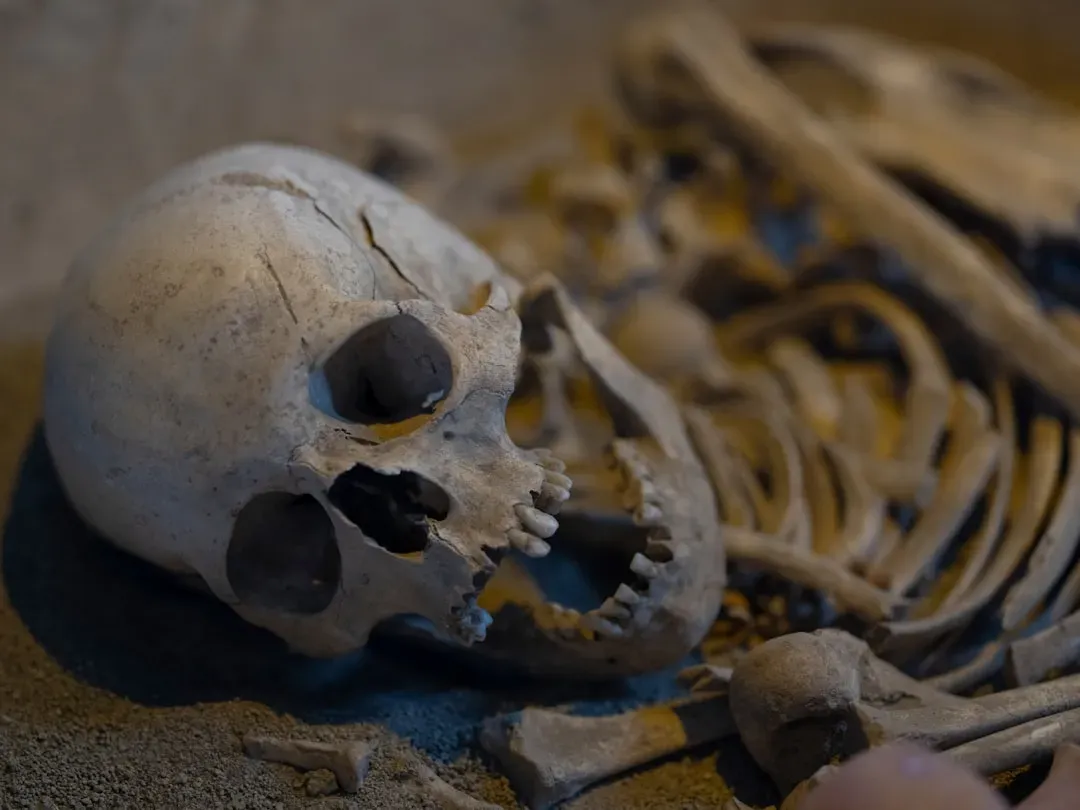
What all of these discoveries share is something genuinely humbling: the story of is vastly more ancient, more complex, and more human than textbooks have traditionally suggested. You’re not looking at a single group of people marching in a straight line from Asia to New Mexico. You’re looking at waves of migrants, bold coastal sailors, resourceful foragers, grieving parents burying children, and communities returning to the same sheltered rock for generation after generation spanning thousands of years.
Every new footprint found, every genome sequenced, every fossilized campfire uncovered adds another sentence to a story that is still very much being written. The science is clear on one thing: we’ve only scratched the surface. There are undoubtedly more discoveries buried beneath deserts, frozen beneath glaciers, and submerged beneath rising seas, each one waiting to rewrite the chapter you thought you already understood.
What surprises you most about how much the story of North America’s first people has changed? Tell us in the comments.