
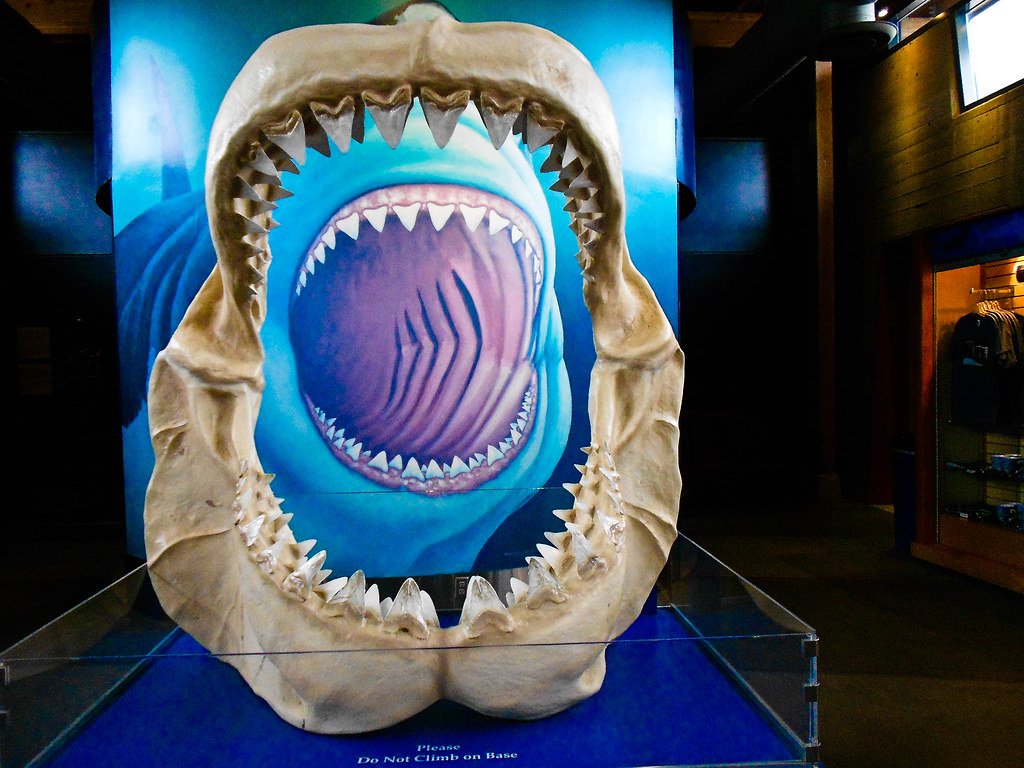
Some prehistoric animals are hard to believe even when you are staring at a museum reconstruction. Fossilized bones and tooth impressions reveal mouths so bizarre that if you saw them in a sci‑fi movie, you might roll your eyes and call them unrealistic. Yet these creatures actually swam, crawled, and stalked across ancient seas and landscapes long before humans ever existed. Their strange jaws were not just weird for the sake of it; they were precise tools shaped by millions of years of evolution.
What makes these animals so fascinating is how familiar and alien they feel at the same time. You recognize teeth, jaws, and skulls, but arranged in ways that completely break the rules we are used to from modern mammals and reptiles. Some looked like living vacuum cleaners, others like walking hedge-trimmers or serrated can openers. Let’s dive into seven of the strangest prehistoric mouths ever discovered, and see how nature kept reinventing the idea of what a mouth could be.
Dunkleosteus: The Armored Fish With Blade-Like Jaw Plates
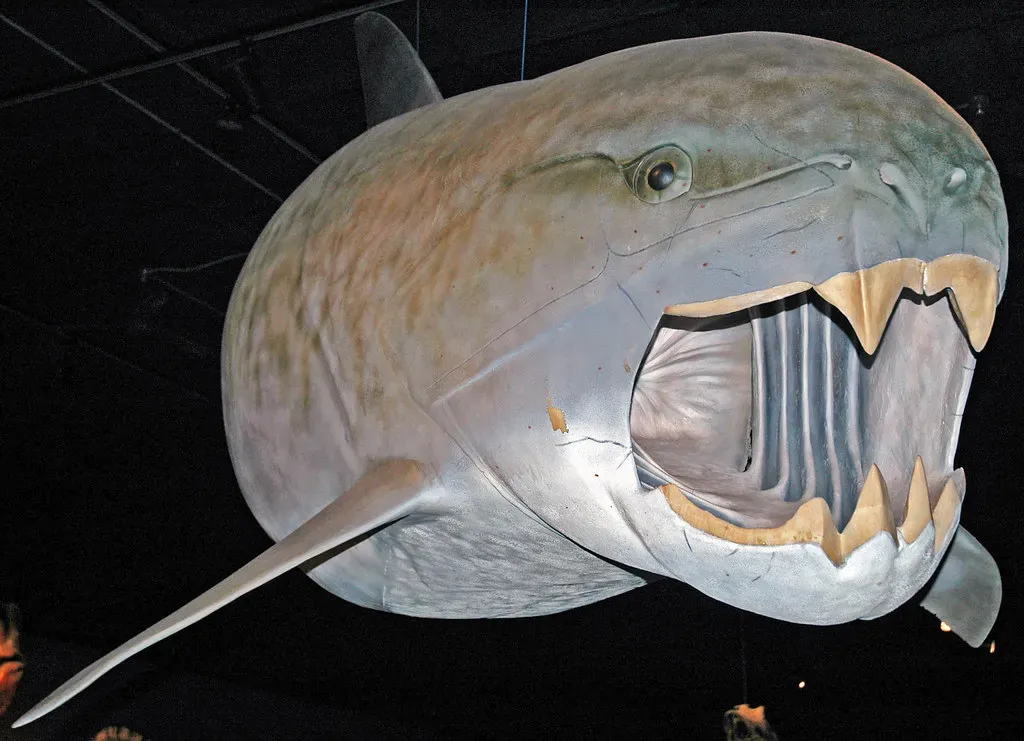
Imagine a fish the size of a small car, wrapped in armor plates and armed not with teeth, but with sharpened bony blades at the front of its skull. That is Dunkleosteus, a giant predator from the Devonian seas, roughly hundreds of millions of years ago. Instead of individual teeth, it had two pairs of massive jaw plates that met like a pair of self-sharpening scissors, forming terrifying cutting edges capable of slicing through bone and armor.
What makes its mouth so unreal is not just the hardware but the power behind it. Studies of its skull mechanics suggest a bite force comparable to some of the strongest modern predators, with jaws that snapped shut in a fraction of a second. Picture a steel trap that also hones its own blades every time it bites down. If you saw a Dunkleosteus head in a museum without knowing it was real, you might assume it was concept art for a video game boss rather than a serious reconstruction of an actual animal.
Helicoprion: The Shark With a Buzz-Saw Spiral of Teeth
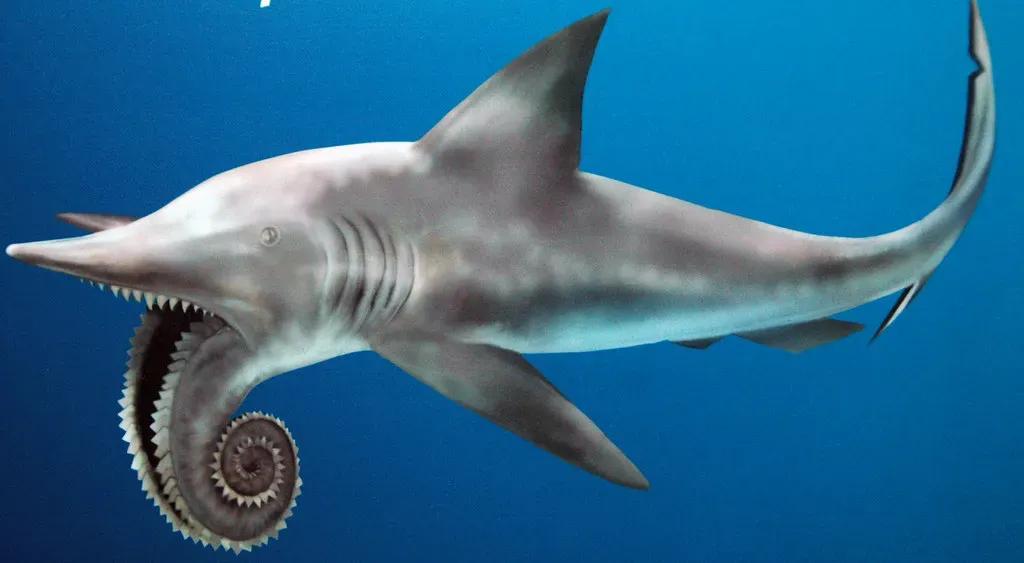
Helicoprion is one of those fossils that looks like a joke until you realize it is deadly serious. Paleontologists first found what appeared to be a spiral of teeth, like someone had rolled a saw blade into a coil. After decades of debate, the consensus now is that this spiral, called a tooth whorl, sat inside the lower jaw, unfurling forward like a built-in conveyor belt of teeth. As new teeth grew in, older ones were pushed into the spiral rather than falling out.
The result was a mouth that barely resembles any living shark. Instead of rows of teeth arranged along the jawline, Helicoprion had an inward-curving saw that probably helped slice soft prey like squid. When it bit down, the lower jaw could have pulled prey deeper into the mouth along the spiral, a bit like a manual meat slicer. It is one of those cases where reality overshoots imagination; if an artist had invented a shark with a circular saw in its jaw, people would have called it over the top.
Anomalocaris: The Cambrian Predator With a Circular Tooth Ring
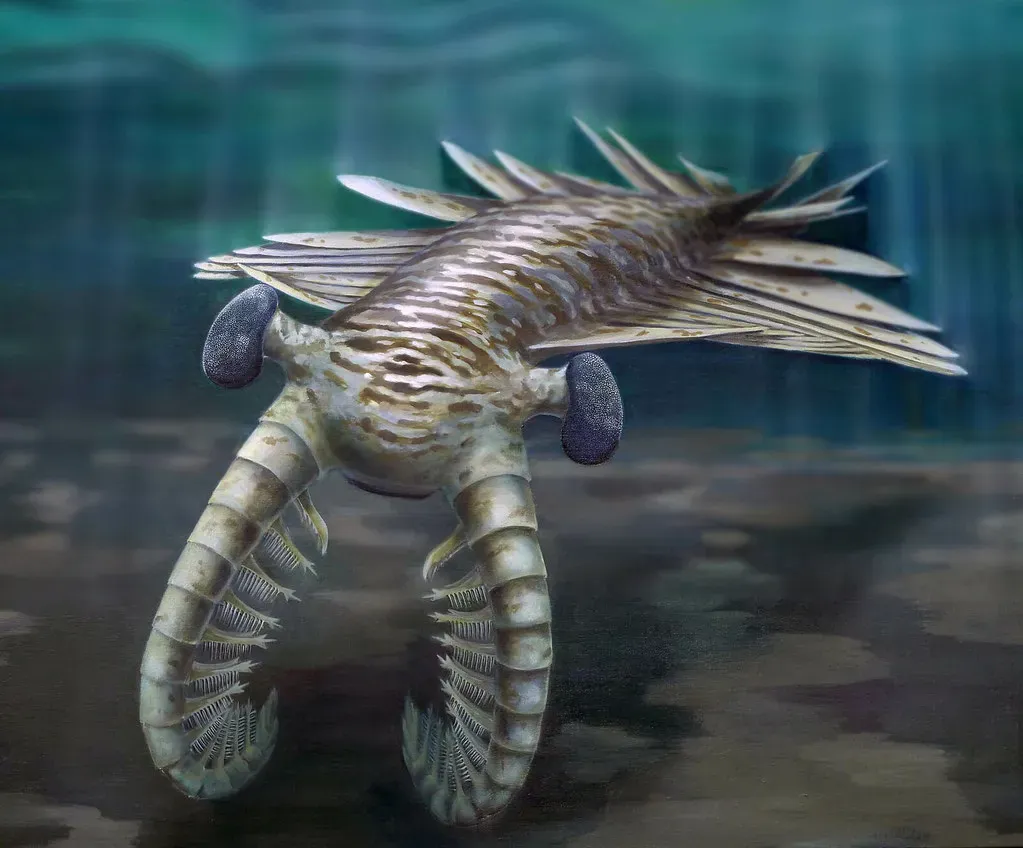
Long before dinosaurs and sharks, the oceans were ruled by strange arthropod-like creatures such as Anomalocaris. Its mouth was a circular structure made from overlapping plates that formed a ring of teeth, almost like a camera shutter lined with hard serrations. When it fed, the plates closed inward, gripping and crushing prey in a way that feels more like alien machinery than animal anatomy.
Paired with that wild mouth were two large, spiny frontal appendages used to grab and funnel prey straight into the circular jaw. Try to picture a shrimp crossed with a drone and a garbage disposal, and you are not far off. For years, parts of Anomalocaris were misidentified as different animals because the pieces are so unlike anything alive today. Its bizarre circular mouth is a reminder that early animal evolution experimented fearlessly with new designs, many of which never appeared again.
Edestus: The “Scissor-Toothed” Shark That Never Stopped Adding Blades
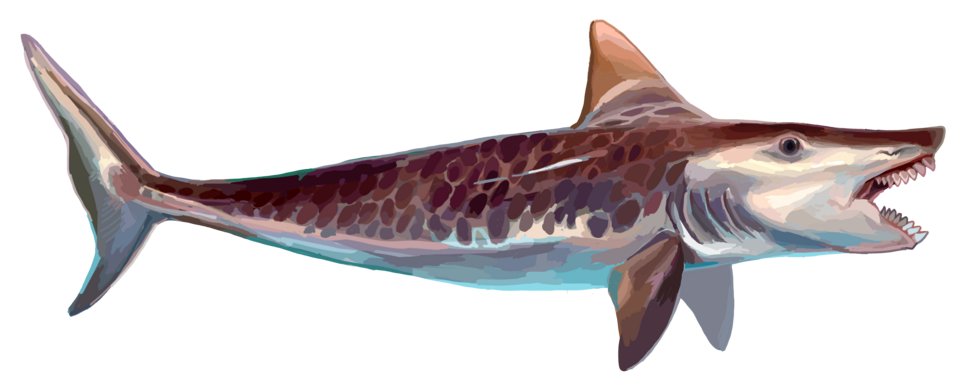
Edestus, a relative of Helicoprion, took the idea of odd dental arrangements in a different, equally unsettling direction. Instead of a spiral, it had long, curved jaws with teeth arranged in a single row that grew forward over time. New teeth formed at the back, pushing the older ones ahead, so the tooth row kept migrating outward like a conveyor belt that never looped back. The result looked like a pair of shears or pruning clippers stuck onto the face of a shark.
Because the old teeth were not shed in the usual way, the jaws of Edestus ended in dramatic, protruding arcs of tooth-bearing bone. When it closed its mouth, the upper and lower tooth rows likely sliced past each other like blades, giving rise to the nickname scissor-toothed shark. It is the kind of weaponized mouth that feels overdesigned until you remember it existed long before modern fish lineups, in oceans where weirdness was often an advantage.
Odontogriphus: The Soft-Bodied Grazer With a Belt of Teeth
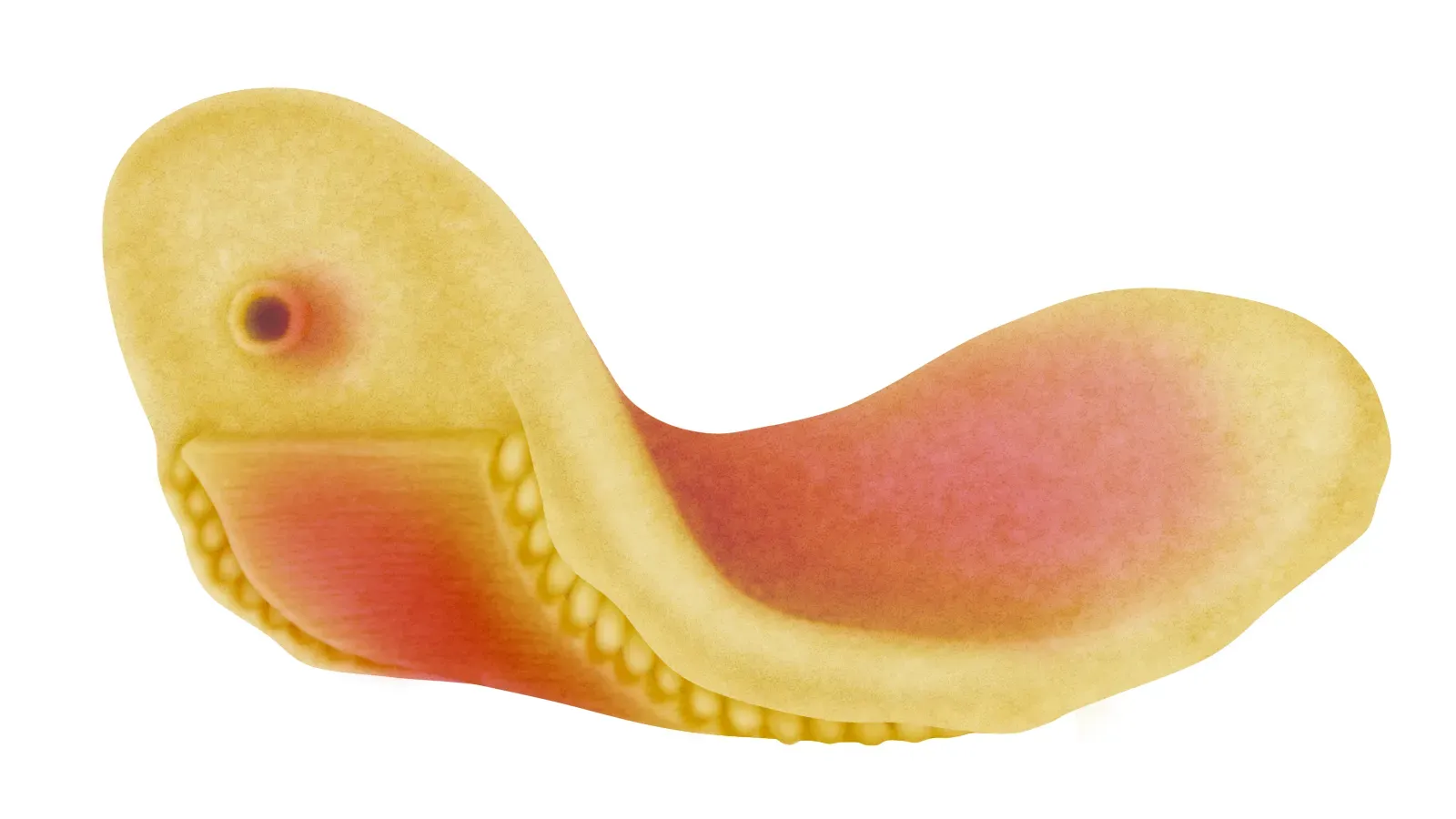
Odontogriphus is not as flashy as a giant armored fish or a saw-jawed shark, but its mouth is quietly one of the strangest. This soft-bodied animal from the Cambrian period had a flexible, ribbon-like structure lined with rows of tiny teeth, something like a conveyor belt studded with spikes. It used this toothy belt to scrape food off surfaces, probably feeding on microbial mats or soft organic films on the seafloor.
What makes it so fascinating is how different it is from the familiar idea of a jaw with upper and lower halves. Instead, the mouth was more like a moving loop of teeth, constantly cycling new tooth surfaces into position. In a way, it is reminiscent of the rasping tongue in modern snails, but pushed to a more extreme and ancient form. Looking at its fossils, you can see early experiments in how to build a mouth that could process food without anything we would recognize as a typical jaw.
Placoderms With Toothless Bites: Bony Beaks Before Birds
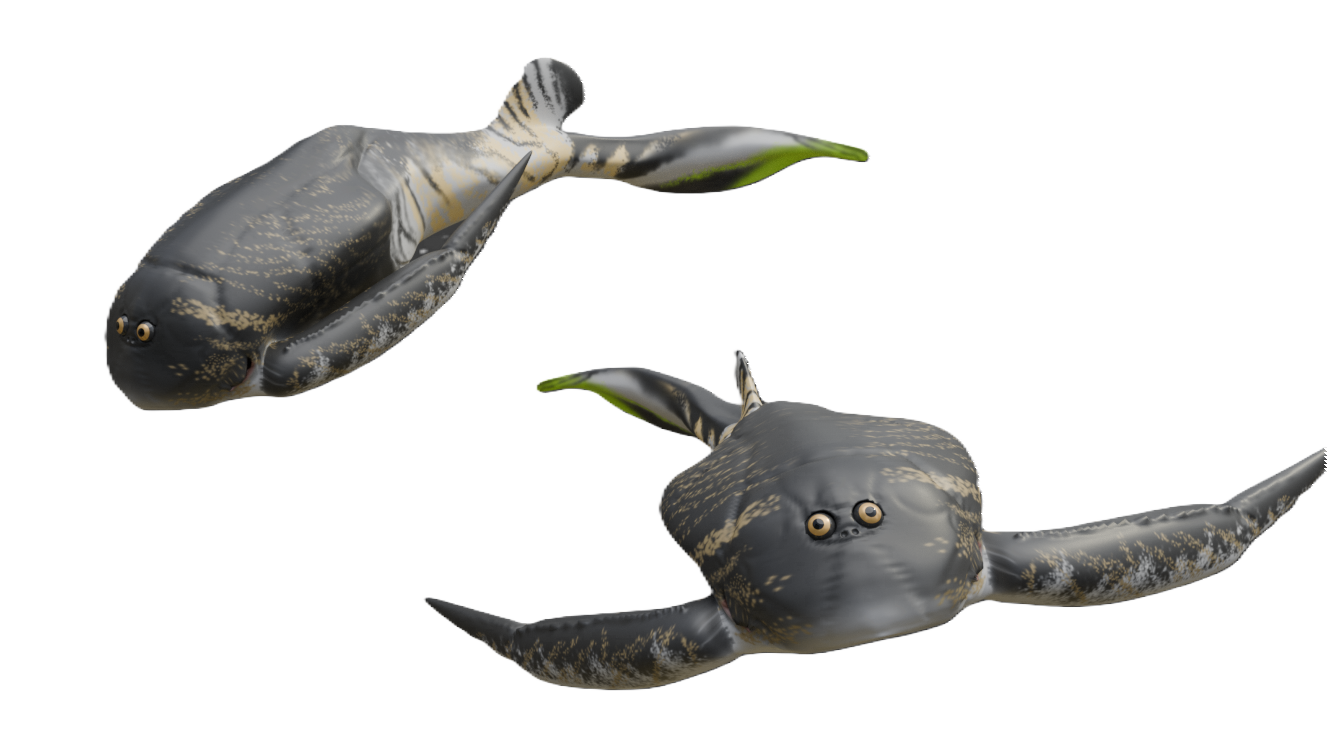
Dunkleosteus was the most famous placoderm, but many of its armored fish relatives shared a similar bizarre approach to feeding. Instead of separate teeth, they relied on sharpened bone plates growing from their jawbones, which effectively acted like beaks embedded in the skull. These plates sometimes developed cutting edges and ridges that functioned like crude scissors, nutcrackers, or bolt cutters. It is a radically different solution to the problem of biting that still got the job done.
In a world before modern-style fish jaws took over, this bony beak strategy seems to have worked incredibly well. Some species specialized in crushing hard shells, while others sliced softer prey, all without ever evolving individual, replaceable teeth. To modern eyes, a toothless fish that bites through armor feels almost like design by committee, as if evolution could not decide between a bird’s beak and a reptile’s jaws and ended up with both at once. It is a good reminder that teeth are just one of many ways to build a dangerous mouth.
Therizinosaurus and Its Weird Combination of Leaf-Shaped Teeth and Giant Claws
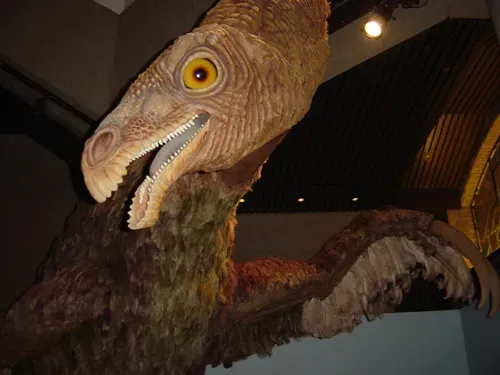
Therizinosaurus is best known for its absurdly long, curved claws, but its mouth is just as strange when you put it in context. This towering dinosaur had a relatively small head for its body size, with a beak at the front and rows of leaf-shaped teeth behind it. Those teeth were better suited for shredding plants than tearing flesh, which is surprising because its huge claws look like weapons from a horror movie. The contrast between gentle herbivore teeth and brutal talons makes the overall animal feel visually contradictory.
Its mouth barely looks real when you remember it belongs to a theropod, the same broader group that includes iconic carnivores like Tyrannosaurus. Instead of steak-knife teeth, Therizinosaurus had something closer to garden shears for leaves, combined with a cropping beak that likely helped strip vegetation. If you saw just the skull, you might think it belonged to some oversized bird-like plant-eater; only when you add the rest of the skeleton does the full weirdness sink in. It is a perfect example of how evolution can twist expectations, even within a famous dinosaur family.
Conclusion: Evolution Never Signed a Design Rulebook
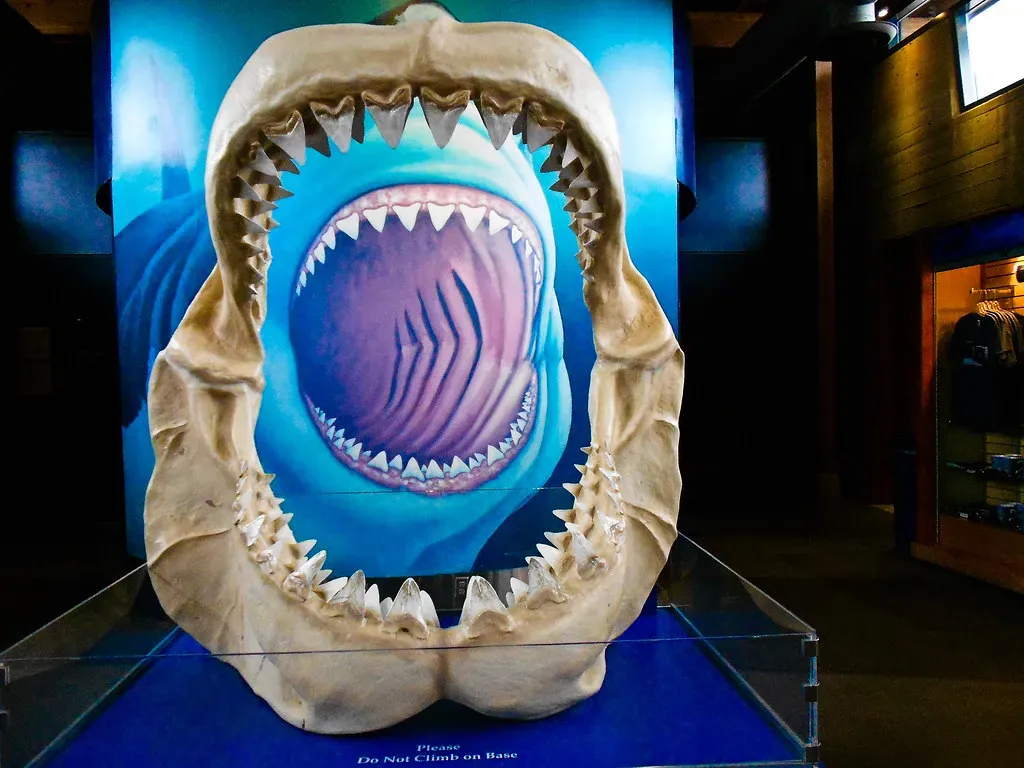
Looking at these seven prehistoric mouths side by side, it is hard not to feel that evolution is far bolder than any special effects team. We have circular tooth rings, self-sharpening jaw plates, spirals of endless teeth, and rasping belts that act like living sandpaper. None of these designs would pass a realism check if they appeared out of nowhere in a movie, yet they ruled real ecosystems for millions of years. The line between believable and unbelievable turns out to be much thinner once you dig into the fossil record.
Personally, I find that comforting and a little humbling. The world has already hosted creatures stranger than most of the monsters we make up, which means nature will probably keep surprising us as new fossils come to light. When the next odd jawbone or tooth cluster emerges from a rock face, I hope scientists feel free to consider the wild possibilities instead of assuming it must fit a familiar pattern. After all this, do you still feel sure that our idea of a “normal” mouth is anything more than a tiny slice of what evolution can do?