Imagine looking up and seeing a shadow with a twenty-foot wingspan silently gliding above you, hook-tipped beak ready to rip into carcasses, talons big enough to crush bone. For millions of years, parts of what’s now the United States were ruled by aerial predators so large and so specialized that modern hawks and eagles look almost modest beside them. These were not movie monsters but real animals, shaped by hunger, competition, and a changing planet into some of the most formidable sky hunters Earth has ever produced.
What makes these ancient “raptors” so captivating is how alien and yet familiar they feel. They nested, soared, scavenged, and hunted over landscapes that would later hold highways and cities. Some were giant vultures that could smell death from far away; others were near-eagle analogues armed with stabbing beaks and crushing talons. As I’ve dug into their stories over the years, I’ve come to think of the prehistoric American sky not as a quiet backdrop, but as a dangerous second world layered above the ground, with its own cast of killers and survivors.
1. Argentavis magnificens – The Giant That Owned the Thermals
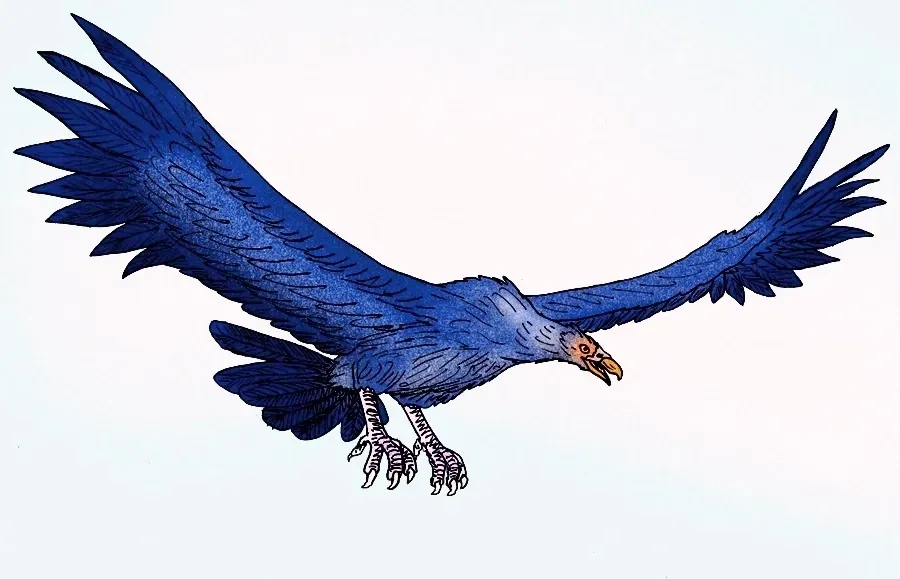
Argentavis magnificens is often introduced as one of the largest flying birds in Earth’s history, and even though its best fossils come from Argentina, evidence suggests its close relatives likely pushed into North America during the late Miocene. Picture a bird with a wingspan roughly the length of a small car and a body mass comparable to a good-sized person, effortlessly surfing warm air currents. It probably spent most of its time riding thermals, barely flapping, scanning vast plains for anything dead or dying.
What makes Argentavis feel especially deadly to me is not just its size, but the ecological leverage that size gave it. A bird that big could bully smaller scavengers away from carcasses, dominate feeding sites, and possibly deliver bone-cracking blows with its heavy beak. It almost certainly was not chasing nimble prey through forests; instead, it played the long, patient game, like a floating landlord of the sky, waiting for opportunity and then cashing in. If you were a Miocene mammal bleeding out on an open plain, this was the shadow you really did not want to see circling lower and lower.
2. Teratornis merriami – The Vulture-Terror of Ice Age America
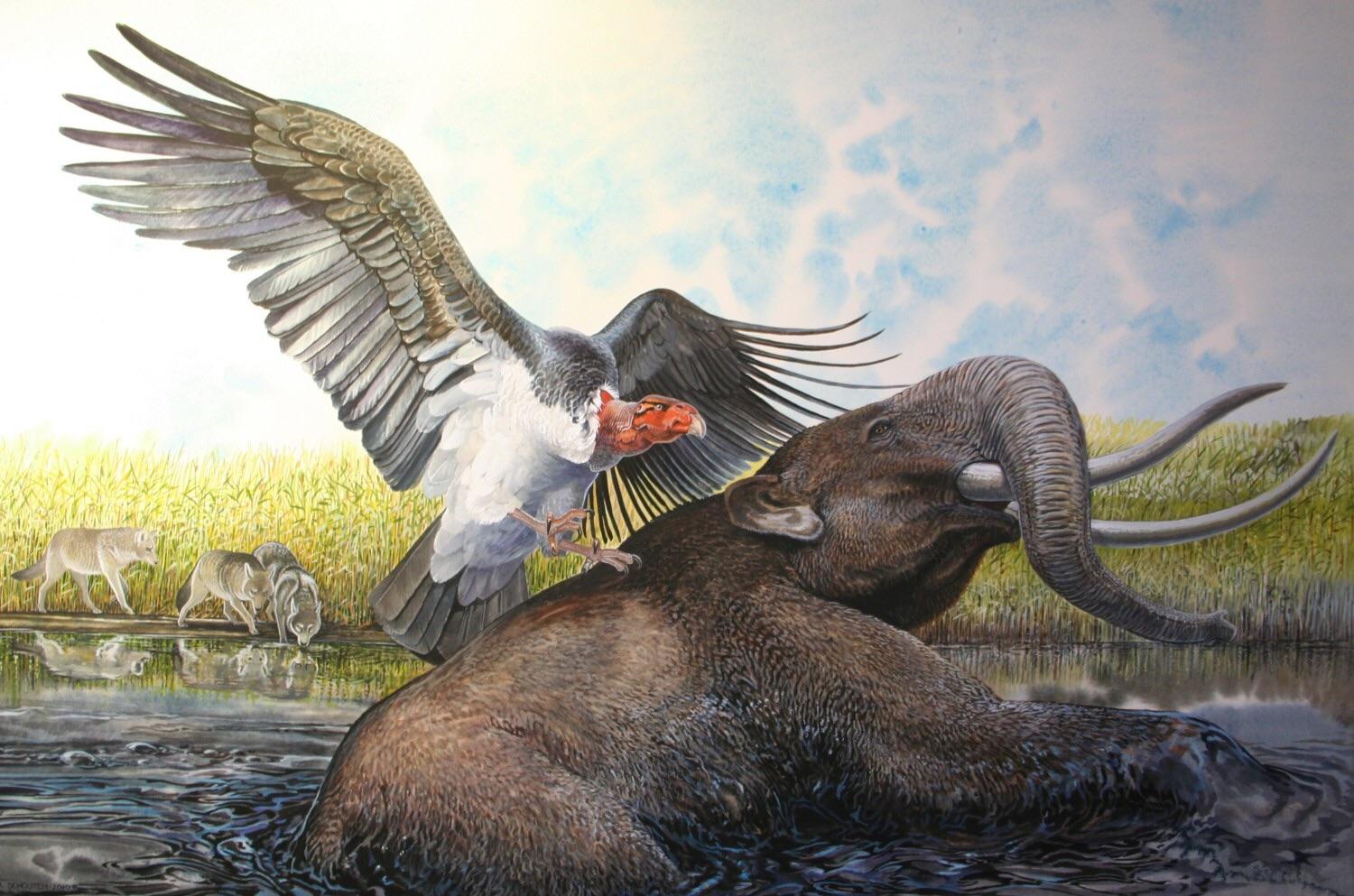
Fast forward to the late Pleistocene of North America, and the skies above mammoths and giant ground sloths were patrolled by Teratornis merriami. This enormous bird had a wingspan rivaling or exceeding most modern condors, but with proportionally stronger legs and a more predatory-looking beak. It lived across western North America, including what is now California, at a time when carcasses from megafauna were a dependable and high-calorie resource.
There’s an ongoing debate over whether Teratornis was mainly a scavenger or something closer to an active predator, and that uncertainty is part of what makes it fascinating. Its beak and talons suggest it could have done more than simply pick at already-open carcasses, and its legs may have allowed it to grab or pin smaller animals. Personally, I think it was an opportunist in the most ruthless sense: if something was weak, grounded, or already dying, Teratornis turned the situation into meat. In Ice Age America, having wings did not guarantee safety; it just meant you could arrive at the buffet faster than everyone else.
3. Aiolornis incredibilis – The “Incredible” Giant of the Late Pleistocene
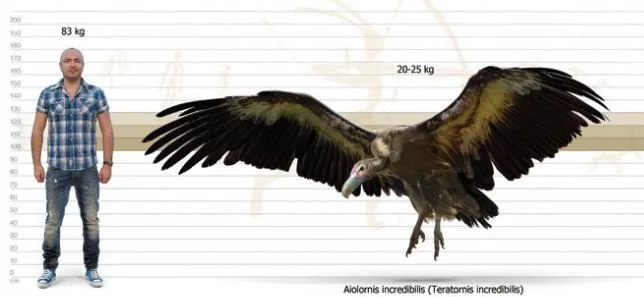
Even among giant birds, Aiolornis incredibilis stands out, and the name says as much. Known from North America and often considered a close relative of Teratornis, it appears to have been even larger, with a wingspan that may have pushed beyond most living birds today. Imagine a condor, then mentally dial up every dimension until it starts to feel almost unreasonable, yet still within the limits of powered flight and soaring physics.
When I picture Aiolornis in its environment, I see a bird that did not just join the feast, it ended arguments. Smaller vultures and eagles probably had to back off when this giant arrived, much like modern scavengers defer to the largest carnivore at a kill. While it likely leaned heavily on scavenging, a beak that big turning sideways into a carcass could have opened up thick hides or cracked through stubborn tissue, giving it access to parts of the meal others struggled to reach. In a world full of massive predators and prey, Aiolornis carved out a niche at the very top of the airborne scavenger ladder.
4. Titanis walleri – A Flightless Terror with Raptor Attitude
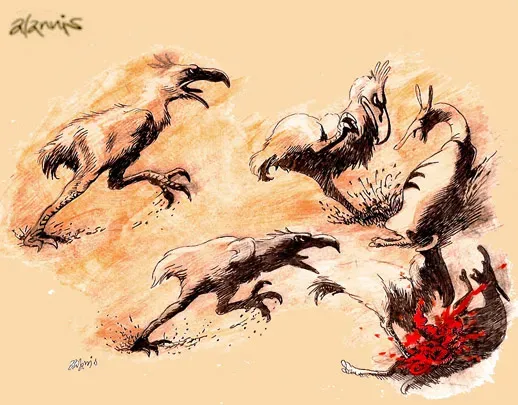
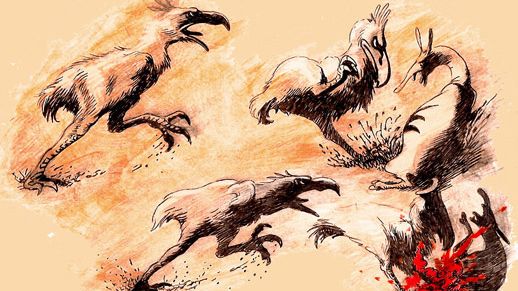
Strictly speaking, Titanis walleri did not rule the skies, because it probably did not fly at all, but leaving it off a list of American “raptors” feels almost dishonest. This giant “terror bird” lived in what is now the southern United States during the Pliocene and early Pleistocene, after migrating north from South America. It stood taller than most people, with a massive, hooked beak and strong legs built for running, not soaring.
Why include Titanis here? Because in terms of predatory dominance, it occupied the ecological role that big eagle-like raptors or even small theropod dinosaurs once held: a fast, ground-based hunter that could slam prey with a powerful beak. Instead of stooping from the sky, Titanis likely chased down and struck its victims at high speed, using its beak like a hatchet. When you spread out the big American predators over time, Titanis looks like the earthbound cousin in a family of killers that mostly took to the air, a reminder that deadly raptor traits do not always require wings to be terrifying.
5. Buteogallus borrasi – The Cuban Giant Hawk with Mainland Roots
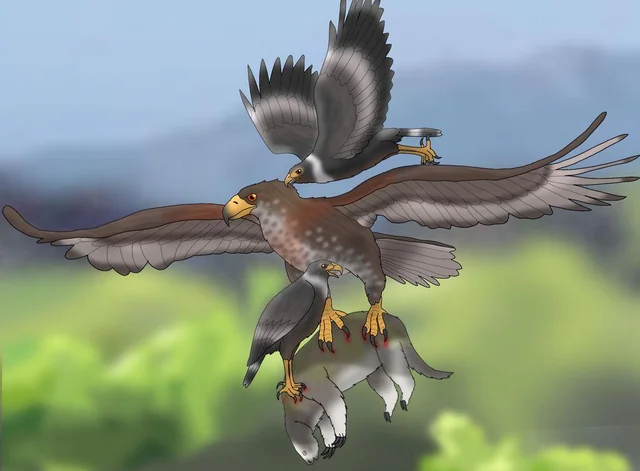
Buteogallus borrasi is often associated with Cuba, but its evolutionary story is tangled up with mainland American hawks, and it gives a glimpse of how raptorial lineages could scale up in size. This extinct bird was essentially a supersized relative of modern buteos, the group that includes familiar roadside hawks across the Americas. It had long legs, robust talons, and a strong beak that together scream “top predator” in insular environments where big mammalian carnivores were limited.
From a North American perspective, Buteogallus borrasi shows how hawks from the mainland stock could become dominant predators once they reached new territories and found open niches. Even though most of the fossils come from the Caribbean, its closest relatives soared over what is now the United States, hunting small mammals, reptiles, and birds. I like to think of it as an evolutionary experiment: take the basic hawk blueprint that evolved on the continent, give it more size and fewer competitors, and you get an island raptor that blurs the line between “large hawk” and “feathered small cat.”
6. Haliaeetus–Like Sea Eagles of the Pleistocene Coasts
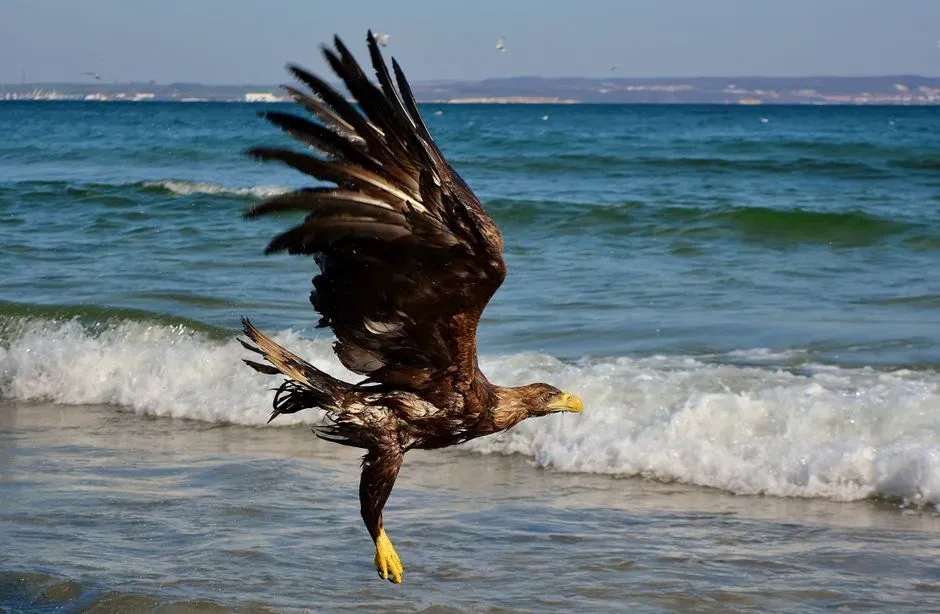
Along ancient North American shorelines, large sea eagles related to the modern bald and white-tailed eagles patrolled coastlines and river mouths. While many of the specific fossil species are known from fragmentary remains, the broader picture is clear: big fish-eating raptors with heavy beaks, powerful talons, and a talent for both hunting and scavenging were common features of Pleistocene coastal ecosystems. They were not gentle fishers; they were armed opportunists thriving where water met land.
These eagles likely brought the same ruthless playbook we see today in their living relatives: snatching fish right from the surface, harassing other birds to steal their catches, and dropping down on weakened or stranded animals when the chance arose. In that sense, they were aerial pirates, exploiting anything edible that drifted into their domain. When I walk modern American shorelines and see a bald eagle sitting in a dead tree, it feels like a living echo of those earlier coastal tyrants, a reminder that some predatory strategies are so effective they barely need tweaking over hundreds of thousands of years.
7. Buteo and Accipiter Ancestors – The Blueprint for Deadly Sky Hunters
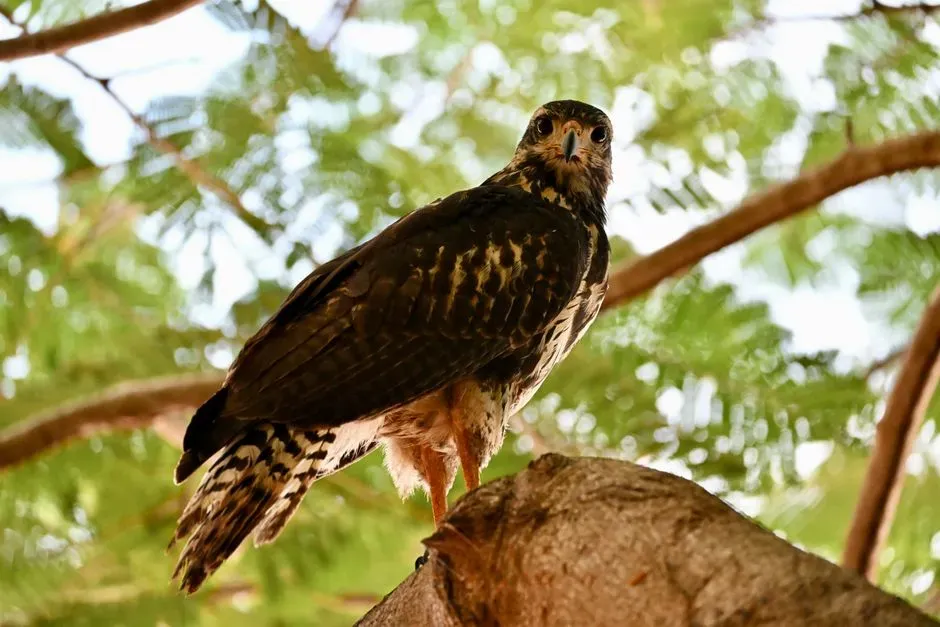
Not every deadly raptor has an outsized wingspan or a terrifying name. The ancestors of modern Buteo hawks and Accipiter goshawks that lived across prehistoric North America were smaller than teratorns and giant eagles, but just as lethal on a pound-for-pound basis. These birds specialized in ambush, speed, and precision, darting through forests or soaring over grasslands to strike unsuspecting prey. Their fossils might not grab headlines, yet their legacy is written in every red-tailed hawk or Cooper’s hawk you see today.
What makes their story compelling is how they represent the long, gradual refinement of the raptor toolkit: curved talons, keen vision, agile wings, and sharp beaks fine-tuned to specific habitats. Over time, some lineages became forest missiles, others open-country soarers, but they all operated on the same brutal rule set: see first, strike fast, waste nothing. In a way, these ancestral hawks and goshawks were the “everyday assassins” of prehistoric America, less dramatic than the giants but far more common, silently making sure no rodent, songbird, or rabbit ever felt entirely safe.
8. New World Vultures – Ancient Scavengers with a Killer Edge
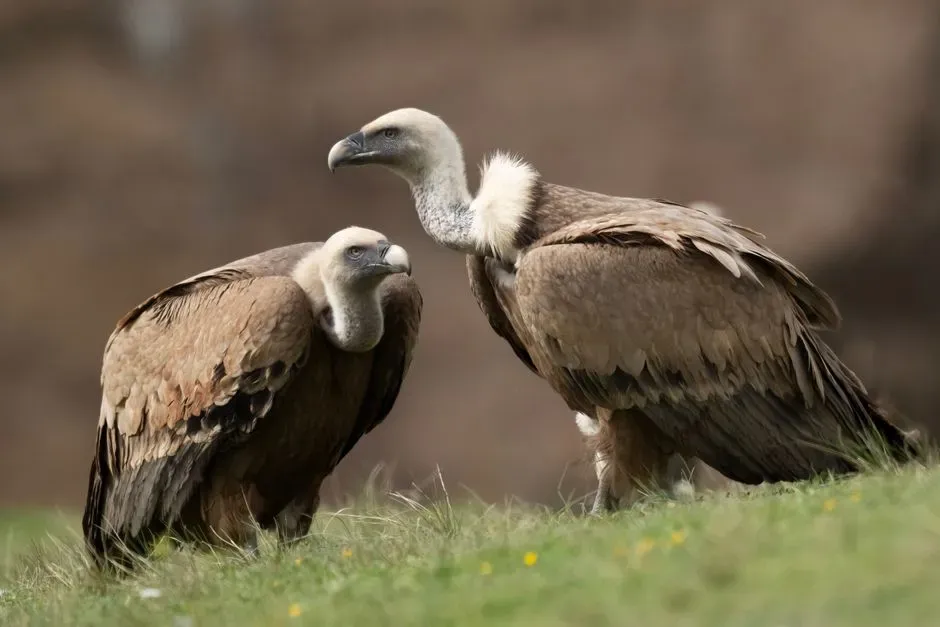
It might feel odd to call vultures “deadly,” but prehistoric New World vultures in North America were part of some of the most efficient killing systems nature has ever designed. They did not usually kill directly; instead, they turned death itself into a resource stream they were exquisitely built to exploit. Some prehistoric species were noticeably larger and more robust than their modern descendants, gliding for hours on thermals, using keen eyesight and an exceptional sense of smell to locate carcasses long before other animals could.
Once they arrived, those vultures could strip a body down to bone with astonishing speed, and their presence reshaped the behavior of predators and scavengers alike. Apex carnivores had to eat quickly or risk losing their hard-won prizes; smaller scavengers lurked at the edges, waiting for scraps. In my opinion, calling them passive is a huge mistake. They were cleanup crews, disease limiters, and nutrient recyclers, but they were also part of the fear ecosystem: every injured animal was racing not only against its wounds, but against the circling silhouettes that signaled the clock was running out.
Conclusion: The Sky Has Always Been a Dangerous Place
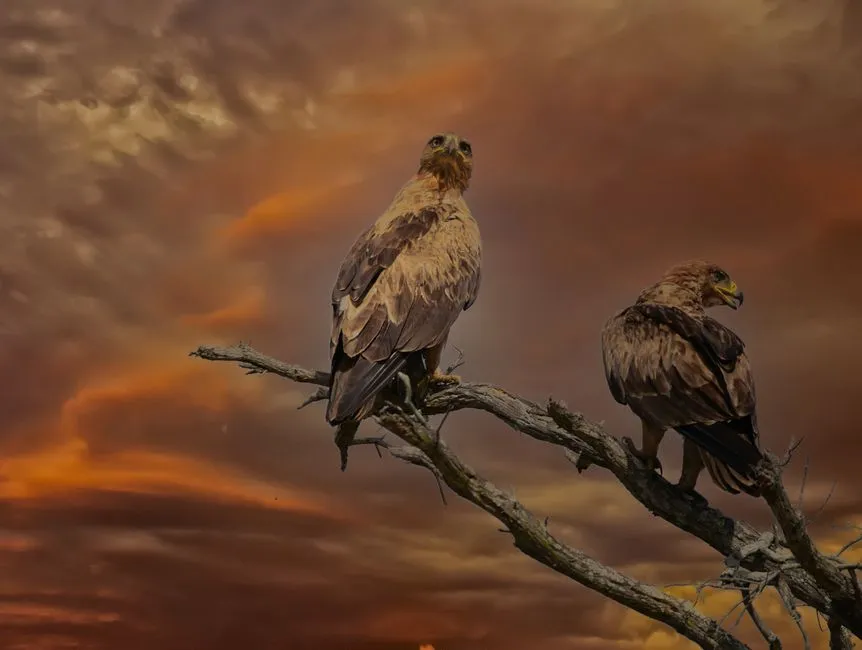
When you line up Argentavis, Teratornis, Aiolornis, Titanis, giant hawks, sea eagles, ancestral buteos, and ancient vultures, a pattern emerges: the American sky has never been gentle. For tens of millions of years, it was patrolled by specialists in hunger, each shaped by its own era’s climate and prey, yet all working variations on the same theme of sharp beaks, strong talons, and relentless efficiency. Even the scavengers were part of a deadly network, turning every injury and every death into fuel for the next life.
Personally, I think we tend to romanticize flight as freedom and serenity, but the fossil record tells a sharper story. Above the heads of prehistoric mammals, there was always a second world of risk, ruled by predators that did not need claws on the ground to influence everything that lived below. Next time you see a hawk circling over a highway or a vulture tracing lazy loops in the heat, it is worth remembering they are just the latest cast in a very old play. The question is not whether the sky used to be dangerous; it is whether we are finally paying attention to how wild it still is.