When you think of prehistoric life, your mind probably goes straight to T. rex, Triceratops, maybe a Brachiosaurus stretching its neck over a canopy of ferns. Dinosaurs have had the best publicist in history – Hollywood. Yet honestly, they barely scratch the surface of the sheer, jaw-dropping weirdness that evolution has produced over billions of years.
The truth is, Earth’s timeline is packed with creatures so strange, so monstrous, and so completely unexpected that dinosaurs almost seem ordinary by comparison. Some swam, some crawled on hundreds of legs, some had five eyes. A few of them make the scariest dinosaur look like a golden retriever. Brace yourself – let’s dive in.
Arthropleura: The Eight-Foot Millipede That Haunts Dreams
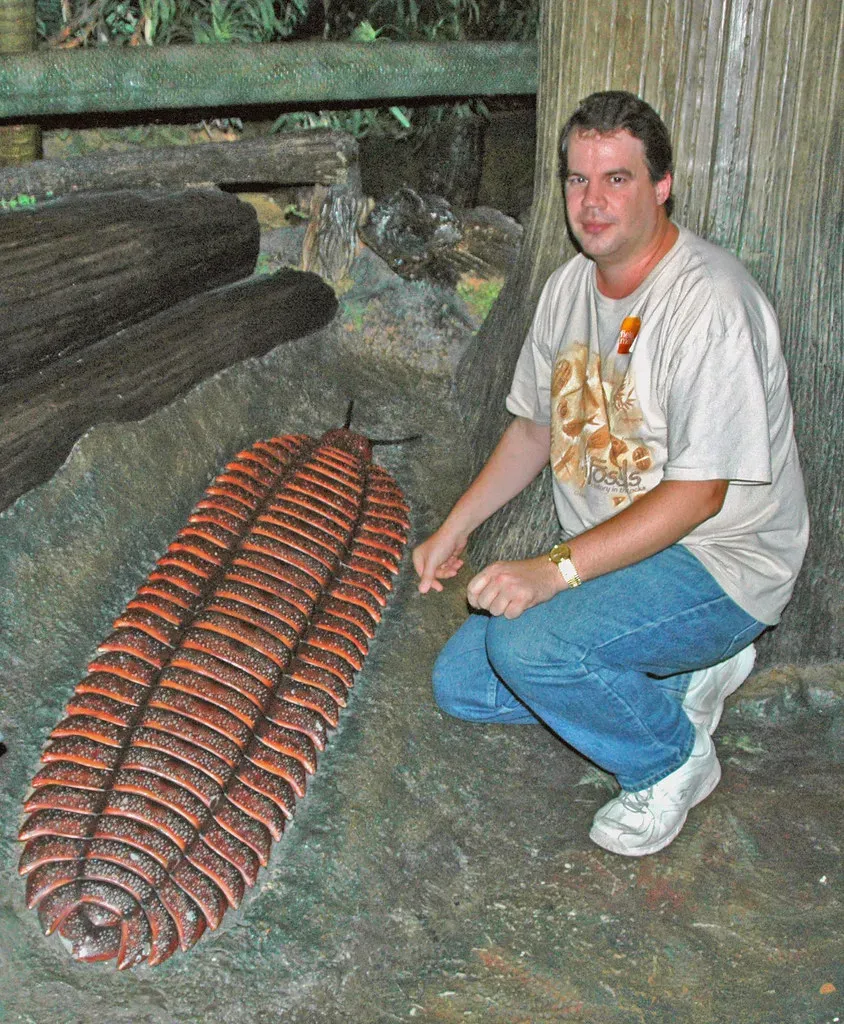
Picture this: you’re walking through a dense Carboniferous forest, and something the size of a small car starts scuttling toward you on dozens of jointed legs. That’s Arthropleura, and it was very, very real. This terrifying creature is the largest land invertebrate ever discovered, capable of growing up to 8 feet long and nearly 2 feet wide, with articulated armored plates covering its entire body. Think of it as a millipede that decided moderation was for lesser animals.
The Arthropleura was a colossal millipede-like creature that roamed the lush coal forests during the Carboniferous period, roughly 340 million years ago. Growing over eight feet long, it holds the title of the largest known land invertebrate. Its extensive, armor-like segments and jointed legs made it a formidable presence in its environment, likely feeding on decomposed plant material. Here’s the twist though – it probably wasn’t trying to eat you. Scientists aren’t sure why, but theorize its size was due to more oxygen in the atmosphere and few predators. So the good news is it was basically a giant forest janitor. The bad news is it could still look you dead in the eye while doing it.
Opabinia: The Five-Eyed Sea Phantom From 505 Million Years Ago
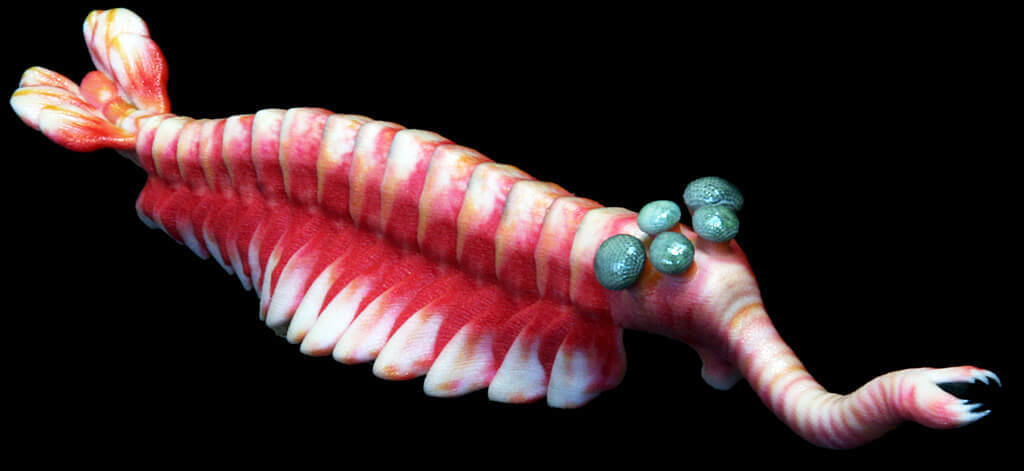
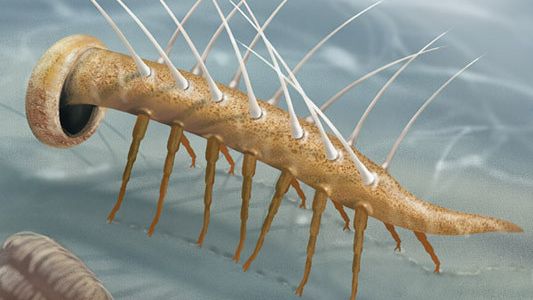
If you’ve ever seen a creature so strange that it stops you in your tracks, Opabinia would have you standing there permanently. The small, soft-bodied Opabinia, measuring about three inches long, inhabited the shallow seas of what is now the Burgess Shale during the Middle Cambrian period, approximately 505 million years ago. Distinctive for its five stalked eyes and a long, flexible proboscis used for catching prey, Opabinia is one of the most bizarre creatures ever discovered.
It had a weird flexible proboscis extending out of its face that it used to grab things and stuff them into its mouth. The tube really needed to be flexible because Opabinia’s mouth was under its head and facing backward. It also had five eyes and no carapace like most other ancient arthropods. Honestly, when you see a reconstruction of this thing, it looks less like an animal and more like a bad dream someone drew after eating too much fermented prehistoric fruit. When scientists first presented the fossil in 1972, the audience reportedly laughed. Then they realized it was real.
Basilosaurus: The Sea Monster That Was Actually a Whale
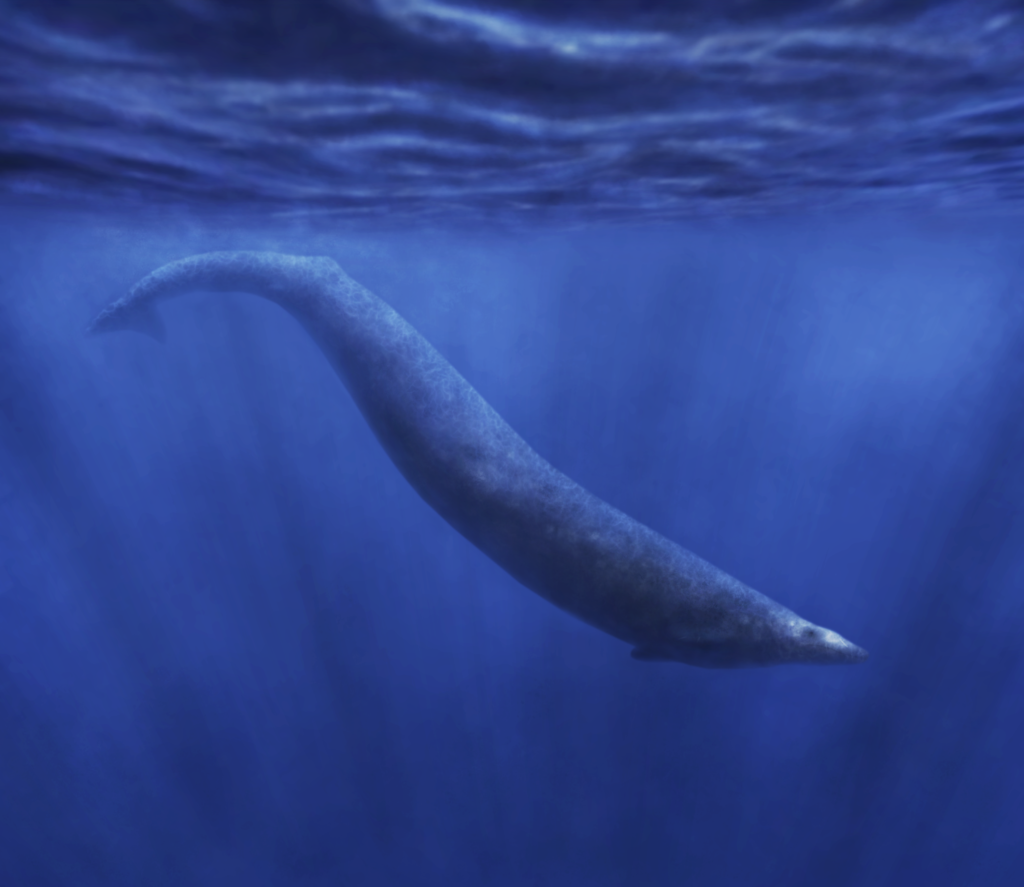
You’d never guess from the name. Basilosaurus literally means “king lizard,” which immediately makes you think of some enormous marine reptile. It means “king lizard,” so you’d expect to find a dinosaur similar to T-rex – but the Basilosaurus was actually a huge predatory whale. A whale. Let that sink in. Basilosaurus was a 66 feet long predatory carnivorous whale that went extinct 40 million years ago.
Recent studies have suggested that this 60-foot leviathan had a bite force to rival that of T. rex, which it put to good use cracking open the skulls of other, smaller whales. I think what makes Basilosaurus so unsettling is the contrast – today’s whales are gentle, almost serene creatures. About 40 million years ago, in the late Eocene era, whale ancestors lived on land. Some genera moved to the oceans, and Basilosaurus became an apex predator that ate fish and sharks. The ocean went from having a shark problem to a whale-that-hunts-sharks problem. Remarkable.
Dunkleosteus: The Armored Fish Whose Bite Could Crush Steel
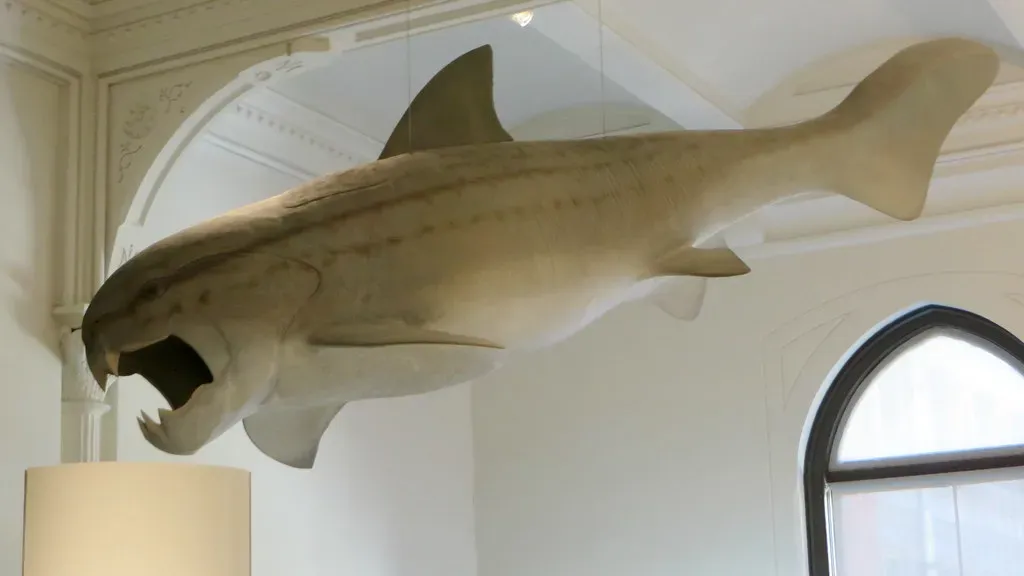
Here’s a creature that makes modern great white sharks look almost charming. Dunkleosteus was a fish – but not like any fish you’ve encountered at an aquarium. This 33-foot-long armored fish from the Devonian era lacked teeth, but its jaw contained razor-sharp protrusions of bone that it could use to pierce and cut through its prey. These bones grew continuously and as they did, the edges rubbed together with those of the opposing jaw, acting like self-sharpening shears. This would ensure the “fangs” were always ready to chomp into armored prey like arthropods, ammonites, and other fish.
The sheer engineering of this animal is staggering. This 4-meter-long armored fish had a bite force that would have rivalled some of the strongest biters today. At the very tip of its bony fangs, it’s estimated that Dunkleosteus may have been able to bite down at a force of 80,000 psi – enough to crush some of the strongest steel. And if that isn’t enough, this four-ton monster fish patrolled inshore waters and could snatch prey up by opening and closing its jaws within 50 to 60 milliseconds. Faster than a blink. You wouldn’t even see it coming.
Titanoboa: The Snake That Rewrote the Rules of Fear
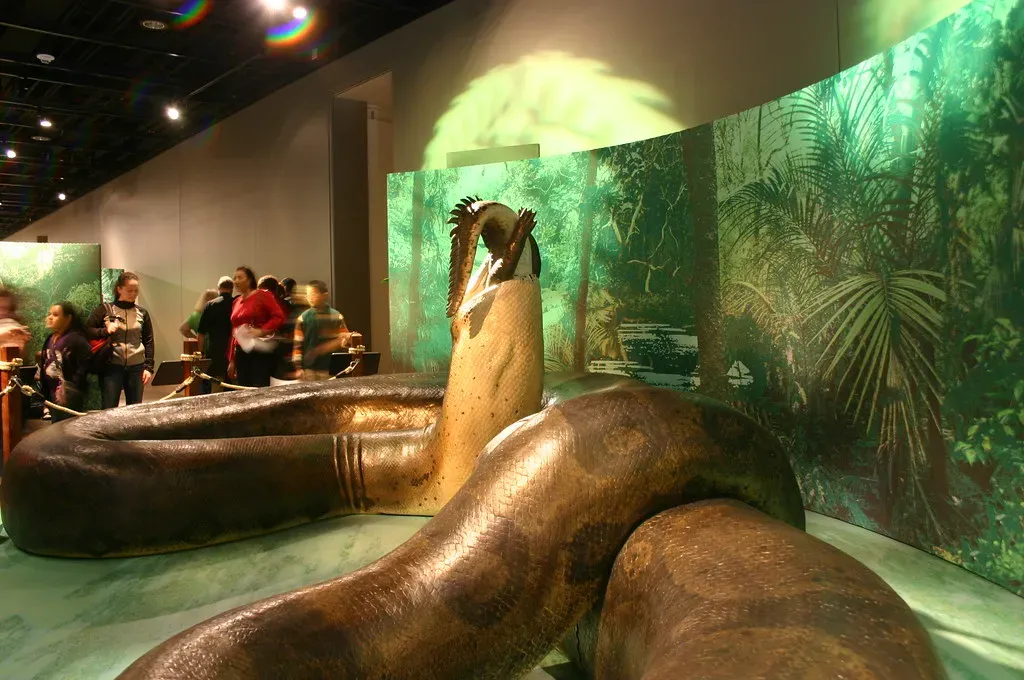
You know how some people are afraid of snakes? Well, Titanoboa is the reason that fear is not entirely irrational. Titanoboa cerrejonensis was a massive snake up to 42 feet long – that is not a typo – with a 16-inch skull and weighed 2,500 pounds. It’s the largest snake ever discovered. In comparison, our largest modern snakes, such as the green anaconda, only reach 30 feet and weigh 550 pounds. So imagine the green anaconda, then imagine something nearly a third larger and heavier. That’s Titanoboa.
It likely hunted much like crocodiles do, lurking partially submerged at the water’s edge so that it could ambush thirsty, unsuspecting animals. It would strike from the water and wrap itself around its prey, delivering a crushing death. It lived in the rainforests of South America where temperatures were warmer than the tropics of today. This allowed the cold-blooded reptiles to grow larger than modern reptiles can. The world it lived in was practically a planet-sized oven, and Titanoboa thrived in it. Warm climate, no competition. Let’s hope climate change doesn’t accidentally bring that equation back.
Megatherium: The Giant Sloth That Was Anything But Lazy
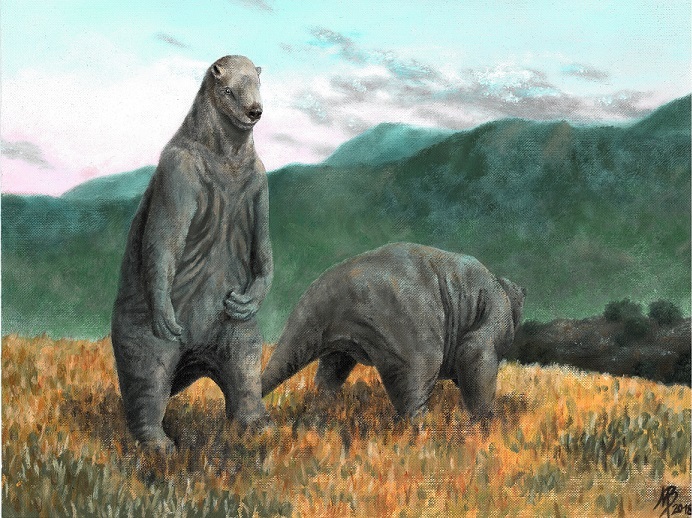
Modern sloths are adorable. They hang from trees, move at approximately the speed of a snail on a rest day, and the internet absolutely loves them. Their ancient relative, Megatherium, was none of those things – except perhaps large. Very, very large. It weighed a massive 4 tons and, from nose to tail, was 20 feet long. There were at least 23 species of giant sloth, but the largest found so far was Megatherium Americanum, “The great beast from America.”
An adult standing on its hind legs could reach a height of 20 feet. Megatherium was previously regarded as a slow tree ripper. Recent studies show that its great claws might have been used for stabbing and killing. If this was the purpose of its claws, it would make the giant sloth the largest predator of the South American plains. Think about that for a moment. The giant sloth – the animal you’d assume spent its prehistoric days napping – may have been an apex predator. Everything you thought you knew about sloths just got a little more intense.
Anomalocaris: The “Abnormal Shrimp” That Ruled the Cambrian Seas
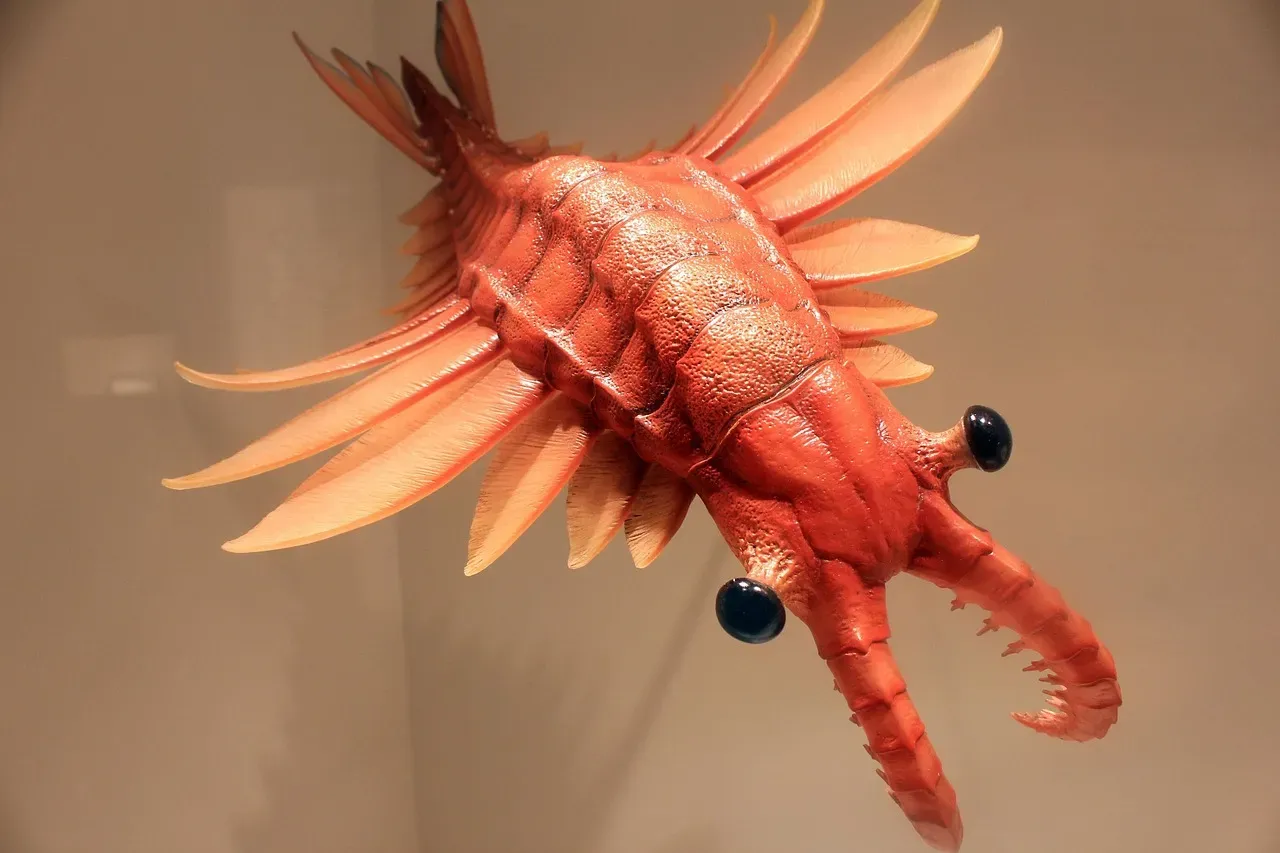
Half a billion years ago, long before fish had even sorted out the whole “having a spine” situation, the oceans were ruled by something that looked like it crawled out of a fever dream. This bizarre-looking animal was Anomalocaris, or “unusual shrimp,” and is widely regarded as the world’s first apex predator – the killer whale of its day. Anomalocaris was the largest hunter of the Cambrian period, measuring up to a metre in length from its grasping, frontal appendages to the tips of its tail fans.
Anomalocaris, often translated to “abnormal shrimp,” was one of the most peculiar and formidable predators of the Cambrian period, around 520 million years ago. Measuring nearly three feet long, this marine creature had a soft, segmented body and a mouth full of radiating plates, resembling a pineapple slicer, which it used to crush its prey. A pineapple slicer for a mouth. One specimen boasted over 24,000 lenses in a single eye, granting it sophisticated vision far surpassing anything else in the Cambrian seas. So it could see you clearly, track you efficiently, and then crush you with its pineapple ring mouth. Truly a creature built for horror.
Meganeuropsis: The Dragonfly With a Two-Foot Wingspan
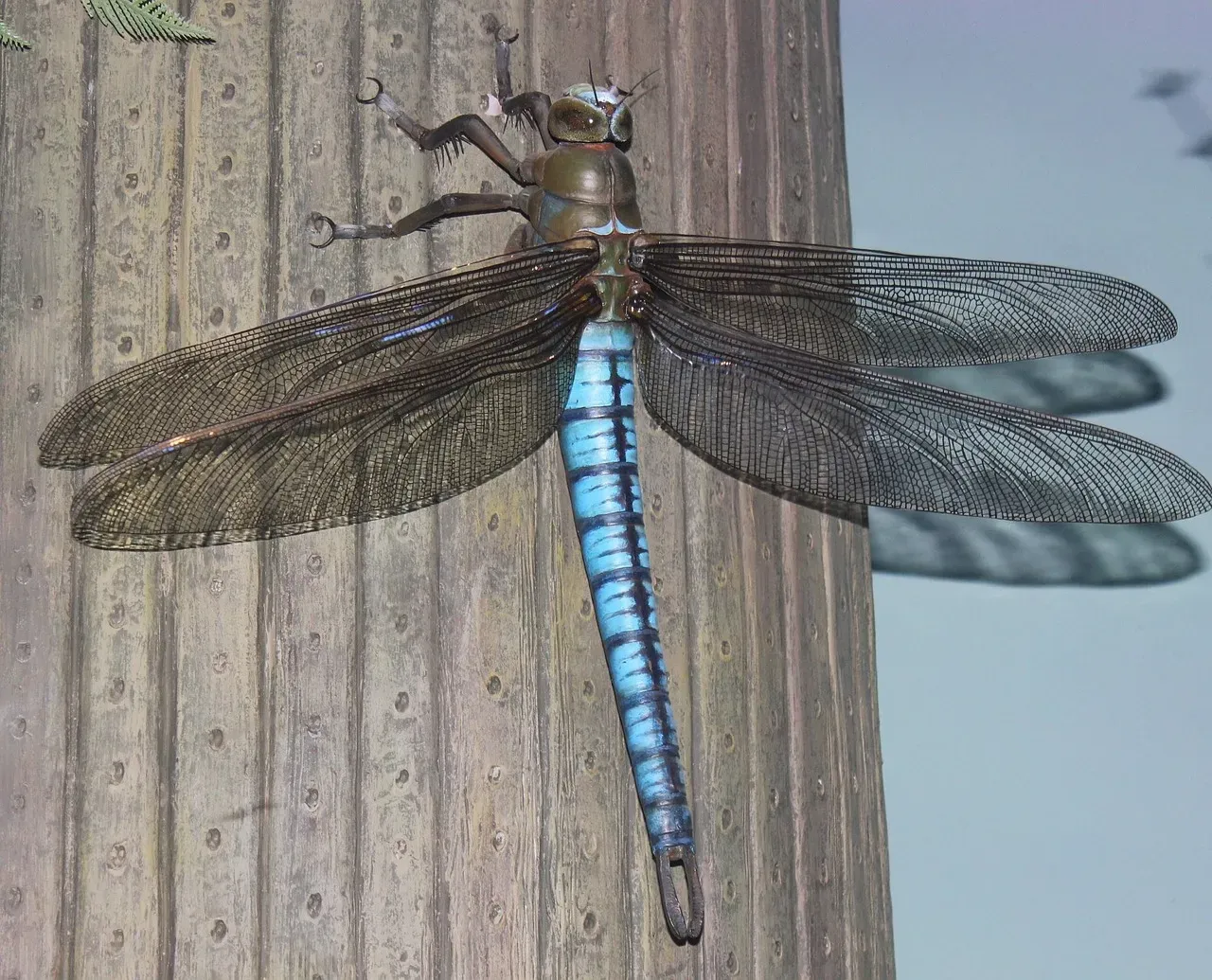
If you’ve ever been mildly bothered by a dragonfly zipping past your face at a summer barbecue, prepare yourself. Meganeuropsis was essentially that dragonfly – except with a wingspan roughly the length of your entire arm. The distance from your fingertips to your shoulder is probably in the neighborhood of 28 inches, which also happens to be the wingspan of the biggest insects ever to fly. Meganeuropsis lived 250 to 300 million years ago, and they look like enormous dragonflies. Technically, they’re griffinflies, not dragonflies.
With a wingspan measuring more than 70 centimeters, six spindly legs, and huge compound eyes, Meganeura was terrifying enough to scare even the most ardent insect lover. This four-winged monster is widely regarded as the largest flying insect ever, dwarfing its extant dragonfly relatives. Like many of today’s dragonfly species, Meganeura lived in open habitats close to ponds and slow-moving streams. It was likely the apex predator in these clearings, using the spines on its legs as a “flying trap” to ensnare prey ranging from other flying insects to amphibians and even lizard-like vertebrates. Scientists are still debating why these insects evolved to be so huge – some think insects are limited in size by the amount of oxygen they’re able to take in, so the concentration of oxygen in the atmosphere controls how big they can grow. During the Permian, atmospheric oxygen levels were higher, which allowed these insects to grow to enormous sizes. Higher oxygen meant bigger bugs. It’s almost enough to make you grateful for modern air quality standards.
Conclusion: Earth’s History Is Stranger Than Any Science Fiction
Dinosaurs will always hold a special place in the popular imagination – and honestly, they earned it. But you’ve just met eight creatures that, in terms of sheer biological weirdness, give the Jurassic Park roster a serious run for its money. From a whale that hunted other whales with T. rex-level bite force, to a five-eyed seafloor phantom, to an insect you could saddle up and ride, Earth’s ancient history reads more like a dark fantasy novel than a natural science textbook.
The deeper truth here is humbling. Life on this planet has been experimenting for hundreds of millions of years, producing body plans and survival strategies that our imagination could barely invent. Every one of these creatures was perfectly adapted to its world – and then that world changed. It’s worth pausing to consider: what extraordinary creatures might be disappearing from our world today, creatures future generations may study with the same disbelief we feel toward Arthropleura or Opabinia?
Which of these eight bizarre beasts surprised you the most? Drop your thoughts in the comments – because honestly, there’s no wrong answer here.