
When people picture ancient oceans, they usually think of giant sharks prowling the depths. But long took center stage, the seas were ruled by a completely different cast of monsters: armor-plated fish with guillotine jaws, coiled squid-dragons, and reptiles the size of buses slicing through the water like torpedoes. These creatures were not just big; they were bizarre in ways that make modern predators look almost tame.
What fascinates me most is how alien they feel and yet how clearly they were the bosses of their time. Every layer of rock is like a different ocean horror movie, with a new star predator on top. By the time sharks became the headline act, dozens of other sea monsters had already risen and vanished. Let’s dive into eight of the most fearsome rulers of the seas that came long took over the public imagination.
Dunkleosteus: The Armored Guillotine of the Devonian
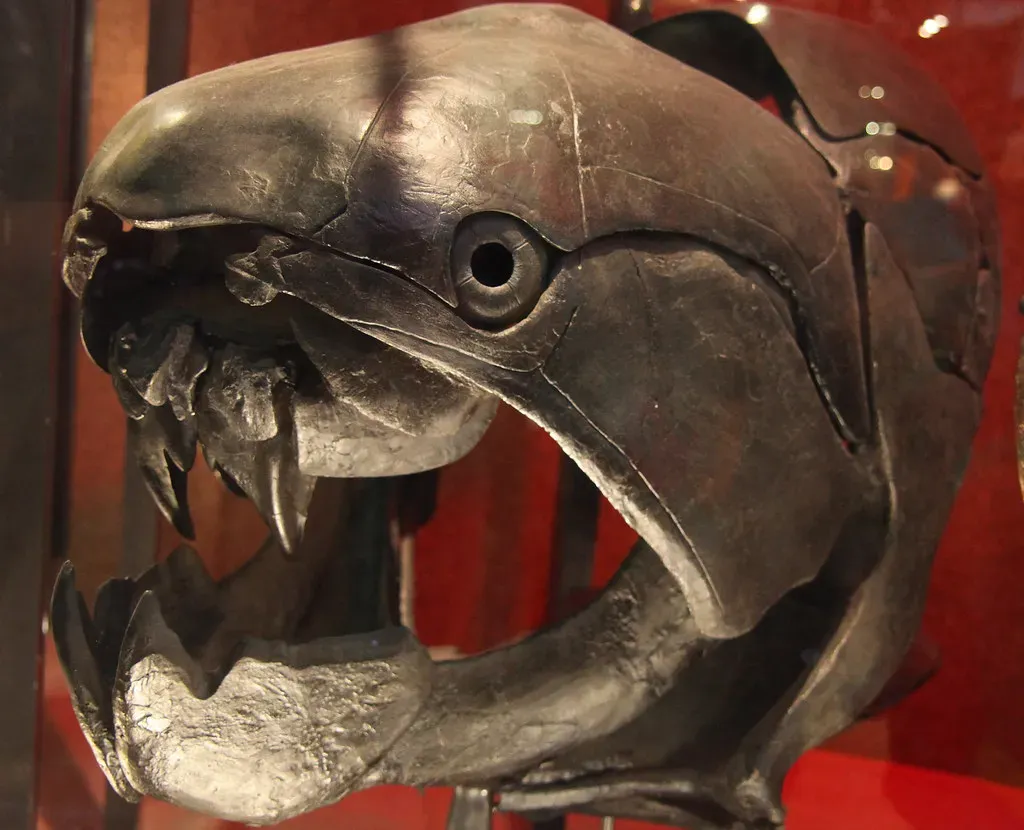
Dunkleosteus was a reef-wrecking terror from the Late Devonian, roughly about three hundred seventy million years ago, and it looked like a medieval tank with a mouth. Instead of teeth, it had sharpened bony plates that snapped together like a built‑in guillotine, delivering one of the most powerful bites known from any fish. Its head and front body were wrapped in thick armor, giving it a blocky, almost robotic appearance that feels more like science fiction than natural history.
This thing did not nibble; it crushed and sliced. Fossils of its likely prey, including other armored fish, show deep gouges and shattered armor that match what Dunkleosteus could do. Picture an animal several meters long, opening its jaws in a split second to generate enough suction to yank in struggling prey, then shearing through bone as if it were cardboard. In an ocean crowded with strange life, Dunkleosteus was the heavyweight champion that even other predators had to fear.
Plesiosaurus: The Long-Necked Phantom of Jurassic Seas
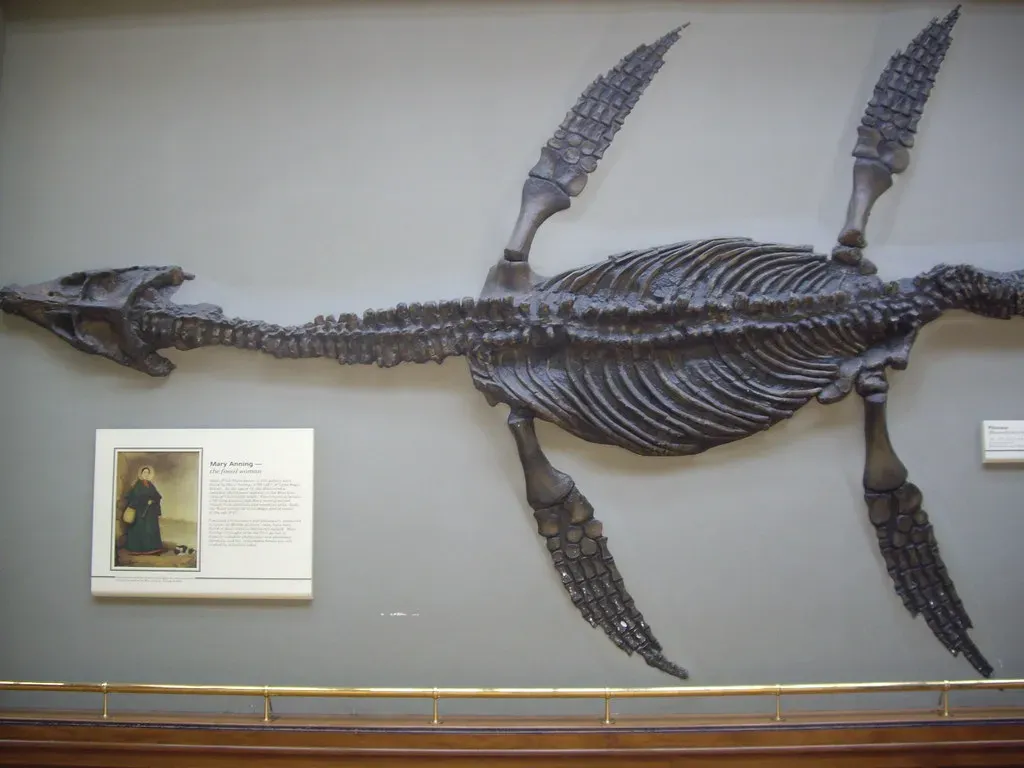
Plesiosaurus is one of those creatures that looks almost too strange to be real: a stout body, four powerful flippers, and an absurdly long neck topped with a small, sharp‑toothed head. It cruised the Jurassic seas while dinosaurs stomped on land, using its flippers like underwater wings for surprisingly agile swimming. That long neck likely let it sneak up on schools of fish or squid, reaching into tight spaces while its bulky body stayed further away and less obvious.
Although it became tangled up in modern lake monster myths, the real animal did not need any exaggeration. It was already a stealthy ambush hunter, probably able to twist and flick its head through the water with quick, snakelike strikes. Compared to modern sharks, which rely on raw speed and sensory tracking, Plesiosaurus feels more like a slow‑moving ghost that suddenly snaps to life when prey gets too close. If you were a fish in the Jurassic, that slender neck might have been the last thing you ever saw.
Mosasaurus: The Apex Reptile That Ruled the Cretaceous Oceans
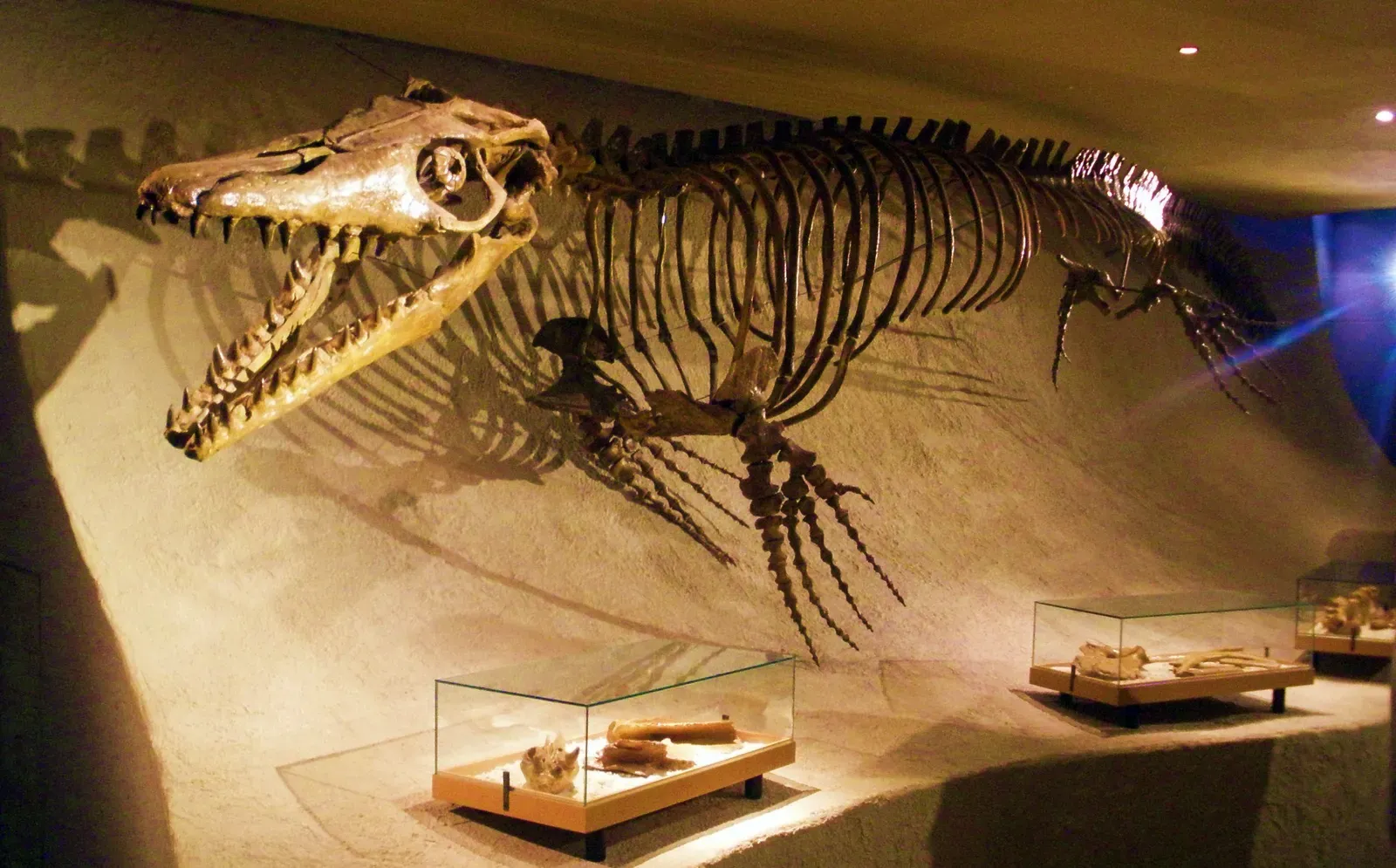
By the late Cretaceous, Mosasaurus had turned the oceans into its personal hunting grounds. This was not a dinosaur, but a marine lizard related to modern monitor lizards and snakes, stretched out to lengths comparable to a city bus. Its body was long and muscular, with a powerful tail that did most of the work, propelling it forward in deep, sweeping strokes. Its jaws bristled with conical teeth perfect for grabbing slippery prey and not letting go.
Mosasaurus did not just snack on fish; it preyed on turtles, other marine reptiles, and pretty much anything unfortunate enough to be in its way. Its sheer size and flexibility meant it could twist, roll, and thrash like a reptilian crocodile on steroids. If you dropped a modern great white shark into those seas, my honest opinion is that it would be outclassed more often than not. Mosasaurus was the final boss of many Cretaceous oceans, and when it disappeared with the dinosaurs, it left behind a vacancy that sharks would only later grow into.
Liopleurodon: The Muscle-Bound Torpedo of the Middle Jurassic
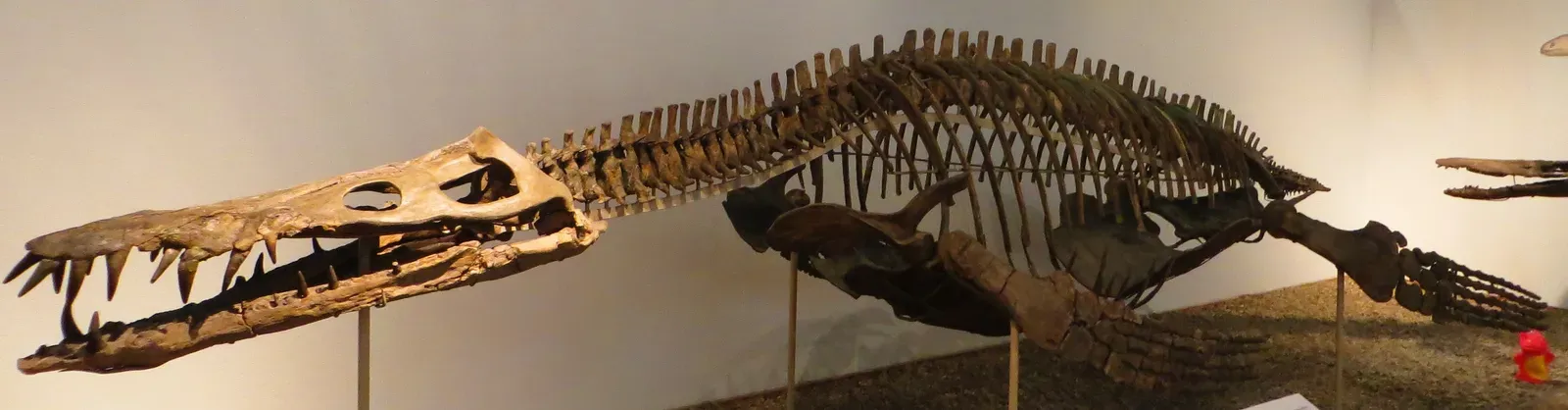
Liopleurodon was a pliosaur, a short‑necked, massive‑headed cousin of Plesiosaurus, built purely for power. Imagine an enormous skull stuffed with teeth, attached to a compact, muscular body driven by four huge flippers. It likely combined raw speed in short bursts with a devastating ambush style, lunging out of the gloom to seize large prey, including other marine reptiles. In its time, it was near the top of the food chain, one of those creatures that had almost no natural enemies once fully grown.
There has been a lot of hype and exaggeration around its size, but even the more cautious estimates still place it firmly in the “you really do not want to meet this thing” category. Fossils suggest a predator that could take on sizable animals and rip them apart with bone‑crunching bites. While sharks had already appeared in various early forms, they were bit players compared to this beast. Liopleurodon shows just how extreme reptilian design could get when evolution had warm, shallow Jurassic seas to experiment with.
Ichthyosaurus: The Dolphin-Like Speedster with Giant Eyes
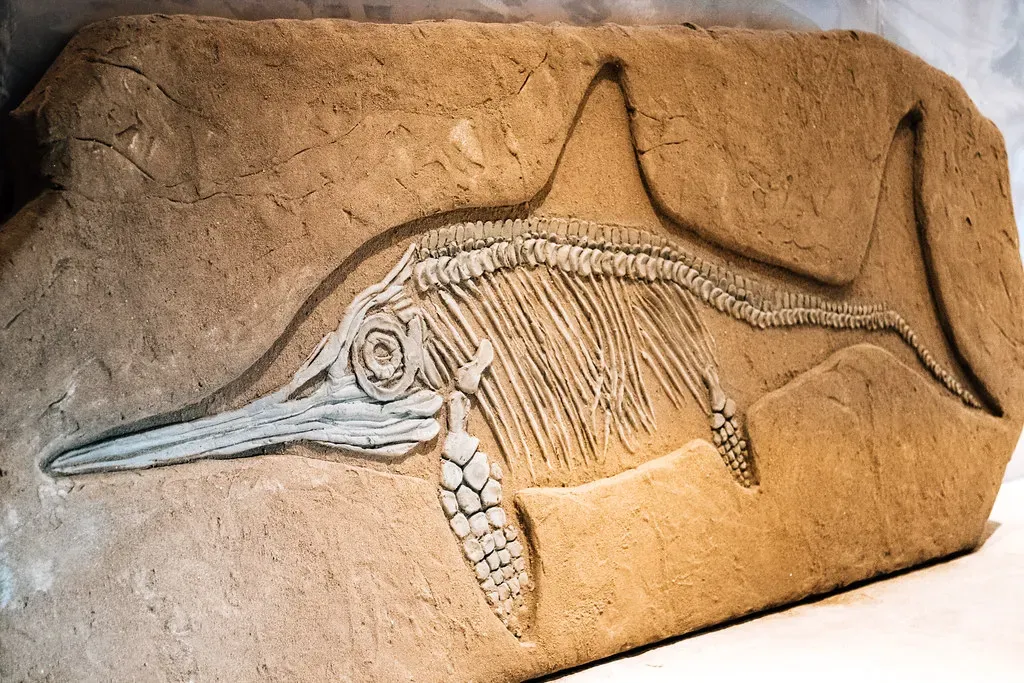
Ichthyosaurus is often described as dolphin‑like, and the resemblance is not a coincidence; both evolved similar shapes because streamlined bodies simply work in water. It had a long, pointed snout filled with small teeth, perfect for snapping up fish and squid, and a vertical tail fin designed for efficient, high‑speed swimming. Its body shape tells us it was built for cruising and quick chases rather than heavy wrestling matches with huge prey.
What really grabs people, though, are its eyes. Ichthyosaurs in general had some of the largest eyes relative to body size of any vertebrate, and Ichthyosaurus fit that trend with oversized, reinforced eye sockets. Those massive eyes probably helped it hunt in dim light, at depth or during nighttime. It is wild to think that while early sharks were already in the picture, this sleek reptile was out there rocketing through the water, seeing the ocean in a way few animals before or since have matched. In a sense, it owned the fast‑lane niche long optimized it.
Orthoceras: The Straight-Shelled Assassin of Ancient Seas
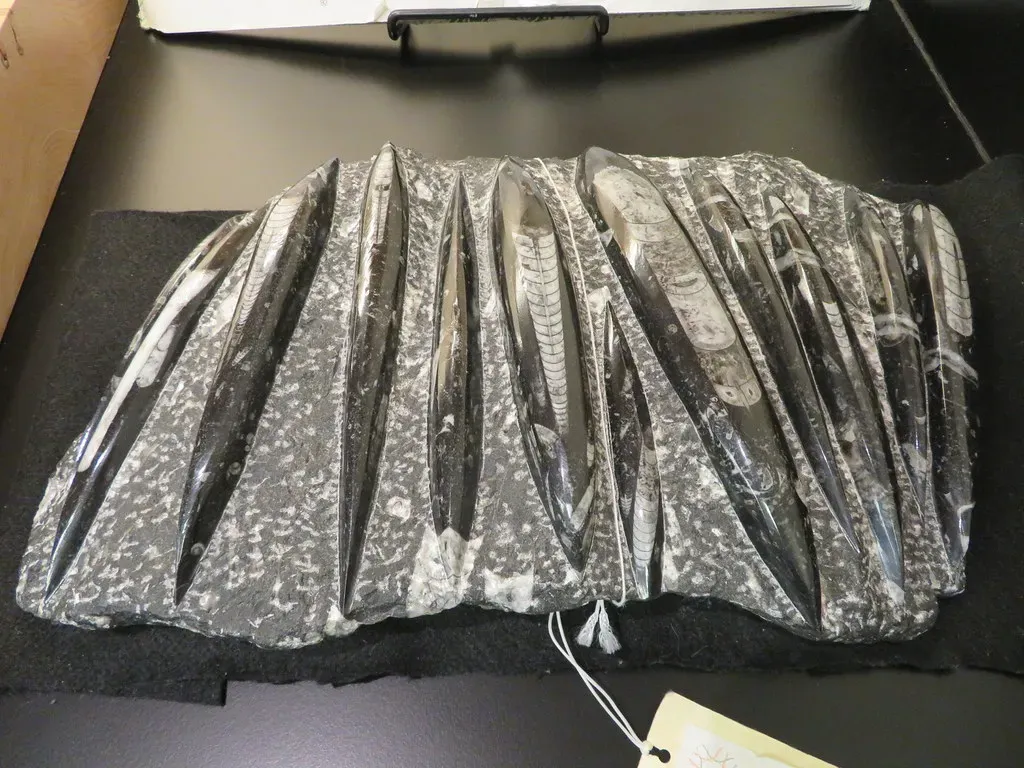
Long before vertebrate predators truly took over, creatures like Orthoceras were already terrorizing the oceans. This animal was a cephalopod, related to modern squids and nautiluses, but carried in a long, straight shell that could reach impressive lengths. It hovered or cruised through the water column, using jet propulsion to move and tentacles to grab passing prey. In those older Paleozoic seas, an Orthoceras drifting above a reef would have been a top‑tier threat.
Its simple, spear‑like shell design made it look almost like a living missile. The internal chambers of the shell helped control buoyancy, allowing it to rise and sink with relative ease, a bit like a biological submarine. While later cephalopods evolved coiled shells or ditched them entirely, Orthoceras represents a time when straight‑shelled predators were among the dominant hunters. Compared with later sharks, it lacked a backbone but more than made up for it with adaptability and clever engineering written into its shell.
Ammonites: Coiled Cephalopods that Ruled by Numbers
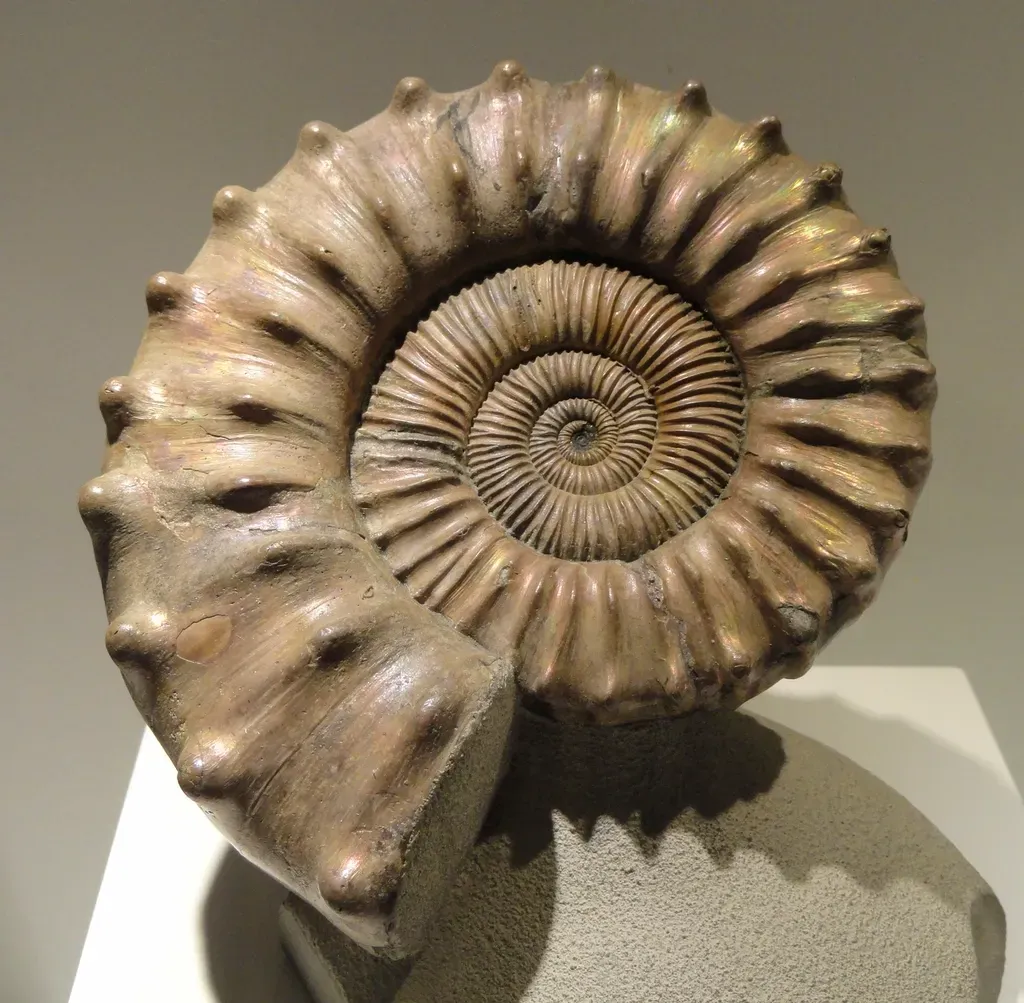
Ammonites were not just pretty spiral fossils for collectors; they were a whole empire of coiled‑shell cephalopods that ruled the oceans for a staggeringly long time. Their tightly coiled shells could range from thumbnail‑sized to wider than a car tire, and inside them lived soft‑bodied hunters armed with tentacles and a beak. Instead of ruling through single gigantic individuals, ammonites dominated by sheer variety and abundance, filling almost every marine environment you can imagine.
They probably ate small fish, plankton, and other invertebrates, and in turn, they were food for larger predators like mosasaurs and early marine reptiles. If you could time‑travel and dive into many ancient seas, you would likely see ammonites everywhere, bobbing and drifting like living galaxies of spirals. In my view, they were the quiet backbone of many marine ecosystems long rose to prominence. When they vanished in the same mass extinction that ended the dinosaurs, entire food webs collapsed along with them.
Eurypterids: The “Sea Scorpions” That Terrorized Paleozoic Waters
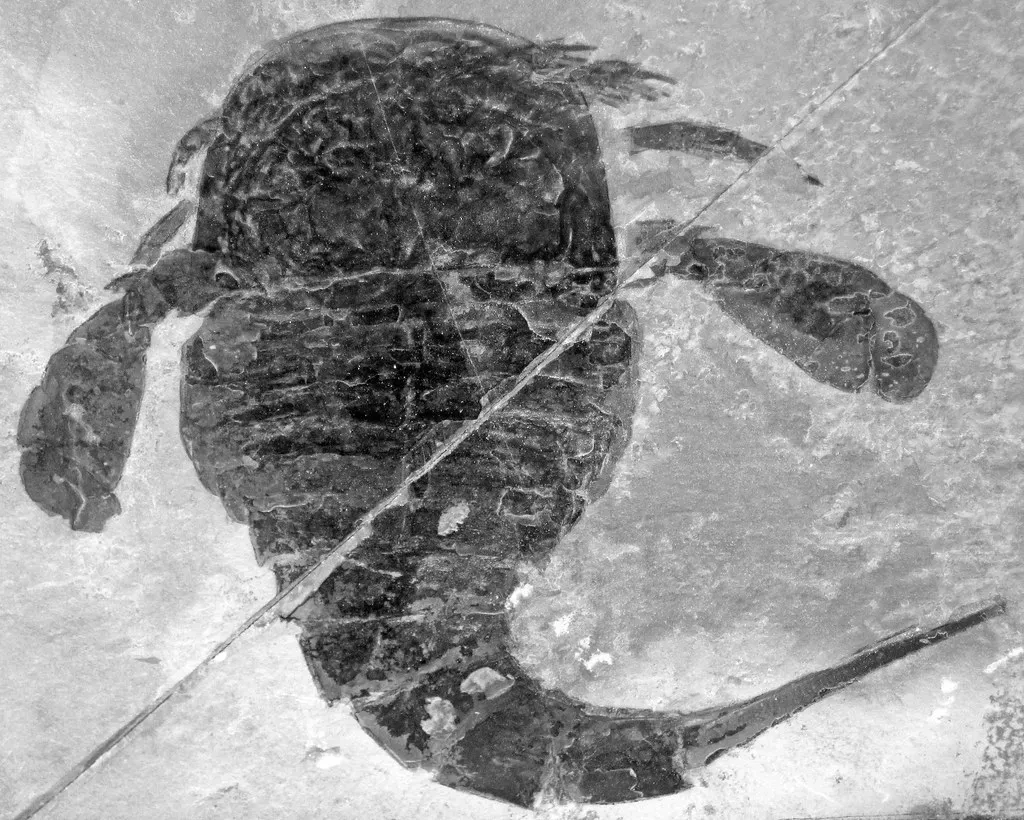
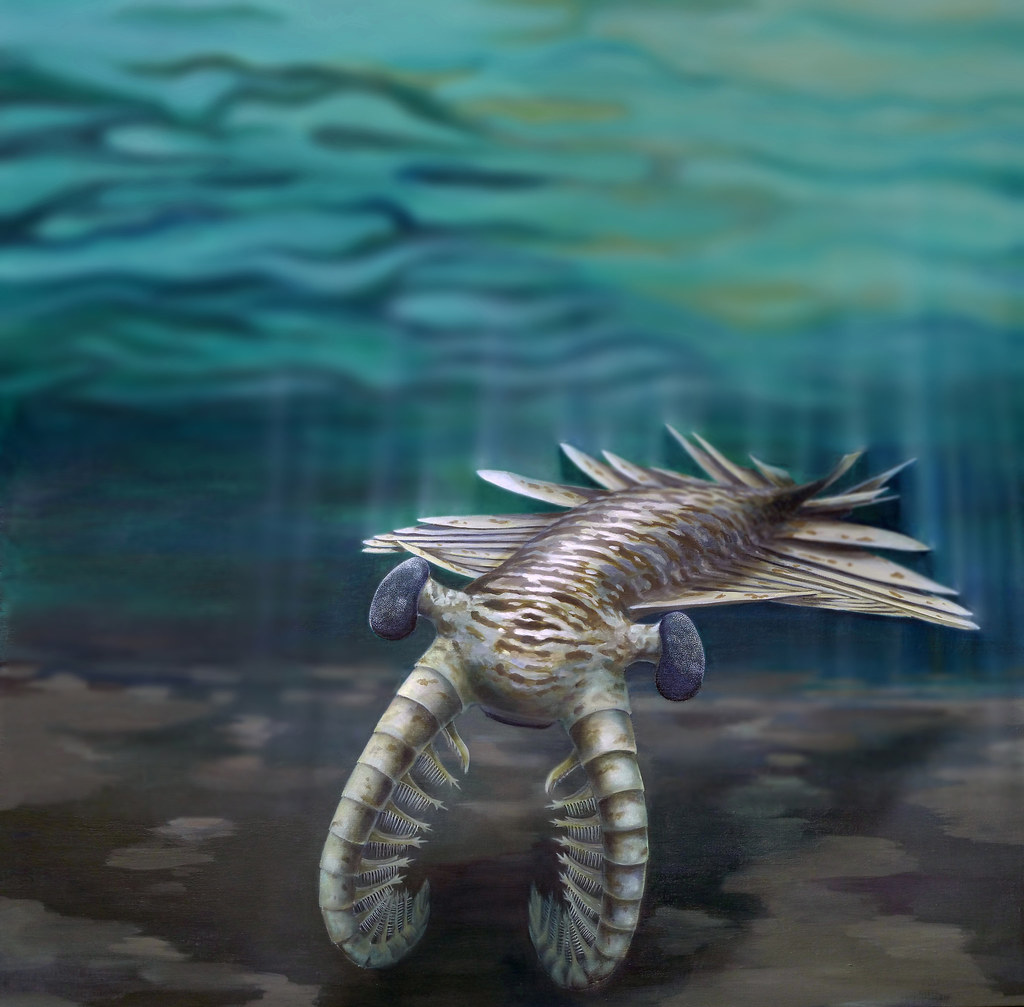
Before fish truly took over as the main predators, Eurypterids, often called sea scorpions, were among the most intimidating hunters in Paleozoic waters. Some species were small and probably lived modest lives in shallow seas and estuaries, but others grew to lengths as long as a tall adult human. They had spiny grasping appendages, paddle‑like limbs for swimming, and tough exoskeletons that gave them a hard, armored look. These animals were arthropods, relatives of modern scorpions and horseshoe crabs, and they used that design to full lethal effect.
Imagine wading in a warm, shallow lagoon hundreds of millions of years ago and seeing the water suddenly churn as a massive Eurypterid lunged at passing prey. Fish, smaller arthropods, and soft‑bodied animals would all have been on the menu. Sharks would eventually move into similar roles in later periods, but in these older ecosystems, sea scorpions were the original aquatic bruisers. To me, they are a reminder that the title of top predator has changed hands many times, and it has not always belonged to sleek, boned‑backed swimmers.
Conclusion: Sharks Are Latecomers to a Long Tradition of Terror

Looking across all these creatures, what stands out is that sharks are not the timeless ocean overlords we often imagine; they are just the latest chapter in a very long and very weird story. From armored fish that bit like steel traps to reptilian torpedoes and spiral‑shelled cephalopods, the oceans have been ruled by wave after wave of monsters that vanished long before a modern shark ever sliced through the water. In my opinion, that makes our current seas feel less permanent and more like a brief moment between eras, a snapshot rather than the final picture.
There is something humbling in realizing that the predators we fear and admire today are standing on the fossilized shoulders of these earlier giants. One asteroid, one climate shift, and the crown can pass again, just as it has many times before. The next time you see a shark documentary, it is worth remembering that it is playing on a stage built by Dunkleosteus, Mosasaurus, and countless others. If the oceans have taught us anything, it is that rulers come and go, but the story of the sea never stops changing – so which ancient monster would you have least wanted to share the water with?