Ask a group of kids about dinosaurs and you’ll get some of the most confident, wildly imaginative science you’ve ever heard. Dinosaurs roar like movie monsters, they all lived at the exact same time, and obviously every single one of them fought T. rex at least once. It’s adorable, it’s a little chaotic, and it says a lot about how pop culture shapes our idea of the ancient world.
The funny part is that kids are often working with surprisingly sharp instincts: they sense that dinosaurs were powerful, strange, and important. They’re just missing a few million years of context, a fossil lab, and about twenty paleontology textbooks. Let’s walk through eight of the cutest but most off‑base beliefs about dinosaurs, and gently swap movie logic for what scientists actually think happened.
1. “Dinosaurs and Humans Lived Side by Side Like Roommates”
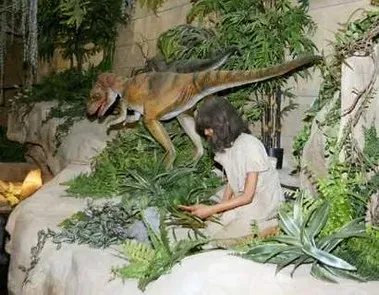
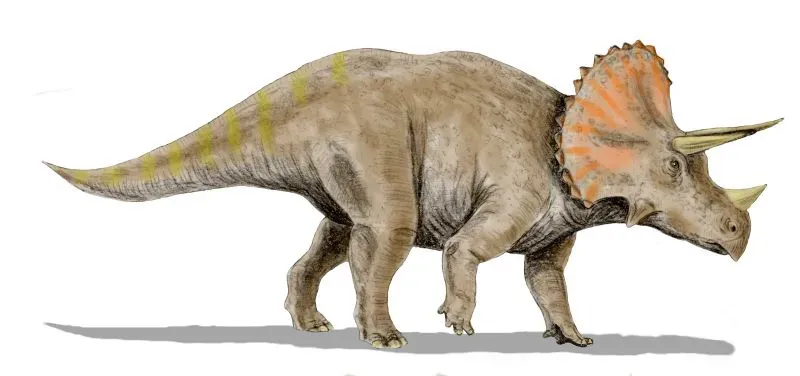
One of the most common kid beliefs is that humans and dinosaurs were basically neighbors, just separated by a forest or maybe a very tall fence. Cartoons do not help here; they happily show cave people riding triceratops like off‑road horses and using stegosaurus plates as breakfast tables. To a child, the whole ancient world is just one big “long time ago,” so of course it all blends together into a single movie scene.
In reality, the gap between non‑avian dinosaurs and humans is so massive it almost feels like science fiction. The last non‑bird dinosaurs died out about sixty six million years ago, while our species, Homo sapiens, shows up only in roughly the last several hundred thousand years. If Earth’s history were a twelve‑month calendar, dinosaurs would vanish somewhere around December 26, and humans would stumble in at about 11:40 p.m. on December 31. We are not just in different chapters; we are in totally different volumes of the book.
2. “All Dinosaurs Were Basically Giant Lizards”
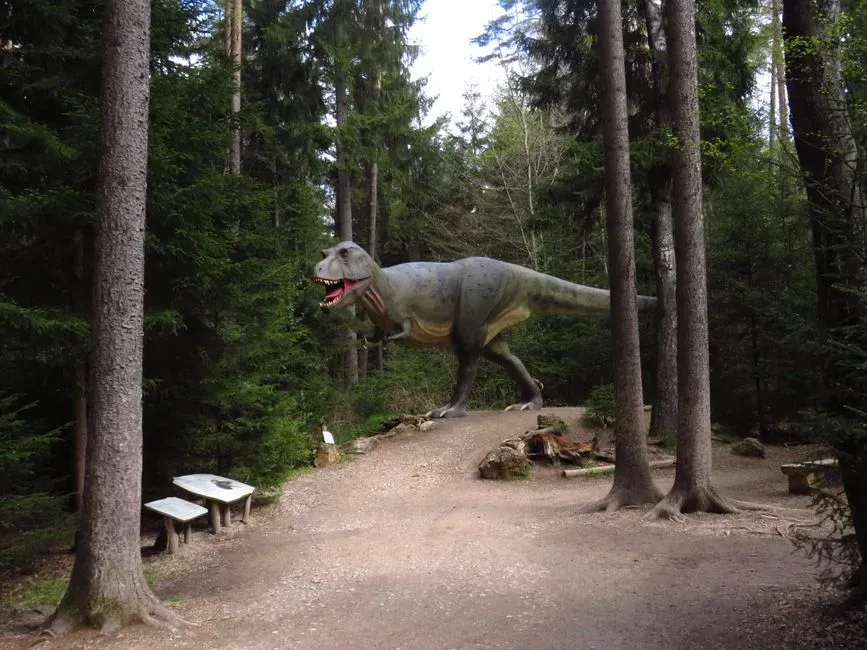
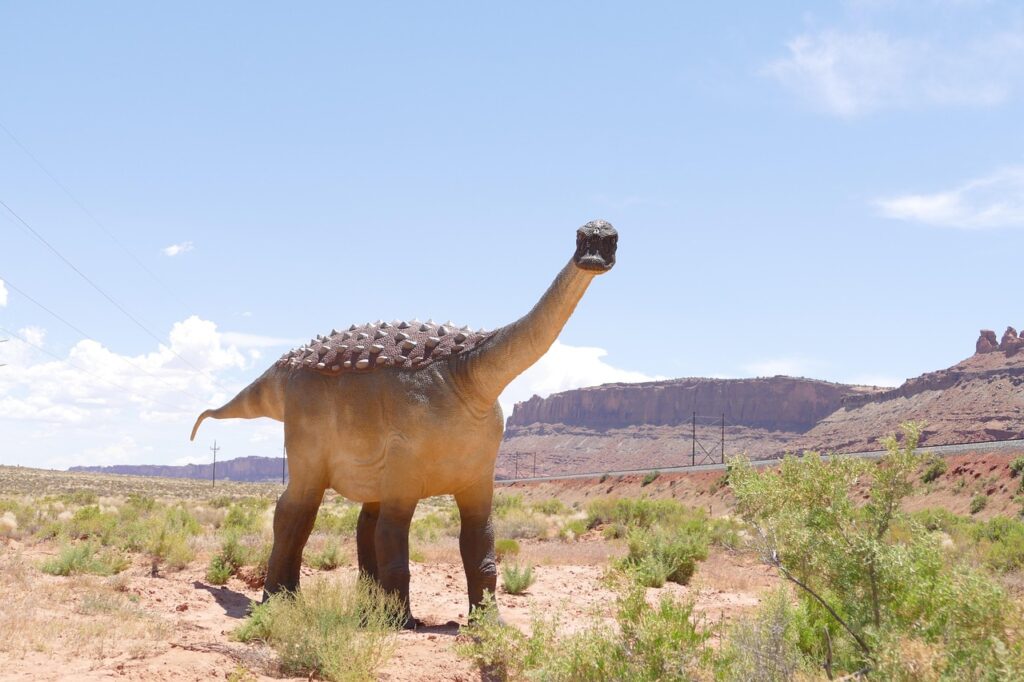
Kids will often describe dinosaurs as “huge lizards” or “monster reptiles,” and honestly, adults do it too. The word dinosaur itself comes from a term that roughly means “terrible lizard,” which doesn’t help. Add in all the green, scaly, dragon‑like toys and you get a very lizard‑heavy mental picture. When a child imagines a dinosaur, they often see something like a Godzilla‑style iguana scaled up to bus size.
Scientifically, though, dinosaurs were their own distinct group with a body plan and biology that were not just blown‑up versions of modern reptiles. Many walked with their legs straight under their bodies instead of sprawled out to the sides like lizards, and lots of them had complex air‑sac systems in their bones more like birds than crocodiles. Some were insulated with feathers or fuzz instead of scales alone. If you picture a dinosaur as halfway between a crocodile and a cassowary instead of a giant gecko, you’re actually much closer to the truth.
3. “Every Dinosaur Was a Roaring, Meat‑Eating Monster”
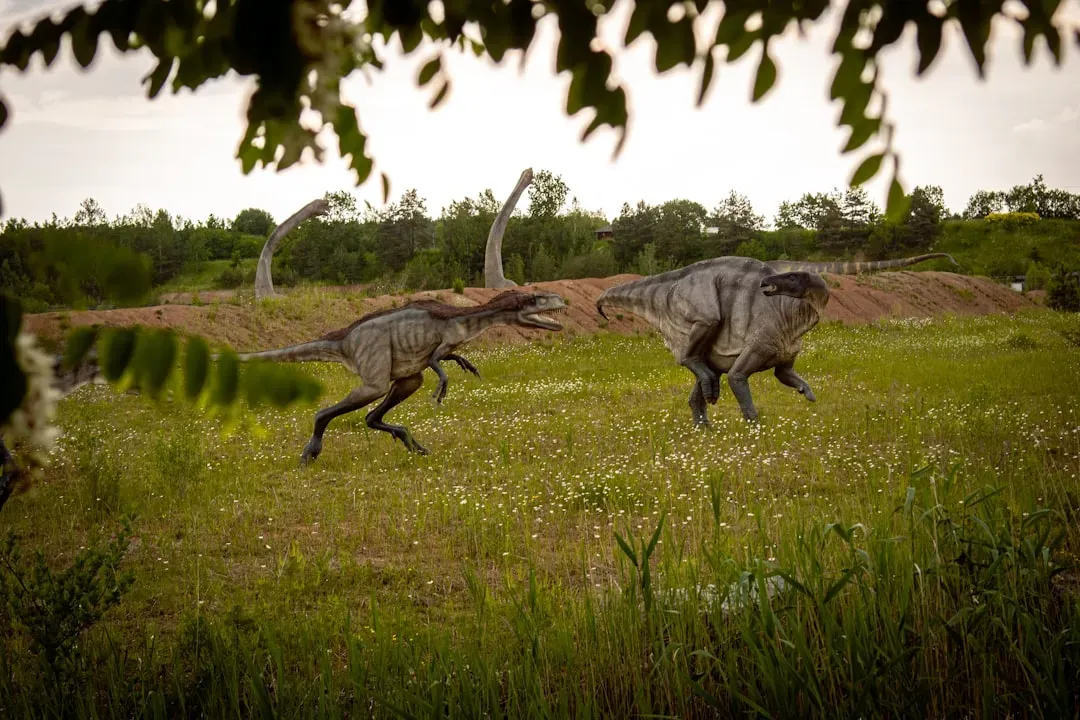
Kids love the idea that dinosaurs spent every day having dramatic battles, roaring, chasing, and chomping everything in sight. Thanks to movies, many children quietly assume that all the “cool” ones were sharp‑toothed carnivores, and the plant‑eaters existed mainly to be lunch. In the average toy box, the story is always a little T. rex soap opera with background snacks shaped like triceratops.
In real ecosystems, life is rarely that one‑note. A huge number of dinosaur species were herbivores nibbling ferns, cycads, and conifer branches, not sprinting around hunting. Their drama was about finding enough plants, avoiding predators, and maybe competing for mates or territory, not constant game‑of‑tag carnage. Even the meat‑eaters probably spent much of their time resting, scavenging, or stalking quietly rather than roaring every five minutes like a broken car alarm. A dinosaur day was more like watching a nature documentary on a slow afternoon than an action movie’s nonstop chase scene.
4. “T. rex Was the Biggest, Baddest Dinosaur of All Time”
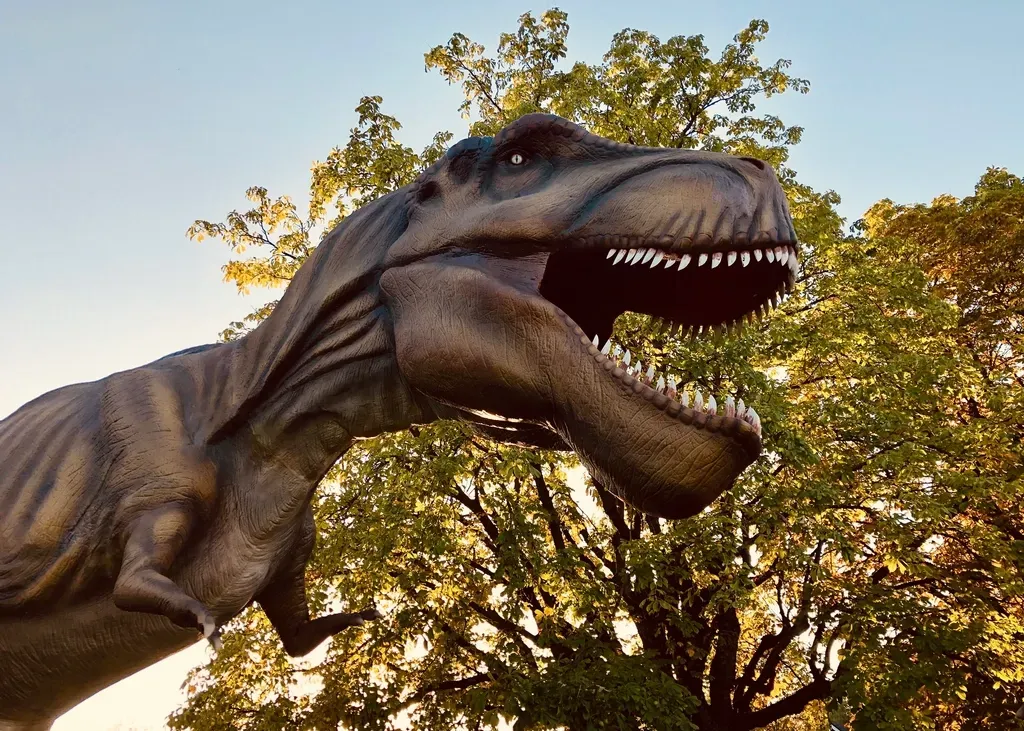
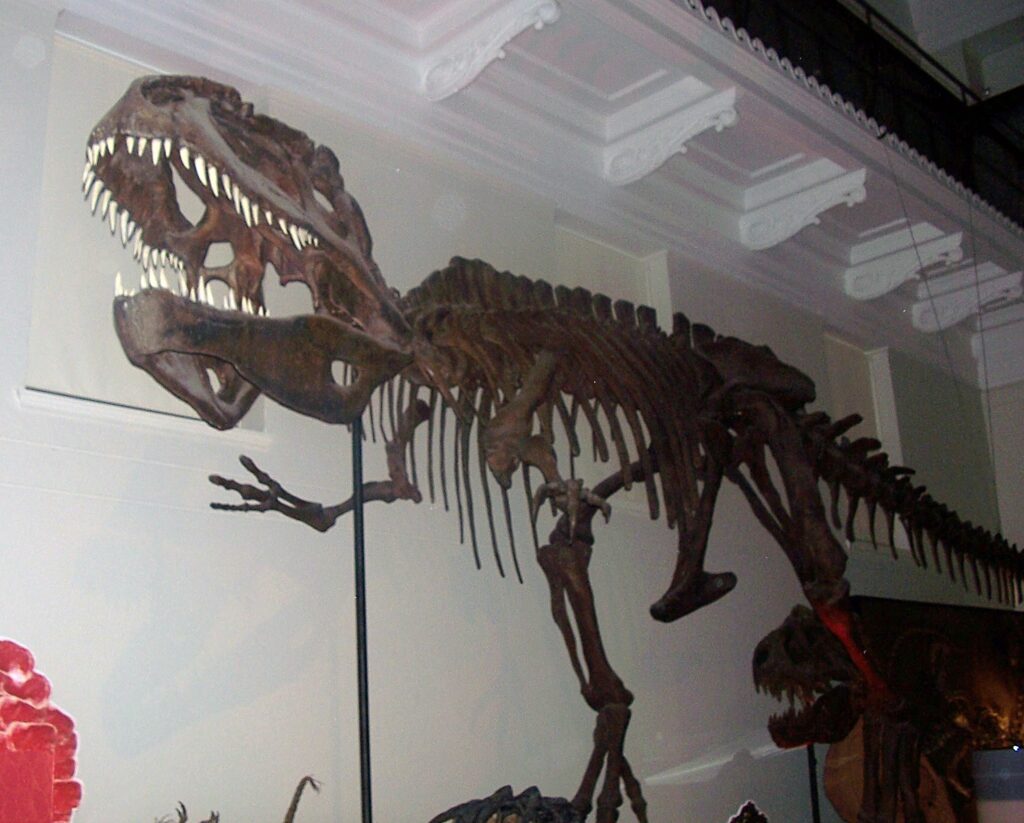
To many kids, T. rex is not just a dinosaur; it’s the dinosaur, final boss of prehistory, undefeated heavyweight champion of the Mesozoic. Toy lines, posters, and museum gift shops all sharpen this myth by putting Tyrannosaurus front and center like a brand mascot. I remember being tiny and absolutely certain that nothing on Earth, past or present, could top that huge skull and those banana‑sized teeth.
The truth is still impressive but more nuanced. T. rex was certainly one of the largest land predators ever, but it was not uniquely gigantic; other theropods like Spinosaurus and Giganotosaurus reached similar or possibly greater lengths. It also lived only near the very end of the dinosaur era, in what’s now North America, not across the whole planet. Paleontologists view T. rex as a spectacular, specialized apex predator in a particular time and place, not a universal ruler of all dinosaurs, and in some environments it would have been out‑sized, out‑swum, or simply absent.
5. “All Dinosaurs Lived Together at the Same Time”
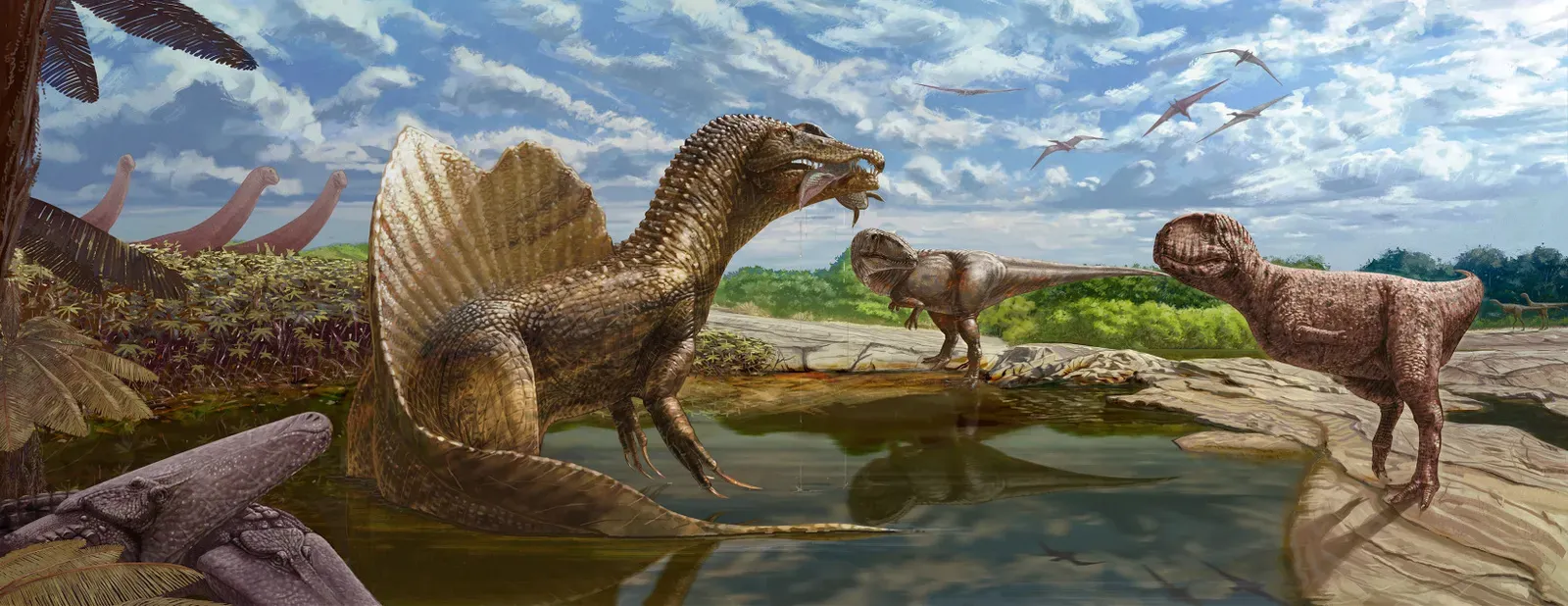
Ask a child which dinosaurs were alive together and you’ll usually get an enthusiastic “all of them!” In their heads, a stegosaurus can meet a triceratops, befriend a velociraptor, and then argue with a brachiosaurus, all before lunch. Time becomes a giant dinosaur playground where every species is invited. Movie mashups that throw random species into the same scene over and over make this feel perfectly normal.
Geological time, however, is brutal about separating guests on the timeline. Stegosaurus, for example, vanished tens of millions of years before Triceratops ever evolved. In some cases, the gap between two favorite dinosaurs is longer than the gap between the last non‑avian dinosaur and humans today. Dinosaurs were around for roughly about one hundred and sixty million years, which is an absurdly long run; not all of them were co‑workers. It is more accurate to think of the dinosaur era as multiple overlapping worlds that changed, split, and reorganized over time than as one eternal Jurassic neighborhood.
6. “Dinosaurs Were All Green or Brown and Pretty Boring‑Looking”
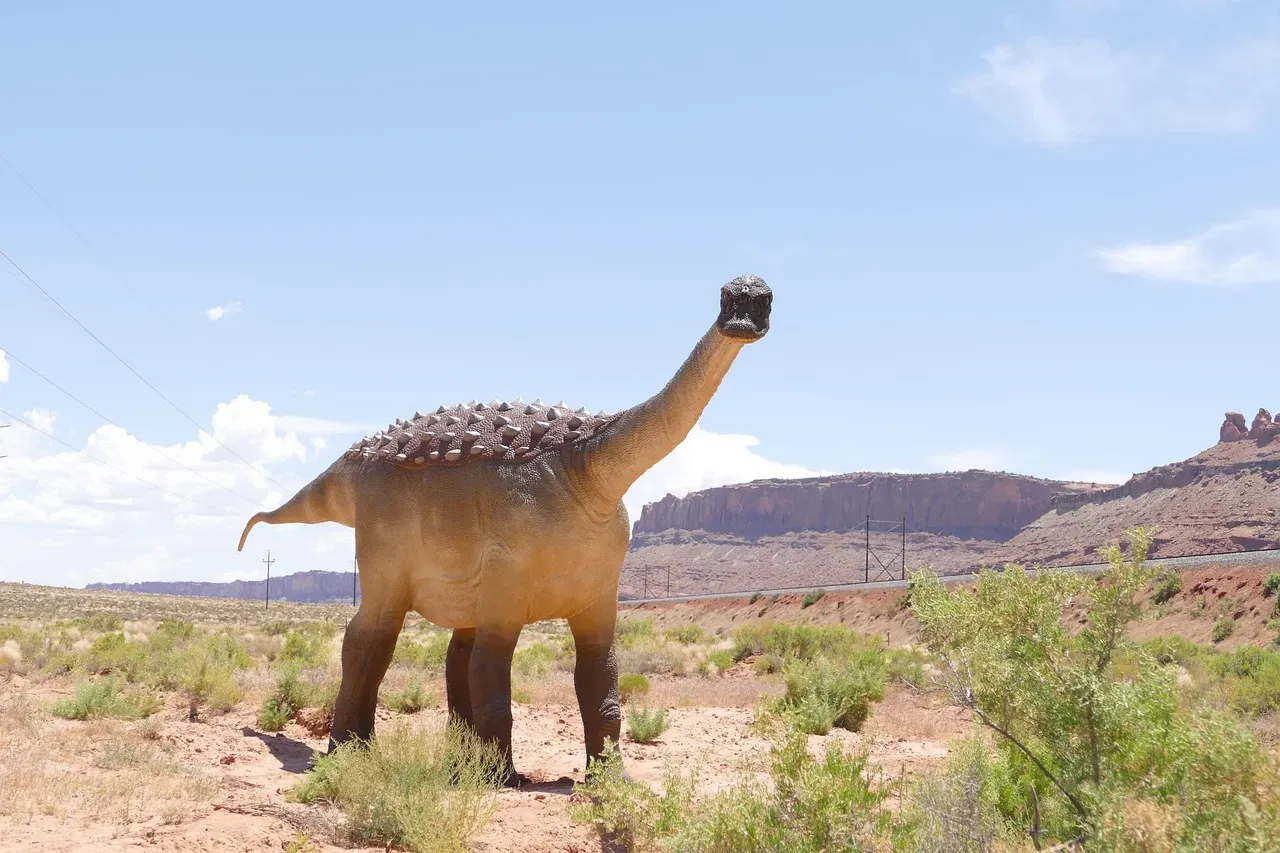
Many kids assume dinosaurs were painted in three basic colors: dark green, muddy brown, and gray. That is what a lot of older books and toys showed, and it kind of fits the idea that “realistic animals” must be drab. If you give a child a dinosaur coloring sheet, a good chunk will still automatically reach for the green crayon first, as if there were a paleo rulebook that banned bright colors.
Modern paleontology paints a much louder picture. Fossils of some feathered dinosaurs preserve microscopic structures that hint at real colors and patterns, and they point toward reds, blacks, iridescent sheens, and complex markings similar to those on modern birds. Even for non‑feathered dinosaurs, it is reasonable to imagine camouflage, stripes, patches, and maybe flashy displays on crests or frills used in courtship or rivalry, because many living animals do exactly that. The ancient world was probably as visually busy as a rainforest full of parrots and frogs, not a single endless green‑brown army of identical reptiles.
7. “Dinosaurs All Died Because They Were Clumsy or ‘Too Dumb to Survive’”
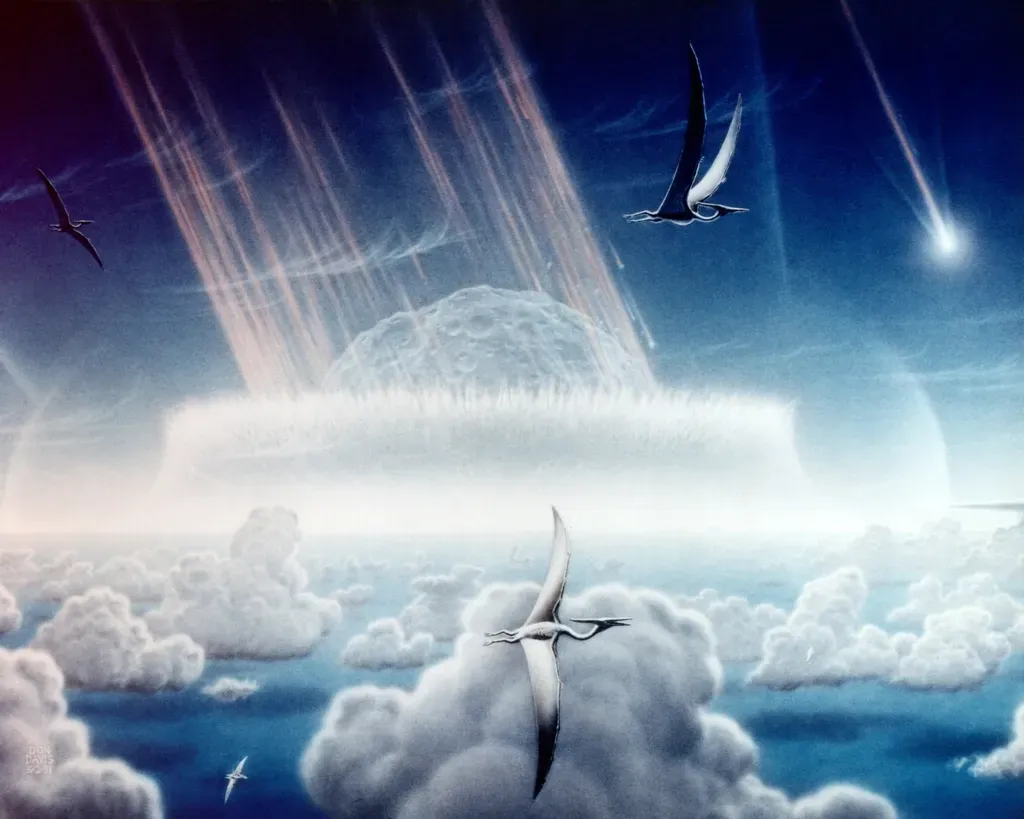
There is a strangely common kid explanation for dinosaur extinction: they were just not very smart or good at living, so they messed up and disappeared. Sometimes it turns into a moral lesson, like they were too big, too greedy, or too slow and therefore “deserved” to go extinct. It is a simple story that fits on a lunchbox, but it misses how unforgiving the universe can be even to successful species.
The current scientific view is that a massive asteroid impact, combined with intense volcanic activity and climate change, radically reshaped Earth’s environment at the end of the Cretaceous. Many groups, not just dinosaurs, were wiped out, from marine reptiles to flying reptiles to a huge number of ocean species. Non‑avian dinosaurs were not evolutionary failures; they had thrived for well over one hundred million years in all sorts of forms and sizes. When the rules of the planet changed almost overnight, their particular ways of living no longer worked – but the line that led to modern birds made it through, which is why we can still watch tiny feathered dinosaurs at bird feeders today.
8. “Dinosaurs Are Completely Gone (And Not Related to Anything Alive Today)”
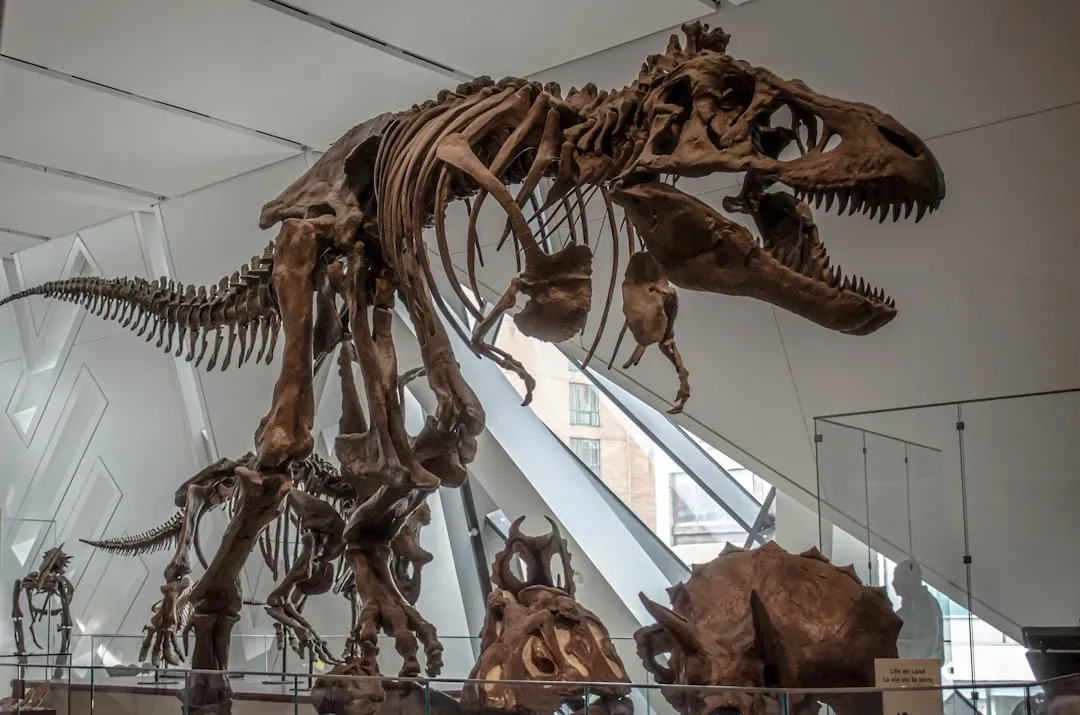
Young kids often hear “dinosaurs went extinct” and interpret that as “every dinosaur vanished and left no relatives behind.” In their minds, the dinosaur story is a hard stop, a clean break from everything we see now. It makes dinosaurs feel like mythical beasts, more distant from today’s animals than, say, lions are from house cats. This belief is understandable when most children’s books and toys draw a sharp line between dinosaurs and present‑day life.
What paleontologists now argue, though, is that one branch of the dinosaur family tree survived and is very much around: birds. The small, feathered theropods that made it through the extinction event gradually diversified into the enormous range of birds we see today, from hummingbirds to ostriches. That means pigeons, chickens, and eagles are not just “related to dinosaurs”; they are literal, living dinosaurs in a technical sense. Once you tell a child they are eating dinosaur when they bite into a chicken nugget, you can almost see their mental picture of prehistory explode and then slowly reorganize itself into something closer to the science.
Conclusion: Why These Cute Misconceptions Actually Matter
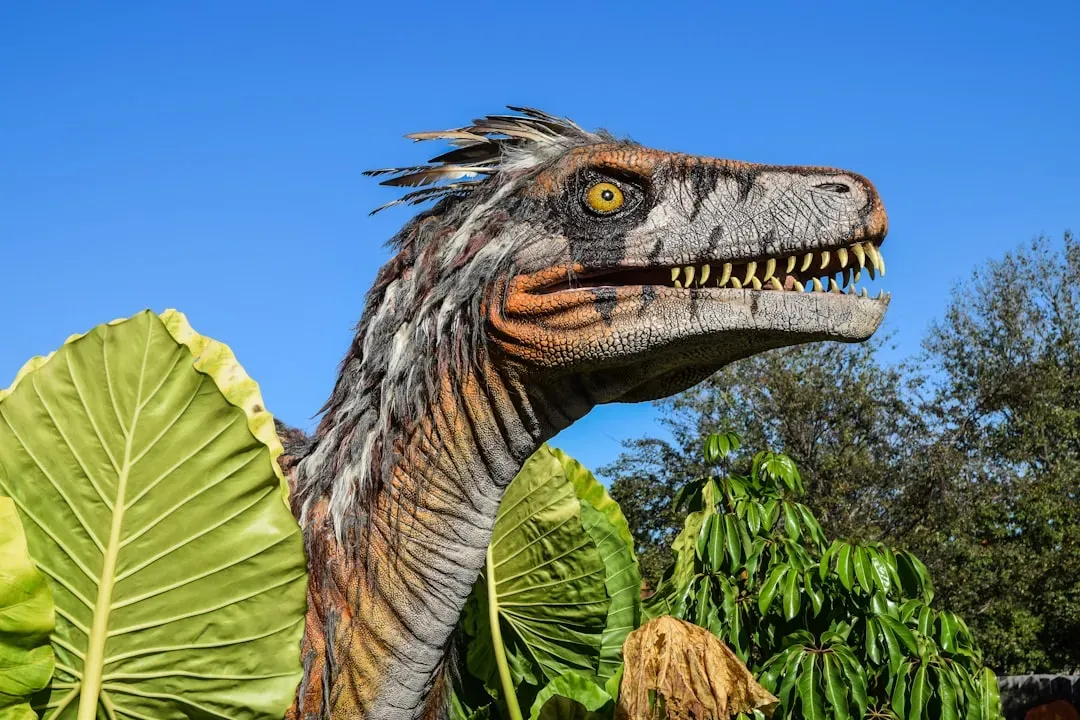
Children’s dinosaur myths are easy to laugh off, but they reveal something deeper about how we all learn science: we start with stories. Those early, adorably wrong images of green lizard monsters and cave‑people neighbors set the stage for curiosity, and curiosity is the fuel that can eventually carry someone into a museum, a lab, or a field site with a rock hammer in hand. I still remember proudly announcing that stegosaurus fought T. rex, and then having my mind blown when a patient adult gently explained that they were separated by tens of millions of years.
As grown‑ups, we get to decide whether we freeze kids in those movie myths or invite them to level up into the weirder, richer truth. Personally, I think the real story is even cooler: a world where time is unimaginably deep, extinction is brutal but not always deserved, and sparrows on a telephone wire are the last chapter of the dinosaur saga. Next time a child tells you something wildly inaccurate about dinosaurs, maybe treat it as an open door instead of a mistake – because who knows, could that tiny misconception be the first fossil on the path to their future obsession with science?