Walk a trail in a US national park and it is easy to feel small next to the cliffs, canyons, and forests towering over you. But what most people never realize is that beneath those same hiking boots lie the remains of creatures so bizarre and powerful that they make modern wildlife look almost tame. Some had skulls longer than you are tall, others carried weaponized tails, and a few swam through ancient seas that once covered what is now dry desert.
In the last several decades, paleontologists have quietly turned many US national parks into world-class fossil treasure troves. From Badlands to Big Bend, these protected landscapes preserve snapshots of entire lost worlds, each filled with its own monsters, oddities, and evolutionary experiments. Let’s walk through eight of the most unbelievable prehistoric creatures uncovered – and you may never look at those scenic overlooks the same way again.
1. Allosaurus in Dinosaur National Monument: The Apex Hunter of an Ancient Floodplain
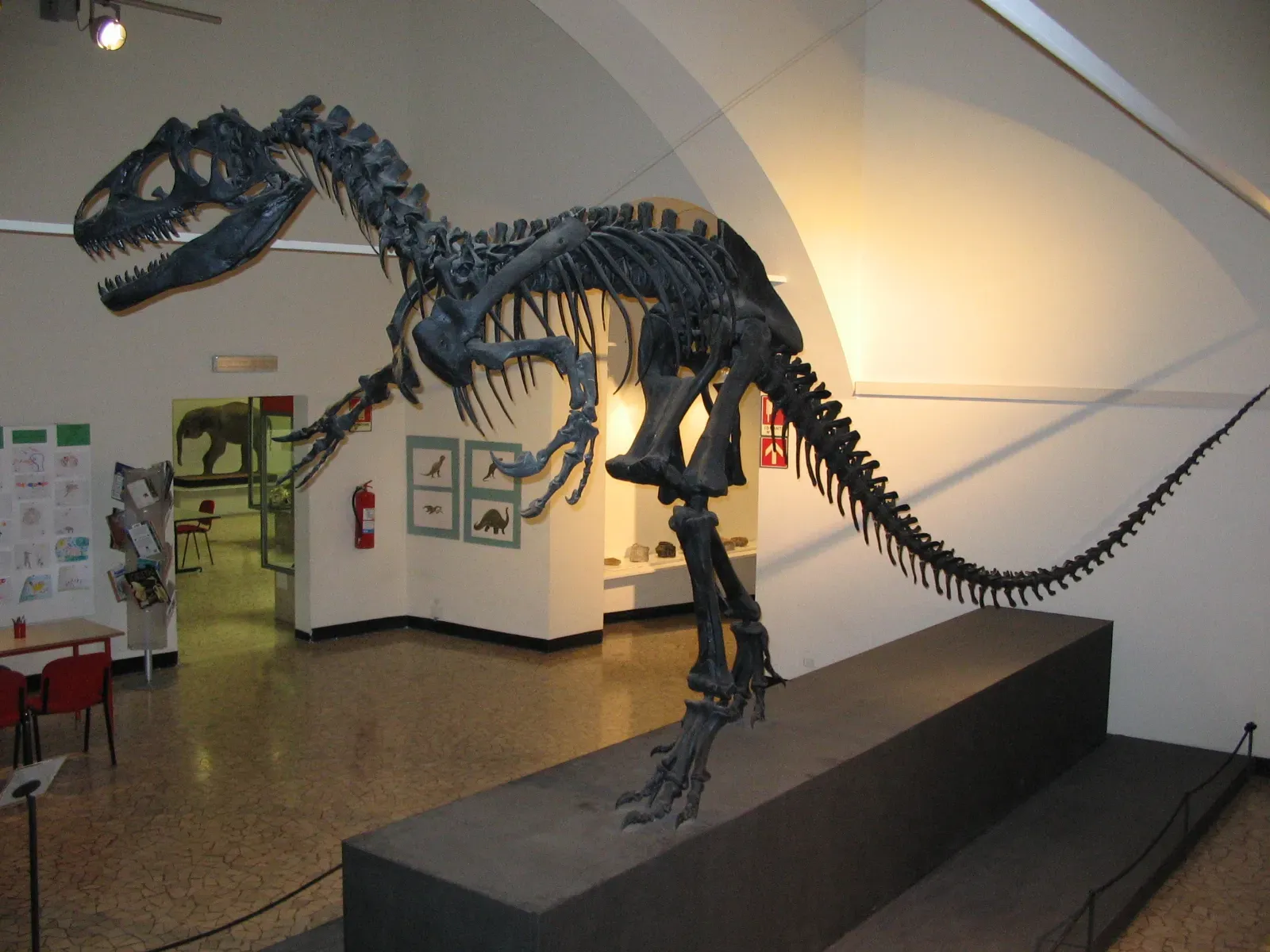
Imagine stepping into the Jurassic and seeing a predator roughly the size of a bus, jaws lined with serrated teeth, moving with the unsettling grace of a big cat. That is Allosaurus, one of the star fossils found at Dinosaur National Monument on the Colorado–Utah border. This park is famous for its quarry wall packed with dinosaur bones, and Allosaurus remains are among the most striking, cementing its role as one of the top predators of its time.
Scientists think Allosaurus stalked a lush river system packed with plant-eating dinosaurs, giant ferns, and towering conifers. It likely hunted long-necked sauropods and beaked herbivores, and may even have scavenged when the opportunity arose, a bit like how modern lions adapt their behavior. When you stand in front of the fossil wall at the monument, those overlapping bones tell a messy story of floods, deaths, and feeding frenzies that played out roughly one hundred and fifty million years ago, with Allosaurus right in the middle of the chaos.
2. Stegosaurus in Colorado–Utah Canyons: The Armored Icon With a Mystery Brain
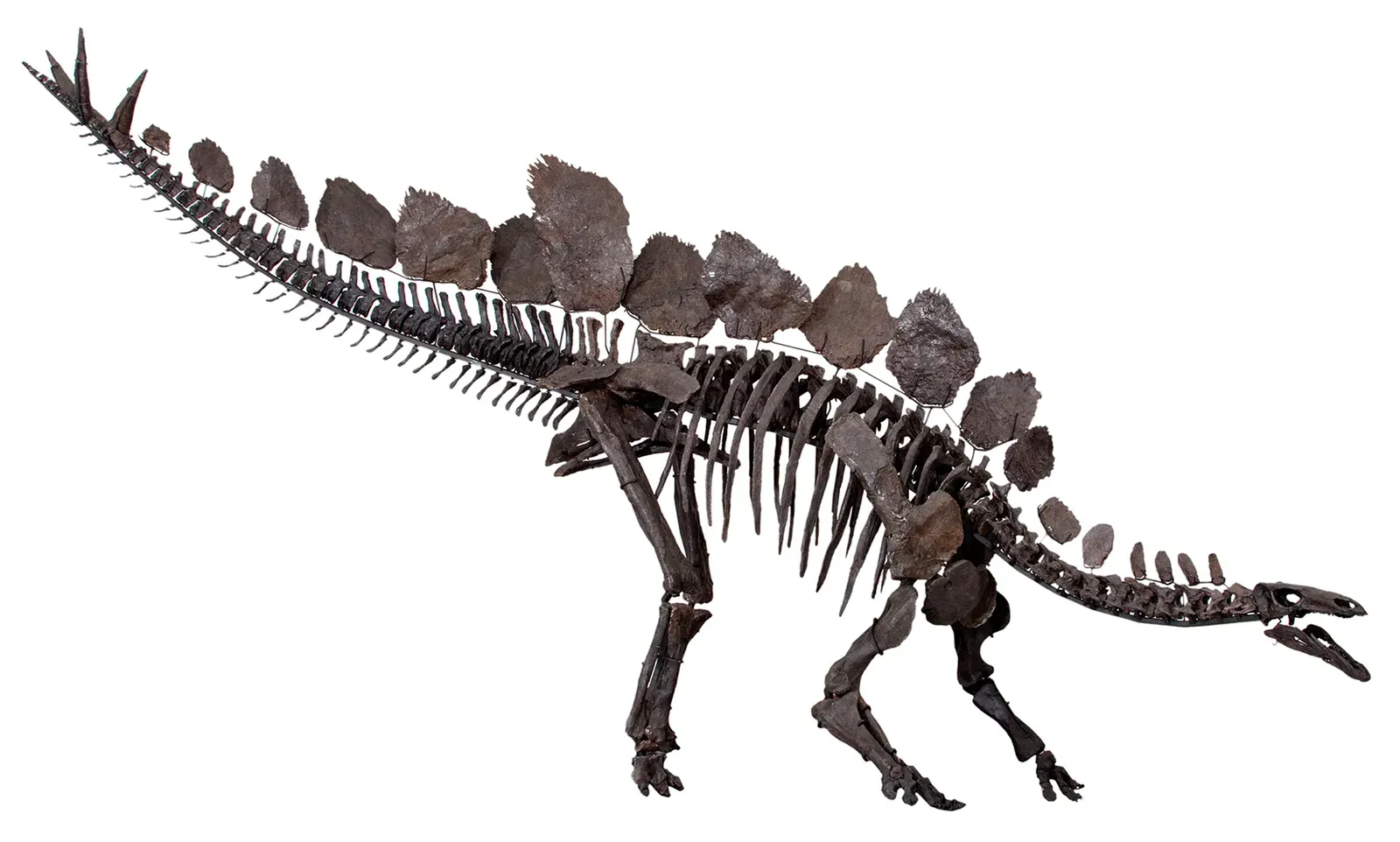
Few dinosaurs are as instantly recognizable as Stegosaurus, and fossils connected to the same Jurassic ecosystems preserved in and around Dinosaur National Monument have helped flesh out this bizarre animal. With big bony plates rising from its back and a spiked tail built like a medieval weapon, Stegosaurus looks like a child’s sketch of a dinosaur that someone decided to build in real life. Its remains have been found in the broader region that now includes several national park units, tying it to those famous canyon landscapes.
One of the wildest things about Stegosaurus is the contrast between its imposing body and its relatively small brain, which has been the butt of jokes for more than a century. Yet, small brain or not, it clearly survived successfully in a world shared with predators like Allosaurus, using its tail spikes as serious deterrents. Picture a Stegosaurus grazing in a Jurassic floodplain where Dinosaur National Monument now sits, plates catching the sun, tail swinging with quiet menace; it is a reminder that survival is not about looking smart on paper, but about fitting perfectly into your environment.
3. Seismosaurus-Style Giants: Enormous Sauropods in Western Parklands
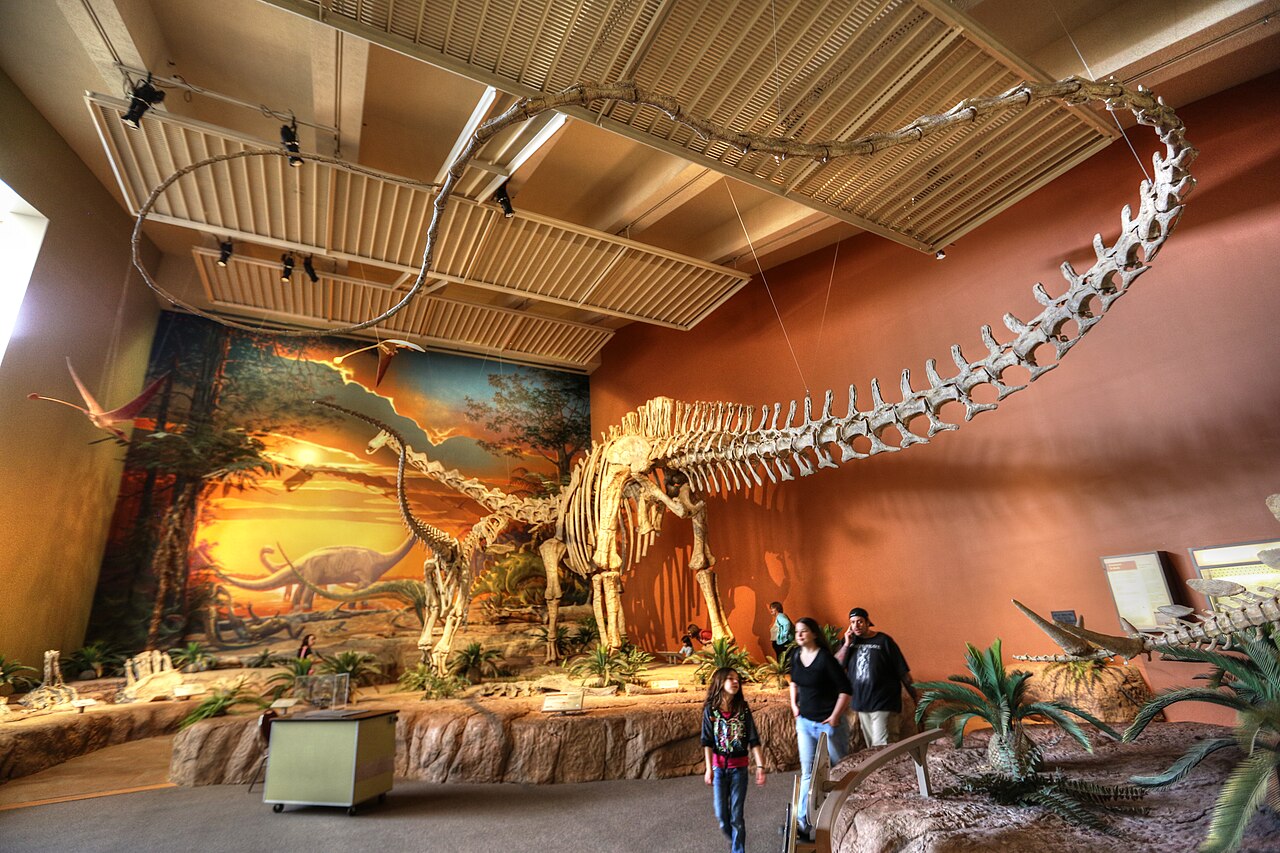
Some of the most unbelievable prehistoric creatures tied to US national parks are the giant sauropods – long-necked, long-tailed dinosaurs that turned the Jurassic landscape into something out of a fantasy novel. In areas now preserved by parks in the American West, including those in the broader Colorado Plateau region, fossils of massive sauropods closely related to giants like Seismosaurus and Diplodocus have been uncovered. These animals stretched tens of meters from nose to tail and weighed more than several fully loaded semi-trucks.
Try to imagine one of these sauropods walking where modern visitors now hike, its head sweeping over the treetops, tail trailing behind like a living suspension bridge. Paleontologists study their vertebrae, limb bones, and trackways preserved in ancient riverbeds to figure out how they moved and how their ecosystems functioned. The very fact that landscapes now managed as national parks once supported herds of such enormous plant-eaters suggests ancient environments rich with vegetation and water, completely reshaping how we picture those now-arid canyons and deserts.
4. Tenontosaurus of Big Bend: The Underdog Herbivore With a Dangerous Neighborhood
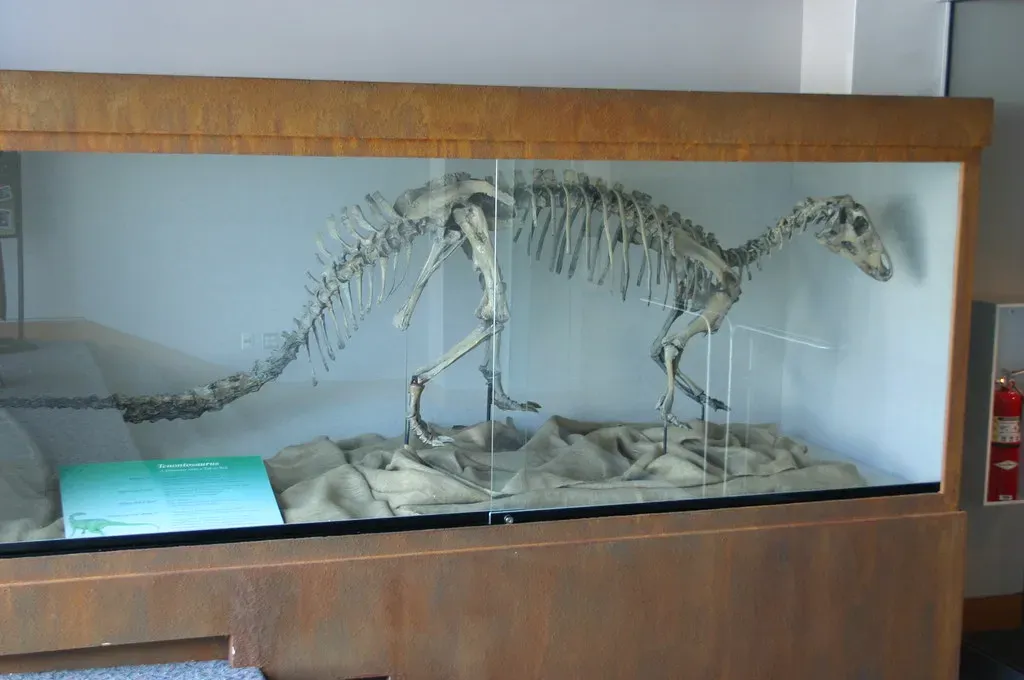
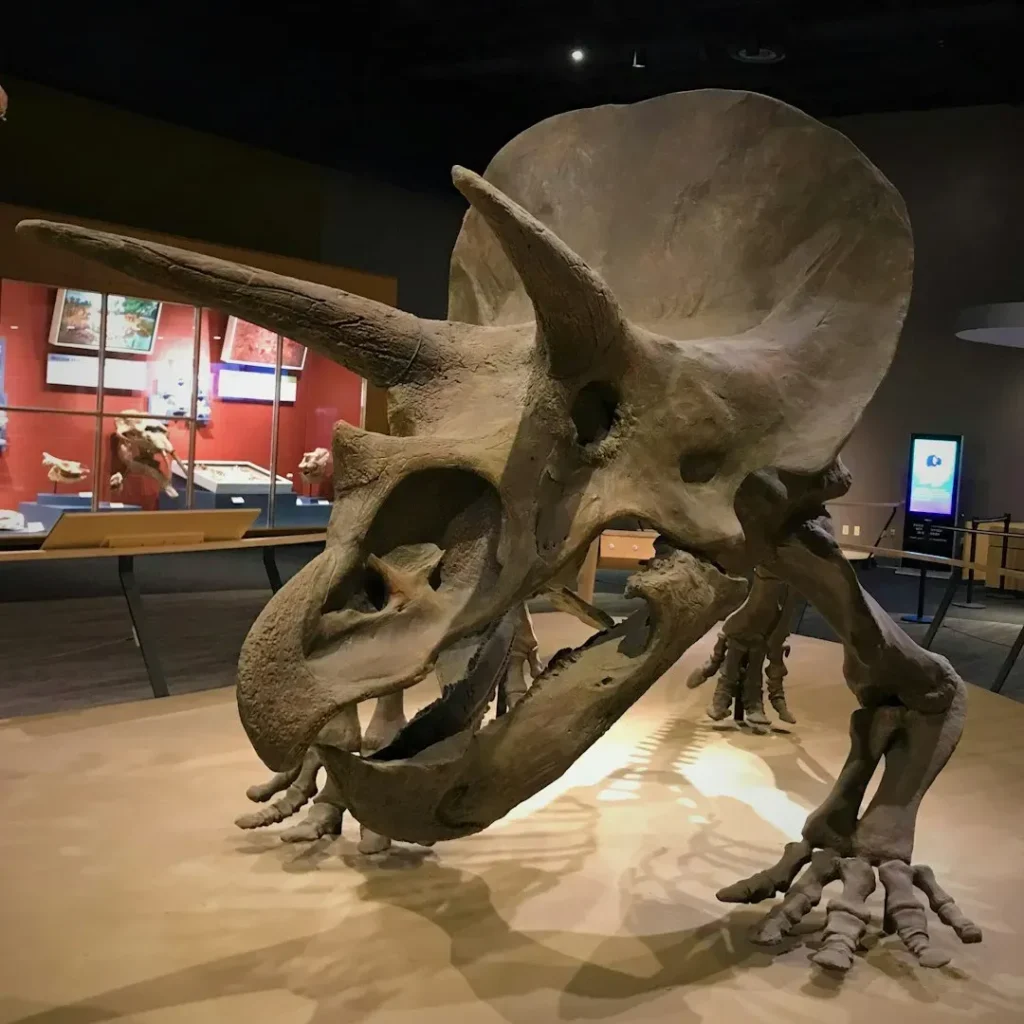
Big Bend National Park in Texas is better known for stark desert views and winding river canyons than for dinosaurs, but its rocks record a Cretaceous world full of drama. One key player from that time is Tenontosaurus, a medium-sized plant-eater that lived long before famous dinosaurs like Triceratops. Fossils in and around the park reveal an animal with a sturdy body, strong limbs, and a long tail that provided balance as it moved through floodplains that once bordered a shallow inland sea.
What makes Tenontosaurus especially fascinating is the company it kept. In other regions, it is closely associated with fossils of a predatory dinosaur called Deinonychus, a sickle-clawed hunter that may have targeted Tenontosaurus frequently. While the details of interactions in Big Bend’s specific fossil sites are still being pieced together, the park’s record leaves little doubt that Tenontosaurus lived in a risky neighborhood. To me, it feels a bit like the deer you see at the edge of a forest knowing full well that predators are watching from the shadows – except in this case, the shadows hid agile, clawed killers.
5. Titanochelon of the Southwest: Giant Tortoises in What Is Now Desert
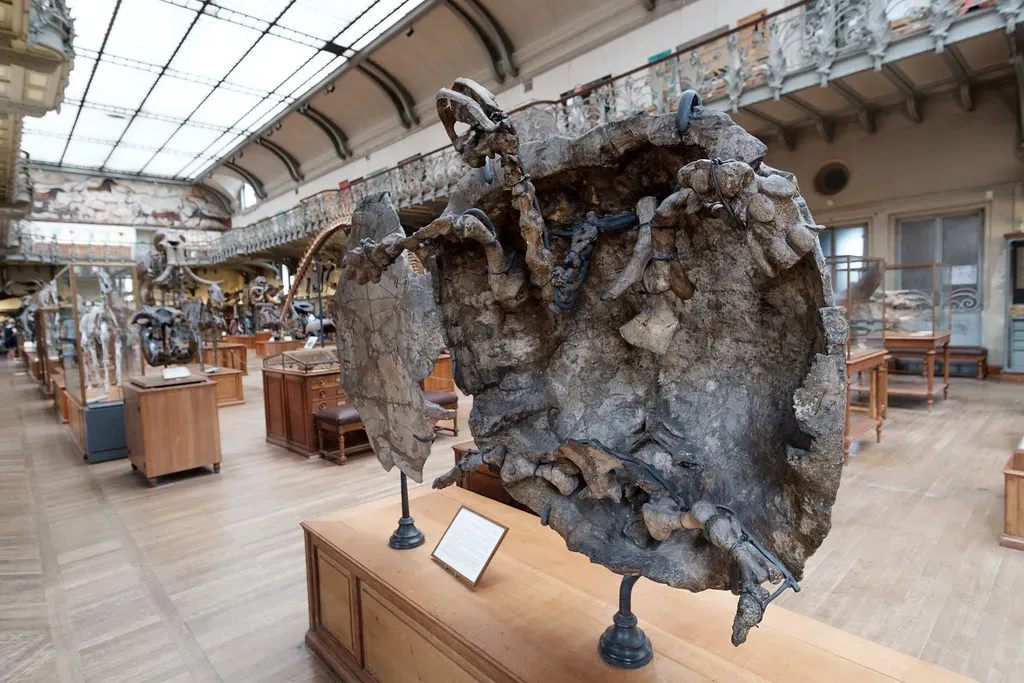
When you think of national parks in the American Southwest, you probably picture rocky arches, badlands, and sagebrush plains, not giant tortoises lumbering through lush wetlands. Yet fossils from parklands in this region, including units within the broader Southwest network of parks and monuments, have revealed massive prehistoric tortoises sometimes grouped under names like Titanochelon or related genera. These animals were far larger than most modern tortoises, with shells that could reach striking sizes, turning them into slow-moving tanks of their ecosystems.
These giant tortoises lived during warmer periods when parts of the Southwest were more humid and supported richer plant life than we see there today. Their remains hint at mosaic landscapes of lakes, rivers, and woodlands that would feel almost alien compared to the dry vistas visitors love now. I find this contrast strangely moving: the same ground that crunches under your boots on a hot summer hike once supported giant, slow reptiles that had all the time in the world – until climate shifts and changing ecosystems quietly shut that chapter forever.
6. Brontothere Beasts of Badlands National Park: Rhino-Like Titans With Bizarre Skulls
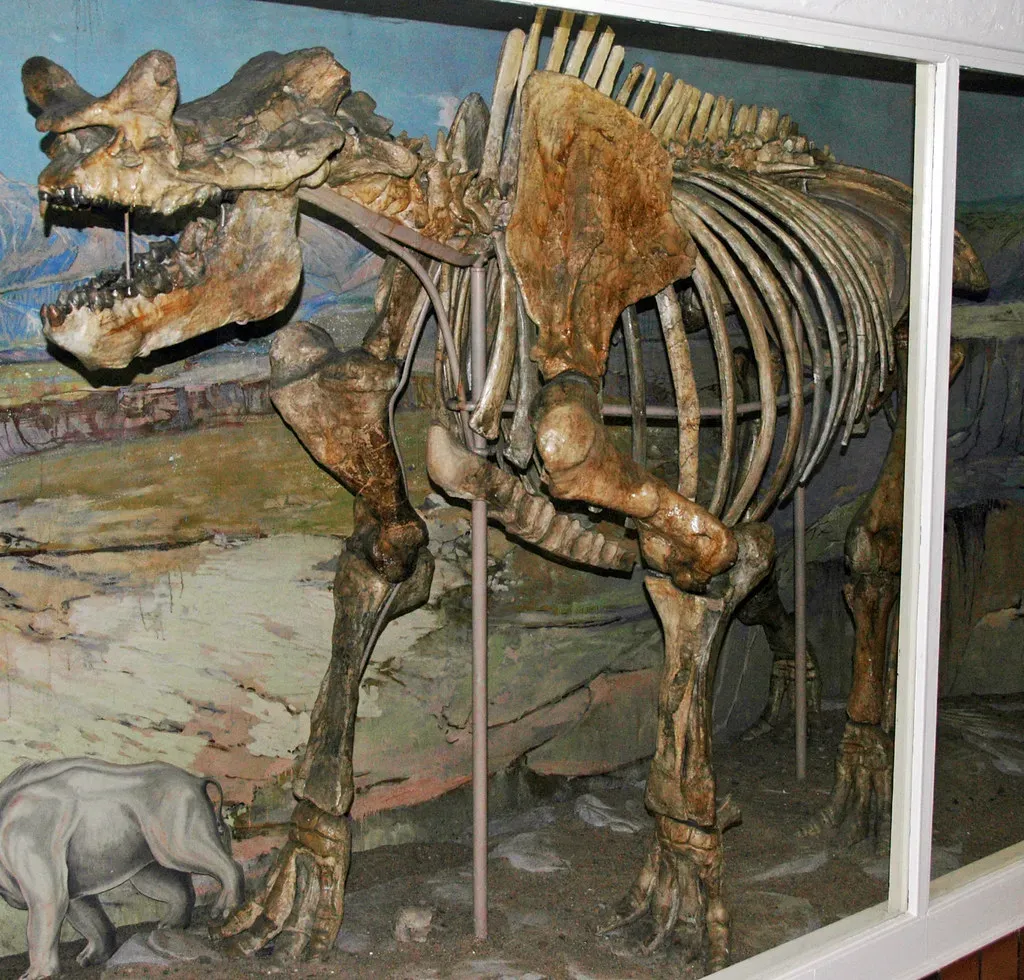
Badlands National Park in South Dakota is one of the most important windows into the world after the dinosaurs, and among its showstoppers are the brontotheres. These were large, herbivorous mammals that looked a bit like rhinos mixed with something out of a fantasy game, with bulky bodies and distinctive horn-like structures on their skulls. Their fossils are so common in certain layers of the Badlands that entire hillsides seem to tell their story.
Brontotheres lived about thirty to forty million years ago in what was then a warm, subtropical landscape of rivers, floodplains, and forests. Their strange skull ornaments were probably used for display or combat between individuals, similar to how modern animals show off antlers or horns. Standing on a Badlands overlook today, it is easy to see emptiness and erosion, but once you know that herds of these odd mammals roamed the area, the landscape feels crowded with ghosts. It is like realizing an abandoned stadium was once deafening with noise and energy.
7. Giant Crocodile Relatives in Petrified Forest: Ambush Predators of an Ancient Swamp
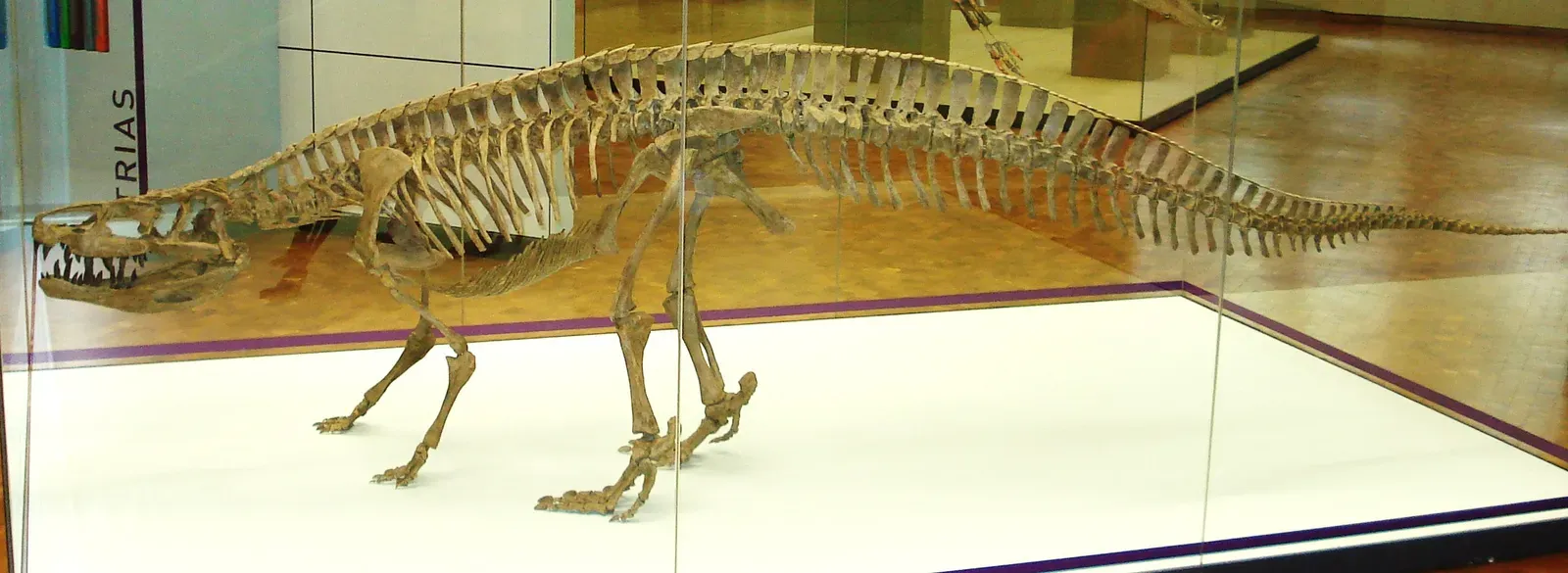
Petrified Forest National Park in Arizona is famous for its fossilized logs, but its Triassic rocks also preserve something even more unsettling: huge crocodile relatives that once dominated rivers and wetlands. These creatures, often grouped among large archosaurs related to early crocodilians, were top predators long before dinosaurs took over the world. With heavy armor plates and powerful jaws, they were perfectly built for ambush attacks along muddy riverbanks.
In the Triassic ecosystems recorded at Petrified Forest, these crocodile kin likely preyed on early reptiles, amphibians, and smaller dinosaur relatives, reshaping our idea of who really ruled the swamps at that time. Their fossils show that ancient Arizona was anything but dry; instead it held rich, waterlogged habitats bursting with life. When I first learned this, it completely flipped my mental image of the park. The quiet, open vistas you see today are just the last faint echo of a sweltering, predator-filled wetland that would have felt more like a primeval bayou than a desert.
8. Saber-Toothed Cats of La Brea and Western Parklands: Ice Age Hunters on Familiar Ground

While not every iconic fossil site is managed as a national park, several national park units and nearby protected areas in the American West preserve remains from the same Ice Age world that produced the famous saber-toothed cats. These predators, with their exaggerated upper canine teeth, were some of the most dramatic mammals to ever walk North America. In and around western parklands, fossils of these big cats and their close relatives remind us that the landscapes we hike today were once hunting grounds where every step could mean life or death.
These saber-toothed predators lived alongside mammoths, large ground sloths, ancient bison, and horses in environments that looked surprisingly similar to many current grasslands and open woodlands. That familiarity is what makes them so haunting; unlike dinosaurs, their world is close enough to ours that you can almost picture one watching you from behind a stand of trees. To me, saber-toothed cats are a blunt reminder that the line between our world and the deep past is thinner than we like to admit. The parks we drive through on vacation double as cemeteries for creatures that would see us as either competition – or potential prey.
Conclusion: National Parks as Time Machines, Not Just Scenic Backdrops
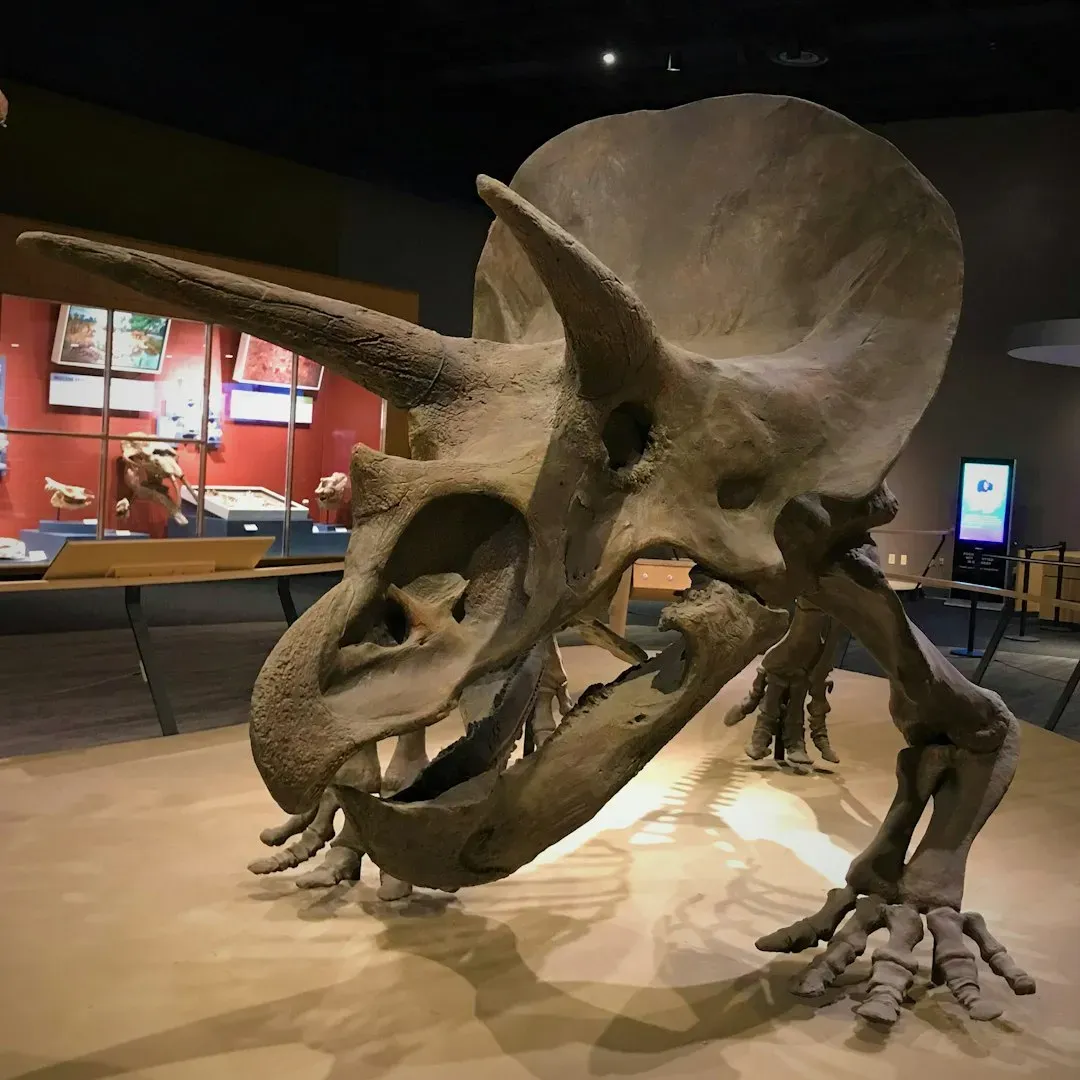
Once you know about these creatures, it becomes almost impossible to see US national parks as just pretty places for photos and picnics. Each trail, canyon wall, and eroded hillside is layered with the remains of animals so strange and powerful that they force you to rethink what life on Earth can look like. I honestly think we underestimate how wild our planet has been; dinosaurs, brontotheres, giant tortoises, and saber-toothed predators are not rare exceptions, they are just the chapters we have managed to read so far.
In my view, national parks should be treated as time machines as much as they are nature preserves. They hold the physical evidence that entire worlds have come and gone, and that everything we see now – from squirrels to humans – is just the latest version of a very long experiment. Next time you stand at a viewpoint and someone says the landscape looks timeless, you will know better: it is anything but. The rocks and bones are quietly telling you that change is the rule, not the exception. Which ancient creature will you find yourself thinking about the next time you step onto a national park trail?