You know that feeling when you see an elephant in a zoo and think, this has to be as big as land animals get? The Ice Age laughs at that. Long before humans started posting photos with tiny dogs in giant handbags, Earth was home to creatures so huge and so powerful that even the biggest modern elephant would have looked like someone’s slightly oversized lap pet by comparison.
I still remember the first time I saw a life-size model of a woolly mammoth as a kid. I honestly thought it had to be exaggerated because no way could something that massive have actually walked around on the same planet I’m standing on. As it turns out, some Ice Age giants were even more intimidating, stranger, and heavier than that mammoth I stared at with my jaw hanging open. Let’s meet a lineup of beasts that would have turned today’s elephants into background extras.
The Colossal Steppe Mammoth: The Original Heavyweight Champion
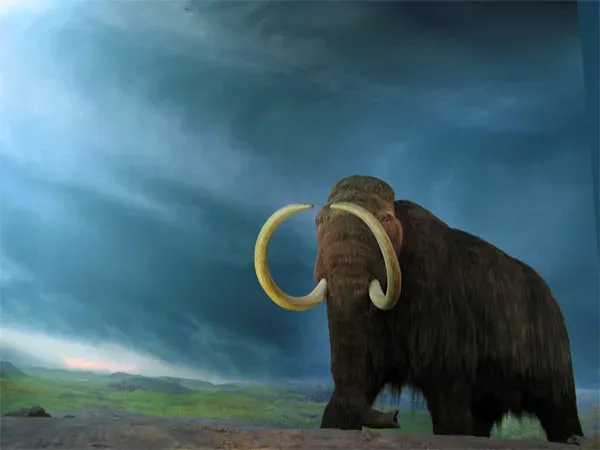
Imagine looking up at an animal whose shoulders are roughly as high as the second-story windows of a house. That gives you a sense of the steppe mammoth, one of the largest elephant relatives ever to live, towering above even the biggest African elephants we have today. Some estimates suggest the largest males may have approached around ten to thirteen tons, which is dramatically heavier than the heaviest modern elephants. With its thick tusks stretching out like gleaming lances and a body built like an armored truck, this was a creature that practically redefined the word gigantic.
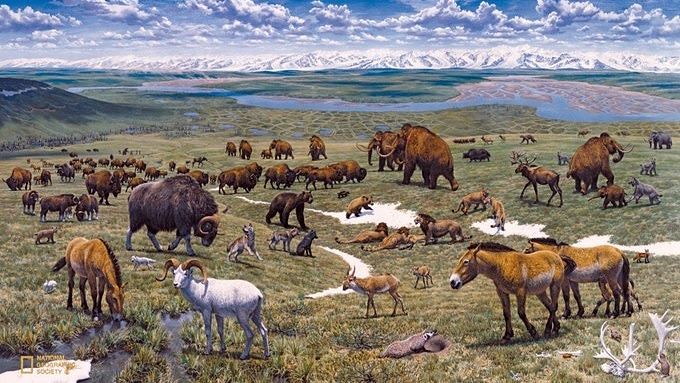
The steppe mammoth roamed across vast parts of Eurasia during the colder stages of the Ice Age, grazing on tough grasses and shrubs in open, windswept landscapes. Picture a herd of these giants moving slowly across a frozen plain, the ground literally trembling under their combined weight. Early human relatives may have seen them from a distance, but hunting a full-grown steppe mammoth would have been like deciding to take on a moving building with spears. If an African elephant looks imposing to you, the steppe mammoth would have made it seem almost modest.
Siberian Unicorn: The Rhino That Looked Like a Fantasy Beast
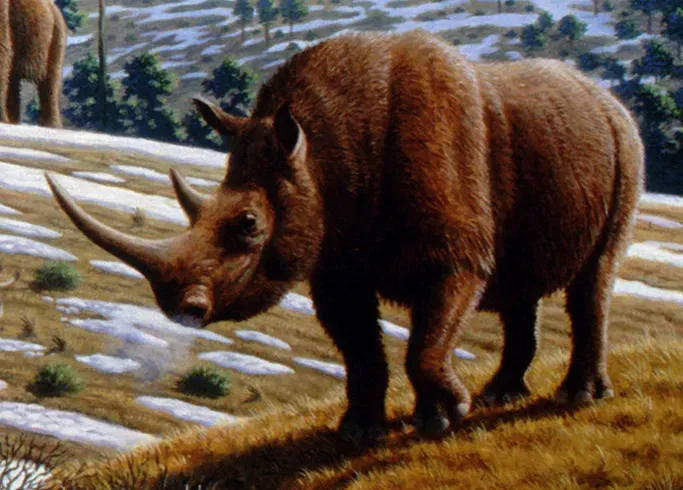
With a nickname like the Siberian unicorn, you might expect something delicate and graceful, but this Ice Age titan was more like a living tank with a horn. Known scientifically as Elasmotherium, it was an enormous rhinoceros that likely carried a huge single horn on its forehead, possibly as long as a person is tall. Its body was bulky and muscular, its limbs thick and powerful, and its head so massive that its neck had to be heavily reinforced to support it. Compared to a modern elephant, the Siberian unicorn would not only rival it in weight but might actually look more intimidating because of that brutal-looking skull and horn combination.
These animals wandered across the steppes of Eurasia, adapted to cold and dry environments with limited vegetation. They were probably grazers, using their wide mouths to crop tough grasses, in a lifestyle not so different from a massive, horned lawnmower. There’s even some evidence they may have survived later into the Ice Age than once thought, potentially overlapping with early modern humans in some regions. Imagine stepping outside your shelter and seeing not just mammoths in the distance, but a hulking, horned beast that looks like a fantasy creature somehow made real. Suddenly an elephant feels almost friendly.
Mammoths on Steroids: The Songhua River Mammoth
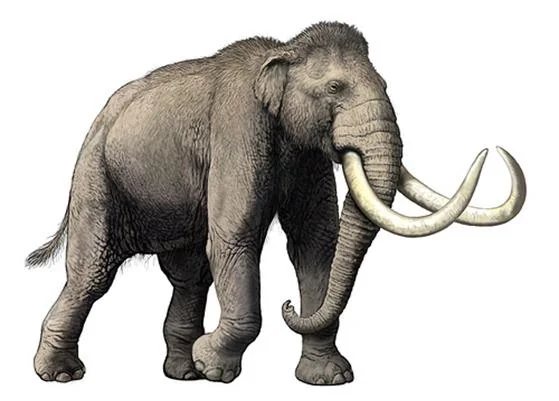
When people think “mammoth,” they usually picture the classic woolly mammoth, already huge by today’s standards. But paleontologists have identified an Asian species sometimes called the Songhua River mammoth that may have pushed mammoth size to an entirely new level. Fossil remains suggest that the biggest individuals could have been longer and heavier than any living elephant, potentially brushing shoulders with the steppe mammoth in terms of sheer mass. These were not just big animals; they were extreme outliers in a world that was already packed with large mammals.
What makes these truly wild to imagine is the environment they lived in: cold, open landscapes where survival meant eating an enormous amount of vegetation every day. An animal that large would have needed to spend almost all its waking hours feeding, ripping up grasses, shrubs, and any other edible plant material it could find. Standing next to one, you’d barely reach halfway up its shoulder, and its tusks could have extended far beyond your arm span. Compared to that, an elephant starts to feel like the compact car of the proboscidean world, while the Songhua River mammoth was the oversized industrial truck.
The Towering Giant Short-Faced Bear
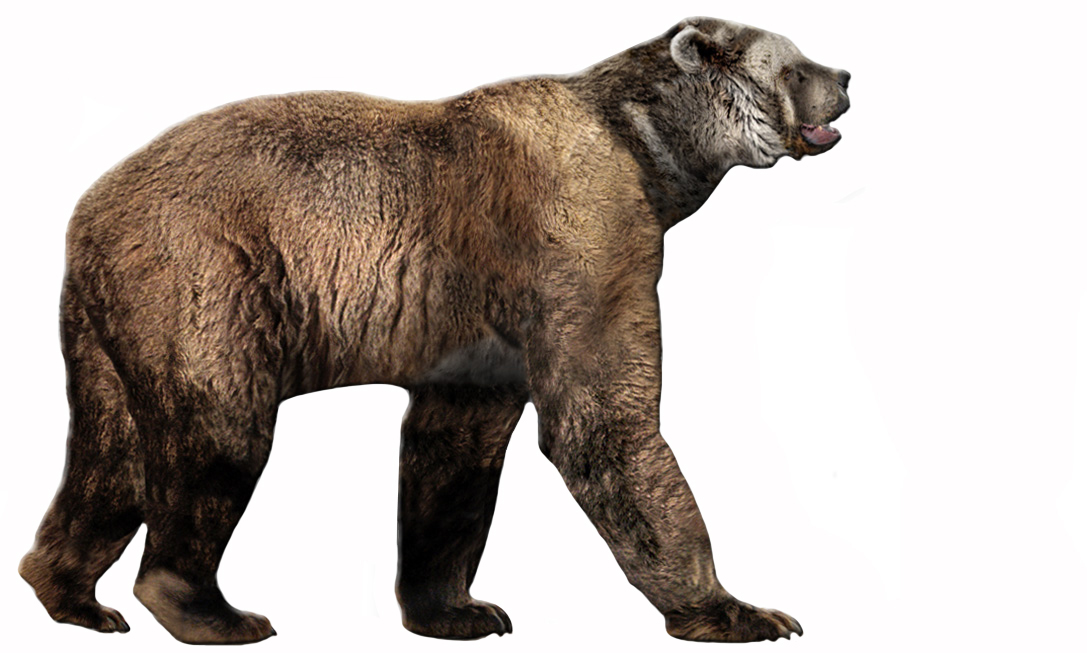
If the mammoths and rhinos were the Ice Age’s oversized bulldozers, the giant short-faced bear was its terrifying, overpowered apex predator. This bear, which roamed North and South America, stood so tall on its hind legs that it may have reached the height of a small giraffe. Even on all fours, its shoulders were dramatically high, and its limbs were unusually long for a bear, giving it an almost unnerving, stilt-like appearance. It was not as heavy as the very largest elephants or mammoths, but in terms of height and presence, it could make them seem slow and clumsy when it reared up.
Scientists debate exactly how this bear lived, with some arguing it was a hyper-scavenger that bullied other predators away from their kills, while others suggest it could run down prey over open ground. Either way, its size alone would have given it a terrifying advantage. Picture walking across an Ice Age plain and watching a bear rise up higher than anything you associate with the word bear today, scanning for food or rivals. Faced with that, most people would probably rather take their chances with an elephant; the Ice Age menu of threats was on a very different level.
Megatherium: The Ground Sloth the Size of a Building
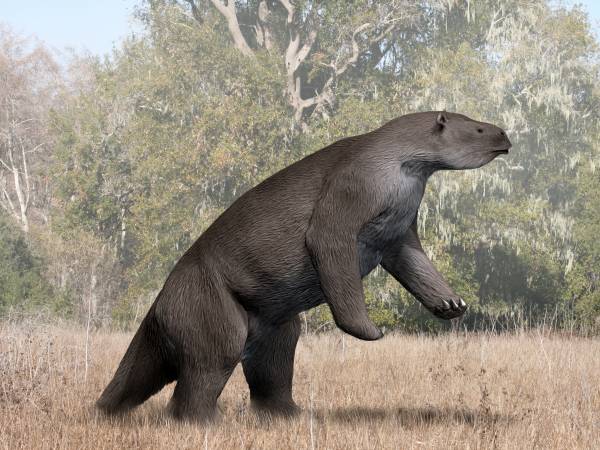
Sloths today are small, slow, and oddly adorable, but their Ice Age relative Megatherium was so massive it almost feels like a prank when you first see reconstructions. This South American ground sloth could rival an elephant in weight and exceed it in height when it stood upright, towering like a moving wall of fur, bone, and muscle. Its hind limbs were thick and sturdy, its forelimbs long and equipped with immense claws that looked more like tools of destruction than anything associated with cute tree dwellers. Imagine something with the general posture of a bear and the body mass of an elephant, but technically a sloth.
Despite its fearsome claws, Megatherium was a herbivore, likely using its powerful arms to pull down branches and strip vegetation. That does not make it less intimidating to imagine, especially if you picture one rearing up on its hind legs to reach higher leaves, its head brushing the height of a small building. In a world filled with predators and scavengers, its sheer size would have been part of its defense. Compared to this towering ground sloth, an elephant would look more compact and refined, almost like a sleek, modern SUV parked next to an old, overbuilt military transport.
Palaeoloxodon: The Straight-Tusked Giant That Dwarfed Modern Elephants
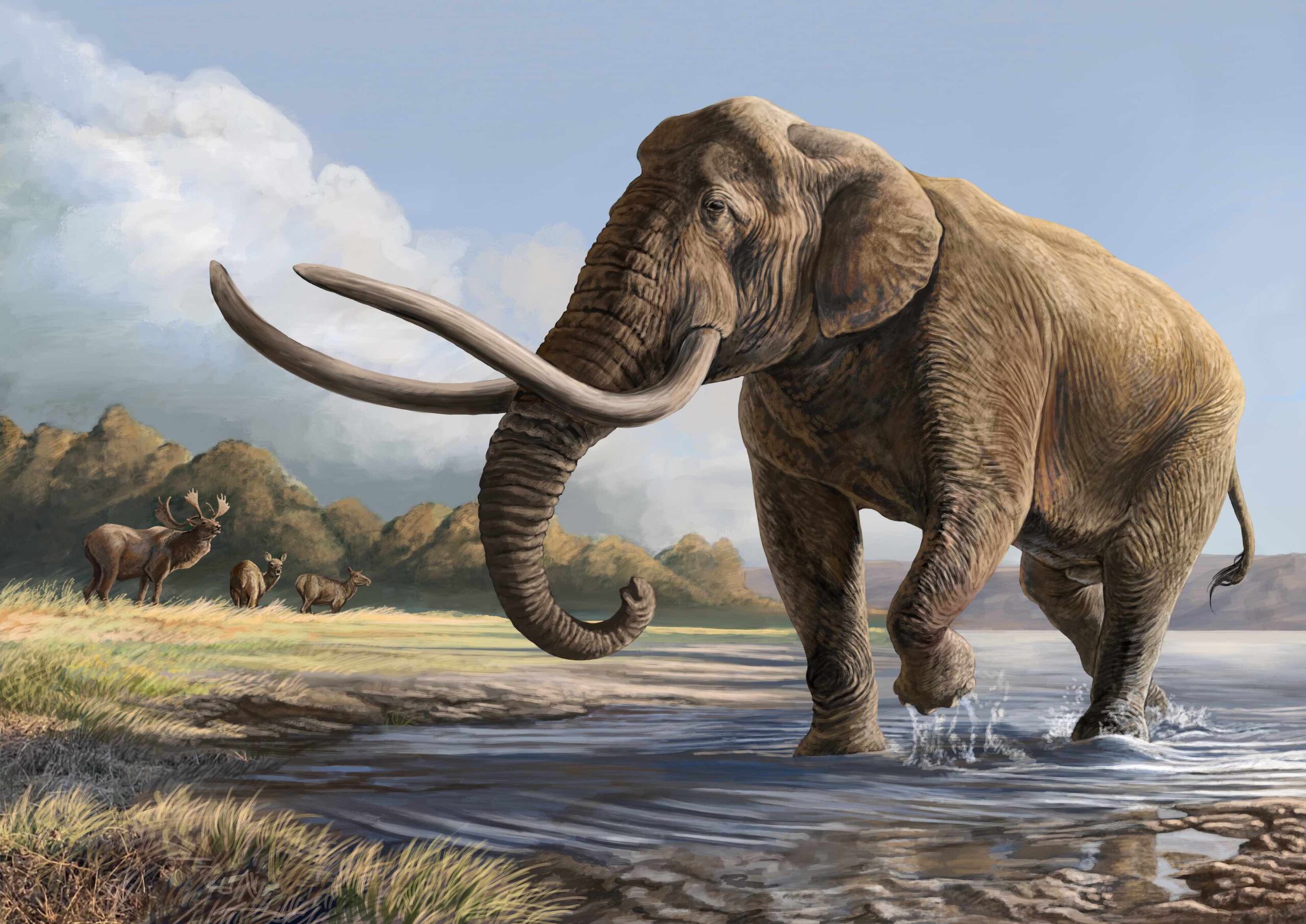
While Africa’s savannas today are ruled by elephants, parts of Ice Age Europe and Asia were once home to an elephant relative that may have been even more impressive: Palaeoloxodon, also known as the straight-tusked elephant. Some reconstructions, based on particularly large fossil individuals, suggest it could have stood significantly taller than today’s largest elephants, with a bulkier body and long, almost ruler-straight tusks pointing forward. This animal would have dominated forests and open woodlands, moving through the landscape like a living piece of heavy machinery.
Fossil sites show that early humans and Neanderthals sometimes encountered these giants, and there are archaeological hints that groups of people may have tried to hunt or at least scavenge them. The idea of standing on the ground, with nothing but stone-tipped weapons, looking up at a straight-tusked elephant is almost hard to process. Its head alone would have been high above you, its tusks forming a kind of deadly fence across its front. Put a modern elephant next to it, and while they would both be enormous, the Ice Age version might easily come across as the more intimidating big sibling – the one that makes everyone else step aside.
The Irish Elk: Antlers Wider Than a Small Car
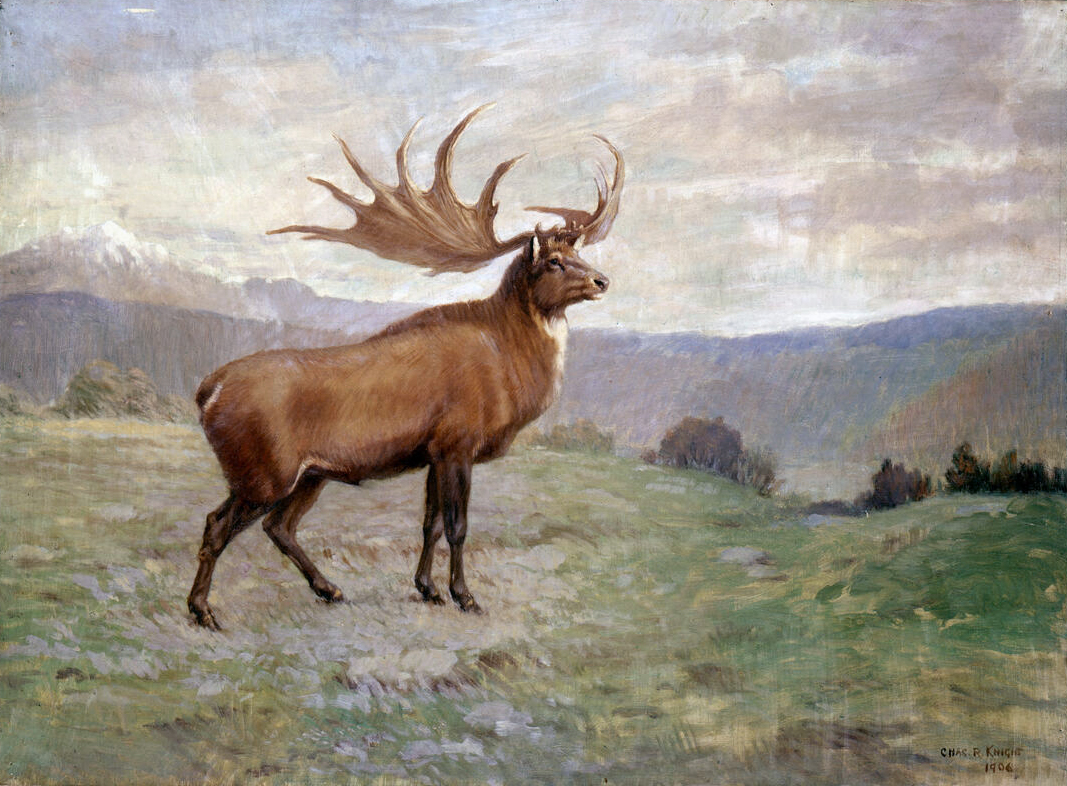
Technically, the Irish elk was not bigger in body mass than today’s largest moose or elephants, but it earns its place among the giants because of its outrageous headgear. This huge deer carried antlers that could spread wider than the width of a compact car, creating a silhouette that was almost shockingly dramatic. Standing next to one, you’d be dwarfed not just by body height but by the expansive, branching crown rising above its skull. While an elephant’s tusks are impressive, the Irish elk’s antlers were like nature’s answer to a massive satellite dish mounted on a living animal.
These creatures roamed across Eurasia during the last Ice Age, favoring open habitats where there was enough space to actually maneuver with those enormous antlers. They probably paid a heavy price in terms of energy to grow them, which suggests those antlers were crucial in mating displays and dominance battles. Imagine a cold dawn on an Ice Age plain, two Irish elk facing off, their gigantic antlers clashing while the sound echoes across the frost. An elephant’s weapons suddenly feel almost restrained in comparison; the Irish elk was playing the game of exaggeration on a completely different level.
Opinionated Conclusion: Why These Giants Still Matter in an Age of Miniaturized Wildlife
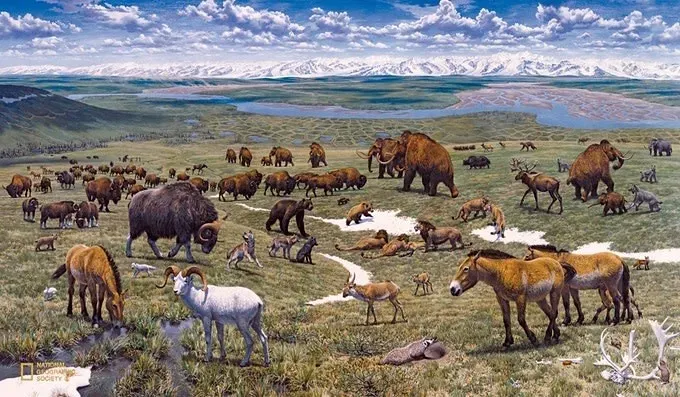
Looking back at the Ice Age giants, it’s hard not to feel that our modern world is strangely downsized. We live on the same planet that once hosted elephants so massive they made today’s herds look moderate, sloths the size of trucks, and bears tall enough to stare into second-story windows. My honest opinion is that we seriously underestimate how wild Earth used to be and, by extension, how much we have lost. We talk a lot about conserving wildlife, but it often feels like we are desperately trying to hold on to the last echoes of a world that was once far more dramatic, dangerous, and awe-inspiring.
At the same time, maybe that sense of loss is exactly why these animals still matter so much. They remind us that nature is capable of producing forms and scales that stretch our imagination, and that the current lineup of species is not some permanent, final state. If we allow today’s elephants, rhinos, bears, and big herbivores to disappear, we are not just losing animals; we are erasing the last living links to an age of giants that makes our world feel deeper and older. When you picture a steppe mammoth or a giant ground sloth walking across a frozen plain, does it make today’s elephant look small – or does it make our responsibility to protect what’s left feel enormous too?