
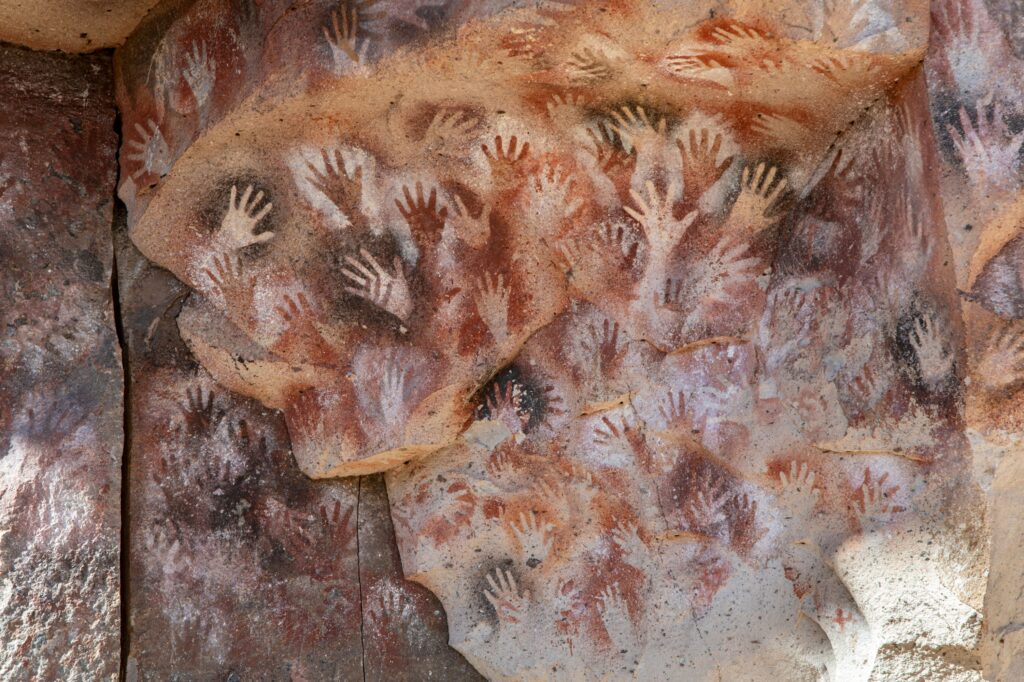
Before Pixar, before Studio Ghibli, before any of the big-name animation houses, there were people standing in the dark with flickering animal-fat lamps, blowing paint against stone. Some of what they left behind is so cinematic it feels like a storyboard for a movie that never got made: galloping horses, stampeding bison, stalking lions, entire skies of hands and symbols that look like special effects. I still remember the first time I saw a high-resolution image from one of these caves: I actually assumed it was a modern artist’s homage. When you realize it was painted tens of thousands of years ago, deep underground, it hits you like a plot twist. These are nine real cave paintings that look so alive, so deliberate, and so full of narrative energy that you can almost hear the swelling soundtrack behind them.
The thundering Hall of the Bulls, Lascaux, France
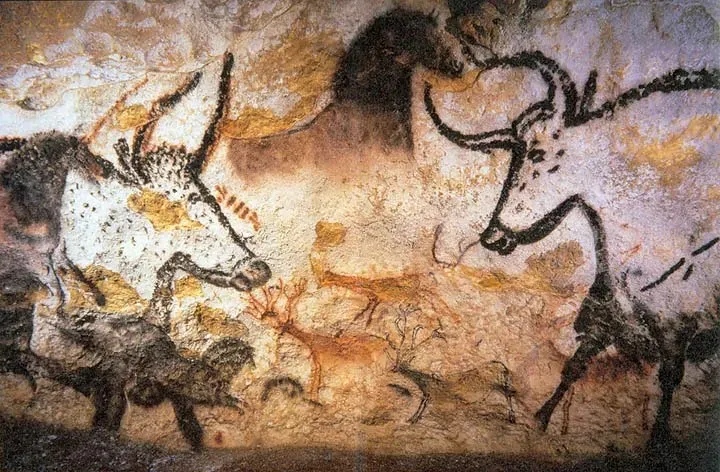
Walk into the Hall of the Bulls at Lascaux and it feels less like archaeology and more like the opening shot of a big-budget animated epic. Massive black-and-ochre bulls, some over five meters long, loom across the curving ceiling, surrounded by horses and deer that seem to move as your torchlight skims the rock. The artists used the bulges and dips of the limestone as if the wall itself were 3D modeling software, turning natural curves into shoulders, haunches, and muscle. ([archeologie.culture.gouv.fr](https://archeologie.culture.gouv.fr/lascaux/en/lascaux-cave?utm_source=openai)) What makes this space so filmic is the sense of choreography. The animals are not scattered randomly; they are placed in overlapping groups, with different scales and directions that suggest a swirling, almost cinematic chaos, like a slow-motion stampede shot from below. The play of light and shadow on the uneven surface creates the illusion that the herd is actually rotating around you, the way an animator might plan a camera move through a digital environment.
The Polychrome Ceiling of bison, Altamira, Spain
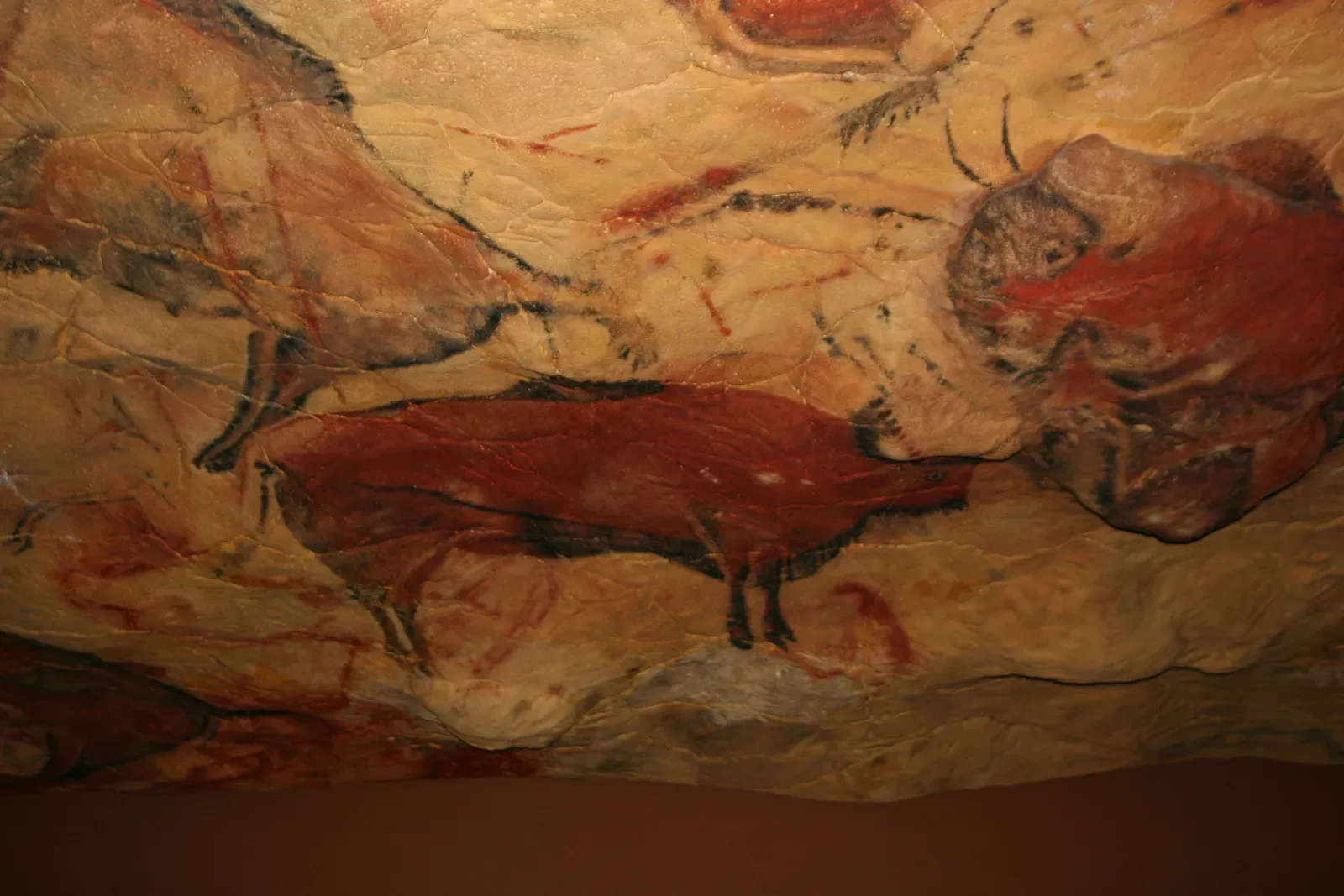
If an animated film opened with a slow pan across the ceiling of Altamira, audiences would assume it was painstaking digital artistry. Instead, what you’re seeing is Late Stone Age painters working with charcoal and iron oxides, using the rock’s natural bumps to sculpt bison that almost pop off the surface. The famous polychrome bison are shaded in reds, browns, and blacks, with careful contouring that gives them volume and weight, as if they’re mid-roll on the cave roof. ([repositorio.uneatlantico.es](https://repositorio.uneatlantico.es/id/eprint/15396/1/conservation-04-00042.pdf?utm_source=openai)) Conservators have studied how these paintings respond to moisture and light, and even in today’s controlled conditions, the bison still look startlingly fresh – like high-resolution texture maps lit by a warm, directional spotlight. You can picture a director starting a movie here: a close-up of one bison’s eye, then a tilt out to reveal a whole herd swirling around the viewer, the sound of hooves echoing as the scene dissolves into a real steppe bathed in dawn light.
The explosive Horse Panel of Chauvet Cave, France
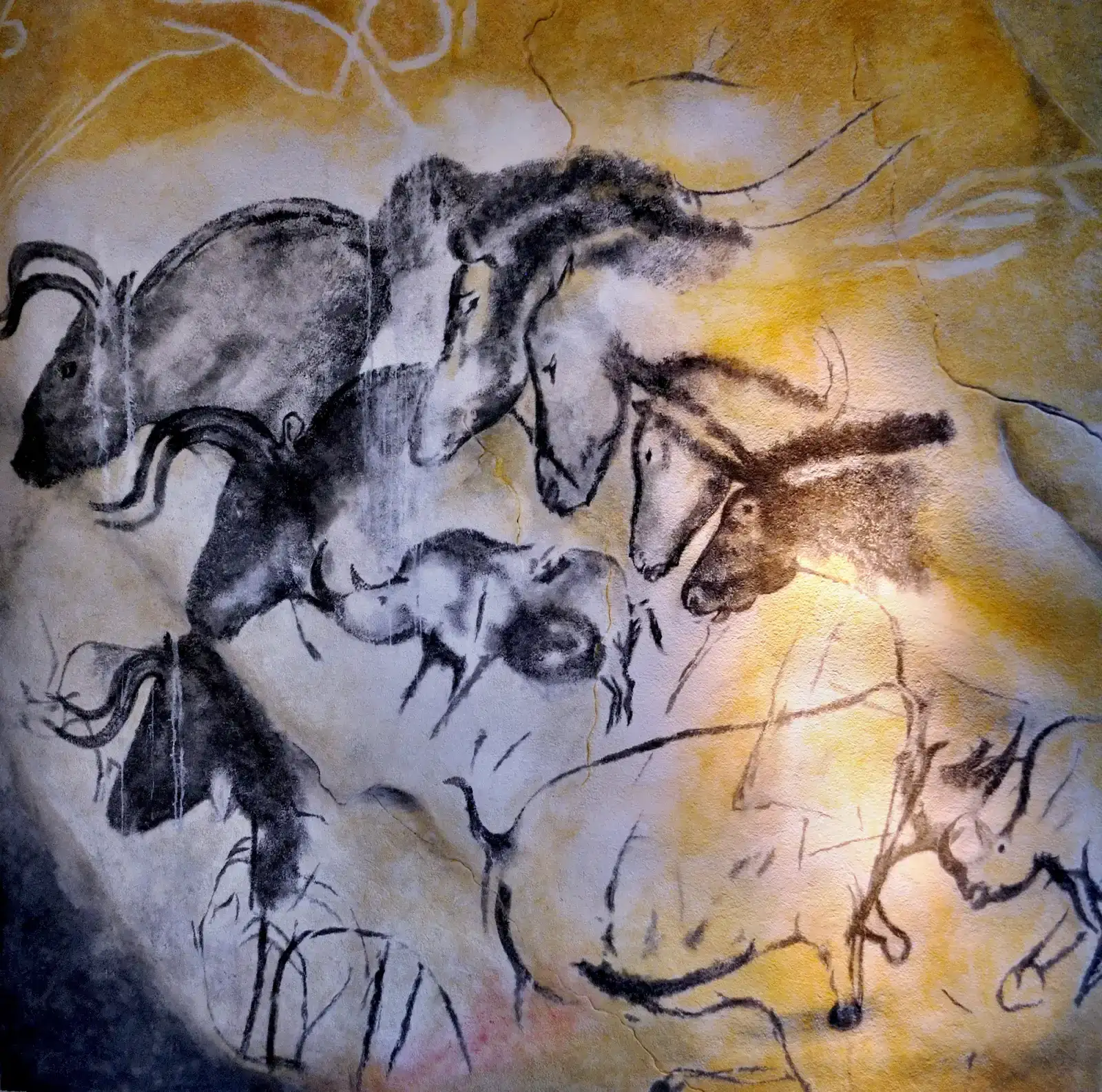
The Horse Panel in Chauvet Cave is one of those images that feels story-driven at first glance. Several horses’ heads line up along a diagonal, their muzzles forming a dynamic axis that almost pulls your gaze like a tracking shot across the rock. Below and around them, rhinoceroses, aurochs, and other animals overlap and tangle in a layered composition that suggests a whole sequence of events compressed into a single frame. ([archeologie.culture.gouv.fr](https://archeologie.culture.gouv.fr/chauvet/en/panel-horses?utm_source=openai)) What blows my mind is the sheer age of it: some of these paintings are around thirty thousand years old, yet the draftsmanship feels fashionably stylized rather than primitive. The horses are captured with fluid, confident lines – arched necks, flaring nostrils, manes indicated with a few expressive strokes – that would not look out of place in a modern concept artist’s portfolio. You can absolutely imagine this as the opening storyboard panel in a movie: first, the flicker of torchlight, then the horses “come alive” and surge into a fully animated world.
The stalking Lion Panel, Chauvet’s thriller-worthy climax
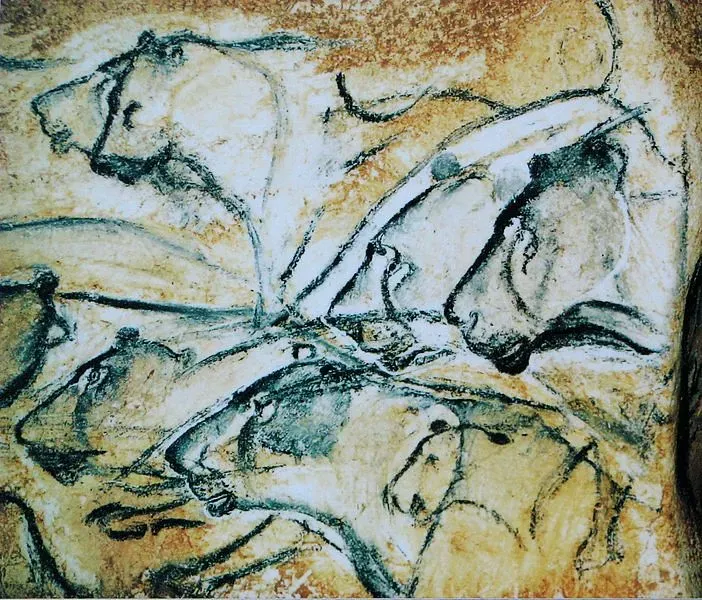
Deep in Chauvet’s End Chamber is the Lion Panel, which plays like the dramatic climax of a nature documentary mixed with a suspense thriller. A pack of cave lions advances in profile, low and tense, their bodies elongated across the wall in varying poses of stalking, pausing, and lunging. Their eyes and muzzles all angle toward a cluster of bison, which are squeezed and jostled at the edge of the panel as if they’re one heartbeat away from scattering. ([archeologie.culture.gouv.fr](https://archeologie.culture.gouv.fr/chauvet/en/composed-panels?utm_source=openai)) The composition is pure cinematic storytelling: the direction of the lions’ gaze acts like an invisible arrow guiding your eye through the scene, just the way story artists use “eye-lines” when planning animated sequences. There is no ground line, no background landscape – only motion, expression, and implied danger. If you imagine this on screen, you can almost hear the sound design: low growls, nervous snorts, a rising drumbeat as the tension stretches and then snaps.
Cueva de las Manos, Argentina: a title sequence of human signatures
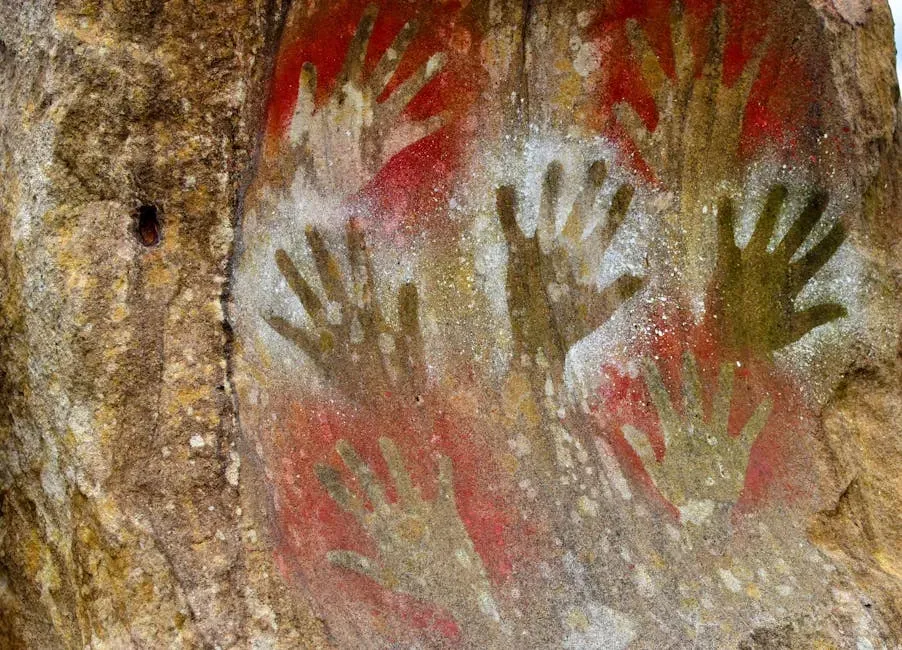
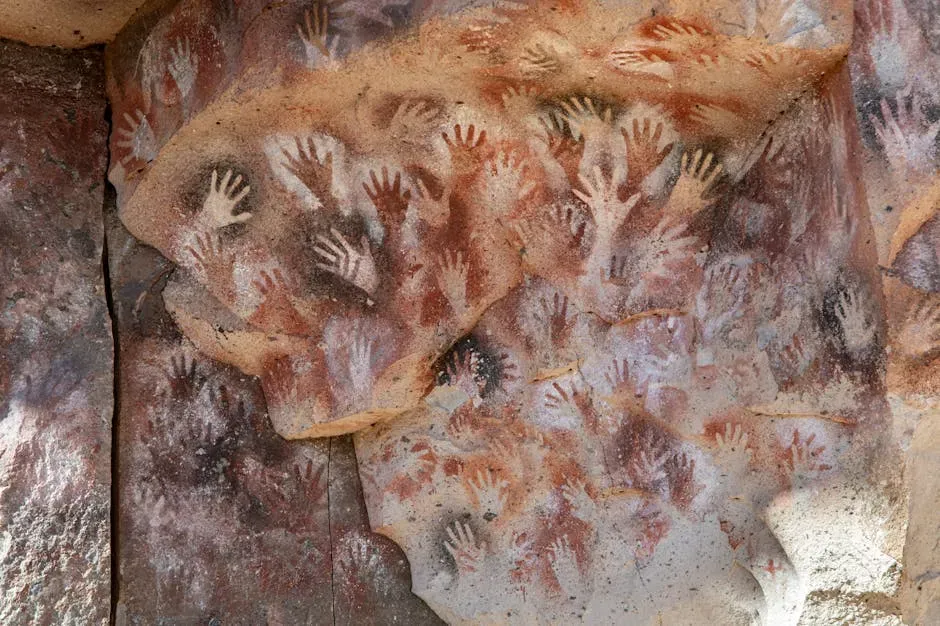
In Patagonia’s Cueva de las Manos, the “cast list” of an ancient community appears not as names, but as hundreds of stenciled hands erupting across cliff faces and cave walls. Most are left hands, sprayed in negative by blowing pigment around an outstretched palm, leaving an eerie, crisp silhouette in red, black, white, or ochre. Seen as a whole, they look astonishingly like a stylized credit sequence, the way an animator might fill the frame with repeating shapes that pulse to music. ([argentina.gob.ar](https://www.argentina.gob.ar/jefatura/turismo/viaja-por-argentina/observar-pinturas-rupestres-en-la-cueva-de-las-manos?utm_source=openai)) Archaeologists date the earliest of these images to more than nine thousand years ago, with layers showing generations returning to mark the same walls. There are also hunting scenes and abstract symbols, but it is the hands that hit hardest: a crowd of gestures frozen in time, some small enough to have belonged to children. It feels unnervingly intimate, like everyone involved in the film stepped in front of the camera for one second and left nothing but the outline of their touch.
The Dark Horse and companions of Lascaux’s Axial Gallery
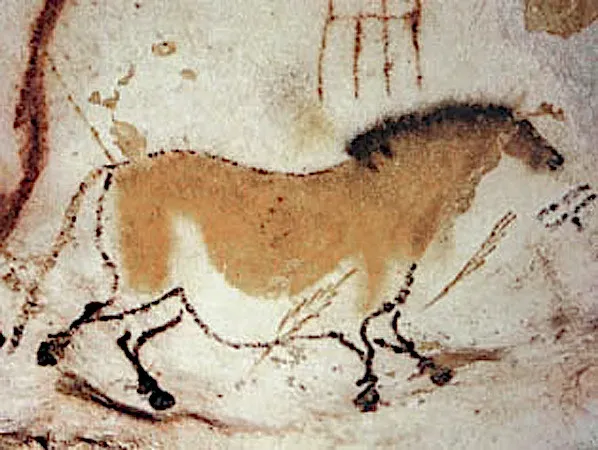
Beyond the Hall of the Bulls, Lascaux’s Axial Gallery ramps up the drama with a sequence of animals that could be cut directly into a high-fantasy prologue. One standout is a dark horse painted with bold black lines and carefully modeled muzzle and jaw, its body partly following the natural curves of the rock as if it is physically emerging from stone. Nearby, stags, ibex, and small mysterious signs punctuate the walls like runes in an opening montage. ([archeologie.culture.gouv.fr](https://archeologie.culture.gouv.fr/lascaux/en/lascaux-cave?utm_source=openai)) What feels so modern here is the intentional pacing: you do not see everything at once. The tunnel’s twists force a kind of reveal, with each figure sliding into view as you move, just as a director might time cuts and camera moves to reveal new information. The horse, in particular, has a kind of character to it – head slightly turned, eye suggestive of alertness – that makes it easy to anthropomorphize. It is not hard to imagine an animated story that literally starts with this horse blinking awake.
The swirling red hunt in the Cave of Altamira’s side panels
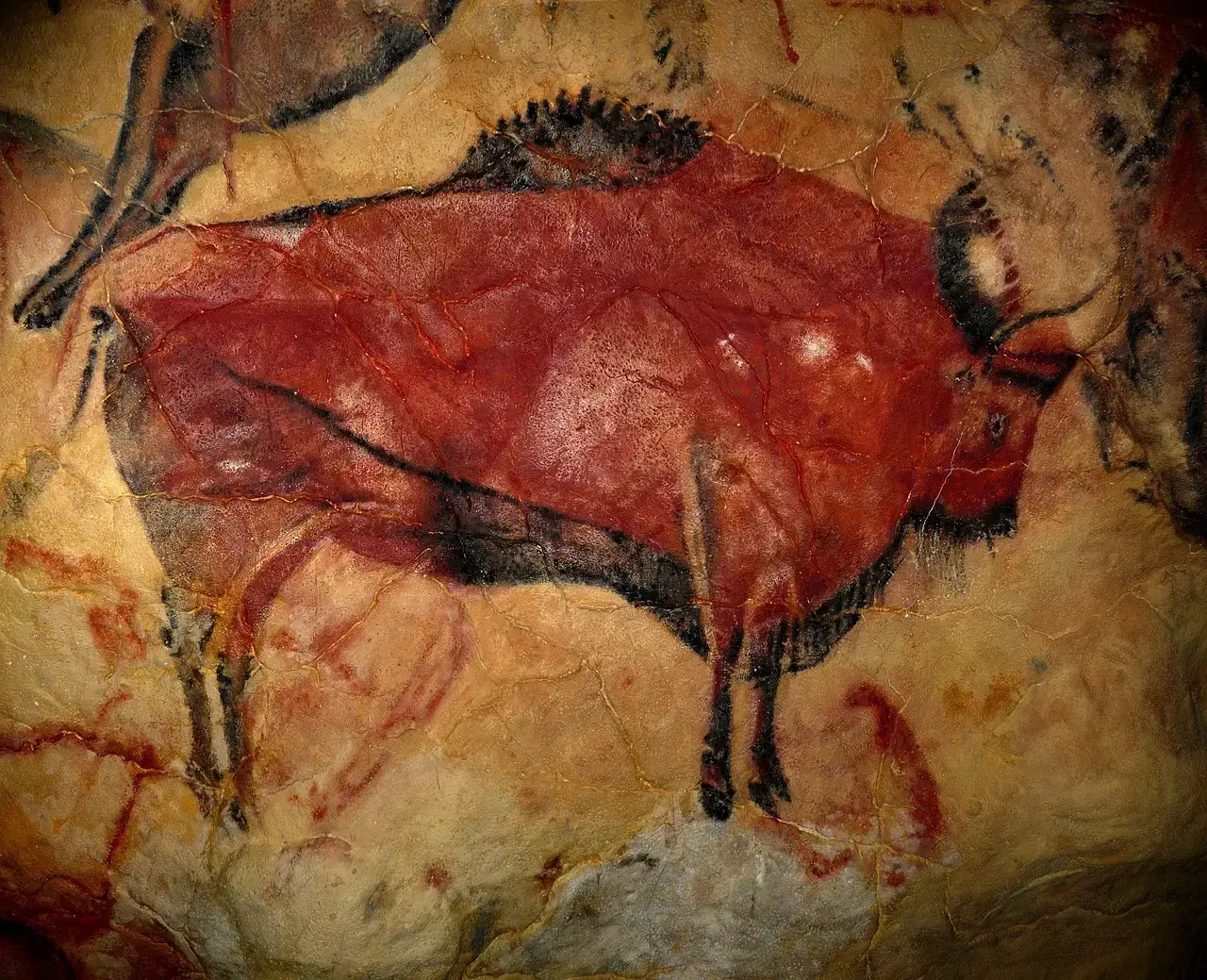
Altamira is famous for its bison ceiling, but some of its side panels have the kind of kinetic, sketch-like energy that modern animation uses for fast-paced action scenes. Here, deer and other animals are outlined in red and black pigments with brisk, almost calligraphic strokes. The figures overlap and shift scale in ways that suggest motion rather than strict realism, like thumbnail storyboards dashed off to capture the feel of a chase. ([repositorio.uneatlantico.es](https://repositorio.uneatlantico.es/id/eprint/15396/1/conservation-04-00042.pdf?utm_source=openai)) Conservation studies of Altamira’s microclimate show how fragile these scenes are, constantly threatened by humidity and microorganisms, which reinforces how lucky we are that they survive at all. Yet even under scientific scrutiny – sensors, data loggers, restricted access – the drawings maintain a loose, animated quality, almost vibrating with implied movement. Picture an opening sequence where these red outlines start to glow, peel off the stone, and morph into fully rendered animals sprinting across a prehistoric landscape.
The enigmatic signs and animals of El Castillo, Spain
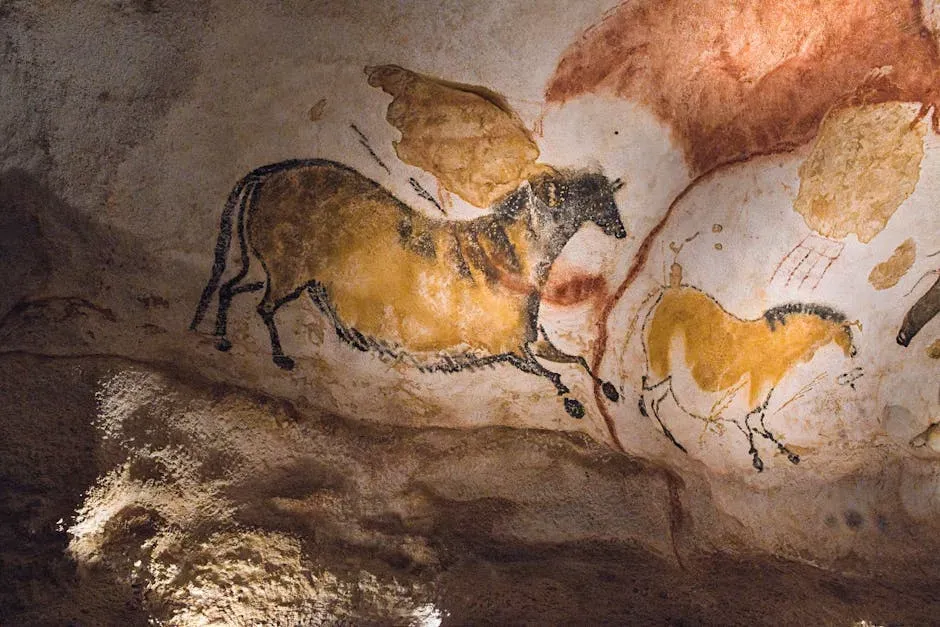
In Cantabria’s El Castillo Cave, dot clusters, disks, and hand stencils mingle with animal figures in a way that feels strangely like graphic design for a fantasy franchise. Some of the disks and red spots are now recognized as among the oldest known cave symbols in Europe, with uranium-thorium dating putting certain motifs well beyond thirty thousand years in age. Set alongside deer, horses, and other creatures, the effect is like a deliberately stylized title card, combining pictograms and characters in a single frame. ([upload.wikimedia.org](https://upload.wikimedia.org/wikipedia/commons/c/c3/Art_and_archaeology_%28IA_artarchaeology415arch%29.pdf?utm_source=openai)) These marks might encode complex meanings – territory, rituals, astronomical observations – or they might be more about presence and performance, closer to a visual rhythm than a literal sentence. Either way, they give off the same vibe as an animated film’s abstract intro: symbols pulsing, shapes transforming, creatures fading in and out around them. It invites you to imagine a studio today lifting this exact palette of dots, hands, and silhouettes as the conceptual backbone of a moody, prehistoric saga.
The layered hunting scenes of Cueva de las Manos’ rock shelters
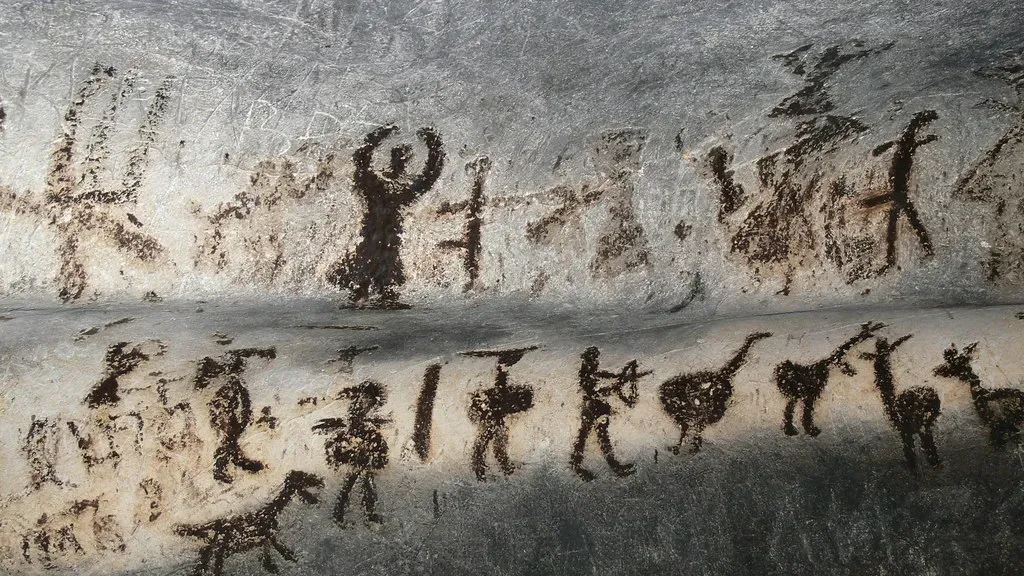
Away from the dense hand walls, Cueva de las Manos also preserves vivid hunting scenes that feel like early action storyboards. Human figures with raised arms and weapons appear in stylized rows, apparently driving guanaco – wild relatives of llamas – toward ambush points. The bodies of the animals are simplified but dynamic, captured mid-leap or tumbling, echoing the kind of exaggerated poses animators use to sell speed and impact. ([argentina.gob.ar](https://www.argentina.gob.ar/jefatura/turismo/viaja-por-argentina/observar-pinturas-rupestres-en-la-cueva-de-las-manos?utm_source=openai)) What makes these panels so striking is the layering across time. Newer figures overlap older ones, with different colors and styles hinting that storytellers came back repeatedly to replay or reinterpret the same scenes. It feels like a long-running series with seasonal reboots, each generation redrawing the “action opener” of their world. When you stand back – whether in person or through a good photograph – the hunts read as sequences, almost like frames from a hand-drawn chase stitched together in a continuous band.
Conclusion: our oldest cinema lives on stone
The more I read about these caves, the less I buy the old stereotype that Paleolithic artists were just doodling whatever they saw. The compositions are too deliberate, the pacing through the chambers too clever, the emotional beats too clear. From stalking lions and thundering bulls to oceans of hands and coded symbols, these paintings behave like frozen films: carefully constructed to guide your eye, stir your emotions, and make stories echo in your head long after you leave the dark. In a way, animation studios today are still doing what these unknown artists did: layering light, line, and movement to pull us into imagined worlds and shared myths. We like to think high-end software and giant render farms are what make images powerful, but these caves prove that what really matters is intention, observation, and the human urge to tell a story that feels bigger than a single life. When you imagine those first flickering torches turning bison and horses into moving shadows, it is hard not to see an ancient cinema already in full swing – would you have guessed that some of our best “opening sequences” were painted thirty thousand years before the first frame of film ever rolled?