If you picture Tyrannosaurus rex as a mindless, roaring movie monster, you’re honestly missing the best parts. The real animal was stranger, more complex, and way more interesting than the Hollywood version most of us grew up with. Palaeontologists have spent decades carefully piecing together its story, only to see many of the most exciting discoveries drowned out by pop culture shortcuts.
Once you start digging into the science, though, T. rex stops feeling like a cardboard villain and starts looking like a real, breathing animal that ruled its world through a terrifying blend of power and precision. Some of these facts even surprised working scientists when the evidence first came in. So let’s pull back the curtain and walk through the nine things about T. rex experts really wish would finally sink in.
T. Rex Lived At The Very End Of The Dinosaur Age, Not With Stegosaurus
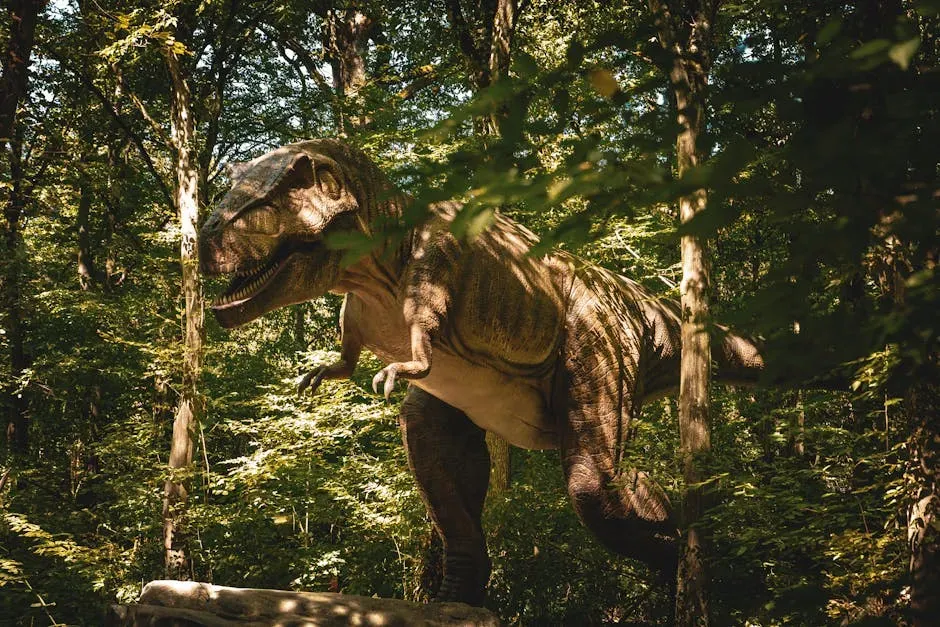
One of the quiet frustrations for palaeontologists is how often dinosaurs get mashed into one big, timeless blob in people’s minds. In reality, T. rex walked the Earth in the late Cretaceous, near the very end of the dinosaur era, while classics like Stegosaurus and Allosaurus were long gone by then. If you imagined them facing off in some Jurassic battle royale, that’s really a fantasy mashup separated by tens of millions of years.
A simple way to think about it is this: T. rex is closer in time to you than it was to Stegosaurus. The span between a Stegosaurus and a T. rex is longer than the gap from T. rex’s extinction to today, which is a beautifully mind-bending fact that rarely makes it into kids’ books or films. When palaeontologists see those wildly inaccurate “dinosaur neighborhood” posters, they wince a bit, because they hide one of the coolest truths about deep time: dinosaur history was long, changing, and full of entire worlds that rose and fell before T. rex ever hatched.
T. Rex Was A North American Apex Predator, Not A Global Monster
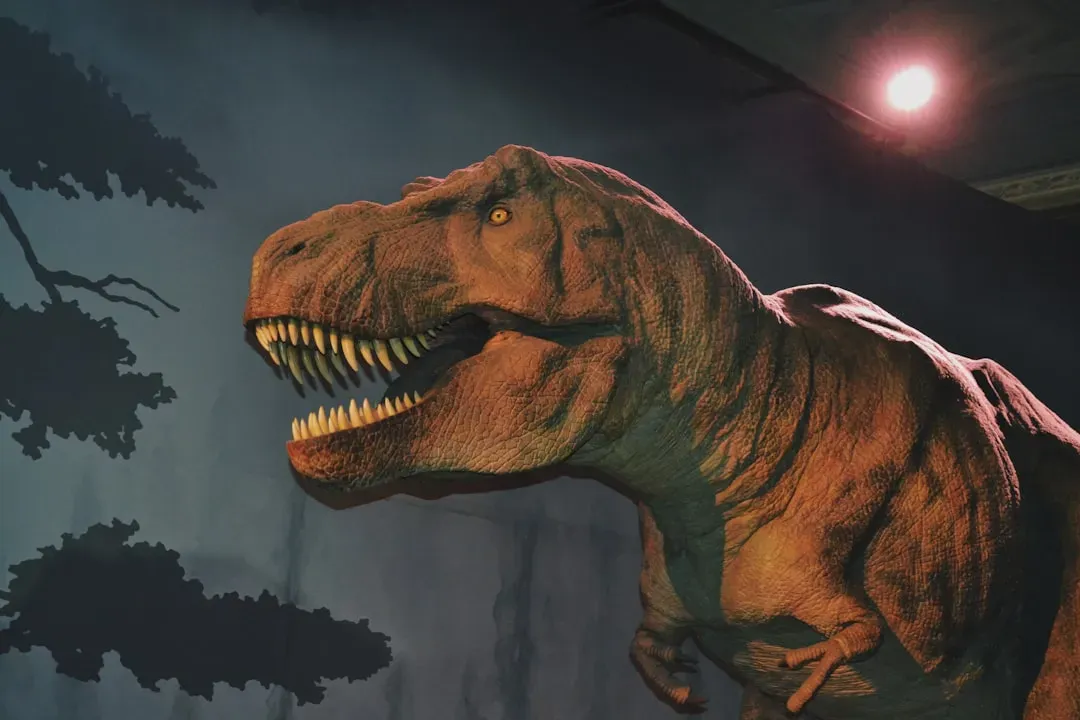
You’d never know it from the marketing, but T. rex was not stomping around every continent like some ancient world boss. Its known fossils come from western North America, particularly what is now the United States and Canada, where it dominated its local ecosystems during the late Cretaceous. There were other huge, fearsome theropods elsewhere in the world, but they were different species with their own evolutionary stories.
That means Godzilla-style scenes of T. rex attacking sauropods in Africa or stalking through European forests just don’t line up with the fossil record. In places like South America and Asia, other big predators filled the top role, including relatives and distant cousins, but not T. rex itself. I actually find that makes the animal more interesting, not less: it was the apex specialist of a particular place and time, a regional super-predator finely tuned to the Cretaceous ecosystems of western North America rather than a generic monster stamped all over the globe.
Its Bite Was A Precision Power Tool, Not Just Raw Destruction
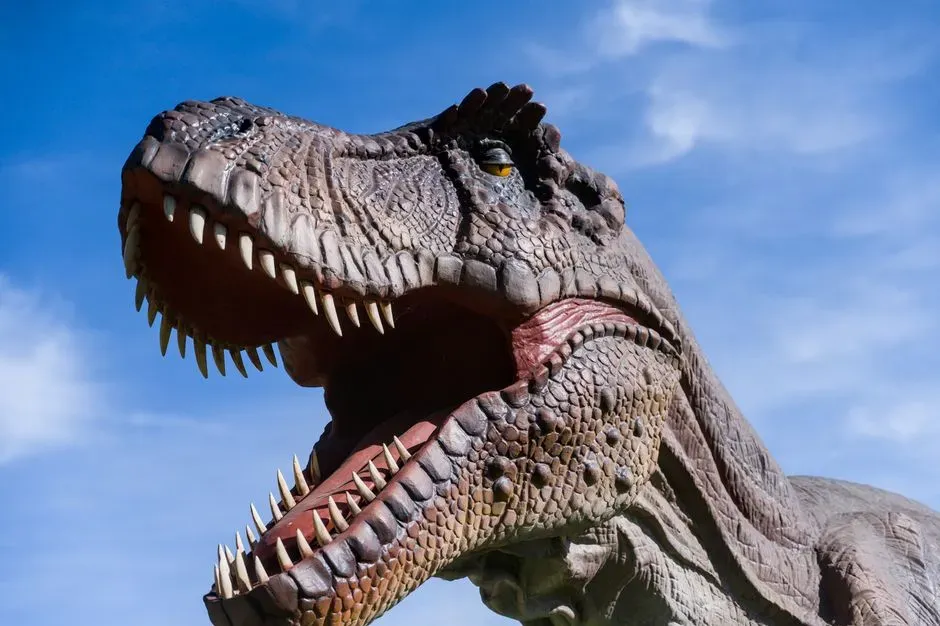
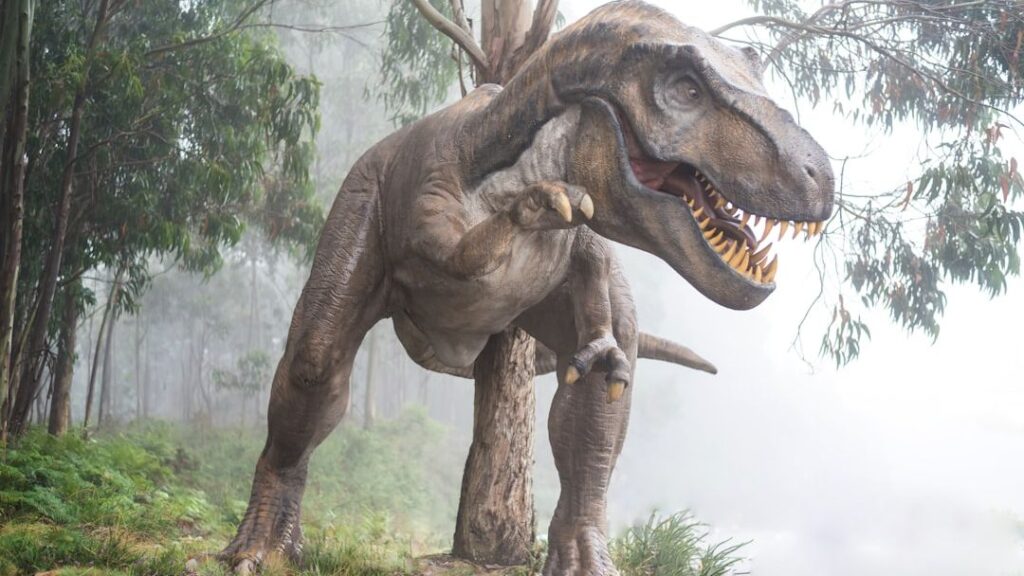
Most people have heard that T. rex had a ridiculously strong bite, often called one of the most powerful of any land animal we know. But what gets lost is how controlled and specialized that bite seems to have been. Its skull and teeth were built not only to deliver crushing force but also to withstand repeated impacts while gripping and tearing through bone. This was not just a giant mouth; it was more like a living hydraulic press with a built-in bone saw.
There is solid fossil evidence of bones from other dinosaurs showing deep bite marks that match T. rex teeth, sometimes with signs of healing, suggesting it bit through bone during both hunting and scavenging. Its teeth were thick, banana-shaped, and reinforced rather than sharp and knife-like, better for punching through and grinding than for delicate slicing. That combination of strength and durability points to a predator that could turn an entire carcass, skeleton and all, into calories, which is a far cry from the messy but vague “it bit really hard” idea most people carry around.
Tiny Arms, Big Purpose: They Were Not Useless
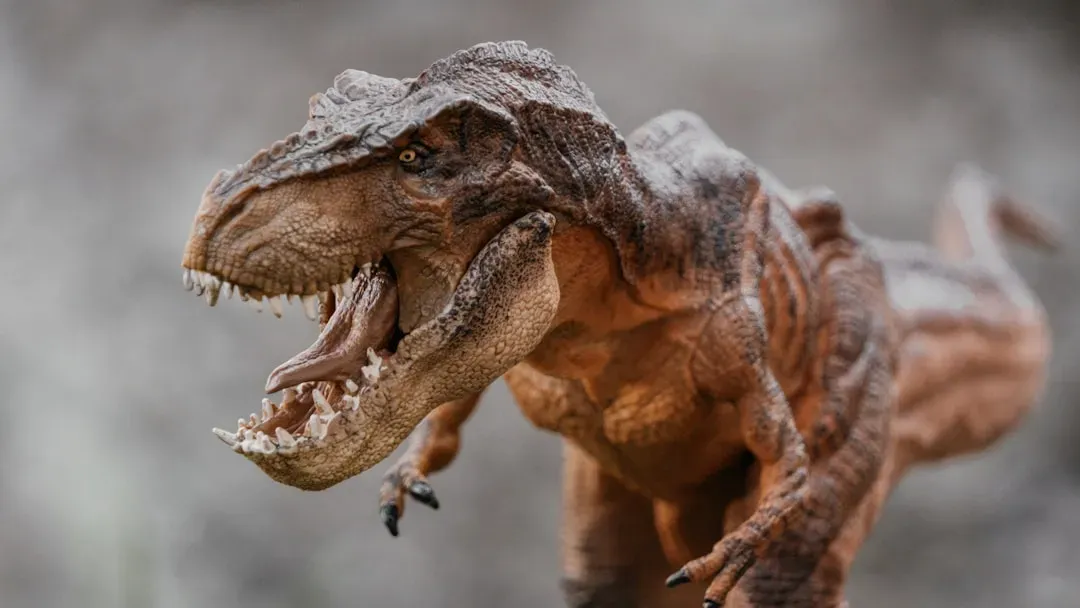
The joke about T. rex’s “useless” tiny arms has been around forever, and it honestly drives experts a little crazy. Yes, the arms were short compared to its massive body, but they were also muscular, with strong attachments and robust bones. They were not evolutionary leftovers dangling there by accident. The better question is not whether they did anything, but what exactly they were best suited for.
Some researchers have suggested the arms may have helped with holding onto struggling prey, bracing during feeding, or even playing a role in mating or getting up from a resting position. Nobody can claim we know their function perfectly, but the evidence that they were powerful and well-structured is clear. I personally love this detail, because it reminds us the animal is not here for our visual symmetry preferences; evolution shaped those arms for the realities of a T. rex’s life, not to satisfy human comedy memes.
T. Rex Was Likely Covered In Scales, With Only Limited Feathers (If Any)
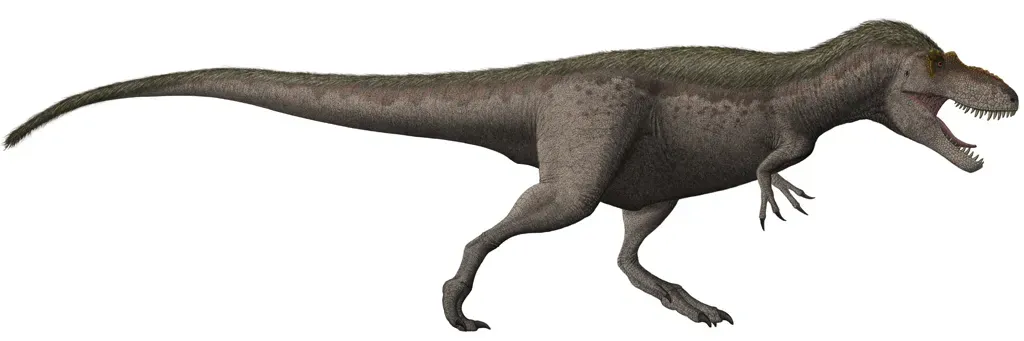
The image of a fully feathered T. rex took off hard on the internet, partly as a reaction against old reptiles-only artwork. The reality looks more nuanced. Fossil skin impressions from T. rex and close relatives show patches of scales on various parts of the body, especially the tail and hips. At the same time, earlier and smaller tyrannosauroids did have feathers, at least in some life stages and regions of the body, especially in more primitive members of the group.
Putting these clues together, many palaeontologists now lean toward a mostly scaly adult T. rex, possibly with limited feathering in certain areas or at younger ages, rather than a giant walking feather duster. As with a lot of things in science, this picture could shift with new fossil discoveries, but it is a long way from the black-or-white debate people often imagine. To me, the fun here is accepting that T. rex probably looked stranger and more mixed than any toy line would dare to sculpt: part crocodile, part big bird cousin, fully its own weird thing.
T. Rex Could Not Sprint Like In The Movies, But It Was Still Terrifyingly Effective
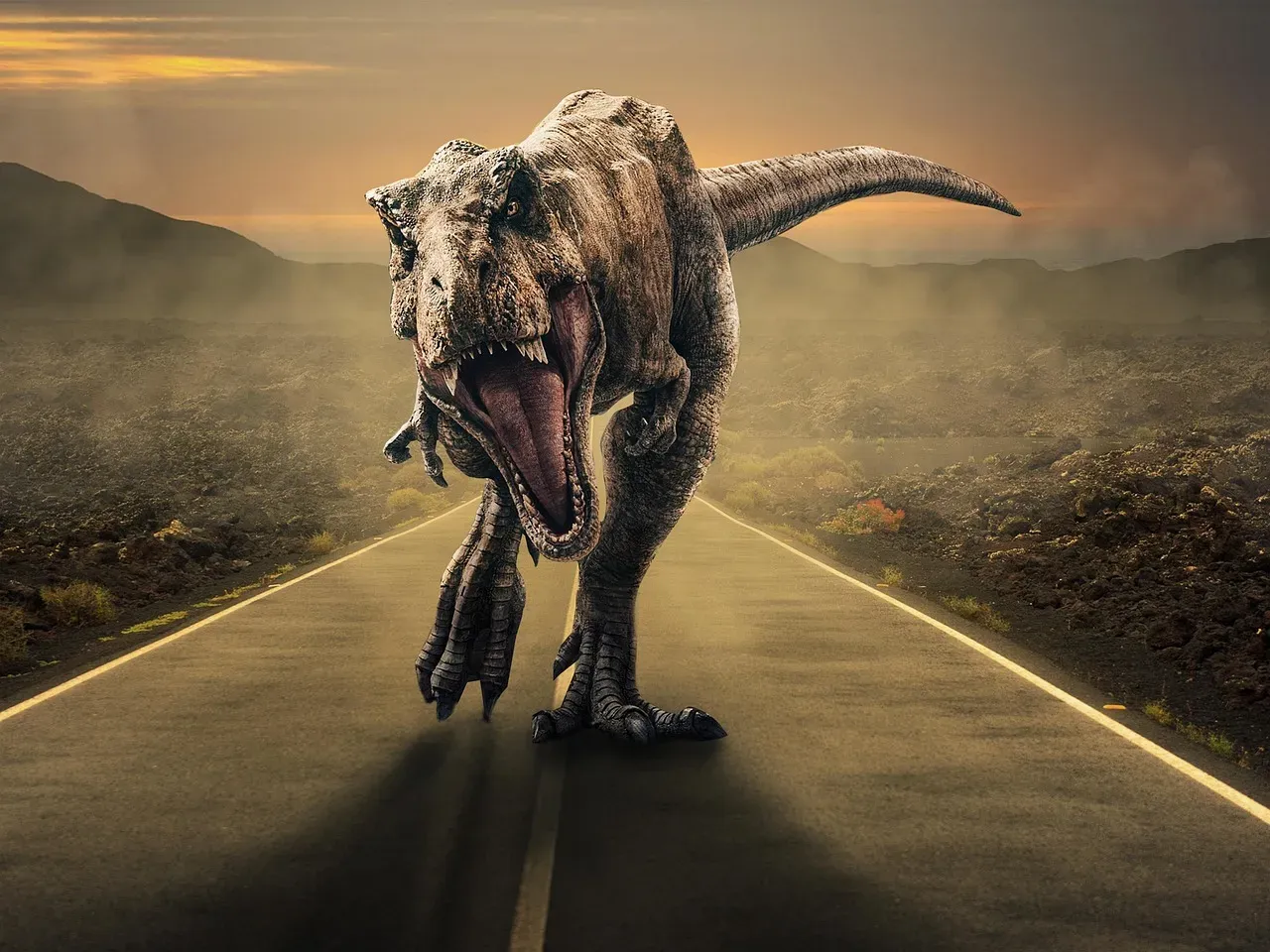
Those scenes of T. rex chasing speeding vehicles make for great cinema, but they clash with the physics of a multi-ton animal. When researchers model the weight, muscle power, and bone stress of an adult T. rex, they consistently find limits to how fast it could run without shattering its own legs. It was likely more of a fast walker or moderate jogger than a sprinter, trading explosive speed for stability and raw power.
That does not make it any less frightening if you were a hadrosaur minding your own business. A big T. rex closing in at a brisk, purposeful pace, jaws built to crunch bone, senses tuned to movement and smell, is plenty nightmare-worthy. Predators do not have to be the fastest thing on the landscape if they are smart about ambush, timing, and picking targets, and the fossil record suggests T. rex was more than capable of making a living as a top predator without car-chase speeds.
It Was Not Just A Scavenger Or Just A Hunter – It Did Both Really Well
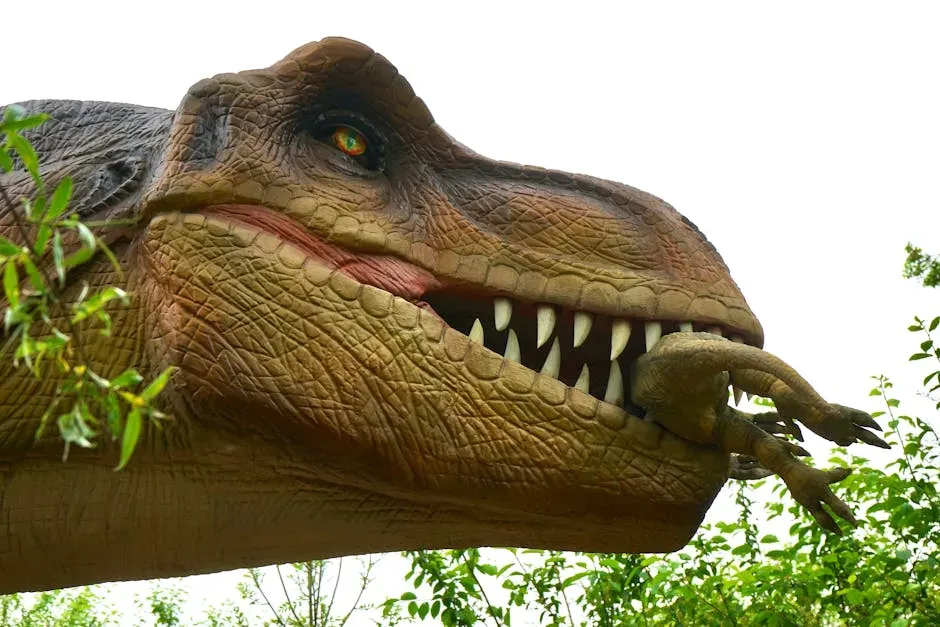
There was a time when people argued loudly about whether T. rex was a noble hunter or a cowardly scavenger, as if nature forces animals to pick only one role. That debate feels pretty dated now. The balance of evidence points to T. rex being an opportunistic carnivore, fully capable of active hunting while also taking advantage of any free meat it could find. In many ways, it probably behaved more like large modern predators that hunt when they can and scavenge when it is smart to do so.
Fossils show healed bite marks on other dinosaurs that match T. rex, implying attacks on living prey that survived the encounter, alongside carcasses with signs of heavy feeding after death. Its sense of smell seems to have been well-developed, which helps in both tracking prey and locating distant kills. To me, insisting that T. rex must be one thing or the other misses the bigger point: the top predator of its world probably used every strategy available, because in nature, efficiency beats pride every time.
Juvenile T. Rex Looked And Lived Very Differently From The Adults
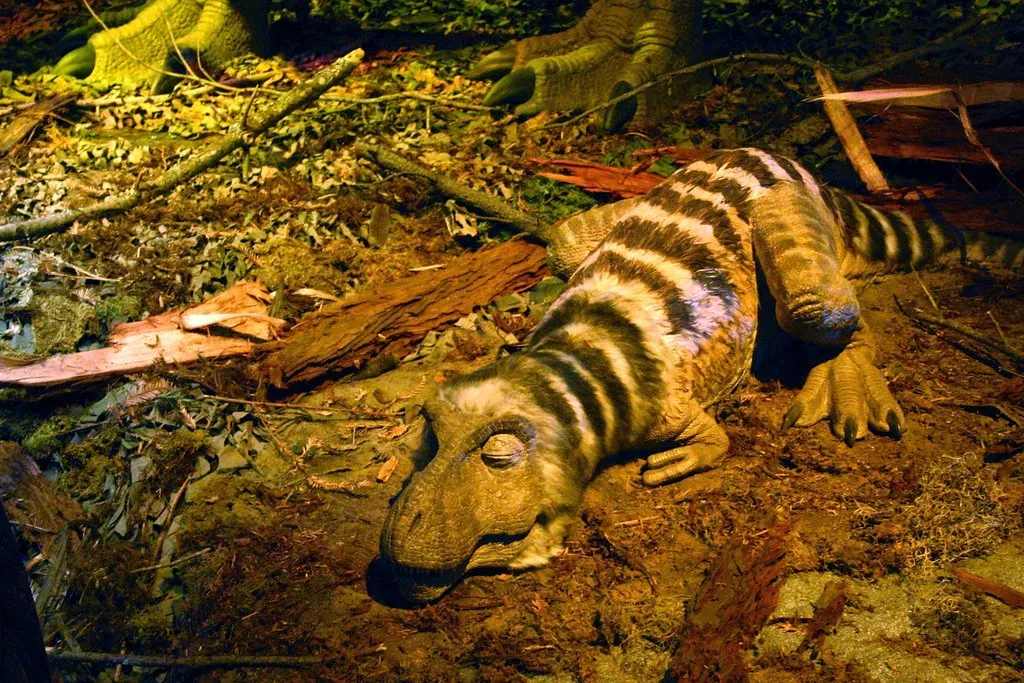
Another underappreciated fact is that a baby T. rex was not just a tiny adult waiting to scale up. Young individuals had slimmer, more lightly built bodies, with proportionally longer legs and narrower skulls. That suggests they filled different ecological roles while they were growing, likely chasing smaller, faster prey rather than tackling the giant plant-eaters adults specialized in. In a way, the species reinvented itself as it matured.
This life-history shift matters because it shows how one species could dominate multiple niches over its life span, from agile teenage hunter to heavyweight bone-crusher. It also forces us to rethink how T. rex families might have affected the rest of their ecosystem, since a whole gradient of sizes and hunting styles existed simultaneously. When I first read about this, it felt like discovering there were several “versions” of T. rex alive at once, all sharing the same landscape and gradually aging into new jobs as they grew.
We Know T. Rex Surprisingly Well – But There Is Still A Lot We Do Not Know
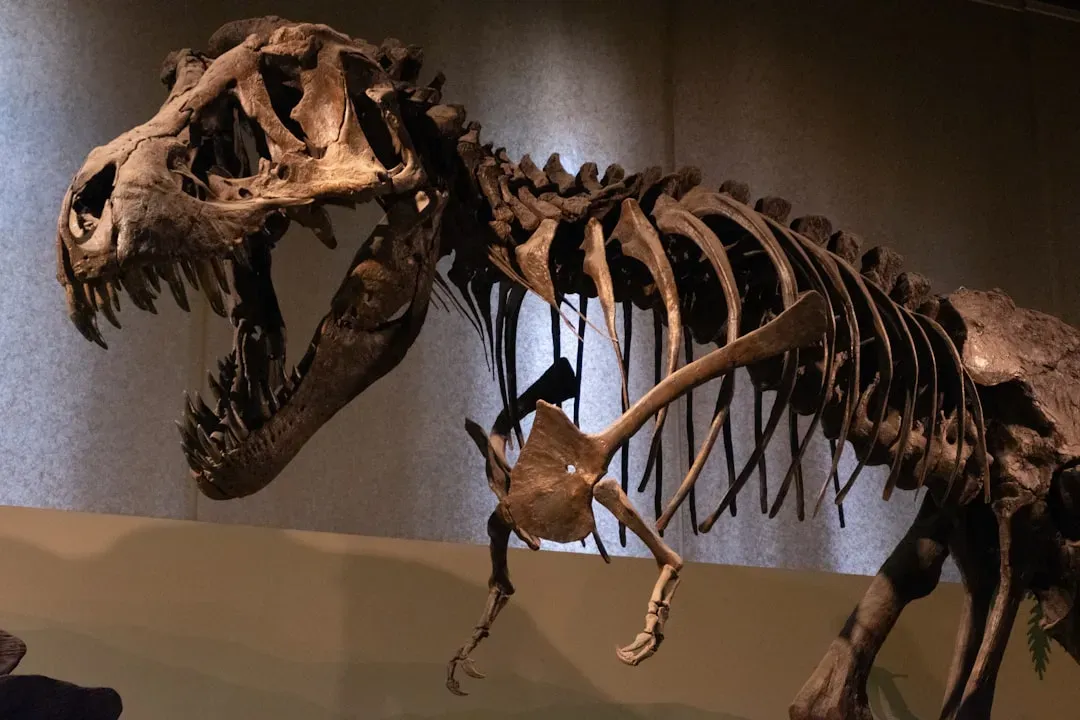
Compared with many dinosaurs, T. rex is actually a rock star of fossil completeness. We have multiple fairly complete skeletons, growth series from juveniles to adults, and even scraps of skin and traces of behavior in the form of bite marks and trackways. This depth of material lets scientists test ideas about how it grew, how it moved, and how it might have lived in more detail than most prehistoric animals will ever get. It is not an exaggeration to say we know T. rex far better than the vast majority of dinosaurs.
At the same time, massive questions remain open: how exactly it cared for its young, what its vocalizations sounded like, how complex its social behavior was, and where the fine line falls between feather and scale on its body. There is a strange comfort in that, at least for me. Even with our most famous dinosaur, the one plastered on lunchboxes and movie posters, we are still in the middle of the story, not at the end. The next surprising fossil or improved scan could flip some of our confident assumptions on their heads overnight.
Conclusion: The Real T. Rex Is Better Than The Movie Monster
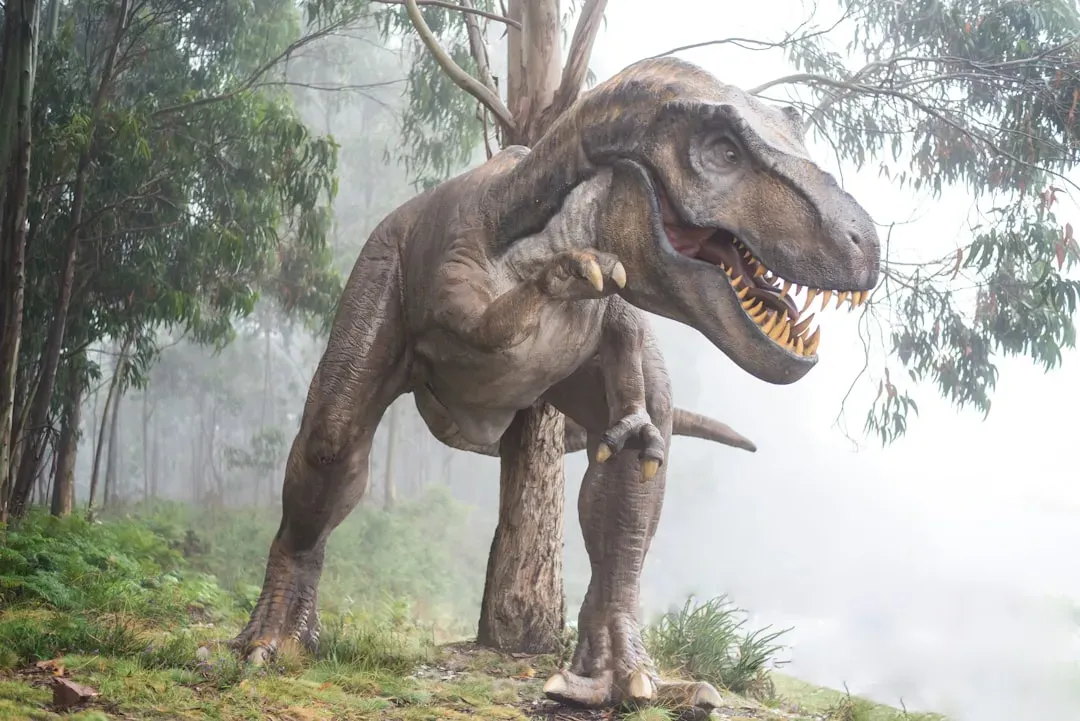
Once you strip away the clichés, T. rex turns out to be far more fascinating than the roaring cartoon we are used to. It was a late‑Cretaceous specialist, regionally confined yet ecologically dominant, with a bite like industrial machinery, arms that made evolutionary sense, and a life history that shifted dramatically from nimble youth to hulking adulthood. It hunted, scavenged, crushed bone, and carved out a role at the top of a complex North American ecosystem that had already seen countless other dinosaur dynasties rise and vanish.
In my view, clinging to the over-simplified movie version actually sells the animal short, like insisting a legendary athlete is only interesting because they run fast and ignoring everything else they trained for. The more we learn, the more T. rex feels like a deeply adapted, finely tuned product of its world, not a generic monster dropped into ours. Maybe the most respectful thing we can do is to let go of the tired jokes and lazy tropes and embrace the weirder, richer, slightly uncomfortable truth. After all this, does the real T. rex feel more or less impressive than the one you thought you knew?