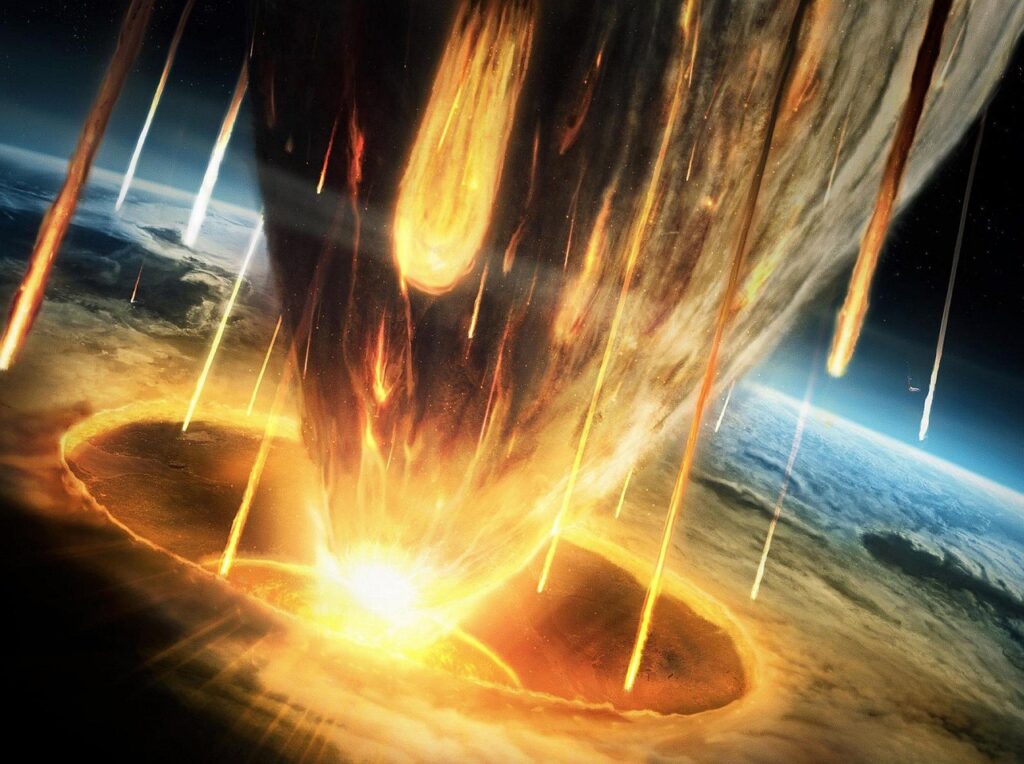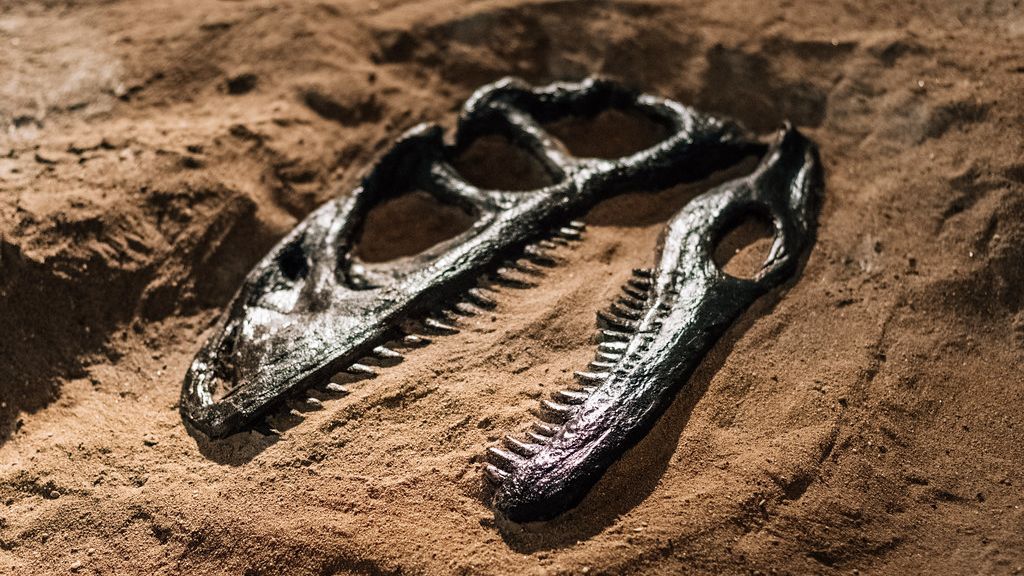
Sixty-six million years ago, our planet experienced a moment that fundamentally altered the course of life on Earth. Picture this: giant reptiles ruled the land, the climate was warm and humid, and flowering plants had just begun to flourish. Then, in a single catastrophic instant, changed.
The story begins with a space rock, roughly ten kilometers wide, hurtling through the cosmos at unimaginable speeds. This wasn’t just any asteroid – it was a harbinger of destruction that would reshape our world forever.
The Silent Traveler from Deep Space
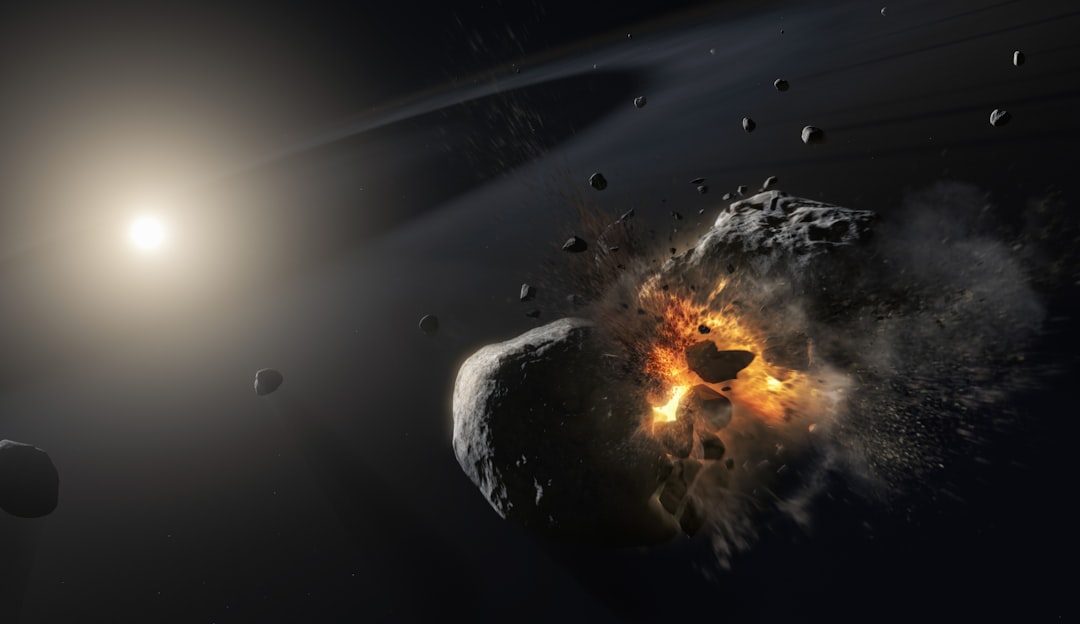
The asteroid that sealed the dinosaurs’ fate was a carbonaceous chondrite – a rare clay-rich mudball containing materials from the dawn of the solar system. While these ancient space rocks make up the majority of objects in space, only about five percent of meteorites that fall to Earth belong to this category.
Think of this cosmic visitor as a time capsule from the early days of our solar system. These types of asteroids originally formed in the outer Solar System, beyond the orbit of Jupiter. For millions of years, it drifted silently through the void, carrying within its core the very elements that would one day spell doom for Earth’s mighty reptilian rulers.
The Spring That Ended an Era
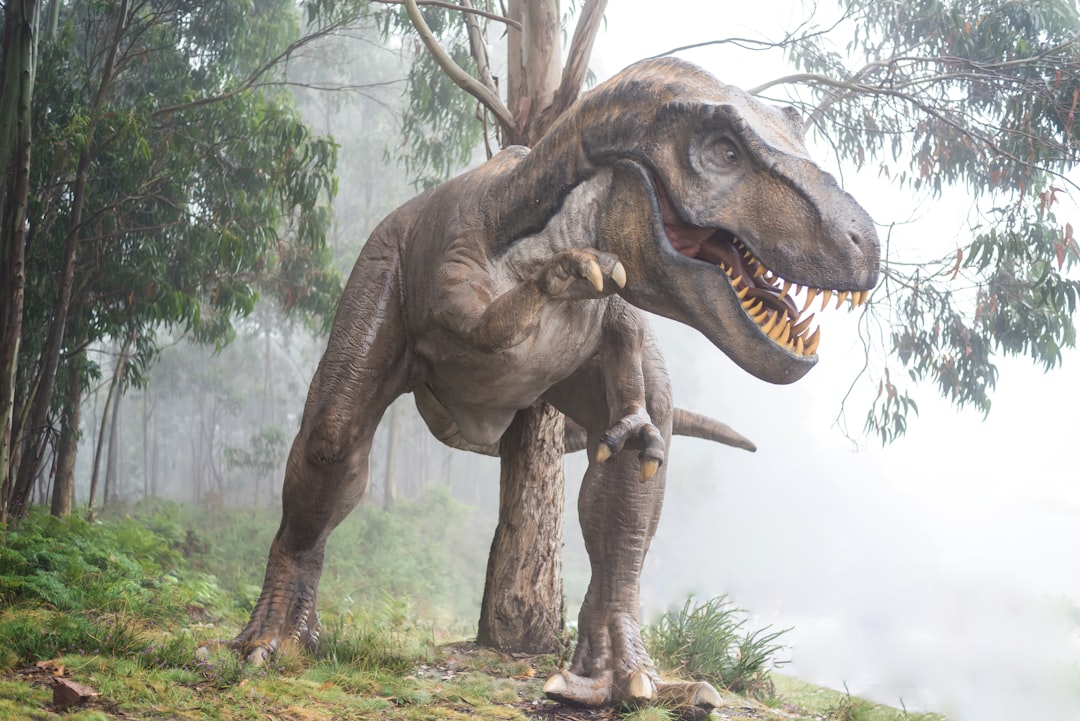
Springtime, the season of new beginnings, ended the 165-million-year reign of dinosaurs and changed the course of evolution on Earth. Recent research has pinpointed the exact timing of this world-changing event through careful analysis of fossil evidence. Multiple lines of independent evidence suggested clearly what time of the year it was 66 million years ago when the asteroid hit the planet.
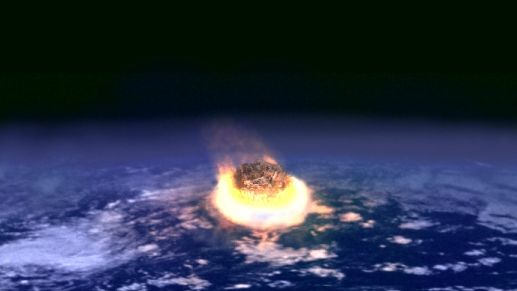
The irony is staggering. While life on Earth was entering its season of renewal, with plants beginning to bloom and animals preparing for another cycle of growth, death was approaching from above. The asteroid came rushing out of space at a velocity of more than 25 km per second and impacted the Earth at the tip of the Yucatan platform, with a diameter of more than 10 km impacting into a shallow ocean.
The Moment of Impact
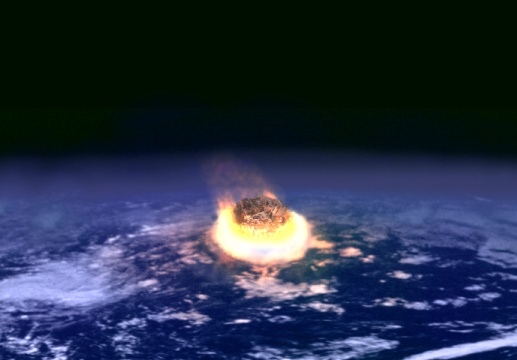
The enormous amount of energy generated by this impact, equivalent to 10 thousand times the world’s nuclear arsenal, ejected into the atmosphere huge quantities of dust particles and gases. To put this in perspective, imagine every nuclear weapon on Earth detonating simultaneously – then multiply that force by ten thousand.
Initially, the impact blasted a cavity 100 km wide and 30 km deep. The crater is estimated to be 150-200 kilometers in diameter, with the initial impact cavity reaching 30 kilometers in depth. The sheer scale defies comprehension. In seconds, what is now the Yucatan Peninsula became ground zero for planetary devastation.
The immediate effects were apocalyptic. Superheated winds moving over 1,000 kph would have radiated 900 to 1,800 km out from the asteroid impact point, shredding vegetation and killing animals.
Seismic Fury Across the Globe
Seismic waves travelling at 2–6 km/s generally arrived before blast waves travelling at about 0.3 km/s. This meant that in many places around the world, the ground began shaking violently before the shock waves even arrived. A 12-km-diameter asteroid would create a magnitude 10 earthquake.
Colossal shock waves would have triggered global earthquakes and possibly volcanic eruptions. The planet itself became a giant bell, ringing with seismic energy that propagated through the Earth’s crust. Buildings would have collapsed, mountains would have trembled, and the very ground would have liquefied in many areas.
These weren’t ordinary earthquakes confined to fault lines. The entire planet experienced seismic activity simultaneously, creating a global catastrophe unlike anything in recorded human history.
Firestorm From the Heavens

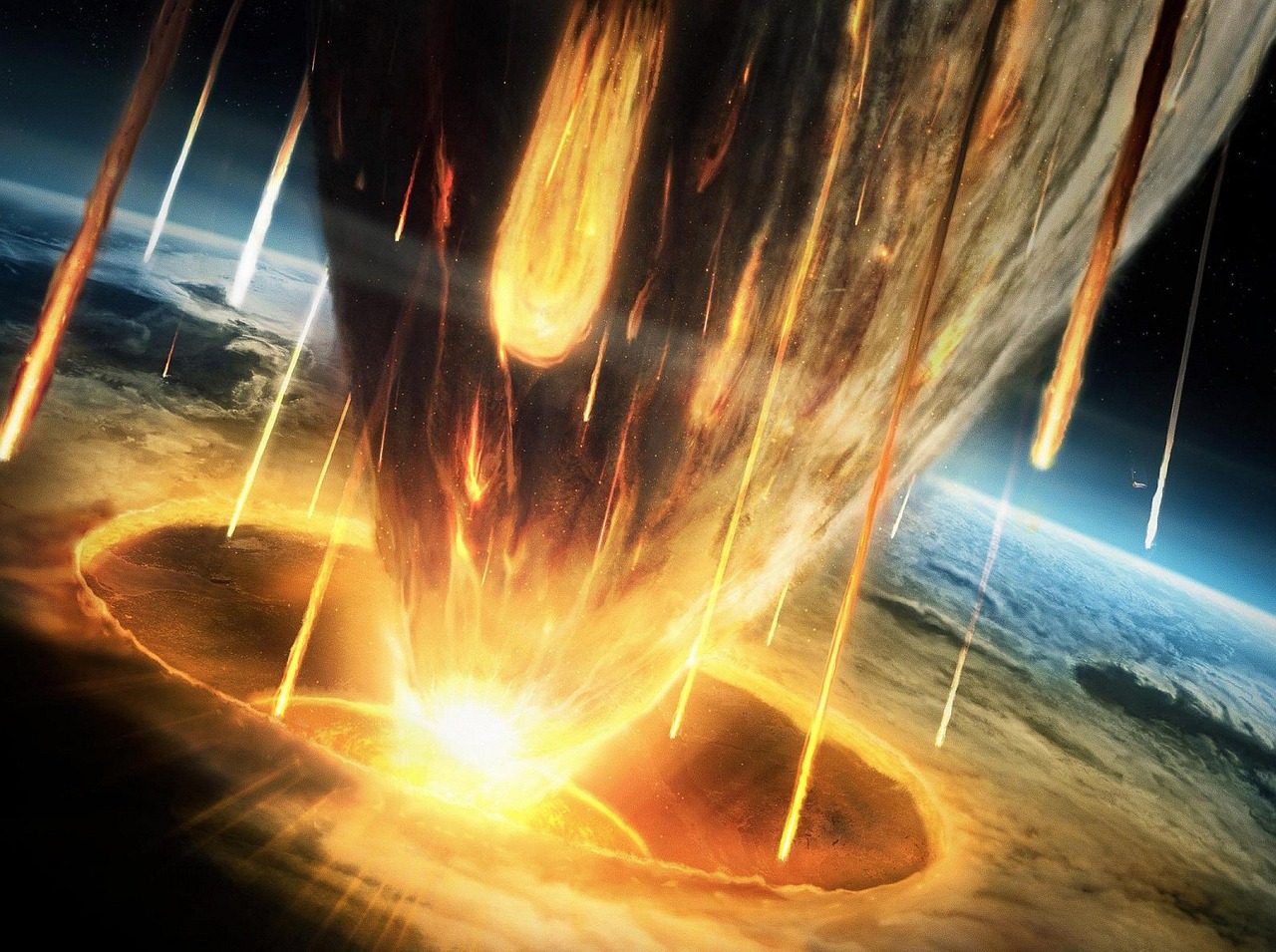
The blast would have thrown chunks of the asteroid and Earth so far that they would have briefly left the atmosphere before falling back to the ground, and like millions of shooting stars, all this material would have been heated to incandescence upon re-entry, heating Earth’s surface and igniting wildfires.
It is possible that all of Earth’s forests burned. Imagine every tree, every patch of vegetation, every forest from the Amazon to the Arctic, simultaneously bursting into flames. The sky would have been filled with millions of glowing projectiles, each one a potential ignition source for yet another fire.
This wasn’t just a regional disaster – it was a planetary inferno. The heat was so intense that even organisms sheltering underground wouldn’t have been safe from the thermal radiation penetrating deep into the Earth’s surface.
The Nuclear Winter Effect
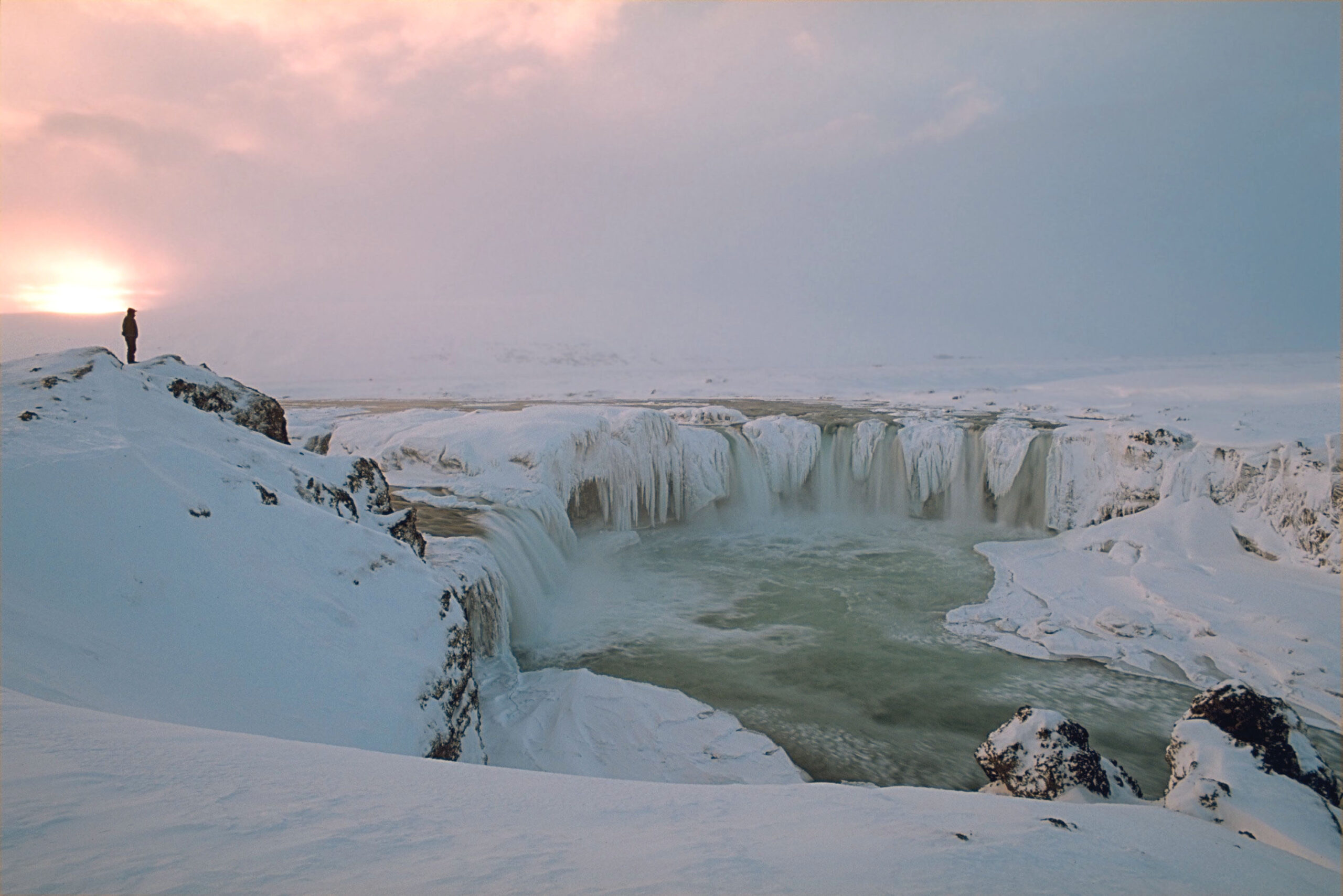
Fine particles kicked up from the impact blocked the sun and prevented photosynthesis for up to two years. It sent soot travelling all around the world, reducing the amount of light that reached the Earth’s surface and impacting plant growth.
The skies turned dark, not for days or weeks, but for years. This would have led to 3 to 16 years of subfreezing temperatures and a recovery time of more than 30 years. Plants, the foundation of nearly every food chain, simply couldn’t survive without sunlight.
In short, it wasn’t the asteroid that killed the dinosaurs. It was climate change. The impact triggered a cascade of environmental disasters that made Earth virtually uninhabitable for large animals.
The Great Dying
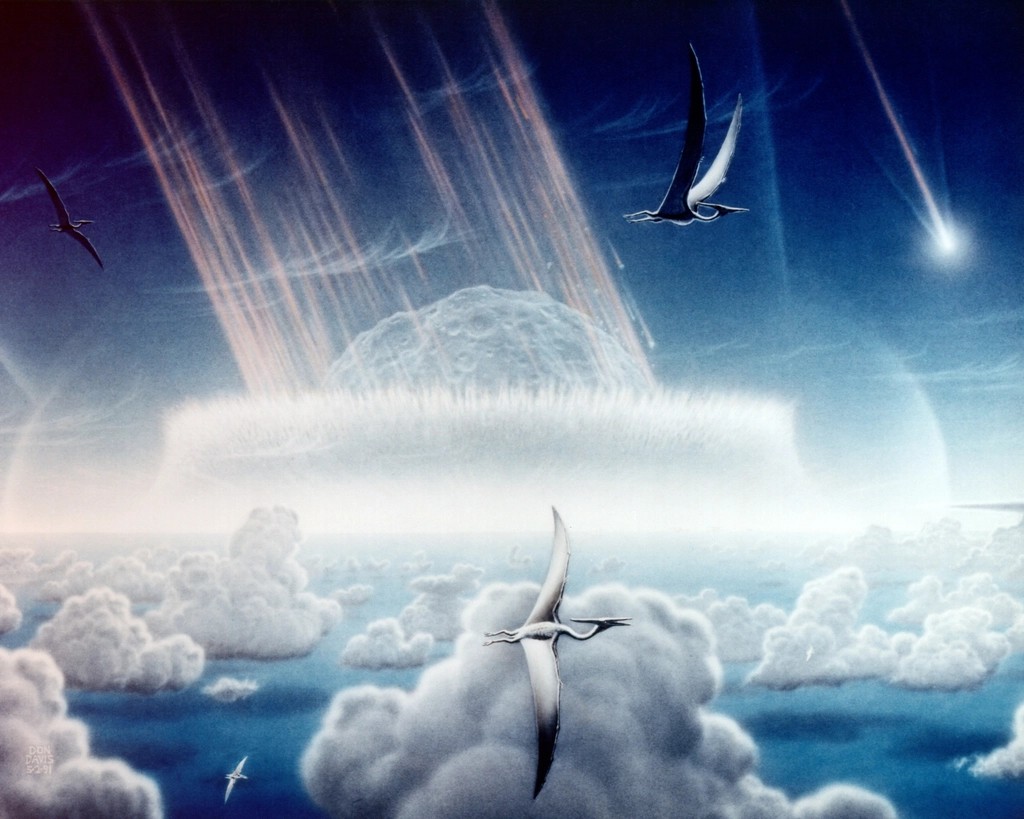
The devastation and climate disruption resulted in the primary cause of the Cretaceous–Paleogene extinction event, a mass extinction of 75% of plant and animal species on Earth, including all non-avian dinosaurs. Around 75% of Earth’s animals, including dinosaurs, suddenly died out at the same point in time.
The extinction wasn’t gradual or selective – it was swift and merciless. Like dominos, this had knock-on effects up the food chain, causing the ecosystem to collapse. Herbivores died when plants disappeared, carnivores starved when their prey vanished, and scavengers found nothing left to sustain them.
What makes this mass extinction particularly remarkable is its speed. Non-avian dinosaurs, along with many other groups that had dominated the Earth for 150 million years, went extinct, and their fossil record demonstrates global survival until the terminal Cretaceous and unambiguous absence thereafter.
The World After

In the aftermath of the impact there was a global mass extinction, with roughly 70% of species dying off, including the majority of the dinosaur species, although some of the smaller dinosaurs evolved into birds. The planet that emerged from this catastrophe was fundamentally different from the one that existed before.
It was only around 15 million years after the non-bird dinosaurs disappeared that we started to get really big mammals, when rhino-sized animals started to reappear – but up until that point it was a world filled with small animals. Dinosaurs remain the largest land animals ever to have lived, with only whales having ever exceeded their size.
The mammals that survived were small, probably no larger than a house cat. They inherited an empty world, free from the giant predators that had kept them small and nocturnal for over 100 million years. From these humble survivors arose every mammal species alive today, including us.
This singular event didn’t just end the age of dinosaurs – it created the age of mammals. Without that cosmic collision 66 million years ago, humans might never have evolved, and Earth might still be ruled by giant reptiles.
reminds us how fragile life on Earth truly is, and how a single moment in cosmic time can rewrite the entire story of our planet. What would Earth look like today if that asteroid had missed us by just a few minutes? The possibilities are as endless as they are fascinating.