You stand at the edge of the familiar and peer into the unknown. America’s landscape holds secrets that challenge our understanding of nature itself, from stones that move without explanation to mounds that appear overnight with no visible cause. These aren’t just unusual rock formations or quirky natural attractions. They’re genuine mysteries that have puzzled scientists for decades, sometimes centuries.
Walking across this continent, you’ll discover phenomena that shouldn’t exist according to conventional wisdom. Yet there they are, defying physics, geology, and sometimes common sense. Each formation tells a story we’re still trying to understand, leaving experts scratching their heads and offering theories that often contradict each other.
Death Valley’s Racing Stones
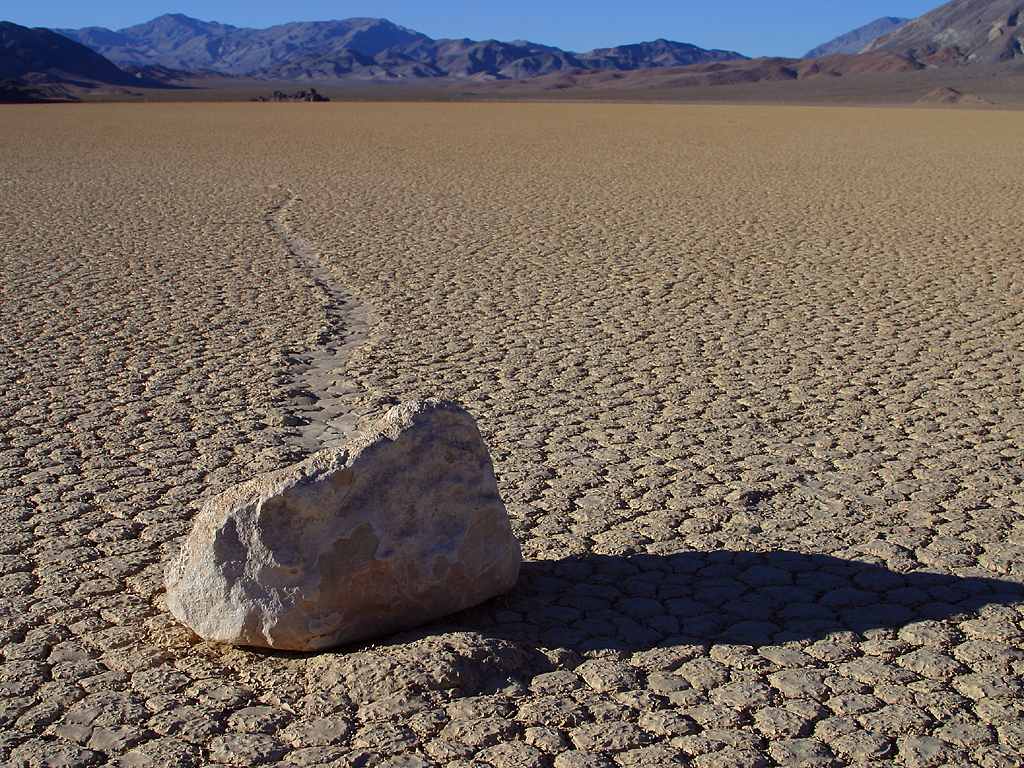
You witness one of nature’s most baffling performances at Racetrack Playa in Death Valley National Park. Rocks ranging from golf-ball size to several hundred pounds move across this dry lake bed, leaving long tracks behind them as they zigzag, loop, and even cross each other’s paths. Scientists solved this mystery in 2014, discovering that thin sheets of ice formed after rare winter rains are pushed by gentle winds, moving the rocks. These aren’t pebbles being pushed by wind.
The previously theoretical explanation involved rain making the playa surface slick while strong winds push the rocks, but this theory had problems since the rocks sometimes move in concert with one another, while other times they split up and go their own way. The mystery deepened when researchers discovered some boulders weighing hundreds of pounds had somehow traveled hundreds of yards across perfectly flat terrain, leaving arrow-straight furrows in the hardpan.
Washington’s Mysterious Mima Mounds
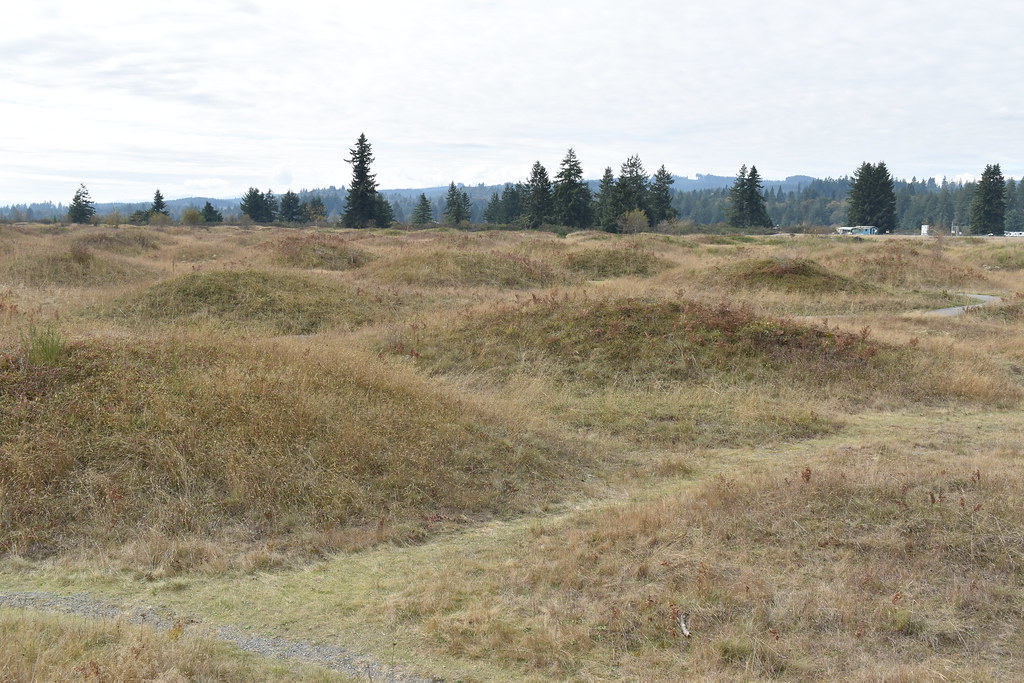
The Mima Mounds are mysterious, uniform undulations in the grasslands of Washington State near Olympia, ranging from 10 to 50 feet in diameter and up to 8 feet tall. After decades of research, nobody knows what caused them. You walk among these perfectly spaced hillocks and realize you’re standing on one of geology’s greatest unsolved puzzles.
By the department’s count, more than 30 published theories exist today – attributing the mounds to everything from earthquakes to an ancient flood to, most prominently, gophers. Scientists suggest that some of the mounds may be 30,000 years old, which makes decoding them complex; humans are believed to have arrived in North America several thousand years later than that. The gopher theory gained traction when computer models showed these industrious rodents could create such formations over centuries, yet critics point out that correlation doesn’t prove causation.
Nevada’s Accidental Rainbow Geyser
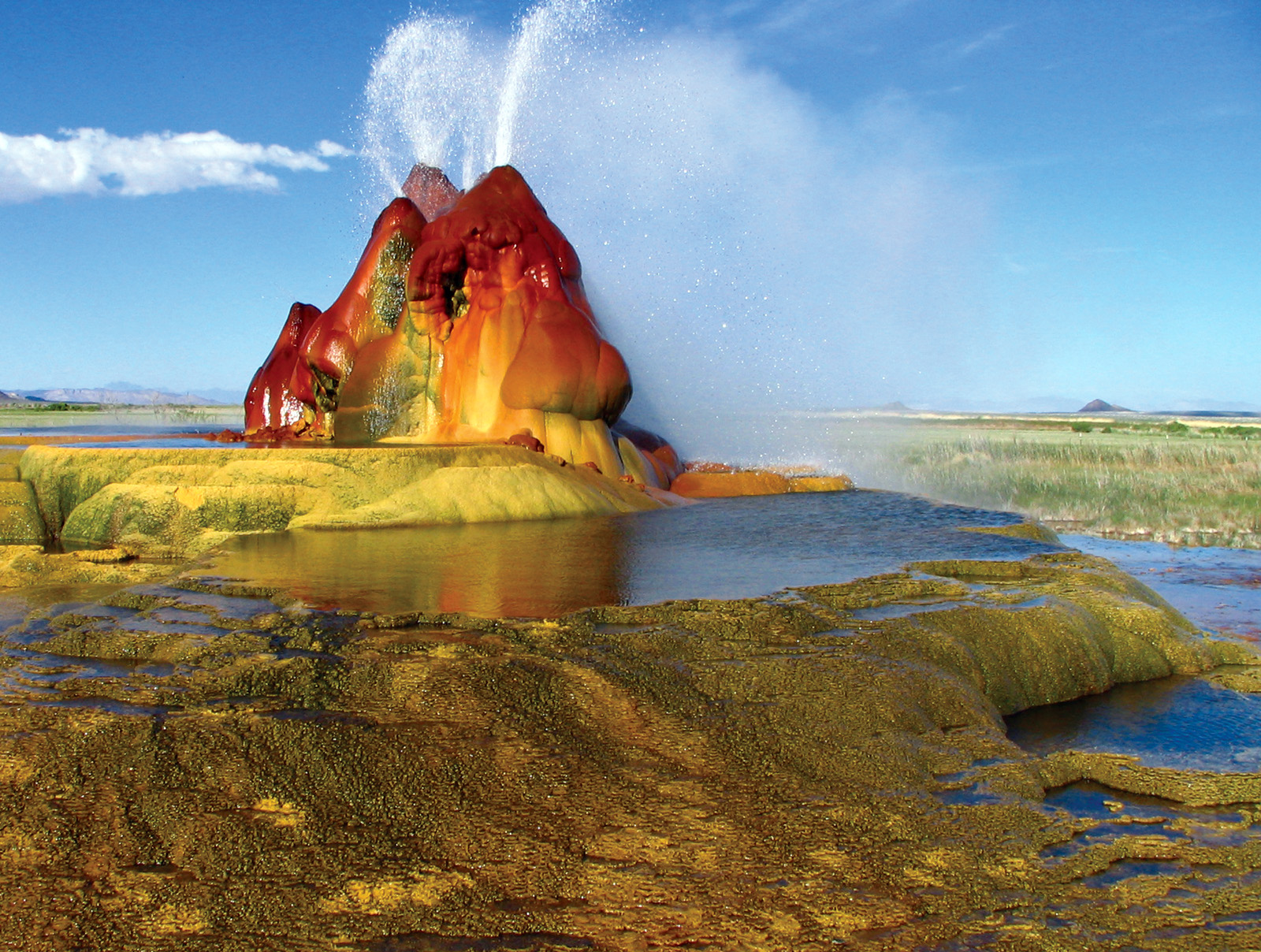
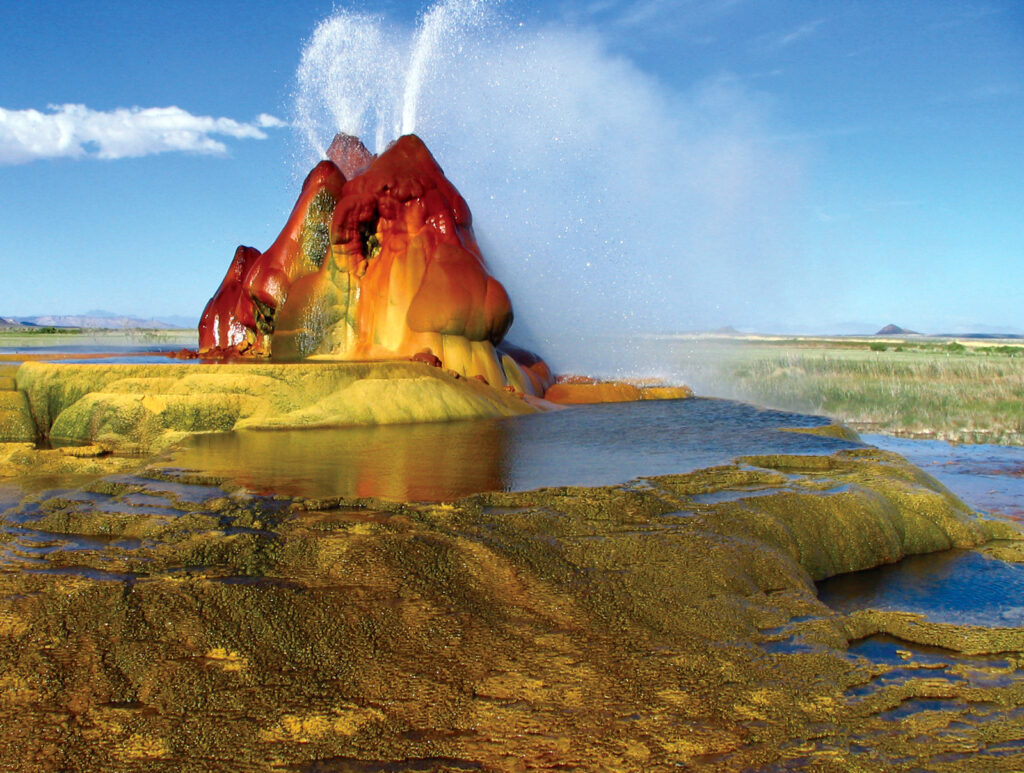
This alien-looking geyser on the edge of Black Rock Desert is actually human-made, but it wasn’t put there on purpose. The Fly Geyser was created by accident in 1964 when an explorative well drilled in the area was either left uncapped or not capped properly, causing dissolved minerals to accumulate and rise and thus create the limestone mound that continues to grow. What started as a geothermal energy exploration mishap became one of Nevada’s most spectacular sights.
The geyser contains thermophilic bacteria and archaea, which flourish in moist, hot environments, resulting in multiple hues of green and red, coloring the rocks, while the combination has led to multiple hues of green and red that add to its out-of-this-world appearance. The geyser has formed several travertine terraces, creating 30 to 40 pools over an area of 74 acres. You stand before what looks like a Dr. Seuss creation painted by extraterrestrials, yet it’s entirely the product of human error meeting geological forces.
The Great Unconformity’s Missing Time

The Great Unconformity is a huge gap in the geological record where layers of rock dating from about 1.2 billion to 800-250 million years ago are completely missing from certain areas around the globe, and this enormous chunk of lost time can be seen clearly in the stratigraphy of the Grand Canyon in Arizona. You’re looking at evidence of nearly a billion years that simply vanished from Earth’s story.
Geologists studying the anomaly have noted that there is plenty of rock, full of fossils, from the Cambrian period (540 million years ago) but the layer beneath it is basement rock, formed roughly 1 billion years ago and empty of fossils, raising the question of what happened to the stuff in between. An emerging theory called “Snowball Earth” may explain where the rock disappeared to, suggesting that around 700 million years ago, Earth was encased in snow and ice, with moving glaciers peeling off the planet’s crust with the help of lubricating sediments, pushing it into oceans where it was reabsorbed by subducting tectonic plates.
Arizona’s Impossible Wave
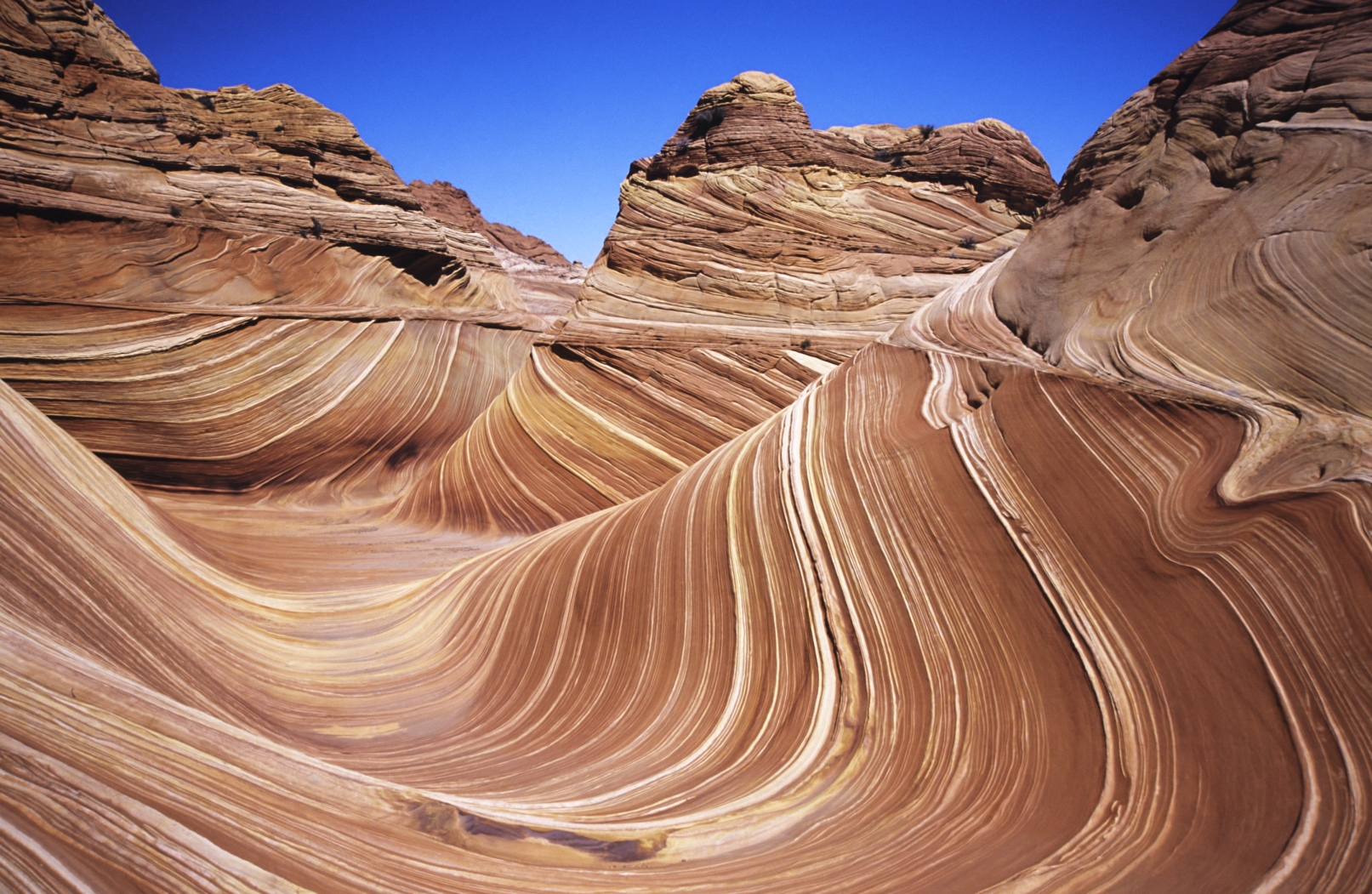
Deep within the arid expanse of Arizona lies a geological enigma that seems to defy physics, where The Wave is a masterpiece of swirling sandstone, its once-horizontal layers twisted and turned into flowing ribbons of red, orange, and white. You stand before rock that appears to flow like frozen water, defying everything you know about solid stone.
Over millennia, wind-blown sand and periodic water flow eroded the Navajo Sandstone with differing intensity, creating uneven troughs and ridges, which then hardened into the mesmerizing formations we see today. The Wave is located in the Coyote Buttes North area of the Vermilion Cliffs National Monument, known for its hypnotic, swirling bands of red, orange, and yellow, with delicate ridges so easily damaged that even one misplaced footstep could ruin the beautiful patterns. The formation challenges our understanding of how sandstone should behave under natural forces.
Wyoming’s Volcanic Enigma at Devils Tower
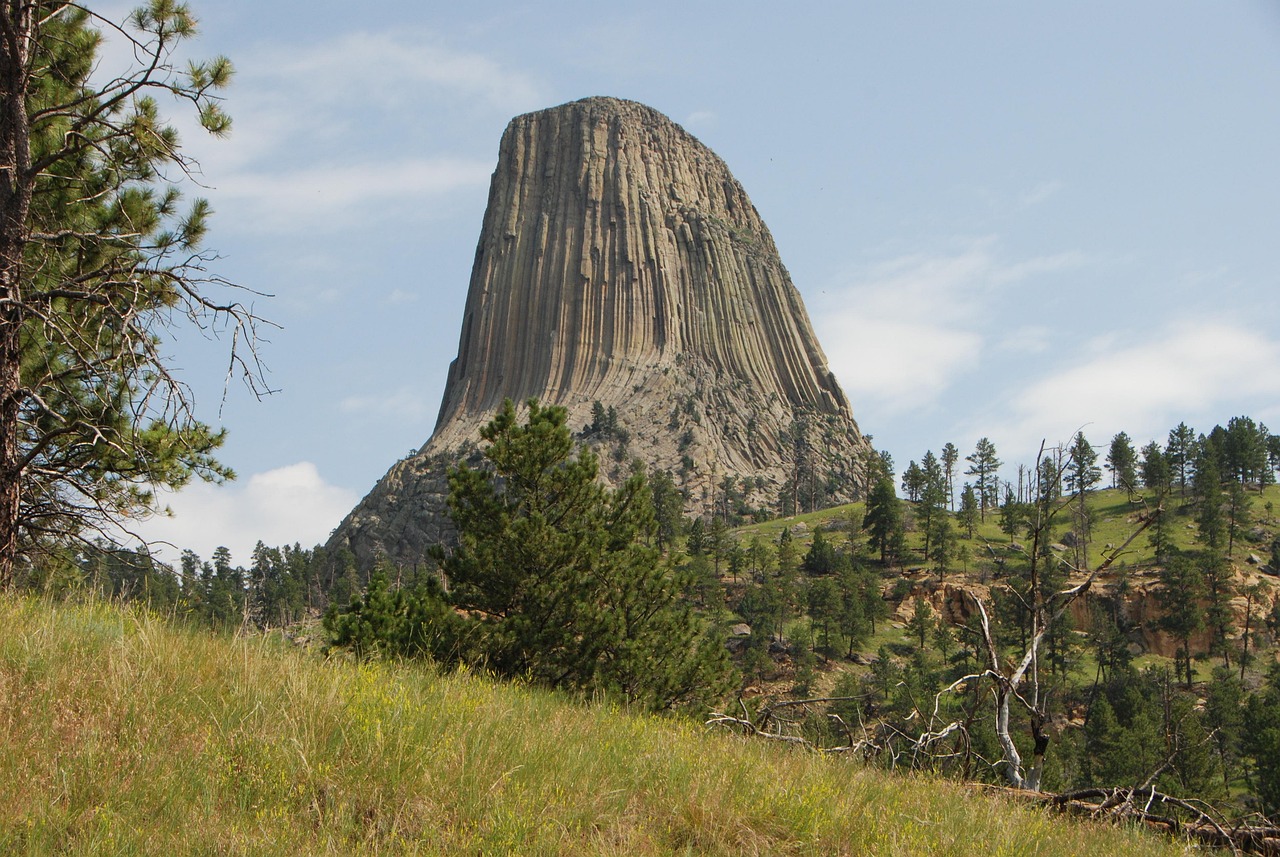
Rising like a colossal beacon from the Wyoming plains, Devils Tower is an imposing and mysterious sight, with this monolithic giant sparking wonder and debate for centuries, its sheer presence hinting at powerful forces both natural and spiritual. Devils Tower is a volcanic plug, formed as magma cooled and hardened beneath the surface, with erosion over millions of years stripping away the surrounding rock, revealing this resistant, columnar structure.
While the basic geology of Devils Tower is understood, debate still exists on the specifics of its formation. Geologists agree that Devils Tower was formed through the intrusion of magma into sedimentary rock layers about 50 to 60 million years ago. Yet the perfectly geometric columns that make up its sides, some reaching nearly 900 feet into the sky, represent a level of natural precision that seems almost too perfect to be random. The hexagonal columns fit together like a massive natural cathedral, each one seemingly carved by an master architect.
South Dakota’s Alien Badlands
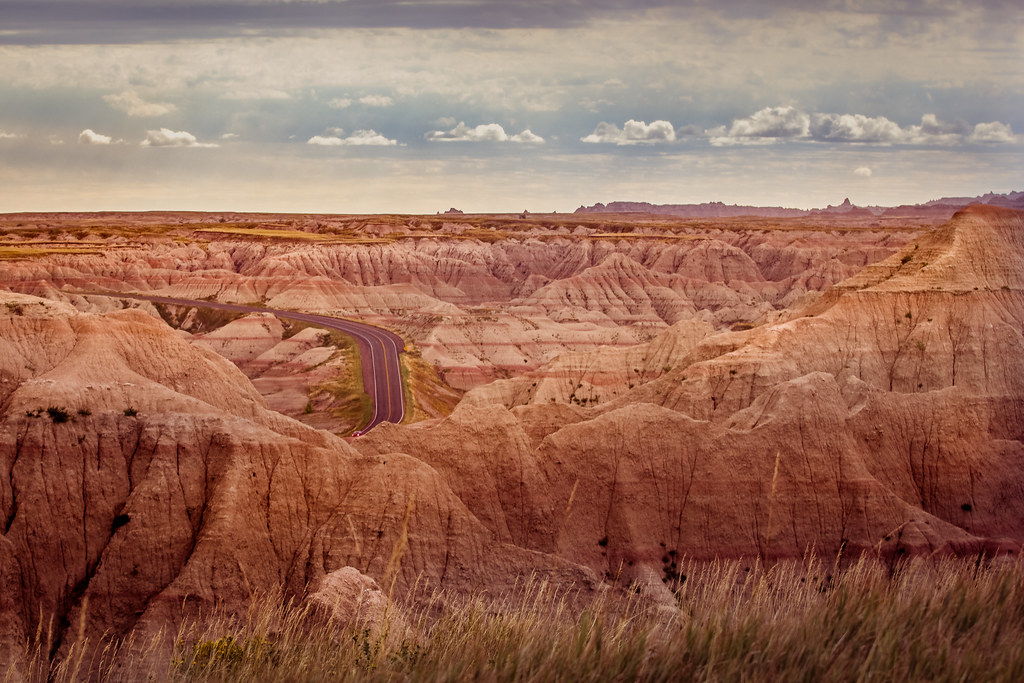
What makes the Badlands weird is a labyrinth of rugged canyons, sharp buttes, and colorful layered rock formations sculpted by millions of years of wind and water erosion, with the best time to visit being sunrise or sunset, when the shifting light paints the Badlands in otherworldly hues of orange, red, and purple. Each episode left a layer on the site of the Badlands in South Dakota, with half a million years ago, rivers beginning to carve it all into the strange and stratified badlands seen today.
Stepping into Badlands National Park feels like entering an alien world, where eons of relentless erosion have sculpted a harsh yet breathtaking landscape of razor-sharp buttes, deep canyons, and a mesmerizing tapestry of colorful rock layers. You walk through formations that look more suited to Mars than the American Midwest. The precision of the layering and the dramatic speed of erosion here creates landscapes that seem to change before your eyes, challenging conventional ideas about geological time scales.
California’s Mysterious Tufa Towers at Mono Lake

To visit Mono Lake is to behold an other-worldly landscape, located just 13 miles east of Yosemite National Park, where this ancient lake receives salt and minerals from Sierra streams, creating calcium carbonate spires called tufa towers that rise majestically from the water. These unique limestone formations, known as the Mono Lake Tufa Towers, emerge from the salty, alkaline waters of Mono Lake, fed by underwater springs, and located in eastern California, near the Sierra Nevada mountains, these tufa towers rise dramatically from the water.
As fresh water evaporates from the lake, it leaves behind the salt, making the lake more than twice as salty as the ocean and offering visitors the opportunity for a buoyant swim during warmer summer months. The towers themselves form through a complex chemical process that occurs when calcium-rich springs meet the carbonate-rich lake water, yet the exact mechanisms that create their bizarre, twisted shapes remain partially mysterious. These ghostly spires emerging from the alkali waters create a landscape so surreal it’s been used as a stand-in for alien worlds in countless films.
Conclusion
These eight geological oddities remind us that our planet still holds secrets we haven’t unlocked. From racing stones to perfectly spaced mounds, from accidental rainbow geysers to missing geological time, America’s landscape continues to challenge everything we think we know about how Earth works.
Each formation represents a puzzle piece in the larger story of our planet’s history, yet many of these pieces don’t seem to fit conventional scientific understanding. They force us to question our assumptions and remain humble before the mysteries of the natural world. Perhaps that’s the most important lesson these geological oddities teach us. Science doesn’t have all the answers yet, and our planet is far stranger and more wonderful than we ever imagined. What other secrets might be hiding in plain sight, waiting for the right combination of curiosity and technology to reveal their mysteries?