The fossil record offers us a fascinating glimpse into Earth’s prehistoric past, showcasing creatures that pushed the boundaries of size, speed, and evolutionary adaptation. Among these ancient titans, certain dinosaurs stand out for breaking records in various categories—from the longest necks to the most terrifying predators. These paleontological superstars not only captivate our imagination but also provide crucial scientific insights into the biological limits of terrestrial life and the evolutionary processes that shaped our planet. Let’s explore five extraordinary dinosaurs that broke the mold and set records that remain unmatched even millions of years after their extinction.
Argentinosaurus: The Heavyweight Champion

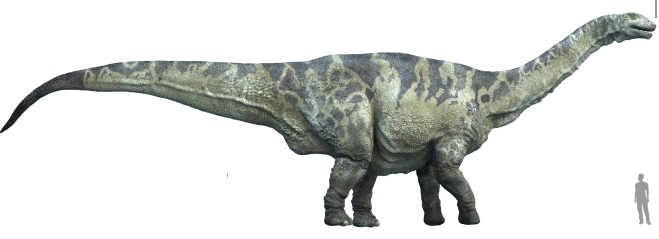
When it comes to sheer mass, few creatures in Earth’s history can compare to Argentinosaurus huinculensis, widely regarded as one of the heaviest land animals ever to have existed. This titanosaur sauropod, discovered in Argentina in 1987, is estimated to have weighed between 65 and 100 tons—comparable to a modern space shuttle or more than a dozen adult African elephants. Standing approximately 70-80 feet long and reaching heights of over 35 feet, Argentinosaurus dominated the landscape of Late Cretaceous South America around 95-93 million years ago. Its massive femur alone measured over 2.5 meters (8 feet), providing paleontologists with crucial evidence of its record-breaking proportions. Despite its enormous size, this gentle giant was a herbivore, likely using its considerable height to browse vegetation unavailable to smaller dinosaurs.
Spinosaurus: The Largest Predatory Dinosaur

Spinosaurus aegyptiacus has dramatically reshaped our understanding of predatory dinosaurs since its initial discovery in Egypt in 1912. This semi-aquatic theropod has surpassed Tyrannosaurus rex as the largest known carnivorous dinosaur, measuring up to 50-59 feet in length and weighing approximately 7-20 tons. Its most distinctive feature was the impressive sail-like structure formed by elongated neural spines growing from its vertebrae, reaching heights of up to 7 feet. Recent fossil discoveries have revealed that Spinosaurus possessed a paddle-like tail and dense bones that helped it navigate aquatic environments, making it the only known swimming dinosaur specialized for hunting in water. This North African predator lived during the mid-Cretaceous period (about 99-93.5 million years ago) and likely fed on large fish and other marine creatures, occupying a unique ecological niche that no other large theropod exploited.
Barosaurus: Record-Holder for Longest Neck

The Late Jurassic sauropod Barosaurus lentus claims the record for possessing what may have been the longest neck of any known dinosaur. This North American diplodocid, which lived approximately 155-145 million years ago, had a neck estimated to reach up to 50 feet in length, nearly half of its 85-foot total body length. Barosaurus achieved this remarkable anatomical feature through having at least 16 extremely elongated cervical vertebrae, each modified to reduce weight while maintaining structural integrity. Paleontologists believe this evolutionary adaptation allowed Barosaurus to reach vegetation that other dinosaurs couldn’t access, creating a specialized feeding niche in the crowded Jurassic ecosystem. Despite its neck’s extraordinary length, research suggests Barosaurus likely held it more horizontally than vertically most of the time, as the blood pressure required to pump blood vertically to a brain positioned so high would have been physiologically challenging.
Therizinosaurus: The Dinosaur with the Longest Claws

Therizinosaurus cheloniformis earns its record for possessing the longest claws of any known animal, with each finger bearing a keratinous claw measuring up to 3.3 feet (1 meter) in length. This bizarre theropod dinosaur, whose name appropriately means “scythe lizard,” lived during the Late Cretaceous period (around 70 million years ago) in what is now Mongolia. Despite its fearsome-looking appendages, Therizinosaurus was a herbivore, likely using its massive claws to pull down branches, strip foliage, or possibly for defense against predators. The complete skeleton of Therizinosaurus remains unknown, but estimates suggest it stood about 16-20 feet tall and measured approximately 33 feet in length, with a weight of around 5 tons. Perhaps most surprisingly, despite its unusual appearance, genetic evidence places Therizinosaurus as a close relative of the ancestors of modern birds, demonstrating the remarkable evolutionary flexibility of theropod dinosaurs.
Microraptor: The Smallest Four-Winged Dinosaur

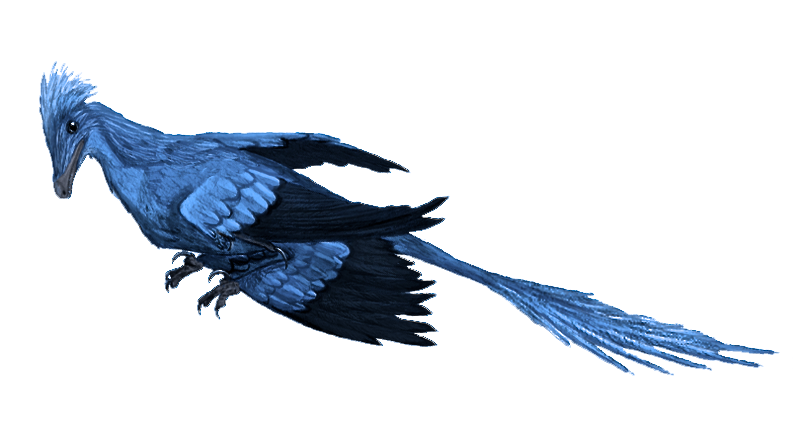
While many record-breaking dinosaurs earned their fame through enormous size, Microraptor gui stands out for breaking records at the opposite end of the spectrum. This crow-sized dromaeosaurid dinosaur, measuring just 2.5 feet long and weighing less than 2 pounds, is the smallest known four-winged dinosaur ever discovered. Living in the early Cretaceous forests of what is now China about 120 million years ago, Microraptor possessed flight feathers not only on its arms but also on its legs, creating a unique four-winged configuration unseen in modern birds. Exquisitely preserved fossils show evidence of iridescent black feathers similar to those of modern crows and ravens, making Microraptor one of the few dinosaurs whose coloration we can confidently identify. This diminutive dinosaur likely used its wings to glide between trees in a pheasant-like manner, representing a fascinating experimental stage in the evolution of powered flight before birds as we know them today fully evolved.
The Scientific Significance of Size Extremes

The record-breaking dimensions of these dinosaurs aren’t just fascinating trivia—they provide valuable insights into the biological and physical constraints that influence evolution. Gigantic sauropods like Argentinosaurus test our understanding of the upper size limits for terrestrial animals, raising questions about cardiovascular systems, thermoregulation, and biomechanical constraints. Scientists study these extreme examples to understand how natural selection can push anatomical systems to their limits. The massive size of many dinosaurs may have evolved as a defense against predators, as larger animals are harder to attack, or as an adaptation for energy efficiency, as larger animals have lower metabolic rates relative to their body mass. Additionally, these record-holders help paleontologists understand the diverse ecological niches dinosaurs occupied and how they coexisted in ancient ecosystems across millions of years of evolutionary history.
Challenges in Determining Dinosaur Records

Establishing definitive records in paleontology comes with inherent challenges that researchers must constantly navigate. Most dinosaur species are known from incomplete fossils, requiring paleontologists to make educated estimates about their full dimensions based on related species and scaling relationships. This partial nature of the fossil record means that discoveries can—and regularly do—upset previously established records. Additionally, fossilization bias favors larger, more robust bones, potentially skewing our understanding toward bigger species while smaller dinosaurs may be underrepresented. Age determination also presents difficulties, as adult specimens are needed for accurate size comparisons, but determining whether a specimen was fully grown requires extensive histological analysis of bone microstructure. These scientific challenges remind us that paleontological records should be viewed as our current best understanding rather than absolute facts, always subject to revision as new evidence emerges.
Evolutionary Adaptations Behind the Records
The record-breaking features of these dinosaurs represent remarkable evolutionary adaptations to specific environmental pressures and ecological opportunities. The massive size of sauropods like Argentinosaurus likely evolved through natural selection favoring larger individuals who could better defend against predators and more efficiently digest low-quality plant matter through their extended digestive tracts. Spinosaurus developed its semi-aquatic adaptations to exploit the abundant fish resources in the river systems of Cretaceous North Africa, with its distinctive sail potentially functioning as a temperature regulation device or display structure. Microraptor’s four-winged configuration represents an experimental evolutionary stage in the development of flight, showing how feathered dinosaurs explored different locomotor strategies before the modern avian body plan became established. These adaptations demonstrate evolution’s incredible ability to produce specialized forms in response to environmental challenges, pushing the boundaries of what’s physically possible for vertebrate life on land.
Discovery Stories: Unearthing the Record-Breakers

The tales behind the discoveries of these record-breaking dinosaurs are often as fascinating as the creatures themselves. Argentinosaurus was discovered by accident in 1987 when a farmer mistook a large fossil for a piece of petrified wood on his property in Argentina. The original Spinosaurus fossils, discovered by German paleontologist Ernst Stromer in Egypt in 1912, were tragically destroyed during World War II when Allied bombing raids hit the Munich museum where they were stored. The dramatic 2014 rediscovery of more complete Spinosaurus remains in Morocco led to the revolutionary understanding of its semi-aquatic lifestyle. Therizinosaurus was first identified only from its massive forearms and claws found during a Soviet-Mongolian expedition in 1948, with scientists initially believing they belonged to a giant turtle-like reptile rather than a dinosaur. These discovery narratives highlight the often serendipitous nature of paleontological finds and the persistent detective work required to reconstruct ancient life from fragmentary evidence.
Modern Imaging Technologies Revealing New Records
Advanced technological tools have revolutionized our ability to analyze fossil specimens, often revealing new record-breaking attributes previously hidden from view. CT scanning technology allows paleontologists to examine the internal structures of fossils without damaging them, providing insights into brain size, sensory capabilities, and growth patterns. Digital modeling and 3D reconstruction techniques have enabled scientists to test biomechanical hypotheses about how these record-breaking dinosaurs moved and functioned, with computer simulations revealing that Argentinosaurus likely moved much more slowly than earlier believed due to its massive weight. Scanning electron microscopy has revealed microscopic structures in fossilized feathers, confirming the iridescent coloration of Microraptor and providing unprecedented details about the appearance of extinct dinosaurs. Synchrotron radiation analysis, which uses accelerated particles to generate extremely powerful X-rays, has even allowed scientists to identify chemical traces of original organic molecules in exceptionally well-preserved fossils, potentially opening new frontiers in understanding dinosaur physiology and biochemistry.
Could Even More Extreme Dinosaurs Await Discovery?

Despite over two centuries of dinosaur paleontology, the fossil record remains remarkably incomplete, with discoveries regularly reshaping our understanding of these ancient creatures. Paleontologists estimate that we have identified less than 10% of all dinosaur species that ever existed, suggesting that even more extreme record-holders likely await discovery in unexplored rock formations around the world. Regions like the Gobi Desert, Patagonia, and the western United States continue to yield new specimens annually, while previously understudied areas in Africa, Asia, and South America represent paleontological frontiers with enormous potential. As technology advances and more countries develop their paleontological programs, the pace of discovery continues to accelerate. The recent identification of the massive titanosaur Patagotitan in Argentina and the bizarre duck-billed Deinocheirus in Mongolia—both revealing unexpected anatomical extremes—suggests we have only scratched the surface of dinosaur diversity and the biological records they may have set.
The Impact of Record-Breakers on Popular Culture

Record-breaking dinosaurs have captured the public imagination like few other scientific subjects, becoming cultural icons that transcend their paleontological significance. Documentaries featuring computer-generated recreations of these creatures, like the BBC’s “Walking with Dinosaurs,” have brought these ancient giants to life for millions of viewers worldwide. Museum exhibits featuring mounted skeletons of record-holders like Argentinosaurus and Spinosaurus consistently rank among the most popular natural history attractions globally, drawing visitors who marvel at their extraordinary proportions. These superlative dinosaurs frequently appear in children’s books, toys, and educational materials, often serving as entry points that spark lifelong interests in science and natural history. The “biggest,” “longest,” and “most ferocious” dinosaurs also play starring roles in entertainment franchises like “Jurassic Park,” where their record-breaking attributes are sometimes exaggerated for dramatic effect but help sustain public fascination with paleontology and evolutionary biology.
Conclusion: What Records Remain to Be Broken

As paleontology continues its rapid advancement, the records discussed here represent our current understanding rather than definitive conclusions about dinosaur extremes. Discoveries may yet reveal creatures that surpass even Argentinosaurus in size or Spinosaurus in predatory adaptations. The fossil record, inherently incomplete and biased toward certain environments and body types, likely holds many surprises still waiting to be unearthed. These record-breaking dinosaurs remind us of the extraordinary diversity that evolution has produced throughout Earth’s history, pushing the boundaries of what we thought biologically possible. They stand as testaments to life’s remarkable adaptability and the scientific adventure that continues with each new fossil discovery. As we refine our understanding of these prehistoric giants through advanced technologies and fresh perspectives, their record-breaking characteristics continue to inspire scientific inquiry and wonder about the remarkable creatures that once dominated our planet long before humans arrived to document their existence.