
You know that feeling when you meet someone and everything just clicks? Or when you find yourself thinking about someone constantly, unable to focus on anything else? Love has captivated humanity for centuries, inspiring poetry, music, and countless works of art. Yet despite our obsession with this powerful emotion, there’s still so much we don’t fully understand about what happens when Cupid’s arrow strikes.
Science has been digging deep into the mysteries of romantic attraction, and what researchers are uncovering might challenge everything you thought you knew about falling in love. From the surprising ways your brain chemistry shifts to the unexpected patterns in how relationships evolve, the psychology of love is far more complex than those butterflies in your stomach suggest. So let’s get started.
Your Brain on Love Looks Eerily Similar to Your Brain on Drugs
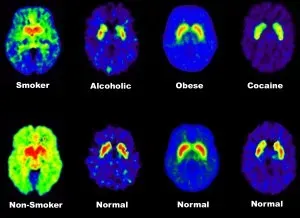
When you’re falling in love, chemicals associated with the reward circuit flood your brain, producing a variety of physical and emotional responses including racing hearts, sweaty palms, flushed cheeks, feelings of passion and anxiety. It’s not just a poetic comparison. Research by Harvard Medical School professors reveals that love activates the same brain regions as addiction.
Think about it. You crave your partner’s presence. You feel euphoric when you’re together. Separation feels painful. When you fall in love or experience deep social connection, dopamine levels surge, creating a sense of euphoria similar to the effects of addictive substances like cocaine. The key difference? Unlike harmful addictions, love comes with natural feedback mechanisms that prevent it from becoming destructive in the same way drugs would.
Falling in Love Actually Makes You Temporarily Obsessive

Ever felt like you couldn’t stop thinking about someone? There’s a biological reason for that overwhelming fixation. While you’re wild about someone, your serotonin levels go down, which is the same trend typically found in people with obsessive-compulsive behavior.
The brain in love mirrors the brain on drugs, showing decreased serotonin levels akin to those observed in people with obsessive-compulsive disorders, contributing to the all-consuming nature of new love and driving the obsessive thoughts and actions that characterize this phase. That’s why new love feels so intense and all-consuming. You’re not being dramatic. Your brain chemistry is literally making you obsessed. Thankfully, this phase doesn’t last forever.
Love’s Initial Stress Actually Calms Down Over Time

Here’s something that might catch you off guard. Levels of the stress hormone cortisol increase during the initial phase of romantic love, marshaling your bodies to cope with the crisis at hand. Yes, your body initially treats falling in love like a crisis situation. The uncertainty, the vulnerability, the intense emotions all trigger a stress response.
If love lasts, this rollercoaster of emotions calms within one or two years, with cortisol and serotonin levels returning to normal, and love, which began as a stressor, becomes a buffer against stress. So those nerve-wracking early days eventually give way to a more comfortable, secure attachment. Love transforms from something that stresses you out into something that actually protects you from stress.
Women Report Feeling Love More Often Than Men Do

This one surprised even the researchers. In one experiment, women reported feeling love roughly about twice as often as men during the day when they filled out questionnaires. The gender gap varied depending on who the love was directed toward.
Men reported less love in all categories, but the gender gap was largest for friends and children, and the smallest for romantic partners. Interestingly, this doesn’t mean men value love less. Recent research actually suggests the opposite might be true. Studies of mixed-gender relationships found that men, compared with women, expect to gain more from being in a romantic relationship and are thus more motivated to find a partner, experiencing greater mental and physical health benefits from being in a relationship.
Romantic Love Fades More Dramatically for Women in Long Marriages

If you’ve been together for years, you might have noticed the passionate intensity mellowing. People who were married for three years or longer reported significantly less partner love than people who were married for two years or less. That’s not necessarily a bad thing, though it is worth understanding.
What’s truly fascinating is how gender plays into this shift. While men showed a modest reduction between couples married for a short or a long time, women showed a much larger reduction, meaning romantic love fades away more strongly in women than in men. This doesn’t mean the relationship is failing. It often evolves into a different, deeper form of companionate love. Still, it’s a pattern worth being aware of as your relationship matures.
Gazing Into Someone’s Eyes Can Actually Make You Fall in Love

You’ve probably heard about love at first sight, but eye contact might be more powerful than you realize. Gazing into the eyes of a stranger can make you fall in love with them. It’s not just romantic folklore. There’s real science behind those intense stares across a crowded room.
When two lovers gaze into each other’s eyes, their heart rates synchronize. Your bodies literally sync up during moments of deep connection. Holding hands with someone you love can alleviate physical pain and reduce stress. The physical acts of connection don’t just symbolize love. They actively create and reinforce the emotional bonds between you.
You Can Actually Regulate Your Romantic Feelings

Contrary to popular belief, you’re not entirely at the mercy of your emotions. Love is like an emotion that you can regulate by generating new feelings or changing the intensity of the feelings you have. This is genuinely empowering information if you’ve ever struggled with unrequited feelings or tried to move on from someone.
You have more control than you might think. If you’re disappointed because the love you feel isn’t reciprocated, you may be able to take your mind off it. This doesn’t mean you can simply decide not to love someone anymore. However, through conscious effort and specific strategies, you can influence the intensity and duration of those feelings. It’s not easy, but it’s possible.
The Type of Love You Experience Depends on Which Components Are Present

Not all love is created equal. According to the triangular theory of love developed by psychologist Robert Sternberg, the three components of love are intimacy, passion, and commitment, with intimacy encompassing feelings of attachment and closeness, passion encompassing drives connected to attraction, and commitment encompassing the decision to remain with another.
Different combinations create entirely different experiences. Passion is the key component of infatuation, so if you’re physically attracted to another person but haven’t developed emotional intimacy or established a commitment, this is infatuation. Meanwhile, relationships with intimacy and commitment but no passion fall into what researchers call empty love. Understanding which elements are present in your relationship can help you recognize what you’re actually experiencing and what might be missing.
Conclusion

Love remains one of the most profound human experiences, even as science reveals its biological underpinnings. Understanding these psychological facts doesn’t diminish the magic of falling in love. If anything, it deepens our appreciation for this complex emotion that shapes so much of our lives.
The chemicals flooding your brain, the obsessive thoughts, the stress that transforms into comfort – all of these are part of the beautiful, messy process of connecting with another person. Whether you’re in the thrilling early stages or navigating a long-term partnership, knowing what’s happening beneath the surface can help you appreciate the journey.
What do you think about these surprising facts? Did any of them change how you view your own experiences with love?